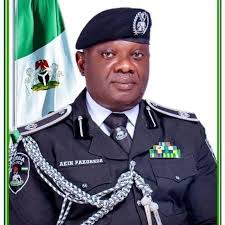
In a decision that has sent ripples through Nigeria’s law enforcement and human rights communities, Inspector General of Police (IGP) Kayode Agbetokun has appointed DCP Akin Fakorede to head the IGP Monitoring Unit. This controversial appointment has sparked intense debate about the future of police accountability in Africa’s most populous nation, particularly given the unit’s crucial role in investigating complaints against police officers.
A Troubled Past in Rivers State
The shadows of Fakorede’s tenure as Officer in Charge of the Federal Anti-Robbery Squad (SARS) in Rivers State from 2016 to 2019 cast a long dark cloud over this appointment. During this period, his name became synonymous with allegations of brutality, extrajudicial killings, and electoral manipulation. Former Governor Nyesom Wike, in a series of public denouncements, accused Fakorede of perpetrating crimes and interfering with electoral processes in the state
One of the most damning incidents occurred during the 2019 Rivers State governorship and state assembly elections. Dr. Ferry Gberegbe, a senior lecturer at Ken Saro-Wiwa Polytechnic, was allegedly shot and killed at a collation center in Bori. The state’s Peoples Democratic Party (PDP), through its chairman Chief Felix Obuah, directly implicated Fakorede in this tragedy, describing him as “a recurrent obstacle to the peaceful conduct of general elections in Rivers State.”
The Independent National Electoral Commission (INEC) itself documented Fakorede’s controversial conduct. In a report authored by INEC Commissioner Professor Okechukwu Ibeanu, Fakorede was accused of attempting to lure INEC staff into potentially dangerous situations and physically assaulting electoral officials, including Dr. C Odekpe and Mrs. Mary Tunkayo, who required hospitalization after the encounter.
Pattern of Controversy Across Commands
Fakorede’s controversial record extends well beyond Rivers State, following him through various postings across Nigeria. In Anambra State, where he served as Deputy Commissioner of Police in charge of the State Criminal Investigation Department, his tenure was marked by serious allegations of enabling land grabbing and violent property disputes.
A detailed petition to the Police Service Commission in July 2024 exposed disturbing incidents under his watch. In one case, men in military uniforms allegedly operated under Fakorede’s protection to violently demolish a building under construction in Onitsha. In another shocking incident, a violent property invasion reportedly resulted in the death of a 4-month-old infant.
The case of Mrs. Adelesi Esther Omolade, a 72-year-old woman, provides another troubling example of alleged abuse of power. In January 2022, she reported being illegally arrested and detained by Fakorede’s team in Abuja. The incident, which reportedly stemmed from a business dispute involving his romantic relationship with her daughter, raised serious questions about the exploitation of police power for personal matters.
Defiance of Accountability Mechanisms
When the federal government established nationwide investigative panels to examine SARS activities in 2020, Fakorede’s apparent contempt for accountability became glaringly evident. Despite receiving multiple formal invitations to appear before the Rivers State Panel, he consistently refused to participate in the proceedings.
The panel’s findings painted a disturbing picture: half of the 107 accepted petitions were complaints against the Rivers State SARS under Fakorede’s command. Among these was the heart-wrenching case of Solomon Yellowe, a 27-year-old final-year student at the University of Port Harcourt. Yellowe’s family petitioned for ₦1 billion in compensation after their son’s body was discovered in the University Teaching Hospital mortuary weeks after his disappearance, with allegations pointing directly to SARS involvement under Fakorede’s leadership.
Persistent Public Outcr
The public’s resistance to Fakorede’s leadership predated the nationwide #EndSARS protests of 2020. In December 2017, thousands of Rivers State residents, predominantly youth, took to the streets of Port Harcourt in protest. Their placards bore urgent messages: “Sack Akin Fakorede Now,” “Stop Killings By SARS,” and “End SARS’ Brutality Now.” The demonstrations were fueled by numerous incidents, including the alleged killing of three Ogoni youths who had attempted to prevent pipeline vandalism.
The protests in Anambra State took an even more dramatic turn when, in November 2023, a group of women staged a naked protest against Fakorede’s alleged involvement in criminal activities and land grabbing. This traditional form of protest, considered one of the strongest expressions of displeasure in Nigerian culture, highlighted the depth of public outrage against his activities.
International Partners Express Growing Concern
The appointment has raised serious concerns among international development partners and funding agencies supporting Nigerian police reform. Organizations including the British High Commission, German Foreign Office, American Embassy, Swiss Embassy, UNDP, United Nations Office on Drugs and Crime, and the United Nations Office for Human Rights have invested substantially in police reform initiatives in Nigeria.
These international stakeholders have particular reason for concern, as many have funded specific projects aimed at strengthening police accountability. The Police Accountability and Reform (SPAAT) Project, implemented by the UNDP and funded by the German Foreign Office, is just one example of the significant international investment in Nigerian police reform that could be undermined by this appointment.
Implications for Police Reform
The decision to appoint Fakorede to head the IGP Monitoring Unit presents a peculiar paradox: an officer with numerous unresolved complaints against him now leads the very unit responsible for investigating police misconduct. This situation is further complicated by reports that multiple oversight bodies, including the Monitoring Unit itself and the Police Service Commission, are currently investigating complaints against him.
The appointment appears to contradict the force’s stated commitment to reform and accountability. Following his controversial tenure in Rivers State, Fakorede’s subsequent transfers to various commands – including Brini-Gwari Area Command in Kaduna State, Zone 13 in Anambra State, and the Anambra State Criminal Investigation Department – have been marked by consistent allegations of misconduct and abuse of power.
The Road Ahead
As Nigeria’s police force grapples with the challenge of rebuilding public trust and implementing meaningful reforms, the appointment of an officer with such a controversial record to a critical oversight position raises fundamental questions about the future of police accountability in the country. With international partners watching closely and public trust hanging in the balance, the IGP’s decision may have far-reaching implications for the future of police reform in Nigeria.
The controversy surrounding this appointment underscores a broader challenge facing Nigeria’s law enforcement: the difficulty of implementing genuine reform while operating within existing power structures and relationships. As the situation unfolds, it will serve as a critical test case for the Nigerian Police Force’s commitment to accountability and reform in the face of mounting public and international pressure.
The story was originally published by Saharareporters.