Captivity by Creed: The Religious Sorting System Nobody Talks About


…Inside the two-tier captivity system of Fulani ethnic militias — where faith determines who suffers, how much a life is worth, and whether a hostage comes home at all.

By Steven Kefas

May 2026

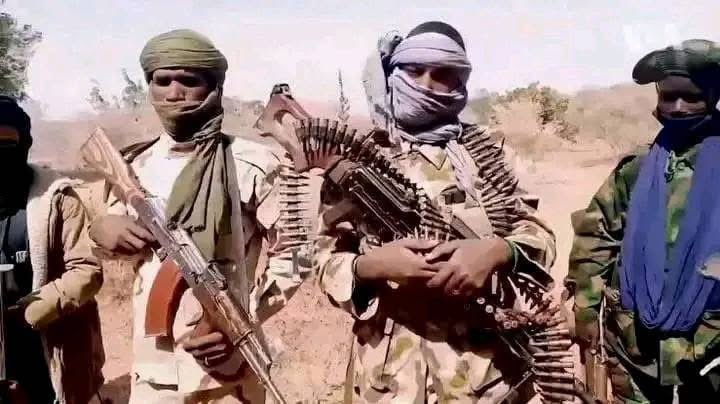
The terrorists conveniently called bandits by the media had a rule. They stated it plainly, in the open, in front of their captives: Fulani people would not be taken. They were brothers. Christians and certain Muslims majorly non-Fulani were fair game. What happened next depended entirely on which category you fell into.

Sunday Cletus was abducted on 28 February 2026, while travelling through Kachia Local Government Area in Kaduna State. What he witnessed and endured over the days that followed was not random cruelty. It was, according to his account and the findings of extensive field research spanning multiple states and multiple years, a system, deliberate, consistent, and organised around two variables: religion and ethnicity.

The differential treatment of Muslim and Christian abductees by Fulani Ethnic Militias (FEM) in Northern Nigeria is among the most under-documented dimensions of a security crisis that has displaced hundreds of thousands and left communities across Kaduna, Plateau, Kogi, and the wider Middle Belt and northwest regions in a state of sustained terror. While public attention has focused on the frequency and geography of attacks, which villages were raided, how many were killed, the testimony of survivors reveals that what happens after capture is equally telling, and equally horrifying.

They Are Our Brothers’

The classification begins at the point of abduction. Cletus reported that his captors were explicit: Fulani individuals were not to be targeted because of ethnic solidarity. The instruction was not whispered or implied. It was declared. In that moment of capture, a sorting mechanism was set in motion that would govern every subsequent hour of captivity.

This is not a single camp, a single commander, or a single incident. Field interviews conducted across multiple states over several years return the same account with remarkable consistency: from the moment of capture, Muslim abductees and Christian abductees enter different realities.

“For a Christian in Southern Kaduna, the danger of being kidnapped is compounded by the near certainty of harsher treatment, higher ransom demands, and a meaningfully greater risk of death, not because of anything they have done, but because of their faith.” Says a retired security personnel who spent 4 months in captivity in Southern Kaduna.

Inside the Two-Tier System

Survivor testimonies describe a captivity environment divided into two parallel experiences. Muslim abductees are, in the words of multiple survivors, treated with a degree of restraint. They are generally not subjected to the physical and sexual violence that Christian captives endure as a matter of routine. They receive adequate food. They are permitted relative freedom of movement within the camp. In documented cases, they have been allowed to observe religious obligations. The logic, as captors have articulated it in the presence of Muslim detainees, is one of communal solidarity, a fellow Muslim, however different in ethnicity or background, is assigned a different moral status.

For Christian captives, the experience is of another order entirely. Men are beaten systematically not as punishment for specific behaviour, but as a baseline condition of captivity. Women face the additional horror of sexual violence. Cletus described an environment in which abuse was pervasive, in which captives were entirely at their captors’ mercy, and in which psychological torment was deployed as deliberately as physical violence. Christian abductees are subjected to prolonged uncertainty, repeated threats of execution, and in documented cases, forced to witness violence against fellow captives as a mechanism of coercion and terror.

There are exceptions. Field research has documented cases in which non-Fulani Muslim abductees were also treated harshly, suggesting that ethnicity intersects with religion in complex ways. But the pattern holds across the breadth of the data: faith is the dominant variable.

The Price of Faith: Ransom Asymmetry

The differential does not end with conditions in captivity. It extends into the financial machinery of release. Across field interviews with survivors and families in the north central region and parts of the northwest, a consistent pattern emerges: Muslim abductees are released on comparatively lower ransoms, negotiations are shorter, and in several documented cases, Fulani community intermediaries with informal access to the armed groups have facilitated release with minimal negotiation.

For Christian families, the process is an ordeal of a different kind. Demands are higher. Timelines stretch for weeks. The threat of lethal consequences for delay or non-compliance is more frequently and more credibly invoked. Field interviews document cases in which families gathered and paid the full ransom demand, only to receive no release, followed by escalating demands. In some cases, Christian abductees were killed even after their families complied.

The death that Sunday Cletus described witnessing, a teenage boy executed because his family did not initiate negotiations quickly enough is not an aberration. It is an example of a broader operational logic in which a Christian life is assigned a lesser and more conditional value, one that can be cancelled at will.

A Religious Hierarchy of Human Worth

What emerges from years of field testimony is not a picture of chaotic, opportunistic violence. It is a picture of a system, one with internal rules, consistent practices, and an embedded hierarchy. Religion functions as a determinant of fate at every stage of the abduction experience: who gets taken, how they are treated in captivity, on what terms they may be released, and whether they survive.

This pattern is consistent across multiple states, multiple armed groups, and multiple years of survivor testimony. It is not incidental variation between individual captors. It is, as the evidence compels us to describe it, a religious hierarchy of human worth embedded in the operational logic of Fulani Ethnic Militias.

The implications reach beyond security analysis. The same sorting mechanism documented in community attacks where Muslim members of mixed villages are spared while their Christian neighbours are killed is replicated and deepened inside the captivity system itself. Faith does not merely determine who is attacked. It determines what they endure, how much their life is worth in negotiation, and whether they return.

The Reckoning

Sunday Cletus came home. Many do not. His testimony, set against the accumulated weight of survivor accounts gathered across the region over years, forces a confrontation with a dimension of Northern Nigeria’s security crisis that policy discussions have consistently failed to address with adequate seriousness.

The violence is not indiscriminate. The suffering is not evenly distributed. And the religious character of the crisis does not begin and end with the moment of attack. It permeates the entire machinery, the raid, the abduction, the camp, the negotiation, the release, or the execution. Until that reality is named plainly and confronted directly, the communities living under it will continue to bear its weight largely alone.


…Steven Kefas is an investigative journalist, Senior Research Analyst at the Observatory for Religious Freedom in Africa, and Publisher of Middle Belt Times. He has documented religious persecution, terrorism and forced displacement in Nigeria’s Middle Belt for over decade


Imprisonment and Release of Rhoda Jatau Highlights Deep Injustices in Nigeria’s Blasphemy Laws

By

Steven Kefas

The recent release of Mrs. Rhoda Jatau from prison is a welcome relief after the Christian mother of five spent 18 agonizing months jailed under Nigeria’s controversial blasphemy laws. However, her ordeal highlights the deep injustices that persist due to legal loopholes that allow religious extremists to carry out extrajudicial killings with impunity.

Mrs. Jatau’s only “crime” was allegedly sharing a video condemning the brutal murder of Deborah Samuel, a young Christian college student who was beaten, stoned and burned to death by Muslim mobs in Sokoto in May 2022 over unproven allegations of blaspheming the Prophet Muhammad. For daring to speak out against the merciless killing of Deborah, Mrs. Jatau was swiftly arrested and imprisoned in Bauchi state under the same problematic blasphemy statutes.

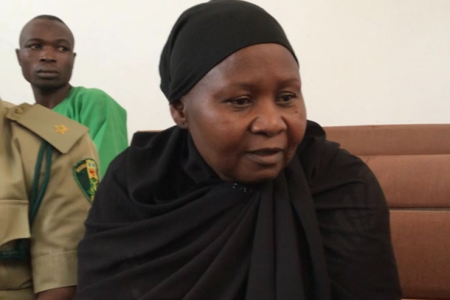
Mrs Jatau during a court session in Bauchi

The very existence of blasphemy laws in Nigeria’s constitution is concerning, as they violate basic human rights to freedom of speech and thought. But more alarming are the ways these laws enable radicalized mobs to become judge, jury and executioner, murdering anyone deemed to have transgressed Islamic teachings without any evidence or due process.

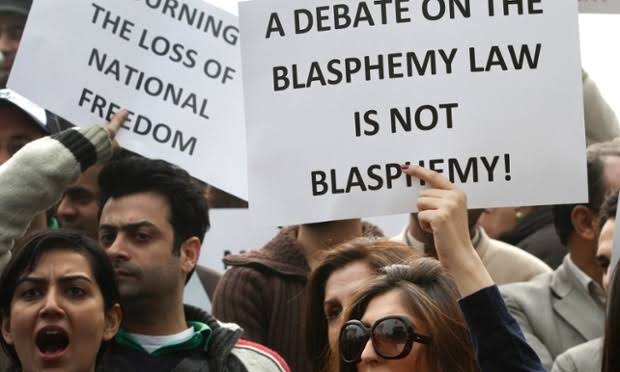
The blasphemy law is contained in section 204 of the Nigerian criminal code and has been a subject of debate and controversies over the years but the big question is; who determines what constitute blasphemy and in what circumstances should such be determined?

While the provision of section 204 stipulates a two year imprisonment for ‘anyone who commits an act any class of persons consider as public insult on their religion’, in northern Nigeria the punishment is instant execution according to Shariah law for anyone who is perceived to have committed blasphemy. Victims have often met with instant death by stoning without trial. This also contradicts the provisions of the Shariah law which allows blasphemers to be tried before execution.

“Any person who does an act which any class of persons consider as a public insult on their religion, with the intention that they should consider the act such an insult, and any person who does an unlawful act with the knowledge that any class of persons will consider it such an insult, is guilty of a misdemeanour and is liable to imprisonment for two years.” Section 204 of the Nigerian Criminal Code.

The Shariah law originally is supposed to be applicable to only Muslims but because of the ambiguity of the Nigerian constitution and by extension the legal system, non Muslims have often come under outright attacks and sometimes murder for accusations of blasphemy.

Deborah’s case is the latest in an ongoing string of tragic violence and loss of life suffered by religious minorities under blasphemy allegations. In 2007, Christian teacher Christiana Oluwatoyin Oluwasesin was beaten and burned to death for allegedly desecrating the Quran by her Muslim students in Gombe state. Over the past decade, multiple cases have emerged of Christians being brutally assaulted or killed over unfounded claims of insulting Islam. In 2016, 74 year old Bridget Agbahime was murdered and beheaded by Muslims in Kano for allegedly commuting blasphemy.

Yet seldom do the perpetrators face justice for so casually extinguishing innocent lives. Deborah’s murderers were arrested, but a judge ruled there was insufficient evidence to prosecute. By failing to fully enforce the law to protect victims, Nigeria’s institutions have fostered a culture of impunity that grants extremists a license to kill.

Nigeria’s constitution claims to uphold principles of justice, liberty and the sanctity of human life. But in allowing ambiguous blasphemy statutes to remain in place, it contradicts itself. These laws directly endanger the country’s Christian minorities living in the north and other vulnerable groups, enabling violence against the very people the government has a duty to protect.

The Middle Belt Times calls upon the Nigerian government to take active steps to prevent future tragedies unfolding as they did for Deborah and Mrs. Jatau. Blasphemy laws must be decisively repealed, religious extremism mitigated through education and dialogue, and institutions reformed to apply the law justly wherever malicious incidents occur.

Above all, the fundamental human rights and dignities of ALL Nigerians must be upheld, regardless of religious affiliation. Only then can the dangerous climate of fear and impunity stoked by blasphemy allegations be extinguished for good. The time is now to let reason, compassion and the rule of constitutional law prevail.

Steven Kefas is a Human Rights Defender, a Citizen Journalist and Minority Rights Advocates. He is a former Kaduna former prisoner of conscience now living in exile.

Ifa Council Worldwide Writes Tinubu, Wants Rights Of Traditional Religion Practitioners Protected From Likes Of Emir Of Ilorin, Others

Piqued by the recent Ilorin religious conflict and the seemingly conspiratorial silence of relevant agencies and notable individuals in power over the cause of the conflict, the International Council for Ifa Religion (ICIR) has written an open letter to President Bola Tinubu.

It called for recognition of traditionalists and respect for aspects of Nigeria’s constitution that lay emphasis on equity, equality and freedom of religion. 

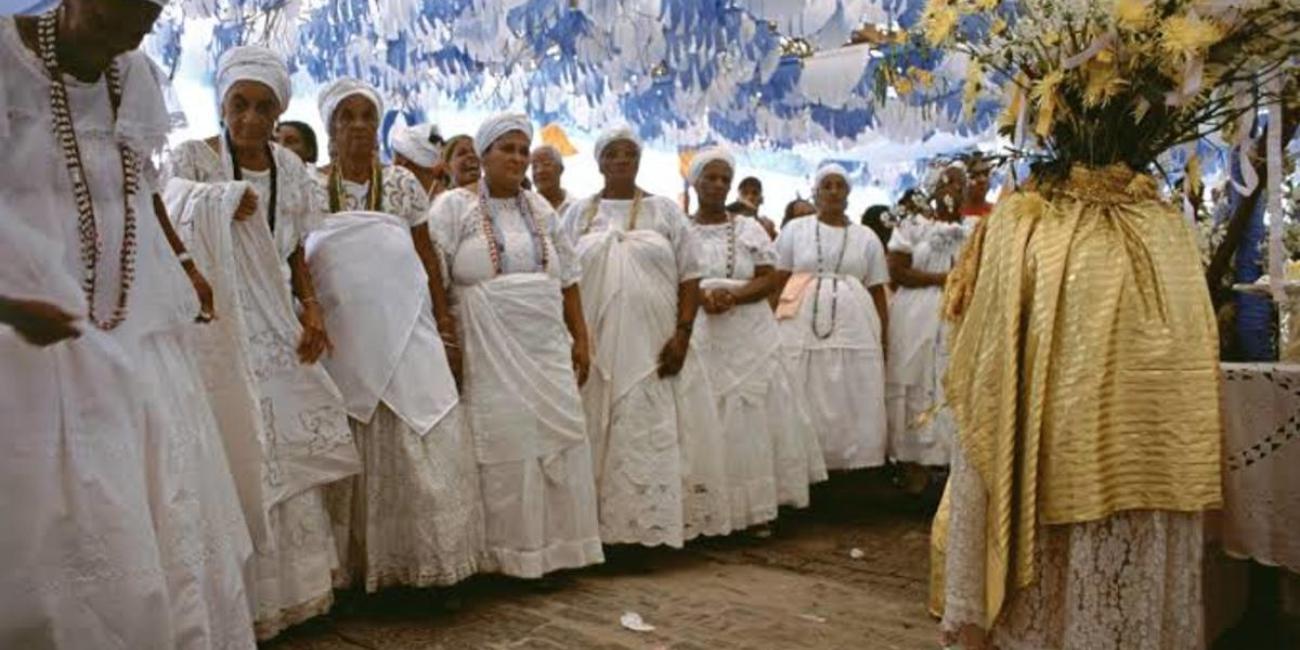
ICIR recalled a recent incident in Ilorin, the Kwara State capital, in which some Muslims, with the support of the Emir of Ilorin, Ibrahim Sulu-Gambari, threatened and harassed an Osun priestess, Yeye Ajesikemi Olokun, for wanting to hold Isese festival. 

The Muslim fanatics described Ilorin as a Muslim city. 

In a letter issued and signed by the President of the Council Oluwo Solagbade Popoola on behalf of ICIR (Worldwide), on Friday, the organisation alleged that governments at all levels overlook the principles of secularism by giving more prominence and attention to Islam and Christianity in total disregard of the religious diversity which is one of the unique feature of the Nigerian State.

The letter signed by Oluwo Solagbade Popoola, President of ICIR (Worldwide), and titled: ‘Open Letter To His Excellency Asiwaju Bola Hammed Tinubu GCFR, President And Commander-In-Chief, Federal Republic Of Nigeria’ reads in part: “Your Excellency, as you gradually settle down for the business of leading Nigeria to political, social and economic stability, ICIR feels it very pertinent to draw your attention to one of the salient and very important issues in the Nigeria’s constitution which has often been flagrantly and carelessly ignored. This issue centres on the principles of secularism as enshrined in several provisions of the 1999 Constitution, as amended.

“ICIR respectfully wishes to remind you of Section 10 of the Constitution of Nigeria which unequivocally states that ‘The Government of the Federation or of a State shall not adopt any religion as a State Religion.’ This provision prohibits the establishment of a state religion and affirms the secular nature of the Nigerian state.

“Your Excellency is invited to also note Section 38 of the constitution which clearly states that every individual has the right to freedom of thought, conscience, and religion. This includes the freedom to manifest and practice any religion or belief of one’s choice, either individually or in a community, subject to certain limitations to protect public safety, order, morality, or the rights of others.

“Bearing the above in mind, it may interest Your Excellency to know that traditional religion as well as its practitioners have continued to suffer persecutions and harassment in the hands of the two dorminant religions in Nigeria which are Islam and Christianity. 

“Successive administrations of government across all tiers have also continued to discriminate to a large extent against traditional religions. The case of intimidation and harassment of a practitioner of traditional religion by the royal envoy of the Emir of Ilorin is a recent and fresh example. Like messengers of death, some muslims leaders had besieged the home of an Osun Priestess and threatened her never to practice her faith within specified areas of Ilorin.

“Up till this moment, the Nigerian Police and the Kwara State Government are yet to take any reasonable action that could deter such illegality. Yet Section 42 of the Nigeria’s constitution prohibits discrimination based on religion and states that no Nigerian can be discriminated against on the basis of their religion or belief. This provision also emphasizes the equality of all citizens irrespective of their religious affiliation.

“Your Excellency, it is arguable that the Federal Government and most States seem to be deliberate in their disregard to the aspect of Section 10 of the said constitution which requires them to maintain neutrality regarding religious matters: Section 10 prohibits the adoption of any religion as a state religion. 

“Therefore, for declaring certain parts of Ilorin a muslim area, those Ilorin muslim leaders ought to have been decisively dealt with. Section 10 explicitly declares that government should not favor or endorse any particular religion. Rather, government is expected under the constitution to treat all religions equally and respect the religious diversity of its citizens.

“Another critical issue is that Federal and State Governments, in disregard to the Constitution, set aside certain days as public holidays for christians and muslims to celebrate their special festivals such as Christmas, Easter, Good Friday, Eid al-Fitr, Ramadan Eid al-Adha, Mawlid etc. Granting holidays to two religions, out of many, in a religiously diversified nation like Nigeria, is a contradiction to the secular character of Nigeria as established and recognised by our constitution.

“The dominance of Islam and Christianity in a secular State like Nigeria could be said to have been significantly influenced by the recognition given to them, above others, by Government. Why do both religions have Welfare and Pilgrimage Boards, funded from our common wealth, while other religions are held down in total surpression? 

“The dominance of Islam and Christianity notwithstanding, traditional religions hold significance for many Nigerians. Therefore, it is very important to also factor our welfare along that of others so as to foster inclusiveness and ensure harmonious relationship.”

Therefore, the ICIR asked Tinubu to among other requests “grant due recognition to traditional religion alongside dominant ones in Nigeria; grant all traditional religions August 20 as Public Holiday for the entire practitioners of the religions in Nigeria to observe as a day to worship God and also venerate their ancestors and establish a legal framework that recognizes and protects the rights of individuals to practice traditional religions.”

According to ICIR, “this should also protect sacred sites and access to such places” and “allow religious ceremonies and rituals, and ensure that traditional religious practitioners are not subjected to discrimination or persecution”. 

It added that “Nigeria Police and other Security Agencies should be authorized to arrest and prosecute anyone who tries to harass or intimidate any individual with the view preventing them from free exercise of their freedom of religion or right to affirm their individual belief whether in public or in private”.

ICIR also asked President Tinubu to “establish Welfare Board for practitioners of traditional religions in Nigeria in order to, among other things, ensure they have due access to heritage facilities and sites that have significant link with their faith and belief system” and “include us in interfaith dialogue and other relevant platforms when formulating policies or making decisions in order to ensure that our perspectives are also taken into account”.

“Finally, we urge you to consider the need to go deep into the origin of the Nigeria’s current socio-economic situation and tackle the problems once and for all thereby making way for a new Nigeria, the Nigeria of everybody’s dream,” it added.

Source: Saharareporters

Northerners should reject Atiku for opposing Sharia rule in Nigeria: Kashim Shettima

Atiku Abubakar’s resistance to the implementation of Sharia law throughout the region, according to All Progressives Congress vice presidential candidate Kashim Shettima, should compel northerners to reject him.

Speaking to party members at an APC local government meeting, Mr. Shettima urged the northern electorate to vote against Mr. Abubakar on February 25 because he opposed the region’s Islamic legal system.

Mr. Shettima addressed his audience in Hausa, saying, “This person you call your own says you should not call him Alhaji Atiku Abubakar, but merely Atiku Abubakar. “Your person says he is the only person that fights against Sharia in the north. Is that your person?”

The comments made by the APC vice presidential candidate are his most recent effort to stir ethno-religious sentiments against the PDP presidential candidate.

In the past, Mr. Shettima publicly challenged Mr. Abubakar to name eight persons he has mentored in the North or the capital projects he completed there when he was Nigeria’s vice president from 1999 to 2007. This was done at the Emir Palace in Daura, Katsina.

Mr Shettima told his audience that Mr Abubakar’s presidency would not serve the North’s ethno-religious interests.