Easter Sunday Massacre, Army’s False Rescue Claims, and a Suspended Lawmaker: Civil Society Breaks Silence on Kaduna’s Descent into Terror


Five worshippers killed. Thirty-eight abducted from two churches. A military rescue claim the families say is a lie. And a lawmaker suspended for daring to speak the truth.

This is Ariko, Kachia Local Government Area, Kaduna State, on Easter Sunday, 2026.

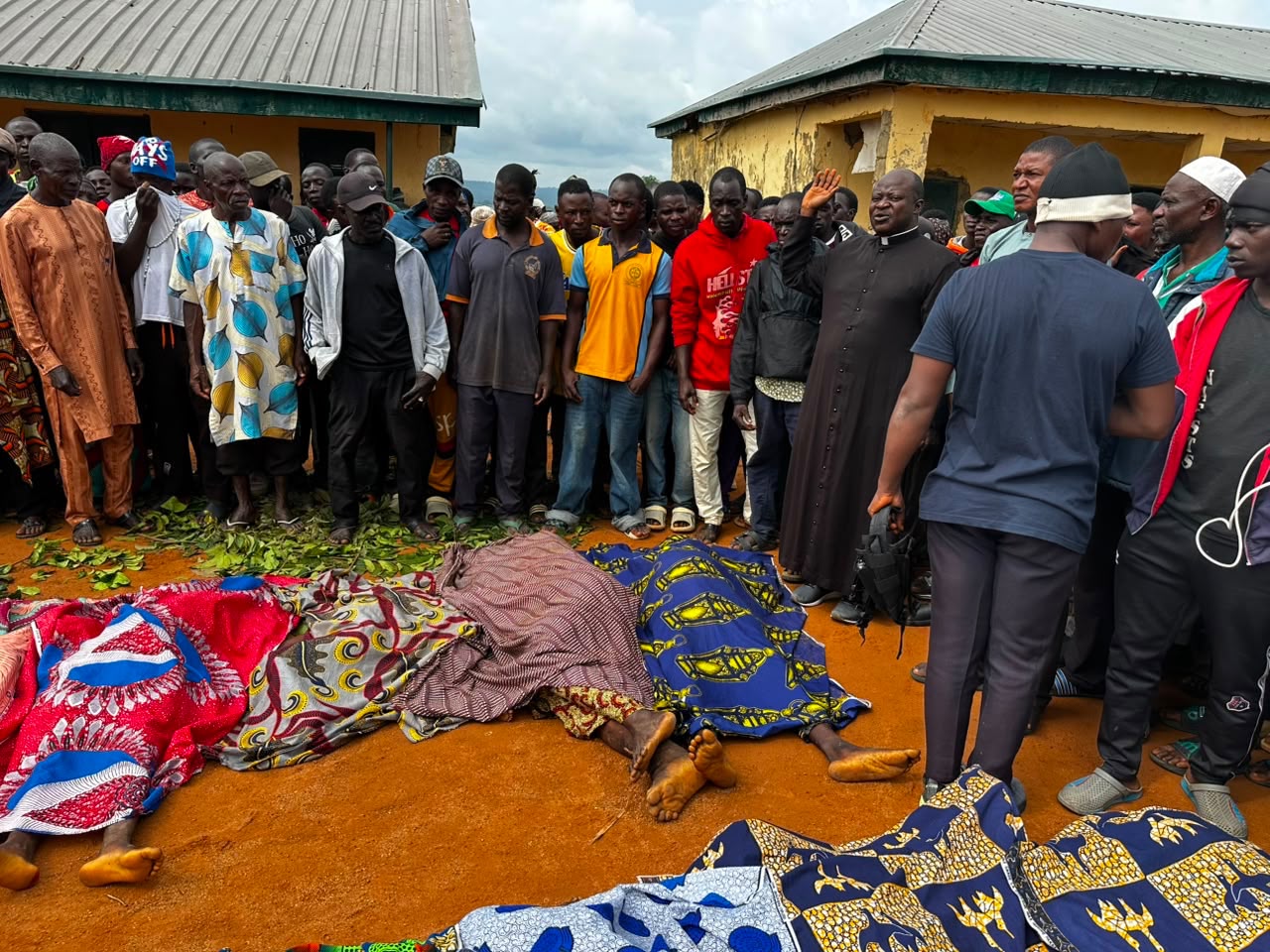
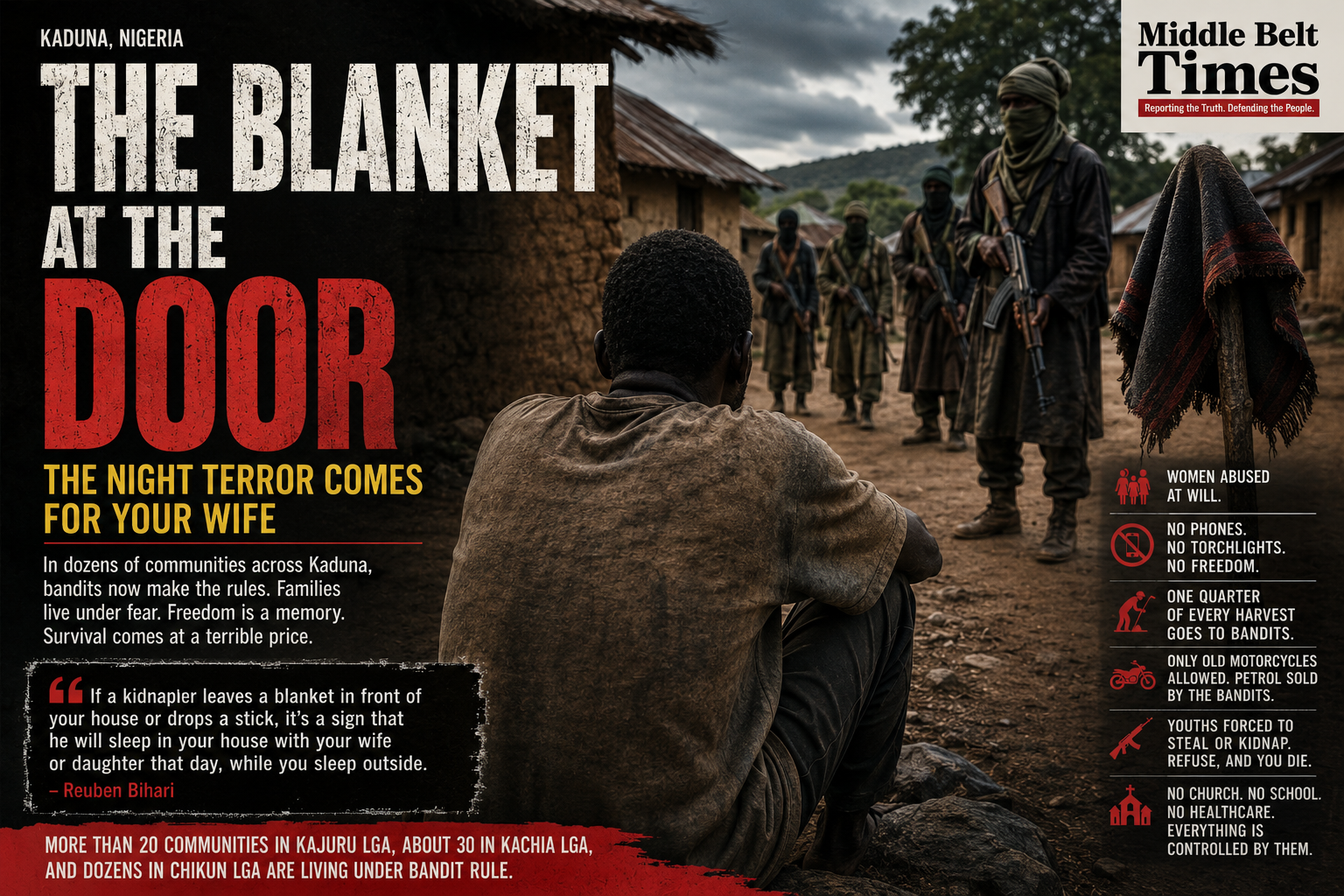
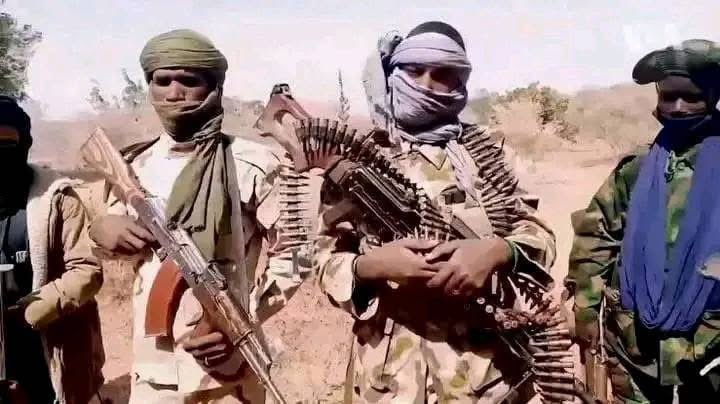
On the morning of 5th April, heavily armed terrorists stormed Ariko Community in Awon Ward, attacking the First ECWA Church and the Catholic Church while congregants gathered for one of the most sacred observances on the Christian calendar. When the violence subsided, five people were dead and thirty-eight others had been dragged away into captivity.

What followed was, to many observers, almost as disturbing as the attack itself.

The Nigerian Army issued a widely circulated statement claiming to have rescued 31 of the abducted victims. But the families of those victims say it never happened. As of the time of this publication, all abducted persons remain in the hands of their captors. The Kuturmi Unity Development Association (KUDA), whose president Dr. J.D. Ariko signed a statement on 6th April, said plainly: “Contrary to the reports being circulated, all the abducted persons are still in captivity with their abductors. This clearly invalidates any claim of a successful rescue operation.” KUDA’s Publicity Secretary, Hon. Manasseh Samuel, co-signed the statement.

The families have confirmed they remain in direct contact with the abductors, who have themselves confirmed the victims are in their camps.

In a press statement released on 10th April, the Civil Society for Good Governance and Accountability, a coalition of over thirty human rights and community organisations, described the Army’s statement as propaganda, saying it revealed “unfortunate efforts at deception rather than a plausible effort at the rescue of the abducted.”

But for the civil society coalition, the Army’s false claims are not the whole story. They point to a recognisable pattern. On 18th January 2026, armed bandits abducted 177 worshippers from three churches in Kurmin Wali, Kajuru LGA. The Police and the Kajuru LGA Chairman initially denied the attack entirely. Public outrage eventually forced an acknowledgment. The coalition’s statement is blunt: “The playbook is unchanged: deny, deflect, discredit, then concede only when pressure becomes unbearable.”

The Ariko attack is also not the only active emergency in the region.

On 29th March 2026, Palm Sunday, terrorists killed 13 people in a night raid on Kahir, Aribi Ward, Kagarko LGA, and abducted 28 others. Ransoms of 200 million naira are being demanded. Those 28 remain in captivity. On 31st March, bandits abducted 11 people from Zunturum, also in Kachia LGA, and are demanding 150 million naira and 10 motorcycles for their release. In Maro Kasuwa, Easter Sunday also brought bloodshed: three people were killed and an unconfirmed number abducted.

Kachia LGA Chairman Dr. Manzo Daniel Maigari’s own admission compounds the scale of the crisis. He has acknowledged that 74 communities in Kachia have been deserted due to insecurity, a figure the coalition describes as “a clear indictment of both state and federal governments.”

Yet even as communities are hollowed out by violence, truth-tellers are being punished.

The Honourable Speaker of the Kachia LGA Legislative Council, Hon. Mark Bawa, gave a press interview published in The Punch on 5th April addressing the reality of the Ariko attack. Two days later, the Executive Chairman issued a directive suspending him indefinitely. The suspension letter alleged that the Speaker had “misrepresented the true position on ground” and had failed to attend a meeting with the General Officer Commanding (GOC) of the Army’s 1 Division “to clarify and possibly apologize.” The letter called his conduct “a deliberate attempt to sabotage the efforts of Government.”

The civil society coalition has rejected the suspension in unambiguous terms. “Suspending a lawmaker for speaking about a security incident that affects his own constituents makes him a double victim,” the statement reads. The signatories include legal practitioners, professors, community associations, and advocacy organisations drawn from across southern Kaduna and the Middle Belt.

Their demands are clear: the unconditional reinstatement of Hon. Mark Bawa; the immediate rescue or facilitated release of all abductees across Ariko, Zunturum, Kahir, and Maro Kasuwa; the return of displaced persons from 74 abandoned communities; and full activation of the government’s constitutional obligations under Section 14(2)(b) of the 1999 Constitution.

“These are not numbers,” the statement says. “They are mothers, fathers, children, and grandparents whose safe return must be the single most urgent priority of every security agency in Kaduna State.”

As of press time, not one of the hostages has been returned.

The Unfortunate Price of “Second-Term” Politics: Middle Belt Nigeria


By Zariy Yusuf

It does seem the primarily focus of some politicians has moved away from impactful governance – if at all they swore their oath of office with sincerity – to scheming how to remain in power, come 2027. Protection of lives and property must no longer be seen as strictly a Federal government responsibility; state governors and elected representatives must be held accountable as well.

Kaduna and Plateau states have seen a lot of bloodshed within these past days with a kind of response I can best describe as either weak or cowardly from the state governors. There is an energy that forces one to think that even the response of these “chief security officers” must be such that does not displease the centre.

Kaduna is notorious for suppression of the facts about the activities of these militant Islamists, who are more conveniently described as mere “bandits”, thanks to the immediate past governor, Nasir Elrufa’i.

The Adara nation has suffered untold raids from these extremists with little or no media or government attention. Mrs Haske Solomon was abducted in a raid in the early hours of March 17th, 2026 in addition to three others that were taken on the 10th of March, 2026. The terrorists are demanding a ransom of 20 million naira.

The recent massacres of Christians in these states (Kagarko in Kaduna and Unguwar Rukuba in Plateau) should be a call on the political leaders of these states and the entirety of the Middle Belt to focus on their primary assignment and not betray their people in the pursuit of their political ambition.

The visit of the president to the Plateau betrayed how much the leadership in the Middle Belt is lacking. At least, someone would have insisted the president stayed back in Abuja and make a call to the victims or proceed on his trip to Ogun, instead of dragging mourners to the airport to meet him. Something reminiscent to his visit to another Middle Beltan state, Benue, over the Yelewata massacre.

Simply put, the massive decamping of the politicians of the Middle Belt to the APC seems to have no bargain for their people other than the very hope of those politicians to clinch a second term or benefit their ambitions, as the case may be. At least in terms of the massacre of Middle Beltans, the mass decamping of the political leaders of the region to the ruling party has been of no consequence whatsoever.

It is my sincere belief that if the government has failed in protecting the lives of the peoples of the Middle Belt or eliminating these Islamists who kill with impunity and always get away freely, then it must allow for the people to arm and organize at community levels to protect what seems to be the only thing they have left – their lives and those of their loved ones.

Gov. Uba Sani of Kaduna must suspend all antics about and against the 2027 elections, account for the security of his state and immediately attend to Kagarko, where over 13 people were killed, 10 wounded and 28 abducted. Silence about the security mess Kaduna state is in does not change the reality on ground.

The report from Kagarko is heartbreaking:

Killed:

1. Douglas John

2. Ado Yakubu

3. Mai Kano Aribi

4. John Dan Asabe

5. Williams Luka

6. Bako Danjuma

7. Joseph Yakubu

8. Victor Peter

9. Peter Williams

10. Dogara Markus

11. Francis Amadu

12. Zephaniah Alhaji

13. Name yet to be known.


Wounded:

1. Micah Tanko.

2. Fidelis Awuh

3. Samson Alhaji

4. Habila Bulus

5. Colonius Dauda

6. Lina samaila

7. Bello Alkali

8. Felix Erick

9. Francis Tanko

10. Doctor Solomon

Kidnapped:

1. Tanko Makeri

2. Jummai Victor

3. Tanko Madaki

4. Beauty Marshal

5. Mariya Dominic

6. Awede Tanko

7. Patience Bitrus

8. Thadious Augustine

9. Salome Danladi

10. Ephraim Monday

11. Kande Monday

12. Lucky Monday

13. Lidiya Benjamin

14. Gambo Benjamin

15. Najirgi Yakubu

16. Danladi Kagarko

17. Daniel Shehu

18. Talatu Ibrahim

19. Dauda Markus

20. Peace Waziri

21. Tanko Waziri

22. Promise Waziri

23. Asami Dauda

24. Awuh Adams

25. Bulus Sunday

26. Chibi Emmanuel

27. Peace Luka

28. Name not yet known

Enough of the bloodshed!


Credit for list of victims: David Dokuma

Australian Mining Executive Referred to Australian Federal Police as Kaduna Communities Allege Bribery and Corruption


By Biliyaminu Suraj

Fresh allegations of coercion, political interference and foreign bribery have emerged around one of Nigeria’s most promising lithium deposits, after community leaders in Kaduna State referred an Australian mining executive to the Australian Federal Police  for investigation.

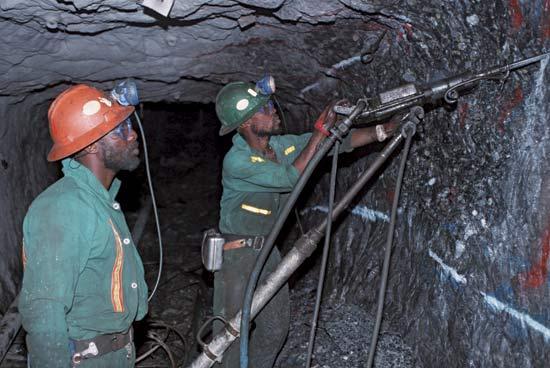
The case centres on Colin Ikin, an Australian national linked to a cluster of companies — Atlantic Mining Techniques, Mystic Mining and Kings Mines — that have been attempting to secure community consent to operate on tenements discovered and developed by UK-registered Jupiter Lithium Ltd in the Kaninkon Chiefdom of Jema’a Local Government Area.

Community leaders say Mr Ikin and his associates sought to pressure them into granting access to the mine-ready project, despite Jupiter Lithium’s long-standing presence and development work in the area.

Community alleges high-level assurances

According to letters sent to Nigerian and Australian authorities and reviewed by this newspaper, representatives of the so-called “Atlantic group” met the Paramount Ruler in December 2025. The delegation, introduced through a village chief, allegedly told the ruler that they had the backing of  high level Nigerian government officials that Jupiter’s titles would be revoked or “cut into pieces” to allow new entrants – an assertion that, if verified, would raise serious concerns about political interference in the allocation of mining rights in a sector the government has repeatedly described as central to Nigeria’s economic future.

Community leaders say they rejected the overtures, citing Jupiter Lithium’s seven-year record of community development, local employment and a formal Community Development Agreement (CDA). “We refused to give consent to any of Mr Ikin’s companies,” the community wrote in one of several letters to the minister and the DG-NMCO.

A controversial figure resurfaces in Nigeria

Mr Ikin is a familiar figure in Australian mining circles. As head of the former ASX-listed Preston Resources, he presided over the Bulong laterite nickel project near Kalgoorlie — one of Western Australia’s most notorious mining failures. The project collapsed with estimated debts of about A$600 million and accumulated losses of roughly A$750 million.

Nigerian media have previously reported concerns about his activities in other African countries. Individuals familiar with the matter say Mr Ikin is employed by businessman Gilbert Chagoury, and that the companies involved in the Kaduna push are administered by associates linked to the Chagoury network.

Escalation to the Australian government

After receiving no response to multiple letters sent to Nigeria’s Minister of Solid Minerals and the DG-NMCO, the Kaninkon community escalated the matter to the Australian High Commission in Abuja, alleging that Mr Ikin’s conduct amounted to foreign bribery and corruption under Australian law.

When their first two letters went unanswered, the community wrote directly to Australia’s Minister for Foreign Affairs. In January 2026, the Australian High Commissioner advised that allegations involving an Australian citizen should be referred to the Australian Federal Police, which has jurisdiction to investigate foreign bribery and grand corruption offences involving Australian nationals. The community subsequently submitted a formal referral to the AFP’s Taskforce Solaris in Canberra.

The AFP does not comment on ongoing assessments, but any inquiry would likely examine the alleged political assurances Mr Ikin is said to have cited, as well as the corporate structures behind Atlantic Mining Techniques and related entities.

A test for Nigeria’s mining reforms

The dispute comes at a sensitive moment for Nigeria’s mining sector, which the Tinubu administration has positioned as a cornerstone of its economic diversification agenda. Investors say the allegations highlight persistent weaknesses in licensing transparency, political interference and institutional oversight.

Jupiter Lithium Ltd, which has had several of its mining lease titles revoked, has been unable to commence mining on its remaining tenements despite completing exploration and development work. The company said the credibility of Nigeria’s mining reforms depends on adherence to due process. “Transparency and the rule of law must prevail,” a representative said.

For the Kaninkon community, the stakes are immediate. “We have worked with Jupiter for seven years,” a community leader said. “We cannot allow people to come with political backing to take what is ours.”

Whether the Australian Federal Police opens a full investigation may determine how far the allegations reverberate — in Abuja, in Canberra, and across a global critical minerals market increasingly shaped by governance risks.


China’s Increasing Control of Africa’s Mineral Resources


By Biliyaminu Suraj

biliyasuraj247@yahoo.com

Nigeria’s Minister for Mines prides himself on his recent re-election as Chairman of the newly formed Africa Minerals Strategy Group, established by African Ministers of Minerals and Mining to foster cooperation among African nations in the development of critical minerals. Minister Alake is a former journalist and close friend of President Tinubu. During Tinubu’s two terms as Governor of Lagos State it was Alake who managed Tinubu’s media as the Governor’s Commissioner for Information and Strategy.

It is this African Minerals Strategy Group that is leading the push for the introduction of the Madini Protocol, a blockchain platform which will be the Trojan Horse for Chinese control of the African minerals sector.

Since becoming Minister for Sold Minerals Development Alake’s primary focus has been on securing large-scale investments and fostering partnerships for local mineral processing. This has led to the development of several lithium processing plants in Nigeria, primarily backed by Chinese investment. Major Chinese companies such as Canmax Technology, Jiuling Lithium, Avatar New Energy, and Asba have announced investment in lithium processing facilities in Nigeria.

Since late 2025, Canmax has aggressively secured lithium ore to feed its expanding processing faciliies. Canmax Technologies is primarily owned and controlled by its founder and chairman, Mr Pei Zhenhua, alongside his wife, Rong Jianfen. Alake claims Canmax is investing US$200M to develop lithium mining operations in Nigeria, in line with Chinese aggressive moves to control African mineral resources and infrastructure such as ports and railways necessary to exploit the mineral reserves.

Chinese megafirm CATL announced plans to increase its stake in Canmax’s lithium subsidiaries. CATL holds approximately 40 percent of the global EV battery market and almost 70 percent of the NCM (Nickel-Cobalt-Manganese) battery market in China. China as a whole processes approximately 65 percent to 80 percent of the world’s lithium. As the dominant player in China, CATL effectively directs a majority of the lithium hydroxide refined within the country toward its own Gigafactories.

Minister Alake has become a frequent and strong advocate for China’s involvement in Nigeria’s minerals and infrastructure development which has been a hallmark of his many trips to China.

As Chairman of the Africa Minerals Strategy Group, Minister Alake has introduced the Madini Protocol, a Chinese backed blockchain-based platform for trading and digital financing. This hi-tech system is not only designed for tracking minerals from extraction to market but also tracking every person involved in the supply chain including local villagers who may be employed at the mine. The system converts unmined mineral reserves into tradable digital tokens.

In other central Asian countries China state-controlled tech companies are rolling out platforms that turn natural resources including water into digital tokens tradable on blockchain-based platforms and for digital financing. The Chinese companies rolling out deals with governments say there is no limit to what they can tokenize and make tradable on their platforms.

The Madini Protocol, made possible through a collaboration between David Chen (Founder of BLCP Capital, now Chairman of GTIF) and Chris Wong (CEO of LifeSite). LifeSite Inc., is fronted as the technology company behind the TokenX platform and the Madini Protocol. The background of Wong’s co-founders in this hi-tech digital software is interesting. Crystal Lee, a co-founder of LifeSite, was Miss California 2013 and runner-up in the Miss America 2014 pageant. YoonJin Chang, also a co-founder of LifeSite was a former Miss Korea runner-up in 2010.

Wong’s long term business associate is David Chen who founded and led Deloitte’s Chinese Services Group in Mexico. Chen’s experience is primarily with food, health, entertainment and real estate industries before moving into global esports and entertainment through FaZe Clan which achieved a valuation of $725 million via a special purpose acquisition company (SPAC) merger in 2022 only to plunge to a 2026 estimate of $13 million.

Wong and Chen’s Madini Protocol is touted as a vehicle allowing African nations to raise capital via the Africa Mineral Token (AMT). In fact, it is a route for China to capture control of Africa’s mineral resources initially targeting Lithium and Gold. It is promoted by Minister Alake as a means of financing through the digital tokenisation to provide a way for Chinese funding for projects via smart contracts on the blockchain.

The Africa Minerals Strategy Group led by Minister Alake is China’s Trojan Horse to capture control of Africa’s mineral resources through mining infrastructure investment using the Madini Protocol to fund Chinese built and operated ore processing plants. All the while Nigerian officials turn a blind eye to the Chinese sourcing of lithium ore for their Nigerian processing plants from illegal miners, paying protection money to heavily armed militants, bandits and ISIS connected groups controlling increasingly larger areas of Nigeria’s North and Central regions. The extreme insecurity of these areas is a perfect cover for Chinese companies illegally mining who pay terrorists protection money rather than state royalties.

In the Year of the Horse Mines Ministers across Africa, like the people of ancient Troy, may welcome the gift brought to their gates by Minister Alake and his Chinese backed partners only to find it is a Trojan Horse which, once inside the gates, is uncontrollable.


WIKIPEDIA: JUKUN WAPAN LANGUAGE TO GET ITS OWN EDITION 

Not less than 50 Jukun Wapan speakers gathered on Friday, 20th February 2026, as the news of the Nenzit Wikimedians team coming to help start the Jukun Wapan Wikipedia was heard, to participate in the Jukun Wikipedia Outreach. The Wikimedia team, consisting of members of the Tyap Wikimedians User Group from Tyap-speaking background (Kambai Akau and Kuyet Friday Musa) and Jju-speaking background (Joshua Jacob Nzamah and Abukam Peter Adamu) on arrival, headed to see the Aku Uka of Wukari in his palace, to brief him of the reason for their visitation. The Aku Uka was very delighted and gave the team his blessings. The Wikimedia team was accompanied to the Aku Uka’s palace by members of the Jukun Wapan bible translation team, led by the coordinator, a retired clergyman and village head of Byepyi, Atando James Kinda Agbu, and another member of the team, Amos Jonathan Ajotsatutu, who made sure that the Wikimedia team was well taken care of. After the visit to the Aku Uka, the team headed back to meet the venue at Rohi Grand Suites, 20 Kwararafa Crescent/19 Agwabji Street, GRA, Wukari, where they began the first of the three-day session with the aspiring editors.

Image: L-R: Friday Kuyet Musa, Kambai Akau, Aku Uka of Wukari (Dr. Ishaku Adda Ali, Matakitswen I), Joshua Jacob Nzamah, and Abukam Peter Adamu. (File:Nenzit Wikimedians and the Aku Uka, Matakhitswen 02.jpg. (2026, March 17). Wikimedia Commons.

The Jukun Wapan language, one of the about 17 Jukunoid languages in existence today, will be the first of them to have a Wikipedia edition in Taraba State, and maybe one of the few languages in the Middle Belt after the Tyap, Igala, Nupe, Jju, and Karekare Wikipedia editions. There are currently language editions like Bole, Berom, and Hyam Wikipedia editions being developed in the Wikimedia Incubator, and Jukun Wapan just got added to the list.

In 2022, the Tyap language, spoken in Southern Kaduna and Plateau States became the very first language in the Middle Belt to get its own Wikipedia. The Tyap Wikimedians User Group became an approved affiliate of Wikimedia Foundation Inc. (WMF), later in the same year, and the Tyap Wikimedians Organisation registered with the CAC in January 2023. Kambai Akau (Levi Kambai Timothy) leads the activities of the group and is supported by Kuyet Friday Musa and other community volunteer staff. Nenzit Wikimedians is a tag for all editors of Central Nigerian (Nenzit or Platoid) languages, consisting of the likes of Tyap, Jju, Berom, Hyam, Jukun, Tarok, Tsuvadi, and many more belonging to the Plateau, Kainji, and Jukunoid subbranches.

The Nigerian Middle Belt boasts of over 200 languages, but most of them are underdeveloped and endangered. The bigger languages spoken in Nigeria, namely: Hausa, Igbo, and Yoruba, including English and Nigerian Pidgin languages, are dominant. These languages tend to have more attention from the Nigerian government at the expense of the minoritized languages. Through the support from the WMF, the Nenzit Wikimedians hope to change that narrative, and document, preserve, and promote the wealth of the cultures of the Middle Belt for posterity’s sake and to instill the needed confidence for the natives of these languages to continue speaking their languages and developing their identity, especially the youths.

Image: Participants on the second day of events (File:Attendees during the Jukun Wikipedia Outreach 02.jpg. (2026, March 17). Wikimedia Commons. 

The Jukun Wikipedia Outreach was a success. It lasted from Friday, 20th to Sunday, 22nd February, 2026, with Kambai taking most of the workshop sessions, supported by Kuyet and Joshua. Prior to the program’s kick-off, many participants followed the guidelines on the Event:Jukun Wikipedia Outreach page on Meta-Wiki to create their user accounts. In the program, they learned about the Wikimedia sister projects and were shown how to navigate and create their first articles and edit them in the Wikimedia Incubator, where new Wikimedia language editions are developed before being launched publicly. At the end of the event, not less than 140 articles were created by the participants, among which was one of the sons of Dr. Shekarau Angyu Masa-Ibi (Kuvyon II), the previous Aku Uka of Wukari, Prince Ajifada Shekarau, who was an event co-organizer alongside Amos Jonathan Ajotsatutu, Peter Agan, and Sike-Uwbu Daude Gbana. Many writers and scholars of Jukun Wapan extraction were present, and books written in Jukun Wapan were donated to the Nenzit Wikimedians, and others were purchased. The Nenzit Wikimedians were fed with huge wraps of pounded and fish from the Benue River, experiencing the Jukun hospitality at its utmost!

Day 3’s group picture (File:A group photograph on the Day 3 of the Jukun Wikipedia Outreach 2026.jpg. (2026, March 17). Wikimedia Commons.

The top editors in the outreach program were gifted with souvenirs on the last day of the event, with Joseph Atebo N. Afyenakun, Yavini Ladi, and Jibo Paul Aten-wunu topping the first three highest editor ranks. Others were also encouraged to keep editing even after the event, to enable the project to move out of the Wikimedia Incubator within the next couple of months.

The Nenzit Wikimedia team travelled all the way from Kaduna and Zonkwa to attend the program in Wukari, and had to cross the Benue River at Ibi, where the a bridge is yet to be constructed, for the sake of bringing more underrepresented languages in the Middle Belt into lamplight because they take it s a responsibility which they owe the next generations unborn, for the preservation of the identity of the peoples of the region through online open source documentation on Wikimedia sister projects like Wikipedia, Wikidata, and Wikimedia Commons.

The group seeks the partnership of non-governmental organizations working along the same terrain to boost synergy and increase the momentum needed to preserve and enhance the linguistic identity of the underrepresented in the Middle Belt.


Court of Appeal Reserves Judgment on Elrufai’s Order That Scrapped Friday Work and School Days in Kaduna


By Steven Kefas

A significant legal battle over the constitutional validity of a controversial executive order that effectively eliminated Fridays as a working and school day in Kaduna State moved a step closer to resolution on Wednesday, as the Court of Appeal, Kaduna Division, reserved judgment in the matter of Gloria Mabeiam Ballason v. Governor of Kaduna State and 3 Others, Appeal No: CA/K/104/2023.

The three-man panel, comprising Hon. Justice Onyekachi Aja Otisi, Hon. Justice Abimbola Osarugue Obaseki-Adejumo, and Hon. Justice Sybil Onyeji Nwaka-Gbagi, heard arguments from both sides on 11 March, 2026, before reserving the appeal for judgment.

The case centres on an executive order issued by former Kaduna State Governor, Mallam Nasir Ahmad Elrufai, which took effect on 1 December, 2021, reducing the official working and schooling week from five days to four. Under the order, Fridays ceased to be working days for civil servants and school days for pupils across the state. Remarkably, despite El-Rufai’s departure from office, the policy has remained in force to this day, making it over four years since Kaduna residents lost the Friday workday.

Gloria Mabeiam Ballason, a prominent human rights lawyer and the appellant in this matter, argues that the executive order is unconstitutional and has caused measurable harm to workforce productivity, school children’s education, and her own professional legal work. Appearing in person to argue her case, Ballason adopted her filed briefs and urged the appellate court to allow the appeal and set aside the ruling of the lower court, which had previously ruled against her position.

Appearing for the 1st, 2nd, and 3rd Respondents was Dr. J.A. Kanyip, the Attorney General of Kaduna State, who was accompanied by a legal team including A.A. Aku Esq., S.M. Gamaliel Esq., M.P. Danjuma Esq., and Koni Tauna Esq. The respondents similarly adopted their briefs and urged the court to uphold the lower court’s ruling and dismiss the appeal.

Notably absent was any representation for the Minister of Interior, named as the 4th Respondent in the suit, despite evidence presented to the court confirming that the Minister’s office had been properly served with hearing notices. The court took note of this absence.

Background to the Matter

When Elrufai announced the four-day work week in late 2021, it was one of several sweeping administrative decisions that defined his controversial second term as governor. The order applied to civil servants and public schools across Kaduna State, with Fridays effectively becoming a non-working day. Proponents of the policy argued it could reduce overhead costs for the state government and offer workers an extended rest period. Critics, however, raised immediate alarm about the impact on service delivery, the disruption to children’s schooling calendars, and whether a sitting governor possessed the executive authority to unilaterally restructure the working week without legislative backing.

Ballason’s case strikes at exactly that question of constitutional authority. Her suit contends that an executive order of this scope, one altering the fundamental structure of public employment and public education, exceeds the powers of a state governor acting alone, and that the policy as implemented violates applicable constitutional provisions.

What makes the case particularly striking is its longevity. Elrufai left office in May 2023, and yet his successor’s administration has allowed the four-day order to stand, meaning the policy has now outlasted the man who created it. Workers, schoolchildren, and professionals across Kaduna State continue to operate under an arrangement that was never subjected to legislative debate or public consultation.

With judgment now reserved, the Court of Appeal’s decision will carry far-reaching implications, not only for Kaduna State, but potentially setting a precedent on the limits of gubernatorial executive power across Nigeria’s northern states.

Middle Belt Times will report the judgment as soon as it is delivered.

Soldiers Not Protecting Middle Belters But Protecting Cows

By Mike Odeh James

A recent Punch report celebrated Nigerian soldiers for foiling a cattle-rustling attempt in Agatu Local Government Area of Benue State, complete with photographs of arrested men proudly displayed like trophies. The comments section was having none of it.

“This is the only thing the Nigerian Army knows how to do — guide Fulani terrorists to kill Benue citizens, then arrest innocent Benue youths and parade them as cattle rustlers to justify the killings,” one reader wrote.

That is not an exaggeration. That is a pattern.

The men arrested are not criminals by disposition — they are indigenes of a land soaked in the blood of their own people; survivors of years of Fulani terrorist massacres who have buried neighbours, fled burning homesteads, and watched their farmlands annexed by armed herders. The military knows this. It does not care.

These same soldiers — fully aware that Benue State has a legally operational anti-open grazing law — have deliberately looked the other way as Fulani herders brazenly violate that law, driving cattle across cultivated farmlands, destroying harvests and livelihoods, without a single arrest, a single query, or a single apology.

The selectivity is not incompetence. It is policy.

In Amadu, Taraba, soldiers ignored repeated community distress calls about Fulani attacks — then swooped in to arrest local men the moment Fulani complainants pointed fingers. In Abaji Kpav, troops deployed ostensibly against militants instead turned their boots on the very villagers they were sent to protect, beating elders and humiliating residents.

The Nigerian Army owes the Middle Belt an explanation. Who exactly are these soldiers serving — the Nigerian constitution, or the herdsmen’s cattle?

Southern Kaduna: Three Christian vigilantes detained after helping troops rescue kidnap victim from terrorists

…Community security volunteers held atCID as families demand their release, citing cooperation with military forces

KADUNA– Three Christian vigilante members from Kajim village in Kaura Local Government Area of Kaduna State have been held in Criminal Investigation Department (CID) detention since Monday, 16 February 2026, sparking allegations of religious persecution and raising questions about community security participation in Nigeria’s troubled Middle Belt region.

The detained men – Habila Yaro Umaru (aka ‘Yaro’), Philibus Ninyioh (aka ‘MC Filibus’), and Augustine Tinat (aka ‘Election’) – are volunteer vigilantes who assisted military personnel during an anti-terrorism operation on 13 January 2026. As of Ash Wednesday, 18 February 2026, they remain in custody.

The January 13 Incident

According to a military statement released on 14 January 2026 by Captain Joshua Atu John, Acting Media Information Officer for Joint Task Force Operation Enduring Peace (JTF OPEP), troops from Sector 7 responded to reports of terrorist activity on the Jos-Kaduna road between Manchok and Jankasa.

The military reported that Fulani terrorists had blocked the road, kidnapped several persons including a young woman from Kajim who was allegedly raped. In the ensuing firefight, troops neutralized three individuals and rescued the victim.

Community sources indicate the three vigilante members were part of the joint operation, working alongside military personnel in accordance with established security cooperation protocols in the area.

Allegations of Targeting

Approximately one month after the military operation, community members learned that associates of the neutralized terrorists had submitted a petition to authorities in Kaduna, allegedly facilitated by the state government, seeking action against the vigilante members.

One community contact alleged the petition was coordinated by Ardo Hari, a Fulani migrant from Bauchi now residing in Manchok. Community sources claim Ardo Hari has been previously arrested in connection with attacks, kidnappings, and the abduction and assassination of Catholic priest Rev. Fr. Sylvester Okechukwu on Ash Wednesday, 5 March 2025.

A video circulating on social media allegedly shows Governor Uba Sani standing with Ardo Hari in Manchok on 15 June 2025, with the governor heard saying, “there is no indigene or visitor, Fulanis should feel free to herd their cattle while farmers go about their agricultural activities.”

Pattern of Violence

Community members report escalating security challenges since mid-2025, including:

– Systematic destruction of crops by cattle sent into farmlands

– Multiple cases of rape, abductions, and killings

– A Christmas Day attack on 25 December 2025 that resulted in the death of Istifanus Stephen, a young man from First Baptist Church Kwarga who died attempting to defend a young woman from abduction

Five days after the 13 January incident, a public notice circulated on social media warning of “a planned attack by Fulani youth any moment from this night on Kajim village close to Manchok in Kaura LGA of Kaduna State.” The alleged attack did not materialize.

Timing and International Context

The detention coincides with the US Congress advancing the Nigeria Religious Freedom and Accountability Act 2026 (HR 7457), which specifically identifies Fulani terrorists and Miyetti Allah in connection with patterns of religious persecution in Nigeria.

Community members question why vigilantes who cooperated with federal military forces are now in detention while alleged terrorist associates remain free. They also note the irony that the immediate past Chief of Defence Staff, General Christopher Gwabin Musa – now Minister of Defence – hails from Southern Kaduna.

Reports indicate a meeting was held in Manchok on 18 February involving the local chief and alleged members of Miyetti Allah from Jos, though the purpose of this meeting has not been confirmed.

Official Response

As of press time, neither the Kaduna State Government, the Nigeria Police Force, nor military authorities have issued statements regarding the detention of the three vigilante members.

Community members are calling for the immediate release of the detained men, arguing they were fulfilling their lawful duties as community security volunteers in cooperation with federal security forces.


The situation remains developing.

Kaduna Survivors Unite: Coalition Demands Justice for Victims of El-Rufai Era Abuses

A powerful coalition of survivors, victims’ families, and civil society groups has emerged to demand full accountability for alleged human rights violations during the eight-year governorship of Nasir el-Rufai in Kaduna State, vowing “no more impunity, no more silence.”

The Kaduna Victims’ Coalition, comprising community leaders, traditional rulers, academics, lawyers, journalists, and other professionals, issued a press statement on Monday calling for thorough investigations and prosecutions of alleged crimes committed between 2015 and 2023.

At the heart of their demands are high-profile cases that have come to symbolize what the coalition describes as an era of unchecked impunity. Among them is the October 2018 abduction and brutal murder of HRH Dr. Maiwada Raphael Galadima, the Agwam Adara (paramount ruler of the Adara Chiefdom), who was killed despite a ransom payment. The coalition notes that suspects arrested for his murder have yet to be successfully prosecuted, and their whereabouts remain unknown.

Equally prominent is the case of Abubakar Idris, popularly known as Dadiyata, a lecturer at Federal University Dutsenma and social media commentator who was abducted from his Barnawa residence in Kaduna on August 2, 2019. Nearly seven years later, his whereabouts remain unknown. August 2026 will mark the seventh anniversary of his disappearance, triggering a statutory presumption of death under Nigerian law.

The coalition highlighted a controversial tweet posted by Bashir el-Rufai, son of the then-Governor, on December 23, 2019, shortly after Dadiyata’s abduction, which was “widely perceived as gloating over the incident and dismissing calls for his safe return.”

“We speak today as representatives of countless individuals, families, and communities who endured eight years of profound hardship, terror, fear, and loss,” the coalition stated. “These acts bypassed constitutional safeguards and Nigerian law, turning gubernatorial immunity into unchecked impunity.”

The coalition accused the former governor of presiding over “a pattern of indiscriminate actions: arbitrary abductions, persecution of critics, reprisal violence, unlawful demolitions of homes, mass dismissals of workers without due process, forced sackings by employers of perceived opponents, and the displacement of citizens into exile.”

Expressing concern over recent attempts to “reframe this history, portraying Nasir el-Rufai as a champion of due process and human rights,” the coalition insisted that survivors and families continue to seek truth and justice.

“On behalf of ourselves, and in solemn memory of those killed or disappeared who cannot speak, we have a moral and civic duty to bear witness,” the statement read. “Our sole demand is accountability under the rule of law: thorough, independent investigations; prosecutions where evidence warrants; and closure for traumatized victims and families.”

The coalition pledged full cooperation with law enforcement agencies, judicial bodies, and human rights institutions, offering to provide testimonies, evidence, and material assistance to support inquiries.

The statement was accompanied by hashtags #JusticeToElrufai, #JusticeForKadunaVictims, #WhereIsDadiyata, and #AccountabilityNow.

The statement was signed by the following individuals and organizations on behalf of the coalition:

1. Chidi Anselm Odinkalu
2. Audu Maikori, Esq
3. Gloria Ballason, Esq
4. Steven Kefas
5. Luka Binniyat
6. Midat Joseph
7. Segun Onibiyo
8. House of Justice
9. Community Development & Rights Advocacy Foundation
10. Resilient Aid and Dialogue Initiative
11. Southern Kaduna Indigenous Progressive Forum (SKIPFo)
12. Atrocities Watch Africa (AWA)

The coalition’s emergence represents a significant moment in the quest for accountability in Kaduna State, as victims and their families publicly break their silence on alleged abuses that have long remained unaddressed.

ONLY THE FULANI JIHADIST–IMPERIAL AGENDA FEARS A UNITED MIDDLE BELT


Barr. John Apollos Maton
9th February 2026


A REBUTTAL TO A SAD JOKE MASQUERADING AS POLITICAL ANALYSIS

I don’t know who the recent Fulani stooge Cham Faliya Sharon is, but his/her writeup “IS THE CONFUSION OF THE MIDDLE BELT COMING FULL CIRCLE TO BITE THE MIDDLE BELT” is such a ridiculous piece I was ashamed for the writer when it opened with a quote from Thomas Paine. I mean, it takes a special pompous type of clown to not only go through writing this but even have it reshared on public platforms by the Fulani Immigrants Nigeria should be sending packing.

The joke of an article under review is not analysis but performance—an exercise in ideological ventriloquism by a writer who mistakes obedience for insight. It reads like a brief written to order, not a position arrived at through honest inquiry. Like Judas Iscariot, the author appears to have concluded that selling one’s intellectual integrity for proximity to power is a rational transaction. History, however, records such bargains not as cleverness but as cowardice.

We are told, with great theatrical confidence, that the Middle Belt is a confusion: a geographical impossibility, a political contradiction, a manufactured identity sustained by ignorance and manipulation. Yet what is truly confused is an argument that elevates imposed constitutions to divine scripture while dismissing lived history as irrelevant; that treats maps as sacred while treating people as disposable; and that assumes identity must first be approved by dominant blocs before it can exist. This is not reason—it is authoritarian logic wrapped in the language of common sense.

Let us nonetheless grant the author every imaginable concession. Let us ignore, for the moment, the extensive scholarly work of Dr. Bitrus Pogo and numerous historians, sociologists, and political scientists who have rigorously documented the Middle Belt as a historical and political reality. Let us assume—without conceding—that they are wrong. Let us even accept the childish claim that because the phrase “Middle Belt” does not appear verbatim in the 1999 Constitution, the identity itself must therefore be fraudulent. Even under these generous assumptions, the argument collapses completely.

For even if the Middle Belt were nothing more than a political consciousness emerging from shared experiences of marginalization, violence, and exclusion, that alone would make it real. Peoples are not born fully mapped and notarized; they are forged through history, memory, and struggle. And it is precisely this process—now ripening into collective clarity—that terrifies the imperial imagination animating the essay.


FREEDOM OF ASSOCIATION AND SELF-DETERMINATION ARE NOT GIFTS FROM ANY HEGEMON

At the most elementary level, the argument fails because it assumes identity is something granted rather than asserted. Under Nigeria’s own Constitution, this assumption is indefensible. Section 40 of the 1999 Constitution explicitly guarantees every citizen the right to assemble freely and associate with others for the protection of their interests. Section 39 guarantees freedom of expression, including the right to receive and impart ideas. These provisions are not decorative—they are foundational.

Beyond domestic law, Nigeria is a signatory to binding international instruments that go even further. Article 20 of the African Charter on Human and Peoples’ Rights affirms the unequivocal right of all peoples to self-determination and to freely pursue their political, economic, and social development. Article 22 reinforces this by recognizing the collective right to development. These are not abstract ideals; they are enforceable norms incorporated into Nigerian law by domestication of the Charter.

At the global level, the principle is even clearer. Common Article 1 of both the International Covenant on Civil and Political Rights (ICCPR) and the International Covenant on Economic, Social and Cultural Rights (ICESCR) states plainly that all peoples have the right to self-determination and to freely determine their political status. Nowhere in international law is there a requirement that a people must first satisfy the cartographic preferences of their detractors before asserting this right.

The demand that the Middle Belt must “draw a perfect map” before it may exist is therefore not legal reasoning; it is imperial obstruction. Colonial borders across Africa were drawn arbitrarily, yet no one questions their legitimacy on the grounds of incoherence. To suddenly demand mathematical neatness only when marginalized peoples organize themselves is not intellectual rigor—it is selective skepticism deployed as a weapon.


THE MIDDLE BELT POSSESSES ANCESTRAL LAND, HISTORY, AND MEMORY—IT IS NOT A FICTION

While totally excusing the Fulani Immigrants who have made the lives of true natives and real Indigenes of Nigeria a living hell, one of the most dishonest maneuvers in the essay is its deliberate avoidance of ancestry. We are invited to obsess over lines on a map while ignoring the more uncomfortable question of who has lived where, for how long, and under what conditions. The communities commonly described as Middle Belt peoples are not recent arrivals, nor are they abstract categories invented in conference halls. They are indigenous populations rooted in specific territories long before colonial intrusion.

Unlike the Fulani Immigrants who don’t belong in Nigeria, these communities possess traceable genealogies, distinct languages, religious traditions, and systems of governance that predate both British colonial rule and the later Nigerian state. Historical records—from colonial archives to oral histories—document repeated episodes of subjugation, forced incorporation, and indirect rule imposed upon them. To pretend that these histories dissolve simply because a constitution failed to name them explicitly is not ignorance; it is historical vandalism.

International law has long rejected the notion that identity disappears because it is inconvenient to power. The United Nations’ recognition of indigenous peoples worldwide—culminating in the UN Declaration on the Rights of Indigenous Peoples in 2007—affirmed that historical continuity with pre-colonial societies is a valid basis for collective rights, regardless of later political rearrangements. Identity survives conquest; memory survives subjugation.

What unsettles the Fulani and their stooge — the essay’s author is that this memory is now politically articulate. The Middle Belt is not asking to be invented; it is insisting on being recognized on its own terms, not as an appendix to someone else’s empire. And once ancestry and land are acknowledged, violence can no longer be dismissed as “misunderstanding,” nor dispossession reframed as inevitability.


POLITICAL DIVERSITY DOES NOT NEGATE COLLECTIVE EXISTENCE

Perhaps the most intellectually hollow claim advanced is that internal political diversity invalidates Middle Belt identity. By this logic, Nigeria itself—fractured by ethnic, religious, and ideological divisions—should not exist. The argument collapses the moment it is applied consistently.

Political disagreement is not evidence of non-existence; it is evidence of political life. Only caricatures are uniform. Real peoples debate leadership, disagree on strategy, and pursue competing interests while still recognizing shared historical experiences and structural threats. To demand absolute unanimity as the price of recognition is to demand silence, not coherence.
International practice confirms this reality. From Catalonia to Kurdistan, from Quebec to Scotland, political plurality has never been treated as proof that a people does not exist. On the contrary, it is often cited as evidence of democratic maturity. The insistence that the Middle Belt must be perfectly homogeneous before it can claim identity is therefore not a standard—it is a pretext.

What truly disturbs the essay’s author is not contradiction but consolidation. As long as Middle Belt communities were forced to negotiate individually, they could be managed and ignored. A shared political vocabulary changes that balance. Patterns can be named, responsibilities assigned, and demands articulated collectively. That shift, not geography, is the real provocation.


IDENTITY ERASURE AS A CLASSIC IMPERIAL STRATEGY

The structure of the essay follows a script as old as the attempted Immigrant Fulani empire in Nigeria itself. First, deny that the people exist. Next, ridicule their attempts at self-definition. Then, frame their resistance as manipulation by outsiders. Finally, present continued domination as common sense and stability. This pattern has been documented across colonial history, from the Americas to Africa to Asia.

International law evolved precisely to dismantle this logic. The post-World War II order—reflected in the UN Charter’s emphasis on self-determination—was a direct response to the catastrophic consequences of identity denial and imperial domination. The decolonization movements of the twentieth century did not succeed because empires suddenly became benevolent; they succeeded because peoples insisted on naming themselves.

By portraying Middle Belt consciousness as a southern plot or a geographical error, the essay avoids confronting the structural realities of exclusion and violence. Identity erasure here is not accidental; it is instrumental. If a people do not exist, then nothing done to them can be legally or morally framed as injustice.
What the Fulani and author fears, ultimately, is accountability. A people who know who they are can trace how they arrived at their present condition. They can distinguish accident from policy, conflict from campaign. Once that distinction is made, the old excuses collapse, and the Immigrants who have long overstayed their welcome will be evicted.


CONCLUSION: MIDDLE BELT UNITY IS THE THREAT TO FULANI IMPERIALISM, NOT CONFUSION

Strip away the sarcasm, selective geography, and performative concern, and one truth remains unmistakable: a united Middle Belt disrupts long-standing arrangements of Fulani immigrant domination. It replaces silence with memory and fragmentation with demand for what we as a native people are due. It transforms suffering and genocide under the Fulani Islamic Terrorist Jihadists agenda into political clarity, self determination and intolerance for foreign terrorist influence.

The Middle Belt does not require validation from those Fulani invested in its marginalization and destruction. It does not need permission to associate, to name itself, or to pursue its collective interests. Even the fake Nigerian constitutional law made to further Fulani agenda in Nigeria protects this right. African human-rights law affirms it. International law enshrines it.

The joke of an article I was sent and repeatedly asked to consider is therefore not a warning to the Middle Belt but a confession from Fulani and their stooges. It reveals anxiety, not authority—fear, not confidence.

Like with the Fualni’s who through the Genocide of Christians and Indigenes of Nigeria hope to continue the Fodio Caliphate agenda, empires are never threatened by confusion. They are threatened by clarity.

And clarity is precisely what is emerging.