

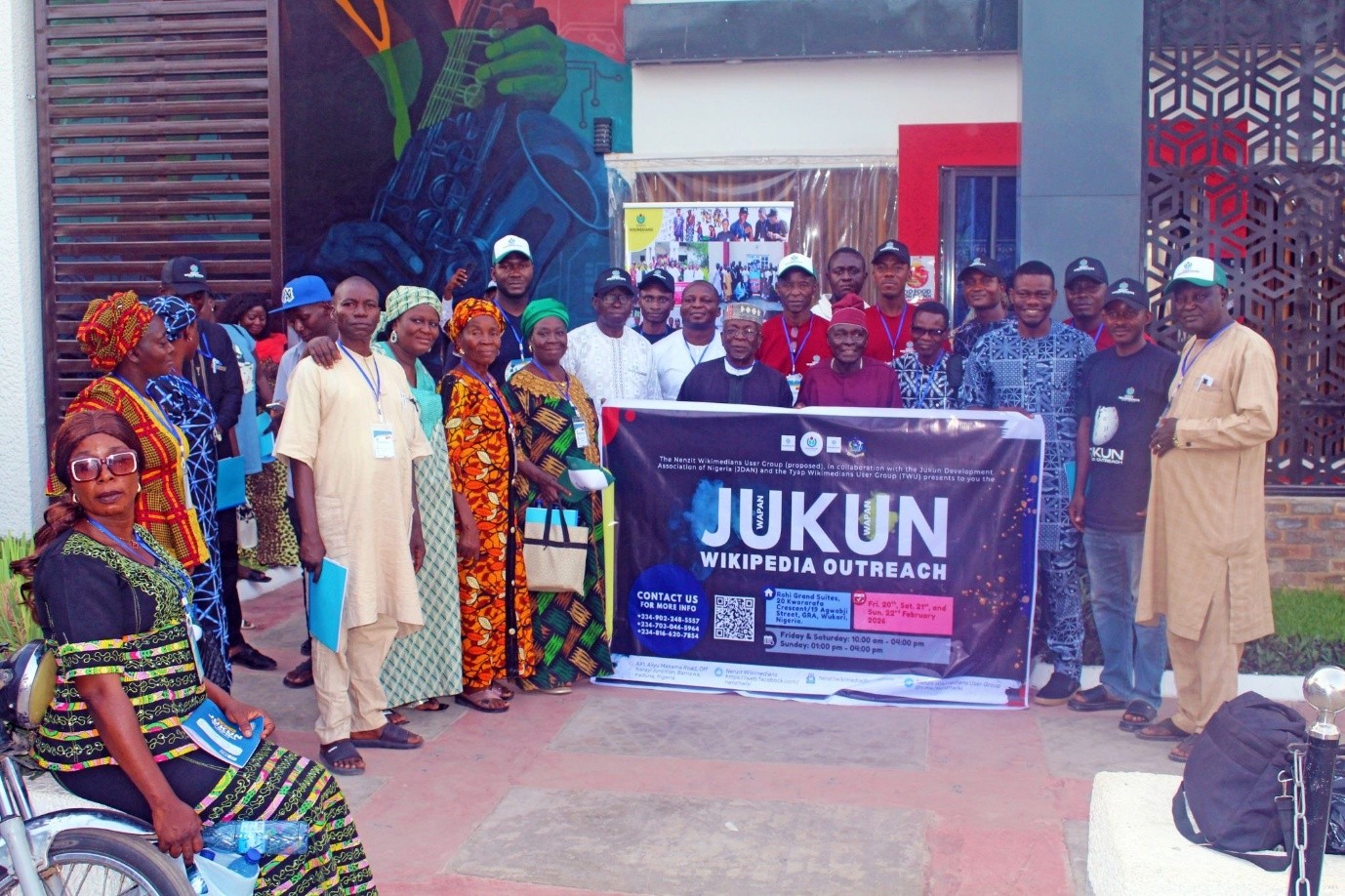

WIKIPEDIA: JUKUN WAPAN LANGUAGE TO GET ITS OWN EDITION
Not less than 50 Jukun Wapan speakers gathered on Friday, 20th February 2026, as the news of the Nenzit Wikimedians team coming to help start the Jukun Wapan Wikipedia was heard, to participate in the Jukun Wikipedia Outreach. The Wikimedia team, consisting of members of the Tyap Wikimedians User Group from Tyap-speaking background (Kambai Akau and Kuyet Friday Musa) and Jju-speaking background (Joshua Jacob Nzamah and Abukam Peter Adamu) on arrival, headed to see the Aku Uka of Wukari in his palace, to brief him of the reason for their visitation. The Aku Uka was very delighted and gave the team his blessings. The Wikimedia team was accompanied to the Aku Uka’s palace by members of the Jukun Wapan bible translation team, led by the coordinator, a retired clergyman and village head of Byepyi, Atando James Kinda Agbu, and another member of the team, Amos Jonathan Ajotsatutu, who made sure that the Wikimedia team was well taken care of. After the visit to the Aku Uka, the team headed back to meet the venue at Rohi Grand Suites, 20 Kwararafa Crescent/19 Agwabji Street, GRA, Wukari, where they began the first of the three-day session with the aspiring editors.
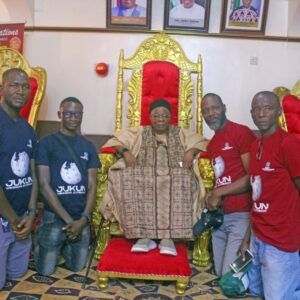
Image: L-R: Friday Kuyet Musa, Kambai Akau, Aku Uka of Wukari (Dr. Ishaku Adda Ali, Matakitswen I), Joshua Jacob Nzamah, and Abukam Peter Adamu. (File:Nenzit Wikimedians and the Aku Uka, Matakhitswen 02.jpg. (2026, March 17). Wikimedia Commons.
The Jukun Wapan language, one of the about 17 Jukunoid languages in existence today, will be the first of them to have a Wikipedia edition in Taraba State, and maybe one of the few languages in the Middle Belt after the Tyap, Igala, Nupe, Jju, and Karekare Wikipedia editions. There are currently language editions like Bole, Berom, and Hyam Wikipedia editions being developed in the Wikimedia Incubator, and Jukun Wapan just got added to the list.
In 2022, the Tyap language, spoken in Southern Kaduna and Plateau States became the very first language in the Middle Belt to get its own Wikipedia. The Tyap Wikimedians User Group became an approved affiliate of Wikimedia Foundation Inc. (WMF), later in the same year, and the Tyap Wikimedians Organisation registered with the CAC in January 2023. Kambai Akau (Levi Kambai Timothy) leads the activities of the group and is supported by Kuyet Friday Musa and other community volunteer staff. Nenzit Wikimedians is a tag for all editors of Central Nigerian (Nenzit or Platoid) languages, consisting of the likes of Tyap, Jju, Berom, Hyam, Jukun, Tarok, Tsuvadi, and many more belonging to the Plateau, Kainji, and Jukunoid subbranches.
The Nigerian Middle Belt boasts of over 200 languages, but most of them are underdeveloped and endangered. The bigger languages spoken in Nigeria, namely: Hausa, Igbo, and Yoruba, including English and Nigerian Pidgin languages, are dominant. These languages tend to have more attention from the Nigerian government at the expense of the minoritized languages. Through the support from the WMF, the Nenzit Wikimedians hope to change that narrative, and document, preserve, and promote the wealth of the cultures of the Middle Belt for posterity’s sake and to instill the needed confidence for the natives of these languages to continue speaking their languages and developing their identity, especially the youths.
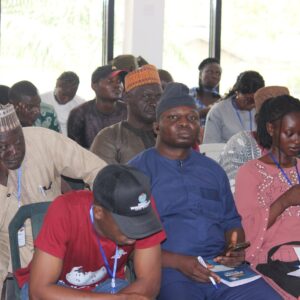
Image: Participants on the second day of events (File:Attendees during the Jukun Wikipedia Outreach 02.jpg. (2026, March 17). Wikimedia Commons.
The Jukun Wikipedia Outreach was a success. It lasted from Friday, 20th to Sunday, 22nd February, 2026, with Kambai taking most of the workshop sessions, supported by Kuyet and Joshua. Prior to the program’s kick-off, many participants followed the guidelines on the Event:Jukun Wikipedia Outreach page on Meta-Wiki to create their user accounts. In the program, they learned about the Wikimedia sister projects and were shown how to navigate and create their first articles and edit them in the Wikimedia Incubator, where new Wikimedia language editions are developed before being launched publicly. At the end of the event, not less than 140 articles were created by the participants, among which was one of the sons of Dr. Shekarau Angyu Masa-Ibi (Kuvyon II), the previous Aku Uka of Wukari, Prince Ajifada Shekarau, who was an event co-organizer alongside Amos Jonathan Ajotsatutu, Peter Agan, and Sike-Uwbu Daude Gbana. Many writers and scholars of Jukun Wapan extraction were present, and books written in Jukun Wapan were donated to the Nenzit Wikimedians, and others were purchased. The Nenzit Wikimedians were fed with huge wraps of pounded and fish from the Benue River, experiencing the Jukun hospitality at its utmost!
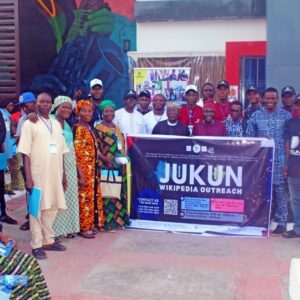
Day 3’s group picture (File:A group photograph on the Day 3 of the Jukun Wikipedia Outreach 2026.jpg. (2026, March 17). Wikimedia Commons.
The top editors in the outreach program were gifted with souvenirs on the last day of the event, with Joseph Atebo N. Afyenakun, Yavini Ladi, and Jibo Paul Aten-wunu topping the first three highest editor ranks. Others were also encouraged to keep editing even after the event, to enable the project to move out of the Wikimedia Incubator within the next couple of months.
The Nenzit Wikimedia team travelled all the way from Kaduna and Zonkwa to attend the program in Wukari, and had to cross the Benue River at Ibi, where the a bridge is yet to be constructed, for the sake of bringing more underrepresented languages in the Middle Belt into lamplight because they take it s a responsibility which they owe the next generations unborn, for the preservation of the identity of the peoples of the region through online open source documentation on Wikimedia sister projects like Wikipedia, Wikidata, and Wikimedia Commons.
The group seeks the partnership of non-governmental organizations working along the same terrain to boost synergy and increase the momentum needed to preserve and enhance the linguistic identity of the underrepresented in the Middle Belt.