


Nigeria’s Mining Investment Promises Ring Hollow as Jupiter Lithium Dispute Exposes a Troubling Contradiction
By Biliyaminu Suraj
Nigeria’s renewed courtship of American investors in the mining sector deserves more than applause. It deserves scrutiny.
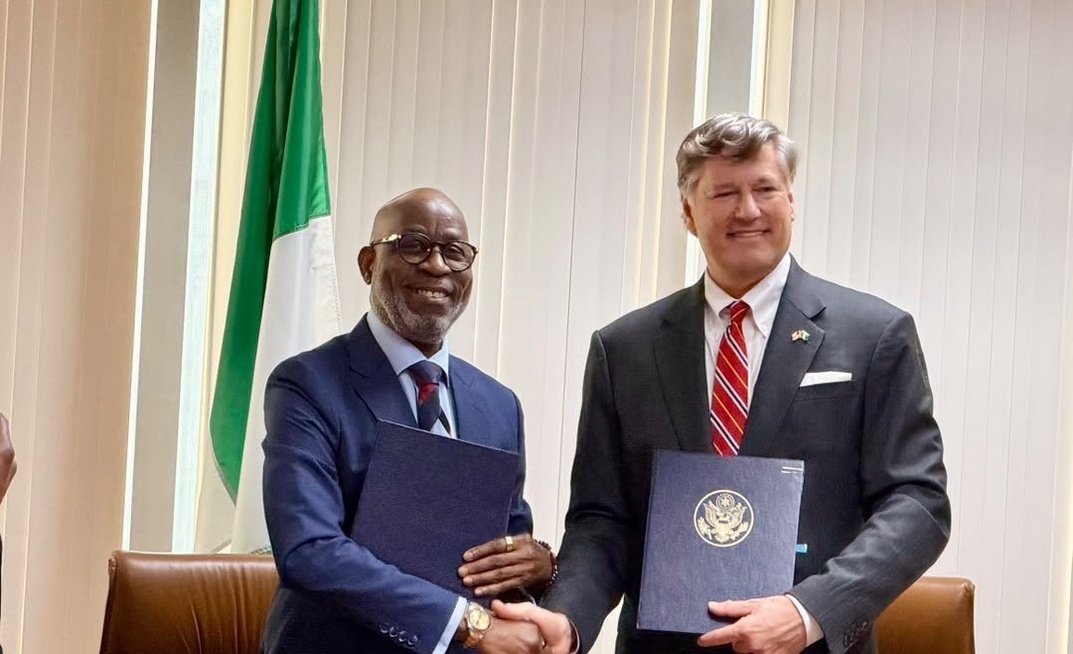
On September 24, 2026, Minister of Solid Minerals Development Dele Alake announced on X that Nigeria and the United States had signed a framework agreement on mining investment. He said it was signed in New York with US Deputy Secretary of State Christopher Landau and covers geological data and exploration, mineral development and processing, infrastructure and technical capacity. Minister Alake valued Nigeria’s mineral resources at about $700 billion. As reported, the announcement named no project and stated no investment figure.
That raises an uncomfortable question: what does a promise of a welcoming investment environment mean for investors who have already committed years of work and resources to developing Nigeria’s mineral wealth? The dispute over a major lithium project in Kaduna State offers a sobering answer.
In July 2024, American Resources Corporation’s subsidiary, ReElement Technologies, announced a joint development agreement with UK-based Jupiter Lithium Ltd to commercialise what the companies described as a world-class lithium deposit in Southern Kaduna. The project, held through Nigerian companies Basin Mining Limited and Range Mining Limited, covers about 442 square kilometres near Kafanchan under granted mining leases the companies said run to 2074 plus several mining lease applications awaiting grant by the Minister.
The announcement was ambitious. Jupiter planned to move from contract mining to large-scale operations, starting with 55,000 tonnes of spodumene concentrate a year and rising to 167,000 tonnes within two years, with first production projected for early 2025. It is not clear that production ever began. ReElement planned a processing facility in Nigeria to produce battery-grade lithium carbonate using the lithium concentrate produced from the Jupiter project, and the companies promised a continuation of community projects including potable water, electricity, agriculture and scholarships which Basin and Range had been implementing for several years. That is the domestic processing and industrial development Nigeria says it wants.
The project has since become an international investment dispute. Mid-last year, Jupiter alleged Nigerian authorities had unlawfully revoked its mining rights and seized the project. The firm also alleged that the government purportedly revoked 70 per cent of its mining leases and failed to decide on further mining lease applications within the 45 days the Mining Act requires, leaving the applications waiting more than two years. It further claims authorities forcibly escorted its personnel off the tenements. These are allegations, not findings.
The government’s case deserves a fair hearing. In a statement issued in early August 2026, the minister’s media adviser, Kehinde Bamigbetan, said the revoked titles belonged to Basin Mining Limited, a Nigerian company. He said they were revoked for failure to pay statutory annual service fees of ₦1.223 billion in 2024 on five mineral titles, a liability that rose to about ₦2.494 billion by the time the licences were revoked. The ministry says it has no legal or contractual relationship with Jupiter Lithium, Basin and Range’s UK parent company, because the Nigerian Minerals and Mining Act 2007 prohibits licences to foreign companies. But the government’s account leaves important questions unanswered. First, the ministry says it has no relationship with Jupiter Lithium Ltd and that Jupiter is unknown to the mining authorities, yet its own aide has described Basin Mining as an alleged Nigerian subsidiary of Jupiter and has acknowledged that Jupiter filed arbitration over the revocation. If a foreign mining company cannot directly hold a mining title how then does it invest in a mining project in Nigeria if not through a local Nigerian subsidiary? Second, by the ministry’s own figures the arrears roughly doubled before the licences were revoked. The company alleges it had been denied access to its tenements for more than two years and questioned why it should pay annual fees if it could not access its tenements and could not develop the mineral assets it had discovered after years of exploration and investment. Third, why did the Ministry not grant the mining lease applications within the stipulated 45 days but reject the applications without notice nor reason after more than two years? Finally, the ministry has answered critics by calling their campaign blackmail, rather than publishing the records that would settle the matter.
The legal consequences are already in motion. The italaw docket lists a notice of intent dated July 1, 2025 and a request for arbitration dated December 1, 2025, under the 1990 Nigeria-United Kingdom Bilateral Investment Treaty. The International Centre for Settlement of Investment Disputes (ICSID), part of the World Bank Group, has the case as Jupiter Lithium Ltd and Others v. Federal Republic of Nigeria, Case No. ARB/26/27, and it is pending. The Tribunal has been constituted but is yet to hear submissions on Jupiter’s allegations or Nigeria’s defence.
An investor-state arbitration over a strategically important critical minerals project is not a minor administrative disagreement. It raises questions about regulatory predictability, the security of mineral titles and the confidence investors can place in Nigeria’s legal and investment framework. The government may argue it is simply enforcing the law, and it can make that case before the tribunal. But investors and the Nigerian public are equally entitled to ask whether enforcement was transparent, proportionate and consistent with the stated commitment to long-term investment.
There is also a contradiction in the government’s messaging. Nigeria is seeking American capital and presenting itself as an emerging destination for mining investment, while an existing major project that attracted international technical and commercial partners sits in an arbitration. What assurance can the government give a new American investor if the future of a project established under an international investment treaty with Nigeria’ is contested? The slump in trade between Nigeria and the UK of -45% in 2025 may reflect the diminishing confidence Nigeria’s traditional trading partners place in Nigeria while Nigeria looks towards China with trade up 38.4% in 2025.
Investors do not make investment decisions on speeches, memoranda or official photographs. They study how companies already in the market have fared. Security of title, predictability and consistency in mining regulations are critical. The significant increases in mining licence fees in 2025 without mining industry consultation saw exploration licenses experiencing fee increments as high as 2,000 percent and mining leases seeing increases of 4,000 percent.
The consequences run both ways. If the revocations are found to have violated the UK-Nigeria Bilateral Investment Treaty which provides investment protections, confidence in Nigeria’s mining sector would suffer and the country could face potentially significant financial liability in the Jupiter case. If the government shows the revocations were lawful and justified by genuine breaches, it reinforces the principle that investors must obey Nigerian law. Either way, the dispute demands transparency and documentary evidence, not public relations battles.
The Jupiter case is a litmus test for investment from reputable international mining companies. It demands transparency from both the Federal Government and the mining company. The Federal Government should clarify the status of the affected tenements and respond to the allegations about third-party access to the project area, the companies’ several petitions to remove illegal miners, the extraordinary delay in addressing the applications for mining licences and the MCO award of several licences over the companies’ valid tenements to third parties The same standard applies to Jupiter: its claims, however serious, must be backed by verifiable evidence and tested independently and they appear to be doing that by taking their claim to the World Bank’s arbitration platform, The International Center for Settlement of Investment Disputes (ICSID), an expensive process that is not undertaken lightly.
The US-Nigeria September agreement may open real opportunities. Its value will be measured not by the enthusiasm around its signing, but by whether investors can operate under clear rules enforced consistently and fairly. Attracting foreign investment is only half the challenge. Protecting the credibility of the investment environment is the other half.
Until that contradiction is addressed, every new promise of a mining-sector investment boom deserves a pinch of salt.