Middle Belt Forum Draws Battle Lines Over Sultan’s Proposed Permanent Traditional Leadership Role

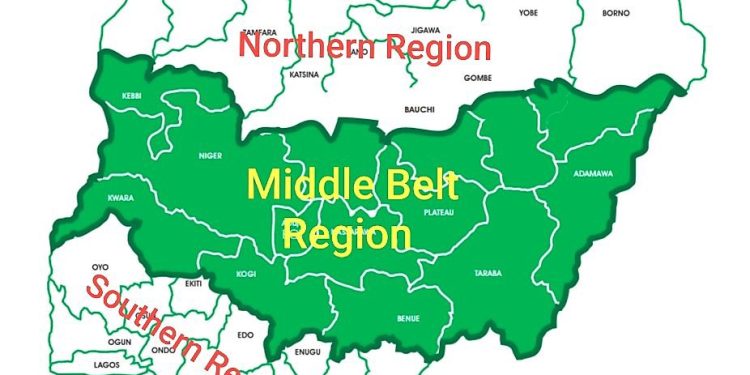
(Makurdi), The Middle Belt Forum has thrown down the gauntlet in what promises to be one of the most heated constitutional debates of 2025, declaring unequivocal opposition to a clause in the National Council for Traditional Rulers of Nigeria Bill that would make the Sultan of Sokoto a permanent co-chairman of the proposed national body.

In a strongly-worded statement released Sunday, the forum’s National Spokesman, Luka Binniyat, described the provision as a “grievous insult” to ancient Middle Belt kingdoms and warned of mass boycotts if the legislation passes in its current form.

The controversy centers on the National Council for Traditional Rulers of Nigeria (Establishment) Bill, 2024, sponsored by Senator Simon Bako Lalong of Plateau South. Having sailed through its second reading in March, the bill now sits before the Senate Committee on Establishment and Public Service, where its fate—and potentially the unity of Nigeria’s traditional institution—hangs in the balance.

Ancient Kingdoms Challenge Modern Politics

At the heart of the Middle Belt Forum’s objection lies a compelling historical argument that challenges conventional assumptions about traditional hierarchy in Nigeria. The forum contends that several Middle Belt monarchies predate the Sokoto Caliphate by centuries, making the proposed permanent arrangement historically unjustifiable.

“The Kwararafa Confederacy flourished from the 800s to the 1700s A.D.,” Binniyat noted, pointing to the Aku Uka of Wukari as the spiritual heir to a legacy that existed long before the Sokoto Caliphate’s establishment in 1804. Similarly, the forum highlighted the Attah of Igala, whose kingdom thrived before and after the 14th century, and the Etsu Nupe, representing a 15th-century kingdom that maintained its cultural identity despite later Islamic influence.

Perhaps most significantly, the forum emphasized that the Tiv Nation—one of Nigeria’s largest ethnolinguistic groups—was never conquered by the Sokoto Caliphate. The Tor Tiv, they argue, represents a proud, independent people whose acephalous society thrived without external domination.

Religious Leadership Versus Traditional Authority

The Middle Belt Forum’s opposition extends beyond historical precedence to fundamental questions about the nature of leadership in a pluralistic democracy. They argue that the Sultan’s primary role as the spiritual head of Nigerian Muslims makes his permanent secular leadership problematic in a constitutionally secular state.

“His institutionalized leadership over a national council of traditional rulers would alienate Christians, traditional worshippers, and other faiths,” the statement declared, warning that such an arrangement would “promote religious supremacy under the guise of traditional unity.”

This concern gains additional weight from the forum’s pointed reference to the Sultan’s patronage of the Miyetti Allah Cattle Breeders Association (MACBAN), an organization they link to violent conflicts that have claimed thousands of lives across the Middle Belt. The forum argues that making someone with such associations a permanent leader would be insensitive to victims of these conflicts.

Colonial Legacy and Modern Resistance

The statement reveals deep-seated resentment about colonial-era impositions that artificially elevated certain traditional authorities over others. The forum argues that British indirect rule forcefully placed autonomous Middle Belt communities under Emirate control, creating “an artificial hierarchy that granted undue privilege and influence to Fulani-dominated Emirates.”

“More than six decades after the end of colonial rule, it is unacceptable for any traditional authority to be elevated above others, particularly in a democratic Nigeria that champions equality, justice, and federal character,” Binniyat emphasized.

This historical grievance underscores why the current proposal strikes such a sensitive nerve. For many in the Middle Belt, permanent co-chairmanship arrangements evoke memories of colonial subjugation that independent Nigeria was supposed to remedy.

High-Stakes Threats and Alternative Proposals

The Middle Belt Forum has not limited itself to criticism—it has issued concrete threats that could fragment Nigeria’s traditional institution. Should the bill pass with the contentious clause intact, the forum promises to mobilize all Middle Belt ethnic nationalities to boycott the council entirely.

More dramatically, they threaten to establish an autonomous Council of Middle Belt Traditional Rulers, effectively creating a parallel institution that could undermine the national body’s legitimacy and effectiveness.

However, the forum also offered constructive alternatives, proposing that the chairmanship be rotational across geopolitical zones or ethnic blocs, with tenure-based arrangements ensuring all traditional rulers feel included. They suggest allowing traditional rulers themselves to democratically choose their leadership through transparent, inclusive processes.

National Unity at a Crossroads

As this debate unfolds, it highlights deeper tensions about identity, representation, and historical justice in modern Nigeria. The Middle Belt Forum’s position reflects broader anxieties about religious and ethnic dominance in a diverse nation still grappling with colonial legacies.

Senator Lalong, ironically described by the forum as “a respected son of the Middle Belt,” now finds himself at the center of a controversy that could define his legislative legacy. As the Senate Committee on Establishment and Public Service deliberates, they face a choice between maintaining the bill’s current structure and risking institutional fragmentation, or finding compromise solutions that address historical grievances while preserving national unity.

The stakes could hardly be higher. Traditional rulers have long served as bridges between Nigeria’s diverse communities and the federal government. Any arrangement that alienates significant segments of this institution could have far-reaching consequences for national cohesion.

As one traditional ruler privately noted, “This is not just about who sits where in meetings. It’s about whether Nigeria can create institutions that truly reflect our diversity and shared humanity.”

The coming weeks will reveal whether Nigeria’s lawmakers can navigate these treacherous waters or whether the ancient kingdoms of the Middle Belt will chart their own separate course in the nation’s traditional landscape.
INVESTIGATION: How Armed Fulani Militants Executed Coordinated Attack While Nigerian Army Allegedly Provided Safe Passage

Part One of Two-Part Investigation

By Middle Belt Times Investigative Team

A Community Under Siege

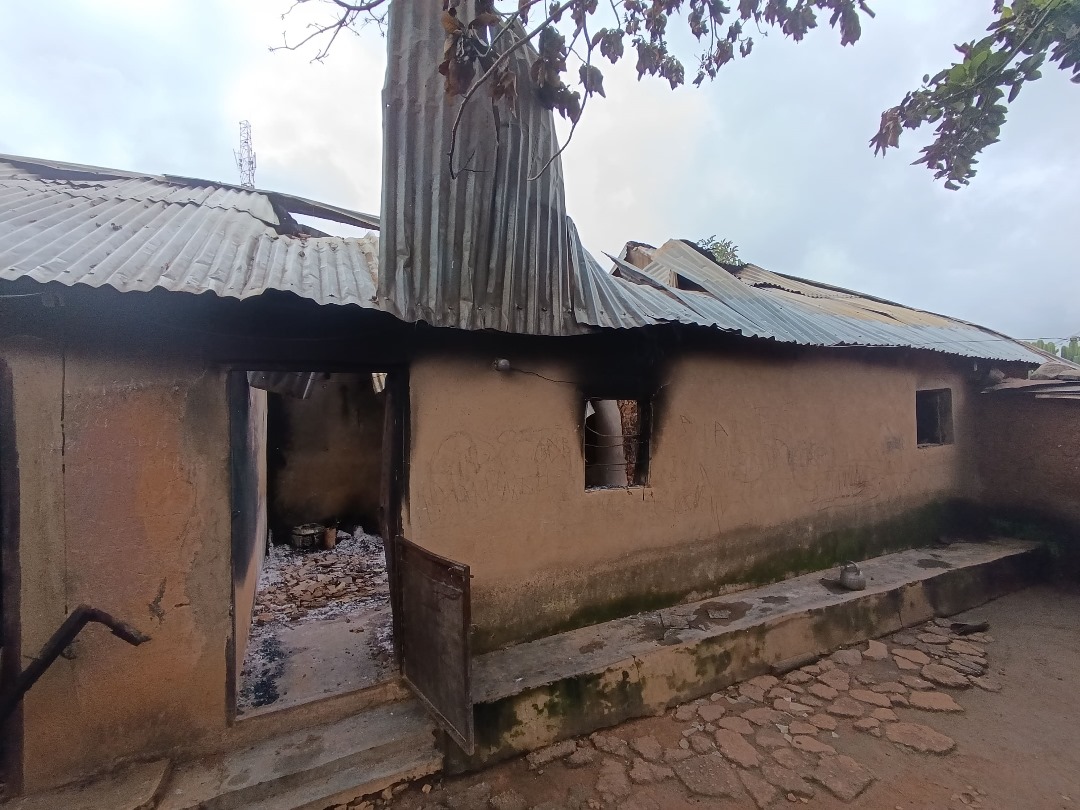
The morning sun stretched long shadows over what was left of Rev. Davou Musa’s house in Bindi village—a stark reminder of the nightmare that struck in the early hours of July 15, 2025. This quiet Christian farming community sits in the green plains of Riyom Local Government Area, Plateau State, but now the air hangs heavy with the bitter smell of smoke and destruction, leaving behind too many unanswered questions.

When Middle Belt Times (MBT) arrived in Bindi on Monday, July 21, the village bore the hallmarks of a community traumatized. Only men remained on the grounds, their weathered faces etched with grief and anger. The women and children had fled after the devastating attack that claimed 27 lives, leaving behind a ghost town of mud houses and shattered dreams along the Jos-Abuja highway, just 30 miles from the state capital.

A Community’s Peaceful Existence Shattered

Bindi Tahoss community, home to approximately 1,000 residents living in 160 mud houses—some crowned with traditional thatch roofs—had been a picture of rural tranquility. The temperate climate, reminiscent of European cities, created ideal conditions for diverse vegetable cultivation, sustaining a population of subsistence farmers who had coexisted peacefully with their surroundings for generations.

A vegetable nursery bed in Bindi- Credit: MBT

“We have never had any misunderstanding with the Fulani,” Simon Davou told MBT, his voice carrying the bewilderment of a man whose world had been turned upside down without warning. “They graze around our community, but we have never had any reason to disagree with them over the years. Sometimes they graze into our farmlands and destroy our crops, but that is a reality we have learned to live with over the years.”

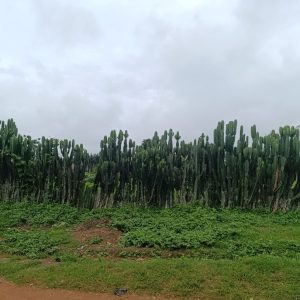
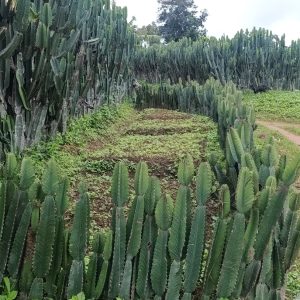
The community’s only protection came from an unusual source—cactus walls encircling the small settlement. “These cactus plants are our only form of security,” Rev. Davou Musa explained to MBT, gesturing toward the thorny barriers that had proven tragically inadequate against the coordinated assault that would follow.

Simon Davou’s words reveal the resigned acceptance of a vulnerable community: “There are times they attack our people in their farms, but what can we possibly do? We are a small community of about 160 houses. There is no police station or any security agency stationed here, so we overlook most of these issues by the Fulani herdsmen.”

Cactus wall fence – Credit: MBT

The Calm Before the Storm: July 14 Warning Signs

The sequence of events that led to the massacre began on July 14, when women and children working their farms spotted an unusual gathering. Large numbers of Fulani herders were accompanied by unidentified men dressed in black clothing—a sight that immediately triggered alarm bells in the peaceful community.

“The women screamed to draw the attention of members of the community, whistles were blown across the community, and the herdsmen fled,” Rev. Musa recounted to MBT. “When they fled, we all thought they had gone, but by 4 pm, they returned, and the information went round our community that there was a threat in the community, and they were identified as Fulani from Hayin Bangai, a community about a mile from our community. You can see the community from here, over there.”

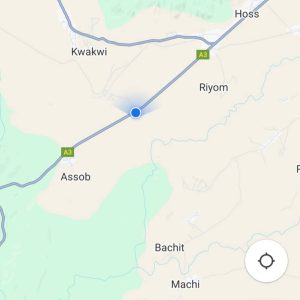
Google map obtained by MBT confirms Bangai’s proximity—less than a mile south of Bindi. More significantly, MBT investigations revealed that a prominent leader of the Miyetti Allah Cattle Breeders Association of Nigeria (MACBAN) maintains a house in Bangai of Bachit district, raising questions about MACBAN’s role in the attack among residents of Bindi.

Google Map showing Bachit district, where Bangai is located

The community’s response to the threat was swift and followed proper channels. “On that evening of July 14, we tried and informed the security about the movements of people that we don’t understand in our community,” Rev. Musa explained. “We called our Ward councillor, who then called the guard commander of the Nigerian army immediately. The commander sent some soldiers at about 5 pm on 2 gun trucks. We were all happy and confident since we saw the army in our community, and we went about our activities.”

The Army’s Brief Presence Hours before Attack

The arrival of Nigerian Army personnel brought temporary relief to Bindi residents. The sight of two gun trucks and soldiers patrolling their community provided a sense of security that would prove devastatingly false. At approximately 7 pm on July 14, the first signs of trouble emerged.

“At about 7 pm, we began to hear gunshots from the major road that passed through our community,” Rev. Musa recalled. “It was from the armed Fulani herdsmen. Then we also heard response from the soldiers, and we felt better because the soldiers responded to the gunfire from the herdsmen. Then the gunfire ceased, and everywhere became quiet. We went to bed trusting that the soldiers would be on ground to forestall any further threat that may arise, but we were wrong.”

3 AM Assault

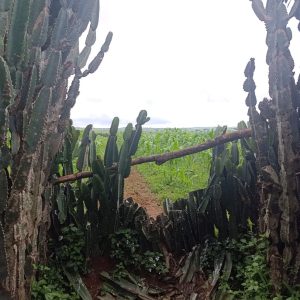
At 3 AM on July 15, the nightmare began in earnest. “We started hearing gunshots again, this time around there was no response,” Rev. Musa told MBT. “It was just the herdsmen shooting sporadically. They cut down some cactus fence and came into our community through the direction of Bangai.”

Community’s breached security – Credit: MBT

Ezekiel Yakubu, the youth leader of Bindi, provided additional context to MBT: “They came in from Hayin Bangai to attack our village. They had in the past accused our community of killing a young herder, an accusation they couldn’t prove. The government knows the people carrying out these attacks against us and must be decisive, go into Bangai and ensure that the arms are recovered from the herdsmen and the perpetrators of this atrocity are brought to book.”

Sacred Ground Desecrated: Attack on the Community Church

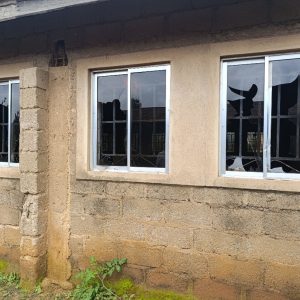
Among the most disturbing aspects of the assault was the deliberate targeting of the community’s spiritual center. The Church of Christ in Nations (COCIN), the only church in Bindi and the spiritual heart of this Christian community, was systematically vandalized during the attack. Windows were shattered, chairs were broken, and the public address system along with other musical instruments were destroyed—a calculated assault on the community’s faith and identity.

Community’s Church Shattered Windows—Credit: MBT

Rev. Davou Musa, who serves as the resident pastor of the COCIN church, witnessed firsthand how the attackers sought to destroy not just lives and property, but the very soul of the community. The targeting of religious infrastructure alongside residential homes suggests a coordinated effort to drive the Christian population from their ancestral lands permanently.

Explosive Evidence: Sophisticated Weapons and Tactics

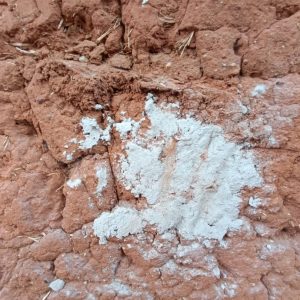
MBT investigations revealed the sophisticated nature of the attack. Eighteen houses belonging to 27 families were destroyed using explosives believed to be calcium carbide—a substance that causes explosions on contact with damp air, water, or fire sparks. The use of such materials indicates a level of planning and resource access that goes far beyond spontaneous violence.

Calcium carbide used by the attackers – Credit: MBT

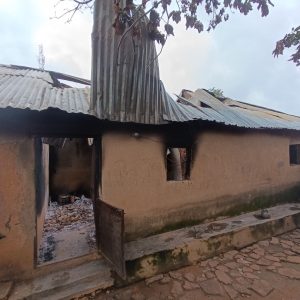
The impacts of these explosions were devastating and visible. Building roofs were completely blown off, leaving concrete evidence of the attackers’ intentions to cause maximum destruction. This marks a disturbing escalation in the weapons and tactics used against Middle Belt communities.

Impact of explosion on one of the destroyed houses- Credit: MBT

A Pastor’s Harrowing Testimony

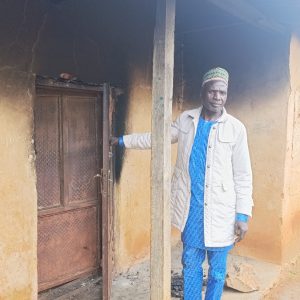
Rev. Davou Musa’s account of the attack provides perhaps the most chilling insight into the attackers’ methods and knowledge. Having lost nine family members in the assault while witnessing the desecration of his church, his survival allows him to bear witness to the calculated nature of the violence.

“When they got to my house, which is the pastorium of the Church, they started hitting the gate for several minutes before they gained access to the compound,” he told MBT. “We had been hearing all the gunshots, weeping, and screaming from other victims being killed for over an hour. My house was the last they entered.”

Rev. Davou Musa standing at his destroyed home- Credit: MBT

The pastor’s decision to hide in a room with goats, while his wife and another woman concealed themselves in an outside bathroom, proved life-saving. “One of the attackers came into the room I was hiding and saw the goats. He was excited, telling his other colleagues that he had seen some goats in Fulfulde. I understand a bit of Fulfulde, so I heard what he was saying. I believe God saved my life so I can tell the story of what truly happened on that day.”

The most damning revelation came from what Rev. Musa overheard: “When it was 5 am, they spoke in Fulfulde that ‘it is 5am, soldiers,’ meaning they knew exactly when the soldiers were going to show up in our community. And indeed, few minutes later the soldiers came in after over two hours of killings.”

[Part Two will examine the military’s controversial response, allegations of complicity, and the broader implications for security in Nigeria’s Middle Belt region.]

The Review

Mining Cadastre Office: A Threat to National Security

By Engr. Biliyaminu Surajo

Biliyasuraj1980@yahoo.com

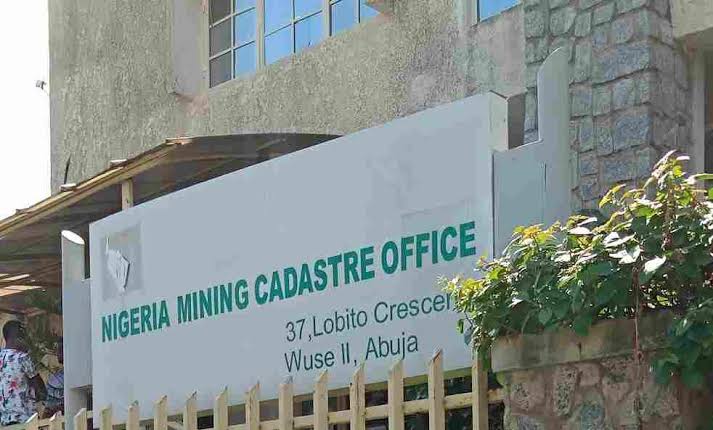
The unassuming building at House 37, Lobito Crescent, Wuse II, Abuja, may appear to be just another government office, but it houses one of Nigeria’s most powerful regulatory agencies. The Mining Cadastre Office (MCO), operating under the Ministry of Solid Minerals Development, is tasked with the critical responsibility of regulating solid mineral licensing in Nigeria—a function vital to the nation’s economic development and security.

However, over the years, this agency has become synonymous with corruption, bribery, and unprofessionalism. Many industry operators now claim that the MCO has become the single greatest obstacle to progress in Nigeria’s mining sector.

The June 19, 2025 Debacle

The June 19, 2025 virtual stakeholder engagement session, organized by the new Permanent Secretary to restore confidence in the mining sector, was nothing short of a disaster. What was intended as a collaborative dialogue devolved into a monologue from ministry officials until frustrated stakeholders demanded to be heard. 

When finally given the opportunity to speak, industry participants unleashed a torrent of complaints about the MCO. These ranged from demands for fees when tenement holders couldn’t access their properties, to inexplicable delays in granting mining titles.

The Crisis of Overlapping Titles

The MCO’s fundamental responsibility is to issue valid mining licenses that provide holders with secure “good title” to their allocated areas. However, the reality is far from this ideal. The agency has developed a troubling pattern of issuing new titles over existing valid ones, creating a web of competing claims that has paralyzed the sector.

Community leaders frequently find themselves caught between multiple parties, each holding seemingly legitimate title documents signed by Director General Simon Nkom. This raises a critical question: how are these overlapping titles possible when applications require written consent from community leaders?

Investigation reveals a disturbing answer: for a fee, fake community consent documents can be obtained through MCO channels. Sources within the industry report that at least one MCO officer has supplied over 50 fraudulent consent documents, with each application processed successfully upon payment of the requisite bribe.

A Revenue Bonanza Built on Dysfunction

The overlapping titles crisis has persisted for three years, with public complaints falling on deaf ears. The MCO continues issuing licenses over valid titles while collecting fees from both new and existing title holders—creating what can only be described as a revenue bonanza built on institutional faipublic 

The minister change the rule mid-game. You can not change the rules mid game like 12-fold increasement of annual service fees and other related fees mid year and ask for immediate implementation. Those instability is a turn off for investors.

This windfall was amplified by the Federal Ministry of Solid Minerals Development’s announcement on July 4, 2024, of a staggering 12-fold increase in mining rates and fees. The resulting revenue inflow of over ₦6.95 billion in the first quarter of 2025 was later celebrated by Director-General Engineer Obadiah Simon-Nkom as proof of his successful management. 

Many tenement holders, however, take a different view—one that was expressed openly during the June 19, 2025 meeting with the Permanent Secretary and senior management. The MCO is not a revenue generation agency, and increased fees from applicants should not be considered a success story. The real question remains: where are the working mines? Not the environmentally destructive Chinese operations visible across the country, but genuine, sustainable mining operations.

The Facilitation Fee Culture

Beyond official fees, industry sources report a pervasive culture of additional payments to individual MCO officers. The CEO of a foreign mining company disclosed being asked for hundreds of thousands of dollars to expedite his tenement application—an incident that, while extreme, is not isolated.

The speed of tenement processing has become directly proportional to an applicant’s willingness to pay “facilitation fees.” Those who refuse to pay beyond scheduled fees face indefinite delays, while those who pay extra receive prompt service.

The MinDiver System Failure

The prevalence of overlapping titles is particularly puzzling given the implementation of the Mineral Sector Support for Economic Diversification Project (MINDIVER), funded by the World Bank with $150 million. This project was specifically designed to prevent such duplication through an automated cadastre system.

The contract for “Upgrading and Automatization of the Mining Cadastre Office for Online Applications, e-recording, Archiving and Establishment of Mining Cadastre Offices in the Six Geopolitical Zones” was awarded to GAF, a Munich and Neustrelitz-based German company with a relationship with the Nigerian MCO dating back to 2007.

According to Simon-Nkom, “All mineral title applications are now submitted exclusively through the EMC+ system. It’s an entirely online platform that offers transparency, efficiency, and real-time access.” However, many Nigerian tenement holders would dispute all three claims.

One mining company CEO described the multi-million-dollar system as “an absolute mess,” explaining that applicants can no longer rely on the cadastre system’s accuracy. “You might be awarded a title today only to find another company is awarded a title over your area next week. It depends on how much you are prepared to pay to the MCO. It never used to be like this.”

Ironically, Simon-Nkom received an international award as Nigeria’s “best public servant leader” in 2024 for overseeing this system—a recognition that industry insiders find bewildering given the widespread dysfunction.

The Lost Golden Age

Veteran operators in the industry recall a time when the MCO functioned effectively under manual processing. When coordinate overlaps or conflicts arose, officials would help applicants adjust their applications accordingly. Overlapping titles were rare, and the system generally adhered to the provisions of the Mineral Acts that clearly forbid such conflicts.

The question that haunts the industry is: why is this happening now, with supposedly superior technology and systems?

International Embarrassment

The MCO’s dysfunction extends beyond Nigeria’s borders, embarrassing the country at international mining conventions. According to multiple industry sources, the Ministry of Solid Minerals Development and MCO have never presented a world-class mining project at international conferences over the past 12 years, despite spending millions of taxpayers’ money on these events.

One operator noted: “I have been attending AfricaDownUnder in Australia for the past 10 years. It’s a shame what MSMD/MCO come here to tell us. It’s a remix of annual presentations. I wonder why they even show up. They fly halfway across the world for nothing.”

At the recently concluded PDAC 2025—North America’s largest mining convention held annually in Canada—Nigeria’s delegation was among the largest but had nothing substantial to present. While other African countries like Ghana, Cameroon, Chad, and South Africa brought mining company CEOs to showcase success stories and attract investors, Nigeria’s representatives were reportedly “just there sharing flyers.”

The story is the same for Mines and Money, London, United Kingdom and Mining Indaba, Cape town, South Africa. Annually we just go there for the funfair. Absolutely nothing has been added to the Nigeria mining sector.

Who debriefs these government guys when they return from such expensive trips?

The contrast with other African nations is stark. These countries use international platforms to present concrete achievements, helping to galvanize undecided investors. Nigeria’s consistent failure to do so represents a massive missed opportunity for economic development.

The Chinese Factor

The current administration’s reliance on Chinese mining operations has raised additional concerns. Unlike Western companies that participate in international conventions and contribute to state building, Chinese operations are primarily extractive. The lithium processing plants being constructed across Nigeria reportedly use obsolete technologies already rejected by Western countries due to recovery rates of only 50%.

Yet these operations are presented as success stories by ministry officials, raising questions about whether proper due diligence is being conducted or if palm-greasing is influencing decision-making.

The Path Forward

Legal challenges are mounting, but as one operator noted, “these people do not care. It’s the Federal government. Until individual officials are sued for their actions, we are not likely to get it right.”

The time has come for comprehensive reform. The building at House 37, Lobito Crescent represents more than just a government office—it symbolizes the need for fundamental change in how Nigeria approaches mineral resource development.

The nation’s mining sector cannot afford to continue operating under a system characterized by corruption, inefficiency, and international embarrassment. The MCO’s transformation from a functional regulatory body to what many consider a threat to national security demands immediate and decisive action.

It is not too late to start over. The question is whether Nigeria has the political will to begin the necessary reforms at House 37, Lobito Crescent, and restore the MCO to its intended purpose: serving as a catalyst for sustainable mining development rather than an obstacle to it.

The future of Nigeria’s solid minerals sector—and potentially the nation’s economic diversification—hangs in the balance.


DISCLAIMER


This opinion piece reflects the author’s views based on publicly available information and industry sources. While every effort has been made to ensure accuracy, some details are based on confidential sources due to the sensitive nature of the subject matter. The opinions expressed are those of the author and do not represent any official position of this newspaper. All individuals and organizations mentioned have the right to respond, and such responses will be given due consideration.

Breaking: Suspected Fulani Militias Kill 20 in Riyom Community Despite Visible Military Presence

By Steven Kefas

Twenty people were killed in a brutal overnight attack on the peaceful community of Bindi in Ta-Hoss Village, Riyom Local Government Area of Plateau State, on Monday, July 14, 2025, according to local advocacy groups.

The Coalition for the Protection of Democracy (COPDEM), Riyom Branch, which announced the attack, described it as another devastating blow to communities already reeling from persistent violence in Nigeria’s volatile Middle Belt region.

Eyewitnesses and local sources confirmed that the assailants were heavily armed suspected Fulani extremists, continuing a tragic pattern of attacks across Riyom and other parts of Plateau State. The assault occurred despite the visible presence of security forces in the area, including armoured military assets, raising serious questions about the effectiveness of current security arrangements.

The attack is the latest in a series of violent incidents that have plagued the region. Just a day earlier, on July 13, gunmen suspected to be Fulani militia killed two preachers after their church service in the Gwon community of Rim District, also in Riyom LGA. The escalating violence has created a climate of fear and uncertainty among residents.

Escalating Violence in Plateau State

In Plateau state, armed herders carried out 38 attacks between March and April 2025 alone, according to Amnesty International. Between 27 March and 2 April 2025, coordinated attacks took place against five communities: Daffo, Gwande, Hurti, Manguna, and Ruwi in Bokkos local government.

With many herders belonging to the Muslim Fulani ethnic group, and many farmers Christian, the attacks in Nigeria’s Middle Belt often take on a religious or ethnic dimension. This dynamic has complicated resolution efforts and heightened communal tensions across the region.

Pattern of Impunity

COPDEM officials expressed frustration over what they described as the recurring nature of these attacks, noting that the locations and hideouts of the attackers have been repeatedly identified and reported to authorities. The group questioned why known threats continue to operate with apparent impunity despite security presence in the region.

“These attackers are not unknown. Their hideouts and base settlements in nearby enclaves have been repeatedly identified and reported by community leaders and local authorities,” the group stated in their press release. “Yet, year after year, these known threats continue to strike with impunity, often unchallenged.”

The attack on Ta-Hoss follows a devastating pattern in Riyom LGA. In April 2025, Daniel Mwanti of Wereng Community, Riyom LGA, was attacked and shot dead by Fulani militiamen, while on 24 December, gunmen killed at least 15 people — majority of them women and children —during an attack on Gidan Ado community of Ganawuri in Riyom LGA.

Broader Security Crisis

The Ta-Hoss attack is part of a broader security crisis affecting Nigeria’s Middle Belt. At least 50 people were reported killed in a similar attack in Zikke in April 2025, while at least 150 Christian farmers were killed by suspected Fulani Militias in weekend attacks in Yelwata in Benue state on June 13, 2025

Calls for Action

COPDEM has called on President Bola Tinubu and the National Security Council to order a high-level intervention and military operation to dismantle known terrorist enclaves threatening Plateau’s peace. The group also demanded that the Plateau State Government declare a state of emergency in affected areas.

The organization urged the Chief of Defence Staff and Chief of Army Staff to audit and reposition security architecture across Riyom and adjoining local government areas, while calling on the Nigerian Police and Department of State Services to investigate the continued failure to apprehend attackers despite available intelligence.

In a direct appeal to international bodies, COPDEM called on the United Nations Human Rights Council, Amnesty International, Human Rights Watch, and other global organizations to take immediate interest in what they described as “systematic violence and creeping genocide in Plateau State.”

As families in Ta-Hoss village mourn their dead and begin the difficult process of rebuilding their lives, the attack serves as another stark reminder of the urgent need for comprehensive solutions to Nigeria’s persistent security challenges in the Middle Belt region.

How Fulani Militias Became Nigeria’s Deadliest Group While Escaping Global Notice

By Steven Kefas

In 2015, when the Global Terrorism Index (GTI) ranked Armed Fulani militants as the fourth deadliest terror group in the world, Nigeria was already grappling with the brutal reality of multiple security threats. Yet nearly a decade later, as these same militants have grown exponentially more lethal, they have mysteriously vanished from international terrorism rankings —despite becoming what many security experts now consider Nigeria’s most deadly non-state armed group.

This paradox raises troubling questions about how the global community measures and responds to terrorism, particularly when it involves complex ethnoreligious conflicts in Africa. While international attention remains focused on jihadist groups like Boko Haram and the Islamic State West Africa Province (ISWAP), a more devastating threat has been systematically erasing entire communities across Nigeria’s Middle Belt.

The Numbers Tell a Devastating Story

Recent data from the Observatory for Religious Freedom in Africa (ORFA) paints a picture of unprecedented violence that dwarfs the carnage attributed to Nigeria’s better-known terrorist organizations. Note: The following data represents preliminary research findings that have not yet been published on ORFA’s website but are based on their ongoing documentation efforts. Between October 2019 and September 2024, ORFA documented 66,656 deaths across Nigeria, of these, 36,056 were civilians. The Fulani Ethnic Militia (FEM) were responsible for a staggering 47% of all civilian killings —more than five times the combined death toll of Boko Haram and ISWAP, which together accounted for just 11% of civilian deaths.

These figures represent more than statistical abstractions; they reflect a systematic campaign of violence that has fundamentally altered the demographic landscape of Nigeria’s Middle Belt. The data reveals that 2.4 Christians were killed for every Muslim during this period, with proportional losses to Christian communities reaching exceptional levels. In states where attacks occur, Christians were murdered at a rate 5.2 times higher than Muslims relative to their population size.

The scope of violence extends far beyond killings. ORFA documented 13,437 incidents of extreme violence during the five-year study period, including 29,180 civilians abducted. The trajectory of kidnappings alone illustrates the escalating nature of the crisis: from 1,665 civilians abducted in 2020 to 7,705 in 2022, before declining slightly to 6,255 in 2023, then rising again to 7,648 in 2024. By the end of 2024, the International Displacement Monitoring Centre reported that 3.4 million Nigerians had been forcibly displaced from their homes by conflict and violence.

A Pattern of Systematic Violence

Unlike the headline-grabbing attacks of jihadist groups such as Boko Haram and ISWAP, Muslim Fulani militants violence follows a different but equally devastating pattern. ORFA’s research indicates that 79% of civilian killings are land-based community attacks, where armed groups “invade mostly small Christian farming settlements to kill, rape, abduct, and burn homes.” This methodology, while less spectacular than suicide bombings or mass hostage situations, has proven far more effective at achieving long-term territorial control and demographic change.

The geographic concentration of these attacks is particularly telling. The North Central Zone and Kaduna state have borne the brunt of FEM violence. ORFA documented 3,776 incidents with civilian killings and 1,990 incidents with civilian abductions. Most of them by FEM. This concentrated campaign has effectively depopulated entire communities while military resources remain focused on the North-East and North-West regions where Boko Haram/ISWAP and Fulani bandits operate.

Recent mass casualty events underscore the escalating brutality of these attacks. The Yelwata massacre of June 13-14, 2025, stands as one of the most horrific examples, where FEM militants killed over 150 people—mostly women and children—in the farming community of Yelwata in Guma Local Government Area of Benue State. This attack followed a familiar pattern of targeting vulnerable agricultural communities during periods when people are fast asleep.

The violence is not new, but its intensity has dramatically increased. The Agatu Massacre of February-March 2016 saw between 300 and 500 people killed by FEM in Agatu Local Government Area of Benue State, marking one of the earliest large-scale coordinated attacks that would become the group’s signature methodology. More recently, the Christmas Eve massacre in Bokkos Local Government Area of Plateau State claimed over 200 lives, demonstrating how FEM deliberately targets Christian communities during religious celebrations to maximize psychological impact.

The Global Terrorism Index Conundrum

The disappearance of Fulani militants from GTI rankings despite their escalating lethality raises fundamental questions about how international terrorism monitoring systems categorize and prioritize threats. The GTI, published annually by the Institute for Economics and Peace, uses specific criteria to define terrorist incidents, requiring acts to be intentional, involve violence or threat of violence, and have sociopolitical objectives.

However, the framing of Fulani militia violence as “farmer-herder conflicts” or “ethnic clashes” rather than terrorism may have contributed to their exclusion from global terror rankings. This categorization problem has real-world consequences, affecting international aid allocation, security cooperation, and diplomatic pressure. When violence is labeled as communal conflict rather than terrorism, it receives less international attention and fewer resources for intervention.

The methodological approach of global terrorism databases may also inadvertently favor tracking spectacular attacks by designated terrorist organizations over systematic violence by ethnoreligious militias. While Boko Haram’s suicide bombings and mass kidnappings generated international headlines and clear database entries, the daily reality of village raids, targeted killings, and forced displacement may be underreported or miscategorized.

The Cost of Invisibility

The absence of Fulani militias from international terrorism rankings has had profound implications for Nigeria’s security response and international support. While billions of dollars in international aid and military assistance have flowed toward countering Boko Haram and ISWAP, the regions most affected by Fulani militia violence have received comparatively little attention or resources.

This mismatch between threat levels and resource allocation has allowed the crisis to metastasize. ORFA’s data shows that what security experts describe as “twin” Islamist threats—Boko Haram/ISWAP in the northeast and Fulani militias in the Middle Belt—have created a pincer effect that is reshaping Nigeria’s religious and ethnic geography.

The human cost extends beyond immediate casualties to include the systematic destruction of agricultural communities that form the backbone of Nigeria’s food security. As Christian farming communities are displaced or destroyed, the country faces not only a humanitarian crisis but also long-term food production challenges that could affect regional stability.

Questions Demanding Answers

The case of Nigeria’s invisible terror crisis demands serious examination of how the international community monitors and responds to political violence. If the deadliest group responsible for civilian casualties can operate below the radar of global terrorism indices, what other threats are being overlooked? How can monitoring systems be reformed to capture the full spectrum of political violence, regardless of whether perpetrators fit traditional terrorist profiles?

The ORFA data suggests that Nigeria is experiencing what amounts to a slow-motion genocide in its Middle Belt, with one ethnic militia group systematically targeting civilian populations based on religion and ethnicity. The pattern evident from Agatu in 2016 to Yelwata in 2025 shows a consistent strategy of mass killing designed to achieve territorial control and demographic change. Yet this crisis receives a fraction of the international attention devoted to other jihadist groups operating in Nigeria with lower casualty rates.

As Nigeria heads into an uncertain future, the international community must grapple with uncomfortable questions about selective attention to terrorism and the consequences of allowing certain forms of mass violence to remain invisible. The 36,056 civilian deaths documented by ORFA represent more than statistics—they are fathers, mothers, children, and community leaders whose lives were cut short while the world looked elsewhere.

The time has come to acknowledge that terrorism takes many forms, and the deadliest threats are not always the ones that make international headlines. Until global monitoring systems adapt to capture the full spectrum of political violence, groups like the Fulani militias will continue to operate in the shadows, leaving devastation in their wake while escaping the accountability that comes with international recognition and response.


How Lakurawa Terrorists Are Carving Out a Caliphate in Nigeria’s Northwest

First published on TruthNigeria 

By Steven Kefas

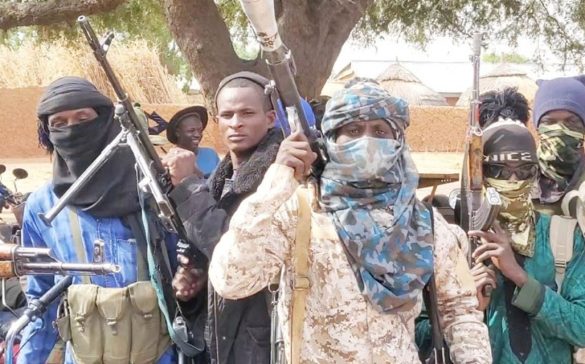
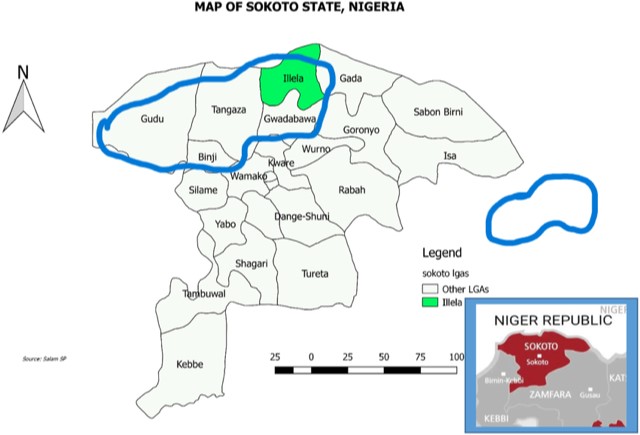
(Kaduna), The tranquil morning of July 2nd, 2025, shattered into chaos as Lakurawa terrorists, led by former bandit commander Charambe, descended upon Kwallajiya village in Sokoto State’s Tangaza Local Government Area. When the dust settled, 15 villagers lay dead—the latest victims of a terror group that has transformed from seemingly peaceful recruiters into a violent force threatening Nigeria’s northwestern frontier. Lakurawa has about 3,000 fighters in its ranks, security expert Dr. Walid Abdullahi told TruthNigeria.

This deadly assault represents a chilling evolution for the Lakurawa group, whose name derives from the French “La recrue” (the recruit), and whose journey from obscurity to infamy offers a sobering lesson in how terrorist organizations exploit governance vacuums to establish territorial control.

The Deceptive Dawn of Terror

Lakurawa’s story begins not with violence, but with promises. When the group first crossed into Nigeria between 2017 and 2018, they presented themselves as peaceful implementers of Sharia law. Sa’idu Salewa, a resident of Tangaza, recalls their early days to TruthNigeria: “When they first came here, to Tangaza some months ago, they were calm, friendly and peaceful and were only after implementing sharia law but now things have changed. They now attack villages and kill people.”

Defense and security expert David Otto, speaking on Arise TV, explains that Lakurawa entered Nigeria in 2018, establishing footholds in communities across Sokoto and Kebbi states. Their initial strategy was one of patient infiltration—winning hearts and minds while quietly building organizational capacity. The group has in recent months sent out fighters to some states in the North-west and North-central parts of Nigeria, a security personnel serving in Sokoto told TruthNigeria on condition of anonymity. “Lakurawa has been expanding its reach beyond Sokoto and Kebbi states in recent months. Don’t forget that the Police in Zamfara attributed some attacks to Lakurawa late last year or so.” He said.

Dr. Walid Abdullahi, a security expert based in Birnin-Kebbi, warned of this deceptive strategy as early as November 2024. “The group is only playing the peaceful card to ascertain control of territories in the regions,” he cautioned, predicting that violence would inevitably follow once territorial control was established.

The Terror Emerges

The predicted violence materialized with devastating effect. Beyond the July 2nd massacre in Kwallajiya, Lakurawa’s operations have spread across multiple fronts. On May 16th, 2025, eight women were forcibly abducted from Zagani village in Kebbi State while attending church services. The Chairman of Danko-Wasagu Local Government Area, Hussaini Aliyu Bena, reported that poor network coverage has prevented contact with the abductors, leaving the victims’ fate unknown.

The group’s territorial ambitions have manifested in systematic taxation and control mechanisms. In Augi Local Government Area of Kebbi State, residents report that Lakurawa now imposes taxes on villages and restricts cattle sales. Abubakar Muhammad, a local resident, describes the suffocating control: “It is now almost impossible to sell your own cattle to buy, let’s say, a motorcycle. They will arrest you and get you to pay taxes. Their justification is that they want to be using the animals owned by villagers to help the less privileged.”

A Strategic Alliance of Terror

Perhaps most alarming is Lakurawa’s ability to attract dispersed bandit elements. Dr. Abdullahi’s intelligence sources confirm that former bandits, left without leadership after military operations eliminated their commanders, are now seeking shelter under Lakurawa’s umbrella.

“I can also confirm that some bandits who were dispersed by the military operations that killed their commanders are now entering into alliances with different Lakurawa cells in Kebbi and Sokoto states,” Dr. Abdullahi reveals. This fusion of ideological terrorism with criminal banditry creates a hybrid threat that complicates counter-terrorism efforts.

The security expert warns that this phenomenon causes confusion in attack attribution: “Communities may actually see bandits, but the bandits may be new Lakurawa members.” This strategic absorption of bandit elements strengthens Lakurawa’s operational capacity while providing desperate bandits with ideological cover for their activities.

The Larger Sahel Connection

Lakurawa’s ambitions extend far beyond local control. Dr. Abdullahi identifies the group as part of a broader jihadist project seeking to establish caliphates “in the Sahel down to the coast of Ghana.” This regional vision aligns with established terrorist networks operating across West Africa.

The geographic proximity between Kebbi and Niger states creates particular concern. Dr. Abdullahi warns that Lakurawa’s eventual convergence with JNIM (Jama’at Nasr al-Islam wal Muslimin) fighters operating around Kainji Lake appears inevitable rather than possible.

“When you consider the proximity between Kebbi and Niger state, it is a matter of when, not if, Lakurawa will meet up with their counterparts; the JNIM fighters in the Kainji lake are where JNIM is now dominant,” he cautions. “We may soon have a dominant alliance of all terror groups in the Sahel, and that will be dangerous for Nigeria.”

Communities Under Siege

The human cost of Lakurawa’s expansion is devastating. Muhammed Rabiu, a Tangaza resident, describes communities living under constant threat: “The community has been under siege from both the Lakurawa terror group for weeks with the Nigerian security doing very little to intervene.”

Local residents report that the group has been “killing people silently in Tangaza local government for some time now,” suggesting a pattern of systematic intimidation designed to establish complete territorial control.

The Security Response Gap

The consistent reports of minimal security intervention highlight a critical gap in Nigeria’s counter-terrorism strategy. Communities describe being abandoned to face Lakurawa’s expansion with little to no government support, creating conditions that allow terrorist groups to establish territorial control.

A Warning Unheeded

Lakurawa’s evolution from peaceful recruiters to violent terrorists validates expert warnings about the group’s true intentions. Their success in establishing territorial control, imposing taxation, and attracting criminal allies demonstrates how quickly terrorist organizations can exploit governance vacuums.

The group’s regional ambitions and potential alliance with established Sahel terrorist networks represent a strategic threat requiring immediate, coordinated response. Without decisive action, Lakurawa’s “recruitment” phase may prove to be merely the prelude to a broader campaign of terror across West Africa’s vulnerable northwestern corridor.

As communities continue to suffer under Lakurawa’s expanding control, the question remains: will Nigeria’s security apparatus mobilize effectively against this growing threat before it becomes too entrenched to dislodge?

First published on TruthNigeria

….Steven Kefas is the publisher for Middle Belt Times and also reports conflicts for TruthNigeria


Colin Ikin’s Half-Billion Dollar Failure: A Cautionary Tale for Nigeria’s Mining Ambition

By Steven Kefas 


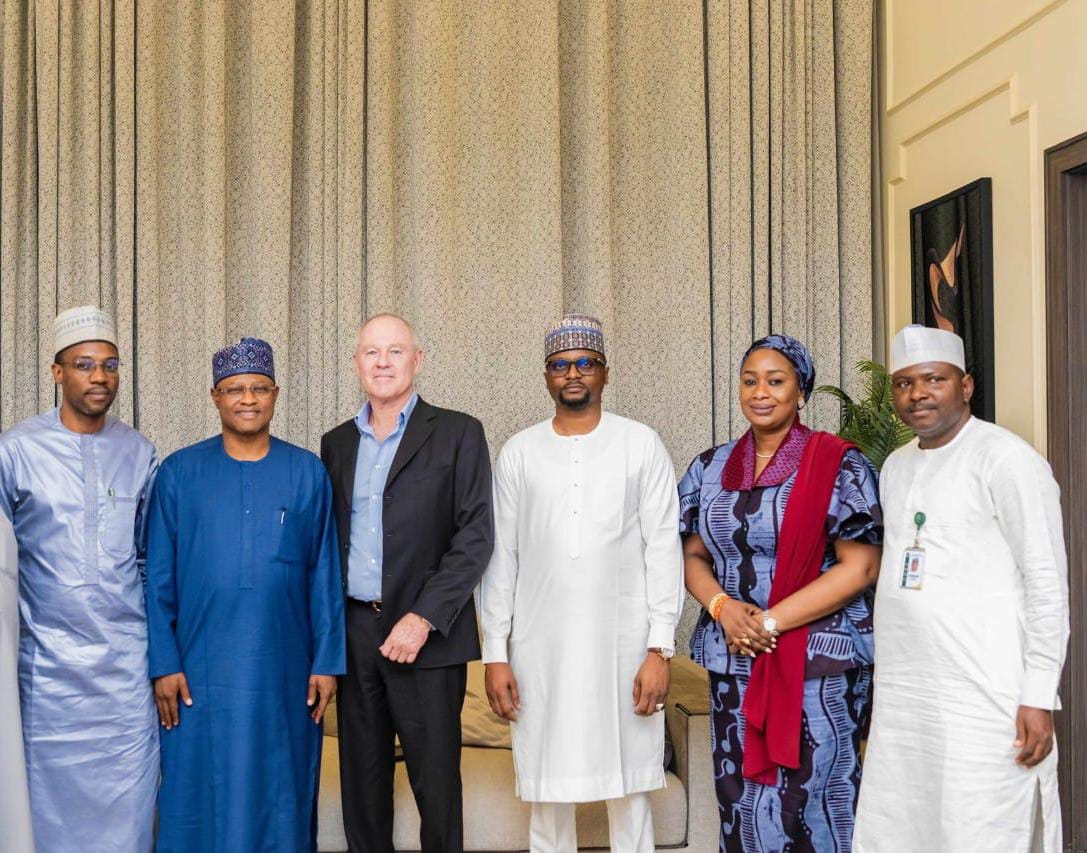
When Atlantic Mining CEO Colin Ikin walked into a high-profile meeting with the Kaduna State government in May 2025, promising a $300 million investment in the state’s solid minerals industry, officials likely saw dollar signs and job creation opportunities. This wasn’t Ikin’s first foray into Nigerian mining opportunities—in June 2024, he had visited Nasarawa State, meeting with Commissioner of Environment and Natural Resources, Hon. Kwanta Yakubu, to discuss establishing what he described as a “multi-million dollar lithium processing company.” The Australian mining executive painted a picture of economic transformation, positioning his company as a catalyst for diversifying Nigeria’s economy beyond oil dependency. But beneath the polished presentation and impressive financial commitments lies a cautionary tale that should give Nigerian authorities pause—one that underscores the critical importance of thorough background checks before opening the nation’s mineral wealth to foreign investors.

Nigeria stands at a crossroads in its economic development. With abundant mineral resources including gold, tin, lithium, coal, limestone, and rare earth elements scattered across its 36 states, the country possesses the raw materials to become a mining powerhouse. The federal government’s aggressive push to diversify from oil revenues has created unprecedented opportunities in the solid minerals sector. However, this gold rush atmosphere has also attracted a mix of genuine investors and opportunistic operators, making due diligence not just advisable but essential for protecting national interests.

A Multi-State Mining Campaign

Ikin’s Nigerian mining ambitions extend beyond Kaduna State. His June 2024 visit to Nasarawa State reveals a calculated strategy to establish footholds across multiple Nigerian states rich in mineral resources. During his meeting with Commissioner Yakubu, Ikin positioned himself as the managing director of “Atlantic Mining Techniques Ltd,” describing his company as “a Nigerian mining company” focused on the state’s lithium deposits.

Commissioner Yakubu’s Facebook post captured the optimistic tone of the meeting: “I welcomed Mr. Colin Ikin, Managing Director of Atlantic Mining Techniques Ltd, to Nasarawa State. Mr. Ikin’s visit is in connection with the potential establishment of a multi-million dollar lithium processing company in the state. This aligns with the industrialization agenda of His Excellency, Engr. Abdullahi A. Sule, Executive Governor of Nasarawa State.”

Ikin’s own comments during the Nasarawa visit echo the grandiose promises that characterized his Preston Resources era. “So my name is Colin Ikin, I’m the managing director of Atlantic Mining Techniques in Abuja. We are a Nigerian mining company and are here in Nasarawa today to look at this well-administered state that is endowed with some fantastic riches. At the moment we are looking at Lithium outcrops, of which there are many. I think this is a very exciting opportunity for us and for Nasarawa state,” he declared.

The pattern is familiar: identify mineral-rich locations, often discovered or already held by others, meet with government officials, make expansive promises about investment and job creation, and position projects as transformative opportunities. What’s concerning is how closely this mirrors the promotional strategy that preceded the Preston Resources disaster.

A Pattern of Spectacular Failure

Colin Ikin’s mining career in Australia reads like a masterclass in how not to manage large-scale mining operations. As executive chairman of Preston Resources, Ikin presided over what financial columnist Trevor Sykes(has won eight national awards and written eight books in his illustrious 61 years of journalism) described as one of the worst corporate disasters in modern Australian mining history—a spectacular collapse that wiped out nearly $750 million in investor funds and left a trail of financial devastation.

The Preston Resources saga began in the late 1990s when the company, under Ikin’s leadership, owned the Marlborough lateritic nickel deposit in Queensland. With shares trading at $1.90 and a market capitalization of $80 million, Preston appeared positioned for growth. However, Ikin’s decision to acquire the Bulong nickel project from Resolute Resources for $319 million—money the company didn’t have—would prove catastrophic.

The acquisition itself was structured in a way that left shareholders with little choice. Preston committed to a $10 million break fee to Resolute if the deal was rejected, but the company only had $2 million in the bank at the time. Shareholders were effectively held hostage by their own board’s commitments. Ikin’s promotional materials painted Bulong as “an outstanding opportunity,” promising initial output of 9,000 tonnes of nickel annually and describing Preston as “poised to become a significant international nickel producer.”

The reality proved starkly different. The Bulong plant never met production forecasts, cash flow projections failed to materialize, and Preston found itself in default to lenders for more than a year. By 2000, the company had accumulated losses of $497 million, with liabilities exceeding assets by $430 million. The Bulong plant was written down by $224 million, exploration expenditures were completely written off, and shareholders were entirely wiped out.

Perhaps most telling was the aftermath: Preston’s board, including Ikin, proposed handing over 95% of Bulong to note holders in exchange for debt relief, leaving the company with assets worth just $787,000 against liabilities of $5 million. Investors who had paid $1.50 per share to support the Bulong purchase were, in Sykes’ memorable phrase, “financially disembowelled.”

From Collapse to Opportunity

The financial press reported that after Preston’s collapse, Ikin had “quickly fallen on his feet with a new overseas gold project and a fashionable address in the south of France.” This pattern—moving from one jurisdiction to another after corporate failure—raises red flags that Nigerian authorities should carefully consider. The fact that Ikin emerged from a half-billion-dollar corporate disaster to pursue new mining ventures overseas suggests either remarkable resilience or concerning opportunism.

Industry sources who spoke on condition of anonymity have raised troubling questions about Ikin’s current operations. “Colin Ikin’s record of failure in mining is well documented by authorities in Australia,” said one mining title holder familiar with his background. “His pattern is to make grand promises, raise capital, and then struggle to deliver on projections.”

More concerning are allegations from mining sector players who claim Ikin may have used improper means to gain access to Nigerian mining opportunities. While these remain unverified allegations, they highlight the need for robust vetting processes. “There are questions about whether he has the financial backing he claims,” noted another industry source. “Nigeria can’t afford to hand over mineral assets to operators who lack both the capital and competence to develop them properly.”

Nigeria’s Mining Imperative

Nigeria’s push to develop its mining sector represents more than economic diversification—it’s a strategic necessity. With oil revenues volatile and global energy transitions underway, the country needs alternative economic pillars. The solid minerals sector offers immense potential: Nigeria possesses 44 different types of minerals across 500 locations, with estimated reserves worth over $700 billion.

However, transforming this potential into reality requires partners with proven track records of successful project delivery. The mining industry is notoriously capital-intensive and technically complex, demanding expertise in geology, engineering, environmental management, and community relations. Failed mining projects don’t just waste investment capital—they can cause lasting environmental damage, displace communities, and poison relationships between government and investors.

The Kaduna and Nasarawa state governments’ enthusiasm for Ikin’s proposed investments is understandable. The promise of hundreds of millions in investment, lithium processing facilities, and job creation is attractive for states seeking economic development. However, the Preston Resources debacle demonstrates that ambitious promises from mining executives don’t always translate into operational success.

The Due Diligence Imperative

Nigerian authorities at federal and state levels must implement rigorous due diligence processes before approving major mining investments. This should include comprehensive background checks on company executives, verification of claimed financial resources, technical audits of proposed mining methods, and environmental impact assessments.

The Australian Securities Exchange and financial media provide extensive documentation of Preston Resources’ collapse, offering Nigerian authorities a clear picture of Ikin’s previous performance. Australian regulatory bodies and industry associations can provide additional insights into his reputation and capabilities. Such information is publicly available and should be mandatory reading for any Nigerian official considering mining partnerships.

Furthermore, Nigerian authorities should demand proof of funding before approving mining licenses. Letters of intent and preliminary agreements are insufficient—actual capital commitments from verified financial institutions should be required. The Preston Resources case shows how companies can leverage debt and equity markets to fund operations they cannot sustain, leaving investors and host communities to bear the costs when projects fail.

Building Mining Excellence

Nigeria’s mining sector development requires partners who bring not just capital but proven expertise in sustainable mining practices. The country needs investors who understand that successful mining projects require long-term commitment, community engagement, environmental stewardship, and technical excellence.

Countries like Ghana, Botswana, and South Africa have built successful mining industries by carefully selecting international partners and insisting on high operational standards. Nigeria can follow similar models, but only if it maintains rigorous standards for foreign investment approval.

The solid minerals sector represents Nigeria’s best opportunity to create an economy less dependent on oil revenues. However, this transformation requires careful stewardship of mineral resources and partnerships with operators who have demonstrated competence in managing large-scale mining operations.

The Path Forward

As Nigerian authorities evaluate Atlantic Mining’s proposals and other foreign mining investments, they must balance the urgent need for economic diversification against the imperative of protecting national resources. The Colin Ikin story serves as a powerful reminder that impressive presentations and ambitious financial commitments mean little without the track record and resources to deliver results.

Nigeria’s minerals belong to its people and future generations. Handing them over to operators with histories of corporate failure—regardless of their promotional skills or political connections—would represent a betrayal of the national trust. Due diligence isn’t just good governance; it’s essential for ensuring that Nigeria’s mining revolution creates lasting prosperity rather than expensive disappointment.

The choice facing Nigerian authorities is clear: rush into partnerships with questionable operators and risk repeating the Preston Resources disaster on Nigerian soil, or implement rigorous vetting processes that attract genuine investors capable of unlocking the country’s mineral wealth responsibly. The stakes are too high for anything less than excellence in partner selection.

The gold rush mentality that has gripped Nigeria’s mining sector must be tempered with wisdom learned from other countries’ experiences. Australia’s mining industry, despite its overall success, is littered with failed projects and collapsed companies. Nigeria can avoid similar pitfalls by learning from these failures and demanding higher standards from potential partners.

As Colin Ikin and Atlantic Mining await decisions from Nigerian authorities in Kaduna, Nasarawa, and potentially other states, the question isn’t whether Nigeria needs foreign investment in mining—it clearly does. The question is whether the country will settle for any investor willing to make promises, or insist on partners with the competence and resources to keep them. With Ikin’s multi-state campaign already underway, Nigeria’s economic future may well depend on getting this calculation right.


Steven Kefas is mining and mineral resources enthusiast and writes from Kaduna state