INVESTIGATION: How Federal Government’s Abandonment of Strategic Manchok-Vom Road Strangles Economic Lifeline and Fuels Insecurity

By Steven Kefas

The sun beats down mercilessly on dozens of stranded vehicles along what should be one of Nigeria’s most vital economic arteries. For hours, commercial drivers, traders, and farmers have been trapped in a quagmire of mud, broken asphalt, and bureaucratic neglect that defines the current state of the Manchok-Ganawuri-Vom federal road.

This 52-kilometre stretch, designated as a federal highway, serves as a critical economic lifeline connecting Plateau State with Kaduna and numerous neighboring states across Nigeria’s Middle Belt region. Yet today, it stands as a monument to governmental abandonment and institutional failure.
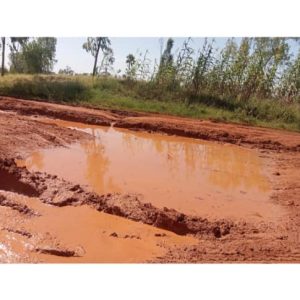
A portion of Ganawuri axis of the Manchok-Vom road. Credit: MBT

The communities dotting this strategic corridor are among Nigeria’s most productive agricultural zones. Farmers here cultivate vast quantities of yam, maize, rice, potatoes, and ginger – crops that feed millions across the country. However, the deplorable condition of their primary route to market has transformed what should be prosperity into a daily nightmare of economic losses and human suffering.

“We produce enough food to feed millions of Nigeria, but we cannot get our harvest to the people who need it,” laments Musa Ibrahim, a farmer from Ganawuri whose truck loaded with yams overturned last month, destroying produce worth over 3 million naira.

The economic implications extend far beyond individual losses. Trucks carrying goods such as bottled drinks, water etc worth millions of naira regularly topple over on the treacherous terrain, their cargo spilling into roadside ditches where it rots under the elements. The ripple effects reach urban markets in Jos, Kaduna, and Abuja, where food prices continue to soar partly due to transportation challenges from these productive farming communities.

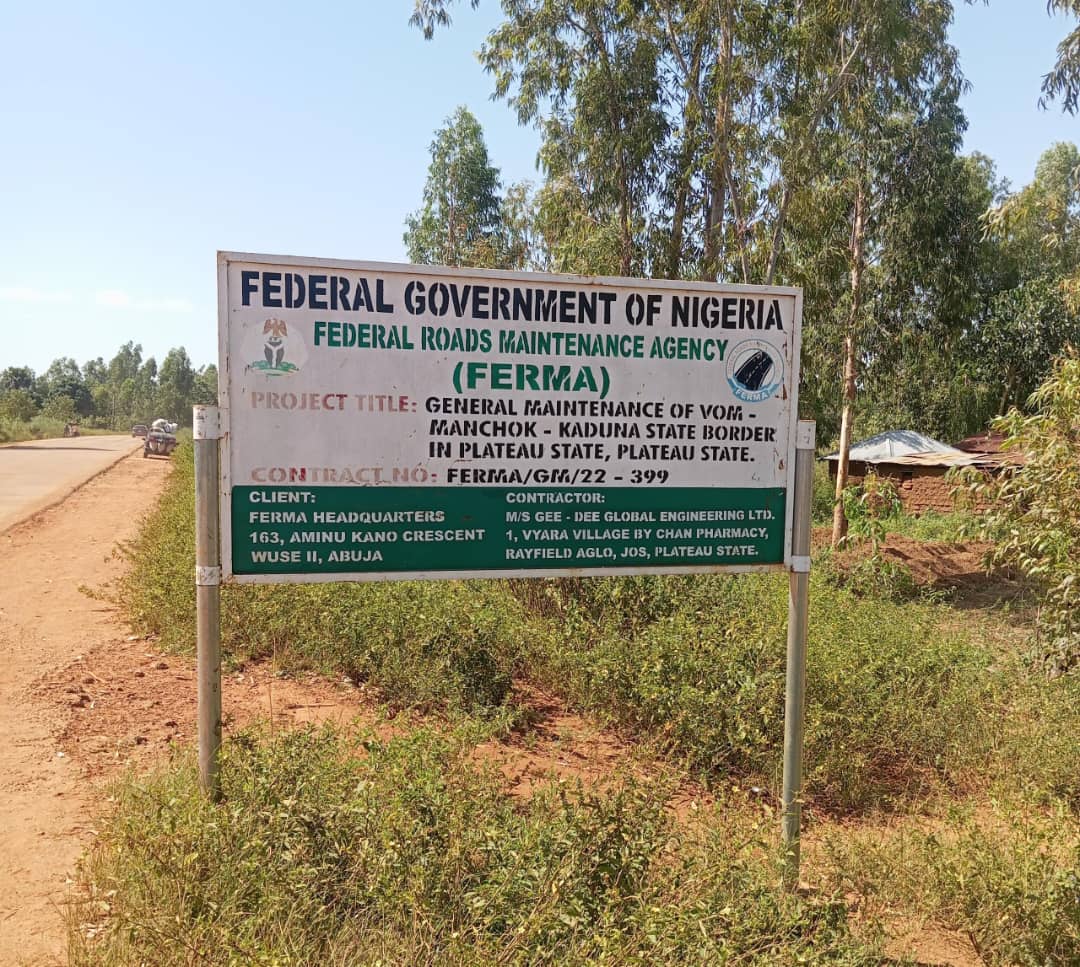
Perhaps the most insulting aspect of this crisis is the massive signpost erected by the Federal Road Maintenance Agency (FERMA) boldly declaring that the Manchok to Vom Junction stretch has been “rehabilitated.” This gigantic billboard stands as a cruel joke to daily road users who navigate crater-sized potholes and impassable mud pools.
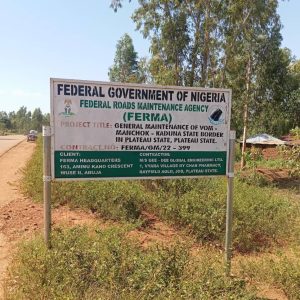
FERMA’s gigantic signpost. Credit: MBT

All efforts to reach FERMA for comments on the road’s condition and their maintenance claims proved unsuccessful. Multiple phone calls to the two contact numbers listed on the agency’s official website went unanswered, while a text message sent seeking their response was never replied to.

A closer examination reveals the truth behind FERMA’s claims. While minor patch work was indeed carried out on sections with small potholes, the Ganawuri portion – the most critical and severely damaged section – remains completely untouched. It is a classic case of cosmetic intervention designed more for political optics than genuine infrastructure development.

The agency’s selective rehabilitation approach has created an even more dangerous situation. Drivers, encouraged by the initial smooth patches, accelerate into what becomes a vehicular trap at Ganawuri, where the road deteriorates so dramatically that vehicles frequently get stuck for entire days.

The federal government’s neglect has created an unprecedented situation where local youths have essentially privatized a federal highway. Young men from Ganawuri now control access to the most treacherous sections, strategically placing rocks across deep craters and charging motorists 500 naira for the privilege of attempting passage.

During this reporter’s investigation on Wednesday, August 27, the situation had reached absurd proportions. After paying 1,000 naira through mobile transfer for road access, this correspondent joined dozens of other vehicles in a hours-long traffic standstill that stretched for about 1 kilometre.
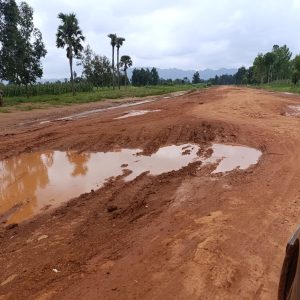
Another portion of the road. Credit: MBT

The scene resembled a refugee camp more than a major highway. Frustrated passengers had disembarked, seeking shade that did not exist on the road. Hawkers moved through the stationary traffic selling water, sugarcane, and snacks to stranded travelers. Mothers with crying babies pleaded with drivers to somehow find alternative routes that simply do not exist.

The agricultural community has been forced to adapt in ways that highlight the severity of the situation. Farmers who once loaded their produce onto trucks for efficient transport to distant markets now depend entirely on motorcycles for their logistics chain.
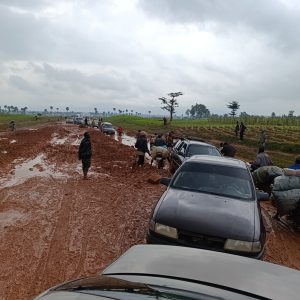
Stranded road users on the bad portion of the road. Credit: MBT

“I used to send bags of potatoes to Kaduna and Abuja markets in one trip,” explains Rebecca Dung, a potato farmer in the area. “Now I can only send two bags at a time on a motorcycle, and the transport cost has tripled. Many of us are considering abandoning farming altogether because we cannot transport our potatoes to the market and they go bad after a few days”

This shift from truck-based to motorcycle-based transportation has reduced agricultural efficiency by approximately 80 percent while increasing costs exponentially. The knock-on effects include reduced agricultural investment, lower crop cultivation, and ultimately, decreased food security for the broader region.

Commercial drivers operating along this route have become unwilling martyrs to federal government negligence. Michael Adamu, who has been plying this route for over a decade, provides a heartbreaking testimony of occupational hazard that no professional should endure.

“Any time I manage to pass this road with passengers during the rainy season like this, I have to go straight to the mechanic workshop,” Adamu reveals, his voice heavy with frustration. “We are suffering here as you can see, we have been here for several hours and don’t know when we will move. The government must do something about this road.”

His experience is not unique. Conversations with multiple commercial drivers reveal a pattern of vehicle damage, increased maintenance costs, and lost income that threatens their livelihoods. Some road users have developed back and joint problems from navigating the rough terrain, while others have abandoned the route entirely, reducing transportation options for rural communities.

The road’s deplorable condition has created a security vacuum that armed militants and criminals exploit with devastating consequences. Habu Lucky, a local vigilante member in Ganawuri, articulates a reality that government security strategists seem to have ignored completely.

“As you can see, the condition of this road also makes it difficult for security response. Even if there is a security challenge, how do you think security personnel can access the communities? Tell me,” he challenges, gesturing toward the impassable terrain.

His concerns proved tragically prophetic on December 22, 2024, when armed Fulani militants attacked Gidan Ado community in Ganawuri chiefdom, Riyom Local Government Area. Fourteen people, including a pregnant woman, were killed in an attack that security forces struggled to respond to effectively due to the impassable road conditions.

The incident illustrates how infrastructure neglect becomes a national security threat. When government forces cannot reach crisis zones quickly, local communities become sitting targets for criminal elements who understand the terrain’s strategic advantages.

The Manchok-Ganawuri-Vom road crisis demands immediate federal intervention that goes beyond the superficial patch work that has characterized previous efforts. What is required is comprehensive reconstruction that acknowledges this route’s strategic importance to Nigeria’s food security and regional economic integration.

The federal government must treat this highway with the urgency it deserves – as a critical piece of national infrastructure whose failure threatens the economic survival of entire communities and the food security of millions of Nigerians.

Until then, farmers will continue watching their harvests rot, drivers will keep visiting mechanics after every journey, and communities will remain vulnerable to security threats that thrive in the shadow of governmental neglect.

The question remains: How long will the federal government allow one of Nigeria’s most productive regions to remain economically strangulated by a road that should be connecting communities, not isolating them?

This investigation was conducted over multiple visits to the Manchok-Ganawuri-Vom corridor, with extensive interviews of affected stakeholders including farmers, commercial drivers, local leaders, and security personnel.
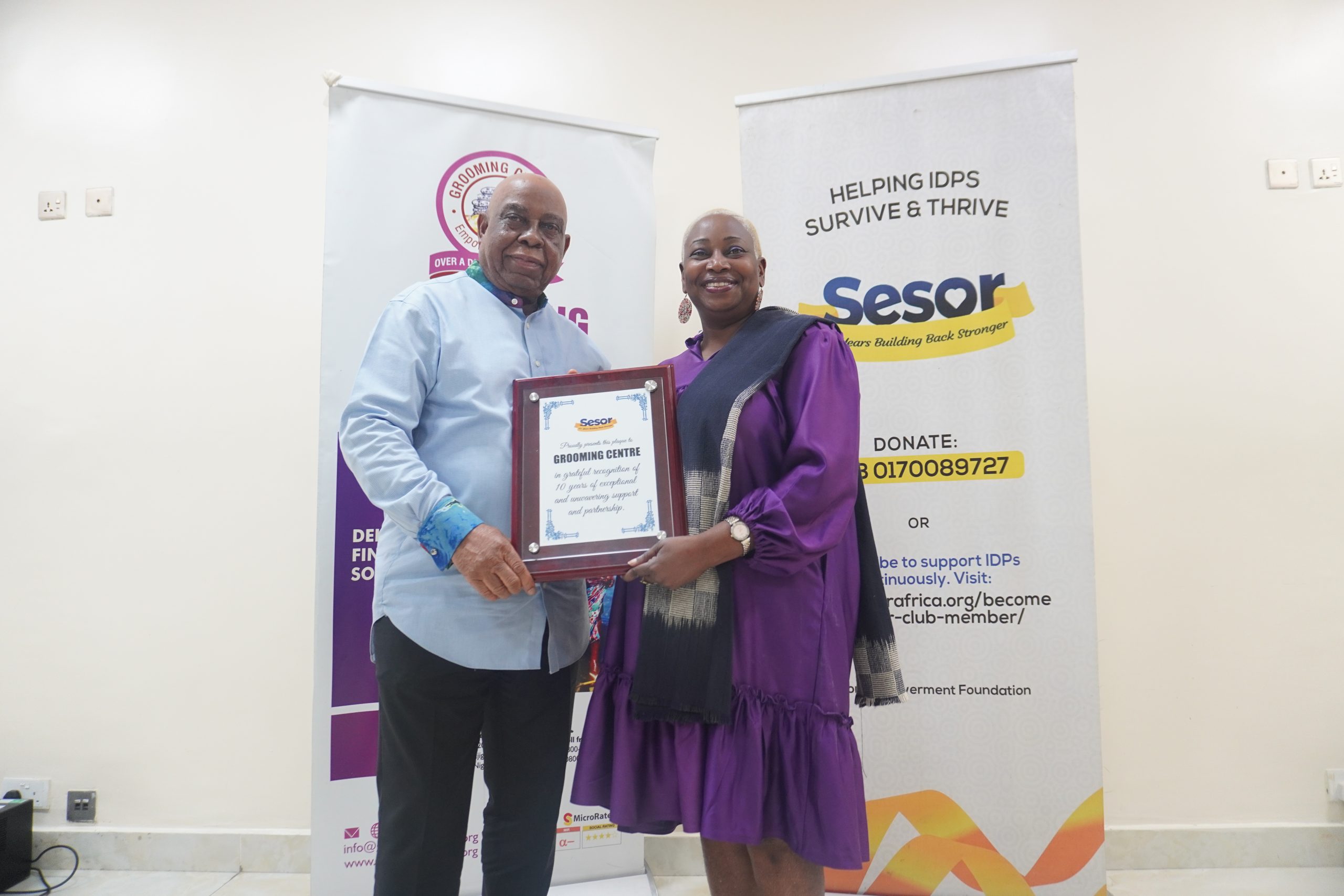
Sesor Foundation and Grooming Centre Extend Decade-Long Mission to Support Nigeria’s Displaced Communities

(Lagos), After more than ten years of changing lives together, the Sesor Empowerment Foundation and Grooming People for Better Livelihood Centre have renewed their partnership. The two organizations signed their agreement in Lagos on August 28, 2025, pledging to continue their vital work with Nigeria’s internally displaced persons. Their mission remains clear: bring relief to families in crisis, restore hope to communities in need, and create pathways to better futures.

For more than ten years, Sesor and Grooming Centre have worked hand in hand, reaching over 110,000 displaced individuals across 14 states with aid, psychosocial care, and pathways to sustainable livelihoods. Their renewed commitment for 2025 promises to deepen this impact, with plans to expand Safe Day Spaces in Lagos and Benue States, deliver relief to 300 IDP households, provide livelihood training for 200 women, and disburse funds to help vulnerable women rebuild their lives. The partnership also emphasizes transparency, with dedicated resources for monitoring, reporting, and sharing stories of resilience with the public.

At the signing ceremony, the atmosphere was filled with purpose and gratitude. Dr. Godwin Nwabunka, CEO of Grooming Centre, spoke with conviction about the shared vision that drives their work. “We believe every life holds value and dignity, and no one should be left without hope,” he said. “For over ten years, our partnership with Sesor Foundation has been one way we stand with displaced families. This renewal strengthens our resolve to help rebuild lives and restore hope for those affected.”

Ier Jonathan-Ichaver, Sesor’s founder, reflected on the journey they’ve shared. “This relationship has endured and delivered real change,” she said, her voice carrying the weight of countless lives touched. “In the past decade, we’ve reached displaced persons in 14 states, offering relief, support, and paths to recovery. Grooming Centre has stood with us in urgent response efforts and joint outreach missions to communities like Apa and Otukpo LGAs. We look forward to achieving even more together.”

The ceremony wasn’t just about formalities; it was a celebration of impact. Sesor presented Grooming Centre with a plaque of appreciation, a heartfelt token of gratitude for their unwavering support. For those in the room, it served as a reminder of what’s possible when compassion meets action.

This partnership represents more than a collaboration—it’s a lifeline for Nigeria’s displaced communities, particularly women and children who bear the brunt of displacement. Sesor, a non-profit dedicated to relief, psychosocial support, and empowerment, has found a steadfast ally in Grooming Centre, an NGO focused on lifting the economically active poor through financial services and skills development. Together, they’re not just addressing immediate needs but building resilience, offering training, and creating opportunities for families to reclaim their futures.

As Nigeria continues to grapple with the challenges of multidimensional insecurity which lead tdisplacement, partnerships like this demonstrate what’s possible through sustained commitment. With their renewed agreement, Sesor and Grooming Centre are reinforcing their promise to restore dignity and foster hope, one life at a time.


For more information, contact Olufunke Adegunwa at +234 808 331 1198 or info@sesor.org.

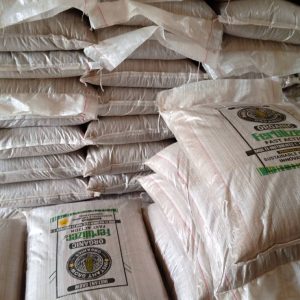
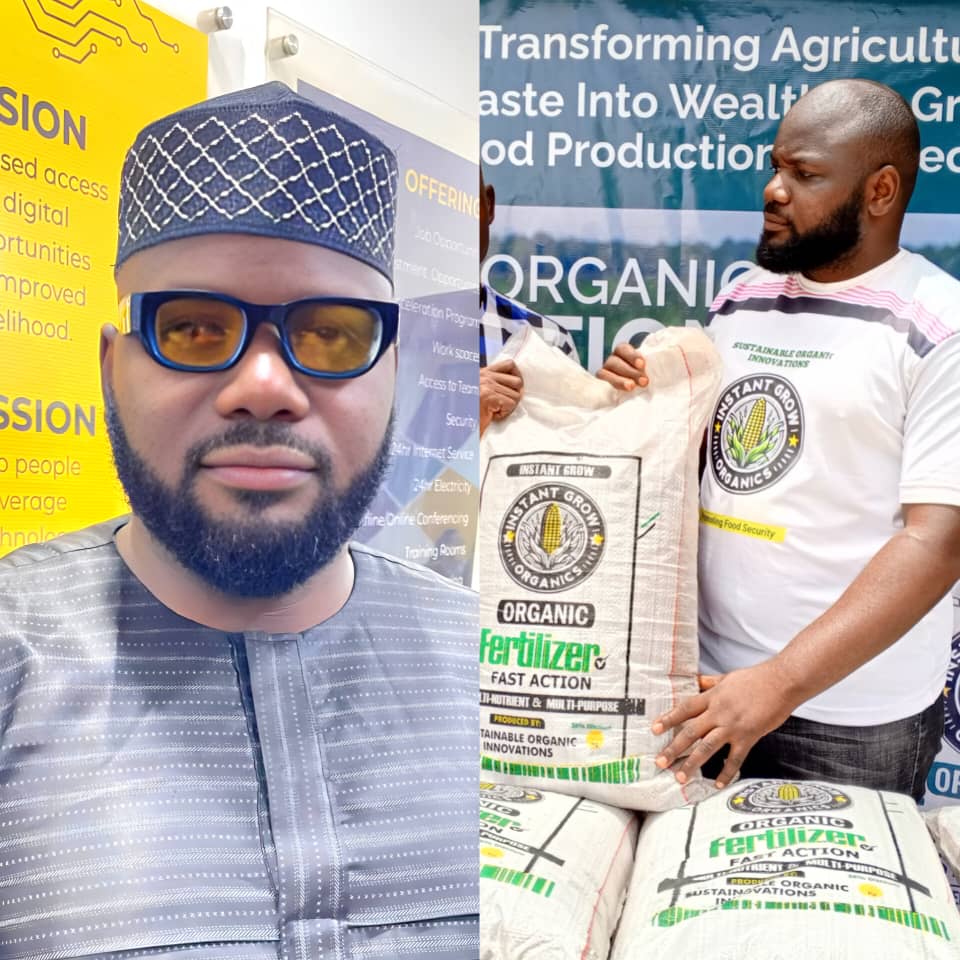
Meet Samuel Ateh Stephen: Leading Nigeria’s Agricultural Revolution with Instant Grow Organic Fertilize


At a time when Nigeria faces soaring food prices, dependence on imports, and a growing hunger crisis, a new generation of innovators is stepping forward to rewrite the story. Among them is Samuel Ateh Stephen, a visionary entrepreneur from Kaduna State who is championing sustainable farming through his groundbreaking product — Instant Grow Organic Fertilizer.

As the Co-founder and CEO of Sustainable Organic Innovations, a pioneering agri-tech startup based in Kaduna, Samuel is not simply selling fertilizer; he is offering a solution to Nigeria’s food insecurity. Remarkably, within just one year of existence, the startup has made measurable impact across farming communities, proving that bold ideas can deliver real change in a short time.

Instant Grow, Instant Impact

Unlike conventional fertilizers that degrade the soil over time, Instant Grow Organics is built on nature’s wisdom. It enriches the land, boosts harvests, and remains affordable for smallholder farmers who form the backbone of Nigeria’s food system. Already, its impact has been felt across several local government areas of Kaduna, including Lere, Igabi, Chikun, Kajuru, Kachia, and Zangon Kataf — empowering farmers, improving yields, and restoring confidence in sustainable farming.

More Than Farming: A Movement

From Kaduna, Samuel is building a model that resonates across Nigeria. By transforming agricultural waste into fertilizer, he is creating jobs, reducing environmental pollution, and inspiring young Nigerians to see farming not as drudgery but as opportunity. His work aligns with global sustainability goals while addressing Nigeria’s most pressing challenges at home.

A Vision for Nigeria’s Future

If widely adopted, Instant Grow Organics could help Nigeria cut down on costly food imports, restore degraded soils, and even position the nation as a regional leader in sustainable agriculture. For Samuel, this is only the beginning of a movement — one that insists Nigeria can feed itself with homegrown ideas and homegrown solutions.

In a country searching for pathways to prosperity, innovators like Samuel Ateh Stephen remind us that the soil beneath our feet may very well hold the key to a secure and abundant future.

THE NORTH THAT NEVER WAS: Unmasking the Fulani Political Construct

Barr. John Apollos Maton

It is sadly not surprising that Dr. Davidson Rotshak Lar was killed. His boldness in speaking truth to power exposed the well-oiled Fulani imperialist machine that has for decades been strategically using Nigeria’s resources to entrench domination at all costs. He laid bare the very heart of the matter: there is no “North” as a unified identity—there is only a Fulani political construct cleverly disguised in regional language to maintain a parasitic grip on power.

The term “North” in Nigerian discourse is a tool of political deceit. It is time Nigerians consciously substitute the word “North” with “Fulani” whenever they hear phrases like “Northern Governors Forum,” “Northern Elders Forum,” or “Northern Consensus.” These platforms do not reflect the aspirations or representation of the Middle Belt, nor the indigenous Hausa, Nupe, Jukun, Gbagyi, Birom, Tiv, or other ethnic nationalities. They are hijacked Fulani platforms designed to silence and exploit the rest.

From today, call these associations what they truly are: “Fulani Governors Forum,” “Fulani Elders Forum,” or “Fulani Consensus.”

History supports this claim. When Obasanjo, a Southern president, appointed non-Fulani Northerners into sensitive positions, the Sultan of Sokoto and Fulani elite responded with outrage, claiming that “the North” was being marginalized. But when pressed, they clarified that non-Fulanis are not considered “Northerners.” That singular incident should have awakened the nation to the ethnic apartheid system hidden behind the “Arewa” banner.

This false northern identity was consolidated in 1979 when the NPN primaries clearly produced Maitama Sule, a Hausa man, only for Fulani elites to reject him in a midnight coup within their own party and impose Shehu Shagari, a Fulani. That tells you all you need to know: even among Muslims from the so-called North, only Fulanis are considered authentic enough to lead “the North.”

The Middle Belt must reject the name “North-Central.” That term is part of the trickery to keep indigenous people as political footnotes. The proper name is Middle Belt or Central Nigeria. Our ancestors did not fight, bleed, and preserve their land just to be reduced to appendages of a Fulani empire. Indigenous people must rise in identity and in name to reject mental slavery.

The idea of “One North” is a myth. It is time to expose the criminally manipulative lie of “One Destiny, One People.” From Aminu Kano to Balarabe Musa to modern-day victims of political exclusion in Kaduna and Plateau, it is evident that non-Fulani voices—even when Muslim—are not welcome in the so-called Northern consensus unless they submit to Fulani dominance.

Even when the 1963 People’s Constitution allowed regional autonomy, the Fulani elite began working to weaken it. The military coups that followed—many of them orchestrated by Fulani officers—were not just power grabs, but deliberate steps to erase the political, cultural, and land rights of the indigenous people across Northern Nigeria and beyond.

The war against Biafra was a war fought not by Fulani, but by Middle Belt sons misled into believing they were defending the North. They were actually used to secure Fulani control over Nigeria. When their usefulness ended, they were sidelined—Gowon removed, Danjuma neutralized, and Fulani supremacy restored with Murtala Mohammed and his successors.

The legacy of that manipulation persists today in the imbalance in the military, where Fulani control most sensitive posts despite being an illegal immigrant minority in the country. The federal character principle has been mutilated beyond recognition. Promotions are now ethno-religious favors, not based on competence or loyalty to the Nigerian state.

Ahmadu Bello’s statement in The Parrot newspaper of 1960 is perhaps the most chilling confession of Fulani imperial ambition. His vision was not of a Nigeria for all Nigerians, but of a Fulani inheritance to be expanded by using indigenous people as conquered vassals and southerners as pawns. That is not a federation; that is feudalism.

We must therefore insist on a return to the 1963 Constitution, which respected regional autonomy, indigenous land rights, and true federalism. That Constitution allowed each region to develop on its own terms. It protected local cultures, languages, and governance systems—before it was overthrown in a series of Fulani-favored coups.

Every community must begin to awaken to the danger of being identified under the “North.” It is not a region; it is an agenda. It is not a direction; it is a political weapon. The so-called Northern political power block is a Fulani construct and must be recognized as such by indigenous communities seeking to reclaim their future.

The Middle Belt has a distinct identity—culturally, spiritually, politically, and historically. We are not Arabs, and we are not the children of Uthman Dan Fodio. We are the children of the Plateau, the Benue valley, the Mandara hills, and the ancestral highlands that predate every emirate in Nigeria.

Even the language manipulation reveals the deceit. “Arewa” is a Hausa word. The Fulani used it instead of any Fulfulde term to create a false sense of commonality with the Hausa, while slowly replacing Hausa leaders with Fulani emirs, governors, and senators. Hausa people must realize they too are victims, not allies, of Fulani supremacists.

This identity war is not just political, it is also spiritual and psychological. When indigenous Christians from the Middle Belt are labeled “Kafiri” or “Arne,” it is not merely name-calling—it is a justification for violence, for land-grabbing, for political exclusion. The language of hate fuels the violence in Plateau, Southern Kaduna, and parts of Benue today.

We must reject the hijacked institutions of the so-called North and form indigenous forums that represent our interests alone. There should be a Middle Belt Governors Forum, a Central Elders Forum, and a Council of Indigenous Ethnic Nationalities. Let the Hausa and other Indigenes also kick away from this propaganda and then force the Fulanis to show us their North, show us where Fulaniland is—and let us rebuild our ancestral heritage without their chains.

The indigenous peoples of Nigeria—Middle Belt, South-South, Igbo, Yoruba, and others—must form alliances based on justice, equality, and mutual respect. The Fulani have built a pan-Nigerian empire using deception, militarization, and economic control. It is time to dismantle it through legal, constitutional, and civic awakening.

Restructuring Nigeria is not a threat to unity—it is the only path to real peace. Only when each people can govern themselves, protect their land, and choose their leaders without external imposition can Nigeria thrive. The fake unity built on Fulani domination will keep bleeding until truth sets us free.

The blood of Dr. Rotshak Lar and countless others will not be in vain if we rise to tell the truth and act on it. There is no North. There is a Fulani political machine that must be confronted. We must go back to the foundation—the 1963 Constitution—and build a new nation where all ethnic nationalities have equal standing, and indigenous rights are sacred.

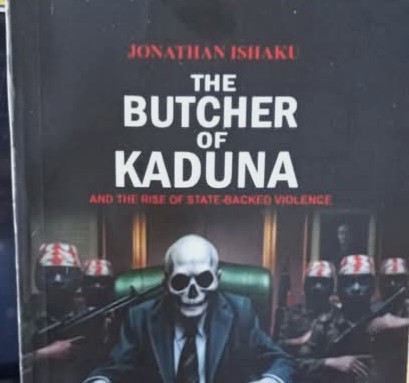
“The Butcher of Kaduna and the Rise of State-Backed Violence”

By Today’s Challenge Magazine

When Silence Becomes Complicity, Truth Must Roar.

In a nation reeling from fear, bloodshed, and betrayal, where headlines echo daily horrors-kidnappings, killings, and communities erased overnight—one voice refuses to look away.

Jonathan Ishaku, acclaimed essayist and one of Nigeria’s most courageous truth-tellers, returns with his most incendiary and urgent book yet:

The Butcher of Kaduna and the Rise of State-Backed Violence.

This isn’t just a book. It’s a reckoning.

From the ashes of once-thriving villages to the halls of power where silence enables slaughter, Ishaku pulls back the curtain on the chilling realities behind Nigeria’s descent into chaos. With unmatched clarity and moral force, he lays bare how political actors, under the cover of state legitimacy, have turned violence into governance—with Kaduna State as ground zero.

In a time when fear silences many, Ishaku names names.

He exposes the politicization of security under Buhari, the rise of emboldened ethnic militias like Miyetti Allah, and the transformation of the North West into a graveyard of governance.

He documents the deadly impunity of Governor Nasir El-Rufai’s regime and dissects the cynical calculus that turns sectarian hatred into policy.

This book honours the fallen, amplifies the silenced, and summons the living to a higher cause: resistance, reform, and truth.

Why Now?

Because Nigeria is at a breaking point. Because too many have died in the shadows. Because state-backed violence is no longer a rumour—it is reality. Because El-Rufai’s Kaduna isn’t an anomaly, it is a warning.

For every Nigerian seeking to understand the roots of our collective trauma—this is your map.

For every patriot tired of lies dressed as leadership—this is your mirror. For every voice yearning for justice—this is your call to arms.

“The Butcher of Kaduna” is more than an exposé. It is a bold, necessary intervention in Nigeria’s fight for its soul.

Pre-order now. Speak up. Stand firm. The time for silence is over.

Every Nigerian Should Learn Self-Defense, Says Defense Chief – A Lesson from Sunday Jackson’s Tragic Case

By Steven Kefas

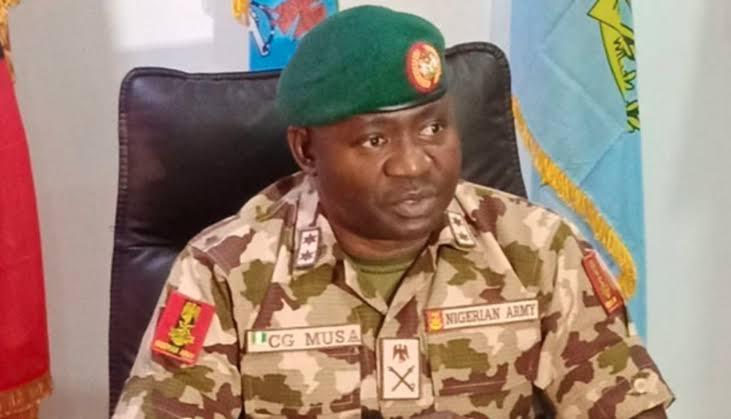
The Nigerian Chief of Defence Staff, General Christopher Musa, has urged all Nigerians to acquire basic combat skills for self-protection in dangerous situations. Speaking on Channels Television’s Politics Today on Thursday, August 21, 2025 monitored by MBT, General Musa likened learning self-defense to essential life skills such as driving or swimming. “It’s a survival instinct,” he explained. “Whether there’s war or not, knowing how to defend yourself is crucial. In places like Europe, swimming is mandatory, and security training should be treated similarly.”

General Musa proposed that the National Youth Service Corps (NYSC) should incorporate unarmed combat training into its curriculum to equip young Nigerians with skills to protect themselves from violent attacks. He emphasized that the world is becoming increasingly dangerous, with individuals who perpetrate violence without provocation. “Security is everyone’s responsibility,” he stated, encouraging Nigerians to remain vigilant and report suspicious activities within their communities.

The defense chief also highlighted operational challenges facing the military, including poor road infrastructure and inadequate communication networks, which hamper rapid response to attacks by bandits and terrorists. These criminals often execute swift strikes and vanish within minutes, leaving security forces struggling to mount effective pursuit operations.

This call for self-defense resonates deeply with the tragic case of Sunday Jackson, a Middle Belt farmer from Adamawa who was sentenced to death for defending himself against a Fulani herder who invaded his farm with cattle a decade ago. Sunday’s ordeal serves as a stark reminder of why self-defense capabilities are essential. When the herder attacked him on his farmland, Sunday fought back to protect his livelihood, the header died from injuries sustained. However, the justice system failed him, instead of recognizing him as a victim defending his property, he was convicted and now faces execution.

General Musa’s advocacy underscores a harsh reality: many Nigerians, particularly in the Middle Belt, confront threats from terrorist herders, bandits and other criminals with minimal immediate support from security forces. Sunday Jackson’s case illustrates the devastating consequences when citizens are compelled to defend themselves without fair legal protection.

Another example of the failure of the Nigerian judiciary to protect rights to self-defence is the case of Israel Bawa aka Zidane, an indigene of Adara who has been in prison since 2019 over self-defence related issue. Zidane is said to be a fearless young man who alongside others put up strong resistance against Fulani Ethnic Militias attacking their communities. He was arrested by the Nigerian army in 2019, tortured for several months before being transferred to the police, was charged to court and was remanded in prison custody. Zidane left behind a wife and two children who are currently at the mercy of good Samaritans.

The defense chief’s message is unambiguous: Nigerians must prepare to defend themselves in an unpredictable security environment. He also advocated for stronger legislation and expedited justice to prevent criminals from escaping accountability while law-abiding citizens like Sunday Jackson face persecution. As the Middle Belt continues grappling with security challenges, General Musa’s words serve as both a wake-up call for individual preparedness and an indictment of systemic failures that leave citizens vulnerable.

Steven Kefas is a veteran conflict reporter with over 10 years experience.


Security Forces Capture Boko Haram Founder’s Teenage Son, Ansaru Leaders

Chadian and Nigerian security forces have captured Boko Haram founder’s teenage son and two globally wanted Ansaru terrorist leaders in separate operations.

In coordinated security operations, Chadian forces apprehended an 18-year-old believed to be the youngest son of Boko Haram founder Mohammed Yusuf. The young man, identified as Muslim Mohammed Yusuf, was reportedly leading a small jihadist cell in Chad’s capital, N’Djamena, when he was arrested alongside five other suspected insurgents. Meanwhile, Nigerian authorities captured two internationally wanted Ansaru leaders, Mahmud Muhammad Usman (Abu Bara’a) and Mahmud al-Nigeri (Mallam Mamuda), in operations conducted between May and July 2025. These arrests target terrorist networks operating in the Lake Chad region, an area that includes parts of Nigeria’s Middle Belt, where communities have long suffered violence from Boko Haram, ISWAP, and Fulani ethnic militants.

The arrests, recently made public, have generated cautious optimism among security experts and local residents. According to a Nigerian intelligence officer operating in the Lake Chad area, Muslim Yusuf was leading a six-man cell linked to the Islamic State West Africa Province (ISWAP), a splinter group that broke away from Boko Haram due to ideological differences. “The team was headed by Muslim, the youngest son of the late Boko Haram founder,” the source told AFP, adding that the group was planning operations that could have further destabilized the region.

Ansaru Leadership Captured

Nigerian National Security Adviser Nuhu Ribadu announced the capture of the two Ansaru leaders during a months-long, intelligence-driven operation. Abu Bara’a, described as the “Emir of Ansaru,” was the overall coordinator of the group’s sleeper cells across Nigeria and mastermind of several kidnappings and terrorist financing operations. His deputy, Mamuda, headed the notorious “Mahmudawa” faction based in and around Kainji National Park and trained in Libya under foreign jihadist instructors.

The two men were responsible for major attacks including the 2022 Kuje prison break in Abuja, the 2013 abduction of French engineer Francis Collomp in Katsina, the 2019 kidnapping of Alhaji Musa Umar Uba, Magajin Garin Daura, the abduction of the Emir of Wawa, and attacks on a Niger uranium facility. “These two men have been on Nigeria’s most-wanted list for years and are also internationally sought terrorists,” Ribadu said. “Their capture marks one of the most decisive blows against Ansaru since its emergence in 2012.”

Meanwhile, Chadian police confirmed the arrest of six undocumented individuals, described as “bandits operating in the city,” but declined to verify whether one of them was indeed Yusuf’s son. “They are members of Boko Haram,” police spokesman Paul Manga told reporters in N’Djamena, emphasizing ongoing efforts to curb insurgent activities. Photos circulating in the media show a young, slender man in a blue tracksuit bearing a striking resemblance to the late Mohammed Yusuf, standing alongside older suspects.

Multi-Faceted Threat in Middle Belt

For residents of Nigeria’s Middle Belt, where Boko Haram, ISWAP, and Fulani ethnic militants have operated for over a decade, these arrests carry particular significance. The region has faced violence from multiple sources, with Fulani herders increasingly militarized and often coordinating with established jihadist groups to target farming communities. The arrests recall 2009, when Mohammed Yusuf was killed during a military crackdown in Maiduguri that left over 800 people dead. At that time, Muslim Yusuf was just an infant. His father’s death marked a turning point, escalating the insurgency into a campaign that has claimed tens of thousands of lives and displaced millions across Nigeria, Chad, Niger, and Cameroon.

The Middle Belt’s diverse communities have faced attacks from multiple militant groups. Boko Haram and ISWAP have targeted villages, while Fulani ethnic militants have systematically attacked Christian farming communities, destroying farmlands, burning churches, and displacing families. This multi-pronged threat has created an ongoing humanitarian crisis.

A former Boko Haram lieutenant who has renounced the group confirmed Muslim Yusuf’s arrest, stating, “He and the team were arrested by Chadian security. They are six in number.” This underscores ongoing regional efforts to dismantle terrorist networks, particularly through the Multinational Joint Task Force (MNJTF), which has reported progress against Boko Haram, ISWAP, and associated militant groups. However, the insurgency remains active. Recent attacks, including one on Chad’s presidential palace, highlight the groups’ continued operational capacity, while Borno and Yobe states face regular assaults from various militant factions.

Intelligence and Operational Impact

Ribadu said the arrest of the Ansaru leaders has effectively dismantled the terrorist group’s central command. Caches of materials and digital evidence recovered during the operation are undergoing forensic analysis and are expected to yield intelligence on the group’s networks in Nigeria and the wider Sahel.

The arrests may provide critical intelligence about jihadist operations and potentially disrupt activities across the Lake Chad Basin. They may also offer insights into coordination between traditional jihadist groups and ethnic militant factions like the Fulani militants operating throughout Nigeria’s Middle Belt.

For Middle Belt communities that have experienced violence from multiple militant groups, the arrests represent both progress and a reminder of ongoing challenges. “The fall of Ansaru’s leadership signals the beginning of the end of impunity for terrorist leaders in Nigeria,” Ribadu declared. “We will continue to pursue extremists with precision, resolve, and unwavering determination.”

The coordinated nature of these arrests, spanning from Chad to Nigeria and targeting different terrorist networks—reflects increased regional cooperation in counter-terrorism efforts. However, the persistence of multiple militant groups across the region suggests that while these captures represent tactical victories, the broader security challenge remains complex and ongoing.

Sources: Adapted from AFP and regional security network

Nigeria’s Mining Sector: A Magnet for Questionable International Operators and Domestic Chao

by Steven Kefas

stevenkefas@gmail.com


Nigeria sits atop an estimated $750 billion worth of mineral reserves scattered across its 36 states, representing one of Africa’s most promising mining frontiers. With the government’s ambitious drive to diversify the economy beyond oil dependency, the solid minerals sector should be a cornerstone of national prosperity. Instead, it has become a testament to how regulatory negligence, endemic corruption and the dangerous prioritization of foreign investment over due diligence can transform economic opportunity into national crisis.

The story of Colin Ikin perfectly encapsulates Nigeria’s mining predicament. The Australian executive is currently courting officials in Ministry of Solid Minerals Development, Mining Cadastre office,Kaduna and Nasarawa states with promises of $300 million in solid minerals investment and lithium processing facilities. State governments are rolling out red carpets, eager to showcase foreign investment victories. Yet Ikin’s track record tells a starkly different story – one of spectacular corporate failure that cost investors nearly $750 million, allegations of criminal activity in Zimbabwe, and a pattern of regulatory exploitation across Africa.

What makes the Ikin case particularly troubling is not just his individual history, but what it reveals about Nigeria’s approach to mining sector development. In their desperation for foreign capital, Nigerian authorities have created what critics describe as a “safe haven for foreign criminals” in the mining industry. The consequences extend far beyond economic loss – they have created conditions that directly threaten national security.

A Continental Pattern of Regulatory Capture

Zimbabwe’s former Chairman of mines and energy, Temba Mliswa, has documented similar concerns about foreign operators exploiting weak regulatory frameworks across Africa. “A peculiar case of Colin Ikin, a dodgy mining mogul, has raised my interest. Why does government seem hell-bent on protecting rogue white business people in this country?” Mliswa questioned, highlighting a broader continental challenge that Nigeria has failed to heed.

According to Mliswa’s documentation, Ikin faces serious allegations in Zimbabwe, including criminal activity reported to police, forgery of bank documents, and illegal withdrawal of funds. “This time around he is alleged to have forged bank documents and went ahead to illegally withdraw US$10,000 from an Afrocash Micro NMB account,” Mliswa noted, describing police cases for fraud and forgery of company documents.

The Zimbabwean experience offers stark warnings that Nigeria continues to ignore. As Mliswa observed, “It seems we are intent on becoming a safe haven for foreign criminals,” while “our own people are constantly faced with the rough edges of the law to the point of being second-class citizens.” This regulatory capture – where foreign operators receive protection despite questionable practices – has become the hallmark of Nigeria’s mining sector.

The Mining Cadastre Office: A National Security Threat

At the heart of Nigeria’s mining crisis lies the Mining Cadastre Office (MCO) at House 37, Lobito Crescent in Abuja. According to mining title holder Biliyaminu Surajo, the MCO has become “a threat to national security due to endemic corruption and professional misconduct.” This is not hyperbole – it is an assessment based on years of observing how regulatory failure creates conditions for both economic exploitation and violent conflict.

The June 19, 2025 stakeholder engagement session revealed the depth of these institutional problems when participants aired a “litany of complaints about the MCO from demanding fees when tenement holders did not have access to their tenements to extended delays in granting titles.” More damaging still is the practice of issuing overlapping titles, creating conflicts that often escalate into community violence.

“The mining cadastre office has the habit of issuing titles over existing valid titles,” explained one industry source. “Community leaders are faced with competing interests with both parties holding title documents from the MCO, each signed by the Director General Simon Nkom.” When communities discover that multiple operators hold certificates of title for the same land, when mining commences without proper consultation, the inevitable result is conflict, says a mining executive who preferred to stay anonymous to avoid persecution.

The corruption appears systematic and commercialized. “There is one officer in the MCO who has supplied more than 50 fake consents, for a fee of course, and the applications were processed successfully,” according to internal sources. The speed of tenement processing has become “proportional to the amount the applicant is willing to pay extra for facilitation.” This isn’t just corruption – it’s the systematic breakdown of regulatory oversight that creates ungoverned spaces, as the executive described it.

The tragedy for Nigeria is that this security crisis was entirely predictable. When regulatory agencies fail to properly monitor mining activities, when titles are issued without adequate community consultation, and when operators are allowed to commence activities without proper security assessments, chaos becomes inevitable. The MCO’s failures have not just facilitated economic exploitation – they have inadvertently become accomplices to national insecurity.

International Embarrassment and Costly Consequences

Nigeria’s mining promotion efforts have become an international embarrassment that compounds the economic and security costs of regulatory failure. At major international mining conventions, Nigerian delegations consistently fail to present viable projects. According to Ibadan-based mining engineer Adams Olawole, the Ministry of Solid Minerals Development and the MCO have “NEVER presented a world class project, mining project, to be exact, in the last 12 years.”

At the recent PDAC 2025 convention in Canada, Nigeria arrived with one of the largest delegations of course but nothing to present. No projects, no investors presentations. “My brother, MSMD/MCO was just there sharing flyers in Canada” says a mining executive present at the event. This contrasts sharply with countries like Ghana and South Africa that bring CEOs of successful operations to share genuine success stories.

The regulatory failures are also generating costly international legal challenges. Jupiter Lithium Ltd’s threatened arbitration against Nigeria through the International Centre for Settlement of Investment Disputes (ICSID) represents the third potential international arbitration case, following disputes with Korea National Oil Corp and Italian oil giant ENI. Each case carries significant financial risks and further damages Nigeria’s reputation as an investment destination.

The Technology Deception

The broken regulatory framework has created opportunities for technological exploitation that compounds Nigeria’s losses. Chinese operators are “building obsolete technologies already being rejected by western countries, because recovery is 50% at most. They dump them in Nigeria and claim they built $200m processing plants.”says Engr Olawole.

This technological deception represents a double theft – Nigeria loses both its mineral resources and the opportunity for genuine technological advancement. While officials celebrate the construction of processing plants, the reality is often substandard equipment that maximizes short-term extraction while providing minimal value addition or technology transfer. The associated environmental damage is a national outcry. “Has anybody even bothered to check how much it costs? No. Or it’s a matter of grease our palms by government officials,” Olawole asked pointedly.

The Path to Recovery

The choice facing Nigerian authorities is stark: continue down a path that has already necessitated mining bans in multiple states due to security concerns, or implement comprehensive reform that addresses the root causes of both economic exploitation and violent conflict.

Reform must begin with the complete restructuring of the MCO. House 37, Lobito Crescent has become synonymous with corruption, unprofessionalism, a totally dysfunctional cadastre system and regulatory failure. The agency needs new leadership, robust oversight mechanisms, and a mandate that prioritizes national security and community welfare over short-term revenue generation.

Due diligence processes must become mandatory and rigorous. Background checks on foreign executives should include criminal record searches, verification of claimed financial resources and assessment of track records in previous operations. The Australian Securities Exchange provides extensive documentation of corporate failures that should inform Nigerian decision-making – there is no excuse for regulatory ignorance.

Countries like Ghana, Botswana, and South Africa have built thriving mining sectors precisely because they maintain these standards. They understand that sustainable mining development requires partners with proven track records, adequate financing, and genuine commitment to responsible operations.

A National Security Imperative

Nigeria’s mineral wealth belongs to its people and future generations. The regulatory failures that have turned mining sites into bandit hideouts in Niger, Taraba, Benue and Zamfara states represent more than policy mistakes – they constitute a betrayal of the national trust. With international arbitration threats mounting, domestic security crises spreading, and the country’s mining reputation in tatters, the window for course correction is rapidly closing.

The reform of Nigeria’s mining sector is not just an economic imperative – it is a national security necessity. The next bandit attack on a mining community should not be required to focus minds in Abuja. The time for comprehensive reform is now, before more states are forced to suspend mining activities to restore peace and before more foreign criminals find safe haven in Nig

eria’s broken regulatory system.


INVESTIGATION: Military Commander’s Delay and the Army Bullet That Killed Riyom Youth Leader During July 15 Massacre

Part Two of Two-Part Investigation

By Middle Belt Times Investigative Team

The Suspicious Timing: Military Movements Under Scrutiny

The most damaging allegations against the Nigerian military emerged from eyewitness accounts of the attackers’ precise knowledge of military schedules. Rev. Davou Musa’s testimony to Middle Belt Times (MBT) revealed that the militants demonstrated an intimate understanding of when soldiers would arrive, information that raises serious questions about intelligence leaks or direct collaboration.

“There were 10 other people, mostly women, in the main building we ran out from,” Rev. Musa recounted, his voice heavy with the weight of survival guilt. “They slaughtered 9 people to death in the house; the 10th survived with serious injuries. When it was 5 am, they spoke in Fulfulde that ‘it is 5am, soldiers,’ meaning they knew exactly when the soldiers were going to show up in our community. And indeed, few minutes later the soldiers came in after over two hours of killings.”

Even more disturbing were reports from neighboring communities along the road who witnessed what appeared to be military facilitation of the attackers’ escape. Another resident of the community who pleaded anonymity told MBT that “some residents of neighboring communities on the road saw how the soldiers provided safe passage for the terrorists who had a truck to help them convey the items they looted from the community. They looted valuables such as mattresses, palm oil, Maggi cubes, goats, and other items.”

You can read part one of the investigation here.

Lt. Col. Thomas Paave: A Commander Under Fire

At the center of these allegations stands Lt. Col. Thomas Paave, commander of Sector 6 of Operation Safe Haven Joint Task Force in Riyom Local Government Area. Paave’s deployment to Riyom came after residents of attacked communities in Bokkos LGA complained about his “unprofessionalism” in the face of consistent attacks by armed Fulani militants, a pattern that would tragically repeat itself in Bindi.

The sector command headquarters, strategically positioned less than 4 miles from Bindi, should have enabled rapid response to the community’s distress. Instead, residents describe an inexplicable delay that cost lives. “The sector command headquarters is just nearby here in Riyom town, but they never showed up since they left our community around 7 pm, 8 hours before the July 15 attack,” Jambol Daniel, Bindi Youth Secretary, told MBT.

Daniel’s frustration was palpable as he continued: “Even if they were to walk on foot, it should not have taken them 20 minutes to get here, but the attack went on for over 2 hours before the soldiers from Sector 6 got here. We believe there was complicity on the part of the soldiers and their commander, who we later heard said that the attackers stopped the soldiers from coming to defend us during the attack.”

Soldiers of Operation Safe Heaven on Patrol in Riyom. Credit: MBT

Allegations of Military Involvement in Civilian Death

The Berom Youth Moulders-Association, in a statement issued on 25th July 2025, alleged that a soldier shot and killed the youth leader of Bindi during the July 15 attack. MBT investigation revealed that Bindi’s youth leader, Mr. Bitrus Garba, was shot and killed from behind while the attackers were still in the community.

A source in the community who pleaded anonymity told MBT: “They shot our youth leader, Bitrus through the back, he was facing the direction of the pastor’s house, he was backing the Abuja highway and some soldiers were standing there. We strongly believe that the shot that killed him came from the soldiers.”

“We found the expended bullet, and it reads the Nigerian army, how do you explain that? It is either the terrorists had weapons obtained from the military or the soldiers took part in killing our people.”

MBT could not independently verify this claim as efforts to have access to the recovered bullet shell which is said to be in Jos, proved abortive.

The Divided Response: Gallantry vs. Complicity

New evidence from the Berom Youth Moulders-Association (BYM) reveals a troubling contradiction in military response during the attack. While eyewitnesses commended the Unit Commander of Operation Safe Haven stationed at Sopp for their “gallantry role demonstrated in repelling the attackers from one end,” they simultaneously registered “loss of confidence in the reinforcement team” that positioned itself by the roadside where the massacre was perpetrated.

According to the BYM statement, this reinforcement team’s conduct was particularly damning: they “shot only 3 gunshots and nothing more during and after the Jebu massacre,” raising serious questions about their commitment to protecting civilian lives. The stark contrast between units, one fighting to protect civilians, another seemingly indifferent to their plight, suggests either catastrophic breakdown in command structure or deliberate sabotage.

The Implausible Excuse: Soldiers “Stopped” by Attackers

The claim that attackers could prevent Nigerian military personnel from responding to a distress call stretches credibility to its breaking point. For a well-equipped military force to be “stopped” by the same militants terrorizing a defenseless farming community raises fundamental questions about either military competence or complicity.

“The sector commander, Lt. Col Thomas said that the Fulani attackers prevented his soldiers from gaining access to protect us during the attack says Rev. Musa.

The two-hour window during which the attackers operated with apparent impunity, systematically destroying homes with explosives, killing 27 people, and looting community resources, suggests either a catastrophic failure of military protocol or deliberate negligence. The precise timing of the military’s eventual arrival, moments after the attackers had completed their mission and begun speaking about soldiers’ approach, points toward the latter.

Pre-Attack Intelligence: The Failure to Act

Multiple sources confirm that security agencies possessed prior intelligence about the planned attack, yet failed to prevent the massacre. Governor Mutfwang’s admission during his condolence visit that “intelligence reports about the impending attack had been received beforehand, yet no preventive action was taken” aligns with BYM’s more detailed account.

The youth association revealed that “security agents had prior knowledge of the planned attack as the Fulani and their cohorts, who are believed to be the hundreds hired bandits were seen moving in the midst of thousands Cows grazed on farmlands at Jebbu and neighbouring villages.” This intelligence failure becomes even more egregious given that a military checkpoint was positioned “not up to a kilometre away from Jebu.”

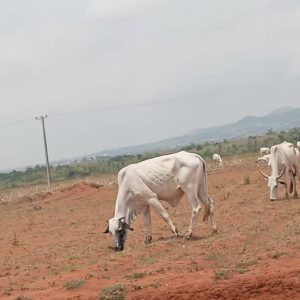
Cattle grazing in Bangai, Bachit district, a mile from Bindi. Credit: MBT

The Proximity Problem: Military Assets Unused

The BYM statement exposes a critical security failure that compounds allegations of complicity. The attack occurred in Bindi/Jebu village, which “lies by the roadside to Abuja and a military checkpoint of the Special Task Force (STF) not up to kilometre away from Jebu.” This proximity makes the military’s failure to respond even more inexplicable.

“The attackers did not drop from the sky,” the BYM statement pointedly noted. “They came with confidence, operated freely and left without challenge at the direction, where the reinforcement team deployed stationed itself like in previous cases recorded in some communities of Riyom.”

Governor’s Rhetoric vs. Reality: The Intelligence Failure

Plateau State Governor Caleb Mutfwang’s condolence visit to Bindi on July 16 revealed another layer of systemic failure. His admission during his condolence visit to the community that intelligence reports about the impending attack had been received beforehand, yet no preventive action was taken, underscores the disconnect between information gathering and protection of lives.

“It is very sad that we got intelligence for this attack, yet the attack still happened,” Governor Mutfwang stated during his visit. “I’m calling on the security agencies to redouble their efforts; we need to reappraise our strategy and tactics.”

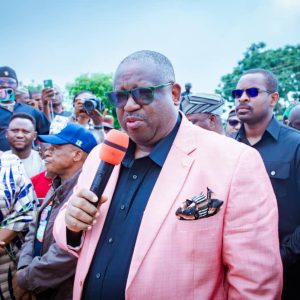
Gov. Caleb Mutfwang. Credit: Punch

The Governor’s call for accountability was unambiguous: “I’m calling on the security agencies to arrest the perpetrators, insisting that the era of ‘unknown gunmen’ must end. Can people come and attack people and kill them in their homes and we say they are not known? The perpetrators of the act must be arrested; the era of unknown gunmen is over.”

His message to security agencies carried an edge of frustration: “Let me remind our security agencies again, you are not here for peacekeeping; you are here to defend the lives and property of Nigerians. Anybody that is threatening the lives of Nigerians is an enemy of the state and must be dealt with accordingly.”

However, Governor Mutfwang’s words rang hollow for residents who had witnessed similar pronouncements following attacks in other communities. Mathias, a Bindi resident, expressed the community’s skepticism to MBT: “We have heard such comments from the governor over and over again in Bokkos, Bassa, and other communities in Riyom long before this madness reached our community. We want action, we want to see people being arrested and prosecuted. That is the only way to send a message to future terrorists who may be contemplating attacking communities.”

The BYM statement echoed this frustration, noting that the massacre was “debilitating the early trust we have built in the Operation Safe Haven-OPSH, which we had believed will continue working according to the matching order issued by President Bola Ahmed Tinubu that terrorist elements should be crushed.”

Systematic Terror: Beyond a Single Attack

The BYM revelation exposes the July 15 massacre as part of a broader campaign of systematic terror. While the attack was ongoing, “the same Fulani went on rampage of mass mow down of crops last night in Jol, Bachi, Rinyan and other places,” indicating coordination across multiple fronts.

This broader campaign involves “hundreds of the armed men brought in addition to the ones that have been on ground in places such as Fass, Mahanga, Shong, Rakweng, Sharu, Diyan-Hei, Hawan-Kibo, amongst others, where from the armed groups are reportedly stationed.” The scale and coordination suggest resources and planning far beyond spontaneous farmer-herder conflicts.

Command Changes and Security Adjustments

Following the July 15 massacre, Lt. Col. Thomas Paave was redeployed from Sector 6, Riyom and replaced by Lt. Col Isaac Indiorwhey. When MBT visited Bindi for the third time on July 29, Mobile Policemen were on ground providing security for the community.

Mobile policemen stationed in Bindi. Credit: MBT

The deployment of mobile police reflects a pattern in Plateau State where communities under attack have previously called for replacement of soldiers with mobile police in their communities. In February 2024, following the Christmas attacks that claimed over 200 lives in Bokkos and neighbouring LGAs, residents of Bokkos expressed distrust for the Nigerian army and called for the deployment of mobile policemen.

“He has been redeployed and we are very happy,” Mathias told MBT regarding Paave’s removal. “We also hope they don’t send him to another local government in Plateau or anywhere facing insecurity in Nigeria because he lacks the professionalism required to handle such challenges.”

This concern reflects a systemic problem within Nigeria’s military hierarchy, where accountability often means reassignment rather than genuine consequences for failures that cost civilian lives.

Unanswered Questions and Urgent Demands

As Bindi attempts to rebuild from the ashes of July 15, critical questions remain unanswered:

  • How did attackers obtain precise information about military movement schedules?
  • Why was intelligence about the impending attack not acted upon?
  • What investigation has been conducted into allegations of military complicity?
  • Will the weapons used in the attack be traced to their sources?
  • What measures are in place to prevent Lt. Col. Paave or similar commanders from failing other communities?
  • Why did the reinforcement team fire only three gunshots during a two-hour massacre?
  • How can the military explain the stark difference in response between different units?
  • What investigation will be conducted into the death of youth leader Mr. Bitrus Garba and the recovered bullet allegedly bearing Nigerian army markings?

The residents of Bindi, like countless other Middle Belt communities before them, have presented specific allegations and evidence that they believe supports their claims of military complicity. Whether through incompetence or deliberate action, the security response during the July 15 attack fell far short of protecting civilian lives.

As Rev. Davou Musa, who lost nine family members but survived to tell their story, stated in his interview with MBT: “I believe God saved my life so I can tell the story of what truly happened.” His testimony, and that of other survivors, has been documented and now awaits official investigation and response.

The deaths of 27 people in Bindi have raised serious questions about military conduct and effectiveness in Plateau state. The community’s demands for accountability, investigation, and justice represent a test of Nigeria’s commitment to protecting its citizens and ensuring transparency in its security operations.

This investigation was conducted by Middle Belt Times through extensive interviews with survivors, eyewitnesses, and community leaders in Bindi village. Additional information was corroborated through statements from the Berom Youth Moulders-Association. All testimonies were independently verified where possible.


The Fulani Expansionist Philosophy And Nigeria’s Unity

By Col. Gora Albehu Dauda Rtd

31 July 2025.


If ever there was a hypocritical country and people in all of history, without even if a scintilla of doubt, that fists the contraption called Nigeria perfectly for many a reason. By way of a background, I am endigine of the Middle Belt of the contraption called Nigeria and from the Atyap people of Zangon Kataf LGA in Kaduna State. I am griefed by the quantum of falsehood fed me and many other people over the years about this contraption, by so doing our ability to think deeply well beyond the facade of those who lorded it over us was truncated. All this is because of 2 very selfish and or dubious concerns.

The first is that as ethnic Nigerians we were all duped into accepting contrived falsehood as History. For example, I, and many in my generation were thought amongst many other falsehoods that the proven master terrorist and genicidal Fulani settler going by the name of Usman Dan Fodio championed a religious war to spread Islam to Nigeria when as a matter of fact, he was converted to Islam upon his arrival in what was later to become Nigeria many yeats later. The abdolute lies that were convenient to him.was recorded as History which the British collaborators also swallowed line hook and sinker as worthy of being thought in schools. The attrocities which amounted to genocide committed during the dubious Jihad were conveniently left out. The second is that the British colonizing regime for their merchantilist interest were not interested in interrogating the past as to establishing the truth of that which had been recorded as History.

With this background, the British colonizing regime forged a working relationship with the Fulani who had established the Emirate system of government wbich was to serve their interest conveniently. With that arrangement, the Fulani were handed a strategic advantage over the other ethnic nationalities in Nigeria. Any discerning observer will reslise that the Hausa who constitute the largest tribe not only in the Northern Region but in the territory of Nigeria were effectively forced under a Fulani carpet. The colonizing regime at all times sought to give their Fulani friends undue advantage. They made sure that the ethnic nationalities in all of the area they carved out and called Northern Region could only find political and economic expression through the very tiny Fulani ruling elite. For 220 years since the dubious Jihad, the Fulani setlers have continued to lord it over all the other ethnic nationality especially in the North of the country.

Subsequently, Indirect rule as the name suggests clearly handed over the fate of all of the ethnic nationalists over to the Fulani ruling class this time around internal colonialism took hold in the Northern Region of that time. The British could only be accessed at the whims and caprises of the Fulani. Policies of governmemt therefore largely benefited only the Fulani. You can almost conclude that but for the efforts of Christian Missionaries, virtually all of the Northern ethnic nationalities would have gone without Western education. Though many sons and daughters of the ethnic nationalities swept under the fuedal Fulani carpet obtained Western education thanks to the untiring efforts of the Missionaries, yet only a few found some accomodation within the structures of the Indirect rule system. So much was the descrimination that only Fulani or Muslim interest matteted. Is it any wonder then that the North trailed the East and Western Region in western values?

Consistently over the period, the Fulani elites have recklessly harvested the votes of millions of the oppressed Hausa to position themselves politically with the Hausa benefiting next to nothing not to talk of the many other ethnic nationalities in the North. It has been very easy for the Fulani to manipulate the system to their advantage by deploying religion. Ethnicity may have played a role but not a formidable one as religion. Like Marx so succinctly captured it in his famous declaration of religion being the opium of the masses, to that extent have the Fulani political elite manipulated the Hausa muslim votes to their political advantage. Had the Fulani carried the Hausa population along or had they shared the spoils of office to reach the Haisa population, the current Hausa political rennaisance perhaps would have been delayed further. The advocacy of Hajiya Khaltum Allimbe Jitami of Jaruma Hausa TV 24 has succeeded in raising the political consiousness on the many largely uninformed Hausa and the other ethnic nationalities as to their places usurped by the Fulani.

History has warehoused the attrocities of the Fulani in Nigeria since 1804 and the time has now come to call s spade, a spade between the settlers and the rest of the ethnic nationalities in Nigeria. The Muhammadu Buhari era did open the eyes of many Nigerians to the evil content of that regime. I have in many an essay brought to the fore the fact that Buhari was the product of a Fulani cartel that was focused on actualizing the age long desire of Usman Dan Fodio to turn the whole of Nigerian territory into a Fulani homeland. To attempt actualizing that madness, when he had no strength after months in foreign medical facilities one of his first Bills was the Grazing Reserves and Ruga in all of the States of this country. Prior, Fulani interest had ensured that virtually all of the positions of State governors, Ministers, NASS members went to only Fulani candidates. Happily, that strategy failed to yield the required result. All that the Hausa population needs to do to break the jinx is for them to put up Hausa candidates for all the poitical positions contestable. This will put to the taste the hitherto assumed Fulani popularity.

Clearly, the Fulani have costituted themselves into a menace by still believing the absolute nonsense that their forebear Usman Dan Fodio bequeathed the terrotory of Nigeria to them as war booty. The current resort to terrorism/Banditry much as the dubious Jihad will similarly fail. The Fulani have stained themselves with the innocent blood of too many Nigerians. The governments of Nigeria not limited to the Muhammadu Buhari regime have all proven to be impotent to the level of making the Fulani feel they are at liberty to do just anything. There have been countless incidents of mass murders in Benue, the Plateau Southern Kaduna, Xamfara, Katsina and elsewhere without the appropriate Military response. The Fulani armed gangs as well as their finaceirs and sympathizers embedded in government as well as those from outside will in due time be paid in kind.

Bona fide Nigeriams have suffered untold humiliation at the instance of the Fulani settlers. For the Fulani herdsmen who derive pleasure in driving cattle to eat up and or destroy farmlands and crops to their amusement whilst they make videos which they post on social media is most humiliating. Where the farm owners have dared to challenge such madness, they were confronted with the firepower of the ubiquotus AK 47s. Many of such largely peasant farmers have ended up losing their lives or with serious injuries. What society anywhere on the planet will continue to be subjected to such humiliating experiences whithout preparing to confront the perpetrators? Matters have come to a head as the people cannot bear it any longer

Moving forward, the ethnic nationalities of this country must design a strategy that will free and recover this country from tha stranglehold of the Fulani settlers. There is no need waiting for this to be achieved through an armed struggle since it can be achieved at a much cheaper cost poitically. The Fulani can no longer pretend not to know that the party is over for many of tiem politically. The Fulani arrogance and impunity has to be halted. Territorial expansionism via the mechansm of violence is abhorent in the 21 Century, so cleatly the very idea by the Fulani of acquiring land through coercive means ought not be toloreted. The Nigerian State must therefore have to wake up from the slumber of indfference to actively protecting and securing the population since that is her primary responsibility. To God Be The Glory.