How Lakurawa Terrorists Are Carving Out a Caliphate in Nigeria’s Northwest

First published on TruthNigeria 

By Steven Kefas

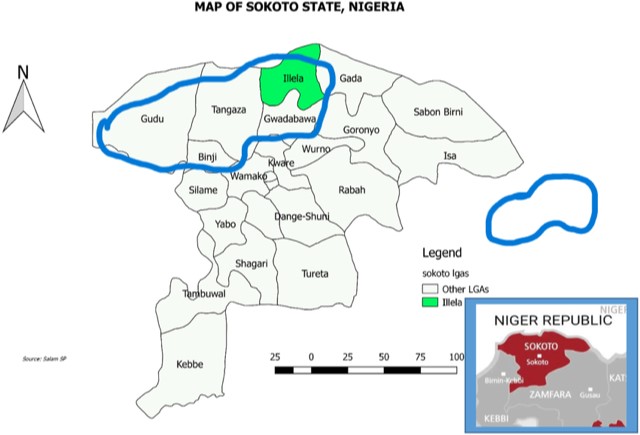
(Kaduna), The tranquil morning of July 2nd, 2025, shattered into chaos as Lakurawa terrorists, led by former bandit commander Charambe, descended upon Kwallajiya village in Sokoto State’s Tangaza Local Government Area. When the dust settled, 15 villagers lay dead—the latest victims of a terror group that has transformed from seemingly peaceful recruiters into a violent force threatening Nigeria’s northwestern frontier. Lakurawa has about 3,000 fighters in its ranks, security expert Dr. Walid Abdullahi told TruthNigeria.

This deadly assault represents a chilling evolution for the Lakurawa group, whose name derives from the French “La recrue” (the recruit), and whose journey from obscurity to infamy offers a sobering lesson in how terrorist organizations exploit governance vacuums to establish territorial control.

The Deceptive Dawn of Terror

Lakurawa’s story begins not with violence, but with promises. When the group first crossed into Nigeria between 2017 and 2018, they presented themselves as peaceful implementers of Sharia law. Sa’idu Salewa, a resident of Tangaza, recalls their early days to TruthNigeria: “When they first came here, to Tangaza some months ago, they were calm, friendly and peaceful and were only after implementing sharia law but now things have changed. They now attack villages and kill people.”

Defense and security expert David Otto, speaking on Arise TV, explains that Lakurawa entered Nigeria in 2018, establishing footholds in communities across Sokoto and Kebbi states. Their initial strategy was one of patient infiltration—winning hearts and minds while quietly building organizational capacity. The group has in recent months sent out fighters to some states in the North-west and North-central parts of Nigeria, a security personnel serving in Sokoto told TruthNigeria on condition of anonymity. “Lakurawa has been expanding its reach beyond Sokoto and Kebbi states in recent months. Don’t forget that the Police in Zamfara attributed some attacks to Lakurawa late last year or so.” He said.

Dr. Walid Abdullahi, a security expert based in Birnin-Kebbi, warned of this deceptive strategy as early as November 2024. “The group is only playing the peaceful card to ascertain control of territories in the regions,” he cautioned, predicting that violence would inevitably follow once territorial control was established.

The Terror Emerges

The predicted violence materialized with devastating effect. Beyond the July 2nd massacre in Kwallajiya, Lakurawa’s operations have spread across multiple fronts. On May 16th, 2025, eight women were forcibly abducted from Zagani village in Kebbi State while attending church services. The Chairman of Danko-Wasagu Local Government Area, Hussaini Aliyu Bena, reported that poor network coverage has prevented contact with the abductors, leaving the victims’ fate unknown.

The group’s territorial ambitions have manifested in systematic taxation and control mechanisms. In Augi Local Government Area of Kebbi State, residents report that Lakurawa now imposes taxes on villages and restricts cattle sales. Abubakar Muhammad, a local resident, describes the suffocating control: “It is now almost impossible to sell your own cattle to buy, let’s say, a motorcycle. They will arrest you and get you to pay taxes. Their justification is that they want to be using the animals owned by villagers to help the less privileged.”

A Strategic Alliance of Terror

Perhaps most alarming is Lakurawa’s ability to attract dispersed bandit elements. Dr. Abdullahi’s intelligence sources confirm that former bandits, left without leadership after military operations eliminated their commanders, are now seeking shelter under Lakurawa’s umbrella.

“I can also confirm that some bandits who were dispersed by the military operations that killed their commanders are now entering into alliances with different Lakurawa cells in Kebbi and Sokoto states,” Dr. Abdullahi reveals. This fusion of ideological terrorism with criminal banditry creates a hybrid threat that complicates counter-terrorism efforts.

The security expert warns that this phenomenon causes confusion in attack attribution: “Communities may actually see bandits, but the bandits may be new Lakurawa members.” This strategic absorption of bandit elements strengthens Lakurawa’s operational capacity while providing desperate bandits with ideological cover for their activities.

The Larger Sahel Connection

Lakurawa’s ambitions extend far beyond local control. Dr. Abdullahi identifies the group as part of a broader jihadist project seeking to establish caliphates “in the Sahel down to the coast of Ghana.” This regional vision aligns with established terrorist networks operating across West Africa.

The geographic proximity between Kebbi and Niger states creates particular concern. Dr. Abdullahi warns that Lakurawa’s eventual convergence with JNIM (Jama’at Nasr al-Islam wal Muslimin) fighters operating around Kainji Lake appears inevitable rather than possible.

“When you consider the proximity between Kebbi and Niger state, it is a matter of when, not if, Lakurawa will meet up with their counterparts; the JNIM fighters in the Kainji lake are where JNIM is now dominant,” he cautions. “We may soon have a dominant alliance of all terror groups in the Sahel, and that will be dangerous for Nigeria.”

Communities Under Siege

The human cost of Lakurawa’s expansion is devastating. Muhammed Rabiu, a Tangaza resident, describes communities living under constant threat: “The community has been under siege from both the Lakurawa terror group for weeks with the Nigerian security doing very little to intervene.”

Local residents report that the group has been “killing people silently in Tangaza local government for some time now,” suggesting a pattern of systematic intimidation designed to establish complete territorial control.

The Security Response Gap

The consistent reports of minimal security intervention highlight a critical gap in Nigeria’s counter-terrorism strategy. Communities describe being abandoned to face Lakurawa’s expansion with little to no government support, creating conditions that allow terrorist groups to establish territorial control.

A Warning Unheeded

Lakurawa’s evolution from peaceful recruiters to violent terrorists validates expert warnings about the group’s true intentions. Their success in establishing territorial control, imposing taxation, and attracting criminal allies demonstrates how quickly terrorist organizations can exploit governance vacuums.

The group’s regional ambitions and potential alliance with established Sahel terrorist networks represent a strategic threat requiring immediate, coordinated response. Without decisive action, Lakurawa’s “recruitment” phase may prove to be merely the prelude to a broader campaign of terror across West Africa’s vulnerable northwestern corridor.

As communities continue to suffer under Lakurawa’s expanding control, the question remains: will Nigeria’s security apparatus mobilize effectively against this growing threat before it becomes too entrenched to dislodge?

First published on TruthNigeria

….Steven Kefas is the publisher for Middle Belt Times and also reports conflicts for TruthNigeria



Ethnic Cleansing Crisis Grips Nigeria’s Middle Belt: Coalition Demands Urgent Federal Action

[spacing size=””]A coalition of 22 civil society organizations, under the banner of the Civic Coalition Against Mass Atrocities in the Middle Belt, has issued a scathing press release, sounding the alarm on a spiraling security crisis in Nigeria’s Middle Belt region. The group is urgently calling for federal intervention to halt what they describe as a systematic campaign of ethnic cleansing that threatens not only lives but the very fabric of democracy in the country.

The Middle Belt, encompassing states like Plateau, Benue, Nasarawa, Taraba, Niger, Kogi, Kwara, Southern Kaduna, Borno, Gombe, and Adamawa, has long been a hotspot for violence. However, the coalition’s report paints a grim picture of escalating atrocities: targeted attacks, massacres, and abductions that have claimed countless lives, left survivors traumatized, and displaced entire communities. The perpetrators, according to the coalition, are not only emptying villages but replacing locals with imported settlers, fundamentally altering the region’s demographic and political landscape.

The coalition identifies three key triggers fueling the current wave of violence. First, the upcoming national census, which they allege is being exploited by terrorist groups to seize territory—ensuring that displaced locals are not counted, thus handing control to the occupiers. Second, the 2027 elections, where the violence could disenfranchise Middle Belt voters, reshaping electoral outcomes. Third, the recent establishment of the Livestock Ministry, which some interpret as a green light for pastoralists to take over land, further inflaming tensions. Adding to the fear, new terrorist fronts led by groups like Lakurawa and Mahmuda have emerged in Niger and Kwara states, raising concerns of a broader regional conflict.

The coalition’s analysis reveals a chilling pattern. The affected states are landlocked, lacking direct access to international borders, making escape or external aid difficult. Over 20,000 square kilometers across Benue, Nasarawa, and Plateau States have been forcibly seized, with the displaced replaced by new settlers. This methodical displacement, the coalition argues, is a deliberate attempt to erase indigenous communities and redraw electoral maps—a campaign they label as ethnic cleansing with devastating implications for Nigeria’s food security, as the Middle Belt is a traditional breadbasket for the country.

“This is not just a security crisis; it’s an attack on the future of elective government in Nigeria,” the coalition stated, emphasizing the need for immediate action. They are urging President Bola Ahmed Tinubu to deploy federal resources to address the region-wide violence, which no single state can tackle alone. Their 12-point action plan calls for coordinated strategies, including a regional security framework led by Middle Belt governors, consultation with border state leaders, and the return of displaced communities to their lands with full executive backing.

The coalition also proposes modern solutions, such as integrating geospatial technology and drones to enhance security operations, alongside an intelligence framework that leverages local knowledge to prevent attacks. They advocate for inter-community security cooperation to bridge ethnic and religious divides and reforms to the Fire Arms Act of 2004, allowing threatened communities to legally defend themselves under supervision—a response to the overwhelming firepower of attackers.

Beyond security, the coalition addresses cultural and political injustices. They demand the restoration of illegally deposed chiefs and scrapped chiefdoms, particularly in Kaduna, where the previous administration under Governor Nasir El-Rufai allegedly dismantled traditional structures like the Adara chiefdom. Citing Article 8(2) of the Rome Statute, they classify the destruction of cultural heritage as a war crime, calling for its reversal.

Judicial accountability is another priority, with the coalition urging swift trials for perpetrators to deter further violence. They also propose a Special Crisis Accountability Bureau (SCAB) to ensure justice, involving top security officials under the Chief of Defence Staff and National Security Adviser. Additionally, they stress the need to protect food security and guarantee voting rights for displaced communities, pressing the Independent National Electoral Commission (INEC) to ensure no one is disenfranchised.

The press release, signed by organizations like the House of Justice, Christian Solidarity Worldwide, The Para-Mallan Peace Foundation, the Southern Kaduna Resilience Fund, to mention but a few underscores their readiness to collaborate with authorities. They aim to provide evidence and support sustainable solutions to what they describe as a political crisis with profound humanitarian consequences.

As Nigeria grapples with this escalating crisis, the coalition’s plea is clear: President Tinubu must act decisively to secure the Middle Belt, protect its people, and preserve the nation’s democratic integrity. The stakes, they warn, could not be higher.

Powder Keg in the Creeks: Niger Delta Militants Threaten Nigeria’s Economic Lifeline

By Steven Kefas

(PortHarcourt), Nigeria’s fragile economic recovery faces a new threat as militants in the oil-rich Rivers State issue ultimatums that could destabilize the nation’s primary revenue source amid a complex political crisis.

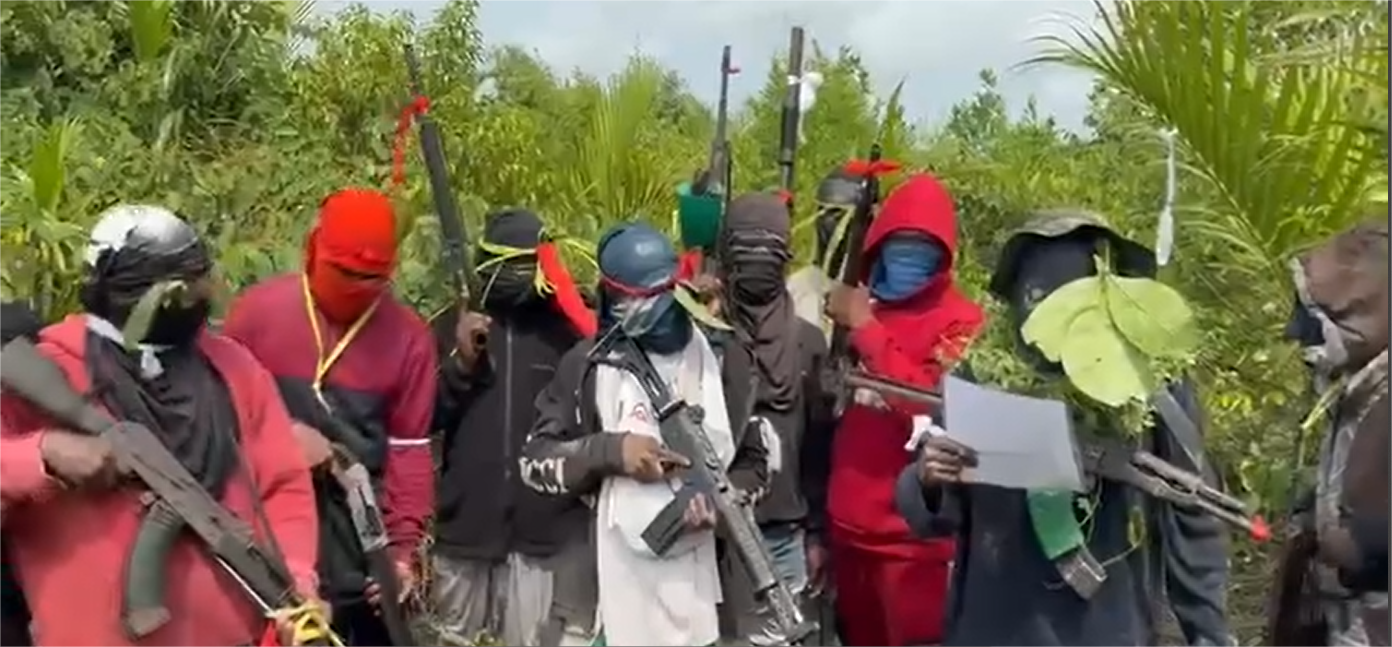
A chilling video emerged Thursday showing armed militants from the Niger Delta Rescue Movement (NDRM) threatening to attack oil installations in Rivers State, one of Nigeria’s largest oil producers. The militants, brandishing AK-47 rifles and other dangerous weapons from an undisclosed forest location, issued warnings that could potentially cripple Nigeria’s oil production and further destabilize an economy already on life support.

The group’s emergence comes in response to a political crisis that has seen the federal government withhold Rivers State’s allocation following a Supreme Court judgment that upheld the Martin Amaewhile-led 27-member House of Assembly as the legitimate legislative body. The Assembly subsequently issued a 48-hour ultimatum for Governor Siminalayi Fubara to present the 2025 state budget, which expired Wednesday night.

In the video lasting just over three minutes, a spokesman for the militants declared, “If the federal allocation due to Rivers state cannot be released promptly, we will have no choice but to take decisive action, including hitting oil production.” The militants also ominously advised non-indigenes to leave Rivers State for their safety, chanting “asawana, asawana” – a traditional war cry among the Ijaw people.

Economic Implications

For an economy struggling to find its footing, the timing couldn’t be worse. Nigeria’s recent modest economic gains have hinged largely on improved oil production after years of decline due to theft, vandalism, and underinvestment.

Dr. Adebayo Adegbine, a Lagos based Economist, warns that any disruption to oil production in Rivers State would deliver a devastating blow to Nigeria’s economy.

“The federal government has only recently begun to see slight improvements in oil output, which remains the backbone of our export earnings and government revenue,” Adebayo told TruthNigeria. “If militants carry through with their threats and successfully target key oil infrastructure, we could see production drop by as much as 300,000-400,000 barrels per day or even more. The ripple effects would be catastrophic – from exchange rate instability to budget deficits and delayed salary payments across multiple states.”

The threat evokes painful memories of the 2003-2009 insurgency, when militant groups like the Movement for the Emancipation of the Niger Delta (MEND) reduced Nigeria’s oil production by more than 50 percent through a coordinated campaign of pipeline bombings, facility attacks, and kidnappings of oil workers. At its peak, the violence slashed production from 2.2 million barrels per day to barely 1 million, costing the nation an estimated $100 billion in lost revenue in 10 years. The petroleum industry’s vulnerability was exposed as multinational companies declared force majeure and evacuated non-essential staff, while insurance premiums for operations in the region skyrocketed. It wasn’t until the 2009 amnesty program offered militants training, stipends and reintegration opportunities that relative stability returned to the region. “We’ve been here before,” notes energy consultant Ebi Johnson to TruthNigeria. “And the economic recovery took years, even with higher global oil prices than we have today.”

Nigeria’s economy has barely emerged from a period of hyperinflation, with the naira stabilizing slightly after months of freefall. The Central Bank has been working to rebuild foreign reserves, largely dependent on oil export earnings.

“We’re looking at a potential economic catastrophe if oil installations are attacked,” explains financial analyst Chika Okonkwo to TruthNigeria. “With government borrowing already at unsustainable levels and debt servicing consuming nearly 97% of revenue, any significant drop in oil output would likely trigger another currency crisis and inflation spike that could push millions more Nigerians into poverty.”

Why Americans Should Care

The brewing crisis has implications well beyond Nigeria’s borders, particularly for American consumers and businesses. As one of the largest oil suppliers to the United States, Nigeria’s production disruptions directly impacts global energy markets and prices at American pumps. Rivers state produces 344,000 barrels of crude per day.

Security Overstretched

The threat of renewed militancy in the Niger Delta represents more than just an economic challenge – it poses a serious security dilemma for a military already stretched across multiple conflict zones.

Dr Walid Abdullahi, a security consultant, describes the situation as potentially unmanageable.

“The Nigerian military is already fighting on at least four fronts – against Boko Haram and ISWAP in the Northeast, containing Lakurawa terrorists in the Northwest, managing deadly farmer-herder conflicts in the North Central states, and addressing banditry across multiple regions,” Abdullahi explained to TruthNigeria. “Opening another active theater in the Niger Delta would severely strain our operational capacity and effectiveness.”

The complexity of Niger Delta operations presents unique challenges. The region’s network of creeks, swamps, and waterways requires specialized training and equipment, including naval assets that are already in short supply.

“The terrain in the Niger Delta is notoriously difficult for conventional military operations,” notes Dr. Abdullahi “Previous militant campaigns demonstrated how relatively small groups could effectively evade security forces while targeting critical infrastructure. The military simply doesn’t have the resources or specialized units needed to secure thousands of kilometers of pipelines and oil facilities while maintaining operations in other conflict zones.”

Political Dimensions

The crisis is deeply rooted in the political standoff between incumbent Governor, Similaye Fubara and his predecessor Nyesom Wike, now Minister of the Federal Capital Territory. The militants explicitly mentioned Wike in their statement, accusing him of orchestrating the crisis to undermine Fubara’s administration.

“We call on President Bola Tinubu to intervene immediately and put a stop to the action of the Minister, Nyesom Wike, and his associates whose intent is to drag Rivers state to avoidable crisis,” the group stated.

Political analysts suggest the federal government faces a precarious balancing act. “Heavy-handed intervention could further inflame tensions, while inaction might allow the situation to deteriorate beyond control.” Says Michael Udeme, Uyo-based political scientist to TruthNigeria

Path Forward

Security experts emphasize that only a political solution can prevent potential catastrophe.

“Military action alone cannot resolve this situation,” warns Udeme. “The federal government must immediately convene all stakeholders – including Fubara, Wike, community leaders, and civil society – to address the legitimate grievances while isolating those seeking to exploit the situation for violence.”

For ordinary Nigerians already struggling with economic hardship, the prospect of disrupted oil production represents yet another threat to their livelihoods and stability.

As Rivers State residents anxiously await developments, the nation holds its breath, hoping that cooler heads will prevail before the powder keg in the Niger Delta ignites a crisis Nigeria can ill afford.

Northern CAN Condemns Supreme Court Ruling Upholding Death Penalty for Adamawa Farmer in Disputed Self-Defense Case

By Eke Chioma

Yola, Nigeria — The Supreme Court of Nigeria has upheld the death sentence of Sunday Jackson, a farmer from Dong community in Demsa Local Government Area, Adamawa State, drawing sharp condemnation from the Christian Association of Nigeria (CAN) and reigniting debates over judicial fairness and self-defense laws. Jackson was convicted for the 2014 killing of Fulani herdsman Buba Ardo Bawuro, which he insists was an act of self-defense during a violent confrontation.

According to court records, Jackson was working on his farm when Bawuro, allegedly armed with a knife, attacked him. Jackson claims he disarmed his assailant during the struggle, leading to Bawuro’s fatal injury. However, the Supreme Court ruled that Jackson had “reasonable opportunity to flee” and rejected his self-defense argument, affirming a 2021 Adamawa High Court verdict sentencing him to death by hanging. The March 7, 2025, ruling has sparked widespread outrage, with human rights groups and religious leaders demanding justice.

In a strongly worded statement issued in Kaduna, Rev. John Hayab, Chairman of the Northern CAN, denounced the judgment as a “grave travesty of justice” and urged Adamawa State Governor Ahmadu Umaru Fintiri to grant Jackson an immediate pardon. “This ruling blatantly disregards Sections 23 and 24 of the Adamawa State Penal Code, which protect individuals acting in self-defense. Jackson endured a decade of legal battles rooted in a flawed interpretation of the law. We implore the governor to intervene and correct this injustice,” Hayab declared.

The case has drawn international scrutiny, with human rights advocates condemning the verdict. During an Arise TV interview, Emmanuel Ogebe, an international human rights lawyer, warned that the ruling sets a “dangerous precedent” for self-defense claims in Nigeria. “Jackson retrieved the weapon from his attacker—this is textbook self-defense. To sentence him to death is not only unjust but a gross miscarriage of justice,” Ogebe argued.

Echoing his sentiments, U.S.-based activist William Devlin criticized Nigeria’s judiciary, stating, “Sunday Jackson is unequivocally innocent. This ruling exposes systemic failures in protecting vulnerable citizens from flawed prosecutions.”

With all legal appeals exhausted, Jackson’s fate now hinges on Governor Fintiri’s discretionary power to grant clemency. As pressure mounts from civil society groups, legal experts, and religious organizations, the case has become a focal point in broader calls for judicial reform and clarity on self-defense rights in Nigeria.

Northern CAN’s condemnation adds to growing demands for executive intervention, underscoring the deepening divide between public sentiment and the judiciary’s interpretation of the law. The outcome may set a critical precedent for similar cases amid Nigeria’s ongoing tensions between farmers and herders.

Why Fulani Vigilante in Nasarawa Cannot Work!

By

Felix Baba, Lafia

The plan to set up a Nomad Vigilante Group by Miyetti Allah Kautal Hore in Nasarawa State under the guise of curtailing cattle rustling, is a diversion being orchestrated in active connivance with a top security aide of President Tinubu.

The Aggressor seldom finds solutions to the aggression!! It’s a general feeling in Nasarawa State that the kidnappers and bandits, who are mainly from the Fulani ethnic stoke, either local or international, are being invited, sheltered, protected and covered to perpetrate their heinous crimes across the Middle Belt and Southern Kaduna.

The motive behind such a devious plan of hoisting a Fulani security outfit is to foster a Fulani hegemony across Nasarawa State and by extension the Middle Belt through the campaign of terror and bloodletting.

Ordinarily, the leaders of Miyetti Allah Kautal Hore were supposed to have been arrested and prosecuted long time ago for their utterances in defence of the kidnappers and killers of our people but here they are, colluding with Tinubu’s top security aide, to provide a layer of cover for murderers and kidnappers, which is motivated purely for self preservation and political conquest.

We call on the government, relevant institutions and people of good conscience to rise up and defeat this evil machinations of the Fulani in Nasarawa State, who have practically turned our state into the haven and launch pad of terrorism and banditry across the Middle Belt.

We also call out the security aide who despite holding one of the highest offices in the land, is supporting such an adventure that is designed to displace the people and take over their lands in keeping with the Fulani expansionist agenda.

Genocidal Killings in the Middle Belt of Nigeria-Perspectives, Facts and Fugures

…first published on Wrong Speak newspaper.

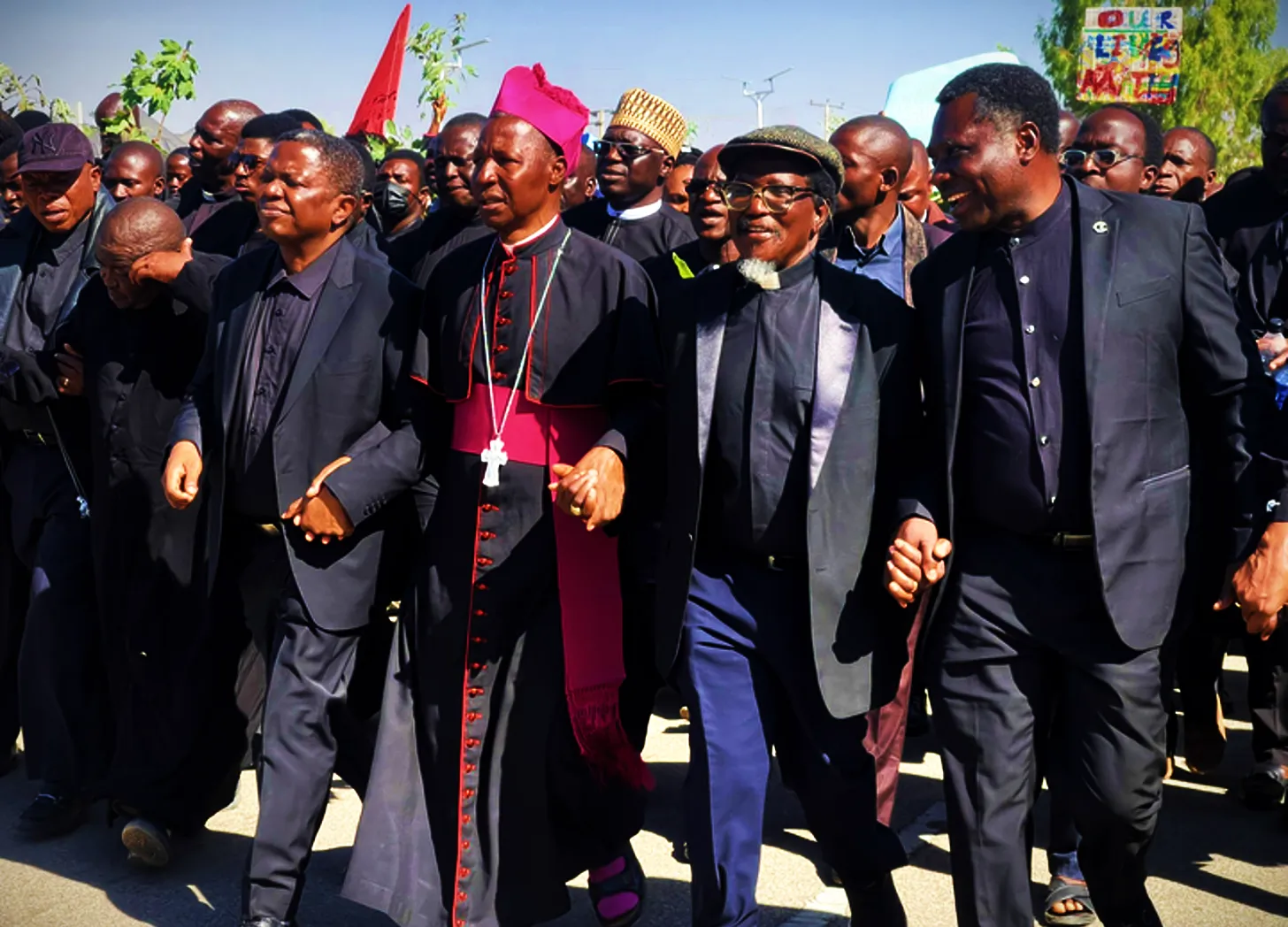
On Monday morning at nine o’clock, Christians from Plateau state in the so-called Middlebelt of Nigeria came together to call for an end to the genocidal killings that have wounded and damaged their communities for decades. The Christian Association of Nigeria (CAN) spearheaded the event in response to the ongoing terrorist attacks in Plateau and other parts of Nigeria. The protesters marched to the Governor House of Plateau, where former lawyer Caleb Mutfwang, sits in office. In front of the gathered group of protesters, he stated that he did not come as a governor to: “preside over burial ceremonies, but that it was time to move from the book of Lamentations to the book of Acts.” During the peace rally in front of the Governor House, Plateau state church leaders submitted a petition to Mutfwang to put an end to the killings.

This was not the first peace rally in Plateau, last Saturday there was a demonstration in the state capital Jos as well. Wednesday, January 10th, there will be a demonstration in London, England as well and another one is scheduled in Abuja, the capital of Nigeria, on the 17th of this month. On social media Christians from the Middlebelt have held several debate groups, which I joined a few times to hear their stories. From what I have learned, there is a growing sense of the need to join strength and unite for a more safe and secure future of Christians in the Middlebelt. 

Genocidal campaign

According to a 2022 report by Genocide Watch, fourteen Christians are killed daily and 420 monthly in southern Kaduna, Benue and Plateau states. In fact, Genocide Watch published a Genocide Emergency Alert concerning Nigeria in December 2022 in which it stated that: Nigeria is currently undergoing one of the deadliest genocides in the world. More people die in Nigeria every month than in Ukraine.” 

Greg Stanton, founding president and chairman of Genocide Watch, said that: “Fulani militants are committing human rights violations and massacres against Christians. This is not a herdsmen versus farmers conflict, but a genocidal war between ethnic groups, fueled by Islamic extremists with modern weapons.”

Christian persecution watchdog, Open Doors, writes that there are Islamic preachers from Saudi-Arabia and Iran joining the Fulani militant groups. According to Open Doors there is an agenda to spread Islam and turn Nigeria into an Islamic state.

Herdsmen or Jihadists?

Christians in Plateau, Benue, Kogi, Kwara and other Middlebelt states, have been defensively murdered, abducted, raped, robbed and forced to flee for years. In April 2023 Fulani jihadists beheaded a 5-year old boy in Southern Kaduna. In August 2021, Thomas Wollo (46) was beheaded together with his 7-year old son, Nggwe in Plateau. Second, these attacks often take place during church services or at nighttime when people are either sleeping, or getting ready for bed. For example, a 25-year old seminary student, Na’aman Dalami, was killed when Fulani jihadists burned down the house of the parish priest where the young man was serving. Already in bed, he could not escape the fire and was burned alive. 

During the peace rally in Plateau last Monday morning, people held up signs saying: “It is not a clash, it is pure terrorism” and “Terrorists are not natives.” One of the elements in the petition that the church leaders handed to governor Mutfwang on Monday addresses the question whether we are talking about herdsmen or jihadists.These messages are in sharp contrast with the predominant narrative, both in Nigeria and the international press, that the ongoing massacre of mostly Christians from the Middlebelt is a clash between herdsmen and farmer communities. 

This idea in Nigeria and the West alike, that we are dealing with a confrontation or conflict between two involved parties; nomadic, predominantly Muslim, herdsmen and sedentary, often Christian, farmers is an often repeated narrative. According to  CNN it is an “escalating conflict between herders and farmers,” Al-Jazeera describes it as a “grazing conflict between nomadic herders and sedentary farmers.” These are only two examples of a widespread narrative. On the other hand, Genocide Watch speaks of Jihadists Herdsmen and the International Organisation for Peace-building & Social Justice (PSJ), the International Committee On Nigeria (ICON), politicians such as Baroness Cox of the United Kingdom’s Hous of Lords and retired member of United States Congress, Mr Frank Wolf, in a joined report refer to the Fulanis as extremists or militants. International Christian Concern (ICC) also speaks of Fulani militants, a name also used when the Global Terror Index in 2014 named them the world’s fourth deadliest terror group. 

There is a serious discrepancy between what politicians and the experts say on the one hand, parroted by the media, and the analyses of human rights organizations when it comes to the murderous attacks on Christians in Nigeria’s Middle Belt states. Delineating the beheading of innocent people, including children, during their weakest or most vulnerable moments as a clash between two groups having a dispute over grazing land is misleading, only allowed to hold because of the media’s lack of reporting on what happens on a daily basis in Nigeria. 

On top of this, Nigerian Christian journalists, such as Steven Kefas and Luka Binniyat, who reported about the massacres on Christians in their land, have been arrested and imprisoned. 

SK “The Kaduna state government traveled about 800 kilometers to River state where I used to work and they abducted me. They did not arrest me, because there was no warrant for that arrest, I was abducted.”

Climate Change

Another favorite theme, when trying to analyze the ongoing persecution in Nigeria, is that this is all due to climate change. A while ago I spoke with Nigerian Christian journalist Steven Kefas and asked him about this narrative:

SK “It has nothing to do with climate change. They bring in climate change to deceive the international community and some gullible Nigerians, but we here in Nigeria, we have loved ones being killed, we have witnessed these attacks, we know that the attackers just come in to kill people. Sometimes when they kill people, they tell them: “Why don’t you call on your God to come and defend you?”  There is a lady I interviewed, who was taken by these terrorists, she was raped and molested in the forest and they told her: “You say you have a God, why don’t you call your God to come and safe you from our hand?” This tells you that these people have an agenda, it is a jihadist agenda, that is not just restricted or limited to Nigeria. It is an agenda that is across Africa, we have them in Mali, Somalia, Guinea and some other places. So that is what is on the plate and it has nothing to do with climate change.”

Talking Politics

Former president of Nigeria, Buhari, is a Fulani Muslim himself. During his administration the Nigerian government, according to Genocide Watch, turned a blind eye to the Fulani massacres of Christians. Genocide Watch, in the same report, also stated that the United State Department is in full denial of the Fulani massacres of Christians. According to Open Doors there are alarming reports that show deliberate neglect and sometimes even complicity of the Nigerian Security Forces with regard to these deadly attacks by Fulani militants. Buhari, according to Open Doors, has “openly and publicly admitted knowledge of the atrocities, often adducing justifications for the criminals.”

When Trump left office, he had put Nigeria on the list of ‘Countries of Particular Concern’ after the United States Commission for International Religious Freedom (USCIRF) had been advising the government to do so for several years. This is a list of countries that violate religious freedom. Then, when Biden took office, Nigeria was taken off of this blacklist and Secretary of State Blinken had a virtual meeting with then Nigerian president Buhari in which they wanted to “strengthen their communal interests” as it was called. I asked Mr Kefas what he thought of that decision, considering that by then it was already widely known that there was a genocide happening on the Nigerian Christian population, specifically in the Middlebelt region. Climate change, security, a strategic partnership, all was brought to the table, except the murdering of Christians. 

SK “As to your question why the United States took Nigeria off of the list ‘Countries of Particular Concern’, well unfortunately only the Biden administration can answer that question.” 

SK “The current administration in the USA seems to be more concerned about their own interests, they don’t seem to be interested in human rights, the rights of Christians across the world or traditional worshippers across the world. Whatever is going to affect their interest, they don’t joke with it. I think that is what is really top on their priority list right now.”

In addition to this, on January 4th of this year, the State Department published a list of countries that violate religious freedom. Nigeria is not mentioned and yet, Christians are murdered during church services or specifically targeted during Christian holidays, as we have seen recently when over 200 Christians were massacred on Christmas Eve in Plateau state. And, equally important, the Fulani militants are not mentioned in the same document as part of the Entities of Particular Concern, whereas for example Boko Haram and Islamic State West Africa, both active in Nigeria, are listed as such. Yet, the Fulani militants commit crimes that are no different from those committed by Boko Haram, i.e. killing, raping, plundering, kidnapping, using coercion, intimidation and installing fear among the Christian population of the Middlebelt. 

One of the ten points on the agenda, submitted to the governor of Plateau State, Mr Wutfang on Monday, is to recognize the Fulani militants as such: “We unanimously call on the Attorney General of the Federation and Minister of Justice as a matter of urgency, to initiate the process of officially proscribing the armed terrorist militias responsible for these mindless killings. They should be officially designated as terrorists. This will give the military the power to fully engage them as provided in the Terrorism Act of 2022.”

This demand is repeated by the many Nigerian Christians I speak almost daily. Recognize the militants as such, to give the armed forces the tools to deal with the massacres in a proper way. It would also allow for a clear distinction between Fulani herdsmen who are indeed looking for grazing land for their cattle and armed militias who massacre innocent citizens and drive them away from their ancestral lands, driven by a radical agenda to conquer the land and spread Islam. This becomes even more apparent when we realize that Fulani militants are also active in neighboring countries such as Chad and Cameroon, to combine forces may be the best way forward if we can agree who we are fighting against. 

Kaduna civilians bombed with bandits to protect ‘key infrastructure’ -Military

In a remarkable change of official narrative, the Nigerian military on Tuesday said its aerial bombardment that left at least 126 killed in Kaduna on Sunday night was a calculated operation to take out bandits that inevitably involved civilian fatalities.

Defence Headquarters spokesman Edward Buba said the military decided to engage after observing movements of bandits near an unnamed but “key infrastructure” in Ligarma Village at about 10:00 p.m. on Sunday, despite prior knowledge of the high prospect for civilian casualties.

“Aerial surveillance captured movement of groups of persons synonymous with the terrorist tactics and modus operandi,” Mr Buba said. “The observed advance of the terrorists that were gathered posted a threat to key infrastructure within reach of the ontoward activities.”

“Accordingly, the threat was eliminated to prevent the terrorists from unleashing terror on innocent civilians,” Mr Buba added, while accusing the villagers of harbouring sympathising with bandits. 

The statement from Defence Headquarters contradicted the initial claim of an army general in Kaduna, who told state officials on Monday that the airstrikes followed a precision error by combat drones deployed against armed bandits operating in the area. 

Kaduna government spokesman Samuel Aruwan said Valentine Okoro, a major-general leading the Nigerian Army 1 Division headquartered in Kaduna, had admitted at a meeting that the drone operators mistook the villagers for bandits, who have been terrorising the region. Those bombed had gathered for the Maulud celebration at about 9:00 p.m. Sunday, during which the army said terrorists were also suspected to be moving across the borders between Zamfara and Kaduna.

Yet the military headquarters in Abuja said the drone command observed the bandits mixed with villagers but dropped the bombs nonetheless.

“The NA UAV (Nigerian Army Unmanned Aerial Vehicle) detachment observed the movement of terrorists at Ligarma, a terrorist-infested area of Kaduna State,” he said. 

The DHQ did not say how many bandits were included in the death toll, which military sources placed at 126 as of Monday afternoon. Villagers maintained all the people killed were civilians.

President Bola Tinubu left Nigeria on November 29 for a global climate conference in Dubai, and his spokespersons have not issued a statement about the development, which has driven nationwide uproar. 

However, Mr Buba expressed regrets over civilian casualties and warned residents of hostile regions to be. 

The airstrikes marked the first public knowledge about the army’s use of unmanned bombers outside the Nigerian Air Force, which had long been associated with repeated bombings of civilians, all of which were promptly attributed to operational mistakes. It was not immediately clear how long the Nigerian Army has been using drones without the knowledge of the Nigerian Air Force, which said it did not conduct any operation in the affected area over the past 24 hours. 

“The NAF has not carried out any air operations within Kaduna State and environs in the last 24 hours,” Air Force spokesman Edward Gabkwet said in a statement to The Gazette. “Also, note that the NAF is not the only organisation operating combat armed drones in the North-Western region of Nigeria.”

In 2021, Peoples Gazette reported that the Nigerian Air Force Alpha jet, in an ariel attack on armed bandits in Niger State, mistakenly killed wedding guests. A similar bombing claimed over 100 civilians in January 2023.

Before then, the Nigerian Air Force, in an airstrike, killed some Nigerian soldiers, mistaking them for insurgents. A soldier in a video published by The Gazette was seen reporting the incident and called for help.

Read the Defence Headquarters’ full statement below: 

PRESS RELEASE ON AIR STRIKE ON LIGARMA VILLAGE  IN KADUNA STATE

1. On 3 Dec 2023, at about 2200hrs and based on ontoward activities by terrorist. The NA UAV detachment observed the movement of terrorists at Ligarma, a terrorist-infested area of Kaduna State. Aerial surveillance captured the movement of groups of persons synonymous with terrorist tactics and modus operandi.

2. The observed advance of the terrorists that was gathered posed a threat to key infrastructure within reach of the onward activities. Accordingly, the threat was eliminated to prevent the terrorists from unleashing terror on innocent civilians. 

3. It should be noted that terrorist often deliberately embed themselves within civilian population centres in order for the civilian population to bear the consequences of their atrocities. Nevertheless, the Nigerian military does its best at all times to distinguish between civilians and terrorists. 

4. The military views every civilian death in the cause of operations as a tragedy. Such tragedies are needless and unwanted that cause the armed forces to take measures to avoid them. 

4. One such measure taken by the military is to continually give precise instructions to communities. For instance, communities are to always alert troops of their activities, particularly when such a community is known to be infested with terrorist and their sympathisers. These instructions are intended to enable the military to distinguish between friendly and untoward activities.  

5. The armed forces will continue to operate consistent with international law as it always has done. It will also continue its determined and cautious progress in eradicating terrorists from our land.

6. These terrorists, as part of their tactics, disguise themselves as civilians to perpetrate terror.  Accordingly, they will continue to find innovative solutions to the challenges faced in the conduct of operations.

EDWARD BUBA

Major General

Director Defence Media Operations

Credit: Peoples Gazette

Police Begin Search For Kidnapped Benue Commissioner

The Benue State Police Command has said that it has begun a search for the kidnapped state Commissioner for Information, Culture and Tourism, Mr Matthew Abo, who was abducted on Sunday by gunmen.

The spokesperson for the state Police Command, Catherine Anene, disclosed this to PUNCH Metro over the phone on Monday.

She said that the command was doing everything possible to rescue the kidnap commissioner.

When asked about the efforts the CP was making to rescue the commissioner, Anene said, “Definitely, policemen have been on the operation since the information got to the command.”

Abo was Sunday night kidnapped by some gunmen who invaded his house at Zaki Biam, headquarters of Ukum Local Government Area of the state.

The commissioner was said to have been at home with his family members when the gunmen came on four motorcycles and found their way into his living room.

During the incident, an eyewitness explained that the kidnappers came on four motorcycles, ordered everyone in the house, including the commissioner’s wife and children, to lie face down before taking their target away to an unknown destination.

“The abductors forced the commissioner to sit behind the rider of one of the motorcycles while a gunman sandwiched him.

Meanwhile, the state Governor, Rev Fr Hyacinth Alia, said on Monday that the abductors of the commissioner had yet to establish contact with the victim’s family members.

Alia, in a statement issued by his media aide, Kula Tersoo, said that gunmen had a day before the incident, kidnapped a former chairman of the local government, Iorwashima Erukaa.

He said, “While Abo was kidnapped by gunmen in his Sankara home at about 8pm, Sunday, September 24, 2023, Mr Erukaa was also taken away by a yet-to-be-identified gunmen on Saturday, September 23, 2023.

“The kidnappers, who took the duo to undisclosed locations, have made contacts with the family of Erukaa but have yet to make contacts with Abo’s family.”

Tersoo said that the governor, who described the act as barbaric, had detailed security agencies to immediately commence operations to ensure the safe release of the duo.

“He (governor) has called on the people of the state to remain calm, as his administration will do everything to make the state safe for all,” the statement added.

The Sankera axis, which comprises of three local government areas; Logo, Katsina-Ala and Ukum, is the major flashpoint of criminal activities such as kidnapping and killing in the past few years.

Earlier, Tersoo confirmed the abduction of the commissioner.

The CPS said, “Yes he was kidnapped. Unfortunately, he was kidnapped in his country home in Ukum LGA, around 8pm on Sunday, September 24, 2023.

“He was home with his family, children and his people when the armed men came in. They forced him on a bike.

“We received the unfortunate development and His Excellency, Governor Hyacinth Alia, has already directed and detailed the security operatives to ensure his safe release from the kidnappers’ den.”

SOURCE: Punch

Secret Negotiation: We Have Enough Facts To Expose You, Zamfara Gov Fires Back At FG

Governor Dauda Lawal, on Tuesday, said the Zamfara State Government has enough facts to expose the agents of the Federal Government behind the secret negotiation with bandits.

The governor, who had consistently ruled out the option of negotiating with bandits, had earlier raised the alarm that the Federal Government had entered a secret dialogue with the criminals.

But the Minister of Information and National Orientation, Alhaji Mohammed Idris, accused the Zamfara Government of politicising security.

However, in a statement Sulaiman Bala Idris, his spokesman, issued on his behalf, the Governor said he had evidence exposing some Federal Government agents involved in the negotiations with bandits in Zamfara.

He added that the Minister of Information should have conducted a thorough investigation before discrediting the State Government.

The statement read in parts: “We sought clarification from the Federal Government regarding the sneaky negotiations with bandits carried out by some of its agents without recourse to the State Government and heads of Security agencies in the State.

“We have facts and evidence on what had transpired between these agents of the Federal Government and the bandits during the negotiations in several places across Zamfara.

“It is disappointing that the information minister discredited our claim without verifying it first. What is expected of him as a professional is to collaborate with relevant authorities to substantiate the claim’s authenticity.

“Zamfara State Government respects protocol and established authority. We would not come out in the media to start exposing the names of the Federal Government agents involved in the covert dialogue with bandits.

“We want to clarify that those individuals leading secret negotiations with bandits in Zamfara are politicising insecurity, not the State Government.

“The Information Minister’s statement claiming that there were no negotiations between government officials and bandits in Zamfara requires further clarification. We have already exposed a few locations where such talks were held with bandits, such as Birnin Magaji, Maradun, Mun Haye, Ajah, Bawo, and Bagege.

“Negotiating with bandits in Zamfara is a grave mistake we cannot afford to make. It is not the solution to the problem and only encourages and emboldens the criminals. We urge the Federal Government to take a firm stance against such activities and investigate the motives of those who engage in them.”

Source: Nairaland

ACF Calls for a Total Purge of Banditry and Terrorism In Nigeria

The Arewa Consultative Forum (ACF) has issued a strong appeal to the Federal Government, urging them to completely eliminate the issues of banditry, kidnapping, and terrorism within the country. This call to action comes in response to the recent abduction of female students at the Federal University Gusau in Zamfara State.

In a statement released on Sunday by Professor Tukur Muhammad Baba, the spokesperson for the ACF, the forum expressed deep concern over the abduction incident. While official details about the attack remain limited, eyewitness accounts indicate that it was a well-coordinated assault carried out by both bandits and terrorists.

The ACF highlighted that the female students were specifically targeted, and the criminals were well-prepared, managing to escape with an as-yet-unknown number of victims despite efforts by the Nigerian Army.

The forum vehemently condemned these abductions and called upon the Federal Government to do everything in its power to secure the safe release of the kidnapped students.

Furthermore, the ACF urged the Federal Government to overhaul Nigeria’s security apparatus and develop comprehensive, multifaceted strategies to address security threats affecting schools and communities across the nation. These strategies, according to the ACF, should be aimed at eradicating the scourge of banditry and terrorism on a nationwide scale.