Terrorists Chanting “Allahu Akbar” Slaughter 30 in Southern Kaduna

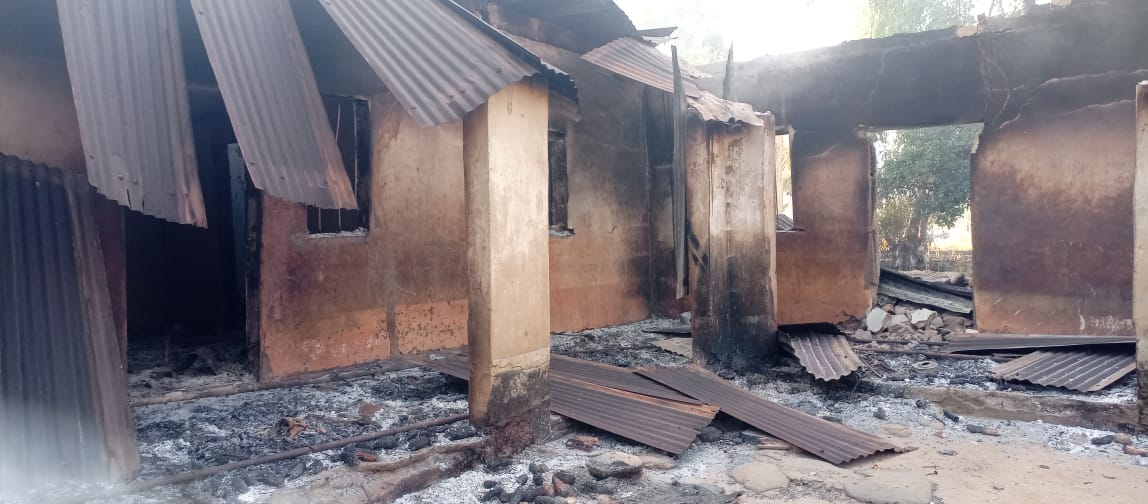
Terrorists suspected to be Fulani Islamists on Sunday night launched daring attacks on two Southern Kaduna communities, killing no fewer than 30 villagers in the process.

The attacks which took place in Malagum and Sokong communities all in Kaura local government area of Kaduna state threw the communities into deep state of mourning after dozens were hacked to death by the terrorists.

A youth leader from one of the affected communities who spoke to this newspaper on condition of anonymity said the attackers came into their community chanting “Allahu Akbar” meaning Allah is the greatest, as they shoot sporadically at the helpless villagers.

“They came in heavily armed, chanting Allahu Akbar as they shoot at the people, some of our people made attempts to run but couldn’t run faster than the bullets of the herdsmen who went on butchering those fell by their bullets.

“As am speaking to you right now the communities are in a severe mourning state, it is few days to Christmas but I can assure you that we cannot celebrate anything here after this attack.” He said.

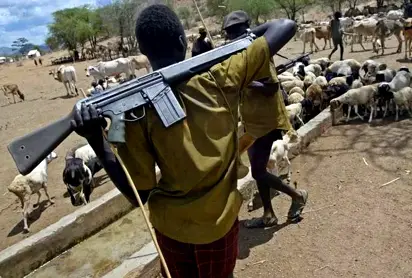
Sunday’s attack came barely one week after terrorists in similar fashion killed 8 people in Malagum and Kamuru-Ikullu communities all in Southern Kaduna. The villagers blamed the attacks on Fulani herdsmen who have been largely blamed for many attacks in different parts of Nigeria.

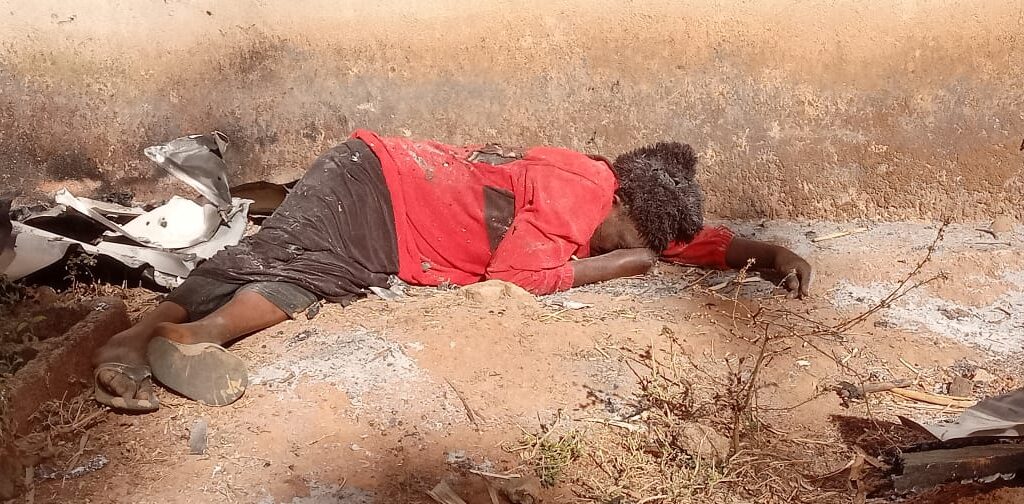
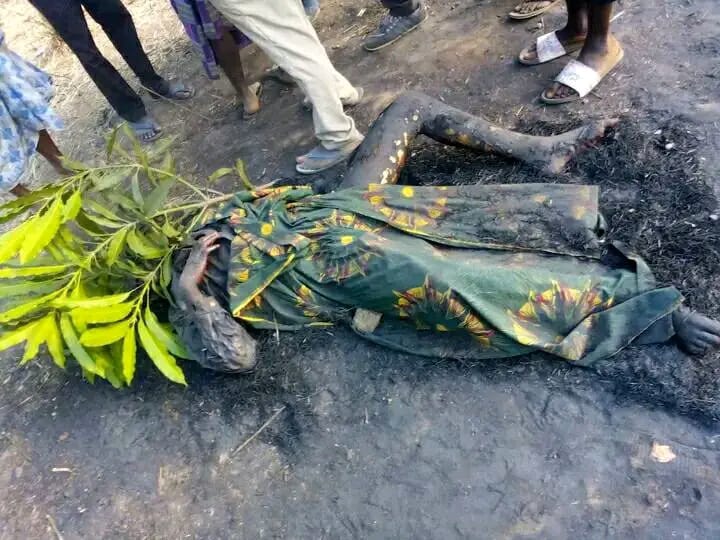
Images obtained by this newspaper showed that some of the victims of yesterday’s attacks were burnt to death by the terrorists while some were hacked using machetes after sustaining gunshot injuries.

A woman shot and hacked to death during the attack.
Another victim burnt to death.

In recent times, Southern Kaduna had witnessed attacks during Christmas and New year festivities. An occurrence many believed to have some religious undertones as the victims are majorly Christian indigenous people in the area.

Killer herdsmen write Ogun communities over planned attack

Suspected killer herdsmen have written to residents of some communities in Ogun state, threatening to invade their house in a reprisal attack.

The unknown herdsmen in the notice letter of attack, a copy which was obtained by our correspondent, threw fear into the minds of the residents of Asa, Agbon, Ibeku and Oja-Odan communities in the Yewa-North Local Government Area of Ogun State.

The latter was reportedly written on Saturday.

The herdsmen, in the letter written in English and Hausa languages, informed the residents of their intention of attacking the communities through the notice letter reportedly pasted on the walls in some strategic places within the communities.

The herdsmen told the leaders of the communities to expect their visitation to their homes between December and January.

The notice reads, “Attention! Attention!! Attention!! to all following communities; Asa, Agbon, lbeku, Oja-odan and its environs.

“You think you can send away our people
from the land they bought in Nigeria, our fathers land, you kill our people, you kill their cows, you take over all their properties, you think you can go scot-free. It’s high time we come for revenge.

“All the above mention communities leaders should prepare for the war between December and January. We are coming to take back our father’s property.”

When contacted the state Police Public Relations Officer, Abimbola Oyeyemi confirmed the development .

Oyeyemi said he had seen the letter, as he assured the concerned communities of the command’s commitment to unravel those behind the hideous act.

“Well, I saw the letter purportedly written by a baseless group. We believe it is a baseless group that wrote the letter. We are not losing any sleep because no information is too small to take note of.

“We are not neglecting it. We are working on it to unravel those behind it,” he said.

PUNCH

Renewed Southern Kaduna Attacks: Group Condemns Killings, Demands Improve Security During Festivities

…Says attacks in December are not new and shows they are premeditated

Southern Kaduna people living in diaspora under the auspices of Southern kaduna people in diaspora (SOKAPDA) Europe have condemned in strong terms the renewed attacks on communities in southern Kaduna. The group said the attacks are unacceptable and must be brought to a stop.

The group in a statement signed by its President, Mr Casimir Biriyok states that attacks in the area usually intensify in December a proof that the attacks are premeditated by the terrorists. It also accused the government and security agencies of not doing enough to protect lives and properties in the area.

Recall that Kamuru-Ikullu, Mallagun and Kpak communities in Zangon Kataf and Kaura local government area of Kaduna state respectively were attacked on different occasions this week, leading to the death of at least seven (7) people.

The statement reads in full;

“Men should think twice before making widowhood women’s only path to power.” — Gloria Steinem

Southern kaduna people in diaspora (SOKAPDA) Europe, condemns the recent killings which resulted to lost of lives and injuries to innocent citizens in Kamuru -Ikulu, Mallagum, Kpak and other parts of the state.

As a community in diaspora, we find it difficult to comprehend how human lives seem to have little value in Nigeria in general and Kaduna state in particular.

Looking back over the years, it is obvious that these broad day killers seem to intensify there activities in the month of December especially in the Southern part of the State. Given this scenario, one would have thought that those who are drawing salary to protect us and by implications saddled with the responsibility of protecting the lives of our people should have taken precautions given past experiences.

At the time of writing this release, we have not read or heard of any concrete measures by the power that be as to how they will protect us or what measures or precautions are being taken to remedy the situation now that it has become a routine.

It is essential to hold those who have sworn to protect us to do the needful for we in diaspora are frustrated that in the 21st century, technology like phone tracking, geo orbits satellite, drones and old fashion spying etc have not been fully utilized. We have been told time and time without number that the best is being done. Those at the receiving end seem not to see all these efforts for the killings seem to be going on unabated for years.

It is also on record that nobody as far as we know, has taken any responsibility for possible negligence or dereliction of duty or responsibilities and resign to indicate how serious some of those responsible for our peoples’ security have taken it.

The peaceful Kaduna that we knew is no more and we sincerely hope that some where within the political classes, someone will take security of lives seriously for it is absolutely too tragic that our state has become a killing field.

SOKAPDA will like to take this opportunity to express our sympathy to the families of the souls that were lost during the killings. May their souls rest in peace.
Our heart remains with all the families that they left behind. It is only Almighty God that can console them in these challenging periods. Similarly, we sympathize with every individual who have in one way or other been affected negatively by these random killings that seem to have no end in sight. We take exception to others describing these as either communal disputes or skirmishes. We should call spade a spade, these are premeditated killings. Period.

Mr Casimir P Biriyok
President of Southern Kaduna people in Diaspora (SOKAPDA) Europe
email: skpdae@gmail.com.

End of statement…

Attacks in Southern Kaduna are not new as the region has witnessed hundreds of such attacks in recent times leading to the death of thousands and destruction of several communities causing a humanitarian crisis in the area. The attacks are blamed on terrorists suspected to be Fulani herdsmen.

A glimpse into Africa’s future

…History belongs to those willing to fight for what they desire. Either you have an agenda you’re assiduously working towards or others will use you to achieve theirs.

Over the past few months, we have discussed topics including “The Rule-Based Order” — The Ajebutter Collective, Democracy: Faults & Contradictions, and If not autocracy or democracy, then what?. We also took time to explore The right to legitimacy, in an attempt to clarify who determines what is legitimate — the people or “the international community”.

As Africans, we have always desired success but due to the tragedy of history, we have had to look outside for possible examples to emulate. Today, we desire to emulate the successes of The West which may be an extension of our trauma or a case of Stockholm syndrome. But is this a realistic endeavour to undertake?

Achieving success across the continent has been a desire we hold for generations, a desire which grows with each passing day along with the scale of effort required to achieve it. But in all this time we have not taken the time to determine if, in achieving this success replicating the west is worth it, at what cost would it be, and if there are far better examples suitable for our soul to emulate.

We cannot plunder

Previously, in the article “The Rule-Based Order” — The Ajebutter Collective, we looked into the west’s interaction with Africa over the centuries and its implication on our reality today. We also discussed how the west achieved its success at the expense of our very soul and why to this day we subsidise their lifestyle by the way trade and the international system are configured with them as its primary focus.

The secret of the west’s success is not something so enigmatic beyond our imagination. To summarise, it’s us — Africans & the Global South (GS). There is a belief that the west’s success is due to the absence of human nature, some advanced process of thought & diplomacy, or an evolution of the human itself (Homo democratia). This belief is wrong, so fundamentally wrong that much discussion must be carried out on this in the future.

The west’s success is not due to any advanced thought process, out-thinking their problem/reality, the art of diplomacy or an evolution of the indigenous European into a new form of Man. At the root of the west’s success is a very simple process of plunder.

A 500+ years worth of plunder across Africa & the GS is the very root of their prosperity. Our experience living through the Age of Discovery, the Trans-Atlantic Slave Trade, the institution of Settler Colonialism in South Africa, America, Australia, Canada, New Zealand, etc., and a campaign to enforce colonies on Indigenous Africans along the borders drawn in 1884, Berlin Conference where no single African was present to voice an opinion on either the act or the resulting arrangement needs to be recognised as a trauma/tragedy which still informs aspects of our reality today.

It is important to spend a few moments on the paragraph above to understand how we got to where we are, the trauma we are living and the crime against humanity still being legitimised today. This is crucial because every so often I run across Africans sometimes Yorùbá like me who take the Berlin borders as an act of god, and express desires for us to forget the past, move on and simply make things work by accepting reality as they are. I vehemently refuse such a reality.

I refuse because the past is as important as the present and as it informs the future. It allows you an expansive knowledge of your immediate environment ensuring you understand who your natural allies and likewise enemies (we all have one, to think otherwise is a fool’s errand) are. Understanding the past does not connote being trapped within it, rather, it reduces the likelihood of us repeating the same mistakes, a task we have failed at.

The absence of a self-critical analysis of our past from a perspective primary to our respective reality has led to decisions that are detrimental to our existence. Your perspective must be primary when evaluating past events because every so often people pass on European/other’s views, perspectives & analysis of history as theirs. Such inadequacies continue to lead to bad choices across all spheres of our life. These choices have ensured a regression of our society as we keep chasing European/external solutions designed to solve European/their issues without realising such are mostly inapplicable to us.

It does not apply to us because our reality, history, geography, culture, ideology and spirituality differ with zero correlations at times.

The west’s success is not due to any advanced thought process, out-thinking their problem/reality, the art of diplomacy or an evolution of the indigenous European into a new form of Man. At the root of the west’s success is a very simple process of plunder.

Absence of Human Nature?

It is far more affordable in the presence of abundance and leisure to set aside human nature. Therefore, Europeans act holier than thou due to having limited worries beyond strategising how to plunder & subjugate much of the world.

Taking France as a case study, recently, it began to experience a fuel crisis which continues to linger. As someone who has lived through this repeatedly all my life in Nigeria, it can get worse. The effect of this crisis coupled with dissatisfaction, protests and strikes preceding it on French society has led to an increase in tension across the country which has made Macron contemplate calling in the military, a drastic action for a “liberal democracy”. Of the many realities currently present in France, I would like us to consider the tweet below.

The tweet above is not an attempt to dwell on the current struggle of the French people — maybe there is a little satisfaction in having them experience a bit of the pain the rest of humanity deals with daily. Rather, to present the toll that these crises have had on the average french citizen over the years. Also, this signifies the presence of human nature in France as well.

Given equal circumstances, human actions devolve to their primal nature. For the French, human nature has begun to awaken from its long slumber. It is important to be aware that no amount of thought can overcome the frustration of queuing for hours if not days for a few litres of petrol. It’s easy to ignore human nature when there is an abundance of resources, prosperity and leisure. This state of overwhelming abundance makes some have illusions of being a better version of humanity compared to others, and postulate unrealistic idealistic concepts as to why the rest of humanity is stuck as they are. But, put them in a situation with a degree of scarcity of all things, and you’ll get this reaction — an expression of human nature.

The reveal from COVID till now is that Human Nature reigns supreme and Africa & the Global South are as human as the west. We simply lack in abundance and prosperity.

Africa’s future is regional

A glimpse into Africa’s future is not for the faint-hearted. Much has been said over the past decade about Africa’s rising status which has become a missed opportunity. Though there is some progress sprinkled around, Africa has instead regressed on many indices over the past decades. None is more obvious than the backslide of West Africa (WA) and the Sahel, and how their future becomes increasingly bleak.

We have all had that moment where we had to state Africa is not a country/monolith. This is even more true now when looking ahead to what’s coming for the continent. I have come to understand Africa’s future is regional. A focus on regional development, nuances and history will do a lot of good for the continent’s progress & future.

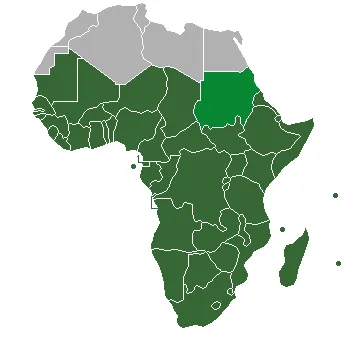
Firstly, Africa is used across my writing as a substitute for Sub-Sahara Africa i.e the aspects of Africa south of the Sahara inhabited by indigenous ethnicities. Africa comprises different regions each with its own regional body whose role is to mediate the geopolitical terrain and trade relations among other responsibilities. It is across this divide our future will be determined.

A glimpse into Africa’s future is not for the faint-hearted … Africa has regressed on many indices over the past decades. None is more obvious than the backslide of West Africa (WA) and the Sahel, and how their future becomes increasingly bleak.

Africa’s future as it was in the past will be determined by its different regional groupings with a degree of independence from one another. Also crucial is how they can redefine trade, movement and security of the continent in the 21st century. This is because as a continent with such expansive land & human resources coveted by all, the scale of prosperity and industrialisation is too massive to be tackled as a collective concurrent outcome.

As in the past, our road to development, its meaning and purpose, and how we will achieve it will differ between regions. Each region is required to construct a vision for the future and strive with their all towards these goals which include the need to conquer navigation within the continent for inter-regional relations.

Of course, the best outcome will be for inter-regional trade, movement and network to be developed concurrently within a mutually beneficial framework. These are not a new proposition, but a restoration of what once was which was dismantled by alien marauders who forced upon us a framework which feeds exclusively their interests. The restoration of trade lines and familiar diplomatic relations on the continent will do us much good.

On West Africa & The Sahel

History belongs to those willing to fight for what they desire. Either you have an agenda you’re assiduously working towards or others will use you to achieve theirs.

I realised that focusing my attention on West Africa (WA) & the Sahel which are my primary concern serves a better purpose. Though, my opinions may possess a degree of adaptability to other regions and serve as a point of reference.

As in the past, our road to development, its meaning and purpose, and how we will achieve it will differ between regions. Each region is required to construct a vision for the future and strive with their all towards these goals which include the need to conquer navigation within the continent for inter-regional relations.

Recently, I observed the trajectory of WA & the Sahel towards overtaking the Middle East as the forgotten region of the world. A region filled with chaos and crisis for decades to come, a black hole of media coverage, poverty-stricken, forgotten and left to its fate.

https://twitter.com/mosobande/status/1580792567964524546?s=20&t=4CMYfX0cN3nfaXuMSiETPQ

There have been a series of events in these two regions in recent years including the rising case of attempted & successful military coups, different degrees of armed struggles by different groups, the rise in terrorism, and the relocation of jihadist organisations/networks to the regions. All these, coupled with a rising case of economic and political instability in Nigeria, West Africa’s supposed hegemon, and other states in the regions.

As the global geopolitical shift continues to intensify on multiple fronts including the economy and recent semiconductor restrictions, it is unlikely that the world has much attention to spare on us. If recent events are any indication, a complete focus on Ukraine to the detriment of other issues of equal or greater importance, like the Ethiopia-Tigray war, has proven once again where the heart and attention of the world lies and for whom they are ready to dare our collective nuclear annihilation. All these are realities we can neither run away from nor hope to wish away.

https://twitter.com/mosobande/status/1580792554601467904?s=20&t=n4E9fBEgqF5OMZ9vtBr1JA

Likewise, the desire of the international community or their appetite is quite irrelevant to the developing reality. The possibility that either the west or the rest of the world will have enough attention or funds to spare for us in the face of the current global recession, food shortage, geopolitical realignment and other crises is practically non-existent. The most likely scenario is for us to be caged within the African subcontinent.

Recent development has shown desperation in the west to prepare against a migrant crisis. Western Europe and North Africa have developed measures and mechanisms to “contain” the situation. In addition to this is the fact that our relationship with the west has not changed much over the more than 5 centuries we’ve related with each other.

Africa has certain demographics and internal dynamics — which will lead to certain outcomes, and neither Europe nor the USA have the interest, nor the desire to commit resources to have any impact on these outcomes in the long run.

Also, the revolt of Francophone West Africa against the French shows a forced divestment from those who are considered traditional partners in the region. The new allies moving to the region in light of current geopolitical realities point more to a coming crisis and instability as we become a node in the challenge of “The Rule-Based Order”.

Crucially, it cannot be expected of those of us who live in these regions to accept the status quo — poverty & crisis-ridden — existence simply because we want to keep the alien overlords happy. Inherent contradictions instituted by the same group are the core of the current crisis escalating through the regions and much of Africa. It’s us living within these regions who will determine our fate regardless of what is affordable, preferred or appetising to any external entity.

As it was in the past when slaves on the plantation are not expected to consider either their master’s or any other’s appetite in their struggle for freedom, emancipation and dignity, so too will the appetite of the European or any external entity be of any consideration today.

I’ll have loved to hear the speeches given to slaves on the plantations back then on why their master and America didn’t want them to be free.

I think that what is West Africa and the Sahel need to be properly defined and delineated along with other realities. Currently, the map along the 1884 Berlin borders is a tragedy to behold, a crime against humanity which requires justice and effort towards restoration even today.

West Africa needs to also be properly reconstituted along familiar lines to optimise opportunity towards a prosperous, industrialised and developed future. We must not be crippled by fear of the past, as much as there was competition, it was healthy in a lot of ways.

Like Europe, with a redrawn border informed by historic and familiar relations of different groups coupled with trade policies, diplomacy and a degree of regional integration, we can achieve the success we’ve always dreamed of.

Beyond the Berlin Border – Restoring Africa’s Nations and Civilisations

…Despite our struggles, we are still stuck in the 19th century and our souls continue to revolt in rejection of the realities carved by aliens with neither context nor consent.

By Olúwáṣèyí and Adejumo David Adebayo

This work is in collaboration with Adejumo David Adebayo. He provided the research used for this piece which is the first of many contributions to Àṣírí Ọ̀rọ̀. There are a few maps presented throughout the article, please spend a few moments digesting them.

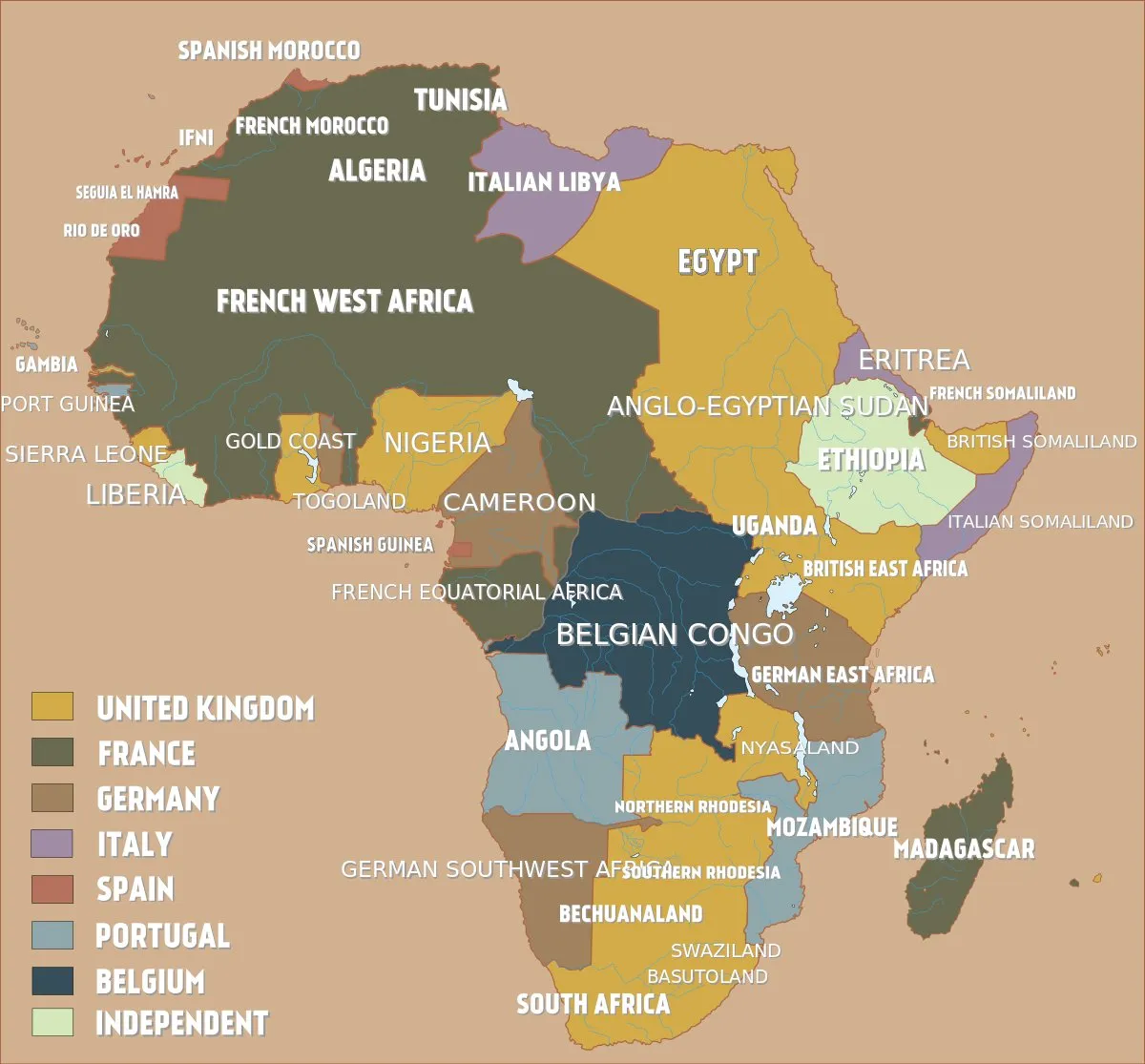
African Nations and Civilisation were disrupted 138 years ago at an event in Berlin, Germany called the Berlin Conference, Congo Conference or West Africa Conference. Today’s boundaries, which are a legacy of the colonial era, and the resulting languages through which we express our realities also follow these colonial claims over our respective existence as Africans.

These claims continue the centuries of humiliation where even today we lack any true nation on the continent which reflects the wishes of the indigenous people, their ethnicity, culture and civilisation. Though a limited few are free of this curse, the sovereignty of Africa’s true nations which was stolen continues to be held hostage.

In most of these African countries with white settlers, colourism exists in addition to apartheid that favours white settlers against the indigenous people. In these states, creating a racial consciousness towards promoting Black/African solidarity as a common factor becomes a necessity. During this period, ethnic consciousness is jettisoned or reduced for the sake of solidarity against a common white settler threat, until such a time when the threat posed by this alien group and their hegemonic status is nullified.

But in West Africa, white settlers were unable to entrench themselves despite repeated attempts at carving a colony to settle. Therefore, the absence of a settled white population and its resultant threats has led to a more pronounced ethnic consciousness over race.

Foundations of a Nation

A nation is born from commonalities of groups that exist within its bounds. Observing the different nations of the world across different continents, a pattern emerges especially in terms of the economic success and stability of such nations. A common pattern with these nations is the homogeneity of their societies. Although, a Mono-Ethnic country is a rare find, however, the stability of nations can be observed to correlate to how homogenous they are.

To be homogeneous is to be of the same or a similar kind, it is not the absence of difference. Homogeneous countries consist of groups with shared history, roots, ideology, spirituality, culture, civilisation, etc. All this and others work together to form a binding force, a myth, and a civilisation on which a nation is built. It’s not a lack of differences but the presence of a high degree of similarities that reduce the complexity of these societies because they are more likely to agree on the fundamental principles that will guide their collective consciousness towards a shared goal. There are always others in such societies as you observed in nations across the world but one group, one identity, one ethnicity, one civilisation forms the bedrock of these nations around which others gather.

An interesting observation of note is that in most of these nations, they are named after the major ethnic block that dominates the country with their language, culture, history, spirituality and civilisation. Some examples are Finn – Finland, Russian – Russia, Indo-Aryan – India, Albanian – Albania, Lithuanian – Lithuania, and Nauruan – Nauru, just to name a few. The full list of countries and their ethnic composition can be found here.

The principle of homogeneity can be found in many nations formed by indigenous people across the world and to this day differentiates them from the colonial corporations that litter the subcontinent of Africa. In East Asia, Japan is home to the Japanese, Korea to Koreans, and China to the Chinese (over 90% of the more than 1.4 billion population belongs to the Han ethnicity).

In most African countries, a clear majority ethnic block does not exist as states are split between different groups with very little in common beyond relative geography and skin colour. At times, these groups are ancient antagonists who are still in a state of war today. This is why Africa is not known for inter-state conflict but is synonymous with intra-border wars. This pattern is not unique to Africa as the same has been observed throughout history in similar cases exemplified by the recent experience with Yugoslavia and the current Ukraine debacle. 

In Africa, the root of this is alien, external, colonial and neocolonial. The Berlin borders were conceived at the 1884/5 Berlin conference. A conference whose result didn’t consider the existing realities, identities, history, culture, animosities, ethnicities and consent of the indigenous people, language, civilisations, borders and nations that existed across Africa then.

The opportunity cost of “Beauty in Diversity”

Africa is the most diverse continent and this conference institutionalised the distrust which is inherent in human nature which borders and distance continue to be the only known remedy. Despite our struggles, we are still stuck in the 19th century and our souls continue to revolt in rejection of the realities carved by aliens with neither context nor consent.

Considering the degree of ethnic diversity in countries across the world, a pattern can be easily observed. Comparing countries, continents and their successes, it can be seen quite simply why some countries may fall behind and struggle to achieve success compared to those success stories we consider the first world.

From previous studies, Africa is the most ethnically diverse continent with its nations equally carrying the same fate. With the world’s 20 most diverse countries, we can easily correlate the degree of instability that has become synonymous with the continent to the degree of ethnic diversity of the countries found in it. Although there are many contributing factors, this is primarily a result of the colonial legacy born as a consequence of the Berlin conference.

It is important to note that our actions/inactions perpetuate this reality even today despite compounding evidence both lived and historic that point to the deficiencies and ineffectiveness of these borders. Also, it shows a lack of imagination in the leadership on the continent and how they are so intent to kick these issues down the road. It’s a keg of gunpowder that will ultimately explode as we’ve seen in Ethiopia’s case.

In total opposite to their preaching of “beauty in diversity”, the most homogenous societies are Japan and the Koreas. Likewise, European nations enjoy a high degree of ethnic homogeneity. Strong democracy, a stable society, and a peaceful region correlate with ethnic homogeneity. In contrast to their misadventures in Africa and much of the world, several now-global ideas about the nation-state, about national identity as tied to ethnicity and about nationalism itself originally came from Europe.

For centuries, Europe’s borders shifted widely and frequently, only relatively recently settling into what we see today, in which most large ethnic groups have a country of their own. Even certain small ethnic groups like a Sammarinese from the Republic of San Marino (a population of about 34, 000, became independent in year 301 from the Roman Empire), and a Yap, Chuuk, Pohnpei and Kosrae from the Federated States of Micronesia (a population of about 105, 000, became independent in the year 1979 of living memory from the USA), both with a nation of their own. Ironically, it is the same group largely responsible for the state of confusion African countries are in, that are largely repulsed by the thought of restoring what was or realigning the borders to a state more conducive to the reduction of strife and competition between ethnicities within the Berlin borders.

From the study of ethnic diversity, internal conflicts appear to be more common in highly ethnically diverse (greener) countries. This might make some intuitive sense given that different groups with comparable “stakes” in their country’s economics and politics might be more willing or able to compete, perhaps violently, over those resources. In the case of Somalia, maybe worsening economic conditions or war make people more likely to further divide along ethnic factions. Good economic conditions and an abundance of resources may reduce these internal conflicts despite the degree of diversity, but that does not mean an absence of conflict or competition. It simply offsets the worst of it to the future at such a time when the conditions are bad enough to allow for them.

A case study of Nigeria

Nigeria, likewise many other African countries fall in the category of the state with the most ethnic diversity. In Nigeria, ethnicity and nationality are two opposing frameworks. It is a country where ethnic consciousness reigns supreme due to the reality of its history as a heterogeneous country without a clear majority ethnic/ethnolinguistic/ethnoreligious group to serve as the core. Evidenced by the realities from the days of regionalism, a major singular ethnicity with its culture, language, spirituality, ideology, and civilisation would have been more likely to create a more stable, peaceful and successful nation than what we have now.

The three largest Ethnicities in Nigeria are Yorùbá, Hausa-Fulani and Igbo, each with its unique language, culture, spirituality, ideology, and civilisation. Three opposing and conflicting fundamental principles with little to no commonalities in many aspects and an unwillingness to assimilate into the principles of the others.

In more homogeneous societies, it is easier to rule more democratically or otherwise depending on the desires of the people. This is because, despite disagreements, the threshold of disagreements morphing into conflict/violence is quite high. Such societies share a bond that can be considered similar to that of a family, with which despite the differences that may exist between them they can easily reach a compromise without the need to utilise violence. These differences at times can be fundamental but as in a family, they have a way of eventually working things out without rarely resulting in conflict. This can be observed with the predilection of the Yorùbá today to set up a table whenever a crisis rears its head, a lesson learnt in blood over the 16-year-long Kírìji war between different Yorùbá sub-ethnic kingdoms.

Identity comes with many complications regardless of how much of a social construct we hope for it to be. As is the case of Ukraine, sometimes an ethnic group can fragment with a section determined to be separate and different from the wider group. In times past, this desire is more easily respected and such groups are afforded the freedom to express themselves in all its implications. But today, the trapping of the so-called “modern states” has served as a prison to cage different groups of people with very little to no commonalities and at times with ancient animosities. They are caged within a “country” with a shared border and through a set of miracles beyond human nature/understanding, they are required by the powers that be – who institute these realities in Africa’s case, to create a success story of a nation.

It’s okay to be different

Diversity does not necessarily correlate with conflicts, but in a country like Nigeria, it is hard not to draw such direct correlations as it’s quite glaring. Nigeria’s diversity coupled with interests has led to nepotism, discrimination, supremacism, hatred, toxic political relationships and instability as evident from its incapacity to move beyond the events of 1966 and the glaring realities that accumulated till today. Although these differences existed during the era of regionalism, it was aggravated by the advent of a unitary structure which costs the constituent nations the semi-autonomy they enjoyed during that period.

It has been repeatedly noted that the regional system was bound to fail as crises were cropping up due to the absence of a clear borderline, conflicting fundamental principles, and near-total autonomy of each region. Perhaps the regional political players understood a bit of this but failed at extending regionalism to the security architecture. If such had been done, we will likely not be here today.

In Europe, states with no clear majority ethnolinguistic group like Switzerland, Belgium and in some ways the United Kingdom (UK) exists. However, the system through which they are governed is not unitary like in Nigeria and each ethnicity has a great deal of autonomy. Despite this, there are still self-determination movements in Belgium and across the UK towards achieving further autonomy from the collective. Without at least a version of these systems, Nigeria’s situation will not improve but rather worsen and eventually lead to a cataclysmic collapse as observed in its exponential slide into barbarism.

Across West Africa, a separation between what is West Africa from the Sahel is a must. From the study of Africa’s climate zones, the borders of what should be considered West Africa can be found in the humid tropical zone.

In Nigeria, the Northeast and Northwest are predominantly Sahel in geography, demography, culture, language, and civilisation. They have an unmistakable similarity to the civilisations of Niger Republic, Mali, and Burkina Faso along with their ethnoreligious values, pro-Islamic civilisation, geography, culture, language, climate, and more. The North-central or Middle-belt of Nigeria has more similarities with Southern Nigeria – the Southwest, South-south and Southeast. These similarities express themselves in their traditions, history, language, culture, civilisation, and more. Although, it must be noted similarities do not connote sameness.

Africa’s Indigenous Nation States

A restoration of what was is a reality we cannot escape. If not today, its day shall come tomorrow. The indigenous people must be afforded the freedom to express their unique identity, culture, language, spirituality, and civilisation, and to have the capacity to protect themselves from the excesses of others within a defined border that assures their self-preservation.

This freedom is theirs to take. As we cannot tell the oppressed how to react, it’s a burden we carry collectively to seek a pragmatic solution that respects the individual freedom of these civilisations which were upended and trapped within alien carved borders without their consent.

A possible reflection of the ethnolinguistic grouping (as shown in the map above) of Nigeria is a path. A realignment along the ethnolinguistic path may serve as the nearest checkpoint we could fall back to. It also provides the minimum viable nations with the most stability. Across these lines are civilisations with millennials of history that have been inherited by groups within these sections who are unwilling to assimilate into others.

To be homogeneous is to be of the same or a similar kind, it is not the absence of difference. Homogeneous countries consist of groups with shared history, roots, ideology, spirituality, culture, civilisation, etc. All this and others work together to form a binding force, a myth, and a civilisation on which a nation is built. … There are always others in such societies as you observed in nations across the world but one group, one identity, one ethnicity, one civilisation forms the bedrock of these nations around which others gather.

The wider region of West Africa can further develop along the principles of economic integration, a degree of collective political consensus for peaceful conflict resolution, and a military alliance in the spirit of NATO to serve as a collective security assurance among the parties and as a deterrence against any external aggression towards the region from either within or outside the continent.

The sham of multiculturalism

Angela Merkel once remarked on the sham of multiculturalism and its dangers. It is important to enforce once again that these experiments being carried out across Africa have been done for an eternity across Europe, America and the rest of the world. The results had always been the same inevitable fate of violence, chaos and distrust, while its solution remains to allow different groups their autonomy to exist in ways satisfactory to them.

“Multiculturalism leads to parallel societies and therefore remains a ‘life lie,’ ” or a sham, she said, before adding that Germany may be reaching its limits in terms of accepting more refugees. “The challenge is immense” she said. “We want and we will reduce the number of refugees noticeably.” 

In America, through migration and settler colonialism, the result is the near destruction of the indigenous people in the North of the continent – America and Canada, and the re-population (still ongoing through immigration) of those areas which also serve to dilute the indigenous voices. In the south of the continent, the effects of that history are still evident today.

We must not wish upon ourselves this fate nor should we through our dogmatic belief in realising the colonialist dream enforce it upon ourselves.

It’s okay to be different.

It’s okay to be you.

It’s okay to feel like, indifferent and hate towards others.

It’s okay to be as human as every other group across the world.

It’s perfectly reasonable to want to be independent of others on lands that are yours.

As an African, it’s okay to be just another human being.

2023: Why We Adopted Peter Obi-Middle Belt Forum

The National President of the Middle Belt Forum (MBF), Dr Bitrus Pogu, has given reasons the group is supporting the presidential candidate of the Labour Party (LP).

In an interview with VINCENT KALU, the MBF leader noted that the historical monolithic North no longer exists.

Continue Reading…

So far, are you impressed with the way the campaigns are going?

Campaigns should be based on issues, but you see violence happening in some places, which shouldn’t be. Instead of addressing issues, you can see that the presidential candidates are attacking one another; so it is not how mature campaigns should be, and we are hoping it will get better.

Are you not worried about the violence?

Everyone should be worried. We saw how the People’s Democratic Party (PDP) candidate, Alhaji Atiku Abubakar campaign trail was attacked in Maiduguri. It’s unfortunate that such a thing could ever happen. If the trend continues, we may not have a smooth election, which may spell doom for our democracy, and I wouldn’t want that to happen. We pray that all parties that are involved in such things should call their members to order so that we have a rancour-free issue based campaigns that will give Nigerians the choice to elect who they feel will deliver for them good governance, having elected him in 2023.

The presidential candidates signed a peace pact to maintain peace, but in some states, the governors are not allowing the opposition parties to use their facilities and so on. What is your take on this?

It is an unfortunate development. It just means that we are gradually becoming a lawless society, if we are not one already. My prayer is that those involved in such acts should become more civil in their behaviour so that we have development in our political process.

MBF and some southern groups have adopted Peter Obi as their presidential candidate. What informed that decision?

Equity, fairness and justice: it is just those three words. Every Nigerian knows that the six political zones deserve equal treatment. The South East deserves fairness, justice. Similarly, we have had presidents from North West and South West and continue to interchange since 1999. Now, after eight years of President Buhari, it should justly go to the south, and, in the south, the South West has had former President Olusegun Obasanjo for eight years, and now Prof Yemi Osinbajo as the vice president for eight years in 2023. The South-South has had former President Goodluck Jonathan for nearly six years as president, while the South East has not produced any. So, for justice, equity and fairness, it is only proper for it to go to the South East, and, with consultation with South East leaders, Peter Obi emerged as the preferred candidate, and, therefore, he left the People’s Democratic Party (PDP) and went to another platform. We are supporting him based on equity fairness and justice. That is the criterion.

Does equity, fairness and justice override competence in this instance?

Peter Obi was selected based on competence. In every geo-political zone, there are so many competent people, and among the lot of competent people who are in consideration from the South East, he stood out as the one we feel that, at this point in time, can help us in bringing the new Nigeria we are all aspiring to have. Competence, youthfulness, being energetic and not sickly, he has them all. He is the type of president that Nigeria needs now that can do the job without fainting, without going to the hospital every time, and he has the brains; he is an entrepreneur, a good trader and a good manager we believe can manage the affairs of this country, and he has a track record, which cannot be faulted. So what other competence do you want?

Some would argue that the North East has also not produced the presidency since 1999

The movement we have had since 1999 was between the north and the south. The North East could not capture the president after Obasanjo, it went to the North West, with the late Umaru Yar’Adua, and then it went to Jonathan of South-South, and it went back to the north, and as the North East didn’t grab it, was it the fault of the South that the North West grabbed it? Would you consider Buhari to only be North West, because, maternally, he is North East and paternally, North West? You can only blame the people in the north for not micro zoning it to the North East. Now, since it is going to the south after a northern president, if fairness is being applied appropriately, and our partners in the South said , ‘yes’, for fairness, equity, justice, it should go to the South East. It is nobody’s fault, let the people of the north now decide why when it came back to the North, it wasn’t given to the North East.

When do we put a halt to ethnicity, religion as considerations to winning elections?

It was when Nigeria became a nation, but, today we have nation states, and not a nation. We have tribal nations; we don’t have a nationhood created out of the Nigerian space with geographical states, which we accept as our country. We still have these forces pulling everybody, and before we could get there, we have to be able to address issues of tribal cleavages, religious cleavages. For example, when we were maturing and there was tranquillity in the land, a South West candidate, the late M. K. O. Abiola, chose Alhaji Kingibe as his running mate, no Christian even from the North raised an eyebrow to question the Muslim-Muslim ticket, but, today, we have a different situation. Boko Haram, they say they are Islamic group fighting; whether true or false, it is up to them to decide. We have ISWAP, an Islamic group fighting to carry out a jihad, which nobody understands. Then we have herdsmen militia, all having Islamic roots, and the Christians from the North, particularly the Middle Belt are threatened. So, that issue of same faith ticket cannot be tenable now, because even in this government, we have seen a lot of nepotism; people from the same religion, the same part of the country have been planted in strategic positions as if the others are not part of the country. From this, we have not developed into a nation; we are still states of nation within the space called Nigeria. By the time we are able to be a nation where Nigeria comes before religion, where Nigeria comes before tribe, and then we can do away with these things. In fact, when you talk to somebody at that time they will tell you, forget about this primordial sentiment, but, today, the realities are staring us in the face, and we have to face it squarely.

In the past, Chief Awolowo and Dr Azikiwe picked South-Eastern and Northern Christians as running mates, and no one raised any issues. When did it become an issue?

It was when religion and ethnicity started to stare us in the face. We didn’t have any Boko Haram before killing people for no reason; we didn’t have ISWAP before killing people for no reason; we didn’t have Fulani herdsmen militia before, but now, we have them, and everybody is complaining. Even in the North, people are complaining that nepotism has carried the day instead of inclusiveness and consideration for our diversity. These issues started to stare everybody in the face. You look, somebody is being killed by somebody who ‘pretends’ to be fighting a religious battle. Why should I support a system where both of them belong to the same religion, because I felt threatened that way, and that was why some APC leaders came out clearly to say, ‘We are APC, we believe in this political party, but we cannot accept Muslim-Muslim ticket’. It is because these things are realities today; it is happening because of what is going on today. In the past, when such things didn’t exist, nobody cared; nobody mentioned anything about it.

When Abiola and Kingibe ran together, nobody even asked why a Muslim from the South West picked a Muslim form the North East. It is the reality of today that informs the behaviour of today. So let’s address these things and let us not pretend and say they don’t exist. They do exist. The ordinary Christian from the North feels threatened by these attackers; in fact, the entire nation is threatened, and the Christians from the North are saying no to a Muslim candidate. The Muslim deputy is even coming from the Boko Haram enclave, so why should we support them? These are problems that are there because of the reality of today, and this reality has to be addressed so that we can move forward towards constituting a true nationhood in our conducts and in everything that we do. An American says, he is an American, and not a Christian American or a Muslim American; and a Nigerian is supposed to say he is a Nigerian and not a Muslim or a Christian from Nigeria. We have to address these things and then get out of the mess we are in.

One had expected that the Middle Belt Forum from the North would go for a candidate from the North, in the spirit of the monolithic North.

There is nothing called monolithic North. During Obasanjo’s period when some Middle Belters were appointed ministers and were given some key ministries, our brothers from the far north started saying that those appointees were not northerners. What defines a northerner? The Middle Belt struggle has been one of the oldest socio-cultural groups that existed. The struggle then was for a bit of the cake so that the bigger Northern Region would not forget the nationalities that were found in the southern north, and that led to what we have today. In the beginning, the powers that be in the North tried to carry these people along, but divisions started, and people started to say, ‘You are not true northerners’. So, who is the true northerner? So, they began to see themselves as a separate entity —the Non-Hausa Fulani and the Non-Kanuri minorities who were neither under the caliphate nor under the sultanate of Borno. When the British came, and these groups were coming together more strongly, and now they can say, ‘We have our identity’, the British kept us together for their administrative convenience and through the Indirect Rule that we have been subjugated to suppression and oppression, and it continued even after independence, and that is why the struggle continues. That monolithic North doesn’t exist today. Even the Hausa people, most of them are crying out to say that the Fulani came and deceived their forefathers, why actually they were fighting a political battle, took over our rulership.

Even some of their leaders, who were Muslims, were killed on Eid day, and their authorities taken over by the Fulani. They were Muslims before the Fulani jihad came. So, the Hausa are starting to probe into that historical episode to say, ‘These people are usurpers, and so we cannot accept it anymore.’ So, the cleavages are coming, you cannot hide history, because it will expose the truth, which people are hiding. Some of our leaders tried to stop the teaching of history. History is very important. Without history, I cannot tell my Kanuri brother that, before the colonial masters went to meet their leaders in Mongonu, they came to Chibok in 1902, and so we were also negotiated or forced into the protectorate just as you were. History tells me that my people were independent before we were all brought together. The monolithic North is now into cleavage, because history has exposed things that were hidden which are now in the open. But for Middle Belt, our struggle has been for a very long time, and we are only trying to ensure that our people are properly placed where they are supposed to be, and not to continue to play second fiddle to anybody; we are not second class citizens in our own country. By the time everybody has the right to be a Nigerian, just as everyone has just one vote, then Nigeria will be very good for everybody.

Apathy Greets Creation of Chiefdoms as Adara People Remember Slain Monarch

…We will not Recognize the Chiefdoms – Dio Maisamari


By George Makeri, Kaduna


The creation of chiefdoms in the middle belt was usually received with jubilation, because it symbolises a form of liberation from the erstwhile emirate rule imposed on the people by the British colonialists’ indirect rule.

Ironically, the announcement of the creation of two chiefdoms by the El-Rufai government on 10th November, 2022 for the Adara people of Kajuru and Kachia, did not excite any positve reaction. In certain quarters, the government announcement was long anticipated with resentments. Speaking with some Adara leaders, elders and opinion leaders, the sentiment is the same across board with some negligible exception.


“We will not Recognize the Chiefdoms.” – Awemi Dio Maisamari.
“The chiefdoms are calculated to weaken the unity of the Adara people.” – An anonymous opinion leader
“One or two persons asked for it, and they were given.” – Anonymous
“I only know one Adara Chiefdom.” – Feylom Kajuru.


Reacting to the development, a certain Adara opinion leader, whose name is withheld for fear of being persecuted by the government, expressed frustrations, though not surprise, at the newly created chiefdoms, claiming they were kept to herald a more sinister agenda of enthroning a non-adara on the chiefdoms by the El-Rufai government in tandem with the El-Rufai master plan. When asked whether that was possible given that the name “Agom” is still indigenous to Adara, she pointed out that the moniker is simply a trojan horse to allow for acceptability among the indigenous Adara people. “This is orchestrated to weaken the political, cultural and religious capacity of the Adara people”, she concluded.

A certain adara youth, Feylom Kajuru, on his Facebook wall, disowned the newly created chiefdoms, recognizing only the scrapped chiefdom and the assassinated monarch Raphael Maiwada Galadima. His statement can be found here.

An opinion leader I spoke with, whose name I have no permission to mention here claimed a person or two asked for the chiefdoms and they were created.

Going through the Facebook message of one Makeri Danjuma Mohammed, one can easily surmise that this Mohammed is one of the persons who asked for it on 2 November 2022.

The President of the Adara Development Association, Mr. Dio Awemi Maisamari insisted that the government has so impoverished the people such that the people have no recourse but to support unpalatable government decisions against themselves. He, however maintained that those whom the government has subdued through the weaponisation of poverty and are supporting the government among the Adara people are few. Maisamari has, in many prior publications, made serious allegations against the Kaduna State Government Anti-Adara Activities.

These allegations are condensed in a facebook message written by a fierce critic of El-Rufai, Steven Kefas, who is now on a self-imposed exile in europe.

Steven Kefas, in his ‘Adara people persecuted by tyranny’ write-up, suggested that the 2018 crisis that preceded the abduction and assassination of the late Adara monarch, Raphael Maiwada Galadima, was instigated by the state government to pave way for the easy abolition of the Adara chiefdom. He also suggested that the waves of attacks against the Adara people, was calculated to weaken the people’s resolve to resist tyranny. He however urged his readers to connect the dots and do the maths, while encouraging the Adara people to keep hope alive in the eternal fight against tyranny.

A May 6, 2019 publication by Sahara Reporters lends support to Kefas’s facebook postulations in claiming that the Late Agwom Adara, Raphael Maiwada Galadima, was assassinated for resisting the balkanisation of Adara chiefdom. These claims can be said to have materialized with these recently created chiefdoms after over four years of leaving the Adara people without a chief.

To show government biases against the Adara people whose chief was assassinated and corpse dumped along Kateri road on 26 October 2018, a Daily Trust 4 October 2020 publication authored by one Lami Sadiq, quipped that while much attention was turned on who to succeed the recently deceased Emir of Zaria who died of natural causes on 20 September, nothing was said of the successor of the Agwom Adara who was assassinated about two years earlier.

Lami claimed that out of the 32 chiefs in Kaduna state, only 29 were on seat as three were not; and while much attention was focused on replacing one, the Emir of Zauzau, nothing was being said about the replacement of the other two. According to Lami, the composition of the Kaduna State Council of Chiefs had 10 first class chiefs, 13 second class chiefs and 9 third class chiefs.

Both the Emir of Zaria and the Agwom Adara were first class chiefs. While the Zaria emirate retains its nomenclature, first class status, unity and an emir almost immediately succeeding the deceased, the Adara people were forcefully given a name change, their chiefdom balkanized and stripped of its first class status.

Awemi Dio Maisamari has also been repeatedly quoted on the issue by several media houses over the years. A Vanguard publication of 23 May 2020 titled ‘Adara people in Kaduna count losses from Kajuru crisis’ and written by Ibrahim Hassan – Wuyo, Maisamari expressed shock at government support of the atrocities visited on Adara land by fulani herdsmen. The publication read in part: “We are therefore shocked that government has become brazen enough or descended so low as to justify terrorism, butchery, and savagery of monumental proportions on such flimsy and illogical grounds.”


When government takes responsibility and even apologizes for terrorist attacks on Muslim communities, why does it perpetually blame the victims of attacks in Christian communities for similar terrorist acts?
“Even if government thinks Adara people have done wrong, is it part of public policy to allow or encourage jungle(terrorist) justice as a remedy?” A 5 December 2019 publication by The Cable titled; ‘We are suffering under you’ — Adara people write el-Rufai’ and written by one Ebunoluwa Olafusi, Dio Maisamari was quoted enumerating the sincere wishes of the Adara people which the government ignored to create two chiefdoms.

These concerns “are the widespread criminality and dastardly attacks in Adara land, the suffering of IDPs and other crisis victims, the assassination of HRH Agom Adara, the scrapping of Adara Chiefdom, the partitioning of Adara community in to two, the subordination of our people in Kachia LGA under a proposed Kachia Chiefdom, the subordination of the predominantly Christian population in Kajuru LGA under a tiny minority Muslim population in Kajuru Emirate and the refusal of government to engage with or at least be sensitive to the concerns and feelings of the community in any way during this dark period,” the letter read.”


Given the above concerns, it is no surprise why the creation of these chiefdoms amidst IDP crisis and repeated raiding of Adara villages by Fulani herdsmen with overt and covert government support, met lethargy instead of jubilation.