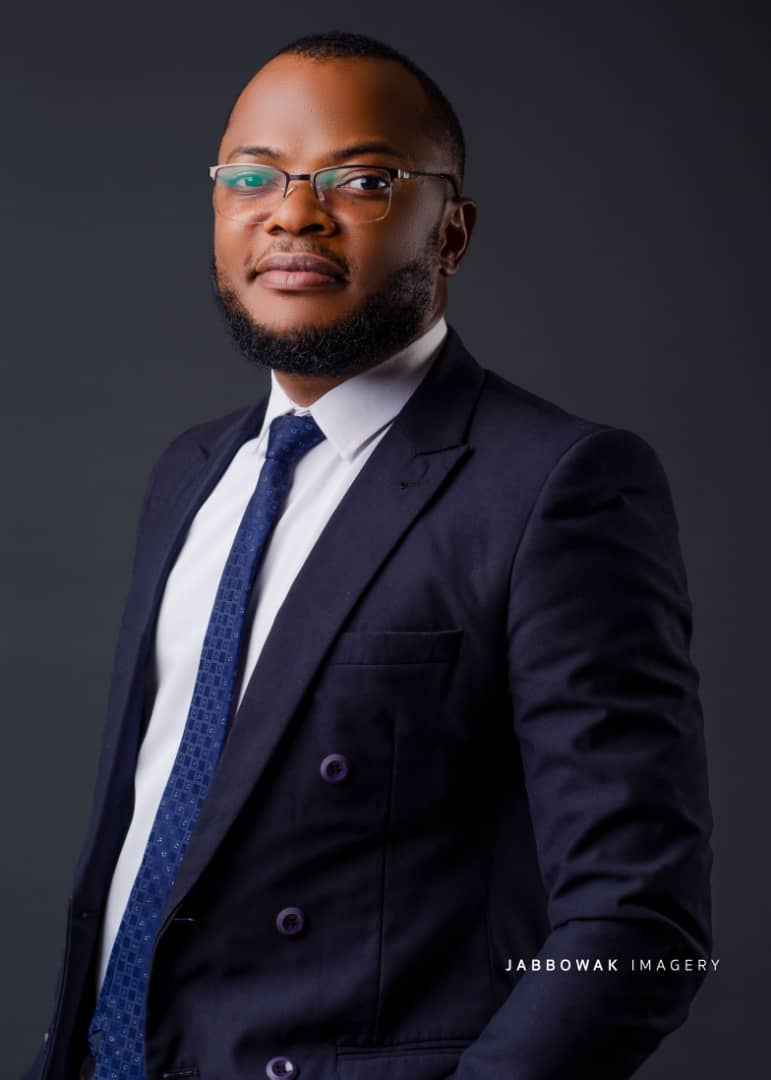
Kaduna: LP guber candidate, Asake, Meets Muslim Clerics, assures of fairness
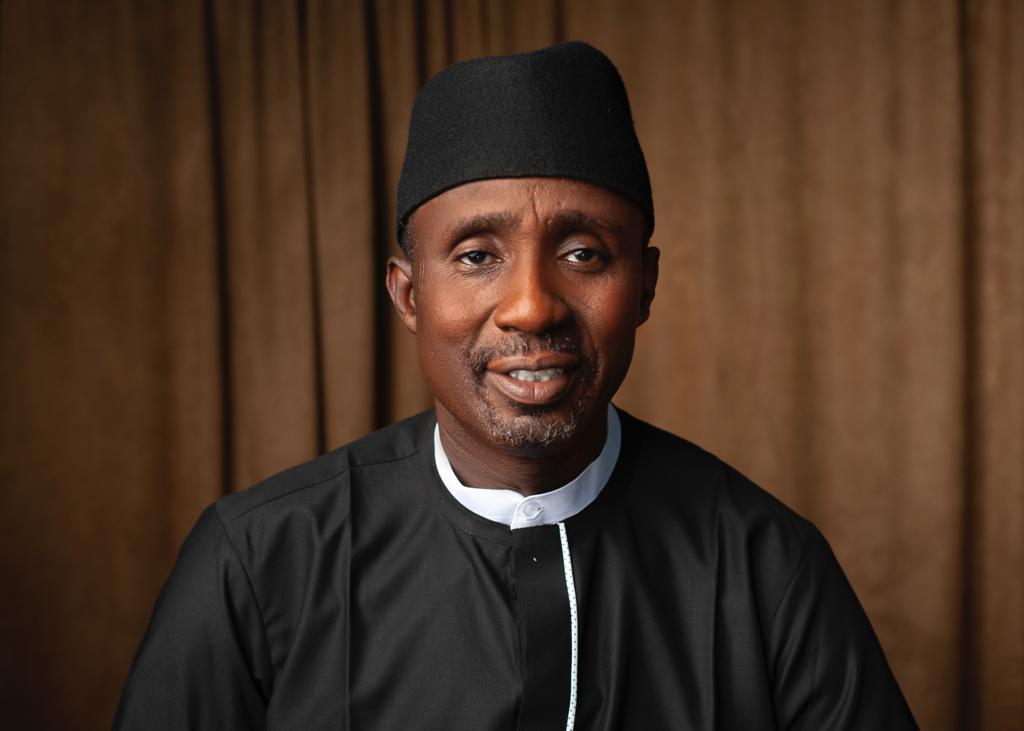
The Labour Party, LP, governorship candidate in Kaduna State, Hon. Jonathan Asake, has assured the Muslim Ummah that his administration would operate on the principles of fairness, equity and justice as enshrined in the 1999 constitution.
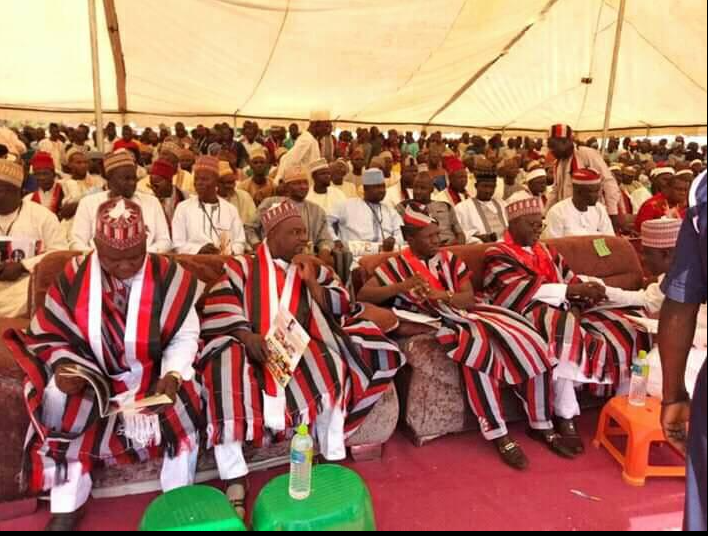
Asake gave the assurance at the weekend in Zaria when he and his running mate, Rt. Hon Bashir Aliyu Idris met with Muslim clerics in continuation of their dialogue with stakeholders in the state.
He said as religious leaders who control large followers, majority of whom have been affected by the wrong policies of the APC government, it was imperative to seek their prayers, support and interact on the way forward for the state.
The governorship flag bearer said he will defend the rights of every citizen to exercise their sociocultural and religious freedom at all times, adding that inclusiveness will be his watch word.
A press release made available to journalists in Kaduna on Sunday by James Swam, media aide to the governorship candidate, quoted Asake urging the clerics to deeply reflect on the prevailing economic and security situations of the state and preach the truth so that the electorate would understand what choice to make on March 11.
” I came to unveil myself to you, to seek your prayers and support to succeed in becoming the governor of Kaduna state come March 11 so that together we could secure the state and restore hope to the people.
” I will be fair and just to all citizens and segments of the state. I will rule by the principles of justice as enshrined in the 1999 constitution as amended. I will defend all and promote all, and each person will exercise their freedom as the constitution permits,” the release quoted the governorship candidate saying.
He lamented that poverty, unemployment, banditry, kidnapping, ethnic and religious conflicts were the result of bad leadership in the state and pledged to reverse the trends within a record time in office.
He said when leaders do not operate on the basis of inclusiveness and empathy the society was bound to experience decline in all ramifications.
Asake told the Islamic clerics that only the Labour Party has the family as its centrepiece as emphasized on its logo showing a father, mother and child. He said as the party of the working class and the downtrodden, the people of the state would not regret voting the Labour Party, LP.
A cleric who spoke, Imam Shugaba Abdulhamid Muhammad, urged the governorship candidate to keep to his promise, adding that it is important “to operate an open door policy” in order to be accessible to the common man.
He lamented a situation where leaders get elected and shut the door behind them, saying “if we see failure in your policy implementation, we shall express displeasure openly”.
James Swam Media Aide to Jonathan Asake Labour Party Governorship Candidate Kaduna State 29/01/2023
Peter Obi paid a visit to Southern Borno as part of his campaign to become Nigeria’s next president making him the first Presidential candidate to visit that part of the Middle Belt.
There was celebration and jubilation as natives from Chibok, Gwoza, Hawul, Askira Uba and the nine local governments welcomed the Presidential candidate.
In his speech, Obi spoke to the people of the region assuring them of solving the Boko Haram conflict and creating a peaceful society where they can engage in agriculture without any cause for fear.
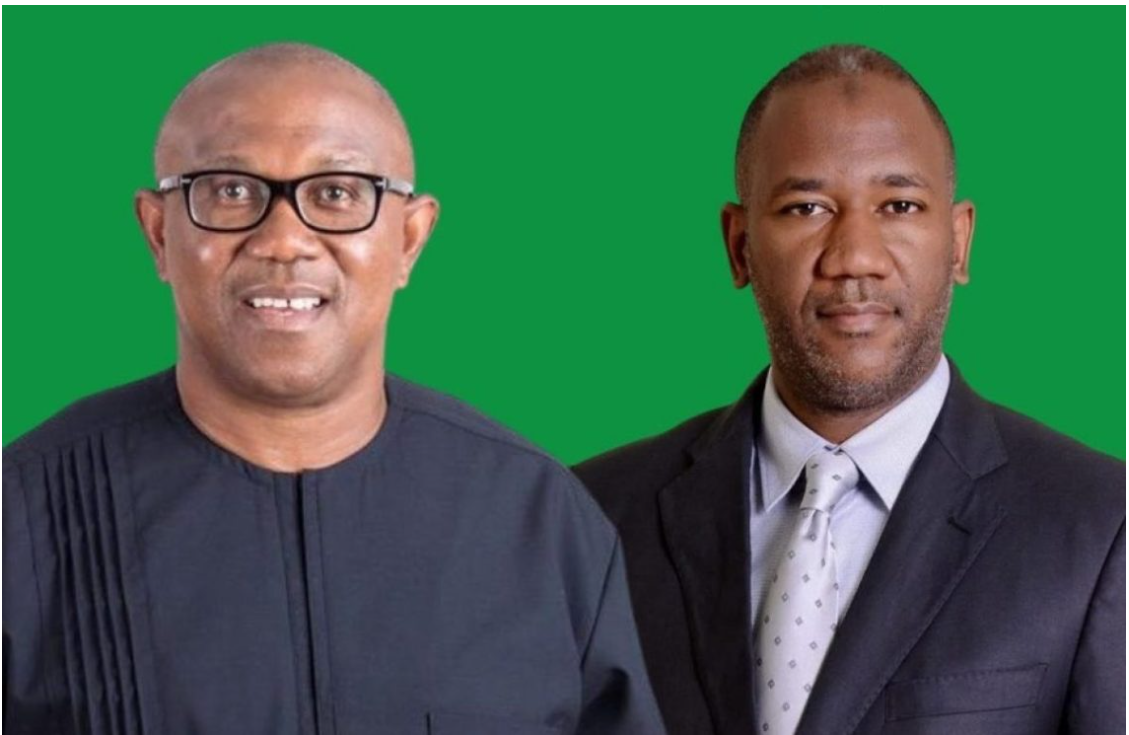
The reactions were positive as the crowd reacted to the speech. The coordinator of the event Isaac Balami who is also the Obi/Datti deputy national campaign manager and senior adviser on presidential campaign matters, funding and grass root mobilization responded by saying that the people of Southern Borno had rejected politics of religion and ethnicity and have embraced competence and capacity.
He also reiterated the love the people of Southern Borno had for Obi and the love Obi had for the people of the region.
Peter Obi kicked off his campaign in the Middle Belt and Northern part of the country and has toured several parts of the Middle Belt as he seeks election on the 25th of February 2023.
Recently, we have heard a lot about the killings in Southern Kaduna, but the media has once again seemed to ignore the killings in Southern Bauchi, where armed herdsmen attacks are responsible for scores of deaths every day. Only a few media outlets have been able to report on the atrocities taking place in the area.
The most recent incident that inspired this article occurred on January 22, 2023, at Gambar Sabon Layi in Tafawa Balewa local government of Bauchi State, where Daniel Dabwa was abducted and where four victims were gruesomely murdered.
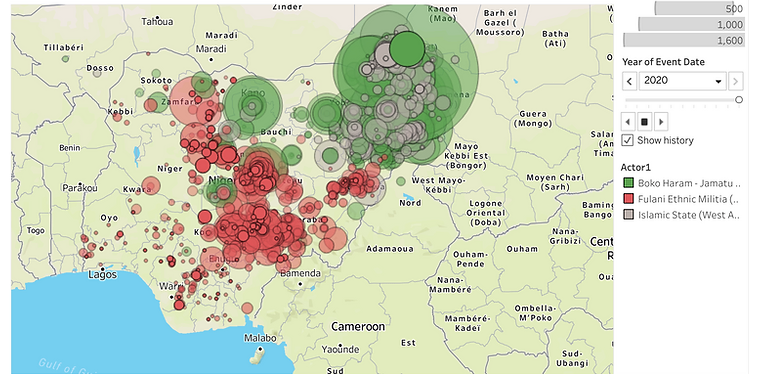
Heatmap of the non state actors and attacks by region (Credit: Genocide Watch)
But to understand the issues in Bauchi, there is a need to take a historic look at Bauchi State as a whole and the issues plaguing the Zaar people, where the former speaker of the House of Representatives, Yakubu Dogara hails from.
Bauchi was founded in 1809 by Mallam Yakubu one of the flag bearers of the Sokoto Jihad and was the first emir of Bauchi. They waged war on the non-Muslim groups in the area as they resisted subjugation.
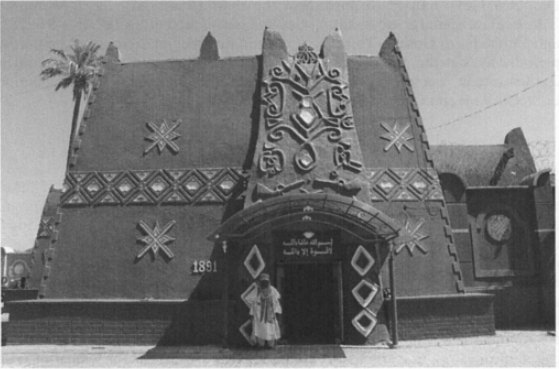
The emir of Bauchi’s palace dated 1891
In recent times, questions of indigeneity have risen as the indigene/settler narrative continues to cause tensions. The Zaar through their historical account settled in the region from before 1345. When the Jihads begun in the 1800’s, they had a peace treaty with Yakubu, the founder of Bauchi however after the passing of Yakubu, the peace treaty was broken by Yakubu’s successors which led to oppression and in some circumstances enslavement of some of the people by the Bauchi emirate. This led to a hostile relationship between the Bauchi emirate and the Zaar people which is still ever present in Zaar consciousness according to Jimam Lar, a scholar and researcher on post-colonial Nigerian history at the University of Jos.
In recent times, in the area known as Southern Bauchi, the Zaar, are the largest Christian group in Bauchi State and their population is concentrated in the Tafawa Balewa, Bogoro and Dass federal constituency.
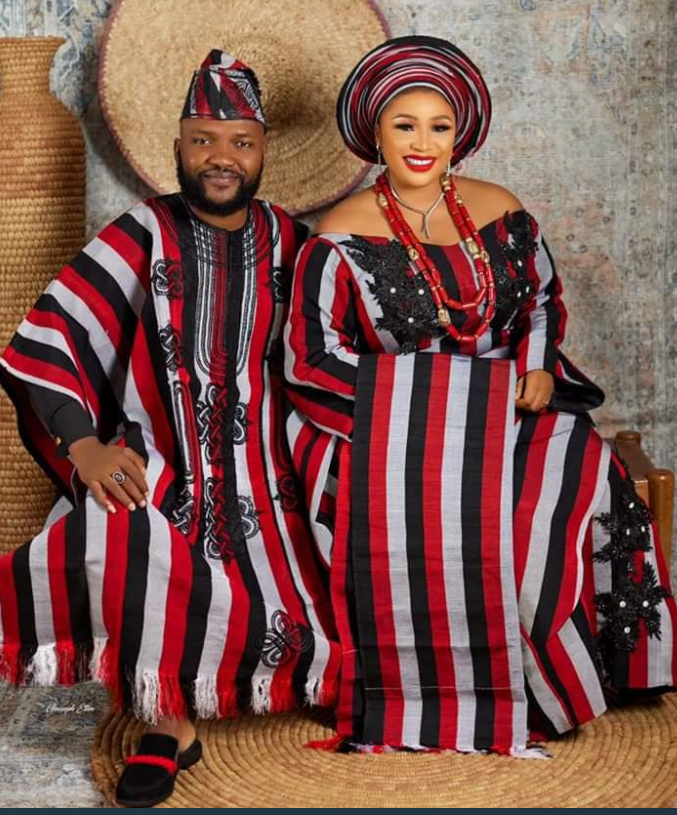
A Zaar couple
The first problem which is very obvious as is the case with other Middle Belt areas is that there has been intent to rename their areas to those of other ethnicities (particularly Fulfude and Hausa names). Tafawa Balewa means “black stone” in Fulfude – with Fulfude being the language of the Fulani ethnic group located in a few states in northern Nigeria. The Zaar instead call their local government “Puji” instead of Tafawa Balewa which also means black stone but in their language.
We see this trend in other parts of the Middle Belt like Adamawa – where the name of the state was renamed to that of the Fulani jihadist “Modibo Adama” who was responsible for slaughtering the people of Adamawa in large numbers during the Jihad of 1804. And it is unimaginable that in the 21st century, mini colonialism is still ever present where others would try to dominate and rename the lands of others. This is the case of Tafawa Balewa in Bauchi State.
Reasons for the conflict have historic roots with the first being a breach of the peace treaty during the pre colonial period in Bauchi which led to conflict between Yakubus successors in the Bauchi emirate and the Zaar people.
The second arose during the colonial era according to Johannes Harnischfeger – when the British occupied Northern Nigeria and preserved the Islamic structure of the Hausa and Fulani groups in the old Northern region but attached the Non-Muslim groups (in this case the Zaar) to the emirate structure under the Fulani.
Other researchers like Adam Higazi and Jimam Lar have articulated that in recent times, Zaar leaders and organizations like the Sayawa council of elders and traditional rulers accuse the Bauchi state government of discrimination against the people of Southern Bauchi.
The problem persisted all through the colonial era since the Emirs had unlimited powers, as well as the right to distribute land and to collect taxes – this was another cause of conflict between the Zaar and the Emirates
Thirdly, in these emirates, the citizens were subject to Islamic courts despite being heathen/pagan (in the words of the British). This meant that Zaar were discriminated against in the old emirates.
It was so bad that a government commission in 1958 ascertained that Fulani judges dealing with criminal cases only admitted testimonies of male Muslim witnesses and in terms of compensation, christians and traditionalists were given only half or one-fifteenth of the amount that a Muslim could expect (Willink commission report)
By the 1950s, the Zaar had joined the UMBC – United Middle Belt Congress, the party of Northern Nigerian minority groups which had gone into an alliance with Awolowo’s Action Group (AG) and which was built on the quest to liberate ethnic minorities from the Emirate system – a move that the Hausa leaders point to as a cause for the Zaar’s recalcitrance.
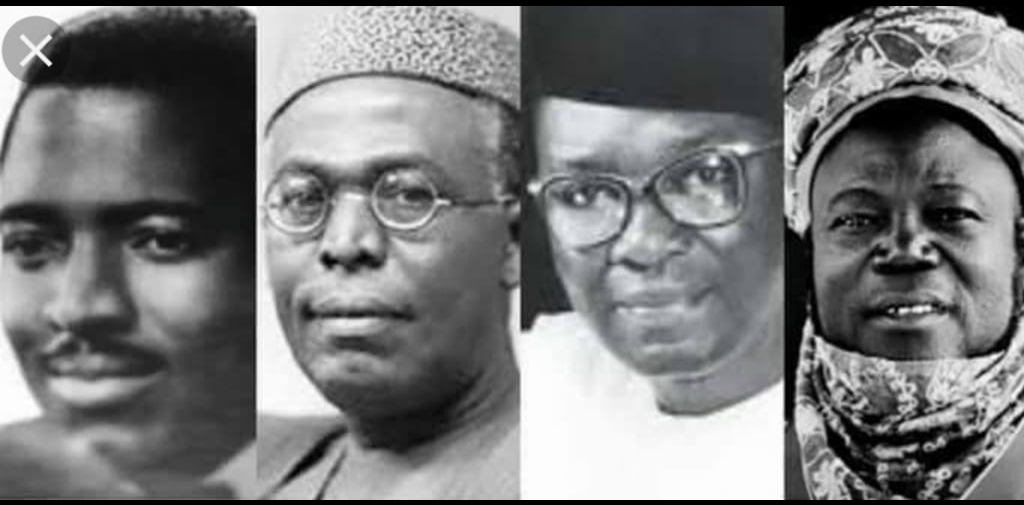
A photo of Joseph Tarka, Obafemi Awolowo, Nnamdi Azikiwe and Ahmadu Bello in the first Republic.
The Zaar have largely remained more culturally and politically oriented towards the Non-Muslim groups of Plateau and Southern Kaduna than towards the Bauchi Emirate. Due to this reason among others, they have therefore advocated for the creation of a lowland state which will encompass Southern Bauchi and Plateau States.
On the issue relating to disturbances plaquing the area, Southern Bauchi has witnessed violence at different times in Nigeria’s history.
Violence occurred in 1959, 1977, 1991, 1995, 2001 and 2011. The first case of conflict happened in 1959 which was low in scale but since the creation of Bauchi State in 1976 by the late General Murtala Mohammed, the conflicts quickly escalated and issues as to indigeneity arose.
Since then, the Zaar accuse the Bauchi state government of stripping social amenities away from their areas during interviews with members of the community. To emphasize this point, we were able to confirm that Tafawa Balewa was stripped of its status as a local government headquarters where it was relocated to Bula, the main centre of the Hausa – Muslim district. The police divisional headquarters was also relocated to Bununu as unjustifiable reasons were given for this move.
In sum, the Tafawa Balewa conflict is defined by two key factors – the historic evolution of the relationship between the Zaar and the Bauchi emirate, a relationship they believe has made them second-class citizens on their land – and secondly, issues over indigeneity and the founding of Tafawa Balewa.
In the wake of the riots in 1991, the Babalakin commission of inquiry was set up by the then Military administration to look into the conflict. It made recommendations of which some have still not yet been implemented in totality. The first being the creation of a chiefdom for the Zaar people of Tafawa Balewa and secondly, the prosecution of the perpetrators of the violence during that period.
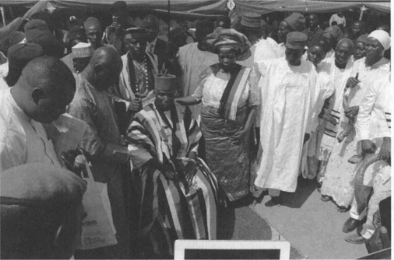
Zaar cultural festival, Tafawa Balewa where the Gung Zaar (paramount Chief was installed) but without being gazetted and without agreement from the Bauchi emirate (2nd November 2013).
Since 1991, there have been 10 governments in Bauchi and all, up to date have not implemented the recommendations of the commission of inquiry holistically. This has led a lot of analysts to see credence in what some of the Zaar people have said regarding the Bauchi State Government.
The former Governor Isa Yuguda created a Chiefdom but put its headquarters at Zwall and not Tafawa Balewa which was rejected by the Zaar people as not having complied with the recommendation of the various commissions of inquiry.
Of recent, the present Governor of Bauchi State, Bala Mohammed made the news for setting up a committee to look into the issue yet, like all governments before him, those words have been all smoke without fire.
The Zaar people in 2023 are still seeking the Chiefdom of their people and this issue is not unique to this area of the Middle Belt. We see the issue of chiefdoms as an important weapon that has been used to subjugate the Middle belt people by continuing age-long colonial policies where diverse groups instead of being granted their chiefdoms are being attached to emirates and even if they are being granted, are granted in part – and in areas away from where there are huge settlers which means that those settlers in the future could lay claim to these lands.
Another example is in Nasarawa where many groups such as the Tiv who have a whooping 11 wards have been deprived the right to have their traditional structures or chiefdoms. What this means is that they have to be under emirate rule in the state despite being largely traditionalists and christian.
We can also witness this unfolding in Southern Kaduna (the region of former Southern Zaria and not the Southern Kaduna senatorial district) where the current governor of Kaduna State has watered down most of the traditional institutions of other ethnicities whilst reinforcing his – or in specific instances where he has sent people from his ethnicity to be district heads to people of different ethnicities. As such, there must be a conscious effort to reject these attempts to deny or infiltrate the traditional structures of the Middle Belt people.
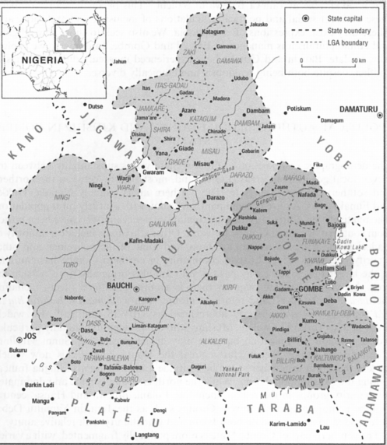
Bauchi State and environs
In conclusion, the most recurring theme in Nigerian political discourse is identity, ethnicity, traditional structures and land ownership. It is strange that settlers choose to have these debates with indigene Middle Belt groups when the 1958 Willink commission report showed the areas consisting of the different ethnic nationalities in present day Nigeria with little to no disagreement at that time. Infact, the then Northern regional government agreed with those mappings.
In the coming years, Nigeria will have to answer the indigene/settler question and the issue of minority rights as a whole. As for colonial documents and the intent behind migration during the colonial period, the British have clearly stated their reasons for importing groups into the geographical spaces of others. They site administrative expediency as the major reason.
The truth is that even the colonialists had a clear policy regarding the indigene/settler question and this could be used as a starting point when proffering solutions to these issues going forward.
As for the Zaar people in Southern Bauchi, the short-term solution should be the implementation of all commissions of inquiry reports holistically, a referendum regarding which State the Zaar people should belong to and the adoption of the said referendum.
From a regional perspective, a progressive step would be to adopt the Willink commission report regarding the creation of a Middle Belt region and the granting of autonomy to each ethnic nationality in the region.
Reports have it that on the 21st of January 2023, armed groups suspected to be bandits attacked the Abagana community opposite the internally displaced persons camp located along Makurdi/Lafia road in Benue State according to the Punch Newspaper . The attack happened on Thursday night came barely two years after the community was hit with attacks that left seven persons murdered. Sources in the community informed the Punch that a family of six and two others were beheaded with their heads carted away by the armed invaders.
It was gathered that the attack left many others injured as the bandts invaded the community around 9pm and shot sporadically which left many wounded and others dead.
Lt Col Paul Hemba, Security Adviser to the Governor of Benue State confirmed the attack and said that the attack, unprovoked happened as the villagers were preparing to go to bed. Hemba gave the names of the deceased as Gbashaor Acho, Gbashaor Joseph, Anshe Dekera, Ancho Kpor, Eunice Gbashaor, Sewuese Gbashaor, Terlumun Ajoh, Emberga Gbashaor and Donald Gbashaor and confirmed that the death toll could still rise due to injuries sustained by the attacks.
He also stated that the bandits stole two motorcycles belonging to the villagers.
GreyHobb is one year old today! One year as an innovation hub from Greysoft Technologies!
GreyHobb is intentionally so named to mean that “finding grey areas is our hobby”, see that? “Grey”, “Hobby” – and our joy is to bring solutions to that area. One quick look at our logo shows three grey dots and a wine color. So yes, we are built to solve problems, but yet again, we are fun people. We have in one year, redefined the Tech and Creative industries. In fact, we have merged both into a single entity – “The CreateTech” industry. We believe that digital innovations cannot thrive without a horizontal spiraling of limitless creativity. This way of thinking is why we have made so much progress in several areas. Yet, we have yet to scratch the surface of our creative prowess.
Our overall vision is an increased access to digital opportunities across Africa as we look to help Africans leverage technology for improved livelihood. We are developing innovative solutions that cater for our unique African needs. Our partnerships and collaborations are strategically aligned to entities who share this vision and enthusiasm. Again on the creative side, we are focusing on creating exceptional African contents, telling the original undiluted African story and while at it, putting creation in the hands of the creatives. We are doing this by developing solutions and leading advocacy that position our people for equity and inclusion.
We have deliberately focused a truckload of our attention on emerging technologies such as web3 in the area of extended reality (XR) and blockchain technologies, because the world is changing really fast and Africans are usually the last to get the memo. The advent of the metaverse, which is the next version of the internet – “the embodied internet” is currently sweeping across Europe and Africa needs to jump on that boat really quickly if we must have a seat at the table. For instance, 90% of the avatars on most virtual spaces are white. The idea of a fully immersive virtual existence/experience to most Africans is still alien, talk more of the opportunities that exist therein. Extended Reality in education is a key focus for us, VR tours for real estates and gaming are a huge opportunity. Augmented Reality (AR) in e-commerce is a whole new conversation. We are leading an advocacy in this apace and building solutions and Afrocentric virtual experiences to help Africans align appropriately.
Kaduna, Northern Nigeria which is where we have pitched our fortress is gaining a plethora of mentions and attention because of our activities and contributions to the digital space. This year, we plan to start our campus tours with all higher institutions in Kaduna as part of our planned advocacy program to enlighten students in the field of computer science on the need to brace up for a new Africa, whose foundation we will build together inclusively.
In a few weeks, the Extended Reality bootcamp will be announced at GreyHobb, followed by a hackathon. This is also part of our strategy for XR advocacy. We are currently in talks with partners and donors to acquire scholarships/sponsorships for interested XR enthusiasts.
YES, we are building solutions for web2 still… and offering trainings to improve digital literacy. We know that most Africans are yet to fully explore the many opportunities of web2, and may not even be ready for web3 yet. What we are doing is putting all the options out there and helping those who are ready for whatever level get the most out of it. We are putting our folks out there, not just on the map, but on the table, from the beginning, so that we can be part of the team that builds the framework for new and emerging technologies that will eventually exploit or impact Africans.
We have undoubtedly become one of the leaders in our industry because of some of the words that describes us. Words such as; People, Productivity, Teamwork, Innovation and Quality. These words describe what makes us tick, what drives our passion, what is at our core, the heart of Greysoft “GreyHobb”.
Why do customers, governments, you do business with Greysoft? Why do hubbers work their local and international jobs from GreyHobb? I have found that it is primarily because we have come understand the
importance of treating others with respect, placing a great deal of value on People. Our work embodies Innovation and that births Quality. The tireless spirit of our culture of hard work highlights our Productivity and with Teamwork, a win has always been certain.
These words are virtues that we can’t teach in a class; they are part of what makes up each and every one of us. It’s our core, these are our core values, and it’s what makes our heart go boom-boom every day. Whether it was in our individual upbringing or in our genes before we found each other, I am not really sure, but one thing is for sure: People with these virtues are the ones we want to be a part of our team, our family.
Continuing to be committed to finding the right people will be one of the keys to taking Greysoft “GreyHobb” to the next level. Identifying what makes us tick is important, because it lays the groundwork for who we are, where we are going, how we are going to get there, and
when. We are on a path that will take us to places we have never been before, and things we have not achieved before. We are on a path that will send us and drive us to wherever we want to go.
If you think you saw something this last year… we’re just getting warmed up! I am driven and dedicated to making the next year at Greysoft the best ever. I hope you will all join us for this ride—it’s going to be fun! Here’s to our next year of escapades!