Federal High Court Restrains Police from Reinstating APC-Elected Chairmen in Plateau LG Crisis

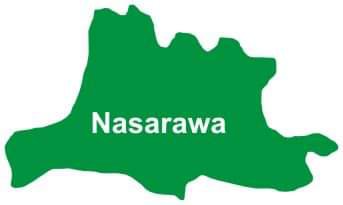
In a recent development regarding the Plateau State local government dispute between the sacked APC-elected chairmen and Transition Committee chairmen, the Federal High Court in Abuja has issued a restraining order against the Inspector General of Police. This order prevents the police from allowing the former APC-elected chairmen access to the local government secretariats.

The Inspector General of Police had previously opened the sealed local government secretariats for the elected chairmen, causing concerns about potential violence. However, the Plateau State Government filed an ex parte motion urging the court to prevent the police from enforcing the order issued by the Plateau State Commissioner of Police, Julius Alawari, which directed the suspended democratically elected chairmen and councillors to resume their duties.

Justice A.B. Mohammed signed the order, emphasizing that the police have no authority to reinstate the chairmen and councillors while the matter is still before the court. The court’s order includes an interim injunction that restrains the police from using force to reinstate the former local government council chairmen in Plateau State until the motion on notice is heard and determined.

Furthermore, the court ordered that this injunction be served to the police, along with the motion on notice seeking an interlocutory injunction and the originating summons. The next hearing for the plaintiff’s motion on notice seeking an interlocutory injunction is scheduled for September 14, 2023.

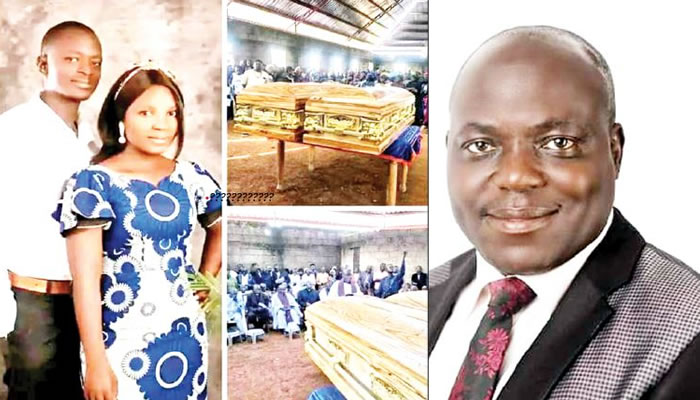
How Herders Invaded Plateau school, killed Newly-wedded Couple –Wife’s Uncle

Newlyweds, Barnabas Rwang, 27, and his wife, Sandra, 24, were allegedly shot dead by herdsmen in Plateau State on August 14. Sandra’s uncle, Davou Mang, in this interview with JAMES ABRAHAM, demands justice.

What relationship did you share with the couple?

The wife was my niece, and we are from the same village as the husband. We were just generally related to the husband and some others within the same village. The couple got married on March 25, 2023. You know, the man and the woman were neighbours. They were in the same village, and their houses were just a few metres away from each other. They grew together. So they fell in love, and eventually married. I attended the wedding, and you could see the love between them during and after the wedding.

What were their professions?

They were both teachers at BECO Comprehensive High School Kwi in the Riyom Local Government Area of Plateau State.

How did they meet each other?
The woman was in school. She was about to finish the NCE programme. She eventually finished and got the certificate in July, but the man had earlier finished his NYSC (National Youth Service Corps) and was teaching at the BECO.

Somehow, their parents asked them to wait for the woman to finish her NCE before they married, but they said no! They had made up their minds to marry. The deep love they had for each other was what impressed me, and I knew that, by the grace of God, they were going to live in a very happy family.

Unfortunately, just a few months after their wedding, they were killed at their place of work by herders. Their deaths are very painful.

Can you give a graphic description of how they were killed?

On that fateful day, I was in Jos, and then I got a call from my younger brother. You know, I told you the woman was our relative. My younger brother called and told me what happened at the school. You know the school compound is partially fenced. The staff members were having a meeting. They were preparing to have their speech and prize-giving ceremony. They were having a staff meeting, and behold, cows entered the school compound. So the school security man told the herdsmen to move away with the cows. I think some of the staff members also went and told them the same thing.

Unknown to them, the herders came with arms. The next thing they heard were gunshots. So it looks like it was a premeditated attack. If not, how come people just told them to move away from the school compound, and they just opened fire on them?

I learnt that they shot the woman first. She wanted to run away, but the herders stoned her legs, and she fell before they shot her. They came with guns. She was unarmed.

The husband ran over to rescue her and told them not to hurt his wife. Some people narrated that the man said, “Just kill me and leave this woman alone.”

But the killer herdsmen did not listen to his pleadings. After shooting her, they shot the man too.

So, how is the family taking it? Is it not a big blow to the family?

You should know that they were a very young couple. The woman was just 24, and the man was about 27 years old or thereabouts. You could see they were a very promising young couple, and all of a sudden, this kind of thing happened. Not that they were sick; somebody came and snuffed life out of them. You should know that it was very devastating for us as a family and as a community. We were devastated to see how a very young, innocent, harmless, and unarmed couple would just be shot at directly for doing nothing harmful, including the man. We were devastated. We couldn’t find answers to what went wrong or why the killers were callous. Why did they come to the school compound? Why did they come with arms in broad daylight?

What is the security situation in the area?

For now, the security situation is relatively calm. The sector commander of Operation Safe Haven in charge of the area has been on the ground. He has been doing his best. He swung into action immediately the incident happened. He went to where the suspects were said to come from. They went there, but the killers had deserted the place. I learnt that some had been arrested, but the real culprits were still on the run. So the community is pleading. We appreciate what he is doing, but if we want this security situation in the state to be stable and to avoid a recurrence, the real culprits must be arrested.

They must be brought to the book so that everybody will be satisfied and will bring closure to this kind of wickedness. We are even saying that whichever party commits a crime, whether it is the farmer or the herder, there should be justice. Justice must be done. For this particular couple, there must be justice. For us, justice could only mean arresting the culprit and persecuting them. Let the community know that those people have paid for their crimes. Then, at least, it would stop people who have similar intentions from committing further atrocities. But are you following up on the matter with the security people?

Yes, we are following up. The sector commander communicates with us himself. We follow up and find out the progress. Even on the day of the burial of the couple, the sector commander came, and the state governor sent the Commissioner for Higher Education. A lot of groups who were touched by the killing attended the burial. The late couple were members of the Peace House Couple Fellowship, and the husband was the coordinator within that area. The Peace House representative came. The sector commander understood the mood of the people, and he assured them that he was going to make sure that justice prevailed in this matter. If not, the solution to the security challenges we face may not come.

What do you think should be done to address the security situation in other Plateau communities?

Only justice will solve the problem. Let me give you an example of the sector commander who was in the Barkin Ladi LGA. When he was there, there was a really deep calm in Barkin Ladi Ladi. What did he do right? He made sure that whoever committed a crime, whether it was the Birom, non-Birom, or Fulani, that person must be brought to book and brought to justice, and people saw it. So, even the herders were afraid of committing the crime of grazing on farms or bringing down crops.

If you commit a crime, you will not go free. The people who kill cows will also not go free, so there was relative calm. I think this can be applied to Mangu, Bokkos, Riyom, Barkin Ladi, and Bassa… Everywhere there is a crisis, if justice is done, this situation will cool down. In Riyom, let me give you an example. Even in the Kwi community, when this happened (the killing of the couple), the herders also burnt down the crops. Nobody was arrested, nobody was caught, and nobody was held responsible for it.

SOURCE: The Punch

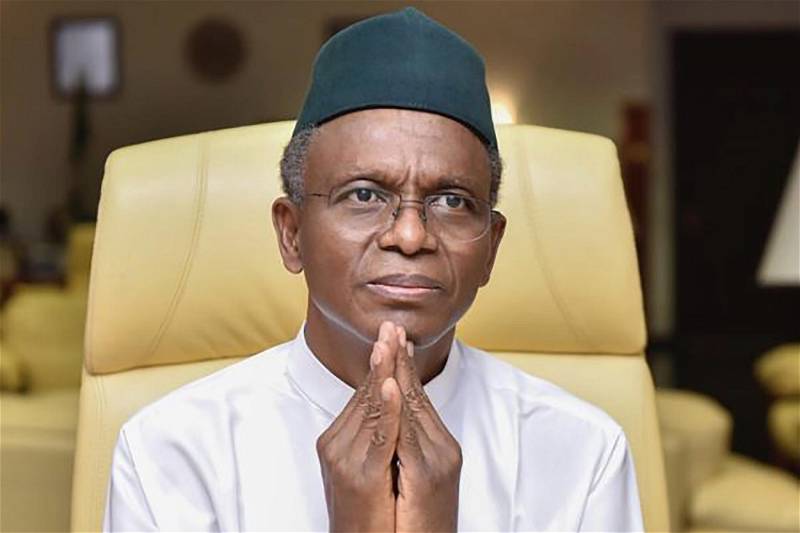
The Botched El-Rufai’s Ministerial Confirmation

Out of the 48 ministerial nominees sent to the Senate for screening and confirmation by President Bola Ahmed Tinubu, Mallam Nasir el-rufai, the immediate past governor of Kaduna State failed to make the final list. His problem begun when Sunday Karimi, the Senator representing Kogi West Senatorial District waved a petition bothering on security against the former.

At that point it was clear to El-Rufai himself that he was at a cross-road as he sought the leave of Senators to address the issue. However, the Senate President Godswill Akpabio seemed to have saved the situation by emphasising that even if there was a petition against the nominee, it was not within the ambit of the Senate to discuss a petition not before it.

At the end of the close-door-session, the Senate emerged without the name of El-Rufai on the confirmed list. His rejection by the Senate has become a topic of national discourse since then. In fact, the news of his non-confirmation was received with mixed feelings.

Prostatitis Symptoms? They Will Disappear in 3 Days!
Xenoprost | Sponsored
1 Tablet in the Morning Clears Blood Vessels and Achieves 120/80 Blood Pressure in 7 Days! Available at Pharmacies
ST Heart | Sponsored
credit icon
El-Rufai’s supporters have risen in defence of their man detailing his stand and support for Tinubu in time of political need. His performance as the former minister of the Federal Capital Territory (FCT) was also an achievement always on the table whenever it matters to El-rufai. They also brandished his sterling performance in infrastructural development especially road construction in Kaduna as major achievements.

These are reasons behind El-Rufai’s botched ministerial confirmation. First, fear of his duplicity and proclivity to manipulate. The original Tinubu loyalists from the days of Alliance for Democracy (AD) would not accommodate the likes of El-Rufai who is seen as a wolf in sheep’s clothing.

Second, strategic positioning for power and permutations ahead of 2027 within the north was said to have worked against El-Rufai. The likes of the Vice President Kashim Shettima, George Akume and Nuhu Ribadu would like to leverage on their positions to consolidate their powers, thus, would not like strong contenders or obstacles to their aspirations.

Stories were rife on how he allegedly betrayed his benefactor – former Vice President Atiku Abubakar who raised him from the ashes of obscurity to political lime light. As the Chairman of the National Council on Privatisation, Atiku appointed him the Director–General of the Bureau of Public Enterprise (BPE) but when succession drama between Olusegun Obasanjo and Atiku brewed, El-Rufai pitched tent with Obasanjo.

At the end, Obasanjo summed up the man El-Rufai thus in his book, My Watch Vol.II, “Nasir’s penchant for reputation savaging is almost pathological. Why does he do it? I recognised his weaknesses; the worst being his inability to be loyal to anybody or any issue consistently for long, but only to El-Rufai. He barefacedly lied which he did to me against his colleagues and so-called friends. ….”. His high handedness is second to none. Nobody says no when El-Rufai has said yes despite how reasonable. To conclude that he is arrogant and wielded authoritarian powers even in democracy is to say the least.

Since 2003 when he became the minister of FCT, El-Rufai has capitalised on taking undue political advantage of situations to enrich his political resume. Before 2023, he was one of the closest allies of Muhammadu Buhari who sources say nursed presidential ambition. In fact, he was a latter day apostle of Tinubu’s candidacy.

The precarious security situation in Kaduna which led to the death of at least 1,266 and kidnap of 4,973 persons in one year according to sources was the last straw that broke the Carmel’s back. His nonchalant attitude to the incessant killings and kidnapping of innocent travelers along Kaduna-Abuja expressway with little or no effort to tame it was an established case of negligence.

Numerous attacks on communities in Southern Kaduna by terrorist groups and bandits known to be of Fulani ethnic nationality and his indifference to their plight was one sour point of his administration. Petitions bothering on human right violations against him were rife. The killing of over 300 Shi’ia members in Zaria in 2015 under his watch has continued to reverberate.

Many court cases challenging demolition notices government served communities, land matters and seized or destroyed properties of individuals are legal issues he had left behind for the new administration in Kaduna to sort out. His penchant for demolishing what he called illegal structures, new communities, schools and rationalisation of the state civil service will continue to bear witness against El-Rufai.

Nothing last forever not even our lives. Mallam Nasir El-Rufai has straddled the political firmament of Nigeria like a colossus for over two decades. Apart from beneficiaries of El-Eufai’s hegemony and those who pick crumbs from his political table, street opinion of good governance if carried today will not favour him.

People take note and often refer to the role one plays to raise or destroy the political fortunes and profile of leaders at one point or the other. Therefore, becoming relevant in a new political dispensation is determined by how people view your take on power, position and authority. How those you vilified or crushed with power at your disposal years ago on account of your influence and position see you today matters.

There is always a payback time. The fate of El-Rufai today is a compensation for his good deeds of yesterday. Being in position of authority is a trust to do good to all without fear or favour. Political power is transient. What goes round comes around. That’s the way the cookie crumbled.

Eze, a Media and Development Communication Specialist wrote via: sunnyeze02@yahoo.com
08060901201

SOURCE: The Guardian

Harnessing the Power of Social Media: Influencers Unite to Boost Security in Katsina

A determined group in Northern Nigeria, spearheaded by renowned Hausa singer Dauda Rarara, is championing a unique approach to tackling regional challenges. They aim to counter the damage caused by misinformation and disinformation, which have been impeding the progress of developmental journalism and security measures in the area.

The group’s strategy involves mobilizing over a thousand social media influencers from all 34 local governments in Katsina State. The goal is to reshape attitudes toward governance and foster sustainable development and improved security using the far-reaching platforms of social media.

In addition to contributing to security efforts, the group believes that involving social media influencers in addressing the region’s issues will generate meaningful employment opportunities for the local youth.

Driven by their mission, the organizers are keen on extending these gatherings to influencers from different regions throughout the country, aiming to shift the mindset of the youth on a national scale.

Farmers/Herders Clash: Tinubu will tackle Insecurity, Benue Senator Zam reveals

The Senator representing Benue North West Senatorial zone, Titus Zam has assured his constituents that President Bola Tinubu would soon tackle the problem of farmers-herders clashes throughout the country.
Speaking at an interactive session with his immediate constituents from Gwer West Local Government Area area, on Saturday, in Makurdi, Benue state capital, Zam disclosed that the president and the Service Chiefs, George Akume, have mobilized security personnel to tackle insecurity, especially against farmers, so that they can go return to their farmlands.

Zam, who is the chairman of the Senate Committee on Business and Rules, spoke on the sustained herdsmen attacks on his Ityoshin communities, saying they are political.

It was learnt that out of 15 council wards in the Gwer West Local Government area, 13 have been occupied by suspected armed herdsmen who are grazing on farmlands after setting their houses ablaze.

He said during the screening of the Service Chiefs, he drew their attention to the worsening security situation in his immediate communities and they assured him that, with time, the problem will be over.

He appealed to his people to be patient with him saying: “I’m less than 100 days in the office, and I have four years tenure, so gradually most of the critical issues would be solved.

On the total collapse of the Makurdi- Naka – Adoka federal highway which the contractor has stopped work, Zam said a new minister of works has been appointed, and he has tabled the matter before him, saying that the contractor would soon return to work.

He described the Secretary to the Government of the Federal, SGF Senator George Akume, as his leader and will continue to work with him.

Zam said: “I will work with Senator George Akume, and if anyone is not happy I’m sorry. Akume made me a senator, I have been with him for more than 20 years, and I can’t leave Senator Akume.

He promised to continue the interactive session with his people, just as he advised them to support President Tinubu, Senator Akume, and all APC candidates and avoid insulting elders on social media.

Earlier, the guest speaker, Professor John Ajai, and the chairman of the occasion, Kenneth Iyo Iharev commended Senator Titus Zam, for the interactive session, and appealed to him to attract development projects to the people of Gwer West in particular and zone B in generally.

The duo of Iyo and Ajai pointed out the perennial water scarcity in Naka town, which is the headquarters of Gwer West Council, unemployment of graduates among others as areas that need the urgent intervention of Senator Zam.

SOURCE: The Nation

The Fear Of Coups In Africa

By Ayo Oyoze Baje

“Most of wars or military coups or invasions are done in the name of democracy against democracy” –Eduardo Galeano (Uruguayan journalist)

My dear faithful reader, let us begin with the all-important questions: Why do the citizens in the African countries such as Mali, Burkina Faso, Niger and most recently that of Gabon involved in military coups take to the streets to rejoice with the putchists? Secondly, why are the current presidents of Rwanda and Cameroun making frantic efforts to rejig the military architecture in their countries, in a rapid response to the coup in Gabon? And what really is a military coup and who are afraid of it and why? The answers to these questions are not far-fetched; going by the empirical evidences on ground.

According to Wikipedia, a coup d’état which in French stands for ‘stroke of state’, or simply a coup, is “an illegal and overt attempt by the military or other government elites to unseat the incumbent leader”. On his part, Edward Luttwak , American writer states that: “A coup consists of the infiltration of a small but critical segment of the state apparatus, which is then used to displace the government from its control of the remainder”.

Ordinarily, lovers of democracy would want to distance themselves from coups because as the Russian President -Vladimir Putin explained: “Respect for sovereignty means to not allow unconstitutional action and coup d’états, the removal of legitimate power”. This position however, triggers the pertinent question-is democracy being practised as it should in the African countries so far affected by coups-both military and civilian-instigated variant of it? It would be interesting to note that the recurring reasons given by the coupists for taking over political power from the democratically elected presidents, all dovetail to persisting insecurity, enslavement to some foreign colonialists, economic doldrums and corruption as reflective of course, by poor governance. These have been similar reasons given for that from the Sudanese coup d’état on April 11, 2019, following mass demonstrations calling for the ouster of President Omar al-Bashir, deposed by the Sudanese Armed Forces through to the Malian coup d’états on August 18, 2020 and that of May 24, 2021.

In a similar vein were the reasons given on July 26, 2023 for the coup in Niger Republic ,led by General Tchiani, an ex-UN peacekeeper who seized power and blamed rising insecurity and a lack of economic growth under the Mohamed Bazoum-led government.On their part, the Gabonese army officers who staged the coup on August 30, 2023 under the aegis of the Committee for the Transition and Restoration of Institutions to oust President Ali Bongo from power after 56 years of his family’s firm grip on power had their salient reasons for doing so. They stated that: “We are therefore forced to admit that the organisation of the general elections of August 26, 2023, did not meet the conditions for a transparent, credible and inclusive ballot so much hoped for by the people of Gabon.

“Added to this is irresponsible and unpredictable governance, resulting in a continuing deterioration in social cohesion, with the risk of leading the country into chaos”. With all these thought-provoking reasons given by the coupists African leaders should have a moment of sober reflection and ask themselves the significant questions. For instance, the right feature to begin with is that of election. Was the election that brought me to the pedestal of power free, fair, credible and of international standards? Am I the right choice of the people, or have I deployed the Machiavellian, dictatorial doctrine of might-is-right to foist myself on the hapless people?

As for those who are currently holding the reins of political power it has become expedient to find out if the government is being run by the dictates of democracy. This brings to the political spectrum the matrix of governance that is in sync with the rule of law, with policies, programs and projects evolving from the collective wishes of majority of the people, instead of the vaulting ambition- as William Shakespeare would put it- of a few greedy, self-serving and avaricious political jobbers brow-beating their wishes on them. That brings us to the history of how democracy evolved from Ancient Greece.

According to H.A Clement, the author, of ‘The Story of the Ancient World’: “ At first the Greek tribes who had founded the city-states were ruled by the kings, but about 700BC the kings had been expelled in most of the cities…Monarchy then gave way to aristocracy, when only a few of the wealthy, noble families ruled. But this was found to be unsatisfactory…because the poor people were often ill-treated. Subsequently, “many cities came under the rule of one man again..who was not called a king but a tyrant,.. many of who were overthrown. It was then (500BC) that many cities adopted the third kind of government, democracy.” Kindly take good note of this aspect. “Their cities were small enough to enable all the citizens to meet together to make decisions, and they did not need to elect representatives as we do”.So, let us fast forward to the current African type of democracy. The situation raises some questions again. What is the cost of accessing political power? In a country such as Nigeria where presidential aspirants have to pay humongous sums of between N40 million to N70 million for nomination form , has the space not been overtly skewed in favour of the richest of the rich, not minding if they have the pedigree or the love of the people at heart? And what manner of political structure do we have on ground? In a situation whereby enormous political powers are placed at the executive arm of government –to literally do and undo at their whims and caprices-just how pro-people is that structure?

The answer is patently obvious. It means therefore, that by the time the winners get into office, the huge pay structure, appointments and the running of government would swing in favour of the rich rather than the vast majority. As it relates to some African countries that makes it a government of the rich, by the rich and of course, to satisfy the epicurean tastes of the rotten-rich individuals. So, when they begin to flounder and the people get poorer why would they not take to the streets to rejoice with the coupists? That explains the position of the former President of Algeria, Ahmed Ben Bella that: “Everywhere that the struggle for national freedom has triumphed, once the authorities agreed, there were military coups d’etat that overthrew their leaders. That is the result time and time again”.

Good governance, that is tailored towards satisfying the crying needs of the masses-to pull them out of the ignoble pit of poverty, ignorance and diseases- has therefore, become the alternative to the series of military coups in Africa.

SOURCE: The Sun

North Central Presidency: Prophet Boma Envisions North Central’s Ascent to Presidency Amidst Political Shakeup

Prophet Abel Tamunominabo Boma from Port Harcourt, Rivers State, has made a noteworthy prophecy concerning the future leadership of Nigeria. According to his recent statement, the North-Central geopolitical zone is gearing up to play a pivotal role in the country’s political landscape. Prophet Boma foresees significant party mergers on the horizon, but cautions that their path to the presidency won’t be straightforward, spanning the next 16 years.

It’s worth noting that the North-Central region has not seen a civilian president or vice president since 1999, with Bola Tinubu, hailing from the Southwest, currently serving as Nigeria’s leader.

Prophet Boma shared his insights on the political landscape, envisioning the emergence of seven political parties, with five major ones. He predicts a massive consolidation of these parties under a new, widely accepted banner. This amalgamated party is expected to have a strong presence, boasting governors, senators, and representatives. However, the road to the presidency for this coalition is anticipated to be challenging over the next 16 years.

In a separate comment, the prophet also turned his attention to the Federal Capital Territory minister, Nyesom Wike, expressing his hope that Wike will retain his position. He forewarns of impending scandals and potential betrayals that could impact Wike’s tenure.

Prophet Boma’s prophecies have ignited discussions about the evolving political landscape in Nigeria, particularly the rise of the North-Central region as a potential contender for the presidency in the years to come.

Nasarawa Gov. Election: PDP alleges traditional rulers lobbying vice President over tribunal Justice

The Peoples Democratic Party (PDP) Nasarawa State Chapter has accused some first-class traditional rulers in the state of leading a delegation to lobby the Vice President, Kashim Shetima, to influence judgement at the ongoing governorship tribunal sitting in Lafia.

The party’s State Chairman, Chief Francis Orogu, made the allegation on Saturday in Lafia while addressing journalists.

Mr. Orogu said that while it was no longer news that some notable traditional rulers from the state visited the Vice President Kashim Shetima, they were aware of the main purpose of the visit.

“We are aware of the position traditional rulers in the state have taken before, during and after the last elections. They have vowed that they will use their position to ensure nobody else win the seat of the governor if not Abdullahi Sule.

“We are not also surprised that they are desperate and have organized themselves to visit the Vice President to lobby him so that he can influence the decision of the Governorship Tribunal in favor of governor Sule.

“We live in a digital age where information travel fast, nothing done in secrete is hidden any longer. The traditional rulers in their address said they visited to thank the Vice President for appointing their own from the state. Is it the Vice President that appointed the ministers? He asked.

Adding: “Our greatest shock is that three of the traditional rulers who are involved in this mission are former Chief Judges. But why should they allow themselves to be used to frustrate or temper with judicial proceeding against the will of the citizens’ votes in the last elections.

“We are aware too that these traditional rulers who are former Justices have their influences in the judicial world. But we believe God Almighty has the final say too.”

Mr. Orogu also alleged that governor Sule and his group allegedly supported Abubakar Atiku in the last Presidential elections against the All Progressives Congress (APC) but expressed disappointment that same Sule and his group were celebrating the victory of President Bola Ahmed Tinubu Shetima.

The State PDP chairman cautioned the Vice President as father to all not to allow his honorable office to be used to frustrate court proceedings, but allow justice to reign without tempering or interfering with decision of the court on election matter.

“These same traditional rulers could not persuade their subjects to vote the APC both at the Presidential elections and that was why the APC lost to Peter Obi of Labor Party in the state because they have allowed politics infiltrated into the traditional institution where politicians now control and dictate what they want and not what the traditional stool stand to achieve.

He therefore appealed to traditional rulers in the state to restrict themselves to their core mandates of ensuring peaceful coexistence and security of their communities instead of engaging in politics of rancor and sentiment.

Orogu added that his party and the governorship candidate of his party, Dr. David Ombugadu, have strong confidence in the judiciary against all odds.

SOURCE: The Guardian

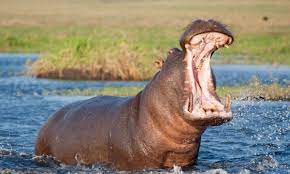
Hippopotamus Incursions Plague Gombe Farmers with Mounting Losses

Timothy Mamman-Gawas had anticipated a prosperous rice harvest this year. However, as he ventured to his farm at dusk, he was confronted with a heart-wrenching scene: a group of hippos had infiltrated his land and were devouring his precious crops.

This isn’t the first instance of hippos besieging Mamman-Gawas’s farm. According to PUNCH, these creatures have been an ongoing menace in the Difa community, inflicting substantial losses upon farmers.

The incursion of hippos in Difa can be traced back to their displacement from their natural habitat, largely due to deforestation and human encroachment.

In 1999, Mamman-Gawas was among the first victims of a hippo assault. That year, he lost his entire crop and has been grappling to make a living ever since.

Over the years, the hippopotamus population in the Difa community has surged, and their aggression has escalated. In 2020, Mamman-Gawas resorted to a four-month vigil on his farm to deter these hippos, but he could only salvage 54 bags of rice, a mere fraction of his expected yield.

Other farmers in the community have faced even more dire circumstances. Some have seen their entire harvests decimated by hippo attacks, while others have suffered injuries or even lost their lives to these formidable creatures.

Gombe State’s government has taken certain measures to address the hippopotamus issue, but these efforts have yielded limited success. Farmers are now rallying for more comprehensive solutions, including the erection of a protective barrier around the community to thwart hippo incursions.

Meanwhile, farmers like Mamman-Gawas are caught in a relentless struggle to make ends meet. Their livelihoods hang in the balance, and their families grapple with hunger. The hippopotamus onslaught poses an existential threat to the community, and it’s imperative that the government takes swift action to safeguard the farmers.

It’s worth noting that the hippopotamus, Africa’s largest and deadliest land mammal, has claimed more human lives than any other animal on the continent.

Lagdo Dam Releases Bring Floods and Challenges to Nigeria

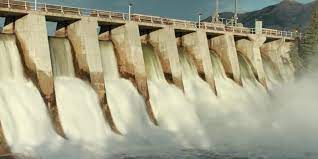
The release of water from the Lagdo Dam in Cameroon is said to be a normal reservoir operation, but this operation comes with its dose of pains, particularly in Nigerian states on the downstream of River Benue. Meanwhile, the Nigerian government is being accused in some quarters of failing its citizens by refusing to build a buffer dam to curb the disaster said to be precipitated by the lack of it. LADESOPE LADELOKUN writes on Nigeria’s flood crisis and the need by the Nigerian government to be alive to its responsibilities

Amid pains of the cataclysmic floods said to have washed away thousands of houses, hectares of farmland and property estimated at billions of Naira in 2022, the Director-General of the Nigeria Emergency Management Agency (NEMA), Mustapha Ahmed, had, like the Biblical Noah, warned of worse flooding in 2023 if necessary precautions were not taken. With the release of water from the Lagdo Dam in northern Cameroon on August 14 before it was halted on August 28, as confirmed by the Nigeria Hydrological Services Agency (NIHSA), fresh fears, Sunday Telegraph gathered, are brewing in 13 flood-prone states in the country.

According to the Director General of NIHSA, Clement Nze, the release of excess water from the Lagdo Dam is a normal reservoir operations to avert a possible collapse of the dam, noting that water releases are integral to keeping dam integrity.

Sunday Telegraph reports that Cameroon releases water from the Lagdo Dam, which is located on the Benue River in the Niger Basin, annually, leaving parts of Nigeria flooded. Already, the National Emergency Management Agency (NEMA) had issued flood alerts, advising residents of low plain areas in some states that might be affected by the opening of the dam and floods to move upland. The states listed by the agency were Rivers,Edo, Delta, Niger, Enugu, Anambra, Bayelsa, Kogi, Kebbi Adamawa, Taraba, Benue and Nasarawa.

Meanwhile, NEMA Lagos territorial coordinator, Ibrahim Farinloye had hinted during the week of a windstorm moving toward Nigeria from Cameroon. The wind, he said, would get to Lagos State on Sunday (today) or Monday, stating that parts of Nigeria that will be first hit are Gombe city in Gombe State; Potiskum and Gashua in Yobe State and Jalingo in Taraba State. “The wind movement will precipitate heavy rainfall. September will be wetter than August.

We are looking at serious rainfall in September up till mid-October,” he said. According to NEMA, 662 lives were lost to flooding last year, 3,174 suffered injuries and 2,430,445 were displaced across the country. Also, the immediate past Minister of Humanitarian Affairs, Disaster Management and Social Development, Sadiya Farouq, put the value of economic damage at N4.2 trillion. In a chat with Sunday Telegraph, an environmentalist, Jide Folarin, says flooding erects a brick wall on Nigeria’s road to achieving the global sustainable development goals.

“Look, the sustainable development goals are simply global goals for achieving human and environmental development by 2030. When you look at the 17 development goals, flooding has directly affected nine. It has, for instance, affected the drive to eradicate poverty and hunger You can add providing clean water and sanitation. There’s no denying the fact that flooding has has badly affected Nigeria’s development goals, especially when you narrow everything down to environmental and economic targets.

Annual Tragedy

In 2021, the Nigerian Hydrological Services Agency, (NHSA), had predicted that 27 states – Abia, Akwa-Ibom, Anambra, Bauchi, Bayelsa, Benue, Cross-River, Delta, Ebonyi, Edo, Gombe, Imo, Jigawa, Kaduna, Kano, Kebbi, Kogi, Kwara, Lagos, Nasarawa, Niger, Ogun, Oyo, Rivers, Sokoto, Taraba and Zamfara, were at a huge risk of floods. That same year, NEMA warned Lagos residents to observe safety precautions because floods had submerged many parts of the state with about 4,000 residents displaced.

Speaking at the unveiling of the 2021 annual flood outlook by the Nigeria Hydrological Services Agency, NHSA, NEMA’s former head, Muhammadu Muhammed, was quoted as saying the number of those affected by floods rose from 277,554 in 2019 to 2,353,647 in 2020. In 2012, rivers overflowed their banks, leaving lands submerged in 30 of Nigeria’s 36 states. That incident, reports said, killed over 400 people, displacing 1.3 million others. NEMA said the estimate of the damage caused by that disaster was in the region of $17 billion.

States Reveal Plans

With the release of water from Lagdo Dam and predicted heavy rainfall in September , some states have revealed plans to mitigate the effects in Cross River State, Direc- tor General,Cross River State Emergency Management Agency SEMA Angela Ogeyi Odey told our correspondent in a telephone conversation that the release of water from the Lagdo Dam would likely to affect eleven Local Government Areas of the state. She said that report from National Emer- gency Management Agency NEMA with an- other report from Foreign Affairs Ministry, alert of an impending flood in Cross River State as a result of release of water from the Cameroons.

“For flood, we are fully prepared in Cross River State. We are preparing our man power, training our men on how to evacuate people “We are talking to villagers and the LGAs that are likely to be affected.Place likely to be affected include, Calabar Municipality, Ikom, Ogoja, Yakurr,Yala, Bakassi, Akpabuyo, Etung, Odukpani, Obubra and Biase. “We are getting the relief material ready and flying boats to evacuate people. We have been talking to town criers to spread the news. “We are talking to youths; we are making sure that all hands must be on deck to help our people.

We will not abandon them. After evacuation, we are making plans to keep them. We have hostels, schools and other places to keep them before October”. Mrs. Odey maintained. In Yobe State, Director of Information Services in the state’s Ministry of Information, Husna Ibrahim,had during week said that the Global Flood Awareness System (GloFAS) warned that seven local councils could be flooded in a matter of days, listing Yusufari, Yunusari, Bursari, Geidam, Karasuwa, Nguru and Bade, a border community with Niger Republic as flood-prone councils The seven councils, she said, are under severity three, while others are at levels two and one.

According to her, the flood severity levels have exceeded the normal threshold in the Komadugu/Yobe River Basin, assuring that the government would monitor water levels in the basin, reservoirs and dams constructed across the river. In a statement by Edo State Commissioner of Communication and Orientation, Chris Nehikhare, the Edo State Government, adand predicted heavy rainfall in September, some states have revealed plans to mitigate the effects in Cross River State, Director General, Cross River State Emergency Management Agency SEMA Angela Ogeyi Odey told our correspondent in a telephone conversation that the release of water from the Lagdo Dam would likely to affect eleven Local Government Areas of the state.

She said that report from National Emergency Management Agency NEMA with another report from Foreign Affairs Ministry, alert of an impending flood in Cross River State as a result of release of water from the Cameroons. “For flood, we are fully prepared in Cross River State. We are preparing our man power, training our men on how to evacuate people “We are talking to villagers and the LGAs that are likely to be affected.

Place likely to be affected include, Calabar Municipality, Ikom, Ogoja, Yakurr,Yala, Bakassi, Akpabuyo, Etung, Odukpani, Obubra and Biase. “We are getting the relief material ready and flying boats to evacuate people. We have been talking to town criers to spread the news. “We are talking to youths; we are making sure that all hands must be on deck to help our people. We will not abandon them. Af- ter evacuation, we are making plans to keep them. We have hostels, schools and other places to keep them before October”.

Mrs. Odey maintained. In Yobe State, Director of Information Services in the state’s Ministry of Information, Husna Ibrahim, had during week said that the Global Flood Awareness System (GloFAS) warned that seven local councils could be flooded in a matter of days, listing Yusufari, Yunusari, Bursari, Geidam, Karasuwa, Nguru and Bade, a border community with Niger Republic as flood-prone councils The seven councils, she said, are under se- verity three, while others are at levels two and one.

According to her, the flood severity levels have exceeded the normal threshold in the Komadugu/Yobe River Basin, assuring that the government would monitor water levels in the basin, reservoirs and dams constructed across the river. In a statement by Edo State advised residents in lowlands and riverine areas like Etsako Central, Anegbete and Ilullshi of Etsako East, Esan South East and Agenebode local councils to relocate to a higher plain. “Residents in lowlands and riverine areas are hereby put on notice to be vigilant and relocate to a higher plain.

The state government will provide support to those displaced from their homes by the rising water level. “Because we know this is going to happen, we had to move quickly to ensure that our Internally Displaced Persons (IDP) camps are in good condition and the residents adequately briefed and sensitised,” Nehikhare said. In Lagos, the Lagos State Emergency Management Agency (LASEMA), appeals to residents to be calm as it has put measures in place to mitigate the effects of floods.

According to LASEMA Permanent Secretary Olufemi Oke-Osanyintolu, in line with the paradigm shift from response to effective and efficient disaster management, preparedness and prevention, the state has carried out holistic measures. “These holistic measures include the sensitisation and advocacy in historically affected areas and empowerment of local emergency management committees.

“This also includes strengthening the early warning systems and clearing of drainage and gutters at the state and local government area levels,” he stated. In Nasarawa State , Commissioner of Environment and Natural Resources, Yakubu Kwanta, assured residents of the readiness of the state government to protect them. Apart from sensitizing flood-prone communities, he said the decision to demolish the structures on waterways was in line with the Nigerian Meteorological Agency’s (NiMet) recent prediction of possible flooding in Nasarawa and 24 other states.

Meanwhile, NEMA has asked states along River Benue to evacuate residents in flood- prone areas due to the opening of Lagdo dam in Cameroon. The Director General of the agency Mustapha Ahmed, at a national emergency co-ordination forum meeting on Wedneday, said Adamawa, Taraba, Benue, Nasarawa, Kogi, Enugu, Edo, Delta, Rivers, Bayelsa and Anambra states could be flooded due to the release of water from the dam. Ahmed, however, called on stakeholders to commence evacuation immediately. Meanwhile, in Adamawa State, the Adamawa Emergency Management Agency (ADSEMA) has confirmed that at least five persons have been swept away by flood in different parts of the state.

Lagdo Dam As Annual Source Pains?

Only last year, Cameroonian authorities had in September opened overflow spillways at Lagdo Dam with a view to easing the pressure on the dam from the rising reservoir. Since September, according to officials of the United Nations, flood water had forced nearly 40,000 more people from their homes in parts of Northeast Nigeria. Sunday Telegraph gathered that the dam, which is located 50 kilometres south of the city of Garoua on the Benue River ,was built between 1977 and 1982 in the Northern Province of Camerooon.

The Nigerian government, it was learnt, was supposed to begin a similar project in Dasin village in the Fufore Local Government Area of Adamawa State to contain water released from the Lagdo Dam and prevent the destruction of lives and property caused by flooding. But the project has yet to see the light of the day.

In North-eastern Nigeria, states like Borno, Adamawa and Taraba, which are downstream within the River Benue drainage basin, Sunday Telegraph gathered, are usually flooded whenever water is released from the Lagdo reservoir. Speaking on the Dasin Hausa dam in Adamawa state, which was meant to be a buffer dam to prevent floods whenever Lagdo Dam releases excess water, the Director General of NIHSA, Clement Nze, said its study and design had been completed.

He said the Federal Ministry of Water Resources and Sanitation had contacted the consultants, noting that procurement would commence soon. Com- menting, environmentalist, Jide Folarin, said the devastating annual flooding triggered by the release of water from the Lagdo Dam was avoidable. According to him, had the Nigerian government been proactive and sensitive enough to keep its agreement with Cameroon to contain the release of water from the dam, flooding and destruction of property and lives would have been checked.

“As far back as 1980, there was an agreement between Nigeria and Cameroon to embark on a twin dam project. We ended up designing the Dasin Hausa Dam, but that was where it stopped. Theirs(Cameroon) came on stream in 1982, and that’s where the journey to flood alerts started. Look at the lives and property that got destroyed last year. These things are avoidable, but we just need responsible leadership,” he said.

Why Nigerians can sue Cameroon, FG over disaster

For environmental law expert, Abejoye Ajose, those who have lost businesses and properties can seek compensation from Nigerian and Cameroonian governments by approaching the courts. “The Nigerian government can sue the government of Cameroon; Nigerians can sue Cameroonian government and Nigerians can sue their government.

On the authority of Ryland and Fletcher, it is a common law decision. It is a decision of the English court, which we have adopted. The principle of that judgment is that if you are my neighbour, you must not put anything in your compound that will endanger me in my compound.

For instance, if you put any object in your compound that will affect me in my compound, even though you’re not doing it within my compound, I have a right to sue you because you owe me a duty of care, not to damage my property or my health or my environment.

“So, Nigeria, as a sovereign state can sue the Cameroonian government as its neighbour. And the appropriate forum for that is the ECOWAS court. A Nigerian whose investment and farmland have been destroyed can also sue the Cameroonian government and ECOWAS. You know under the constitution, particularly under section 14 of the constitution, the purpose of government is the welfare, protection and the security of the people,” he explained.

How To Reduce Agricultural Losses

In an interview with Sunday Telegraph, Communication Manager, Nigerian Conservation Council (NCF), Oladapo Soneye, reasoned that the Lagdo dam has become a nemesis to states such as Adamawa, Kogi, Benue, Taraba, FCT, Nasarawa, Plateau, Gombe and Bauchi which all have pronounced stream networks connected to River Benue. Nigeria, he said, is not the only affected country as Chad, Niger, and Cameroon itself are also affected by the periodic depressurization of the dam, it is situated on a much lower elevation and therefore receives the water discharged at a higher acceleration compared to the other countries.

According to him, the average elevation in Cameroon and Nigeria is about 670m asl and 370m asl, respectively. The elevation differentials would mean that Nigeria will receive more water at a higher acceleration difficult for our already saturated soils to absorb. Although flooding is a natural event with high unpredictability, he argued, advances in geospatial technology has greatly helped mankind to predict natural events close to their true values.

“It is expected therefore that such technologies will be put to good use to provide early alerts to residents living and farming in places highly vulnerable to floods. The rural poor remain the most impacted as the majority rely on bricks from clay soils to build their houses. Building rural capacity to access and use reinforced bricks for building is one of the adaptive steps required,” he said. On how to reduce agricultural losses associated with the nemesis of Lagdo dam, Soneye said: “Farmers could either take on crops with short harvesting cycle or farm in areas with relatively higher elevation.

However, it is still the responsibility of agencies of government to distil hydrological statistics in usable languages and guide the local people on its application to farming. Investment should also be channeled towards developing local capacity for dry season farming to improve rural food security and cushion the effects of farmland destruction occasioned by the floods., Ordinarily, several technical workshops ought to have been convened as an aftermath of the 2022 floods where experts deliberate on the best mitigation and adaptation strategies required to curb the menace of flooding in Nigeria.

“It is not too late to have such a gathering of genuine experts who should provide a technical and practical position on the way forward. One of the possible outcomes of such a workshop will be the identification of streams and rivers requiring dredging and thorough channeling. More importantly, the diplomatic relations with Cameroon should be regularly serviced to ease scope for the disaggregation of timing for valving the dam. Fortunately, Cameroon has assured to release just a little enough from the dam. The dam is aging, therefore storing water beyond its cubic strength is not reasonable as it could lead to an implosion and extreme damage.”

He urged the media to constantly engage stakeholders on critical issues concerning the environment to avoid national events masking their importance. He said it was unbelievable how the 2023 elections easily eroded the sentiments from the devastation of 2022, noting that conservation bodies also need to send out rescue signals to rural places to ensure that wildlife displaced from their habitats by the floods do not end up on the slaughter tables of the rural people.

No Cause For Alarm

Amid concerns about flooding, the Public Relations Officer (PRO) of NEMA, Ezekiel Manzo, said the agency was working round the clock to ensure those at risk are safe. In a statement signed by Manzo, NEMA said it was working with critical stakeholders at the federal, state, and local governments to ensure that the release of water from the Lagdo Dam does not cause much negative impacts on the lowlying communities along the states that would be affected.

“The states on the downstream of River Benue are Adamawa, Taraba, Benue, Nasarawa, Kogi, Anambra, Enugu, Edo, Delta, Rivers and Bayelsa States. “The Agency envisaged this release of excess water from the Lagdo dam, taken note of the likely impacts and considered in the preparations for mitigation and response to the 2023 flood alert.

“Information available from the flow level of River Benue at Nigerian Hydrological Service Agency (NIHSA) gauging station in Makurdi stood at 8.97 meters as of August 25th, 2023, compared to 8.80 meters on the same date in 2022. “In contrast, NIHSA has also provided that the flow level of the River Niger system, specifically at Niamey, Niger Republic, remains stable at a normal level of 4.30 meters. Similarly, inland dams including Kainji, Jebba, and Shiroro reported consistent flow regimes.

“With regard to the hydrological station downstream, the confluence of the Niger and Benue rivers in Lokoja, Kogi State, are currently within normal limits. The downstream monitoring station, however, registered a flow level of 7.80 meters on August 25th, 2023, compared to 8.24 meters on the same date in 2022.” For his part, the Minister of State for Environment, Dr Iziaq Salako, in an interview monitored on Channels TV allayed fears that the opening of Cameroon’s Lagdo Dam would cause the scale of destruction witnessed last year.

SOURCE: New Telegraph