As Nigerian elites panic over Trump’s military threat, the victims of two decades of massacre ask: where were you when we were being slaughtered

By Steven Kefas

On November 1st, U.S President, Donald Trump issued what many are calling an unprecedented threat to a sovereign African nation. “If the Nigerian Government continues to allow the killing of Christians, the U.S.A. will immediately stop all aid and assistance to Nigeria, and may very well go into that now disgraced country, ‘guns-a-blazing,’ to completely wipe out the Islamic Terrorists who are committing these horrible atrocities,” Trump declared on his social media platform, adding that he has instructed the Department of War to prepare for possible action.

The response from Nigeria’s political class, thought leaders, and commentators has been predictably indignant. They warn of sovereignty violations, speak ominously of chaos and instability, invoke the specter of Libya and Iraq, and counsel caution about external military intervention. These concerns sound measured, reasonable, even patriotic.

But they ring hollow to the communities that have buried their dead by the hundreds while Nigeria’s government looked the other way.

The View from the Killing Fields

As someone who has spent over a decade documenting the ongoing massacre in Nigeria’s Middle Belt, interfacing directly with survivors, photographing mass graves, and listening to testimonies that would break the hardest heart, I can tell you this with certainty: the direct victims of these terrorist atrocities have reached a point where they no longer care where help comes from. When your government has abandoned you to slaughter, sovereignty becomes an abstract concept with little meaning.

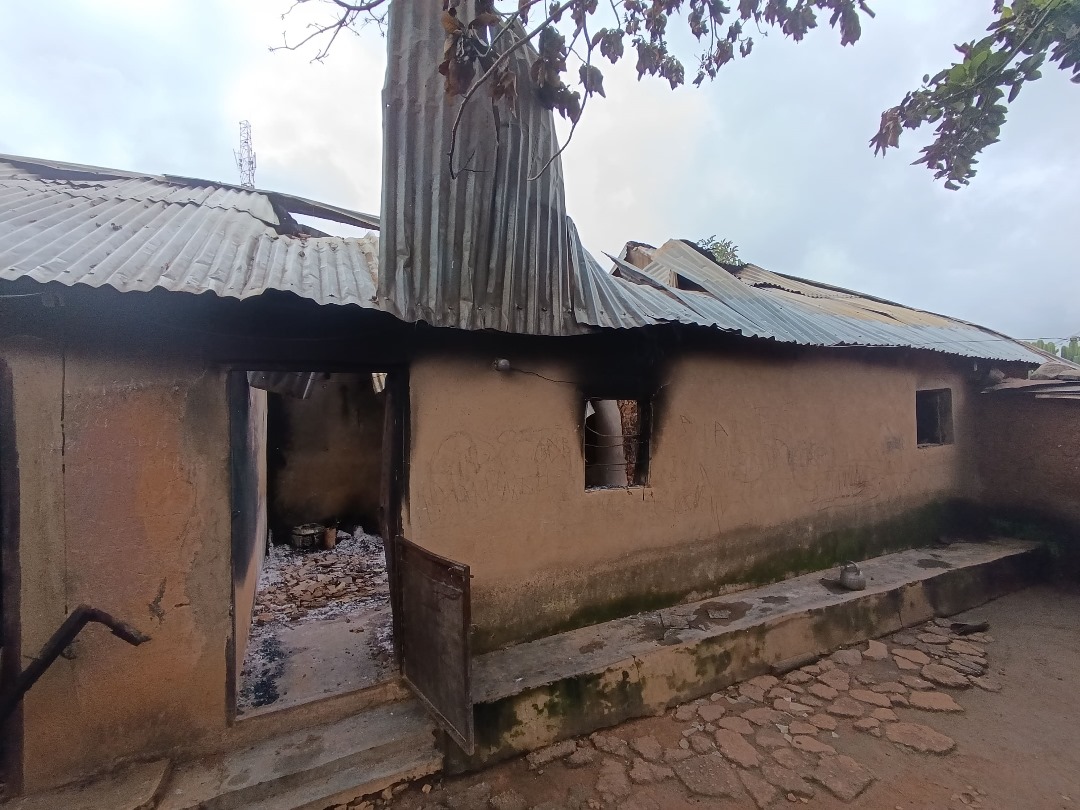
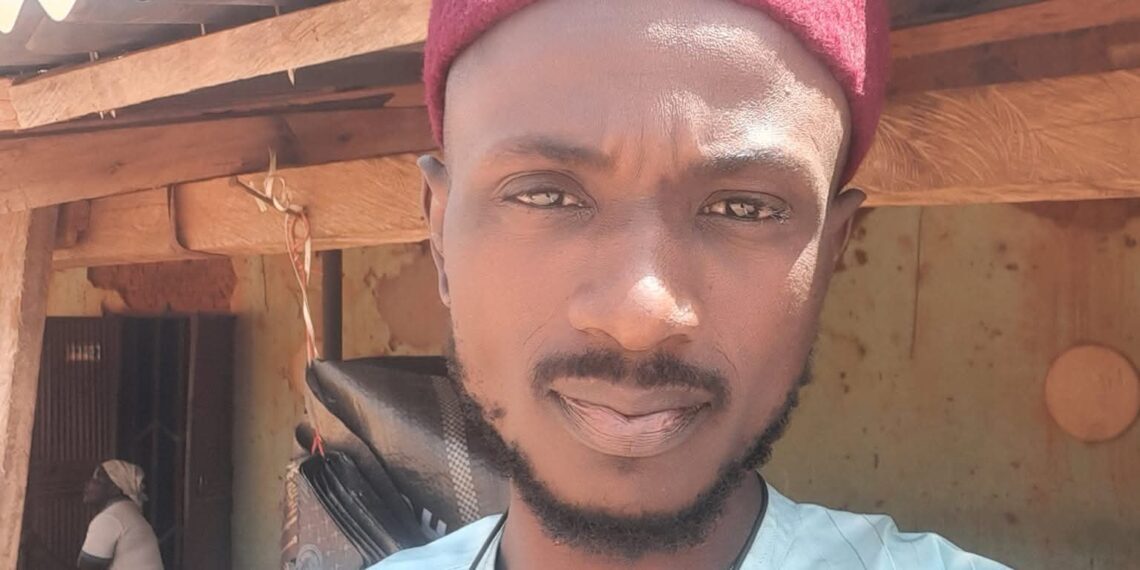
Benjamin Badung, a 40-year-old father of five from Bangai district in Riyom Local Government Area of Plateau State, will not be pondering the geopolitical implications of American intervention. On May 20, 2025, his wife Kangyan was slaughtered by Fulani militants. He is raising five children alone, living in fear that the attackers will return to finish what they started. If American military action means his children stay alive and can thrive on their ancestral land, Benjamin Badung will not object on grounds of national sovereignty.

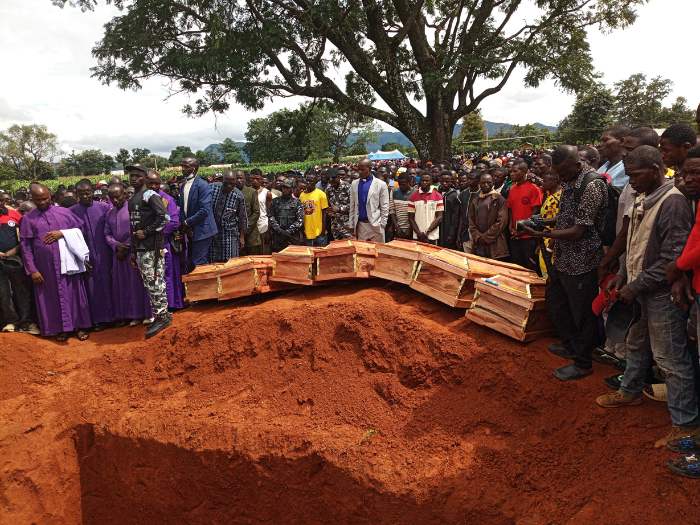
The survivors in Yelwata, Benue State, who I have visited 3 times since they buried 258 people, mostly women and children on June 14, 2025, are not concerned about the precedent of foreign military intervention. They watched their loved ones massacred over four hours of sustained attack while military barracks sat less than 20 miles away. They know their attackers. They know where the terrorists are camped, less than five miles away in Kadarko, Nasarawa state. Yet no arrests have been made. No camps have been bombarded. No justice has been served. If Trump’s threat galvanizes action against those who butchered their families, they will welcome it.

The people of over over 30 communities in Bokkos, who mourned over 200 dead on Christmas Day 2023, are not writing think pieces about the dangers of American military adventurism in Africa. They are wondering why their Christmas celebration became a massacre, why their churches were burned, why their government failed to protect them despite warnings of impending attacks.

The residents of Zikke in Miango, massacred while soldiers stationed less than four miles away remained motionless, are not worried about Nigeria’s international image. They are haunted by a more fundamental question: why did their own military refuse to defend them?

The peace loving people of Bindi in Tahoss district, Riyom LGA, a community of about a thousand people I have also visited and interacted with three times since the July 15 attack that left 27 people mostly women and children dead don’t really care if natural resources is stolen by America provided their farms become safer.

The list goes on. Community after community. Massacre after massacre. Mass grave after mass grave. And through it all, the Nigerian government has offered nothing but excuses, denials, and appeasement of the very terrorists carrying out these atrocities.

The Sudden Awakening of Nigeria’s Military

It is remarkable, and deeply cynical that in the 168 hours following Trump’s threat, the Nigerian military has suddenly flooded social media with posts about victories against terrorists in different parts of the country. Where was this energy for the past two decades? Why did it take an American president’s threat to spur action that should have been ongoing as a matter of national duty?

The message is unmistakable: Nigeria’s government is capable of fighting terrorism when sufficiently motivated. The capacity exists. The resources are available. What has been missing is political will. Trump’s statement has apparently provided that motivation in 168 hours, revealing what victims of these attacks have known all along, the failure to protect communities has been a choice, not an inability.

The Questions That Still Demand Answers

Even as the military scrambles to demonstrate competence in the Northeast and northwest, the fundamental questions about the Fulani jihadist insurgency in the Middle Belt remain unanswered.

The immediate past Chief of Defense Staff, General Christopher Gwabin Musa, stated during an August 2025 interview on Channels TV that the process of identifying and prosecuting terrorism financiers in Nigeria is ongoing, citing legal complexities. But who are these financiers? Why, after two decades of attacks involving sophisticated weapons and coordinated operations across multiple states, has not a single major financier been publicly identified, arrested, and prosecuted?

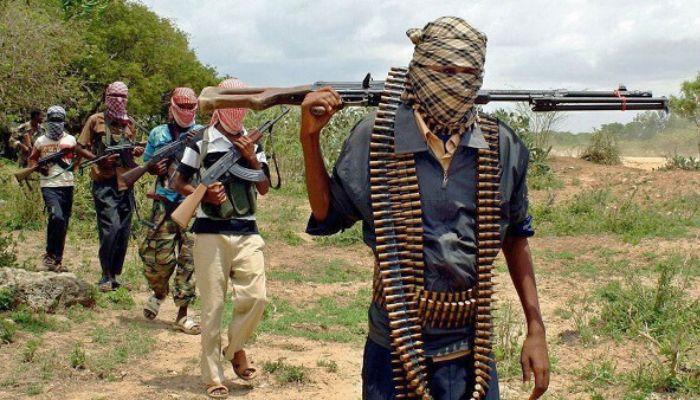
Where do the Fulani ethnic militants operating in the Northwest and Middle Belt acquire military-grade weapons? These are not crude hunting rifles; survivors describe AK-47s, AK-49, RPGs, general-purpose machine guns, and in some cases, anti-aircraft weapons. Such arsenals require supply chains, logistics, and financing. Yet the Nigerian government claims inability to trace these obvious channels.

How is it possible that terrorists appear in public, sometimes armed and in the presence of security agents, without arrests? Recent videos from Guga Ward in Bakori Local Government Area of Katsina State show armed Fulani militants attending “peace talks” with weapons visible, surrounded by traditional rulers and, disturbingly, security personnel. In any functional state, such gatherings would result in mass arrests. In Nigeria, they result in photo opportunities.

Why is the Nigerian National Security Adviser, Mallam Nuhu Ribadu, bent on appeasing Fulani terrorists instead of allowing the military to treat them as the terrorists they are? His alleged championing of peace deals that demand no disarmament, no accountability, and no cessation of violence represents either profound incompetence or something more sinister.

The Martyr They Created: General Christopher Musa’s Warning

Perhaps the most telling aspect of this entire crisis is what happened to General Christopher Musa. Just five days before his removal as Chief of Defence Staff, General Musa issued a stark warning to Nigerians about peace deals with terrorists.

“We therefore urge everyone: do not make peace with them. We do not support these bandits or any peace agreement with them. If they genuinely want to stop, they should lay down their weapons and surrender. If they surrender, we will take them into custody, screen and investigate them thoroughly; that’s the proper approach,” General Musa stated clearly.

He continued with even more pointed language: “But sitting down with a bandit and asking ‘Why did you pick up a gun?’ is pointless. It’s driven by greed, and greedy people will not give up. They will never stop. So there should be no truce with them.”

This was a military leader articulating sound counterterrorism doctrine: no negotiations with active terrorists, demand for unconditional surrender, thorough screening and investigation of those who lay down arms, and absolute rejection of the peace deal charade that has characterized Nigeria’s approach to both Boko Haram and the Fulani militants insurgency.

In the same month, General Musa issued a directive to troops to eliminate any terrorist killing civilians and destroying property nationwide. This was exactly the kind of aggressive posture needed to confront groups that have operated with impunity for two decades.

The response from certain Northern elites and Islamic clerics was immediate and hostile. They objected vehemently to this directive, advocating instead for continued peace deals with terrorists. Shortly thereafter, General Musa was removed from his position.

The message sent was chilling: a Chief of Defence Staff who takes a hard line against Islamist terrorists will not be tolerated. Those who advocate for crushing terrorist groups rather than accommodating them will definitely be removed. We saw it happen to Gen Ihejerika at the peak of the Boko Haram insurgency in the northeast. The political will to confront the Fulani jihadist insurgency does not exist at the highest levels of Nigeria’s government, and anyone who attempts to act decisively will be neutralized.

General Musa’s removal, following immediately after his public rejection of terrorist appeasement, reveals the fundamental rot at the core of Nigeria’s counterterrorism strategy. It explains why, despite a capable military that has successfully conducted peacekeeping operations in Sierra Leone, Liberia, and other conflict zones, Nigeria cannot or will not crush armed groups terrorizing its own citizens.

The Elite Panic vs. The Victims’ Reality

The panic among Nigeria’s political and intellectual class over Trump’s threat is instructive. Where was this passionate defense of Nigerian sovereignty when communities were being wiped out and some occupied by terrorist elements? Where were the think pieces and television appearances when churches were being burned and farmlands destroyed? Where was the outrage when peace deals legitimized terrorists?

For two decades, Nigeria’s elites have been largely silent as communities in the Middle Belt faced systematic extermination. They characterized genocide as “farmer-herder clashes.” They blamed victims for not “accommodating” their killers, they blamed climate change. They counseled patience and reconciliation while bodies piled higher.

Now, suddenly, they have found their voices, not to demand protection for vulnerable communities, but to object to the prospect of someone else providing that protection.

This is not patriotism. This is complicity masquerading as principle.

What Trump’s Threat Reveals

Whether President Trump follows through on his threat or not, his statement has accomplished something the Nigerian government has failed to achieve in two decades: it has forced a conversation about the true nature of violence against Christians and other religious groups in Nigeria.

The euphemisms are no longer working. The world is no longer accepting “farmer-herder clashes” as explanation for systematic religious persecution. The fiction that these are spontaneous conflicts over resources has been exposed. The pretense that Nigeria’s government is doing everything possible to protect all citizens has collapsed.

Trump’s threat as crude as it may sound to diplomatic ears speaks a language that Nigeria’s government apparently understands: consequences. For years, international partners issued strongly worded statements, expressed concern, called for dialogue. Nothing changed. Now, facing potential military intervention and aid cutoffs, the Nigerian military suddenly discovers operational capacity it has denied possessing for years.

The Path Nigeria Must Take

If Nigeria’s government wishes to avoid the humiliation of foreign military intervention on its soil, the solution is straightforward: do your job. Protect your citizens. Crush the terrorists. End the appeasement.

Specifically:

Remove Nuhu Ribadu as National Security Adviser and replace him with someone committed to defeating terrorism rather than accommodating it.

Reinstate General Christopher Musa’s directive to eliminate terrorists killing civilians, and ensure military commanders face consequences for failure to act.

Officially designate armed Fulani militia groups as terrorist organizations and prosecute them accordingly under Nigeria’s terrorism laws.

Launch coordinated military operations to clear terrorist camps in the Middle Belt, starting with all known locations.

Arrest and prosecute terrorism financiers instead of citing endless “legal complexities” as excuse for inaction.

End all peace deals with active terrorist groups and demand unconditional surrender as the only acceptable path for those who wish to lay down arms.

The authorities should arrest and prosecute Sheikh Ahmed Gumi and other clerics who defend and justify atrocities committed by terrorists, individuals the government and media have euphemistically labeled as “bandits.”

Provide justice and reparations for the millions of victims who have lost family members, homes, and livelihoods.

These are not impossible demands. They are basic functions of government. That they seem radical in the Nigerian context reveals how far the government has strayed from its fundamental duty to protect citizens.

A Message to Nigeria’s Elites

Your sudden concern about sovereignty and stability would be more credible if you had shown similar concern when your fellow citizens were being massacred. Your warnings about the dangers of foreign intervention would carry more weight if you had demanded domestic action when it could have prevented this crisis.

You cannot remain silent while communities are exterminated and then clutch your pearls when someone else threatens to act. You cannot characterize genocide as economic conflict and then object when others call it what it is. You cannot accommodate terrorists for two decades and then suddenly discover principles when faced with consequences.

The victims of Fulani jihadist terrorism are not impressed by your geopolitical analysis. They are not moved by your concerns about precedent. They are not comforted by your counsel of patience. They have been patient for twenty years while you did nothing.

If you do not want foreign intervention in Nigeria, then demand that your government intervene to protect Nigerians. If you object to Trump’s threat, channel that energy into demanding that Tinubu’s administration crush the terrorists. If you care about sovereignty, insist that Nigeria exercise sovereignty by defending all its citizens, not just those whose deaths are politically inconvenient to acknowledge.

Conclusion: When Survival Trumps Sovereignty

I do not know if President Trump will follow through on his threat. I do not know if American military action in Nigeria would succeed or fail, bring peace or chaos. What I know is this: for communities that have buried their dead by the hundreds while their government looked away, the calculation is simple.

They have tried trusting their government. Their government failed them.

They have tried appealing to national authorities. National authorities ignored them.

They have tried documenting atrocities to force action. The documentation was dismissed as exaggeration.

They have tried international advocacy. It was characterized as unpatriotic.

Now, finally, someone with real power is threatening consequences for their government’s failure to protect them. And Nigeria’s elites are upset, not at the government that abandoned these communities to slaughter, but at the foreign leader threatening to act where Nigeria will not.

The people of the Middle Belt are watching this reaction, and they are drawing conclusions about who their real enemies are. It is not just the terrorists pulling triggers. It is also those who create the conditions for those triggers to be pulled with impunity, and those who object more strenuously to the prospect of justice than to the reality of genocide.

Trump’s threat may be crude, it may be controversial, it may be problematic in numerous ways. But to the husband who buried his wife, to the community that buried its children, to the survivors waiting for the terrorists to return, it is something else entirely: it is acknowledgment that their lives matter, that their suffering is seen, and that someone, somewhere, is willing to act.

That is more than Nigeria’s government has given them in twenty years.

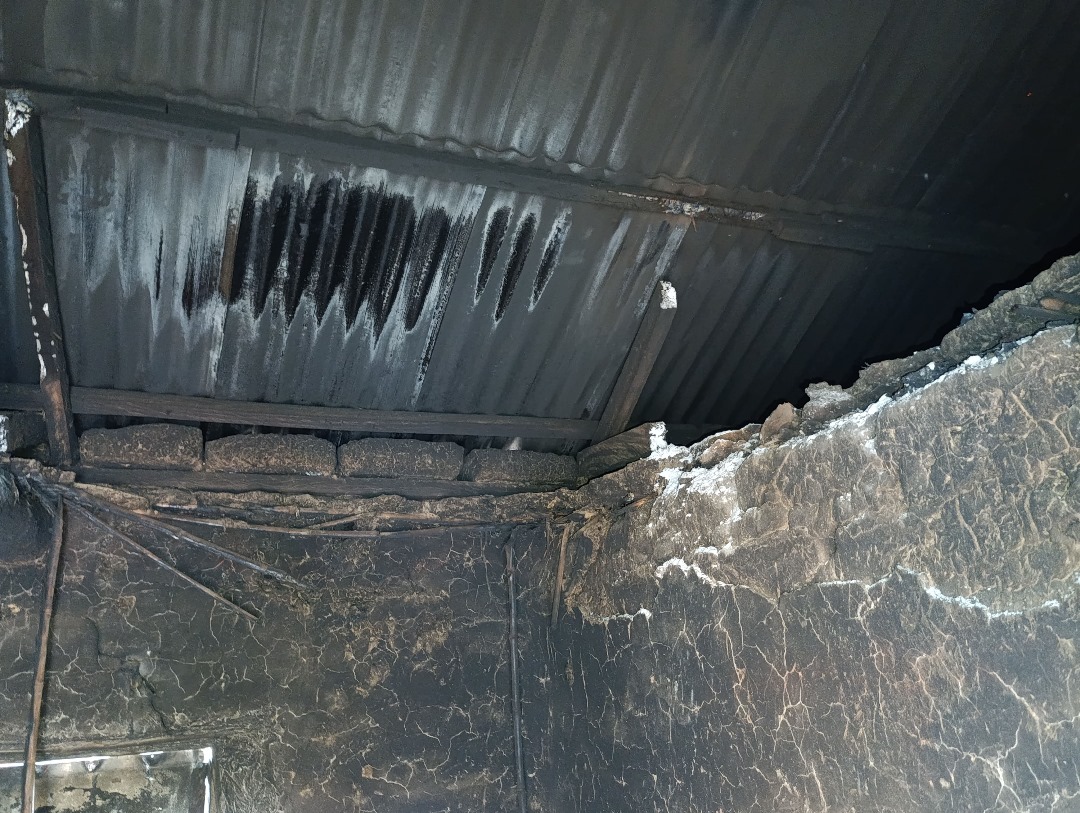
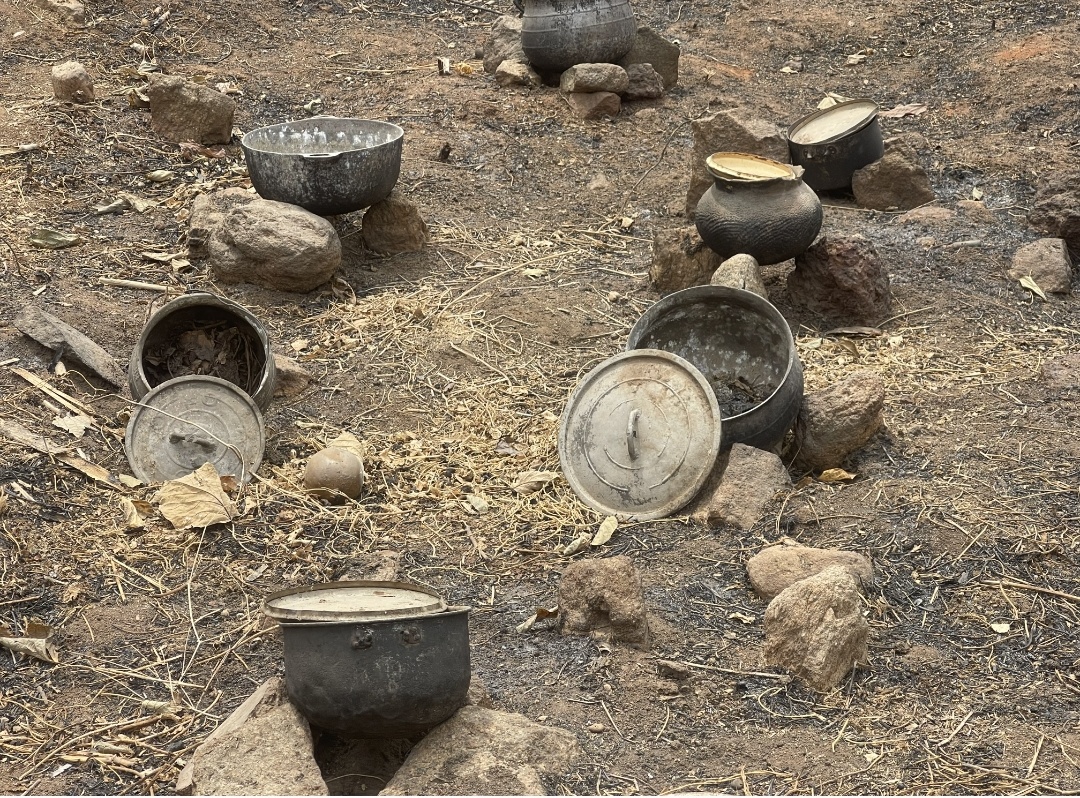
Picture: cooking pots abandoned by fleeing residents during Islamic Fulani terrorists attack in Januwa village, Yangtu Development Area, Taraba state. Credit: Steven Kefas


Steven Kefas is an investigative journalist, Senior Research Analyst at the Observatory for Religious Freedom in Africa, and Publisher of Middle Belt Times. He has documented religious persecution and forced displacement in Nigeria’s Middle Belt for over a decade.
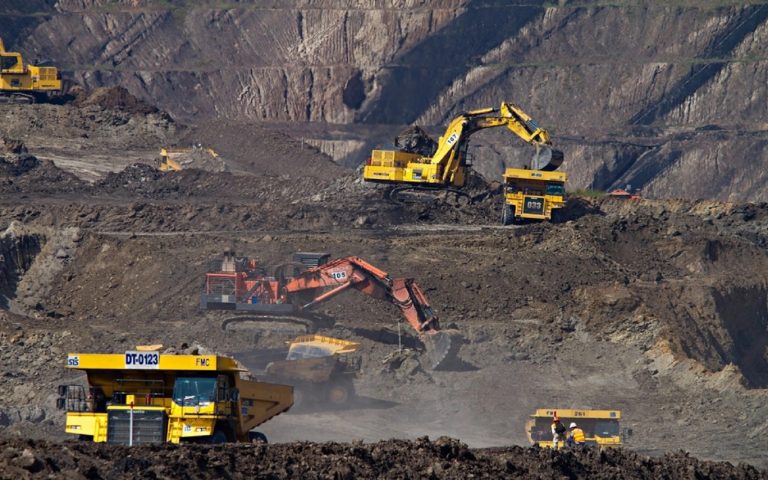


Nigeria’s Mining Policy Failures: A Sector Tilted Toward China, Strangling Small Miners and Fuelling Illicit Operations

By Biliyaminu Suraj

biliyasuraj247@yahoo.com


Introduction

Nigeria’s mineral wealth — highlighted by lithium, gold, tin, and rare earths — has the potential to diversify the economy beyond oil. Yet despite high-profile policy announcements and international investment pledges, the country’s mining sector remains mired in structural contradictions: rising foreign dominance, weak enforcement, and an increasingly hostile environment for domestic small-scale miners.

Under Minister Dele Alake’s tenure at the Ministry of Solid Minerals Development, policy reforms have been headline-grabbing and frequent, almost to the degree of weekly announcements. They are invariably framed as transformative but lack detail and wreak of a poor understanding of the mining industry. Critics argue the so-called policy reforms are reinforcing dependency on Chinese capital, penalising local miners through excessive regulation and fees and failing to stem a surge in illegal mining and attendant insecurity.

There are four critical fault-lines that define Nigeria’s current mining policy confusion.

1. Policy Failures Favouring Chinese Interests

Since 2023, the Nigerian government has aggressively courted Chinese investors in the mining and mineral-processing sector. During a recent visit to China, Minister Dele Alake announced that Chinese-backed companies have invested over US $1.3 billion in Nigeria’s lithium-processing industry since September 2023. According to Ministry-sourced reports, Nigeria was expected to commission four major Chinese-funded lithium-processing plants by 2025 representing a combined investment of about US $800 million.

While the investment figures are large in headline terms, the actual number of plants currently built and operating remains very limited. One facility in Nasarawa State has been commissioned — a Chinese-led plant processing lithium at “4,000 metric tonnes per day” capacity was inaugurated. Its likely capacity is closer to 3,000 tonnes per day if and when it reaches full production. At this point it is not in production.

But many of the other announced plants — such as the US$600 million facility near the Kaduna-Niger border and the US$200 million outside Abuja — are still described as “slated for commissioning this quarter” or “nearing completion”. To be clear, they are not yet in production and, if they are anything like the Chinese processing plants in Australia, may never come into economically viable production. Australia has been badly caught out by the promises of large-scale Chinese mineral processing facilities. Australian companies have invested billions of dollars in Chinese technology to process critical minerals only to now find that their investments may have to be written off.

In effect, Nigeria’s mineral governance model risks sliding into what analysts describe as neo-extractivism: the state aligning with foreign capital to extract rents, without building sustainable domestic capacity or transparent oversight. Meanwhile, local and small-scale operators continue to face bureaucratic hurdles. “We have seen preferential treatment for Chinese firms, while local miners struggle to get licences or financing,” said a member of the Miners Association of Nigeria.

2. Licence Revocations and the Expansion of Illegal Mining

The Alake-led ministry’s campaign to “sanitise” the sector through aggressive licence revocations has generated uncertainty. Hundreds of exploration and small-scale mining titles have been revoked on technicalities or administrative delays, often without due consultation. While the government insists this will curb speculative holding and non-compliance, the result has been the opposite: a vacuum in tenure security that has encouraged illegal mining and worsened insecurity in mineral-rich regions.


Displaced operators and unemployed artisanal miners are migrating into informal mining camps, some of which are now dominated by Chinese buyers and middlemen.

3. Inflated Chinese Lithium Investments and the Mirage of Local Value Addition

Nigeria’s lithium boom should be a strategic opportunity to enter the global electric-vehicle supply chain. However, the scale and structure of the Chinese-backed investments invite scrutiny.

The announced figures — US$800 million for four processing plants, plus the broader corporate claim of over US$1.3 billion invested by Chinese firms — are large. Yet comparators suggest that many of these plants are not yet fully built or operational. The publicly-known, functioning facility is the one in Nasarawa, and even that raises questions about transparency of terms, local-content obligations and community benefit.

Analysts at the Natural Resource Governance Institute (NRGI) warn that the Nigerian government has not published the contracts, environmental-impact assessments or local-content rules tied to these deals. Without such transparency, inflated valuations may conceal excessive profit repatriation or tax waivers favouring the investors.

The contradiction is stark: while the government revokes hundreds of local mining licences in the name of efficiency, it signs opaque, billion-dollar deals with foreign conglomerates that may offer minimal technology transfer or local capacity-building.

Nigeria risks falling into a pattern familiar across resource-rich African economies — outsourcing its industrial future to external partners while celebrating “investment” headlines that disguise long-term dependency. Worse still, history across Africa and Asian countries tells us that massive scale Chinese infrastructure development comes with massive repayment obligations which, when defaulted, see national assets under Chinese ownership.

4. Small-Scale Miners Punished by Escalating Tenement Fees

In mid-2024, the Ministry announced a sweeping revision of mining-licence fees and annual service charges hitting small and indigenous miners hardest. For example, the annual service fee for a Small-Scale Mining Licence (SSML) jumped to ₦260,000, while renewal fees rose to ₦420,000.

For artisanal and small-scale miners – who produce over 70 percent of Nigeria’s solid minerals – the impact has been devastating. Many operate on thin margins and lack access to formal finance. “These new rates are impossible for us,” said a gold miner from Niger State. “They want to push us out so the big companies can take over.”

Industry lawyers have also criticised the abrupt fee escalation, warning it could drive legitimate operators underground and worsen illegal mining. By making formalisation unaffordable, the policy undermines its own objective of bringing artisanal and small-scale miners into the regulated economy.

Meanwhile, Chinese-backed operations appear largely unaffected, as their capital base allows them to absorb or negotiate favourable terms. The asymmetry reinforces perceptions that Nigeria’s mining reforms are designed to privilege Chinese state-owned investors at the expense of Nigeria’s domestic enterprise.

Conclusion: Reform or Regression?

Nigeria stands at a crossroads. Mining reforms under Minister Alake have been long on rhetoric and short on delivery. The government’s mining policies, though couched in the rhetoric of reform and industrialisation, risk deepening structural inequities. The tilt toward Chinese capital — with announced investment amounts well into the billions but very few operational processing plants so far — is a key concern. Coupled with opaque licensing decisions and punitive costs for small miners, the reforms collectively undermine the stated goal of building a resilient, inclusive mining economy.

For Nigeria to truly benefit from its mineral wealth, three principles are essential: transparency, local empowerment, and institutional capacity. Contracts with foreign investors must be publicly disclosed; fee regimes must reflect economic realities, not bureaucratic revenue targets; and the state must strengthen regulatory oversight to curb illegal mining rather than punish small-scale operators. Without such shifts, the mining sector will remain a cautionary tale-–of a nation rich in minerals, yet poor in governance.

Nigeria, Listen!: Your Walls Have Cracked Wide Enough For Foreign Boots To Land

By Luka Binniyat

“America only cares about its personal interest… any country they invade is left worse.” That’s the new hymn of social media patriots and half-informed commentators who believe repeating clichés equals wisdom and hindsight.

“Look at Libya, Syria, Afghanistan and Iran and see how the U.S messed them up! … it’s all about Nigeria’s oil, Solid minerals and envy” they scream, beating their chests online as if hashtags could resurrect the thousands of dead killed by Islamists. Some, probably high on something, swear they’ll defend Nigeria from any “invading ‘imperialist’ force”, with what?

Nonsense!: Whoever has seen American Corporations dropping by parachutes anywhere and start drilling resources!

To me, these scare mongering and bravados are not just empty; they are insults. I take it as deep, stinging insults to the survivors of genocide I’ve covered since 2012. They reek of persons of privilege untouched and immuned of the pains the millions whose lives are being wasted in affected areas of the on going genocide in Nigeria.

Yes, there is Genocide against ethnic Chritians in Nigeria Middle Belt by Islamists! I am a witness to that evil.

So, come closer. Let’s leave Twitter. Let’s walk through what’s left of the parts of the Middle Belt, through the smoke, ruins and the silence where laughter once lived.

If your father and mother were slaughtered like rams before your eyes, killers screaming “Allahu Akbar,” your siblings cut down, your home torched, and your village erased, folks, what the heck do you care about sovereignty? If you’ve ever buried the charred remains of toddlers and grandmothers whose only crime was to be Christian, to be native, to be alive, then maybe, just maybe, the sound of an American helicopter hovering over to terrorists camps might not strike you as ‘imperialism’ but as overdue justice.

From Southern Kaduna to Plateau, from Benue to Niger, from Southern Kebbi to Kwara, and down to Southern Borno — I have covered stories of blood and betrayal. These are areas I can speak for having been on ground there.

I’ve walked through bubbling communities that exist now only on old maps. I’ve interviewed mothers clutching photos of daughters still missing after mass abductions. My team was in Chibok. We heard it all!

What of cases where entire communities were flattened, their ruins claimed by the bush and their ancestral lands now owned and occupied by the terrorists. If it’s in the Middle Belt, Nigeria Press called it “Banditry.” But, to God be the Glory: The world calls it by its real name today: Ethnic cleansing; Christian genocide! – selective elimination of a people as a result of their faith, race, ideology et al.

And what of the survivors? Visit the Internally Displaced Persons (IDP) camps — those unending rows of misery in the Middle Belt. There you’ll meet children who were six when the first attacks came in 2010. They are 26 now, still uneducated, still in tents, still watching politicians fly over their heads to campaign rallies. Their memories are sharp as blades: the night raids, the gunfire, the screams, the running barefoot into the dark. They have become adults in a country that forgot them.

You think they care about sovereignty?

Now imagine the final insult: the Nigerian government spending billions of naira to “rehabilitate” the same terrorists who wiped out their families. Men who emerged from forests, tired of killing, are cleaned up, dressed up, and declared “repentant.” They are given homes, trained, and paid monthly stipends — all while their victims rot in forgotten camps. I saw it myself in Maiduguri, May 2023, with my colleague Mike Odeh. Government officials smiled for the cameras as “former” Boko Haram fighters were reintegrated into society – sometimes to the same communities they once burned. Some of these “repentant” men now live with the Christian girls they kidnapped, raped, converted by force, and impregnated and raise a family with in government provided homes in Maiduguri. The parents of the girls, scattered to the four directions of the winds, can do nothing. The story is even more heartbreaking than this. Can there be a greater mockery of justice?

Even our gallant troops — the true patriots — feel betrayed. Many of them fought in the forests and mountains, losing comrades in battles against the same terrorists now embraced by the state. Soldiers have whispered to me in bitterness and disbelief: “We watched our friends die fighting these killers. Now the government calls them good guys and pays them maybe as much as we earn.” Their morale bleeds. The army’s honour is humiliated by a system that rewards terror and punishes sacrifice. The have an annoying phrase for it – Non Kinetic! Imagine facing gunfire in Zamfara or Borno, only to see your enemy pardoned, housed, and celebrated at a “peace talk.” Some of these killers even flaunt their weapons at government-sponsored parley events, strutting before police, DSS, and politicians who dare not raise a finger. What message does that send to the soldiers risking everything on the frontlines? What do the civilians that the most vulnerable think of their country. They are not thinking of it as sovereign. It’s captured! and by rag-tag illiterate Islamists fighters, not the U.S Army!

So tell me — if you were a survivor, a displaced farmer, a widow, or even a disillusioned soldier — how would you receive the news of America declaring Nigeria a “Country of Particular Concern” and hinting at intervention? Would you beat your chest in defence of sovereignty? Or would you whisper a prayer that someone, anyone, might finally bring order, justice, and peace to this bleeding land?

Because here’s the truth: Nigeria has failed millions of its citizens. The state has become a spectator to its own disintegration. When governors in the North West hold peace talks where mass murderers attend fully armed with the approval of Office of the National Security Adviser; when killers and génocidiars become celebrities of “repentance” and “rehabilitation” — sovereignty becomes a cruel joke in the psyche of all men and women of conscience.

Those shouting “no foreign boots on our soil” should first visit the ashes of Gwoza, mass graves in Bokkos, the tragedy of Guma, the mass waste of human and material in Wasagu/Danko, the cruel living conditions of our IDPs Cameroon; in the FCT.

Let them stand among these ruins, conjure the wailing souls of the innocent and ask themselves: whose soil is left to protect?

What is sovereignty worth when it shelters genocide and rewards impunity?

Make no mistake: when I say survivors will welcome the Yankees, it’s not a cry for colonisation. It’s a cry for help. It’s the plea of people abandoned by their own nation. For them, the U.S. flag on terrorists sites would not symbolize imperialism — not exploitation, but the faint hope of justice.

Nigeria must wake up!.

It must choose to defend its citizens, not their killers. If it doesn’t, the cracks in our national wall; in our hearts, will widen until foreign powers walk right through them — not with necessary with armour tanks, but with moral authority that traumatized citizens approve.

As someone who has walked through the smoke, heard the wails, and seen the graves, I can tell you this without hesitation: the survivors — millions of them — and millions more who stand in solidarity, will not cry over lost sovereignty. They will whisper, “At last, someone came.”

And when that happens, don’t be surprised if they stand at the roadside, waving at the incoming foreign troops — not as conquerors, but as deliverers — and say with quiet relief, “Welcome, Yankees


Breaking Down the CPC Designation: How Government Appeasement of Terrorists Led to International Sanction

By Steven Kefas

Yesterday, the United States designated Nigeria as a Country of Particular Concern (CPC) for severe violations of religious freedom, a long-overdue recognition of the systematic persecution of Christians and other vulnerable communities that has claimed tens of thousands of lives over the past two decades. This designation didn’t emerge from vacuum; it reflects years of documented evidence, mounting international pressure, and most critically, the lack of political will by successive Nigerian governments to confront the Fulani jihadist insurgency decimating indigenous communities across the Middle Belt and beyond.

Understanding the CPC Designation

A Country of Particular Concern designation under the International Religious Freedom Act represents one of the most serious diplomatic rebukes the United States can issue. It signals that a government has either engaged in or tolerated systematic, ongoing, and egregious violations of religious freedom. For Nigeria, this designation specifically addresses the government’s failure to prevent, investigate, or prosecute mass atrocities against Christian communities, particularly those carried out by armed Fulani militia groups operating with apparent impunity across multiple states.

The designation comes with potential consequences including sanctions, travel restrictions on government officials, and limitations on security assistance. More significantly, it places Nigeria alongside countries like China, Russia, Iran, and North Korea on a list of the world’s worst violators of religious freedom, a devastating blow to Nigeria’s international reputation and a clear message that the world is no longer willing to ignore the bloodshed.

The Fulani Jihadist Insurgency: An Unacknowledged Genocide

For over two decades, armed Fulani militia groups have waged a systematic campaign of violence against predominantly Christian farming communities across Nigeria’s Middle Belt states including Plateau, Niger, Kwara, Kogi, Benue, Taraba, Adamawa, and Southern Kaduna. These attacks follow predictable patterns: midnight raids on sleeping villages, mass shootings, burning of homes and churches, destruction of farmland, kidnapping for ransom, and forced displacement of entire communities from their ancestral lands.

The Nigerian government and many media outlets have persistently characterized this violence as “farmer-herder clashes” driven by competition over land and water resources, a narrative that deliberately obscures the religious and ethnic dimensions of these attacks. This framing ignores overwhelming evidence that these are coordinated military-style operations targeting Christian communities specifically, not spontaneous conflicts between economic groups. Survivors consistently report attackers shouting “Allahu Akbar” during raids, specifically targetingChristian farming communities.

International organizations including Genocide Watch, the United States Commission on International Religious Freedom (USCIRF), and Open Doors have repeatedly warned that the violence against Christians in Nigeria’s Middle Belt exhibits markers of genocide according to the UN Convention on Genocide. Yet the Nigerian government continues to downplay the religious dimensions, refuses to designate perpetrating groups as terrorists, and has failed to arrest or prosecute those responsible for these atrocities despite thousands of documented attacks.

The Paradox of Invisible Terrorists

During my own incarceration in Kaduna Custodial Center (prison), in the very heart of the region most affected by Fulani terrorist violence, I made a disturbing observation: despite thousands of documented attacks, mass killings, and the displacement of millions, I never encountered a single Fulani terrorist among the prison population. The prisons were filled with common criminals, political detainees, and individuals accused of various offenses, but conspicuously absent were members of the armed groups terrorizing communities just kilometers away from the prison walls.

This glaring absence raises fundamental questions about the Nigerian government’s commitment to justice and accountability. If Fulani militias are genuinely criminal groups operating outside state control, why aren’t security forces arresting them? If they’re terrorists threatening national security, why aren’t they being prosecuted? The most troubling explanation is that these groups operate with official protection or at minimum, deliberate tolerance from elements within Nigeria’s security architecture.

Multiple credible reports document security forces arriving hours after attacks despite communities alerting authorities during ongoing raids, refusing to pursue fleeing attackers, and in some cases, actively preventing communities from defending themselves. Some survivors report security personnel withdrawing from areas just before attacks occur, suggesting foreknowledge if not coordination. This pattern of complicity extends to the judicial system, where rare arrests of suspected Fulani militants typically result in quiet releases without prosecution.

The Nuhu Ribadu Problem: Peace Deals That Embolden Terrorists

At the center of Nigeria’s failed counterterrorism strategy sits National Security Adviser, Mallam Nuhu Ribadu, whose approach to the Fulani jihadist insurgency has been characterized by appeasement rather than confrontation. Ribadu has allegedly championed “peace deals” with armed Fulani groups in the North West that require no genuine disarmament, demand no accountability for past atrocities, and impose no meaningful conditions on participants.

Most disturbingly, these peace meetings have become theatrical displays where armed terrorists attend openly carrying weapons, not as surrendered arms but as symbols of their continued power. Rather than being disarmed and arrested, these individuals are feted, given platforms to air grievances, and often provided government resources ostensibly for “rehabilitation” that never materializes into genuine transformation. The message sent is clear: terrorism pays, and the Nigerian state will negotiate with you while you remain armed and dangerous.

This approach represents a fundamental misunderstanding of counterinsurgency principles. Genuine peace processes require that armed groups demonstrate commitment to peace through verifiable disarmament, cessation of violence, and accountability for past crimes. Ribadu’s peace deals offer none of these, instead legitimizing terrorist groups as stakeholders in governance while their victims remain displaced, traumatized, and vulnerable to renewed attacks.

For communities that have lost thousands of family members, seen their villages burned repeatedly, and remain displaced years after initial attacks, these peace deals represent a betrayal. They watch their attackers attend government-sponsored meetings with full military regalia while they languish in IDP camps with no justice, no compensation, and no protection against future violence. This is not peace; it is surrender disguised as reconciliation.

The Controversial Defense Appointment: Signaling Priorities

The Tinubu administration’s appointment of former Zamfara State Governor Bello Matawalle Minister of State for Defence sends a chilling message about the government’s priorities regarding the Fulani jihadist insurgency. Matawalle’s tenure as Zamfara governor was marked by controversial policies toward armed bandits and terrorists operating in the state, including peace deals that critics argue emboldened rather than deterred violence.

Under Matawalle’s governorship, Zamfara became infamous for its approach of negotiating with terrorists while often taking harsh measures against communities advocating for self-defense. His administration faced accusations of sympathizing with armed groups while failing to protect vulnerable populations. Now elevated to a key defense position at the federal level, Matawalle’s appointment suggests either profound tone-deafness about the optics of placing a terrorist sympathizer in charge of national defense, or a deliberate signal that the government’s appeasement approach will continue.

This appointment is particularly offensive to Christian communities in the Middle Belt who have borne the brunt of Fulani terrorist violence. It communicates that their concerns about religious persecution are not taken seriously, that their calls for justice fall on deaf ears, and that those who accommodate terrorists are rewarded with higher office while their victims remain forgotten.

The Broader Context: Why Accountability Matters

The lack of accountability for religious persecution in Nigeria extends beyond the Fulani insurgency, though that remains the deadliest manifestation. It includes the Boko Haram and ISWAP insurgencies in the Northeast that have killed tens of thousands and displaced millions, primarily targeting Christians and moderate Muslims. It encompasses discriminatory Sharia law implementation in Northern states that criminalizes Christian evangelism while permitting Islamic proselytization. It involves systematic discrimination in government appointments, educational opportunities, and economic development that favors Muslims over Christians in Northern states.

This pattern of impunity has convinced perpetrators that targeting Christians carries no consequences. When terrorist commanders remain free after documented massacres, when government officials who facilitate violence face no sanctions, when security forces who fail to protect vulnerable communities receive no discipline, the message is clear: Christian lives don’t matter in Nigeria’s calculus of power.

The CPC designation represents the international community finally saying: we see what you’re doing, we will no longer accept your excuses, and there will be consequences for continued inaction. This is not interference in Nigeria’s internal affairs; it is a response to a government’s failure to protect its own citizens and uphold its obligations under international human rights law.

What Must Change: A Roadmap for Action

For Nigeria to address the concerns underlying the CPC designation and genuinely protect religious freedom, several immediate actions are necessary:

First, National Security Adviser Nuhu Ribadu must be removed and replaced with a competent, no-nonsense security official committed to crushing jihadist insurgencies rather than accommodating them.

The current appeasement approach has demonstrably failed, emboldening terrorists while failing to provide security for vulnerable communities. Nigeria needs security leadership that understands counterterrorism, respects human rights, and prioritizes protection of all citizens regardless of religious identity.

Second, armed Fulani militia groups must be officially designated as terrorist organizations and prosecuted accordingly.

The fiction that these are mere “herders” involved in resource conflicts must end. These are organized armed groups conducting systematic attacks on civilian populations with religious and ethnic motivations. They must be treated as the terrorists they are, with full application of Nigeria’s terrorism laws including arrests, prosecutions, and asset freezures.

Third, a comprehensive program of arrests and prosecutions of terrorist commanders must be implemented immediately.

Years of documented attacks have produced extensive evidence aboutsponsors, operational patterns, and specific perpetrators. This evidence must be acted upon with coordinated operations to arrest sponsors, dismantle networks, and bring perpetrators before courts. This requires political will from the highest levels of government to overcome resistance from those who benefit from the status quo.

Fourth, the appointment of controversial figures like Bello Matawalle to key security positions must be reversed.

These appointments signal that the government is not serious about confronting religious persecution. Replacing such officials with individuals who have demonstrated commitment to protecting all Nigerians regardless of religious identity is essential for restoring confidence in government intentions.

Fifth, a comprehensive program of justice and reparations for victims must be established.

Millions of displaced persons need pathways to return home safely, rebuild destroyed communities, and receive compensation for losses. Survivors of attacks need access to trauma counseling and medical care. Communities need assurance that their security will be prioritized and that future attacks will be prevented.

The Trump Factor: Why This Time Is Different

While I sympathize with President Tinubu’s administration, which inherited these problems when taking office just two years ago, the reality is that the lack of political will to confront Fulani jihadists predates his presidency and continues under his watch. Previous U.S. administrations issued strongly worded statements about religious persecution in Nigeria but took limited concrete action. The Trump administration has demonstrated willingness to move beyond rhetoric to consequences, as evidenced by the CPC designation.

This represents a potential turning point. Under President Trump’s leadership, the United States has signaled that the days of endless massacre of Christians without accountability are over. The CPC designation is likely just the beginning, with targeted sanctions, visa restrictions, and other measures potentially forthcoming if Nigeria fails to demonstrate genuine progress on protecting religious freedom.

For Nigerian officials who have operated with impunity while facilitating or tolerating religious persecution, this should serve as a wake-up call. The world is watching, documentation is being compiled, and accountability mechanisms are being activated. The comfortable assumption that international outrage will never translate into consequences is no longer valid.

A Message to the Nigerian Government

You have lied to the world about the nature of violence against Christians in Nigeria, characterizing genocide as “farmer-herder clashes” and systematic religious persecution as resource competition. You have protected perpetrators while abandoning victims. You have appointed terrorist sympathizers to defense positions while imprisoning those who dare to defend themselves. You have negotiated with armed terrorists while refusing justice to their victims.

The world is watching, and your lies are no longer accepted. The CPC designation is deserved, and more actions will follow if you continue on this path. It is time to act and act very fast. Crush the jihadists, protect the lives of Christians and other vulnerable communities, demonstrate through concrete actions rather than empty rhetoric that you are committed to religious freedom, and the USA will undesignate Nigeria with immediate alacrity.

The choice is yours: continue the current path of appeasement and complicity and face increasing international isolation and consequences, or demonstrate genuine political will to confront religious persecution and restore Nigeria’s standing in the community of nations that respect human rights.

Conclusion: Hope Amidst Darkness

Despite the grim realities documented above, there is reason for cautious hope. The CPC designation represents international recognition that has eluded victims of religious persecution in Nigeria for decades. It validates their suffering, acknowledges their testimonies, and signals that they have not been forgotten by the wider world.

For those of us who have documented these atrocities, advocated for victims, and refused to accept official narratives that obscure the truth, this designation represents vindication. Our work has not been in vain. The evidence we have compiled, the testimonies we have preserved, and the advocacy we have undertaken has finally broken through the wall of denial and reached decision-makers willing to act.

The question now is whether the Nigerian government will respond with genuine reform or with defiance and denial. The path forward is clear: accountability, justice, protection, and genuine commitment to religious freedom for all Nigerians. Whether Nigeria’s leadership has the wisdom and courage to take this path remains to be seen, but one thing is certain—the world is watching, and the days of impunity are numbered.

Steven Kefas is an investigative journalist, Senior Research Analyst at the Observatory for Religious Freedom in Africa, and Publisher of Middle Belt Times. He has documented religious persecution and forced displacement in Nigeria’s Middle Belt for over a decade

The Numbers CAN Won’t Face: How Nigeria’s Leading Christian Body Became an Apologist for Targeted Violence

By Zariyi Yusuf

When Abimbola Ayuba, Director of National Issues and Social Welfare for the Christian Association of Nigeria (CAN), dismissed foreign concerns about Christian persecution with the assurance that “bullets don’t look for a Christian or spare a Muslim,” he may have expected his words to calm international alarm. Instead, he revealed something far more troubling: Nigeria’s premier Christian organization has become an unwitting or perhaps willing accomplice in obscuring one of the most systematic campaigns of religious violence in modern African history.

The numbers tell a different story. A devastating story. A story that CAN, for reasons that demand urgent scrutiny, refuses to tell.

That story comes from an exhaustive four-year study by the Observatory for Religious Freedom in Africa (ORFA), an independent research organization dedicated to documenting religious persecution across the continent. Their meticulous data collection, available at www.orfa.africa, tracked every recorded incident of violence in Nigeria’s conflict zones from October 2019 to September 2023. What they found doesn’t just challenge CAN’s narrative, it exposes it as fundamentally dishonest.

And the crisis is ongoing. ORFA is currently preparing to release a comprehensive six-year report covering October 2019 to September 2025.

The Mathematics of Denial

The ORFA report’s findings don’t just contradict CAN’s position, they obliterate it.

Of 30,880 civilians killed during this period, 22,361 were Christians and 8,314 were Muslims. At first glance, this 2.7 to 1 ratio might seem to support CAN’s narrative of generalized violence. But this surface-level analysis commits a fatal error: it ignores population distribution.

When ORFA researchers adjusted for the relative sizes of Christian and Muslim populations in affected states, the only mathematically honest way to assess targeting, the ratio exploded to 6.5 to 1. Christians are not just more likely to die; they are six and a half times more likely to be killed than their Muslim neighbors, according to ORFA’s population-adjusted analysis in the reporting period.

For abductions, the story is equally grim. Of 21,532 civilians kidnapped, 11,185 were Christians and 7,899 were Muslims. The proportional ratio? 5.1 to 1. Christians are five times more likely to be dragged from their homes, held for ransom, or to disappear entirely.

When Ayuba insists that bullets “don’t look for a Christian,” the mathematics respond with a simple, brutal truth: Yes, they do. And they find Christians with deadly, disproportionate accuracy.

The Perpetrators CAN Won’t Name

Perhaps the most damning revelation in the ORFA data concerns not the victims, but the killers, and CAN’s careful avoidance of naming them.

When most Nigerians and international observers think of terrorism in Nigeria, they think of Boko Haram and ISWAP. The government encourages this focus. Even foreign critics like Bill Maher center their accusations on “Islamists” and “Boko Haram.”

But the data reveals a conspiracy of misdirection. Boko Haram and its ISWAP offshoot combined to kill 3,079 civilians over four years, according to ORFA’s documented incidents. Horrific, certainly. But it pales beside the real engines of violence: Armed Fulani Herdsmen killed 11,948 civilians, while “Other Terrorist Groups”, largely Fulani bandits, killed 12,039.

That’s 23,987 victims mainly from Muslim Fulani-affiliated groups versus 3,079 from Boko Haram and ISWAP. These Fulani Ethnic Militia (FEM) are killing civilians at nearly eight times the rate of the terrorists everyone is talking about.

FEM is a Muslim militant group credited for most violent attacks in Nigeria’s Middle Belt and Northwest regions. Their violent activities also extend to the southern part of the country.

Why does this matter? Because the targeting is explicit and undeniable.

Of the Christians killed, nearly 80% were murdered by FEM. This is not the signature of random violence. This is selection. This is targeting. This is, by any honest definition, persecution.

And CAN, while acknowledging that “insurgency has claimed several Muslims in their early morning prayers,” conveniently neglects to mention that the primary killing force operates with clear religious preferences.

The Farming Season: When Persecution Becomes Ethno-Religious Cleansing

The temporal pattern of violence documented by ORFA reveals something even more sinister than religious targeting, it suggests systematic economic destruction designed to drive Christian communities from their ancestral lands.

Violence peaked between April and June, the heart of Nigeria’s farming season. This is when Christian farmers must plant their crops or face starvation. This is when they are most vulnerable, scattered across their fields, focused on survival rather than security.

And this is precisely when they were slaughtered.

The majority of civilians killed during these peak months were Christian farmers in the North Central, and parts of the North West, according to ORFA’s geographic analysis. Meanwhile, confrontations between Security Forces and Terror Groups, measured by casualties among combatants, dropped significantly during these same months.

Read that again: When Christian farmers are being massacred in their fields, the Nigerian Security Forces reduce their engagement with terrorist groups.

The ORFA report’s conclusion is damning: “In the period of the year when civilians were most severely attacked by Terror Groups, the Security Forces remained relatively absent.”

This is not neglect. This is abandonment. And the consequences go far beyond death tolls. Survivors report their fields destroyed or seized, ORFA’s data documents widespread “land grabbing.” Unable to plant, unable to harvest, forced to pay ransoms for kidnapped family members, Christian farming communities are driven into debt traps that complete what violence begins: the destruction of their ability to remain on their land.

When Ayuba suggests that concerns about Christian persecution are being “taken advantage of by groups who know what they benefit from foreign interests,” he ignores a more disturbing possibility: that his organization’s dismissiveness serves interests much closer to home.

The Geography of Abandonment

The regional breakdown of violence exposes a pattern of security deployment that appears designed to fail Christian communities.

The North West saw 11,626 civilian killings; the North Central, 8,789; the North East, 5,521. But the religious breakdown reveals the strategic nature of this violence.

In the North Central, the region with the second-highest death toll of civilians, 7,417 Christians were killed compared to just 1,348 Muslims, according to ORFA’s state-by-state breakdown. That’s a 5.5-to-1 ratio. Yet this is precisely where the data shows Security Forces were “relatively absent,” leaving the population “in the lurch” and giving “Muslim Fulani militants ample opportunity for their violent attacks, with Christians as their main victims.” (ORFA, August 2024).

Meanwhile, Security Forces killed 13,480 members of Terror Groups over four years, most of them in the North West and North East. Effective military action is clearly possible. It simply isn’t happening where Christians need it most

The Question CAN Cannot Answer

CAN’s position rests on a simple assertion: the violence in Nigeria is generalized insurgency that affects all Nigerians regardless of faith. The ORFA data poses an equally simple question in response:

If violence is truly indiscriminate, why are Christians 6.5 times more likely to be killed and 5.1 times more likely to be abducted than Muslims, when population size is accounted for? Why does one militia group kill Christians at double the rate it kills Muslims? Why are Security Forces absent from the regions where Christians face the greatest danger?

Ayuba suggests that “groups who know what they benefit from foreign interests” are exploiting Nigeria’s security crisis. But there’s a more uncomfortable possibility: that CAN itself, whether through political pressure, ethnic solidarity, or simple denial, has chosen institutional survival over prophetic witness.

When foreign governments threaten sanctions, CAN warns that “all of us will suffer.” Perhaps. But 22,361 Christians have already suffered the ultimate consequence. Their deaths deserve more than deflection. They deserve recognition. They deserve justice.

And they deserve better than a Christian organization that insists their persecution doesn’t exist.

Whereas CAN, under the presidency of General Muhammadu Buhari – a Fulani Muslim under whom Nigeria saw the proliferation of Islamist groups and more sympathy towards them than any resolve to eliminate them – cried to the international community about what practical indications revealed as a silent genocide against Christians, what could be any new data the present leadership of CAN have that made them deny an obvious genocide – especially at a strategic time when the US and other international observers are focusing on a call that has been on for over a decade?

The numbers are clear. The pattern is undeniable. The Observatory for Religious Freedom in Africa has done the painstaking work of documenting what CAN refuses to acknowledge. And with ORFA’s forthcoming six-year report (October 2019 to September 2025) the question becomes more urgent: Why is the Christian Association of Nigeria working so hard not to see it?

Full ORFA report (Oct.2019-Sept.2023) with methodology available at www.orfa.africa. Six-year report (Oct.2019-Sept.2025) forthcoming.


The Night They Come: Living with Fear in Northern Nigeria

By Mike Odeh James

They strike as early as 10 p.m.—ghosts in the night, their arrival announced by sporadic gunfire and the haunting rhythm of their war cries that echo through the sleeping village. The sound alone freezes the heart. Families—fathers, mothers, sons, and daughters—huddle together in the dark, whispering prayers and trembling in silence. Some wet themselves; others shake uncontrollably. Mothers press trembling palms over the mouths of their infants, terrified that a single cry could summon death.

In that chaos, families scatter for survival. Some crawl into gutters filled with dirty water; others flee into uncompleted buildings, clinging to walls and praying the killers pass them by. Many rush into the bush, barefoot, with nothing but their nightclothes—unaware that snakes and scorpions lie in wait. A few hide inside the ceilings of their homes, hearts pounding as they hear footsteps below. The Fulani terrorists comb every house, every corner of the bush, searching for movement, for breath. At times, they set entire buildings ablaze, cooking whole families alive. And if they find you hiding, they shoot without hesitation.

The father, desperate and shaking, reaches for the hotline number the military had promised would bring help. He dials it again and again. It rings endlessly, unanswered—until despair becomes familiar.

For four long hours, gunfire rains. The Fulani terrorists—though not all Fulani are killers—move with ruthless precision, torching homes, dragging victims away, firing into the night. Then, as suddenly as they came, they vanish into the blackness—quietly, almost peacefully—leaving behind a village soaked in tears and fear.

When the sun rises, the true horror unfolds.

A neighbour’s wife has been taken.

A young boy lies still, his eyes wide open.

Another man limps, clutching a bleeding leg.

You hear someone whisper, “God, when will this end?”

But deep down, everyone knows—it won’t. Not yet.

They come twice a week now. They will move to the neighbouring villages and later cycle back

Each raid feels like a rehearsal for death. The nights grow longer, the days emptier. And in the daylight, the government’s words sound cruelly hollow.

Former President Muhammadu Buhari once warned Nigerians not to “stereotype the Fulani” for the sins of a few. The Sultan of Sokoto also cautioned against revenge killings. And the presidential spokesman, Femi Adesina, mocked the bereaved, asking, “Why don’t you give up your ancestral lands instead of dying for them?”

Soldiers clamped down youths who may have dane guns for self defence

But how do you give up the land that holds your father’s bones?

How do you abandon the soil that carries your children’s footprints?

It continued. Then, suddenly, I realised I had grown used to being woken at 10 p.m. every night. Even when there was no attack, my mind refused to rest. Sleep became a memory. I could not close my eyes until 5 a.m. My face thinned, my body weakened. I was becoming a ghost of myself.

When I finally went to the hospital, the doctor sighed deeply.

“You have acute high blood pressure and insomnia,” he said softly. “If you don’t rest, it could kill you.”

He paused, then added, “You’re not the only one. I’ve treated over 50 people with the same symptoms this week.”

Another doctor, a friend, told me he had seen 34 others—each suffering from the same silent torment.

We are the living dead—the unseen casualties of endless fear. We may not have been shot or kidnapped, but we are dying slowly, from the inside.

We are the other victims of Fulani terrorism, abandoned by a government that failed to protect us, betrayed by leaders who preach peace while we bury our neighbours.

And still, every night, at exactly 10 p.m., I wait for the sound of gunfire—because silence, too, now sounds like war.


An excerpt from Mike Odey’s yet to be published book…..

Minister Alake’s Fantasy Economics: How Unrealistic Targets Are Destroying Nigeria’s Mining Sector

By Billiyamniu Suraj

Biliyasuraj247@yahoo.com

Nigeria’s Minister of Solid Minerals Development, Dr. Dele Alake, has made bold promises about transforming the country’s mining sector. His stated aspiration for mining to contribute “around 50 percent of GDP” has captured headlines and generated excitement about Nigeria’s mineral potential. However, this target reveals not ambition but a fundamental disconnect from the realities of international mining economics , a disconnect that is actively harming the sector it purports to develop.

To understand how divorced from reality this target is, consider the world’s premier mining nations. Australia, with over a century of mining development, world-class geological data, transparent regulation, sophisticated capital markets, and billions in ready investment capital, sees its mining sector contribute approximately 12-14% to GDP. Canada’s mining sector, similarly mature and well-developed, contributed about 4-6% to national GDP in recent years.

Yet Nigeria, where the mining sector currently contributes less than one percent to GDP and actually declined by 21% in 2024 compared to 2023, is supposedly targeting 50%. This is not merely optimistic, it suggests either a catastrophic misunderstanding of the mining industry or a cynical manipulation of public expectations to justify policies that serve other agendas.

The Seven-Point Agenda: Reforms That Ignore Root Causes

Minister Alake has unveiled a seven-point agenda to reposition the sector: establishing the Nigeria Solid Minerals Company, creating Mines Marshalls to combat illegal mining, acquiring comprehensive geological data, formalizing artisanal and small-scale mining, promoting value addition and local processing, attracting large-scale investment, and strengthening stakeholder engagement.

On paper, these initiatives sound reasonable. In practice, they fail to address or even acknowledge the fundamental problems destroying Nigeria’s mining sector: systematic corruption at the Mining Cadastre Office (MCO), lack of security of title, a punishing fee structure that bankrupts local miners, and the systematic sabotage of a $60 million World Bank-funded cadastre system specifically designed to prevent these failures.

The Ministry’s stated reasons for lack of investment, “insufficient geological data, weak infrastructure, informal operations, illegal mining, and a significant financing gap”, conveniently omit the elephant in the room: institutional corruption and regulatory dysfunction that makes Nigeria’s mining sector toxic to legitimate international investors. This selective diagnosis suggests the Ministry either does not understand how the global mining sector works or is deliberately obscuring the real obstacles to development.

When “Reforms” Become Instruments of Corruption

Perhaps most troubling is evidence that even newly created reform initiatives are being corrupted from inception. The Mines Marshalls, established ostensibly to combat illegal mining, have reportedly been deployed as private security for parties in the Minister’s favor. Rather than enforcing the law impartially, this taxpayer-funded force allegedly serves to protect connected operators while harassing legitimate miners who lack political patronage.

If accurate, this transforms a law enforcement initiative into an instrument of favoritism and intimidation, further entrenching the very corruption it was supposedly created to combat. When even new institutions are corrupted before they can function properly, it reveals the depth of the systemic rot and raises serious questions about whether reform is possible under current leadership.

The Revenue Paradox: Punishing Miners to Generate Numbers

In the first quarter of 2025 alone, the MCO and Mines Inspectorate recorded N6.9 billion and N7 billion in revenue respectively, figures the Minister and MCO Director-General hailed as an “outstanding success.” However, this purported success masks a devastating reality for Nigerian miners and exposes the Ministry’s fundamental misunderstanding of how mining investment works.

The dramatic fee increases that generated these revenue figures have created an unprecedented crisis for local mining operators. The national president of the Miners Association of Nigeria (MAN) highlighted that access to finance remains “the number one challenge facing artisanal and small-scale miners,” describing mining as “a capital-intensive and high-risk sector” where “without targeted funding, our local operators cannot survive, let alone thrive.”

Local miners have made clear that after paying the inflated MCO fees, they lack sufficient capital to actually conduct mining operations, forcing them to seek external financing for what should be operational capital. This is particularly devastating in Nigeria’s context, where the mining sector has not yet developed the mature capital markets seen in countries like Canada and Australia, where exploration is financed through regulated stock exchange listings that distribute risk among investors.

In mature mining economies, companies raise capital through public markets, allowing investors to bear exploration risk in exchange for potential returns. Nigeria’s mining sector has not reached this stage of development. Individual miners must find private capital to explore, make discoveries, and prove such discoveries are the basis for commercial mining operations. The exorbitant fees introduced by the Ministry make this already difficult task nearly impossible.

The Mass Revocation Crisis: Creating Illegality by Design

The result has been an unprecedented wave of title revocations as miners default on inflated fees they simply cannot afford. This mass revocation is not merely an administrative matter, it is forcing Nigerian miners to operate illegally, creating the very conditions for insecurity that the government claims to want to prevent.

When legitimate operators are pushed into illegality by impossible regulatory demands, they join the shadow economy alongside criminal networks. The distinction between forced illegality and criminal enterprise becomes blurred, creating lawless zones where neither regulatory authority nor community accountability operates. The natural resources that belong to all Nigerians are thus exploited and sold by illegal operators who pay no royalties to the federal government, enter into no community development agreements, and provide no fair compensation to landowners.

The Ministry has promoted a “use it or lose it” policy regarding mining titles, presenting it as a reform that will open opportunities for new operators. However, this ignores fundamental mining economics. In mature mining economies like Canada and Australia, the average period from discovery to mine development is eighteen years. This timeline reflects the realities of exploration, feasibility studies, environmental assessments, permitting, financing arrangements, and infrastructure development.

An environment where revocation has become routine due to unpayable fees is not an incentive for development, it is a powerful deterrent to international mining investment. Legitimate mining companies operate on decade-long timelines with hundreds of millions of dollars at stake. They cannot invest such capital in jurisdictions where titles can be arbitrarily revoked or where regulatory demands are economically impossible to meet.

The Stark Reality: A Sector in Decline, Not Growth

The statistics tell a story that contradicts the Ministry’s triumphalist rhetoric. According to the National Bureau of Statistics, Nigeria’s solid minerals, mining, and quarrying sector’s contribution to GDP declined by 21 percent in 2024 compared to 2023, this despite “various reforms and policy changes aimed at revitalising the sector under the current administration.”

In 2021, the mining industry contributed a mere 0.33% of Nigeria’s GDP. The sector generated N193.59 billion in revenue that year, representing less than 1% of national GDP, only 2.62% of total revenue, and a negligible 0.24% of total exports. Over fifteen years, the sector has generated only N814.6 billion in revenue total, indicating it is far from being a major revenue earner.

These figures expose the hollowness of the Ministry’s claims of success. When your sector is shrinking rather than growing, when your contribution to GDP is declining rather than increasing, and when international investors are fleeing rather than arriving, declaring high fee collection as an “outstanding success” reveals either profound delusion or deliberate deception.

International Investor Confidence: From Bad to Worse

International investor confidence in Nigeria’s mining sector is at an all-time low, despite ministerial rhetoric to the contrary. Minister Alake has claimed that UK, US, Saudi Arabia, and UAE officials have expressed interest in Nigeria’s lithium and other critical minerals. However, industry insiders describe this as an “improbable interpretation of the real situation.”

The reality is starkly different: the US, Canada, and Australia, all major international mining economies with mature industries, have effectively put investment in Nigeria’s mining sector on hold. The UK, France, and Germany, which require stable long-term supplies of critical minerals for their green energy transitions, are engaged only in tentative discussions with no concrete progress to date.

Nigeria’s absence from the 2025 Africa Down Under conference in Australia is particularly telling. The conference serves as a major platform for African mining investment promotion and would typically feature significant Nigerian participation given the country’s mineral wealth and need for foreign investment. Speculation has linked this absence to concerns about international arbitration proceedings, including those involving Jupiter Critical Minerals Project over a billion-dollar lithium project.

The lack of security of title, the fundamental requirement for mining investment, undermines any possibility of attracting investment from major international mining companies. When legitimate investors face license cancellations, overlapping claims, or other bureaucratic obstacles, they may seek recourse through international arbitration. Nigeria could face multiple such cases, potentially costing the nation far more than any revenue generated by inflated fees.

The Environmental and Social Costs

Beyond financial dysfunction, the Ministry’s policies have enabled environmental destruction on a massive scale. Chinese mining companies operating in Nigeria have been accused of deploying outdated and environmentally destructive technologies that would be banned in their home country. The absence of rigorous environmental oversight has resulted in ecosystem damage, soil degradation, and health problems for communities near mining operations.

Local residents in mining-affected areas report contaminated water sources, destroyed agricultural lands, and respiratory illnesses linked to mining dust and chemical runoff. The failure to enforce environmental standards or revoke licenses from violating operators suggests either incompetence or deliberate complicity in the destruction.

This environmental crisis is compounded by the illegal mining operations that flourish as legitimate miners are forced underground by impossible fee structures. These illegal operators have even less incentive to follow environmental protocols. The irony is stark: while the Ministry claims to be formalizing artisanal and small-scale mining as part of its seven-point agenda, its policies are actually driving miners underground, creating more environmental damage and less regulatory oversight than before.

Meanwhile, foreign companies with ready access to capital and connections operate with impunity, extracting Nigeria’s resources while leaving behind environmental devastation and providing minimal benefit to local communities who bear the costs of contaminated ecosystems. The growing investment by Chinese players in downstream minerals processing, rather than in exploration and development of new mines, creates ready markets for illegally extracted minerals, establishing a parallel economy that benefits foreign processors while Nigerian communities and the national treasury receive nothing.

The Question of Competence vs. Intent

The pattern of policy failures raises a fundamental question: Is the Ministry incompetent or corrupt? Does it genuinely not understand how international mining investment works, or does it deliberately implement policies that serve interests other than national development?

The 50% GDP target suggests profound ignorance of mining economics. The fee structure that bankrupts local miners while generating impressive revenue numbers suggests a focus on short-term financial extraction rather than long-term sector development. The failure to acknowledge or address institutional corruption at the MCO suggests either wilful blindness or complicity. The corruption of new initiatives like the Mines Marshalls suggests that reform is impossible under current leadership because even new institutions are captured before they can function.

Whether through incompetence or intent, the result is the same: a mining sector in accelerating decline, local miners driven into bankruptcy or illegality, international investors fleeing, environmental destruction proceeding unchecked, and billions in potential revenue lost to corruption and dysfunction.

The Cost Question: At What Price “Transformation”?

Minister Alake is determined to transform the sector, but at what cost? At what cost to local miners forced into bankruptcy or illegality? At what cost to communities suffering environmental destruction? At what cost to national security when regulatory failure breeds insecurity and empowers criminal networks? At what cost to Nigeria’s international reputation when legitimate investors flee and arbitration cases loom?

The question “at what cost?” reverberates through every aspect of the current situation. The Minister’s determination has produced impressive revenue numbers but a sector in decline. It has produced bold targets but collapsing investor confidence. It has produced new institutions that are corrupted before they function and new policies that punish compliance while rewarding corruption.

Conclusion: When Ambition Becomes Delusion

Nigeria possesses significant mineral wealth that could drive economic development, create jobs, and reduce dependence on oil revenues. Realizing this potential requires realistic targets grounded in international mining economics, policies that enable rather than punish local investment, genuine security of title, environmental enforcement, and above all, addressing the institutional corruption that makes Nigeria’s mining sector toxic to legitimate investors.

Minister Alake’s 50% GDP target is not ambitious, it is delusional. His seven-point agenda does not address root causes. His revenue numbers mask the destruction of local mining operations. His reforms are corrupted before implementation. His rhetoric about international interest contradicts the reality of fleeing investors.

The Minister’s stated priorities reveal a profound disconnect from reality. Insufficient geological data, weak infrastructure, and informal operations are genuine challenges, but they pale in comparison to the fundamental problem the Ministry refuses to name: institutional corruption so deep and systematic that it has made Nigeria’s mining sector a cautionary tale rather than an investment destination.

Without a fundamental shift in approach, including realistic targets, affordable fee structures, genuine security of title, environmental enforcement, and above all, confronting rather than obscuring institutional corruption, the mining sector will continue its decline. The 21% drop in GDP contribution in 2024 is not an anomaly; it is the predictable result of policies disconnected from economic reality and a leadership either unable or unwilling to address the fundamental obstacles to sector development.

The minerals will remain in the ground long after current officials have departed. The question is whether Nigeria will have developed the institutional capacity, regulatory credibility, and economic understanding necessary to extract them responsibly and profitably, or whether fantasy economics and corrupted reforms will continue to ensure that Nigeria’s mineral wealth benefits everyone except Nigerians.


This article is based on multiple investigative reports, stakeholder accounts, public documents, and industry data detailing policy failures in Nigeria’s Ministry of Solid Minerals Development. The issues documented represent patterns identified by journalists, industry participants, and civil society observers concerned about governance in Nigeria’s mining sector.


Between Closure and Disclosure: The Bitter Truth About Christian Genocide in Nigeria

by

Moses Oludele Idowu

Few days ago the Canadian Parliament in a resolution described Nigeria “as one of the worst places on Earth for a Christian to live.” It came as a rude shock to Nigerian government because their officials rarely follow international commentaries and journals. There was nothing new in that resolution actually.

For years now the _World Watch List_ ( a reputable annual publication of Open Doors International organization that monitors persecution of Christians worldwide) has consistently maintained that Nigeria, especially Northern Nigeria, is one of the worst places now on earth to be a Christian. I reviewed one of these reports during the Buhari regime. These reports are filed with parliaments across the world.

Recently too, popular American comedian Bill Maher also confirmed the reality of genocide in Nigeria. “I am not a Christian but they are systematically killing Christians in Nigeria. They’ve killed over a hundred thousand since 2009. They’ve burnt 18,000 churches. These are the Islamists, Boko Haram. This is so much more of a genocide attempt than what is going on in Gaza. They are literally attempting to wipe out the Christian population of an entire country.”

Adding to the flame, congressman Riley More of West Virginia 2nd District has written to Marco Rubio, US Secretary of State urging him to designate Nigeria as a country of particular concern (CPC) halting all arms sales and technical support. His counterpart in the Senate, Texas senator Ted Cruz has accused the Nigerian government of “ignoring and even facilitating the mass murder of Christians by Islamist jihadists.”

In the light of what has been happening in Benue and Plateau states in particular can these allegations be faulted? Cruz also alleged that NIgerian Christians are being targeted and executed for their faith by Islamist terrorist groups “being forced to submit to Sharia Law and blasphemy laws across Nigeria. It is long past time to impose real costs on the Nigeria officials who facilitate these activities….”

Again I ask, in the light of experiences of Deborah Samuel, Leah Sharibu, etc., the closing of all public schools for Ramadan; has Cruz lied against Nigeria? Ted Cruz has therefore on the basis of these introduced a bill to the Senate, Nigeria Religious Freedom Accountability Act which would target the public officials responsible for these policies with powerful sanctions and other tools.

Expectedly, these actions and steps have jolted Nigerian Government out of its slumber. There is no doubt that the Federal Government was rattled by the report of accusing the nation of genocide against Christians. Spirited attempts and means have been deployed to deny the allegations and dismiss the insinuations. Still they won’t go away rather like mortar to brick, they stick.

Aides, lackeys, honchos of the party and even “useful idiots” from the Christian Association of Nigeria have been engaged to whitewash the stain off government with hyssop; still to no avail.

I do not blame the government. Genocide is a serious thing to be accused of before the international community.

First the Minister of Information tried his best to denounce the allegations and dismiss the whole label as the work of enemies and overzealous haters of the administration and its “good works.” The usual platitudes of tolerance for all religions, and religious freedoms while denying the terrible underbelly of continuous pain and tears among selected groups who have waited for government interventions for years without success and to no avail.

It is my purpose in this investigation to present the facts as they are and leave the readers to judge for themselves. Is there indeed genocide against Christians in Nigeria or is it merely fictional? And are the Americans being overzealous and weeping more than the bereaved as Femi Fani-Kayode seemed to suggest in his response?

It is so amazing that we are so reactive as a people rather than been proactive. And this debility has infected even our government. Americans are being blamed, CNN is being blamed as if they just woke up from slumber or because we supported Gaza during the last United Nations Assembly. – as Fani-Kayode so shamelessly suggested. I do not agree with these propositions.

Long before America dabbled into our affairs Nigerians themselves have called attention to ongoing genocide in Benue and Plateau states.

In July 2023 Bishop Wilfred Anagbe of Makurdi in a testimony to the US House Committee on Foreign Affairs stated:

“The inaction and silence about our plight by both the ( Nigerian) government and powerful stakeholders all over the world prompts me to often conclude that there is a conspiracy of silence and a strong desire to just watch the Islamists get away with genocide in Benue State and others parts of Nigeria.” ( _Catholic Culture_ , July 24, 2023)

Two years later the same bishop in an interview with _ACI AFRICA_ noted that since 2018 he has shutdown some 17 parishes due to killings and systematic campaigns of territorial conquest. “No nation watches her citizens slaughtered like animals and says there is nothing to be done. It’s genocide.”
This is not an American talking and not a Canadian but a Nigerian bishop in Makurdi who is an eyewitness and a victim. Can we, in all honesty fault what he has said? In the light of what we know about Benue State has this bishop told a lie?
In March 12, 2025 the same bishop again appealed to the US House Foreign Affairs Committee, African Subcommittee to redesignate Nigeria as a country of particular concern (CPC) owing to increased Islamist attacks against Christians. He details the persecution of Christians especially in Northern and Central regions of Nigeria where there is a manifest agenda “to reduce and eventually eliminate the Christian identity” of the country.He then concluded by saying, “Concretely I request and I plead, I ask you to redesignate Nigeria as a country of particular concern. This has practical and diplomatic meaning…”

The claim of genocide against Nigeria and the double standard often displayed by security agencies have been made by others even within the country. On April 17, 2025 CAN President, Daniel Okoh described the attacks in Bokkos and Bassa Local Government Areas of Plateau State as ” premeditated vicious acts of genocide” against indigenous Christian communities. [ See _BusinessDay_ April 17, 2025 ]

As usual the government response to all these is to be dismissive and mouth the same worn- out cliches and jaded old tales of tolerance, neutrality, freedom of religion and worship. These mask the insincerity of government and a proof that something sinister is underneath because it fails to address the real issues.

*Pattern of Attacks*

A common defense which usually provides a convenient narrative from government and its many apologists and “useful idiots” is the allusion to the pattern of attacks by insurgents. They claim the attacks do not show any pattern and all Nigerians have been attacked by insurgents without any discrimination.

The CAN national spokesman, one Abimbola Ayuba employed this tactic in his defense. “The pattern of killings has truly not been in a particular pattern,” _Punch_ reported him as saying.

That is not true and he knows in his heart and I will soon show the figures putting a lie to his statement.
“If they open fire in a market place the bullets don’t look for a Christian or spare a Muslim or even spare a baby…” rambled CAN spokesman Abimbola Ayuba to _Guardian_ newspaper. How about that? But Yelwata, where Fulani militia operated for hours killing over 200 without resistance from state security agencies, is not a market place; it is a residential community. Agatu, Bokkos, Bassa where Christians die daily are not market places but residential communities and where people live especially people of a particular Faith. Then there is a pattern.

How many of these militia men have been arrested and brought to book?

Why do the security agencies always maintained that the local vigilantes in these Christian areas cannot carry sophisticated guns like their attackers and refused to defend them claiming they have not received orders to engage? Isn’t that suggestive of genocide? When you refused to defend a people from sophisticated terrorists and you disable them from defending themselves what do you call that?

Abimbola added to his folly when he said: “Why run to America when you have a Senate here where you can file your petition?”
And if we may ask him, how many of the petitions filed by the besieged Christian communities in Benue and Plateau States and by their Development Associations and representatives have been successfully addressed by your Senate? Obviously they had stopped teaching Logic when you went to school or you didn’t learn well. It is so sad that CAN is now loaded with government apologists, fifth columnists and agents.

Sometimes I wonder reading press releases from CAN whether it was written by even Muslims or Aso Rock. I wrote years ago that this Association should be dissolved because it seems to have been hijacked by politicians and has therefore outlived its usefulness. Now I am vindicated.

Femi Fani-Kayode has spoken in similar vein. He believes that all Nigerians are facing genocide not just Christians. That makes it even worse for the government, if it is so. For he has thus charged Nigerian Government of gross irresponsibility. This is not a defense, it is an indictment. If all Nigerians are facing genocide why has Nigerian officials not asked for help from other nations and why is Nigeria crying and making case against Palestinian genocide at the United Nations Assembly when her own people are facing worse genocide at home? It is criminal irresponsibility and dereliction of duty. What responsible man goes out trying to put out fire in another man’s house while his own house with his children are on bigger conflagration?

Contrary to the lies and puerile and asinine logic of absence of discernible pattern in the attacks and killings there is indeed a pattern for anyone who can see, whose eyes have not been blinded by cataract as a result of politician’s filthy lucre and government’s cash transfusions. The figures tell the true story and these are figures from several reputable international observers and organisations and their is a common agreement in what they say. And curiously the natives of.these communities agree with what they say. Unfortunately even the press is compromised.
On a peripheral and surface level it appears the attacks are mindless and patternless but when viewed carefully, the nature and consistency of attacks, the response from the authority to these show a different picture.
It is true that there are critical insecurity challenges in most Northern states especially the Northeast and Northwest but often these are results of age-long misgivings and frictions between Hausa farmers and Fulani pastoralists occasioned by several factors. The Fulanis are mostly pastoralists while Hausas are mostly farmers on land. But these cannot be compared with what is happening and has been happening in Benue and Plateau States and, to some degrees, Taraba which are dominantly Christian states. Is this a coincidence?
Two, why are civilian vigilantes in the core North allowed to carry sophisticated arms to defend their communities and themselves but the same privilege is not accorded those in Benue and Plateau where there has been more bloodshed? Can anyone explain this?
Can anyone compare the statistics in other areas of the North with what is happening and has happened in Benue and Plateau states and Southern Kaduna in the past 10 years especially since these jihadists of APC took over the rein of government in Nigeria? The facts speak for themselves unless when we want to lie.

*Let The Figures Speak*

The _World Watch List_ , a publication of Open Doors International that measures and monitors Christian persecution around the world noted that in 2024 alone 3100 Christians were killed. These are killings targeted for the sake of belief and Faith. The report admitted that it is even lower compared to previous years.
The _International Christian Concern_ designate Nigeria a country of particular concern where persecution of Christians take place. Thus putting Nigeria in the same big league with North Korea, Saudi Arabia, etc.
Genocide or persecution encourages migration because people are bound to flee from zones of danger. Thus the pattern of migration can be indicative of the level of extreme persecution and killings in a particular region. Whatever forces people to leave their ancestral homes, houses and towns as it is currently happening in my dear Igbomina Land must be serious.
Now what does the statistics show? According to _International Organization for Migration (_ IOM) an estimate of 3.3 million Nigerians (i.e., three million, three hundred thousand) have been internally displaced. Now the same organization noted that of these sum almost half ( 1.5 million) has been displaced in Benue State alone. It also admitted that in Plateau State another Christian State, dozens of communities have been overrun in Bokkos, Riyom, Bakin Ladi and Mangu Local Government Areas and their farmland seized and lost. So even the remaining now face the threat of hunger and food shortage.

The _Christian International Solidarity_ ( CIS) detailed series of killings by Fulani militia men in Plateau State. The Nigerian manager has noted in his reports continuous massacres with details and specific beyond any exaggerations. “Since I arrived Jos, Plateau State there has been an attack on Christian villages every night. His log book and report read like those of observers or Red Cross agents in war-torn Somalia or Rwanda during turmoil except that this is Nigeria and our government wants us to believe that all is well. Here is a sample:

“March 27: Massacre of 12 mourners at a funeral in Ruwi village with a gang rape of 19- year old woman.

April 2: Killing of Anglican pastor Ezekiel Gama by Fulani militia. His wife, Naomi Ezekiel Gama sighted the men and hid.

April 13, Palm Sunday: Deadliest massacre in Zike village of Bassa Local Government leading to the death of 56 people including 15 children and displacing 2000 people.

April 15: I visited some victims at Jos University Teaching Hospital. Three people died in the hospital that day. The majority of the victims had been hacked on the back of their necks with machetes. ”

Despite the presence of the military the CSI’ s president, Dr. John Elbner noted there has been “no effective intervention..” Now what do you call these premeditated killings without state intervention? It is genocide.
Unfortunately your compromised press won’t report this.

Let us come nearer home. According to _International Society for Civil Liberties and Rule of Law, Inter- Society,_ 2200 Christians were allegedly killed by Fulani herdsmen, Boko Haram, security personnel and other jihadist, bandits in several states of Nigeria between January and December 2020
They further did a breakdown:

Fulani herdsmen: 1300
Boko Haram/ Splinter groups ISWAP, Ansaru. (500)
NIgerian Army (200)
Jihadist/ bandits. (100)

Further breakdown per state and region shows a pattern which some say they couldn’t see.

Southern Kaduna (455)
Benue State (200)
Plateau State (173)
Southwest (35)
Niger State ( 70)
Kogi ( 55)
Nassarawa (42)
Delta. (20)
Bayelsa (4)
Adamawa (40)
Igboland (40)
Taraba ( 32)
Edo (15)

For those who say there is no pattern in the killings, it depends on where they are looking. Sure there has been widespread killings but it is concentrated in some areas and more pronounced in certain communities which are curiously dominantly Christian. In the Southwest for instance the only state that has been attacked more than the others is Ondo State; the only State where traditional rulers have been killed in the Southwest is Ekiti State. Curiously these are the two dominant Christian states in the region. How else is it true to say there is no pattern in the killings?

A high- powered fact- finding committee set up by Plateau State Government and headed by a Major General (retd) Nicholas Rogers on the tragedies that have befallen the state. The committee submitted its report this penultimate week and its findings are substantial and tragic:

In two decades they found out that no fewer than 420 communities ( _Daily Newshub_ says 450) across 13 Local Government Areas have been destroyed and desolate, 11, 749 people killed in two decades of violence. It also noted:

35% destruction of livestock
32.5% displacement of communities
16.8% destruction of food supplies
9.9% destruction of houses
3.4% illegal land occupation. [ See _Daily Newshub_ 21, September, 2025; _Salientnewsonline.com_ ]
How many are standing trial for these atrocities? None. The House of Representatives member from Plateau State informed the House that 55 communities in his Federal Constituency have been occupied by foreign Fulanis who are now dwelling there. Did the House do anything? Did they summon the army to go and dislodge them? This is why the response from CAN is so disappointing.

A journalist, Steven Kefas who was imprisoned in Kaduna for his writings expressed shock because he never found a single Fulani in the prison for all their atrocities in Southern Kaduna which they even publicly admitted. On the other hand what he found made him sick. He found innocent vigilantes from Southern Kaduna whose only offense was trying to defend their communities. That was their crimes. The serious Fulani prisoners he found brought for other crimes were even looking better fed than him coming from outside. That is Nigeria.
That is the colour of genocide.

Our government has beaten about the bush for too long. The people in Benue and Plateau States who are daily killed and in Southern Kaduna who are constrained from defending themselves from attack are also humans. An army is claiming it has not received orders to attack the assailants yet the same army is stopping the vigilantes from carrying high-grade weapons to confront the hooligans and even arresting them for merely protesting, as we saw in Igbomina Land. What do you call that? When you make people vulnerable to attack from parasitic barbarians from the jungle and leave them defenceless the very people whose tax pay your salaries and drive the convoy in your presidential fleet then that is not just enemy action. It is outright betrayal. When you made people incapable of defending themselves through devious schemes and legislation and selective enforcement of laws and deployment of security agencies thus rendering them vulnerable to murderous jihadist mobs it is not just betrayal or enemy action. It is premeditated killings by instalment. It is genocide.
I love Nigeria but I don’t love her more than God or Truth. What is going on in Nigeria in the last 10 years is a scandal and it must not be denied or trivialized in anyway.
It has come to the stage that the whole world need to see what is happening in Nigeria. In all my life I have never heard or read of any nation where soldiers of a National Army watch while legitimate citizens are being attacked and they refused to act because they have “not been ordered to engage” the assailants. Only in Nigeria. The world must hear that and why this only happens when it concerns a particular ethnic nationality and its deadly militia.
The world must now hear. We have pretended enough about patriotism – the usual refuge of the scoundrels. It is not patriotism to obscure the truth that meant loss of lives for entire people groups. Strangers are now occupying whole communities while the owners of the land are in IDPs camps. Killers, jihadists, terrorists and genocidists are being rehabilitated and furnished in the misbegotten name of “de-radicalisation” while the owners of the land and victims of their atrocities are neglected, hunger- bitten and cold- bitten in IDP Camps. The world must now hear. That is not being unpatriotic.
Let the truth be told: there is Christian genocide in Nigeria. And it must now stop.

Follow me:

Facebook: Moses Oludele Idowu

WhatsApp: 08034697670

X:@MosesOludele

© Moses Oludele Idowu
October 8, 2025
All Rights Reserved

End the Ravages of Herdsmen in Koro Land – Governments Must Act Now!

By Ayuba Tambaya

In the verdant heart of Southern Kaduna, where the soil whispers promises of bountiful harvests, a shadow looms large over Koro land. For generations, the resilient farmers of Kagarko Local Government Area (LGA) have tilled the earth, nurturing maize, ginger, yam, and millet to feed their families and communities. But today, this age-old rhythm of life is being shattered by relentless invasions from Fulani herdsmen, whose cattle trample and devour entire farmlands, leaving behind a trail of devastation, despair, and deepening poverty. The people of Koro – from villages like Aribi, Kenyi, Kutaho, Kabara, Kushe, Dogonkurmi, Katugal, Nkojo, and Kurmin Jibrin – cry out: enough is enough!

The crisis has reached a boiling point. Just days ago, on October 6, 2025, hundreds of farmers – predominantly women, but joined by men and children – marched barefoot to the palace of their traditional ruler, His Highness Yohanna Akaito, the Ere-Koro, in Kurmin Jibrin. Draped in black mourning attire, their faces smeared with charcoal in symbols of grief and humiliation, they carried leaves in their mouths and atop their heads as emblems of lost livelihoods. This was no ordinary protest; it was a visceral plea from a community on the brink.

These brave souls, many now widows and orphans due to machete-wielding attacks by the invaders, detailed harrowing tales: herdsmen grazing thousands of cattle unchecked across ripening fields, destroying crops worth millions of naira, and assaulting anyone daring to intervene. One farmer’s voice, echoing the collective anguish, captured the horror: “Our farms are our only hope, yet they turn to dust before our eyes.”

This is not an isolated incident but a chronic affliction plaguing Southern Kaduna. Research underscores the broader toll of farmer-Fulani herdsmen clashes on the region’s socio-economic fabric, with escalating violence driven by climate pressures, land scarcity, and unchecked migration patterns.

In nearby Kaura LGA, farmers reported losses in the millions just last year from similar rampages Across Nigeria’s Middle Belt, these conflicts have claimed thousands of lives over decades, displacing families and threatening food security.

In Koro land, the stakes are existential: without intervention, famine looms, children go hungry, and communal bonds fray under the weight of resentment and fear.

The human cost is immeasurable. Women, who form the backbone of Koro’s agricultural labor, bear the brunt – widowed by violence, bereft of income, and robbed of dignity. Children, meant to inherit thriving farmlands, instead witness their parents’ despair. The local economy, already strained, teeters on collapse as farmers abandon fields, fearing for their lives. This is not mere “clash” rhetoric; it is systematic destruction, enabled by inaction.

To the Kagarko LGA Government: You are the first line of defense. Deploy immediate patrols to secure farmlands, enforce anti-open grazing bylaws, and mediate fair compensation for destroyed yields. Establish community vigilance committees equipped with non-lethal tools to deter invasions without escalating tensions. Your silence emboldens the aggressors – act with the urgency your people demand!

To the Kaduna State Government: Southern Kaduna bleeds under your watch. Revive and fund grazing reserves far from arable zones, as recommended in conflict resolution studies. Invest in irrigation and alternative livelihoods for herders to reduce migratory pressures. Prosecute attacks swiftly through mobile courts, and integrate traditional rulers like the Ere-Koro into peace dialogues. The march to the palace was a warning; heed it before protests turn to unrest.

And to the Federal Government of Nigeria: This is a national emergency, not a local squabble. Under President Bola Tinubu’s administration, fulfill promises of ranching initiatives and deploy federal security forces – from the Nigeria Police to the Civil Defence Corps – to Kagarko without delay. Amend the grazing laws to prioritize farmers’ rights while protecting herders’ heritage. Allocate emergency funds for crop replanting and trauma counseling. Nigeria’s unity hangs by a thread in places like Koro; your decisive leadership can weave it stronger.

The protesters vowed to return if ignored – a testament to their resolve, but a tragic indicator of eroded trust. Climate change and population growth exacerbate these clashes, but governance failures ignite them.

Let October 6 mark a turning point, not another forgotten lament. Governments at all levels: hear the barefoot march, see the blackened faces, and act. Secure Koro’s farms today, or risk harvesting a bitter legacy of division tomorrow. The people of Koro land – and Nigeria – deserve no less.

Ayuba Tambaya writes from Kabara, Koro Chiefdom, Kaduna State.

+2347058440985

tambayaa10@gmail.com

BREAKING: Armed Fulani Militants Kill Three Farmers in Deadly Attack on Benue Mining Community

(Makurdi), Three farmers have been confirmed dead following a brutal attack by armed Fulani militants on Nzaav-Div village, a mining community in Jato Aka of Kwande Local Government Area, Benue State, on September 4.

The deadly assault, which occurred at approximately 4:00 PM local time and master more than 2 hours, saw dozens of heavily armed attackers storm the community and open fire indiscriminately on residents. The incident has once again highlighted the escalating security challenges facing Nigeria’s Middle Belt region, particularly communities engaged in farming and mining activities.

According to James, a local resident who witnessed the horrific events, the militants’ primary target was the bustling mining field where hundreds of people work daily. However, farmers who spotted the approaching attackers raised the alarm, enabling most miners to flee the area before the assault intensified.

“Their target was the mines, hundreds of people work there but the farmers who saw them first ran to inform the people and the miners ran away,” James told Middle Belt Times.

“Three people were killed, two were injured and two are still missing, we don’t know their whereabout.”

The victims have been identified as Igba Mfeseer, Achia Tartenger, and Aondofa Taav Zangwa, who was popularly known as “City man” in the community.

The attack has left families devastated, with Mr. Igba’s first son, who also served as his driver, among the missing persons. Mama Mbasen Nyitar Bigila Bur is also reported missing following the assault.

The incident has exposed serious gaps in the security apparatus meant to protect vulnerable communities. Despite the presence of both police and military personnel stationed in the area, residents have expressed frustration over the delayed response to emergency situations.

“We have a police station and also soldiers in the community but they don’t respond on time whenever there is an attack. It could take them up to two hours to be at the scenes of attacks,” James lamented, highlighting a recurring problem that has cost countless lives in similar incidents across the region.

This delayed response time has become a critical concern for residents who find themselves at the mercy of well-armed militants while security forces struggle to provide timely intervention.

The attack on Nzaav-Div village is part of a disturbing pattern of violence that has plagued Nigeria’s Middle Belt region for over two decades. Farming and mining communities have borne the brunt of these attacks, with residents living in constant fear of assault.

Security analysts and local observers believe these attacks are intrinsically linked to the region’s abundant mineral wealth. The Middle Belt’s rich deposits of various minerals, including tin, columbite, Lithium and gold, have made mining communities attractive targets for criminal elements seeking to control or extort these valuable resources.

The frequency and intensity of these attacks have created a climate of fear that threatens to undermine economic activities in the region, potentially displacing communities and disrupting livelihoods that depend on both agriculture and mining.

In response to the escalating security challenges and concerns over mining operations, Benue State Governor Rev. Fr. Hyacinth Alia took decisive action in March 2024, suspending all mining activities throughout the state. The suspension was implemented citing mounting security concerns and the proliferation of illegal mining operations that have attracted criminal elements to previously peaceful communities.

This drastic measure underscores the gravity of the security situation and the difficult balance between economic development and public safety that state governments across the Middle Belt are grappling with.

As the community of Nzaav-Div mourns its dead and searches for the missing, the latest attack serves as a stark reminder of the urgent need for comprehensive security reforms in Nigeria’s Middle Belt region. The incident highlights the vulnerability of rural communities and the critical importance of improving response times and protective measures for areas engaged in mining and agricultural activities.

The families of the victims and the broader community now await justice while hoping for enhanced security measures that could prevent similar tragedies in the future.