SARDAUNA BUILT THE NORTH — BUT HE BUILT IT ON TRIBALISM: IT’S TIME WE REBUILT OUR MINDS

By khaleed yazeed.

This is not an insult. It is not an attack on legacy. It is not a desecration of history. This is truth. Raw, painful, and necessary truth, spoken by a young man from the North who has watched his region sink into confusion, darkness, and stagnation while everyone keeps pointing fingers everywhere but backward.

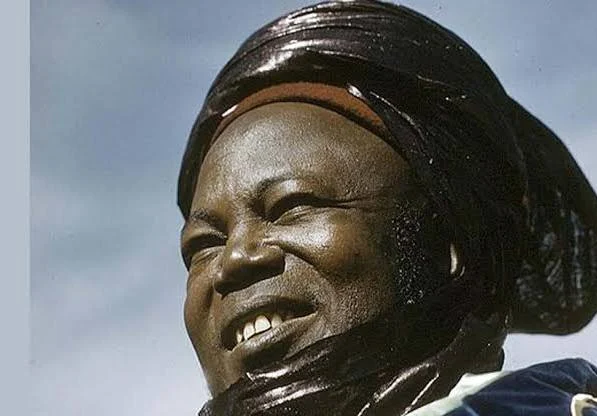
Sir Ahmadu Bello, the Sardauna of Sokoto, built the North. He established institutions. He left hospitals, schools, cooperative unions, and cultural pride. He made many sacrifices and shaped a generation. That cannot be denied. But we must say this: he also embedded a dangerous idea into Northern politics, a tribal and religious ideology that has crippled our thinking and frozen our progress.

He didn’t build the North to be free, he built it to be suspicious of others. He built a North that fears Southern Nigeria more than it fears poverty. A North that is taught to hate the Igbo before it is taught to love innovation.A North that sees the Christian as a threat, and not as a fellow citizen. A North that values ethnic loyalty more than national unity. A North that believes in holding power, not using it for good.

This political mindset didn’t die with him. It survived. It became a system. It became doctrine. And today, it is the reason the North is broken, poor, confused, and dangerously directionless.

Say what you want about me. Insult me. Curse me. Call me a traitor to the legacy. But I would rather be cursed by men than be cursed by history for keeping quiet while my region dies from within.

I am not saying Sardauna left nothing good. He left many noble legacies. But his politics were not perfect. In fact, some of them have poisoned generations. If we don’t admit this and reform them, the North will never move forward.

We will keep living in darkness and denial.
We will keep burning in the fires of religious and ethnic violence.
We will keep dying without knowing who to blame, or where to go.

Today, what we inherited from that ideology is the reason why Northern Nigeria:

Cannot define its future.

Cannot tolerate differences.

Cannot embrace new ideas.

Cannot love its neighbors without suspicion.

Cannot build bridges, only walls.

We have made enemies of progress. We have made friends with ignorance. We have turned arrogance into culture. And worst of all, we have called it pride.

The North must wake up.

It’s time we stop pretending that the enemy is outside. The enemy is the mindset that was planted in us. That we are superior. That we must dominate. That we don’t need to learn from others. That we must always rule. That we must fight before we understand.

That mindset has become our prison. That mindset is why we kill each other in the name of religion. That mindset is why our children beg on the streets while the South builds tech cities. That mindset is why we fear books, but celebrate politicians. We are not cursed by God, we are caged by history.

But we can escape. We can begin to think new thoughts. We can choose to be humans first before tribes. We can begin to relate with other Nigerians not as enemies, but as brothers in the same struggle.

I do not write this out of hate. I write this out of deep love for the North, for the land that raised me, for the people I still believe can rise again.

But we must bury tribal politics. We must reject inherited bigotry. We must rise beyond the old doctrines that have only kept us behind.

This is not 1960 anymore. This is not the Nigeria of coups and propaganda. This is 2025. And we must think for ourselves.

If we do not change how we think, if we do not confront the rot in the past, if we do not evolve, we will die slowly, painfully, blindly.

Khaleed Yazeed
A Northern son, born from the ashes of silence, rising to confront the lies that chained his people.

Ethnic Cleansing Crisis Grips Nigeria’s Middle Belt: Coalition Demands Urgent Federal Action

[spacing size=””]A coalition of 22 civil society organizations, under the banner of the Civic Coalition Against Mass Atrocities in the Middle Belt, has issued a scathing press release, sounding the alarm on a spiraling security crisis in Nigeria’s Middle Belt region. The group is urgently calling for federal intervention to halt what they describe as a systematic campaign of ethnic cleansing that threatens not only lives but the very fabric of democracy in the country.

The Middle Belt, encompassing states like Plateau, Benue, Nasarawa, Taraba, Niger, Kogi, Kwara, Southern Kaduna, Borno, Gombe, and Adamawa, has long been a hotspot for violence. However, the coalition’s report paints a grim picture of escalating atrocities: targeted attacks, massacres, and abductions that have claimed countless lives, left survivors traumatized, and displaced entire communities. The perpetrators, according to the coalition, are not only emptying villages but replacing locals with imported settlers, fundamentally altering the region’s demographic and political landscape.

The coalition identifies three key triggers fueling the current wave of violence. First, the upcoming national census, which they allege is being exploited by terrorist groups to seize territory—ensuring that displaced locals are not counted, thus handing control to the occupiers. Second, the 2027 elections, where the violence could disenfranchise Middle Belt voters, reshaping electoral outcomes. Third, the recent establishment of the Livestock Ministry, which some interpret as a green light for pastoralists to take over land, further inflaming tensions. Adding to the fear, new terrorist fronts led by groups like Lakurawa and Mahmuda have emerged in Niger and Kwara states, raising concerns of a broader regional conflict.

The coalition’s analysis reveals a chilling pattern. The affected states are landlocked, lacking direct access to international borders, making escape or external aid difficult. Over 20,000 square kilometers across Benue, Nasarawa, and Plateau States have been forcibly seized, with the displaced replaced by new settlers. This methodical displacement, the coalition argues, is a deliberate attempt to erase indigenous communities and redraw electoral maps—a campaign they label as ethnic cleansing with devastating implications for Nigeria’s food security, as the Middle Belt is a traditional breadbasket for the country.

“This is not just a security crisis; it’s an attack on the future of elective government in Nigeria,” the coalition stated, emphasizing the need for immediate action. They are urging President Bola Ahmed Tinubu to deploy federal resources to address the region-wide violence, which no single state can tackle alone. Their 12-point action plan calls for coordinated strategies, including a regional security framework led by Middle Belt governors, consultation with border state leaders, and the return of displaced communities to their lands with full executive backing.

The coalition also proposes modern solutions, such as integrating geospatial technology and drones to enhance security operations, alongside an intelligence framework that leverages local knowledge to prevent attacks. They advocate for inter-community security cooperation to bridge ethnic and religious divides and reforms to the Fire Arms Act of 2004, allowing threatened communities to legally defend themselves under supervision—a response to the overwhelming firepower of attackers.

Beyond security, the coalition addresses cultural and political injustices. They demand the restoration of illegally deposed chiefs and scrapped chiefdoms, particularly in Kaduna, where the previous administration under Governor Nasir El-Rufai allegedly dismantled traditional structures like the Adara chiefdom. Citing Article 8(2) of the Rome Statute, they classify the destruction of cultural heritage as a war crime, calling for its reversal.

Judicial accountability is another priority, with the coalition urging swift trials for perpetrators to deter further violence. They also propose a Special Crisis Accountability Bureau (SCAB) to ensure justice, involving top security officials under the Chief of Defence Staff and National Security Adviser. Additionally, they stress the need to protect food security and guarantee voting rights for displaced communities, pressing the Independent National Electoral Commission (INEC) to ensure no one is disenfranchised.

The press release, signed by organizations like the House of Justice, Christian Solidarity Worldwide, The Para-Mallan Peace Foundation, the Southern Kaduna Resilience Fund, to mention but a few underscores their readiness to collaborate with authorities. They aim to provide evidence and support sustainable solutions to what they describe as a political crisis with profound humanitarian consequences.

As Nigeria grapples with this escalating crisis, the coalition’s plea is clear: President Tinubu must act decisively to secure the Middle Belt, protect its people, and preserve the nation’s democratic integrity. The stakes, they warn, could not be higher.

Another April, another body: how many more must die in Gombe?

By Shalom Kasim

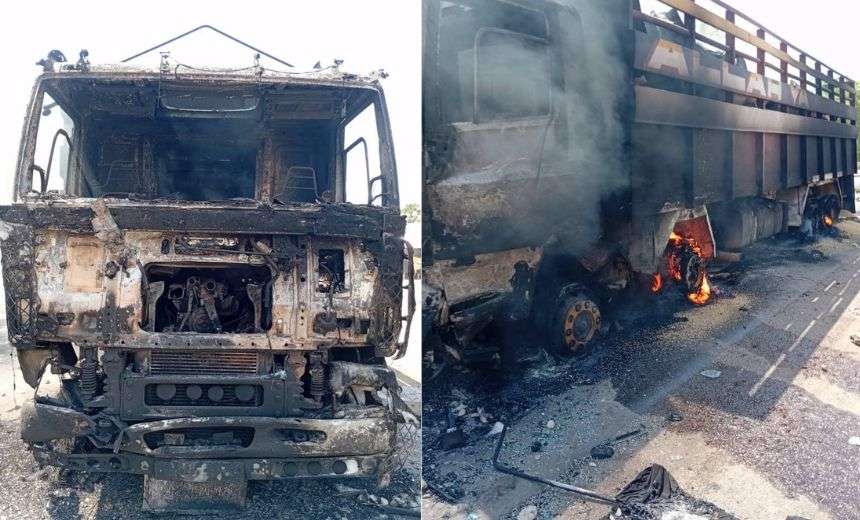
For an umpteenth time in as many years, Billiri is once again being treated to a crash course in the kind of ‘coincidence’ that is almost too absurd to believe. In case the irony is too complex for the average observer, I will spell it out: In April 2019, an incident befell the fine folks in Madaki, inside Gombe metropolis, about 80 kilometers away from Billiri. Ten lives were taken, 30 others injured, as a confrontation unfolded in the dead of night between a group of Boys’ Brigade members and an NSCDC official. Now, fast forward to April 2025, six years after the blood-soaked celebration in Gombe: five -or so, the official number says- suffered the same fate as 10 of their kinsmen in 2019. What makes this even more audacious is that this is happening to my people, the ones who have been relegated to the margins and who don’t even make the headlines unless it is in the most grotesque of ways. We have seen this before. In 2019, it was the Boys’ Brigade, young people just trying to get to their Easter celebration, who were mowed down in the night by an NSCDC official. And then, in the aftermath, the usual parade of politicians offering thoughts and prayers, while the bodies of the dead are swiftly forgotten, and buried under promises that are never kept. This year, it is a truck. Just another truck, like the countless others that plow through our roads at breakneck speed, heedless of any kind of regulation or sense of responsibility. This truck didn’t care whether it was loaded or not, or whether it was barreling down a road where people were trying to celebrate Easter prayers. It didn’t care about anything, except doing what trucks do best: speeding through life and leaving destruction in their wake. And, of course, just like in 2019, my people, as if on cue, paid the price. And what is the government’s response? They scramble to put on a face of concern, wring their hands and assure us that “justice will be served.” How many more times do we need to hear that before we all collectively lose our minds?

I like to think the two incidents are just a coincidence, but no. I don’t believe in coincidences anymore. Not when you are dealing with a place like Billiri. Don’t be fooled by press releases and the fabricated narratives. This isn’t an accident. This is a systemic failure. And someone has to say something. Someone has to scream about the fact that people in Billiri are dying. Someone has to say that we have been left to die by a government that couldn’t care less about the lives of its people. What are the chances? Two major accidents, almost on the same date, the same demography, separated by six years? That’s the kind of coincidence that doesn’t sit right with me, especially when it is people I know. I am from Billiri. Billiri has always been home. That is where I grew up, where I used to join the easter procession from church, to dutsen Easter, down to Kantoma, and into the market, before trekking under the hot sun back home. It was the thing we did every Easter. It was like the whole community would gather, and we would all walk together like one big happy family. We had our lanterns and phones, we sang songs and danced, and life was good. We didn’t worry about trucks plowing through us or people dying. The worst thing that could happen was someone getting lost in the crowd.

But now? Now, I am sitting here thinking about the horrific accidents that have happened, and I am pissed. The idea that I could have been part of that procession this year and been caught up in that mess just makes my blood boil. Five people are dead. Five people, just like that. On almost the same date as what happened in 2019. And all I can think is, what the hell is going on? How is that even possible? Are we being punished for something? Because it sure feels that way. The worst part is, it’s the same people who have been dying. Why? Because we have been left to fend for ourselves, with no real support and no real infrastructure to keep us safe. I’m so tired of hearing the same tired excuses from the government: “Oh, it’s an accident,” or “It’s a tragedy.” Yeah, we know it’s a tragedy, but where’s the accountability? Where’s the responsibility for making sure this doesn’t happen again? Where’s the action that protects the people of Billiri? We are not stupid. We know the drill. We know that the system is broken. We know that the government will send out their usual press releases and condemn the accident. They will send their “thoughts and prayers,” and then go back to whatever they were doing. What pisses me off more than the fact that my people are being slaughtered in the streets like they are nothing is the silence from those in power who sit in their cushy offices in Gombe and Abuja. Where is the accountability? Where is the justice? I didn’t grow up in some fancy neighbourhood with security guards and gated fences. I grew up in Billiri, real Billiri. The kind of place where you walk those roads from Kentengereng, to Kantoma, to the market, year after year, with no fear. But now? Now, you can’t even walk down the same roads without the thought of being hit by a truck. What kind of sick joke is this? What kind of godforsaken place have we become?

And the worst part is that this is not even new; it’s been going on for years. The government knows about the dangers, they know about the lack of proper infrastructure, and they know about the reckless drivers speeding through our towns, but what do they do? Absolutely nothing. They keep sending out their empty promises, their condolences, their “thoughts and prayers,” that are not going to bring anyone back to life. They are going to fix neither the roads nor the systems that regulate these roads. They’re not going to stop people from dying.

So, enough of pretending like we are in some kind of fantasy where everything is going to magically get better. This is real life, and in real life, people die because the system doesn’t work for them. In real life, the people who need help the most are the ones getting crushed by the system that was supposed to protect them. We cannot just talk about the roads and leave it at that. There is a bigger game being played here, and the roads are just the stage. Why does a truck driver feel so entitled to just plow through a procession of people walking to celebrate their faith, like they are some kind of cockroach in his way? Think about it: How many times have we seen this same pattern of reckless driving in similar circumstances? At least. How many more innocent lives have to be lost before we start asking the hard questions? Somebody with an agenda is likely behind all of this. I am not saying that every truck driver is part of some conspiracy, but you can’t ignore the fact that this keeps happening, year after year, during key moments like the Easter procession. This is way too convenient.

I am sorry, but I’m not buying the story that these are just “accidents.” We’re talking about lives being lost in cold blood. Let’s not kid ourselves: These drivers know what they are doing. And when you consider the fact that we’ve had so many incidents like this, where things go from bad to worse in a blink of an eye, it gets you thinking: What the hell is going on?

The truth is that the system is failing us, but this isn’t just a failure of infrastructure. It is a failure of intent. You can’t tell me that all of this is random. The people who are supposed to be protecting us are just letting this happen. They are not lifting a finger. They are looking the other way while my people die. And we are supposed to just accept it, shut our mouths, and move on like it’s nothing. I don’t think so.

This is where I start to smell a rat. We have politicians who come in during election time with their crocodile tears and empty promises, pretending like they care. They will hug you, shake your hand, and say all the right things, but once they have gotten your vote, it is radio silence. They’re long gone, laughing all the way to the bank while we are still here, picking up the pieces. I am not saying that every politician is part of this -I am not that naïve. What I am saying is that there are people in power who want the status quo to remain. They want us to keep fighting amongst ourselves and looking the other way while they line their pockets. They want to keep my people in the gutter, literally and figuratively. These are people who have been made to believe they can do whatever the hell they want because they know they will get away with it. And they are not just getting away with it; they are profiting from it. This is about keeping the system broken and making sure the roads stay the way they are: dangerous and open for exploitation, because when things stay broken, that is when the people with power can steal.

This is exactly the kind of mess that has been brewing in Billiri for years. It’s not just the 2025 truck crash; it is the fact that we have been stuck in a loop of crises, and somehow, nothing changes. Look at what happened in 2021: when we almost went to full-on war over a leadership tussle. It was a mess of violence and bloodshed. People died over a leadership tussle, police officers were left injured, and the whole town was thrown into chaos. Why? Because there is an underlying issue that no one wants to talk about. The Big Boy tried to put the best spin on it. He came on TV, shook his head, and spoke about the need for peace and unity. He said he was ready to stake his life to protect his people. But that is the problem right there: the empty promises. What did we get in return? Curfews. Arrests. Empty consultations. Arrests for what? For protesting a process that was rigged from the start? For standing up to a system that didn’t dare to do the right thing?

Last year’s incident in Gombe on Christmas Day is another story in this patterned tragedy. Who can explain the thoughtlessness and negligence that led to this bus losing control and injuring innocent people during a season that was supposed to be about joy? The victims were simply out there celebrating and paying homage, then the next minute, they found themselves nursing injuries they never deserved.

Now, look at this new tragedy in 2025. Five dead, 13 injured, all because some truck driver was too reckless to slow down for a procession. And what is infuriating about all of this is that nothing has changed. We have had crises like this for years (over land, over leadership issues, over reckless drivers), and still, we are stuck in this ugly cycle of bloodshed and complete disregard for human life. It is not just the truck drivers we need to worry about. It is the people who continue to fuel this anarchy. They have created a perfect storm where the lives of my people mean absolutely nothing. When we speak up, we get told to be quiet, told to be peaceful, as though we have not already been through hell. This is the same broken system that has failed us time and time again. They use us as pawns in their power games, making empty speeches while my people continue to die. The problem is not the lack of leadership. It is the lack of will to fix what is broken.

Let’s just call it what it is: nonsense on steroids. This is the kind of leadership that claps for itself after setting the whole village on fire, then showing up late with a half bucket of water and expecting a standing ovation. If you cannot lead with justice, then that power is useless, because power without conscience is exactly what has brought us here to this avoidable grief. We will not forget, we will not be gaslit, and we will not be quiet. Billiri deserves better. The dead deserve justice, and the living deserve a break from this madness.

…Shalom Kasim is a managing editor at Mud Season Review.

Plateau SSG’s Convoy Evades Terrorist Ambush in Bokkos

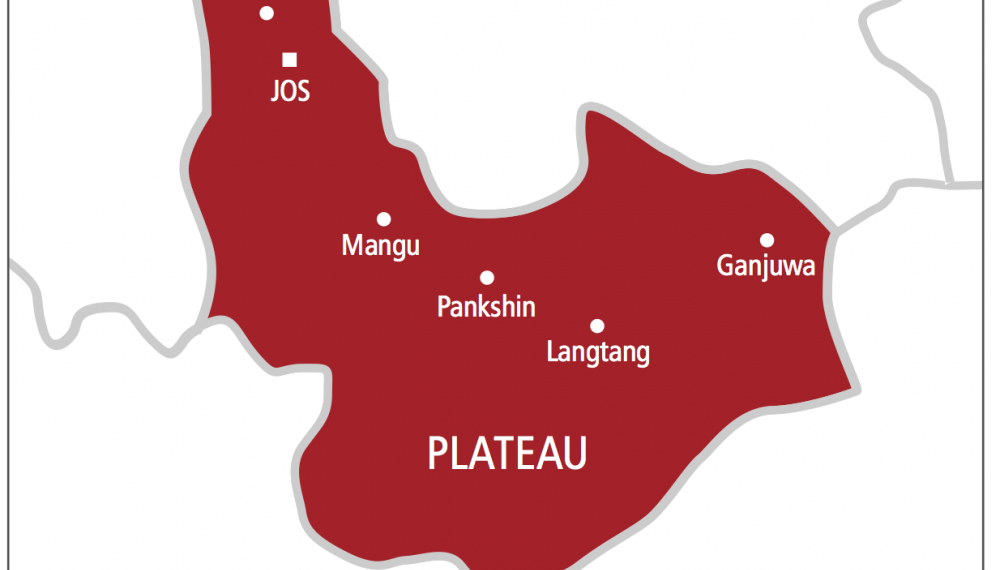
Jos, Plateau State— In a dramatic confrontation that eerily mirrors the security situation in the state, the Secretary to the Government of Plateau State, Mr. Samuel Jatau, narrowly escaped an ambush by terrorists suspected to be Fulani Ethnic Militias (FEM) on Sunday during a humanitarian visit to communities devastated by recent attacks in Bokkos Local Government Area.

The incident, which unfolded near Hurti community in Monguna district, stands as a stark reminder of the persistent security challenges in Nigeria’s Middle Belt region

As Mr. Jatau’s convoy approached the area, gunmen concealed in surrounding terrain opened fire, likely planning to execute another devastating attack. However, unlike countless previous incidents in the state, the security team’s swift and effective response forced the attackers to retreat into nearby mountains, a security personnel who witnessed the incident told MBT.

“I lack words to express my sorrow and anger. We just tested what these communities are feeling,” recounted a visibly shaken Jatau. “I was looking at my phone in the car when I suddenly heard gunshots. When I looked up, I saw two young men running into the bush, armed with guns.” Jatau told journalists after the incident.

The attack came just days after a deadly raid that claimed over 40 lives in the same area, part of a troubling pattern of violence that has plagued several regions in Nigeria’s Middle Belt. Yet security experts note that the quick repulsion of the attackers demonstrates a marked improvement in tactical response—similar to developments that have helped stabilize Southern Kaduna after years of devastating conflict.

“We saw the destruction firsthand. Over 40 people were killed, homes were destroyed, and entire livelihoods were wiped out,” Jatau continued, describing the aftermath of the previous attack. “The terrorists looted essential goods like 26 bags of potatoes worth N80,000 each from one home. These are peasant farmers; how do they recover from this? We must do better than this as a country.” The SSG said.

Bokkos local government has come under sustained deadly attacks by terrorists in recent months. In December 2023, over 200 people, including women and children, were brutally murdered by FEM militias who launched coordinated attacks across 25 villages on Christmas Eve.

Sunday Jackson is a Victim of A Miscarriage of Justice

By

Chidi Anselm Odinkalu

Numan, the town that lends its name to one of the 21 Local Government Areas in Adamawa State in north-east Nigeria, is home to the Bwatiye (Bachama), a transnational identity group stretching into parts of Cameroon. Located in the basin of Benue River and one of its tributaries, River Taraba, Numan’s fecund lands play host to vast energies in sedentary agriculture. Fulbe pastoralists have for long also found it welcoming for grazing their herds.

These factors have made Numan a major frontier in the murderous livelihood conflict that has pitted sedentary farmers and armed pastoralists in the Middle Belt of Nigeria. Described as a crisis “over scarce land and water resources” this conflict is estimated to have “claimed the lives of around 10,000 Nigerians” in the period since about 2013. It is widely recognized as the second most deadly conflict in Nigeria after the Boko Haram crisis.

For nearly three years until 2018, Numan was the site of a murderous war between sedentary farmers and armed pastoralists. No one knows the number who lost their lives in this conflict. James Courtright, who researched the situation wrote in 2023 that “by the time the crisis ended in January 2018, around 150 people were dead, a dozen villages burned to the ground and hundreds of Fulbe who had called Numan home had fled.” Tens of thousands were reportedly displaced. This crisis even became the subject of litigation before the Court of Justice of the Economic Community of West African States (ECOWAS Court of Justice).

On 5 December 2017, Vice-President, Yemi Osinbajo SAN, visited Adamawa State to see things for himself. Subsequently, the federal government arranged to distribute emergency relief materials to affected communities including Dong, Lawaru, and Kukumso in Demsa LGA; as well as “Shafaron, Kodomti, Tullum, Mzoruwe and Mararraban Bare in Numan Local Government Area.” Amidst these developments, the federal government launched what ultimately proved to be an inconclusive “series of national consultations with all relevant groups designed to find a lasting solution to the farmers-herders conflict in parts of the country.”

The events in Kodomti village during this crisis were to become the subject of prosecutorial interest which worked its way up to the Supreme Court, coming to a decision on 7 March 2025. On 27 January 2015, an incident occurred in a farm in Kodomti belonging to Sunday Jackson. By the time the dust had settled, Alhaji Ardo Bawuro lay dead, victim of three stab wounds in the neck at the hands of Sunday Jackson.

The Adamawa State Director of Public Prosecutions arraigned Sunday Jackson on one count of culpable homicide punishable with death (murder) for the killing of Ardo Bawuro. On 10 February 2021, the High Court of Adamawa State convicted and sentenced Sunday Jackson to death. The Court of Appeal dismissed his appeal on 20 July 2022. From there he appealed to the Supreme Court.

The evidence relied on by the courts was straightforward. There was a coroner’s report but the judgment does not mention a pathologist’s report. According to Sunday Jackson’s statement to the police:

“On Tuesday, 27/01/15 at about 11:10 hrs, I left my village and was cutting thatching grasses (sic) in a bush located in Kodomti village in Numan LGA when the deceased, Alh Buba Bawuro as identified attacked me after loosing (sic) sight of some persons alleged to be pursuing (sic) for killing his cattle. He attacked me in frustration and wanted to stab me with a dagger then we engaged in a wrestling encounter. I succeeded in seizing the dagger from him which I used to stab him thrice on his throat. When the deceased collapsed and was rolling down in a pool of his blood, I took heels and escaped.”

In its judgment on 7 March 2025 delivered by Justice Baba Idris, the Supreme Court determined that this statement was a confession and simultaneously also raised issues of self-defence which had to be considered.

In Nigeria, self-defence is a constitutionally guaranteed right. In criminal law, it is also total exoneration to a charge of murder.

According to the court, four conditions must be present for self-defence to succeed. First, the accused must be free from fault in bringing about the encounter leading to death. Second, there must be present an impending peril to life or of grievous bodily harm. Third, there must be no safe or reasonable mode of escape. Fourth, there must be a necessity for taking of life.

The Supreme Court found that the first and second conditions were fulfilled in the case of Sunday Jackson. As to the last two conditions, the court said that “there was a reasonable mode of escape by retreat and there was no necessity to take the life of the deceased.” It did so notwithstanding that there was nothing in evidence about how safe it was to retreat. Consequently, the court held that “the defence of self-defence is not available on a closer consideration of the evidence, and in the light of the circumstances of this particular case.” The court also dismissed any possibility of a defence of provocation, which would have reduced the crime to manslaughter.

In his concurring judgment, Justice Haruna Tsammani said: “on the facts as narrated…., I am of the view that [Sunday Jackson] inflicted more harm than was necessary for the purpose of defending himself. Having overpowered the deceased and collected the dagger from him, a stab would not be considered excessive. It is also my view that [Sunday Jackson] acted in a vengeful manner by stabbing the deceased trice (sic) in the neck; a person he had overpowered.”

This statement by Justice Tsammani is at the heart of the three flaws with this judgment. One is a matter of law and evidence: The Supreme Court believed it was alright for Sunday Jackson to have stabbed Ardo Bawuro once, but not thrice. But there was no evidence before the court as to which of the three stab wounds killed Ardo Bawuro.

It is possible that it was the first stab wound; or the second; or the third. That determination is a matter of evidence and, in criminal law, establishing what killed the Ardo Bawuro was the responsibility of the prosecution. If he was killed by the first stab, then the claim by the court that three stab wounds were too many is demonstrably gratuitous, and self-defence would have availed. In the absence of that kind of evidence, the court had no basis for excluding self-defence.

Second, the court imposed an unreasonable standard of assessment, requiring a person whom it found to be in real peril of loss of his life from an assailant with murder or grievous bodily harm on his mind to make assessments that are beyond the capability of any human in the throes of a fight-or-flight struggle.

Third, in suggesting that Sunday Jackson had a reasonable means of escape, the Supreme Court showed almost blissful lack of awareness of the nature of the conflict on the floodplains of the Benue River (and its tributaries). This case arose in a conflict zone between livelihood and identity groups. The standard of evidentiary assessment deployed by the Supreme Court required Sunday Jackson to possess almost divine knowledge of the surrounding circumstances. Asking him to run in the middle of this required him to be certain that there was no other danger around him. There was no way that he or anyone could in the middle of an active conflict zone have attained that degree of knowledge or awareness.

The miracle in this case is how the court reached a unanimous judgment.

The Supreme Court, we are reminded, is the last bus-stop on legal disputes. Yet, in nearly every case presented for judicial resolution, we find ourselves not merely before the court of law but also before courts of public opinion, of precedent, and of posterity. The judgment in Sunday Jackson’s case is bad law, bad precedent, and bad policy. It is perverse on the scale of a miscarriage of justice. Sunday Jackson is eminently deserving of the exercise of the prerogative of mercy by the Governor of Adamawa State.

A lawyer and a teacher, Odinkalu can be reached at chid

i.odinkalu@tufts.edu


Powder Keg in the Creeks: Niger Delta Militants Threaten Nigeria’s Economic Lifeline

By Steven Kefas

(PortHarcourt), Nigeria’s fragile economic recovery faces a new threat as militants in the oil-rich Rivers State issue ultimatums that could destabilize the nation’s primary revenue source amid a complex political crisis.

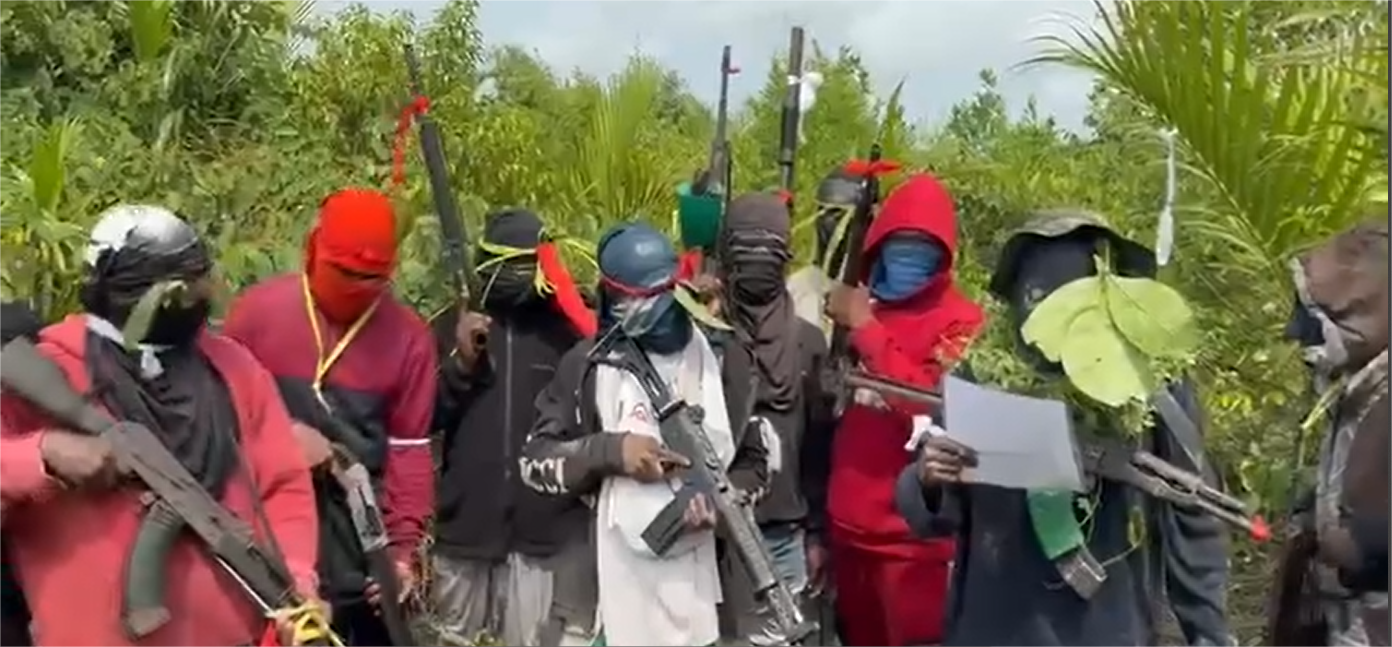
A chilling video emerged Thursday showing armed militants from the Niger Delta Rescue Movement (NDRM) threatening to attack oil installations in Rivers State, one of Nigeria’s largest oil producers. The militants, brandishing AK-47 rifles and other dangerous weapons from an undisclosed forest location, issued warnings that could potentially cripple Nigeria’s oil production and further destabilize an economy already on life support.

The group’s emergence comes in response to a political crisis that has seen the federal government withhold Rivers State’s allocation following a Supreme Court judgment that upheld the Martin Amaewhile-led 27-member House of Assembly as the legitimate legislative body. The Assembly subsequently issued a 48-hour ultimatum for Governor Siminalayi Fubara to present the 2025 state budget, which expired Wednesday night.

In the video lasting just over three minutes, a spokesman for the militants declared, “If the federal allocation due to Rivers state cannot be released promptly, we will have no choice but to take decisive action, including hitting oil production.” The militants also ominously advised non-indigenes to leave Rivers State for their safety, chanting “asawana, asawana” – a traditional war cry among the Ijaw people.

Economic Implications

For an economy struggling to find its footing, the timing couldn’t be worse. Nigeria’s recent modest economic gains have hinged largely on improved oil production after years of decline due to theft, vandalism, and underinvestment.

Dr. Adebayo Adegbine, a Lagos based Economist, warns that any disruption to oil production in Rivers State would deliver a devastating blow to Nigeria’s economy.

“The federal government has only recently begun to see slight improvements in oil output, which remains the backbone of our export earnings and government revenue,” Adebayo told TruthNigeria. “If militants carry through with their threats and successfully target key oil infrastructure, we could see production drop by as much as 300,000-400,000 barrels per day or even more. The ripple effects would be catastrophic – from exchange rate instability to budget deficits and delayed salary payments across multiple states.”

The threat evokes painful memories of the 2003-2009 insurgency, when militant groups like the Movement for the Emancipation of the Niger Delta (MEND) reduced Nigeria’s oil production by more than 50 percent through a coordinated campaign of pipeline bombings, facility attacks, and kidnappings of oil workers. At its peak, the violence slashed production from 2.2 million barrels per day to barely 1 million, costing the nation an estimated $100 billion in lost revenue in 10 years. The petroleum industry’s vulnerability was exposed as multinational companies declared force majeure and evacuated non-essential staff, while insurance premiums for operations in the region skyrocketed. It wasn’t until the 2009 amnesty program offered militants training, stipends and reintegration opportunities that relative stability returned to the region. “We’ve been here before,” notes energy consultant Ebi Johnson to TruthNigeria. “And the economic recovery took years, even with higher global oil prices than we have today.”

Nigeria’s economy has barely emerged from a period of hyperinflation, with the naira stabilizing slightly after months of freefall. The Central Bank has been working to rebuild foreign reserves, largely dependent on oil export earnings.

“We’re looking at a potential economic catastrophe if oil installations are attacked,” explains financial analyst Chika Okonkwo to TruthNigeria. “With government borrowing already at unsustainable levels and debt servicing consuming nearly 97% of revenue, any significant drop in oil output would likely trigger another currency crisis and inflation spike that could push millions more Nigerians into poverty.”

Why Americans Should Care

The brewing crisis has implications well beyond Nigeria’s borders, particularly for American consumers and businesses. As one of the largest oil suppliers to the United States, Nigeria’s production disruptions directly impacts global energy markets and prices at American pumps. Rivers state produces 344,000 barrels of crude per day.

Security Overstretched

The threat of renewed militancy in the Niger Delta represents more than just an economic challenge – it poses a serious security dilemma for a military already stretched across multiple conflict zones.

Dr Walid Abdullahi, a security consultant, describes the situation as potentially unmanageable.

“The Nigerian military is already fighting on at least four fronts – against Boko Haram and ISWAP in the Northeast, containing Lakurawa terrorists in the Northwest, managing deadly farmer-herder conflicts in the North Central states, and addressing banditry across multiple regions,” Abdullahi explained to TruthNigeria. “Opening another active theater in the Niger Delta would severely strain our operational capacity and effectiveness.”

The complexity of Niger Delta operations presents unique challenges. The region’s network of creeks, swamps, and waterways requires specialized training and equipment, including naval assets that are already in short supply.

“The terrain in the Niger Delta is notoriously difficult for conventional military operations,” notes Dr. Abdullahi “Previous militant campaigns demonstrated how relatively small groups could effectively evade security forces while targeting critical infrastructure. The military simply doesn’t have the resources or specialized units needed to secure thousands of kilometers of pipelines and oil facilities while maintaining operations in other conflict zones.”

Political Dimensions

The crisis is deeply rooted in the political standoff between incumbent Governor, Similaye Fubara and his predecessor Nyesom Wike, now Minister of the Federal Capital Territory. The militants explicitly mentioned Wike in their statement, accusing him of orchestrating the crisis to undermine Fubara’s administration.

“We call on President Bola Tinubu to intervene immediately and put a stop to the action of the Minister, Nyesom Wike, and his associates whose intent is to drag Rivers state to avoidable crisis,” the group stated.

Political analysts suggest the federal government faces a precarious balancing act. “Heavy-handed intervention could further inflame tensions, while inaction might allow the situation to deteriorate beyond control.” Says Michael Udeme, Uyo-based political scientist to TruthNigeria

Path Forward

Security experts emphasize that only a political solution can prevent potential catastrophe.

“Military action alone cannot resolve this situation,” warns Udeme. “The federal government must immediately convene all stakeholders – including Fubara, Wike, community leaders, and civil society – to address the legitimate grievances while isolating those seeking to exploit the situation for violence.”

For ordinary Nigerians already struggling with economic hardship, the prospect of disrupted oil production represents yet another threat to their livelihoods and stability.

As Rivers State residents anxiously await developments, the nation holds its breath, hoping that cooler heads will prevail before the powder keg in the Niger Delta ignites a crisis Nigeria can ill afford.

Forgotten No More: Bondong’s Path from Devastation to Development 10 Years Later, Despite Lingering Shadows

The Night of Terror

March 13, 2014, remains a day etched in infamy for the people of Bondong District in Southern Kaduna, Nigeria. On that fateful night, four villages—Me-Sankwai, Me-Kakpang, Tyekum, and Me-Kura—were simultaneously attacked by armed militias suspected to be Fulani herdsmen. The assault, which began around 11 p.m., was brutal and unrelenting. Women, children, and even infants were mercilessly hacked to death in what would later be remembered as the Bondong Massacre.

Hours of Devastation.

The assault was methodical and brutal says the District Head of Bondong, Jonathan Mamman as he led a team of the Southern Kaduna Resilience Fund (SKARF) project to the communities. For hours, the villages were engulfed in violence as the militias moved with chilling precision, while residents desperately sought escape in the surrounding bushes, he said.

Despite being merely a 20-minute drive from Manchok town, no security intervention arrived to help the besieged communities. The attackers moved through the villages with devastating efficiency, setting fire to homes and churches, and claiming lives with shocking brutality. Women, children, and even infants were not spared; their lives ended in ways too gruesome to detail. The absence of security forces during these crucial hours remains a painful question that haunts survivors to this day.

Counting the Cost.

By the time dawn broke and the attackers had retreated, the scale of devastation became clear. Search parties recovered 147 bodies from the surrounding bushes, while over 200 houses and churches laid in smoldering ruins. The once vibrant community was reduced to ashes, its survivors left to grapple with unimaginable loss and trauma. The morning light revealed scenes that would forever be etched in the memories of those who survived – charred buildings, destroyed livelihoods, and the heavy task of burying their dead in mass graves that would later become silent testimonies to the tragedy.

A mass grave holding over 50 victims of the massacre

A Decade of Silence.

For ten long years, Bondong’s tragedy seemed destined to become another forgotten chapter in Nigeria’s complex history of violence. The survivors received neither justice nor significant support for rebuilding their shattered lives. They were left to carry their grief alone, their story fading from national consciousness even as they struggled to rebuild. The community’s resilience was tested as they faced the challenge of reconstructing not just their homes, but their entire way of life, without any formal support or recognition of their suffering.

Hope Returns to Bondong

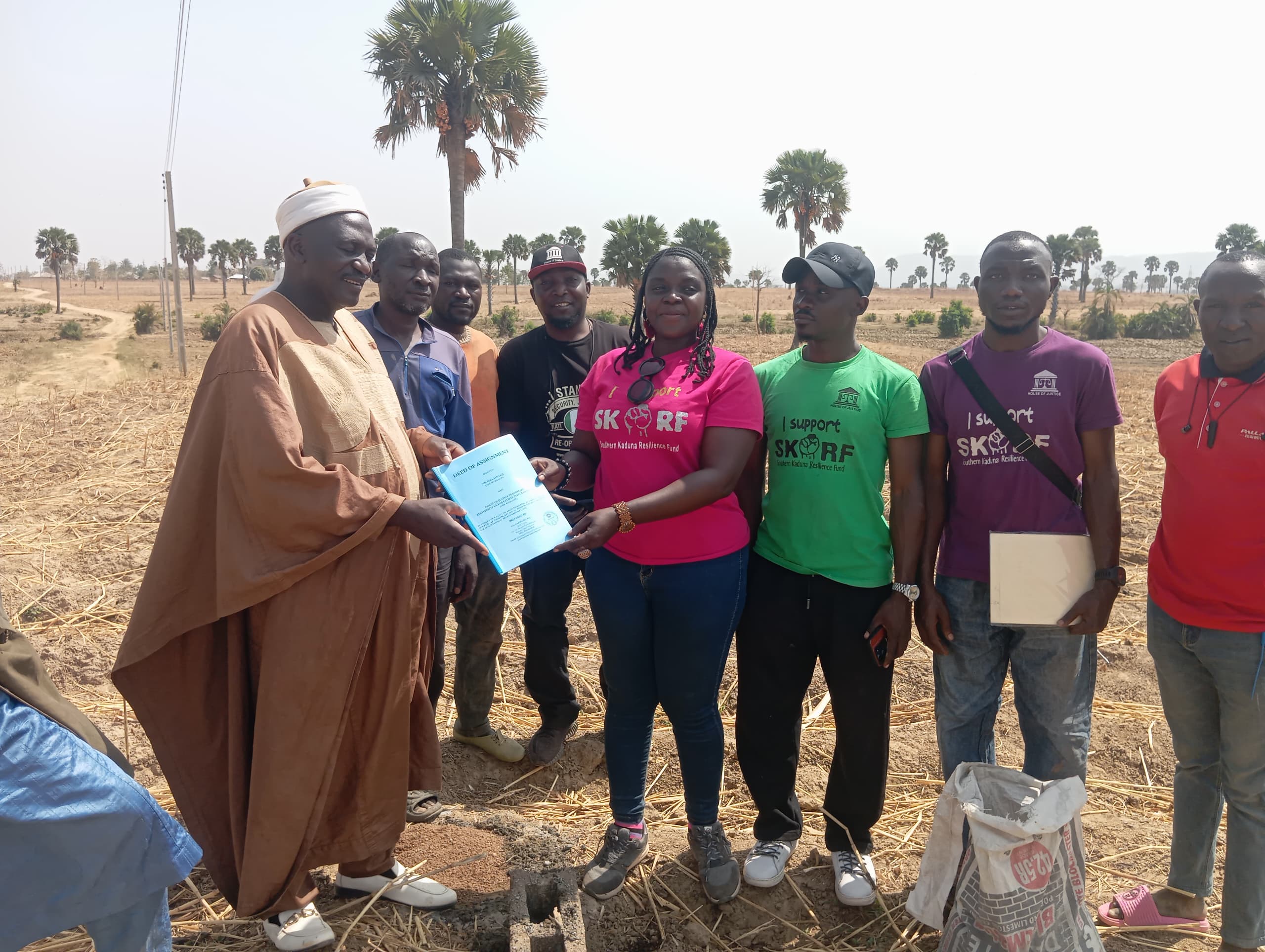
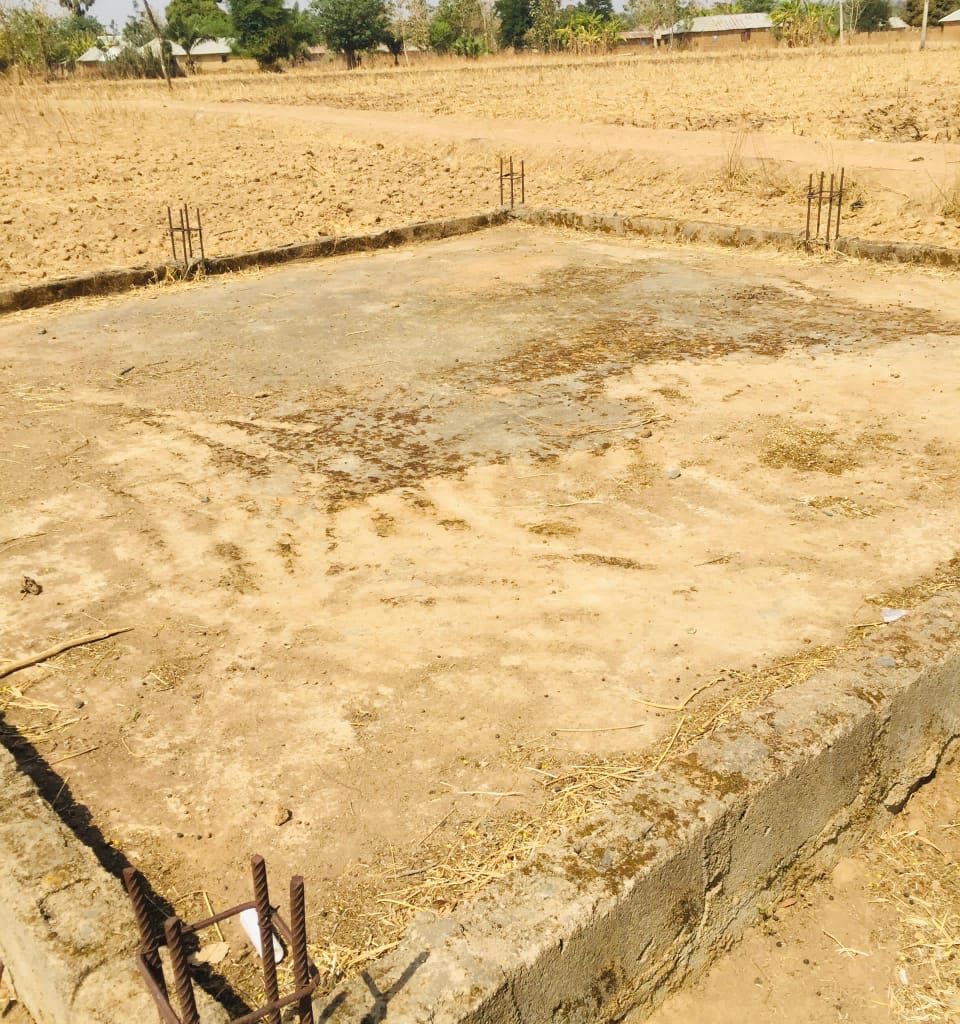
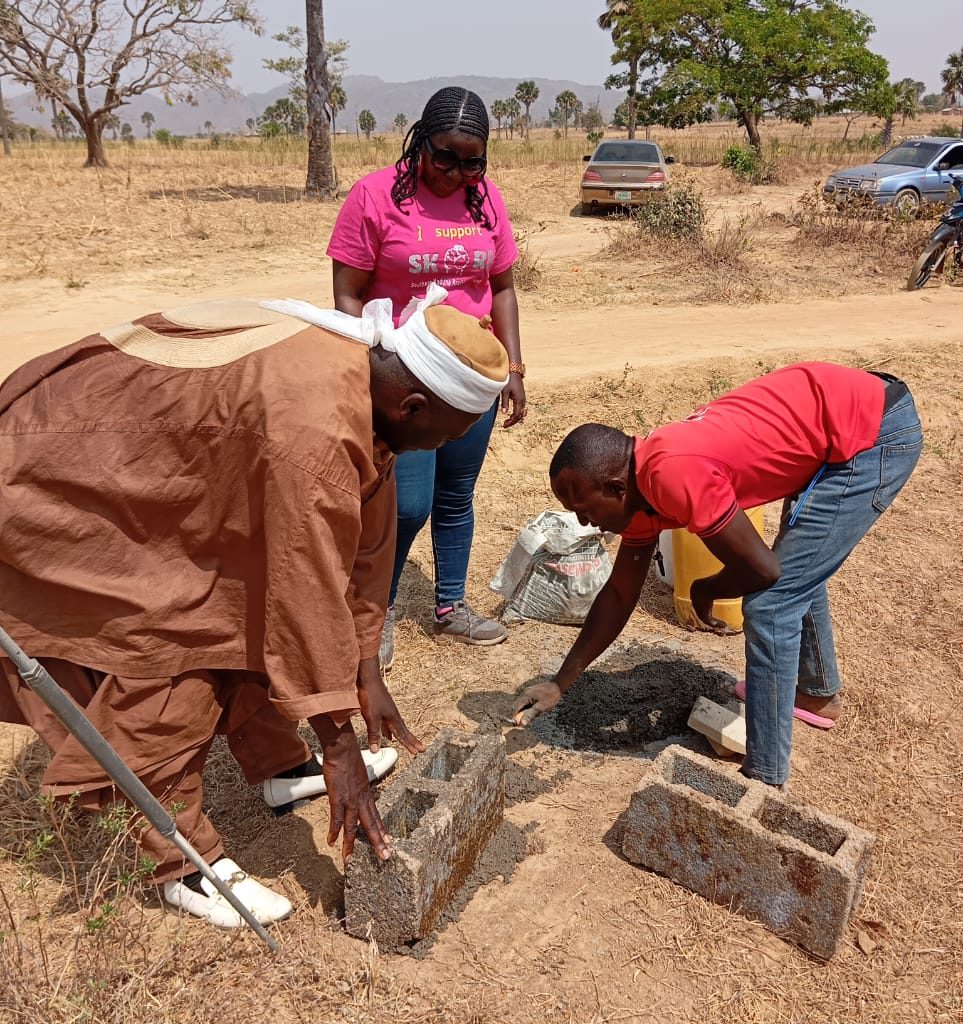
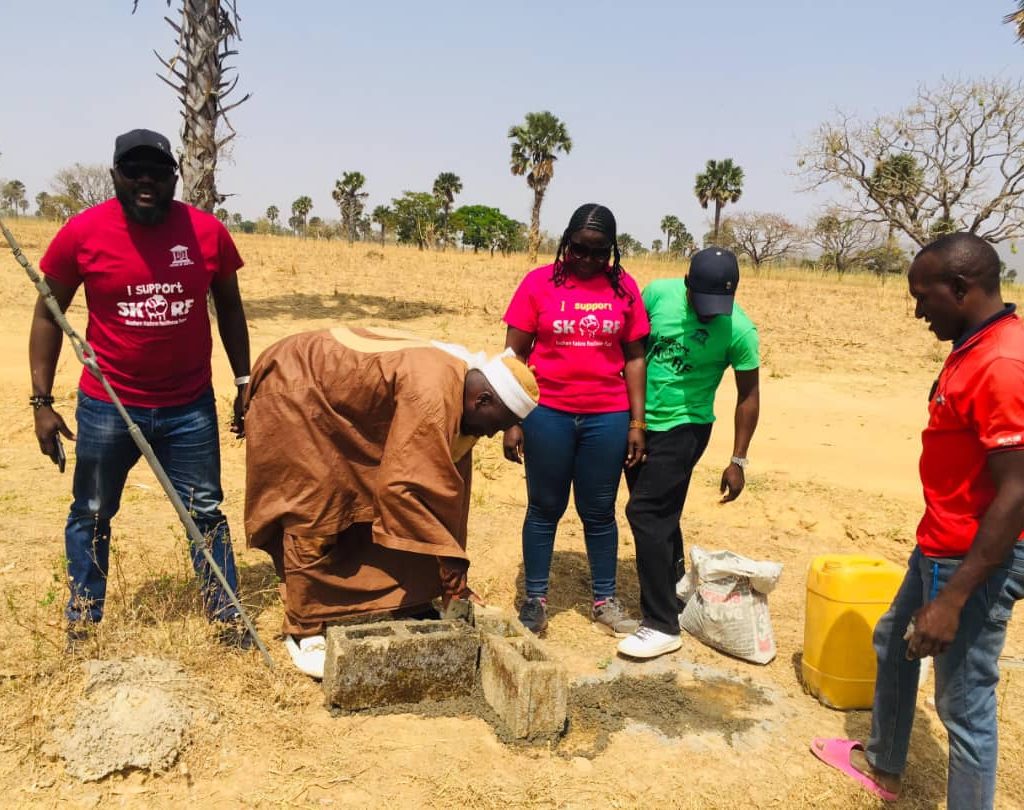
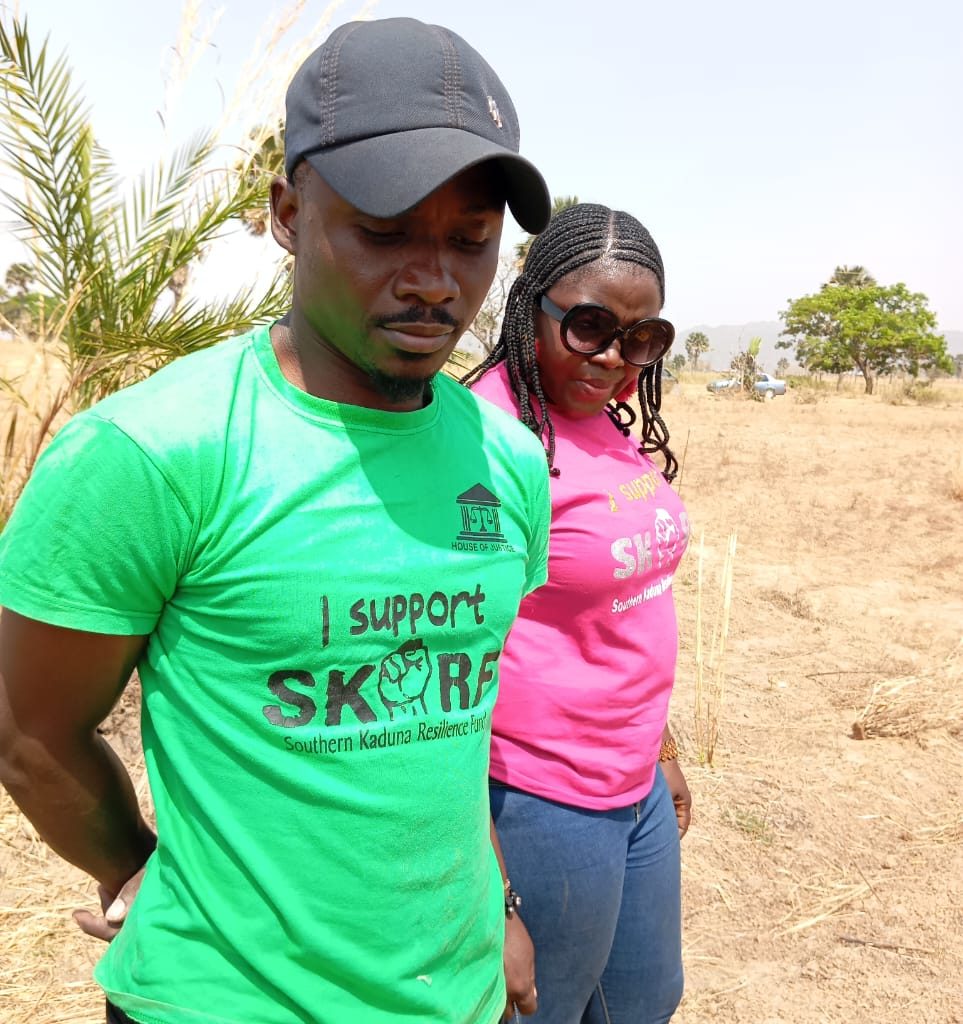
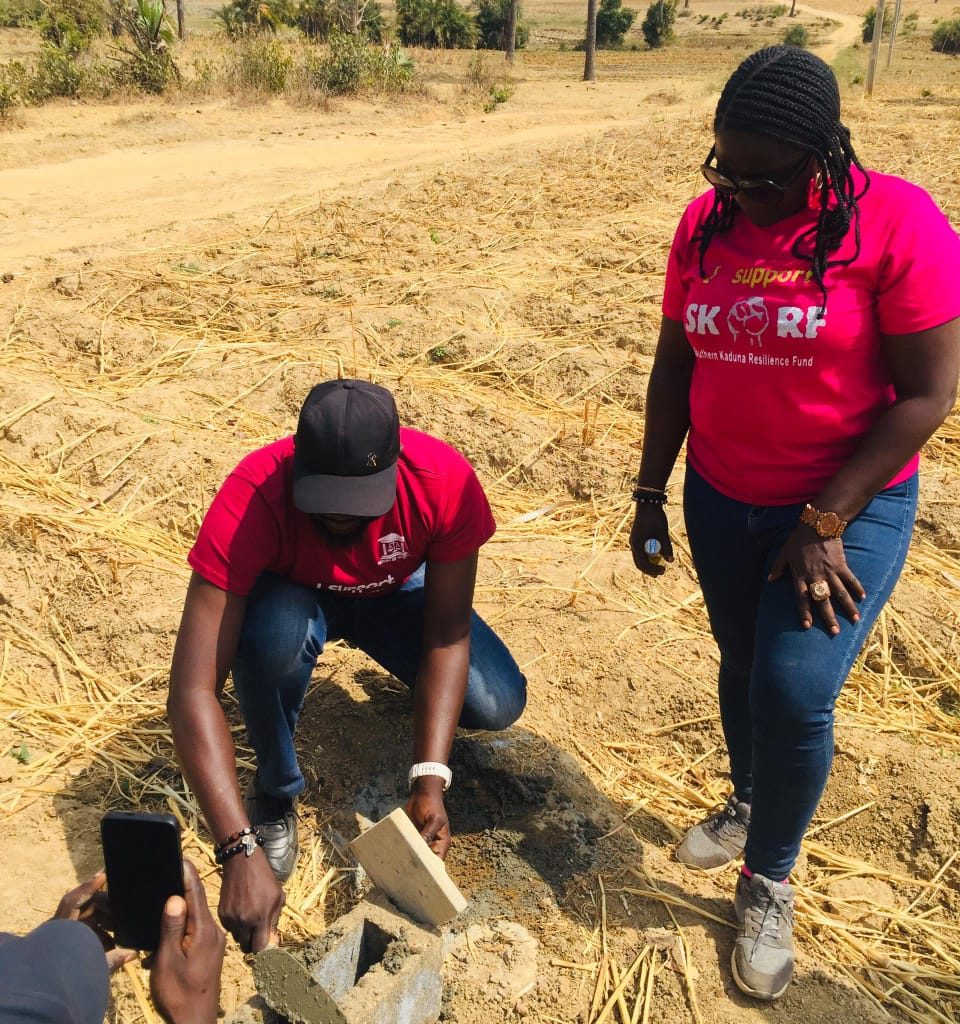
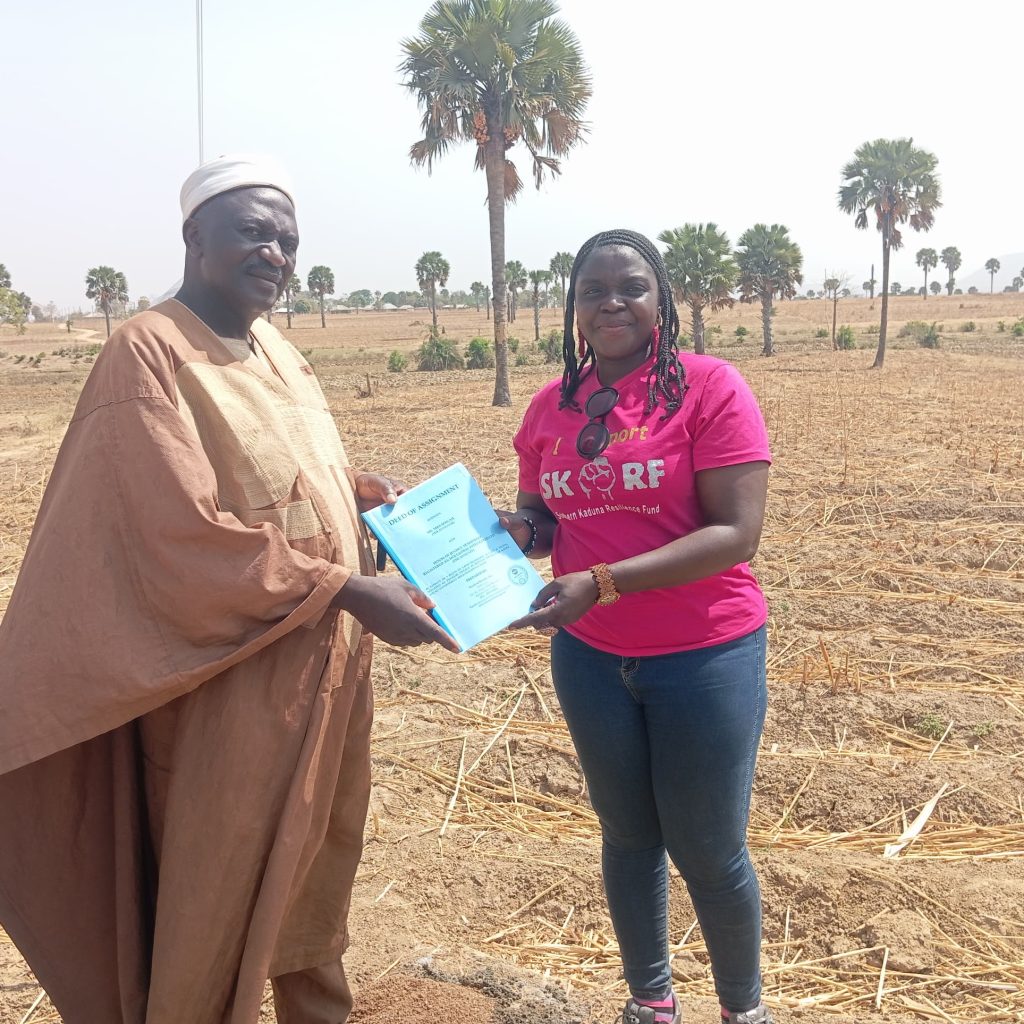
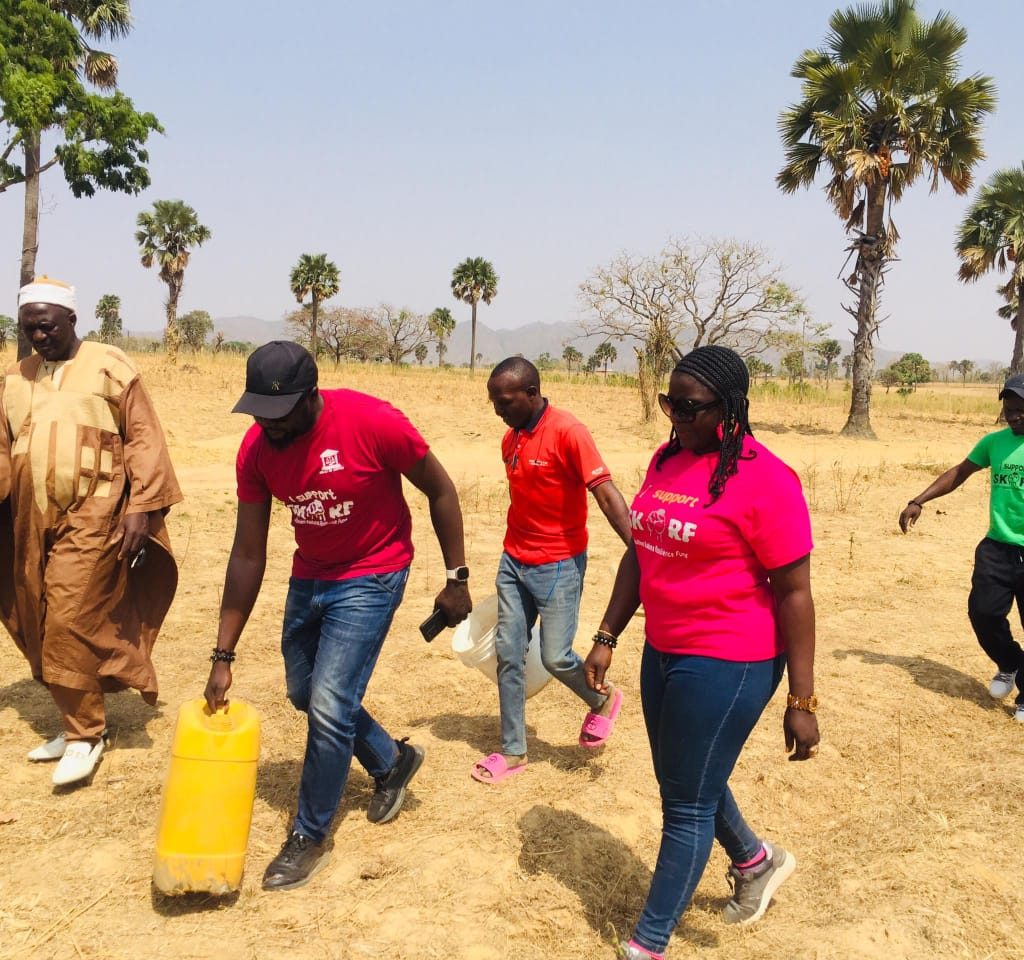
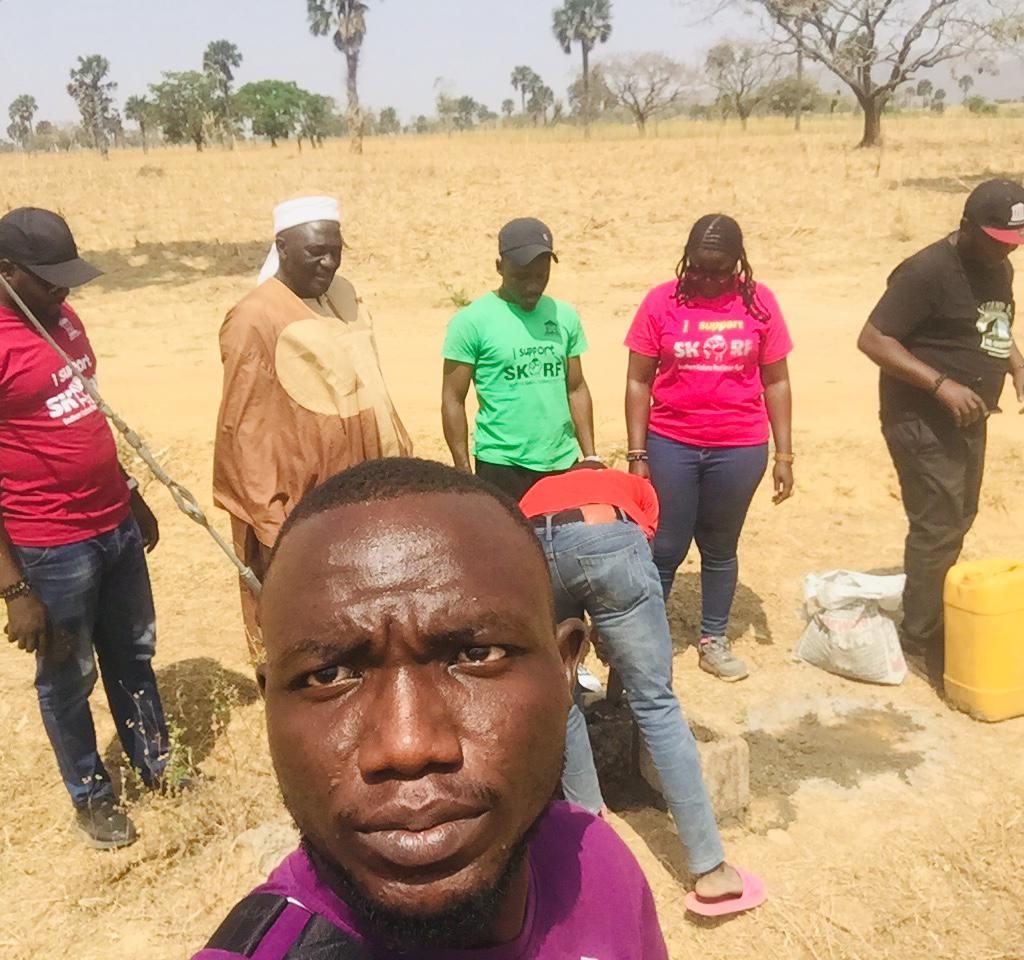
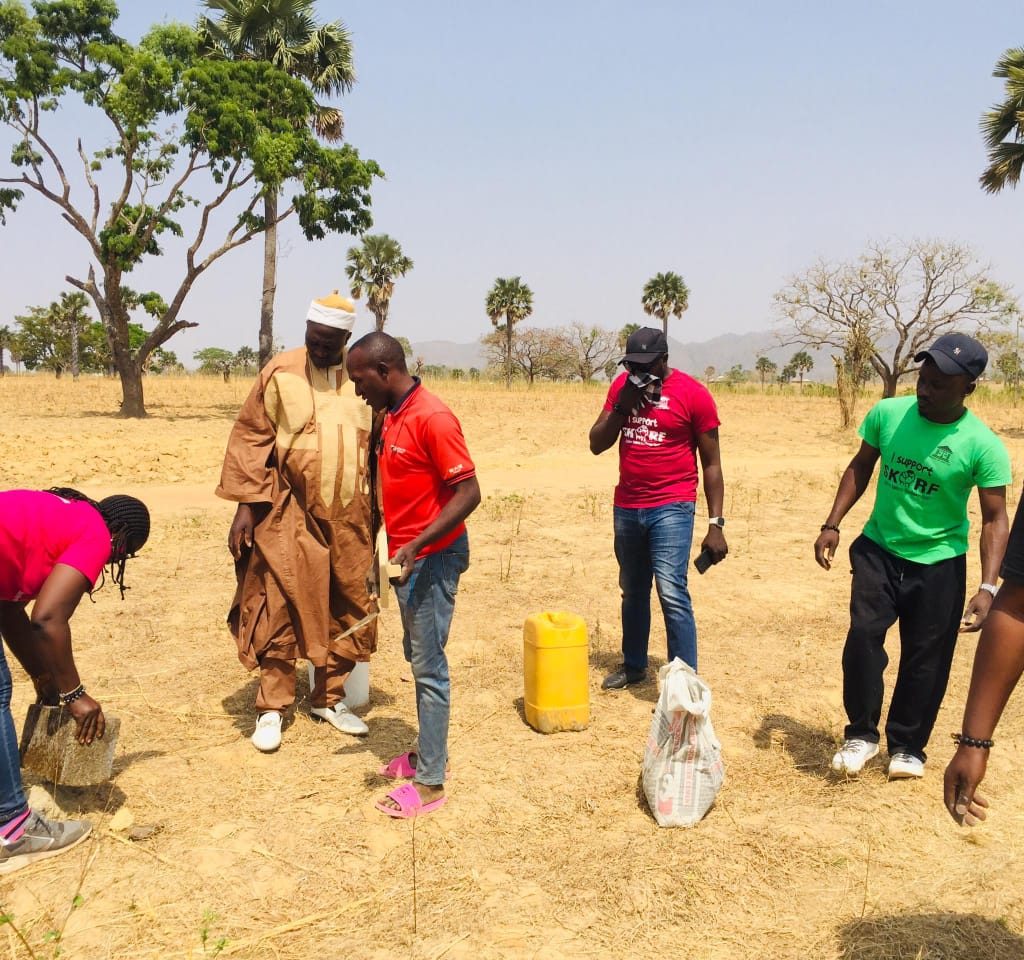
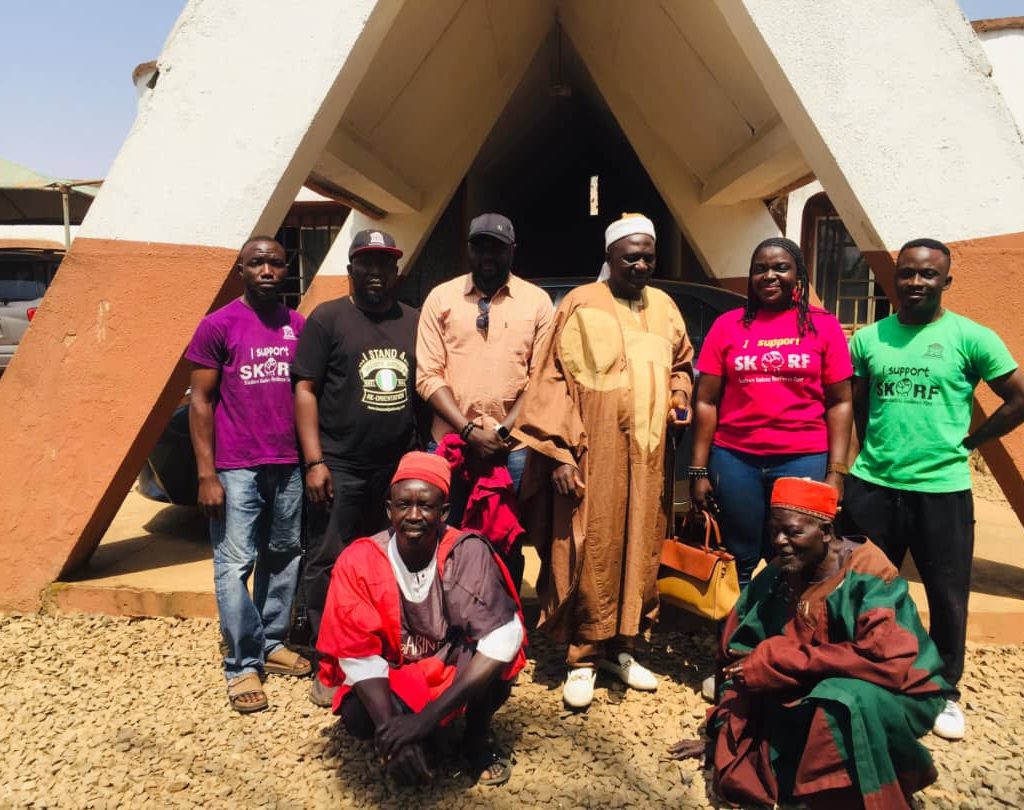
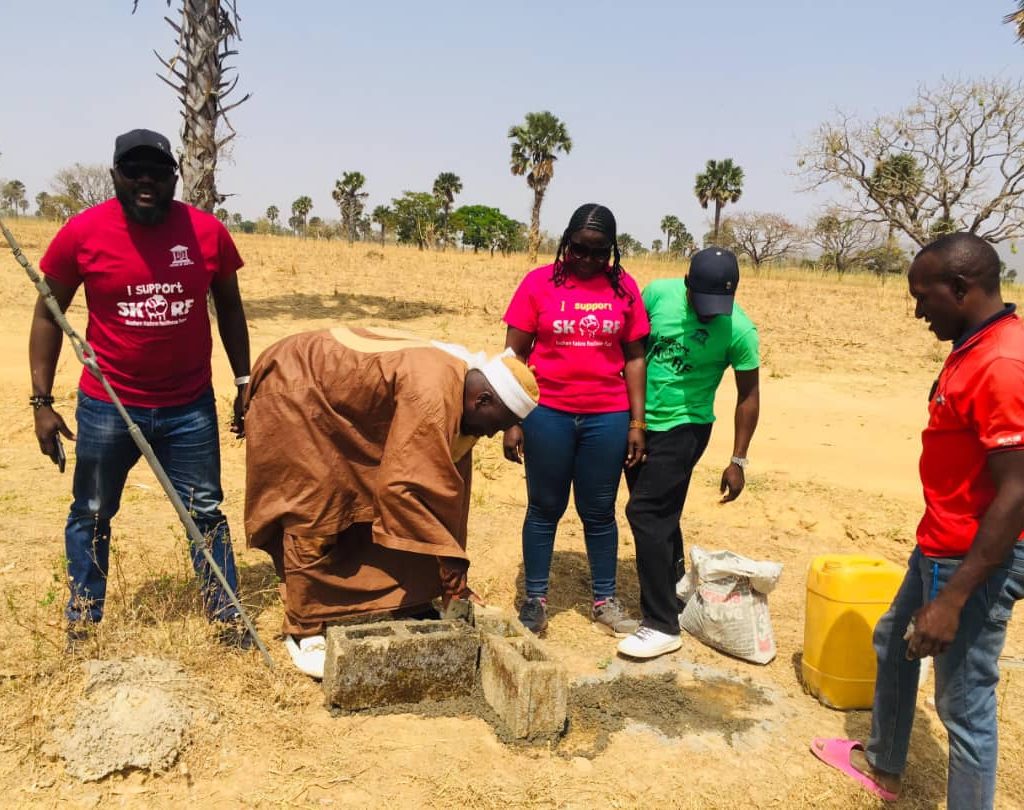
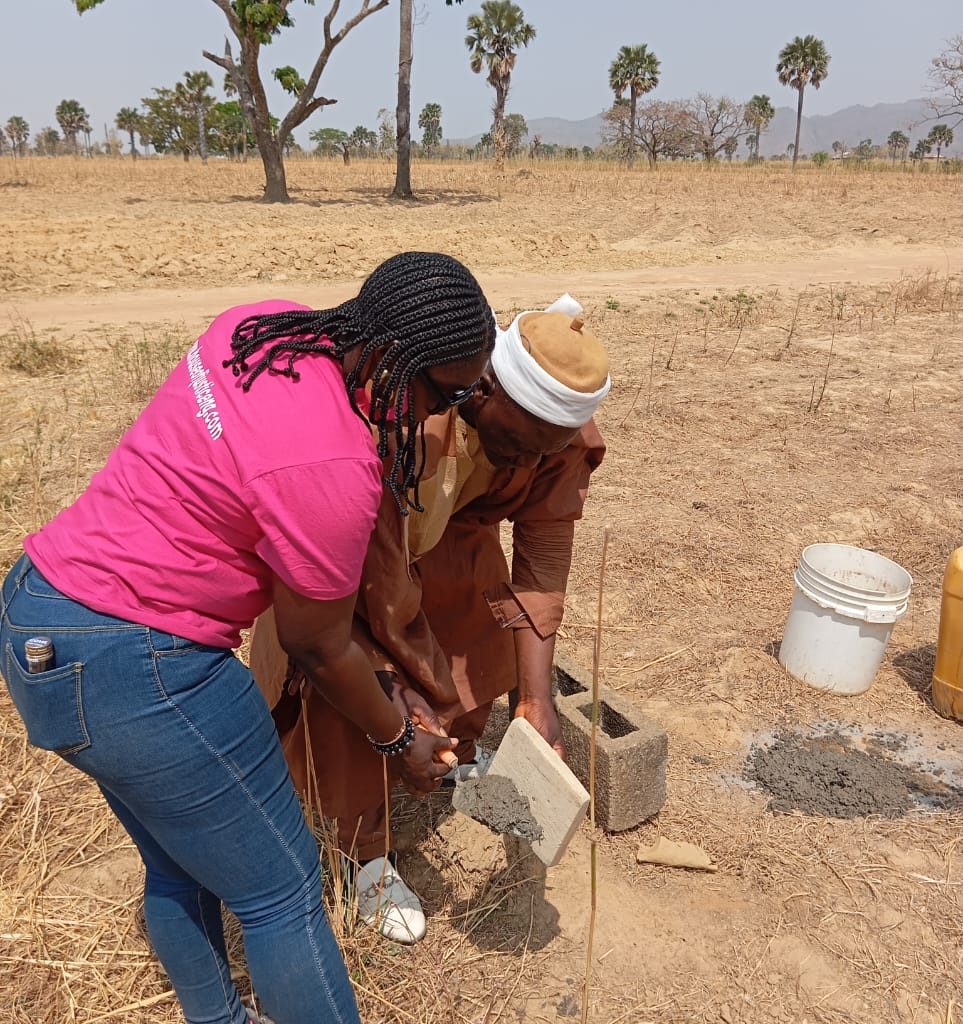
However, on February 6, 2025, hope finally returned to Bondong through an initiative that aims to transform tragedy into triumph. Gloria Mabeiam Ballason Esq, the pioneer of the Southern Kaduna Resilience Fund (SKARF) project and the C.E.O. of House of Justice Africa, led a delegation to the community for a profound purpose: laying the foundation for a memorial school to honor the massacre’s victims on a piece of land acquired by SKARF. This moment marked a turning point in Bondong’s story, bringing with it the first rays of hope many had seen in years.

Speaking at the ceremony, Ballason articulated a vision that transcends mere remembrance. “While it is a fact that the people of Bondong and many other communities in Southern Kaduna may have been knocked down by forces of evil, they must not stay down.It is time to build from the ruins and to rise from these painful ashes.Our generation must never allow evil to have the last word and our children must rise like the sun in its full strength,” she declared. Her dream, she explained, is to see Bondong’s children rise to become global citizens through the power of education. The memorial school represents a beacon of hope, the rebuilding of dignity, and a statement that education can triumph over violence.

The District Head of Bondon, Jonathan Mamman and The Pioneer of SKARF & CEO of House of Justice, Gloria Ballason Esq laying the foundation block for the school

Community Response and Recognition.

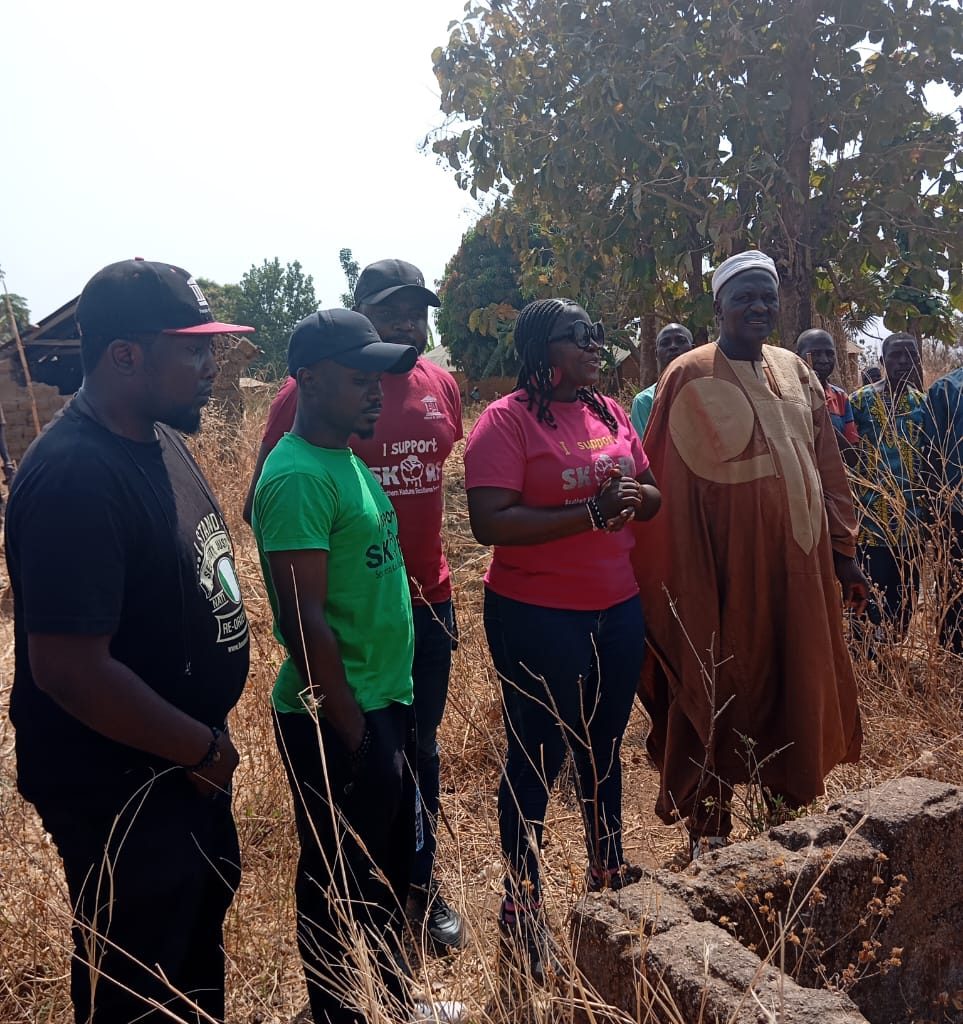
The significance of this moment was not lost on the local leadership. District head Mr. Jonathan Mamman described SKARF’s gesture as a remarkable act of remembrance, expressing profound gratitude that Bondong was being remembered in such a meaningful way a decade after its darkest hour. The ceremony included a solemn visit to the mass graves where the massacre’s victims lie buried, a powerful reminder of why this project carries such emotional weight.

SKARF’s Broader Mission

SKARF’s involvement in Bondong is part of a larger mission that began in 2020. The organization was founded with the specific purpose of restoring hope and rebuilding dignity to communities devastated by attacks in Southern Kaduna. Their track record includes the successful launch of their inaugural IDP-SKARF school in Gonin Gora community, Chikun local government area of Kaduna state, tailoring, barbing shops and salons and several academic camps in the same year of their founding. This latest project in Bondong represents a continuation of their commitment to rebuilding and empowering affected communities.

Persistent Vulnerability

A decade after the massacre, Bondong District continues to face significant security challenges that mirror those that enabled the 2014 tragedy. Despite its strategic location bordering Plateau State and its history of violent attacks, the district remains without any permanent security presence. District Head Jonathan Mamman expressed deep concern about this ongoing vulnerability, noting that the same communities targeted in the March 2014 massacre – Me-Sankwai, Me-Kakpang, Tyekum, and Me-Kura – remain exposed to potential threats.

The absence of security infrastructure in Bondong District represents a continuing failure of governance that leaves its residents in a perpetual state of uncertainty. The communities’ proximity to the Plateau State border adds another layer of complexity to their security challenges, as the area has historically been susceptible to cross-border incidents. This security vacuum forces residents to maintain constant vigilance, even as they attempt to rebuild their lives and communities.

Living with Fear

For the people of Bondong, the lack of security presence serves as a daily reminder of their abandonment by state authorities. The communities have had to develop informal security arrangements and early warning systems, but these grassroots efforts can only do so much in the face of well-armed threats. The psychological impact of living under such conditions, especially for survivors of the 2014 massacre, adds another layer of burden to their already challenging journey of recovery.

A New Chapter Begins

As construction begins on the memorial school, Bondong stands as a testament to the resilience of the human spirit. Through education and remembrance, the community is weaving a new narrative—one that honors the past while paving the way for a brighter future. The school will serve as both a monument to those lost and a springboard for future generations. As Gloria Mabeiam Ballason aptly put it, “From the ashes of tragedy, a legacy of hope and learning will rise.” 

Bondong’s journey is far from over, but with each brick laid and each child educated, the community takes another step toward healing. Their story is a powerful reminder that even in the face of unimaginable loss, hope can emerge, and resilience can prevail.

Photo Gallery from the event

House of Justice Sets Bold Vision for 2025, Emphasizes Purpose-Driven Legal Services

In a compelling address marking the 2025 Annual General Meeting, Gloria Mabeiam Ballason Esq., CEO of House of Justice, outlined an ambitious roadmap for the legal conglomerate, emphasizing purpose-driven justice delivery and staff development as key priorities for the year ahead.

Speaking at the House of Justice Complex in Kaduna on Friday, January 17, 2025, Ballason reflected on the organization’s journey from its humble beginnings as MIVE LEGALS in 2010 to its current status as a multi-door justice house, marking over a decade of transformation since its rebranding in November 2014.

“Our enduring vision is to be an excellent global law conglomerate,” Ballason stated, adding that the organization’s mission remains focused on providing legal services that conform with the highest standards of excellence and integrity while finding practical solutions in both law and life.

The CEO unveiled a five-point agenda for 2025, focusing on optimizing access to justice through their multi-door system, improving purpose in work, promoting deserving staff with increased emoluments, ensuring departmental delivery on schedules and projects, and expanding the organization’s global influence.

In a notable departure from conventional corporate addresses, Ballason emphasized the importance of staff welfare and personal growth. “House of Justice seeks to put all our colleagues and affiliates at the center of our justice work,” she declared, highlighting the organization’s commitment to ensuring justice for its staff members first.

The speech revealed plans for collaboration between the CEO’s office and Human Resources to recalibrate the work environment, enabling staff to find purpose whether within or outside the workplace. This initiative follows the recent celebration of outstanding colleagues inducted into the House of Justice Hall of Fame during their decade anniversary celebration in November 2024.

Speaking about client services, Ballason outlined ambitious goals: “We seek zero fatalities, zero life-threatening injuries, and total defeat of the corrupting influences on justice delivery.” While acknowledging progress in this direction, she noted that significant work remains to be done.

The organization, which has expanded from its Kaduna base to establish a presence in Abuja, continues to push boundaries in legal service delivery. Their approach combines excellence, innovation, courtesy, service, and integrity, values that Ballason describes as being “at the heart of what we do.”

During the address, Ballason shared a personal reflection from her conversation with Prof. Chidi Anselm Odinkalu, Chairman of the International Advisory Board of the Molluma Yakubu Centre for Medical Law and Mass Atrocities Accountability. “If I was not the Chief Executive of House of Justice, I would really have loved to work at House of Justice,” she revealed, describing the organization as more than a workplace but her “calling, purpose and rhythm.”

The speech also touched on the organization’s commitment to making justice an empowering process and outcome for clients and community members. This commitment involves continuous learning and improvement in service delivery methods while staying within the bounds of law and due process.

Looking ahead, Ballason encouraged staff members to pursue growth at their own pace, whether by “flying, jumping, running, walking or crawling,” emphasizing the importance of continuous movement toward self-improvement.

The meeting was attended by Team Leads from Human Resources and Administration from both Kaduna and Abuja offices, Heads of Departments, and Acting Heads of Departments, along with other staff members.

House of Justice’s vision for 2025 comes at a crucial time when access to justice remains a significant challenge in Nigeria. The organization’s emphasis on combining excellence in legal service with personal development and community impact presents a unique model in the legal service sector.

As the organization moves forward with its plans for 2025, Ballason concluded with an optimistic note: “We have what it takes; we can make it happen and yes, we can make a world of difference when we shine the light that overcomes the darkness of injustice.”

The ambitious agenda set forth by House of Justice for 2025 reflects a comprehensive approach to legal service delivery, combining professional excellence with personal development and social impact, potentially setting new standards for legal practice in Nigeria and beyond.

Iconic Soldier and Peacemaker: General Agwai to Lead Historic House of Justice Summit

General Martin Luther Agwai, one of Nigeria’s most distinguished military officers and global peacekeeping figures, is set to chair the 2024 House of Justice Summit and Golden Ball Banquet scheduled for November 29 in Kaduna. The event, themed “Security, Justice & National Re-orientation,” will take place at the Epitome Events Center on Ethiopia Road, Barnawa.

The selection of General Agwai as chairman couldn’t be more fitting for an event focused on security and justice. His journey from a young scout in Zaria to becoming one of the world’s most respected military leaders and peacekeepers embodies the summit’s aspirations for national reorientation.

Born in Kaduna on November 8, 1948, Agwai’s path to military excellence began unusually—with a congress of baboons. As a young mining team leader at Ririwai, an encounter with these primates sparked his decision to enroll at the Nigerian Defence Academy, where he would later distinguish himself as an outstanding cadet in both military and academic subjects.

His early life showed promising signs of leadership, from serving as President of the Fellowship of Christian Students at Government Secondary School, Alhudahuda Zaria, to representing Northern Nigeria at a Boys Scout jamboree in Scotland in 1966. This event proved pivotal, not just for his athletic achievements in football and racing but also for his first encounter with television technology in Belfast.

After joining the Nigerian Armed Forces in 1972, Agwai’s career trajectory was nothing short of meteoric. His educational pursuit led him through prestigious institutions, including the Nigerian Command and Staff College, the British Army Staff College, and the U.S. Army Armor School. He later earned a Master’s degree in National Resource Strategy from the National Defence University in Washington, D.C., where he received the Ambassador’s Award for Excellence.

Perhaps his most significant achievement came with his leadership of the UN-African Union Mission in Darfur (UNAMID), one of history’s largest peacekeeping operations, coordinating personnel from 48 countries. His approach to peacekeeping was captured in his memorable words: “We are not here to impose peace; We are not here to fight anybody.”

Even in retirement, General Agwai continues to champion peace through the Martin Luther Agwai International Leadership & Peacekeeping Centre. His life’s work and achievements are documented in his biography, “Iconic Soldier and Peacemaker.”

The upcoming House of Justice Summit, which offers free attendance with mandatory registration, will be followed by the Golden Ball Banquet, featuring tiered ticket options ranging from N10,000 for Silver to N400,000 for Executive Corporate Tables of eight.

“General Agwai represents the perfect blend of military excellence and diplomatic finesse,” noted a House of Justice spokesperson. “His perspective on military diplomacy and its relationship with governance and food security as crucial elements of national stability is particularly relevant to our current national discourse.”

The summit comes at a crucial time when Nigeria faces various security challenges, making General Agwai’s expertise and insights particularly valuable. His emphasis on studying military diplomacy and understanding the connection between bad governance, food insecurity, and national stability resonates strongly with current national concerns.

Beyond his professional achievements, Agwai is known for his personal qualities—his brilliant mind, professional demeanor, and sensitivity to human needs and suffering. He credits much of his success to the support of his wife, mother, and three daughters, demonstrating the importance of family values even in military leadership.

The House of Justice Summit and Golden Ball Banquet promise to be significant events in Kaduna’s civic calendar, offering participants the opportunity to engage with one of Nigeria’s most accomplished military leaders. Those interested in attending the summit or banquet can reach out through WhatsApp, phone, or email for registration and ticket information.

This year’s House of Justice summit boasts many distinguished guests, including the Executive Governor of Kaduna State, Senator Uba Sani, Professor Chidi Odinkalu, a former Chairman of the National Human Rights Commission, former minister of water resources, Hon. Sarah Ochekpe, Ph.D, former director general of the National Orientations Agency, Dr. Mike Omeri, OFR, the Country Director of the United States Institute for Peace, Dr. Chris Kwaja, Group Captain Sadeeq Garba Shehu Rtd. African Union Security Expert, Adudu Maikori, Esq, founder, Chocolate City Group, and many other distinguished Nigerians.

As the “City of Crocodiles” prepares to welcome this distinguished son of the soil, the event stands as a testament to the enduring impact of leadership that combines military excellence with a commitment to peace and justice.

Countering Obstacles to Media Freedom in Africa: We Must Organize, Not Agonize Says Ballason

In a stirring address that reverberated through the halls of Mensvic Grand Hotel in Accra, Ghana, human rights lawyer Gloria Mabeiam Ballason delivered a powerful message on the pressing need for media freedom and civic expression across Africa.

The event, held on October 9, 2024, brought together activists and media defense lawyers from across West Africa, setting the stage for a crucial dialogue on countering obstacles to press freedom and combating impunity on the continent.

Ballason, the Chief Executive Officer of House of Justice, Nigeria, began her speech by invoking the spirit of Ghana’s independence and the pan-African dream:

“Our feet have touched Ghana. It is sacred ground. It is the soil upon which our beloved Osagyefo Kwame Nkurumah pumped his fist in the air as he drew the first whiff of breath of freedom. Yet as triumphant as that moment was, he was dissatisfied because the Independence of Ghana was, in his view, meaningless until it linked up with the total liberation of the African continent.”

She went on to paint a vivid picture of the continent’s struggle for emancipation, highlighting the roles of both male and female activists who fought for a united and prosperous Africa. However, Ballason quickly reflected on the stark reality of present-day challenges:

“Decades after, we are steeped in a critical discourse on how to counter legal obstacles to rights violations and impunity in not just West Africa but the entire continent.”

The seasoned lawyer with track record of defending human rights emphasized the crucial role of media freedom in democratic societies, describing it as a “sine qua non for democracy” and a “basic human right.” She elaborated on its importance:

“No nation, region or continent can hope to develop democratically without free expression, free publication and free distribution and exchange of ideas and opinions. Democratic societies can only function sustainably when people are well informed, able to access and share information and can debate ideas devoid of fear.”

Ballason didn’t shy away from addressing the myriad challenges faced by media practitioners in West Africa. She listed obstacles such as excessive registration requirements, harassment of journalists, and attempts to over-regulate traditional media and the internet. The lawyer also highlighted positive developments, citing landmark court cases that have upheld media freedom:

“In the Amnesty International, Togo and Others V. The Togolese Republic case, the ECOWAS Court found that ‘access to the internet is a ‘derivative right’ as it ‘enhances the exercise of freedom of expression; hence, internet access is a ‘right that requires protection of the Law’ and any interference with it ‘must be provided for by the law specifying the grounds for such interference’.”

Turning to the broader issue of civic expression, Ballason underscored its significance in empowering citizens and ensuring accountability:

“Civic expression encompasses the right to voice opinions on social, political and economic issues. It is central to a functioning democracy and important for many reasons including empowering citizens to influence public policy, governance participation and reforms advocacy.”

The lawyer didn’t mince words when addressing the elephant in the room – impunity. She described it as a cancer eating away the fabric of African societies

“The failure to hold violators of human rights accountable is a regional and continental concern. The absence of legal consequences for individuals, groups or institutions responsible for acts such as corruption, torture, extrajudicial killings or abuse of power not only undermines the rule of law but impinges on the effectiveness of justice systems.”

Ballason’s speech took on a more personal and impassioned tone as she reflected on the current state of leadership in Africa:

“Today our leaders have been paralytically hit by individualism, avarice and corruption. They take more pride in living above the Law and putting others beneath it. Even our regional Court suffers from the impunity of our leaders whose compliance with judgments are in breach than in compliance.”

Despite the grim picture, the lawyer offered hope and a call to action. She proposed several “organic remedies” to address the challenges facing media freedom and civic expression in Africa:

  1. Ethical media reporting that transcends national boundaries and sets an agenda for deepening democracy.
  2. Making corruption and misuse of public funds obsolete through collective resistance and higher leadership standards.
  3. Ensuring state compliance with regional court decisions in good faith.
  4. Fostering regional unity and solidarity that translates into tangible development.

Ballason concluded her speech with a rallying cry for action and optimism:

“We must organize more than agonize. We must, in the words of Patrice Lumumba, never doubt for a moment the triumph that can result from the sacred cause of history’s trust. We must grease our atrophied hope with action and positivity. A region of our dreams is possible.”

As the applause died down in the Mensvic Grand Hotel, the gravity of Ballason’s words hung in the air. Her speech not only highlighted the challenges facing media freedom and civic expression in Africa but also charted a course for a brighter, more democratic future. The gathered activists and lawyers left the event with renewed determination to turn her words into action, carrying the torch of freedom and accountability across the continent.