Nigerian Senate Divided As Bill to Ban Open Grazing, Establish Ranches Passes Second Reading

…Arewa (Northern) Senators kick against bill, say it is discriminatory

By Steven Kefas

(Kaduna), The long-standing crisis between farmers and herders in Nigeria may soon see a lasting solution if a proposed bill scales through the legislative process. The bill, which seeks to ban open grazing and establish a national commission to regulate and manage ranches across the country, has already passed the second reading in the Senate, albeit amidst heated debates and divisions among lawmakers.

Sponsored by Senator Titus Zam, an All Progressives Congress (APC) member representing Benue North-West Senatorial District, the bill is titled: “A Bill to establish a National Animal Husbandry and Ranches Commission for the regulation, management, preservation, and control of ranches throughout Nigeria; and for connected purposes, 2024.”

In his lead debate, Zam highlighted the increasing wave of violent conflicts that erupt from the interaction between pastoralists and farmers in Nigeria, describing the situation as having assumed a “war-like dimension with far-reaching negative impacts on the people and the country as a whole.”

He emphasized the urgency of addressing the issue, stating, “As stakeholders in the Nigeria project and elected representatives of the people, doing so would amount to an abdication of our statutory and leadership responsibilities.”

Zam proposed banning open grazing as a “legislative therapy” to cure the menace of farmers and herders’ crises, lamenting that the Nigerian State had continued to pay lip service to the challenge without addressing it in concrete terms, in line with international best practices of animal husbandry.

“Every effort is laced with maneuvers that speak to our ethnic and political biases or sentiments, thus resisted by the people,” he said. “This 10th Senate has a date with history. We must rise in one accord to sort out this problem of herders-farmers violent conflicts that would, if allowed to linger longer, consume even more lives and properties than the civil war of 1967-1970.”

The Senator further stated, “Now is the time to put a permanent stop to the endless circle of attacks and counter-attacks by our people and their external collaborators. Now is the time to adopt international best practices in animal husbandry. Now is the time to bring about a law to stop open grazing. It is old-fashioned, hazardous, burdensome, and must be discarded.”

Zam’s bill proposes ranching as the only viable alternative for cattle breeding in Nigeria and advocates for the urgent need to transit from traditional livestock keeping methods to modern, safer, and healthier methods for both the herds and the herders.

The bill further proposes that ranches would be established in the pastoralists’ states of origin without forcing it upon other states or communities that do not have pastoralists as citizens. Interested parties in the livestock business must seek and obtain approvals from their host communities to establish ranches for peaceful coexistence.

While some senators supported the bill, others objected to the clause stating that pastoralists should establish ranches in their states of origin.

Senator Eyinnaya Abaribe said, “I am of the view that the bill could be a solution to the clashes between farmers and herders if properly managed.” He recommended amending the constitution and the Land Use Act to simplify the management of lands within the respective states.

Abaribe noted that while some herders were peaceful and engaged in legitimate animal business, there were also criminal elements sponsored to destabilize communities. “Farmers are under threat, and what that has led to is the food crisis that we face in Nigeria today,” he added.

Senator Sunday Karimi (Kogi-West) suggested that the best way forward was for every state to establish ranches. “I appreciate my colleague for introducing this bill. This is a national problem, and we all know this. We can’t just sit and do nothing as responsible parliamentarians. Before now, the North had cattle routes, which have been taken over by property owners. Now cattle roam the whole country. All states must be ready to establish cattle ranches,” he said.

However, a former Governor of Gombe State, Senator Mohammed Goje, drove the north’s position further when he observed that the bill was discriminatory by proposing to restrict the herders to a particular geographical location. “There are many angles to this issue of farmers and herders. We have to tackle the problem holistically. These Fulanis are Nigerians,” he maintained.

The Chairman of the Senate Committee on Sports, Senator Suleiman Abdulrahman-Kawu, shared a similar view, stating that the bill would breach the constitutional rights of the herders. “The bill is totally against the constitution of Nigeria. The bill will even compound the problem of the herders and the farmers. You can’t propose a law to attend to a particular group or section of the country only. This bill is not holistic, and we will fight it till the end,” Kawu stated.

The President of the Senate, Sen. Godswill Akpabio, urged all senators to remain calm and allow the bill to proceed to a public hearing. “We must hold a public hearing and bring all the stakeholders to have a say, including cattle rearers and the state governments,” Akpabio remarked shortly before he rammed his gavel for the second reading.

Akpabio assured senators that everything possible would be done to reach a consensus on the proposals contained in the bill, including amending the Land Use Act where necessary.

However, Senator Adamu Aliero said any law that would restrict the movement of any Nigerian and his property would be a direct breach of Section 41 of the Constitution.

The Senate President acknowledged that offensive clauses not in line with the constitution should be expunged from the Bill during the public hearing and the national summit on security already agreed by the Senate.

The heated debate on the bill further divided the Senate, with the division centered around infractions on relevant provisions of the 1999 Constitution, protocols of the Economic Community of West African States (ECOWAS) regarding the free movement of persons and their property from state to state and country to country.

Senators Garba Musa Maidoki (PDP Kebbi South) and Abba Moro (PDP Benue South) supported the bill, while others like Senators Adamu Aliero (PDP Kebbi Central), Suleiman Kawu (NNPP Kano South), and Danjuma Goje (APC Gombe Central) kicked against it.

Senator Adamu Aliero, in opposing the bill, raised a constitutional point of order by quoting Section 41 of the 1999 Constitution, which gives all Nigerians free movement into any state with their property. He specifically told the Senate that it was wrong for the sponsor of the bill to propose establishing ranches in the state of origin of pastoralists alone.

Senator Kawu, in his opposition to the bill, said, “This bill is against the provisions of the constitution and, in fact, will compound the crisis of herders/farmers in Nigeria if allowed to become law.”

The bill, however, scaled the second reading when put to a voice vote by the President of the Senate, Godswill Akpabio, after the refusal of the sponsor to step it down. It was thereafter forwarded to the Senate Committees on Agriculture, Trade and Investment, Judiciary and Legal Matters for further legislative inputs within the next four weeks.

The heated debates and divisions among senators on the proposed bill highlight the complexity of the farmers-herders crisis in Nigeria and the challenges in finding a lasting solution that balances the interests of all stakeholders while adhering to the provisions of the constitution and relevant protocols.

Bridging Academia, Industry, and Policy: The 4th Forum for Innovation in African Universities Convenes in Abuja

Following the impact, successes in providing of the last 3 annual global conference of the Forum for Innovation in African Universities, the 4th edition is set to berth in an expanded format, to include Colleges of Education and the Polytechnics among other African higher institutions like the Monotechnics, on July 10th 2024 by 10am prompt.

This year’s forum will as usual bring together academia, industry and policy. Participants of the previous events have spoken glowingly about the sustainable gains brought forth as a result of attendance noting that the forum’s exponential growth in terms of attendance and awareness is a testament to its benefits to tertiary institutions being an international forum that fosters linkages and partnerships.

Accordingly, this year’s event will feature an Innovation Exhibition and Grants to a few selected institutions and has been endorsed by the National Universities Commission, Commission for Colleges of Education and the Board for Technical Education as well as the National Communications Commission, NCC.

Ministers of Education Prof Tahir Mamman, Science, Technology and Innovation Mr. Uche Nnaji, as well as Minister of State Steel Development among other dignitaries have indicated interest to attend while international speakers from the UK, Germany and the African Union will feature at this years event.

Similarly, key industrialists like BUA, Innosons Motors among others are expected at the Forum’s Meeting which will take place at the NAF International Conference Centre, Kado, Abuja, Nigeria

Arise O Compatriots Vs Nigeria We Hail Thee

By Gloria Mabeiam Ballason Esq

It is difficult to wrap the head around how Nigeria’s leadership lines up its priorities. On a day when the President should give account of his 1-year stewardship what he opts for is to take Nigeria back to its old anthem- a colonial relic that abrogates an anthem written and compiled by a Nigerian.

If you read that as neo-colonialism that may be one tangent to view it but for those who read the Holy creed, it is reminiscent of the Israelites craving for the
garlic and onions of the land of their oppression in exchange of the Promised land.

The stats are even more dire when the facts run up to the President's action:

Nigeria’s inflation rate now stands at about 35.20%, the U.S. inflation is 3.36% yet their citizens are screaming hoarse.

Dollar to naira in 1999 was $1: N88. In May 2023 when President BAT took over it was $1: 460.72. Today it is $1: N1400.

Nigeria’s Human Rights record is nothing to write home about. 735 Mass abductions have occurred in the past year and an estimated 4,777 Nigerians have been kidnapped since President BAT’s assumption to office.

In this moment, the National Assembly has not done enough to demonstrate the checks it is putting up against the Executive to ensure the people get their due. The Judiciary is regrettably struggling with judicial independence and multiple conflicting orders.

The Bill to return Nigeria to its old colonial anthem is one of the swiftest to be signed into law. In other words, the President deemed it ‘more urgent and primary ‘ than security of lives, addressing human rights violations, stemming down inflation or judicial independence.

There are many things we could have gone back to:

  • Better human rights record post 2009 where there were no terrorists bandits or kidnappers.
  • Better economy, quality of education, national integration, health care, power supply that does not polarize the people between bands A-E.

If it weren’t so sad and unfortunate, it would have been bizarre.

Olusola O’sola Fapohunda puts it to a case of a landlord whose house has leaking roof, blown off electricals, septic tanks spewing and smelling, decking, doors and windows off with an emerging storm threatening to crash down the house but who drives by and sits in his air conditioned car, inspects it and recommends the house be painted as the fix.

My cerebral learned friend Fidel Albert Esq puts it even more graphically when he said: the cancer patient rejected chemotherapy and opted for BBL.

An anthem change does not fix an ailing nation. National symbols do not shape a country. The intentional policies and actions of leaders in nation building is what builds a nation.

 Gloria Mabeiam Ballason Esq is the C.E.O. House of Justice. She may be reached on gloriaballason@houseofjusticeng.com
Indigenous Youth Groups Sound Alarm Over Rampant Land Grabs in Plateau State

By Steven Kefas


In a powerful and sobering press conference held at the Nigerian Union of Journalists (NUJ) on May 27, 2024, a coalition of indigenous youth associations from Plateau State raised the alarm over the alarming and unacceptable loss of ancestral lands suffered by customary landowners across the state.

Representing the Atakar, Berom, Irigwe, Mwagavwul and Ron communities, as well as the Coalition of Plateau State Indigenous Youth Bodies, the leaders painted a grim picture of well-orchestrated terror campaigns aimed at dispossessing native populations of their land and mineral resources.

“For several years, we have been crying out and lodging complaints to the appropriate authorities, but our pleas have fallen on deaf ears,” lamented Silas Samuel Biniyat, President of the Attakar Youth Movement. “There is a clear agenda by Fulani terrorists to unleash attacks, kill innocent civilians, and displace our people from their ancestral homes – all to deny us access to our God-given lands and territories.”

The litany of affected areas reads like a roll call of despair, with the groups alleging that over 151 hamlets and villages across Barkin Ladi, Bassa, Bokkos, Mangu and Riyom Local Government Areas have either been totally annexed or are under effective occupation by militants, bandits and terrorists.

“It’s quite provoking to imagine that the foundations of churches destroyed by these terrorist elements have overnight been reconstructed as mosques, in utter disregard for the fundamental rights of the displaced people,” said Peter Bini, President of the Irigwe Youth Movement.

The youth leaders asserted that there is a curious connection between the areas worst affected by displacement and the locations richly endowed with natural and mineral resources like fertile soils, water bodies, cassiterite, and columbite. They cited the Gashish District of Barkin Ladi LGA as a prime example, where Fulani groups have largely displaced native farmers and now dominate local economic activities.

“The exploitation and domination of our people is evident at local produce markets and transport businesses in and around Gashish District,” added S.D. Dankaka, President of the Mwagavwul Youth Movement.

The groups expressed deep frustration with the Nigerian government’s feeble response so far, accusing security agents of making token arrests only to release suspects on “orders from above.” They demanded that the international community apply diplomatic pressure to compel the government to take decisive action.

“A situation where few arrests are made and hurriedly released is not only unjust but totally unacceptable, as this constitutes a grievous disservice to humanity,” stated Paul Dekete, Chairman of the Indigenous Youth Coalition.

While acknowledging the Plateau State Government’s passion for returning IDPs to their lands and President Bola Ahmed Tinubu’s pledge to address insecurity, the youth leaders underscored that the magnitude of the crisis requires international intervention and support for Governor Caleb Manasseh Mutfwang’s “Time is Now” administration.

“We strongly believe that the good intention of the Governor of Plateau needs to be concretized through a marshall plan for rehabilitation, reconstruction, and resettlement of victims across the affected Local Government Areas,” said D.S. Mwantiri, President of the Berom Youth Moulders Association.

In a poignant conclusion, the groups argued that the plight of the victims stems from a weak system that fails to guarantee their safety or enforce their inalienable human rights. They called on the international community to either pressure the Nigerian government into transparent action or invoke multilateral diplomatic resources to respond to the worsening humanitarian crisis in Plateau State and the Middle Belt region.

“Our people are plagued because of a weak and reluctant system that hardly guarantees their safety nor enforces their rights as human beings,” declared Christopher Luka, President of the Ron Youth Movement. “The world cannot stand idly by in the face of such injustice.”

As the press conference drew to a close, the resounding chants of “Long Live Plateau Indigenous Youth Bodies,” “Long Live Plateau State,” and “Long Live the Federal Republic of Nigeria” echoed through the halls, a defiant cry for justice and a call to action that can no longer be ignored.

Justice on Trial: Confronting Human Rights Violations in Kaduna State

By Steven Kefas

In a powerful address at the Maxwell Kyon Foundation Seminar in Kaduna, Human Rights Lawyer and CEO of House of Justice Nigeria, Gloria Mabeiam Ballason laid bare the alarming state of human rights in Nigeria, with a particular focus on the egregious violations witnessed in Kaduna State under the governance of Nasir Ahmad El-Rufai.

Ballason, a fervent advocate for justice and the rule of law, pulled no punches in her scathing indictment of the systematic erosion of fundamental rights, which she described as a continuation of the abysmal record of previous military regimes in the country.

“There are no words to describe the abysmal human rights record in Kaduna state, especially under the ‘democratic regime’ of Mallam Nasir Ahmad El-Rufai,” Ballason declared, her voice ringing with conviction.

The litany of transgressions detailed by Ballason painted a grim picture of a state where the sanctity of human life and dignity has been repeatedly trampled upon. Thousands of lives have been lost, from the ravaged villages of Birnin Gwari to the bloodshed in Southern Kaduna, with violence sparing no sanctuary – be it schools, churches, or mosques.

Ballason recounted the harrowing incident of December 3, 2023, when a Nigerian Armed Forces drone strike on Tudun Biri in Igabi Local Government Area, purportedly targeting bandits, instead rained death upon a village, claiming hundreds of innocent lives. The chilling discrepancy between the official death toll of 88 and Amnesty International’s figure of 120 only underscored the callous disregard for human life.

Beyond the loss of life, Ballason chronicled a relentless campaign of oppression, with widespread demolitions of houses and businesses without court orders, arbitrary land seizures, and the desecration of traditional institutions. Journalists, activists, and traditional leaders found themselves behind bars, their voices silenced in a climate of fear and intimidation.

“The governor honored the constitution in breach rather than in compliance, even arrogating to himself powers in the exclusive legislative list on holidays and currency, for example,” Ballason stated, her words dripping with outrage.

However, the culpability extended beyond the executive branch, as Ballason turned her gaze upon the judicial sector, questioning the tepid response of lawyers and judges in the face of such blatant violations of the rule of law.

“From the Nigeria Bar Association’s refusal to sue the government in the face of egregious human rights violations to how it looked away when Alhaji Inuwa Abdulkadir, a very senior member, a former Attorney General and Commissioner of Justice had his house demolished because of his dissenting opinion… to how some of the courts sometimes enabled these violations by detaining innocent citizens whose actions have no probable inclination to crimes except that the government wants to persecute them, the judicial sector must admit that we could have done more,” Ballason asserted.

Her call to action was unequivocal: the judiciary must reclaim its independence and uphold the principles of justice enshrined in the Fundamental Rights Enforcement Procedure Rules. Judges and magistrates must be insulated from executive intimidation, whether through withholding of salaries or the dangling of proverbial carrots.

Ballason also challenged the role of the Attorney General’s office, questioning the inherent conflict of interest when the government’s legal representative enables and supervises human rights violations at the behest of the executive.

“There should be no conflict when the question of justice arises,” Ballason declared, drawing inspiration from Guatemala’s efforts to bring perpetrators of civil war atrocities to justice, where the Attorney General’s office has worked hand-in-hand with citizen-based and private initiatives to seek accountability.

In a poignant moment, Ballason reminded the audience that the fight against injustice and human rights abuse transcends the boundaries of institutions or factions – it is a battle between right and wrong, good and evil, humanity and inhumanity.

“Each of us must choose whether we want to fight on the side of the right or we want to play on the side of wrong. We must make a choice against good and evil, humanity or inhumanity. We must choose a side because there is no fence to straddle,” she implored.

Ballason’s clarion call echoed the words of Lord Acton, warning against the corrupting influence of unchecked power, and underscoring the necessity of upholding the separation of powers enshrined in the philosophies of John Locke and Baron Montesquieu.

As the seminar drew to a close, Ballason’s stirring words lingered in the air, a sobering reminder of the pressing need for accountability and a renewed commitment to the protection of human rights in Kaduna State and beyond.

“May all who come behind us find us faithful, and may the fires of our devotion light their way. May the justice we embody encourage them to believe. May the lives we live inspire them to be courageous in the face of injustice, and may history be kind to us all,” she concluded, her voice a beacon of hope amidst the darkness.

In a nation where the promise of democracy has been tarnished by the bitter taste of oppression, Ballason’s impassioned plea resonates as a call to action – a demand for a reckoning, a restoration of the inviolable rights that define our shared humanity.

Why Fulani Vigilante in Nasarawa Cannot Work!

By

Felix Baba, Lafia

The plan to set up a Nomad Vigilante Group by Miyetti Allah Kautal Hore in Nasarawa State under the guise of curtailing cattle rustling, is a diversion being orchestrated in active connivance with a top security aide of President Tinubu.

The Aggressor seldom finds solutions to the aggression!! It’s a general feeling in Nasarawa State that the kidnappers and bandits, who are mainly from the Fulani ethnic stoke, either local or international, are being invited, sheltered, protected and covered to perpetrate their heinous crimes across the Middle Belt and Southern Kaduna.

The motive behind such a devious plan of hoisting a Fulani security outfit is to foster a Fulani hegemony across Nasarawa State and by extension the Middle Belt through the campaign of terror and bloodletting.

Ordinarily, the leaders of Miyetti Allah Kautal Hore were supposed to have been arrested and prosecuted long time ago for their utterances in defence of the kidnappers and killers of our people but here they are, colluding with Tinubu’s top security aide, to provide a layer of cover for murderers and kidnappers, which is motivated purely for self preservation and political conquest.

We call on the government, relevant institutions and people of good conscience to rise up and defeat this evil machinations of the Fulani in Nasarawa State, who have practically turned our state into the haven and launch pad of terrorism and banditry across the Middle Belt.

We also call out the security aide who despite holding one of the highest offices in the land, is supporting such an adventure that is designed to displace the people and take over their lands in keeping with the Fulani expansionist agenda.

May the Ministry of Steel Development not live by its Homophone —say Amen 

By Shalom Kasim

In the wake of recent scandals involving the Ministries of Humanitarian Affairs and Interior, a looming potential risk emerges with the Ministry of Steel Development. While there’s no current evidence of malfeasance within the steel sector, the prospect of this key ministry collaborating with counterparts under investigation raises significant concerns about the integrity of the government’s economic agenda.

President Tinubu’s vision for a revitalized steel development industry as a catalyst for economic growth (as earlier announced by his singing bird) is commendable. However, the timing of the Ministry of Steel Development’s involvement, amidst ongoing scandals, demands a closer examination of the potential risks that could unfold.

As the government pursues partnerships with foreign companies, such as the Chinese Luan Steel Holding Group and the Indian Jindal Steel Group, the influx of billions of dollars into Nigeria’s steel sector presents both opportunities and dangers. The lack of transparency and accountability in the Ministries of Humanitarian Affairs and ‘ Interior serves as a warning that we should not act deaf to, emphasizing the urgent need for robust oversight mechanisms in the steel industry.

The collaboration between these ministries, tainted by allegations of financial impropriety, poses a threat to the very economic growth the government aims to achieve. The potential for corruption, embezzlement, and mismanagement of funds in the steel sector could jeopardize not only foreign investments but also the livelihoods of thousands of Nigerians who stand to benefit from job opportunities in this critical industry.

Nigerians must remain vigilant and demand proactive measures to safeguard the Ministry of Steel Development from succumbing to the pitfalls witnessed in other government departments. President Tinubu’s commitment to transparency and accountability should extend to the steel sector, ensuring that every dollar invested contributes to the nation’s economic growth rather than lining the pockets of a select few.

While the Ministry of Steel Development may currently be free from scandal, the risks lie in its collaboration with tainted counterparts. As citizens, we cannot afford to turn a blind eye to the potential dangers that may lurk beneath the surface. Let this serve as a warning, urging the government to implement stringent measures to protect the nation’s economic interests and restore public confidence in the face of ongoing challenges.

We are not pessimists. We are just Nigerians who knows their country.

Kasim is a public affairs commentator, a poet and a journalist. He writes from Wukari, Taraba state, Middle Belt Nigeria.

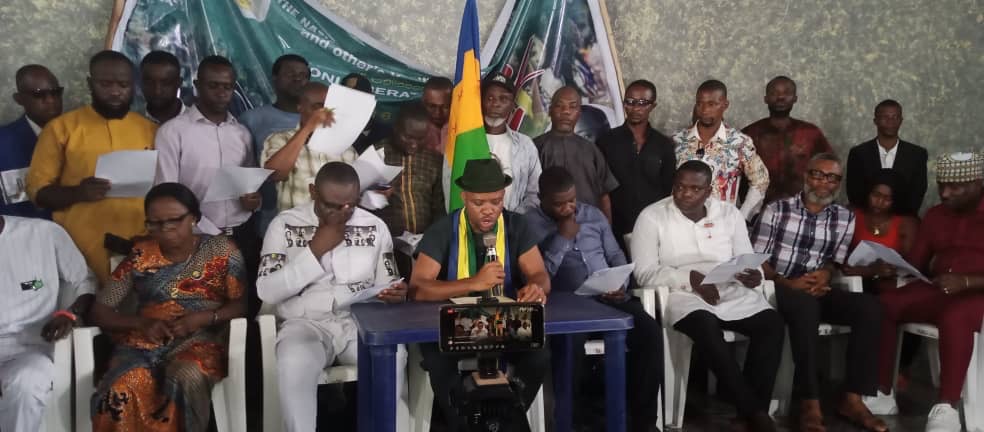
A PRESS CONFERENCE CONVENED BY THE NATIONAL YOUTH COUNCIL OF OGONI PEOPLE ( NYCOP) WITH OTHER YOUTH GROUPS IN COLLABORATION WITH OTHER CIVIL SOCIETY ORGANIZATIONS OPERATING IN THE NIGER DELTA REGION ON JANUARY, 13TH, 2024

Good day ladies and gentlemen of the press. On behalf of the National Youth Council of Ogoni People (NYCOP), Niger Delta Congress (NDC), Ogoni Youth Federation (OYF), National Union of Ogoni Students (NUOS), Ogoni Comrades and Patriots Forum (OCPF), the National Association of Nigerian Students (NANS) , Ogoni Liberation Initiative (OLI), Ogoni Environment Watch (OEW), Ogoni Living Martyrs (OLM), Ogoni Youth Initiative (OYI), Eleme Youth Council (EYC), Ogoni Youth Coalition Movement (OYCM), Tai Youth Assembly (TYA), Standing and Living Without Bitterness (SLWB), and the good and peace loving people of Ogoniland, we welcome you all to this press conference.

We have convened here to discuss critical issues capable of disrupting the peace of not just Ogoni, Rivers State, and the Niger Delta, but Nigeria at large. But first, a brief history.

It is on record that a large part of Ogoni history has revolved around resisting injustice in all its forms and manifestations against Ogoni people and the Niger Delta Peoples. First, against the slave raiders, then the British colonialists, then International Oil companies who in collaboration with our fellow Nigerian compatriots, for personal gain, sought to dominate and subjugate us.

In holding the social justice mirror to the Nigerian society in it’s different phases of evolution, the Ogoni people have never attempted to denigrate, dominate nor subjugate anyone or group. Neither have we set out to take what does not rightfully belong to us.

In October 1990, the Ogoni people having grown tired of enduring environmental degradation and economic and political subjugation, despite our immense contributions to the development of the Nigerian Federation, presented to our fellow countrymen and the world the Ogoni Bill of Rights which captured the hopes and aspirations of our people and became a watershed moment for oppressed groups worldwide.

Although the Rights and demands captured in the Ogoni Bill of Rights were internationally recognized rights such as the control of Ogoni affairs by Ogoni people; control and use of Ogoni economic resources for Ogoni development; adequate and direct representation as of right for Ogoni people in all Nigerian national institutions; and the right to protect the Ogoni environment and ecology from further degradation, the Nigerian government responded by unleashing on our land and people a brutal violence never before seen in Nigeria’s history since the Nigerian Civil War.

As a result of this attempt at genocide and ethnic cleansing of our people, thousands of Ogonis were displaced, many of our communities sacked and have remained sacked till date, many of our people were maimed for life, and thousands more killed, including a generation of some of the brightest minds in not just Ogoni, but the Niger Delta and Nigeria in general. All these happened without the Ogonis picking up arms or firing a single bullet.

It is important to refresh our minds with this history because over the past 24 months, as Ogoni people continue to recover from our losses in our just stand against injustice and oppression, the Nigerian Federation and its collaborators in an attempt to reenact its past onslaught on Ogoni people have set in motion sinister plans to not only deprive Ogoni people of our rights and resources, but to further subjugate us politically and economically while also sowing seeds of discord capable of disrupting the peaceful and harmonious environment in Ogoni.

Firstly, it has come to our notice that between October 2021 and September 2022, the Nigerian government began negotiations with Shell Nigeria Exploration and Production Company (SNEPco) over the handing over of the Ogoni field in its possession, OML 11, to the Nigerian government via the Nigerian Petroleum Development Company (NPDC).

At the conclusion of this negotiation which was spearheaded by the current Minister of the Federal Capital Territory, Nyesom Wike, in his then capacity as Governor of Rivers State, over $900 million, in equivalence of over N 1 trillion, was paid by Shell for the development of Ogoni in addition to handing over its assets to the NPDC.

Be that as it may, Ogoni people have not been properly informed of this fund from the appropriate quarters such as the Nigerian Government, the Rivers State Government, the Nigerian National Petroleum Company Limited (NNPCL), Shell Nigeria Exploration and Production Company (SNEPco), or former Governor Nyesom Wike who spearheaded the negotiations “on behalf” of the Ogoni people.

On the other hand, information available to us shows that over $300 million (over N360 billion) of the funds meant for the development of Ogoni has been shared amongst a few individuals with no recourse to the Ogoni people. We do not only find this insulting, we also find it inciting.

We are also aware that part of this fund have been made available to certain members of the Ogoni community via the NPDC to aid the resumption of oil exploration in Ogoniland before the end of the fourth quarter of 2024 via bribery and the factionalization of Ogoni groups with the social license to discuss these issues such as the Movement for the Survival of Ogoni People (MOSOP), and the National Youth Council of Ogoni People (NYCOP).

The Ogoni people find the recent attempt at shortchanging and depriving our people of resources meant for our development as an affront taking into consideration the current economic and political realities of our people. And we want to state unequivocally, that Ogoni Youths are not against oil Resumption. But, we are open to honest, transparent and fruitful negotiation with Ogoni people.

According to the Multidimensional Poverty Report of 2022, Rivers South-East Senatorial District which is home to 90% of Ogoni people in Nigeria accounts for the poorest Senatorial District in Rivers State. The Ogoni people today have the least access to health facilities, the lowest life expectancy in Rivers State, and the highest unemployment rate despite having arguably the largest educated population in Rivers State. It is therefore tantamount to economic genocide the ongoing attempts to pilfer, plunder, pillage, and deprive Ogoni people of over $900 million (N1 trillion) meant for the economic development of our land and people bearing in mind the present socioeconomic realities as aptly captured by Nigeria’s own National Bureau of Statistics (NBS).

We therefore use this medium to call the attention of the international community and the United Nations (UN) to the inciting actions of political actors in Nigeria capable of disrupting the peace in Ogoni.

OUR DEMANDS

  1. We call on Shell Nigeria Exploration and Production Company (SNEPco) led by Elohor Aiboni to come public on the compensation paid for the development of Ogoni.
  2. We call on the Nigeria National Petroleum Company Limited (NNPCL) led by Mr Mele Kyari, and the Nigeria Petroleum Development Company (NPDC) led by Mansur Sambo to come public on the compensation paid by Shell Nigeria Exploration and Production Company (SNEPco) for Ogoni people.
  3. We call on the Minister of the Federal Capital Territory (FCT), Nyesom Wike, to come clean on the compensation paid by Shell Nigeria Exploration and Production Company (SNEPco) for the development of Ogoni.
  4. Most importantly, we call on the Nigerian President, His Excellency Bola Ahmed Tinubu, to as a matter of urgency order for an investigation into the whereabouts of the $900 million paid by Shell Nigeria Exploration and Production Company (SNEPco) and meant for Ogoni development which has gone missing and the speedy prosecution of anyone or group found wanting in this regard.
  5. In conclusion, we request for an audience with the Commander in- Chief and the President of Federal Republic of Nigeria with Ogoni stakeholders and youth leaders for necessary actions to address the pertinent issues raised herein.

Long live Ogoni Kingdom.

Long live the Niger Delta peoples.

Signed

1.National Youth Council of Ogoni People (NYCOP).
Comr. Barinuazor Emmanuel- NYCOP PRESIDENT.

  1. Ogoni Youth Federation (OYF),
    Comr. Emmanuel Goteh Bie, Acting President OYF.
  2. National Union of Ogoni Students (NUOS) World Wide. Comr. Nukpugi Daniel Karabari, NOUS World Wide President
  3. Ogoni Comrades and Patriots Forum (OCPF), Ledogo Amabu. Converter of Ogoni Patriots.

5.National Association of Nigerian Students (NANS), David Bariereka, NANS National Secretary

6.Ogoni Liberation Initiative (OLI), Elder Owens Vincent, OLI National Secretary

  1. Niger Delta Congress (NDC), Nubari Saatah

8.Ogoni Environment Watch (OEW), Tokpa Effort Korlue

9 Ogoni Living Martyrs (OLM), Elder Nuka Kobo( Spoke man) and Elder Uebari Macus

10.Ogoni Youth Initiative (OYI), Pastor Efenyie

11.Eleme Youth Council (EYC), John Osaronu

12.Ogoni Youth Coalition Movement (OYCM), John Kpalap

  1. Tai Youth Assembly (TYA), Prince Akeekue

14.Standing and Living Without Bitterness (SLWB), Godswill Nwiwuga

on behalf of the good and peace loving people of Ogoniland,

They paid for it; give them their certificates!

By Shalom Kasim

I am deeply concerned about the recent decision to suspend the evaluation and accreditation of degree certificates from Benin Republic and Togo. While the government’s response is rooted in addressing certificate racketeering, we must consider the human angle of this situation.

The investigative report sheds light on a complex issue, revealing the existence of a certificate racketeering syndicate. However, the decision to suspend accreditation without a thorough examination of the circumstances surrounding each certificate undermines the educational pursuits of countless genuine students who earned their degrees legitimately.

It is crucial to acknowledge that not all degrees from these countries are tainted by fraudulent activities. Suspending the evaluation of all certificates casts a shadow of doubt on the entire academic community of Benin Republic and Togo, impacting innocent graduates who have worked diligently to obtain their qualifications.

Furthermore, the collateral damage extends to Nigerians who pursued education in these countries in good faith. Many students choose international institutions for various reasons, seeking diverse educational experiences and opportunities. The blanket suspension risks penalizing these students unfairly.

Instead of a sweeping suspension, a more targeted and nuanced approach should be adopted. Investigative efforts should focus on identifying and penalizing those responsible for the racketeering, rather than punishing an entire academic system. Collaborative efforts between the involved countries, educational institutions, and regulatory bodies can ensure a fair and just resolution.

The decision to involve multiple ministries, security agencies, and internal administrative processes may prolong the resolution, causing unnecessary delays for genuine graduates awaiting accreditation for employment or further studies.

In addressing the issue of degree mills, it is essential to differentiate between reputable institutions and those engaging in fraudulent activities. The global problem of diploma mills requires a coordinated effort, but caution must be exercised to protect the interests of legitimate students and educational institutions.

While the government’s intention to curb certificate racketeering is commendable, the suspension of degree accreditation should be approached with a balanced and targeted strategy. Failing to do so risks harming the futures of countless deserving individuals who pursued their education in good faith.

Someone reminded me the Minister of Education is a professor. I said, “yes, yes.”.

Kasim is public affairs commentator, a poet and a journalist. He writes from Wukari, Taraba State, Middle Belt Nigeria

Genocidal Killings in the Middle Belt of Nigeria-Perspectives, Facts and Fugures

…first published on Wrong Speak newspaper.

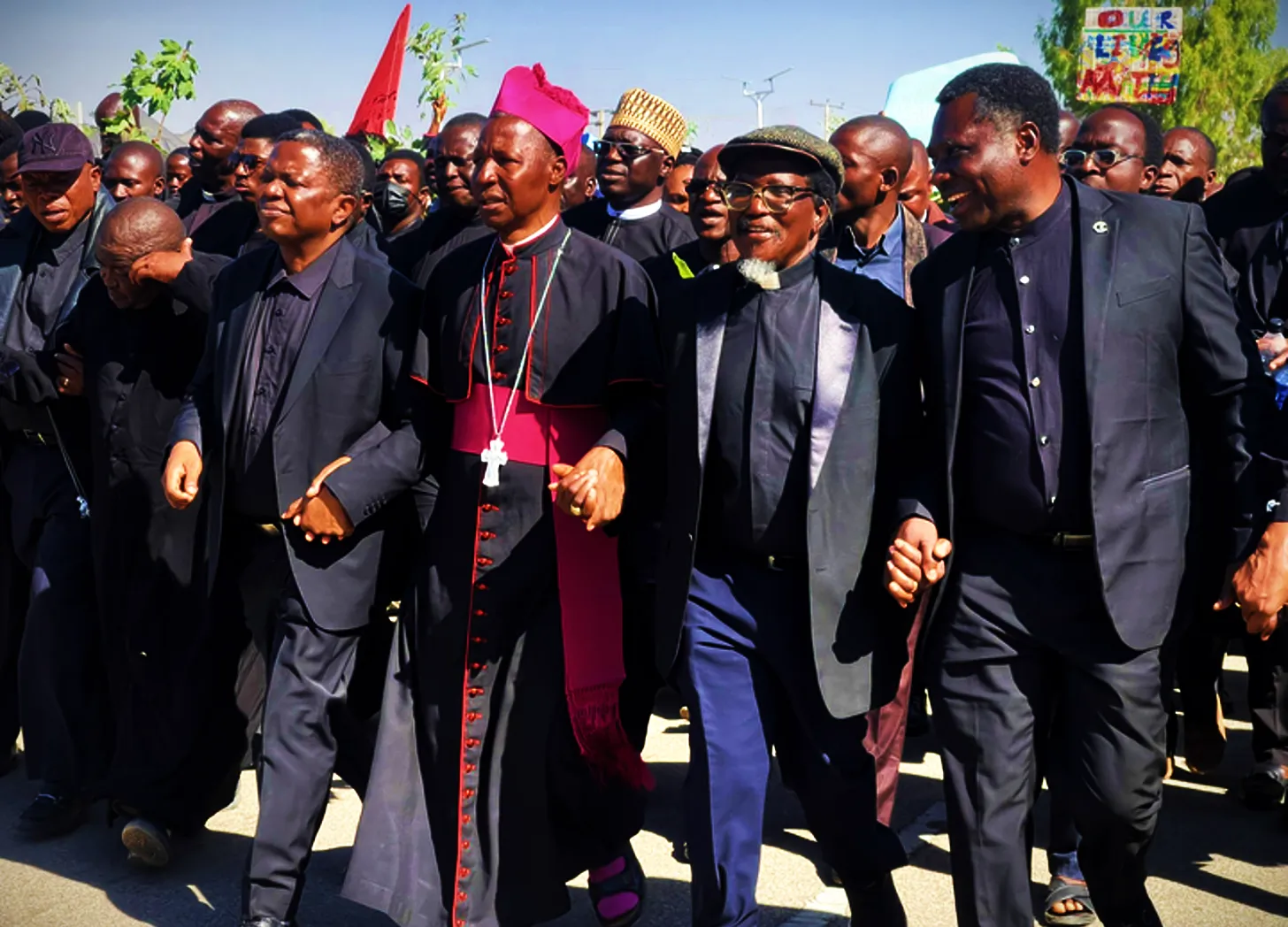
On Monday morning at nine o’clock, Christians from Plateau state in the so-called Middlebelt of Nigeria came together to call for an end to the genocidal killings that have wounded and damaged their communities for decades. The Christian Association of Nigeria (CAN) spearheaded the event in response to the ongoing terrorist attacks in Plateau and other parts of Nigeria. The protesters marched to the Governor House of Plateau, where former lawyer Caleb Mutfwang, sits in office. In front of the gathered group of protesters, he stated that he did not come as a governor to: “preside over burial ceremonies, but that it was time to move from the book of Lamentations to the book of Acts.” During the peace rally in front of the Governor House, Plateau state church leaders submitted a petition to Mutfwang to put an end to the killings.

This was not the first peace rally in Plateau, last Saturday there was a demonstration in the state capital Jos as well. Wednesday, January 10th, there will be a demonstration in London, England as well and another one is scheduled in Abuja, the capital of Nigeria, on the 17th of this month. On social media Christians from the Middlebelt have held several debate groups, which I joined a few times to hear their stories. From what I have learned, there is a growing sense of the need to join strength and unite for a more safe and secure future of Christians in the Middlebelt. 

Genocidal campaign

According to a 2022 report by Genocide Watch, fourteen Christians are killed daily and 420 monthly in southern Kaduna, Benue and Plateau states. In fact, Genocide Watch published a Genocide Emergency Alert concerning Nigeria in December 2022 in which it stated that: Nigeria is currently undergoing one of the deadliest genocides in the world. More people die in Nigeria every month than in Ukraine.” 

Greg Stanton, founding president and chairman of Genocide Watch, said that: “Fulani militants are committing human rights violations and massacres against Christians. This is not a herdsmen versus farmers conflict, but a genocidal war between ethnic groups, fueled by Islamic extremists with modern weapons.”

Christian persecution watchdog, Open Doors, writes that there are Islamic preachers from Saudi-Arabia and Iran joining the Fulani militant groups. According to Open Doors there is an agenda to spread Islam and turn Nigeria into an Islamic state.

Herdsmen or Jihadists?

Christians in Plateau, Benue, Kogi, Kwara and other Middlebelt states, have been defensively murdered, abducted, raped, robbed and forced to flee for years. In April 2023 Fulani jihadists beheaded a 5-year old boy in Southern Kaduna. In August 2021, Thomas Wollo (46) was beheaded together with his 7-year old son, Nggwe in Plateau. Second, these attacks often take place during church services or at nighttime when people are either sleeping, or getting ready for bed. For example, a 25-year old seminary student, Na’aman Dalami, was killed when Fulani jihadists burned down the house of the parish priest where the young man was serving. Already in bed, he could not escape the fire and was burned alive. 

During the peace rally in Plateau last Monday morning, people held up signs saying: “It is not a clash, it is pure terrorism” and “Terrorists are not natives.” One of the elements in the petition that the church leaders handed to governor Mutfwang on Monday addresses the question whether we are talking about herdsmen or jihadists.These messages are in sharp contrast with the predominant narrative, both in Nigeria and the international press, that the ongoing massacre of mostly Christians from the Middlebelt is a clash between herdsmen and farmer communities. 

This idea in Nigeria and the West alike, that we are dealing with a confrontation or conflict between two involved parties; nomadic, predominantly Muslim, herdsmen and sedentary, often Christian, farmers is an often repeated narrative. According to  CNN it is an “escalating conflict between herders and farmers,” Al-Jazeera describes it as a “grazing conflict between nomadic herders and sedentary farmers.” These are only two examples of a widespread narrative. On the other hand, Genocide Watch speaks of Jihadists Herdsmen and the International Organisation for Peace-building & Social Justice (PSJ), the International Committee On Nigeria (ICON), politicians such as Baroness Cox of the United Kingdom’s Hous of Lords and retired member of United States Congress, Mr Frank Wolf, in a joined report refer to the Fulanis as extremists or militants. International Christian Concern (ICC) also speaks of Fulani militants, a name also used when the Global Terror Index in 2014 named them the world’s fourth deadliest terror group. 

There is a serious discrepancy between what politicians and the experts say on the one hand, parroted by the media, and the analyses of human rights organizations when it comes to the murderous attacks on Christians in Nigeria’s Middle Belt states. Delineating the beheading of innocent people, including children, during their weakest or most vulnerable moments as a clash between two groups having a dispute over grazing land is misleading, only allowed to hold because of the media’s lack of reporting on what happens on a daily basis in Nigeria. 

On top of this, Nigerian Christian journalists, such as Steven Kefas and Luka Binniyat, who reported about the massacres on Christians in their land, have been arrested and imprisoned. 

SK “The Kaduna state government traveled about 800 kilometers to River state where I used to work and they abducted me. They did not arrest me, because there was no warrant for that arrest, I was abducted.”

Climate Change

Another favorite theme, when trying to analyze the ongoing persecution in Nigeria, is that this is all due to climate change. A while ago I spoke with Nigerian Christian journalist Steven Kefas and asked him about this narrative:

SK “It has nothing to do with climate change. They bring in climate change to deceive the international community and some gullible Nigerians, but we here in Nigeria, we have loved ones being killed, we have witnessed these attacks, we know that the attackers just come in to kill people. Sometimes when they kill people, they tell them: “Why don’t you call on your God to come and defend you?”  There is a lady I interviewed, who was taken by these terrorists, she was raped and molested in the forest and they told her: “You say you have a God, why don’t you call your God to come and safe you from our hand?” This tells you that these people have an agenda, it is a jihadist agenda, that is not just restricted or limited to Nigeria. It is an agenda that is across Africa, we have them in Mali, Somalia, Guinea and some other places. So that is what is on the plate and it has nothing to do with climate change.”

Talking Politics

Former president of Nigeria, Buhari, is a Fulani Muslim himself. During his administration the Nigerian government, according to Genocide Watch, turned a blind eye to the Fulani massacres of Christians. Genocide Watch, in the same report, also stated that the United State Department is in full denial of the Fulani massacres of Christians. According to Open Doors there are alarming reports that show deliberate neglect and sometimes even complicity of the Nigerian Security Forces with regard to these deadly attacks by Fulani militants. Buhari, according to Open Doors, has “openly and publicly admitted knowledge of the atrocities, often adducing justifications for the criminals.”

When Trump left office, he had put Nigeria on the list of ‘Countries of Particular Concern’ after the United States Commission for International Religious Freedom (USCIRF) had been advising the government to do so for several years. This is a list of countries that violate religious freedom. Then, when Biden took office, Nigeria was taken off of this blacklist and Secretary of State Blinken had a virtual meeting with then Nigerian president Buhari in which they wanted to “strengthen their communal interests” as it was called. I asked Mr Kefas what he thought of that decision, considering that by then it was already widely known that there was a genocide happening on the Nigerian Christian population, specifically in the Middlebelt region. Climate change, security, a strategic partnership, all was brought to the table, except the murdering of Christians. 

SK “As to your question why the United States took Nigeria off of the list ‘Countries of Particular Concern’, well unfortunately only the Biden administration can answer that question.” 

SK “The current administration in the USA seems to be more concerned about their own interests, they don’t seem to be interested in human rights, the rights of Christians across the world or traditional worshippers across the world. Whatever is going to affect their interest, they don’t joke with it. I think that is what is really top on their priority list right now.”

In addition to this, on January 4th of this year, the State Department published a list of countries that violate religious freedom. Nigeria is not mentioned and yet, Christians are murdered during church services or specifically targeted during Christian holidays, as we have seen recently when over 200 Christians were massacred on Christmas Eve in Plateau state. And, equally important, the Fulani militants are not mentioned in the same document as part of the Entities of Particular Concern, whereas for example Boko Haram and Islamic State West Africa, both active in Nigeria, are listed as such. Yet, the Fulani militants commit crimes that are no different from those committed by Boko Haram, i.e. killing, raping, plundering, kidnapping, using coercion, intimidation and installing fear among the Christian population of the Middlebelt. 

One of the ten points on the agenda, submitted to the governor of Plateau State, Mr Wutfang on Monday, is to recognize the Fulani militants as such: “We unanimously call on the Attorney General of the Federation and Minister of Justice as a matter of urgency, to initiate the process of officially proscribing the armed terrorist militias responsible for these mindless killings. They should be officially designated as terrorists. This will give the military the power to fully engage them as provided in the Terrorism Act of 2022.”

This demand is repeated by the many Nigerian Christians I speak almost daily. Recognize the militants as such, to give the armed forces the tools to deal with the massacres in a proper way. It would also allow for a clear distinction between Fulani herdsmen who are indeed looking for grazing land for their cattle and armed militias who massacre innocent citizens and drive them away from their ancestral lands, driven by a radical agenda to conquer the land and spread Islam. This becomes even more apparent when we realize that Fulani militants are also active in neighboring countries such as Chad and Cameroon, to combine forces may be the best way forward if we can agree who we are fighting against.