House of Justice Sets Bold Vision for 2025, Emphasizes Purpose-Driven Legal Services

In a compelling address marking the 2025 Annual General Meeting, Gloria Mabeiam Ballason Esq., CEO of House of Justice, outlined an ambitious roadmap for the legal conglomerate, emphasizing purpose-driven justice delivery and staff development as key priorities for the year ahead.

Speaking at the House of Justice Complex in Kaduna on Friday, January 17, 2025, Ballason reflected on the organization’s journey from its humble beginnings as MIVE LEGALS in 2010 to its current status as a multi-door justice house, marking over a decade of transformation since its rebranding in November 2014.

“Our enduring vision is to be an excellent global law conglomerate,” Ballason stated, adding that the organization’s mission remains focused on providing legal services that conform with the highest standards of excellence and integrity while finding practical solutions in both law and life.

The CEO unveiled a five-point agenda for 2025, focusing on optimizing access to justice through their multi-door system, improving purpose in work, promoting deserving staff with increased emoluments, ensuring departmental delivery on schedules and projects, and expanding the organization’s global influence.

In a notable departure from conventional corporate addresses, Ballason emphasized the importance of staff welfare and personal growth. “House of Justice seeks to put all our colleagues and affiliates at the center of our justice work,” she declared, highlighting the organization’s commitment to ensuring justice for its staff members first.

The speech revealed plans for collaboration between the CEO’s office and Human Resources to recalibrate the work environment, enabling staff to find purpose whether within or outside the workplace. This initiative follows the recent celebration of outstanding colleagues inducted into the House of Justice Hall of Fame during their decade anniversary celebration in November 2024.

Speaking about client services, Ballason outlined ambitious goals: “We seek zero fatalities, zero life-threatening injuries, and total defeat of the corrupting influences on justice delivery.” While acknowledging progress in this direction, she noted that significant work remains to be done.

The organization, which has expanded from its Kaduna base to establish a presence in Abuja, continues to push boundaries in legal service delivery. Their approach combines excellence, innovation, courtesy, service, and integrity, values that Ballason describes as being “at the heart of what we do.”

During the address, Ballason shared a personal reflection from her conversation with Prof. Chidi Anselm Odinkalu, Chairman of the International Advisory Board of the Molluma Yakubu Centre for Medical Law and Mass Atrocities Accountability. “If I was not the Chief Executive of House of Justice, I would really have loved to work at House of Justice,” she revealed, describing the organization as more than a workplace but her “calling, purpose and rhythm.”

The speech also touched on the organization’s commitment to making justice an empowering process and outcome for clients and community members. This commitment involves continuous learning and improvement in service delivery methods while staying within the bounds of law and due process.

Looking ahead, Ballason encouraged staff members to pursue growth at their own pace, whether by “flying, jumping, running, walking or crawling,” emphasizing the importance of continuous movement toward self-improvement.

The meeting was attended by Team Leads from Human Resources and Administration from both Kaduna and Abuja offices, Heads of Departments, and Acting Heads of Departments, along with other staff members.

House of Justice’s vision for 2025 comes at a crucial time when access to justice remains a significant challenge in Nigeria. The organization’s emphasis on combining excellence in legal service with personal development and community impact presents a unique model in the legal service sector.

As the organization moves forward with its plans for 2025, Ballason concluded with an optimistic note: “We have what it takes; we can make it happen and yes, we can make a world of difference when we shine the light that overcomes the darkness of injustice.”

The ambitious agenda set forth by House of Justice for 2025 reflects a comprehensive approach to legal service delivery, combining professional excellence with personal development and social impact, potentially setting new standards for legal practice in Nigeria and beyond.

Eagle Brain Demands Justice For Accident Victims Caused By Julius Berger Truck

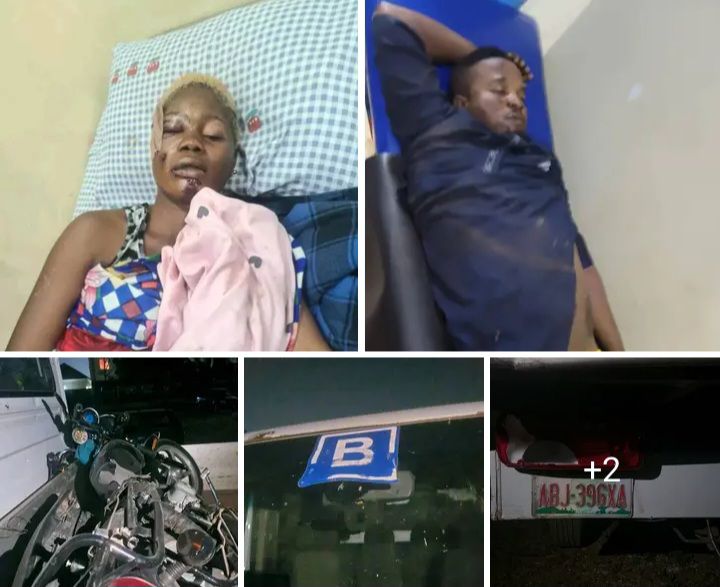
A tragic accident occurred early Sunday morning at High Cost Junction along Bumedine Road, Kaduna State, when a truck owned by Julius Berger Construction Company collided with a commercial motorcycle.

The crash, which happened around 3:00 AM, claimed the lives of the motorcycle rider, Anas Saidu, and one of the passengers, Alex Fagbemi Olawale. A second passenger, Comfort John, sustained serious injuries and is currently receiving treatment at Harmony Hospital, Barnawa.

Eyewitnesses allege the truck was speeding when the driver lost control, leading to the fatal collision. The driver, initially detained at the Barnawa Police Station, was released due to health concerns but has since been recalled for further questioning as investigations continue.

Adding to the tragedy, representatives from Julius Berger Construction Company have reportedly shown indifference to the victims’ plight. 

According to witnesses, a representative from the company’s accident and emergency unit allegedly stated, “The case can be taken anywhere without consequences,” sparking outrage.

The Eagle Brain Human Rights Organization, represented by its media head, Joshua Sarkinnoma Madami, has condemned the company’s alleged negligence and lack of accountability. 

The group is demanding justice for the deceased, support for the injured, and compensation for the victims’ families.

“This tragic incident calls for urgent action. Julius Berger Construction Company must take responsibility for the harm caused by their vehicle,” the organization stated.

Authorities are urging calm as the investigation continues. Meanwhile, the public awaits an official statement from Julius Berger Construction Company.

Watchdog Turned Wolf: Controversy Trails Appointment of Alleged Rights Abuser to Head Police Monitoring Unit

In a decision that has sent ripples through Nigeria’s law enforcement and human rights communities, Inspector General of Police (IGP) Kayode Agbetokun has appointed DCP Akin Fakorede to head the IGP Monitoring Unit. This controversial appointment has sparked intense debate about the future of police accountability in Africa’s most populous nation, particularly given the unit’s crucial role in investigating complaints against police officers.

A Troubled Past in Rivers State

The shadows of Fakorede’s tenure as Officer in Charge of the Federal Anti-Robbery Squad (SARS) in Rivers State from 2016 to 2019 cast a long dark cloud over this appointment. During this period, his name became synonymous with allegations of brutality, extrajudicial killings, and electoral manipulation. Former Governor Nyesom Wike, in a series of public denouncements, accused Fakorede of perpetrating crimes and interfering with electoral processes in the state

One of the most damning incidents occurred during the 2019 Rivers State governorship and state assembly elections. Dr. Ferry Gberegbe, a senior lecturer at Ken Saro-Wiwa Polytechnic, was allegedly shot and killed at a collation center in Bori. The state’s Peoples Democratic Party (PDP), through its chairman Chief Felix Obuah, directly implicated Fakorede in this tragedy, describing him as “a recurrent obstacle to the peaceful conduct of general elections in Rivers State.”

The Independent National Electoral Commission (INEC) itself documented Fakorede’s controversial conduct. In a report authored by INEC Commissioner Professor Okechukwu Ibeanu, Fakorede was accused of attempting to lure INEC staff into potentially dangerous situations and physically assaulting electoral officials, including Dr. C Odekpe and Mrs. Mary Tunkayo, who required hospitalization after the encounter.

Pattern of Controversy Across Commands

Fakorede’s controversial record extends well beyond Rivers State, following him through various postings across Nigeria. In Anambra State, where he served as Deputy Commissioner of Police in charge of the State Criminal Investigation Department, his tenure was marked by serious allegations of enabling land grabbing and violent property disputes.

A detailed petition to the Police Service Commission in July 2024 exposed disturbing incidents under his watch. In one case, men in military uniforms allegedly operated under Fakorede’s protection to violently demolish a building under construction in Onitsha. In another shocking incident, a violent property invasion reportedly resulted in the death of a 4-month-old infant.

The case of Mrs. Adelesi Esther Omolade, a 72-year-old woman, provides another troubling example of alleged abuse of power. In January 2022, she reported being illegally arrested and detained by Fakorede’s team in Abuja. The incident, which reportedly stemmed from a business dispute involving his romantic relationship with her daughter, raised serious questions about the exploitation of police power for personal matters.

Defiance of Accountability Mechanisms

When the federal government established nationwide investigative panels to examine SARS activities in 2020, Fakorede’s apparent contempt for accountability became glaringly evident. Despite receiving multiple formal invitations to appear before the Rivers State Panel, he consistently refused to participate in the proceedings.

The panel’s findings painted a disturbing picture: half of the 107 accepted petitions were complaints against the Rivers State SARS under Fakorede’s command. Among these was the heart-wrenching case of Solomon Yellowe, a 27-year-old final-year student at the University of Port Harcourt. Yellowe’s family petitioned for ₦1 billion in compensation after their son’s body was discovered in the University Teaching Hospital mortuary weeks after his disappearance, with allegations pointing directly to SARS involvement under Fakorede’s leadership.

Persistent Public Outcr

The public’s resistance to Fakorede’s leadership predated the nationwide #EndSARS protests of 2020. In December 2017, thousands of Rivers State residents, predominantly youth, took to the streets of Port Harcourt in protest. Their placards bore urgent messages: “Sack Akin Fakorede Now,” “Stop Killings By SARS,” and “End SARS’ Brutality Now.” The demonstrations were fueled by numerous incidents, including the alleged killing of three Ogoni youths who had attempted to prevent pipeline vandalism.

The protests in Anambra State took an even more dramatic turn when, in November 2023, a group of women staged a naked protest against Fakorede’s alleged involvement in criminal activities and land grabbing. This traditional form of protest, considered one of the strongest expressions of displeasure in Nigerian culture, highlighted the depth of public outrage against his activities.

International Partners Express Growing Concern

The appointment has raised serious concerns among international development partners and funding agencies supporting Nigerian police reform. Organizations including the British High Commission, German Foreign Office, American Embassy, Swiss Embassy, UNDP, United Nations Office on Drugs and Crime, and the United Nations Office for Human Rights have invested substantially in police reform initiatives in Nigeria.

These international stakeholders have particular reason for concern, as many have funded specific projects aimed at strengthening police accountability. The Police Accountability and Reform (SPAAT) Project, implemented by the UNDP and funded by the German Foreign Office, is just one example of the significant international investment in Nigerian police reform that could be undermined by this appointment.

Implications for Police Reform

The decision to appoint Fakorede to head the IGP Monitoring Unit presents a peculiar paradox: an officer with numerous unresolved complaints against him now leads the very unit responsible for investigating police misconduct. This situation is further complicated by reports that multiple oversight bodies, including the Monitoring Unit itself and the Police Service Commission, are currently investigating complaints against him.

The appointment appears to contradict the force’s stated commitment to reform and accountability. Following his controversial tenure in Rivers State, Fakorede’s subsequent transfers to various commands – including Brini-Gwari Area Command in Kaduna State, Zone 13 in Anambra State, and the Anambra State Criminal Investigation Department – have been marked by consistent allegations of misconduct and abuse of power.

The Road Ahead

As Nigeria’s police force grapples with the challenge of rebuilding public trust and implementing meaningful reforms, the appointment of an officer with such a controversial record to a critical oversight position raises fundamental questions about the future of police accountability in the country. With international partners watching closely and public trust hanging in the balance, the IGP’s decision may have far-reaching implications for the future of police reform in Nigeria.

The controversy surrounding this appointment underscores a broader challenge facing Nigeria’s law enforcement: the difficulty of implementing genuine reform while operating within existing power structures and relationships. As the situation unfolds, it will serve as a critical test case for the Nigerian Police Force’s commitment to accountability and reform in the face of mounting public and international pressure.

The story was originally published by Saharareporters.

Allegations Of Unpaid Contracts, Corruption Surface Against Formal Act Legacy Limited, CEO Dr. Bashir Ibrahim Bello

A troubling report has emerged alleging unpaid contracts and possible corruption involving Formal Act Legacy Limited, a company known for its community-based interventions in education, health, and water security.

The company, founded in 2011, collaborates with international organizations, local government agencies, and traditional leaders to promote sustainable development, focusing on Sustainable Development Goals 3, 4, and 6.

The allegations centered on claims that Formal Act Legacy Limited and its CEO, Dr. Bashir Ibrahim Bello, awarded contracts that were later sold to subcontractors who reportedly borrowed money to execute the projects. These subcontractors alleged they have not been paid for their work, with the debts stretching over three years.

Furthermore, there are accusations that influential figures, including some government officials and security service chiefs, may be complicit in the alleged misconduct.

The alleged non-payment of contractors has reportedly caused severe financial hardship for those affected, with some unable to provide basic needs for their families.

Accounts from affected subcontractors include distressing reports of poverty, families struggling with education and sustenance, and even deaths resulting from the associated economic strain.

The situation has sparked public outcry, with demands for an immediate and transparent investigation into the company’s activities.

Stakeholders are urging relevant authorities to examine the allegations and hold those responsible accountable.

Advocates stressed the importance of justice and prompt compensation for the subcontractors who have suffered.

The subcontractors, in their pursuit of justice, have already contacted EAGLE BRAIN, a noted social justice advocacy organization, seeking intervention and support in addressing their grievances.

Countering Obstacles to Media Freedom in Africa: We Must Organize, Not Agonize Says Ballason

In a stirring address that reverberated through the halls of Mensvic Grand Hotel in Accra, Ghana, human rights lawyer Gloria Mabeiam Ballason delivered a powerful message on the pressing need for media freedom and civic expression across Africa.

The event, held on October 9, 2024, brought together activists and media defense lawyers from across West Africa, setting the stage for a crucial dialogue on countering obstacles to press freedom and combating impunity on the continent.

Ballason, the Chief Executive Officer of House of Justice, Nigeria, began her speech by invoking the spirit of Ghana’s independence and the pan-African dream:

“Our feet have touched Ghana. It is sacred ground. It is the soil upon which our beloved Osagyefo Kwame Nkurumah pumped his fist in the air as he drew the first whiff of breath of freedom. Yet as triumphant as that moment was, he was dissatisfied because the Independence of Ghana was, in his view, meaningless until it linked up with the total liberation of the African continent.”

She went on to paint a vivid picture of the continent’s struggle for emancipation, highlighting the roles of both male and female activists who fought for a united and prosperous Africa. However, Ballason quickly reflected on the stark reality of present-day challenges:

“Decades after, we are steeped in a critical discourse on how to counter legal obstacles to rights violations and impunity in not just West Africa but the entire continent.”

The seasoned lawyer with track record of defending human rights emphasized the crucial role of media freedom in democratic societies, describing it as a “sine qua non for democracy” and a “basic human right.” She elaborated on its importance:

“No nation, region or continent can hope to develop democratically without free expression, free publication and free distribution and exchange of ideas and opinions. Democratic societies can only function sustainably when people are well informed, able to access and share information and can debate ideas devoid of fear.”

Ballason didn’t shy away from addressing the myriad challenges faced by media practitioners in West Africa. She listed obstacles such as excessive registration requirements, harassment of journalists, and attempts to over-regulate traditional media and the internet. The lawyer also highlighted positive developments, citing landmark court cases that have upheld media freedom:

“In the Amnesty International, Togo and Others V. The Togolese Republic case, the ECOWAS Court found that ‘access to the internet is a ‘derivative right’ as it ‘enhances the exercise of freedom of expression; hence, internet access is a ‘right that requires protection of the Law’ and any interference with it ‘must be provided for by the law specifying the grounds for such interference’.”

Turning to the broader issue of civic expression, Ballason underscored its significance in empowering citizens and ensuring accountability:

“Civic expression encompasses the right to voice opinions on social, political and economic issues. It is central to a functioning democracy and important for many reasons including empowering citizens to influence public policy, governance participation and reforms advocacy.”

The lawyer didn’t mince words when addressing the elephant in the room – impunity. She described it as a cancer eating away the fabric of African societies

“The failure to hold violators of human rights accountable is a regional and continental concern. The absence of legal consequences for individuals, groups or institutions responsible for acts such as corruption, torture, extrajudicial killings or abuse of power not only undermines the rule of law but impinges on the effectiveness of justice systems.”

Ballason’s speech took on a more personal and impassioned tone as she reflected on the current state of leadership in Africa:

“Today our leaders have been paralytically hit by individualism, avarice and corruption. They take more pride in living above the Law and putting others beneath it. Even our regional Court suffers from the impunity of our leaders whose compliance with judgments are in breach than in compliance.”

Despite the grim picture, the lawyer offered hope and a call to action. She proposed several “organic remedies” to address the challenges facing media freedom and civic expression in Africa:

  1. Ethical media reporting that transcends national boundaries and sets an agenda for deepening democracy.
  2. Making corruption and misuse of public funds obsolete through collective resistance and higher leadership standards.
  3. Ensuring state compliance with regional court decisions in good faith.
  4. Fostering regional unity and solidarity that translates into tangible development.

Ballason concluded her speech with a rallying cry for action and optimism:

“We must organize more than agonize. We must, in the words of Patrice Lumumba, never doubt for a moment the triumph that can result from the sacred cause of history’s trust. We must grease our atrophied hope with action and positivity. A region of our dreams is possible.”

As the applause died down in the Mensvic Grand Hotel, the gravity of Ballason’s words hung in the air. Her speech not only highlighted the challenges facing media freedom and civic expression in Africa but also charted a course for a brighter, more democratic future. The gathered activists and lawyers left the event with renewed determination to turn her words into action, carrying the torch of freedom and accountability across the continent.

Police Fire on Hunger Protesters in Nyanya

According to reports, police personnel assigned to protect the rights of protesters have allegedly opened fire on the demonstrators in Nyanya.

The Middle Belt Times has learned that the protesters, defying threats from the FCT Minister Nyesom Wike, who stated that the FCT would not be available for the protest, gathered in large numbers to participate in the demonstration.

The protest, which commenced at approximately eight o’clock in the morning, turned violent after the police fired gunshots in an attempt to disperse the protesters.

The Middle Belt Times is unable to confirm whether any protesters were injured or killed by the police during the incident.

Justice on Trial: Confronting Human Rights Violations in Kaduna State

By Steven Kefas

In a powerful address at the Maxwell Kyon Foundation Seminar in Kaduna, Human Rights Lawyer and CEO of House of Justice Nigeria, Gloria Mabeiam Ballason laid bare the alarming state of human rights in Nigeria, with a particular focus on the egregious violations witnessed in Kaduna State under the governance of Nasir Ahmad El-Rufai.

Ballason, a fervent advocate for justice and the rule of law, pulled no punches in her scathing indictment of the systematic erosion of fundamental rights, which she described as a continuation of the abysmal record of previous military regimes in the country.

“There are no words to describe the abysmal human rights record in Kaduna state, especially under the ‘democratic regime’ of Mallam Nasir Ahmad El-Rufai,” Ballason declared, her voice ringing with conviction.

The litany of transgressions detailed by Ballason painted a grim picture of a state where the sanctity of human life and dignity has been repeatedly trampled upon. Thousands of lives have been lost, from the ravaged villages of Birnin Gwari to the bloodshed in Southern Kaduna, with violence sparing no sanctuary – be it schools, churches, or mosques.

Ballason recounted the harrowing incident of December 3, 2023, when a Nigerian Armed Forces drone strike on Tudun Biri in Igabi Local Government Area, purportedly targeting bandits, instead rained death upon a village, claiming hundreds of innocent lives. The chilling discrepancy between the official death toll of 88 and Amnesty International’s figure of 120 only underscored the callous disregard for human life.

Beyond the loss of life, Ballason chronicled a relentless campaign of oppression, with widespread demolitions of houses and businesses without court orders, arbitrary land seizures, and the desecration of traditional institutions. Journalists, activists, and traditional leaders found themselves behind bars, their voices silenced in a climate of fear and intimidation.

“The governor honored the constitution in breach rather than in compliance, even arrogating to himself powers in the exclusive legislative list on holidays and currency, for example,” Ballason stated, her words dripping with outrage.

However, the culpability extended beyond the executive branch, as Ballason turned her gaze upon the judicial sector, questioning the tepid response of lawyers and judges in the face of such blatant violations of the rule of law.

“From the Nigeria Bar Association’s refusal to sue the government in the face of egregious human rights violations to how it looked away when Alhaji Inuwa Abdulkadir, a very senior member, a former Attorney General and Commissioner of Justice had his house demolished because of his dissenting opinion… to how some of the courts sometimes enabled these violations by detaining innocent citizens whose actions have no probable inclination to crimes except that the government wants to persecute them, the judicial sector must admit that we could have done more,” Ballason asserted.

Her call to action was unequivocal: the judiciary must reclaim its independence and uphold the principles of justice enshrined in the Fundamental Rights Enforcement Procedure Rules. Judges and magistrates must be insulated from executive intimidation, whether through withholding of salaries or the dangling of proverbial carrots.

Ballason also challenged the role of the Attorney General’s office, questioning the inherent conflict of interest when the government’s legal representative enables and supervises human rights violations at the behest of the executive.

“There should be no conflict when the question of justice arises,” Ballason declared, drawing inspiration from Guatemala’s efforts to bring perpetrators of civil war atrocities to justice, where the Attorney General’s office has worked hand-in-hand with citizen-based and private initiatives to seek accountability.

In a poignant moment, Ballason reminded the audience that the fight against injustice and human rights abuse transcends the boundaries of institutions or factions – it is a battle between right and wrong, good and evil, humanity and inhumanity.

“Each of us must choose whether we want to fight on the side of the right or we want to play on the side of wrong. We must make a choice against good and evil, humanity or inhumanity. We must choose a side because there is no fence to straddle,” she implored.

Ballason’s clarion call echoed the words of Lord Acton, warning against the corrupting influence of unchecked power, and underscoring the necessity of upholding the separation of powers enshrined in the philosophies of John Locke and Baron Montesquieu.

As the seminar drew to a close, Ballason’s stirring words lingered in the air, a sobering reminder of the pressing need for accountability and a renewed commitment to the protection of human rights in Kaduna State and beyond.

“May all who come behind us find us faithful, and may the fires of our devotion light their way. May the justice we embody encourage them to believe. May the lives we live inspire them to be courageous in the face of injustice, and may history be kind to us all,” she concluded, her voice a beacon of hope amidst the darkness.

In a nation where the promise of democracy has been tarnished by the bitter taste of oppression, Ballason’s impassioned plea resonates as a call to action – a demand for a reckoning, a restoration of the inviolable rights that define our shared humanity.

Imprisonment and Release of Rhoda Jatau Highlights Deep Injustices in Nigeria’s Blasphemy Laws

By

Steven Kefas

The recent release of Mrs. Rhoda Jatau from prison is a welcome relief after the Christian mother of five spent 18 agonizing months jailed under Nigeria’s controversial blasphemy laws. However, her ordeal highlights the deep injustices that persist due to legal loopholes that allow religious extremists to carry out extrajudicial killings with impunity.

Mrs. Jatau’s only “crime” was allegedly sharing a video condemning the brutal murder of Deborah Samuel, a young Christian college student who was beaten, stoned and burned to death by Muslim mobs in Sokoto in May 2022 over unproven allegations of blaspheming the Prophet Muhammad. For daring to speak out against the merciless killing of Deborah, Mrs. Jatau was swiftly arrested and imprisoned in Bauchi state under the same problematic blasphemy statutes.

Mrs Jatau during a court session in Bauchi

The very existence of blasphemy laws in Nigeria’s constitution is concerning, as they violate basic human rights to freedom of speech and thought. But more alarming are the ways these laws enable radicalized mobs to become judge, jury and executioner, murdering anyone deemed to have transgressed Islamic teachings without any evidence or due process.

The blasphemy law is contained in section 204 of the Nigerian criminal code and has been a subject of debate and controversies over the years but the big question is; who determines what constitute blasphemy and in what circumstances should such be determined?

While the provision of section 204 stipulates a two year imprisonment for ‘anyone who commits an act any class of persons consider as public insult on their religion’, in northern Nigeria the punishment is instant execution according to Shariah law for anyone who is perceived to have committed blasphemy. Victims have often met with instant death by stoning without trial. This also contradicts the provisions of the Shariah law which allows blasphemers to be tried before execution.

“Any person who does an act which any class of persons consider as a public insult on their religion, with the intention that they should consider the act such an insult, and any person who does an unlawful act with the knowledge that any class of persons will consider it such an insult, is guilty of a misdemeanour and is liable to imprisonment for two years.” Section 204 of the Nigerian Criminal Code.

The Shariah law originally is supposed to be applicable to only Muslims but because of the ambiguity of the Nigerian constitution and by extension the legal system, non Muslims have often come under outright attacks and sometimes murder for accusations of blasphemy.

Deborah’s case is the latest in an ongoing string of tragic violence and loss of life suffered by religious minorities under blasphemy allegations. In 2007, Christian teacher Christiana Oluwatoyin Oluwasesin was beaten and burned to death for allegedly desecrating the Quran by her Muslim students in Gombe state. Over the past decade, multiple cases have emerged of Christians being brutally assaulted or killed over unfounded claims of insulting Islam. In 2016, 74 year old Bridget Agbahime was murdered and beheaded by Muslims in Kano for allegedly commuting blasphemy.

Yet seldom do the perpetrators face justice for so casually extinguishing innocent lives. Deborah’s murderers were arrested, but a judge ruled there was insufficient evidence to prosecute. By failing to fully enforce the law to protect victims, Nigeria’s institutions have fostered a culture of impunity that grants extremists a license to kill.

Nigeria’s constitution claims to uphold principles of justice, liberty and the sanctity of human life. But in allowing ambiguous blasphemy statutes to remain in place, it contradicts itself. These laws directly endanger the country’s Christian minorities living in the north and other vulnerable groups, enabling violence against the very people the government has a duty to protect.

The Middle Belt Times calls upon the Nigerian government to take active steps to prevent future tragedies unfolding as they did for Deborah and Mrs. Jatau. Blasphemy laws must be decisively repealed, religious extremism mitigated through education and dialogue, and institutions reformed to apply the law justly wherever malicious incidents occur.

Above all, the fundamental human rights and dignities of ALL Nigerians must be upheld, regardless of religious affiliation. Only then can the dangerous climate of fear and impunity stoked by blasphemy allegations be extinguished for good. The time is now to let reason, compassion and the rule of constitutional law prevail.

Steven Kefas is a Human Rights Defender, a Citizen Journalist and Minority Rights Advocates. He is a former Kaduna former prisoner of conscience now living in exile.

This House Must Not Fall

…Being an Address by Gloria Mabeiam Ballason Esq, C.E.O. House of Justice, at the 8th House of Justice Summit on Friday 24th November, 2023 at Epitome Events Centre Barnawa Kaduna-Nigeria

PROTOCOLS:

On behalf of the Management and Staff of House of Justice, I am truly delighted to welcome you to the historic city of Kaduna for the 8th House of Justice Summit & Burgundy Ball Banquet.

This is an annual civic gathering that enables the review of the biggest challenge in Nigeria and the African continent and invites those we consider most suited to curating solutions to enlighten and teach us so we can overcome those challenges.

As a private Justice multi-door house, we realize that if human beings create problems, it will behoove some other human beings to find solutions. In the normal course of events, we would have lingered on platitudes, but there is an urgency of now to which we must review electoral accountability and democratic stability because there is a straight line that leads from one to the other.

The tell signs are in Burkina faso, Sudan, Guinea, Mali and our next door neighbor, Niger. And with the murmuring sounds in Nigeria of the overturn of popular electoral votes, there is the need to very quickly review the imperative for the peoples votes and choice to be respected.

In recent times we have seen the state of our nation in the blighting endurance of citizens who are working past exhaustion to have a better country but are constantly being hit on the blindside and subdued to choices of leaders they did not make and an economy that, according to the World Poverty Clock assessment, makes it difficult for the 133 million multi-dimensionally poor Nigerians, to breath.

No one would have imagined that between August 2022 to August 2023, the average retail price of fuel will move from N189 to N626- an over 330% increase in just a year. The word that flies is subsidy removal but the presidency seems to not appreciate that a surgery without anesthesia is just as risky as the disease itself.

There is of course, a sharp decline in productivity as a number of state governors have struggled to contain the debilitating effect of the fuel hike on their public work force and so have reduced the work days, this remedial act, is in itself a direct violation of the Constitution which puts labour and public holiday under the exclusive legislative list.

Running up to the 2023 elections, Nigerians mobilized to choose leaders they hoped will make the difference they desire. The Independent National Electoral Commission (INEC) which promised to ensure credible elections through the use of Bimodal Voters Accreditation System (BVAS) to reveal results in real time on the IREV portal violated their own rules and sought alibi in system failures.
INEC had a 2015 precedence of not delivering on the promise it claimed the smart card readers would deliver. On both counts, INEC’s failure to count and account for the sweat, tears and blood that often accompanies the Nigerian vote, has not met any consequence. At the minimum, there should be a refund to national coffers the huge sum for the purchase of these electoral gadgets and an inquiry on why INEC failed on its part of the bargain.

To be clear, Nigerians are not asking for smart card readers, BVAS or IREV. They just want their votes to count however that is done.
Indeed, it has not helped that the onus to prove substantial compliance rests on candidates while INEC sadly, enjoys presumption of regularity. One clear effect of this undeserved presumption is that two successive senate presidents, who violated the Electoral Act by running for two offices at the same time, sit pretty at the National Assembly. Are there no more standards to leadership? Did they take thought on the legacy and precedence this creates?

And while we linger on that thought, the overturn of popular mandate by persons and institutions- including the Courts, has become all too worrisome. Popular votes are sometimes overturned by the Court. This flies in the face of section 14 (1) and (2) of the 1999 Constitution which states that the Federal Republic of Nigeria shall be a state base on the principles of democracy and social justice. (2) It is hereby accordingly declared that sovereignty belongs to the people of Nigeria from whom governments through this constitution derives all its powers and authority.’

Of the Supreme Court case of Hope Uzodinma V. Emeka Ihedioha, where a candidate who came first in elections was substituted with the one who came fourth, Supreme Court Justice Centus Nweze said ‘This court has powers to overrule itself and can revisit any decision not in accordance with justice…This Judgment will continue to hunt our electoral jurisprudence for a long time to come.’
In October, 2023,about a month ago,Hon. Justice Dattijo Muhammad, a Supreme Court Justice who rose to become the second most senior Justice of the Supreme Court shocked many when he, in his valedictory speech gave an insider account of corruption in the judiciary which manifests through the subversion of merit, lopsided composition of the Justices of the Supreme Court, skewed composition of the panel that decided the President Bola Ahmed Tinubu’s election, loss of the judiciary’s prestige and public confidence- a situation he described as an unprecedented low sink.

The situation is perhaps best described by my friend whose job description requires him to be apolitical but puts it this way:
“ Nigeria takes for granted leadership at every level and does not think about the implications on our existence as a nation. We have dropped the bar so low that governance is an all- comers game and the polity treats politics and political matters like supporting a football club with blind pseudo loyalty and no long term thought other than ‘we won’. We have normalized chaos and political debauchery and sanctified moral decadence.The corrupt are worshipped and given a place of honour, while the morally upright are ostracized”

My friend’s football metaphor resonates. The challenge however is that in the Nigerian situation, laws and rules are on suspension. There are no yellow cards or red cards, just win howsoever and whensoever. This is dreadful as we have no separate country for those politicians or government officials who violate the laws different from the rest of us. The laws must therefore be allowed to speak a consistent language so it works for everyone.

Today we are a country awakened to the danger of treating the Constitution as a list of suggestions rather than the grund norm. The pain of citizens has turned to anger and despondency but that anger needs to be converted to resolution. Whether we take leadership to standards or bring standards to leadership, we must keep on the front burner the thought that a country which has no leadership threshold and which honours its laws in breach rather than in compliance is not a country that will proceed beyond its woes.

And so for myself, for House of Justice and for our nation and continent, I want to thank you for honouring our invitation with your hope that I believe will not make ashamed. I welcome most respectfully and warmly, Nigeria’s conscience, our Keynote Speaker, the Most Rev. Dr. Matthew Hassan Kukah, the Chairman, Senator Shehu Sani, the Special Guest of Honour, Hon. Justice K.B. Akaahs OFR JSC (Rtd), the outstanding faculty of speakers and doers of the High Panel Discussion and the Professionals who will be proferring solutions and action points. I have no doubt that we shall together find a method to our challenges if we let none hear us idly saying there is nothing I can do.

Kaduna,Friday 24 November, 2023.

Echoes of Justice: Human Rights Lawyer Urges Police to Harmonize Truth in Mohbad’s Death

Abuja-based human rights lawyer, Pelumi Olajengbesi, has urged the police authorities to ensure justice prevails in the ongoing investigation into the death of the late singer Ilerioluwa Aloba, widely known as Mohbad. Olajengbesi stressed the importance of delivering justice following the recent autopsy conducted on Mohbad’s exhumed remains.

In a statement posted on his Facebook page on Friday, September 22, Olajengbesi called on the police to conduct a thorough and top-notch investigation, leaving no stone unturned. He emphasized that those implicated in the case should not be spared, regardless of their social standing or connections. Olajengbesi highlighted the necessity of holding wrongdoers accountable and ensuring that justice is served.

He stated, “Fingers have been pointed at specific individuals in the Mohbad case. The police and the Lagos State Government must not shy away from investigating these individuals rigorously. The investigation should be comprehensive, and those responsible must face the consequences, without any exceptions. There must be no room for impunity.”

Olajengbesi concluded by underscoring the significance of justice in maintaining social order and preventing misconduct. He called upon the police to deliver a thorough and fair investigation, emphasizing that justice must prevail to safeguard the nation.

Meanwhile, it has been reported that the Lagos State Police Command has successfully exhumed Mohbad’s remains, as confirmed by the state police spokesperson, Benjamin Hundeyin. The next step in the process is to conduct an autopsy on the exhumed corpse.