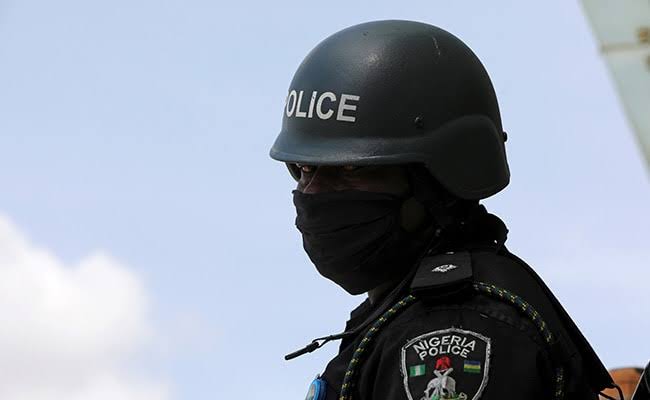
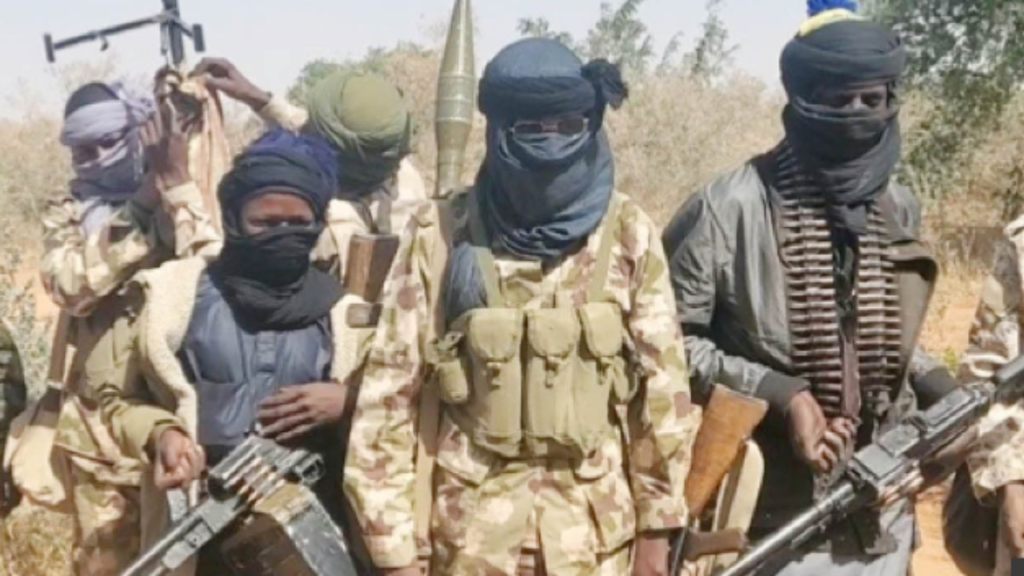
The Police Command in Kaduna State says its operatives have killed two suspected bandits in Riheyi village within Fatika district of Giwa Local Government Area (LGA) of the state.
The Command’s Public Relations Officer (PPRO), ASP Mohammed Jalige, made this known in a statement issued on Tuesday in Kaduna.
Jalige said that on Monday, at about 4.30 pm, the operatives of the Command attached to 47 PMF Squadron, Zaria, intercepted some bandits around the village.
He said the incident happened while the operatives were on confidence-building patrol within the same district of Giwa LGA.
Jalige said that the encounter which resulted in a heavy gun duel saw the police operatives having the last laugh.
“Having applied gallantry that successfully neutralised two bandits, they recovered an AK47 rifle loaded with ten rounds of 7.62 X 39mm live ammunition and an operational motorcycle,’’ he said.
Jalige said the Commissioner of Police (CP), Mudassiru Abdullahi commended the officers for their display of professionalism and courage to achieve the desired result.
He tasked all operational and tactical commanders to imbibe the culture of rigorous patrols in their areas of jurisdiction.
The PPRO said the CP noted that with the festive season around the corner, men of the underworld expectedly would like to perpetrate criminal activities.
“According to the CP, with the Police as the lead agency in internal security, the need for vigilance and proactive policing cannot be overemphasized.
“He warned that under his watch, dereliction of duty by any officer will be penalized accordingly, “Jalige said.
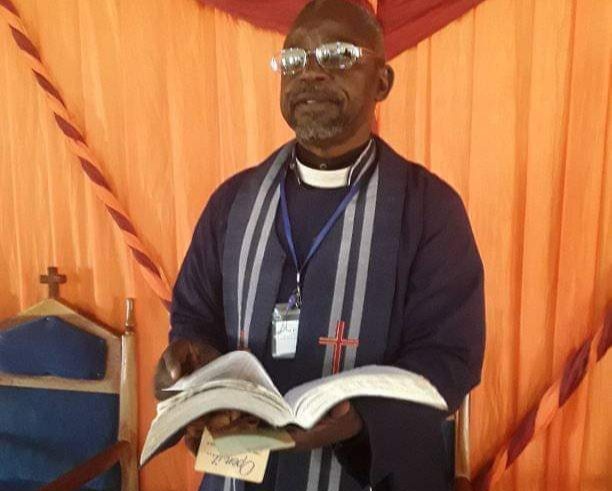
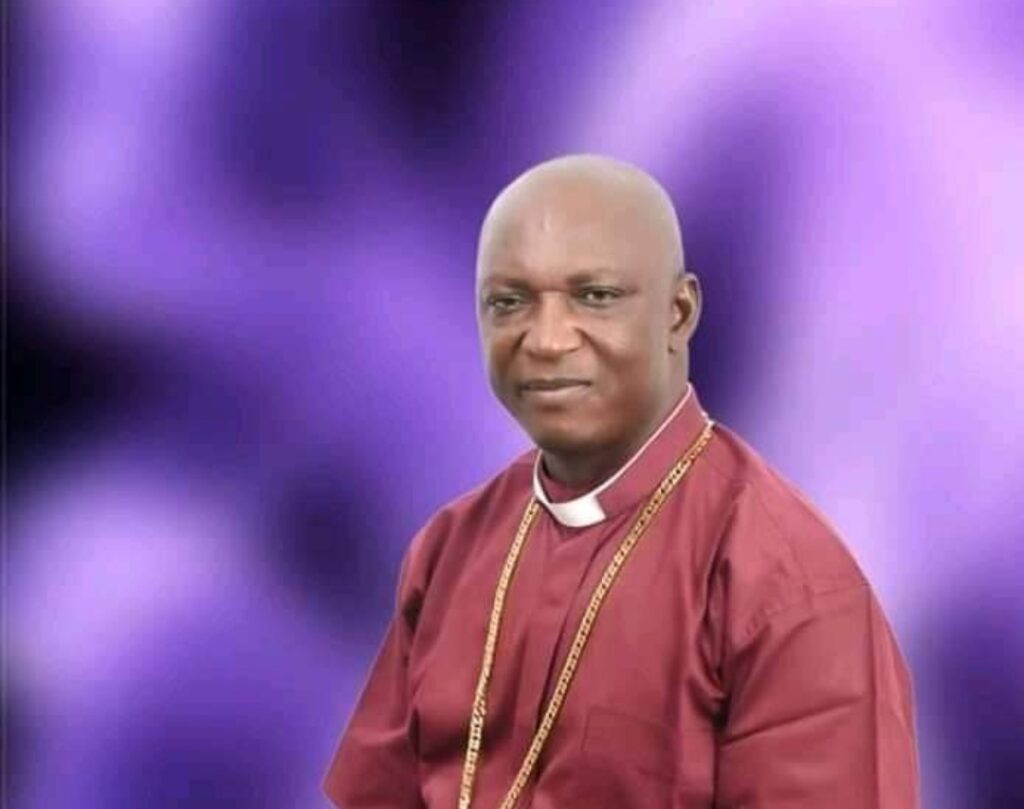
Terrorists operating in Kaduna state Northwest Nigeria have killed Rev Dauda Bature, the pastor in charge of the Evangelical Church Winning All (ECWA) Church Hayin Nariya in Igabi local government area of Kaduna state after receiving ransom from his wife.
The clergyman who was abducted on November 8 while working in his at Ungwan Kanti was reportedly killed a few days ago despite ransom paid to the terrorists for his release.
Confirming the ugly but not so strange incident, the Chairman Christian Association of Nigeria, Kaduna state chapter, Rev Joseph Hayab told Middle Belt Times that the terrorists called to inform Rev Bature’s wife a few days ago that he has been killed even though the news broke out on Friday.
Hayab said the wife of the slain clergy was also taken captive on November 18 when she took the ransom demanded to the terrorists.
“Ten days after the abduction of Rev Bature, his wife took the negotiated ransom to them but after collecting the money, they also abducted her in the guise that the money was not enough.
“They released her four days ago and most probably killed the Rev shortly after releasing his wife.” Hayab said.
Speaking further Rev Hayab said they believe that Rev Bature was killed by his abductors because he was a pastor and not because of money.
“If they really wanted more money, they could have waited for more money to be raised and not to kill him.
“We believe that Rev Bature was killed because he was a pastor and a preacher of the gospel.” He said.
Abductions and killings of clergymen is not new in Kaduna as pastors and their congregants have repeatedly been either abducted or killed by terrorists in the state.
Recall that in September, terrorists killed a pastor of the Evangelical Church Winning All (ECWA), Rev Silas Yakubu, who was on his way back from Kafanchan in Zango-Kataf local government area of the state.
In October, 65 members of Emmanuel Baptist church Kakau were abducted by terrorists during a church service in Chikun local government area of the state. Two of them abductees were killed while three others were injured while in captivity. The remaining abductees were released after ransoms were paid lady week.
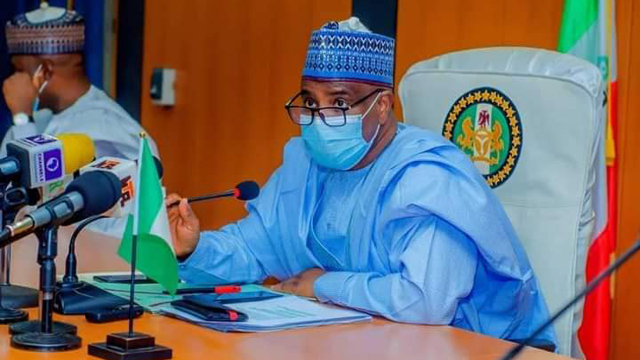
Governor Aminu Tambuwal of Sokoto state has called on President Muhammadu Buhari to intervene in the current security challenges bedeviling the state, saying that Sokoto state is in dire distress(sic).
Tambuwal made this call in an ex-tempore address on Friday December 10 when a high powered federal government delegation led by the National Security Advicer to the President, General Babagana Monguno, visited the state to condole him and the people of the state over the barbaric killing of 23 passengers by terrorists group on December 6, 2021 at Gidan Bawa community in Sabon Birni local government area of the state.
“It is with gratitude to Almighty God that we receive this important high level delegation of the Federal Government under the leadership of Mr President, Presu Muhammadu Buhari (GCFR) to Sokoto this very day, who are here to commiserate and condole the government and people of Sokoto state; in particular, the immediate families of those who lost their loved ones. It is indeed gratifying to receive you at this very hour of distress in which we are really emotionally touched.
“I am sure you are abreast of the development of that day, Monday, the 6th of December, when a commuter bus conveying about 43 passengers on their way to Kaduna was attacked by bandits. When the bus somersaulted, they continued with the firing until when they got to the fuel tank of the vehicle that went up in flames. Unfortunately, 23 of our beloved brothers and sisters lost their lives. We will continue to pray that Allah (SWT) will grant them Jannatul Firdaus; and, those of them who sustained injuries, be healed completely through His grace. May He continue to provide succor to the families of those affected. Mr NSA, we are consoled by this visit and concern shown to his citizens by Mr President. We are, indeed, very grateful for this show of love and concern.” He said.
The governor complained on the abrupt security operations embarked upon by the military in Zamfara state against the earlier plea of governors of the Northwestern states that a coordinated security operations be launched across the region simultaneously.
“As I have said some months ago, our situation in Sokoto state got worsened by the military operations in Zamfara state. The operations took us by surprise. I can tell you, Mr NSA, we the Governors of North-West have been appealing for this operations for the last four years. What we requested was that once the military is ready for the operations, it should be carried out simultaneously in Zamfara, Katsina, Kaduna, Kebbi, Sokoto and Niger states where we are having infiltration of these criminals. Unfortunately, Zamfara was isolated and this was what we got by Operation Hadarin Daji, which was carried out without any blocking force around the neighboring states, particularly speaking for Sokoto state. Also, the timing of the operation, whereby, unfortunately, our security agents do not have enough equipment to move to move and curtail and contain those that would pander towards Sokoto state, didn’t help. So, the timing and way the operation was carried out left Sokoto very vulnerable.
“We are, I must say, the NSA, in a very dire state of distress. Even this afternoon I got information that there was an attack in broad daylight in some parts of Isa local government. Yesterday evening, there were attacks in some parts of Sabon Birni. Kidnapping is still going on in some parts of Tangaza, Illela and several other local government areas of the state. It does appear as if those bandits pursued from Zamfara state have relocated to Sokoto state. This is a very serious call for concern.” He lamented.
A visibily disturbed Tambuwal, also called on President Buhari through the NSA to deploy more forces and resources to Sokoto to help curtail the activities of terrorists which has worsened in the last few weeks.
“I appeal, therefore, to you, and through you, to Mr President, Commander-Chief to deploy more resources to Sokoto state. There is need for more boots on the ground. I am familiar with the situation at the center, but I believe that something can be done, and, that should be done urgently and expeditiously because our situation is getting out of hand.
“We, Mr NSA, as I have said before, need to do more on the deployment of technology in this fight. This is not a normal fight. You know more than I do. So, we need more of technology than even the personnel, although we need both. But, we need more of technology deployment. So, NSA, we believe that it is time for Mr President, as he is being called upon, to consider recalling those retired personnel who are on the reserve list, because we know that the number of our personnel is very low; and, there is need for reinforcement. The first port of call should be those on the reserve list. We also need to recruit more personnel because we know our number in Nigeria, over 200 million people. Definitely, the Nigerian state is under-policed. We all know the situation.” He appealed.
The former House of Representatives Speaker, further stated that as governors of the country, they are with President Buhari, One hundred precent, saying that in Sokoto state, the state government has provided no fewer than 500 vehicles to security personnel to facilitate their operations in the state.
“We are with Mr President one hundred per cent as Governors of this country in taking every measure required to ensure that we nip this in the bud. Here in Sokoto state, you can verify this from the heads of security agencies. There is nothing they have asked of us that we have not done. Absolutely nothing. Since the commencement of this administration, we have given security personnel in Sokoto state not less than 500 vehicles. We are also doing whatever it takes in terms of funding from our own end despite the lean resources that we have as a state.
“I believe there is need for more synergy, personnel and equipment in Sokoto state. So, please, convey this our request to Mr President. We are in a very bad situation in Sokoto state and we need his intervention urgently.
Recall that daredevil terrorists on December 6 burnt some passenger vehicles conveying travelers, killing 23 people at Gidan Bawa community, an occurrence that sparked up protests across some cities in Northern Nigeria on Friday.
Youths in the region hit the streets on Friday, calling for an end to the incessant attacks and killings of innocent citizens in Northern Nigeria.
The Nigerian Army has said though thousands of terrorists and their families have laid down arms in the North-East, some of them have ulterior motives.
The Theatre Commander of Operation Hadin Kai, Maj.-Gen. Christopher Musa, disclosed that 20,000 insurgents and their families had laid down their weapons but some of the ‘repentant’ terrorists are not sincere.
The commander, who spoke on the sidelines of the Chief of Army Staff Conference in Abuja, added that another challenge the military has is that the insurgents use civilians as cover, making it more difficult for soldiers to kill them, the Nation reports.
He said: “We have over 20,000 combatants and their families surrendered. This tells you there is something we are doing right. What we do with them after surrendering is our next focus. The expectation is that after all have surrendered, then, everything will fizzle out. But, that is not the case.
“Frankly speaking, for us, this is a good development. A lot of people have been thinking and also expressing mixed feelings if at all the news is true. Of course, there are some insurgents who truly wish to surrender, but we cannot jettison the fact that some of them do have ulterior motives.
“Like I said, to us, this is good and if we follow it through in the right way, then, we may begin to see the end of this insurgency sooner than we actually think.”
According to Maj-Gen. Musa, the terror group has remained dangerous despite the death of its leader, Abubakar Shekau.
He said: “Before Shekau died, they (Boko Haram fighters) pledged allegiance to the Islamic State in the West African Province ISWAP and ISWAP gets its funding from foreign donors. It is the lust for these monies that have further emboldened them. This is why they overran Shekau. These people who are enemies of the nation, who do not want peace in Nigeria are the same people pushing ISWAP too. It has nothing to do with religion or any form of ideology, but is purely driven by the quest for money.
Dismissing public concerns that the Nigerian military has been outstretched by the security challenges in the country, he said, “No group can outstretch the Armed Forces of Nigeria. What people need to understand is, we in the military can easily be identified because we put on uniforms. These guys go on mufti and we cannot just go into a community and start killing everybody. If we have to do this, then, this fight would have ended since.
“But, what about the collateral damage on the part of innocent civilians? If we have to shoot, then, we must target the real trouble makers and not just anyone. This is the problem. They mingle among civilians. This is why it has become so dificult. If it is conventional warfare, we would have finished them a long time ago.”
Barely 48 hours after Imo State governor, Hope Uzodinma cried to President Muhammadu Buhari for help, over the security situation in the state, gunmen have again attacked another community in the state, killing some persons and injuring others.
Many residents at the attacked community, Etekwuru community in Ohaji/Egbema Local Government Area of Imo State, yesterday, began to leave the community in their numbers as armed men in motorcycle convoy invaded the community and allegedly killed many and damaged houses. Vanguard gathered from the Etekwuru community that villagers have abandoned their homes and fled into the bush as a result of the attacks.
The traditional ruler of the Etekwuru community, Eze Kenneth Okereke, confirmed the attack and said he was at the Police station regarding the incident but promised he would give the details of the attack later.
“Yes, my community was attacked by gunmen and I will speak on it later. I am at the police station for now,” he said.
An eyewitness who spoke to Vanguard said he could not give the reason for the attack but said the attackers were demanding that the villagers should vacate.
He said: “They were shooting everywhere as they entered different sections of the village. We cannot have the exact number of people dead or injured or the number of houses damaged.
“As you go you will see some people lying down and many houses destroyed. Tomorrow, we will know the extent of the damage and the number of deaths.
“We will also know the number of the houses destroyed. As I am talking to you, many people have fled the village into the bush and they sleep there. I don’t think they will come back for now.”
Another witness,Apostle Don Elem linked the incident to the level of insecurity in the community and called on the relevant government and security agencies to ensure that there is the security of lives and properties in the communities.
It should be recalled Imo oil communities have been under attacks by unknown gunmen for the past few months causing tension and loss of lives.
When the Imo State Police Public Relations Officer, was contacted he confirmed the attack adding that the command has commenced investigation into what happened.
A source in Imo State government said: “Top government officials are meeting in the Government House with security agencies to unravel the root cause of the continued insecurity situation especially in the oil communities of the state after the meeting decisions will be taken.”
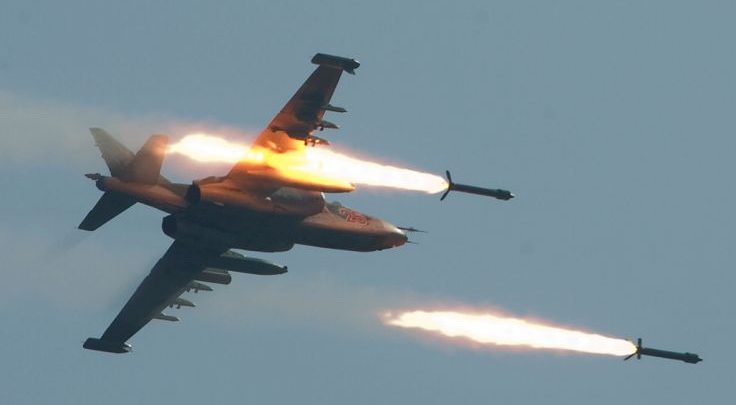
Following credible intelligence, fighter jets from the Nigerian Air Force, NAF, have bombed key enclaves of kidnapping and banditry in the Rijana axis, along Kaduna-Abuja Highway in Kaduna State.
PRNigeria gathered that the airstrikes also destroyed an armoury and a building occupied by a kidnapping kingpin, Ali Kwaja, and eliminated scores of bandits in the vicinity.
Bandits often use the enclaves as their staging points to carry out attacks on travellers and commuters on the Abuja -Kaduna Expressway.
An intelligence source told PRNigeria that recent attacks on unsuspecting travellers along the Kaduna-Abuja Expressway necessitated the increased surveillance and intelligence along the road and environs to uncover bandits’ activities and their modus operandi in the area.
The source said: “Most of the attacks along Kaduna-Abuja Expressway are orchestrated by bandits from Rijana-Kuzo axis.
“After confirming the location, the Air Component of Operation Thunder Strike scrambled fighter aircraft to take out the targets.
“Overhead the target area, armed bandits were seen gathered and were engaged. Some fleeing bandits after the initial strike were trailed to a location, about 4km Southeast of Kaduna State NYSC Orientation Camp and were subsequently neutralized.
“Furthermore, the Air Component destroyed a key bandits’ house at Kofita, after it was revealed that the building serves as a warehouse and staging location for most of the attacks in the area.”
Locals residing within a safe distance of the area also confirmed to our correspondent that over 45 bandits were neutralized at Rijana axis during the strike.
Terrorists have again invaded Jangali Bagoma in Birnin Gwari local government area of Kaduna State and kidnapped 36 persons. The incident occurred in the early hours of Sunday and yesterday.
Malam Abubakar Mohammed, who is a resident of Birnin Gwari disclosed this to journalists in Kaduna.
He said, “The bandits attacked the community yesterday and this morning (Monday) and kidnapped the villagers, including women and children.
“They didn’t kill anybody during the attacks. We are still gathering the figures of the people they kidnapped today (Monday)”.
He lamented that the bandits attacked the community twice within 24 hours, a situation he described as heartbreaking.
It would be recalled that bandits kidnapped over 50 residents of Ungwa Gimbiya in Chikun local government area in the early hours of Friday, 3rd December, 2021.
Mohammed said “Nigerians are no longer safe in their homes, these people are kidnapping our people anyhow, anytime.
“Our government should do something and end this kidnapping, we cannot continue like this,” he said.
He also called on the security agencies to put in more efforts in order to ensure the safety of Nigerians, he added.
When the police public relations officer, Mohammed Jalige, was contacted, he promised to confirm the incident and get back but did not do so as of the time of filing this report yesterday.
A socio-political group, Southern and Middle Belt Alliance (SAMBA), has demanded the immediate eviction of Fulanis from 102 communities in Plateau State.
SAMBA has also asked Plateau State governor, Simon Lalong to recover 102 communities allegedly annexed by armed Fulani herdsmen in the state.
SAMBA, in a statement signed by its spokesperson, Rwang Pam Jnr. on Sunday, decried what it called “the continuing invasion of Plateau communities by Fulani militia since 2001”.
“Government should uphold justice for the people of the state who have suffered from Fulani land grabbing and other crimes for many years,” he said.
SAMBA claimed that four local government areas of Barikin-Ladi, Bokkos, Riyom and Bassa were the worst affected by the activities of Fulani militia, which started in 2001.
The group said it is saddened by the development in Plateau State consequent upon which it threw its full weight behind a petition submitted to the Plateau State governor on November 26, 2021.
Emancipation Centre for Crisis Victims in Nigeria (ECCVN) and other associations namely Atakar Development Association (IDA), Berom Educational and Cultural Organization (BECO), Irigwe Development Association (IDA) and Ron Kunlere Development Association (RKDA) have petitioned the governor, anchoring it on the state’s Anti-Land Grabbing Law.
One hundred and two communities were listed in the petition as having been taken over by armed Fulani militia in the state.
SAMBA argued, “It is therefore imperative for the state government under the leadership of Governor Simon Lalong to act as a matter of urgency by declaring a state of emergency on the recovery of those lands.
“The governor must issue an express order of evacuation of all illegal occupants and users of lands, dams, ponds, streams, homes, and other properties; because peace can only reign when the issue of justice is addressed by the state government and its agencies.”
The communities said to have been annexed by the Fulani militia are as follows:
The Inter-Governmental Action Group against Money Laundering in West Africa, established by the Economic Community of West African States, says Boko Haram splinter group, Islamic State West Africa Province, moved about N18bn ($36m) generated from trading and taxing communities in the Lake Chad region through the Nigerian financial system annually.
The group, set up by ECOWAS Authority of Heads of State and Government in 2000, stated that both Boko Haram and ISWAP had continued to mobilise, move and utilise funds through the nation’s formal financial and commercial system.
It noted that the government lacked adequate insight into Boko Haram and ISWAP international linkages and abuse of the formal financial and commercial sectors.
It said even though the Department of State Services had significant ability to identify and investigate terrorist financing activity, and that it even conducts parallel financial and terrorism investigation, there was little evidence of the effectiveness of such efforts.
The group, known as GIABA, stated these in its 2021 Mutual Evaluation Report, where it also noted that Nigeria lacked an explicit policy to confiscate proceeds of crime or property of equivalent value, including terrorism financing.
It also said the Nigerian government, led by the President, Major General Muhammadu Buhari (retd.), failed to confiscate the assets of terrorists as stipulated in the global anti-money laundering and counter-terrorist financing standards.
Nigeria has been battling Boko Haram insurgency for about 12 years, during which thousands have been killed, including civilians and soldiers; several persons, including schoolchildren and women, were kidnapped with many still in captivity while millions have been displaced.
Meanwhile, the GIABA report was adopted by the global financial intelligence agency, Financial Action Task Force, whose recommendations help authorities to go after the money of criminals dealing in illegal drugs, human trafficking and other crimes.
The report stated, “Boko Haram/ISWAP pose significant TF (Terrorist Financing) risks that are challenging to disrupt, operating in large part outside the formal financial and commercial system in the conflict zone.
“In these areas, Boko Haram and ISWAP are mainly able to “live off the land” through a variety of means, including kidnapping for ransom, extortion and taxation, raiding and controlling commercial activity.
“As with other forms of illicit financial activity, the pervasive use of cash enables these groups’ funding. A study estimated ISWAP’s revenues, deemed larger than Boko Haram’s, at up to USD$36m annually, much of it from trading activity and taxation in the Lake Chad region.
According to Nigerian authorities, both groups have also continued to mobilise, move and utilise funds through the formal financial and commercial system as well, accounting for a relatively small portion of TF activity. These groups also engage in international trafficking activities and as sworn adherents to the Islamic State, also have links with other regional and global terrorist networks.
“The authorities believe that any external support from ISIS Core may account for a small portion of ISWAP’s overall revenues. However, trade with broader criminal networks that could extend to regional jihadist organisations appears to generate significant income for both Boko Haram and ISWAP.”
The Financial Action Task Force assessment noted that the Nigerian authorities did not prioritise terrorism financing investigations, as there were only a few terrorist financing prosecutions and convictions, which do not reflect the country’s risk profile in terrorist financing.
Notably, no individual, body or corporation has been convicted in Nigeria for funding terrorism since the insurgency started in 2009.
The Task Force said in the assessment, “Nigeria has a significant but incomplete understanding of its TF (terrorist financing) threats and risks. It lacks adequate insight into Boko/ISWAP’s international linkages and abuse of the formal financial and commercial sector. The authorities do not prioritise TF investigations, as there are only a few TF prosecutions and convictions which do not reflect Nigeria’s TF risk profile.
“The Department of State Services, Nigeria’s lead counter-terrorism agency, has significant ability to identify and investigate TF activity. It conducts parallel financial investigations in conjunction with terrorism investigations. However, there is little evidence of the effectiveness of such efforts.
“The content of TF-related Suspicious Transactions Reports submitted to the NFIU (Nigerian Financial Intelligence Unit) has not been of demonstrable value, appearing to add little to Nigeria’s CFT (Combating the Financing of Terrorism) efforts. The agency maintained that Nigeria did not demonstrate effective legal and operational frameworks for seeking international cooperation, including for the recovery and repatriation of assets.
“Nigeria did not demonstrate that it prioritises and provides constructive information or assistance, including adequate, accurate and current basic and beneficial owner information of legal persons promptly.”
It noted that the nation recently enacted the Mutual Legal Assistance in Criminal Matters Act, 2019 to streamline processes for mutual legal assistance
The financial task force observed that the larger commercial banks and those affiliated with international groups have a good understanding of money laundering and terrorism financing risks.
In this report, Steven Kefas attempted to look at the recent decision of the American government to delist Nigeria from the blacklist of religious freedom violators, He spoke with Award winning investigative Journalist, David Hundeyin, The Kaduna state Chairman of the Christian Association of Nigeria (CAN), Rev Joseph Hayab and others on the subjectmatter.
File photo: Terrorists operating in North-West Nigeria
Christians in Zamfara state, North West Nigeria have been told to stop holding worship services and to shutdown churches or risk ferocious attacks by terrorists operating in the troubled state. The state has been ravaged by terrorists activities blamed on Fulani militias and other terrorists elements.
A police spokesman in Zamfara state, DSP Mohammed Shehu, confirmed the threat letter to Saharareporters, saying that “We are on top of the threat.”
“Yes, I can confirm that it’s true, a threat letter was sent to the Christians in Zamfara State to stop worship and to close churches.
“Actually the police informed the Christian leaders about the threat.
“Accordingly the CP has invited the leadership of the Christian Association of Nigeria (CAN) in the state to discuss security measures around the churches.
“In that regard, a special squad has been created by the CP to patrol and protect worshippers, especially on Sundays.
“Additionally, plain-clothes personnel have been deployed for intelligence gathering and to unravel those behind the threat letter,” he said.
The threat is coming few days after the U.S. government delisted Nigeria from its religious freedom blacklist, a decision the United States Commission on International Religious Freedom (USCIRF) said it finds ‘unexplainable’.
“USCIRF is disappointed that the State Department did not adopt our recommendations in designating the countries that are the worst violators of religious freedom,” said USCIRF Chair Nadine Maenza. “While the State Department took steps forward on some designations, USCIRF is especially displeased with the removal of Nigeria from its CPC designation, where it was rightfully placed last year, as well as the omission of India, Syria, and Vietnam. We urge the State Department to reconsider its designations based on facts presented in its own reporting.” The Agency said in a statement.
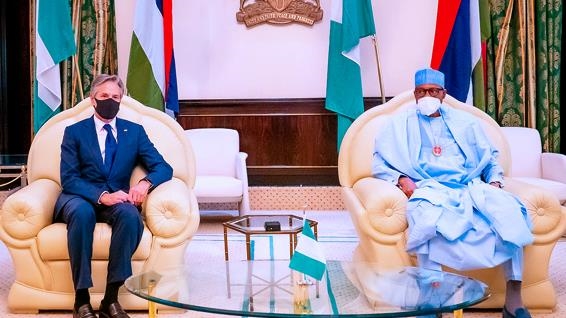
The announcement made by the U.S government on the removal of Nigeria from the CPC list preceded Secretary Blinken’s visit by 24 hours, this has caused some Nigerians to believe that politics and tactical lobbying from both parties may have instigated the decision of the U.S. government to remove Nigeria from the blacklist and not necessarily any improvement in religious freedom in the country.
File photo: Secretary Blinken and President Muhammadu Buhari during the former’s visit in November
Speaking on the removal of Nigeria from the religious freedom violators blacklist, in a report he titled “The Untold Stories of Religious Persecution in Nigeria”, the Chairman Christian Association of Nigeria (CAN) Kaduna state chapter, Rev. Joseph Hayab said the decision of the U.S. is appalling.
Rev John Joseph Hayab, Kaduna state CAN Chairman
“The US’s delisting of Nigeria from its list of violators of religious liberty is appalling, as the persecution of Christians is still at its peak. Besides, the Nigerian government hardly engages Nigerians to deliberate the challenges of insecurity, possibly because her own hands are not clean. The awful part is not only that the Nigerian government fails to engage Nigerians to find the way out of the insecurity the country is faced with, but that the government is known for blaming victims of insecurity for ‘not being careful enough,’ vindicating banditry and its perpetrators.
“Moreover, whenever any Nigerian openly speaks against the insecurity in the country, particularly the failure of government to tackle the bandits, he or she is branded as ‘antigovernment’, typifying why most pastors and bishops of megachurches in Nigeria are afraid to speak out. Thus, the U.S. State Department ignored the worsening insecurity in Nigeria, declaring that placing the country on the list of “Countries of Particular Concern” (CPC) for religious freedom could jeopardize the work of the US Office of International Religious Freedom in Nigeria.” Hayab said.
Rev. Hayab who was among those privileged to meet with the visiting secretary Blinken during his visit to Nigeria, said he expressed the disappointment of Christians in Nigeria over the U.S.’ decision to delist Nigeria from the CPC list.
“When I met with Antony John Blinken, the US Secretary of State, during his recent visit to Nigeria, as one of the five civil society representatives, I expressed how disappointed the Christians in Nigeria were following the US’ deletion of Nigeria from the CPC list. What I said to Blinken was that because Nigeria still has grave problems with religious persecution, his action was like that of a doctor discharging a patient from the hospital, even though the patient was critically ill. What that signifies is telling the patient to go home and die.
“Manifestly, the US was either ill-advised or purposely does not care about what happened to Christian in Nigeria. It also appears that the State Department does not fully comprehend that there is a grand plan by the current regime in Nigeria to impoverish and weaken the Christian community without letting the international community notice it. To achieve the grand plan, the government employed highly professional lobbyists to convince the State Department to arrive at such an unpopular decision, removing Nigeria’s name from the list of countries violating religious freedom.” He said
“As a Nigerian, I do not wish our country evil, but the reality is that citizens are daily persecuted because of their religious leanings. When I read the statement that the US Secretary of State removed Nigeria from the CPC list, it seemed to me that he wanted to make a statement that would water down whatever tension there was before he arrived in Nigeria, as that statement was not issued until a day or two before his arrival.” Hayab said.
Hayab further stated that religious freedom cannot be said to have improved in Nigeria going by the realities on ground.
“For the record, Nigeria at this moment cannot be said to have improved in its handling of people and issues based on faith. Only a day before the meeting with Blinken, the bandits who kidnapped 66 worshippers at the Emmanuel Baptist Church (Kakau Daji, Chikun Local Government Area of Kaduna State) released a video showing themselves killing some of their captives.
“In the video, the bandits took five young men between the ages of 15 and 24 from among the kidnapped, acting as if they were to be released. When the victims came near to their homes, the bandits opened fire, killing two instantly. The third died later. All three have been buried by the church.
“In the same video, in which many of the captives in the bush were forced to appear, the bandits said they were attacking Christians and that Christians will suffer at their hands. How could a country where such a crime is ongoing without any tangible efforts by the government(s) to halt the evil be removed from the list of countries where religious persecution is a problem? Therefore, the decision has no basis. I add that when we talk about insecurity, there is often a misconception among Nigerians that it is a question of Muslims versus Christians, but I see what is happening to the Shi’ites as religious persecution as well.
“Today, we have so many IDP camps all over the country. Religiously motivated killings are taking place, as well as the religiously motivated sacking of communities by bandits. I can tell you categorically that those violations are ongoing. For instance, just this week, bandits in Zamfara State issued a threat to Christians to “shut down churches or risk attacks.” The story, reported by Sahara Reporters online on the 29th of November 2021, is said to have been confirmed by the State Police, saying that they were “on top of the threat.” The fact is that insecurity is growing by the day. So, let’s call a spade a spade.” He said.
Religious and Non-faith persecution in Nigeria
Religious Freedom and freedom to practice faith of choice has remained a source of major concern for Christians, some Muslim sects and other non-faith citizens in Nigeria.
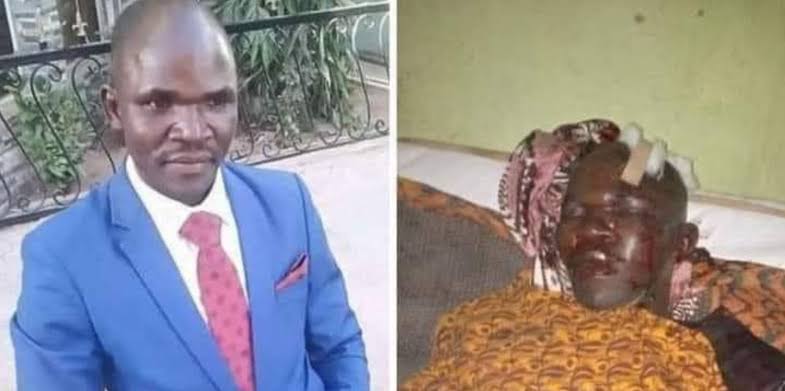
In September this year, a Christian cleric, Rev. Shuaibu Yohanna was gruesomely murdered by Muslim youths in the ancient city of Kano following little misunderstanding bordering on his missionary works in the Muslim dominated state.
The slain Reverend, a Northeastern Evangelist of the New life Church, lived in a village called Massu in Sumaila local government area of Kano state with his wife and children.
Testimonies abound about his exploits in the vineyard of the Lord. Mobilising funds to build schools, providing potable water to both Christians and Muslims in his community.
His good works couldn’t make him immune to the barbarity of the Kano Muslim extremists who at the slightest or no provocation descend on their victims with utmost cruelty even before ascertaining their guilt.
Reverend Shuaibu, believed to have facilitated the conversion of many Muslims in the area to Christianity met his untimely death when some muslim youths, over 50 in numbers according to his daughter, accosted him and began butchering him like ram to be used for barbecue.
Eyewitness accounts revealed that the Missionary was killed because, one of his converts who recently got converted but neither attends church service nor mosque had a fight with his sister in-law (brother’s wife) and he hit her with a piston and she died.
Why would Reverend Shuaibu pay for a crime he didn’t commit? Why wasn’t he given the opportunity of being tried by a court of competent jurisdiction? Religious intolerance of course is the answer.
Rev. Yohanna Shuaibu: Facebook
Similarly, a self-proclaimed atheist, Mubarak Bala has been in a Kano detention facility over alleged blasphemous Facebook post even though his supporters believed he is being detained for being an atheist in a Muslim dominated state like Kano.
Bala who is also the president of Nigerian Humanist Association is being accused over a Facebook post criticizing prophet Muhammad an act that is considered blasphemy and can carry a death sentence in Nigeria’s mostly Muslim society where Sharia laws are enforced along with the common laws.
Self-aclaimed Atheist, Mubara Bala: Facebook
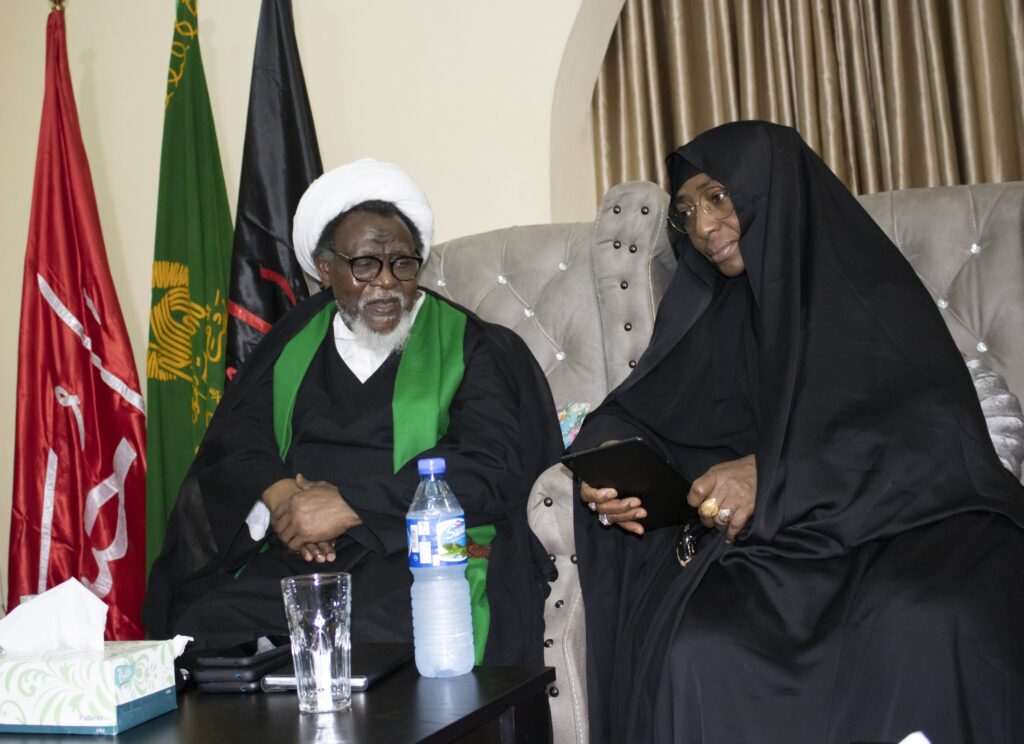
Members of the Islamic Movement I Nigeria otherwise known as Shiites have repeatedly come under intense persecutions by the Nigerian state. In 2015 at least 348 members of the sect were killed by a combined team of the Nigerian police and military after some fracas with the convoy of then Chief of Army staff, Lt. Col Tukur Buratai. It’s national headquarters otherwise known as Hussainiya was also destroyed by the government. Leader of the movement, Sheik Ibraheem El-Zakzaky whose children were among those killed was arrested alongside his wife and detained for over five years despite several court rulings ordering their release.
In an interview with Iranian government owned Television, Sheikh El-Zakzaky narrated his ordeals in the hands of the Nigerian state.
“I have a total of 38 bullet fragments in my body, and also my wife has several gunshot on her stomach and thigh.” Zakzaky said.
Sheikh Ibraheem El-Zakzaky, Leader of the Islamic Movement in Nigeria
The Nigerian government has made it a sort of point of duty to always attack the Zakzaky’s members whenever and wherever they are protesting or holding processions peculiar to their sectarian calendar.
In September, the sect said that 8 of its members were killed by the police in Abuja during an annual procession, an accusation the police denied even though images circulated on the social media proved otherwise.
What Some Nigerians think about the U.S.’ delistment of Nigeria from the CPC
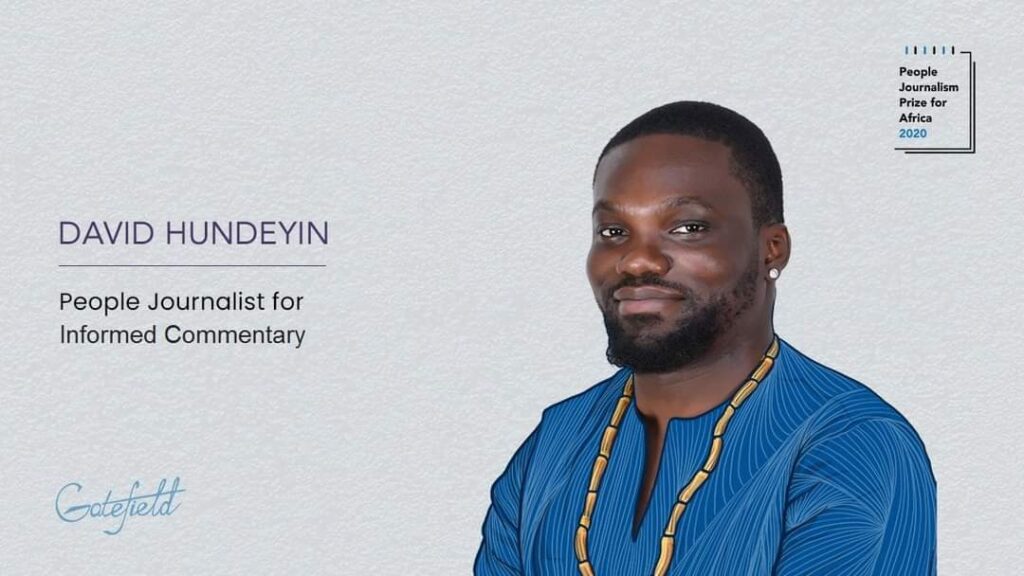
Speaking exclusively to Middle Belt Times, popular award winning Investigative journalist, David Hundeyin, said that religious freedom violation in Nigeria has worsened since the country was designated a country of particular concern (CPC) by the Trump administration in the year 2020. Hundeyin who has repeatedly said he is faithless also described the delisting of Nigeria by the Biden administration as political.
David Hundeyin: Facebook
“From my understanding, not only has the situation not improved since 2020, it has actually worsened. The delisting of Nigeria by Secretary Blinken to my eyes, is a strategic mistake driven by politics and lobbying, as against the force of reality, facts and verifiable data.
“I believe that there is a significant disconnect between urban Nigeria and the rest of the country, which is why to many urban Nigerians as well as to foreigners who only visit urban Nigeria when they come here, there appears to be no significant restriction on religious freedoms.
“What these people need to understand is that in rural Nigeria, particularly in the Middle Belt and the North, practicing Christianity or any other faith other than Sunni Islam can be, and often is a literal death sentence. That is no exaggeration.” He said
The “Conflakes for Jihad” author who is currently on exile over repeated threats to his life, also made reference to a publication titled “Silent Slaughter”, saying that the report speaks volume about the religious persecution ongoing in the Middle Belt region and other parts of Northern Nigeria.
“The report titled “Silent Slaughter: Genocide in Nigeria and its Implications for the International Community” details an ongoing campaign of directed terror attacks and genocidal actions against Christian groups in these parts of the country. This report was presented to former US VP Mike Pence, as well as former Secretary of State Mike Pompeo, and it contributed to the listing of Nigeria among countries of particular concern for violating religious freedoms.” Hundeyin said.
Also speaking exclusively to Middle Belt Times, Zacham Bayei, a memeber of the Atheist Society of Nigeria (ASN) and a staunch advocate for the fundamental human rights of freethinkers in Nigeria, Africa and the world at large said it is inhuman and illegal to arrest people for freely expressing their views on religion or ideology
Freethinker Zacham Bayei
“My brother, you know it is inhuman, illegal and wrong to arrest a person that freely expresses his or her views on religion or any ideology.
“If their god or deity is active, let him or her attack those that criticize him or her, why are his or her faithful doing the attack? Something is wrong somewhere!” Bayei said
When asked to comment on the recent removal of Nigeria from the list of religious freedom violators by the U.S. government, Bayei said that the United states was wrong to have remove Nigeria from the blacklist, saying that religious freedom is still under threat.
“They were wrong for doing that because it is crystal clear that Buhari’s led APC government has and still violating the rights of religious and non- religious groups in this country.
“Take for instance, the broad day killing of Shiite Muslims minority under his watch. They are citizens of Nigeria and have the right to peaceful protest, but we see armed state actors shooting life bullets into them whenever they come out to protest the illegal detention of their leader Sheik Ibrahim El-Zazzaky.
“Also, we’ve seen mass killing of Christians in their homes and churches destroyed by Fulani jihadists in Southern Kaduna, Plateau, Benue, Kogi, Taraba, Adamawa, Niger states without arrests, and the perpetrators being brought to book.
“We’ve also seen the arrest and detention of the then President of Humanist Association of Nigeria (HAN) by security agents over his Facebook post without trial in prison for over a year.” He said
Just like Hndeyin, Bayei believes that the delisting of Nigeria from the religious freedom violators blacklist is both political and economical, saying that it may not be unconnected with the Buhari led administration to accept the IMF’s recommendations concerning the removal of fuel subsidy rumoured to be in effect by early 2022.
“My take on the US removing Buhari’s government from the list of religious right violators is that, it is a ploy for him to blindly accept the IMF recommendations of the removal of fuel subsidy by 2022, which was tipped to create more hardship on the toiling masses of Nigeria. In other words, Buhari’s government body language over the persecution of other religious and non- religious groups speaks volumes.” Bayei said.
Way forward for the U.S. and Nigeria
The U.S. government must reconsider it’s decision on the removal of Nigeria from the CPC list, if indeed America wants to continue to be seen by the different faiths and religions under persecution in Nigeria as a country that supports the rights of people of diverse faiths and religion.
The Nigerian government on the other hand must show political will and courage in fighting all forms of religious and other faith based extremism in the country. Terrorists who use religion as guise to perpetrate crimes against humanity must be dealt with using the full wrath of the law of the country and not being rewarded.
Government polices such as Operation Safe Corridor which gives room for reintegration of terrorists into the Nigerian society must be reviewed considering the fact that some of these reintegrated terrorists often return back to their vomits.
Government officials at all levels must desist from making incendiary utterances that are capable of pitching one faith against another in the country.
The Nigerian parliament also needs to come up with laws that will make extremism and terrorism unattractive to both existing and prospective terrorists in the country.
The Nigerian judiciary must give priority to cases related to violent extremism and terrorism, and maximum punishments must be meted out to those found guilty of such.