Middle Belt: A Region of Rich History & Unique Identity

By

Kingsley Gadani

The Middle Belt of Nigeria, often referred to as the “Middle Belt Region,” is a diverse and historically significant part of the country. Encompassing a vast expanse of land. This region has played a crucial role in the socio-cultural and political tapestry of Nigeria.

The history of the Middle Belt is rich and multifaceted, shaped by various ethnic groups, migrations, and interactions. Historically, the Middle Belt has been home to a mosaic of ethnicities, including the Berom, Tiv, Idoma, Nikyob, Ninzom, Nupe, Gbagyi, Atyap,Egede, Igala, Bassange, Siyawa, Afizare, Chawai, Adara, Bajju, Ham, Eggon, Mada, Gwong, Gure, and many others. These groups have distinct languages, traditions, and cultural practices that have contributed to the region’s unique identity.

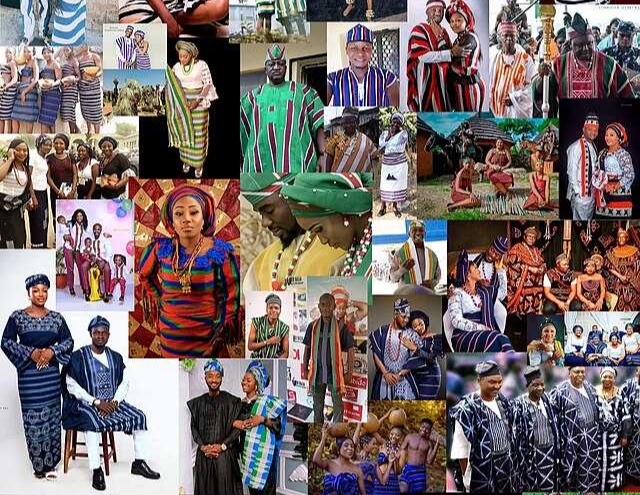
The geographical location of the Middle Belt, sandwiched between the predominantly Muslim North and the largely Christian South, has further influenced its cultural and religious diversity. The belt cut across Southern Bauchi, Southern Borno, Gombe, Adamawa, Southern Kaduna, Niger, Southern Kebbi and the entire central parts of present-day Nigeria. The people of the Middle Belt practice various religions such as Islam, Christianity and African Traditional religions (ATRs). The region is adjudged one of the most hospitable regions in Nigeria which informed its accommodating nature to all other Nigerians from different parts of the country. One unique feature of the people of the Middle Belt is their way of life. Style of farming, mode of dressing, hair styles, marriage and other traditional ceremonies follow similar pattern across the belt, lending credence to the argument that the people of the area are siblings from one ancestry.

The pre-colonial era saw the emergence of powerful kingdoms and chiefdoms in the Middle Belt. The Nok civilization, one of the earliest Iron Age cultures in West Africa, flourished in what is now Southern Kaduna and Plateau State. The Kororofo Kingdom is another powerful kingdom that reigns in the Middle in the pre-colonial era. These ancient societies engaged in agriculture, iron smelting, and artistic endeavours, leaving behind intricate terracotta sculptures that serve as archaeological treasures.   

The arrival of colonial powers in the late 19th century marked a transformative period for the Middle Belt. The British administration, in its quest to establish control and facilitate trade, introduced indirect rule, relying on local chiefs and traditional institutions. This strategy often exacerbated existing tensions between different ethnic groups, as the colonial authorities favoured certain communities over others.

Post-independence, the Middle Belt continued to experience social and political dynamics. The region has witnessed episodes of communal and ethnic tensions, partly fuelled by competition for resources, political power, and religious differences. The quest for autonomy and self-determination has been a recurring theme, with various groups advocating for recognition and representation.

The Middle Belt has also played a significant role in Nigeria’s political landscape. Several prominent political figures have emerged from the region, contributing to the country’s military, governance, and development. However, political instability and challenges persist, reflecting the complex interplay of factors within the region. In recent times, issues such as killings of genocidal proportion blamed on armed Fulani herdsmen, resource competition, and ethno-religious tensions have brought the Middle Belt to the forefront of national discourse. The region’s strategic importance, both geographically and culturally, underscores the need for sustainable solutions to address historical grievances and foster inclusive development.

In conclusion, the history of the Middle Belt of Nigeria is a captivating narrative of diversity, cultural richness, and resilience. Shaped by ancient civilizations, colonial influences, and contemporary challenges, the region continues to evolve, contributing significantly to the mosaic of Nigeria’s identity. Understanding the historical complexities of the Middle Belt is crucial for fostering unity, addressing grievances, and building a more harmonious future for this vital part of the country.

Kingsley Gadani is a public affairs commentator, and researcher. He writes from Kaduna Nigeria

Kukah @71: Still Standing Tall Against All Odds

By Simon Reef Musa

Last Thursday, August 31, 2023 marked the 71st birthday of the Bishop of the Sokoto Catholic Diocese, Dr Matthew Hassan Kukah. What is there left to be told of a man whose footprints have ignited public consciousness on the raging injustice and discrimination, thereby forcing national leadership to quake anytime he speaks or writes?

After three scores and a half, plus a year, still counting and growing stronger, this noble cleric, robed in astounding cerebral power, remains a conscience irritant devoted for interrogating our gloomy present and frightening future, using the past as the starting point in determining source of our dilemma. Presently, he is more seen, and rightly so, as a consummate intellectual of national and global reputation, than a religious leader engaged in bringing the gospel of Christ and denouncing the manipulation of ethnicity and religion for political power.

Coming from nowhere!

His emergence on the national and world scene is far less important than the miracle of someone coming from nowhere and arriving at the mountain top of his calling. Armed with knowledge that attests to his scholarly excellence, His Lordship has continued to offer irrefutable truths on how to survive the many curves of Nigeria’s numerous challenges, thereby demonstrating the quintessence of his status as an unquestionable cerebral power house.

His village, Anchuna, in the southern part of Kaduna state, would still have remained an invisible dot somewhere in the middle of nowhere, if not for his footprints on the sands of both religion and intellectualism that have refused to be diminished.

Former President Olusegun Obasanjo had, during one of his visits to Kaduna State, I was told but yet to verify, requested then Governor Mohammed Ahmed Makarfi, to pass through the Bishop’s village. The governor, according to the story, told his guest that the road to Anchuna was not motorable and getting there could affect the official schedule of the then president.

Shocked at the response of his host, Obasanjo asked: “Then, what are you doing about it?”

That probably was one of the reasons why Makarfi embarked on massive construction of roads all across the southern part of the state. Sadly, after the Makarfi-led administration, no major construction of such magnitude has been witnessed. Nearly 20 years after, one needs to drive a truck to survive the suffocating ordeal involved in traveling through southern Kaduna bad roads.

If Bishop Kukah’s prominence came as a gift; his commitment to academic excellence and projecting the cause of humanity enabled him to become one of our nation’s greatest public intellectual. As a truly God-called cleric of an outstanding status, the Bishop continues to hold the Bible firmly in the quest for a better country where all are equal partners in nation-building. The cerebral excellence that is possessed by the Founder of The Kukah Centre has turned him into an anvil against forces promoting injustice and corruption unleashed on poor citizens.

Unafraid of criticisms

Despite his relentless advocacy for an equitable nation, some of his critics, overwhelmed by his ceaseless calls for transparent leaderships at all level, have challenged him to quit the pulpit and join politics. Sadly, those close to him know that he is neither a politician. His lordship knows where he is coming from, and is irreversibly resolved to make his nation warmer for the voiceless and powerless of our society.

Without wealth and political power, this religious leader of national and global standing, has deployed his brain power in galvanising the populace and tasking the conscience of leaders to install a fair society.

Former editors of media, who once mounted pressure on reporters to get interviews with the Bishop, now ask: “Who listens to him again?”. It is strange that men and women of the pen profession, who are supposed to serve as comforters of the afflicted, wrote their ways to power and became comfortable with men and women of power, after becoming turncoats and armour bearers of oppressive leaders. Indeed, many, if not all critics and writers, have their price tags. Little wonder, most of the times, our country has been left to the mercy of the preying leaders, while the task of demanding leaders to be accountable relegated.

It is the yawning gap caused by the failure of those mandated to demand accountability from leadership that has paved the way for the rise of Bishop Kukah. Anyone with a conscience, and the Reverend Father from Anchuna has it in bags, must be in a state of shock at the incredible speed our nation has decayed and cascading down the slippery slope of frightening uncertainties.

Always in the public interest

Blessed with an unquestionable capacity for both written and oral delivery, the erudite priest has traversed our nation’s inquest laboratory in exploring challenges confronting our country. Those endowed with incomparable academic prowess rarely laugh at the inanities and follies of people involved in the promotion grotesque injustice. It is an astonishing fact that Bishop Kukah, though not a stranger to the tribulations of his nation, is still excitedly hopeful that the sun of prosperity will still rise over Nigeria.

Though misunderstood by many and admired by millions of his countrymen and women who believed in the worthiness of his cause, Bishop Kukah’s commitment for the common good sets him apart as a priest, devoted humanist and public intellectual who is never afraid of the debating the blustery entity called Nigeria.

Notwithstanding the many troubles shredding our country, the Bishop has continued to stand tall in the midst of raging storms and providing illumination on issues unsettling Nigeria’s quest for unity and development. He is always up in arms against those opposed to the emergence of an egalitarian society devoid of injustice for all groups. As our Bishop walked past 71 years, the Bishop must not lower his guard against those who are benefiting from our debauched and depraved systems. I join my faith with his in the hope that someday, and not in the distant future, Bishop Kukah’s dream for an equitable country he loves so much shall come to pass in his life time.

Retirees, It May Be Time To Get Your Head Out Of The Sand

Intro text we refine our methods of responsive web design, we’ve increasingly focused on measure and its relationship to how people read.

A wonderful serenity has taken possession of my entire soul, like these sweet mornings of spring which I enjoy with my whole heart. Even the all-powerful Pointing has no control about the blind texts it is an almost unorthographic life One day however a small line of blind text by the name of Lorem Ipsum decided to leave for the far World of Grammar. The Big Oxmox advised her not to do so, because there were thousands of bad Commas, wild Question Marks and devious Semikoli, but the Little Blind Text didn’t listen.

On the topic of alignment, it should be noted that users can choose from the options of None, Left, Right, and Center. In addition, they also get the options of Thumbnail, Medium, Large & Fullsize.

And if she hasn’t been rewritten, then they are still using her. Far far away, behind the word mountains, far from the countries Vokalia and Consonantia, there live the blind texts. Separated they live in Bookmarksgrove right at the coast of the Semantics, a large language ocean. A small river named Duden flows by their place and supplies it with the necessary regelialia.

A wonderful serenity has taken possession of my entire soul

On her way she met a copy. The copy warned the Little Blind Text, that where it came from it would have been rewritten a thousand times and everything that was left from its origin would be the word “and” and the Little Blind Text should turn around and return to its own, safe country.A wonderful serenity has taken possession of my entire soul, like these sweet mornings of spring which I enjoy with my whole heart. I am alone, and feel the charm of existence in this spot, which was created for the bliss of souls like mine. I am so happy, my dear friend, so absorbed in the exquisite sense of mere tranquil existence, that I neglect my talents.

But nothing the copy said could convince her and so it didn’t take long until a few insidious Copy Writers ambushed her, made her drunk with Longe and Parole and dragged her into their agency, where they abused her for their projects again and again.

Far far away, behind the word mountains, far from the countries Vokalia and Consonantia, there live the blind texts. Separated they live in Bookmarksgrove right at the coast of the Semantics, a large language ocean. A small river named Duden flows by their place and supplies it with the necessary regelialia. It is a paradisematic country, in which roasted parts of sentences fly into your mouth.

What to do in Uluwatu Bali

Walk down the Uluwatu beach

A collection of textile samples lay spread out on the table – Samsa was a travelling salesman – and above it there hung a picture that he had recently cut out of an illustrated magazine and housed in a nice, gilded frame. It showed a lady fitted out with a fur hat and fur boa who sat upright, raising a heavy fur muff that covered the whole of her lower arm towards the viewer.

Gregor then turned to look out the window at the dull weather. Drops of rain could be heard hitting the pane, which made him feel quite sad. “How about if I sleep a little bit longer and forget all this nonsense”, he thought, but that was something he was unable to do because he was used to sleeping on his right, and in his present state couldn’t get into that position. However hard he threw himself onto his right, he always rolled back to where he was.

One morning, when Gregor Samsa woke from troubled dreams, he found himself transformed in his bed into a horrible vermin. He lay on his armour-like back, and if he lifted his head a little he could see his brown belly, slightly domed and divided by arches into stiff sections. The bedding was hardly able to cover it and seemed ready to slide off any moment. His many legs, pitifully thin compared with the size of the rest of him, waved about helplessly as he looked. “What’s happened to me? ” he thought. It wasn’t a dream.

His room, a proper human room although a little too small, lay peacefully between its four familiar walls. A collection of textile samples lay spread out on the table – Samsa was a travelling salesman – and above it there hung a picture that he had recently cut out of an illustrated magazine and housed in a nice, gilded frame.

Hidden beach paradise that Balinese would never tell you

Before you get started, please be sure to always search this Documentation, and also watch our Video Tutorials. If you have further questions beyond the scope of this Documentation, please don’t hesitate to contact us. We’ll do our very best to reply as promptly as possible.

Lonely girl waiting for a loved one on the beach

It is a paradisematic country, in which roasted parts of sentences fly into your mouth. One morning, when Gregor Samsa woke from troubled dreams, he found himself transformed in his bed into a horrible vermin. He lay on his armour-like back, and if he lifted his head a little he could see his brown belly, slightly domed and divided by arches into stiff sections. The bedding was hardly able to cover it and seemed ready to slide off any moment.

It showed a lady fitted out with a fur hat and fur boa who sat upright, raising a heavy fur muff that covered the whole of her lower arm towards the viewer. Gregor then turned to look out the window at the dull weather. Drops of rain could be heard hitting the pane, which made him feel quite sad.