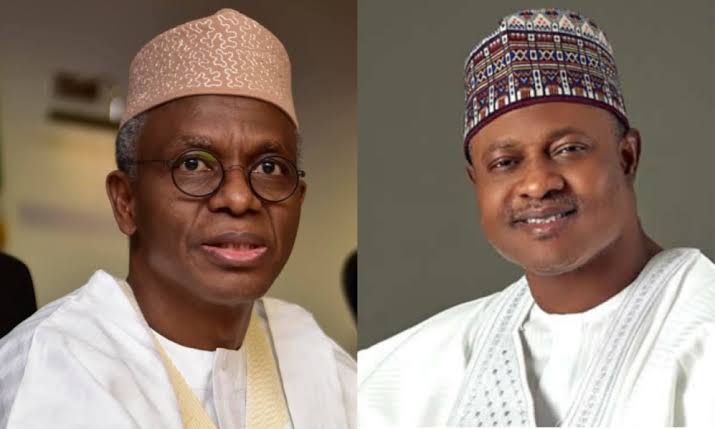
EL-RUFAI AND UBA SANI: THE “MENTOR” SHOULD LEARN FROM HIS “MENTEE”

By Moses Ochonu

Nasiru El-Rufai is Exhibit A for why people with zero emotional intelligence should never be entrusted with consequential positions of leadership.

In his wide-ranging interview with Seun Okinbaloye of Channels, Nasiru El-Rufai said “I dealt with” Southern Kaduna leaders. He also said “I dealt with the IMN [Shiites]who are Muslims like me.” He then said “I don’t care what the people of Southern Kaduna think of me.”

Anyone with a rudimentary knowledge of psychology knows that whenever someone says this, they are actually bothered by the thing that they claim does not bother them.

That is by the way.

What he sought to suggest is that the people of Southern Kaduna made irrational, entitled demands on him, which he rejected. He claimed specifically that they requested fifty percent of appointments.

This is flat out inaccurate since the people of SK, who occupy one out of three senatorial constituencies, had made no such demand in even in prior PDP administrations that they helped elect nor had they been given that.

Even under the governorship of perhaps the most inclusive governor who is universally regarded as the biggest political friend of Southern Kaduna, Ahmad Makarfi, SK didn’t get anywhere near 50 percent of political appointments and never demanded it.

If he’s wondering why the people of Southern Kaduna detest him so much, perhaps he should cultivate a brief moment of humility and reexamine the humiliation he inflicted on them.

With his utterances and actions, he openly sided with the bandits and killers who were killing, maiming, and destroying freely in Southern Kaduna.

He even paid the killers and compelled the people of SK, in a final act of humiliation, to put up signboards apologizing to their killers. He later defended this on multiple national media platforms when confronted.

El-Rufai dismembered some of the chieftancies of the people of SK, the product of a decades-long struggle, and arbitrarily created new emirates in their place or parallel to them.

El-Rufai arbitrarily removed or humiliated some Southern Kaduna chiefs he deemed too independent or recalcitrant.

His tyrannical bent caused him to jail some Southern Kaduna leaders on trumped up charges that were eventually and predictably thrown out in court.

El-Rufai vindictively refused to extend any gesture or dividend of governance to Southern Kaduna, ignoring the cries of the people for protection against ethnic cleansing armed herdsmen.

He also wickedly ignored their cries for basic infrastructure. When confronted about these unprecedently brazen acts of political bigotry, he said the people did not vote for him and would never vote for him even if he selected Jesus Christ as his running mate (his own words).

He was, in other words, paying them back for their refusal to vote for him.

If El-Rufai, after reflecting humbly on how he used power to “deal with” and humiliate the SK people, still cannot see why the people can’t stand him, let him consider the following facts.

The current governor, Uba Sani, is an Hausa-Fulani man just like El-Rufai. He is an APC man just like El-Rufai was until recently. He was brought to power by El-Rufai.

Uba Sani retained the Muslim-Muslim arrangement that El-Rufai engineered as a deliberate strategy of division and ethno-religious political manipulation.

Like they did El-Rufai, the people of SK rejected Uba Sani at the last governorship election, voting overwhelmingly for his opponent, the PDP candidate.

Uba Sani has not given SK people more political appointments than El-Rufai or previous administrations did.

In fact, I am not sure that Sani has done anything out of the ordinary for or sited any signature project in Southern Kaduna.

Apart from the federal university, which is obviously a federal project, SK has not suddenly enjoyed unprecedented developmental attention from the current federal or state governments.

Yet, in two years, Governor Sani has won over a significant segment of the people of Southern Kaduna to the extent that both their elites and commoners are now praising the man and would probably vote for him in high numbers in the 2027 election.

What did Sani do? He simply accepted the people of SK as equal citizens in the state. He treated them with respect. Through his utterances, body language, and gestures, he reassured them of their membership in and importance to the Kaduna project. He made them to believe that they’re part of the sociopolitical fabric of the state.

What did Uba Sani not do? He did not talk down on the SK people like children. He did not infantilize them. He did not insult or humiliate their leaders. He did not “deal with” their leaders or threaten to do so. Instead, he engaged them, gave them respectful audience, listened to their grievances, and assured them that he would look into them.

Sani did not side with the killers of SK people or blame SK people for the attacks that have killed thousands of them, displaced hundreds of thousands, and destroyed hundreds of villages.

Sani simply assured the people of SK that even though they did not vote for him, he was still their governor and would include them in his plans, and that governance was separate from politics.

With basic emotional intelligence, he was able to compartmentalize politics and governance.

Sani has shown empathy to the SK people and has refrained from making comments that betray bigotry and ethno-religious preference for his Hausa-Fulani Muslim kinsfolk.

Governor Sani, it should be reiterated, has not departed in any substantive way from the El-Rufai template regarding Southern Kaduna, nor has he done anything memorable for the people.

Yet, in two years, he has reunited Kaduna and brought back Southern Kaduna into the Kaduna sociopolitical family. He has given the people of Southern Kaduna a new sense of belonging.

It’s not yet kumbaya, but Sani has done through emotional intelligence, empathy, and diplomatic tact what El-Rufai failed to do through vindictiveness, unintelligent and counterproductive displays of “I don’t take nonsense” toughness, divide-and-conquer religious bigotry, and tyrannical violence.

Effective leadership is 60 percent symbolism and empathetic gestures. A good leader must know when to be tough and not “take nonsense” and when to extend empathy and gestures of inclusion and reassurance to his constituents. The balance of the two makes for effective politics and governance.

The difference between the Southern Kaduna dispositions towards El-Rufai and Uba Sani is simple. Sani, whether sincerely or not, has treated SK with respect and emotional intelligence, El-Rufai did not.

Effective leaders do not write off those who did not and would not vote for them, excise them from their governing agenda, and alienate them from the social fabric of the state.

Governor Uba Sani may be El-Rufai’s “boy” and “mentee,” but El-Rufai can learn a thing or two about the fine, balancing art of politics from his mentee.

THE NORTH THAT NEVER WAS: Unmasking the Fulani Political Construct

Barr. John Apollos Maton

It is sadly not surprising that Dr. Davidson Rotshak Lar was killed. His boldness in speaking truth to power exposed the well-oiled Fulani imperialist machine that has for decades been strategically using Nigeria’s resources to entrench domination at all costs. He laid bare the very heart of the matter: there is no “North” as a unified identity—there is only a Fulani political construct cleverly disguised in regional language to maintain a parasitic grip on power.

The term “North” in Nigerian discourse is a tool of political deceit. It is time Nigerians consciously substitute the word “North” with “Fulani” whenever they hear phrases like “Northern Governors Forum,” “Northern Elders Forum,” or “Northern Consensus.” These platforms do not reflect the aspirations or representation of the Middle Belt, nor the indigenous Hausa, Nupe, Jukun, Gbagyi, Birom, Tiv, or other ethnic nationalities. They are hijacked Fulani platforms designed to silence and exploit the rest.

From today, call these associations what they truly are: “Fulani Governors Forum,” “Fulani Elders Forum,” or “Fulani Consensus.”

History supports this claim. When Obasanjo, a Southern president, appointed non-Fulani Northerners into sensitive positions, the Sultan of Sokoto and Fulani elite responded with outrage, claiming that “the North” was being marginalized. But when pressed, they clarified that non-Fulanis are not considered “Northerners.” That singular incident should have awakened the nation to the ethnic apartheid system hidden behind the “Arewa” banner.

This false northern identity was consolidated in 1979 when the NPN primaries clearly produced Maitama Sule, a Hausa man, only for Fulani elites to reject him in a midnight coup within their own party and impose Shehu Shagari, a Fulani. That tells you all you need to know: even among Muslims from the so-called North, only Fulanis are considered authentic enough to lead “the North.”

The Middle Belt must reject the name “North-Central.” That term is part of the trickery to keep indigenous people as political footnotes. The proper name is Middle Belt or Central Nigeria. Our ancestors did not fight, bleed, and preserve their land just to be reduced to appendages of a Fulani empire. Indigenous people must rise in identity and in name to reject mental slavery.

The idea of “One North” is a myth. It is time to expose the criminally manipulative lie of “One Destiny, One People.” From Aminu Kano to Balarabe Musa to modern-day victims of political exclusion in Kaduna and Plateau, it is evident that non-Fulani voices—even when Muslim—are not welcome in the so-called Northern consensus unless they submit to Fulani dominance.

Even when the 1963 People’s Constitution allowed regional autonomy, the Fulani elite began working to weaken it. The military coups that followed—many of them orchestrated by Fulani officers—were not just power grabs, but deliberate steps to erase the political, cultural, and land rights of the indigenous people across Northern Nigeria and beyond.

The war against Biafra was a war fought not by Fulani, but by Middle Belt sons misled into believing they were defending the North. They were actually used to secure Fulani control over Nigeria. When their usefulness ended, they were sidelined—Gowon removed, Danjuma neutralized, and Fulani supremacy restored with Murtala Mohammed and his successors.

The legacy of that manipulation persists today in the imbalance in the military, where Fulani control most sensitive posts despite being an illegal immigrant minority in the country. The federal character principle has been mutilated beyond recognition. Promotions are now ethno-religious favors, not based on competence or loyalty to the Nigerian state.

Ahmadu Bello’s statement in The Parrot newspaper of 1960 is perhaps the most chilling confession of Fulani imperial ambition. His vision was not of a Nigeria for all Nigerians, but of a Fulani inheritance to be expanded by using indigenous people as conquered vassals and southerners as pawns. That is not a federation; that is feudalism.

We must therefore insist on a return to the 1963 Constitution, which respected regional autonomy, indigenous land rights, and true federalism. That Constitution allowed each region to develop on its own terms. It protected local cultures, languages, and governance systems—before it was overthrown in a series of Fulani-favored coups.

Every community must begin to awaken to the danger of being identified under the “North.” It is not a region; it is an agenda. It is not a direction; it is a political weapon. The so-called Northern political power block is a Fulani construct and must be recognized as such by indigenous communities seeking to reclaim their future.

The Middle Belt has a distinct identity—culturally, spiritually, politically, and historically. We are not Arabs, and we are not the children of Uthman Dan Fodio. We are the children of the Plateau, the Benue valley, the Mandara hills, and the ancestral highlands that predate every emirate in Nigeria.

Even the language manipulation reveals the deceit. “Arewa” is a Hausa word. The Fulani used it instead of any Fulfulde term to create a false sense of commonality with the Hausa, while slowly replacing Hausa leaders with Fulani emirs, governors, and senators. Hausa people must realize they too are victims, not allies, of Fulani supremacists.

This identity war is not just political, it is also spiritual and psychological. When indigenous Christians from the Middle Belt are labeled “Kafiri” or “Arne,” it is not merely name-calling—it is a justification for violence, for land-grabbing, for political exclusion. The language of hate fuels the violence in Plateau, Southern Kaduna, and parts of Benue today.

We must reject the hijacked institutions of the so-called North and form indigenous forums that represent our interests alone. There should be a Middle Belt Governors Forum, a Central Elders Forum, and a Council of Indigenous Ethnic Nationalities. Let the Hausa and other Indigenes also kick away from this propaganda and then force the Fulanis to show us their North, show us where Fulaniland is—and let us rebuild our ancestral heritage without their chains.

The indigenous peoples of Nigeria—Middle Belt, South-South, Igbo, Yoruba, and others—must form alliances based on justice, equality, and mutual respect. The Fulani have built a pan-Nigerian empire using deception, militarization, and economic control. It is time to dismantle it through legal, constitutional, and civic awakening.

Restructuring Nigeria is not a threat to unity—it is the only path to real peace. Only when each people can govern themselves, protect their land, and choose their leaders without external imposition can Nigeria thrive. The fake unity built on Fulani domination will keep bleeding until truth sets us free.

The blood of Dr. Rotshak Lar and countless others will not be in vain if we rise to tell the truth and act on it. There is no North. There is a Fulani political machine that must be confronted. We must go back to the foundation—the 1963 Constitution—and build a new nation where all ethnic nationalities have equal standing, and indigenous rights are sacred.

Nigeria’s Mining Sector: A Magnet for Questionable International Operators and Domestic Chao

by Steven Kefas

stevenkefas@gmail.com


Nigeria sits atop an estimated $750 billion worth of mineral reserves scattered across its 36 states, representing one of Africa’s most promising mining frontiers. With the government’s ambitious drive to diversify the economy beyond oil dependency, the solid minerals sector should be a cornerstone of national prosperity. Instead, it has become a testament to how regulatory negligence, endemic corruption and the dangerous prioritization of foreign investment over due diligence can transform economic opportunity into national crisis.

The story of Colin Ikin perfectly encapsulates Nigeria’s mining predicament. The Australian executive is currently courting officials in Ministry of Solid Minerals Development, Mining Cadastre office,Kaduna and Nasarawa states with promises of $300 million in solid minerals investment and lithium processing facilities. State governments are rolling out red carpets, eager to showcase foreign investment victories. Yet Ikin’s track record tells a starkly different story – one of spectacular corporate failure that cost investors nearly $750 million, allegations of criminal activity in Zimbabwe, and a pattern of regulatory exploitation across Africa.

What makes the Ikin case particularly troubling is not just his individual history, but what it reveals about Nigeria’s approach to mining sector development. In their desperation for foreign capital, Nigerian authorities have created what critics describe as a “safe haven for foreign criminals” in the mining industry. The consequences extend far beyond economic loss – they have created conditions that directly threaten national security.

A Continental Pattern of Regulatory Capture

Zimbabwe’s former Chairman of mines and energy, Temba Mliswa, has documented similar concerns about foreign operators exploiting weak regulatory frameworks across Africa. “A peculiar case of Colin Ikin, a dodgy mining mogul, has raised my interest. Why does government seem hell-bent on protecting rogue white business people in this country?” Mliswa questioned, highlighting a broader continental challenge that Nigeria has failed to heed.

According to Mliswa’s documentation, Ikin faces serious allegations in Zimbabwe, including criminal activity reported to police, forgery of bank documents, and illegal withdrawal of funds. “This time around he is alleged to have forged bank documents and went ahead to illegally withdraw US$10,000 from an Afrocash Micro NMB account,” Mliswa noted, describing police cases for fraud and forgery of company documents.

The Zimbabwean experience offers stark warnings that Nigeria continues to ignore. As Mliswa observed, “It seems we are intent on becoming a safe haven for foreign criminals,” while “our own people are constantly faced with the rough edges of the law to the point of being second-class citizens.” This regulatory capture – where foreign operators receive protection despite questionable practices – has become the hallmark of Nigeria’s mining sector.

The Mining Cadastre Office: A National Security Threat

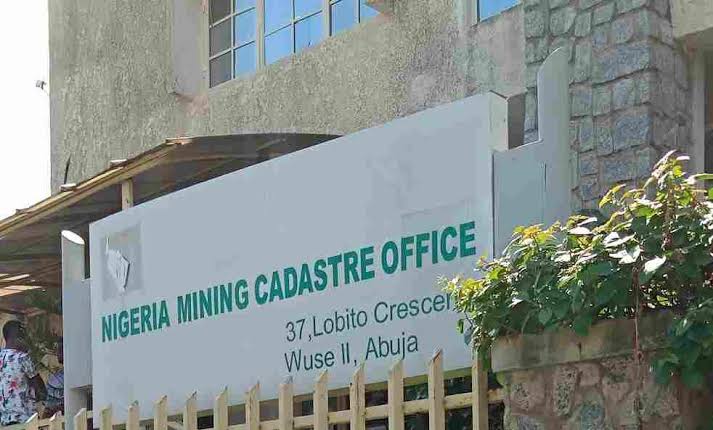
At the heart of Nigeria’s mining crisis lies the Mining Cadastre Office (MCO) at House 37, Lobito Crescent in Abuja. According to mining title holder Biliyaminu Surajo, the MCO has become “a threat to national security due to endemic corruption and professional misconduct.” This is not hyperbole – it is an assessment based on years of observing how regulatory failure creates conditions for both economic exploitation and violent conflict.

The June 19, 2025 stakeholder engagement session revealed the depth of these institutional problems when participants aired a “litany of complaints about the MCO from demanding fees when tenement holders did not have access to their tenements to extended delays in granting titles.” More damaging still is the practice of issuing overlapping titles, creating conflicts that often escalate into community violence.

“The mining cadastre office has the habit of issuing titles over existing valid titles,” explained one industry source. “Community leaders are faced with competing interests with both parties holding title documents from the MCO, each signed by the Director General Simon Nkom.” When communities discover that multiple operators hold certificates of title for the same land, when mining commences without proper consultation, the inevitable result is conflict, says a mining executive who preferred to stay anonymous to avoid persecution.

The corruption appears systematic and commercialized. “There is one officer in the MCO who has supplied more than 50 fake consents, for a fee of course, and the applications were processed successfully,” according to internal sources. The speed of tenement processing has become “proportional to the amount the applicant is willing to pay extra for facilitation.” This isn’t just corruption – it’s the systematic breakdown of regulatory oversight that creates ungoverned spaces, as the executive described it.

The tragedy for Nigeria is that this security crisis was entirely predictable. When regulatory agencies fail to properly monitor mining activities, when titles are issued without adequate community consultation, and when operators are allowed to commence activities without proper security assessments, chaos becomes inevitable. The MCO’s failures have not just facilitated economic exploitation – they have inadvertently become accomplices to national insecurity.

International Embarrassment and Costly Consequences

Nigeria’s mining promotion efforts have become an international embarrassment that compounds the economic and security costs of regulatory failure. At major international mining conventions, Nigerian delegations consistently fail to present viable projects. According to Ibadan-based mining engineer Adams Olawole, the Ministry of Solid Minerals Development and the MCO have “NEVER presented a world class project, mining project, to be exact, in the last 12 years.”

At the recent PDAC 2025 convention in Canada, Nigeria arrived with one of the largest delegations of course but nothing to present. No projects, no investors presentations. “My brother, MSMD/MCO was just there sharing flyers in Canada” says a mining executive present at the event. This contrasts sharply with countries like Ghana and South Africa that bring CEOs of successful operations to share genuine success stories.

The regulatory failures are also generating costly international legal challenges. Jupiter Lithium Ltd’s threatened arbitration against Nigeria through the International Centre for Settlement of Investment Disputes (ICSID) represents the third potential international arbitration case, following disputes with Korea National Oil Corp and Italian oil giant ENI. Each case carries significant financial risks and further damages Nigeria’s reputation as an investment destination.

The Technology Deception

The broken regulatory framework has created opportunities for technological exploitation that compounds Nigeria’s losses. Chinese operators are “building obsolete technologies already being rejected by western countries, because recovery is 50% at most. They dump them in Nigeria and claim they built $200m processing plants.”says Engr Olawole.

This technological deception represents a double theft – Nigeria loses both its mineral resources and the opportunity for genuine technological advancement. While officials celebrate the construction of processing plants, the reality is often substandard equipment that maximizes short-term extraction while providing minimal value addition or technology transfer. The associated environmental damage is a national outcry. “Has anybody even bothered to check how much it costs? No. Or it’s a matter of grease our palms by government officials,” Olawole asked pointedly.

The Path to Recovery

The choice facing Nigerian authorities is stark: continue down a path that has already necessitated mining bans in multiple states due to security concerns, or implement comprehensive reform that addresses the root causes of both economic exploitation and violent conflict.

Reform must begin with the complete restructuring of the MCO. House 37, Lobito Crescent has become synonymous with corruption, unprofessionalism, a totally dysfunctional cadastre system and regulatory failure. The agency needs new leadership, robust oversight mechanisms, and a mandate that prioritizes national security and community welfare over short-term revenue generation.

Due diligence processes must become mandatory and rigorous. Background checks on foreign executives should include criminal record searches, verification of claimed financial resources and assessment of track records in previous operations. The Australian Securities Exchange provides extensive documentation of corporate failures that should inform Nigerian decision-making – there is no excuse for regulatory ignorance.

Countries like Ghana, Botswana, and South Africa have built thriving mining sectors precisely because they maintain these standards. They understand that sustainable mining development requires partners with proven track records, adequate financing, and genuine commitment to responsible operations.

A National Security Imperative

Nigeria’s mineral wealth belongs to its people and future generations. The regulatory failures that have turned mining sites into bandit hideouts in Niger, Taraba, Benue and Zamfara states represent more than policy mistakes – they constitute a betrayal of the national trust. With international arbitration threats mounting, domestic security crises spreading, and the country’s mining reputation in tatters, the window for course correction is rapidly closing.

The reform of Nigeria’s mining sector is not just an economic imperative – it is a national security necessity. The next bandit attack on a mining community should not be required to focus minds in Abuja. The time for comprehensive reform is now, before more states are forced to suspend mining activities to restore peace and before more foreign criminals find safe haven in Nig

eria’s broken regulatory system.


The Fulani Expansionist Philosophy And Nigeria’s Unity

By Col. Gora Albehu Dauda Rtd

31 July 2025.


If ever there was a hypocritical country and people in all of history, without even if a scintilla of doubt, that fists the contraption called Nigeria perfectly for many a reason. By way of a background, I am endigine of the Middle Belt of the contraption called Nigeria and from the Atyap people of Zangon Kataf LGA in Kaduna State. I am griefed by the quantum of falsehood fed me and many other people over the years about this contraption, by so doing our ability to think deeply well beyond the facade of those who lorded it over us was truncated. All this is because of 2 very selfish and or dubious concerns.

The first is that as ethnic Nigerians we were all duped into accepting contrived falsehood as History. For example, I, and many in my generation were thought amongst many other falsehoods that the proven master terrorist and genicidal Fulani settler going by the name of Usman Dan Fodio championed a religious war to spread Islam to Nigeria when as a matter of fact, he was converted to Islam upon his arrival in what was later to become Nigeria many yeats later. The abdolute lies that were convenient to him.was recorded as History which the British collaborators also swallowed line hook and sinker as worthy of being thought in schools. The attrocities which amounted to genocide committed during the dubious Jihad were conveniently left out. The second is that the British colonizing regime for their merchantilist interest were not interested in interrogating the past as to establishing the truth of that which had been recorded as History.

With this background, the British colonizing regime forged a working relationship with the Fulani who had established the Emirate system of government wbich was to serve their interest conveniently. With that arrangement, the Fulani were handed a strategic advantage over the other ethnic nationalities in Nigeria. Any discerning observer will reslise that the Hausa who constitute the largest tribe not only in the Northern Region but in the territory of Nigeria were effectively forced under a Fulani carpet. The colonizing regime at all times sought to give their Fulani friends undue advantage. They made sure that the ethnic nationalities in all of the area they carved out and called Northern Region could only find political and economic expression through the very tiny Fulani ruling elite. For 220 years since the dubious Jihad, the Fulani setlers have continued to lord it over all the other ethnic nationality especially in the North of the country.

Subsequently, Indirect rule as the name suggests clearly handed over the fate of all of the ethnic nationalists over to the Fulani ruling class this time around internal colonialism took hold in the Northern Region of that time. The British could only be accessed at the whims and caprises of the Fulani. Policies of governmemt therefore largely benefited only the Fulani. You can almost conclude that but for the efforts of Christian Missionaries, virtually all of the Northern ethnic nationalities would have gone without Western education. Though many sons and daughters of the ethnic nationalities swept under the fuedal Fulani carpet obtained Western education thanks to the untiring efforts of the Missionaries, yet only a few found some accomodation within the structures of the Indirect rule system. So much was the descrimination that only Fulani or Muslim interest matteted. Is it any wonder then that the North trailed the East and Western Region in western values?

Consistently over the period, the Fulani elites have recklessly harvested the votes of millions of the oppressed Hausa to position themselves politically with the Hausa benefiting next to nothing not to talk of the many other ethnic nationalities in the North. It has been very easy for the Fulani to manipulate the system to their advantage by deploying religion. Ethnicity may have played a role but not a formidable one as religion. Like Marx so succinctly captured it in his famous declaration of religion being the opium of the masses, to that extent have the Fulani political elite manipulated the Hausa muslim votes to their political advantage. Had the Fulani carried the Hausa population along or had they shared the spoils of office to reach the Haisa population, the current Hausa political rennaisance perhaps would have been delayed further. The advocacy of Hajiya Khaltum Allimbe Jitami of Jaruma Hausa TV 24 has succeeded in raising the political consiousness on the many largely uninformed Hausa and the other ethnic nationalities as to their places usurped by the Fulani.

History has warehoused the attrocities of the Fulani in Nigeria since 1804 and the time has now come to call s spade, a spade between the settlers and the rest of the ethnic nationalities in Nigeria. The Muhammadu Buhari era did open the eyes of many Nigerians to the evil content of that regime. I have in many an essay brought to the fore the fact that Buhari was the product of a Fulani cartel that was focused on actualizing the age long desire of Usman Dan Fodio to turn the whole of Nigerian territory into a Fulani homeland. To attempt actualizing that madness, when he had no strength after months in foreign medical facilities one of his first Bills was the Grazing Reserves and Ruga in all of the States of this country. Prior, Fulani interest had ensured that virtually all of the positions of State governors, Ministers, NASS members went to only Fulani candidates. Happily, that strategy failed to yield the required result. All that the Hausa population needs to do to break the jinx is for them to put up Hausa candidates for all the poitical positions contestable. This will put to the taste the hitherto assumed Fulani popularity.

Clearly, the Fulani have costituted themselves into a menace by still believing the absolute nonsense that their forebear Usman Dan Fodio bequeathed the terrotory of Nigeria to them as war booty. The current resort to terrorism/Banditry much as the dubious Jihad will similarly fail. The Fulani have stained themselves with the innocent blood of too many Nigerians. The governments of Nigeria not limited to the Muhammadu Buhari regime have all proven to be impotent to the level of making the Fulani feel they are at liberty to do just anything. There have been countless incidents of mass murders in Benue, the Plateau Southern Kaduna, Xamfara, Katsina and elsewhere without the appropriate Military response. The Fulani armed gangs as well as their finaceirs and sympathizers embedded in government as well as those from outside will in due time be paid in kind.

Bona fide Nigeriams have suffered untold humiliation at the instance of the Fulani settlers. For the Fulani herdsmen who derive pleasure in driving cattle to eat up and or destroy farmlands and crops to their amusement whilst they make videos which they post on social media is most humiliating. Where the farm owners have dared to challenge such madness, they were confronted with the firepower of the ubiquotus AK 47s. Many of such largely peasant farmers have ended up losing their lives or with serious injuries. What society anywhere on the planet will continue to be subjected to such humiliating experiences whithout preparing to confront the perpetrators? Matters have come to a head as the people cannot bear it any longer

Moving forward, the ethnic nationalities of this country must design a strategy that will free and recover this country from tha stranglehold of the Fulani settlers. There is no need waiting for this to be achieved through an armed struggle since it can be achieved at a much cheaper cost poitically. The Fulani can no longer pretend not to know that the party is over for many of tiem politically. The Fulani arrogance and impunity has to be halted. Territorial expansionism via the mechansm of violence is abhorent in the 21 Century, so cleatly the very idea by the Fulani of acquiring land through coercive means ought not be toloreted. The Nigerian State must therefore have to wake up from the slumber of indfference to actively protecting and securing the population since that is her primary responsibility. To God Be The Glory.

Mining Cadastre Office: A Threat to National Security

By Engr. Biliyaminu Surajo

Biliyasuraj1980@yahoo.com

The unassuming building at House 37, Lobito Crescent, Wuse II, Abuja, may appear to be just another government office, but it houses one of Nigeria’s most powerful regulatory agencies. The Mining Cadastre Office (MCO), operating under the Ministry of Solid Minerals Development, is tasked with the critical responsibility of regulating solid mineral licensing in Nigeria—a function vital to the nation’s economic development and security.

However, over the years, this agency has become synonymous with corruption, bribery, and unprofessionalism. Many industry operators now claim that the MCO has become the single greatest obstacle to progress in Nigeria’s mining sector.

The June 19, 2025 Debacle

The June 19, 2025 virtual stakeholder engagement session, organized by the new Permanent Secretary to restore confidence in the mining sector, was nothing short of a disaster. What was intended as a collaborative dialogue devolved into a monologue from ministry officials until frustrated stakeholders demanded to be heard. 

When finally given the opportunity to speak, industry participants unleashed a torrent of complaints about the MCO. These ranged from demands for fees when tenement holders couldn’t access their properties, to inexplicable delays in granting mining titles.

The Crisis of Overlapping Titles

The MCO’s fundamental responsibility is to issue valid mining licenses that provide holders with secure “good title” to their allocated areas. However, the reality is far from this ideal. The agency has developed a troubling pattern of issuing new titles over existing valid ones, creating a web of competing claims that has paralyzed the sector.

Community leaders frequently find themselves caught between multiple parties, each holding seemingly legitimate title documents signed by Director General Simon Nkom. This raises a critical question: how are these overlapping titles possible when applications require written consent from community leaders?

Investigation reveals a disturbing answer: for a fee, fake community consent documents can be obtained through MCO channels. Sources within the industry report that at least one MCO officer has supplied over 50 fraudulent consent documents, with each application processed successfully upon payment of the requisite bribe.

A Revenue Bonanza Built on Dysfunction

The overlapping titles crisis has persisted for three years, with public complaints falling on deaf ears. The MCO continues issuing licenses over valid titles while collecting fees from both new and existing title holders—creating what can only be described as a revenue bonanza built on institutional faipublic 

The minister change the rule mid-game. You can not change the rules mid game like 12-fold increasement of annual service fees and other related fees mid year and ask for immediate implementation. Those instability is a turn off for investors.

This windfall was amplified by the Federal Ministry of Solid Minerals Development’s announcement on July 4, 2024, of a staggering 12-fold increase in mining rates and fees. The resulting revenue inflow of over ₦6.95 billion in the first quarter of 2025 was later celebrated by Director-General Engineer Obadiah Simon-Nkom as proof of his successful management. 

Many tenement holders, however, take a different view—one that was expressed openly during the June 19, 2025 meeting with the Permanent Secretary and senior management. The MCO is not a revenue generation agency, and increased fees from applicants should not be considered a success story. The real question remains: where are the working mines? Not the environmentally destructive Chinese operations visible across the country, but genuine, sustainable mining operations.

The Facilitation Fee Culture

Beyond official fees, industry sources report a pervasive culture of additional payments to individual MCO officers. The CEO of a foreign mining company disclosed being asked for hundreds of thousands of dollars to expedite his tenement application—an incident that, while extreme, is not isolated.

The speed of tenement processing has become directly proportional to an applicant’s willingness to pay “facilitation fees.” Those who refuse to pay beyond scheduled fees face indefinite delays, while those who pay extra receive prompt service.

The MinDiver System Failure

The prevalence of overlapping titles is particularly puzzling given the implementation of the Mineral Sector Support for Economic Diversification Project (MINDIVER), funded by the World Bank with $150 million. This project was specifically designed to prevent such duplication through an automated cadastre system.

The contract for “Upgrading and Automatization of the Mining Cadastre Office for Online Applications, e-recording, Archiving and Establishment of Mining Cadastre Offices in the Six Geopolitical Zones” was awarded to GAF, a Munich and Neustrelitz-based German company with a relationship with the Nigerian MCO dating back to 2007.

According to Simon-Nkom, “All mineral title applications are now submitted exclusively through the EMC+ system. It’s an entirely online platform that offers transparency, efficiency, and real-time access.” However, many Nigerian tenement holders would dispute all three claims.

One mining company CEO described the multi-million-dollar system as “an absolute mess,” explaining that applicants can no longer rely on the cadastre system’s accuracy. “You might be awarded a title today only to find another company is awarded a title over your area next week. It depends on how much you are prepared to pay to the MCO. It never used to be like this.”

Ironically, Simon-Nkom received an international award as Nigeria’s “best public servant leader” in 2024 for overseeing this system—a recognition that industry insiders find bewildering given the widespread dysfunction.

The Lost Golden Age

Veteran operators in the industry recall a time when the MCO functioned effectively under manual processing. When coordinate overlaps or conflicts arose, officials would help applicants adjust their applications accordingly. Overlapping titles were rare, and the system generally adhered to the provisions of the Mineral Acts that clearly forbid such conflicts.

The question that haunts the industry is: why is this happening now, with supposedly superior technology and systems?

International Embarrassment

The MCO’s dysfunction extends beyond Nigeria’s borders, embarrassing the country at international mining conventions. According to multiple industry sources, the Ministry of Solid Minerals Development and MCO have never presented a world-class mining project at international conferences over the past 12 years, despite spending millions of taxpayers’ money on these events.

One operator noted: “I have been attending AfricaDownUnder in Australia for the past 10 years. It’s a shame what MSMD/MCO come here to tell us. It’s a remix of annual presentations. I wonder why they even show up. They fly halfway across the world for nothing.”

At the recently concluded PDAC 2025—North America’s largest mining convention held annually in Canada—Nigeria’s delegation was among the largest but had nothing substantial to present. While other African countries like Ghana, Cameroon, Chad, and South Africa brought mining company CEOs to showcase success stories and attract investors, Nigeria’s representatives were reportedly “just there sharing flyers.”

The story is the same for Mines and Money, London, United Kingdom and Mining Indaba, Cape town, South Africa. Annually we just go there for the funfair. Absolutely nothing has been added to the Nigeria mining sector.

Who debriefs these government guys when they return from such expensive trips?

The contrast with other African nations is stark. These countries use international platforms to present concrete achievements, helping to galvanize undecided investors. Nigeria’s consistent failure to do so represents a massive missed opportunity for economic development.

The Chinese Factor

The current administration’s reliance on Chinese mining operations has raised additional concerns. Unlike Western companies that participate in international conventions and contribute to state building, Chinese operations are primarily extractive. The lithium processing plants being constructed across Nigeria reportedly use obsolete technologies already rejected by Western countries due to recovery rates of only 50%.

Yet these operations are presented as success stories by ministry officials, raising questions about whether proper due diligence is being conducted or if palm-greasing is influencing decision-making.

The Path Forward

Legal challenges are mounting, but as one operator noted, “these people do not care. It’s the Federal government. Until individual officials are sued for their actions, we are not likely to get it right.”

The time has come for comprehensive reform. The building at House 37, Lobito Crescent represents more than just a government office—it symbolizes the need for fundamental change in how Nigeria approaches mineral resource development.

The nation’s mining sector cannot afford to continue operating under a system characterized by corruption, inefficiency, and international embarrassment. The MCO’s transformation from a functional regulatory body to what many consider a threat to national security demands immediate and decisive action.

It is not too late to start over. The question is whether Nigeria has the political will to begin the necessary reforms at House 37, Lobito Crescent, and restore the MCO to its intended purpose: serving as a catalyst for sustainable mining development rather than an obstacle to it.

The future of Nigeria’s solid minerals sector—and potentially the nation’s economic diversification—hangs in the balance.


DISCLAIMER


This opinion piece reflects the author’s views based on publicly available information and industry sources. While every effort has been made to ensure accuracy, some details are based on confidential sources due to the sensitive nature of the subject matter. The opinions expressed are those of the author and do not represent any official position of this newspaper. All individuals and organizations mentioned have the right to respond, and such responses will be given due consideration.

SARDAUNA BUILT THE NORTH — BUT HE BUILT IT ON TRIBALISM: IT’S TIME WE REBUILT OUR MINDS

By khaleed yazeed.

This is not an insult. It is not an attack on legacy. It is not a desecration of history. This is truth. Raw, painful, and necessary truth, spoken by a young man from the North who has watched his region sink into confusion, darkness, and stagnation while everyone keeps pointing fingers everywhere but backward.

Sir Ahmadu Bello, the Sardauna of Sokoto, built the North. He established institutions. He left hospitals, schools, cooperative unions, and cultural pride. He made many sacrifices and shaped a generation. That cannot be denied. But we must say this: he also embedded a dangerous idea into Northern politics, a tribal and religious ideology that has crippled our thinking and frozen our progress.

He didn’t build the North to be free, he built it to be suspicious of others. He built a North that fears Southern Nigeria more than it fears poverty. A North that is taught to hate the Igbo before it is taught to love innovation.A North that sees the Christian as a threat, and not as a fellow citizen. A North that values ethnic loyalty more than national unity. A North that believes in holding power, not using it for good.

This political mindset didn’t die with him. It survived. It became a system. It became doctrine. And today, it is the reason the North is broken, poor, confused, and dangerously directionless.

Say what you want about me. Insult me. Curse me. Call me a traitor to the legacy. But I would rather be cursed by men than be cursed by history for keeping quiet while my region dies from within.

I am not saying Sardauna left nothing good. He left many noble legacies. But his politics were not perfect. In fact, some of them have poisoned generations. If we don’t admit this and reform them, the North will never move forward.

We will keep living in darkness and denial.
We will keep burning in the fires of religious and ethnic violence.
We will keep dying without knowing who to blame, or where to go.

Today, what we inherited from that ideology is the reason why Northern Nigeria:

Cannot define its future.

Cannot tolerate differences.

Cannot embrace new ideas.

Cannot love its neighbors without suspicion.

Cannot build bridges, only walls.

We have made enemies of progress. We have made friends with ignorance. We have turned arrogance into culture. And worst of all, we have called it pride.

The North must wake up.

It’s time we stop pretending that the enemy is outside. The enemy is the mindset that was planted in us. That we are superior. That we must dominate. That we don’t need to learn from others. That we must always rule. That we must fight before we understand.

That mindset has become our prison. That mindset is why we kill each other in the name of religion. That mindset is why our children beg on the streets while the South builds tech cities. That mindset is why we fear books, but celebrate politicians. We are not cursed by God, we are caged by history.

But we can escape. We can begin to think new thoughts. We can choose to be humans first before tribes. We can begin to relate with other Nigerians not as enemies, but as brothers in the same struggle.

I do not write this out of hate. I write this out of deep love for the North, for the land that raised me, for the people I still believe can rise again.

But we must bury tribal politics. We must reject inherited bigotry. We must rise beyond the old doctrines that have only kept us behind.

This is not 1960 anymore. This is not the Nigeria of coups and propaganda. This is 2025. And we must think for ourselves.

If we do not change how we think, if we do not confront the rot in the past, if we do not evolve, we will die slowly, painfully, blindly.

Khaleed Yazeed
A Northern son, born from the ashes of silence, rising to confront the lies that chained his people.

Another April, another body: how many more must die in Gombe?

By Shalom Kasim

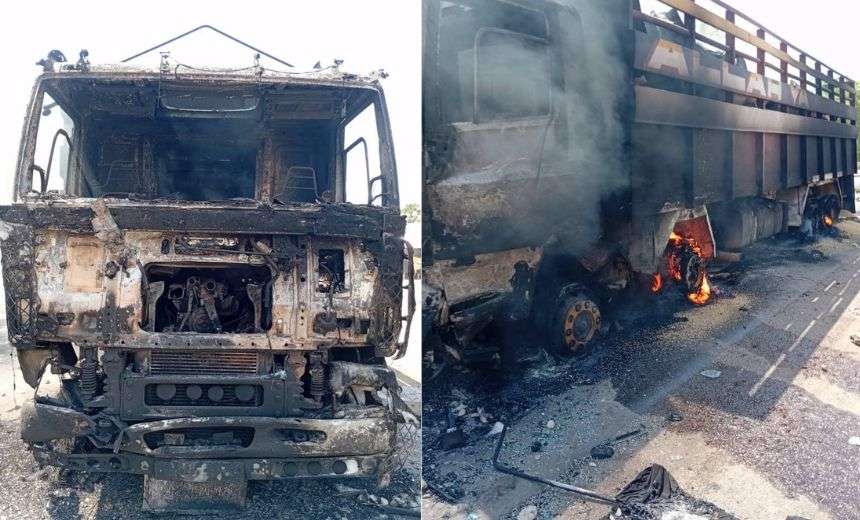
For an umpteenth time in as many years, Billiri is once again being treated to a crash course in the kind of ‘coincidence’ that is almost too absurd to believe. In case the irony is too complex for the average observer, I will spell it out: In April 2019, an incident befell the fine folks in Madaki, inside Gombe metropolis, about 80 kilometers away from Billiri. Ten lives were taken, 30 others injured, as a confrontation unfolded in the dead of night between a group of Boys’ Brigade members and an NSCDC official. Now, fast forward to April 2025, six years after the blood-soaked celebration in Gombe: five -or so, the official number says- suffered the same fate as 10 of their kinsmen in 2019. What makes this even more audacious is that this is happening to my people, the ones who have been relegated to the margins and who don’t even make the headlines unless it is in the most grotesque of ways. We have seen this before. In 2019, it was the Boys’ Brigade, young people just trying to get to their Easter celebration, who were mowed down in the night by an NSCDC official. And then, in the aftermath, the usual parade of politicians offering thoughts and prayers, while the bodies of the dead are swiftly forgotten, and buried under promises that are never kept. This year, it is a truck. Just another truck, like the countless others that plow through our roads at breakneck speed, heedless of any kind of regulation or sense of responsibility. This truck didn’t care whether it was loaded or not, or whether it was barreling down a road where people were trying to celebrate Easter prayers. It didn’t care about anything, except doing what trucks do best: speeding through life and leaving destruction in their wake. And, of course, just like in 2019, my people, as if on cue, paid the price. And what is the government’s response? They scramble to put on a face of concern, wring their hands and assure us that “justice will be served.” How many more times do we need to hear that before we all collectively lose our minds?

I like to think the two incidents are just a coincidence, but no. I don’t believe in coincidences anymore. Not when you are dealing with a place like Billiri. Don’t be fooled by press releases and the fabricated narratives. This isn’t an accident. This is a systemic failure. And someone has to say something. Someone has to scream about the fact that people in Billiri are dying. Someone has to say that we have been left to die by a government that couldn’t care less about the lives of its people. What are the chances? Two major accidents, almost on the same date, the same demography, separated by six years? That’s the kind of coincidence that doesn’t sit right with me, especially when it is people I know. I am from Billiri. Billiri has always been home. That is where I grew up, where I used to join the easter procession from church, to dutsen Easter, down to Kantoma, and into the market, before trekking under the hot sun back home. It was the thing we did every Easter. It was like the whole community would gather, and we would all walk together like one big happy family. We had our lanterns and phones, we sang songs and danced, and life was good. We didn’t worry about trucks plowing through us or people dying. The worst thing that could happen was someone getting lost in the crowd.

But now? Now, I am sitting here thinking about the horrific accidents that have happened, and I am pissed. The idea that I could have been part of that procession this year and been caught up in that mess just makes my blood boil. Five people are dead. Five people, just like that. On almost the same date as what happened in 2019. And all I can think is, what the hell is going on? How is that even possible? Are we being punished for something? Because it sure feels that way. The worst part is, it’s the same people who have been dying. Why? Because we have been left to fend for ourselves, with no real support and no real infrastructure to keep us safe. I’m so tired of hearing the same tired excuses from the government: “Oh, it’s an accident,” or “It’s a tragedy.” Yeah, we know it’s a tragedy, but where’s the accountability? Where’s the responsibility for making sure this doesn’t happen again? Where’s the action that protects the people of Billiri? We are not stupid. We know the drill. We know that the system is broken. We know that the government will send out their usual press releases and condemn the accident. They will send their “thoughts and prayers,” and then go back to whatever they were doing. What pisses me off more than the fact that my people are being slaughtered in the streets like they are nothing is the silence from those in power who sit in their cushy offices in Gombe and Abuja. Where is the accountability? Where is the justice? I didn’t grow up in some fancy neighbourhood with security guards and gated fences. I grew up in Billiri, real Billiri. The kind of place where you walk those roads from Kentengereng, to Kantoma, to the market, year after year, with no fear. But now? Now, you can’t even walk down the same roads without the thought of being hit by a truck. What kind of sick joke is this? What kind of godforsaken place have we become?

And the worst part is that this is not even new; it’s been going on for years. The government knows about the dangers, they know about the lack of proper infrastructure, and they know about the reckless drivers speeding through our towns, but what do they do? Absolutely nothing. They keep sending out their empty promises, their condolences, their “thoughts and prayers,” that are not going to bring anyone back to life. They are going to fix neither the roads nor the systems that regulate these roads. They’re not going to stop people from dying.

So, enough of pretending like we are in some kind of fantasy where everything is going to magically get better. This is real life, and in real life, people die because the system doesn’t work for them. In real life, the people who need help the most are the ones getting crushed by the system that was supposed to protect them. We cannot just talk about the roads and leave it at that. There is a bigger game being played here, and the roads are just the stage. Why does a truck driver feel so entitled to just plow through a procession of people walking to celebrate their faith, like they are some kind of cockroach in his way? Think about it: How many times have we seen this same pattern of reckless driving in similar circumstances? At least. How many more innocent lives have to be lost before we start asking the hard questions? Somebody with an agenda is likely behind all of this. I am not saying that every truck driver is part of some conspiracy, but you can’t ignore the fact that this keeps happening, year after year, during key moments like the Easter procession. This is way too convenient.

I am sorry, but I’m not buying the story that these are just “accidents.” We’re talking about lives being lost in cold blood. Let’s not kid ourselves: These drivers know what they are doing. And when you consider the fact that we’ve had so many incidents like this, where things go from bad to worse in a blink of an eye, it gets you thinking: What the hell is going on?

The truth is that the system is failing us, but this isn’t just a failure of infrastructure. It is a failure of intent. You can’t tell me that all of this is random. The people who are supposed to be protecting us are just letting this happen. They are not lifting a finger. They are looking the other way while my people die. And we are supposed to just accept it, shut our mouths, and move on like it’s nothing. I don’t think so.

This is where I start to smell a rat. We have politicians who come in during election time with their crocodile tears and empty promises, pretending like they care. They will hug you, shake your hand, and say all the right things, but once they have gotten your vote, it is radio silence. They’re long gone, laughing all the way to the bank while we are still here, picking up the pieces. I am not saying that every politician is part of this -I am not that naïve. What I am saying is that there are people in power who want the status quo to remain. They want us to keep fighting amongst ourselves and looking the other way while they line their pockets. They want to keep my people in the gutter, literally and figuratively. These are people who have been made to believe they can do whatever the hell they want because they know they will get away with it. And they are not just getting away with it; they are profiting from it. This is about keeping the system broken and making sure the roads stay the way they are: dangerous and open for exploitation, because when things stay broken, that is when the people with power can steal.

This is exactly the kind of mess that has been brewing in Billiri for years. It’s not just the 2025 truck crash; it is the fact that we have been stuck in a loop of crises, and somehow, nothing changes. Look at what happened in 2021: when we almost went to full-on war over a leadership tussle. It was a mess of violence and bloodshed. People died over a leadership tussle, police officers were left injured, and the whole town was thrown into chaos. Why? Because there is an underlying issue that no one wants to talk about. The Big Boy tried to put the best spin on it. He came on TV, shook his head, and spoke about the need for peace and unity. He said he was ready to stake his life to protect his people. But that is the problem right there: the empty promises. What did we get in return? Curfews. Arrests. Empty consultations. Arrests for what? For protesting a process that was rigged from the start? For standing up to a system that didn’t dare to do the right thing?

Last year’s incident in Gombe on Christmas Day is another story in this patterned tragedy. Who can explain the thoughtlessness and negligence that led to this bus losing control and injuring innocent people during a season that was supposed to be about joy? The victims were simply out there celebrating and paying homage, then the next minute, they found themselves nursing injuries they never deserved.

Now, look at this new tragedy in 2025. Five dead, 13 injured, all because some truck driver was too reckless to slow down for a procession. And what is infuriating about all of this is that nothing has changed. We have had crises like this for years (over land, over leadership issues, over reckless drivers), and still, we are stuck in this ugly cycle of bloodshed and complete disregard for human life. It is not just the truck drivers we need to worry about. It is the people who continue to fuel this anarchy. They have created a perfect storm where the lives of my people mean absolutely nothing. When we speak up, we get told to be quiet, told to be peaceful, as though we have not already been through hell. This is the same broken system that has failed us time and time again. They use us as pawns in their power games, making empty speeches while my people continue to die. The problem is not the lack of leadership. It is the lack of will to fix what is broken.

Let’s just call it what it is: nonsense on steroids. This is the kind of leadership that claps for itself after setting the whole village on fire, then showing up late with a half bucket of water and expecting a standing ovation. If you cannot lead with justice, then that power is useless, because power without conscience is exactly what has brought us here to this avoidable grief. We will not forget, we will not be gaslit, and we will not be quiet. Billiri deserves better. The dead deserve justice, and the living deserve a break from this madness.

…Shalom Kasim is a managing editor at Mud Season Review.

Sunday Jackson is a Victim of A Miscarriage of Justice

By

Chidi Anselm Odinkalu

Numan, the town that lends its name to one of the 21 Local Government Areas in Adamawa State in north-east Nigeria, is home to the Bwatiye (Bachama), a transnational identity group stretching into parts of Cameroon. Located in the basin of Benue River and one of its tributaries, River Taraba, Numan’s fecund lands play host to vast energies in sedentary agriculture. Fulbe pastoralists have for long also found it welcoming for grazing their herds.

These factors have made Numan a major frontier in the murderous livelihood conflict that has pitted sedentary farmers and armed pastoralists in the Middle Belt of Nigeria. Described as a crisis “over scarce land and water resources” this conflict is estimated to have “claimed the lives of around 10,000 Nigerians” in the period since about 2013. It is widely recognized as the second most deadly conflict in Nigeria after the Boko Haram crisis.

For nearly three years until 2018, Numan was the site of a murderous war between sedentary farmers and armed pastoralists. No one knows the number who lost their lives in this conflict. James Courtright, who researched the situation wrote in 2023 that “by the time the crisis ended in January 2018, around 150 people were dead, a dozen villages burned to the ground and hundreds of Fulbe who had called Numan home had fled.” Tens of thousands were reportedly displaced. This crisis even became the subject of litigation before the Court of Justice of the Economic Community of West African States (ECOWAS Court of Justice).

On 5 December 2017, Vice-President, Yemi Osinbajo SAN, visited Adamawa State to see things for himself. Subsequently, the federal government arranged to distribute emergency relief materials to affected communities including Dong, Lawaru, and Kukumso in Demsa LGA; as well as “Shafaron, Kodomti, Tullum, Mzoruwe and Mararraban Bare in Numan Local Government Area.” Amidst these developments, the federal government launched what ultimately proved to be an inconclusive “series of national consultations with all relevant groups designed to find a lasting solution to the farmers-herders conflict in parts of the country.”

The events in Kodomti village during this crisis were to become the subject of prosecutorial interest which worked its way up to the Supreme Court, coming to a decision on 7 March 2025. On 27 January 2015, an incident occurred in a farm in Kodomti belonging to Sunday Jackson. By the time the dust had settled, Alhaji Ardo Bawuro lay dead, victim of three stab wounds in the neck at the hands of Sunday Jackson.

The Adamawa State Director of Public Prosecutions arraigned Sunday Jackson on one count of culpable homicide punishable with death (murder) for the killing of Ardo Bawuro. On 10 February 2021, the High Court of Adamawa State convicted and sentenced Sunday Jackson to death. The Court of Appeal dismissed his appeal on 20 July 2022. From there he appealed to the Supreme Court.

The evidence relied on by the courts was straightforward. There was a coroner’s report but the judgment does not mention a pathologist’s report. According to Sunday Jackson’s statement to the police:

“On Tuesday, 27/01/15 at about 11:10 hrs, I left my village and was cutting thatching grasses (sic) in a bush located in Kodomti village in Numan LGA when the deceased, Alh Buba Bawuro as identified attacked me after loosing (sic) sight of some persons alleged to be pursuing (sic) for killing his cattle. He attacked me in frustration and wanted to stab me with a dagger then we engaged in a wrestling encounter. I succeeded in seizing the dagger from him which I used to stab him thrice on his throat. When the deceased collapsed and was rolling down in a pool of his blood, I took heels and escaped.”

In its judgment on 7 March 2025 delivered by Justice Baba Idris, the Supreme Court determined that this statement was a confession and simultaneously also raised issues of self-defence which had to be considered.

In Nigeria, self-defence is a constitutionally guaranteed right. In criminal law, it is also total exoneration to a charge of murder.

According to the court, four conditions must be present for self-defence to succeed. First, the accused must be free from fault in bringing about the encounter leading to death. Second, there must be present an impending peril to life or of grievous bodily harm. Third, there must be no safe or reasonable mode of escape. Fourth, there must be a necessity for taking of life.

The Supreme Court found that the first and second conditions were fulfilled in the case of Sunday Jackson. As to the last two conditions, the court said that “there was a reasonable mode of escape by retreat and there was no necessity to take the life of the deceased.” It did so notwithstanding that there was nothing in evidence about how safe it was to retreat. Consequently, the court held that “the defence of self-defence is not available on a closer consideration of the evidence, and in the light of the circumstances of this particular case.” The court also dismissed any possibility of a defence of provocation, which would have reduced the crime to manslaughter.

In his concurring judgment, Justice Haruna Tsammani said: “on the facts as narrated…., I am of the view that [Sunday Jackson] inflicted more harm than was necessary for the purpose of defending himself. Having overpowered the deceased and collected the dagger from him, a stab would not be considered excessive. It is also my view that [Sunday Jackson] acted in a vengeful manner by stabbing the deceased trice (sic) in the neck; a person he had overpowered.”

This statement by Justice Tsammani is at the heart of the three flaws with this judgment. One is a matter of law and evidence: The Supreme Court believed it was alright for Sunday Jackson to have stabbed Ardo Bawuro once, but not thrice. But there was no evidence before the court as to which of the three stab wounds killed Ardo Bawuro.

It is possible that it was the first stab wound; or the second; or the third. That determination is a matter of evidence and, in criminal law, establishing what killed the Ardo Bawuro was the responsibility of the prosecution. If he was killed by the first stab, then the claim by the court that three stab wounds were too many is demonstrably gratuitous, and self-defence would have availed. In the absence of that kind of evidence, the court had no basis for excluding self-defence.

Second, the court imposed an unreasonable standard of assessment, requiring a person whom it found to be in real peril of loss of his life from an assailant with murder or grievous bodily harm on his mind to make assessments that are beyond the capability of any human in the throes of a fight-or-flight struggle.

Third, in suggesting that Sunday Jackson had a reasonable means of escape, the Supreme Court showed almost blissful lack of awareness of the nature of the conflict on the floodplains of the Benue River (and its tributaries). This case arose in a conflict zone between livelihood and identity groups. The standard of evidentiary assessment deployed by the Supreme Court required Sunday Jackson to possess almost divine knowledge of the surrounding circumstances. Asking him to run in the middle of this required him to be certain that there was no other danger around him. There was no way that he or anyone could in the middle of an active conflict zone have attained that degree of knowledge or awareness.

The miracle in this case is how the court reached a unanimous judgment.

The Supreme Court, we are reminded, is the last bus-stop on legal disputes. Yet, in nearly every case presented for judicial resolution, we find ourselves not merely before the court of law but also before courts of public opinion, of precedent, and of posterity. The judgment in Sunday Jackson’s case is bad law, bad precedent, and bad policy. It is perverse on the scale of a miscarriage of justice. Sunday Jackson is eminently deserving of the exercise of the prerogative of mercy by the Governor of Adamawa State.

A lawyer and a teacher, Odinkalu can be reached at chid

i.odinkalu@tufts.edu


Nasir el-Rufai: The Bloodlust of a Presidential Wannabe

By Chidi Anselm Odinkalu

IN the week in which former Kaduna State Governor, Nasir el-Rufai abandoned the ruling All Progressives Congress (APC) to chart a different political trajectory with the Social Democratic Party (SDP), his son, Bashir, characteristically made it known that “Southern Kaduna residents will keep seeing sheghe if they continue to attack indigenous Fulani herdsmen.”

Three things about this, among many, were chilling. One is the absence of any interest in addressing the underlying problem of coexistence between communities. The second is the enthusiastic investment in violence. The third is the indiscriminate nature of the promised violence. This was not the first time an outburst of candour from the El-Rufai clan was laced with unconcealed thirst for human blood.

In January 2019, as the country prepared to go to the polls in a presidential election the following month, the administration of Nasir el-Rufai’s political benefactor, Muhammadu Buhari, guillotined then Chief Justice of Nigeria, Walter Onnoghen. The manner and timing of the decision drew very sharp international rebuke. In response, Governor el-Rufai went on National television to warn that any foreign observers perceived as meddling in the elections “will go back in body bags.” As influential continental news magazine, Africa Report, delicately put it, these were the words of a man who had “previous ‘anti-meddling’ approach to diplomacy.”

This “‘anti-meddling’ approach to diplomacy” appears to be a family investment. Abubakar Idris was a committed supporter of former Kano State Governor, Rabiu Musa Kwankwaso, who lived in Barnawa, in Kaduna South Local Government Area of Kaduna State. From there Mr. Idris, better known as “Dadiyata”, engaged in vigorous criticisms of the ruling APC, one of whose founders happened to be Nasir el-Rufai.

On or about 2 August 2019, Dadiyata vanished. He has not been seen since then. A digital visibility campaign to help locate his whereabouts continues under the hashtag #WhereIsDadiyata. Four and a half months after Dadiyata disappeared, on 23 December 2019, Bashir el-Rufai ominously tweeted: “The same clowns who encouraged him when he was creating false stories and capitalising on lies that could endanger lives solely for political ends are the same individuals trending hashtags asking #WhereisDadiyata. Dangerous lies in the public space have consequences.”

Less than three months later, on 11 March 2020, Bashir’s brother, Bello, currently a member of the House of Representatives, went one better with an even more chilling gloat in poor verse: “The things that we’ve done to protect the name are unsettling. But no regrets though, the name will echo. Years later, none greater. Death to a coward and a traitor, that’s just in my nature!”

At his inauguration as Kaduna State governor in May 2015, Nasir el-Rufai identified insecurity as “an obstacle to progress” and promised to “work with law enforcement officials to drastically reduce violent crime” and  “ensure safety of life and limb.” By the time he left office eight years later, he had achieved the exact opposite.

Forgetting this promise, Nasir el-Rufai as Governor brooked no criticism or opposition. No cruelty was considered beyond the pale for them. For daring to disagree with him, el-Rufai demolished the homes of the Zonal vice-chair of his party, Inuwa Abdulkadir; and of his Senator for Kaduna North, Suleiman Hunkuyi. 

He was only just beginning. His regime compiled a jaw-dropping list of body bags. Some, like Dadiyata, disappeared, never to be seen again. Others, like Maiwada Raphael Galadima, Agwam Adara III, paramount ruler in Kajuru, turned up dead or decapitated. The Agwam Adara was ostensibly returning home from a consultation with the state government on a crisis in his domain when he was abducted. His wife, abducted with him, was released after the abductors murdered her husband. The Governor was missing from Agwam’s funeral. After his burial, Nasir el-Rufai swiftly abolished his kingdom and purported to carve it into emirates.

Under Nasir el-Rufai and by appointment of the Nigerian Union of Journalists (NUJ), Kaduna State attained “notoriety as the deadliest state for Journalists in Nigeria to operate.” They were not the only endangered species. The strategic research group, SBM Intelligence, concluded also that “Kaduna was the most dangerous state for priests, who were often kidnapped during services.”

The governor’s signal accomplishment was to displace Boko Haram from the top of the league of atrocities. This was no easy feat. In May 2014, the United Nations Security Council listed the Jama’atu Ahlis-Sunna Lidda’Awati Wal-Jihad, (the Islamist insurgency better known as Boko Haram) as a terrorist organisation. Three years earlier, the Gaji Galtimari Presidential Committee on the Security Challenges in the North-East Zone of Nigeria had reported that the group “started as an innocuous non-violent group” around 2003.

Since then, Borno State, the epicentre of Boko Haram’s atrocities, habitually topped the national league table of mass-casualty killings in Nigeria. The monitoring coalition, Nigeria Mourns, reported a peak of 6,138 atrocity casualties in Borno State in 2015. Over the next five years, casualty count in Borno State appeared to drop off quite significantly.

Over 760 kilometres from the Borno State capital, Maiduguri, in Kaduna, the historical capital of northern Nigeria, it almost appeared as if the State government led by Nasir el-Rufai was envious of Borno’s position. In 2015, when Borno State hit the peak in atrocity killings, Nigeria Mourns recorded 411 casualties in Kaduna State. By 2020, the figure had risen to 628. In Borno State in the same year, the count was 1,176 killed.

In 2021, el-Rufai’s Kaduna State overtook Borno to take over the top position in the national body-count of mass-casualty atrocities. That year, Nigeria Mourns recorded 587 killed and 119 abducted in Borno State. In Kaduna State, it counted 1,114 killed and 1,225 abducted. In 2022, at least 1,346 people were abducted in Kaduna State. The comparable figure for Borno State was 77.

To be sure, Kaduna State had a well-advertised history of chronic violence dating back to the 1980s and accounting for tens of thousands killed over the period. Under Nasir el-Rufai however, virulent executive bigotry drove the state beyond the edge through methodical segregation. Leena Hoffman captured the depth of Kaduna’s crisis of sectarian segregation under the governor: “the river that runs through the city of Kaduna, the state capital, highlights the starkness of the divide: the northern half is unofficially called Mecca; the south, Jerusalem.”

The most intense site of chronic mass-casualty atrocities in Kaduna State was Southern Kaduna, which is characterised by linguistic and ethnic diversity coexisting with a high concentration of the State’s non-Muslim populations. For many people, there was only one explanation for the exponential spike in mass-casualty atrocities in Kaduna State – the State governor, Nasir el-Rufai. His administration was widely “accused of a conspiracy of silence” in support of the murderous campaign of extermination in Southern Kaduna.

In one of his earliest acts as governor, Nasir el-Rufai sought exculpation for bandit pastoralists from the chronic massacre in Southern Kaduna, claiming that he had already “spent government money to pay Fulani herdsmen to stop violence in southern Kaduna.” About the armed “bandits” who were to emerge as the fall guys for the violence, Governor el-Rufai later described them as “just collections of independent criminals. It is a business for them.”

When Mr. el-Rufai stepped down from office in 2023, mass-casualty atrocities in Kaduna crashed spectacularly. Nigeria Mourns recorded 413 atrocity killings in Kaduna and 393 abductions. The only thing that appears to have occurred to bring about this transformation was a change in the occupant of the office of state governor.

In January 2017, an audio emerged in which he gloated over the untimely death in 2010 of former President, Umaru Musa Yar’Adua, his high school contemporary at Barewa College, Zaria on whom he had also visited unrestrained bile in his memoirs. Columnist, Farooq Kperogi, observes that Nasir el-Rufai “embodies one of the most morbidly toxic strains of political intolerance in Nigeria. He exteriorises his discomfort with opposition by literally wishing death upon his opponents or claiming credit for their death.”

Bloodlust such as this can never be slaked. Out of power today, el-Rufai seeks to re-brand himself as an ecumenical politician invested in pluralism. Those who make the mistake of jumping into political bed with him will have themselves to blame.

A lawyer and a teacher, Odinkalu can be reached at chidi.odinkalu@tufts.edu 

Lere Natives Lampoon Hausa/Fulani Group For Disassociating Them from Southern Kaduna.

By: Isa Malami

The ethnic nationalities of Lere Local Government Area (LGA) of Kaduna State have come down strongly on a Hausa/Fulani group resident in the LGA after the group convened a press conference recently protesting the inclusion of Lere LGA as being part of Southern Kaduna, Kaduna State, Northwest Nigeria.
The natives of Lere who made their misgivings known throughout “Coalition of Concern Natives of Lere LGA” in a Press Statement made available to newsmen in Kaduna on Tuesday alleged that the Hausa/Fulani group was politically motivated with the sole aim of dividing the unity of Southern Kaduna.
Signed by Comrade Stephen Sale, Secretary of the Coalition and Comrade Engr. S.I Mori, acting Coordinator, Southern Kaduna Peoples Union (SOKAPU) Lere LGA Branch and others the statement reads:

“Our attention has been drawn to a Press Conference addressed by a group said to be Lere Local Government Unity Association Forum. One Barrister Nasiru Bello Dembo and his secretary Mallam
Ahmed Idris were signatories to the text of the Press conference which centered on the organizers of Southern Kaduna Cultural Festival (SKFEST) which ended on 28/12/2024 with a grand finale at the New Kafanchan Township Stadium

The group was angry that some political office holders from Lere LGA were tagged as members of “Southern Kaduna” in the program of the event which was jointly organised by SOKAPU, saying that it contradicted section 8, 48 and 72 of Nigeria’s Constitution. According to them, and rightfully so, Lere LGA is in Kaduna North Senatorial District. They therefore rejected the inclusion of Lere LGA in the geographical classification of “Southern Kaduna” and warned the organizers of the event to refrain from such publications to avoid causing confusion.
“They were obviously saying that our elected members mentioned in the text, who, ironically are not of Lere ethnicity, do not want to be associated with Southern Kaduna, and invariably us.
“We, the natives and owners of the land, as a Coalition hereby state the facts as below.

The term “Southern Kaduna” is made up of 12 LGAs. And that includes Lere (in Kaduna North Senatorial Zone).
Others are: Kajuru, Chikun, Kaduna South LGAs (both in Kaduna Central Senatorial Zone). The remaining are Kaura, Jemaa, Sanga, Zangon Kataf, Kagarko, Kachia, Kauru, Kachia LGAs (in Kaduna South Senatorial Zone).
This is to stress that “Southern Kaduna” is bigger than “Kaduna South Senatorial Zone.”
“Southern Kaduna” is a Geo-Socio/cultural enclave that’s defined by ethnography and ethnicity and is as old as the Iron Civilization of the Nok Terracotta dating back B.C.
According to the coalition Southern Kaduna is is totally different from “Kaduna South Senatorial Zone,” which is a recent geo-political demarcation created for the convenience of administration and representative democracy.

They added that the present Lere and Kauru LGAs used to be part of Saminaka LGA up till 1989 and the old Saminaka LGA was part of the Senatorial District of old Kachia LGA, comprising the present Kachia, Chikun, Kajuru and Kagarko LGAs (the 2nd largest in Gen. Gowon’s Nigeria of 1967) ans old Jema’a LGA comprising present Jema’a, Kaura, Sanga and Jaba LGAs represented by Senator Jacob Madaki, a great Bajju man from Zonkwa (now, Late) 1st October 1979 – 30th September 1983 and 1st October 1983 – 31st December 1983 (when Gen. Muhammadu Buhari ousted the Democratically elected administration of NPN/President Shehu Shagari.

“Present Lere LGA was extracted from the old Saminaka LGA. The boundaries were so manipulated to constitute an electoral constituency, such that it favored the state’s northern power, which today constitutes the Northern Senatorial District,” alleged the natives of Lere.
“This was the same manipulation done to old Kachia LGA where Chikun and Kajuru LGAs were extracted and taken to Kaduna Central Senatorial District all with the aim of “dismembering” the Southern Kaduna peoples as a voting block and a voice. We remain resolved that :
“These have not, will not and cannot remove the Southern ‘Kadunaness’ from Southern Kaduna people whether in Lere, Kauru, Chikun, Kajuru, Kaduna South or ALL the other LGAs for that matter; it is a matter of the heart,” the coalition said.

“For the record, SOKAPU is a sociocultural association and the constitution of Nigeria guarantees freedom of association. We the ethnic nationalities of Lere LGAs have decided to join similar ethnicities of Southern Kaduna, what then is the headache of Lere Local Government Unity Association Forum, which does not have a single Lere native among it?” they observed.
“The leaderships of our various communities in Lere LGA that have over the decades registered with SOKAPU and have been participating in her activities include Amo, Piti, Kinugu, Anir’Arahgu (Kahugu), Akurmi, Gure, Dingi, Janji, Lemoro and Jere.
“We wonder why our membership to SOKAPU has made Barr. Idris’ group jittery, indeed, Southern Kaduna is our ancestry.

“For the record, we were the ones that elected these political leaders and since identifying with our kinsmen in Southern Kaduna is now an offense to a group, we now know better. Rewriting our history and or changing our ancestry is too late!” the statement said in conclusion.
Community Development Association Presidents from ten ethnic groups of Lere LGA also signed the statement.