The Punch’s Editorial on Southern Kaduna’s University: A Case of Selective Outrage and Hypocrisy

By Samuel Ateh Stephen

To the Editorial Board of The Punch:

Your editorial of January 7, 2025, titled “New Federal Varsity a Misnomer,” https://punchng.com/new-federal-varsity-a-misnomer/ is not just a misinformed critique; it is a glaring example of selective outrage and institutional bias against Southern Kaduna (SK). While you pride yourselves on being a voice for the voiceless, your editorial has instead chosen to silence a region that has been marginalized for decades. This is not journalism; it is complicity in the systemic neglect of Southern Kaduna.

A History of Marginalization Ignored

Southern Kaduna, a geo-cultural zone comprising 12 Local Government Areas (LGAs) and over 60 ethnic groups, has been systematically excluded from Nigeria’s development agenda. Despite contributing 51.2% of Kaduna State’s population (2006 Census) and occupying 56% of its landmass (26,000 sq. km), SK has only one federal institution—the Federal School of Statistics, Manchok, which offers only Higher National Diplomas (HNDs).

Meanwhile, Zaria, a single town in northern Kaduna, hosts 11 federal institutions, including Ahmadu Bello University (ABU), the Nigerian College of Aviation Technology, and the National Research Institute for Chemical Technology. Recently, Zaria secured approval for four additional federal institutions, funded with N80 billion. Where was The Punch’s editorial outrage when this happened? Your silence was deafening.

The Hypocrisy of Selective Criticism

Your editorial dismisses the Federal University of Applied Sciences in Kachia as a “political move” and a “Greek gift.” Yet, you said nothing when Speaker Tajudeen Abbas secured N80 billion for four new federal institutions in Zaria, a town already saturated with federal institutions. Why the double standard? Why is it acceptable for Zaria to have 16 federal institutions but unacceptable for Southern Kaduna to have just one?

This selective criticism raises serious questions about your motives. Are you deliberately targeting Southern Kaduna, or are you simply unaware of the historical and geographical context? Either way, your editorial is a disservice to journalism and to the people of Southern Kaduna.

The Economic and Social Imperative

The establishment of the Federal University of Applied Sciences in Kachia is not just a development project; it is a lifeline for a region that has been systematically excluded from Nigeria’s progress. Universities are not just centers of learning; they are engines of economic growth. According to the World Bank, every dollar invested in higher education yields a return of $2.50 in economic growth. For Southern Kaduna, this university will:

Create Jobs: From academic staff to support services, the university will provide employment opportunities for thousands.

Boost Local Economies: The influx of students and staff will stimulate demand for housing, food, transportation, and other services.

Foster Innovation: As a university of applied sciences, it will focus on practical, technology-driven solutions to local challenges, such as agriculture, renewable energy, and healthcare.
Yet, instead of celebrating this milestone, you chose to attack it. Shame on you.

The Cost-Effective Advantage

Unlike many new federal universities, the Kachia institution will not require massive capital expenditure. It will utilize the existing infrastructure of Nok University, a privately built institution that was forfeited to the federal government. This means the cost to taxpayers will be minimal, making it a fiscally responsible decision. But instead of acknowledging this, you dismissed it as a “misnomer.” What exactly is misnomered about addressing decades of neglect in a cost-effective manner?

A Call for Accountability

Your editorial rightly criticized the underfunding and mismanagement of Nigerian universities, but you failed to address the root cause of these problems: systemic inequity. Southern Kaduna has been left behind for too long, and the approval of this university is a step toward correcting that injustice. Instead of opposing it, you should be advocating for more equitable distribution of federal institutions across Nigeria.

We call on The Punch to issue a public apology for this biased and dismissive editorial. You owe it to the people of Southern Kaduna, who have endured decades of neglect and marginalization. You also owe it to your readers, who expect fair and balanced reporting from a newspaper of your stature.

A Final Word

Southern Kaduna is not asking for special treatment; we are asking for fairness. The approval of the Federal University of Applied Sciences in Kachia is a step in the right direction, and we will not allow The Punch or anyone else to undermine it. This university is a symbol of hope for a region that has been left behind for too long, and we will defend it with everything we have.

We trust that The Punch will reflect on this editorial and recommit itself to the principles of fairness, equity, and justice. Until then, we will continue to hold you accountable for your words and actions.

Nigeria’s Chinese Lithium Connection

By IK Solomon Akwanga

Executive Summary: 

  • Chinese processing plants drive illegal mining
  • Process plants are not required to check that the source of the ore is from legal / licensed operations
  • The illegal operations avoid payment of royalties to the Government
  • The illegal operations do not comply with environmental protection requirements 
  • The illegal operators kill, maim, and intimidate communities and farmers
  • Local companies are a front for Chinese owners, often through other entities in Europe or other countries with respected environmental and mining credentials as a cover
  • Legally licensed mining company operators are prevented from accessing their tenements by armed illegal operators
  • Illegal operators have been found to be working with illegally obtained documentation purportedly authorizing their operations
  • The illegal mining activities (get in – get out quick, never mind the environment) is preventing legitimate large-scale mining such as that seen in Australia, South Africa, Canada and South America which has underpinned the massive mineral wealth generation of those countries. Nigeria is missing out.
  • Super wealthy Chinese industrialists in the battery manufacturing sector are behind the processing plants 
  • No downstream processing (after basic concentrators) have been built in country yet, perhaps to protect the technology and avoid technology transfer to Nigeria.

Chinese backed locally incorporated companies are illegally mining in Nigeria in great numbers. Few are legally licensed to mine. Chinese groups are building lithium concentrators in several states. The demand for lithium ore for these concentrators fuels illegal mining, completely negating the efforts of Nigeria’s Department of Mines to stamp out illegal mining. 

Local Nigerians are often used by Chinese companies as a front for illegal mining. The ore from the illegal mining is trucked to the Chinese owned concentrators. The concentrator plant operator is not required to seek proof that the ore came from a mining lease authorized to mine lithium. The requirement for the ore provider to present a copy of the Mining Lease certificate licensed to mine Lithium from which the ore was sourced, akin to a bill of lading in the oil sector, would be a major step forward in regularizing lithium mining in Nigeria and curbing illegal operations. 

Allowing Chinese concentrator plants to accept illegally mined lithium ore fuels growing insecurity as the illegal operators most often have armed security. Farmers and local resident objecting to illegal activities on their land are intimidated and sometimes killed. In one case in Kaduna State the community voted to proceed with consent for a company that held a legal licence to explore the area owned by several farmers in the community rather than give consent to illegal operators. Within hours of giving consent to the company with legal title heavily armed thugs invaded the village, murdering the main community leader who advocated support for the legal title holder, machetteing another and kidnapping the daughter of yet another supporter of the licensed mining company. The legal holders of the exploration licence or mining lease are prevented from conducting work on their tenement by armed security supporting the illegal miners.

In September last year illegal mining activities at Kurebe and other surrounding villages in Shiroro Local Government Area of Niger State were brought to light by Yakubu Mohammed writing for the Foundation for Investigative Journalism. Ibrahim Usman Adam, a kingpin in the  illegal mining activities was reported to be the site manager for Eso Terra, the Chinese mining company in the area. The Chinese investors behind the Nigerian front men have been accused of paying off terrorist groups to allow them to work mineral deposits where the licensed holders are prevented from working. 

Of course, the illegal operators show little regard for the environment. Their key concern is to mine the high-grade lithium as quickly as possible, before they may be required to cease work and retreat from the site. This means there is no reasonable mine plan with overburden dumped wherever is convenient, blocking waterways, and later requiring the legal holder of the tenement to undertake a major earth moving operation so that extensions or the orebody can be accessed and areas established to hold overburden and low-grade ore.

In Nigeria Chinese miners and processing plants are significantly under reporting the grades of lithium and failing to disclose Rare Earth Elements (REEs) in the lithium ore. The illegal miners are depriving the Federal Government of much needed revenue from mining royalties while leaving a trail of environmental destruction with an enormous cost to rehabilitate. With farmland and forest being lost to illegal miners often backed by Chinese companies there is little prospect of massive environmental damage being rehabilitated with the usefulness of this land lost to the Nigerian nation for many generations to come. 

Chinese companies running concentrators in Nigeria may have large processing capacities, but they are currently relying on supply of lithium ore from illegal miners.

But the major Chinese companies such as Ganfeng Lithium Industry Ltd. and Tianqi Lithium Industrial Ltd listed on the Shenzhen and Hong Kong stock exchanges that purport to be the big investors in these Nigerian ventures have nothing to do with the local Nigerian corporate entities controlled by Chinese nationals.

The Nigerian Ganfeng said it will make and sell lithium carbonate ready for the production of EV batteries. This is highly unlikely bearing in mind the cost of a lithium carbonate plant.

Similarly, CAMCE has been presented by Chinese nationals in Nigeria as the CAMC Engineering Co., Ltd. (CAMCE) affiliate to China National Machinery Industry Corporation (SINOMACH) which was established in May 2001 and was listed in Shenzhen Stock Exchange. CAMCE Nigeria turned out to be Zeyi International Trading Ltd, a locally incorporated company.

Another example of the local Nigerian front company for Chinese investors is Ajans Investment Nigeria Ltd with Lukeman Omuya, the Editor in Chief of Nigeria’s Rockpost mining magazine, as MD of Ajans. Ajans asserts they are building a lithium concentrator at Suleja, just north of Abuja, in Niger State, Nigeria. They contend they have the necessary licensing in place. There has been no confirmation of the proposal. They are in fact, owned by Tommerup Sustainable Geoming ApS, a Danish incorporated company (TSG Minerals.com) with Michael Bruun-Larsen as a Director. The Danish company is owned by Tommerup Minerals Ltd Hong Kong which in turn is owned by TSG Group China.

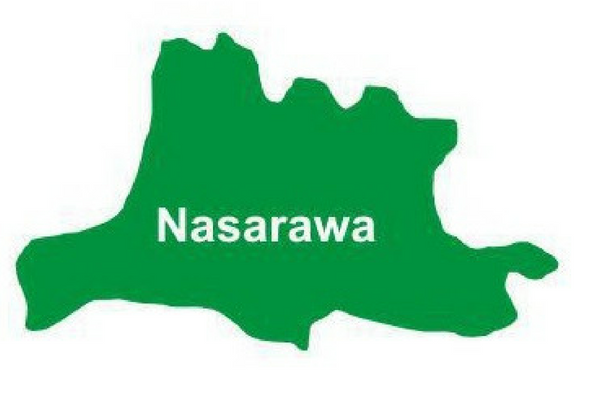
Avatar New Energy Materials Co., Ltd, chaired by Mr Hi Yongwei with Executive Director Zhu Xingjian, recently constructed a lithium concentrator in Nasarawa State announced by Governor Sule to have a 4,000 metric tons per day lithium processing.

Mr Zhen Hua Pei is also a big player in Nigeria’s critical minerals market. Mr Pei is the Chairman, Canmax Technologies Co., Ltd. He is the founder of Suzhou TA&A Ultra Clean Technology Co., Ltd. Mr Zhen Hua Pei currently holds the position of Chairman at Suzhou TA&A Ultra Clean Technology Co., Ltd. and Chairman for Yibin Tianyi Lithium Technology Innovation Co., Ltd. Mr Pei was listed at number 46 on China’s rich list in 2023.  His billion-dollar fortune stems from his holdings in Contemporary Amperex Technology (CATL), one of the world’s largest suppliers of batteries for electric vehicles. Mr Pei has announced plans to build a $200m lithium processing plant in Nigeria. 

In contrast to the vast Chinese interests in Nigeria’s lithium and other critical minerals, no other nation has built a lithium beneficiation plant in Nigeria and the Jupiter Project is the only large lithium deposit not dedicated to providing offtake of ore or lithium concentrate to Chinese companies.

In short, China has moved decisively to capture Nigeria’s lithium and rare earth elements. China currently processes 65 per cent of the world’s lithium, according to Benchmark Mineral Intelligence, a commodities data group.

Initially small Chinese operators sought to use Nigerian front companies, often installing Nigerians as office holders and front men. But as the size and high grade of Nigeria’s critical minerals became apparent large Chinese operators have moved in and overwhelmed the mining sector. 

How much is this costing the Nigerian nation? The five Chinese owned lithium concentrator plants currently operating have an estimated combined published cost of up to US$200m each which is highly inflated while the real cost likely not to exceed US$50m in total. They are designed to process a total of 25,000 tonnes of ore per day or approximately nine million tonnes of ore per annum. This would produce around 2.25m tonnes per annum of concentrate which in today’s market at around $1,000 per tonne is worth around US$2.25b per year. With a current 5% royalty, this level of production from a legitimate mining operation should result in a royalty payment to the government of US$112.5m annually.

It is estimated that large scale legal mining operations across the whole of Nigeria would be able to produce at least five times this amount annually.

However, with most of the lithium ore coming from illegal mining operations the expected royalty paid to the government is miniscule.

It is estimated that large scale legal mining operations across the whole of Nigeria would be able to produce at least five times this amount annually with the accompanying royalty payments to the federal government of billions of dollars annually.

And that’s just for Lithium. 

Chinese interest in minerals is not limited to lithium. Going out with the lithium concentrate from Nigeria and as yet unaccounted for are massive quantities of rare earth elements and other critical minerals with their own separate royalty payments being lost to the nation.

Meanwhile, China has moved to constrain world access to Rare Earth Elements (REE). Chinese authorities announced that, from 15 September 2024, they will restrict exports of antimony, a rare earth element used in products ranging from batteries to weapons, reputedly to safeguard China’s security and interests. This follows from China’s earlier export restrictions on lithium concentrate.

One of China’s largest mining companies, Sinomine, owns the world’s only two producing caesium mines … Canada’s Tanco mine and Zimbabwe’s Bikita mine, providing a strangle hold on global caesium supply.

Chinese companies run the majority of Zimbabwe’s mines but this has not yielded the expected gains for Zimbabwe.  Like Nigeria, Zimbabwe, which has Africa’s large lithium reserves, imposed a ban on export of lithium ore, imposing a requirement for mining companies to set up processing plants to convert the lithium ore to concentrate before export in order to generate local jobs and revenue. Chinese-owned companies including Huayou, Sinomine Resource Group, Chengxin Lithium Group, Yahua Group, and Canmax Technologies have spent more than $1 billion acquiring and developing lithium projects in Zimbabwe. Little of that wealth has flowed into structural improvements in Zimbabwe’s economy.

After buying the Arcadia mine in Zimbabwe from Prospect Resources for $422 million in 2023 Chinese mining company  Zhejiang Huayou Cobalt commissioned a $300 million lithium concentrator which has the capacity to process around 450,000 metric tons of lithium concentrate annually. Under Zimbabwean law the refined lithium can then be exported for further processing into battery-grade lithium outside Zimbabwe. Where does it go …. China of course.

Is this where Nigeria is heading?

Ayodeji Adeyemi, special assistant to Nigeria’s mines and steel development minister said, “Our new mining policy demands that you add some value to raw mineral ores, including lithium, before you export.” Like Chinese operations in Zimbabwe, the lithium concentrate is shipped to China.

However, China, which controls the world’s critical minerals supply chain, is ideally placed to reap benefits in these situations, because several Chinese owned companies have recently completed processing plants in Nigeria. But will there be the technology transfer much desired by Nigeria?

In December 2023, China banned the export of technology to make rare earth magnets, adding it to an existing ban on technology to extract and separate the critical materials. Nigeria is mistaken if it thinks there will be a technology transfer from China to Nigeria in anything but the most basic and mundane processes.

China currently dominates global critical mineral supply chains, accounting for 60 percent of world-wide production and 85 percent of processing capacity. But there is little evidence that China’s dominance in the sector has been beneficial to the African nations that host the minerals. China’s contract concessions are typically opaque and heavily tilted toward Beijing. In May 2023 DRC President Felix Tshisekedi visited Beijing, following in the footsteps of the delegations from Sierra Leone, Eritrea, Ethiopia and Gabon. The DRC President was seeking to overhaul and seal a lopsided $6 billion infrastructure-for-minerals deal with Chinese leader Xi Jinping. In place since 2008, the deal has sent billions in minerals to Beijing, but little infrastructure for the DRC has materialized in return. The Chinese-owned and operated mines certainly escape the international requirements for environmental mitigation and worker safety.

Extraction of critical minerals is only the start. China has moved along the value chain to capture the refining and processing of these minerals before export to China where the balance of the value chain is completed. Ideally, Western nations could work with African nations to form a critical mineral supply chain free of Chinese influence. But Western nations are slow starting and clawing back China’s head start would be hard. Zimbabwe is likely a lost cause. Nigeria is on the cusp of being captured by China. Nigeria’s President Tinubu will travel to Beijing in September at the invitation of President Xi. Will President Tinubu hand over Nigeria’s minerals wealth as Zimbabwe has done. Nigeria among other African nations has decried the colonial era with the wholesale export of Africa’s natural resources with little benefit to the African nations. Are we seeing history repeated with “Euro” replaced by “Sino” or “Western” replaced by “Eastern” plundering of Africa’s natural resources?

IK Solomon is a Mining enthusiast and Public affairs commentator. He lives in Akwanga, Nasarawa State and could be reached on solomonkefas89@gmail.com

Unveiling the Growing Resentment Towards President Tinubu: An In-Depth Analysis

By Samuel Ateh Stephen
stevesam644@gmail.com

Introduction
President Tinubu of Nigeria has recently faced significant public backlash and protests characterized by intense resentment and dissatisfaction. This article delves into the reasons behind this widespread discontent, focusing on the underlying issues that have led to a polarized public sentiment.

The Core of the Issue: Mismanagement and Insensitivity
President Tinubu’s presidency has been marked by several controversial decisions and actions that have directly impacted the lives of ordinary Nigerians. The primary source of public resentment stems from the perceived worsening of their living conditions under his leadership, rather than political or electoral outcomes.

Economic Policies and Living Standards


1. Petrol Subsidy Removal and Its Impact

Immediate Economic Consequences: Rising Fuel Prices: The removal of petrol subsidies has led to a significant increase in fuel prices, affecting transportation costs and raising the prices of essential goods and services. This has made it increasingly difficult for Nigerians to maintain their standard of living.

Impact on the Poor and Middle Classes: The poor and middle classes, who spend a larger portion of their income on basic necessities, have been disproportionately affected. Many are struggling to afford even the most essential items, leading to a decline in their quality of life.

Long-term Economic Implications:

Fund Allocation: The government’s intention to free up funds for other areas of the economy through subsidy removal has not been transparent or effectively communicated, leading to a loss of trust in the government’s economic policies.

Economic Stability: The sharp increase in fuel prices has contributed to economic instability, with higher inflation rates eroding the value of salaries and savings, creating a sense of economic uncertainty.

2. Inflation and Cost of Living

Erosion of Purchasing Power:
Minimum Wage Increase by Tinubu: In 2024, President Tinubu increased the national minimum wage for federal workers in Nigeria to 70,000 Nigerian naira (NGN), which equaled about 44 U.S. dollars based on the current exchange rate. However, this increase did not match the rate of inflation, leading to a decline in real purchasing power.

Comparison to Previous Wage: Prior to Tinubu’s presidency, in 2023, the minimum wage was N30,000, which equaled 65 U.S. dollars at the exchange rate of 460.702 (USD/NGN) in May 2023. Despite the nominal increase in the minimum wage, the real value had diminished due to inflation and a weakening currency.

Impact on Living Standards: The increased minimum wage has not kept pace with inflation, leaving many households financially strained. The cost of basic goods and services has risen sharply, making it increasingly difficult for average Nigerians to afford even the most essential items. This has led to a decline in the overall quality of life for many Nigerians.

Poverty and Inequality:
The combination of high inflation and stagnant wages has exacerbated poverty and income inequality. Many Nigerians are finding it increasingly challenging to cover their basic needs, leading to a sense of desperation and frustration. The gap between the rich and the poor has widened, contributing to social unrest and dissatisfaction with the government.

Healthcare and Education:
The rising cost of living has also affected access to essential services like healthcare and education. Many families are now forced to make difficult choices between meeting their basic needs and investing in their health and education. This has led to a decline in the overall quality of life for many Nigerians.

Social Safety Nets:
The lack of effective social safety nets has further compounded the problem. Vulnerable populations, including the elderly, the unemployed, and those living in poverty, are particularly affected. The government’s failure to provide adequate support has left these groups in a precarious situation, deepening the sense of economic insecurity.

Government Expenditure and Priorities (Luxurious Spending)

Presidential Jet: The purchase of a $150 million presidential jet has been widely criticized as an extravagant and insensitive move, especially given the economic hardships faced by the public.

First Lady’s Office: The allocation of billions of naira for the office of the First Lady has also fueled public anger, as these funds could have been better utilized to improve public services and infrastructure.

Pilgrimage Funding: The budget of 90 billion naira for pilgrimage, described as a “fruitless pilgrimage,” has been criticized as wasteful, especially considering the pressing needs of the Nigerian population.

Lack of Empathy and Communication

Inconsiderate Actions:
The president’s decisions, such as using 21 billion naira to renovate the residence of his vice president, have been seen as inconsiderate and wasteful, further alienating the public.

    Poor Communication:
    President Tinubu’s failure to directly address the public and explain his policies has deepened the sense of mistrust and frustration. The use of intermediaries to communicate with the public has been perceived as a lack of genuine concern and engagement.


    Public Protests and the Call for Change
    The public protests against President Tinubu are not merely symbolic; they represent a collective demand for better governance and a more compassionate leadership. Nigerians are voicing their discontent through demonstrations, highlighting their struggles and calling for immediate action to improve their living conditions.

    The Way Forward: Rebuilding Trust and Addressing Core Issues
    To regain public trust and stabilize his presidency, President Tinubu must take concrete steps to address the root causes of the public’s discontent. This includes:

    Revisiting Economic Policies: Re-evaluating the removal of petrol subsidies and finding more equitable ways to manage the economy, ensuring that the benefits trickle down to the masses.

    Prioritizing Public Welfare: Redirecting government spending towards critical sectors such as healthcare, education, and infrastructure, which directly impact the quality of life for Nigerians.

    Enhancing Communication and Transparency: Engaging more openly with the public, explaining policy decisions, and listening to their concerns. Transparency in governance can help rebuild trust and foster a more collaborative relationship between the government and its citizens.

    Conclusion
    The level of resentment towards President Tinubu is a reflection of the deep-seated economic and social challenges facing Nigeria. It underscores the urgent need for a leadership that is responsive, empathetic, and committed to the welfare of its people. By addressing these core issues and working towards a more inclusive and equitable society, President Tinubu can begin to mend the fractured relationship with the Nigerian public and steer the nation towards a brighter future.

    Beyond the Backlash: Unpacking Kenneth Okonkwo’s Critical Insights on Peter Obi’s Leadership

    By Samuel Ateh Stephen
    stevesam644@gmail.com

    In the wake of Kenneth Okonkwo’s public expression of concerns about Peter Obi’s leadership and vision, many were quick to pounce on his statements, often without delving deeply into the substance of his criticisms. Okonkwo, a notable figure within the Labor Party, found himself under immediate scrutiny and, in some cases, outright attack for voicing his reservations.

    Here Are The Key Concerns Raised by Kenneth Okonkwo Regarding Peter Obi From Interview On Arise News:

    Lack of Decisiveness: Okonkwo believes that Peter Obi has not been decisive enough in handling the internal issues within the Labor Party. Specifically, he points to the failure of the National Working Committee (NWC) to organize an all-inclusive convention, despite Obi’s public declaration that the convention should not hold. Okonkwo feels that Obi should have taken more forceful action to address this issue, such as coming down decisively against the NWC for disobeying his instructions.


    Building a Strong Political Party: Okonkwo is concerned that Peter Obi does not place a high enough priority on building a strong and broad-based political party. He argues that in order to compete effectively against an incumbent in future elections, the Labor Party needs to be consolidated and strengthened. Okonkwo believes that Obi’s approach does not sufficiently emphasize the importance of a robust political platform.


    Integration of the Obedient Movement: Okonkwo is disappointed that Peter Obi does not see the strategic value in integrating the Obedient Movement, a group of supporters, into the Labor Party. He believes that bringing these supporters into the party would significantly strengthen it and create a more formidable political force. Okonkwo advocates for this integration as a way to solidify the party’s base.


    Approach to Electoral Challenges: Okonkwo has expressed concern over Peter Obi’s approach to dealing with electoral challenges, such as alleged vote rigging and other forms of electoral malpractice. He believes that Obi’s tendency to be “sweet” and non-confrontational may not be effective in fighting against these injustices. Okonkwo feels that a more aggressive stance is necessary to combat electoral fraud and ensure that the party’s victories are secured.


    Resistance and Protest: Okonkwo feels that Obi’s nature does not align with the need for strong resistance and protest against the current political order. He advocates for a more aggressive stance to combat the perceived kleptocracy and corruption in Nigerian politics.


    Leadership Style: Okonkwo has noted a difference in temperament and leadership style between himself and Obi. He describes Obi as a “sweet man” who wants to appear sweet to everyone, while Okonkwo believes in a balance of sweetness and firmness to prevent being taken advantage of.
    Vision for Nigeria: Okonkwo is concerned that Obi’s vision for Nigeria does not include the necessary steps to build a solid political foundation. He believes that solving Nigeria’s problems requires more than just addressing symptoms; it requires a strong political party to support and sustain any positive changes.

    While Kenneth Okonkwo’s public critique of Peter Obi’s leadership and vision sparked immediate controversy, a closer examination of his concerns reveals a thoughtful and strategic perspective on the future of the Labor Party and Nigeria. The initial backlash, often dismissive and reactive, overshadowed the nuanced issues Okonkwo raised, which touch on the core of effective governance, party strength, and national progress.

    Arise O Compatriots Vs Nigeria We Hail Thee

    By Gloria Mabeiam Ballason Esq

    It is difficult to wrap the head around how Nigeria’s leadership lines up its priorities. On a day when the President should give account of his 1-year stewardship what he opts for is to take Nigeria back to its old anthem- a colonial relic that abrogates an anthem written and compiled by a Nigerian.

    If you read that as neo-colonialism that may be one tangent to view it but for those who read the Holy creed, it is reminiscent of the Israelites craving for the
    garlic and onions of the land of their oppression in exchange of the Promised land.

    The stats are even more dire when the facts run up to the President's action:

    Nigeria’s inflation rate now stands at about 35.20%, the U.S. inflation is 3.36% yet their citizens are screaming hoarse.

    Dollar to naira in 1999 was $1: N88. In May 2023 when President BAT took over it was $1: 460.72. Today it is $1: N1400.

    Nigeria’s Human Rights record is nothing to write home about. 735 Mass abductions have occurred in the past year and an estimated 4,777 Nigerians have been kidnapped since President BAT’s assumption to office.

    In this moment, the National Assembly has not done enough to demonstrate the checks it is putting up against the Executive to ensure the people get their due. The Judiciary is regrettably struggling with judicial independence and multiple conflicting orders.

    The Bill to return Nigeria to its old colonial anthem is one of the swiftest to be signed into law. In other words, the President deemed it ‘more urgent and primary ‘ than security of lives, addressing human rights violations, stemming down inflation or judicial independence.

    There are many things we could have gone back to:

    • Better human rights record post 2009 where there were no terrorists bandits or kidnappers.
    • Better economy, quality of education, national integration, health care, power supply that does not polarize the people between bands A-E.

    If it weren’t so sad and unfortunate, it would have been bizarre.

    Olusola O’sola Fapohunda puts it to a case of a landlord whose house has leaking roof, blown off electricals, septic tanks spewing and smelling, decking, doors and windows off with an emerging storm threatening to crash down the house but who drives by and sits in his air conditioned car, inspects it and recommends the house be painted as the fix.

    My cerebral learned friend Fidel Albert Esq puts it even more graphically when he said: the cancer patient rejected chemotherapy and opted for BBL.

    An anthem change does not fix an ailing nation. National symbols do not shape a country. The intentional policies and actions of leaders in nation building is what builds a nation.

     Gloria Mabeiam Ballason Esq is the C.E.O. House of Justice. She may be reached on gloriaballason@houseofjusticeng.com
    Why Fulani Vigilante in Nasarawa Cannot Work!

    By

    Felix Baba, Lafia

    The plan to set up a Nomad Vigilante Group by Miyetti Allah Kautal Hore in Nasarawa State under the guise of curtailing cattle rustling, is a diversion being orchestrated in active connivance with a top security aide of President Tinubu.

    The Aggressor seldom finds solutions to the aggression!! It’s a general feeling in Nasarawa State that the kidnappers and bandits, who are mainly from the Fulani ethnic stoke, either local or international, are being invited, sheltered, protected and covered to perpetrate their heinous crimes across the Middle Belt and Southern Kaduna.

    The motive behind such a devious plan of hoisting a Fulani security outfit is to foster a Fulani hegemony across Nasarawa State and by extension the Middle Belt through the campaign of terror and bloodletting.

    Ordinarily, the leaders of Miyetti Allah Kautal Hore were supposed to have been arrested and prosecuted long time ago for their utterances in defence of the kidnappers and killers of our people but here they are, colluding with Tinubu’s top security aide, to provide a layer of cover for murderers and kidnappers, which is motivated purely for self preservation and political conquest.

    We call on the government, relevant institutions and people of good conscience to rise up and defeat this evil machinations of the Fulani in Nasarawa State, who have practically turned our state into the haven and launch pad of terrorism and banditry across the Middle Belt.

    We also call out the security aide who despite holding one of the highest offices in the land, is supporting such an adventure that is designed to displace the people and take over their lands in keeping with the Fulani expansionist agenda.

    May the Ministry of Steel Development not live by its Homophone —say Amen 

    By Shalom Kasim

    In the wake of recent scandals involving the Ministries of Humanitarian Affairs and Interior, a looming potential risk emerges with the Ministry of Steel Development. While there’s no current evidence of malfeasance within the steel sector, the prospect of this key ministry collaborating with counterparts under investigation raises significant concerns about the integrity of the government’s economic agenda.

    President Tinubu’s vision for a revitalized steel development industry as a catalyst for economic growth (as earlier announced by his singing bird) is commendable. However, the timing of the Ministry of Steel Development’s involvement, amidst ongoing scandals, demands a closer examination of the potential risks that could unfold.

    As the government pursues partnerships with foreign companies, such as the Chinese Luan Steel Holding Group and the Indian Jindal Steel Group, the influx of billions of dollars into Nigeria’s steel sector presents both opportunities and dangers. The lack of transparency and accountability in the Ministries of Humanitarian Affairs and ‘ Interior serves as a warning that we should not act deaf to, emphasizing the urgent need for robust oversight mechanisms in the steel industry.

    The collaboration between these ministries, tainted by allegations of financial impropriety, poses a threat to the very economic growth the government aims to achieve. The potential for corruption, embezzlement, and mismanagement of funds in the steel sector could jeopardize not only foreign investments but also the livelihoods of thousands of Nigerians who stand to benefit from job opportunities in this critical industry.

    Nigerians must remain vigilant and demand proactive measures to safeguard the Ministry of Steel Development from succumbing to the pitfalls witnessed in other government departments. President Tinubu’s commitment to transparency and accountability should extend to the steel sector, ensuring that every dollar invested contributes to the nation’s economic growth rather than lining the pockets of a select few.

    While the Ministry of Steel Development may currently be free from scandal, the risks lie in its collaboration with tainted counterparts. As citizens, we cannot afford to turn a blind eye to the potential dangers that may lurk beneath the surface. Let this serve as a warning, urging the government to implement stringent measures to protect the nation’s economic interests and restore public confidence in the face of ongoing challenges.

    We are not pessimists. We are just Nigerians who knows their country.

    Kasim is a public affairs commentator, a poet and a journalist. He writes from Wukari, Taraba state, Middle Belt Nigeria.

    Middle Belt: A Region of Rich History & Unique Identity

    By

    Kingsley Gadani

    The Middle Belt of Nigeria, often referred to as the “Middle Belt Region,” is a diverse and historically significant part of the country. Encompassing a vast expanse of land. This region has played a crucial role in the socio-cultural and political tapestry of Nigeria.

    The history of the Middle Belt is rich and multifaceted, shaped by various ethnic groups, migrations, and interactions. Historically, the Middle Belt has been home to a mosaic of ethnicities, including the Berom, Tiv, Idoma, Nikyob, Ninzom, Nupe, Gbagyi, Atyap,Egede, Igala, Bassange, Siyawa, Afizare, Chawai, Adara, Bajju, Ham, Eggon, Mada, Gwong, Gure, and many others. These groups have distinct languages, traditions, and cultural practices that have contributed to the region’s unique identity.

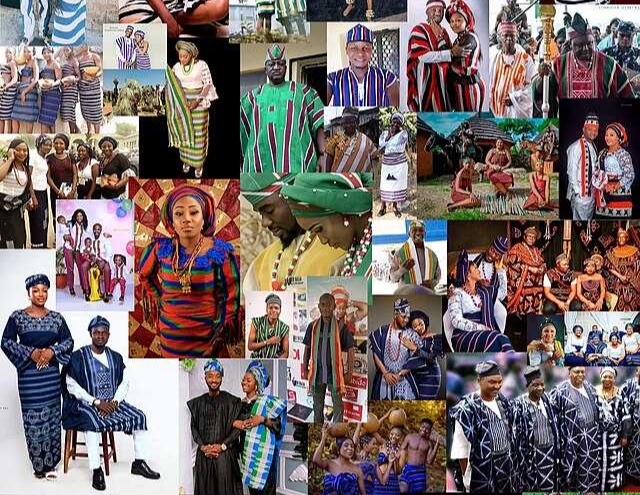
    The geographical location of the Middle Belt, sandwiched between the predominantly Muslim North and the largely Christian South, has further influenced its cultural and religious diversity. The belt cut across Southern Bauchi, Southern Borno, Gombe, Adamawa, Southern Kaduna, Niger, Southern Kebbi and the entire central parts of present-day Nigeria. The people of the Middle Belt practice various religions such as Islam, Christianity and African Traditional religions (ATRs). The region is adjudged one of the most hospitable regions in Nigeria which informed its accommodating nature to all other Nigerians from different parts of the country. One unique feature of the people of the Middle Belt is their way of life. Style of farming, mode of dressing, hair styles, marriage and other traditional ceremonies follow similar pattern across the belt, lending credence to the argument that the people of the area are siblings from one ancestry.

    The pre-colonial era saw the emergence of powerful kingdoms and chiefdoms in the Middle Belt. The Nok civilization, one of the earliest Iron Age cultures in West Africa, flourished in what is now Southern Kaduna and Plateau State. The Kororofo Kingdom is another powerful kingdom that reigns in the Middle in the pre-colonial era. These ancient societies engaged in agriculture, iron smelting, and artistic endeavours, leaving behind intricate terracotta sculptures that serve as archaeological treasures.   

    The arrival of colonial powers in the late 19th century marked a transformative period for the Middle Belt. The British administration, in its quest to establish control and facilitate trade, introduced indirect rule, relying on local chiefs and traditional institutions. This strategy often exacerbated existing tensions between different ethnic groups, as the colonial authorities favoured certain communities over others.

    Post-independence, the Middle Belt continued to experience social and political dynamics. The region has witnessed episodes of communal and ethnic tensions, partly fuelled by competition for resources, political power, and religious differences. The quest for autonomy and self-determination has been a recurring theme, with various groups advocating for recognition and representation.

    The Middle Belt has also played a significant role in Nigeria’s political landscape. Several prominent political figures have emerged from the region, contributing to the country’s military, governance, and development. However, political instability and challenges persist, reflecting the complex interplay of factors within the region. In recent times, issues such as killings of genocidal proportion blamed on armed Fulani herdsmen, resource competition, and ethno-religious tensions have brought the Middle Belt to the forefront of national discourse. The region’s strategic importance, both geographically and culturally, underscores the need for sustainable solutions to address historical grievances and foster inclusive development.

    In conclusion, the history of the Middle Belt of Nigeria is a captivating narrative of diversity, cultural richness, and resilience. Shaped by ancient civilizations, colonial influences, and contemporary challenges, the region continues to evolve, contributing significantly to the mosaic of Nigeria’s identity. Understanding the historical complexities of the Middle Belt is crucial for fostering unity, addressing grievances, and building a more harmonious future for this vital part of the country.

    Kingsley Gadani is a public affairs commentator, and researcher. He writes from Kaduna Nigeria

    The North Is No More – General Lekwot

    General Zamani Lekwot (Rtd) is not given to much media appearances. He has spent all his life in the military, from military school to becoming a general. Along the way, he was Military Governor of Rivers State (1975-78), Commandant of the Nigerian Defence Academy (NDA), Kaduna (1979-82) and General Officer Commander (GOC) of 82 Division, Enugu. He was also the Nigerian Ambassador to Senegal, with concurrent accreditation to neighbouring countries.

    Many young people may not know you. You started life in Jankasa, can you tell us about that period of your life?

    I was born in Jankasa, Zango Kataf LGA in Southern Kaduna. I was born during the Second World War. There was no record as such, but my mother just put one, two and three events together and remembered very well when aircraft used to fly all over the place. I did my primary school in Jankasa.

    So, what period did she allocate to your date of birth?

    The war started a year earlier. I did my primary school in Jankasa and Abuja, now Suleja Senior Primary School. It was built by Niger, Benue and Zaria provinces and students were contributed. I was in the batch from the then Zaria Province. From there I went to the Nigerian Military School (NMS), Zaria, and then proceeded to the Indian National Defence Academy.

    Was the choice of the military school deliberate?

    I will say yes. We were doing sports one evening and we saw a European standing by the roadside beside his jeep. We had heard the sounds of bugle every morning and evening. The following day he came when we were doing physical training and a day later we saw soldiers parading.

    The military precision with which the music and marching tallied impressed some of us. At the end of it he told us that there was a military secondary school in Zaria for young people and that pupils that went there would do their WAEC within four years, but the most impressive thing was the parade, and he asked those interested to report to the office.

    I, late Gen Mamman Vatsa, late Group Captain Usman Jibril and two others went. We did the interview and we were invited. I think I was the only one who went to the military school.

    How was your experience in India?

    The Indian experience was very impressive because the weather there, in that part of India, Puna, is within the Equator, in terms of temperature it rains more because the monsoon rain is there.

    I found the Indians a very interesting people, very hard working, and they were producing things for themselves. Their military is one of the best in the world in terms of professionalism.

    We were six actually: four naval cadets and two army. My second colleague, who was also from NMS, was late Col Isah Ahmed, who was married to Nuhu Ribadu’s sister. We were at home in India really.

    Were you comfortable with the food?

    Yes, there were variations but basically they were the same. In any case, soldiers are trained to acclimatise anywhere they go.

    When you came back from India, I believe the Nigerian Civil War was just starting?

    It hadn’t started. In fact, out of the six of us I was the only one who returned home late because we spent three years in the Indian Defence Academy, which happened to be the mother NDA.

    The naval cadets, after three years in Puna, went to the naval academy, then the late Col Ahmed and I reported to the Indian Military Academy to specialise.

    After our graduation, the late Ahmed who joined the artillery returned to Nigeria. I for one was in the Indian artillery for a while because the infantry course was not scheduled until later. I am proud to say that what I learnt at the artillery taught me a lot of things that I found useful during the civil war.

    After that I went to the Indian Infantry School for three months, did my course before I returned to Nigeria on 31st March, 1967. The civil war broke out in July.

    And you went straight into the warfront?

    I was posted to 6 Battalion, Ikeja, the late Brigadier Benjamin Adekunle was the CO, the late Gen Gibson Jalo was the second in command. When the war broke out, the 6 Battalion reinforced and we went and captured Bonny.

    Your company captured Bonny?

    Not company. Well, yes. I was a company commander, our battalion captured Bonny and then two other battalions were floating in the sea just in case. After Bonny was secured, then others were located.

    How was the battle for Bonny; was it something really important in terms of the final victory?

    It was important because Bonny commanded the entrance into Port Harcourt Port along the Port Harcourt River. It was through Port Harcourt, through the Warri Port, that the Biafrans were smuggling weapons into Port Harcourt and Warri.

    Bonny fell on the 23rd of July. Within the first week of August, 1967, that was when the Biafrans infiltrated the Mid-West and captured Benin.

    In the East then, Warri, Port Harcourt and Calabar were the three ports; next to Lagos. Apart from being the entrance into Warri the Port, the gulf oil installations were there, so their aim must have been to seize that place and control the entrance into Warri Port. We were there before them.

    What happened after the war?

    It was during the war in 69 that I was posted to NDA as adjutant. It was an Indian training team that established NDA with the Late Brigadier MR Varma as the first commandant. When I reported for duty in May, 69, late Gen Ejoor had taken over from Brig Varma, but the bulk of the instructors in NDA were Indians.

    By January, 1979, the war ended and more Nigerian officers who had been at the front were posted to NDA to be retrained.

    You were given command yourself, was that in Maiduguri?

    I started as adjutant in 1969. I went to Gen Adebayo in 1971 and appealed to him to help me attend one of the courses because most of my mates after the war attended courses.

    You know in the military, attending courses broadens your horizon. So, I was sent to do the Company Commander Course in October, 1971. I was there when I was promoted lieutenant colonel. Having been promoted, I was no longer qualified to be adjutant. Gen Nwachukwu, who was a major, took over from me. In September, 1972, I was posted to 12 Brigade, Aba, and a year later to 33 Brigade, Maiduguri. At that time Gen TY Danjuma was the GOC of 3 Division, Jos.

    It was from Maiduguri I was nominated to attend the Command and General Staff College in the United States in 1974. After a year I came back, that was when General Murtala Muhammed overthrew General Yakubu Gowon and I was posted to Rivers State as military governor.

    Was that not a very overwhelming job for an officer in his 30s?

    You know some things happen in the military. I had just returned from the US, then my name was one of those announced. I was on leave actually waiting to be posted. So, I answered the call and went to Rivers.

    But were you surprised with the posting?

    Yes! Because I didn’t expect it. Well, having been in Bonny in 1967 I had an idea of what the terrain in Rivers was, and when I got there I was fortunate to convince some patriotic Nigerians to join my cabinet; like late Prof Tam David West whose articles in Daily Times I had been reading. He was very critical of my predecessor.

    Diete Spiff?

    I also got some from the staff of Shell, GBO and Nigerian Breweries.

    These were all people older than you?

    David West was older than me, but the others, I think, were my juniors. When it comes to service, you don’t consider age.

    But how did you manage as governor?

    I was also fortunate to engage a very experienced diplomat and former District Officer (DO) as the secretary to the government, late Chief F.J. Elah, he had served in the Biafran government.

    According to what he told me when talks in Kampala, Uganda were organised, he was the Biafran representative in London. He had advised Ojukwu to accept the call to Kampala to go and start a dialogue. I think Ojukwu didn’t like it. He recalled him home for consultation and he knew he was being sacked.

    When he got to the East, he found his way to Rivers State. He was in fact working for the College of Science and Technology when somebody recommended him. I found him very, very useful because as a former DO and a diplomat he knew about the General Order and what diplomacy was all about. I learnt a lot from him.

    What will you say is your legacy in Rivers? First of all I enjoyed myself. Rivers State, then including Bayelsa, was a collection of minorities. They were lucky to have been visited by missionaries much earlier, being located near the sea. I learnt a lot.

    The high point was the huge cooperation I got from them. I tried my best too. You know soldiers’ administration. When it comes to administration, dealing with people, I think we have an edge.

    Are soldiers trained to be…?

    Sometimes we are not satisfied with the civilians. They are too slow or they ask too many questions. You know we get angry once in a while.

    You don’t like questions?

    We think clearly about something before we order that it should be done. Let the action start, if there are mistakes we can correct. Soldiers don’t like to waste time, we believe in doing things with military precision because a mission set out must be fully accomplished.

    Tell us about the rest of your career in the military?

    I had a very successful career in the military, but problems came in 1983 when the military coup was staged. I was the GOC in Enugu, some of my units were in Benue and part of Taraba and part of Bendel. So, 82 Division then was the largest division and we had components of what other divisions had. They used to call it the composite division.

    I was one of those commanders that were kept in the dark. So, when the coup took place, I was on leave, and an announcement was made for all commanders on leave to report to Lagos.

    I went to Kaduna from the village, caught the plane and went straight to Gen Muhammadu Buhari who was the head of state. I asked him if the ousted President Shehu Shagari was safe and he said yes. Then he told me that I had been appointed military governor again. I thanked but told him I would prefer to remain in the barracks.

    Another suggestion was that military governors should be junior colonels and senior lieutenant colonels so that they would not stay in government for long.

    Buhari then told me that my junior had been made the Chief of Army Staff (COAS). I told him it didn’t bother me at all and I cited the example of Generals George Patton and Omar Bradley.

    Gen Ibrahim Babangida was your junior?

    I am senior to him. I was six months senior to him. In fact, when we were in NDA he was a company commander and I was a cadet brigade commander. I recommended him for promotion to lieutenant colonel in 1972. I got mine in 1971.

    So, when I told Buhari I would copy what Patton did, he said no. Patton was the military commander in North Africa during the Second World War. He slapped a soldier for running from the front and hiding at the hospital. He was removed and General Omar Bradley, his junior, was made the commander.

    So, when the war became too hot they brought him back and he served under Bradley. His own was to take part in the war and kill Germans, according to him. So, when Buhari said it was not possible I said well in that case I would have to retire and he protested that if I did that I would be creating problems for him.
    That was when he told me that some would be retired and some were going to foreign service. Since some officers were being sent on foreign service and since my remaining in the army was not possible because my junior was the COAS, I volunteered to go on foreign service and he asked me which country I preferred. He told me that Gen Hananiah was going to London and Navy Commodore Okujagu was going to India. I said okay, when I was in the Indian Academy I learnt French, that he should send me to France.

    I think when he took it to the caucus, some people didn’t like the idea of my rejecting what was offered to me. So, really that was how instead of France, it was changed to Senegal; with concurrent accreditation to Mauritania, Cape Verde and the Gambia. I went there for three years, learnt a lot of things and returned home.

    Was it strange to leave Nigeria as a soldier and become a diplomat?

    I didn’t have the training for it, but military training is such that it makes one versatile. One lies low and studies the status quo and then decides how to cope.

    My deputy was a very experienced diplomat who later became ambassador, Kayode Shunkaye, from Kogi State. I learnt a lot from him. In interacting with other diplomats I also learnt how to look at issues differently.

    At that time my wife was doing her degree course in Cardiff, Wales, so I had a lot of time and therefore decided to register with the University of Dakar in order to polish my French. So, during my stay there I was able to pick up the language and read things and follow, not 100 per cent, but better than before.

    How good is your French?

    It is okay. I can find my way in Paris or Quebec or anywhere.

    And did you travel widely in the region because you were concurrent to other countries?

    Of course; Cape Verde, Mauritania and the Gambia. I visited these countries regularly. In Mauritania and the Gambia, we had offices, it was in Cape Verde that we didn’t have anything. I had no problem at all.

    Was being an ambassador the last part of your engagement in public service?

    Yes. From 1984 to 87 when I finished I returned home and returned to the village.

    You returned to the village or Kaduna, because this is not quite a village?

    To Kaduna, that is true. I only visit the village once in a while.

    There is this impression that your leaving the military was because of your relation with Gen Babangida, that somehow there is bad blood between the two of you?

    No! I had no problem with Babangida. As I told you, he was my staff in NDA, I promoted him to lieutenant colonel. I gave him a good report, he is a good officer. We trained the cadets together, there was no problem.

    But you did mention the caucus was not happy when you didn’t accept to go for military governorship?

    That was from Buhari, because when he took what I proposed some people didn’t agree. I had no quarrel with that. The station was changed from Paris to Dakar, fine.

    But surely you must have felt at 43 years or thereabout your career was suddenly terminated?

    Agreed. I loved my profession because it is a very serious profession; for my career to be terminated like that, I accepted it.

    Those who did it knew why they did it. So, when I had this window to serve in the foreign service and learn something new, I saw it as a bonus. At the end of it, I decided to retire and rest.

    That supposed bad blood between you and your colleagues in the army, was it linked to the problem you later had in Zangon Kataf?

    Honestly I wouldn’t know. The Zangon Kataf issue was just blackmail. Do you see a whole general going to the village to kill villagers? No, it doesn’t make sense. Even the tissue of the lies they dashed out were not convincing. How can a general go and start killing people? I am not mad.

    But why were you roped into it?

    I don’t know. Look, the military tradition demands that when a soldier commits an offence and he has to be put in the guardroom, you must tell him what he has done wrong so that he can prepare his defence within 24 hours. Nobody asked me anything.

    Babangida was president, instead of sending for me or sending somebody, he didn’t do it, he is the only one who can answer this question. I have never offended him, there was nothing between us.

    During the Oputa Panel, even the Hausa people in Zangon Kataf, my lawyer asked them whether they had an issue with me, they said no. My own village is 14km away from Zangon Kataf town.

    What caused the problem was a market relocation. A day was fixed for the market to be opened, people started a riot and some people were killed. I was just framed up by some people.

    But as an elder and the most prominent son of the area, were you able to intervene to help sort out the problem?

    After our detention, yes.

    Were you detained because of the riot without knowing what it was all about?

    Exactly. I was just framed up, how did it happen? The late Col Madaki also came from Zangon Kataf, but he was Baju, I am Ityap. When I was posted to Maiduguri as Commander of 33 Brigade in 1973, he was already there. He was my brigade major, we worked together, we did things together. We used to sit down and talk; what can we do to help our people.

    So, really, there was nothing connected with me about a market riot. I had no shop there, I don’t live in the town, they don’t know me. People who did it wanted to hide the truth either to blackmail me or to implicate me for reasons only.

    Is it because you are a prominent son of the area so that they would have to say somebody was responsible for this?

    I don’t know.

    But I asked you, did you try to help as an elder?

    I am coming. So, when we came out of detention, there was this bone of contention, some old people, after the riot, many Hausa people ran away.

    Some people said we lived with these people, many of them are offspring of Kataf women, we still give them our daughters in marriage, they have lived there for a long time.

    But for one reason or the other, some found it difficult to relate, they still carried that air of arrogance, but our people are simple minded, we don’t care. So, to have attributed what happened to me was unfortunate.

    Now, when we came out of detention, some old people felt disappointed because after the riot, 61 of us were arrested, including our district head, all the village heads, some retired reverends, one of them was 89 years old, and he was accused of killing people, so they were furious.

    When it came to taking a decision to allow them (the Hausa settlers) to return to their homes, some people didn’t want it. This was where I joined others in appealing to them.

    In the Holy Scriptures, I think Ecclesiastes, it is mentioned that there is a time for everything; time for birth, time for death, time to fight, time to this; we said what had happened had happened.

    It wasn’t possible for everybody in Zangon Kataf to have taken part in the plot. So, leave those willing to come back to come back and they finally came back and their farms were returned to them. Our then district head who had then become a chief received them.

    There are some shameless people, they take pleasure in using the name Lekwot. Okay, if Lekwot was a bad guy, I wouldn’t get to where I got to, that would have manifested itself.

    But a court convicted you and a few others on this same problem?

    That was a charade. Do you know why?

    No?

    There were two trials, the first one they framed up lies. I was never in Zangon Kataf town; the federal director of public prosecution came, looked at the issue, evidence was given, there was no case, so he took time off to go to Sudan to do some work. So, Justice Pius Okadigbo discharged us, but he didn’t acquit us.

    As we stepped down the witness box, he directed the police to arrest us again. We were taken to the Kaduna prison and new charges were framed against us.

    When the case started, our lawyer was the late Chief Ajayi (SAN). So, when the Babangida government saw that there was no case, Degree No 55 of 1973 was enacted, directing the tribunal to send all their proceedings to Abuja, barring us from appealing.

    Then the hostility of Justice Okadigbo, who appeared to be a hired agent, because he violated legal proceedings in court. He was supposed to be a high court judge. So, Chief Ajayi took him on. In the end when Ajayi saw this degree, he knew that Babangida and his team had made up their mind to do us in, against the law, so our legal team withdrew.

    I was the first accused, I begged Okadigbo to grant us two days to hire another team, he said no, that we should defend ourselves. It was later I learnt that when an accused is standing trial for his or her life, that accused is entitled to a defence of his choice; where he cannot afford it, then the Legal Aid Council (LAC) can be appealed to. Okadigbo didn’t do any of these.

    Two days later, no, the following day, the Tribune Newspaper carried our headline, “Zangon Kataf trials: Judgement without defense”. So, we were condemned without fair hearing.

    Why would Babangida do that?

    I don’t know.

    Because you were good to him you said?

    Babangida is an awkward character. He killed Vatsa. Vatsa was accused of planning a coup, do you arrest a person you suspect of planning to steal or to commit a crime? You have to wait until he is caught in the act.

    Why did he annul June 12? He is now lying that he was forced, forced by who? Who was the president? Is he saying junior officers forced him to annul the election?

    He called Abiola his friend, why did he do it? I hope he will summon the courage to tell the world the truth. If he had something against me he should have said it and I would easily apologise; that is me. I like to live in peace with people.

    But somebody who recommended him for promotion, somebody who had never quarreled with him, he went and did this in violation of the officer’s code of conduct; you don’t accuse an officer without confronting him with the fact.

    So, how was that period of your life, from arrest to being condemned to death?

    My conscience was clear. I didn’t do any of such things. Why should I kill villagers, what for? I didn’t know them, they had not offended me.

    I was forced to ask the tribunal what sort of a country we were in. They went and said things I knew nothing about.

    The crisis was caused by some fanatics in Zangon Kataf town. After the riot some people were killed. Instead of the government instituting a commission of enquiry, sorry they did under Justice Cudjoe, alright. I even went to the tribunal, not tribunal, commission of enquiry, to answer questions.

    Did she make recommendations about what to do to help?

    Some mischievous persons in Zangon Kataf accused me of importing weapons. In July earlier that year we launched an appeal fund to codify our language and to translate the Holy Bible into our language. So, they said I used that money to buy weapons.

    When Justice Cudjoe submitted her report, we were waiting for the result when a letter was written by an Islamic group in Zangon Kataf town addressed to Sultan Dasuki asking him to do something about the killings in the market riot otherwise the Nigerian jihad would start in Zangon Kataf.

    They fixed a date and attacked a nearby village and that was what triggered the riot. Then the villagers responded, their neighbours also responded, this was how it started.

    If they hadn’t attacked the village there would have been no reaction. From there one thing led to the other. I still have this letter they wrote, one day I will give you.

    It was Gen Abacha that pardoned you and set you free?

    Abacha was my friend. When I was the Military Governor of Rivers State he was the brigade commander. We played squash together, we played scrabble together, he was a member of the executive council. Each time I travelled he was the acting governor; there was no problem.

    I am sure he knew the truth. We lived together for three years, his wife was very close to my wife. The character of a bad man, no matter how he hides, must show. The person who is innocent, a gentleman, you can brand him anything but it doesn’t change him. I am not violent by nature.

    This problem still persists in Kaduna, sometimes in Plateau, why do you think we are not able to, all these years, live in peace with each other?

    It is incompetence on the part of the people in authority. I will tell you, it was the late Sardauna who influenced us to join the army, not only us, we were juniors, people like the late Maimalari and TY Danjuma.

    When I was brigade commander in Maiduguri, the attorney general was one Buba Ardo. He told me that it was the late Sardauna who enjoined him to join the judiciary.

    Sardauna was a godly leader and he came to our school and appealed to us, “My children, in no distant future, the Europeans will return to their country, join the military; it is a very, very important profession.”

    Sardauna did not consider tribe or religion, he saw us as his children; that explains the secret of the progress in the North. But when he was killed, people who worked with him, what happened? We have selfish people up here who shout “North” with their mouths, but what they have in mind and do are different.

    I take your mind back to how Boko Haram started, it was during Yar’Adua’s time. They attacked a police station in Yobe, nothing happened; they invaded the prison yard in Bauchi, released their members, nothing happened.

    It was after they started something in Maiduguri that the military pounced on them, arrested their leader and handed him over to the police, then he was killed. So, people who ought to do what they ought to do and don’t do it; this is the problem.

    But in Kaduna, the immediate past governor, Nasir el-Rufai, started a peace building process. I don’t know whether you know about it or are actually part of it?

    El-Rufai was pretending; he is a bad leader. In a video clip he confessed that he came to Kaduna to Islamise the state. All along, we have lived in peace.

    If the governor is a Muslim, the vice will be a Christian. When he came he started with it and discarded it. Then if you look at his antecedents, he doesn’t believe in what the constitution is saying, he didn’t obey court orders, he decided to decimate some of our chiefdoms, including the closing of some districts.

    The late Emir of Zazzau, Idris, went to him and said if shortage of money was the problem he (Idris) would pay the district heads. He refused. So, the emirate went to court and won the case, he ignored it.

    Next, he was so arrogant he would not consult anybody. As a rule of thumb, each time a government was sworn in, Southern Kaduna elders, I am the chairman, paid a courtesy call, discussed and told the governor things he could not hear from the security.

    But when El-Rufai came, we tried and he refused. SOKAPU is our cultural organisation, he said he had nothing to do with them. Then he embarked on this politics of exclusion; people from Southern Kaduna; he has nothing to do with them.

    You didn’t see him throughout his tenure as governor?

    No. He refused, he ignored us, we too decided to ignore him, who is he?

    Even you personally, you didn’t see him?

    No; to see him how? I ran across him in the golf course once, we just greeted each other. He doesn’t believe in the diversity of the country. When he was talking about Islam, there is no problem about religion in Southern Kaduna, even in my family we have Muslims, many houses have Muslims, Christians and traditional religion.

    We do the Sallah together, Christmas together, there is no problem. So, this issue about religion comes from outside.

    What is the problem, because there is still conflict, there is still fighting?

    Only El-Rufai can answer that. Before him were other governors. Namadi Sambo was here before he became vice president. Makarfi was here. Ramalan Yero was here, none of them manifested the type of problem El-Rufai manifested. He will tell lies, invent stories.

    For your information, the present governor, three weeks ago, invited 10 elders from Zaria and 10 elders from Southern Kaduna. The meeting was a huge success. The speech he made was very impressive.

    Were you there?

    Of course. I am the chairman of Southern Kaduna Elders Forum. Community service is what I have given myself. So, two of the things the present governor said that impressed us, me in particular, was his seven-point agenda, one of them is to develop the rural areas, which makes sense.

    He also told us that he was not going to discriminate against any part of the state, that is how it should be. For 16 years the PDP ruled with inclusiveness, Southern Kaduna made about six ministers, who can complain?

    But when El-Rufai came, nothing, even to listen to people, he wasn’t interested. He came with the mindset to marginalise a certain part of the state. How can a leader who swore to do equity and justice turn round to do this? I feel sorry for him because some of these bad things will snowball back to him.

    You live in the Kaduna GRA, are you at peace with your neighbours?

    Oh yes, we greet. I told you I am not a violent man. All the hocus-pocus you hear, it is just hate speech. They are very lucky, do you know why? If I had politics in mind, I would get into the arena. It is grammar, they will abuse me, I will abuse them, but no, politics is not my cup of tea, because it doesn’t appeal to me. A thing is either right or wrong; that is me.

    People who say all these, do you hear me responding? I ignore them, I don’t want to dignify the hocus-pocus with a reply. There is no need, there are better things to think about.

    How do you spend your time beside the community engagement you do; I heard you mention golf?

    Yes! I play golf; even the day before yesterday I played six holes. Squash used to be my favourite game but my knees have retired me. I used to play badminton also, I have been an active sports man, but as age continues to advance, my system is slowing down.

    I am also a member of the Middle Belt Forum. In fact, I am the chairman of its elders’ council. We meet and talk and offer advice. Part of the mission is to train the youths, to cooperate with others, to see Nigeria as one, to respect the feelings of others, to be patient with the government because the government cannot solve all problems.

    But do you see Muslim and Christian leaders cooperating in the North?

    There is no North. Some selfish people have destroyed it. Right now, from the former North, I don’t see any political voice talking. I mentioned Sardauna, the nearest one was Maitama Sule. Now we have selfish people who are fending for themselves; they only say North, but what they mean is different.

    What I am aware of, there is the Far North and there is the Middle Belt, alright. The Middle Belt is the lower part of the North, the Middle Belt is the upper part of the South; that is why it is the bridge.

    When the government came up with these zones, we now have North West, North East and North Central instead of talking about one North.

    At the time Sardauna was alive, that genius of a leader did a very commendable job, but the North is too huge to be run from one place. So, whether we like it or not, we have a complex federation. Some people don’t listen to others, they don’t respect others, how can it be?

    Some selfish people want everything to be run in one place so that they are in charge. No, the population is increasing, lifestyle is becoming more complex, so let us rearrange it. This brings us back to the question of restructuring.

    Some people are afraid of restructuring, that fear is unfounded. The federal government is carrying too much load; the 2014 National Conference did a very good job. They looked at this restructuring, they even drafted a constitution. All that Buhari, my brother, needed to do was to take a look at it, choose what he could implement and leave the rest for other governments, but he decided he had nothing to do with it.

    How can you, as head of a state, something was done, whether you are part of it or not, not look at the merit of it first? He didn’t want to see it, all the problems are there, he had no solution.

    Did you talk to Buhari while he was president?

    No. Buhari didn’t communicate with anybody, he didn’t listen to anybody, he was a big disappointment to some of us. He was our colleague.

    Take the insecurity for instance, one of the things he should have done was to assemble a few retired generals and say, “Gentlemen, this is the problem, I want advice.” He didn’t do it, and the problem is there.

    What do you think of the current government, are you happy with the initial steps taken?

    When you talk of happiness, happiness is out of the way, because the wahala is still there. Now what the government needs to do is to listen to the people, a person who wears the shoes knows where it pinches most.

    We have a government sitting there, doing their things, what people are going through, they don’t want to know.

    Tinubu has started well in some sectors. For instance, yes, appointment of the service chiefs was excellent because these are officers who as cadets showed potential. Then they proved themselves in the North East.

    But what are you hearing from your people about the impact of the economic policies, the subsidy, the exchange rate and all that?

    The only problem about the subsidy removal is lack of an arrangement to cushion the effects. You see, given the way things went over the years, making a drastic change without pain is not possible. It is up to the government now to initiate actions to alleviate the pains.

    ad
    Let me finally ask you about Niger. Do you think the way ECOWAS is going they can succeed in overturning a military coup with another armed force?

    It will be very difficult and it will come with consequences. What they have done is gunboat diplomacy, gunboat diplomacy doesn’t work every time. What is required, as some people have said, is diplomacy.

    Without the gunboat?

    No, that can be a last resort. In fact, violence should not be brandished at all. The first thing that we need to do is to encourage the military people in Niger to dialogue, let us go near them to understand why the coup took place and what we can do to help them restore the situation.

    What is more, ECOWAS is divided. Guinea, Burkina Faso and Mali have sent messages of solidarity to Niger, which means the whole of ECOWAS is not behind it. Let us try and understand the problem from their own point of view and then offer suggestions.

    The Niger military head of state has started well, he appointed a civilian as his prime minister, so that means the journey to civilian rule has already started.

    Finally, they have banditry problems like us, have we finished our own? Many of our soldiers are spread over many states, where will you get the manpower? Then starting a fight that you cannot finish doesn’t make sense.

    I agree that the era of military coups is gone, but the fact that we still have them means something is fundamentally wrong. Let us address it, the cure against coup is good governance, when will it come? Our political class has some homework to do.

    SOURCE: DailyPost

    After PEPT Judgment, What’s Next For Nigeria’s Electoral System?

    By Luminous Jannamike, Abuja

    Following the outcome of the 2023 presidential election and the judgment of the Presidential Election Petitions Tribunal on Wednesday, Nigeria finds itself at a crucial juncture.

    The focus has now shifted to how Nigeria can improve its electoral system to foster a stronger democracy. Saturday Vanguard shares the opinions and insights of key stakeholders, highlighting their
    recommendations for reform.

    Amend 1999 Constitution, Electoral Act —Obi, ICPC’s Head of External Cooperation Kingsley Obi, the Head of External Cooperation at ICPC, shared his perspective on the matter.

    He expressed his disappointment, stating that it was a missed opportunity for greatness and progress in Nigeria’s 24 years of democracy.

    He attributed this setback to the failure of politicians, INEC, the government, and the masses to abide by the rules. Obi emphasized the significance of addressing the 2023 elections’ outcome as a critical national issue, urging decisive steps to be taken.

    “I speak as one who voted with great expectations and also encouraged others to do so. We monitored theelection and submitted a report,” he said.

    When asked about his vision for Nigeria’s future, Obi passionately replied, “I love the dreams of the future more than the history of the past.” His words reflected a strong belief in the potential of Nigeria to overcome its challenges and forge a better future. So, what is the way forward? He agreed that amending the Electoral Act and the 1999 Constitution are a crucial step.

    He said, “The Electoral Act should be amended to include sanctions for the following: false declaration of election results,requiring government appointees to resign before joining a campaign council, punishment for not uploading election results in realtime, penalties for the late arrival of materials, sanctions against law enforcement agents who aid in election rigging or disruption, and a revised election timetable for both parliament and the executive branch.

    Additionally, the Constitution should be amended to include the following provisions: no swearing-in of elected officials until all pending cases are resolved, the implementation of time limits for the resolution of election-related cases, similar to the system in Kenya, the establishment of a mandatory schedule for election-related cases with a timeline for their conclusion, and the creation of an independent electoral offenses commission.

    Similarly, Deji Adeyanju, a renowned activist and legal scholar, argues that the Electoral Act (2022), as amended, is not yet watertight. He suggests that further amendments are necessary to enforce the mandatory electronic transmission of election results by the Independent National Electoral Commission (INEC).

    Adeyanju said, “Whenever discretionary powers are bestowed upon an individual or institution, that entity is free to exercise their discretion in any manner they choose. We must amend the electoral act to require the compulsory electronic transmission of results from polling units on Election Day. I have previously expressed my concern when people were celebrating the amendment of the electoral act, as it granted INEC discretionary powers regarding the electronic transmission of results.

    We must further amend the Electoral Act to mandate exclusively electronic transmission of results for all elections in the country.”

    Let truth be prioritized in managing future elections — Okutepa, SAN
    ToSenior Advocate of Nigeria (SAN), Jibrin Okutepa, Nigeria’s democracy is at a crossroads. He believes that although the country has made progress over the years, there are still several areas that require urgent attention.

    According to Okutepa, Nigerians are well aware of the excruciating pains experienced by petitioners in dealing with the Independent National Electoral Commission (INEC). He suggests that Nigeria would greatly benefit from consistently upholding truth in the management of its affairs.

    “Nigerians know the excruciating pains petitioners go through in the hands of INEC and how pink copies of election results are not always given to agents of parties in most cases. Nigeria will do itself well if at all times it upholds truth in the running of its affairs,” he said.

    INEC independent, accountable to Nigerians —Effiong
    In the same vein, Barr Inibehe Effiong, a public interest lawyer, suggests that while INEC is independent, it is essential to hold it accountable for violating its own guidelines in order to enhance the electoral system. He made this statement in light of the judgement of the Presidential Election Petition Court, which affirmed that INEC cannot be compelled to transmit its results electronically, despite making a promise to Nigerians to do so prior to the elections.

    Effiong argued that, “Public funds were allocated for this purpose, and INEC relied on the integrity of the entire election through the use of BVAS for accreditation and result transmission. However, INEC has not faced condemnation or criticism for violating its own guidelines and promises. I do not believe that this is the appropriate behavior for a country that seeks to be taken seriously.”

    Role of technology in electoral process cannot be overlooked —Dr. Karim, NISS Director
    Dr. A. A. Karim, Director of Research Estimate and Library Services/ Head of the Postgraduate School at the National Institute of Security Studies, Abuja, believes that leveraging technology can enhance transparency and efficiency.

    He said, “There is a need for INEC to improve the deployment of BVAS and technology to prevent failures in future elections. INEC’s technology experts and consultants should study BVAS and work on enhancing its workability and security, especially in the area of result transmission, leading up to the 2027 general elections.

    This should be done in collaboration with all stakeholders, including technical suppliers and partners. Special security measures should be implemented to protect BVAS machines at polling units, in order to prevent incidents of snatching and theft by thugs or hoodlums.

    There should be improved training and retraining of BVAS operators, as well as the deployment of a technical team to promptly address cases of malfunction.”

    Strategic implementation of cashless policy, civic education ‘ll help —Acting EFCC
    Chairman, Chukkol For Abdulkarim Chukkol, the Acting Chairman of the Economic and Financial Crimes Commission (EFCC), voter education and civic engagement, particularly in countering vote-trading, along with the strategic implementation of a cashless policy, are critical components in strengthening Nigeria’s electoral system.

    He emphasized that, “we must continue to raise awareness among Nigerian voters about the detrimental effects of vote-buying, as it contributes to poor governance.

    Furthermore, we should advocate for significant reforms to impose stricter penalties for vote-trading. If the cashless policy is strategically planned and implemented, itwill serve as a valuable tool in curbing vote-buying.”

    We must build capacity to manage election crises—Akobundu, AUDA-NEPAD boss
    According to Princess Gloria Akobundu, the Chief Executive Officer of African Union Development Agency (AUDA-NEPAD, Nigeria must invest in building the capacity of stakeholders to manage electoral crises.

    “We must assess how well the campaigns and sensitization efforts prior to the election have influenced the peaceful conduct of elections in Nigeria, and also enhance the capacity of the relevant stakeholders in managing pre- and post-electoral crises,” she stated.

    Nigeria’s quest for a better democracy requires comprehensive reforms to the electoral system. The outcome of the 2023 presidential election and subsequent judgment have shed light on the urgent need for change. By amending the Electoral Act, granting more autonomy to INEC, empowering citizens through education, and fostering a culture of integrity in politics amongst other reforms, Nigeria can pave the way for a brighter democratic future.

    As Kingsley Obi, ICPC’s Head of External Cooperation, aptly stated, ‘I love the dreams of the future more than the history of the past’, it is time for Nigerians to come together and work towards achieving those dreams.

    SOURCE: Vanguard