Some mixed metaphors on the rumours of war (II)

By Ahmed Yahaya Joe

“History is a vast early warning system.” – Norman Cousins (1915-1990)

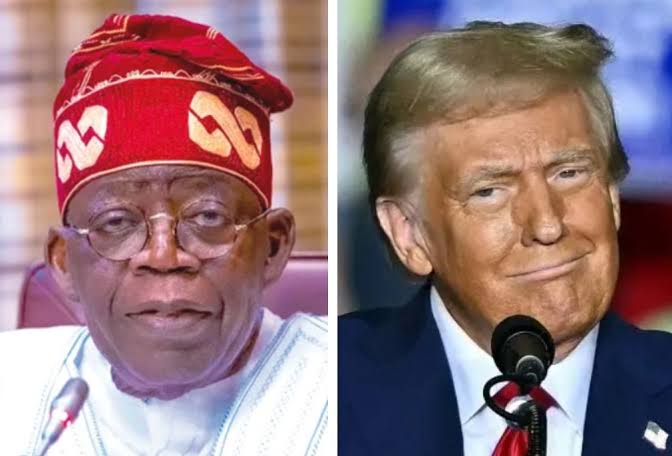
President Bola Tinubu might be a consummate champion in local politics but obviously a very poor student (despite his numerous visits to France) of how Bonaparte elaborately describes a sandwich of distraction and flanking as “manoeuvre sur les derrieres.”
The moral here is even brilliant men are capable of blunders as famously exemplified at the epic Battle of Isandlwana fought between the armies of the Zulu nation commanded by their warrior-king 1816-1828, Shaka kaSenzangakhona and that of the British led by Lt. General Lord Chelmsford (1827-1905) along the plains of Nqutu and Angua valley of present-day South Africa nearly 150 years ago.
The timeless adaptable lesson involved should be very instructive to not only Asiwaju, his handlers and support base but also to a motley of his opponents including the rest of us from useful idiots to useful innocents.

On January 21, 1879 the Zulus headed into battle deploying what they had conceived as the “horns, chest, and loins,” of a metaphoric buffalo;
“The chest was the central part of the battle line, which would hold and pin the enemy force.
Meanwhile, the horns to either side would encircle it, moving in to the sides and rear. The tip of one horn stayed hidden behind tall grass and boulders; when it emerged to complete the encirclement, it gave the British a nasty psychological shock.
The loins were a reserve force kept back to be thrown in for the coup de grace. These men actually stood with their backs to the battle, so as not to grow overly excited and rush in before the right moment.”
– p.247 33 Strategies of War (2006) by Robert Greene

On the CPC designation of Nigeria by the US leader the “chest” that held and pinned down the Tinubu administration is inadvertently the increased practice of cartel politics by the ruling behemoth APC in the build-up of 2027 against the background of a spate of dysfunctional opposition parties in Nigeria’s political terrain;
“A cartel political party is a party which uses the resources of the state to maintain its position within the political system, colluding with other parties in a way similar to a cartel.
The premise is that the parties do not compete with one another being post-political, but rather collude to protect their collective interests and keep outsider parties from being viable.”
– Democracy and the Cartelization of Political Parties (2018) by Richard Katz and Peter Mair

Meanwhile, the bespoke “horns” are twofold.
First, was “hidden behind the tall grass” which shows that open-source intelligence analysis by various credible bodies have now established with accompanying forensic evidence that many social media networks and quite a number of self-styled influencers affiliated to the Indigenous People of Biafra (IPOB) played a very prominent role in pushing the “Christian genocide” narrative in Nigeria from as far as back as 2016.
Take for instance the findings by TheCable;
“Data from X (formerly Twitter) between January 1 and October 1, 2025 showed over 165,000 mentions of the topic reaching an estimated 2.83 billion people worldwide a figure more than 12 times the Nigerian population.”

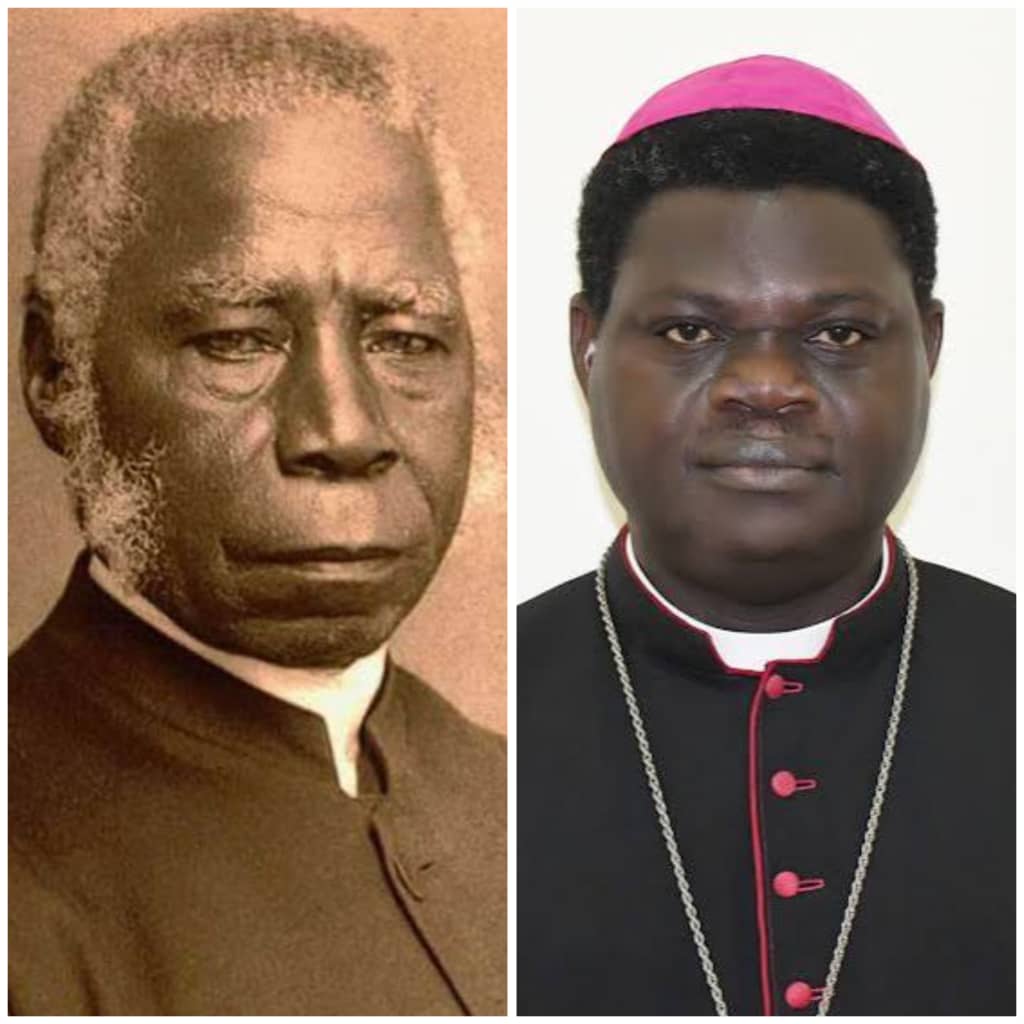
The second horn is the March 12, 2025 Capitol Hill testimony of the Guma-born Bishop Wilfred Anagbe, Catholic diocesan of Makurdi beside Tony Perkins, a former chair of the US Commission on International Religious Freedom – the very State Department body responsible for the global due diligence before any nation is designated CPC or not. Anagbe was at the House Foreign Affairs Committee over prior attacks 3 months before that of June 13-14. Notably, his appearance on February 14, 2024 was when he quite elaborately described the situation in Benue and others parts of Nigeria’s Middle Belt as “genocidal persecution of Christians” in his detailed testimony. Why wasn’t the Nigerian mission in DC present at both hearings to offer the counter-narratives as being presently touted by the federal government?

Then came an Isandlwana-like “coup de grace” delivered via the Angelus from the Vatican, a 12-noon prayer led by any given Pope every Sunday from a window at the Apostolic Palace St. Peter’s Square since 1954 under Pope Pius XII. That of Pope Leo XIV on June 15, 2025 was no different televised across the globe to millions of the Catholic faithful probably even including US Secretary of State Marc Rubio, Ted Cruz among others;
“During the night between 13 and 14 June, a terrible massacre took place in the city of Yelwata, located in the local administrative area of Guoman (Guma) in the state of Benue, Nigeria. Around two hundred were killed with killed with extreme cruelty.”
The onetime Francis Cardinal Prevost who was billed to visit Nigeria in July before he was elected as Pontiff on May 8, 2025 after a brief exhortation concluded;
“I pray that security, justice and peace prevail in Nigeria, a beloved that has suffered various forms of violence. I pray in particular for the rural communities in the state of Benue, who have increasingly been victims of violence.”

Perhaps if Nigeria had had an ambassador to Italy with a letter of credence to the Vatican, His or Her Excellency would have promptly notified President Tinubu of the obvious diplomatic red flag of His Holiness mentioning Nigeria ahead of the atrocious situation in Sudan in his Angelus. Such a monumental lacuna is unforgivable in international relations. Is the Villa even aware that between November 2001 and September 2016 the Pope had visited 9 times each time travelling extensively across Nigeria?

Recall the future Pope first visited barely a month after the Sharia riots in Kano also a year or so after previous Sharia riots in Kaduna. He was present at the episcopal ordination of the Catholic Bishop of Kano then under the Sharia dispensation of Mallam Ibrahim Shekarau. His next visit back then was after the 2011 post-election fallout and Christmas Day bombing of St. Theresa’s at Madalla.
Even without an ambassador to Italy accredited to Vatican City the federal government would have sent a special envoy to directly engage the Roman Curia to salvage the diplomatic collateral damage before the situation culminated into a CPC designation across the Atlantic. Shuttle diplomacy is obviously not part of Tinubu’s governance modus operandi.

“We have no eternal allies and we have no perpetual friends. Our interests are eternal and perpetual, and those interests it is our duty to follow.”
– Lord Palmerston, British Prime Minister 1855-1858, 1859-1865

Palmerston was not a man of religious faith. Rather he worshipped at the altar of gunboat diplomacy who as a foot soldier of imperialism, he was able to deftly kill three birds with one stone in pre-colonial Lagos.
This was by skilfully aligning British commercial interests of abolishing the extremely lucrative trade in slaves that was the oxygen of the local economy with that of the power tussle between Obas Kosoko and Akitoye all the while factoring the evangelical aspirations of the Church Mission Society (CMS) and visceral fears of the “Saros” – a very marginalized and deeply prosecuted minority in Lagos. Palmerston then as Foreign Secretary had no compunction in ordering the British consul to the Bight of Benin and Biafra (now Gulf of Guinea), John Beecroft (1790-1854) to unleash a very horrific cannonade on Lagos still described in local parlance as “Ogun Agidingbi” between 26th-28th December, 1851.

Oba Akitoye (d.1853) who was monarch in 1841 until after his dethronement in 1845 by his nephew Oba Kosoko (d.1872) had prior written the British from exile at Badagry pleading;
“My humble prayer is that you would take Lagos under you and plant the English flag there, and that you would re-establish me on my rightful throne at Lagos.”
While Kosoko was in turn dethroned in 1851 by British fiat elsewhere;
“Eight years after being admitted into the ministry as a priest by the Bishop of London, Crowther was received by Queen Victoria and (her husband) Prince Albert in November 1851 at Windsor Castle. Both the Queen and the Prince studied a map showing Lagos and Abeokuta and displayed great interest in the area’s trade. When Queen Victoria asked what the solution could be for slave trade in the West African coast, Ajayi replied, ‘Seize Lagos by fire and by force.’”

In conclusion, the moral of history here is as sentinel warning. President Trump’s sabre-rattling within the context America’s grand strategy should be a wake-up call for much needed introspection in our nation. This in retrospect it points directly to the missing ingredient during the power tussle between Obas Akitoye and Kosoko. Their mutual lack of consensus made the resort to “by fire and by force” inevitable. Perhaps why we still retain the name NNS Beecroft as “cradle of service” of the Nigerian Navy in Lagos as a metaphor lest we forget Kristin Mann writes in her 2007 book entitled Slavery and the Birth of an African City “The British bombardment opened Lagos to Christian missionaries.” -p.93

This writer therefore reckons just like Palmerston needed an intractable pretext to deploy British firepower 174 years ago to Lagos, for Trump to protect his nation’s strategic interests in present-day Nigeria, he similarly needs “useful innocents” that irreconcilable circumstances have pushed to the wall by local dynamics.

Concluded.

Mixed metaphors on rumours of war (I)


By Ahmed Yahaya Joe

“The spider has no need to hunt; it simply waits for the next fool to fall into the web’s barely visible strands.”

– The Controlled-Chaos Strategy, p.77 33 Strategies of War (2006) by Robert Greene

According to William D. James, “A close examination of the history of statecraft reveals that grand strategy works best when competing ideas collide, and rigorous processes challenge prevailing orthodoxies.” – The Key to Grand Strategy (2025)

If so, why is there more gaslighting than enlightened debate resonating from the high-decibel “Christian genocide” babel of discordant voices?

Anyway, ESL is the United Kingdom acronym for English as a Second Language that formed the kernel of “Mind Your Language” an immensely popular bygone era British comedy series that ran from the late 1970s to early 80s on Nigerian national television. For those old enough to remember the program brilliantly captured the struggles of an assorted group learning the twists and turns including nuances and idiosyncrasies of the English language.

“Mind Your Language” featured memorable characters like the amiable Jeremy Brown played by Barry Evans who passed in 1997, the habitual parodist Ranjeet Singh (Albert Moses passed in 2017) and the utterly exasperating Ali Nadim (Dino Shafeek passed in 1984) not forgetting the racy French Danielle Favre (Francoise Pascal surprisingly from the African island nation of Mauritius) and the dry humoured stern Miss Courtney, a taciturn feminist and proud spinster played by Zara Nutley (1924-2016) among others.

But underneath all that entertaining laughter in that TV show the producers neatly camouflaged many prejudices including false dichotomies and selective framing.

Little wonder one gets a sense of déjà vu of that sitcom from our halcyon days against the background of the quantum of dissimulation recently in our public space concerning the raging “Christian genocide” narrative and counter-narratives.

By the way how imprudently different is the conditional military ultimatum of Mr. Trump to Nigeria with the kind of war mongering in President Bola Tinubu’s letter to the National Assembly read at plenary in the Senate chamber on August 4, 2025?

“Following the unfortunate political situation in Niger Republic culminating in the overthrow of its President, ECOWAS under my leadership condemned the coup in its entirety and resolved to seek the return to a democratically elected government in a bid to restore peace.”

Didn’t the Nigerian leader go even ahead to demand from the legislature the necessary approval for a Nigerian, “military build-up and deployment of personnel for military intervention to enforce compliance of the military junta in Niger should they remain recalcitrant”?

Curiously, Mr. Trump’s claims of “White genocide” in South Africa did not come with military threats. Or any grandiloquence. This is obviously because Pretoria’s Union Buildings atop Meintjeskop resorted to diplomatic proactiveness. The Sarcastic Sunday offering of November 9, 2025 speaks presumptive volumes on the Villa’s template;

“With no ambassadors across 109 countries. Welcome to Nigeria’s foreign service where diplomacy is outsourced to Twitter spaces and YouTube channels. Other nations send ambassadors. We send prayers, acting officers, and PowerPoint slides. And yet, the Presidency insists there’s no diplomatic vacuum. Of course not. Abroad, we used to have envoys who wrote policy memos. Now, we have TikTok warriors who write threads.” – Mohammed Bello Doka

Discerning Nigerians wonder with consternation on the abysmal lack of continuum for a decade from 2015 to 2025 particularly against the background of Tinubu’s 2023 presidential campaign promise “We will continue with the developmental program of APC. It will not stop.”

How so?

The Wall Street Journal (WSJ) is the second largest circulating newspaper in the United States with an average of 4.1 million and 473,700 digital and print subscribers daily. Published 6 days weekly in New York, WSJ extensively covers international news, business and finance to a global readership for the last 134 years.

In its 20th December, 2019 edition the French public intellectual, Bernard-Henri Levy stated in his column;

“Nigeria’s Christians are under siege. And the world pays no attention. Few in the United States or Europe have reported on it. Shall we wait, as usual, for the disaster to be done before waking up? These are the stakes behind my voyage to the heart of Nigerian darkness. This is the meaning of the campaign to save Nigeria’s Christians that I hope I am launching today.”

These same words were reproduced worldwide in various prominent publications including Levy’s own 2021 book entitled The Will to See: Dispatches from a World of Misery and Hope pp. 93-104

Fast forward to the Truthsocial.com comments of President Trump of Friday, October 31, 2025 reportedly posted after watching a Fox News TV broadcast on the plight of Nigerian Christians. Even if it is more than a coincidence that WJS and Fox News are both owned by the same News Corp conglomerate owned by the 94-year-old Rupert Murdoch, what if “when pigs fly” (apologies to one of my takeaways from Mind Your Language) and American troops eventually deploy to Nigeria?

While the question is more hypothetical than even the kind of diplomatic posturing embedded in our title by Churchill it remains more of political hyperbole than involving any strategic substance or even military relevance. That notwithstanding the answer is obviously that Americans of Nigerian extraction would be deployed in various combat and non-combat capacities.

That is what should frighteningly worry each and every one of us irrespective of our polarized positions in the “Christian genocide” debate.

Back in 1993 when the US then under President Bill Clinton intervened in Somalia under the auspices of UNOSOM (United Nations Operations in Somalia) a certain artillery subaltern, Hussein Farah Aidid of the 2nd Battalion, 9th US Marine Regiment was among the first boots on ground “guns-a-blazing,” paradoxically the Somali-Born son of the main antagonist, General Mohammed Farrah Aidid.

How did the Americans get to pit a son against his father one of the major factional leaders?

A Somali adage speaks volumes;

“I and Somalia against the world. I and my clan against Somalia. I and my family against the clan. I and my brother against the family. I against my brother.”

Will the application of the immediate foregoing Horn of Africa dictum be any different when the boots of Nigerian-American service men and women hypothetically land in Nigeria?

The question is pertinent against the background of the open confession of US Marines Major-General Smedley Butler in his 1935 treatise entitled War is a Racket;

“I spent 33 years and four months in active military service and during that period I spent most of my time as a high-class muscle man for big business, for Wall Street and the bankers. In short, I was a racketeer, a gangster for capitalism.”

Who are the Nigerians reminiscent of Hussein Aidid likely to be deployed to Nigeria for by Pentagon for “fast, vicious, and sweet,” operations?

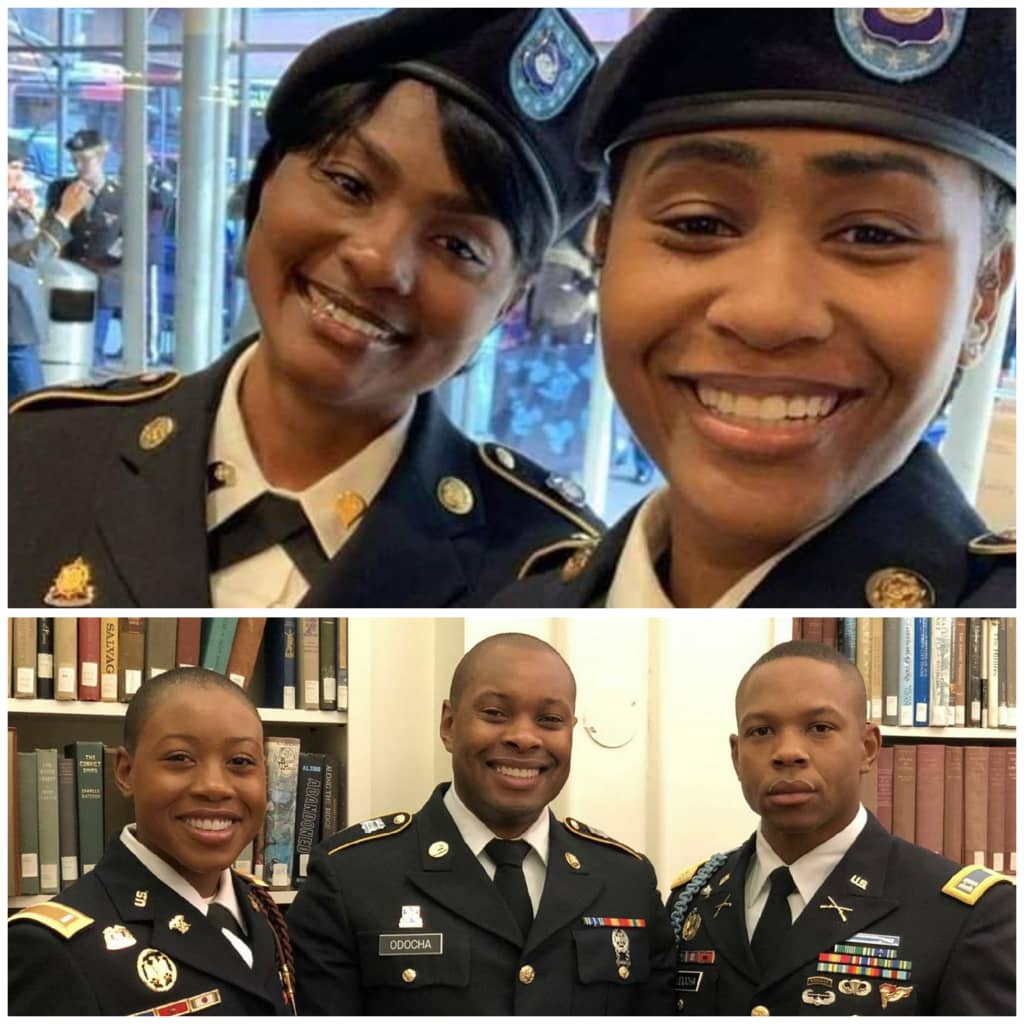
Between the Odocha siblings in the US Army as subalterns Chioma, Tochi, and Kelechi are US Marines Halima Hussein and Shamsiyya Jibo respectively from Imo and Kano States. Elsewhere beyond the attached picture are also the very high ranking likes of Kelechi Ndukwe, Commanding Officer of a US Navy guided-missile warship now a Commodore and Amanda Azubuike a Brigadier-General in the US Army.

Reminiscent of the younger Aidid and Smedley are they not all also uniformed muscle men and women defending American big business interests in the overall context?

The designation of Nigeria first by the 45th President of the United States as a Country of Particular Concern (CPC) in 2020 subsequently in 2025 as America’s 47th did not both just fall out of the sky. It took “thinking strategically and acting tactically” completely missed by President Tinubu and his insiders perhaps why Senator Mohammed Ndume in not too complimentary terms describe Villa apparatchik as “kakistocrats and kleptocrats.”

Apparently, the current chief tenant of the Villa has increasingly become too distracted with the political build-up of 2027 to closely monitor the international dynamics around him.

The glaring contradiction between Levy’s 2019 “voyage to the heart of Nigeria’s darkness” and the “The slaughtering of Christian worshippers’’ post on President Tinubu’s verified handle dated 29th January 2014 in retrospect currently locates him between a rock and hard place not only in the international arena but also domestically .

The Nigerian Foreign Affairs minister’s recent embarrassing attempt to internationally roll back the “Christian genocide” narrative on Piers Morgan Uncensored has already produced an embarrassing blowback currently trending.

Though not a career diplomat albeit Nigeria’s ambassador to Germany 2017-2023, Yusuf Tuggar did not need to box himself into such a controlled-chaos corner on his X handle post-interview by co-guest Goldie Ghamari.

While the insults she heaped on the honourable minister need not be reproduced here there is need to nonetheless properly understand that all over the world;

“Grand strategy sits at the highest level of national security decision-making, where judgements over a state’s overarching objectives and interests, as well as its security environment and resource base, are made.”

If so, does Nigeria have any such template under Tinubu?

The Americans obviously do under Trump.

Continued in Part II


The Hypocrisy That Keeps Nigeria Bleeding

By Samuel Ateh Stephen

There is a kind of hypocrisy that kills faster than bullets, the hypocrisy of selective outrage. It does not pull the trigger, yet it creates the emotional climate in which murder becomes ordinary. It numbs the conscience, erodes shared humanity, and replaces moral judgment with identity based loyalty. Nigeria has become a nation where the value of a human life fluctuates depending on the victim’s ethnicity, religion, or region. Once empathy becomes tribal, morality becomes political, and a society where morality is political is already in decay.

When sixteen northerners were killed in Edo State, the reaction was swift and coordinated. Northern elders voiced outrage. Delegations traveled. Traditional institutions were stirred. The Governor of Edo State, Monday Okpebholo, traveled to Kano to meet with families and northern leaders. The killings were framed as an assault against identity. The value of the victims was elevated not simply because lives were lost, but because those responsible were perceived as coming from another side of Nigeria’s divide.

A similar pattern emerged when Fatima and her four children were murdered in Anambra by suspected IPOB elements. The state government moved quickly to calm tensions. Security efforts were strengthened. Leaders spoke firmly across ethnic and religious lines. And when a northern dominated market in Ibadan was attacked, the reaction from northern governors was immediate. The late Governor Rotimi Akeredolu responded with empathy, arrests, and reconciliation. These moments show that Nigeria is capable of moral clarity when it chooses to be. They demonstrate that the country can act decisively when violence threatens established boundaries.

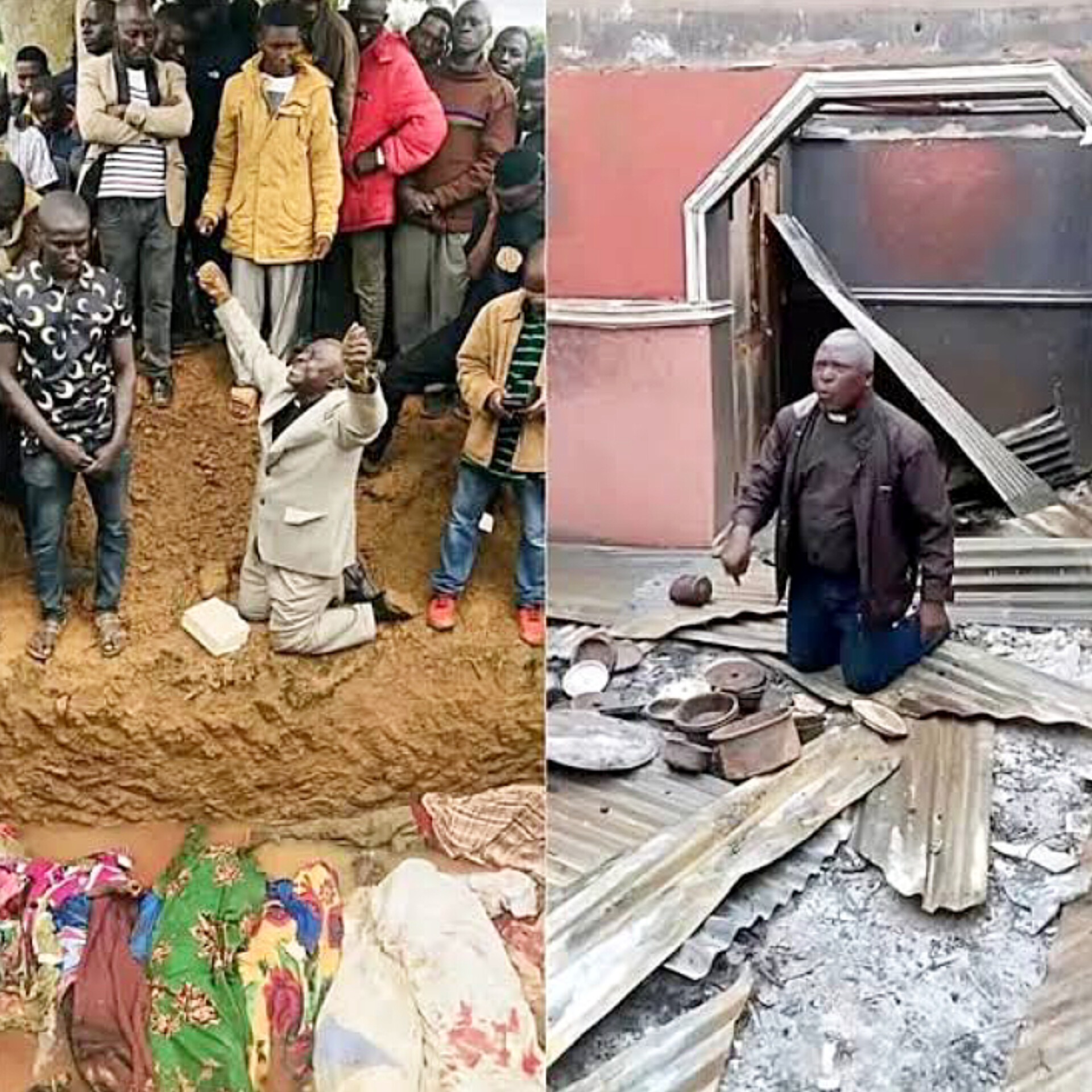
Yet the same nation becomes quiet when the victims are from Southern Kaduna, Benue, Plateau, or Taraba. Entire villages are wiped out in cycles of violence. Families are buried in mass graves. Children are left without parents in numbers too large to count. These tragedies pass as routine news. There are no national delegations. No unified outrage. No sustained public grief. The silence reveals a dangerous truth. Some lives are implicitly considered less worthy of mourning.

Why does outrage depend on who the killer is, rather than the fact that a life was taken? A nation that mourns selectively has lost its sense of moral order. This is not justice. It is a collapse of conscience.

When perpetrators share our ethnic, religious, or cultural identity, many suddenly become restrained and diplomatic. The same people who demand justice in one circumstance immediately demand nuance or silence in another. Violence becomes tolerable if it comes from our own. But when the roles are reversed, the same individuals rediscover moral clarity and the language of condemnation. This shifting morality is the machinery that sustains cycles of revenge.

No society can endure when truth itself is filtered through ethnic or religious loyalty. If the killers are Muslims, they must be condemned. If the killers are Christians, they must be condemned. If they are Igbo, Hausa, Yoruba, Tiv, Fulani, Jukun, Bachama, or from any other group, they must be condemned. Silence, excuse, or justification is complicity. Evil has no tribe. Evil has no religion. It only has defenders.

The real threat to Nigeria is not the bandit in the forest or the terrorist with a rifle. The real threat is the citizen who excuses him, protects him, rationalizes him, or refuses to condemn him because of shared identity. Healing will begin the day Nigerians mourn every victim as though the victim came from their own family.

Until then, the country will continue to bleed from wounds we refuse to acknowledge, from injustices we refuse to confront, and from a conscience that speaks only when it is convenient.

Nigeria’s Mining Policy Failures: A Sector Tilted Toward China, Strangling Small Miners and Fuelling Illicit Operations

By Biliyaminu Suraj

biliyasuraj247@yahoo.com


Introduction

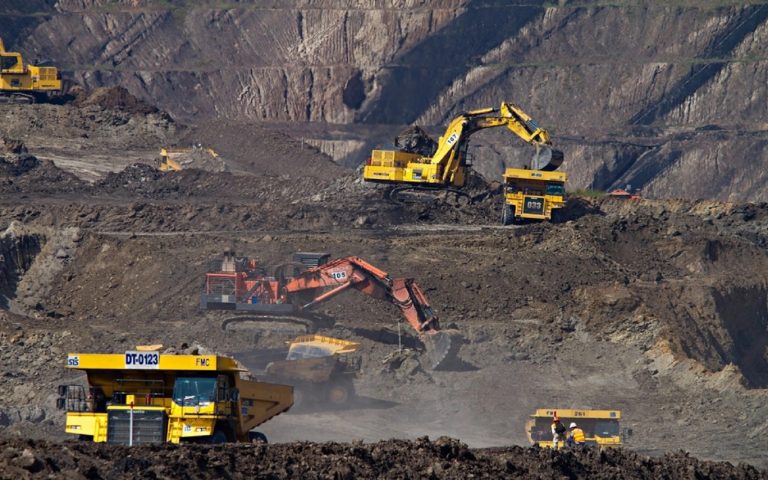
Nigeria’s mineral wealth — highlighted by lithium, gold, tin, and rare earths — has the potential to diversify the economy beyond oil. Yet despite high-profile policy announcements and international investment pledges, the country’s mining sector remains mired in structural contradictions: rising foreign dominance, weak enforcement, and an increasingly hostile environment for domestic small-scale miners.

Under Minister Dele Alake’s tenure at the Ministry of Solid Minerals Development, policy reforms have been headline-grabbing and frequent, almost to the degree of weekly announcements. They are invariably framed as transformative but lack detail and wreak of a poor understanding of the mining industry. Critics argue the so-called policy reforms are reinforcing dependency on Chinese capital, penalising local miners through excessive regulation and fees and failing to stem a surge in illegal mining and attendant insecurity.

There are four critical fault-lines that define Nigeria’s current mining policy confusion.

1. Policy Failures Favouring Chinese Interests

Since 2023, the Nigerian government has aggressively courted Chinese investors in the mining and mineral-processing sector. During a recent visit to China, Minister Dele Alake announced that Chinese-backed companies have invested over US $1.3 billion in Nigeria’s lithium-processing industry since September 2023. According to Ministry-sourced reports, Nigeria was expected to commission four major Chinese-funded lithium-processing plants by 2025 representing a combined investment of about US $800 million.

While the investment figures are large in headline terms, the actual number of plants currently built and operating remains very limited. One facility in Nasarawa State has been commissioned — a Chinese-led plant processing lithium at “4,000 metric tonnes per day” capacity was inaugurated. Its likely capacity is closer to 3,000 tonnes per day if and when it reaches full production. At this point it is not in production.

But many of the other announced plants — such as the US$600 million facility near the Kaduna-Niger border and the US$200 million outside Abuja — are still described as “slated for commissioning this quarter” or “nearing completion”. To be clear, they are not yet in production and, if they are anything like the Chinese processing plants in Australia, may never come into economically viable production. Australia has been badly caught out by the promises of large-scale Chinese mineral processing facilities. Australian companies have invested billions of dollars in Chinese technology to process critical minerals only to now find that their investments may have to be written off.

In effect, Nigeria’s mineral governance model risks sliding into what analysts describe as neo-extractivism: the state aligning with foreign capital to extract rents, without building sustainable domestic capacity or transparent oversight. Meanwhile, local and small-scale operators continue to face bureaucratic hurdles. “We have seen preferential treatment for Chinese firms, while local miners struggle to get licences or financing,” said a member of the Miners Association of Nigeria.

2. Licence Revocations and the Expansion of Illegal Mining

The Alake-led ministry’s campaign to “sanitise” the sector through aggressive licence revocations has generated uncertainty. Hundreds of exploration and small-scale mining titles have been revoked on technicalities or administrative delays, often without due consultation. While the government insists this will curb speculative holding and non-compliance, the result has been the opposite: a vacuum in tenure security that has encouraged illegal mining and worsened insecurity in mineral-rich regions.


Displaced operators and unemployed artisanal miners are migrating into informal mining camps, some of which are now dominated by Chinese buyers and middlemen.

3. Inflated Chinese Lithium Investments and the Mirage of Local Value Addition

Nigeria’s lithium boom should be a strategic opportunity to enter the global electric-vehicle supply chain. However, the scale and structure of the Chinese-backed investments invite scrutiny.

The announced figures — US$800 million for four processing plants, plus the broader corporate claim of over US$1.3 billion invested by Chinese firms — are large. Yet comparators suggest that many of these plants are not yet fully built or operational. The publicly-known, functioning facility is the one in Nasarawa, and even that raises questions about transparency of terms, local-content obligations and community benefit.

Analysts at the Natural Resource Governance Institute (NRGI) warn that the Nigerian government has not published the contracts, environmental-impact assessments or local-content rules tied to these deals. Without such transparency, inflated valuations may conceal excessive profit repatriation or tax waivers favouring the investors.

The contradiction is stark: while the government revokes hundreds of local mining licences in the name of efficiency, it signs opaque, billion-dollar deals with foreign conglomerates that may offer minimal technology transfer or local capacity-building.

Nigeria risks falling into a pattern familiar across resource-rich African economies — outsourcing its industrial future to external partners while celebrating “investment” headlines that disguise long-term dependency. Worse still, history across Africa and Asian countries tells us that massive scale Chinese infrastructure development comes with massive repayment obligations which, when defaulted, see national assets under Chinese ownership.

4. Small-Scale Miners Punished by Escalating Tenement Fees

In mid-2024, the Ministry announced a sweeping revision of mining-licence fees and annual service charges hitting small and indigenous miners hardest. For example, the annual service fee for a Small-Scale Mining Licence (SSML) jumped to ₦260,000, while renewal fees rose to ₦420,000.

For artisanal and small-scale miners – who produce over 70 percent of Nigeria’s solid minerals – the impact has been devastating. Many operate on thin margins and lack access to formal finance. “These new rates are impossible for us,” said a gold miner from Niger State. “They want to push us out so the big companies can take over.”

Industry lawyers have also criticised the abrupt fee escalation, warning it could drive legitimate operators underground and worsen illegal mining. By making formalisation unaffordable, the policy undermines its own objective of bringing artisanal and small-scale miners into the regulated economy.

Meanwhile, Chinese-backed operations appear largely unaffected, as their capital base allows them to absorb or negotiate favourable terms. The asymmetry reinforces perceptions that Nigeria’s mining reforms are designed to privilege Chinese state-owned investors at the expense of Nigeria’s domestic enterprise.

Conclusion: Reform or Regression?

Nigeria stands at a crossroads. Mining reforms under Minister Alake have been long on rhetoric and short on delivery. The government’s mining policies, though couched in the rhetoric of reform and industrialisation, risk deepening structural inequities. The tilt toward Chinese capital — with announced investment amounts well into the billions but very few operational processing plants so far — is a key concern. Coupled with opaque licensing decisions and punitive costs for small miners, the reforms collectively undermine the stated goal of building a resilient, inclusive mining economy.

For Nigeria to truly benefit from its mineral wealth, three principles are essential: transparency, local empowerment, and institutional capacity. Contracts with foreign investors must be publicly disclosed; fee regimes must reflect economic realities, not bureaucratic revenue targets; and the state must strengthen regulatory oversight to curb illegal mining rather than punish small-scale operators. Without such shifts, the mining sector will remain a cautionary tale-–of a nation rich in minerals, yet poor in governance.

Nigeria, Listen!: Your Walls Have Cracked Wide Enough For Foreign Boots To Land

By Luka Binniyat

“America only cares about its personal interest… any country they invade is left worse.” That’s the new hymn of social media patriots and half-informed commentators who believe repeating clichés equals wisdom and hindsight.

“Look at Libya, Syria, Afghanistan and Iran and see how the U.S messed them up! … it’s all about Nigeria’s oil, Solid minerals and envy” they scream, beating their chests online as if hashtags could resurrect the thousands of dead killed by Islamists. Some, probably high on something, swear they’ll defend Nigeria from any “invading ‘imperialist’ force”, with what?

Nonsense!: Whoever has seen American Corporations dropping by parachutes anywhere and start drilling resources!

To me, these scare mongering and bravados are not just empty; they are insults. I take it as deep, stinging insults to the survivors of genocide I’ve covered since 2012. They reek of persons of privilege untouched and immuned of the pains the millions whose lives are being wasted in affected areas of the on going genocide in Nigeria.

Yes, there is Genocide against ethnic Chritians in Nigeria Middle Belt by Islamists! I am a witness to that evil.

So, come closer. Let’s leave Twitter. Let’s walk through what’s left of the parts of the Middle Belt, through the smoke, ruins and the silence where laughter once lived.

If your father and mother were slaughtered like rams before your eyes, killers screaming “Allahu Akbar,” your siblings cut down, your home torched, and your village erased, folks, what the heck do you care about sovereignty? If you’ve ever buried the charred remains of toddlers and grandmothers whose only crime was to be Christian, to be native, to be alive, then maybe, just maybe, the sound of an American helicopter hovering over to terrorists camps might not strike you as ‘imperialism’ but as overdue justice.

From Southern Kaduna to Plateau, from Benue to Niger, from Southern Kebbi to Kwara, and down to Southern Borno — I have covered stories of blood and betrayal. These are areas I can speak for having been on ground there.

I’ve walked through bubbling communities that exist now only on old maps. I’ve interviewed mothers clutching photos of daughters still missing after mass abductions. My team was in Chibok. We heard it all!

What of cases where entire communities were flattened, their ruins claimed by the bush and their ancestral lands now owned and occupied by the terrorists. If it’s in the Middle Belt, Nigeria Press called it “Banditry.” But, to God be the Glory: The world calls it by its real name today: Ethnic cleansing; Christian genocide! – selective elimination of a people as a result of their faith, race, ideology et al.

And what of the survivors? Visit the Internally Displaced Persons (IDP) camps — those unending rows of misery in the Middle Belt. There you’ll meet children who were six when the first attacks came in 2010. They are 26 now, still uneducated, still in tents, still watching politicians fly over their heads to campaign rallies. Their memories are sharp as blades: the night raids, the gunfire, the screams, the running barefoot into the dark. They have become adults in a country that forgot them.

You think they care about sovereignty?

Now imagine the final insult: the Nigerian government spending billions of naira to “rehabilitate” the same terrorists who wiped out their families. Men who emerged from forests, tired of killing, are cleaned up, dressed up, and declared “repentant.” They are given homes, trained, and paid monthly stipends — all while their victims rot in forgotten camps. I saw it myself in Maiduguri, May 2023, with my colleague Mike Odeh. Government officials smiled for the cameras as “former” Boko Haram fighters were reintegrated into society – sometimes to the same communities they once burned. Some of these “repentant” men now live with the Christian girls they kidnapped, raped, converted by force, and impregnated and raise a family with in government provided homes in Maiduguri. The parents of the girls, scattered to the four directions of the winds, can do nothing. The story is even more heartbreaking than this. Can there be a greater mockery of justice?

Even our gallant troops — the true patriots — feel betrayed. Many of them fought in the forests and mountains, losing comrades in battles against the same terrorists now embraced by the state. Soldiers have whispered to me in bitterness and disbelief: “We watched our friends die fighting these killers. Now the government calls them good guys and pays them maybe as much as we earn.” Their morale bleeds. The army’s honour is humiliated by a system that rewards terror and punishes sacrifice. The have an annoying phrase for it – Non Kinetic! Imagine facing gunfire in Zamfara or Borno, only to see your enemy pardoned, housed, and celebrated at a “peace talk.” Some of these killers even flaunt their weapons at government-sponsored parley events, strutting before police, DSS, and politicians who dare not raise a finger. What message does that send to the soldiers risking everything on the frontlines? What do the civilians that the most vulnerable think of their country. They are not thinking of it as sovereign. It’s captured! and by rag-tag illiterate Islamists fighters, not the U.S Army!

So tell me — if you were a survivor, a displaced farmer, a widow, or even a disillusioned soldier — how would you receive the news of America declaring Nigeria a “Country of Particular Concern” and hinting at intervention? Would you beat your chest in defence of sovereignty? Or would you whisper a prayer that someone, anyone, might finally bring order, justice, and peace to this bleeding land?

Because here’s the truth: Nigeria has failed millions of its citizens. The state has become a spectator to its own disintegration. When governors in the North West hold peace talks where mass murderers attend fully armed with the approval of Office of the National Security Adviser; when killers and génocidiars become celebrities of “repentance” and “rehabilitation” — sovereignty becomes a cruel joke in the psyche of all men and women of conscience.

Those shouting “no foreign boots on our soil” should first visit the ashes of Gwoza, mass graves in Bokkos, the tragedy of Guma, the mass waste of human and material in Wasagu/Danko, the cruel living conditions of our IDPs Cameroon; in the FCT.

Let them stand among these ruins, conjure the wailing souls of the innocent and ask themselves: whose soil is left to protect?

What is sovereignty worth when it shelters genocide and rewards impunity?

Make no mistake: when I say survivors will welcome the Yankees, it’s not a cry for colonisation. It’s a cry for help. It’s the plea of people abandoned by their own nation. For them, the U.S. flag on terrorists sites would not symbolize imperialism — not exploitation, but the faint hope of justice.

Nigeria must wake up!.

It must choose to defend its citizens, not their killers. If it doesn’t, the cracks in our national wall; in our hearts, will widen until foreign powers walk right through them — not with necessary with armour tanks, but with moral authority that traumatized citizens approve.

As someone who has walked through the smoke, heard the wails, and seen the graves, I can tell you this without hesitation: the survivors — millions of them — and millions more who stand in solidarity, will not cry over lost sovereignty. They will whisper, “At last, someone came.”

And when that happens, don’t be surprised if they stand at the roadside, waving at the incoming foreign troops — not as conquerors, but as deliverers — and say with quiet relief, “Welcome, Yankees


EL-RUFAI AND UBA SANI: THE “MENTOR” SHOULD LEARN FROM HIS “MENTEE”

By Moses Ochonu

Nasiru El-Rufai is Exhibit A for why people with zero emotional intelligence should never be entrusted with consequential positions of leadership.

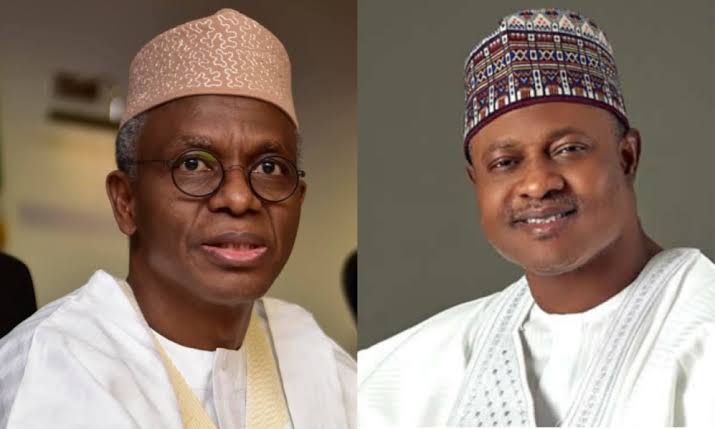
In his wide-ranging interview with Seun Okinbaloye of Channels, Nasiru El-Rufai said “I dealt with” Southern Kaduna leaders. He also said “I dealt with the IMN [Shiites]who are Muslims like me.” He then said “I don’t care what the people of Southern Kaduna think of me.”

Anyone with a rudimentary knowledge of psychology knows that whenever someone says this, they are actually bothered by the thing that they claim does not bother them.

That is by the way.

What he sought to suggest is that the people of Southern Kaduna made irrational, entitled demands on him, which he rejected. He claimed specifically that they requested fifty percent of appointments.

This is flat out inaccurate since the people of SK, who occupy one out of three senatorial constituencies, had made no such demand in even in prior PDP administrations that they helped elect nor had they been given that.

Even under the governorship of perhaps the most inclusive governor who is universally regarded as the biggest political friend of Southern Kaduna, Ahmad Makarfi, SK didn’t get anywhere near 50 percent of political appointments and never demanded it.

If he’s wondering why the people of Southern Kaduna detest him so much, perhaps he should cultivate a brief moment of humility and reexamine the humiliation he inflicted on them.

With his utterances and actions, he openly sided with the bandits and killers who were killing, maiming, and destroying freely in Southern Kaduna.

He even paid the killers and compelled the people of SK, in a final act of humiliation, to put up signboards apologizing to their killers. He later defended this on multiple national media platforms when confronted.

El-Rufai dismembered some of the chieftancies of the people of SK, the product of a decades-long struggle, and arbitrarily created new emirates in their place or parallel to them.

El-Rufai arbitrarily removed or humiliated some Southern Kaduna chiefs he deemed too independent or recalcitrant.

His tyrannical bent caused him to jail some Southern Kaduna leaders on trumped up charges that were eventually and predictably thrown out in court.

El-Rufai vindictively refused to extend any gesture or dividend of governance to Southern Kaduna, ignoring the cries of the people for protection against ethnic cleansing armed herdsmen.

He also wickedly ignored their cries for basic infrastructure. When confronted about these unprecedently brazen acts of political bigotry, he said the people did not vote for him and would never vote for him even if he selected Jesus Christ as his running mate (his own words).

He was, in other words, paying them back for their refusal to vote for him.

If El-Rufai, after reflecting humbly on how he used power to “deal with” and humiliate the SK people, still cannot see why the people can’t stand him, let him consider the following facts.

The current governor, Uba Sani, is an Hausa-Fulani man just like El-Rufai. He is an APC man just like El-Rufai was until recently. He was brought to power by El-Rufai.

Uba Sani retained the Muslim-Muslim arrangement that El-Rufai engineered as a deliberate strategy of division and ethno-religious political manipulation.

Like they did El-Rufai, the people of SK rejected Uba Sani at the last governorship election, voting overwhelmingly for his opponent, the PDP candidate.

Uba Sani has not given SK people more political appointments than El-Rufai or previous administrations did.

In fact, I am not sure that Sani has done anything out of the ordinary for or sited any signature project in Southern Kaduna.

Apart from the federal university, which is obviously a federal project, SK has not suddenly enjoyed unprecedented developmental attention from the current federal or state governments.

Yet, in two years, Governor Sani has won over a significant segment of the people of Southern Kaduna to the extent that both their elites and commoners are now praising the man and would probably vote for him in high numbers in the 2027 election.

What did Sani do? He simply accepted the people of SK as equal citizens in the state. He treated them with respect. Through his utterances, body language, and gestures, he reassured them of their membership in and importance to the Kaduna project. He made them to believe that they’re part of the sociopolitical fabric of the state.

What did Uba Sani not do? He did not talk down on the SK people like children. He did not infantilize them. He did not insult or humiliate their leaders. He did not “deal with” their leaders or threaten to do so. Instead, he engaged them, gave them respectful audience, listened to their grievances, and assured them that he would look into them.

Sani did not side with the killers of SK people or blame SK people for the attacks that have killed thousands of them, displaced hundreds of thousands, and destroyed hundreds of villages.

Sani simply assured the people of SK that even though they did not vote for him, he was still their governor and would include them in his plans, and that governance was separate from politics.

With basic emotional intelligence, he was able to compartmentalize politics and governance.

Sani has shown empathy to the SK people and has refrained from making comments that betray bigotry and ethno-religious preference for his Hausa-Fulani Muslim kinsfolk.

Governor Sani, it should be reiterated, has not departed in any substantive way from the El-Rufai template regarding Southern Kaduna, nor has he done anything memorable for the people.

Yet, in two years, he has reunited Kaduna and brought back Southern Kaduna into the Kaduna sociopolitical family. He has given the people of Southern Kaduna a new sense of belonging.

It’s not yet kumbaya, but Sani has done through emotional intelligence, empathy, and diplomatic tact what El-Rufai failed to do through vindictiveness, unintelligent and counterproductive displays of “I don’t take nonsense” toughness, divide-and-conquer religious bigotry, and tyrannical violence.

Effective leadership is 60 percent symbolism and empathetic gestures. A good leader must know when to be tough and not “take nonsense” and when to extend empathy and gestures of inclusion and reassurance to his constituents. The balance of the two makes for effective politics and governance.

The difference between the Southern Kaduna dispositions towards El-Rufai and Uba Sani is simple. Sani, whether sincerely or not, has treated SK with respect and emotional intelligence, El-Rufai did not.

Effective leaders do not write off those who did not and would not vote for them, excise them from their governing agenda, and alienate them from the social fabric of the state.

Governor Uba Sani may be El-Rufai’s “boy” and “mentee,” but El-Rufai can learn a thing or two about the fine, balancing art of politics from his mentee.

THE NORTH THAT NEVER WAS: Unmasking the Fulani Political Construct

Barr. John Apollos Maton

It is sadly not surprising that Dr. Davidson Rotshak Lar was killed. His boldness in speaking truth to power exposed the well-oiled Fulani imperialist machine that has for decades been strategically using Nigeria’s resources to entrench domination at all costs. He laid bare the very heart of the matter: there is no “North” as a unified identity—there is only a Fulani political construct cleverly disguised in regional language to maintain a parasitic grip on power.

The term “North” in Nigerian discourse is a tool of political deceit. It is time Nigerians consciously substitute the word “North” with “Fulani” whenever they hear phrases like “Northern Governors Forum,” “Northern Elders Forum,” or “Northern Consensus.” These platforms do not reflect the aspirations or representation of the Middle Belt, nor the indigenous Hausa, Nupe, Jukun, Gbagyi, Birom, Tiv, or other ethnic nationalities. They are hijacked Fulani platforms designed to silence and exploit the rest.

From today, call these associations what they truly are: “Fulani Governors Forum,” “Fulani Elders Forum,” or “Fulani Consensus.”

History supports this claim. When Obasanjo, a Southern president, appointed non-Fulani Northerners into sensitive positions, the Sultan of Sokoto and Fulani elite responded with outrage, claiming that “the North” was being marginalized. But when pressed, they clarified that non-Fulanis are not considered “Northerners.” That singular incident should have awakened the nation to the ethnic apartheid system hidden behind the “Arewa” banner.

This false northern identity was consolidated in 1979 when the NPN primaries clearly produced Maitama Sule, a Hausa man, only for Fulani elites to reject him in a midnight coup within their own party and impose Shehu Shagari, a Fulani. That tells you all you need to know: even among Muslims from the so-called North, only Fulanis are considered authentic enough to lead “the North.”

The Middle Belt must reject the name “North-Central.” That term is part of the trickery to keep indigenous people as political footnotes. The proper name is Middle Belt or Central Nigeria. Our ancestors did not fight, bleed, and preserve their land just to be reduced to appendages of a Fulani empire. Indigenous people must rise in identity and in name to reject mental slavery.

The idea of “One North” is a myth. It is time to expose the criminally manipulative lie of “One Destiny, One People.” From Aminu Kano to Balarabe Musa to modern-day victims of political exclusion in Kaduna and Plateau, it is evident that non-Fulani voices—even when Muslim—are not welcome in the so-called Northern consensus unless they submit to Fulani dominance.

Even when the 1963 People’s Constitution allowed regional autonomy, the Fulani elite began working to weaken it. The military coups that followed—many of them orchestrated by Fulani officers—were not just power grabs, but deliberate steps to erase the political, cultural, and land rights of the indigenous people across Northern Nigeria and beyond.

The war against Biafra was a war fought not by Fulani, but by Middle Belt sons misled into believing they were defending the North. They were actually used to secure Fulani control over Nigeria. When their usefulness ended, they were sidelined—Gowon removed, Danjuma neutralized, and Fulani supremacy restored with Murtala Mohammed and his successors.

The legacy of that manipulation persists today in the imbalance in the military, where Fulani control most sensitive posts despite being an illegal immigrant minority in the country. The federal character principle has been mutilated beyond recognition. Promotions are now ethno-religious favors, not based on competence or loyalty to the Nigerian state.

Ahmadu Bello’s statement in The Parrot newspaper of 1960 is perhaps the most chilling confession of Fulani imperial ambition. His vision was not of a Nigeria for all Nigerians, but of a Fulani inheritance to be expanded by using indigenous people as conquered vassals and southerners as pawns. That is not a federation; that is feudalism.

We must therefore insist on a return to the 1963 Constitution, which respected regional autonomy, indigenous land rights, and true federalism. That Constitution allowed each region to develop on its own terms. It protected local cultures, languages, and governance systems—before it was overthrown in a series of Fulani-favored coups.

Every community must begin to awaken to the danger of being identified under the “North.” It is not a region; it is an agenda. It is not a direction; it is a political weapon. The so-called Northern political power block is a Fulani construct and must be recognized as such by indigenous communities seeking to reclaim their future.

The Middle Belt has a distinct identity—culturally, spiritually, politically, and historically. We are not Arabs, and we are not the children of Uthman Dan Fodio. We are the children of the Plateau, the Benue valley, the Mandara hills, and the ancestral highlands that predate every emirate in Nigeria.

Even the language manipulation reveals the deceit. “Arewa” is a Hausa word. The Fulani used it instead of any Fulfulde term to create a false sense of commonality with the Hausa, while slowly replacing Hausa leaders with Fulani emirs, governors, and senators. Hausa people must realize they too are victims, not allies, of Fulani supremacists.

This identity war is not just political, it is also spiritual and psychological. When indigenous Christians from the Middle Belt are labeled “Kafiri” or “Arne,” it is not merely name-calling—it is a justification for violence, for land-grabbing, for political exclusion. The language of hate fuels the violence in Plateau, Southern Kaduna, and parts of Benue today.

We must reject the hijacked institutions of the so-called North and form indigenous forums that represent our interests alone. There should be a Middle Belt Governors Forum, a Central Elders Forum, and a Council of Indigenous Ethnic Nationalities. Let the Hausa and other Indigenes also kick away from this propaganda and then force the Fulanis to show us their North, show us where Fulaniland is—and let us rebuild our ancestral heritage without their chains.

The indigenous peoples of Nigeria—Middle Belt, South-South, Igbo, Yoruba, and others—must form alliances based on justice, equality, and mutual respect. The Fulani have built a pan-Nigerian empire using deception, militarization, and economic control. It is time to dismantle it through legal, constitutional, and civic awakening.

Restructuring Nigeria is not a threat to unity—it is the only path to real peace. Only when each people can govern themselves, protect their land, and choose their leaders without external imposition can Nigeria thrive. The fake unity built on Fulani domination will keep bleeding until truth sets us free.

The blood of Dr. Rotshak Lar and countless others will not be in vain if we rise to tell the truth and act on it. There is no North. There is a Fulani political machine that must be confronted. We must go back to the foundation—the 1963 Constitution—and build a new nation where all ethnic nationalities have equal standing, and indigenous rights are sacred.

Nigeria’s Mining Sector: A Magnet for Questionable International Operators and Domestic Chao

by Steven Kefas

stevenkefas@gmail.com


Nigeria sits atop an estimated $750 billion worth of mineral reserves scattered across its 36 states, representing one of Africa’s most promising mining frontiers. With the government’s ambitious drive to diversify the economy beyond oil dependency, the solid minerals sector should be a cornerstone of national prosperity. Instead, it has become a testament to how regulatory negligence, endemic corruption and the dangerous prioritization of foreign investment over due diligence can transform economic opportunity into national crisis.

The story of Colin Ikin perfectly encapsulates Nigeria’s mining predicament. The Australian executive is currently courting officials in Ministry of Solid Minerals Development, Mining Cadastre office,Kaduna and Nasarawa states with promises of $300 million in solid minerals investment and lithium processing facilities. State governments are rolling out red carpets, eager to showcase foreign investment victories. Yet Ikin’s track record tells a starkly different story – one of spectacular corporate failure that cost investors nearly $750 million, allegations of criminal activity in Zimbabwe, and a pattern of regulatory exploitation across Africa.

What makes the Ikin case particularly troubling is not just his individual history, but what it reveals about Nigeria’s approach to mining sector development. In their desperation for foreign capital, Nigerian authorities have created what critics describe as a “safe haven for foreign criminals” in the mining industry. The consequences extend far beyond economic loss – they have created conditions that directly threaten national security.

A Continental Pattern of Regulatory Capture

Zimbabwe’s former Chairman of mines and energy, Temba Mliswa, has documented similar concerns about foreign operators exploiting weak regulatory frameworks across Africa. “A peculiar case of Colin Ikin, a dodgy mining mogul, has raised my interest. Why does government seem hell-bent on protecting rogue white business people in this country?” Mliswa questioned, highlighting a broader continental challenge that Nigeria has failed to heed.

According to Mliswa’s documentation, Ikin faces serious allegations in Zimbabwe, including criminal activity reported to police, forgery of bank documents, and illegal withdrawal of funds. “This time around he is alleged to have forged bank documents and went ahead to illegally withdraw US$10,000 from an Afrocash Micro NMB account,” Mliswa noted, describing police cases for fraud and forgery of company documents.

The Zimbabwean experience offers stark warnings that Nigeria continues to ignore. As Mliswa observed, “It seems we are intent on becoming a safe haven for foreign criminals,” while “our own people are constantly faced with the rough edges of the law to the point of being second-class citizens.” This regulatory capture – where foreign operators receive protection despite questionable practices – has become the hallmark of Nigeria’s mining sector.

The Mining Cadastre Office: A National Security Threat

At the heart of Nigeria’s mining crisis lies the Mining Cadastre Office (MCO) at House 37, Lobito Crescent in Abuja. According to mining title holder Biliyaminu Surajo, the MCO has become “a threat to national security due to endemic corruption and professional misconduct.” This is not hyperbole – it is an assessment based on years of observing how regulatory failure creates conditions for both economic exploitation and violent conflict.

The June 19, 2025 stakeholder engagement session revealed the depth of these institutional problems when participants aired a “litany of complaints about the MCO from demanding fees when tenement holders did not have access to their tenements to extended delays in granting titles.” More damaging still is the practice of issuing overlapping titles, creating conflicts that often escalate into community violence.

“The mining cadastre office has the habit of issuing titles over existing valid titles,” explained one industry source. “Community leaders are faced with competing interests with both parties holding title documents from the MCO, each signed by the Director General Simon Nkom.” When communities discover that multiple operators hold certificates of title for the same land, when mining commences without proper consultation, the inevitable result is conflict, says a mining executive who preferred to stay anonymous to avoid persecution.

The corruption appears systematic and commercialized. “There is one officer in the MCO who has supplied more than 50 fake consents, for a fee of course, and the applications were processed successfully,” according to internal sources. The speed of tenement processing has become “proportional to the amount the applicant is willing to pay extra for facilitation.” This isn’t just corruption – it’s the systematic breakdown of regulatory oversight that creates ungoverned spaces, as the executive described it.

The tragedy for Nigeria is that this security crisis was entirely predictable. When regulatory agencies fail to properly monitor mining activities, when titles are issued without adequate community consultation, and when operators are allowed to commence activities without proper security assessments, chaos becomes inevitable. The MCO’s failures have not just facilitated economic exploitation – they have inadvertently become accomplices to national insecurity.

International Embarrassment and Costly Consequences

Nigeria’s mining promotion efforts have become an international embarrassment that compounds the economic and security costs of regulatory failure. At major international mining conventions, Nigerian delegations consistently fail to present viable projects. According to Ibadan-based mining engineer Adams Olawole, the Ministry of Solid Minerals Development and the MCO have “NEVER presented a world class project, mining project, to be exact, in the last 12 years.”

At the recent PDAC 2025 convention in Canada, Nigeria arrived with one of the largest delegations of course but nothing to present. No projects, no investors presentations. “My brother, MSMD/MCO was just there sharing flyers in Canada” says a mining executive present at the event. This contrasts sharply with countries like Ghana and South Africa that bring CEOs of successful operations to share genuine success stories.

The regulatory failures are also generating costly international legal challenges. Jupiter Lithium Ltd’s threatened arbitration against Nigeria through the International Centre for Settlement of Investment Disputes (ICSID) represents the third potential international arbitration case, following disputes with Korea National Oil Corp and Italian oil giant ENI. Each case carries significant financial risks and further damages Nigeria’s reputation as an investment destination.

The Technology Deception

The broken regulatory framework has created opportunities for technological exploitation that compounds Nigeria’s losses. Chinese operators are “building obsolete technologies already being rejected by western countries, because recovery is 50% at most. They dump them in Nigeria and claim they built $200m processing plants.”says Engr Olawole.

This technological deception represents a double theft – Nigeria loses both its mineral resources and the opportunity for genuine technological advancement. While officials celebrate the construction of processing plants, the reality is often substandard equipment that maximizes short-term extraction while providing minimal value addition or technology transfer. The associated environmental damage is a national outcry. “Has anybody even bothered to check how much it costs? No. Or it’s a matter of grease our palms by government officials,” Olawole asked pointedly.

The Path to Recovery

The choice facing Nigerian authorities is stark: continue down a path that has already necessitated mining bans in multiple states due to security concerns, or implement comprehensive reform that addresses the root causes of both economic exploitation and violent conflict.

Reform must begin with the complete restructuring of the MCO. House 37, Lobito Crescent has become synonymous with corruption, unprofessionalism, a totally dysfunctional cadastre system and regulatory failure. The agency needs new leadership, robust oversight mechanisms, and a mandate that prioritizes national security and community welfare over short-term revenue generation.

Due diligence processes must become mandatory and rigorous. Background checks on foreign executives should include criminal record searches, verification of claimed financial resources and assessment of track records in previous operations. The Australian Securities Exchange provides extensive documentation of corporate failures that should inform Nigerian decision-making – there is no excuse for regulatory ignorance.

Countries like Ghana, Botswana, and South Africa have built thriving mining sectors precisely because they maintain these standards. They understand that sustainable mining development requires partners with proven track records, adequate financing, and genuine commitment to responsible operations.

A National Security Imperative

Nigeria’s mineral wealth belongs to its people and future generations. The regulatory failures that have turned mining sites into bandit hideouts in Niger, Taraba, Benue and Zamfara states represent more than policy mistakes – they constitute a betrayal of the national trust. With international arbitration threats mounting, domestic security crises spreading, and the country’s mining reputation in tatters, the window for course correction is rapidly closing.

The reform of Nigeria’s mining sector is not just an economic imperative – it is a national security necessity. The next bandit attack on a mining community should not be required to focus minds in Abuja. The time for comprehensive reform is now, before more states are forced to suspend mining activities to restore peace and before more foreign criminals find safe haven in Nig

eria’s broken regulatory system.


The Fulani Expansionist Philosophy And Nigeria’s Unity

By Col. Gora Albehu Dauda Rtd

31 July 2025.


If ever there was a hypocritical country and people in all of history, without even if a scintilla of doubt, that fists the contraption called Nigeria perfectly for many a reason. By way of a background, I am endigine of the Middle Belt of the contraption called Nigeria and from the Atyap people of Zangon Kataf LGA in Kaduna State. I am griefed by the quantum of falsehood fed me and many other people over the years about this contraption, by so doing our ability to think deeply well beyond the facade of those who lorded it over us was truncated. All this is because of 2 very selfish and or dubious concerns.

The first is that as ethnic Nigerians we were all duped into accepting contrived falsehood as History. For example, I, and many in my generation were thought amongst many other falsehoods that the proven master terrorist and genicidal Fulani settler going by the name of Usman Dan Fodio championed a religious war to spread Islam to Nigeria when as a matter of fact, he was converted to Islam upon his arrival in what was later to become Nigeria many yeats later. The abdolute lies that were convenient to him.was recorded as History which the British collaborators also swallowed line hook and sinker as worthy of being thought in schools. The attrocities which amounted to genocide committed during the dubious Jihad were conveniently left out. The second is that the British colonizing regime for their merchantilist interest were not interested in interrogating the past as to establishing the truth of that which had been recorded as History.

With this background, the British colonizing regime forged a working relationship with the Fulani who had established the Emirate system of government wbich was to serve their interest conveniently. With that arrangement, the Fulani were handed a strategic advantage over the other ethnic nationalities in Nigeria. Any discerning observer will reslise that the Hausa who constitute the largest tribe not only in the Northern Region but in the territory of Nigeria were effectively forced under a Fulani carpet. The colonizing regime at all times sought to give their Fulani friends undue advantage. They made sure that the ethnic nationalities in all of the area they carved out and called Northern Region could only find political and economic expression through the very tiny Fulani ruling elite. For 220 years since the dubious Jihad, the Fulani setlers have continued to lord it over all the other ethnic nationality especially in the North of the country.

Subsequently, Indirect rule as the name suggests clearly handed over the fate of all of the ethnic nationalists over to the Fulani ruling class this time around internal colonialism took hold in the Northern Region of that time. The British could only be accessed at the whims and caprises of the Fulani. Policies of governmemt therefore largely benefited only the Fulani. You can almost conclude that but for the efforts of Christian Missionaries, virtually all of the Northern ethnic nationalities would have gone without Western education. Though many sons and daughters of the ethnic nationalities swept under the fuedal Fulani carpet obtained Western education thanks to the untiring efforts of the Missionaries, yet only a few found some accomodation within the structures of the Indirect rule system. So much was the descrimination that only Fulani or Muslim interest matteted. Is it any wonder then that the North trailed the East and Western Region in western values?

Consistently over the period, the Fulani elites have recklessly harvested the votes of millions of the oppressed Hausa to position themselves politically with the Hausa benefiting next to nothing not to talk of the many other ethnic nationalities in the North. It has been very easy for the Fulani to manipulate the system to their advantage by deploying religion. Ethnicity may have played a role but not a formidable one as religion. Like Marx so succinctly captured it in his famous declaration of religion being the opium of the masses, to that extent have the Fulani political elite manipulated the Hausa muslim votes to their political advantage. Had the Fulani carried the Hausa population along or had they shared the spoils of office to reach the Haisa population, the current Hausa political rennaisance perhaps would have been delayed further. The advocacy of Hajiya Khaltum Allimbe Jitami of Jaruma Hausa TV 24 has succeeded in raising the political consiousness on the many largely uninformed Hausa and the other ethnic nationalities as to their places usurped by the Fulani.

History has warehoused the attrocities of the Fulani in Nigeria since 1804 and the time has now come to call s spade, a spade between the settlers and the rest of the ethnic nationalities in Nigeria. The Muhammadu Buhari era did open the eyes of many Nigerians to the evil content of that regime. I have in many an essay brought to the fore the fact that Buhari was the product of a Fulani cartel that was focused on actualizing the age long desire of Usman Dan Fodio to turn the whole of Nigerian territory into a Fulani homeland. To attempt actualizing that madness, when he had no strength after months in foreign medical facilities one of his first Bills was the Grazing Reserves and Ruga in all of the States of this country. Prior, Fulani interest had ensured that virtually all of the positions of State governors, Ministers, NASS members went to only Fulani candidates. Happily, that strategy failed to yield the required result. All that the Hausa population needs to do to break the jinx is for them to put up Hausa candidates for all the poitical positions contestable. This will put to the taste the hitherto assumed Fulani popularity.

Clearly, the Fulani have costituted themselves into a menace by still believing the absolute nonsense that their forebear Usman Dan Fodio bequeathed the terrotory of Nigeria to them as war booty. The current resort to terrorism/Banditry much as the dubious Jihad will similarly fail. The Fulani have stained themselves with the innocent blood of too many Nigerians. The governments of Nigeria not limited to the Muhammadu Buhari regime have all proven to be impotent to the level of making the Fulani feel they are at liberty to do just anything. There have been countless incidents of mass murders in Benue, the Plateau Southern Kaduna, Xamfara, Katsina and elsewhere without the appropriate Military response. The Fulani armed gangs as well as their finaceirs and sympathizers embedded in government as well as those from outside will in due time be paid in kind.

Bona fide Nigeriams have suffered untold humiliation at the instance of the Fulani settlers. For the Fulani herdsmen who derive pleasure in driving cattle to eat up and or destroy farmlands and crops to their amusement whilst they make videos which they post on social media is most humiliating. Where the farm owners have dared to challenge such madness, they were confronted with the firepower of the ubiquotus AK 47s. Many of such largely peasant farmers have ended up losing their lives or with serious injuries. What society anywhere on the planet will continue to be subjected to such humiliating experiences whithout preparing to confront the perpetrators? Matters have come to a head as the people cannot bear it any longer

Moving forward, the ethnic nationalities of this country must design a strategy that will free and recover this country from tha stranglehold of the Fulani settlers. There is no need waiting for this to be achieved through an armed struggle since it can be achieved at a much cheaper cost poitically. The Fulani can no longer pretend not to know that the party is over for many of tiem politically. The Fulani arrogance and impunity has to be halted. Territorial expansionism via the mechansm of violence is abhorent in the 21 Century, so cleatly the very idea by the Fulani of acquiring land through coercive means ought not be toloreted. The Nigerian State must therefore have to wake up from the slumber of indfference to actively protecting and securing the population since that is her primary responsibility. To God Be The Glory.

Mining Cadastre Office: A Threat to National Security

By Engr. Biliyaminu Surajo

Biliyasuraj1980@yahoo.com

The unassuming building at House 37, Lobito Crescent, Wuse II, Abuja, may appear to be just another government office, but it houses one of Nigeria’s most powerful regulatory agencies. The Mining Cadastre Office (MCO), operating under the Ministry of Solid Minerals Development, is tasked with the critical responsibility of regulating solid mineral licensing in Nigeria—a function vital to the nation’s economic development and security.

However, over the years, this agency has become synonymous with corruption, bribery, and unprofessionalism. Many industry operators now claim that the MCO has become the single greatest obstacle to progress in Nigeria’s mining sector.

The June 19, 2025 Debacle

The June 19, 2025 virtual stakeholder engagement session, organized by the new Permanent Secretary to restore confidence in the mining sector, was nothing short of a disaster. What was intended as a collaborative dialogue devolved into a monologue from ministry officials until frustrated stakeholders demanded to be heard. 

When finally given the opportunity to speak, industry participants unleashed a torrent of complaints about the MCO. These ranged from demands for fees when tenement holders couldn’t access their properties, to inexplicable delays in granting mining titles.

The Crisis of Overlapping Titles

The MCO’s fundamental responsibility is to issue valid mining licenses that provide holders with secure “good title” to their allocated areas. However, the reality is far from this ideal. The agency has developed a troubling pattern of issuing new titles over existing valid ones, creating a web of competing claims that has paralyzed the sector.

Community leaders frequently find themselves caught between multiple parties, each holding seemingly legitimate title documents signed by Director General Simon Nkom. This raises a critical question: how are these overlapping titles possible when applications require written consent from community leaders?

Investigation reveals a disturbing answer: for a fee, fake community consent documents can be obtained through MCO channels. Sources within the industry report that at least one MCO officer has supplied over 50 fraudulent consent documents, with each application processed successfully upon payment of the requisite bribe.

A Revenue Bonanza Built on Dysfunction

The overlapping titles crisis has persisted for three years, with public complaints falling on deaf ears. The MCO continues issuing licenses over valid titles while collecting fees from both new and existing title holders—creating what can only be described as a revenue bonanza built on institutional faipublic 

The minister change the rule mid-game. You can not change the rules mid game like 12-fold increasement of annual service fees and other related fees mid year and ask for immediate implementation. Those instability is a turn off for investors.

This windfall was amplified by the Federal Ministry of Solid Minerals Development’s announcement on July 4, 2024, of a staggering 12-fold increase in mining rates and fees. The resulting revenue inflow of over ₦6.95 billion in the first quarter of 2025 was later celebrated by Director-General Engineer Obadiah Simon-Nkom as proof of his successful management. 

Many tenement holders, however, take a different view—one that was expressed openly during the June 19, 2025 meeting with the Permanent Secretary and senior management. The MCO is not a revenue generation agency, and increased fees from applicants should not be considered a success story. The real question remains: where are the working mines? Not the environmentally destructive Chinese operations visible across the country, but genuine, sustainable mining operations.

The Facilitation Fee Culture

Beyond official fees, industry sources report a pervasive culture of additional payments to individual MCO officers. The CEO of a foreign mining company disclosed being asked for hundreds of thousands of dollars to expedite his tenement application—an incident that, while extreme, is not isolated.

The speed of tenement processing has become directly proportional to an applicant’s willingness to pay “facilitation fees.” Those who refuse to pay beyond scheduled fees face indefinite delays, while those who pay extra receive prompt service.

The MinDiver System Failure

The prevalence of overlapping titles is particularly puzzling given the implementation of the Mineral Sector Support for Economic Diversification Project (MINDIVER), funded by the World Bank with $150 million. This project was specifically designed to prevent such duplication through an automated cadastre system.

The contract for “Upgrading and Automatization of the Mining Cadastre Office for Online Applications, e-recording, Archiving and Establishment of Mining Cadastre Offices in the Six Geopolitical Zones” was awarded to GAF, a Munich and Neustrelitz-based German company with a relationship with the Nigerian MCO dating back to 2007.

According to Simon-Nkom, “All mineral title applications are now submitted exclusively through the EMC+ system. It’s an entirely online platform that offers transparency, efficiency, and real-time access.” However, many Nigerian tenement holders would dispute all three claims.

One mining company CEO described the multi-million-dollar system as “an absolute mess,” explaining that applicants can no longer rely on the cadastre system’s accuracy. “You might be awarded a title today only to find another company is awarded a title over your area next week. It depends on how much you are prepared to pay to the MCO. It never used to be like this.”

Ironically, Simon-Nkom received an international award as Nigeria’s “best public servant leader” in 2024 for overseeing this system—a recognition that industry insiders find bewildering given the widespread dysfunction.

The Lost Golden Age

Veteran operators in the industry recall a time when the MCO functioned effectively under manual processing. When coordinate overlaps or conflicts arose, officials would help applicants adjust their applications accordingly. Overlapping titles were rare, and the system generally adhered to the provisions of the Mineral Acts that clearly forbid such conflicts.

The question that haunts the industry is: why is this happening now, with supposedly superior technology and systems?

International Embarrassment

The MCO’s dysfunction extends beyond Nigeria’s borders, embarrassing the country at international mining conventions. According to multiple industry sources, the Ministry of Solid Minerals Development and MCO have never presented a world-class mining project at international conferences over the past 12 years, despite spending millions of taxpayers’ money on these events.

One operator noted: “I have been attending AfricaDownUnder in Australia for the past 10 years. It’s a shame what MSMD/MCO come here to tell us. It’s a remix of annual presentations. I wonder why they even show up. They fly halfway across the world for nothing.”

At the recently concluded PDAC 2025—North America’s largest mining convention held annually in Canada—Nigeria’s delegation was among the largest but had nothing substantial to present. While other African countries like Ghana, Cameroon, Chad, and South Africa brought mining company CEOs to showcase success stories and attract investors, Nigeria’s representatives were reportedly “just there sharing flyers.”

The story is the same for Mines and Money, London, United Kingdom and Mining Indaba, Cape town, South Africa. Annually we just go there for the funfair. Absolutely nothing has been added to the Nigeria mining sector.

Who debriefs these government guys when they return from such expensive trips?

The contrast with other African nations is stark. These countries use international platforms to present concrete achievements, helping to galvanize undecided investors. Nigeria’s consistent failure to do so represents a massive missed opportunity for economic development.

The Chinese Factor

The current administration’s reliance on Chinese mining operations has raised additional concerns. Unlike Western companies that participate in international conventions and contribute to state building, Chinese operations are primarily extractive. The lithium processing plants being constructed across Nigeria reportedly use obsolete technologies already rejected by Western countries due to recovery rates of only 50%.

Yet these operations are presented as success stories by ministry officials, raising questions about whether proper due diligence is being conducted or if palm-greasing is influencing decision-making.

The Path Forward

Legal challenges are mounting, but as one operator noted, “these people do not care. It’s the Federal government. Until individual officials are sued for their actions, we are not likely to get it right.”

The time has come for comprehensive reform. The building at House 37, Lobito Crescent represents more than just a government office—it symbolizes the need for fundamental change in how Nigeria approaches mineral resource development.

The nation’s mining sector cannot afford to continue operating under a system characterized by corruption, inefficiency, and international embarrassment. The MCO’s transformation from a functional regulatory body to what many consider a threat to national security demands immediate and decisive action.

It is not too late to start over. The question is whether Nigeria has the political will to begin the necessary reforms at House 37, Lobito Crescent, and restore the MCO to its intended purpose: serving as a catalyst for sustainable mining development rather than an obstacle to it.

The future of Nigeria’s solid minerals sector—and potentially the nation’s economic diversification—hangs in the balance.


DISCLAIMER


This opinion piece reflects the author’s views based on publicly available information and industry sources. While every effort has been made to ensure accuracy, some details are based on confidential sources due to the sensitive nature of the subject matter. The opinions expressed are those of the author and do not represent any official position of this newspaper. All individuals and organizations mentioned have the right to respond, and such responses will be given due consideration.