Step Up Nigeria Launches Whistleblower Competition, Urges Youth to Tackle Corruption

AbujaStep Up Nigeria, in partnership with the Platform to Protect Whistleblowers in Africa, has launched the 2026 World Whistleblower Day Art and Media Competition, calling on young Nigerians to use creative expression to promote transparency and accountability.

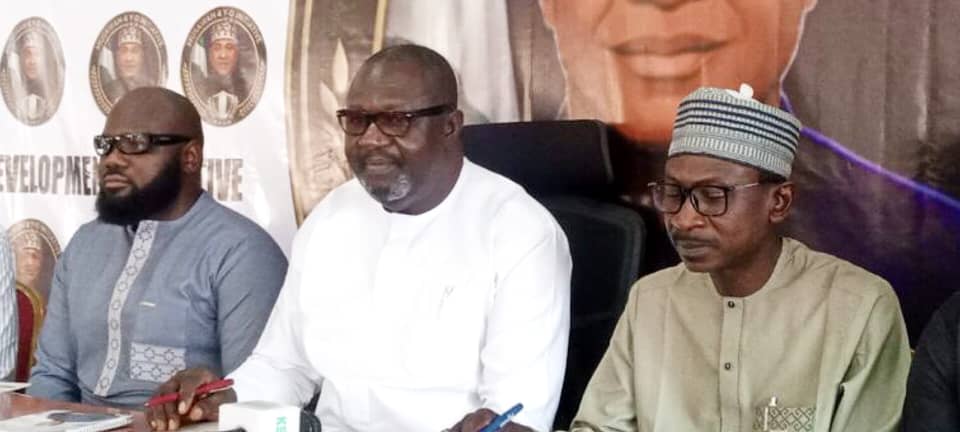
The initiative was unveiled at a press briefing in Abuja, where the organisation highlighted the need to strengthen youth participation in the fight against corruption.

Speaking at the event, the Communications Manager of Step Up Nigeria, Dr. Shekwogaza Kure, said the competition is designed to give young Nigerians a platform to engage actively in governance issues through storytelling and the arts.

Also speaking, the Director of Programmes, Step Up Nigeria, Oluwaferanmi Iyanda, described the competition as an opportunity for youths to showcase their creativity and passion for transparency, accountability, and whistleblower protection.

“This is more than a competition. It is a call for young Nigerians to lend their voices to the fight against corruption and to stand for what is right,” he said.

The competition is open to Nigerians between the ages of 15 and 35, with entries accepted in multiple formats including artwork, short skits, songs, spoken word, articles, and short stories.

Organisers said participants are expected to focus on key issues such as the role of whistleblowers in exposing corruption, the importance of accountability in governance, and the risks faced by individuals who speak out without adequate legal protection.

They added that the initiative aims to change public perception about whistleblowing, presenting it as an act of courage and civic responsibility rather than betrayal.

The programme aligns with Article 33 of the United Nations Convention against Corruption, which encourages countries to establish measures to protect individuals who report corruption in good faith.

To encourage wider participation, the organisers announced that the submission deadline has been extended to Sunday, 12 April 2026.

Participation is free, and winners will receive cash prizes and recognition, with selected entries also featured in educational podcasts. However, the organisers stressed that all submissions must be original and not generated using artificial intelligence.

Further details on eligibility and submission guidelines are available on the organisation’s website.

The event also drew participation from key government and anti-corruption agencies, reflecting growing institutional support for whistleblower protection in Nigeria.

Among those present were Alhaji Mohammed S. Wase of the National Orientation Agency (NOA) and Dele Oyewale, spokesperson for the Economic and Financial Crimes Commission (EFCC).

Their presence, organisers said, underscores the importance of collaboration between civil society and public institutions in promoting accountability.

As the deadline approaches, Step Up Nigeria urged young Nigerians across the country to take advantage of the opportunity to use their creativity as a tool for change.

Power Shift at the Grassroots: MUSAWAH Ignites Kaduna with Massive 23 LGA Inauguration

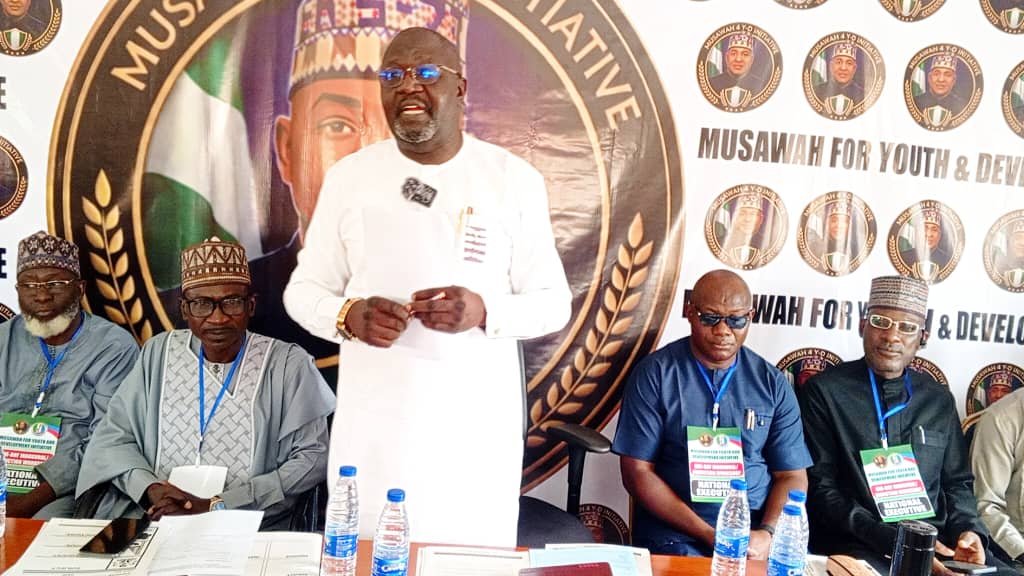
A new wave of grassroots mobilization is sweeping through Kaduna State as the Musawah for Youth and Development Initiative unleashes one of its biggest structural expansions yet, inaugurating 23 Local Government Area (LGA) structures in a single, decisive move.

The landmark event, held on March 24, 2026, at the Musawah Head Office in Kaduna, was more than a ceremony, it was a clear signal of rising political consciousness, youth engagement, and coordinated grassroots action.

At the center of it all was the National Coordinator, Polycarp D. Gankon, whose message set the tone for what many described as a turning point for the initiative.

“This is not just an inauguration, this is a movement taking shape,” he declared, as newly appointed leaders responded with visible enthusiasm and commitment.

Built on the leadership ideals of Christopher Gwabin Musa, the initiative continues to push a bold agenda rooted in inclusive governance, youth empowerment, and development-focused politics — a message that is rapidly gaining traction across communities.

The scale of the expansion is significant. A total of 92 officials have been deployed across the 23 LGAs, covering key roles such as coordinators, secretaries, women mobilisers, and youth mobilisers. But that is only the beginning.

In what appears to be a strategic masterstroke, Musawah is now moving even deeper, rolling out ward-level structures that will see nine additional officials appointed in every ward — a move set to dramatically widen its grassroots reach and operational strength.

The initiative also used the moment to reaffirm its strong backing for Bola Ahmed Tinubu and Uba Sani, positioning itself within a broader alignment focused on stability, security, and national development.

With chants of “Home for All – Gidan Kowa” echoing through the venue, the message was unmistakable: Musawah is not just organizing, it is mobilizing.

As the dust settles on this high-impact inauguration, one thing is clear — the Musawah Initiative is building more than structures; it is building a movement, one community at a time.

Agatu Chairman Commends Peaceful Protest, Moves to Establish Military Base as Displaced Residents Demand End to Killings

The Chairman of Agatu Local Government Area in Benue State, Hon. Melvin Ejeh, has commended the peaceful protest staged by displaced residents of Agatu communities who are demanding an end to persistent attacks and the safe return to their ancestral homes.

Hundreds of internally displaced persons and youths from Agatu took to the streets on March 13 and March 14, 2026, blocking sections of the Oweto–Otukpo highway near the Oweto Bridge in a dramatic demonstration against the continued killings in their communities.

The protesters, many of whom have lived in makeshift shelters for years after fleeing repeated attacks, carried placards with inscriptions such as “Stop Agatu Killings Now,” “Save Agatu Land,” and “Let Us Return to Our Farms.” They accused armed Fulani militants of driving them from their ancestral villages and demanded urgent intervention from both the federal and state governments.

Their key demands included:

· Immediate deployment of adequate security forces to Agatu communities
· The safe return of displaced farmers to their ancestral lands
· The dismantling of armed groups operating in the forests and rural settlements
· Government protection for farming activities ahead of the planting season

Agatu, a predominantly agrarian area in Benue State, has endured years of violent attacks linked to the broader Fulani militant attacks in Nigeria’s Middle Belt. The crisis has resulted in the destruction of villages, displacement of thousands and significant loss of lives over the past decade.

Reacting to the protest, Ejeh said he understood the frustrations of the displaced residents and acknowledged their right to demonstrate peacefully.

“I want to say that I understand why the protesters embarked on this peaceful action, and I wish to state that they have every right to protest and demand the opportunity to return to their ancestral lands,” he said while speaking to our correspondent.

The council chairman also revealed that concrete security measures were already underway to stabilize the area and restore confidence among displaced residents.

“As we speak, I have made available all the necessary arrangements to bring in a military base in Agatu and closer to the areas of conflict,” he said.

According to him, the proposed security deployment would not be symbolic but operationally robust.

“This military unit would be equipped with the latest kinetic and modern weapons. They will be armed with armoured vehicles, tanks and drones. Furthermore, they will not remain on the highways but will be embedded with the villagers in the affected communities.”

Ejeh added that the military would work closely with local security structures.

“The troops will operate in conjunction with local vigilante groups in Agatu to ensure that every community is adequately protected.”

He emphasized that the people of Agatu have endured too much violence and instability.

“We have had enough of bloodshed, killings and death in Agatu land,” he said.

Ejeh further disclosed that he had already consulted with key authorities regarding the plan.

“I have discussed with the state governor and the military officers in charge of Operation Whirl Stroke, and they have agreed with my plans to strengthen security in the area.”

Observers note that the chairman’s response reflects growing pressure on authorities to address the humanitarian and security crisis facing displaced communities across parts of Benue State.

In recent months, Ejeh has also taken a firm stance on the presence of armed pastoral groups in the area. Community leaders say he previously issued directives instructing Fulani herders operating illegally within Agatu territory to vacate the land in order to prevent further clashes and protect farming communities.

While the security situation remains fragile, many residents view the chairman’s proactive engagement with both the military and state authorities as a step toward restoring stability.

For displaced families who have spent years away from their homes, the hope is that the current momentum driven by both community advocacy and government response may finally pave the way for their safe return to the lands they have long called home.

MUSAWAH FOR YOUTH AND DEVELOPMENT INITIATIVE IN RESPONSE TO THE MISGUIDED UTTERANCES OF OMOYELE SOWORE AND ONE ABDUL DAN BATURE ON THE MINISTER OF DEFENCE GEN CHRISTOPHER MUSA


TEXT OF A PRESS CONFERENCE BY THE MUSAWAH FOR YOUTH AND DEVELOPMENT INITIATIVE IN RESPONSE TO THE MISGUIDED UTTERANCES OF OMOYELE SOWORE AND ONE ABDUL DAN BATURE ON THE MINISTER OF DEFENCE GEN CHRISTOPHER MUSA HELD AT THE MUSAWAH HEAD OFFICE, KADUNA ON THURSDAY 12TH MARCH, 2026.

Gentlemen of the Press:

Our attention has been drawn to a recent public statement and social media videos in which Mr. Omoyele Sowore and a so-called group Arewa Youths, led by one Abdul Dan Bature, launched attacks against the Honourable Minister of Defence, General Christopher Musa.

In the circulated remarks, Dan Bature called for the removal of the Honourable Minister from office over rising insecurity while Mr. Sowore publicly mocked the Minister’s proposal to strengthen Nigeria’s border security, ridiculing the suggestion that Nigeria should reinforce its borders to reduce insecurity.

These statements have generated significant online debate. However, they have also contributed to misinformation and unnecessary politicisation of a very serious national issue.

 The Distinguished Service Record of General Christopher Musa

General Christopher Musa is not a social media personality. He is a career military officer who has devoted decades of his life to the Defence of Nigeria.

Throughout his professional career in the Armed Forces, he has served in numerous operational and strategic positions and has played key roles in the fight against insurgency, terrorism, and banditry across different regions of the country.

Like many security leaders around the world, he also communicates publicly to explain national security challenges and reassure citizens. Responsible communication with the public should never be mischaracterised as “content creation.”

Questions That Must Be Asked 

While criticism is part of democracy, Nigerians are also entitled to ask important questions about those who make sweeping attacks against national security leadership.

At a time when Nigerian soldiers are risking their lives daily in the fight against terrorism and banditry, why would public commentators choose to ridicule national security discussions instead of supporting efforts to strengthen them?

It is unfortunate that Sowore has refused to be serious in his life, always behaving like a street charlatan who does not understand governance yet he wants to be president of over 250 million Nigerians. His choice of words against the minister of Defence shows how disrespectful, irresponsible, parochial and rude he can be, little wonder he can’t ever achieve his leadership aim. 

Or is there something Sowore is benefitting when serious national security discussions are reduced to political theatre designed primarily for social media attention?

For Dan Bature, the so-called Arewa Youth leader, we advise that you should join others to support the minister in his quest to restore peace across communities in Nigeria instead of joining forces against him. The north is facing multiple security challenges and the minister is doing his best to stem the tide. He does not need distraction now from road side gossips. For President Bola Tinubu to have appoint Gen. Christopher Musa Minister of Defence after he served as Chief of Defence staff means he trust his capacity and ability to deliver.

A Call for Responsible National Dialogue

Nigeria’s security challenges are too serious to be trivialised through sensational commentary or politically motivated attacks.

Constructive criticism is welcome in a democracy. However, such criticism must be responsible, informed, and directed toward strengthening national institutions rather than undermining public confidence in them.


We therefore call on all public commentators, activists, and political actors to approach discussions on national security with the seriousness and patriotism the subject demands.


Nigeria’s security must remain a shared national responsibility.


Thank you and may God bless the federal republic of Nigeria.


Signed,


Amb. Dr. Polycarp Gankon

National Coordinator

Musawah For Youth & Development Initiative

General Musa’s Rising Charisma: A Strategic Asset for President Tinubu and a Political Advantage the APC Cannot Ignore

In every political era, certain personalities rise above the noise not because they shout the loudest, not because they seek attention, but because their character, competence, and calm presence resonate with the public in ways the political class often fails to anticipate.

In Nigeria today, that figure is General Christopher Gwabin Musa (Rtd.), the Minister of Defence and one of the most unexpectedly influential personalities in the Tinubu administration.

His influence is not formal.
It is not partisan.
It is not manufactured.

It is rooted in earned trust built over decades of military service and now crystallizing into a quiet yet powerful political force.

This article examines the extraordinary rise of Musa’s charisma, its implications for the Tinubu administration, and why the APC may be sitting on one of its most significant political advantages heading into the coming years.

A Reputation Built on Service, Not Politics

Unlike many public figures whose reputations are shaped in the arena of political bargaining, alliances, and media engineering, General Musa’s national appeal is a by-product of his professional journey.

From his days at the forefront of counter-insurgency operations to his tenure as Chief of Defence Staff, Musa became synonymous with discipline, integrity, humility, operational excellence, and national service above personal ambition.

These qualities have followed him into the Federal Executive Council.

In a period when Nigeria continues to grapple with insurgency, banditry, regional tensions, and organized criminal networks, Musa’s appointment was a deliberate signal by President Tinubu to anchor national defence in competence rather than politics.

That decision is now yielding political dividends.

Why Musa’s Charisma Is Different

In Nigeria, political charisma is often loud, theatrical, combative, and attention-seeking. Musa’s charisma is the opposite. It is quiet, steady, and deeply persuasive.

It is the charisma of competence, not performance.

His public appeal rests on four pillars:

1. Calm Demeanor
At a time when public communication is often emotionally charged, Musa speaks with measured precision. He avoids sensationalism and speaks to citizens with respect. His clarity inspires confidence.

2. Authentic Humility
He does not project himself as a politician hungry for relevance. He carries himself as a custodian of responsibility. This humility makes him relatable and trustworthy.

3. Record-Backed Authority
Musa does not need political propaganda to legitimize his views. Nigerians remember his frontline contributions from overseeing the mass surrender of insurgents to stabilizing military operations in difficult theatres.

4. A Non-Partisan Reputation
Though a key figure in the Tinubu administration, Musa is viewed as above partisan politics. He is seen as a national asset, not a party operative. This gives him credibility across political divides.

This combination of attributes is incredibly rare and politically invaluable.

A Strategic Win for the Tinubu Administration

President Bola Ahmed Tinubu has long demonstrated an ability to recognize and elevate credible technocrats whose work bolsters the image of his government. Musa’s appointment fits this strategic pattern perfectly.

Through Musa, the administration has achieved the following:

1. Restored Public Confidence in Defence Leadership
After years of skepticism toward Nigeria’s security system, Musa’s reputation reassures citizens that competent hands are steering the sector.

2. Strengthened Internal Stability
His leadership provides stability and continuity within the military hierarchy, reducing internal friction and strengthening operational cohesion.

3. Projected Professionalism Over Politics
Musa symbolizes the administration’s preference for expertise over political interference a key narrative as Tinubu implements complex reforms.

4. Enhanced the APC’s National Appeal
A credible, widely respected figure in a politically tense environment helps soften public criticism toward the government.

These advantages are not symbolic they are strategic.

A Political Advantage the APC Cannot Ignore

The APC currently faces a difficult communication environment due to economic reforms, subsidy removal impacts, and rising living costs. In moments like this, political parties need figures who inspire trust.

General Musa fits that profile.

He is a:

credible spokesperson
national unifier
trusted public face
competent operator
reassuring communicator

He reduces political hostility without engaging in politics.

This is political capital rare, powerful, and often decisive.

A Bridge Across Nigeria’s Divides

One of Musa’s most remarkable strengths is that he appeals to voters across ethnic, religious, and regional lines.

Across the North, he is respected for professionalism and results.

Across the South, he is admired for his articulate communication and unassuming leadership style.

Among Christian communities, his presence in a high-security office is seen as reassuring and inclusive.

Among Muslim communities, his military reputation commands respect.

Among the youth, he represents discipline, intelligence, calm, and a non-corrupt public image.

This broad appeal is politically significant. Very few figures in Nigeria today can draw admiration across such diverse constituencies without controversy. Musa is one of them.

Media Visibility and Rising Public Trust

In recent months, Musa’s visibility has increased not because he is seeking attention, but because:

he is central to resolving critical national issues
he communicates effectively
media platforms find him credible
citizens trust him instinctively

His statements often go viral because Nigerians yearn for leadership that sounds both competent and sincere.

Public discourse on national security, governance, and leadership quality increasingly references him as a stabilizing figure.

This organic rise is the clearest proof that his political value is expanding naturally.

A Nightmare for the Opposition’s Strategy

Opposition parties typically rely on portraying government officials as incompetent or corrupt. But attacking Musa is politically risky because:

he has no corruption scandals
no record of ethnic or religious bias
no political baggage
no history of public misconduct
no reputation for disrespect or arrogance

He is difficult to discredit.

Any attempt to malign him risks alienating neutral Nigerians who view him as one of the few credible figures in government.

This gives the APC a protective shield and forces the opposition to rethink its messaging strategy.

Could Musa Become a National Political Force?

Not necessarily in the electoral sense though in politics, anything is possible but in terms of influence, Musa is already becoming a defining figure.

He strengthens:

public trust
institutional legitimacy
inter-agency cooperation
national confidence in security leadership
APC’s perception across key demographics

In previous administrations, figures like Dora Akunyili, Lamido Sanusi, and Attahiru Jega became national stabilizers. Musa fits into this lineage.

His influence, if strategically harnessed, could reshape the APC’s national image ahead of the next election cycle.

Conclusion: The Era of The Musa Effect

General Christopher Musa may not be a traditional politician, but he represents the kind of leadership Nigerians crave competent, calm, sincere, and unifying.

He strengthens the Tinubu administration.
He boosts the APC’s credibility.
He reassures investors, communities, and citizens.
He elevates the public perception of Nigeria’s security leadership.
He bridges divides in a polarized nation.

In an era where political noise often disguises a lack of substance, Musa’s quiet strength is refreshing. Nigeria is noticing. The political establishment is noticing. And the ruling party, if strategic, will recognize that it has in Musa one of its most valuable assets.

The Musa Effect has begun.
Its implications will be felt for years to come.

By Samuel Ateh Stephen
Digital Strategist & Public Affairs Commentator
Focused on National Development
19/01/2025

The Hypocrisy That Keeps Nigeria Bleeding

By Samuel Ateh Stephen

There is a kind of hypocrisy that kills faster than bullets, the hypocrisy of selective outrage. It does not pull the trigger, yet it creates the emotional climate in which murder becomes ordinary. It numbs the conscience, erodes shared humanity, and replaces moral judgment with identity based loyalty. Nigeria has become a nation where the value of a human life fluctuates depending on the victim’s ethnicity, religion, or region. Once empathy becomes tribal, morality becomes political, and a society where morality is political is already in decay.

When sixteen northerners were killed in Edo State, the reaction was swift and coordinated. Northern elders voiced outrage. Delegations traveled. Traditional institutions were stirred. The Governor of Edo State, Monday Okpebholo, traveled to Kano to meet with families and northern leaders. The killings were framed as an assault against identity. The value of the victims was elevated not simply because lives were lost, but because those responsible were perceived as coming from another side of Nigeria’s divide.

A similar pattern emerged when Fatima and her four children were murdered in Anambra by suspected IPOB elements. The state government moved quickly to calm tensions. Security efforts were strengthened. Leaders spoke firmly across ethnic and religious lines. And when a northern dominated market in Ibadan was attacked, the reaction from northern governors was immediate. The late Governor Rotimi Akeredolu responded with empathy, arrests, and reconciliation. These moments show that Nigeria is capable of moral clarity when it chooses to be. They demonstrate that the country can act decisively when violence threatens established boundaries.

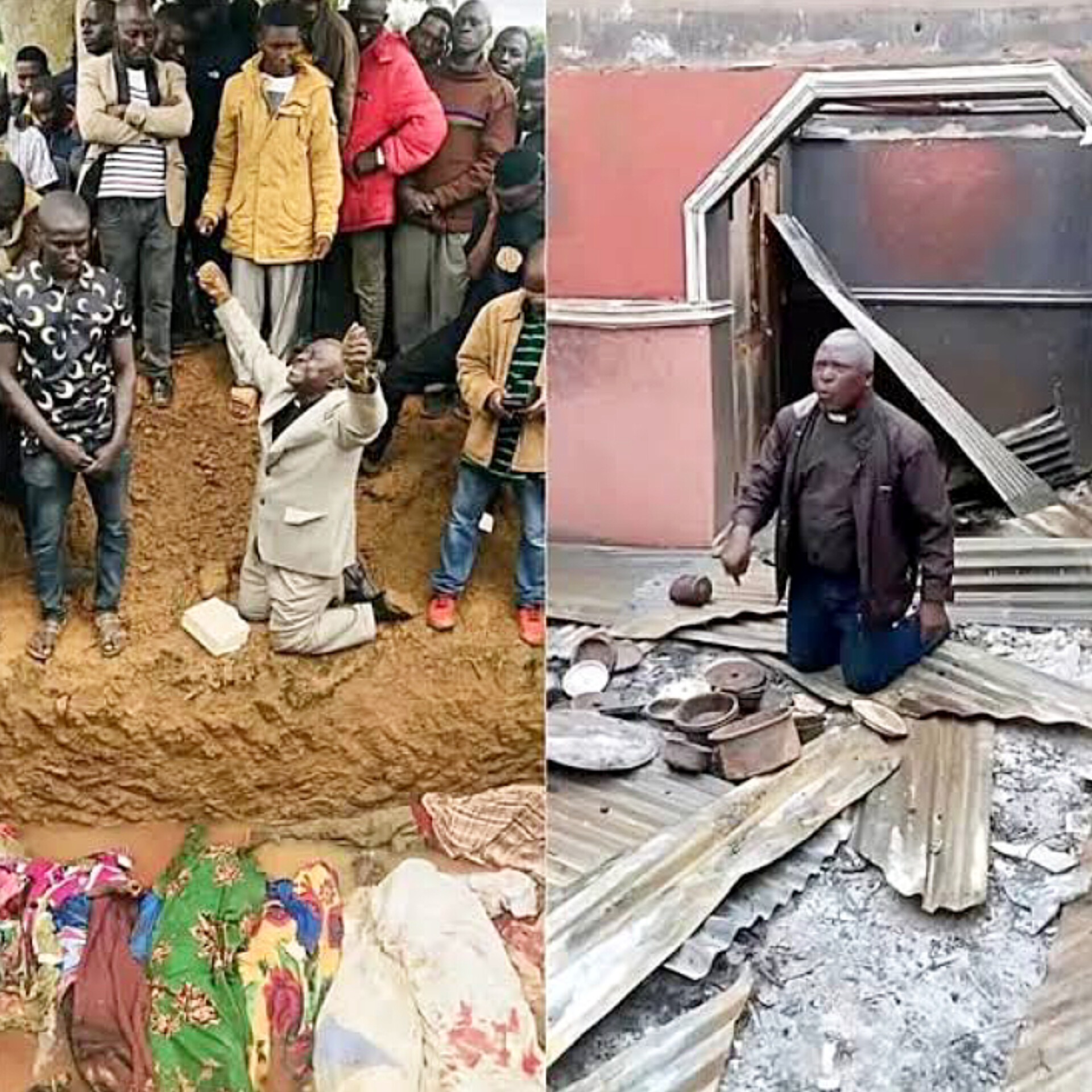
Yet the same nation becomes quiet when the victims are from Southern Kaduna, Benue, Plateau, or Taraba. Entire villages are wiped out in cycles of violence. Families are buried in mass graves. Children are left without parents in numbers too large to count. These tragedies pass as routine news. There are no national delegations. No unified outrage. No sustained public grief. The silence reveals a dangerous truth. Some lives are implicitly considered less worthy of mourning.

Why does outrage depend on who the killer is, rather than the fact that a life was taken? A nation that mourns selectively has lost its sense of moral order. This is not justice. It is a collapse of conscience.

When perpetrators share our ethnic, religious, or cultural identity, many suddenly become restrained and diplomatic. The same people who demand justice in one circumstance immediately demand nuance or silence in another. Violence becomes tolerable if it comes from our own. But when the roles are reversed, the same individuals rediscover moral clarity and the language of condemnation. This shifting morality is the machinery that sustains cycles of revenge.

No society can endure when truth itself is filtered through ethnic or religious loyalty. If the killers are Muslims, they must be condemned. If the killers are Christians, they must be condemned. If they are Igbo, Hausa, Yoruba, Tiv, Fulani, Jukun, Bachama, or from any other group, they must be condemned. Silence, excuse, or justification is complicity. Evil has no tribe. Evil has no religion. It only has defenders.

The real threat to Nigeria is not the bandit in the forest or the terrorist with a rifle. The real threat is the citizen who excuses him, protects him, rationalizes him, or refuses to condemn him because of shared identity. Healing will begin the day Nigerians mourn every victim as though the victim came from their own family.

Until then, the country will continue to bleed from wounds we refuse to acknowledge, from injustices we refuse to confront, and from a conscience that speaks only when it is convenient.