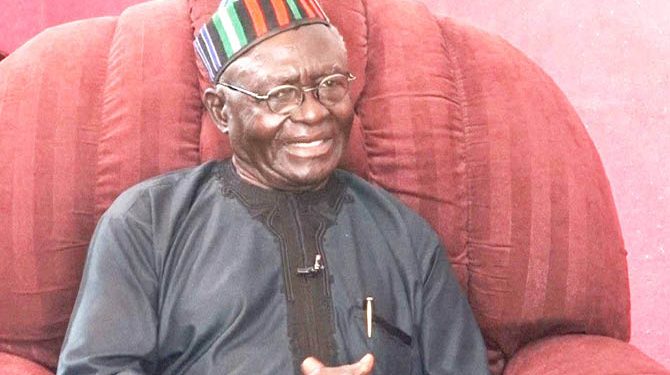
The North Is No More – General Lekwot

General Zamani Lekwot (Rtd) is not given to much media appearances. He has spent all his life in the military, from military school to becoming a general. Along the way, he was Military Governor of Rivers State (1975-78), Commandant of the Nigerian Defence Academy (NDA), Kaduna (1979-82) and General Officer Commander (GOC) of 82 Division, Enugu. He was also the Nigerian Ambassador to Senegal, with concurrent accreditation to neighbouring countries.

Many young people may not know you. You started life in Jankasa, can you tell us about that period of your life?

I was born in Jankasa, Zango Kataf LGA in Southern Kaduna. I was born during the Second World War. There was no record as such, but my mother just put one, two and three events together and remembered very well when aircraft used to fly all over the place. I did my primary school in Jankasa.

So, what period did she allocate to your date of birth?

The war started a year earlier. I did my primary school in Jankasa and Abuja, now Suleja Senior Primary School. It was built by Niger, Benue and Zaria provinces and students were contributed. I was in the batch from the then Zaria Province. From there I went to the Nigerian Military School (NMS), Zaria, and then proceeded to the Indian National Defence Academy.

Was the choice of the military school deliberate?

I will say yes. We were doing sports one evening and we saw a European standing by the roadside beside his jeep. We had heard the sounds of bugle every morning and evening. The following day he came when we were doing physical training and a day later we saw soldiers parading.

The military precision with which the music and marching tallied impressed some of us. At the end of it he told us that there was a military secondary school in Zaria for young people and that pupils that went there would do their WAEC within four years, but the most impressive thing was the parade, and he asked those interested to report to the office.

I, late Gen Mamman Vatsa, late Group Captain Usman Jibril and two others went. We did the interview and we were invited. I think I was the only one who went to the military school.

How was your experience in India?

The Indian experience was very impressive because the weather there, in that part of India, Puna, is within the Equator, in terms of temperature it rains more because the monsoon rain is there.

I found the Indians a very interesting people, very hard working, and they were producing things for themselves. Their military is one of the best in the world in terms of professionalism.

We were six actually: four naval cadets and two army. My second colleague, who was also from NMS, was late Col Isah Ahmed, who was married to Nuhu Ribadu’s sister. We were at home in India really.

Were you comfortable with the food?

Yes, there were variations but basically they were the same. In any case, soldiers are trained to acclimatise anywhere they go.

When you came back from India, I believe the Nigerian Civil War was just starting?

It hadn’t started. In fact, out of the six of us I was the only one who returned home late because we spent three years in the Indian Defence Academy, which happened to be the mother NDA.

The naval cadets, after three years in Puna, went to the naval academy, then the late Col Ahmed and I reported to the Indian Military Academy to specialise.

After our graduation, the late Ahmed who joined the artillery returned to Nigeria. I for one was in the Indian artillery for a while because the infantry course was not scheduled until later. I am proud to say that what I learnt at the artillery taught me a lot of things that I found useful during the civil war.

After that I went to the Indian Infantry School for three months, did my course before I returned to Nigeria on 31st March, 1967. The civil war broke out in July.

And you went straight into the warfront?

I was posted to 6 Battalion, Ikeja, the late Brigadier Benjamin Adekunle was the CO, the late Gen Gibson Jalo was the second in command. When the war broke out, the 6 Battalion reinforced and we went and captured Bonny.

Your company captured Bonny?

Not company. Well, yes. I was a company commander, our battalion captured Bonny and then two other battalions were floating in the sea just in case. After Bonny was secured, then others were located.

How was the battle for Bonny; was it something really important in terms of the final victory?

It was important because Bonny commanded the entrance into Port Harcourt Port along the Port Harcourt River. It was through Port Harcourt, through the Warri Port, that the Biafrans were smuggling weapons into Port Harcourt and Warri.

Bonny fell on the 23rd of July. Within the first week of August, 1967, that was when the Biafrans infiltrated the Mid-West and captured Benin.

In the East then, Warri, Port Harcourt and Calabar were the three ports; next to Lagos. Apart from being the entrance into Warri the Port, the gulf oil installations were there, so their aim must have been to seize that place and control the entrance into Warri Port. We were there before them.

What happened after the war?

It was during the war in 69 that I was posted to NDA as adjutant. It was an Indian training team that established NDA with the Late Brigadier MR Varma as the first commandant. When I reported for duty in May, 69, late Gen Ejoor had taken over from Brig Varma, but the bulk of the instructors in NDA were Indians.

By January, 1979, the war ended and more Nigerian officers who had been at the front were posted to NDA to be retrained.

You were given command yourself, was that in Maiduguri?

I started as adjutant in 1969. I went to Gen Adebayo in 1971 and appealed to him to help me attend one of the courses because most of my mates after the war attended courses.

You know in the military, attending courses broadens your horizon. So, I was sent to do the Company Commander Course in October, 1971. I was there when I was promoted lieutenant colonel. Having been promoted, I was no longer qualified to be adjutant. Gen Nwachukwu, who was a major, took over from me. In September, 1972, I was posted to 12 Brigade, Aba, and a year later to 33 Brigade, Maiduguri. At that time Gen TY Danjuma was the GOC of 3 Division, Jos.

It was from Maiduguri I was nominated to attend the Command and General Staff College in the United States in 1974. After a year I came back, that was when General Murtala Muhammed overthrew General Yakubu Gowon and I was posted to Rivers State as military governor.

Was that not a very overwhelming job for an officer in his 30s?

You know some things happen in the military. I had just returned from the US, then my name was one of those announced. I was on leave actually waiting to be posted. So, I answered the call and went to Rivers.

But were you surprised with the posting?

Yes! Because I didn’t expect it. Well, having been in Bonny in 1967 I had an idea of what the terrain in Rivers was, and when I got there I was fortunate to convince some patriotic Nigerians to join my cabinet; like late Prof Tam David West whose articles in Daily Times I had been reading. He was very critical of my predecessor.

Diete Spiff?

I also got some from the staff of Shell, GBO and Nigerian Breweries.

These were all people older than you?

David West was older than me, but the others, I think, were my juniors. When it comes to service, you don’t consider age.

But how did you manage as governor?

I was also fortunate to engage a very experienced diplomat and former District Officer (DO) as the secretary to the government, late Chief F.J. Elah, he had served in the Biafran government.

According to what he told me when talks in Kampala, Uganda were organised, he was the Biafran representative in London. He had advised Ojukwu to accept the call to Kampala to go and start a dialogue. I think Ojukwu didn’t like it. He recalled him home for consultation and he knew he was being sacked.

When he got to the East, he found his way to Rivers State. He was in fact working for the College of Science and Technology when somebody recommended him. I found him very, very useful because as a former DO and a diplomat he knew about the General Order and what diplomacy was all about. I learnt a lot from him.

What will you say is your legacy in Rivers? First of all I enjoyed myself. Rivers State, then including Bayelsa, was a collection of minorities. They were lucky to have been visited by missionaries much earlier, being located near the sea. I learnt a lot.

The high point was the huge cooperation I got from them. I tried my best too. You know soldiers’ administration. When it comes to administration, dealing with people, I think we have an edge.

Are soldiers trained to be…?

Sometimes we are not satisfied with the civilians. They are too slow or they ask too many questions. You know we get angry once in a while.

You don’t like questions?

We think clearly about something before we order that it should be done. Let the action start, if there are mistakes we can correct. Soldiers don’t like to waste time, we believe in doing things with military precision because a mission set out must be fully accomplished.

Tell us about the rest of your career in the military?

I had a very successful career in the military, but problems came in 1983 when the military coup was staged. I was the GOC in Enugu, some of my units were in Benue and part of Taraba and part of Bendel. So, 82 Division then was the largest division and we had components of what other divisions had. They used to call it the composite division.

I was one of those commanders that were kept in the dark. So, when the coup took place, I was on leave, and an announcement was made for all commanders on leave to report to Lagos.

I went to Kaduna from the village, caught the plane and went straight to Gen Muhammadu Buhari who was the head of state. I asked him if the ousted President Shehu Shagari was safe and he said yes. Then he told me that I had been appointed military governor again. I thanked but told him I would prefer to remain in the barracks.

Another suggestion was that military governors should be junior colonels and senior lieutenant colonels so that they would not stay in government for long.

Buhari then told me that my junior had been made the Chief of Army Staff (COAS). I told him it didn’t bother me at all and I cited the example of Generals George Patton and Omar Bradley.

Gen Ibrahim Babangida was your junior?

I am senior to him. I was six months senior to him. In fact, when we were in NDA he was a company commander and I was a cadet brigade commander. I recommended him for promotion to lieutenant colonel in 1972. I got mine in 1971.

So, when I told Buhari I would copy what Patton did, he said no. Patton was the military commander in North Africa during the Second World War. He slapped a soldier for running from the front and hiding at the hospital. He was removed and General Omar Bradley, his junior, was made the commander.

So, when the war became too hot they brought him back and he served under Bradley. His own was to take part in the war and kill Germans, according to him. So, when Buhari said it was not possible I said well in that case I would have to retire and he protested that if I did that I would be creating problems for him.
That was when he told me that some would be retired and some were going to foreign service. Since some officers were being sent on foreign service and since my remaining in the army was not possible because my junior was the COAS, I volunteered to go on foreign service and he asked me which country I preferred. He told me that Gen Hananiah was going to London and Navy Commodore Okujagu was going to India. I said okay, when I was in the Indian Academy I learnt French, that he should send me to France.

I think when he took it to the caucus, some people didn’t like the idea of my rejecting what was offered to me. So, really that was how instead of France, it was changed to Senegal; with concurrent accreditation to Mauritania, Cape Verde and the Gambia. I went there for three years, learnt a lot of things and returned home.

Was it strange to leave Nigeria as a soldier and become a diplomat?

I didn’t have the training for it, but military training is such that it makes one versatile. One lies low and studies the status quo and then decides how to cope.

My deputy was a very experienced diplomat who later became ambassador, Kayode Shunkaye, from Kogi State. I learnt a lot from him. In interacting with other diplomats I also learnt how to look at issues differently.

At that time my wife was doing her degree course in Cardiff, Wales, so I had a lot of time and therefore decided to register with the University of Dakar in order to polish my French. So, during my stay there I was able to pick up the language and read things and follow, not 100 per cent, but better than before.

How good is your French?

It is okay. I can find my way in Paris or Quebec or anywhere.

And did you travel widely in the region because you were concurrent to other countries?

Of course; Cape Verde, Mauritania and the Gambia. I visited these countries regularly. In Mauritania and the Gambia, we had offices, it was in Cape Verde that we didn’t have anything. I had no problem at all.

Was being an ambassador the last part of your engagement in public service?

Yes. From 1984 to 87 when I finished I returned home and returned to the village.

You returned to the village or Kaduna, because this is not quite a village?

To Kaduna, that is true. I only visit the village once in a while.

There is this impression that your leaving the military was because of your relation with Gen Babangida, that somehow there is bad blood between the two of you?

No! I had no problem with Babangida. As I told you, he was my staff in NDA, I promoted him to lieutenant colonel. I gave him a good report, he is a good officer. We trained the cadets together, there was no problem.

But you did mention the caucus was not happy when you didn’t accept to go for military governorship?

That was from Buhari, because when he took what I proposed some people didn’t agree. I had no quarrel with that. The station was changed from Paris to Dakar, fine.

But surely you must have felt at 43 years or thereabout your career was suddenly terminated?

Agreed. I loved my profession because it is a very serious profession; for my career to be terminated like that, I accepted it.

Those who did it knew why they did it. So, when I had this window to serve in the foreign service and learn something new, I saw it as a bonus. At the end of it, I decided to retire and rest.

That supposed bad blood between you and your colleagues in the army, was it linked to the problem you later had in Zangon Kataf?

Honestly I wouldn’t know. The Zangon Kataf issue was just blackmail. Do you see a whole general going to the village to kill villagers? No, it doesn’t make sense. Even the tissue of the lies they dashed out were not convincing. How can a general go and start killing people? I am not mad.

But why were you roped into it?

I don’t know. Look, the military tradition demands that when a soldier commits an offence and he has to be put in the guardroom, you must tell him what he has done wrong so that he can prepare his defence within 24 hours. Nobody asked me anything.

Babangida was president, instead of sending for me or sending somebody, he didn’t do it, he is the only one who can answer this question. I have never offended him, there was nothing between us.

During the Oputa Panel, even the Hausa people in Zangon Kataf, my lawyer asked them whether they had an issue with me, they said no. My own village is 14km away from Zangon Kataf town.

What caused the problem was a market relocation. A day was fixed for the market to be opened, people started a riot and some people were killed. I was just framed up by some people.

But as an elder and the most prominent son of the area, were you able to intervene to help sort out the problem?

After our detention, yes.

Were you detained because of the riot without knowing what it was all about?

Exactly. I was just framed up, how did it happen? The late Col Madaki also came from Zangon Kataf, but he was Baju, I am Ityap. When I was posted to Maiduguri as Commander of 33 Brigade in 1973, he was already there. He was my brigade major, we worked together, we did things together. We used to sit down and talk; what can we do to help our people.

So, really, there was nothing connected with me about a market riot. I had no shop there, I don’t live in the town, they don’t know me. People who did it wanted to hide the truth either to blackmail me or to implicate me for reasons only.

Is it because you are a prominent son of the area so that they would have to say somebody was responsible for this?

I don’t know.

But I asked you, did you try to help as an elder?

I am coming. So, when we came out of detention, there was this bone of contention, some old people, after the riot, many Hausa people ran away.

Some people said we lived with these people, many of them are offspring of Kataf women, we still give them our daughters in marriage, they have lived there for a long time.

But for one reason or the other, some found it difficult to relate, they still carried that air of arrogance, but our people are simple minded, we don’t care. So, to have attributed what happened to me was unfortunate.

Now, when we came out of detention, some old people felt disappointed because after the riot, 61 of us were arrested, including our district head, all the village heads, some retired reverends, one of them was 89 years old, and he was accused of killing people, so they were furious.

When it came to taking a decision to allow them (the Hausa settlers) to return to their homes, some people didn’t want it. This was where I joined others in appealing to them.

In the Holy Scriptures, I think Ecclesiastes, it is mentioned that there is a time for everything; time for birth, time for death, time to fight, time to this; we said what had happened had happened.

It wasn’t possible for everybody in Zangon Kataf to have taken part in the plot. So, leave those willing to come back to come back and they finally came back and their farms were returned to them. Our then district head who had then become a chief received them.

There are some shameless people, they take pleasure in using the name Lekwot. Okay, if Lekwot was a bad guy, I wouldn’t get to where I got to, that would have manifested itself.

But a court convicted you and a few others on this same problem?

That was a charade. Do you know why?

No?

There were two trials, the first one they framed up lies. I was never in Zangon Kataf town; the federal director of public prosecution came, looked at the issue, evidence was given, there was no case, so he took time off to go to Sudan to do some work. So, Justice Pius Okadigbo discharged us, but he didn’t acquit us.

As we stepped down the witness box, he directed the police to arrest us again. We were taken to the Kaduna prison and new charges were framed against us.

When the case started, our lawyer was the late Chief Ajayi (SAN). So, when the Babangida government saw that there was no case, Degree No 55 of 1973 was enacted, directing the tribunal to send all their proceedings to Abuja, barring us from appealing.

Then the hostility of Justice Okadigbo, who appeared to be a hired agent, because he violated legal proceedings in court. He was supposed to be a high court judge. So, Chief Ajayi took him on. In the end when Ajayi saw this degree, he knew that Babangida and his team had made up their mind to do us in, against the law, so our legal team withdrew.

I was the first accused, I begged Okadigbo to grant us two days to hire another team, he said no, that we should defend ourselves. It was later I learnt that when an accused is standing trial for his or her life, that accused is entitled to a defence of his choice; where he cannot afford it, then the Legal Aid Council (LAC) can be appealed to. Okadigbo didn’t do any of these.

Two days later, no, the following day, the Tribune Newspaper carried our headline, “Zangon Kataf trials: Judgement without defense”. So, we were condemned without fair hearing.

Why would Babangida do that?

I don’t know.

Because you were good to him you said?

Babangida is an awkward character. He killed Vatsa. Vatsa was accused of planning a coup, do you arrest a person you suspect of planning to steal or to commit a crime? You have to wait until he is caught in the act.

Why did he annul June 12? He is now lying that he was forced, forced by who? Who was the president? Is he saying junior officers forced him to annul the election?

He called Abiola his friend, why did he do it? I hope he will summon the courage to tell the world the truth. If he had something against me he should have said it and I would easily apologise; that is me. I like to live in peace with people.

But somebody who recommended him for promotion, somebody who had never quarreled with him, he went and did this in violation of the officer’s code of conduct; you don’t accuse an officer without confronting him with the fact.

So, how was that period of your life, from arrest to being condemned to death?

My conscience was clear. I didn’t do any of such things. Why should I kill villagers, what for? I didn’t know them, they had not offended me.

I was forced to ask the tribunal what sort of a country we were in. They went and said things I knew nothing about.

The crisis was caused by some fanatics in Zangon Kataf town. After the riot some people were killed. Instead of the government instituting a commission of enquiry, sorry they did under Justice Cudjoe, alright. I even went to the tribunal, not tribunal, commission of enquiry, to answer questions.

Did she make recommendations about what to do to help?

Some mischievous persons in Zangon Kataf accused me of importing weapons. In July earlier that year we launched an appeal fund to codify our language and to translate the Holy Bible into our language. So, they said I used that money to buy weapons.

When Justice Cudjoe submitted her report, we were waiting for the result when a letter was written by an Islamic group in Zangon Kataf town addressed to Sultan Dasuki asking him to do something about the killings in the market riot otherwise the Nigerian jihad would start in Zangon Kataf.

They fixed a date and attacked a nearby village and that was what triggered the riot. Then the villagers responded, their neighbours also responded, this was how it started.

If they hadn’t attacked the village there would have been no reaction. From there one thing led to the other. I still have this letter they wrote, one day I will give you.

It was Gen Abacha that pardoned you and set you free?

Abacha was my friend. When I was the Military Governor of Rivers State he was the brigade commander. We played squash together, we played scrabble together, he was a member of the executive council. Each time I travelled he was the acting governor; there was no problem.

I am sure he knew the truth. We lived together for three years, his wife was very close to my wife. The character of a bad man, no matter how he hides, must show. The person who is innocent, a gentleman, you can brand him anything but it doesn’t change him. I am not violent by nature.

This problem still persists in Kaduna, sometimes in Plateau, why do you think we are not able to, all these years, live in peace with each other?

It is incompetence on the part of the people in authority. I will tell you, it was the late Sardauna who influenced us to join the army, not only us, we were juniors, people like the late Maimalari and TY Danjuma.

When I was brigade commander in Maiduguri, the attorney general was one Buba Ardo. He told me that it was the late Sardauna who enjoined him to join the judiciary.

Sardauna was a godly leader and he came to our school and appealed to us, “My children, in no distant future, the Europeans will return to their country, join the military; it is a very, very important profession.”

Sardauna did not consider tribe or religion, he saw us as his children; that explains the secret of the progress in the North. But when he was killed, people who worked with him, what happened? We have selfish people up here who shout “North” with their mouths, but what they have in mind and do are different.

I take your mind back to how Boko Haram started, it was during Yar’Adua’s time. They attacked a police station in Yobe, nothing happened; they invaded the prison yard in Bauchi, released their members, nothing happened.

It was after they started something in Maiduguri that the military pounced on them, arrested their leader and handed him over to the police, then he was killed. So, people who ought to do what they ought to do and don’t do it; this is the problem.

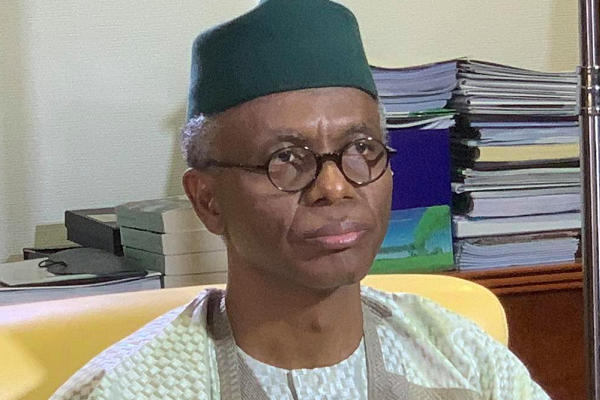
But in Kaduna, the immediate past governor, Nasir el-Rufai, started a peace building process. I don’t know whether you know about it or are actually part of it?

El-Rufai was pretending; he is a bad leader. In a video clip he confessed that he came to Kaduna to Islamise the state. All along, we have lived in peace.

If the governor is a Muslim, the vice will be a Christian. When he came he started with it and discarded it. Then if you look at his antecedents, he doesn’t believe in what the constitution is saying, he didn’t obey court orders, he decided to decimate some of our chiefdoms, including the closing of some districts.

The late Emir of Zazzau, Idris, went to him and said if shortage of money was the problem he (Idris) would pay the district heads. He refused. So, the emirate went to court and won the case, he ignored it.

Next, he was so arrogant he would not consult anybody. As a rule of thumb, each time a government was sworn in, Southern Kaduna elders, I am the chairman, paid a courtesy call, discussed and told the governor things he could not hear from the security.

But when El-Rufai came, we tried and he refused. SOKAPU is our cultural organisation, he said he had nothing to do with them. Then he embarked on this politics of exclusion; people from Southern Kaduna; he has nothing to do with them.

You didn’t see him throughout his tenure as governor?

No. He refused, he ignored us, we too decided to ignore him, who is he?

Even you personally, you didn’t see him?

No; to see him how? I ran across him in the golf course once, we just greeted each other. He doesn’t believe in the diversity of the country. When he was talking about Islam, there is no problem about religion in Southern Kaduna, even in my family we have Muslims, many houses have Muslims, Christians and traditional religion.

We do the Sallah together, Christmas together, there is no problem. So, this issue about religion comes from outside.

What is the problem, because there is still conflict, there is still fighting?

Only El-Rufai can answer that. Before him were other governors. Namadi Sambo was here before he became vice president. Makarfi was here. Ramalan Yero was here, none of them manifested the type of problem El-Rufai manifested. He will tell lies, invent stories.

For your information, the present governor, three weeks ago, invited 10 elders from Zaria and 10 elders from Southern Kaduna. The meeting was a huge success. The speech he made was very impressive.

Were you there?

Of course. I am the chairman of Southern Kaduna Elders Forum. Community service is what I have given myself. So, two of the things the present governor said that impressed us, me in particular, was his seven-point agenda, one of them is to develop the rural areas, which makes sense.

He also told us that he was not going to discriminate against any part of the state, that is how it should be. For 16 years the PDP ruled with inclusiveness, Southern Kaduna made about six ministers, who can complain?

But when El-Rufai came, nothing, even to listen to people, he wasn’t interested. He came with the mindset to marginalise a certain part of the state. How can a leader who swore to do equity and justice turn round to do this? I feel sorry for him because some of these bad things will snowball back to him.

You live in the Kaduna GRA, are you at peace with your neighbours?

Oh yes, we greet. I told you I am not a violent man. All the hocus-pocus you hear, it is just hate speech. They are very lucky, do you know why? If I had politics in mind, I would get into the arena. It is grammar, they will abuse me, I will abuse them, but no, politics is not my cup of tea, because it doesn’t appeal to me. A thing is either right or wrong; that is me.

People who say all these, do you hear me responding? I ignore them, I don’t want to dignify the hocus-pocus with a reply. There is no need, there are better things to think about.

How do you spend your time beside the community engagement you do; I heard you mention golf?

Yes! I play golf; even the day before yesterday I played six holes. Squash used to be my favourite game but my knees have retired me. I used to play badminton also, I have been an active sports man, but as age continues to advance, my system is slowing down.

I am also a member of the Middle Belt Forum. In fact, I am the chairman of its elders’ council. We meet and talk and offer advice. Part of the mission is to train the youths, to cooperate with others, to see Nigeria as one, to respect the feelings of others, to be patient with the government because the government cannot solve all problems.

But do you see Muslim and Christian leaders cooperating in the North?

There is no North. Some selfish people have destroyed it. Right now, from the former North, I don’t see any political voice talking. I mentioned Sardauna, the nearest one was Maitama Sule. Now we have selfish people who are fending for themselves; they only say North, but what they mean is different.

What I am aware of, there is the Far North and there is the Middle Belt, alright. The Middle Belt is the lower part of the North, the Middle Belt is the upper part of the South; that is why it is the bridge.

When the government came up with these zones, we now have North West, North East and North Central instead of talking about one North.

At the time Sardauna was alive, that genius of a leader did a very commendable job, but the North is too huge to be run from one place. So, whether we like it or not, we have a complex federation. Some people don’t listen to others, they don’t respect others, how can it be?

Some selfish people want everything to be run in one place so that they are in charge. No, the population is increasing, lifestyle is becoming more complex, so let us rearrange it. This brings us back to the question of restructuring.

Some people are afraid of restructuring, that fear is unfounded. The federal government is carrying too much load; the 2014 National Conference did a very good job. They looked at this restructuring, they even drafted a constitution. All that Buhari, my brother, needed to do was to take a look at it, choose what he could implement and leave the rest for other governments, but he decided he had nothing to do with it.

How can you, as head of a state, something was done, whether you are part of it or not, not look at the merit of it first? He didn’t want to see it, all the problems are there, he had no solution.

Did you talk to Buhari while he was president?

No. Buhari didn’t communicate with anybody, he didn’t listen to anybody, he was a big disappointment to some of us. He was our colleague.

Take the insecurity for instance, one of the things he should have done was to assemble a few retired generals and say, “Gentlemen, this is the problem, I want advice.” He didn’t do it, and the problem is there.

What do you think of the current government, are you happy with the initial steps taken?

When you talk of happiness, happiness is out of the way, because the wahala is still there. Now what the government needs to do is to listen to the people, a person who wears the shoes knows where it pinches most.

We have a government sitting there, doing their things, what people are going through, they don’t want to know.

Tinubu has started well in some sectors. For instance, yes, appointment of the service chiefs was excellent because these are officers who as cadets showed potential. Then they proved themselves in the North East.

But what are you hearing from your people about the impact of the economic policies, the subsidy, the exchange rate and all that?

The only problem about the subsidy removal is lack of an arrangement to cushion the effects. You see, given the way things went over the years, making a drastic change without pain is not possible. It is up to the government now to initiate actions to alleviate the pains.

ad
Let me finally ask you about Niger. Do you think the way ECOWAS is going they can succeed in overturning a military coup with another armed force?

It will be very difficult and it will come with consequences. What they have done is gunboat diplomacy, gunboat diplomacy doesn’t work every time. What is required, as some people have said, is diplomacy.

Without the gunboat?

No, that can be a last resort. In fact, violence should not be brandished at all. The first thing that we need to do is to encourage the military people in Niger to dialogue, let us go near them to understand why the coup took place and what we can do to help them restore the situation.

What is more, ECOWAS is divided. Guinea, Burkina Faso and Mali have sent messages of solidarity to Niger, which means the whole of ECOWAS is not behind it. Let us try and understand the problem from their own point of view and then offer suggestions.

The Niger military head of state has started well, he appointed a civilian as his prime minister, so that means the journey to civilian rule has already started.

Finally, they have banditry problems like us, have we finished our own? Many of our soldiers are spread over many states, where will you get the manpower? Then starting a fight that you cannot finish doesn’t make sense.

I agree that the era of military coups is gone, but the fact that we still have them means something is fundamentally wrong. Let us address it, the cure against coup is good governance, when will it come? Our political class has some homework to do.

SOURCE: DailyPost
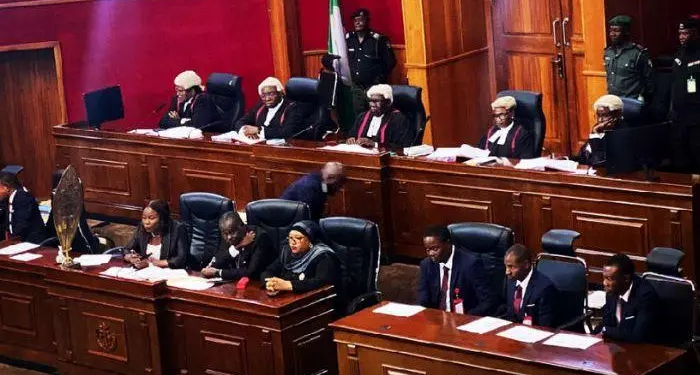
After PEPT Judgment, What’s Next For Nigeria’s Electoral System?

By Luminous Jannamike, Abuja

Following the outcome of the 2023 presidential election and the judgment of the Presidential Election Petitions Tribunal on Wednesday, Nigeria finds itself at a crucial juncture.

The focus has now shifted to how Nigeria can improve its electoral system to foster a stronger democracy. Saturday Vanguard shares the opinions and insights of key stakeholders, highlighting their
recommendations for reform.

Amend 1999 Constitution, Electoral Act —Obi, ICPC’s Head of External Cooperation Kingsley Obi, the Head of External Cooperation at ICPC, shared his perspective on the matter.

He expressed his disappointment, stating that it was a missed opportunity for greatness and progress in Nigeria’s 24 years of democracy.

He attributed this setback to the failure of politicians, INEC, the government, and the masses to abide by the rules. Obi emphasized the significance of addressing the 2023 elections’ outcome as a critical national issue, urging decisive steps to be taken.

“I speak as one who voted with great expectations and also encouraged others to do so. We monitored theelection and submitted a report,” he said.

When asked about his vision for Nigeria’s future, Obi passionately replied, “I love the dreams of the future more than the history of the past.” His words reflected a strong belief in the potential of Nigeria to overcome its challenges and forge a better future. So, what is the way forward? He agreed that amending the Electoral Act and the 1999 Constitution are a crucial step.

He said, “The Electoral Act should be amended to include sanctions for the following: false declaration of election results,requiring government appointees to resign before joining a campaign council, punishment for not uploading election results in realtime, penalties for the late arrival of materials, sanctions against law enforcement agents who aid in election rigging or disruption, and a revised election timetable for both parliament and the executive branch.

Additionally, the Constitution should be amended to include the following provisions: no swearing-in of elected officials until all pending cases are resolved, the implementation of time limits for the resolution of election-related cases, similar to the system in Kenya, the establishment of a mandatory schedule for election-related cases with a timeline for their conclusion, and the creation of an independent electoral offenses commission.

Similarly, Deji Adeyanju, a renowned activist and legal scholar, argues that the Electoral Act (2022), as amended, is not yet watertight. He suggests that further amendments are necessary to enforce the mandatory electronic transmission of election results by the Independent National Electoral Commission (INEC).

Adeyanju said, “Whenever discretionary powers are bestowed upon an individual or institution, that entity is free to exercise their discretion in any manner they choose. We must amend the electoral act to require the compulsory electronic transmission of results from polling units on Election Day. I have previously expressed my concern when people were celebrating the amendment of the electoral act, as it granted INEC discretionary powers regarding the electronic transmission of results.

We must further amend the Electoral Act to mandate exclusively electronic transmission of results for all elections in the country.”

Let truth be prioritized in managing future elections — Okutepa, SAN
ToSenior Advocate of Nigeria (SAN), Jibrin Okutepa, Nigeria’s democracy is at a crossroads. He believes that although the country has made progress over the years, there are still several areas that require urgent attention.

According to Okutepa, Nigerians are well aware of the excruciating pains experienced by petitioners in dealing with the Independent National Electoral Commission (INEC). He suggests that Nigeria would greatly benefit from consistently upholding truth in the management of its affairs.

“Nigerians know the excruciating pains petitioners go through in the hands of INEC and how pink copies of election results are not always given to agents of parties in most cases. Nigeria will do itself well if at all times it upholds truth in the running of its affairs,” he said.

INEC independent, accountable to Nigerians —Effiong
In the same vein, Barr Inibehe Effiong, a public interest lawyer, suggests that while INEC is independent, it is essential to hold it accountable for violating its own guidelines in order to enhance the electoral system. He made this statement in light of the judgement of the Presidential Election Petition Court, which affirmed that INEC cannot be compelled to transmit its results electronically, despite making a promise to Nigerians to do so prior to the elections.

Effiong argued that, “Public funds were allocated for this purpose, and INEC relied on the integrity of the entire election through the use of BVAS for accreditation and result transmission. However, INEC has not faced condemnation or criticism for violating its own guidelines and promises. I do not believe that this is the appropriate behavior for a country that seeks to be taken seriously.”

Role of technology in electoral process cannot be overlooked —Dr. Karim, NISS Director
Dr. A. A. Karim, Director of Research Estimate and Library Services/ Head of the Postgraduate School at the National Institute of Security Studies, Abuja, believes that leveraging technology can enhance transparency and efficiency.

He said, “There is a need for INEC to improve the deployment of BVAS and technology to prevent failures in future elections. INEC’s technology experts and consultants should study BVAS and work on enhancing its workability and security, especially in the area of result transmission, leading up to the 2027 general elections.

This should be done in collaboration with all stakeholders, including technical suppliers and partners. Special security measures should be implemented to protect BVAS machines at polling units, in order to prevent incidents of snatching and theft by thugs or hoodlums.

There should be improved training and retraining of BVAS operators, as well as the deployment of a technical team to promptly address cases of malfunction.”

Strategic implementation of cashless policy, civic education ‘ll help —Acting EFCC
Chairman, Chukkol For Abdulkarim Chukkol, the Acting Chairman of the Economic and Financial Crimes Commission (EFCC), voter education and civic engagement, particularly in countering vote-trading, along with the strategic implementation of a cashless policy, are critical components in strengthening Nigeria’s electoral system.

He emphasized that, “we must continue to raise awareness among Nigerian voters about the detrimental effects of vote-buying, as it contributes to poor governance.

Furthermore, we should advocate for significant reforms to impose stricter penalties for vote-trading. If the cashless policy is strategically planned and implemented, itwill serve as a valuable tool in curbing vote-buying.”

We must build capacity to manage election crises—Akobundu, AUDA-NEPAD boss
According to Princess Gloria Akobundu, the Chief Executive Officer of African Union Development Agency (AUDA-NEPAD, Nigeria must invest in building the capacity of stakeholders to manage electoral crises.

“We must assess how well the campaigns and sensitization efforts prior to the election have influenced the peaceful conduct of elections in Nigeria, and also enhance the capacity of the relevant stakeholders in managing pre- and post-electoral crises,” she stated.

Nigeria’s quest for a better democracy requires comprehensive reforms to the electoral system. The outcome of the 2023 presidential election and subsequent judgment have shed light on the urgent need for change. By amending the Electoral Act, granting more autonomy to INEC, empowering citizens through education, and fostering a culture of integrity in politics amongst other reforms, Nigeria can pave the way for a brighter democratic future.

As Kingsley Obi, ICPC’s Head of External Cooperation, aptly stated, ‘I love the dreams of the future more than the history of the past’, it is time for Nigerians to come together and work towards achieving those dreams.

SOURCE: Vanguard

In the Shadow of the Crescent: The Tumultuous Terrain of Nigeria’s Security Landscape

By

Ashineko Ayinya

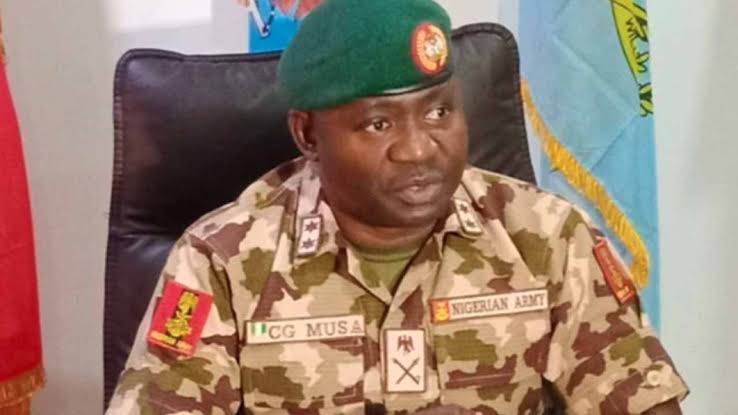
As Nigeria grapples with the specter of its security challenges, the appointment of Christopher Gwabin Musa, an Atyap man, as the Chief of Defense staff has sparked a maelstrom of criticism. The outcry, primarily from Northern clerics and politically motivated instigators, exposes the deep-seated ethnic and religious fissures within the nation. This article explores these tensions, the political maneuverings around them, and their implications for the nation’s security.

Since the ascension of Christopher Musa, an Atyap, to the mantle of Chief of Defense staff in Nigeria, a veritable Pandora’s Box of controversy has been unlatched. A chorus of Northern clerics, spurred on by Machiavellian politicians seeking to portray themselves as the guardians of Islam, have been vocal in their dissent. In a sweeping act of political grandstanding, they targeted the Atyap Development Association in their twilight hours of power.

President Bola Ahmed Tinubu, like Odysseus navigating the tumultuous seas, sincerely seeks to shore up the security of his nation. Appointments like Musa’s are born out of merit and necessity, a lesson learned from the previous regime’s missteps, which led to a veritable Trojan Horse situation with Muslims monopolizing all strategic security positions, resulting in the country’s descent into its darkest period of insecurity. President Tinubu’s move may be more of a strategic maneuver than a show of favoritism towards Christians. In matters of national security, religious and ethnic affiliations should be relegated to the background.

Yet, these clerics, like sirens calling out to a ship, are desperate to discredit and possibly pressure President Tinubu into retracting the appointment. They have propagated the unfounded claim that Musa, who has merely been in position for two months, is planning a purge of Hausas, beginning in Zaria. Their references to the 1992 Zangon Kataf crisis, a dark chapter in Kaduna State’s history, are one-sided and exclude the instigations that sparked the conflict. They demand the execution of General Zamani Lekwot, rekindling old tensions and risking the resurgence of conflict.

Amidst the realm of political discourse, President Bola Ahmed Tinubu’s cautionary words, foretelling the potential for ECOWAS’ martial intervention against the coupists in Niger, suffered a lamentable misinterpretation. Like whispers carried by the winds of ancient myths, some insinuated that the astute military chief, donning the mantle of ECOWAS grand commander, harbored a cunning stratagem to set ablaze the passions of conflict, starting with the noble Hausa populace ensconced in Zaria’s storied embrace. This misconception, akin to the tragic tales of old, took root in the intertwined narratives of Niger and Northern Nigeria, where any hostile act towards Niger was viewed as a direct assault upon the very essence of Northern Nigeria, igniting a chorus of collective anguish and invoking the echoes of an enduring bond.

The clerics’ selective amnesia extends to the security challenges faced under the Buhari administration. They conveniently overlook the rampant kidnappings and killings unless someone from a non-Muslim background assumes a position of authority. They remain silent on the violence, abductions, forced marriages committed by Fulani individuals against their fellow Hausas. Their selective outrage and consciousness paint a puzzling picture.

The discord surrounding Musa’s appointment is symptomatic of the complex interplay of religion, ethnicity, and politics in Nigeria’s security landscape. These complications, if left unchecked, could further destabilize the already tenuous security situation. It is therefore crucial for the government and its citizens to rise above the divisive rhetoric and work towards a harmonious and secure Nigeria.

About the Author

Ashineko Ayinya is a writer, researcher, and mathematician from Southern Kaduna. In 2018, he faced persecution from the government led by El-Rufai and narrowly escaped with his life. As a result, he is currently an internally displaced person. He sustains himself amidst the economic challenges in the country through his professional writing.

Footnotes:

  • Christopher Gwabin Musa: General Christopher Gwabin Musa OFR, an Atyap man, (born 25 December 1967) is a Nigerian Army general who is the 18th Chief of Defence Staff of Nigeria. He was appointed by President Bola Tinubu on 19 June 2023.
  • Zangon Kataf Crisis: The Zangon Kataf Crisis refers to a violent ethnic conflict that occurred in Zangon Kataf, Kaduna State, Nigeria, in the early 1990s. The conflict involved clashes between the Kataf ethnic group and the Hausa-Fulani Muslim settlers, driven by issues of land ownership, political representation, and religious tensions. The crisis resulted in casualties, property destruction, and mass displacement. Major General Zamani Lekwot, a key figure in the Nigerian Army, was implicated in the crisis and faced legal consequences, highlighting the complexity of managing communal tensions and the need for effective conflict resolution strategies.
  • Zamani Lekwot: Zamani Lekwot (1947-date), an Atyap man, was a Nigerian military officer known for his role in peacekeeping operations, particularly during the ECOMOG intervention in Liberia and Sierra Leone. He rose to the rank of Major General in the Nigerian Army and served as the Force Commander of the Nigerian contingent in ECOMOG. However, Lekwot’s career was marred by controversy when he was implicated in the Zangon Kataf communal clashes in Nigeria and sentenced to death, later commuted to life imprisonment. Despite the controversies surrounding him, Lekwot’s contributions to peacekeeping efforts and his complex legacy remain significant.
Navigating the Murky Political Waters of Kaduna: Senator Katung’s Discretion and El-Rufai’s Legacy

By

Ashineko Ayinya

The delicate dance of politics in Nigeria unravels yet another layer as objections are raised against El-Rufai’s nomination, bringing to light the importance of Senator Sunny Masha Katung’s choices in the red chambers. This narrative draws from the biblical tale of David and Goliath, jostling between the commendable efforts of the underdog and the looming shadow of a once-powerful king. Could this be the acid test against the senator?

While the criticisms levied against El-Rufai’s nomination hold water, it behooves us to also respect the discretionary judgement of Senator Sunny Masha Katung in choosing his battles, akin to Odysseus navigating the treacherous waters of Scylla and Charybdis. The laudable work of House of Justice with Gloria Ballason, wielding her pen as a sword in her writings against the former governor, echoes the biblical story of Judith and Holofernes, an enduring testament to the power of truth and justice. Similarly, the Herculean efforts put forth by the student group are deserving of praise.

Furthermore, in line with Nigeria’s constitutional commitment to diversity, reminiscent of the harmonious symphony of the Corinthian Body, the ministerial appointment ideally should be bequeathed to a representative from Southern Kaduna.

Nonetheless, let us not forget to grant Senator Katung his proverbial ‘Pound of Flesh’. If he is deemed trustworthy enough to bear the mantle of his position, his judgement should surely be held in the same regard. As a senator, he likely possesses a trove of information beyond the reach of the general populace, especially concerning matters of such political weight. His decisions, therefore, should be perceived as informed ones.

This standpoint does not undermine the voice of the public or trivialize the significance of expressing discontent against the senator where necessary – it would at least lend him an ear to the ground. But, let us also acknowledge the Senator’s capability to steer the ship of politics as he deems fit. It is my belief that he carries the interests of his people within his heart, albeit his approach may be more of restitution than seeking retribution.

It is high time we rise, like the phoenix from the ashes, above the malevolence perpetrated by El-Rufai. By transcending the negativity of El-Rufai’s past deeds, we can focus our collective energy on areas where it truly matters.

We must conserve our strength for building and healing our communities, rather than expending it on the ghost of El-Rufai’s misdeeds. Just as the sun eventually rises, illuminating the darkest corners of the night, so too must we look forward to a brighter future, guided by the wisdom and discretion of our chosen leaders.

About the Author
Ashineko Ayinya is a writer, a researcher and a mathematician of Southern Kaduna extraction who was persecuted by El-Rufai and narrowly excaped with his life in 2018. He is presently an internally displaced person and survives the current economic travails in the country through professional writing.

The impact of Nigeria’s interference with Niger on the Middle Belt.

By Tislo Pam

Over the course of the last three days, news of impending attacks by the Nigerian military on Niger have filled the airwaves. The coup which happened on the 27th of July, 2023, has had the world speaking especially considering the players who are involved. Think pieces and articles have been written opinions have been given on the situation. However, the real cause of the issue must be discussed for what they really are.

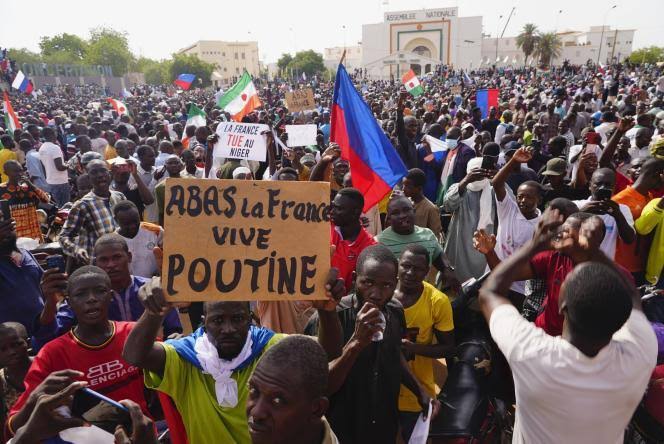
The interference from the French who have held on to them by the apron strings since the end of colonialism. Nigeriens consider the interference of France as imposing and exploitative as their fortunes have not improved despite their proximity to the French.

In videos showing the celebrations of citizens in the streets of Niger, they expressed similar sentiments on the presence of France has been detrimental to them, chanting phrases that indicate the dislike for France.
The issue has been discussed and has hit the crescendo of concern with the Nigerian public which are largely concerned about a lot of things should this happen: the impending embarrassment that awaits the Nigerian army and its people in general as details show they have the support of the Russians; the doggedness of the new my sworn in President Bola Tinubu whose legitimacy is being challenged at the court with other contestants and the potential influx of unwanted migrants into the country particularly the Middle Belt. This concern is one that worries many from the region because in time past, numbers have been a major problem in determining power rotation and politics.

A potential migrants influx into the region does two things: heightens the conflicts that have bedevilled the region and give the upper hand to settlers of which the current settlers of Fulani descent share affinity with. In relation to the ousting of Bazoum, the Nigerian president who was deposed by the Nigerian military, the core north has shown its immense displeasure at the treatment of the man.

For a lot of core northerners in Northern Nigeria, sympathy is at an all time high for Nigeriens with whom they share ancestral affinity with. With an already porous border in the north, movement of migrants will occur unchallenged. Porous borders can mean access to unscrupulous migrants who can cause further harm, especially since Nigeria has fought against insurgency against Boko Haram and Fulani herders. With a very tumultuous history of fighting insurgents and a clear struggle to keep them at bay, this could result to full scale conflict of heightened proportions.

Migrants especially in a place like Nigeria cannot be kept out and as such will migrate down south which would require them going through the Middle Belt. What we will be dealing with essentially will be refuelled agitations of settlers in the Middle Belt as migrants with who they deem brothers, to secure political positions and challenge the place of natives.

This sympathy could become an Achilles Heel for natives who have hundred thousands of natives who have been displaced and settled elsewhere. Villages which have been razed down and lay empty, will then be reoccupied by these foreigners and a slow and gradual attempt at rewriting the history of the Middle Belt. This is a fight for existence and survival.

The Middle Belt should not ignore the impending dangers of the coup that intends to destroy what we have as a people, a region and most of all, an identity.

el-Rufai: Haunted By The Past

BY NASIRU JAGABA

In recent times, social media has been awash with vitriolic attacks against the elders of Southern Kaduna. These elders stand accused of fostering hatred and antagonism towards the former governor of Kaduna State, Mallam Nasir Ahmad el-Rufai. As one sifts through the deluge of articles regarding this issue, one has to wonder what the orchestrators of this smear campaign hope to achieve, and why they have chosen to act now, after el-Rufai’s tenure.

For the sake of clarity, it is important to understand that the people of Southern Kaduna have always been peaceful, law-abiding, dedicated, and hard-working. Despite enduring systemic marginalisation and neglect, they have consistently remained supportive and law-abiding citizens. However, the recent campaign against their elders isn’t just baseless, but also appears to be instigated. If left unchecked, these false narratives could spread and potentially be mistaken for the truth.

In a delightful twist of irony, this campaign against our leaders emerged shortly after the former Kaduna State governor delivered a keynote address at the book launch and retirement event in honour of Professor Ishaq Akintola, the founder of Muslim Rights Concern (MURIC) and an erratic and confused fanatic stocking the embers of division and disharmony with many destructive and senseless press releases. In his address, el-Rufai reportedly stated that elders from the southern part of the state humiliated his deputies, who hailed from the same region. He then painted a narrative of himself as a victim. It’s intriguing to note that this narrative conveniently emerged at an event where MURIC honored him with an award as Defender of the Faith.

If there’s any party that could justifiably accuse another of fostering hatred and antagonism, it would be the people of Southern Kaduna and not the governor. They survived the tumultuous eight-year tenure of el-Rufai under whose watch their communities were decimated and thousands of their people killed. Yet, despite remaining silent and allowing posterity to judge the former governor’s actions, he seems intent on rewriting the narrative that portrays the Southern Kaduna people in a negative light.

It is interesting to note that despite the 7th Senate’s pronouncement that el-Rufai was unfit for public office; the people of Southern Kaduna extended nothing but love and support towards him during his 2014 campaign. It’s almost comedy that el-Rufai now feels justified to accuse the Southern Kaduna elders of hatred and antagonism towards him. In 2015, the people of Southern Kaduna broke a longstanding tradition of supporting the Peoples Democratic Party (PDP) to cast their votes for him. Without their support, his governorship ambition would have remained a pipe dream.

The tenure of the former governor was characterised by deception and neglect, particularly in the manner he handled the security situation in Southern Kaduna. It’s almost farcical that his solution to the 2016 security threats was to visit the terrorists and give them money, supposedly to persuade them to stop their attacks. Instead, the attacks worsened, as if he had inadvertently empowered them for more attacks. Moreover, his response to the cries of the people was to offer excuses for the terrorists, rather than sympathise with the victims.

In terms of projects, the lion’s share of the over $350 million (N270 billion) World Bank loan that the former governor secured for Kaduna State was spent mostly on Muslim-dominated areas, with less than N5 billion allocated to the 12 Local Government Areas (LGAs) of Southern Kaduna. Even within these LGAs, the few projects he initiated were centered in Muslim-majority areas, leaving the Christian-populated areas in complete neglect and abandonment.

The governor’s appointments to public offices were also a source of contention. During his tenure, the entire top management positions of the Kaduna State University (KASU) were Muslims, and mostly non-Southern Kaduna. This blatant disregard for diversity was almost comical, if not for the stark reality of its implications. The list of top positions within the university, from the Vice Chancellor down to departmental directors, was dominated by Muslims. The staff recruitment ratio, student admission ratio, student union government leaders, and class representative leaders all tilted heavily towards Muslims. In fact, there were six mosques within the university, but not a single Christian chapel.

Below are top management positions of KASU that was a product of the el-Rufai years as governor of the state:

Vice Chancellor – Muslim
Deputy VC Admin. – Muslim
Deputy VC Academic – Muslim
Registrar – Muslim
Bursar – Muslim
University Librarian – Muslim
Chief Security Officer – Muslim
Dir. Academy Planning – Muslim
DIr. Physical Planning – Muslim
Dean Student Affairs – Muslim
Director ICT- Muslim
Pro Chancellor – Muslim
Dir. University Advancement – Muslim
Number of Mosques: = 6

Number of Christian Chapel: = 0

Staff Recruitment Ratio:

Muslims = 70%

Christians = 30%

Student Admission Ratio:

Muslims= 75%

Christians = 25%

Student Union Government Leaders

Muslims = 94%

Christians =06%

Class Reps. Leaders

Muslims = 97%

Christians = 03%

With such a track record, it’s almost amusing that el-Rufai has the audacity to accuse the Southern Kaduna elders of being hateful and antagonistic. It is clear that if anyone has a right to feel antagonised or hated, it is the people of Southern Kaduna, not the former governor who exit made Kaduna citizens to heave a sigh of relief.

It’s a tragic -comedy that el-Rufai, a man whose recklessness with words is well-documented, is now trying to paint himself as the victim. The irony is that his attempts to rewrite his legacy are being aided by those who should be working towards unity and peace in the aftermath of his divisive reign.

Ultimately, the former governor’s attempts to regain relevance are doomed to fail. His past actions against the people of Southern Kaduna can’t be easily forgotten. No amount of linguistic gymnastics or social media campaigns, including sponsored articles, can alter the fact that he is now reaping the consequences of his actions. Indeed, one might call it poetic justice.

In the grand theatre of political rhetoric, his attempts to cast himself as the victim are nothing short of a farcical pantomime. He seems to be peddling a narrative that paints him as a misunderstood leader, grievously wronged by the same people he evidently shortchanged and marginalised.

And yet, the evidence of his misdeeds is as clear as daylight. The disproportionate allocation of resources and projects, the blatant favoritism in the university appointments, and his apathetic response to the security threats faced by the people of Southern Kaduna are all stark reminders of his leadership deficits anchored on religious and ethnic discrimination.

In a twist worthy of a Shakespearean tragedy, el-Rufai seems to have forgotten the old adage, “What goes around, comes around”. His administration’s blatant bias against the Southern Kaduna people is akin to sowing seeds of discord and neglect. Now, as he faces the harvest of rising public discontent and criticism, he seeks to deflect blame and paint himself as the victim.

But the people of Southern Kaduna are neither fooled nor swayed by these attempts. Their resilience and unity in the face of adversity are a testament to their strength and character. The former governor’s attempts at revisionist history are desperate bids to salvage a tarnished reputation at the expense of Southern Kaduna people.

The irony is that, while he attempts to smear the reputation of Southern Kaduna elders, he only succeeds in further tarnishing his own battered reputation. His actions have revealed his true character, and no amount of deflection or blame shifting can change that. The people of Southern Kaduna, and indeed, the rest of the world, are not blind to this reality.

In conclusion, the former governor’s attempts to reframe his legacy are akin to trying to paint a crumbling mansion in bright colors – it may look different from afar, but up close, the cracks are still visible. The people of Southern Kaduna, and Nigerians at large, see his actions for what they are – a desperate attempt to rewrite history and salvage his tarnished image.

However, as the saying goes, “You can’t make a silk purse out of a sow’s ear”. No matter how hard he tries, the truth of el-Rufai’s legacy of injustice is very clear for all to see.

Jagaba is the former National Youth Leader of Southern Kaduna Peoples Union (SOKAPU).

Unraveling the Islamization Debate in Nigeria: Understanding Perspectives, Extremism, and the Secular State 

By

Patrick Anum

For years, Nigeria has been engaged in discussions about the perceived threat of Islamization. This topic has sparked diverse viewpoints, with some dismissing it as mere conspiracy theories, while others express genuine concerns. 

Additionally, there are individuals within the Muslim community who view it through the lens of intolerance and Islamophobia. In my latest column for the Middle Belt Times, I delve into this multifaceted issue, aiming to shed light on the different aspects surrounding the Islamization debate. 

One observation I have made is that many Muslims in Nigeria adopt a defensive stance, which, in my opinion, is unnecessary. There appears to be a misunderstanding regarding the nature of what such a threat would most likely entail. 

While ordinary Muslims believe it to be the spread of regular Islam, those discussing it refer to fundamentalist doctrines that even Muslims in Nigeria may find hard to accept. Boko Haram serves as a significant case study, as it became too extreme even for Ansaru and Islamic State, leading to a breakaway. 

This highlights that these ideologies are not aligned with regular Islamic doctrines. And if a group like Islamic State cannot stomach these doctrines, how can one imagine muslims in Nigeria would fare? Many experts like Col Adewunmi have attributed this problem to a certain elite in the country while other experts have also attributed the deliberate efforts to keep the population uneducated as an avenue which creates a fertile ground for radicalism. 

Intolerance in our diverse society is an alarming indicator that society is veering off course. The Yoruba Muslims’ role in the 1979 constitutional drafting committee exemplifies the importance of replicating diversity and incorporating tolerance not just in society but also in politics. 

From a perspective of tolerance, we witness fewer individuals embracing the ideologies of the ’70s, which could be problematic in a multicultural nation like ours with an example being the defense of the Muslim/Muslim ticket in the just concluded 2023 Presidential elections. 

The rise of groups like ISWAP, Ansaru, and Boko Haram, with their growing local recruitment, underscores the consequences of unintentional educational policies in combating radicalism. I had the opportunity to speak with an Algerian Muslim who revealed that their government’s approach to extremism has been swift. 

In Nigeria, however, it festers due to the interests of certain elites who favor such an environment, and they are not shy about this fact. It is important to emphasize that this issue is nota debate about the Christians versus Muslims or Traditionalists and should not be viewed in these lenses; however it should be viewed as a conversation around combating the spread of radical ideologies.

Given Nigeria’s status as a secular state, it is crucial for Muslims to take the lead in ensuring that all ethnic gruops and people of diverse religious affiliations feel involved in society and governance and that the country remains non-aligned with religious organizations, be it Christian or Muslim. 

These issues if not adequately addressed have the potential to tear at the fabric of our nation. I still recall the sense of impending doom when Ibrahim Babangida secretly joined the OIC. President Buhari’s continued alignment with such organizations highlights the absence of steadfast moral codes among Nigerian leaders. It becomes evident that if there is no decentralization, there is a possibility that someone in power may seek to impose hegemony and implement radical ideologies favoring their faith or religion in the future considering the number of out of school children and high levels of illiteracy in the country. 

One troubling aspect of radicalism is that it often begins with targeting individuals of other faiths before turning on those within the same faith. This highlights the urgency of addressing this issue collectively. But more importantly, these fundamentalists being linked or allegedly sponsored by elite is worrisome in our country and Nigerians would need to have very serious and honest conversations about these issues going forward.

In light of the ongoing Islamization debate in Nigeria, it becomes imperative for all citizens to stand united against any form of radicalist ideology. The preservation of secularism should be our shared priority, transcending religious and cultural boundaries. 

This call to action stems from the realization that radicalist ideologies pose a significant threat to the peace and harmony of our diverse nation. It is crucial that we reject these extremist narratives and embrace a path that upholds our secular values. 

While acknowledging the existence of differing opinions on the Islamization issue, it is essential to distinguish between regular Islam and fundamentalist doctrines. Nigerian Muslims, who make up a significant portion of our population, often embrace Islam as a peaceful and inclusive religion. 

However, the concerns raised regarding Islamization are primarily directed at the propagation of radical and intolerant ideologies and must not be confused in any other regard. 

 As such, moving forward, we must use tolerance as a litmus test in accessing the health of Nigeria with no exceptions.

The 1999 Constitution Makes Nigerians Subjects Not Citizens

By

Ndidi Uwechue

The aim of this article is to open up the thinking ability of young Nigerians who continue to be manipulated by their elders whom they look up to for guidance. Having successfully dragged young people to give themselves to elections 2023 instead of first correcting the faulty constitutional arrangements of the Nigeria Union, using the misleading slogan that “a new Nigeria is possible” under the fraud called 1999 Constitution foisted upon Nigerians, now the same cunning individuals have started a new deception over the meaning of “citizen”.

One such influencer is a celebrity lawyer who helped to drag his many followers to those doomed elections, and rather than now tell his depressed and disappointed followers that their vote never counts in unitary Nigeria, but it is their act of going to vote that is needed to be seen by the watching world, he is leading them down another dark byway this time telling them that elections having been rigged, they can still salvage something by reclaiming their citizenship!

Just because a word can be applied in Europe, Australia and North America does not always mean that it is applicable in Nigeria. Such are the words “citizen” and “citizenship”. Nigeria is an artificial country created and maintained by a unitary Instrument of Governance, deceitfully called “1999 Constitution” that does not have the mandate of Nigerians because they never made it or agreed it. Such is this place called “Nigeria”. It is the owners of that imposed Forgery, ie the 1999 Constitution who are the lords of Nigeria and who by force and deception keep Nigerians inside the unitary Union they created. We know who they are, they are the immigrant settler Fulani, helped into a dominating position by the departing British around the time of Independence in 1960. Making no secret of their agenda, Ahmadu Bello the then Premier of the Northern Region, declared that henceforth Nigeria would be “ruthlessly” turned into the “estate” of the Fulani, and Nigerians would be a “conquered” people – as reported on 12th October 1960. That 1999 Constitution is the Instrument that brings about the Fulanization Agenda declared by Ahmadu Bello: it overrides Sovereignty, and hijacks the Self-Determination of indigenous Ethnic Nations. HOW then can Nigerians ever think to apply the word “citizen” of Nigeria to themselves? As a consequence of that 1999 Constitution Nigerians are a CONQUERED people, so cannot truthfully be referred to as “citizens” of Nigeria. What they are, are SUBJECTS of Nigeria.

The word “subject” has Latin roots. “Sub” means under, and “jacio/jacere” means to throw. So subject means someone “thrown under” something or someone else. Thus, a subject is someone who is under the power of another. To put it plainly, as long as Nigerians accept the fraud called 1999 Constitution to govern them, since it was not made or agreed by them, they place themselves under the power of the Fulani Caliphate who are the owners of that 1999 Constitution, and, in so doing, Nigerians are in reality subjects of the Fulani’s unitary Nigeria not citizens in the real sense.

We can use an example from history to illustrate how Nigerians are subjects of Nigeria as presently constituted, not citizens by looking at the country that became the United States of America, quoting from and using material from The Difference Between A Citizen And A Subject by W R Miller, 2015.

With the Declaration of Independence by Congress, on 4th July 1776, “a nation was born in a day”, so those who had been subjects of the English Crown now became citizens of the free independent states that had now confederated together and started a new political association.

“The United States are a new nation, or political society, formed at first by the Declaration of Independence, out of those British subjects in America, who were thrown out of royal protection by Act of Parliament, passed in December, 1775. A citizen of the United States, means a member of this new nation. The principle of government being radically changed by the revolution, the political character of the people was also changed from subjects to citizens.

The difference is immense. Subject… means one who is under the power of another; but a citizen is an unit of a mass of free people, who, collectively, possess Sovereignty.

Subjects look up to a master, but citizens are so far equal, that none have hereditary rights superior to others. Each citizen of a free state contains, within himself, by nature and the Constitution, as much of the common Sovereignty as another…”

Despite being warned by NINAS that Nigerians should FIRST correct the faulty constitutional basis of the artificial Nigeria Union, Nigerians went headlong towards the sham elections 2023. As predicted, their problems have multiplied, and the existential threats they face from the Fulani Conquest Agenda have increased. So what should Nigerians do now? The solution remains what it has been since 1999 when the 1999 Caliphate Constitution was foisted upon Nigerians. The solution is therefore to TERMINATE the operation of that 1999 Constitution. The NINAS Proposition to do so is an ORDERLY PROCESS based on United Nations instruments (eg UNDRIP) and international law, and has been on the Table since 16 December 2020 when the Constitutional Force Majeure was Declared. It involves Transitioning to Renegotiate the Nigeria Union. Yes, sham elections have taken place, but Nigerians can stop further crises and further insecurity by even now Rejecting and Repudiating the fraudulent and illegitimate 1999 Constitution then going to Transitioning.

We should also consider why so many Nigerians are gullible and so easily deceived by influencers and by the Fulani Caliphate’s willing tools. An elderly gentleman has answered that for us, he said that it is because of a “sheer unwillingness to learn”. Reader, especially if you are a young Nigerian, it is hoped that is not your attitude, but that after reading this article you will do your own Research about the grand swindle called 1999 Constitution

Ndidi Uwechue is a British citizen with Igbo heritage from the Lower Niger Bloc. She is a retired Metropolitan (London) Police Officer, she is a signatory to the Constitutional Force Majeure, and she writes from Abuja.

The 1999 Nigerian Constitution is like the system of Victorian treaties of the past!

By Ndidi Uwechue

Although indigenous peoples of Nigeria curse Frederick Lugard, the Amalgamator, before him was an equally unjust man also with racial supremacist views: the merchant George Dashwood Taubman Goldie who formed the Royal Niger Company (RNC), originally the United African Company then the National African Company. Even before obtaining a Royal Charter that gave Goldie and his company enormous powers, Goldie had managed to get Treaties signed by native Traditional Rulers. Some would have signed those Treaties under threats (“by gunpoint”) but some would have happily signed them for personal gain (ie the willing tools). By these Treaties, Traditional Rulers handed over the Sovereignty of their People to Goldie and his RNC. Quoting from Royal Niger Company by nigerianscholars.com: 

Even before gaining its charter, the [Royal Niger] Company signed treaties with local leaders which granted it broad Sovereign powers. One 1885 treaty read:

We, the undersigned King and Chiefs […] with the view to the bettering of the condition of our country and people, do this day cede to the National Africa Company (Limited), their heirs and assigns, forever, the whole of our territory […] We also give the said National African Company (Limited) full power to settle all native disputes arising from any cause whatever, and we pledge ourselves not to enter into any war with other tribes without the sanction of the said National Africa Company (Limited).

We also understand that the said National African Company (limited) have full power to mine, farm, and build in any portion of our territory. We bind ourselves not to have any intercourse with any strangers or foreigners except through the said national African Company (Limited), and we give the said National African Company (Limited) full power to exclude all other strangers and foreigners from their territory at their discretion.

In consideration of the foregoing, the said National African Company (Limited) bind themselves not to interfere with any of the native laws or customs of the country, consistently with the maintenance of order and good government … [and] agree to pay native owners of land a reasonable amount for any portion they may require.

The said National African Company (Limited) bind themselves to protect the said King and Chiefs from the attacks of any neighbouring tribes (Ibid.).

The company considered itself the sole legitimate government of the area, with executive, legislative and judicial powers, all subordinate to the rule of a council created by the company board of directors in London…”

While the Nigerian reader may be shocked at the text of this example of a Treaty in Victorian times, TODAY the 1999 Constitution, a known Forgery foisted upon Nigerians achieves the very same thing! Here are some ways the 1999 Constitution robs Nigerians. Firstly, by the false claims in its Preamble, the Sovereignty and Self-Determination of indigenous Ethnic Nations are hijacked, and it is made to look as if Ethnic Nations put their signatures to it.

Secondly, through the 68-item Exclusive List (Second Schedule, Part One) indigenous Ethnic Nations lose control of their lands and the valuable resources in them. 

Moreover, since Arms and Ammunition are in this Exclusive List, Ethnic Nations cannot protect themselves against armed invaders, and must depend on Central Government, and if such government has been accused of being complicit with the genocidal insecurity as President Buhari has been, indigenous peoples then face a serious existential threat.

Thirdly, although in Chapter 2 of that 1999 Constitution, welfare and security are promised to Nigerians, these are cunningly ousted in Chapter 1 by section 6. (6)(c).

Just as those Treaties of old were intended to steal from indigenous peoples, and dispossess them, those are also the goals of the illegitimate 1999 Constitution, whose beneficiaries are the Fulani, rigged into dominating power by the departing British in 1960. As the NINAS Alliance of indigenous Ethnic Nations of the South and Middle Belt has identified, that 1999 Constitution is the instrument used to rob indigenous Ethnic Nations, and also bring about Ahmadu Bello’s Declaration of 1960 that Nigeria would be converted into the “estate” of the immigrant settler Fulani. 

Sovereignty is defined as the most essential attribute of an indigenous Ethnic nation in its ancestral land, meaning that it has dominion and supremacy to control its present and its future. Therefore, playing the role of the “ever ignorant African” is not advisable in this, the 21st century. So it is not acceptable for indigenous Ethnic Nations of Nigeria to continue to allow the 1999 Constitution to rob them of their inalienable position of Sovereignty, and power of Self-Determination. The same way Nigerians are today horrified that (somehow) those Victorian-age Treaties got signed, is the same way future generations will be horrified that indigenous Ethnic Nations allowed the operation of a Forgery, that illegitimate 1999 Constitution, over them, their resources, their lands, and their future. Therefore, terminating the operation of the 1999 Constitution is a task that MUST be done! 

As at today, the 1999 Constitution has been Repudiated and a Constitutional Force Majeure declared. Not surprisingly, the Fulani-dominated government has refused to acknowledge this – a big mistake on their part because indigenous Ethnic Nations did not make or agree that 1999 Constitution, and therefore did not sign away their Sovereignty. What not just Nigerians, but the rest of West Africa deserve is that Unitary Nigeria, a Union of death maintained by gunpoint, be brought down in a peaceful and controlled manner, and then be Renegotiated using globally accepted tools, which is what the NINAS-template Transitioning Arrangement is about. The NINAS Propositions have been on the Table since 16 December 2020. 

Ndidi Uwechue is a British citizen with Igbo heritage from the Lower Niger Bloc. She is a retired Metropolitan (London) Police Officer, she is a signatory to the Constitutional Force Majeure, and she writes from Abuja.

Governors insisting on the continued circulation of old naira notes do so with the intention of utilizing them to buy votes – SAN

According to Senior Advocate of Nigeria Muiz Banire, the governors’ insistence on the continued use of all old naira notes as legal tender is an attempt to buy votes.

In order to “purchase voters’ conscience,” according to Banire, the governors planned to deceive the public into accepting the “already stocked old notes in their custody.”

“A lot of us might not understand why the Governors are insisting on the old notes being legal tender,” the SAN wrote.  “Certainly, it is not that they don’t know that they do not have the power to declare what is legal tender, neither did they not know that [they] … lack the capacity to enforce any Supreme Court judgment.

He claimed that their true intentions were to deceive naïve prospective voters into taking the already stocked old notes in their possession in order to buy voters’ conscience.

Banire advised people to demand “the true legal tender as stated by the apex bank” in all cases

In his letter, he advised prospective voters to either insist on the real legal cash declared by the apex bank or use any other form of payment they found acceptable.

But he cautioned, “Your conscience is not worth purchasing; if you must collect the money, which is primarily taken from the Treasury, insist on acceptable legal tender and still vote your conscience.