Middle Belt Killings: We Must Break This Cycle of Violence -Tinubu

President Bola Tinubu has expressed sadness and grief over the latest round of violence and killings in the Middle Belt states of Plateau and Benue.

The President condemned in strong terms the most recent internecine killings in Mangu Local Government Area of Plateau State and parts of Benue State.

President Tinubu in a statement signed by his spokesman, Dele Alake described the renewed killings in the two states as “most unfortunate”

The statement reads in parts;

“It is most unfortunate that in this orgy of violence, an innocent eight-month-old baby in Farin Lamba community of Vwang District, Jos South Local Government, died in a conflict she knew nothing about.

“A major consequence of perennial conflict is always the tragic loss of innocent lives.

“To build virile, peaceful and prosperous communities demand tolerance and forgiveness for every perceived wrongdoing,” the President said.

To rebuild trust and restore harmony to these conflict areas, President Tinubu urged community leaders, religious leaders, traditional rulers, socio-cultural organisations as well as the leadership of Arewa Consultative Forum, Jama’atu Nasril Islam, and Christian Association of Nigeria to work together to help foster genuine and long-lasting peace.

While reaffirming his government’s strong determination to stamp out violent crimes and all forms of criminalities everywhere in Nigeria, the President has directed security agencies to fish out the masterminds of the dastardly acts to face the full wrath of law.

He, however, charged the governments of Plateau and Benue States and emergency response agencies to provide support and immediate relief to victims who have been displaced as a result of the conflicts.

We inherited N307 billion debt from Lalong’s administration – Mutfwang

Governor Caleb Mutfwang of Plateau State has announced that his administration inherited a debt burden of N307 billion from the immediate past administration in the state.

The governor announced this shortly after receiving the reports of the committees on the Transition and Strategic Development Framework for Plateau State on Monday in Jos.

Prof. Ganyir Lombin headed the two committees.

The governor voiced his determination to take the state to greater heights despite its huge debt profile.

Mutfwang particularly expressed his readiness to tackle the current security challenges in the state.

“Throughout the campaign season, we were under the mistaken belief that our debt burden was around N200 billion; to hear that it is N307 billion is quite intimidating and worrisome,” he said.

The governor pledged to meticulously study the document presented to him, adding that further investigation would also be conducted with appropriate action taken after that.

Earlier, Lombin explained that some operational challenges prevented the two committees, which had appointees of the past administration as members, from jointly presenting their report.

He noted that the handover notes presented to the governor on May 29 differed from the agreed template developed by the joint committee.

Source: Daily Post

We Are Ready To Defend Our Faith – Traditionalists Warn Muslims In Kwara State, Ask Emir Of Ilorin To Stop Harassments

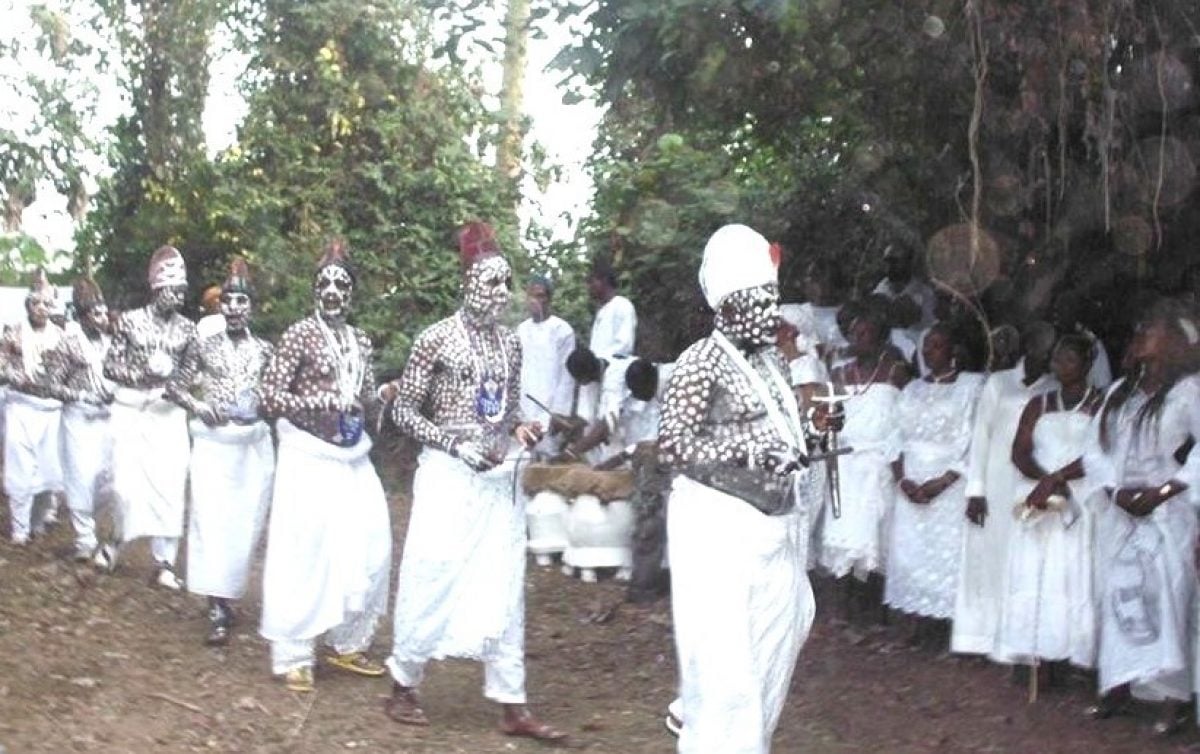
The umbrella body for all indigenous African religions, Ancient Religion Societies of African Descendants International Council, ARSADIC, has warned Islamic extremists in Ilorin, Kwara State, to stop further harassment and provoking its members in the state.

ARSADIC President, Aare Dr. Ifagbenusola Atanda, in a statement issued on Monday said this, following the unfolding events in last week in Ilorin, the state capital, where one of its members Omolara Ajesekemi, an Osun devotee and priestess, was intimidated over her faith by some Muslims.

He also warned that religious fundamentalism must not be encouraged in any form and in any part of the nation.

Atanda, who is also the Asiwaju Awo Agbaye, said it was wrong for a Muslim group, Majlisu Shabab li Ulamahu Society, and the spokesperson of the Emir of Ilorin, Abdulazeez Arowona, to threaten the priestess and to stop her from holding Isese festival in the town.

The statement read, “As long as we, the traditional religion adherents, know our boundary not to throw offensives at other faiths, we will resist any attempt to trample on our rights to freedom of religion and association as well spelt out in the Nigerian Constitution.

“We will never fold our arms and allow extremists in any guise deny us our God-given rights and supported by the laws of Nigeria as a secular state. We are quite aware that Ilorin, Kwara State is an integral part of Nigeria and we ready to defend our faith.

“Yeye Omolara Ajesekemi has our support at all times to practice her faith, the traditional religion, which bonds all of us together. And as the tenets of our faith have taught us to be pious, be law-abiding, accommodating of other religions and value humanity, we will refuse to be intimidated and humiliated by any group or anybody.”

He, therefore, called on the State Government under the leadership of Governor AbdulRahman AbdulRazaq and all security agencies to intervene and live up to their constitutional duties of protecting lives and property.

Source: Saharareporters

How southern Kaduna ‘elders’ humiliated my deputies – El-Rufai

Nasir El Rufai, the immediate former governor of Kaduna State, said elders from the southern part of the state humiliated his deputies who were from the zone.

Mr El Rufai also explained how he decided to pick a Muslim woman from the zone as his running mate.

Mr El Rufai made the statement while delivering a keynote address during the book launch and retirement event in honour of Ishaq Akintola, the founder of Muslim Rights Concern (MURIC) on Saturday.

Kaduna is divided into three senatorial zones. While residents of Kaduna North and Central are predominantly Muslim, residents of Southern Kaduna are mainly Christians.

Muslim governors of the state traditionally have Christian deputies from Southern Kaduna.

Humiliated deputies

Mr El Rufai, who served for two terms from 2015 to 2023, said in the first tenure, he picked his long-term friend, Barbanas Bala, a southern Kaduna Christian, ”but was almost frustrated out of office in the first two years”.

He said some unamed southern Kaduna elders were angry with him for not accepting a list of prospective deputy governor candidates from people he called “self-appointed, so-called Southern Kaduna Christian elders”.

He also said Mr Bala was hated for coming from a minority ethnic group, Moroa, and not the Atyap, Bajju, Jaba or Kagoro which led to some of them calling Mr Bala a “sellout”.

“Nothing prepared either Bantex or I for the viciousness with which he was treated by the constituency he was meant to be represented by his presence on the governorship ticket. He offered thrice to resign from office within our first two years in office. Bantex therefore barely made it to the end of our first term, psychologically battered by the hostility and hobbled by a resurgence of ill-health… Bantex lost his bid to represent the Kaduna South Senatorial District in the 2019 election. We lost him a year or so later,” he said.

The former federal capital territory minister said what happened to Mr Bala made him change his mind in selecting a running mate in 2019.

He said the decision to have a southern Kaduna Christian as a deputy governor in the state has not led to the desired unity and progress.

He said he decided to settle for a Muslim Southern Kaduna woman, Hadiza Balarabe, but the hostilities didn’t cease.

“For the 2019 election, my choice of running mate followed the established pattern, except in two particulars: gender and religion. Dr Hadiza Balarabe is from a minority ethnic group (Gwantu) in southern Kaduna, but she is a woman and a Muslim.

“Her choice met with the usual hostility from the same persons that had so battered and demoralised Bantex, my first deputy. But it demonstrated that not everyone who mouths diversity and inclusion is actually interested in those values. The first woman to be elected as deputy governor from the far north of Nigeria was not seen as a pathfinder, a breakthrough for gender and a reaffirmation of the possibility of democracy to elect persons from minority and excluded groups. Only one marker of identity seemed to matter in such quarters. But the fact that Bantex had that marker – religion – had saved neither him nor I from opprobrium,” he said.

Mr El Rufai said that despite being of the same faith as Mrs Balarabe, their administration was dedicated to the equality of all people of the state.

“Dr Hadiza Balarabe and I ran a government dedicated to the equality of persons, resolutely pursuing the policy of common citizenship. Despite sharing the same faith, we were bound by the injunctions of our Islamic faith, our oaths of office and our societal values to exercise our duties with fairness and justice. Electing persons of the same faith is neither a threat to the rights of others nor a blow to inclusion: it may only have highlighted other identities that tend to be excluded, as we did in Kaduna State.

“If we want our citizens to invest in common causes, to work in mutual endeavours for progress, to build a society of merit, hard work and fairness, we must deemphasise religion and region, and their vicious twin ethnicity, in making political decisions and choices. Let us build a society centred around citizens, who can live and pursue livelihoods everywhere, with constitutional rights that apply to all,” he added.

Mr El Rufai faced criticism, especially from the southern Kaduna part when he settled for Mrs Balarabe as his running mate in 2019.

Source: Premium Times

Nigeria witnessed worst phase of corruption under Buhari – Kukah

The Bishop of the Catholic Diocese of Sokoto, Matthew Kukah, has said that Nigeria witnessed the worst phase of corruption during the last administration led by President Muhammadu Buhari.

Kukah stated this while delivering a keynote speech at the 60th call to bar anniversary celebration of legal icon, Aare Afe Babalola, in Ado Ekiti on Monday.

The cleric noted that corruption did not start under Buhari, but that his administration amplified it morally and financially.

He said, “We have seen the worst phase of corruption in Nigeria. Femi Falana, my friend here, will speak about that because he has published a series of articles talking about what happened under the Buhari administration.

“They were not the ones who caused corruption but I think in the last administration, we saw the ugliest phase of corruption whether in moral terms, financial terms and other terms,” he said.

Kukah lamented that Nigeria is sharing its sovereignty which is guaranteed in the constitution with bandits and other terrorists.

The clergyman expressed worry that Nigerian is literally being held hostage by people who threaten the very existence of our democracy and country.

According to him, a lot of Nigerians have lost faith in the judiciary.

He described the judiciary as a victim the same way every other institution in Nigeria is suffering a crisis.

According to him, Nigeria should not yet assume that it is a democracy but instead assume that it is matching towards democracy, which means rebuilding Nigeria “after the kind of mess the last administration has left the country.”

The Bishop, however, said it is time to rebuild the country, adding that Nigerians have put the “ugly past” behind them, following the outcome of the 2023 general elections.

Source: Vanguard