
Plateau Killings: Foundation to full blown nationwide terrorism is being laid says Para-Mallam Peace Foundation
By Steven Kefas, Kaduna
A Peace Foundation known as the Gideon and Funmi Para-Mallam Peace Foundation based in Jos, Plateau state has added its voice to the conversation on the renewed killings and violence ongoing in Mangu local government area of Plateau state. The Foundation said the Federal government cannot afford to continue to remain silent amidst what it described as act of terror unleashed on innocent civilians in Plateau state.
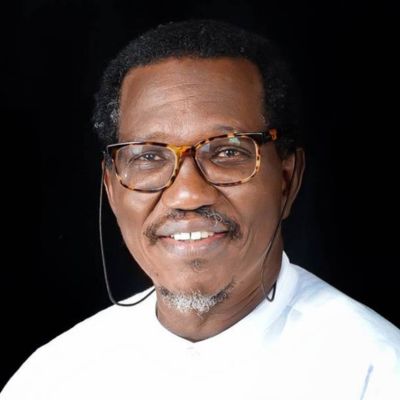
In a statement signed by the President of the Foundation, Rev. Dr Gideon Para-Mallam and made available to Middle Belt Belt Times, the Peace Foundation known for its peace efforts across the Middle Belt said a “Foundation is being laid for a full blown nationwide terrorism in the country.”
Para-Mallam called on the Federal government to be more proactive and decisive in tackling the violence which has been ongoing for several years. The statement also claimed that 346 people have been killed in Mangu local government area of Plateau state between April and July 2023.
The statement reads in full:
“Sunday night – July 9th 2023, around 9:00pm, 8 people were killed in Farin Lamba in Riyom Local Government Area of Plateau State. One woman, a 2-year-old baby and 6 young men on riding their motor bikes and conveying their passengers. The gun men came on a killing mission and not finding those they targeted, they started killing those on the highways. Monday morning July 10th 2023 in Vwang Village, Jos South, 2 women were shot dead @ Wereng Rim in the same Riyom LGA. Prior to this on Friday July 7th , 15 people were killed and the following day Saturday night July 8th , 13 people: 12 men and a little boy of under 6 years old were killed in Sabon gari village in Mangu LGA. Mangu LGA has become the latest killing fields of Nigeria.
Death is an equalizer. It will find anyone of us at some point in life’s journey. This is a fact of life. However, why must human agents serve as life’s terminators? The degrading of the value of human life without respect to our common humanity is beyond comprehension in Nigeria. This is what we are witnessing in Plateau State, particularly in Mangu Local Government Area. There have been sustained attacks which have continued unabated since April 17th , 2023 till date. Over 300 lives have been lost on the Plateau from April to date. Out of this number, over 200 lives have been lost to sustained violent attacks in Mangu LGA, as at Saturday, July 8th , 2023. The current harvest of deaths in Mangu LGA must be treated with the utmost urgency it deserves.
The Federal Government cannot afford to remain silent. Silence suggests looking the other way while the current inhumanity continuous. The Federal Government or President Bola Ahmed Tinubu has not issued any official statement condemning the present killings since his being sworn into office on May 29th 2023 till date. Two months on yet we still do not have a formal Presidential comment on these killings? What signals is being communicated by such silence remains to be seen but the impunity demonstrated by the immediate past government of President Mohammadu Buhari should not be sustained by his successor. Why keep silent when hundreds of men, women and children are being killed almost daily in Plateau State?
The Mwaghvul Development Association (MDA), through its National Secretary Dr. Solomon Mangvwat, reports that a total of 54 villages have so far been attacked during this short period. 208 of their people have been killed, hundreds are missing as several bodies were burnt either in their homes while sleeping at night or in the bush as they fled were killed in the process of escape. Handicap persons unable to flee the attackers were mercilessly killed.
There are currently Eighteen Thousand Seven Hundred and Fifty-One (18,751) Internally Displaced Persons (IDPs) who are now housed in Fourteen Camps. The 14 camps are hosted by the Church of Christ in Nations (COCIN) Local Church Councils (LCCs). A Breakdown of the IDPs shows: 2,081 widows, 6,066 Orphans between the ages of 0-5 years old. Old people account for 1,057 old aged persons and teenagers and adult orphans accounting for 828. A total of 6,603 households are currently affected by these deadly attacks. Meanwhile, the Fulani community claim that the attacks in Mangu are part of a crusade to get rid of them from. This claim was made in a letter dated 19th May, 2023, addressed to the General Officer Commanding the 3rd Armoured Division, Rukuba Barracks, and the Commander Operation Safe Haven (OPSH), Jos, signed by Muhammad Nura Abdullahi, the Chairman of Miyetti Allah Cattle Breeders Association of Nigeria (MACBAN). Similarly, in a report by Daily Trust Newspaper, 10th July, 2023, Muhammad Nura Abdullahi stated that there was an invasion of Fulani villages in Mangu LGA on Friday, 7th July, 2023 which led to the death of 15 Fulanis and 78 houses destroyed.
Take it or leave it, a foundation to full blown nation-wide terrorism is being laid. No country should localize and allow acts of terror on its citizens. Whatever the motivation behind these attacks on the Plateau, the fact remains – people are being killed in their hundreds. The burden of these killings should not rest only on the shoulders of the newly sown-in Governor of Plateau State, Barr Caleb Muftwang. The burden should not also rest only on the shoulders of the President of the Federal Republic of Nigeria, Bola Ahmed Tinubu. In fact, the burden rests on the shoulders of all Nigerians. The MDA have a role to play in the search for peace and so also Miyetti Allah in seeking an end to the killings and finding ways to save lives and property. There is wisdom in collective action devoid of finger pointing or political calculations. The lives of all the citizens of Mangu LGA residents matters.
“It isn’t enough to talk about peace. One must believe in it. And it isn’t enough to believe in it. One must work at it.” – Eleanor Roosevelt.
There is need for strategic action on the part of the Nigerian government and international community to ensure sustainable peace returns to Plateau State. As a Peace Building Foundation, we believe that peace is possible in Mangu LGA, Plateau State and Nigeria. The Federal Government and Plateau State; indeed all States in Nigeria need to work together with unity of purpose, across political party lines to find peace for all the troubled hotspots in the entire country. How long must we sit-out these religiously motivated and criminal killings in Nigeria while the rights of Freedom of Religion and Belief (FoRB) are being trampled upon? Focusing on misleading narratives of the violence is itself not only misleading but unhelpful and glaring political correctness and hypocrisy. The narrative of reprisal attacks is not only simplistic but it hides the real issues and therefore the unjust killings have lingered on for too long not just in Mangu LGA but in other hotspots in the Middlebelt areas in particular.
It is important to take cognizance of the words of Martin Luther King Jr. who observes that: “Violence begets violence; hate begets hate; and toughness begets a greater toughness. It is all a descending spiral, and the end is destruction — for everybody. Along the way of life, someone must have enough sense and morality to cut off the chain of hate.”
What is happening in Plateau State has impact on Nigeria. What more, what is happening in Nigeria has global consequences in the medium and long-run. It is time to act and stop localizing Plateau’s killings fields. The time to put an end to violence in Plateau State and Nigeria is now!.”
Recall that Middle Belt Times earlier in the week reported the decision of the military to relocate its special task force codenamed, Operation Safe Haven to Mangu in its effort to address the incessant attacks on rural communities in the area.