Security Crisis in Kebbi: Bandits’ Attack Leaves Two Dead, Seven Kidnapped

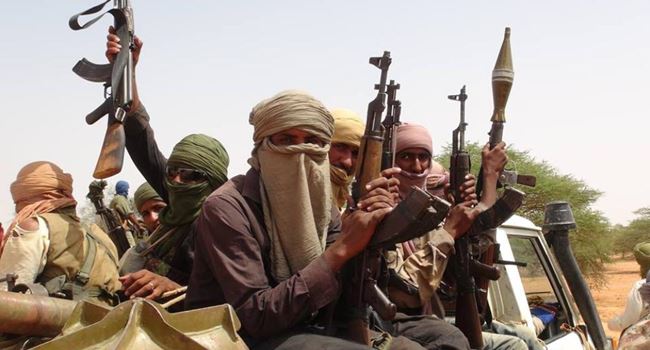
In an unfortunate turn of events, two individuals were reportedly killed, and seven others kidnapped following a bandit attack in Kwarikwarasa, a village within the Maiyama Local Government Area of Kebbi State.

The state’s governor, Dr Nasir Idris, visited the affected community in the aftermath of the attack, expressing his condolences and pledging a donation of N10 million to support those injured. During his visit, he affirmed the government’s determination to combat such criminal activities and ensure the safety of all residents.

The Governor’s Chief Press Secretary, Ahmed Idris, confirmed the details of the incident in a press release. He stated that the bandits made their assault on Friday morning and have since released one of the seven abductees, leaving six others, including a woman, still held hostage.

In the statement, Idris said, “The governor has reassured the community that the government has implemented measures to prevent such unfortunate incidents from recurring. The current administration is committed to supporting the security agencies in their fight against criminal elements across the state.”

He added, “We will not rest until we secure the state and create an environment where citizens can live without fear, farm peacefully, and conduct their businesses without any threat of harassment.”

The District Head of Andari, Alhaji Aliyu Mohammed Liba, extended his appreciation towards the governor for his prompt response and intervention.

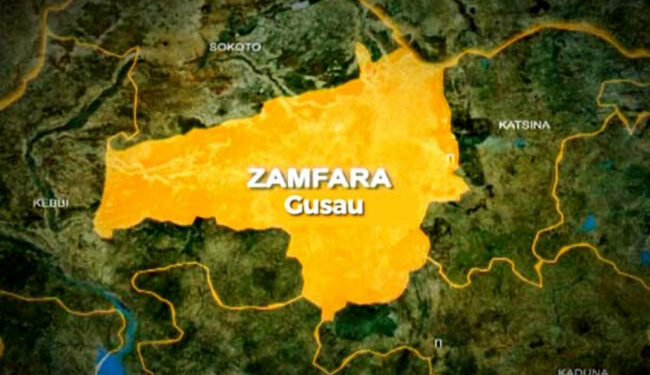
Insecurity: Zamfara To Recruit 4200 Civilian JTF

Zamfara State Governor, Dauda Lawal, has given the green light for the recruitment of 4,200 civilian Joint Task Force members as part of his commitment to tackling the ongoing security challenges. The state’s Commissioner of Information, Munnir Haidara, made this announcement during a press briefing in Gusau, marking the 100 days since Governor Lawal took office.

According to Haidara, 300 civilian JTF personnel will be enlisted in each of the 14 local government areas within the state. These recruits will undergo intensive physical training to equip them with the skills needed to provide actionable intelligence support to security agencies in the fight against insecurity.

Additionally, efforts are underway to enhance security by conducting regular patrols on the state’s volatile roads. Governor Lawal has also taken the initiative to refurbish patrol vehicles, bolstering security presence across Zamfara.

Addressing a pressing issue, Haidara revealed that the severe water scarcity in Gusau, the state capital, which had led to unfortunate fatalities, has been resolved within just two weeks of Governor Lawal’s assumption of office. This achievement has brought relief to the residents who had been struggling with the lack of access to clean water sources.

Haidara concluded by urging the people of Zamfara to continue supporting the governor’s administration, expressing confidence that it will deliver on its promise to bring good governance and positive change to the state.

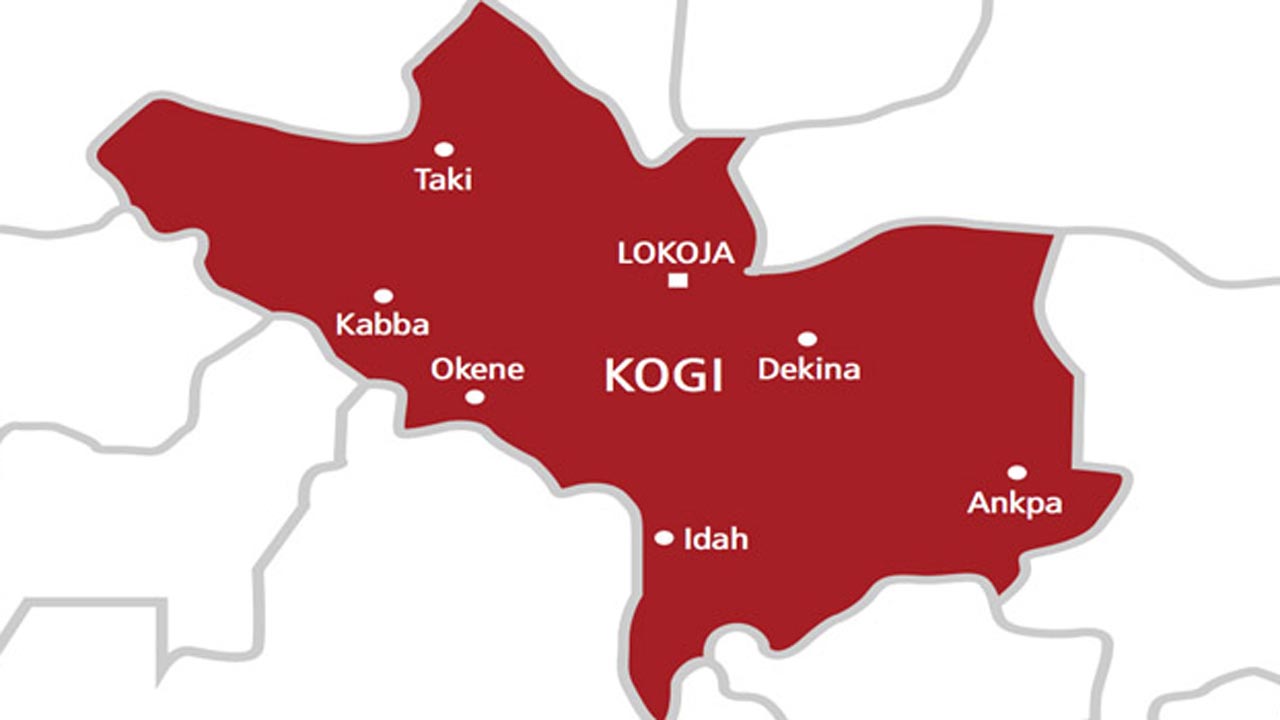
Kogi State Steps Up Security: Unleashes 65 New Vehicles to Tackle Insecurity

The Kogi State Government has taken significant steps to enhance security by providing an additional fleet of 65 vehicles spread across its 21 local government areas. This move was revealed by Elder Friday Sani Makama, the Director General of the Kogi State Special Task Force on Illegal Smuggling of Firearms and Other Related Offences, during a press conference in Lokoja.

Makama issued a stern warning to those involved in the illegal procurement of arms, ammunition, and the recruitment of mercenaries for violent purposes. He emphasized that such activities would not be tolerated, and anyone caught would face the full force of the law.

He asserted that Kogi State would not become a safe haven for criminal elements, especially in the lead-up to, during, and after the forthcoming election. The current administration remains steadfast in its commitment to safeguarding the lives and property of its citizens.

Food Fued Turns Fatal: 21-Year-Old Husband Arrested for Alleged Wife’s Murder in Edo State

A 21-year-old man named Salami Anedu has been arrested in Edo state on suspicion of murdering his wife, Esther Friday, following a dispute over food, according to the state’s Police Public Relations Officer, SP Chidi Nwabuzor.

The incident occurred on August 30 when Anedu allegedly used a stick to fatally injure his wife during an argument in their home in Ugbekpe community. Aluaye Momoh reported the incident to the police, leading to Anedu’s arrest by the Fugar Police Division. The case was subsequently transferred to the Homicide Section of the State Criminal Investigation Department in Benin for further investigation.

Anedu, however, maintains his innocence, claiming that his wife had threatened to bring her brothers to confront him during their disagreement over food. He stated that he did not harm her but that her brothers arrived armed with sticks, leading to a physical altercation. Anedu asserts that he was wrongfully accused of his wife’s death, mentioning that she was already ill before the incident.

This tragic incident serves as a stark reminder of the importance of resolving conflicts peacefully and seeking help from authorities when needed.

Female Students’ Unending Battle With Randy Lecturers

Female Students’ Unending Battle With Randy Lecturers

It was in 2018 that Adaora (surname withheld) was admitted to study English and Literary Studies at the Akwa Ibom State University, Ikot Akpandem, Akwa Ibom State. She had earlier sat the United Tertiary Matriculation Examinations three times to study at the University of Uyo, Uyo, without success, before she decided to go to AKSU.

Just three months after school resumption, a part-time lecturer started harassing her.

The first day he saw her, she said he spanked her buttocks, as she walked passed him in a busy hallway. He apologised, saying it was a mistake.

Again in class, she said he came close and sat on the same desk with her while lecturing, giving her seductive gestures.

“He was not a small boy. This man should be in his 50s. He made life a living hell for me at AKSU,” she added.

According to Adaora, when he eventually made his first attempt to speak to her, he asked to see her in his office.

Although it was a shared office, she noted that the other lecturer was out on a Sabbatical leave at another university.

“Immediately I walked in, he stood up, locked the door, and began to push his body against mine. I was scared. I was around 20 years old then. I was confused. I saw this man as a father.

“I ran towards the door to open it because the key was still at the lock but he laughed and told me to come back. He said he was only playing with me. That was the beginning of my problems,” she added.

She said she spoke to a senior colleague, who told her the man was fond of doing such to ladies, warning her to beware.

When the first semester results were released that year, she failed his course.

She was sure she wrote something convincing that would earn her a pass grade, so she wrote to the school’s exams board for a re-mark. She even claimed to have paid some money to another lecturer to ‘facilitate’ it.

But, an approval came in the second week of the second semester. Her scripts were re-marked and she was awarded a ‘D’ grade. Still not convinced, she said she spoke to a female lecturer who told her to get evidence if she wanted to make a complaint.

Her time eventually came in Year Three, when the man, now a full-time lecturer with the department, took another course and made her a group leader in one of the assignment groups.

She claimed he sent her erotic messages, threatening that she would not graduate if she did not ‘surrender’.

Adaora said she went back to the female lecturer, who told her there was still nothing she could do despite showing all the messages.

She also got information about two other ladies, one of whom was already married with two kids, whom the man allegedly harassed the previous year and they filed a petition to the school.

“Till today, that petition did not see the light of the day. I wrote about four other follow-ups. The other ladies even petitioned the gender unit of the university, but nothing was done.

“I am married now with a daughter, and I am even scared to let my daughter stay alone with a neighbour because I don’t know what these men are capable of. If a man that old can look at a 20-year-old virgin girl then and say he wanted to have me, I wonder who is safe from their fangs,” she said.

When our correspondent called the number said to be attached to the Directorate of Information, Public Relations and Protocol of AKSU, the line rang out. Text messages sent to the phone line were also not responded to as of press time.

Endangered

With each passing day, female students are becoming more endangered in institutions of higher learning.

On Wednesday, The PUNCH reported how a female undergraduate student (name withheld) accused a lecturer at the University of Lagos, Akoka, simply identified as Dr Kadiri, of rape.

The student said the incident occurred when she visited the lecturer in the office to sort out issues about her results.

A non-governmental organisation, Inclusive Social Welfare and Empowerment Foundation, where the victim reported the case, said rather than the lecturer attending to the undergraduate’s result issues, he allegedly raped her on August 16, 2023.

Our correspondent gathered that InclusiveSWEF reported the case to the Gender Unit of the state police command and through the OC Gender, the state CP, Idowu Owohunwa, issued a warrant of arrest for the lecturer through the High Court and involved the Vice Chancellor of the university.

The state Police Public Relations Officer, Benjamin Hundeyin, confirmed the incident, saying, “He is to appear in court in the coming days.”

Reacting, the spokesperson for UNILAG, Adejoke Alaga-Ibraheem, told PUNCH Metro that the university was aware of an investigation involving an employee of the university.

She said, “The UNILAG management, on August 28, received a letter from the Nigeria Police Force, inviting an employee of the university for questioning. The employee was immediately informed of the development and advised to comply.

“On August 29, the employee complied. While we are not yet privy to the full details of the incident that led to the arrest of the employee; we are fully aware that the investigation is ongoing and we are cooperating with security agencies to ensure that the matter is resolved in the interest of justice.”

Weeks before this, students of the University of Calabar, Cross Rivers State, lamented how a professor and former dean of the Faculty of Law allegedly sexually harassed them.

Protesting the harassment, the students demonstrated with placards and urged the university’s management to intervene.

The dean has been suspended by the varsity’s Vice-Chancellor, Prof. Florence Obi, and replaced with a female lecturer.

All principal officers of the faculty, who were men before, were replaced with females.

The authorities at the Nnamdi Azikiwe University, Awka, also officially removed lecturers indicted of sexual harassment from their various official positions at the institution.

This was disclosed in a press statement issued by Dr Emmanuel Ojukwu, the Special Adviser on Public Relations and Special Duties to the Vice Chancellor of the institution, Prof. Charles Esimone.

Although in the statement, Ojukwu did not mention the names of the indicted officials, he said there was an ongoing investigation concerning alleged sexual harassment by some lecturers, while insisting that there was no protest at the institution.

“Unfortunately, the students who alleged sexual harassment were not forthcoming to testify before the investigation panel.

“However, the vice chancellor additionally summoned the affected departments to a meeting where he expressed the university’s displeasure and warned lecturers and staff to desist from all actions that would bring the name of the university to disrepute.

“He warned that the university management would severely punish erring staff, especially those who are molesting or sexually harassing our students,” part of the statement read.

In 2018, the Obafemi Awolowo University, Ile-Ife, was said to have dismissed a professor, Richard Akindele, for alleged sexual offenses.

His former student, Monica (surname withheld), accused him of demanding five sex sessions to pass her.

She recorded their conversations, the audio of which shocked the nation. An Osogbo High Court later sentenced Akindele to a two-year jail term.

In 2018, an Associate Professor of Economics at the Lagos State University, Ojo, was entrapped with the help of an NGO, after he allegedly demanded sexual favours from a female student.

Fellow students also caught an accounting lecturer at the Ekiti State University, Ado Ekiti, literally pants down as he attempted to harass a female student.

Studies conducted under the auspices of the United Nations Education Scientific and Cultural Organisation revealed in a 2019 report that sexual harassment of female students results in outcomes ranging from shame, loss of self-esteem, unwanted pregnancies, poor academic performance and, in some extreme cases, suicide.

The report said sexual harassment experienced at university could lead to psychological, emotional and physical harm, as well as negatively impacting victims’ studies.

“In one study, of those students who had experienced sexual violence, 27 per cent contemplated suicide or self-harm, 15 per cent developed an eating disorder and 15 per cent abused alcohol or drugs. Fifty per cent experienced a negative impact on their academic performance and 11 per cent indicated that the progress of their studies was delayed,” the report noted.

Dons, CSO proffer solutions

A professor of law and former Dean, Faculty of Law, University of Nigeria, Nsukka, Enugu State, Prof. Joy Ezeilo (SAN), said all tertiary institutions must have a sexual abuse and harassment policy that handles sexual harassment and proffers sanctions within the university setting.

She also noted that there must not be any sexual relationship between lecturers and students.

“If there are any relationships, there must be a policy of full disclosure. Once there is a full disclosure, that lecturer would have nothing to do with the grading or marking of the scripts of the student in question.

“But because of the kind of fiduciary relationship and the position a lecturer assumes, which is often that which is high and of trust, that position can easily be used to hamper the vulnerability of students. So, the problem is the lack of appropriate sanctions.

“There must be a policy with legal backing treating sexual harassment in schools. Assault is prohibited under the criminal law, but society must have a zero-tolerance policy towards sexual harassment,” she said.

Sighting what happened with the Spanish football coach, Jorge Vilda, who was sacked by the Royal Spanish Football Federation, Ezeilo, who was a United Nations Special Rapporteur on Trafficking in Persons in Africa and former Commissioner for Gender and Social Development, Enugu State, said, “The Western system did not need the footballer in question to petition. All she said was that the kiss was not consensual and everyone saw that kissing her on the lips, even though in the mood of celebration, was inappropriate.

“She said she felt vulnerable and everybody rallied around her. FIFA did not need to sanction the chairman of the Spanish Football Association no matter how powerful the position is in the scheme of things.

“But if that same situation had happened in Nigeria, many people would say it was just an ‘ordinary’ kiss.”

According to her, society has reinforced impunity and stereotypes that women are sex objects or bonanza for people who come into contact with them, especially within the academic institution.

Also, a Professor of English and Vice-Chancellor, Ahman Pategi University, Patigi, Kwara State, Mahfouz Adedimeji, said sexual harassment in varsities had become a big social issue in Nigeria.

In an interview with Saturday PUNCH on Thursday, he said, “It is not only in universities. We find it (sexual harrasment) even in secondary schools, religious places, and social media.

“It is a reflection of what the society has become. Society is so filled with sexually provocative messages. I believe that the social media and the entertainment industry are contributing to it. Nothing is seen as successful today until the female body is objectified.

“We have realised that people appear to be under a lot of social pressure. We are not ready for that conversation. Even when universities take the steps to give a dress code, we are still going to find some people say that their rights are being infringed upon.

“That is why I said the issue of sexual violence in Nigeria has reached an alarming stage, and until everyone in Nigeria considers it a social problem that we all have to sit down to address, we are going to be waiting to witness another calamity.

“It was Calabar, Cross River some time ago. It is Lagos today. It may be another university tomorrow. We do not regulate what goes out in terms of music, videos, skits, and the like. However, this does not justify the recurrence of the issue.

“I would suggest that the family, which is the smallest unit of society, train girls who would be modest and decent in their outlook on life. Also, girls must not be timid to speak up in cases of sexual harassment.”

He noted that the laws had to be stiffer for perpetrators of sexual crimes, as, according to him, most of them feel they could go scot-free after committing the crimes.

Also commenting, a professor of Sociology at the University of Port Harcourt, Rivers State, Ifeanacho Ikechukwu, said handling sexual harassment was an intricate issue.

He said, “One cannot objectively discuss the matter without looking at both sides of the argument. We know that what we now see as modernisation has turned into something else.

“It is unfortunate that some of these cases of harassment are found among lecturers who are professors and highly-placed academics who should know better. By the time one makes a calculation, as a reasonable person, factoring in the shame accusations of sexual harassment bring to one’s family, society, university and career, one would decide to stay off and far away from sexual abuse.

“Sexual harassment negates humanness. It is blackmail. It shows that the perpetrators lack something as a person. It may be that these lecturers in question are suffering from some kind of personality disorder or inferiority complex. As a professor or doctor, one should begin to look back and advise younger colleagues on how to steer clear of sexual harassment.

“There are a lot of health implications that may come out of these sexual abuse cases. How can a lecturer who has put in close to 27 years in the service of a university and has risen to the rank of a professor lose themselves because of sex?

“In cases when these things happen, I am sure the accused would begin to regret.”

He added that lecturers were like parents to their students, noting that they should serve as role models and not predators.

Also commenting, the Chief Executive Officer, Bible Society of Nigeria, Pastor Samuel Sanusi, noted that any society that neglects God and morality would always have issues like sexual harassment.

“The fact that someone is a lecturer does not automatically make that person God-fearing or moral. Anyone who does not fear God can do anything. The only solution to any challenge is doing the will of God.

“God abhors sexual harassment. It should not be found in schools. Some of these lecturers engaged in these acts claim to believe in God but they do not act like they know God at all.

“God urges us to love our neigbours as ourselves. These lecturers would not want their daughters to be molested by their teachers. Why do it to other people’s children?

“These lecturers would need a total surrendering to God and seek spiritual counsel,” he said.

An Islamic scholar, Adulhakeem Alaran, said the Holy Quran frowns at all forms of sexual harassment.

“When I hear cases of lecturers, especially of Muslim faith, harassing their students, it breaks my heart because it shows that they were yet to understand the teaching of Prophet Muhammad (PBUH).

“The laws punishing sexual offenders must be stiffer and victims must not be shamed,” he added.

SOURCE: Punch

After PEPT Judgment, What’s Next For Nigeria’s Electoral System?

By Luminous Jannamike, Abuja

Following the outcome of the 2023 presidential election and the judgment of the Presidential Election Petitions Tribunal on Wednesday, Nigeria finds itself at a crucial juncture.

The focus has now shifted to how Nigeria can improve its electoral system to foster a stronger democracy. Saturday Vanguard shares the opinions and insights of key stakeholders, highlighting their
recommendations for reform.

Amend 1999 Constitution, Electoral Act —Obi, ICPC’s Head of External Cooperation Kingsley Obi, the Head of External Cooperation at ICPC, shared his perspective on the matter.

He expressed his disappointment, stating that it was a missed opportunity for greatness and progress in Nigeria’s 24 years of democracy.

He attributed this setback to the failure of politicians, INEC, the government, and the masses to abide by the rules. Obi emphasized the significance of addressing the 2023 elections’ outcome as a critical national issue, urging decisive steps to be taken.

“I speak as one who voted with great expectations and also encouraged others to do so. We monitored theelection and submitted a report,” he said.

When asked about his vision for Nigeria’s future, Obi passionately replied, “I love the dreams of the future more than the history of the past.” His words reflected a strong belief in the potential of Nigeria to overcome its challenges and forge a better future. So, what is the way forward? He agreed that amending the Electoral Act and the 1999 Constitution are a crucial step.

He said, “The Electoral Act should be amended to include sanctions for the following: false declaration of election results,requiring government appointees to resign before joining a campaign council, punishment for not uploading election results in realtime, penalties for the late arrival of materials, sanctions against law enforcement agents who aid in election rigging or disruption, and a revised election timetable for both parliament and the executive branch.

Additionally, the Constitution should be amended to include the following provisions: no swearing-in of elected officials until all pending cases are resolved, the implementation of time limits for the resolution of election-related cases, similar to the system in Kenya, the establishment of a mandatory schedule for election-related cases with a timeline for their conclusion, and the creation of an independent electoral offenses commission.

Similarly, Deji Adeyanju, a renowned activist and legal scholar, argues that the Electoral Act (2022), as amended, is not yet watertight. He suggests that further amendments are necessary to enforce the mandatory electronic transmission of election results by the Independent National Electoral Commission (INEC).

Adeyanju said, “Whenever discretionary powers are bestowed upon an individual or institution, that entity is free to exercise their discretion in any manner they choose. We must amend the electoral act to require the compulsory electronic transmission of results from polling units on Election Day. I have previously expressed my concern when people were celebrating the amendment of the electoral act, as it granted INEC discretionary powers regarding the electronic transmission of results.

We must further amend the Electoral Act to mandate exclusively electronic transmission of results for all elections in the country.”

Let truth be prioritized in managing future elections — Okutepa, SAN
ToSenior Advocate of Nigeria (SAN), Jibrin Okutepa, Nigeria’s democracy is at a crossroads. He believes that although the country has made progress over the years, there are still several areas that require urgent attention.

According to Okutepa, Nigerians are well aware of the excruciating pains experienced by petitioners in dealing with the Independent National Electoral Commission (INEC). He suggests that Nigeria would greatly benefit from consistently upholding truth in the management of its affairs.

“Nigerians know the excruciating pains petitioners go through in the hands of INEC and how pink copies of election results are not always given to agents of parties in most cases. Nigeria will do itself well if at all times it upholds truth in the running of its affairs,” he said.

INEC independent, accountable to Nigerians —Effiong
In the same vein, Barr Inibehe Effiong, a public interest lawyer, suggests that while INEC is independent, it is essential to hold it accountable for violating its own guidelines in order to enhance the electoral system. He made this statement in light of the judgement of the Presidential Election Petition Court, which affirmed that INEC cannot be compelled to transmit its results electronically, despite making a promise to Nigerians to do so prior to the elections.

Effiong argued that, “Public funds were allocated for this purpose, and INEC relied on the integrity of the entire election through the use of BVAS for accreditation and result transmission. However, INEC has not faced condemnation or criticism for violating its own guidelines and promises. I do not believe that this is the appropriate behavior for a country that seeks to be taken seriously.”

Role of technology in electoral process cannot be overlooked —Dr. Karim, NISS Director
Dr. A. A. Karim, Director of Research Estimate and Library Services/ Head of the Postgraduate School at the National Institute of Security Studies, Abuja, believes that leveraging technology can enhance transparency and efficiency.

He said, “There is a need for INEC to improve the deployment of BVAS and technology to prevent failures in future elections. INEC’s technology experts and consultants should study BVAS and work on enhancing its workability and security, especially in the area of result transmission, leading up to the 2027 general elections.

This should be done in collaboration with all stakeholders, including technical suppliers and partners. Special security measures should be implemented to protect BVAS machines at polling units, in order to prevent incidents of snatching and theft by thugs or hoodlums.

There should be improved training and retraining of BVAS operators, as well as the deployment of a technical team to promptly address cases of malfunction.”

Strategic implementation of cashless policy, civic education ‘ll help —Acting EFCC
Chairman, Chukkol For Abdulkarim Chukkol, the Acting Chairman of the Economic and Financial Crimes Commission (EFCC), voter education and civic engagement, particularly in countering vote-trading, along with the strategic implementation of a cashless policy, are critical components in strengthening Nigeria’s electoral system.

He emphasized that, “we must continue to raise awareness among Nigerian voters about the detrimental effects of vote-buying, as it contributes to poor governance.

Furthermore, we should advocate for significant reforms to impose stricter penalties for vote-trading. If the cashless policy is strategically planned and implemented, itwill serve as a valuable tool in curbing vote-buying.”

We must build capacity to manage election crises—Akobundu, AUDA-NEPAD boss
According to Princess Gloria Akobundu, the Chief Executive Officer of African Union Development Agency (AUDA-NEPAD, Nigeria must invest in building the capacity of stakeholders to manage electoral crises.

“We must assess how well the campaigns and sensitization efforts prior to the election have influenced the peaceful conduct of elections in Nigeria, and also enhance the capacity of the relevant stakeholders in managing pre- and post-electoral crises,” she stated.

Nigeria’s quest for a better democracy requires comprehensive reforms to the electoral system. The outcome of the 2023 presidential election and subsequent judgment have shed light on the urgent need for change. By amending the Electoral Act, granting more autonomy to INEC, empowering citizens through education, and fostering a culture of integrity in politics amongst other reforms, Nigeria can pave the way for a brighter democratic future.

As Kingsley Obi, ICPC’s Head of External Cooperation, aptly stated, ‘I love the dreams of the future more than the history of the past’, it is time for Nigerians to come together and work towards achieving those dreams.

SOURCE: Vanguard

Redeemed Christian Church of God Pastor, Vigilante Nabbed For Armed Robbery

Ola Olayode, 45, a self-confessed pastor with the Redeemed Christian Church of God, (RCCG) presiding over a parish in Ogun State, is currently in trouble. So also is Owonikoko Akeem John, 36, a Unit Commandant of the Vigilante Group of Nigeria, (VGN). They are both in hot soup over allegations of armed robbery. The Ogun State Police Command informed the reporter that Owonikoko Akeem was the mastermind of several nefarious crimes that took place at Obalende area of Ogun State.

The suspects were arrested along the Sagamu Ijebu-Ode-Benin highway axis in Ogun State following an operation led by an Assistant Commissioner of Police, Omosanyi Adeniyi, the Area Commander in Ijebu-Ode.

Upon his arrest, Akeem reportedly made a confessional statement, where he allegedly fingered a certain police Inspector of simply identified as Ola as the supplier of the gun in his possession. It would be discovered later that Ola, a pastor with the RCCG, isn’t a police inspector as he made people to believe.

How we got them – Police

But for the Ogun State Police Command Headquarters Eleweran Abeokuta, Obalende residents will now sleep well with their two eyes closed because of the arrest of Akeem Owonikoko. Police Public Relations Officer (PPRO) in Ogun State, Omolola Odutola, a Superintendent of Police (SP) said Akeem was sighted in a Toyota Camry driving inwards Ijebu-Ode from Ososa. She said as soon as the suspect sighted the police while trying to negotiate the Ijebu-Ode Highway, he diverted into a close. In the words of the PPRO, the police chased him, but noted that all the occupants of the vehicle scampered into the bush. The police spokesperson said the ACP divided the team into a cardinal search during which a disguised man in VGN uniform who was the alleged mastermind of several nefarious crimes in the state attempted to outsmart the policemen, but he was arrested. The police further stated that when a search was conducted on the vehicle that the suspect earlier abandoned, a black cellophane bag containing 32 expended cartridges were recovered among other exhibits, including 78 live cartridges and a locally fabricated short gun.

When a search warrant was also executed at his residence, it was learnt that a Magnum Pump action rifle, one double barrel short gun, one locally fabricated double barrel pistol, stunt pistol shocker, an unregistered silver colour Toyota Camry, Green colour Toyota Sienna Bus KNN 58 TD OGUN, a liquid chemical, a black beret with insigna of Aiye confraternity, cannabis, hard drugs, ATM card, power bank, 2 Apple wrist watches, 2 cell phones and charms were picked up by the police as exhibits.

The police also stated that he has made confessional statement which fingered police inspector named Ola whom Akeem identified as the supplier of the guns.

My story, by Akeem

Akeem, the VGN member, claims he hails from Ilugun Asalu, in Abeokuta,, where he had his primary and secondary education. He also claimed he was a part time student of Abraham Adesanya Polytechnic, Annex, Ilaro but dropped out due to lack of finance. He said he then worked at Abeokuta North Local Government, Akomoje, in Abeokuta, but moved to Berger in Lagos where he was managing a beer parlour.

“My older brother later decided that we should move to Ososa Town to farm. We were growing red peppers and doing some irrigation work. When the farm collapsed, I went into hatching fishes, planting okra and selling fingerlings. Thereafter, I began selling pepper soup, jollof rice, noodles and eggs at a beer parlour within the neighbourhood and also operated a movie viewing centre to provide entertainment service for the beer parlour. Things were going on fine then. I also got married,” he said.

He disclosed that he had been initiated into cultism by his friends before completing his secondary school education. But he said he quit membership of the Aiye cult after his admission to Abraham Adesanya. However, he said he still reached out to members of the group whenever he was being harassed by rival gang members, especially members of the Eiye cult.” He said he bought a car from the proceeds of his pepper soup business. He said because he experienced so much oppression from cult members from time to time, he had to leave the vicinity.

“I left that area and moved to an area where I rented my own house and established my own beer parlour business, where I also sold pepper soup, noodles, eggs and fruit salads”,” he said.

He said some suspected fraudsters, more popularly called Yahoo Boys, later introduced him to some fraudulent activities, in addition to his business and trading in Bitcoin. He said members of the Eiye cult also traced him to his new location and even destroyed his shop. As a result of the constant harassment, he said he was advised to either join the police or any of the security agencies.

“I decided to join VGN in 2014. I obtained the form for N20,000 in Abeokuta. The day I got the form was the same day the VGN sold a jack knife and a pepper spray to me. It was same day I also bought the shocker that looks like a gun. When I started the security work, I also joined the So-Safe Corps, Agbekoya, and teamed up with three other persons. Four of us began curbing crimes within the community town. In 2017, I bought my first gun from a hunter called Victor who came to hunt with other hunters around the farm I worked. I later discovered that its butt was always shaking whenever I was using it, so I cut it to size. And to ensure that the butt was balanced, I wrapped it with a black cello tape. When I obtained the form, they got to know that there was no VGN at Ososa. So I was made Ososa’s Unit Commandant by the State Commandant named Adedoyin.”

Me and Pastor Ola

He also spoke on the man he claimed sold him a gun. “I got to know Mr. Olayode Ola through one Opeifa. At that time, he called himself an Inspector and I saved his name on my phone as Inspector Ola. Inspector Ola sold the double-barrelled rifle to me at N200,000 in 2020. Since then I was doing my work, helping the police.

“In 2021, I called Inspector Ola to ask if he had a gun for sale. He said a pump action gun was available and I went to him as usual and bought it for N350,000.”

He said Ola actually told him to get a licence for the gun to avoid any issues with the law enforcement agencies. He said he called Inspector Ola after a month and told him he already got a licence for the gun. He said he obtained the licence for the gun for N100,000 in Abuja through a proxy – a Lagos-based hunter.

He informed the Police during his interrogation: “I was then working with both DPOs at Ososa and Odogbolu. Whenever I had jobs, I would take it to Obalende at times. There was a time we arrested a rapist which we brought to Eleweran Police Headquarters, and also arrested five elderly persons beheading their victims. “ He claimed his ordeal began on Thursday August 10 at about 11:00p.m when he was drinking at a beer parlour around the trailers park in Ososa. He said he was having a good time, having recently bought a Toyota Camry.

When probed on how much he makes from fraudulent activities, (Yahoo-Yahoo) Akeem said: “If I serve as a middleman, at least, I get millions from the proceeds, because I get paid between 15 and 20 per cent of the deal. Sometimes, I get N800,000 or N1 million or even N2 million.” He said he also makes money from trading in BTC.

“I was arrested on a Thursday, the fourth day I bought my vehicle when I was processing its vehicle licence. I bought the vehicle in Abeokuta for N2, 950,000. I was called by one Mr. Jonathan who owns a beer parlour that a customer was fighting with his salesgirl. The suspected attacker was about running away when I got there, and I asked him why he injured the girl? I also slapped the man and ordered him into my car and drove him directly to Ososa Police Station, where he and the girl were questioned.” He said upon leaving the station, he drove the girl and her boyfriend to a hospital for medical attention. But he said while returning with the salesgirl and her boyfriend, something happened.

“Before I left home, there were 32 cartridges that had been expended three months earlier, that were meant to be refilled that I had kept in a nylon bag in the car. The cartridges had been expended at different occasions, such as at ceremonies at palaces, work duties, and at some occasions where we would normally shoot at least two in the air to scare thieves from invading the event places. We also use the cartridges when we are on night duty, because there are also some houses in Ososa that I watch over and get paid and which I use the money to pay about 10 workers of my security team. The expended cartridges were in the nylon bag with the intention of giving them to some hunters who usually do refill. The cut-to-size gun was beside it and four extra cartridges which I usually keep with myself for personal protection. As I finished from the hospital around 11:40p.m, I was returning the girl. As I drove to the junction where they alighted from my vehicle and beamed my headlamps, I saw a Sienna parked ahead and I drove into a road where I parked so that I could identify who the occupants were. Four torches were switched on and beamed towards my direction and I immediately drove into the road where those I dropped were headed, in order to link another road. Then I came down from my vehicle and walked backwards. By the time I had walked to a place where some area boys were seated, they told me the people were policemen. By the time I walked to my car, the police had opened my vehicle’s door and boot. As I was explaining to the officers that I was the owner of the car, they started beating me and they took me to the Area Commander. I told them I ran to the bush because I was scared because I didn’t know if those in the Sienna ahead of me were either armed robbers or Police. Not quite long the DPO at Obalende came in and revealed that there was robbery on the expressway, and I said that I don’t know anything about it. In fact, the police arrested the girl I rescued on that day. We were all taken to Obalende Police station, while the next day, Mr. Jonathan came to inform the police that he was the one who called me to intervene in a fight on the day of my arrest. Yet the police accused me of engaging in robbery on the highway, but I denied the allegation.

“From there, I was taken home for a search and the police recovered all the guns I had bought and other items.” The suspect also explained that he did not inform security agencies he had worked with that he was involved in cultism before joining them.

Why, how I sold guns to Akeem, by pastor

Pastor Ola, who described himself as a spy police officer, was fingered by Akeem as the “Inspector” Ola who sold him some guns to him.

The man from Ikole Ekiti, Ekiti State narrated that he indeed sold his pump action rifle to the suspected armed robber but with necessary caution. He is also begging for mercy.

The pastor, who claimed he dropped out of junior secondary school in his hometown in Ekiti State, told the police: “After school, I came to my mother in Akure and learned driving for a year. I learned how to drive at Opese Garage, and worked for two years in that garage. In 2005, I worked with the former Chairman of Akure South Local Government. In November 25, 1997, I started working as a driver at Redeemed. I was a driver to a senior pastor at the time, but I married in 2008 and stopped working with him. After I returned to Redeemed Camp in 2008, about 10 senior drivers were sent to the Police Training School, Ikeja in 2010, to train us as spy police for three months, where I became a spy police. It was the mission that sent us for the training. I passed out from the training school as a constable, but in 2017, I applied for a refresher course at the Police Training School, Ikeja where I was given the Inspector rank, it was since then I was being called Inspector Ola. I was issued a warrant card and a certificate because I am not a regular policeman. When I went for the refresher course, the mission gave me N50,000, I added N50,000 and a boss I was driving at that time gave me N50,000.

“I was invited by the police on a Wednesday I was preparing to travel to Ibadan with my boss. I was informed that some people were in my house to take my wife to the police station. Upon getting to our Divisional Police station, the Divisional Police Officer asked if I was the Inspector who sold guns to an armed robber, and I replied that I didn’t sell guns to an armed robber. I explained that officials of the VGN bought guns from me, but they were referred to me by one Omooba, a well known person in my area.

“Meanwhile, I had bought my first gun, which was a double-barrelled gun for hunting monkeys, grass cutters and ducks. It was one of the pastors who had helped me to buy the gun from the police, having worked with them as a chaplain. He had helped me to obtain its licence with a number before he handed it to me. I later realised that the gun was heavy and decided to change it. I called Omooba and said since VGN officials work with guns, I should sell it to them. I didn’t know that I should not have transferred the gun in that manner but to return it to the police station or contact the person who helped me to buy it. I called Omooba whom I had known for long. He works as a VGN official at Mowe. Omooba introduced me to Olaifa, his colleague. It was Olaifa who introduced me to Owonikoko. Omooba and Olaifa came to meet me initially at my Ice block factory, in order to inspect the gun. They left, but came back later with Owonikoko and four others. They all came in VGN uniforms. I told them that they must register the gun because the gun has a number. I sold the gun to them for N210,000. The following week, I was called and told that the gun had been licensed and I didn’t know anything since 2020. After that time, I added some money to the N210,000 and bought a pump action 6 rounds, I bought it for N290,000. The same man whom I bought my first gun from helped me to buy it.

“In February 2021, Owonikoko asked for my number when they came to buy the gun, because he heard people calling me Inspector. He assumed I was a regular policeman, but I am not a regular policeman. I’m a spy policeman. I called Omooba that Owonikoko called me that their boss needs a pump action and I immediately called that man who assisted me in buying it that I no longer need a gun.”

Asked why he no longer wanted to keep guns, he explained: “I don’t want to have anything to do with guns again because I do not have time to hunt animals. That was why when they came back, I offered the gun to them at N350,000 but N340,000 was paid. I started as a driver at the camp in 1997. I was ordained in 2014 as a Deacon. In 2019, I was ordained as an Assistant Pastor. But this year at the just concluded convention, I was ordained as a pastor. I am a part-time pastor.” Begging the government for his predicament, Ola said: ”Government should show me mercy because if I had known, I would not have done it that way.”

Meanwhile, the Ogun State Commissioner of Police, Alamutu Abiodun Mustapha, has ordered that his men should go after the remaining suspects, while investigation continues on the involvement of Pastor Ola and Akeem Owonikoko in robberies and other criminal activities.

SOURCE: The Sun

Insecurity: Akpabio Calls for Concerted Approach from Stakeholders

The President of the Senate, Godswill Akpabio, has called for consistency in proposing solutions to the present and emerging security threats facing the nation. Akpabio made the assertion at the Graduation Dinner /Award Night for the participants of the National Defence College (NDC) Course 31 in Abuja.

The Senate president, who was represented by the Chairman, Senate Commitee on Navy, Sen. Gbenga Daniel said the college had invested so much in nurturing and equipping the participants with requisite strategic knowledge in the past 11 months of intellectual toil, pressure and anxiety.

He said the nation demands that the government deliver the dividend of democracy based on the Renewed Hope Agenda of President Bola Tinubu administration and improve the quality of governance.“So I look forward to receiving the thoughtful and workable solutions to the myriads of challenges bedeviling our nation.“We also remember that the nation is also caught up in global challenges which have far reaching consequences”, he said.Akoabio affirmed that “the world has grown from the external defensive approach to security management, where the military and security agency were forced to be the exclusive custodians of security globally,” he said.

He canvassed the whole of society approach to security management seen as the way forward on matters of security.“Also the war has several factors both external and internal, easily impart on security of nations and it behooves on the security to develop resilience to all the dynamics that impart negatively on our national security.“It is however heart warming to note that for this Course 31, the theme was ‘Building Resilience for National Security Development.“It is my sincere hope that the solutions emanating from this college will become veritable tools that will enhance defence transformation and national security in years ahead,” he said.

Akpabio said that the defence cooporation with friendly nations in Africa and the world had brought great benefits to Nigeria and other members and expressed appreciation to foreign participants for partnering with Nigeria and the National Defence College.He urged the international participants from 21 allied nations to be proud alumni of the college in their respective country’s armed forces.Earlier in his remarks, the Commandant of the College, Rear Admiral Olumuyiwa Olotu, said the participants had understood and appreciated the fact that the course was designed to test their resilience and ability to take difficult and complex decisions in times of uncertainty, stress and strain.

Olotu stated that the strategic environment was volatile, uncertain, complex, and ambiguous, saying their ability to pull through the complexity and uncertainty was what made them strategic leaders.He expressed hope that the knowledge and experience gained while on the course would distinguish them in whatever leadership positions they find themselves in the future.“I would like to reiterate to the participants that you need to always remember that strategic decision making is anchored on teamwork.“You must have been told severally that you are strong as your weakest link, and this philosophy is reflected in the group based exercises you carried out during your training in the college”, he said.

“For a long time, however, teamwork has now really been understood to mean intra service solidarity. That is important, but we know today that the era of single service activities is gone.“You must learn and live here thinking of yourselves as officers of the armed forces of Nigeria or armed forces of your various countries for our international participants as opposed to Army, Navy or Air Force officers.“Additionally, going by the nature of today’s realities, the need to keep tab on your contemporaries from other security organisations and ministries, departments and agencies is extremely important,” he said.

The commandant harped on the doctrine of joint service which emphasised joint planning and operations.He also charged the participants to always remember that their role was to uphold the tenets of democracy and the dictates of the constitutions of their respective countries.“In this regard, we are supposed to engage our negotiations and dialogue skills as exemplified during the Higher Defense Management module of the course we just completed.“Additionally, knowing that kinetic actions in themselves are not a means to an end in modern conflict, the need to embrace the whole of society approach in all our strategic engagements cannot be overemphasised”, he said.

The commandant noted it inevitably underscored the necessity for integrated thinking, planning and execution as the civilian population is no less crucial in military operations.“Indeed, there is hardly any operation today that does not involve the civil populace, directly or indirectly, either as actors or victims.“It is For these reasons that the participation of the police and other security agencies, as well as civilians from strategic ministries, departments and agencies on the course, has become inevitable,” he said.

SOURCE: ThisDayLive

Insecurity: Terrorists Abduct 83 Health Workers, Kill 16 in Katsina in Eight Years

The Katsina State chapter of the Medical and Health Workers Union of Nigeria (MHWUN) has revealed that 83 health workers have been abducted by terrorists between 2015 to 2023 across the state.

The state Chairman of the union, Mr. Mannir Mohammed Suleiman, disclosed this Wednesday night at a dinner in honour of Dr. Shamsudeen Yahaya for his reappointment as the Executive Secretary of the state Primary Healthcare Agency.

He explained that out of the 83 abductees, 65 have been released after payment of ransom, while 16 were killed by the terrorists in different communities across the state.

The MHWUN chairman added that one of the victims escaped from captivity with a gunshot wound, while another health worker was nowhere to be found for the last four years.

He said: “We appreciate the government of the state in providing staff register in all our ministries, agencies and departments. But we equally request the government to review the register particularly in the frontline LGAs that have the high challenge of insecurity.

“As I am speaking to you now, almost 83 health workers across the state have been kidnapped. Out of the number, 65 were released after payment of ransom while 16 were killed.

“Out of the number, one person escaped with a bullet wound and one other person is nowhere to be found for the last four years. We appealed to the government to address the security challenges in the state.”

He, however, lamented over manpower shortage in the health sector in the state, adding that 50 to 60 per cent of health workers in both hospital service management board and state primary healthcare agency were casual and volunteers.

He also advocated the implementation of a circular for the promotion of primary healthcare and Water, Sanitation and Hygiene (WATSAN) directors from grade level 15 to 16 in the state.

Suleiman equally appealed to the state government to look into the possibility of including social welfare staff in the prevention and curative of disease as part of their responsibilities in the state.

SOURCE: ThisDayLive

Insecurity: Zamfara Shuts Another Cattle Market

The Zamfara State Government has announced the temporary shutdown of Yan Waren Daji cattle market in Tsafe Local Government Area of the State.

The Commissioner of Information and Culture, Mannir Muazu Haidara Kaura, disclosed this in a statement issued to newsmen in Gusau, the state capital.

According to the statement, the closure of the cattle market was due to a report received by the state security committee on the sale of rustled cattle by suspected bandits.

Haidara called on security agencies in the state to be vigilant and ensure compliance.

DAILY POST recalls that the Zamfara State Government last week announced the closure of seven cattle markets as part of the measures to address the security challenges ravaging the state.

SOURCE: DailyPost