Sunday Jackson is a Victim of A Miscarriage of Justice

By

Chidi Anselm Odinkalu

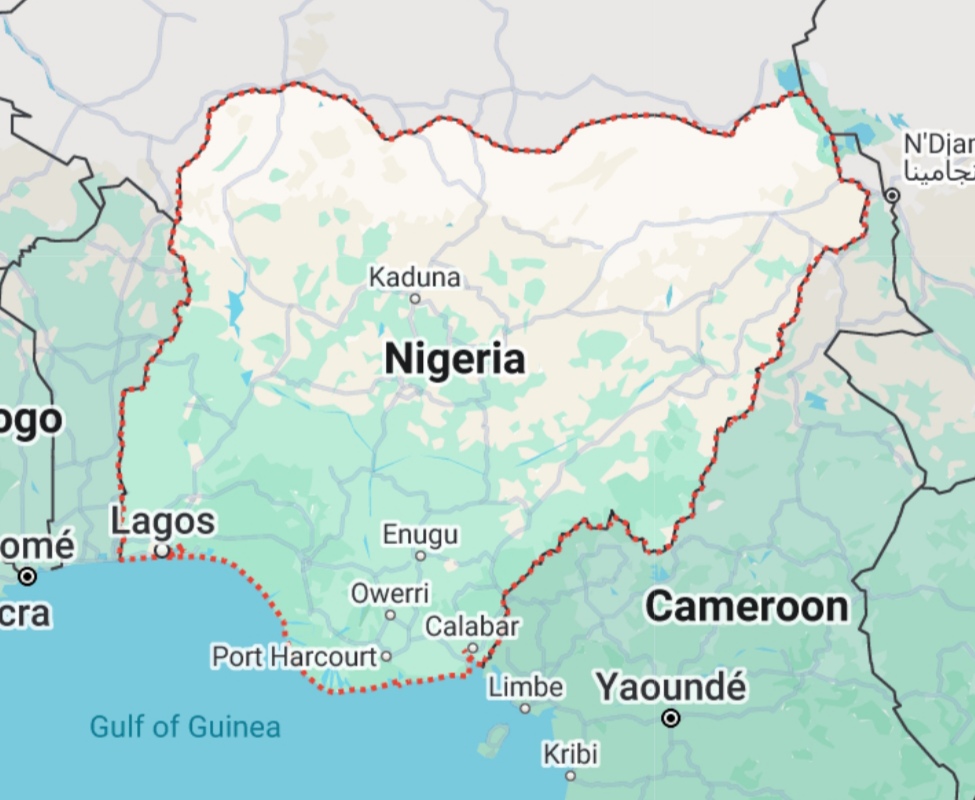
Numan, the town that lends its name to one of the 21 Local Government Areas in Adamawa State in north-east Nigeria, is home to the Bwatiye (Bachama), a transnational identity group stretching into parts of Cameroon. Located in the basin of Benue River and one of its tributaries, River Taraba, Numan’s fecund lands play host to vast energies in sedentary agriculture. Fulbe pastoralists have for long also found it welcoming for grazing their herds.

These factors have made Numan a major frontier in the murderous livelihood conflict that has pitted sedentary farmers and armed pastoralists in the Middle Belt of Nigeria. Described as a crisis “over scarce land and water resources” this conflict is estimated to have “claimed the lives of around 10,000 Nigerians” in the period since about 2013. It is widely recognized as the second most deadly conflict in Nigeria after the Boko Haram crisis.

For nearly three years until 2018, Numan was the site of a murderous war between sedentary farmers and armed pastoralists. No one knows the number who lost their lives in this conflict. James Courtright, who researched the situation wrote in 2023 that “by the time the crisis ended in January 2018, around 150 people were dead, a dozen villages burned to the ground and hundreds of Fulbe who had called Numan home had fled.” Tens of thousands were reportedly displaced. This crisis even became the subject of litigation before the Court of Justice of the Economic Community of West African States (ECOWAS Court of Justice).

On 5 December 2017, Vice-President, Yemi Osinbajo SAN, visited Adamawa State to see things for himself. Subsequently, the federal government arranged to distribute emergency relief materials to affected communities including Dong, Lawaru, and Kukumso in Demsa LGA; as well as “Shafaron, Kodomti, Tullum, Mzoruwe and Mararraban Bare in Numan Local Government Area.” Amidst these developments, the federal government launched what ultimately proved to be an inconclusive “series of national consultations with all relevant groups designed to find a lasting solution to the farmers-herders conflict in parts of the country.”

The events in Kodomti village during this crisis were to become the subject of prosecutorial interest which worked its way up to the Supreme Court, coming to a decision on 7 March 2025. On 27 January 2015, an incident occurred in a farm in Kodomti belonging to Sunday Jackson. By the time the dust had settled, Alhaji Ardo Bawuro lay dead, victim of three stab wounds in the neck at the hands of Sunday Jackson.

The Adamawa State Director of Public Prosecutions arraigned Sunday Jackson on one count of culpable homicide punishable with death (murder) for the killing of Ardo Bawuro. On 10 February 2021, the High Court of Adamawa State convicted and sentenced Sunday Jackson to death. The Court of Appeal dismissed his appeal on 20 July 2022. From there he appealed to the Supreme Court.

The evidence relied on by the courts was straightforward. There was a coroner’s report but the judgment does not mention a pathologist’s report. According to Sunday Jackson’s statement to the police:

“On Tuesday, 27/01/15 at about 11:10 hrs, I left my village and was cutting thatching grasses (sic) in a bush located in Kodomti village in Numan LGA when the deceased, Alh Buba Bawuro as identified attacked me after loosing (sic) sight of some persons alleged to be pursuing (sic) for killing his cattle. He attacked me in frustration and wanted to stab me with a dagger then we engaged in a wrestling encounter. I succeeded in seizing the dagger from him which I used to stab him thrice on his throat. When the deceased collapsed and was rolling down in a pool of his blood, I took heels and escaped.”

In its judgment on 7 March 2025 delivered by Justice Baba Idris, the Supreme Court determined that this statement was a confession and simultaneously also raised issues of self-defence which had to be considered.

In Nigeria, self-defence is a constitutionally guaranteed right. In criminal law, it is also total exoneration to a charge of murder.

According to the court, four conditions must be present for self-defence to succeed. First, the accused must be free from fault in bringing about the encounter leading to death. Second, there must be present an impending peril to life or of grievous bodily harm. Third, there must be no safe or reasonable mode of escape. Fourth, there must be a necessity for taking of life.

The Supreme Court found that the first and second conditions were fulfilled in the case of Sunday Jackson. As to the last two conditions, the court said that “there was a reasonable mode of escape by retreat and there was no necessity to take the life of the deceased.” It did so notwithstanding that there was nothing in evidence about how safe it was to retreat. Consequently, the court held that “the defence of self-defence is not available on a closer consideration of the evidence, and in the light of the circumstances of this particular case.” The court also dismissed any possibility of a defence of provocation, which would have reduced the crime to manslaughter.

In his concurring judgment, Justice Haruna Tsammani said: “on the facts as narrated…., I am of the view that [Sunday Jackson] inflicted more harm than was necessary for the purpose of defending himself. Having overpowered the deceased and collected the dagger from him, a stab would not be considered excessive. It is also my view that [Sunday Jackson] acted in a vengeful manner by stabbing the deceased trice (sic) in the neck; a person he had overpowered.”

This statement by Justice Tsammani is at the heart of the three flaws with this judgment. One is a matter of law and evidence: The Supreme Court believed it was alright for Sunday Jackson to have stabbed Ardo Bawuro once, but not thrice. But there was no evidence before the court as to which of the three stab wounds killed Ardo Bawuro.

It is possible that it was the first stab wound; or the second; or the third. That determination is a matter of evidence and, in criminal law, establishing what killed the Ardo Bawuro was the responsibility of the prosecution. If he was killed by the first stab, then the claim by the court that three stab wounds were too many is demonstrably gratuitous, and self-defence would have availed. In the absence of that kind of evidence, the court had no basis for excluding self-defence.

Second, the court imposed an unreasonable standard of assessment, requiring a person whom it found to be in real peril of loss of his life from an assailant with murder or grievous bodily harm on his mind to make assessments that are beyond the capability of any human in the throes of a fight-or-flight struggle.

Third, in suggesting that Sunday Jackson had a reasonable means of escape, the Supreme Court showed almost blissful lack of awareness of the nature of the conflict on the floodplains of the Benue River (and its tributaries). This case arose in a conflict zone between livelihood and identity groups. The standard of evidentiary assessment deployed by the Supreme Court required Sunday Jackson to possess almost divine knowledge of the surrounding circumstances. Asking him to run in the middle of this required him to be certain that there was no other danger around him. There was no way that he or anyone could in the middle of an active conflict zone have attained that degree of knowledge or awareness.

The miracle in this case is how the court reached a unanimous judgment.

The Supreme Court, we are reminded, is the last bus-stop on legal disputes. Yet, in nearly every case presented for judicial resolution, we find ourselves not merely before the court of law but also before courts of public opinion, of precedent, and of posterity. The judgment in Sunday Jackson’s case is bad law, bad precedent, and bad policy. It is perverse on the scale of a miscarriage of justice. Sunday Jackson is eminently deserving of the exercise of the prerogative of mercy by the Governor of Adamawa State.

A lawyer and a teacher, Odinkalu can be reached at chid

i.odinkalu@tufts.edu

 

Constitutional Crisis: Tinubu’s Emergency Declaration in Rivers State Sparks National Debate

By Eke Chioma

President Bola Tinubu has declared a state of emergency in Rivers State, suspending Governor Siminalayi Fubara, his deputy Ngozi Odu, and the State House of Assembly amidst escalating political tensions and reports of oil pipeline explosions in the Niger Delta region. The declaration follows months of governance paralysis stemming from a bitter power struggle between Governor Fubara and his predecessor, Nyesom Wike, who currently serves as Minister of the Federal Capital Territory.

The Senate, following heated deliberation, approved the emergency proclamation on Friday. Senate President Godswill Akpabio formally announced: “The Senate revokes the powers conferred on it by section 305 subsection 2 of the 1999 constitution of the Federal Republic of Nigeria as amended and approves the proclamation of state of emergency declared by Mr. President in Rivers State of Nigeria.”

However, the declaration has ignited fierce opposition from multiple quarters. A coalition of opposition leaders, including former Vice President Atiku Abubakar and former Kaduna State Governor Nasir El-Rufai, held a press conference in Abuja on Thursday, March 20, demanding immediate reversal of what they described as “an unconstitutional attempt to destabilize an elected government.”

The Nigerian Bar Association (NBA) has also condemned the action in the strongest terms. NBA President Afam Osigwe, SAN, during an appearance on Arise Television, emphasized that the declaration is unconstitutional, rendering the National Assembly’s confirmation void. Osigwe argued that the Constitution provides no authority for the President to remove elected officials under the guise of emergency rule and warned that this sets a dangerous precedent that undermines democracy.

With Rivers being a major oil-producing state, experts warn that political instability in the region poses significant economic risks for Nigeria. The country, already struggling with severe economic challenges including currency devaluation exceeding 70% between 2023 and 2024, desperately needs to attract investment in its oil sector. However, major oil companies have increasingly divested from onshore assets in favor of deep offshore projects due to persistent security threats and community conflicts.

The timing is particularly concerning as attacks on oil pipelines have historically been used as leverage by political factions and militant groups. During Muhammadu Buhari’s presidency, the Niger Delta Avengers conducted approximately 50 attacks on pipelines and oil facilities, highlighting the region’s vulnerability. The federal government’s handling of this crisis could significantly impact Nigeria’s economic stability and appeal to international investors.

Since Nigeria’s return to civilian rule in 1999, states of emergency have been declared in various regions to address specific crises:

  • In 2004, President Olusegun Obasanjo declared a state of emergency in Plateau State, removing Governor Joshua Dariye after ethno-religious violence between Christian and Muslim communities.
  • In 2006, Obasanjo again invoked emergency powers in Ekiti State, removing Governor Ayodele Fayose and his deputy following an impeachment process marred by legal irregularities.
  • In 2011, President Goodluck Jonathan declared a state of emergency in parts of Yobe, Borno, Plateau, and Niger States, ordering temporary closure of international borders to curb insurgent movements after escalating Boko Haram attacks.
  • In 2013, Jonathan extended emergency rule to all of Borno, Yobe, and Adamawa States, deploying additional military forces to reclaim territories seized by Boko Haram.
  • In 2023, President Tinubu declared a national state of emergency on food security to address severe shortages affecting an estimated 25 million people.

The Rivers State situation represents a significant test for Nigeria’s constitutional democracy. Critics argue that while previous emergency declarations addressed clear security threats, the current action appears politically motivated. The coming weeks will prove critical in determining whether constitutional processes or political expediency will prevail in this oil-rich state.

Nigeria’s Broken Promise: When Citizens Must Become the Change

By Eke Chioma

Nigeria’s status as the “Giant of Africa” has become increasingly difficult to reconcile with its current realities. Once a nation of immense potential, today’s Nigeria struggles with an unstable economy, rampant insecurity, and political turmoil. Throughout March, the country has resembled an ungoverned space where accountability seems optional—particularly for the elite.

While Nigeria technically has a robust legal framework, there’s a striking disparity in how these laws are applied. The wealthy and politically connected operate with near impunity, while ordinary citizens bear the full weight of the system. Politicians demonstrate a willingness to go to extraordinary lengths to maintain their grip on power and resources, turning the nation into what feels like a theater of the absurd where both politicians and citizens play predetermined roles.

Many Nigerians now wonder if the country can ever reclaim its former stability. The answer lies squarely with its citizens. Each day brings fresh headlines about economic collapse and spiraling inflation, yet the populace largely responds with resigned acceptance—a quality once celebrated as resilience but increasingly exploited by leadership. This silence enables continued corruption and mismanagement, with dissenting voices quickly silenced through intimidation.

The recent case of Raye exemplifies this troubling pattern. After speaking out about economic hardships and questioning government accountability, she faced threats from NYSC officials—a disturbing reminder that constitutional rights to free expression often exist only on paper. Such incidents should catalyze a movement against corrupt governance, yet the response remains fragmented.

More distressing is how some Nigerians actively defend the status quo despite personally suffering under it. For a nominal sum—as little as two thousand naira—citizens will publicly support politicians working against their interests. During the recent Akpabio-Natasha controversy, women mobilized to defend Akpabio, raising questions about whether such demonstrations represented genuine support or purchased loyalty.

Nigeria’s political trajectory reveals a troubling cycle. During Goodluck Jonathan’s administration, despite relative currency stability and affordable fuel, many Nigerians demanded change—primarily due to security concerns with Boko Haram. This led to Buhari’s election, under whose leadership the economy deteriorated, the naira weakened, and insecurity expanded beyond the northeast. Farmers were killed or kidnapped on their land, and police brutality reached unprecedented levels, culminating in the ENDSARS protests. The government’s violent response on October 20, 2020, resulted in bloodshed rather than reform.

Yet this tragedy failed to break the cycle. The 2023 elections brought Tinubu to power, whose immediate removal of fuel subsidies triggered an economic nightmare. Living costs have skyrocketed, with the middle class sliding into poverty and minimum wage insufficient to purchase basic necessities like a bag of rice. Meanwhile, politicians continue their luxurious lifestyles, taking expensive trips and educating their children abroad while businesses collapse, hunger spreads, and crime rates surge as citizens pursue survival by any means necessary.

Perhaps most frustrating is the predictability of Nigeria’s political narrative. Each administration seems to follow the same failed playbook, with no genuine commitment to progress or national development. Even younger generations can recognize this pattern, while older Nigerians who have witnessed this cycle repeatedly often choose resigned silence.

The uncomfortable truth is that Nigeria will not improve through passive hope or incremental adjustments. Meaningful change requires collective action—challenging though it may be. Citizens must vocally hold politicians and leadership accountable for their failures. Silence has proven ineffective as a strategy for change. If Nigerians truly desire a different future, they must be willing to make noise.

Eke Chioma is a student of Mass communication at The Nigeria Television College Jos..

Ejembi Takes Over as Acting Chairman of MBF Kaduna Chapter

The Kaduna State Chapter of the Middle Belt Forum (MBF) now has a new Acting Chairman.

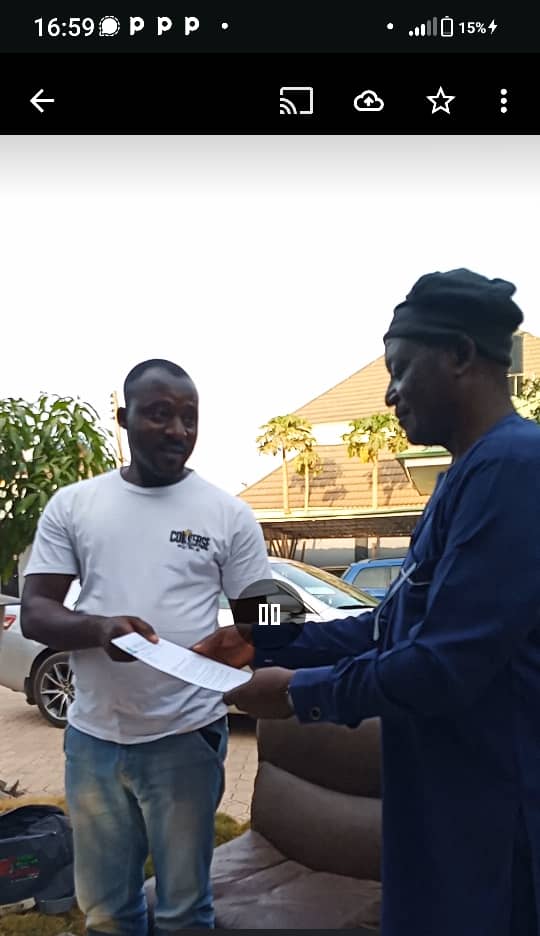
At a brief ceremony during a valedictory executive meeting held in Kaduna yesterday, the outgoing Chairman, Luka Binniyat, announced that he had been directed by the National President of MBF, Dr. Bitrus Pogu, to hand over leadership to his deputy in an acting capacity.

According to the Middle Belt Forum’s organizational structure, the Chairman is supported by a Deputy Chairman and three Vice Chairmen, followed by other executive members. However, the majority of the executive committee favored Mr. Daniel Ejembi, the Assistant Chairman 1, for the role. This decision was communicated to Dr. Pogu, who promptly approved the choice.

Before formally handing over Ejembi’s letter of appointment, Binniyat stated:

“Following my appointment to the National Working Committee (NWC) as the National Public Relations Officer (PRO) of the Forum, the President of the Middle Belt Forum (MBF), Dr. Bitrus Pogu, in consultation with the NWC, has directed me to officially hand over to you, Assistant Chairman 1, to assume the position of Acting Chairman of the Kaduna State Chapter.

As such, I am no longer the Chairman of the Kaduna State Chapter of the MBF.

With this letter, you are hereby recognized as the official and only Acting Chairman of the MBF, Kaduna State Chapter, along with your duly elected Executive Committee, until otherwise directed by the NWC.

It must be emphasized that any individual or group claiming to act in your capacity or that of your executive committee may be liable for impersonation.

The President congratulates you on your new role and looks forward to a vibrant and effective Kaduna State Chapter under your leadership.”

Ejembi, a businessman, human rights activist, and anti-corruption crusader, has been a longtime resident of Kaduna. He hails from Benue State.

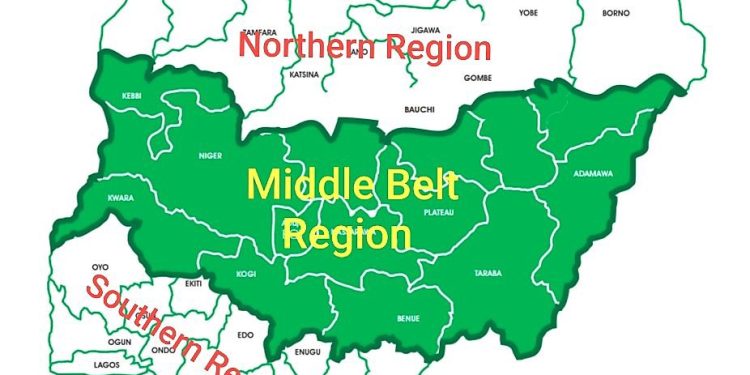
The Middle Belt Forum represents ethnic groups from Northern Nigeria that were historically outside the Othman Dan Fodio Caliphate and the Kanem-Borno Empire before colonial rule. It spans 14 northern states, including the Federal Capital Territory (FCT).

Ethnic groups from Southern Kaduna, Southern Kebbi, Southern Borno, and Southern Bauchi, as well as those from Adamawa, Gombe, Nasarawa, Plateau, Kogi, Kwara, Niger, Taraba, Benue, and the FCT, are all members of the MBF.

Middle Belt Forum Celebrates Presidential Appointments of Bishop Kukah and Prof. Qurix

KADUNA – In a significant boost to the academic landscape of Southern Kaduna, the Middle Belt Forum’s Kaduna Chapter has publicly lauded President Bola Ahmed Tinubu for appointing two distinguished Middle Belt sons to leadership positions at the newly established Federal University of Applied Sciences, Kachia.

Bishop Matthew Hassan Kukah, the Catholic Bishop of Sokoto Diocese, has been appointed as Pro-Chancellor and Chairman of the Governing Council, while Prof. Qurix Williams Barnabas will serve as the institution’s pioneering Vice Chancellor.

“These appointments reflect the President’s commitment to recognizing and harnessing the immense human resources within the Middle Belt region,” said Eld. Yusuf Solomon Danbaki, PRO of the Middle Belt Forum, Kaduna Chapter, in a statement released today.

Bishop Kukah, widely respected as an intellectual and peace advocate, brings his extensive experience in social justice advocacy and educational development to his new role. His appointment is expected to provide visionary leadership as the university establishes itself in the educational landscape.

Prof. Qurix, an accomplished academic and administrator with significant experience in higher education, has been tasked with overseeing the day-to-day operations of the university, which is scheduled to admit its first students in September 2025.

The Forum expressed confidence that under their leadership, the Federal University of Applied Sciences, Kachia, will emerge as “a hub of academic excellence, cutting-edge research, and innovation” that will transform the educational landscape of Southern Kaduna and Nigeria at large.

“The Middle Belt region is blessed with an abundance of highly skilled, visionary, and dedicated individuals who are eager to contribute to the growth and development of our nation,” the statement emphasized, urging President Tinubu to continue identifying and appointing more capable leaders from the region to key positions in his administration.

The Forum has pledged its full support to both appointees and the entire university community as they work to implement the institution’s mandate of fostering applied sciences and technological advancement in line with the President’s Renewed Hope Agenda.

Atiku Backs NYSC Member Raye Amid Alleged Threats Over Viral Anti-Tinubu Video

By Eke Chioma

Former Vice President,  Atiku Abubakar, has expressed support for Ushie Rita Uguamaye, a Lagos-based National Youth Service Corps (NYSC) member known as Raye, who alleged receiving threats for calling President Tinubu ‘Terrible’  in her video.

In a statement shared on X (formerly Twitter) on Sunday, Atiku praised Raye’s courage, describing her as a symbol of a new generation of politically engaged women committed to advocacy and democratic participation.  

“Raye embodies the spirit of a new generation of women who champion the ideals of popular participation and unwavering advocacy in the political sphere. I deeply admire her boldness and wisdom—her fearless resolve to speak truth to power, undeterred by the weight of opposition,”Atiku wrote.  

“Rather than being met with hostility, Raye deserves encouragement and support. She is a shining emblem of the Nigerian youth—a testament to the long-held promise that the leaders of tomorrow are already among us, ready to shape a better future,” he added.  

Meanwhile, Amnesty International has condemned the reported threats, calling for an end to the intimidation of citizens who express concerns over governance and economic conditions.  

“The vicious threats to the youth corps member by NYSC officials and others must be withdrawn,” the organization stated. “Her rights and safety must be guaranteed.”

Background

Ushie Rita Uguamaye, a Lagos-based NYSC member, raised concerns about alleged threats following the circulation of her viral video criticizing President Tinubu over inflation and economic hardship.  

In a video posted on her TikTok account (#talktoraye) on Saturday, Uguamaye expressed frustration over Nigeria’s worsening economic conditions, lamenting that hard work seems futile amid financial struggles.  

She openly criticized Tinubu, referring to him as a “terrible leader”, while also questioning the government’s efforts to alleviate citizens’ suffering. Additionally, she described Lagos State as a “smelling state”, citing its odour and poor living conditions.  

Shortly after her video gained traction, Uguamaye alleged that she began receiving threats, reportedly from NYSC officials, urging her to stop criticizing the government and delete the video.  

She stated:  “Yesterday, I made a video talking about the Nigerian government and how terrible President Tinubu is, and I was crying in the video. Thirty minutes ago, I received a call from the NYSC board, starting with the secretariat before the LGI. For the NYSC secretariat, I’m going to attach some of the things she said so you guys can hear.”

During a conversation with an alleged NYSC official, the official was heard asking:  “Are you normal?”

In response, Raye clarified that she was not insulting the president. However, the official interjected:  “Come on, keep quiet there. Pull down that rubbish you put there. You are not talking to your mate.”

Raye then asked:  “Are you threatening me?”

NYSC Summons Uguamaye

Following the controversy, the NYSC has summoned Ushie Rita Uguamaye over her viral social media post criticizing President Tinubu’s administration.  

A message from the NYSC Local Government Inspector (LGI), seen on Sunday, instructed Uguamaye, identified by code number LA/24B/832, to report to the Eti Osa 3 local government office by 10 a.m. on Monday without fail.  

The development has triggered widespread reactions from Nigerians, with many questioning whether corps members should be restricted from expressing their views on governance and national issues.  

Nasir el-Rufai: The Bloodlust of a Presidential Wannabe

By Chidi Anselm Odinkalu

IN the week in which former Kaduna State Governor, Nasir el-Rufai abandoned the ruling All Progressives Congress (APC) to chart a different political trajectory with the Social Democratic Party (SDP), his son, Bashir, characteristically made it known that “Southern Kaduna residents will keep seeing sheghe if they continue to attack indigenous Fulani herdsmen.”

Three things about this, among many, were chilling. One is the absence of any interest in addressing the underlying problem of coexistence between communities. The second is the enthusiastic investment in violence. The third is the indiscriminate nature of the promised violence. This was not the first time an outburst of candour from the El-Rufai clan was laced with unconcealed thirst for human blood.

In January 2019, as the country prepared to go to the polls in a presidential election the following month, the administration of Nasir el-Rufai’s political benefactor, Muhammadu Buhari, guillotined then Chief Justice of Nigeria, Walter Onnoghen. The manner and timing of the decision drew very sharp international rebuke. In response, Governor el-Rufai went on National television to warn that any foreign observers perceived as meddling in the elections “will go back in body bags.” As influential continental news magazine, Africa Report, delicately put it, these were the words of a man who had “previous ‘anti-meddling’ approach to diplomacy.”

This “‘anti-meddling’ approach to diplomacy” appears to be a family investment. Abubakar Idris was a committed supporter of former Kano State Governor, Rabiu Musa Kwankwaso, who lived in Barnawa, in Kaduna South Local Government Area of Kaduna State. From there Mr. Idris, better known as “Dadiyata”, engaged in vigorous criticisms of the ruling APC, one of whose founders happened to be Nasir el-Rufai.

On or about 2 August 2019, Dadiyata vanished. He has not been seen since then. A digital visibility campaign to help locate his whereabouts continues under the hashtag #WhereIsDadiyata. Four and a half months after Dadiyata disappeared, on 23 December 2019, Bashir el-Rufai ominously tweeted: “The same clowns who encouraged him when he was creating false stories and capitalising on lies that could endanger lives solely for political ends are the same individuals trending hashtags asking #WhereisDadiyata. Dangerous lies in the public space have consequences.”

Less than three months later, on 11 March 2020, Bashir’s brother, Bello, currently a member of the House of Representatives, went one better with an even more chilling gloat in poor verse: “The things that we’ve done to protect the name are unsettling. But no regrets though, the name will echo. Years later, none greater. Death to a coward and a traitor, that’s just in my nature!”

At his inauguration as Kaduna State governor in May 2015, Nasir el-Rufai identified insecurity as “an obstacle to progress” and promised to “work with law enforcement officials to drastically reduce violent crime” and  “ensure safety of life and limb.” By the time he left office eight years later, he had achieved the exact opposite.

Forgetting this promise, Nasir el-Rufai as Governor brooked no criticism or opposition. No cruelty was considered beyond the pale for them. For daring to disagree with him, el-Rufai demolished the homes of the Zonal vice-chair of his party, Inuwa Abdulkadir; and of his Senator for Kaduna North, Suleiman Hunkuyi. 

He was only just beginning. His regime compiled a jaw-dropping list of body bags. Some, like Dadiyata, disappeared, never to be seen again. Others, like Maiwada Raphael Galadima, Agwam Adara III, paramount ruler in Kajuru, turned up dead or decapitated. The Agwam Adara was ostensibly returning home from a consultation with the state government on a crisis in his domain when he was abducted. His wife, abducted with him, was released after the abductors murdered her husband. The Governor was missing from Agwam’s funeral. After his burial, Nasir el-Rufai swiftly abolished his kingdom and purported to carve it into emirates.

Under Nasir el-Rufai and by appointment of the Nigerian Union of Journalists (NUJ), Kaduna State attained “notoriety as the deadliest state for Journalists in Nigeria to operate.” They were not the only endangered species. The strategic research group, SBM Intelligence, concluded also that “Kaduna was the most dangerous state for priests, who were often kidnapped during services.”

The governor’s signal accomplishment was to displace Boko Haram from the top of the league of atrocities. This was no easy feat. In May 2014, the United Nations Security Council listed the Jama’atu Ahlis-Sunna Lidda’Awati Wal-Jihad, (the Islamist insurgency better known as Boko Haram) as a terrorist organisation. Three years earlier, the Gaji Galtimari Presidential Committee on the Security Challenges in the North-East Zone of Nigeria had reported that the group “started as an innocuous non-violent group” around 2003.

Since then, Borno State, the epicentre of Boko Haram’s atrocities, habitually topped the national league table of mass-casualty killings in Nigeria. The monitoring coalition, Nigeria Mourns, reported a peak of 6,138 atrocity casualties in Borno State in 2015. Over the next five years, casualty count in Borno State appeared to drop off quite significantly.

Over 760 kilometres from the Borno State capital, Maiduguri, in Kaduna, the historical capital of northern Nigeria, it almost appeared as if the State government led by Nasir el-Rufai was envious of Borno’s position. In 2015, when Borno State hit the peak in atrocity killings, Nigeria Mourns recorded 411 casualties in Kaduna State. By 2020, the figure had risen to 628. In Borno State in the same year, the count was 1,176 killed.

In 2021, el-Rufai’s Kaduna State overtook Borno to take over the top position in the national body-count of mass-casualty atrocities. That year, Nigeria Mourns recorded 587 killed and 119 abducted in Borno State. In Kaduna State, it counted 1,114 killed and 1,225 abducted. In 2022, at least 1,346 people were abducted in Kaduna State. The comparable figure for Borno State was 77.

To be sure, Kaduna State had a well-advertised history of chronic violence dating back to the 1980s and accounting for tens of thousands killed over the period. Under Nasir el-Rufai however, virulent executive bigotry drove the state beyond the edge through methodical segregation. Leena Hoffman captured the depth of Kaduna’s crisis of sectarian segregation under the governor: “the river that runs through the city of Kaduna, the state capital, highlights the starkness of the divide: the northern half is unofficially called Mecca; the south, Jerusalem.”

The most intense site of chronic mass-casualty atrocities in Kaduna State was Southern Kaduna, which is characterised by linguistic and ethnic diversity coexisting with a high concentration of the State’s non-Muslim populations. For many people, there was only one explanation for the exponential spike in mass-casualty atrocities in Kaduna State – the State governor, Nasir el-Rufai. His administration was widely “accused of a conspiracy of silence” in support of the murderous campaign of extermination in Southern Kaduna.

In one of his earliest acts as governor, Nasir el-Rufai sought exculpation for bandit pastoralists from the chronic massacre in Southern Kaduna, claiming that he had already “spent government money to pay Fulani herdsmen to stop violence in southern Kaduna.” About the armed “bandits” who were to emerge as the fall guys for the violence, Governor el-Rufai later described them as “just collections of independent criminals. It is a business for them.”

When Mr. el-Rufai stepped down from office in 2023, mass-casualty atrocities in Kaduna crashed spectacularly. Nigeria Mourns recorded 413 atrocity killings in Kaduna and 393 abductions. The only thing that appears to have occurred to bring about this transformation was a change in the occupant of the office of state governor.

In January 2017, an audio emerged in which he gloated over the untimely death in 2010 of former President, Umaru Musa Yar’Adua, his high school contemporary at Barewa College, Zaria on whom he had also visited unrestrained bile in his memoirs. Columnist, Farooq Kperogi, observes that Nasir el-Rufai “embodies one of the most morbidly toxic strains of political intolerance in Nigeria. He exteriorises his discomfort with opposition by literally wishing death upon his opponents or claiming credit for their death.”

Bloodlust such as this can never be slaked. Out of power today, el-Rufai seeks to re-brand himself as an ecumenical politician invested in pluralism. Those who make the mistake of jumping into political bed with him will have themselves to blame.

A lawyer and a teacher, Odinkalu can be reached at chidi.odinkalu@tufts.edu 

Powder Keg in the Creeks: Niger Delta Militants Threaten Nigeria’s Economic Lifeline

By Steven Kefas

(PortHarcourt), Nigeria’s fragile economic recovery faces a new threat as militants in the oil-rich Rivers State issue ultimatums that could destabilize the nation’s primary revenue source amid a complex political crisis.

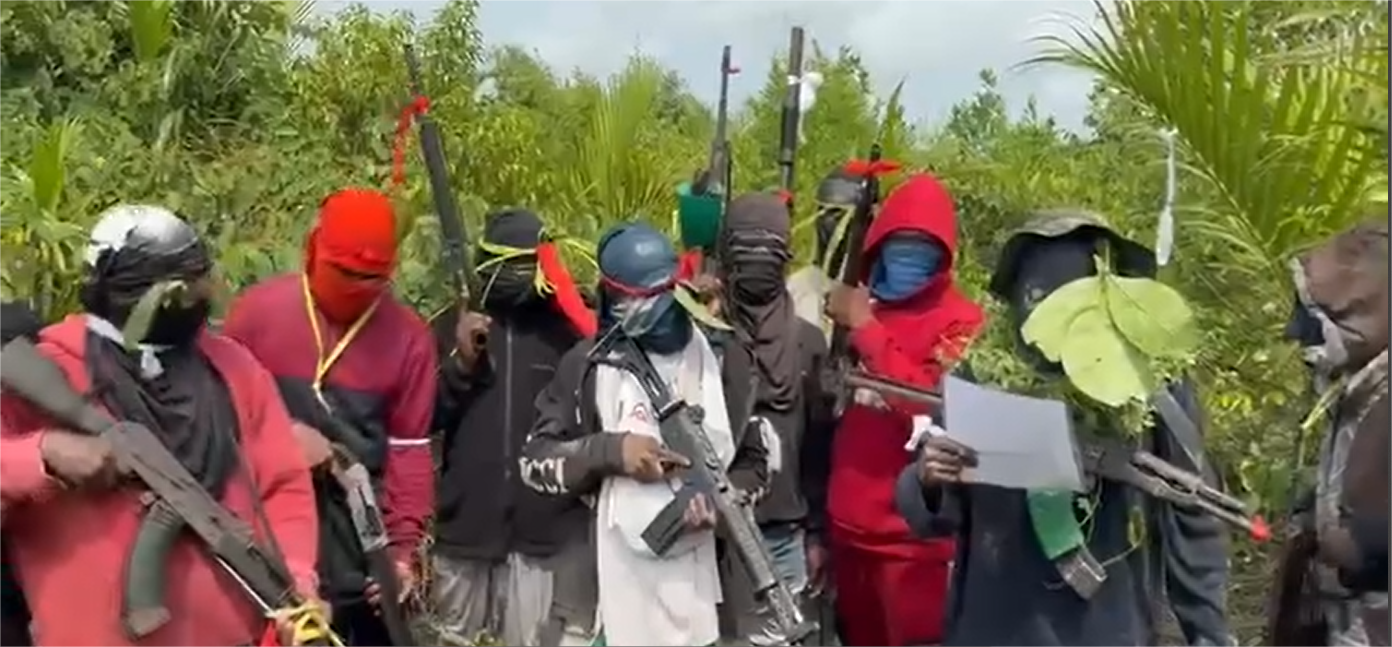
A chilling video emerged Thursday showing armed militants from the Niger Delta Rescue Movement (NDRM) threatening to attack oil installations in Rivers State, one of Nigeria’s largest oil producers. The militants, brandishing AK-47 rifles and other dangerous weapons from an undisclosed forest location, issued warnings that could potentially cripple Nigeria’s oil production and further destabilize an economy already on life support.

The group’s emergence comes in response to a political crisis that has seen the federal government withhold Rivers State’s allocation following a Supreme Court judgment that upheld the Martin Amaewhile-led 27-member House of Assembly as the legitimate legislative body. The Assembly subsequently issued a 48-hour ultimatum for Governor Siminalayi Fubara to present the 2025 state budget, which expired Wednesday night.

In the video lasting just over three minutes, a spokesman for the militants declared, “If the federal allocation due to Rivers state cannot be released promptly, we will have no choice but to take decisive action, including hitting oil production.” The militants also ominously advised non-indigenes to leave Rivers State for their safety, chanting “asawana, asawana” – a traditional war cry among the Ijaw people.

Economic Implications

For an economy struggling to find its footing, the timing couldn’t be worse. Nigeria’s recent modest economic gains have hinged largely on improved oil production after years of decline due to theft, vandalism, and underinvestment.

Dr. Adebayo Adegbine, a Lagos based Economist, warns that any disruption to oil production in Rivers State would deliver a devastating blow to Nigeria’s economy.

“The federal government has only recently begun to see slight improvements in oil output, which remains the backbone of our export earnings and government revenue,” Adebayo told TruthNigeria. “If militants carry through with their threats and successfully target key oil infrastructure, we could see production drop by as much as 300,000-400,000 barrels per day or even more. The ripple effects would be catastrophic – from exchange rate instability to budget deficits and delayed salary payments across multiple states.”

The threat evokes painful memories of the 2003-2009 insurgency, when militant groups like the Movement for the Emancipation of the Niger Delta (MEND) reduced Nigeria’s oil production by more than 50 percent through a coordinated campaign of pipeline bombings, facility attacks, and kidnappings of oil workers. At its peak, the violence slashed production from 2.2 million barrels per day to barely 1 million, costing the nation an estimated $100 billion in lost revenue in 10 years. The petroleum industry’s vulnerability was exposed as multinational companies declared force majeure and evacuated non-essential staff, while insurance premiums for operations in the region skyrocketed. It wasn’t until the 2009 amnesty program offered militants training, stipends and reintegration opportunities that relative stability returned to the region. “We’ve been here before,” notes energy consultant Ebi Johnson to TruthNigeria. “And the economic recovery took years, even with higher global oil prices than we have today.”

Nigeria’s economy has barely emerged from a period of hyperinflation, with the naira stabilizing slightly after months of freefall. The Central Bank has been working to rebuild foreign reserves, largely dependent on oil export earnings.

“We’re looking at a potential economic catastrophe if oil installations are attacked,” explains financial analyst Chika Okonkwo to TruthNigeria. “With government borrowing already at unsustainable levels and debt servicing consuming nearly 97% of revenue, any significant drop in oil output would likely trigger another currency crisis and inflation spike that could push millions more Nigerians into poverty.”

Why Americans Should Care

The brewing crisis has implications well beyond Nigeria’s borders, particularly for American consumers and businesses. As one of the largest oil suppliers to the United States, Nigeria’s production disruptions directly impacts global energy markets and prices at American pumps. Rivers state produces 344,000 barrels of crude per day.

Security Overstretched

The threat of renewed militancy in the Niger Delta represents more than just an economic challenge – it poses a serious security dilemma for a military already stretched across multiple conflict zones.

Dr Walid Abdullahi, a security consultant, describes the situation as potentially unmanageable.

“The Nigerian military is already fighting on at least four fronts – against Boko Haram and ISWAP in the Northeast, containing Lakurawa terrorists in the Northwest, managing deadly farmer-herder conflicts in the North Central states, and addressing banditry across multiple regions,” Abdullahi explained to TruthNigeria. “Opening another active theater in the Niger Delta would severely strain our operational capacity and effectiveness.”

The complexity of Niger Delta operations presents unique challenges. The region’s network of creeks, swamps, and waterways requires specialized training and equipment, including naval assets that are already in short supply.

“The terrain in the Niger Delta is notoriously difficult for conventional military operations,” notes Dr. Abdullahi “Previous militant campaigns demonstrated how relatively small groups could effectively evade security forces while targeting critical infrastructure. The military simply doesn’t have the resources or specialized units needed to secure thousands of kilometers of pipelines and oil facilities while maintaining operations in other conflict zones.”

Political Dimensions

The crisis is deeply rooted in the political standoff between incumbent Governor, Similaye Fubara and his predecessor Nyesom Wike, now Minister of the Federal Capital Territory. The militants explicitly mentioned Wike in their statement, accusing him of orchestrating the crisis to undermine Fubara’s administration.

“We call on President Bola Tinubu to intervene immediately and put a stop to the action of the Minister, Nyesom Wike, and his associates whose intent is to drag Rivers state to avoidable crisis,” the group stated.

Political analysts suggest the federal government faces a precarious balancing act. “Heavy-handed intervention could further inflame tensions, while inaction might allow the situation to deteriorate beyond control.” Says Michael Udeme, Uyo-based political scientist to TruthNigeria

Path Forward

Security experts emphasize that only a political solution can prevent potential catastrophe.

“Military action alone cannot resolve this situation,” warns Udeme. “The federal government must immediately convene all stakeholders – including Fubara, Wike, community leaders, and civil society – to address the legitimate grievances while isolating those seeking to exploit the situation for violence.”

For ordinary Nigerians already struggling with economic hardship, the prospect of disrupted oil production represents yet another threat to their livelihoods and stability.

As Rivers State residents anxiously await developments, the nation holds its breath, hoping that cooler heads will prevail before the powder keg in the Niger Delta ignites a crisis Nigeria can ill afford.

Troops Neutralize Kidnappers, Arrest Gunrunners, and Rescue Hostages in Plateau and Kaduna.

By Eke Chioma

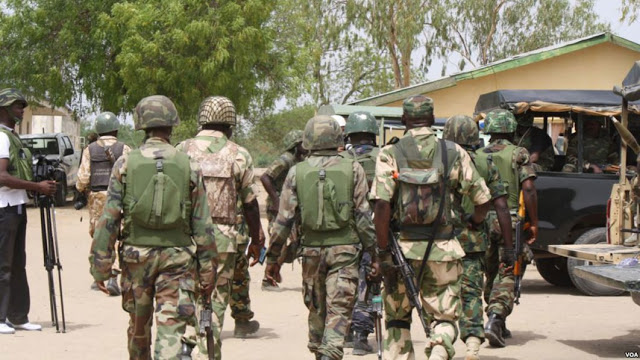
(Jos), Troops of 3 Division and Operation safe haven,  under Operation LAFIYAN JAMA’A, have eliminated two kidnappers, apprehended suspected gunrunners, and seized arms and ammunition in Plateau and Kaduna States.

According to Major Samson Zhakom, Media Information Officer of Operation SAFE HAVEN, troops launched an offensive operation on March 12, 2025, targeting criminal hideouts in Kuru and Turu, Jos South LGA, Plateau State. 

During the operation, troops engaged armed kidnappers and terrorists near the high grounds of Kuru, successfully eliminating two suspects. A search of the area led to the recovery of 18 rounds of 7.62mm (Special) and 9 rounds of 5.56 x 45mm ammunition. 

Later that day, troops set up snap checkpoints along the Bokkos-Bot-Mangu road in Bokkos LGA, following intelligence reports on arms smuggling.  

The operation led to the arrest of 21-year-old Sengi David, a known gunrunner from Kopal Village in Panyam District, Mangu LGA. Troops recovered one AK-47 magazine and 48 rounds of 7.62mm (Special) ammunition from the suspect, who is now in custody for further investigation. 

In another covert operation on March 11, troops successfully arrested a notorious kidnapper, terrorist, and gunrunner, identified as Mr. Blessed Paul, 22, in Garaje Community, Jema’a LGA, Kaduna State.  

The suspect, who had been on security agencies’ wanted list, had previously escaped to Abuja to evade arrest. Troops lured him by posing as buyers interested in purchasing an AK-47 rifle for N1.5 million.  

“A search on the suspect led to the recovery of one AK-47 rifle, one AK-47 magazine, and 2 rounds of 7.62 mm (Special) ammunition. The suspect and recovered arms and ammunition are in custody,” Zhakom stated.  

According to the military, the suspect is cooperating with interrogators, providing useful information to help security forces track down other members of his syndicate.  

On March 12, 2025, troops of 3 Division/Operation SAFE HAVEN conducted a rescue operation at the outskirts of Josho Village, Daffo District, Bokkos LGA, Plateau State.  

”The operation followed credible intelligence that kidnappers were keeping some abducted victims in the area. Upon sighting troops, the kidnappers abandoned their victims and fled,” Zhakom explained.  

Following a search of the hideout, troops rescued two female victims:  

– Miss Nanbam Adamu, 11 years old and

– Miss Dorcas Wantu

Both victims are indigenes of Mbor Village in Mushere District, Bokkos LGA.  

“The rescued victims have been debriefed and handed over to their families. Troops are currently conducting follow-up operations to intercept and neutralize the fleeing kidnappers,” the military spokesman added. 

Northern CAN Condemns Supreme Court Ruling Upholding Death Penalty for Adamawa Farmer in Disputed Self-Defense Case

By Eke Chioma

Yola, Nigeria — The Supreme Court of Nigeria has upheld the death sentence of Sunday Jackson, a farmer from Dong community in Demsa Local Government Area, Adamawa State, drawing sharp condemnation from the Christian Association of Nigeria (CAN) and reigniting debates over judicial fairness and self-defense laws. Jackson was convicted for the 2014 killing of Fulani herdsman Buba Ardo Bawuro, which he insists was an act of self-defense during a violent confrontation.

According to court records, Jackson was working on his farm when Bawuro, allegedly armed with a knife, attacked him. Jackson claims he disarmed his assailant during the struggle, leading to Bawuro’s fatal injury. However, the Supreme Court ruled that Jackson had “reasonable opportunity to flee” and rejected his self-defense argument, affirming a 2021 Adamawa High Court verdict sentencing him to death by hanging. The March 7, 2025, ruling has sparked widespread outrage, with human rights groups and religious leaders demanding justice.

In a strongly worded statement issued in Kaduna, Rev. John Hayab, Chairman of the Northern CAN, denounced the judgment as a “grave travesty of justice” and urged Adamawa State Governor Ahmadu Umaru Fintiri to grant Jackson an immediate pardon. “This ruling blatantly disregards Sections 23 and 24 of the Adamawa State Penal Code, which protect individuals acting in self-defense. Jackson endured a decade of legal battles rooted in a flawed interpretation of the law. We implore the governor to intervene and correct this injustice,” Hayab declared.

The case has drawn international scrutiny, with human rights advocates condemning the verdict. During an Arise TV interview, Emmanuel Ogebe, an international human rights lawyer, warned that the ruling sets a “dangerous precedent” for self-defense claims in Nigeria. “Jackson retrieved the weapon from his attacker—this is textbook self-defense. To sentence him to death is not only unjust but a gross miscarriage of justice,” Ogebe argued.

Echoing his sentiments, U.S.-based activist William Devlin criticized Nigeria’s judiciary, stating, “Sunday Jackson is unequivocally innocent. This ruling exposes systemic failures in protecting vulnerable citizens from flawed prosecutions.”

With all legal appeals exhausted, Jackson’s fate now hinges on Governor Fintiri’s discretionary power to grant clemency. As pressure mounts from civil society groups, legal experts, and religious organizations, the case has become a focal point in broader calls for judicial reform and clarity on self-defense rights in Nigeria.

Northern CAN’s condemnation adds to growing demands for executive intervention, underscoring the deepening divide between public sentiment and the judiciary’s interpretation of the law. The outcome may set a critical precedent for similar cases amid Nigeria’s ongoing tensions between farmers and herders.