The Middle Belt Forum (MBF), Kaduna State Chapter, received with deep shock and profound sadness the news of the passing of His Excellency, Senator Solomon Ewuga, former Deputy Governor of Nasarawa State and Chairman, Board of Trustees of the Middle Belt Forum, who departed this life on Tuesday, September 22, 2025, in Abuja.
Senator Ewuga was a statesman of uncommon courage and conviction. He embodied the true spirit of the Middle Belt struggle — a life of sacrifice, service, and unwavering commitment to justice, equity, and national unity. His wisdom, integrity, and vision left an indelible mark not only on the Middle Belt but also on the nation at large.
We in the Kaduna State Chapter deeply mourn his departure. His leadership, guidance, and dedication to the Middle Belt cause will forever remain a source of inspiration. Though he has passed on, his legacy will continue to strengthen our resolve in the pursuit of fairness, justice, and inclusive development.
On behalf of our members, we extend heartfelt condolences to his beloved family, the Eggon Nation, the government and people of Nasarawa State, and indeed the entire Middle Belt and Nigeria. May the Almighty grant his soul eternal rest and give strength to all who mourn this great loss.
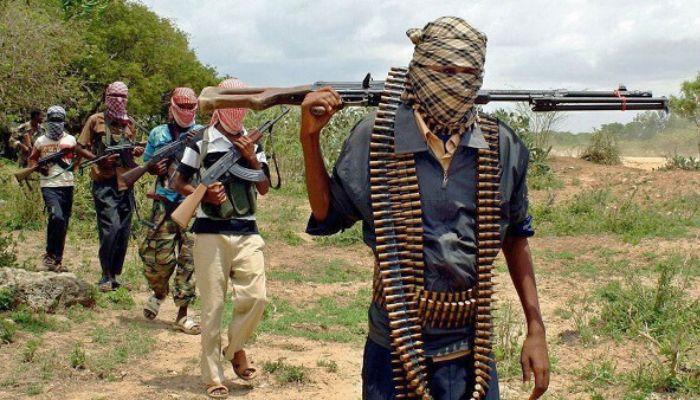
(Makurdi), Three farmers have been confirmed dead following a brutal attack by armed Fulani militants on Nzaav-Div village, a mining community in Jato Aka of Kwande Local Government Area, Benue State, on September 4.
The deadly assault, which occurred at approximately 4:00 PM local time and master more than 2 hours, saw dozens of heavily armed attackers storm the community and open fire indiscriminately on residents. The incident has once again highlighted the escalating security challenges facing Nigeria’s Middle Belt region, particularly communities engaged in farming and mining activities.
According to James, a local resident who witnessed the horrific events, the militants’ primary target was the bustling mining field where hundreds of people work daily. However, farmers who spotted the approaching attackers raised the alarm, enabling most miners to flee the area before the assault intensified.
“Their target was the mines, hundreds of people work there but the farmers who saw them first ran to inform the people and the miners ran away,” James told Middle Belt Times.
“Three people were killed, two were injured and two are still missing, we don’t know their whereabout.”
The victims have been identified as Igba Mfeseer, Achia Tartenger, and Aondofa Taav Zangwa, who was popularly known as “City man” in the community.
The attack has left families devastated, with Mr. Igba’s first son, who also served as his driver, among the missing persons. Mama Mbasen Nyitar Bigila Bur is also reported missing following the assault.
The incident has exposed serious gaps in the security apparatus meant to protect vulnerable communities. Despite the presence of both police and military personnel stationed in the area, residents have expressed frustration over the delayed response to emergency situations.
“We have a police station and also soldiers in the community but they don’t respond on time whenever there is an attack. It could take them up to two hours to be at the scenes of attacks,” James lamented, highlighting a recurring problem that has cost countless lives in similar incidents across the region.
This delayed response time has become a critical concern for residents who find themselves at the mercy of well-armed militants while security forces struggle to provide timely intervention.
The attack on Nzaav-Div village is part of a disturbing pattern of violence that has plagued Nigeria’s Middle Belt region for over two decades. Farming and mining communities have borne the brunt of these attacks, with residents living in constant fear of assault.
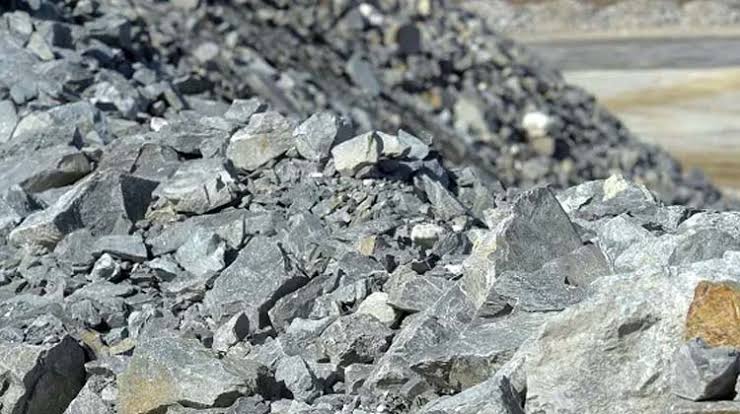
Security analysts and local observers believe these attacks are intrinsically linked to the region’s abundant mineral wealth. The Middle Belt’s rich deposits of various minerals, including tin, columbite, Lithium and gold, have made mining communities attractive targets for criminal elements seeking to control or extort these valuable resources.
The frequency and intensity of these attacks have created a climate of fear that threatens to undermine economic activities in the region, potentially displacing communities and disrupting livelihoods that depend on both agriculture and mining.
In response to the escalating security challenges and concerns over mining operations, Benue State Governor Rev. Fr. Hyacinth Alia took decisive action in March 2024, suspending all mining activities throughout the state. The suspension was implemented citing mounting security concerns and the proliferation of illegal mining operations that have attracted criminal elements to previously peaceful communities.
This drastic measure underscores the gravity of the security situation and the difficult balance between economic development and public safety that state governments across the Middle Belt are grappling with.
As the community of Nzaav-Div mourns its dead and searches for the missing, the latest attack serves as a stark reminder of the urgent need for comprehensive security reforms in Nigeria’s Middle Belt region. The incident highlights the vulnerability of rural communities and the critical importance of improving response times and protective measures for areas engaged in mining and agricultural activities.
The families of the victims and the broader community now await justice while hoping for enhanced security measures that could prevent similar tragedies in the future.
An investigation into Colin Ikin’s operations in Southern Kaduna reveals a troubling pattern of alleged bribery, forged documents, and community manipulation that mirrors his catastrophic corporate history in Australia—raising urgent questions about Nigeria’s mining oversight.
(Kaduna), In the mineral-rich hills of Southern Kaduna, Northwest Nigeria where lithium and nickel deposits lie beneath Kaninkon land, a familiar story of grand promises and questionable tactics is unfolding. At its center stands Colin Ikin, the Australian mining executive whose corporate failures cost investors nearly $750 million in his homeland, and now, allegedly using cash payments and false governmental connections particularly at the presidential level, to gain control over Nigeria’s valuable mining concessions.
Recent investigations in Jama’a Local Government Area of Kaduna state, where Ikin’s Atlantic Mining Techniques Limited has been attempting to operate, reveals a pattern of activities that community leaders describe as manipulative and potentially fraudulent—allegations that gain credibility when viewed against Ikin’s documented history of corporate catastrophe in Australia.
The Southern Kaduna Operations Community leaders in Bakin Kogi, Dangoma and surrounding areas paint a troubling picture of Ikin’s methods. According to sources who spoke on condition of anonymity due to fear of intimidation, the Australian executive has been using cash payments to secure local support while making claims about high-level government connections.
“In December last year, he gave out millions of Naira to buy loyalties from people who were willing to sell,” revealed a community leader from Bakin Kogi.
“Some group of elders, a few of them were given 10 million naira in December 2024 by Colin Ikin. That is strange to me because Australians are known to be well-behaved people in business. I have worked with them when I was much younger and I can tell you that they hardly do bribes.”
The source’s concerns extend beyond the alleged payments to Ikin’s intimidation tactics and grandiose claims. “Colin Ikin boasts so much of having connections to the presidency, and with that claim, he is bullying our people into accepting his own terms and surrendering our lands to his company, Atlantic Mining Techniques, for peanuts. Unfortunately, some of our elders, like I said earlier, have fallen for his tricks.”
What particularly alarms community leaders is the absence of standard mining industry practices. “What baffles me most is that Colin isn’t talking about anything like a Community Development Agreement; no clear blueprints for our communities, unlike what we have seen other mining companies do in recent years,” the source explained.
Another community leader from Godogodo expressed deep concern about the state government’s apparent endorsement of Ikin’s operations: “The ongoing romance between the Kaduna state government and Colin Ikin will only lead to chaos in the communities as we do not trust the Australian. His methods are not what we have seen from other mining companies operating in our area.”
Federal Ministry Denies Ikin’s Claims
Despite his alleged boasts about presidential connections and his meetings with state governments, independent investigations reveal that Ikin lacks proper authorization from federal authorities. Kayode Ogunbunmi, a media consultant purportedly linked with the Nigerian Mining Office in Abuja, categorically denied any record of Ikin’s applications in a response to an earlier article accusing the mining office of inadequate oversights.
“The glib reference of Kefas to a Mr Colin Ikin allegedly ‘wanted’ in Zimbabwe and being embraced here is nothing short of a stupor induced hallucination. Truth is, there’s no record of any such Mr Colin’s application or titles in the Federal Ministry of Solid Minerals till date!” Ogunbunmi had stated.
This revelation raises serious questions about how Ikin has been operating in multiple Nigerian states—including documented meetings with officials in Kaduna and Nasarawa—without proper federal licensing. It also raises questions about Ikin’s support network in Nigeria that allows him to perpetuate fraudulent claims. Who are his backers? Who owns Atlantic Mining Techniques Ltd?
The Zimbabwe Connection
Nigeria’s failure to conduct proper due diligence on foreign mining operators becomes more concerning when viewed against experiences elsewhere in Africa. Zimbabwe’s former Chairman of Mines and Energy, Temba Mliswa, has documented similar patterns of exploitation by questionable foreign operators.
“A peculiar case of Colin Ikin, a dodgy mining mogul, has raised my interest. Why does the government seem hell-bent on protecting rogue white business people in this country?” Mliswa questioned, highlighting regulatory capture that has become endemic across African mining sectors.
According to Mliswa’s documentation, Ikin faces serious allegations in Zimbabwe, including criminal activity reported to police, forgery of bank documents, and illegal withdrawal of funds. “This time around, he is alleged to have forged bank documents and went ahead to illegally withdraw US$10,000 from an Afrocash Micro NMB account,” Mliswa noted, describing police cases for fraud and forgery of company documents.
Mliswa’s broader observation resonates with Nigeria’s current situation: “It seems we are intent on becoming a safe haven for foreign criminals, while our own people are constantly faced with the rough edges of the law to the point of being second-class citizens.”
Community Resistance and Formal Complaints
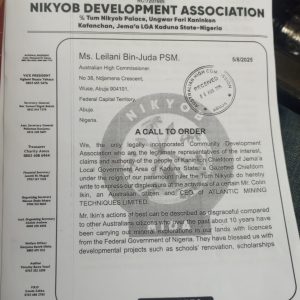
The Nikyob Development Association (NIDA), representing the mining communities in Kaninkon land, has taken formal action against Ikin’s activities. In August 2025, NIDA wrote to the Australian High Commissioner in Abuja, Ms. Leilani Bin-Juda, requesting intervention.
The letter, obtained through this investigation, details a pattern of alleged misconduct: “Mr. Colin Ikin and his company have been involved in forgery, bribery and intimidation of locals who do not support their ‘land grabbing’ scheme. The situation is tense, to say the least.” NIDA’s complaint highlights the contrast between Ikin’s methods and those of legitimate mining operators: “Other Australian citizens who over the past 10 years, have been carrying out mineral explorations in our lands with licences from the Federal Government of Nigeria… have blessed us with developmental projects such as schools’ renovation, scholarship assistance for students, agricultural support, electrification, water boreholes and other interventions as provided for in our Community Development Agreements.”
A copy of the letter obtained by MBT
The association accused Ikin of attempting to “grab our lands… from the rightful owners and from other licence holders including Basin Mining and Range Mining with the Jupiter Lithium project,” using forged consent documents after the traditional council withdrew its original approval which was obtained with misleading information.
The community leadership has recently written to the Minister and the DG-MCO declaring the community will not give consent to any new company the Ministry or MCO sends to the community seeking for consent. The community wants continuity and consistency in the development of the mineral assets on their traditional land.
“Whatever consent Mr. Ikin has or is parading is a forged document,” NIDA stated, adding that “Atlantic Mining Techniques limited and Colin Ikin are the ones sponsoring” court cases against existing licensed operators.
The Australian Track Record
Ikin’s Nigerian operations become particularly concerning when viewed against his documented corporate history in Australia. As Executive Chairman of Preston Resources, Ikin presided over one of the worst corporate disasters in modern Australian mining history—a spectacular collapse that wiped out nearly $750 million in investor funds.
The Preston Resources saga began when the company, under Ikin’s leadership, acquired the Bulong nickel project for $319 million—money the company didn’t have. Shareholders were effectively held hostage by a $10 million break fee commitment when Preston only had $2 million in the bank.
Despite Ikin’s promotional materials describing Bulong as “an outstanding opportunity” that would make Preston “a significant international nickel producer,” the reality proved catastrophic. The Bulong plant never met production forecasts, cash flow projections failed to materialize, and by 2000, Preston had accumulated losses of $497 million with liabilities exceeding assets by $430 million.
Financial columnist Trevor Sykes, an award-winning journalist with 61 years of experience, documented how investors who had paid $1.50 per share to support the Bulong purchase were “financially disemboweled.” The aftermath saw Preston’s board, including Ikin, proposing to hand over 95% of Bulong to note holders, leaving shareholders with assets worth just $787,000 against liabilities of $5 million.
Regulatory Failures and Systemic Vulnerabilities
The Ikin case exposes critical weaknesses in Nigeria’s mining sector governance. Despite the federal government’s push to diversify from oil revenues and develop the solid minerals sector, the country appears to lack robust systems for vetting foreign operators with questionable backgrounds.
State governments, eager for investment and job creation, appear to be making commitments to operators without proper federal coordination or due diligence. The disconnect between Ikin’s state-level meetings—documented in Kaduna and Nasarawa—and the federal ministry’s denial of any licensing applications reveals dangerous coordination gaps.
This regulatory vacuum creates opportunities for operators like Ikin to exploit Nigeria’s mining potential while potentially exposing communities and investors to the same risks that devastated Preston Resources shareholders in Australia.
A Continental Pattern of Exploitation
Nigeria’s experience with questionable foreign mining operators reflects broader continental challenges. From the Democratic Republic of Congo to Tanzania, African nations have struggled with operators who make grand promises but lack the financial backing or technical competence to deliver sustainable mining operations.
The difference between legitimate operators and questionable ones often becomes apparent in community engagement. Legitimate mining companies typically invest heavily in community development agreements, environmental impact assessments, and stakeholder consultation before beginning operations. They also secure proper licenses and maintain transparent financial backing.
By contrast, operators following the pattern allegedly exhibited by Ikin—cash payments to local leaders, claims about political connections, operations without proper federal licensing, and absence of community development frameworks—represent exactly the kind of extraction-focused approach that leaves host communities worse off than before mining began.
Conclusion: Protecting Nigeria’s Mining Future
As Nigeria seeks to diversify its economy beyond oil dependency, the solid minerals sector offers genuine opportunities for sustainable development. However, realizing this potential requires partnerships with operators who bring not just promises but proven competence, financial backing, and commitment to responsible mining practices.
The Colin Ikin case serves as a powerful reminder that not all foreign investment is beneficial investment. Operators with histories of corporate failure and alleged misconduct in other jurisdictions pose risks not just to investors but to the communities whose lives and lands become entangled with their operations. Nigerian authorities at federal and state levels must recognize that protecting the country’s mineral wealth requires saying no to questionable operators, regardless of their perceived promotional skills or their claimed political connections. The stakes are too high—and Nigeria’s mining potential too valuable—to risk on operators whose track records suggest they are more likely to leave behind devastation than development.
The communities of Southern Kaduna, like investors who lost fortunes in Preston Resources, deserve better. Nigeria’s mining revolution should create lasting prosperity, not expensive disappointments orchestrated by operators whose previous ventures collapsed in spectacular failure. Learning from other countries’ mistakes isn’t just good governance—it’s essential towards ensuring that Nigeria’s mineral wealth truly serves its people’s interests.
Nasiru El-Rufai is Exhibit A for why people with zero emotional intelligence should never be entrusted with consequential positions of leadership.
In his wide-ranging interview with Seun Okinbaloye of Channels, Nasiru El-Rufai said “I dealt with” Southern Kaduna leaders. He also said “I dealt with the IMN [Shiites]who are Muslims like me.” He then said “I don’t care what the people of Southern Kaduna think of me.”
Anyone with a rudimentary knowledge of psychology knows that whenever someone says this, they are actually bothered by the thing that they claim does not bother them.
That is by the way.
What he sought to suggest is that the people of Southern Kaduna made irrational, entitled demands on him, which he rejected. He claimed specifically that they requested fifty percent of appointments.
This is flat out inaccurate since the people of SK, who occupy one out of three senatorial constituencies, had made no such demand in even in prior PDP administrations that they helped elect nor had they been given that.
Even under the governorship of perhaps the most inclusive governor who is universally regarded as the biggest political friend of Southern Kaduna, Ahmad Makarfi, SK didn’t get anywhere near 50 percent of political appointments and never demanded it.
If he’s wondering why the people of Southern Kaduna detest him so much, perhaps he should cultivate a brief moment of humility and reexamine the humiliation he inflicted on them.
With his utterances and actions, he openly sided with the bandits and killers who were killing, maiming, and destroying freely in Southern Kaduna.
He even paid the killers and compelled the people of SK, in a final act of humiliation, to put up signboards apologizing to their killers. He later defended this on multiple national media platforms when confronted.
El-Rufai dismembered some of the chieftancies of the people of SK, the product of a decades-long struggle, and arbitrarily created new emirates in their place or parallel to them.
El-Rufai arbitrarily removed or humiliated some Southern Kaduna chiefs he deemed too independent or recalcitrant.
His tyrannical bent caused him to jail some Southern Kaduna leaders on trumped up charges that were eventually and predictably thrown out in court.
El-Rufai vindictively refused to extend any gesture or dividend of governance to Southern Kaduna, ignoring the cries of the people for protection against ethnic cleansing armed herdsmen.
He also wickedly ignored their cries for basic infrastructure. When confronted about these unprecedently brazen acts of political bigotry, he said the people did not vote for him and would never vote for him even if he selected Jesus Christ as his running mate (his own words).
He was, in other words, paying them back for their refusal to vote for him.
If El-Rufai, after reflecting humbly on how he used power to “deal with” and humiliate the SK people, still cannot see why the people can’t stand him, let him consider the following facts.
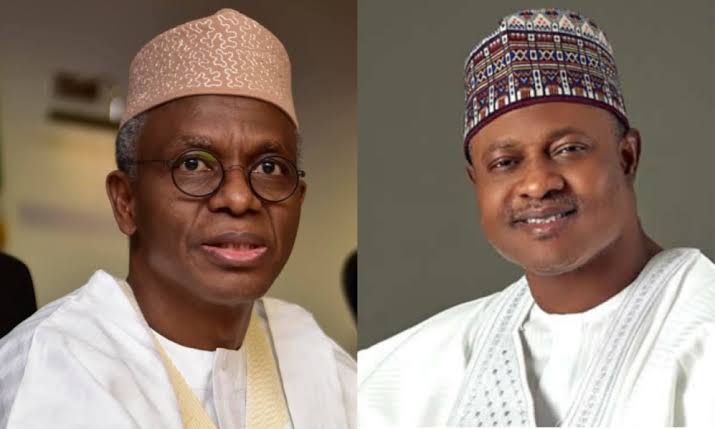
The current governor, Uba Sani, is an Hausa-Fulani man just like El-Rufai. He is an APC man just like El-Rufai was until recently. He was brought to power by El-Rufai.
Uba Sani retained the Muslim-Muslim arrangement that El-Rufai engineered as a deliberate strategy of division and ethno-religious political manipulation.
Like they did El-Rufai, the people of SK rejected Uba Sani at the last governorship election, voting overwhelmingly for his opponent, the PDP candidate.
Uba Sani has not given SK people more political appointments than El-Rufai or previous administrations did.
In fact, I am not sure that Sani has done anything out of the ordinary for or sited any signature project in Southern Kaduna.
Apart from the federal university, which is obviously a federal project, SK has not suddenly enjoyed unprecedented developmental attention from the current federal or state governments.
Yet, in two years, Governor Sani has won over a significant segment of the people of Southern Kaduna to the extent that both their elites and commoners are now praising the man and would probably vote for him in high numbers in the 2027 election.
What did Sani do? He simply accepted the people of SK as equal citizens in the state. He treated them with respect. Through his utterances, body language, and gestures, he reassured them of their membership in and importance to the Kaduna project. He made them to believe that they’re part of the sociopolitical fabric of the state.
What did Uba Sani not do? He did not talk down on the SK people like children. He did not infantilize them. He did not insult or humiliate their leaders. He did not “deal with” their leaders or threaten to do so. Instead, he engaged them, gave them respectful audience, listened to their grievances, and assured them that he would look into them.
Sani did not side with the killers of SK people or blame SK people for the attacks that have killed thousands of them, displaced hundreds of thousands, and destroyed hundreds of villages.
Sani simply assured the people of SK that even though they did not vote for him, he was still their governor and would include them in his plans, and that governance was separate from politics.
With basic emotional intelligence, he was able to compartmentalize politics and governance.
Sani has shown empathy to the SK people and has refrained from making comments that betray bigotry and ethno-religious preference for his Hausa-Fulani Muslim kinsfolk.
Governor Sani, it should be reiterated, has not departed in any substantive way from the El-Rufai template regarding Southern Kaduna, nor has he done anything memorable for the people.
Yet, in two years, he has reunited Kaduna and brought back Southern Kaduna into the Kaduna sociopolitical family. He has given the people of Southern Kaduna a new sense of belonging.
It’s not yet kumbaya, but Sani has done through emotional intelligence, empathy, and diplomatic tact what El-Rufai failed to do through vindictiveness, unintelligent and counterproductive displays of “I don’t take nonsense” toughness, divide-and-conquer religious bigotry, and tyrannical violence.
Effective leadership is 60 percent symbolism and empathetic gestures. A good leader must know when to be tough and not “take nonsense” and when to extend empathy and gestures of inclusion and reassurance to his constituents. The balance of the two makes for effective politics and governance.
The difference between the Southern Kaduna dispositions towards El-Rufai and Uba Sani is simple. Sani, whether sincerely or not, has treated SK with respect and emotional intelligence, El-Rufai did not.
Effective leaders do not write off those who did not and would not vote for them, excise them from their governing agenda, and alienate them from the social fabric of the state.
Governor Uba Sani may be El-Rufai’s “boy” and “mentee,” but El-Rufai can learn a thing or two about the fine, balancing art of politics from his mentee.
The attention of the Middle Belt Forum (MBF), Kaduna State Chapter, has been drawn to the recent incendiary, false, and deliberately misleading comments made by the former Governor of Kaduna State, Mallam Nasir El-Rufai, during his appearance on Channels Television’s “Politics Today” a major part that has to do with Southern Kaduna, which is part of the Middle Belt absorbed into the North West geopolitical zone. For the avoidance of doubt, the Middle Belt of Nigeria is made up of all the ethnic nationalities of the 19 Northern States plus the Federal Capital Territory (FCT) that are not Hausa, Fulani and Kanuri.
The MBF, Kaduna state Chapter, therefore, considers it a solemn duty to the world and to posterity to set the record straight and counter this orchestrated campaign of shocking falsehood and demographic gaslighting from El-Rufai targeted at the good people of Southern Kaduna and the Middle Belt region at large.
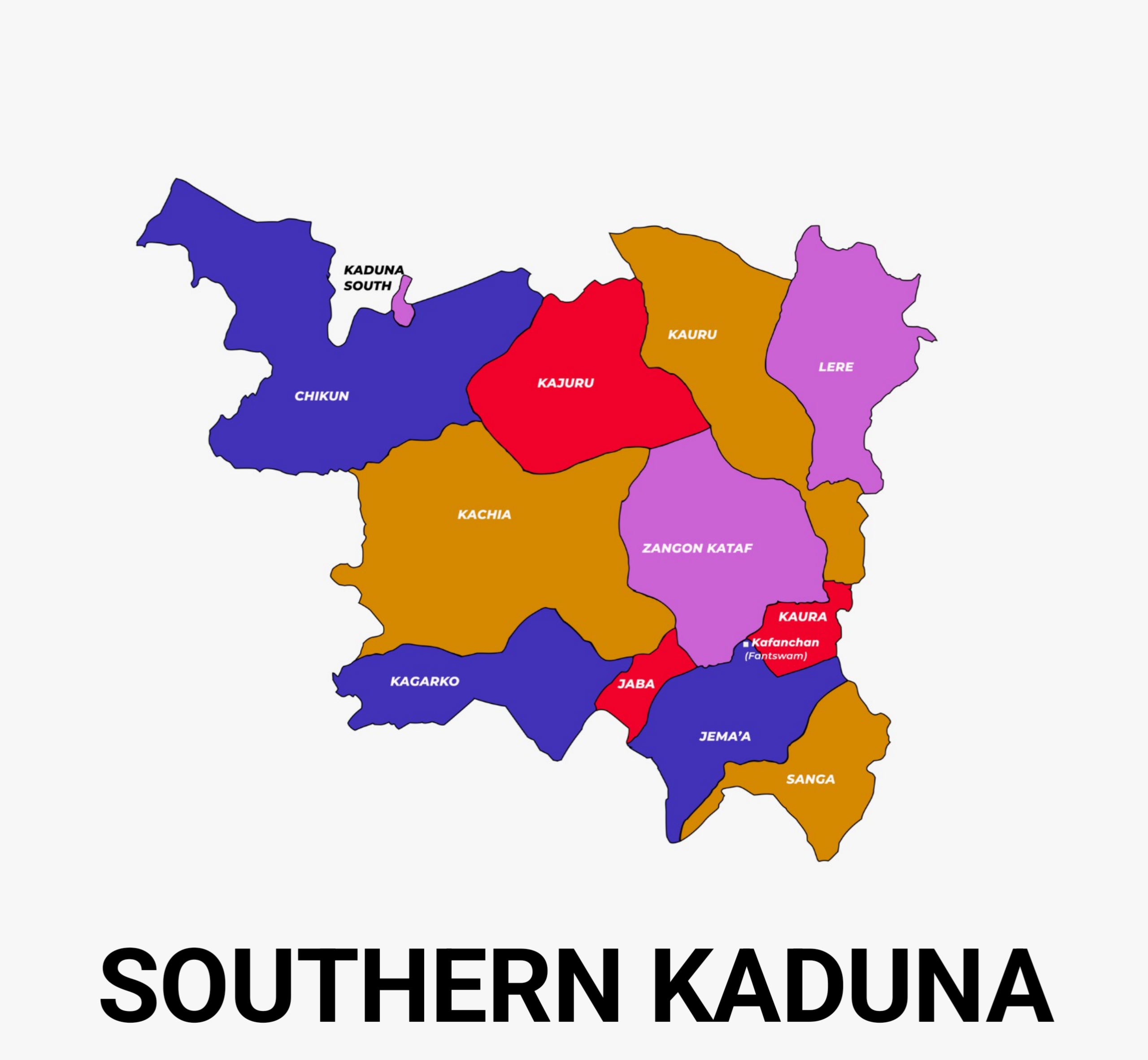
El-Rufai’s interview was a desperate deception; a pathetic attempt to rewrite reality and diminish the undeniable political and demographic facts of Southern Kaduna on the weight and relevance of Christians majority area in the political culture of Kaduna State. Contrary to El-Rufai’s fictitious claim that Christians constitute “not even 25%” of Kaduna State, verified data from independent and governmental sources presents a starkly different reality. “Southern Kaduna” is a socio-cultural, historical connected ethnic nationalities of Kaduna State that are not Hausa and Fulani and geographically contiguous with Christianity as its dominant religion. Southern Kaduna forms 12 Local Government Areas with the 8 LGAs of ‘zone 3’ or Kaduna South Senatorial Zone forming its core. But Southern Kaduna, based on its definition, includes Chikun, Kajuru, Kaduna South, and Lere. It spans approximately 26,000 sq km and is home to a projected population of 5.1 million people, constituting almost half of the state’s population of today.
Kaduna State is not Christian-minority bloc but also a hub of education, intellectualism, and civil service excellence, producing legendary Nigerian pioneers like Dr. Barau Dikko and Prof. Ishaya Audu who were all Christians.
El-Rufai’s attempt to politically diminish Southern Kaduna is the height of lies. He must be reminded that touching Southern Kaduna is as good as touching the Middle Belt, and no distortion or falsehood can erase this fact. The 2023 gubernatorial election, which his protégé, Sen Uba Sani of the APC, won by a razor-thin margin of 10,806 votes, was decisively determined by the votes from Southern Kaduna, which boasts 43.7% of the state’s registered voters. It is the height of ingratitude for a man who benefitted from a similar coalition in 2015 to now turn around and label the same people as “insignificant” because they roundly rejected his toxic politics of division.
His comparison of the peaceful, democratic Christian communities of Southern Kaduna to the proscribed Shiite movement is not only reckless but deeply bigoted, designed solely to incite hatred and justify the systemic marginalization and violence these communities have endured under his watch and beyond.
We are not surprised by El-Rufai’s vitriol. It is the bitter cry of a man facing a well-deserved political shame, which is the direct price for the wickedness he meted out on the people of Southern Kaduna. His administration was marked by the deliberate balkanization of our traditional institutions, the unjust redrawing of electoral wards to disenfranchise our people, the abandonment of critical projects, and a shocking disregard for the security of lives and property.
He has forgotten that he was the first governor to admit on national television that he paid bandits. Beyond that, credible reports — including from respected security chiefs — confirmed that his administration directly negotiated and disbursed huge sums running into billions of naira to these criminal elements. In effect, he governed more like a bandits’ patron than a protector of the people. He has forgotten he was caught on video stating that the Muslim-Muslim ticket was deliberately chosen to “enthron Islam.” Now, he contradictorily claims it was merely to win an election. This is the height of dishonesty. He is not the only graduate in Kaduna; we are all educated enough to see through his duplicity.
Today, El-Rufai is an excess baggage to any political platform, a burden to any party that associates with him. His political relevance has expired, and Kaduna State has long moved beyond his toxic brand of politics.
We admonish Mallam Nasir El-Rufai to desist from spreading falsehood and poisoning the well of unity in our dear state. At his age, he should be seeking peace and making amends in preparation to meet his maker, not actively working to plunge future generations into conflict.
Though his days in the political limelight are numbered, he is tragically determined to leave the political space as its most disgraced, humiliated, and unfulfilled figure. We urge well-meaning Nigerians and the media to disregard his malicious fabrications.
The Middle Belt Forum, Kaduna State, remains committed to advocating for equity, transparent governance, and the unity of all peoples of Kaduna State based on truth and justice, not the pathological lies of a failed politician.
Signed: Air Commodore John Bako Ajeye (Rtd) Chairman, Middle Belt Forum (MBF) Kaduna State Chapter