Archaeology of a Reflex (I)

By Ahmed Yahaya Joe

“Truth is found neither in the thesis nor the antithesis, but in an emergent synthesis which reconciles the two.” – Georg Hegel (1770-1831)

What is the moral for Nigeria from the Sudanese conundrum?
The question is pertinent because neither Sudan nor Sudan Sudan have known sustainable peace, significant progress, or any meaningful development ever since those nations parted ways in 2011;

“With its people deeply divided along ethno-geographic and religious fault lines, under a tense socio-political atmosphere arising from heightened insecurity, the situation in Nigeria today reads like a tragic plot from the Sudanese playbook. Like Nigeria, Sudan was a British colonial creation, in which the colonials lumped ethnic and religiously diverse peoples together in a self-serving scheme of nation-building experimentation. Nigeria, like Sudan, is almost evenly split into predominately Muslim North and Christian South.”
– Nigeria: On the Road to Sudan by Majeed Dahiru posted 5/28/2021

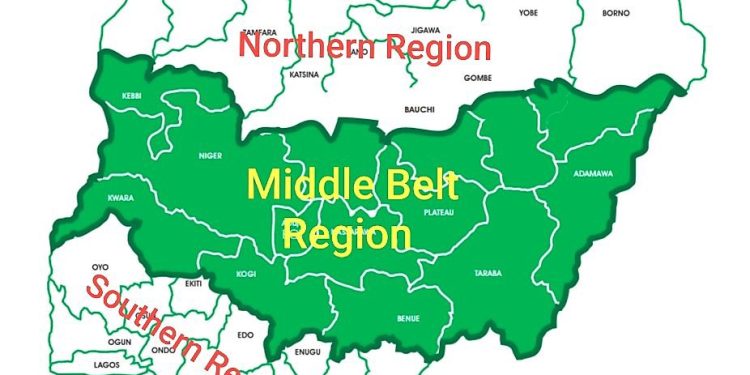
Yet, here we are in a protracted battle for the soul of our nation, of which according to Ignatius Kaigama, Prelate of Abuja, “God has nothing to do with it.” It has always been about power and control he opines on the recurrent strife bedevilling the presumptive capital of the Middle Belt, “No crisis in Jos is religious. The real issue is the competition for who owns Jos.”
The insight of then Archbishop of Jos and more are contained in the 2016 book by Tom Burgis entitled The Looting Machine: Warlords, Tycoons, Smugglers, and the Systematic Theft of Africa’s Wealth pp.175-187

Using Jos as a microcosm for Nigeria, irrespective of our polarized opinions on the “Christian genocide” thesis and the “religion is not the key driver in the attacks” antithesis, it is noteworthy that one of ours, senior fellow & Africa program director, Center for Strategic and International Studies, Oge Onubogu presented what Hegel describes as “sublation” – a synthesis.
In her must-watch presentation to the Africa Subcommittee of the US House of Representatives, Ms. Onubogu carefully reconciled the truths in the thesis with the shortcomings of the antithesis by transcending the limitations in both entrenched positions asserting;
“In Nigeria today, ethnicity, religion and language – not nationality – remain the benchmarks for identity for the country’s highly diverse population.”

While she warned against reducing the prevailing thesis to “a single story” she nonetheless admitted that the antithesis is laced with “religious extremism,” but she still deliberately glossed over the virulent marginalization and systematic oppression by Muslims against non-Muslims and vice versa as the case may be.
Overtly her testimony was a conciliatory beacon for a way forward. It is still however afflicted the selective amnesia on how the fallout of Muslim-Muslim rhetoric of 2023 had deepened the political fault lines still reverberating to date.
Regardless, every discerning Nigerian knows that the root cause of the very challenged inter-communal relations in our nation is variously the “politicization of religion,” and “religionization of politics,” across the board.
Here, The Manipulation of Religion in Nigeria Today: Its Social and Political Basis, published in New Nigerian newspaper edition of 13th- 14th January, 1978 by Dr. Yusufu Bala Usman remains instructive after 47 years and still counting.

Ms. Onubugo was probably not even born when, in the mid-1960s – twenty years prior to the heated Organization of Islamic Controversy (OIC) controversy of 1986 under General Ibrahim Babangida, when religion was on the front burner.
But she grew up “In Jos, Plateau State, an area that has been plagued by ethno-religious violence. Her upbringing in this complex environment profoundly shaped her understanding of conflict dynamics. Growing up in Jos during periods of recurring violence gave young Oge a front-row seat to the devastating impact of governance failures on ordinary communities.”

In looking back, the must-read memoirs of John Mamman Garba (1918-1989) entitled The Time Has Come: Reminiscences and Reflections of a Nigerian Pioneer Diplomat (1989) is collector’s item for us particularly for us in the present-day.
A book full of painstaking details drawn from his personal diaries spanning nearly a 60-year period is included a minutiae of when then military governor of the Eastern regional government in 1967 wrote the Italian Prime Minister and the Vatican City horrendously claiming that;

“Weapons and planes manufactured by Catholic Italy, were being sent to Muslim Northern Nigeria to be used in killing the Catholic Ibos of Eastern Nigeria….
In the beginning, a good number of Italians had been led to believe that the conflict between the federal government and Colonel Ojukwu was based on religious differences.” – pp. 291-293

As the babel of voices on “Christian genocide” continue to divisively rage in our polity the need to reflect upon Churchill’s maxim of “The farther back you can look, the farther forward you are likely to see” cannot be overemphasized particularly with a man in the middle of sorts who introducing his recollections writes;
“Dedicated to my grandfather, Muhammadu Sarkin Hako, who died at Maisandari on the outskirts of Maiduguri town in July 1931, and had vowed, I would never attend the Whiteman’s school while he lived.”

Ambassador Garba then goes on to give a glimpse on how the worst fears of Sarkin Hako were processed in the overall context;

“My father did not receive the news of my having embraced Christianity in good spirit. This was as expected. When he and his friend, retired Regimental Sergeant Major Sule Gumsuri took me along to the Church Missionary Society (CMS) bookshop school at Kano in 1926, such an eventuality of turning a Christian had never crossed their minds even for a moment.
They were then solely preoccupied with the thought of placing me in an institution that would prepare me for a better place than they themselves had had the privilege of attaining in our society.
No more, no less.
There was a serious rift between me and the family, or rather my father, for some years after my conversion. But neither of us wanted to see this as the permanent parting of ways. My father eventually accepted the situation as ‘Kaddara’ (fate, already predetermined by God).
He did not die until forty years after I had been baptized into Christianity, and he, as well as my mother, two brothers and one sister, and all their children and grand-children were and have remained today, professed Muslims.” – pp. 384-385

This writer encounters in Garba and Onubogu (even Kaigama) not only unique perspectives but what Bernard-Henri Levy describes as the “archaeology of reflex” which in the trio is neither “an immutable automatism,” nor “immune to learning,” in the Nigerian project as that French public intellectual puts it in 2021 book entitled The Will To See: Dispatches From A World of Misery and Hope.
Outstanding is how Ambassador Garba was able to reclaim the Nigerian story in Italy and Vatican City. This hugely contrasts present-day diplomatic vacuum during the gestation period of the “Christian genocide” more so that quite recently Prime Minister Giorgia Meloni of Italy has become the second G7 leader to internationally subscribe to that thesis as Mallam Garba goes on in retrospect;

“The Italians were made to believe that Colonel Ojukwu’s succession attempt and declaration of total war on his fatherland represented the manifestation of the determination of ‘the very progressive, intelligent, Westernized and hardworking Roman Catholic Ibos to live their own existence in peace and prosperity, free from domination and annihilation by the backward Hausa/Fulani Moslems of the North.’” – p.293

Ambassador Garba, a scion of al-Barnawi and al-Kashinawi, “that is a Bornoan and also a Bakatsine, at one and the same time,” not unlike Abu Abdullahi b. Masanih b. Nuh also known as Dan Masani (1595-1667), further puts it;

“As part of the counter for the expressed suspicion that the civil war had a religious undertone, the federal government decided to send to Rome from time to time some leading members of our government who were of the Catholic congregation so that these highly-placed persons could speak to the Holy Father as one Catholic adherent to his Pontiff.
Amongst those who came to Rome for this purpose may be mentioned Louis Orok Edet, first Nigerian inspector-general of police; Federal Commissioner Joseph Serwuan Tarka; Federal Commissioner Anthony K. Enahoro; Admiral Joseph E. Akinwale Wey; and the military padre, Monsignor Colonel Pedro Martins.
As I had the duty of arranging the audiences for these senior representatives of our government with the Holy Father, I had opened a corridor of communication with the Vatican. I found the Papal Secretary of State – the Pope’s prime minister, as it were – Cardinal Amleto Cicognani, a man of friendly disposition and charming personality.” – p.294

The veteran diplomat whose fluency in Latin eased Nigeria’s access in the Vatican kick-started the acquisition after a 21-day trek from Maiduguri to Kano. He then attended middle school in Zaria before proceeding to CMS Grammar School Lagos, where he picked Greek. He was eventually admitted into Igbobi College, where he fine-tuned his French and bagged the Latin prize sitting for his Senior Cambridge in 1934 but not before attending the World Scout Jamboree in the United Kingdom in 1929.
After an extensive training and brief working career in the British colonial agricultural value chain, he proceeded to the London School of Economics, graduating in 1950.
Ambassador Garba rose to the position of Executive Director at the World Bank in 1963 when Ngozi Okonjo-Iweala was still in primary school, a good 44 years before she became Managing Director there in 2007.
Ambassador Garba became Nigeria’s envoy to Italy with accreditation to Vatican City, Spain, Greece and Cyprus in succession eventually the United States in 1972 from where he eventually retired from public service in 1975 living out the rest of his idyllic days in quiet contemplation in Kano.

Ambassador Garba’s tour of duty based in the “Eternal City” between 1966 and 1970 was peculiarly challenged against the background that;

“Immediately after the military incidence of July 29, 1966, Colonel Ojukwu’s agents had launched an extensive propaganda campaign in Italy as they did in other places. Because of the understandable sensitivity of the Italians to religious matters, this wicked and erroneous interpretation of our crisis was accepted even in some responsible circles. The rebel camp had certain advantages in this regard in Italy.
As the late Dr. Nabo Graham-Douglas, onetime Attorney-General of the Eastern Region, and later of the federation as a whole, had pointed out in his well-written pamphlet: Ojukwu’s Rebellion and World Opinion, the intention of the Catholic church was to constitute the Eastern Region into a Catholic state.” – p.293

While this writer has not been able to actually go through any copy of the erstwhile Biafra insider’s 1968 publication to independently verify the details on the reported clamour for a faith-based breakaway entity from Nigeria, the following under the title Clandestine Role of Religious Bodies in the Nigerian Civil War 1967-1970, beggars the question: if history is apparently repeating itself currently?

“In a bid to attract sympathy and support of the international community, the Biafran government hired Markpress, a Geneva-based public relations firm. The public relations firm constantly used genocide and religion as its propaganda themes.” – pp. 78-85 American Journal of Humanities and Social Sciences Research (AJHSSR) Vol. 3, Issue 12, 2019

It, therefore, remains to be seen if there are any lessons for the recent ambassadorial nominees of President Tinubu from Ambassador Garba’s capacity and cognition.
One thing fundamentally remains;
“There was once a country.”- Chinua Achebe (1930-2013)

Continued in Part II

FULANI SETTLERS SHOULD STOP HIDING BEHIND AREWA AND ISLAM TO MESS UP OUR COUNTRY 

By Col Gora Albehu Dauda Rtd.

For a start “Arewa” as many of our southern friends usually describe those of us from the Northern part of the country should rather be called “Hausaland” after the owners of the lando. Arewa means North, therefore it ought not be deployed to describe any part of this country specifically.or its population. Wherever you stand on the planet there is a north as one of the cardinal points of a compass much in the same way as there is a South, East and West, The Fulani settlers in Nigeria have classically boxed themselves in, as they cannot fail to remember that they do not belong here. They know too well from whence they came because written History has already chronicled that. They know also the tones of lies they have told over time some of which was recorded as History and thought in Northern Schools for a long time. In due time the truth has come to the fore and before our own eyes . They ought to know that they are now boxed in on all fronts and not too long from now they wil be frying in their own oil.


Let us examine some of the nonsense and falsehoods which was chronicled as History. First, dubious lies that the Fulani came to Nigeria as learned Islamic preachers. The truth is that they arrived Gobir as gypsies as has always been their culture to move about in search of pasture for their cattle. This is to say that they have always been nomadic by nature. History though, has nor recorded whether or not Usman.Dan Fodio’s forebears came along with any cattle to Nigeria. It was upon their arrival that they embraced Islam as a religion from their Hausa benefactors.


After many years of association with the Hausa hosts and because they were in search of land and power, they came up.with the ploy that the Hausa leaders were brutish in the treatment of their subjects and that the subjects were being overtaxed against the teaching of Islam. Additionally, they accused the Hausa of corrupting Islam by observing pagan practices.These were the principal excuses that were advanced to justify the rebellion which culminated in the Jihad of 1802-1804.


The Jihadists overthrew the Hausa rulers of that period and established a bridgehead in Hausa land. They took over and occupied Palaces built by the Hausa people and installed Fulanis as Emirs to this day. Because they did not have the numbers to make any noticeable difference aside the fact that they were in power, they had to attache themselves to the Hausa majority to make meaning. Meanwhile, the Hausa people and owners of the vast northern landscape became subjects of the settlers on their own land and that has also continued to the present time. The Hausa technically became a marginalized people on their own land.


Wherever you can find a Fulani, all he craves about is to occupy a position of leadership or power even when such may not actually be qualified for such positions. They have personalized Islam to themselves which is why in almost every mosque not limited to the core North, no other clerics are worthy to lead prayers if not themselves. They are to be followed but not for them to follow as a people, they have rubbished the well known thinking that one must be ready to follow if such expects to be followed in due time. The Fulani settlers over time have over exploited the peaceful nature of the Hausa people to such a level that they have lorded it over them since the dubious Jihad. Let nobody be deceived, the Fulani are not in anyway better Muslims than the others yet, they will not follow others as their religious leaders.


There are essentially 2 classes of the Fulani, the first being the elites who are mainly those who chose to abandon the nomadic way of life for a settled lifestyle. This class has produced the educated group who acquired Western Education and have gone into intermarriages with the Hausa and perhaps other indigenous peoples. These intermarriages birthed the fraud called Hausa Fulani. This coinage was on purpose as to creat a close bond between the Fulani and the Hausa people. The coinage ended up benefiting only the Fulani as the Hausa people remained abandoned. The benefits for the Fulani accrued in a number of ways, first, it provided them a willing host and a much larger space to operate. Second, it provided them the opportunity to usurp much of what would have benefited the Hausa owners of the land. On the political part in modern times, they have latched on the huge Hausa votes to access political power and other influences. Quite paradoxical that the Hausa contribute the votes, yet the Fulani coast home with the victories.


Here is how the Fulani have manipulated the Hausa people politically. The Fulani always made sure that only Fulani candidates emerge to contest any election in almost all the political parties from the Councilors, Chairmen Members of the State Houses of Assemblies, Governordship and up to the National Assembly. The only role left for the Hausa people is for them to cast their votes for Fulani candidates. The moment the victory is won, the Hausa electorate are abandoned to their uncertain fate. Once in their offices, the Fulani will always be focussed on their kinsmen when it comes to appointments and contract awards. It has therefore been a deliberate policy of ensuring that the Fulani continue to exploit the Hausa such that they are always relegated to the background.


The situation is set to change in the years to come thanks to the Hausa Renaissance currently underway. Some folks may be holding the Hausa to blame for their condition in Nigeria politically and otherwise because of their state of inertia or atrophy for this long since the dubious jihad. The activism of the Hausa heroin Hajiya Khaltum Allumbe Jitami of Jaruma Hausa TV 24 is providing the spark or igniting the Hausa into realizing that the balance of political power in Nigeria lies with them as they have the numbers to effectively turn the tables against the Fulani settlers. To succeed the Hausa must not allow the imposition of candidates at all levels in all the political platforms. This way, it will be practically impossible for the Fulani settlers to extend their political hegemony over them. Put simply, let the Hausa votes go to Hausa candidates. That done, the Hausa would be in a position to reclaim their lost glory.


The Fulani settlers have positioned themselves in positions of authority politically as Councilors, Council Chairmen, Members of State Assemblies, Members of the National Assembly, Governors and Ministers but the current advantage will expire if elections do hold come 2027. The agencies the Fulani are using to plough their way into positions of authority include the impotent so-called Arewa Consultative Forum that does not consult anybody, and the equally impotent Northern Governor’s Forum almost populated by Fulani settlers as members. There is also the Northern Traditional Rulers body which ironically has a religious leader as its Chairman. What is the Sultan of Sokoto doing in such a forum? Is he also a traditional ruler aside the religious portfolio he is holding? All these worthless bodies should be scrapped as they are creating more problems than they are solving.


Religion is a personal relationship between an adherent and the Creator. Not so in Nigeria for religion has from time been a formidable tool for oppression. There is no issue of National importance that is not given a religious coloration. Religion, rather than bringing the people together is putting them asunder. The place of religion in our lives has been elevated to a ridiculous level as it is being used to discriminate against other faiths. As the opium of the people (apologies to Karl Marx) it is religion that was deployed to producing the Tinuku leadership. Can you now see the relevance of the Muzilim Muzilim ticket? The truth remains that those guys high up the political ladder are not so concerned about religion, all that they care about is to flaunt religion for the oppressed masses to kill themselves over. The next Constitution that is if we get to having one, should relegate religion to where it belongs that is in the minds of the practitioners.


If Islam as a religion was practiced in Saudi Arabia where that faith originated the same way it is practiced in the North of Nigeria, the KSA would long have disintegrated. There are many Muslims.in the Southwest of Nigeria and in almost every family BUT you never will hear acrimony, violence or riots on account of religion. Had Islam originated in the North of Nigeria, a curious observer could understand in part why these guys up here are so fanatical about the faith but it did not. To the extent that faithfuls cannot practice Islam in their own language but only in Arabic and given that so many faithful rely on barely learned Muslim scholars to interpret the text for them, many understand differently. Many from the Fulani stables still hold on to the falsehood passed on to them into believing that Usman Dan Fodio bequeathed Nigerian territory to them as a Fulani homeland, a land to which they are settlers.


Generally speaking, the Fulani settlers have applied a strangulating hold on the throat of Nigeria for far too long. From the colonial period during which they were the next in command to the British exploiters through to the Independence era, the period of Military rule till date the Fulani settlers have eaten their cake and they still have it. The time has therefore come for the people who have suffered under the yoke of the Fulani oppression to say NO, IT IS ENOUGH and we cannot take more. They must be made to abandon the spurious tale of the territory of Nigeria being a Fulani homeland they must also be reminded that they left their homeland, back in Fouta Djalon and Fouta Toro. Nigerians must be mindful of the fact that the Fulani settlers have not completely given up on Usman Dan Fodio’s fraudulent dream of dipping the Quran into the deep blue waters of the Atlantic which he failed to do. Realising that they do not have the numbers to militarily achieve that bogus dream, Muhammadu Buhari sought to achieve it through a more subtle manner which was why he prioritized the Ruga and Grazing reserves Bills. Knowing that his kinsmen were armed to the teeth with arms from the fallen Libyan regime of Muamar Gaddafi and exploiting the ECOWAS Protocol on free movement Fulani tribesmen from everywhere were to move with their cattle and to occupy other peoples lands and forests. Before the hosts communities would realize what was going on, it would have been too late as Fulani AK 47s would already be pointing to their heads. Thank God, Allah, Chineke, Oluwa, Agwazah that the bills were defeated in Parliament. Nigeria did live to fight someday as we are into that right now.


The ongoing insurgency in Nigeria is understandably the last kicks of the Fulani settlers in Nigeria.Tinuku obviously committed a huge blunder by appointing the likes of Nuhu Ribadu, Badaru Abubakar and Bello Matawalle into strategic positions in his government. The counter insurgency operations were deliberately frustrated because of these characters who were playing the role of moles or fifth columnists to the effort. As this essay was being concluded, news came through that the Defence Minister Badaru Abubakar has resigned his appointment. Good news, 2 more to go. Further down the line, Tinuku must ensure that the security forces keep an eye/ear on Sheikh Dr Gumi, Yahaya Jingre as well as many other extremist Islamic clerics muddying the waters in Nigeria. To God Be The Glory.


Gora Albehu Dauda

2 December 2025

Boastful Chinese Miners Storm Ambam Lithium Field with Armed Escort, Vowing Abuja-Backed Takeover and Ousting Rivals


By MBT Investigative Desk

December 1st, 2025, Ambam Community, Jema’a Local Government Area, Kaduna State

Beneath the tranquil farmlands of Ambam community in Kaduna State lies a treasure of the modern age: vast deposits of lithium, the coveted “white gold” powering the global revolution in electric vehicles. For two years, this potential wealth was managed under a peaceful and mutually beneficial coexistence, governed by a Community Development Agreement (CDA) between the residents and Range Mining Ltd, a Nigerian company with a UK parent. But that peace shattered on November 15, 2025, when a Chinese-owned company, Mystics Mining Resources Limited, arrived with armed security and a brazen claim of ownership, igniting a conflict that reveals a dark underbelly of Nigeria’s mining sector.

The arrival of Mystics Mining was not a quiet entry. Community sources describe a convoy rolling into the field where Range Mining was legally operating, escorted by armed personnel of the Nigerian Security and Civil Defence Corps (NSCDC). The show of force sent a clear and unsettling message: a new power had arrived, and it was not interested in negotiation.

When contacted by this newspaper, the State Commandant of the NSCDC, Mr. Panam Musa, who authorized the deployment, initially defended his actions. “The reason for deploying new security personnel on the mine field was because there are up to four companies claiming ownership of the field,” he stated. He promised to visit the site to resolve the matter.

However, the legitimacy of Mystics Mining’s claim quickly began to unravel. A source within the Ambam community, speaking on condition of anonymity, revealed that the Chinese company claimed to have the permission of the Kaduna Mining Development Company (KMDC). But when confronted with this claim, the Managing Director of KMDC, Engr. Shuaibu Kabir Bello, was unequivocal in his denial.

“I am telling you now that we don’t know Mystics Mining and I have ordered Civil Defense to stop them immediately. They will be arrested,” Bello declared, exposing a stark contradiction between the company’s assertions and official record.

The swift denial from the state’s own mining company raises a critical question: what was the basis for the NSCDC’s armed escort? Pressed on this, Commandant Musa offered a vague explanation. “Mystics Mining came to my office with some documents which warranted the deployment of armed personnel,” he said. He notably failed to specify what these documents were. “Later I found out that the field they were going to was the same being occupied by Range. As we speak now, I am on the site and have ordered them to stop work immediately.”

This reactive stance, coming only after the illegal incursion was exposed, points to a deeper problem: the alleged use of financial influence to bypass due process. A high-level security source, who also requested anonymity, disclosed that Mystics Mining Ltd had already engaged in a massive bribery scheme to gain access.

“As I am talking to you now, Mystics Mining has spent over 250 million naira bribing some key people in Ambam community,” the source revealed. “With that, they believe they can do and undo.”

This allegation of a N250 million bribe is at the heart of the community’s new turmoil. It suggests a deliberate strategy to create division and sideline the established, lawful agreement with Range Mining Ltd. Another community source, fearing persecution, confirmed the aggressive posture of the Chinese firm. “They boasted to us that whether we like it or not, they will soon be in charge of all the mining lands here. They told us that they have backing from the top in Abuja and that they will surely kick every other company out.”

The CDA: A Broken Covenant and a Community Torn Apart

The CDA between Ambam and Range Mining was more than a contract; it was a covenant that outlined tangible benefits, jobs, infrastructure, and social services, in exchange for the community’s most valuable asset: access to their land. The arrival of Mystics Mining, with its alleged cash injections, has violently ruptured this social fabric.

“This N250 million is a poison,” laments a community elder who pleaded for anonymity for fear of reprisals. “It has divided our sons and daughters. Where we once had a collective agreement for our future, we now have whispers, suspicion, and the violence of silence. Those who have taken the money are now agents of a company that does not know our name, only our resource.”

This internal conflict is a classic tactic observed in resource-rich but governance-poor regions. The large, upfront sum from Mystics Mining creates a powerful, immediate incentive for a few, effectively dismantling the collective bargaining power of the community and undermining the long-term, structured benefits of a formal CDA.

Landowners Cry Foul: “The Chinese Lied to Us”

The depth of what now looks like Mystics Mining’s deception has now become painfully clear to those who initially engaged with them. In a revealing development, landowners who received N50 million each from the Chinese company are now expressing deep regret and alleging they were deliberately misled.

Two landowners, speaking on condition of anonymity for fear of reprisals, confirmed to this newspaper that they were told a fundamentally different story. “The Chinese told us they have an agreement with Range Mining for some form of collaboration. That was why we listened to them. But now we know they lied to us,” one landowner stated with evident frustration.

The landowners were adamant about the nature of their transaction with Mystics Mining. “There’s no agreement between the landowners and the Chinese. They are telling people that we sold our land to them. That is not true,” the source emphasized. “Tell the Chinese to show the land document. We didn’t sign any agreement with them.”

This revelation exposes a calculated strategy by Mystics Mining: rather than pursuing legitimate land acquisition through proper legal channels, the company allegedly used cash payments to create the appearance of authorization while falsely claiming partnership with the legitimate title-holder, Range Mining. The landowners now find themselves caught between the promise of immediate financial gain and the realization that they may have been used as pawns in an illegal takeover scheme—without even securing the legal protections that a formal land sale agreement would provide.

A National Pattern of Predatory Mining

The drama in Ambam is a microcosm of a national crisis. Research into the activities of Chinese mining companies in Nigeria reveals a consistent trail of legal breaches, environmental degradation, and community conflicts.

Federal Government Crackdowns: In recent years, the Nigerian Federal Government has repeatedly called out and taken action against illegal Chinese miners. In May 2020, former Minister of Mines and Steel Development, Olamilekan Adegbite, explicitly stated that “a lot of illegal mining is being done by Chinese companies in the country.” He highlighted their tactic of operating with fake licenses or none at all, precisely the allegation facing Mystics Mining.

The Akwa Ibom State Government closed Ruitai Mining Company in August 2023 after the Chinese-owned firm failed to produce valid operating licenses. Uno Etim Eno, the state’s Commissioner for Environment and Mineral Resources, announced the shutdown during a press conference in Uyo. He explained that Ruitai Mining, which operated a titanium ore extraction facility in Ibeno community, could not provide the necessary authorization documents required for its mining operations. The closure highlighted ongoing regulatory enforcement challenges in Nigeria’s mining sector, particularly regarding foreign-owned operations and compliance with federal licensing requirements.

The “Backing from the Top” and a Flawed Security Apparatus

The most chilling aspect of the Ambam case is Mystics Mining’s alleged boast of having “backing from the top in Abuja.” This claim, whether bluff or reality, points to the high-level corruption that enables such brazen operations. It suggests a network of complicity that reaches into the federal ministries and regulatory bodies tasked with overseeing the sector.

The initial compliance of the NSCDC, a federal security agency, adds credence to this fear. The fact that armed state personnel were deployed based on unspecified “documents,” directly contravening the rights of a title-holder and the knowledge of the state mining agency, reveals a critical vulnerability in the nation’s resource governance framework. It underscores how easily security apparatuses can be weaponized by private interests with deep pockets, turning state-protectors into facilitators of illegal takeover.

The Verdict: Status Quo Ante and the Rule of Law

The investigation reached a critical juncture on Friday, November 28, when the Commander of the NSCDC Mining Marshals, John Onoja, convened a meeting with representatives from both Mystics Mining Resources Ltd and Range Mining Ltd. Onoja, a no-nonsense, award-winning officer known for his commitment to the rule of law, delivered a decisive ruling that exposed the fundamental flaw in both companies’ claims.

“By the submission of both parties and their respective presentation, none possess the requisite documents for mining in the disputed area,” Onoja stated in his official assessment to this newspaper. “Same was confirmed and admitted to by both parties. Both parties also stated that they are still in the process of obtaining necessary licence from Mining Cadastre Office. Hence, it was only normal to resolve that all parties should suspend mining activities pending when requisite documents to do so is gotten. So none are to work in view of the indication of the preliminary investigation conducted with both parties. Further investigation continues.”

However, Onoja’s ruling made a crucial distinction between the two companies’ positions. While neither possessed a valid mining license, Range Mining’s activities on the site were deemed lawful and beneficial to national security efforts.

“During the meeting with both parties, it was confirmed that Range was not mining on the field but was providing security while awaiting their mining license,” Onoja explained. “That is a welcome development we encourage from citizens. It is on that basis that I advised that status quo be maintained until either of the companies is able to secure a license to mine.”

This ruling effectively validates Range Mining’s presence on the site as a security measure against illegal mining—precisely the activity that Mystics Mining’s armed incursion on November 15 had threatened to enable. The decision to revert to “status quo” (the situation before November 15) means that Mystics Mining’s controversial entry, backed by alleged N250 million in bribes and armed NSCDC personnel, has been officially rejected as having “no business on the controversial minefield.”

When asked if the directive to revert to status quo has been followed, Onoja indicated that compliance is being monitored. “That is being looked upon at the moment and I assure you that everything will be alright,” he said.

A Victory for Due Process, But a Community Still Divided

The ruling represents a significant victory for the rule of law in Nigeria’s troubled mining sector. It confirms that neither deep pockets nor alleged connections in Abuja can substitute for proper licensing procedures. The exposure of Mystics Mining’s lack of documentation vindicates the concerns raised by the Kaduna Mining Development Company and validates the suspicions that the Chinese company’s “documents” shown to the NSCDC were insufficient or fraudulent.

But for the people of Ambam, the battle is far from over. The N250 million that allegedly changed hands continues to divide the community. Range Mining’s Community Development Agreement, once a source of unity and hope, now competes with the immediate cash that has already been distributed to select individuals and landowners who now express regret over being misled.

The landowners who received N50 million each have been vindicated in their claim that they signed no formal agreement with Mystics Mining and were deceived about the Chinese company’s relationship with Range Mining. Yet the money they accepted has already complicated the community’s solidarity, even as they now distance themselves from the Chinese firm.

The lithium field remains a flashpoint—a test case for whether Nigeria can enforce its own mining regulations against well-funded interests that employ bribery, deception, and the weaponization of state security forces. Commander John Onoja’s decision to prioritize legal compliance over competing claims is a rare bright spot in a sector plagued by corruption and regulatory capture.

The battle for Ambam’s lithium is more than a corporate dispute; it is a critical test of Nigeria’s political will to govern its resources, enforce its own laws, and protect its most vulnerable communities from the predatory forces of illegal, often foreign-backed, mining conglomerates. The outcome will resonate far beyond Kaduna, signaling to other would-be predators whether Nigeria’s “white gold” rush will be governed by law or by the highest bribe.

For now, at least, the law has spoken—but whether it will be obeyed, and whether the community of Ambam can heal from this divisive episode, remains to be seen. As Commander Onoja’s investigation continues and authorities monitor compliance with the status quo directive, the residents of Ambam wait to see if their lithium wealth will finally deliver the promised prosperity, or if it will remain a source of division and conflict.