


Boastful Chinese Miners Storm Ambam Lithium Field with Armed Escort, Vowing Abuja-Backed Takeover and Ousting Rivals
By MBT Investigative Desk
December 1st, 2025, Ambam Community, Jema’a Local Government Area, Kaduna State
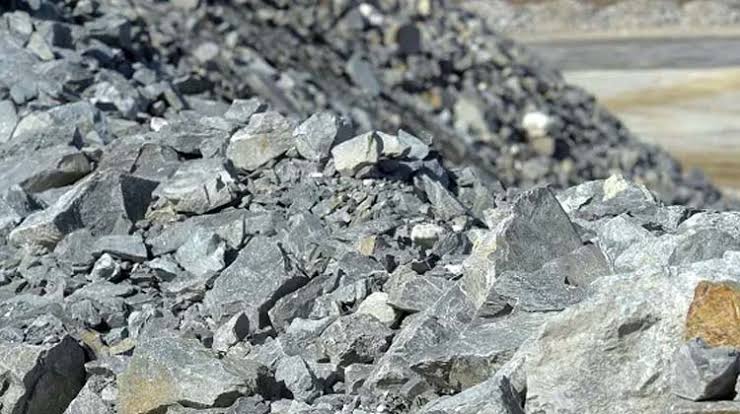
Beneath the tranquil farmlands of Ambam community in Kaduna State lies a treasure of the modern age: vast deposits of lithium, the coveted “white gold” powering the global revolution in electric vehicles. For two years, this potential wealth was managed under a peaceful and mutually beneficial coexistence, governed by a Community Development Agreement (CDA) between the residents and Range Mining Ltd, a Nigerian company with a UK parent. But that peace shattered on November 15, 2025, when a Chinese-owned company, Mystics Mining Resources Limited, arrived with armed security and a brazen claim of ownership, igniting a conflict that reveals a dark underbelly of Nigeria’s mining sector.
The arrival of Mystics Mining was not a quiet entry. Community sources describe a convoy rolling into the field where Range Mining was legally operating, escorted by armed personnel of the Nigerian Security and Civil Defence Corps (NSCDC). The show of force sent a clear and unsettling message: a new power had arrived, and it was not interested in negotiation.
When contacted by this newspaper, the State Commandant of the NSCDC, Mr. Panam Musa, who authorized the deployment, initially defended his actions. “The reason for deploying new security personnel on the mine field was because there are up to four companies claiming ownership of the field,” he stated. He promised to visit the site to resolve the matter.
However, the legitimacy of Mystics Mining’s claim quickly began to unravel. A source within the Ambam community, speaking on condition of anonymity, revealed that the Chinese company claimed to have the permission of the Kaduna Mining Development Company (KMDC). But when confronted with this claim, the Managing Director of KMDC, Engr. Shuaibu Kabir Bello, was unequivocal in his denial.
“I am telling you now that we don’t know Mystics Mining and I have ordered Civil Defense to stop them immediately. They will be arrested,” Bello declared, exposing a stark contradiction between the company’s assertions and official record.
The swift denial from the state’s own mining company raises a critical question: what was the basis for the NSCDC’s armed escort? Pressed on this, Commandant Musa offered a vague explanation. “Mystics Mining came to my office with some documents which warranted the deployment of armed personnel,” he said. He notably failed to specify what these documents were. “Later I found out that the field they were going to was the same being occupied by Range. As we speak now, I am on the site and have ordered them to stop work immediately.”
This reactive stance, coming only after the illegal incursion was exposed, points to a deeper problem: the alleged use of financial influence to bypass due process. A high-level security source, who also requested anonymity, disclosed that Mystics Mining Ltd had already engaged in a massive bribery scheme to gain access.
“As I am talking to you now, Mystics Mining has spent over 250 million naira bribing some key people in Ambam community,” the source revealed. “With that, they believe they can do and undo.”
This allegation of a N250 million bribe is at the heart of the community’s new turmoil. It suggests a deliberate strategy to create division and sideline the established, lawful agreement with Range Mining Ltd. Another community source, fearing persecution, confirmed the aggressive posture of the Chinese firm. “They boasted to us that whether we like it or not, they will soon be in charge of all the mining lands here. They told us that they have backing from the top in Abuja and that they will surely kick every other company out.”
The CDA: A Broken Covenant and a Community Torn Apart
The CDA between Ambam and Range Mining was more than a contract; it was a covenant that outlined tangible benefits, jobs, infrastructure, and social services, in exchange for the community’s most valuable asset: access to their land. The arrival of Mystics Mining, with its alleged cash injections, has violently ruptured this social fabric.
“This N250 million is a poison,” laments a community elder who pleaded for anonymity for fear of reprisals. “It has divided our sons and daughters. Where we once had a collective agreement for our future, we now have whispers, suspicion, and the violence of silence. Those who have taken the money are now agents of a company that does not know our name, only our resource.”
This internal conflict is a classic tactic observed in resource-rich but governance-poor regions. The large, upfront sum from Mystics Mining creates a powerful, immediate incentive for a few, effectively dismantling the collective bargaining power of the community and undermining the long-term, structured benefits of a formal CDA.
Landowners Cry Foul: “The Chinese Lied to Us”
The depth of what now looks like Mystics Mining’s deception has now become painfully clear to those who initially engaged with them. In a revealing development, landowners who received N50 million each from the Chinese company are now expressing deep regret and alleging they were deliberately misled.
Two landowners, speaking on condition of anonymity for fear of reprisals, confirmed to this newspaper that they were told a fundamentally different story. “The Chinese told us they have an agreement with Range Mining for some form of collaboration. That was why we listened to them. But now we know they lied to us,” one landowner stated with evident frustration.
The landowners were adamant about the nature of their transaction with Mystics Mining. “There’s no agreement between the landowners and the Chinese. They are telling people that we sold our land to them. That is not true,” the source emphasized. “Tell the Chinese to show the land document. We didn’t sign any agreement with them.”
This revelation exposes a calculated strategy by Mystics Mining: rather than pursuing legitimate land acquisition through proper legal channels, the company allegedly used cash payments to create the appearance of authorization while falsely claiming partnership with the legitimate title-holder, Range Mining. The landowners now find themselves caught between the promise of immediate financial gain and the realization that they may have been used as pawns in an illegal takeover scheme—without even securing the legal protections that a formal land sale agreement would provide.
A National Pattern of Predatory Mining
The drama in Ambam is a microcosm of a national crisis. Research into the activities of Chinese mining companies in Nigeria reveals a consistent trail of legal breaches, environmental degradation, and community conflicts.
Federal Government Crackdowns: In recent years, the Nigerian Federal Government has repeatedly called out and taken action against illegal Chinese miners. In May 2020, former Minister of Mines and Steel Development, Olamilekan Adegbite, explicitly stated that “a lot of illegal mining is being done by Chinese companies in the country.” He highlighted their tactic of operating with fake licenses or none at all, precisely the allegation facing Mystics Mining.
The Akwa Ibom State Government closed Ruitai Mining Company in August 2023 after the Chinese-owned firm failed to produce valid operating licenses. Uno Etim Eno, the state’s Commissioner for Environment and Mineral Resources, announced the shutdown during a press conference in Uyo. He explained that Ruitai Mining, which operated a titanium ore extraction facility in Ibeno community, could not provide the necessary authorization documents required for its mining operations. The closure highlighted ongoing regulatory enforcement challenges in Nigeria’s mining sector, particularly regarding foreign-owned operations and compliance with federal licensing requirements.
The “Backing from the Top” and a Flawed Security Apparatus
The most chilling aspect of the Ambam case is Mystics Mining’s alleged boast of having “backing from the top in Abuja.” This claim, whether bluff or reality, points to the high-level corruption that enables such brazen operations. It suggests a network of complicity that reaches into the federal ministries and regulatory bodies tasked with overseeing the sector.
The initial compliance of the NSCDC, a federal security agency, adds credence to this fear. The fact that armed state personnel were deployed based on unspecified “documents,” directly contravening the rights of a title-holder and the knowledge of the state mining agency, reveals a critical vulnerability in the nation’s resource governance framework. It underscores how easily security apparatuses can be weaponized by private interests with deep pockets, turning state-protectors into facilitators of illegal takeover.
The Verdict: Status Quo Ante and the Rule of Law
The investigation reached a critical juncture on Friday, November 28, when the Commander of the NSCDC Mining Marshals, John Onoja, convened a meeting with representatives from both Mystics Mining Resources Ltd and Range Mining Ltd. Onoja, a no-nonsense, award-winning officer known for his commitment to the rule of law, delivered a decisive ruling that exposed the fundamental flaw in both companies’ claims.
“By the submission of both parties and their respective presentation, none possess the requisite documents for mining in the disputed area,” Onoja stated in his official assessment to this newspaper. “Same was confirmed and admitted to by both parties. Both parties also stated that they are still in the process of obtaining necessary licence from Mining Cadastre Office. Hence, it was only normal to resolve that all parties should suspend mining activities pending when requisite documents to do so is gotten. So none are to work in view of the indication of the preliminary investigation conducted with both parties. Further investigation continues.”
However, Onoja’s ruling made a crucial distinction between the two companies’ positions. While neither possessed a valid mining license, Range Mining’s activities on the site were deemed lawful and beneficial to national security efforts.
“During the meeting with both parties, it was confirmed that Range was not mining on the field but was providing security while awaiting their mining license,” Onoja explained. “That is a welcome development we encourage from citizens. It is on that basis that I advised that status quo be maintained until either of the companies is able to secure a license to mine.”
This ruling effectively validates Range Mining’s presence on the site as a security measure against illegal mining—precisely the activity that Mystics Mining’s armed incursion on November 15 had threatened to enable. The decision to revert to “status quo” (the situation before November 15) means that Mystics Mining’s controversial entry, backed by alleged N250 million in bribes and armed NSCDC personnel, has been officially rejected as having “no business on the controversial minefield.”
When asked if the directive to revert to status quo has been followed, Onoja indicated that compliance is being monitored. “That is being looked upon at the moment and I assure you that everything will be alright,” he said.
A Victory for Due Process, But a Community Still Divided
The ruling represents a significant victory for the rule of law in Nigeria’s troubled mining sector. It confirms that neither deep pockets nor alleged connections in Abuja can substitute for proper licensing procedures. The exposure of Mystics Mining’s lack of documentation vindicates the concerns raised by the Kaduna Mining Development Company and validates the suspicions that the Chinese company’s “documents” shown to the NSCDC were insufficient or fraudulent.
But for the people of Ambam, the battle is far from over. The N250 million that allegedly changed hands continues to divide the community. Range Mining’s Community Development Agreement, once a source of unity and hope, now competes with the immediate cash that has already been distributed to select individuals and landowners who now express regret over being misled.
The landowners who received N50 million each have been vindicated in their claim that they signed no formal agreement with Mystics Mining and were deceived about the Chinese company’s relationship with Range Mining. Yet the money they accepted has already complicated the community’s solidarity, even as they now distance themselves from the Chinese firm.
The lithium field remains a flashpoint—a test case for whether Nigeria can enforce its own mining regulations against well-funded interests that employ bribery, deception, and the weaponization of state security forces. Commander John Onoja’s decision to prioritize legal compliance over competing claims is a rare bright spot in a sector plagued by corruption and regulatory capture.
The battle for Ambam’s lithium is more than a corporate dispute; it is a critical test of Nigeria’s political will to govern its resources, enforce its own laws, and protect its most vulnerable communities from the predatory forces of illegal, often foreign-backed, mining conglomerates. The outcome will resonate far beyond Kaduna, signaling to other would-be predators whether Nigeria’s “white gold” rush will be governed by law or by the highest bribe.
For now, at least, the law has spoken—but whether it will be obeyed, and whether the community of Ambam can heal from this divisive episode, remains to be seen. As Commander Onoja’s investigation continues and authorities monitor compliance with the status quo directive, the residents of Ambam wait to see if their lithium wealth will finally deliver the promised prosperity, or if it will remain a source of division and conflict.