EVALUATING THE HOUSE OF JUSTICE IMPACT AT IBA 


The Aircraft glided its descent into Toronto Pearson International Airport at 20:02hrs – twelve minutes behind the estimated arrival time. The temperature outside was 9°C , the sun had set. Gloria Mabeiam Ballason Esq, Founder and Chief Executive Officer of the House of Justice set foot on the Great White North for the 2025 International Bar Association Conference which held at the Metro Toronto Convention Centre.

For the House of Justice, the purpose was beyond attending a conference to keep up with global legal trends or networking; it was for a mission much nobler: consolidating the public’s access to justice and finding effective methods of accountability against mass atrocities. The starting point for the intervention is Nigeria, her home country where political operations frequently affect terror crimes victims’ access to justice.

Building it Better Through Magnitsky Proceedings.

For a society that continues to evolve, it is imperative that accountability measures keep pace – and what better way than to explore the Magnitsky procedure.

After the death of Sergei Magnitsky, Sir Bill Browder, KCMG, curated the Global Magnitsky Justice Campaign.

Browder’s lawyer, Sergei Magnitsky, had uncovered a massive tax fraud of $230million by the Russian government. The innovative legal procedure which is named in honour of Browder’s lawyer, Sergei Magnitsky, enables accountability measures like asset freezes, disruption of access to western financial systems, restrictions on travel, banking, or ability to conduct businesses globally. The procedure creates significant personal and financial consequences and deterrence for sanctioned individuals.

The Global Magnitsky Act (2016) expanded its reach to target abusers worldwide with similar laws enacted by the EU, UK, Canada, and Australia. Time for the House of Justice to pitch in: ‘What is the legal framework and success rate of the Magnitsky procedure?’

Browder in reply said the Global Magnitsky Act had since sanctioned individuals from various countries including former Gambian president, Yahya Jammeh who was convicted for corruption and human rights abuses, Dan Gertler, an Israeli businessman, for corrupt mining deals in the Democratic Republic of the Congo, Abdulaziz al-Hasawi who was implicated in the 2018 assassination of journalist Jamal Khashoggi,

Chen Quanguo and other Chinese officials sanctioned in 2020 for human rights abuses against Uyghurs in Xinjiang, China and

Filipos Woldeyohannes, the Eritrean military leader, sanctioned in 2021 for war crimes in Tigray.

If Eritrea’s Filipos Woldeyohannes could be sanctioned under the Global Magnitsky Human Rights Accountability Act for leading an entity accused of “despicable acts” then surely, there could be individual accountability for terrorism and Mass Atrocities in the Sahelian states.

Ballason raised the stakes higher: In a private conversation with Sir Browder, she proposed an extension of Magnitsky accountability alongside International Criminal Law justice to terrorism and Mass Atrocities in Africa’s Sahelian countries. ‘Oh, brilliant! pleased to work on that; Browder replied, handing his contact card to Ballason for the continuation of engagement to actualize the idea.

In the course of the conference, the War Crimes Committee of the International Bar Association also explored the question of accountability.

Terrorism and war crimes continue in the 21st century despite a plethora of alternatives for war prevention and war crimes accountability. Ballason, whose life story is shaped by religious crisis that marred her childhood and terrorist attacks that have shaped much of her work as advocate, consultant and regional justice and peace worker, was fully engaged in the brainstorming:

‘The ultimate goal is to ensure war and terrorism do not take root as accountability cannot match the irreparable damage on humanity or resources; ‘ said Ballason. In the session which had in attendance Nigeria’s Dr. Babatunde Ajibade, SAN, Chair of the International Bar Association’s Section on Public and Professional Interest,

Ballason explained that the House of Justice position requires that governments unable to prevent war or terrorism have a duty to frame conflicts and crises for what they are: ‘ Call it ‘terrorism’ not ‘Farmer-Herder, Religious or Communal clashes’ if there is unlawful use of violence or threats that create widespread fear and intimidates government or civilian populations for the achievement of political, religious, or ideological goals; and by all means, call it ‘Genocide’ when there are killings and serious harm that inflict life conditions, prevents births, destroys in whole or in part, a national, ethnical, racial, or religious group. No government should sugar coat it. If it smells, feels, tastes, looks or is perceived as it, then it is it;’ Ballason said, her voice searing the room.

House of Justice: Rejecting Justice Rollback on Terrorism.

Why is House of Justice moving for justice for victims of Terrorism and Mass Atrocities?

Nigeria and the Sahelian countries fit Maximilien de Robespierre, the French revolutionary leader and political philosopher’s, description when he said: ‘when a person is killed, it is termed murder; when tens are killed, the killers are seen as lunatics and when thousands are killed, the killers are invited to the negotiation table.’

The psychic numbing illustrates how state accountability does not scale proportionally instead it often decreases with the scale of atrocities floating over politically transcendent or conventional laws.

The House of Justice galvanises the public to elevate their anger at injustice beyond their fears, to be uncomfortable with despots and to hold to criminal sanctions officials who through commission or negligence, are responsible for mass casualties.

The Only Way is Justice.

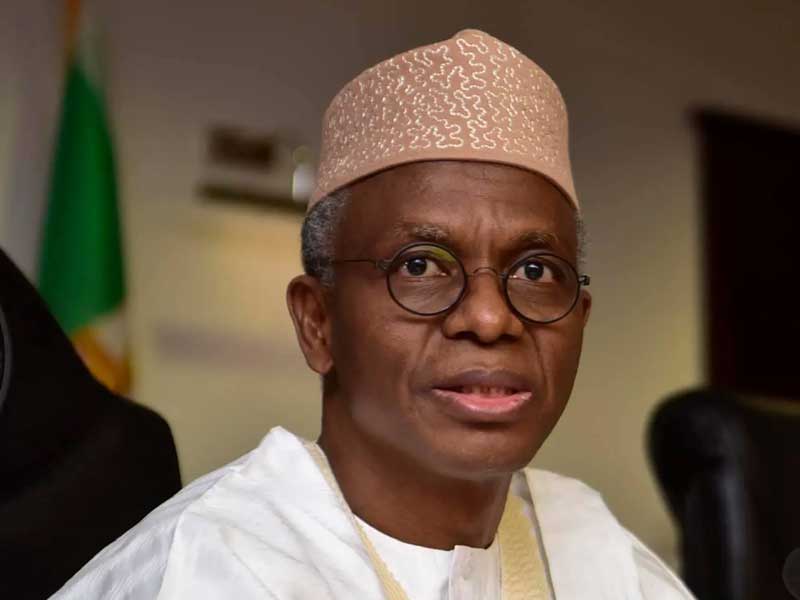
Since 2014, The House of Justice has continued to work on accountability measures against terrorism and Mass Atrocities through litigation, stripping corrupt leaders off public engagement and submitting petitions to ensure enablers and sponsors of terrorism are not appointed to political offices. One of such high ranking officials is Mallam Nasir Ahmad El-Rufai whose tenure as Governor of Kaduna state, Nigeria’s third largest state, was characterized by numerous murders, enforced disappearances, wilful destruction of cultural heritages, brutal persecution of critics and journalists and mass illegal destruction of houses and means of livelihood. President Muhammadu Buhari who led Nigeria, Africa’s largest country between 2015-2023 was egregiously negligent as Nigeriacontinued to feature in the rating of the top most terrorized countries in the world accounting for two top terrorist groups: Boko Haram and Herdsmen Terrorists – two groups the President was reluctant to declare as terrorists until the global community affirmed them as such.

The House of Justice continues to call for global collaboration in addressing root causes, provision of alternative narratives, terror and war financing disruption, actionable intelligence and multi-sector collaboration in preventing terror and where there are war and terror victims, that victims’ justice and resettlement should be prioritized by the state while those in the ecosystem of wars such as financiers, instigators, collaborators or executors of terrorism are held to account.

For the House of Justice, the mission is more than Law and Justice. The end point is the supremacy of the Rule of Law so there can be just societies and a safe world.

Justice Delayed, Justice Denied: The 11-Year Ordeal of the Gbagyi Three in Kaduna

By Steven Kefas

(Kaduna), On a November morning in 2025, Gloria Mabeiam Ballason received a WhatsApp message at 8:16 a.m. from the court registrar. Judgment would be delivered at 9:00 a.m.—in less than an hour. The lead counsel for the defendants was out of town and so she delegated a lawyer to attend the session. The court doors closed to others including journalists seeking entry.

Inside Court 15 of the Kaduna State High Court, three men who had already spent 11 years behind bars learned they would remain imprisoned for 10 more years.Their crime? Conspiracy and “Intention to commit culpable homicide”, a charge that has left legal experts questioning how Nigerian courts can determine the intentions of a person’s heart. “Not even the devil knows the intention of the heart of man,” Ballason said, her frustration palpable as she reflected on the judgment handed down by Justice B.M. Balarabe.

The case of the Gbagyi six, three of whom the prosecution presented at the High Court for trial, were arrested in January 2014 following a violent clash rooted in a land dispute in Jere chiefdom, Kagarko Local Government Area of Kaduna, has become yet another stark illustration of Nigeria’s troubled justice system, where prolonged detention, denied bail, and questionable verdicts have turned courtrooms into instruments of persecution rather than justice.

A Conflict Born of Land and Power.

The story begins in early January 2014, along the road from SSC Jere to Bwari in Kagarko Local Government Area. Dr. Sa’ad Usman, the Emir of Jere and husband of former Finance Minister, Senator Nenadi Usman, was traveling when he encountered a gathering of Gbagyi youths who stopped him. What happened next remains disputed. According to the Jere Traditional Council, one Ayuba Barde who was the first Defendant in the case but was not presented before the Court shouted at the traditional ruler, which led to a violent altercation in which the Chief, his driver, and police orderly were attacked with machetes and axes. The Gbagyi community told a different story: they claimed the Chief of Jere had for long formed the habit of confiscating lands from Gbagyi natives in Jere chiefdom with impunity, and that the most recent incident involved the destruction of food crops belonging to Ayuba Barde. Ayuba Barde was first shot by the orderly of the Chief following which a melee ensued.

A State Security Service source confirmed that serious crisis had been brewing in the area, with the Gbagyi people writing that their ancestral lands were being seized by the Fulani Emir. According to court documents, the incident left both the Chief and Ayuba Barde requiring hospitalization. In the days following the January 3, 2014 clash, Kaduna State Police Commissioner Olufemi Adenaike confirmed that several persons were arrested and would be detained until all principal characters could speak. Among those arrested were individuals who would spend the next 11 years fighting charges that evolved from “inciting disturbance” and “causing grievous hurt” to the far more serious charges of culpable homicide, and conspiracy.

A Trial Without End.

The Defendants ‘s Journey through Nigeria’s judicial system reads like a kafkaesque nightmare. They were first arraigned before a Magistrate Court, then transferred to the High Court. Their case moved from Justice Gideon Kurada, who granted them bail, to Justice Bashir Sukola, who also granted them bail, but on terms they could not meet despite repeated applications for review. Justice Sukola eventually died, and the file moved to Justice Binta F. Zubairu, who started the case afresh. After five years before Justice Zubairu, the longest period in their ordeal, the judge was elevated to the Court of Appeal just as the defense was set to open. The case then landed with Justice Buhari M. Balarabe, who again started the proceedings afresh. “The prosecution was not within reasonable time,” Ballason emphasized. “The trial took 11 years.”Throughout this period, the Defendants remained in custody. According to Ballason, Justice Balarabe’s court refused to take the bail application until after the hearings concluded, a decision she describes as “a violation of the right to fair hearing and presumption of innocence until proven guilty. “The Nigerian Constitution is explicit on this matter. Section 35(4) mandates that any person arrested or detained must be brought before a court within a reasonable time, and if not tried within two months (for those in custody) or three months (for those on bail), they must be released. Yet the Gbagyi defendants spent over a decade in pretrial detention.

A Judgment That Raises Questions.

On November 19, 2025, Justice Balarabe delivered his verdict. The court found the defendants guilty of conspiracy and intention to commit culpable homicide. Notably, the defendants were not found guilty of culpable homicide itself, as the prosecution could not prove that Dr. Sa’ad Usman, who died on April 1, 2020, died as a result of an incident that occurred six years prior in January 2014. Dr. Usman had been hospitalized in London following the 2014 altercation and battled with injuries for years before his death in 2020. The court could not establish beyond reasonable doubt that his 2020 death was directly caused by the 2014 incident. Yet the defendants received five years for conspiracy and ten years for “intention to commit culpable homicide,” to run concurrently. Combined with the 11 years already served, they face a total of 21 years imprisonment. “To hand down 21 years imprisonment for conspiracy and intention to commit culpable homicide is not contemplated by Justice,” Ballason stated. “The punishment is excessive.”She pointed to critical gaps in the prosecution’s case: “The medical report as to the cause of death of Dr. Sa’ad Usman was not tendered as evidence, which would have been grounds linking the defendants with the alleged offence. It was not properly established by the prosecution that there was no break in the chain of causation.”

The Prosecution counsel led by J.N. Dan’azumi Esq, Solicitor General of the Kaduna Ministry of Justice, had hoped for capital punishment on the charges they filed before the Court but declined to react to the judgement on the records.

Echoes of Sunday Jackson.

The Gbagyi case bears disturbing similarities to another controversial verdict that has outraged Nigerians: the death sentence handed to Sunday Jackson, a farmer from Adamawa State. In 2015, Jackson was working on his farm in Kodomti Community when a herdsman, Buba Ardo Bawuro, herded his cattle into Jackson’s farm to feed on his crops. When Jackson confronted him, the herdsman attacked Jackson with a knife, stabbing him. In the ensuing struggle, Jackson managed to disarm his attacker and fatally stabbed him in the neck.Jackson was arrested and charged with murder despite his consistent assertion that he acted in self-defense. After years of trial marked by delays and procedural irregularities, he was convicted and sentenced to death by hanging. In March 2025, the Supreme Court of Nigeria upheld Jackson’s death sentence, with the court reasoning that having seized the dagger, Jackson no longer faced an imminent threat and should have fled instead of retaliating with deadly force. The verdict sparked national and international outrage. Legal luminary Mike Ozekhome, SAN called the Supreme Court’s position “unrealistic and disconnected from the realities of violent encounters,” noting that the notion that Jackson had a clear opportunity to flee while entangled in a fight with an armed opponent was speculative and a dangerous oversimplification. It later emerged that Justice Helen Ogunwumiju, the most senior judge on the appeal panel, had issued a dissenting judgment that was initially omitted from the certified true copy. She ruled it was a case of self-defense. “In the circumstances, I am of the view that the defence of self defence avails the Appellant and that his response was not excessive. It is my view that the judgment of the two lower Courts should be set aside as a miscarriage of justice”. – Per HELEN MORONKEJI OGUNWUMIJU, J.S.C. Both cases, the Gbagyi defendants and Sunday Jackson emerge from the same context: Nigeria’s deadly farmer-herder conflicts, where disputes over land and livelihood frequently turn violent. In both cases, those who claim to have defended themselves or their property face the full weight of the criminal justice system, while questions persist about whether justice has truly been served.

The Broader Context: Gbagyi Marginalization.

The Gbagyi people are one of the most populous ethnic groups in the middle belt and among the bonafide owners of the Nigerian capital city, Abuja. When Abuja was chosen as Nigeria’s new federal capital, the Gbagyi were the largest among the ethnic groups that inhabited the land proposed for development, resulting in dislocation and the removal of people from their ancestral homes.The Gbagyi people are known to be peace-loving, transparent, and accommodating. Northerners often say in Hausa language “muyi shi Gwari Gwari,” meaning “let’s do it like the Gbagyi” or “in the Gbagyi way”. Yet their perceived docility has sometimes worked against them.Across the north, it is believed that the Gbagyi lost most of their ancestral lands to other tribes because of their laid-back attitude. The 2014 incident in Jere was rooted in exactly such tensions, a community feeling their lands were being systematically taken from them, with their appeals to authorities going unheeded. The defendants’ legal team believes their clients were not fairly treated. “Courts have a duty to not only do justice but to ensure that a reasonable man can come to the conclusion that justice was done.”

What This Means for Nigeria As Nigeria grapples with ongoing security challenges, from banditry in the Northwest to terrorism in the Middle Belt and North central that have claimed thousands of lives.

The cases of the Gbagyi four and Sunday Jackson send a chilling message: defending oneself or one’s property may be criminalized while attackers escape accountability. “Section 35(4) of the 1999 Constitution provides that any person arrested or detained shall be brought before a court within a reasonable time,” Ballason emphasized. “This constitutional provision was argued along with the bail application, but the court refused to take the bail application until the conclusion of hearing. This is against the law. “She continued: “No administrative issue can override the right to fair and timely trial. Eleven years for a criminal trial under a democracy is simply not justifiable. “The defendants plan to appeal the November 19 judgment. They argue that beyond the excessive punishment, the necessary elements of the alleged offenses were not properly examined, the medical evidence linking Dr. Usman’s 2020 death to the 2014 incident was never produced, and the prosecution failed to establish an unbroken chain of causation. As the four men begin what could be another decade behind bars, having already lost 11 years of their lives, their case stands as a stark reminder of the urgent need for judicial reform in Nigeria. The scales of justice, many argue, have tipped dangerously out of balance. “It is essential to recognize the importance of timely justice and justice according to law,” Ballason concluded.

For the Gbagyi defendants, and for Sunday Jackson still on death row, the question remains: When will Nigeria’s justice system deliver the justice its name promises? The defendants have confirmed they will file an appeal challenging both the conviction and the sentencing. Meanwhile, growing calls for clemency for Sunday Jackson continue, with human rights organizations and religious bodies urging the Adamawa State governor to exercise his constitutional power of pardon.

As Nigerian elites panic over Trump’s military threat, the victims of two decades of massacre ask: where were you when we were being slaughtered

By Steven Kefas

On November 1st, U.S President, Donald Trump issued what many are calling an unprecedented threat to a sovereign African nation. “If the Nigerian Government continues to allow the killing of Christians, the U.S.A. will immediately stop all aid and assistance to Nigeria, and may very well go into that now disgraced country, ‘guns-a-blazing,’ to completely wipe out the Islamic Terrorists who are committing these horrible atrocities,” Trump declared on his social media platform, adding that he has instructed the Department of War to prepare for possible action.

The response from Nigeria’s political class, thought leaders, and commentators has been predictably indignant. They warn of sovereignty violations, speak ominously of chaos and instability, invoke the specter of Libya and Iraq, and counsel caution about external military intervention. These concerns sound measured, reasonable, even patriotic.

But they ring hollow to the communities that have buried their dead by the hundreds while Nigeria’s government looked the other way.

The View from the Killing Fields

As someone who has spent over a decade documenting the ongoing massacre in Nigeria’s Middle Belt, interfacing directly with survivors, photographing mass graves, and listening to testimonies that would break the hardest heart, I can tell you this with certainty: the direct victims of these terrorist atrocities have reached a point where they no longer care where help comes from. When your government has abandoned you to slaughter, sovereignty becomes an abstract concept with little meaning.

Benjamin Badung, a 40-year-old father of five from Bangai district in Riyom Local Government Area of Plateau State, will not be pondering the geopolitical implications of American intervention. On May 20, 2025, his wife Kangyan was slaughtered by Fulani militants. He is raising five children alone, living in fear that the attackers will return to finish what they started. If American military action means his children stay alive and can thrive on their ancestral land, Benjamin Badung will not object on grounds of national sovereignty.

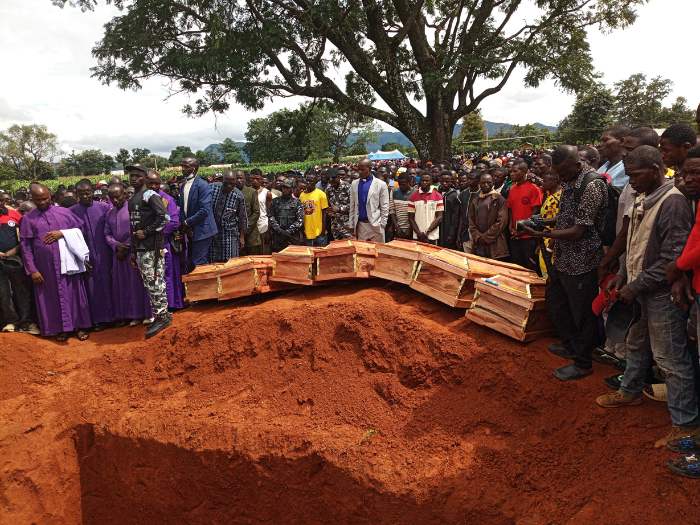
The survivors in Yelwata, Benue State, who I have visited 3 times since they buried 258 people, mostly women and children on June 14, 2025, are not concerned about the precedent of foreign military intervention. They watched their loved ones massacred over four hours of sustained attack while military barracks sat less than 20 miles away. They know their attackers. They know where the terrorists are camped, less than five miles away in Kadarko, Nasarawa state. Yet no arrests have been made. No camps have been bombarded. No justice has been served. If Trump’s threat galvanizes action against those who butchered their families, they will welcome it.

The people of over over 30 communities in Bokkos, who mourned over 200 dead on Christmas Day 2023, are not writing think pieces about the dangers of American military adventurism in Africa. They are wondering why their Christmas celebration became a massacre, why their churches were burned, why their government failed to protect them despite warnings of impending attacks.

The residents of Zikke in Miango, massacred while soldiers stationed less than four miles away remained motionless, are not worried about Nigeria’s international image. They are haunted by a more fundamental question: why did their own military refuse to defend them?

The peace loving people of Bindi in Tahoss district, Riyom LGA, a community of about a thousand people I have also visited and interacted with three times since the July 15 attack that left 27 people mostly women and children dead don’t really care if natural resources is stolen by America provided their farms become safer.

The list goes on. Community after community. Massacre after massacre. Mass grave after mass grave. And through it all, the Nigerian government has offered nothing but excuses, denials, and appeasement of the very terrorists carrying out these atrocities.

The Sudden Awakening of Nigeria’s Military

It is remarkable, and deeply cynical that in the 168 hours following Trump’s threat, the Nigerian military has suddenly flooded social media with posts about victories against terrorists in different parts of the country. Where was this energy for the past two decades? Why did it take an American president’s threat to spur action that should have been ongoing as a matter of national duty?

The message is unmistakable: Nigeria’s government is capable of fighting terrorism when sufficiently motivated. The capacity exists. The resources are available. What has been missing is political will. Trump’s statement has apparently provided that motivation in 168 hours, revealing what victims of these attacks have known all along, the failure to protect communities has been a choice, not an inability.

The Questions That Still Demand Answers

Even as the military scrambles to demonstrate competence in the Northeast and northwest, the fundamental questions about the Fulani jihadist insurgency in the Middle Belt remain unanswered.

The immediate past Chief of Defense Staff, General Christopher Gwabin Musa, stated during an August 2025 interview on Channels TV that the process of identifying and prosecuting terrorism financiers in Nigeria is ongoing, citing legal complexities. But who are these financiers? Why, after two decades of attacks involving sophisticated weapons and coordinated operations across multiple states, has not a single major financier been publicly identified, arrested, and prosecuted?

Where do the Fulani ethnic militants operating in the Northwest and Middle Belt acquire military-grade weapons? These are not crude hunting rifles; survivors describe AK-47s, AK-49, RPGs, general-purpose machine guns, and in some cases, anti-aircraft weapons. Such arsenals require supply chains, logistics, and financing. Yet the Nigerian government claims inability to trace these obvious channels.

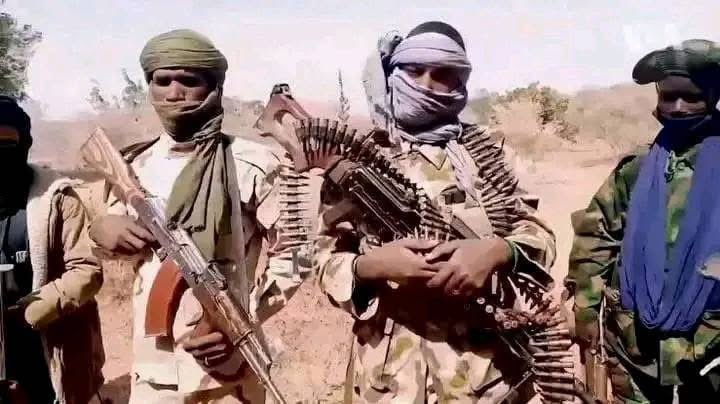
How is it possible that terrorists appear in public, sometimes armed and in the presence of security agents, without arrests? Recent videos from Guga Ward in Bakori Local Government Area of Katsina State show armed Fulani militants attending “peace talks” with weapons visible, surrounded by traditional rulers and, disturbingly, security personnel. In any functional state, such gatherings would result in mass arrests. In Nigeria, they result in photo opportunities.

Why is the Nigerian National Security Adviser, Mallam Nuhu Ribadu, bent on appeasing Fulani terrorists instead of allowing the military to treat them as the terrorists they are? His alleged championing of peace deals that demand no disarmament, no accountability, and no cessation of violence represents either profound incompetence or something more sinister.

The Martyr They Created: General Christopher Musa’s Warning

Perhaps the most telling aspect of this entire crisis is what happened to General Christopher Musa. Just five days before his removal as Chief of Defence Staff, General Musa issued a stark warning to Nigerians about peace deals with terrorists.

“We therefore urge everyone: do not make peace with them. We do not support these bandits or any peace agreement with them. If they genuinely want to stop, they should lay down their weapons and surrender. If they surrender, we will take them into custody, screen and investigate them thoroughly; that’s the proper approach,” General Musa stated clearly.

He continued with even more pointed language: “But sitting down with a bandit and asking ‘Why did you pick up a gun?’ is pointless. It’s driven by greed, and greedy people will not give up. They will never stop. So there should be no truce with them.”

This was a military leader articulating sound counterterrorism doctrine: no negotiations with active terrorists, demand for unconditional surrender, thorough screening and investigation of those who lay down arms, and absolute rejection of the peace deal charade that has characterized Nigeria’s approach to both Boko Haram and the Fulani militants insurgency.

In the same month, General Musa issued a directive to troops to eliminate any terrorist killing civilians and destroying property nationwide. This was exactly the kind of aggressive posture needed to confront groups that have operated with impunity for two decades.

The response from certain Northern elites and Islamic clerics was immediate and hostile. They objected vehemently to this directive, advocating instead for continued peace deals with terrorists. Shortly thereafter, General Musa was removed from his position.

The message sent was chilling: a Chief of Defence Staff who takes a hard line against Islamist terrorists will not be tolerated. Those who advocate for crushing terrorist groups rather than accommodating them will definitely be removed. We saw it happen to Gen Ihejerika at the peak of the Boko Haram insurgency in the northeast. The political will to confront the Fulani jihadist insurgency does not exist at the highest levels of Nigeria’s government, and anyone who attempts to act decisively will be neutralized.

General Musa’s removal, following immediately after his public rejection of terrorist appeasement, reveals the fundamental rot at the core of Nigeria’s counterterrorism strategy. It explains why, despite a capable military that has successfully conducted peacekeeping operations in Sierra Leone, Liberia, and other conflict zones, Nigeria cannot or will not crush armed groups terrorizing its own citizens.

The Elite Panic vs. The Victims’ Reality

The panic among Nigeria’s political and intellectual class over Trump’s threat is instructive. Where was this passionate defense of Nigerian sovereignty when communities were being wiped out and some occupied by terrorist elements? Where were the think pieces and television appearances when churches were being burned and farmlands destroyed? Where was the outrage when peace deals legitimized terrorists?

For two decades, Nigeria’s elites have been largely silent as communities in the Middle Belt faced systematic extermination. They characterized genocide as “farmer-herder clashes.” They blamed victims for not “accommodating” their killers, they blamed climate change. They counseled patience and reconciliation while bodies piled higher.

Now, suddenly, they have found their voices, not to demand protection for vulnerable communities, but to object to the prospect of someone else providing that protection.

This is not patriotism. This is complicity masquerading as principle.

What Trump’s Threat Reveals

Whether President Trump follows through on his threat or not, his statement has accomplished something the Nigerian government has failed to achieve in two decades: it has forced a conversation about the true nature of violence against Christians and other religious groups in Nigeria.

The euphemisms are no longer working. The world is no longer accepting “farmer-herder clashes” as explanation for systematic religious persecution. The fiction that these are spontaneous conflicts over resources has been exposed. The pretense that Nigeria’s government is doing everything possible to protect all citizens has collapsed.

Trump’s threat as crude as it may sound to diplomatic ears speaks a language that Nigeria’s government apparently understands: consequences. For years, international partners issued strongly worded statements, expressed concern, called for dialogue. Nothing changed. Now, facing potential military intervention and aid cutoffs, the Nigerian military suddenly discovers operational capacity it has denied possessing for years.

The Path Nigeria Must Take

If Nigeria’s government wishes to avoid the humiliation of foreign military intervention on its soil, the solution is straightforward: do your job. Protect your citizens. Crush the terrorists. End the appeasement.

Specifically:

Remove Nuhu Ribadu as National Security Adviser and replace him with someone committed to defeating terrorism rather than accommodating it.

Reinstate General Christopher Musa’s directive to eliminate terrorists killing civilians, and ensure military commanders face consequences for failure to act.

Officially designate armed Fulani militia groups as terrorist organizations and prosecute them accordingly under Nigeria’s terrorism laws.

Launch coordinated military operations to clear terrorist camps in the Middle Belt, starting with all known locations.

Arrest and prosecute terrorism financiers instead of citing endless “legal complexities” as excuse for inaction.

End all peace deals with active terrorist groups and demand unconditional surrender as the only acceptable path for those who wish to lay down arms.

The authorities should arrest and prosecute Sheikh Ahmed Gumi and other clerics who defend and justify atrocities committed by terrorists, individuals the government and media have euphemistically labeled as “bandits.”

Provide justice and reparations for the millions of victims who have lost family members, homes, and livelihoods.

These are not impossible demands. They are basic functions of government. That they seem radical in the Nigerian context reveals how far the government has strayed from its fundamental duty to protect citizens.

A Message to Nigeria’s Elites

Your sudden concern about sovereignty and stability would be more credible if you had shown similar concern when your fellow citizens were being massacred. Your warnings about the dangers of foreign intervention would carry more weight if you had demanded domestic action when it could have prevented this crisis.

You cannot remain silent while communities are exterminated and then clutch your pearls when someone else threatens to act. You cannot characterize genocide as economic conflict and then object when others call it what it is. You cannot accommodate terrorists for two decades and then suddenly discover principles when faced with consequences.

The victims of Fulani jihadist terrorism are not impressed by your geopolitical analysis. They are not moved by your concerns about precedent. They are not comforted by your counsel of patience. They have been patient for twenty years while you did nothing.

If you do not want foreign intervention in Nigeria, then demand that your government intervene to protect Nigerians. If you object to Trump’s threat, channel that energy into demanding that Tinubu’s administration crush the terrorists. If you care about sovereignty, insist that Nigeria exercise sovereignty by defending all its citizens, not just those whose deaths are politically inconvenient to acknowledge.

Conclusion: When Survival Trumps Sovereignty

I do not know if President Trump will follow through on his threat. I do not know if American military action in Nigeria would succeed or fail, bring peace or chaos. What I know is this: for communities that have buried their dead by the hundreds while their government looked away, the calculation is simple.

They have tried trusting their government. Their government failed them.

They have tried appealing to national authorities. National authorities ignored them.

They have tried documenting atrocities to force action. The documentation was dismissed as exaggeration.

They have tried international advocacy. It was characterized as unpatriotic.

Now, finally, someone with real power is threatening consequences for their government’s failure to protect them. And Nigeria’s elites are upset, not at the government that abandoned these communities to slaughter, but at the foreign leader threatening to act where Nigeria will not.

The people of the Middle Belt are watching this reaction, and they are drawing conclusions about who their real enemies are. It is not just the terrorists pulling triggers. It is also those who create the conditions for those triggers to be pulled with impunity, and those who object more strenuously to the prospect of justice than to the reality of genocide.

Trump’s threat may be crude, it may be controversial, it may be problematic in numerous ways. But to the husband who buried his wife, to the community that buried its children, to the survivors waiting for the terrorists to return, it is something else entirely: it is acknowledgment that their lives matter, that their suffering is seen, and that someone, somewhere, is willing to act.

That is more than Nigeria’s government has given them in twenty years.

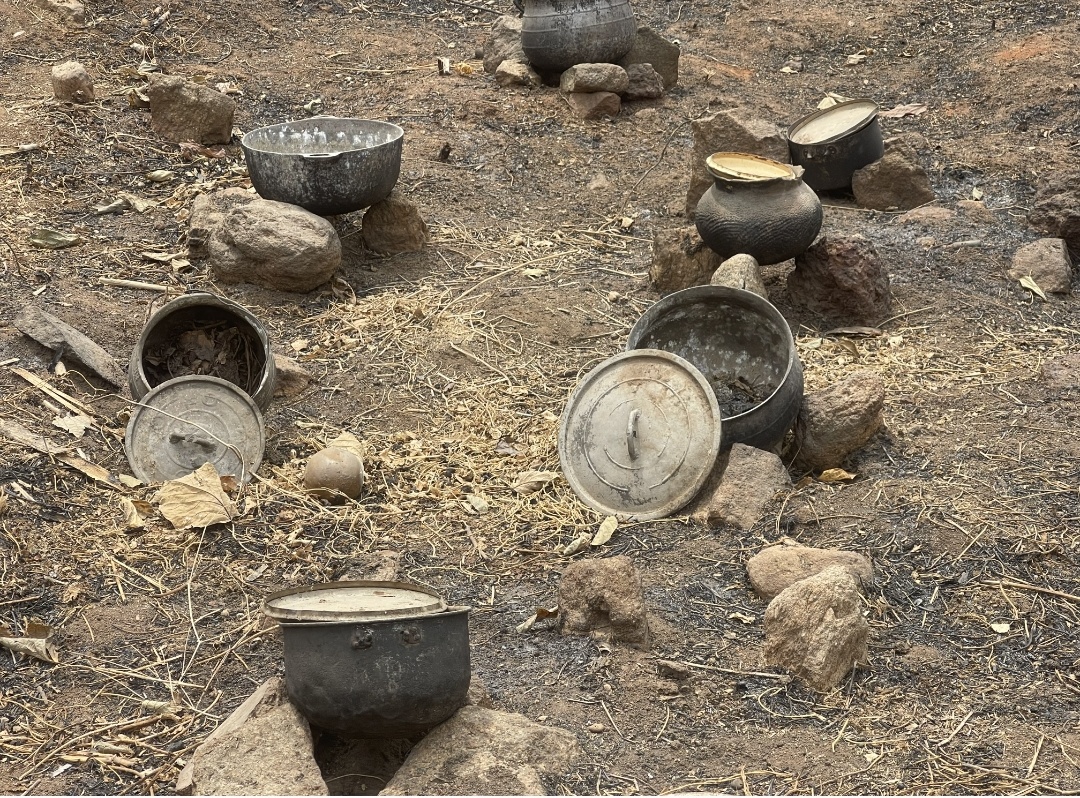
Picture: cooking pots abandoned by fleeing residents during Islamic Fulani terrorists attack in Januwa village, Yangtu Development Area, Taraba state. Credit: Steven Kefas


Steven Kefas is an investigative journalist, Senior Research Analyst at the Observatory for Religious Freedom in Africa, and Publisher of Middle Belt Times. He has documented religious persecution and forced displacement in Nigeria’s Middle Belt for over a decade.


Breaking Down the CPC Designation: How Government Appeasement of Terrorists Led to International Sanction

By Steven Kefas

Yesterday, the United States designated Nigeria as a Country of Particular Concern (CPC) for severe violations of religious freedom, a long-overdue recognition of the systematic persecution of Christians and other vulnerable communities that has claimed tens of thousands of lives over the past two decades. This designation didn’t emerge from vacuum; it reflects years of documented evidence, mounting international pressure, and most critically, the lack of political will by successive Nigerian governments to confront the Fulani jihadist insurgency decimating indigenous communities across the Middle Belt and beyond.

Understanding the CPC Designation

A Country of Particular Concern designation under the International Religious Freedom Act represents one of the most serious diplomatic rebukes the United States can issue. It signals that a government has either engaged in or tolerated systematic, ongoing, and egregious violations of religious freedom. For Nigeria, this designation specifically addresses the government’s failure to prevent, investigate, or prosecute mass atrocities against Christian communities, particularly those carried out by armed Fulani militia groups operating with apparent impunity across multiple states.

The designation comes with potential consequences including sanctions, travel restrictions on government officials, and limitations on security assistance. More significantly, it places Nigeria alongside countries like China, Russia, Iran, and North Korea on a list of the world’s worst violators of religious freedom, a devastating blow to Nigeria’s international reputation and a clear message that the world is no longer willing to ignore the bloodshed.

The Fulani Jihadist Insurgency: An Unacknowledged Genocide

For over two decades, armed Fulani militia groups have waged a systematic campaign of violence against predominantly Christian farming communities across Nigeria’s Middle Belt states including Plateau, Niger, Kwara, Kogi, Benue, Taraba, Adamawa, and Southern Kaduna. These attacks follow predictable patterns: midnight raids on sleeping villages, mass shootings, burning of homes and churches, destruction of farmland, kidnapping for ransom, and forced displacement of entire communities from their ancestral lands.

The Nigerian government and many media outlets have persistently characterized this violence as “farmer-herder clashes” driven by competition over land and water resources, a narrative that deliberately obscures the religious and ethnic dimensions of these attacks. This framing ignores overwhelming evidence that these are coordinated military-style operations targeting Christian communities specifically, not spontaneous conflicts between economic groups. Survivors consistently report attackers shouting “Allahu Akbar” during raids, specifically targetingChristian farming communities.

International organizations including Genocide Watch, the United States Commission on International Religious Freedom (USCIRF), and Open Doors have repeatedly warned that the violence against Christians in Nigeria’s Middle Belt exhibits markers of genocide according to the UN Convention on Genocide. Yet the Nigerian government continues to downplay the religious dimensions, refuses to designate perpetrating groups as terrorists, and has failed to arrest or prosecute those responsible for these atrocities despite thousands of documented attacks.

The Paradox of Invisible Terrorists

During my own incarceration in Kaduna Custodial Center (prison), in the very heart of the region most affected by Fulani terrorist violence, I made a disturbing observation: despite thousands of documented attacks, mass killings, and the displacement of millions, I never encountered a single Fulani terrorist among the prison population. The prisons were filled with common criminals, political detainees, and individuals accused of various offenses, but conspicuously absent were members of the armed groups terrorizing communities just kilometers away from the prison walls.

This glaring absence raises fundamental questions about the Nigerian government’s commitment to justice and accountability. If Fulani militias are genuinely criminal groups operating outside state control, why aren’t security forces arresting them? If they’re terrorists threatening national security, why aren’t they being prosecuted? The most troubling explanation is that these groups operate with official protection or at minimum, deliberate tolerance from elements within Nigeria’s security architecture.

Multiple credible reports document security forces arriving hours after attacks despite communities alerting authorities during ongoing raids, refusing to pursue fleeing attackers, and in some cases, actively preventing communities from defending themselves. Some survivors report security personnel withdrawing from areas just before attacks occur, suggesting foreknowledge if not coordination. This pattern of complicity extends to the judicial system, where rare arrests of suspected Fulani militants typically result in quiet releases without prosecution.

The Nuhu Ribadu Problem: Peace Deals That Embolden Terrorists

At the center of Nigeria’s failed counterterrorism strategy sits National Security Adviser, Mallam Nuhu Ribadu, whose approach to the Fulani jihadist insurgency has been characterized by appeasement rather than confrontation. Ribadu has allegedly championed “peace deals” with armed Fulani groups in the North West that require no genuine disarmament, demand no accountability for past atrocities, and impose no meaningful conditions on participants.

Most disturbingly, these peace meetings have become theatrical displays where armed terrorists attend openly carrying weapons, not as surrendered arms but as symbols of their continued power. Rather than being disarmed and arrested, these individuals are feted, given platforms to air grievances, and often provided government resources ostensibly for “rehabilitation” that never materializes into genuine transformation. The message sent is clear: terrorism pays, and the Nigerian state will negotiate with you while you remain armed and dangerous.

This approach represents a fundamental misunderstanding of counterinsurgency principles. Genuine peace processes require that armed groups demonstrate commitment to peace through verifiable disarmament, cessation of violence, and accountability for past crimes. Ribadu’s peace deals offer none of these, instead legitimizing terrorist groups as stakeholders in governance while their victims remain displaced, traumatized, and vulnerable to renewed attacks.

For communities that have lost thousands of family members, seen their villages burned repeatedly, and remain displaced years after initial attacks, these peace deals represent a betrayal. They watch their attackers attend government-sponsored meetings with full military regalia while they languish in IDP camps with no justice, no compensation, and no protection against future violence. This is not peace; it is surrender disguised as reconciliation.

The Controversial Defense Appointment: Signaling Priorities

The Tinubu administration’s appointment of former Zamfara State Governor Bello Matawalle Minister of State for Defence sends a chilling message about the government’s priorities regarding the Fulani jihadist insurgency. Matawalle’s tenure as Zamfara governor was marked by controversial policies toward armed bandits and terrorists operating in the state, including peace deals that critics argue emboldened rather than deterred violence.

Under Matawalle’s governorship, Zamfara became infamous for its approach of negotiating with terrorists while often taking harsh measures against communities advocating for self-defense. His administration faced accusations of sympathizing with armed groups while failing to protect vulnerable populations. Now elevated to a key defense position at the federal level, Matawalle’s appointment suggests either profound tone-deafness about the optics of placing a terrorist sympathizer in charge of national defense, or a deliberate signal that the government’s appeasement approach will continue.

This appointment is particularly offensive to Christian communities in the Middle Belt who have borne the brunt of Fulani terrorist violence. It communicates that their concerns about religious persecution are not taken seriously, that their calls for justice fall on deaf ears, and that those who accommodate terrorists are rewarded with higher office while their victims remain forgotten.

The Broader Context: Why Accountability Matters

The lack of accountability for religious persecution in Nigeria extends beyond the Fulani insurgency, though that remains the deadliest manifestation. It includes the Boko Haram and ISWAP insurgencies in the Northeast that have killed tens of thousands and displaced millions, primarily targeting Christians and moderate Muslims. It encompasses discriminatory Sharia law implementation in Northern states that criminalizes Christian evangelism while permitting Islamic proselytization. It involves systematic discrimination in government appointments, educational opportunities, and economic development that favors Muslims over Christians in Northern states.

This pattern of impunity has convinced perpetrators that targeting Christians carries no consequences. When terrorist commanders remain free after documented massacres, when government officials who facilitate violence face no sanctions, when security forces who fail to protect vulnerable communities receive no discipline, the message is clear: Christian lives don’t matter in Nigeria’s calculus of power.

The CPC designation represents the international community finally saying: we see what you’re doing, we will no longer accept your excuses, and there will be consequences for continued inaction. This is not interference in Nigeria’s internal affairs; it is a response to a government’s failure to protect its own citizens and uphold its obligations under international human rights law.

What Must Change: A Roadmap for Action

For Nigeria to address the concerns underlying the CPC designation and genuinely protect religious freedom, several immediate actions are necessary:

First, National Security Adviser Nuhu Ribadu must be removed and replaced with a competent, no-nonsense security official committed to crushing jihadist insurgencies rather than accommodating them.

The current appeasement approach has demonstrably failed, emboldening terrorists while failing to provide security for vulnerable communities. Nigeria needs security leadership that understands counterterrorism, respects human rights, and prioritizes protection of all citizens regardless of religious identity.

Second, armed Fulani militia groups must be officially designated as terrorist organizations and prosecuted accordingly.

The fiction that these are mere “herders” involved in resource conflicts must end. These are organized armed groups conducting systematic attacks on civilian populations with religious and ethnic motivations. They must be treated as the terrorists they are, with full application of Nigeria’s terrorism laws including arrests, prosecutions, and asset freezures.

Third, a comprehensive program of arrests and prosecutions of terrorist commanders must be implemented immediately.

Years of documented attacks have produced extensive evidence aboutsponsors, operational patterns, and specific perpetrators. This evidence must be acted upon with coordinated operations to arrest sponsors, dismantle networks, and bring perpetrators before courts. This requires political will from the highest levels of government to overcome resistance from those who benefit from the status quo.

Fourth, the appointment of controversial figures like Bello Matawalle to key security positions must be reversed.

These appointments signal that the government is not serious about confronting religious persecution. Replacing such officials with individuals who have demonstrated commitment to protecting all Nigerians regardless of religious identity is essential for restoring confidence in government intentions.

Fifth, a comprehensive program of justice and reparations for victims must be established.

Millions of displaced persons need pathways to return home safely, rebuild destroyed communities, and receive compensation for losses. Survivors of attacks need access to trauma counseling and medical care. Communities need assurance that their security will be prioritized and that future attacks will be prevented.

The Trump Factor: Why This Time Is Different

While I sympathize with President Tinubu’s administration, which inherited these problems when taking office just two years ago, the reality is that the lack of political will to confront Fulani jihadists predates his presidency and continues under his watch. Previous U.S. administrations issued strongly worded statements about religious persecution in Nigeria but took limited concrete action. The Trump administration has demonstrated willingness to move beyond rhetoric to consequences, as evidenced by the CPC designation.

This represents a potential turning point. Under President Trump’s leadership, the United States has signaled that the days of endless massacre of Christians without accountability are over. The CPC designation is likely just the beginning, with targeted sanctions, visa restrictions, and other measures potentially forthcoming if Nigeria fails to demonstrate genuine progress on protecting religious freedom.

For Nigerian officials who have operated with impunity while facilitating or tolerating religious persecution, this should serve as a wake-up call. The world is watching, documentation is being compiled, and accountability mechanisms are being activated. The comfortable assumption that international outrage will never translate into consequences is no longer valid.

A Message to the Nigerian Government

You have lied to the world about the nature of violence against Christians in Nigeria, characterizing genocide as “farmer-herder clashes” and systematic religious persecution as resource competition. You have protected perpetrators while abandoning victims. You have appointed terrorist sympathizers to defense positions while imprisoning those who dare to defend themselves. You have negotiated with armed terrorists while refusing justice to their victims.

The world is watching, and your lies are no longer accepted. The CPC designation is deserved, and more actions will follow if you continue on this path. It is time to act and act very fast. Crush the jihadists, protect the lives of Christians and other vulnerable communities, demonstrate through concrete actions rather than empty rhetoric that you are committed to religious freedom, and the USA will undesignate Nigeria with immediate alacrity.

The choice is yours: continue the current path of appeasement and complicity and face increasing international isolation and consequences, or demonstrate genuine political will to confront religious persecution and restore Nigeria’s standing in the community of nations that respect human rights.

Conclusion: Hope Amidst Darkness

Despite the grim realities documented above, there is reason for cautious hope. The CPC designation represents international recognition that has eluded victims of religious persecution in Nigeria for decades. It validates their suffering, acknowledges their testimonies, and signals that they have not been forgotten by the wider world.

For those of us who have documented these atrocities, advocated for victims, and refused to accept official narratives that obscure the truth, this designation represents vindication. Our work has not been in vain. The evidence we have compiled, the testimonies we have preserved, and the advocacy we have undertaken has finally broken through the wall of denial and reached decision-makers willing to act.

The question now is whether the Nigerian government will respond with genuine reform or with defiance and denial. The path forward is clear: accountability, justice, protection, and genuine commitment to religious freedom for all Nigerians. Whether Nigeria’s leadership has the wisdom and courage to take this path remains to be seen, but one thing is certain—the world is watching, and the days of impunity are numbered.

Steven Kefas is an investigative journalist, Senior Research Analyst at the Observatory for Religious Freedom in Africa, and Publisher of Middle Belt Times. He has documented religious persecution and forced displacement in Nigeria’s Middle Belt for over a decade

Between Closure and Disclosure: The Bitter Truth About Christian Genocide in Nigeria

by

Moses Oludele Idowu

Few days ago the Canadian Parliament in a resolution described Nigeria “as one of the worst places on Earth for a Christian to live.” It came as a rude shock to Nigerian government because their officials rarely follow international commentaries and journals. There was nothing new in that resolution actually.

For years now the _World Watch List_ ( a reputable annual publication of Open Doors International organization that monitors persecution of Christians worldwide) has consistently maintained that Nigeria, especially Northern Nigeria, is one of the worst places now on earth to be a Christian. I reviewed one of these reports during the Buhari regime. These reports are filed with parliaments across the world.

Recently too, popular American comedian Bill Maher also confirmed the reality of genocide in Nigeria. “I am not a Christian but they are systematically killing Christians in Nigeria. They’ve killed over a hundred thousand since 2009. They’ve burnt 18,000 churches. These are the Islamists, Boko Haram. This is so much more of a genocide attempt than what is going on in Gaza. They are literally attempting to wipe out the Christian population of an entire country.”

Adding to the flame, congressman Riley More of West Virginia 2nd District has written to Marco Rubio, US Secretary of State urging him to designate Nigeria as a country of particular concern (CPC) halting all arms sales and technical support. His counterpart in the Senate, Texas senator Ted Cruz has accused the Nigerian government of “ignoring and even facilitating the mass murder of Christians by Islamist jihadists.”

In the light of what has been happening in Benue and Plateau states in particular can these allegations be faulted? Cruz also alleged that NIgerian Christians are being targeted and executed for their faith by Islamist terrorist groups “being forced to submit to Sharia Law and blasphemy laws across Nigeria. It is long past time to impose real costs on the Nigeria officials who facilitate these activities….”

Again I ask, in the light of experiences of Deborah Samuel, Leah Sharibu, etc., the closing of all public schools for Ramadan; has Cruz lied against Nigeria? Ted Cruz has therefore on the basis of these introduced a bill to the Senate, Nigeria Religious Freedom Accountability Act which would target the public officials responsible for these policies with powerful sanctions and other tools.

Expectedly, these actions and steps have jolted Nigerian Government out of its slumber. There is no doubt that the Federal Government was rattled by the report of accusing the nation of genocide against Christians. Spirited attempts and means have been deployed to deny the allegations and dismiss the insinuations. Still they won’t go away rather like mortar to brick, they stick.

Aides, lackeys, honchos of the party and even “useful idiots” from the Christian Association of Nigeria have been engaged to whitewash the stain off government with hyssop; still to no avail.

I do not blame the government. Genocide is a serious thing to be accused of before the international community.

First the Minister of Information tried his best to denounce the allegations and dismiss the whole label as the work of enemies and overzealous haters of the administration and its “good works.” The usual platitudes of tolerance for all religions, and religious freedoms while denying the terrible underbelly of continuous pain and tears among selected groups who have waited for government interventions for years without success and to no avail.

It is my purpose in this investigation to present the facts as they are and leave the readers to judge for themselves. Is there indeed genocide against Christians in Nigeria or is it merely fictional? And are the Americans being overzealous and weeping more than the bereaved as Femi Fani-Kayode seemed to suggest in his response?

It is so amazing that we are so reactive as a people rather than been proactive. And this debility has infected even our government. Americans are being blamed, CNN is being blamed as if they just woke up from slumber or because we supported Gaza during the last United Nations Assembly. – as Fani-Kayode so shamelessly suggested. I do not agree with these propositions.

Long before America dabbled into our affairs Nigerians themselves have called attention to ongoing genocide in Benue and Plateau states.

In July 2023 Bishop Wilfred Anagbe of Makurdi in a testimony to the US House Committee on Foreign Affairs stated:

“The inaction and silence about our plight by both the ( Nigerian) government and powerful stakeholders all over the world prompts me to often conclude that there is a conspiracy of silence and a strong desire to just watch the Islamists get away with genocide in Benue State and others parts of Nigeria.” ( _Catholic Culture_ , July 24, 2023)

Two years later the same bishop in an interview with _ACI AFRICA_ noted that since 2018 he has shutdown some 17 parishes due to killings and systematic campaigns of territorial conquest. “No nation watches her citizens slaughtered like animals and says there is nothing to be done. It’s genocide.”
This is not an American talking and not a Canadian but a Nigerian bishop in Makurdi who is an eyewitness and a victim. Can we, in all honesty fault what he has said? In the light of what we know about Benue State has this bishop told a lie?
In March 12, 2025 the same bishop again appealed to the US House Foreign Affairs Committee, African Subcommittee to redesignate Nigeria as a country of particular concern (CPC) owing to increased Islamist attacks against Christians. He details the persecution of Christians especially in Northern and Central regions of Nigeria where there is a manifest agenda “to reduce and eventually eliminate the Christian identity” of the country.He then concluded by saying, “Concretely I request and I plead, I ask you to redesignate Nigeria as a country of particular concern. This has practical and diplomatic meaning…”

The claim of genocide against Nigeria and the double standard often displayed by security agencies have been made by others even within the country. On April 17, 2025 CAN President, Daniel Okoh described the attacks in Bokkos and Bassa Local Government Areas of Plateau State as ” premeditated vicious acts of genocide” against indigenous Christian communities. [ See _BusinessDay_ April 17, 2025 ]

As usual the government response to all these is to be dismissive and mouth the same worn- out cliches and jaded old tales of tolerance, neutrality, freedom of religion and worship. These mask the insincerity of government and a proof that something sinister is underneath because it fails to address the real issues.

*Pattern of Attacks*

A common defense which usually provides a convenient narrative from government and its many apologists and “useful idiots” is the allusion to the pattern of attacks by insurgents. They claim the attacks do not show any pattern and all Nigerians have been attacked by insurgents without any discrimination.

The CAN national spokesman, one Abimbola Ayuba employed this tactic in his defense. “The pattern of killings has truly not been in a particular pattern,” _Punch_ reported him as saying.

That is not true and he knows in his heart and I will soon show the figures putting a lie to his statement.
“If they open fire in a market place the bullets don’t look for a Christian or spare a Muslim or even spare a baby…” rambled CAN spokesman Abimbola Ayuba to _Guardian_ newspaper. How about that? But Yelwata, where Fulani militia operated for hours killing over 200 without resistance from state security agencies, is not a market place; it is a residential community. Agatu, Bokkos, Bassa where Christians die daily are not market places but residential communities and where people live especially people of a particular Faith. Then there is a pattern.

How many of these militia men have been arrested and brought to book?

Why do the security agencies always maintained that the local vigilantes in these Christian areas cannot carry sophisticated guns like their attackers and refused to defend them claiming they have not received orders to engage? Isn’t that suggestive of genocide? When you refused to defend a people from sophisticated terrorists and you disable them from defending themselves what do you call that?

Abimbola added to his folly when he said: “Why run to America when you have a Senate here where you can file your petition?”
And if we may ask him, how many of the petitions filed by the besieged Christian communities in Benue and Plateau States and by their Development Associations and representatives have been successfully addressed by your Senate? Obviously they had stopped teaching Logic when you went to school or you didn’t learn well. It is so sad that CAN is now loaded with government apologists, fifth columnists and agents.

Sometimes I wonder reading press releases from CAN whether it was written by even Muslims or Aso Rock. I wrote years ago that this Association should be dissolved because it seems to have been hijacked by politicians and has therefore outlived its usefulness. Now I am vindicated.

Femi Fani-Kayode has spoken in similar vein. He believes that all Nigerians are facing genocide not just Christians. That makes it even worse for the government, if it is so. For he has thus charged Nigerian Government of gross irresponsibility. This is not a defense, it is an indictment. If all Nigerians are facing genocide why has Nigerian officials not asked for help from other nations and why is Nigeria crying and making case against Palestinian genocide at the United Nations Assembly when her own people are facing worse genocide at home? It is criminal irresponsibility and dereliction of duty. What responsible man goes out trying to put out fire in another man’s house while his own house with his children are on bigger conflagration?

Contrary to the lies and puerile and asinine logic of absence of discernible pattern in the attacks and killings there is indeed a pattern for anyone who can see, whose eyes have not been blinded by cataract as a result of politician’s filthy lucre and government’s cash transfusions. The figures tell the true story and these are figures from several reputable international observers and organisations and their is a common agreement in what they say. And curiously the natives of.these communities agree with what they say. Unfortunately even the press is compromised.
On a peripheral and surface level it appears the attacks are mindless and patternless but when viewed carefully, the nature and consistency of attacks, the response from the authority to these show a different picture.
It is true that there are critical insecurity challenges in most Northern states especially the Northeast and Northwest but often these are results of age-long misgivings and frictions between Hausa farmers and Fulani pastoralists occasioned by several factors. The Fulanis are mostly pastoralists while Hausas are mostly farmers on land. But these cannot be compared with what is happening and has been happening in Benue and Plateau States and, to some degrees, Taraba which are dominantly Christian states. Is this a coincidence?
Two, why are civilian vigilantes in the core North allowed to carry sophisticated arms to defend their communities and themselves but the same privilege is not accorded those in Benue and Plateau where there has been more bloodshed? Can anyone explain this?
Can anyone compare the statistics in other areas of the North with what is happening and has happened in Benue and Plateau states and Southern Kaduna in the past 10 years especially since these jihadists of APC took over the rein of government in Nigeria? The facts speak for themselves unless when we want to lie.

*Let The Figures Speak*

The _World Watch List_ , a publication of Open Doors International that measures and monitors Christian persecution around the world noted that in 2024 alone 3100 Christians were killed. These are killings targeted for the sake of belief and Faith. The report admitted that it is even lower compared to previous years.
The _International Christian Concern_ designate Nigeria a country of particular concern where persecution of Christians take place. Thus putting Nigeria in the same big league with North Korea, Saudi Arabia, etc.
Genocide or persecution encourages migration because people are bound to flee from zones of danger. Thus the pattern of migration can be indicative of the level of extreme persecution and killings in a particular region. Whatever forces people to leave their ancestral homes, houses and towns as it is currently happening in my dear Igbomina Land must be serious.
Now what does the statistics show? According to _International Organization for Migration (_ IOM) an estimate of 3.3 million Nigerians (i.e., three million, three hundred thousand) have been internally displaced. Now the same organization noted that of these sum almost half ( 1.5 million) has been displaced in Benue State alone. It also admitted that in Plateau State another Christian State, dozens of communities have been overrun in Bokkos, Riyom, Bakin Ladi and Mangu Local Government Areas and their farmland seized and lost. So even the remaining now face the threat of hunger and food shortage.

The _Christian International Solidarity_ ( CIS) detailed series of killings by Fulani militia men in Plateau State. The Nigerian manager has noted in his reports continuous massacres with details and specific beyond any exaggerations. “Since I arrived Jos, Plateau State there has been an attack on Christian villages every night. His log book and report read like those of observers or Red Cross agents in war-torn Somalia or Rwanda during turmoil except that this is Nigeria and our government wants us to believe that all is well. Here is a sample:

“March 27: Massacre of 12 mourners at a funeral in Ruwi village with a gang rape of 19- year old woman.

April 2: Killing of Anglican pastor Ezekiel Gama by Fulani militia. His wife, Naomi Ezekiel Gama sighted the men and hid.

April 13, Palm Sunday: Deadliest massacre in Zike village of Bassa Local Government leading to the death of 56 people including 15 children and displacing 2000 people.

April 15: I visited some victims at Jos University Teaching Hospital. Three people died in the hospital that day. The majority of the victims had been hacked on the back of their necks with machetes. ”

Despite the presence of the military the CSI’ s president, Dr. John Elbner noted there has been “no effective intervention..” Now what do you call these premeditated killings without state intervention? It is genocide.
Unfortunately your compromised press won’t report this.

Let us come nearer home. According to _International Society for Civil Liberties and Rule of Law, Inter- Society,_ 2200 Christians were allegedly killed by Fulani herdsmen, Boko Haram, security personnel and other jihadist, bandits in several states of Nigeria between January and December 2020
They further did a breakdown:

Fulani herdsmen: 1300
Boko Haram/ Splinter groups ISWAP, Ansaru. (500)
NIgerian Army (200)
Jihadist/ bandits. (100)

Further breakdown per state and region shows a pattern which some say they couldn’t see.

Southern Kaduna (455)
Benue State (200)
Plateau State (173)
Southwest (35)
Niger State ( 70)
Kogi ( 55)
Nassarawa (42)
Delta. (20)
Bayelsa (4)
Adamawa (40)
Igboland (40)
Taraba ( 32)
Edo (15)

For those who say there is no pattern in the killings, it depends on where they are looking. Sure there has been widespread killings but it is concentrated in some areas and more pronounced in certain communities which are curiously dominantly Christian. In the Southwest for instance the only state that has been attacked more than the others is Ondo State; the only State where traditional rulers have been killed in the Southwest is Ekiti State. Curiously these are the two dominant Christian states in the region. How else is it true to say there is no pattern in the killings?

A high- powered fact- finding committee set up by Plateau State Government and headed by a Major General (retd) Nicholas Rogers on the tragedies that have befallen the state. The committee submitted its report this penultimate week and its findings are substantial and tragic:

In two decades they found out that no fewer than 420 communities ( _Daily Newshub_ says 450) across 13 Local Government Areas have been destroyed and desolate, 11, 749 people killed in two decades of violence. It also noted:

35% destruction of livestock
32.5% displacement of communities
16.8% destruction of food supplies
9.9% destruction of houses
3.4% illegal land occupation. [ See _Daily Newshub_ 21, September, 2025; _Salientnewsonline.com_ ]
How many are standing trial for these atrocities? None. The House of Representatives member from Plateau State informed the House that 55 communities in his Federal Constituency have been occupied by foreign Fulanis who are now dwelling there. Did the House do anything? Did they summon the army to go and dislodge them? This is why the response from CAN is so disappointing.

A journalist, Steven Kefas who was imprisoned in Kaduna for his writings expressed shock because he never found a single Fulani in the prison for all their atrocities in Southern Kaduna which they even publicly admitted. On the other hand what he found made him sick. He found innocent vigilantes from Southern Kaduna whose only offense was trying to defend their communities. That was their crimes. The serious Fulani prisoners he found brought for other crimes were even looking better fed than him coming from outside. That is Nigeria.
That is the colour of genocide.

Our government has beaten about the bush for too long. The people in Benue and Plateau States who are daily killed and in Southern Kaduna who are constrained from defending themselves from attack are also humans. An army is claiming it has not received orders to attack the assailants yet the same army is stopping the vigilantes from carrying high-grade weapons to confront the hooligans and even arresting them for merely protesting, as we saw in Igbomina Land. What do you call that? When you make people vulnerable to attack from parasitic barbarians from the jungle and leave them defenceless the very people whose tax pay your salaries and drive the convoy in your presidential fleet then that is not just enemy action. It is outright betrayal. When you made people incapable of defending themselves through devious schemes and legislation and selective enforcement of laws and deployment of security agencies thus rendering them vulnerable to murderous jihadist mobs it is not just betrayal or enemy action. It is premeditated killings by instalment. It is genocide.
I love Nigeria but I don’t love her more than God or Truth. What is going on in Nigeria in the last 10 years is a scandal and it must not be denied or trivialized in anyway.
It has come to the stage that the whole world need to see what is happening in Nigeria. In all my life I have never heard or read of any nation where soldiers of a National Army watch while legitimate citizens are being attacked and they refused to act because they have “not been ordered to engage” the assailants. Only in Nigeria. The world must hear that and why this only happens when it concerns a particular ethnic nationality and its deadly militia.
The world must now hear. We have pretended enough about patriotism – the usual refuge of the scoundrels. It is not patriotism to obscure the truth that meant loss of lives for entire people groups. Strangers are now occupying whole communities while the owners of the land are in IDPs camps. Killers, jihadists, terrorists and genocidists are being rehabilitated and furnished in the misbegotten name of “de-radicalisation” while the owners of the land and victims of their atrocities are neglected, hunger- bitten and cold- bitten in IDP Camps. The world must now hear. That is not being unpatriotic.
Let the truth be told: there is Christian genocide in Nigeria. And it must now stop.

Follow me:

Facebook: Moses Oludele Idowu

WhatsApp: 08034697670

X:@MosesOludele

© Moses Oludele Idowu
October 8, 2025
All Rights Reserved

Sesor Foundation and Grooming Centre Extend Decade-Long Mission to Support Nigeria’s Displaced Communities

(Lagos), After more than ten years of changing lives together, the Sesor Empowerment Foundation and Grooming People for Better Livelihood Centre have renewed their partnership. The two organizations signed their agreement in Lagos on August 28, 2025, pledging to continue their vital work with Nigeria’s internally displaced persons. Their mission remains clear: bring relief to families in crisis, restore hope to communities in need, and create pathways to better futures.

For more than ten years, Sesor and Grooming Centre have worked hand in hand, reaching over 110,000 displaced individuals across 14 states with aid, psychosocial care, and pathways to sustainable livelihoods. Their renewed commitment for 2025 promises to deepen this impact, with plans to expand Safe Day Spaces in Lagos and Benue States, deliver relief to 300 IDP households, provide livelihood training for 200 women, and disburse funds to help vulnerable women rebuild their lives. The partnership also emphasizes transparency, with dedicated resources for monitoring, reporting, and sharing stories of resilience with the public.

At the signing ceremony, the atmosphere was filled with purpose and gratitude. Dr. Godwin Nwabunka, CEO of Grooming Centre, spoke with conviction about the shared vision that drives their work. “We believe every life holds value and dignity, and no one should be left without hope,” he said. “For over ten years, our partnership with Sesor Foundation has been one way we stand with displaced families. This renewal strengthens our resolve to help rebuild lives and restore hope for those affected.”

Ier Jonathan-Ichaver, Sesor’s founder, reflected on the journey they’ve shared. “This relationship has endured and delivered real change,” she said, her voice carrying the weight of countless lives touched. “In the past decade, we’ve reached displaced persons in 14 states, offering relief, support, and paths to recovery. Grooming Centre has stood with us in urgent response efforts and joint outreach missions to communities like Apa and Otukpo LGAs. We look forward to achieving even more together.”

The ceremony wasn’t just about formalities; it was a celebration of impact. Sesor presented Grooming Centre with a plaque of appreciation, a heartfelt token of gratitude for their unwavering support. For those in the room, it served as a reminder of what’s possible when compassion meets action.

This partnership represents more than a collaboration—it’s a lifeline for Nigeria’s displaced communities, particularly women and children who bear the brunt of displacement. Sesor, a non-profit dedicated to relief, psychosocial support, and empowerment, has found a steadfast ally in Grooming Centre, an NGO focused on lifting the economically active poor through financial services and skills development. Together, they’re not just addressing immediate needs but building resilience, offering training, and creating opportunities for families to reclaim their futures.

As Nigeria continues to grapple with the challenges of multidimensional insecurity which lead tdisplacement, partnerships like this demonstrate what’s possible through sustained commitment. With their renewed agreement, Sesor and Grooming Centre are reinforcing their promise to restore dignity and foster hope, one life at a time.


For more information, contact Olufunke Adegunwa at +234 808 331 1198 or info@sesor.org.

Ethnic Cleansing Crisis Grips Nigeria’s Middle Belt: Coalition Demands Urgent Federal Action

[spacing size=””]A coalition of 22 civil society organizations, under the banner of the Civic Coalition Against Mass Atrocities in the Middle Belt, has issued a scathing press release, sounding the alarm on a spiraling security crisis in Nigeria’s Middle Belt region. The group is urgently calling for federal intervention to halt what they describe as a systematic campaign of ethnic cleansing that threatens not only lives but the very fabric of democracy in the country.

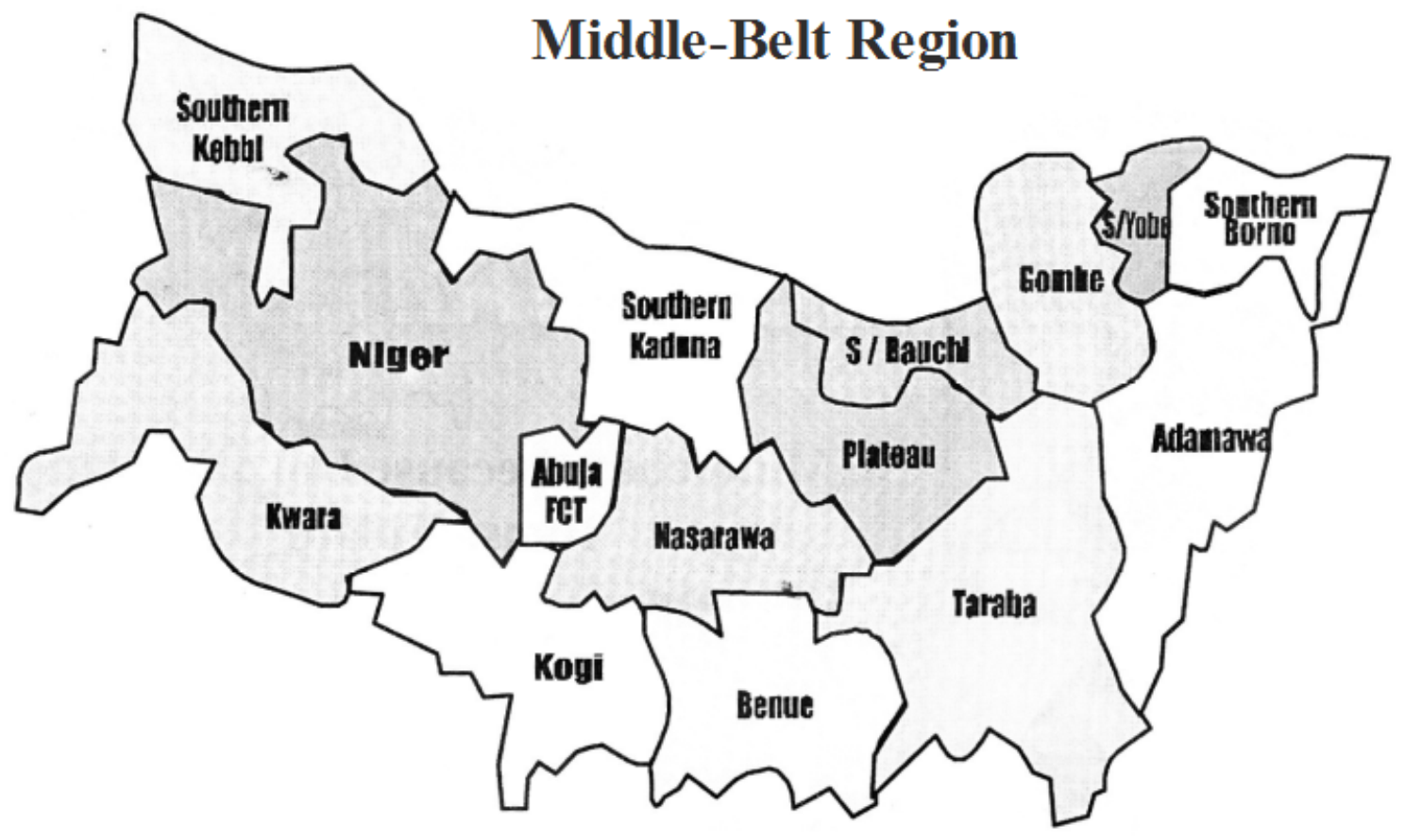
The Middle Belt, encompassing states like Plateau, Benue, Nasarawa, Taraba, Niger, Kogi, Kwara, Southern Kaduna, Borno, Gombe, and Adamawa, has long been a hotspot for violence. However, the coalition’s report paints a grim picture of escalating atrocities: targeted attacks, massacres, and abductions that have claimed countless lives, left survivors traumatized, and displaced entire communities. The perpetrators, according to the coalition, are not only emptying villages but replacing locals with imported settlers, fundamentally altering the region’s demographic and political landscape.

The coalition identifies three key triggers fueling the current wave of violence. First, the upcoming national census, which they allege is being exploited by terrorist groups to seize territory—ensuring that displaced locals are not counted, thus handing control to the occupiers. Second, the 2027 elections, where the violence could disenfranchise Middle Belt voters, reshaping electoral outcomes. Third, the recent establishment of the Livestock Ministry, which some interpret as a green light for pastoralists to take over land, further inflaming tensions. Adding to the fear, new terrorist fronts led by groups like Lakurawa and Mahmuda have emerged in Niger and Kwara states, raising concerns of a broader regional conflict.

The coalition’s analysis reveals a chilling pattern. The affected states are landlocked, lacking direct access to international borders, making escape or external aid difficult. Over 20,000 square kilometers across Benue, Nasarawa, and Plateau States have been forcibly seized, with the displaced replaced by new settlers. This methodical displacement, the coalition argues, is a deliberate attempt to erase indigenous communities and redraw electoral maps—a campaign they label as ethnic cleansing with devastating implications for Nigeria’s food security, as the Middle Belt is a traditional breadbasket for the country.

“This is not just a security crisis; it’s an attack on the future of elective government in Nigeria,” the coalition stated, emphasizing the need for immediate action. They are urging President Bola Ahmed Tinubu to deploy federal resources to address the region-wide violence, which no single state can tackle alone. Their 12-point action plan calls for coordinated strategies, including a regional security framework led by Middle Belt governors, consultation with border state leaders, and the return of displaced communities to their lands with full executive backing.

The coalition also proposes modern solutions, such as integrating geospatial technology and drones to enhance security operations, alongside an intelligence framework that leverages local knowledge to prevent attacks. They advocate for inter-community security cooperation to bridge ethnic and religious divides and reforms to the Fire Arms Act of 2004, allowing threatened communities to legally defend themselves under supervision—a response to the overwhelming firepower of attackers.

Beyond security, the coalition addresses cultural and political injustices. They demand the restoration of illegally deposed chiefs and scrapped chiefdoms, particularly in Kaduna, where the previous administration under Governor Nasir El-Rufai allegedly dismantled traditional structures like the Adara chiefdom. Citing Article 8(2) of the Rome Statute, they classify the destruction of cultural heritage as a war crime, calling for its reversal.

Judicial accountability is another priority, with the coalition urging swift trials for perpetrators to deter further violence. They also propose a Special Crisis Accountability Bureau (SCAB) to ensure justice, involving top security officials under the Chief of Defence Staff and National Security Adviser. Additionally, they stress the need to protect food security and guarantee voting rights for displaced communities, pressing the Independent National Electoral Commission (INEC) to ensure no one is disenfranchised.

The press release, signed by organizations like the House of Justice, Christian Solidarity Worldwide, The Para-Mallan Peace Foundation, the Southern Kaduna Resilience Fund, to mention but a few underscores their readiness to collaborate with authorities. They aim to provide evidence and support sustainable solutions to what they describe as a political crisis with profound humanitarian consequences.

As Nigeria grapples with this escalating crisis, the coalition’s plea is clear: President Tinubu must act decisively to secure the Middle Belt, protect its people, and preserve the nation’s democratic integrity. The stakes, they warn, could not be higher.

Atiku Backs NYSC Member Raye Amid Alleged Threats Over Viral Anti-Tinubu Video

By Eke Chioma

Former Vice President,  Atiku Abubakar, has expressed support for Ushie Rita Uguamaye, a Lagos-based National Youth Service Corps (NYSC) member known as Raye, who alleged receiving threats for calling President Tinubu ‘Terrible’  in her video.

In a statement shared on X (formerly Twitter) on Sunday, Atiku praised Raye’s courage, describing her as a symbol of a new generation of politically engaged women committed to advocacy and democratic participation.  

“Raye embodies the spirit of a new generation of women who champion the ideals of popular participation and unwavering advocacy in the political sphere. I deeply admire her boldness and wisdom—her fearless resolve to speak truth to power, undeterred by the weight of opposition,”Atiku wrote.  

“Rather than being met with hostility, Raye deserves encouragement and support. She is a shining emblem of the Nigerian youth—a testament to the long-held promise that the leaders of tomorrow are already among us, ready to shape a better future,” he added.  

Meanwhile, Amnesty International has condemned the reported threats, calling for an end to the intimidation of citizens who express concerns over governance and economic conditions.  

“The vicious threats to the youth corps member by NYSC officials and others must be withdrawn,” the organization stated. “Her rights and safety must be guaranteed.”

Background

Ushie Rita Uguamaye, a Lagos-based NYSC member, raised concerns about alleged threats following the circulation of her viral video criticizing President Tinubu over inflation and economic hardship.  

In a video posted on her TikTok account (#talktoraye) on Saturday, Uguamaye expressed frustration over Nigeria’s worsening economic conditions, lamenting that hard work seems futile amid financial struggles.  

She openly criticized Tinubu, referring to him as a “terrible leader”, while also questioning the government’s efforts to alleviate citizens’ suffering. Additionally, she described Lagos State as a “smelling state”, citing its odour and poor living conditions.  

Shortly after her video gained traction, Uguamaye alleged that she began receiving threats, reportedly from NYSC officials, urging her to stop criticizing the government and delete the video.  

She stated:  “Yesterday, I made a video talking about the Nigerian government and how terrible President Tinubu is, and I was crying in the video. Thirty minutes ago, I received a call from the NYSC board, starting with the secretariat before the LGI. For the NYSC secretariat, I’m going to attach some of the things she said so you guys can hear.”

During a conversation with an alleged NYSC official, the official was heard asking:  “Are you normal?”

In response, Raye clarified that she was not insulting the president. However, the official interjected:  “Come on, keep quiet there. Pull down that rubbish you put there. You are not talking to your mate.”

Raye then asked:  “Are you threatening me?”

NYSC Summons Uguamaye

Following the controversy, the NYSC has summoned Ushie Rita Uguamaye over her viral social media post criticizing President Tinubu’s administration.  

A message from the NYSC Local Government Inspector (LGI), seen on Sunday, instructed Uguamaye, identified by code number LA/24B/832, to report to the Eti Osa 3 local government office by 10 a.m. on Monday without fail.  

The development has triggered widespread reactions from Nigerians, with many questioning whether corps members should be restricted from expressing their views on governance and national issues.  

Nasir el-Rufai: The Bloodlust of a Presidential Wannabe

By Chidi Anselm Odinkalu

IN the week in which former Kaduna State Governor, Nasir el-Rufai abandoned the ruling All Progressives Congress (APC) to chart a different political trajectory with the Social Democratic Party (SDP), his son, Bashir, characteristically made it known that “Southern Kaduna residents will keep seeing sheghe if they continue to attack indigenous Fulani herdsmen.”

Three things about this, among many, were chilling. One is the absence of any interest in addressing the underlying problem of coexistence between communities. The second is the enthusiastic investment in violence. The third is the indiscriminate nature of the promised violence. This was not the first time an outburst of candour from the El-Rufai clan was laced with unconcealed thirst for human blood.

In January 2019, as the country prepared to go to the polls in a presidential election the following month, the administration of Nasir el-Rufai’s political benefactor, Muhammadu Buhari, guillotined then Chief Justice of Nigeria, Walter Onnoghen. The manner and timing of the decision drew very sharp international rebuke. In response, Governor el-Rufai went on National television to warn that any foreign observers perceived as meddling in the elections “will go back in body bags.” As influential continental news magazine, Africa Report, delicately put it, these were the words of a man who had “previous ‘anti-meddling’ approach to diplomacy.”

This “‘anti-meddling’ approach to diplomacy” appears to be a family investment. Abubakar Idris was a committed supporter of former Kano State Governor, Rabiu Musa Kwankwaso, who lived in Barnawa, in Kaduna South Local Government Area of Kaduna State. From there Mr. Idris, better known as “Dadiyata”, engaged in vigorous criticisms of the ruling APC, one of whose founders happened to be Nasir el-Rufai.

On or about 2 August 2019, Dadiyata vanished. He has not been seen since then. A digital visibility campaign to help locate his whereabouts continues under the hashtag #WhereIsDadiyata. Four and a half months after Dadiyata disappeared, on 23 December 2019, Bashir el-Rufai ominously tweeted: “The same clowns who encouraged him when he was creating false stories and capitalising on lies that could endanger lives solely for political ends are the same individuals trending hashtags asking #WhereisDadiyata. Dangerous lies in the public space have consequences.”

Less than three months later, on 11 March 2020, Bashir’s brother, Bello, currently a member of the House of Representatives, went one better with an even more chilling gloat in poor verse: “The things that we’ve done to protect the name are unsettling. But no regrets though, the name will echo. Years later, none greater. Death to a coward and a traitor, that’s just in my nature!”

At his inauguration as Kaduna State governor in May 2015, Nasir el-Rufai identified insecurity as “an obstacle to progress” and promised to “work with law enforcement officials to drastically reduce violent crime” and  “ensure safety of life and limb.” By the time he left office eight years later, he had achieved the exact opposite.

Forgetting this promise, Nasir el-Rufai as Governor brooked no criticism or opposition. No cruelty was considered beyond the pale for them. For daring to disagree with him, el-Rufai demolished the homes of the Zonal vice-chair of his party, Inuwa Abdulkadir; and of his Senator for Kaduna North, Suleiman Hunkuyi. 

He was only just beginning. His regime compiled a jaw-dropping list of body bags. Some, like Dadiyata, disappeared, never to be seen again. Others, like Maiwada Raphael Galadima, Agwam Adara III, paramount ruler in Kajuru, turned up dead or decapitated. The Agwam Adara was ostensibly returning home from a consultation with the state government on a crisis in his domain when he was abducted. His wife, abducted with him, was released after the abductors murdered her husband. The Governor was missing from Agwam’s funeral. After his burial, Nasir el-Rufai swiftly abolished his kingdom and purported to carve it into emirates.

Under Nasir el-Rufai and by appointment of the Nigerian Union of Journalists (NUJ), Kaduna State attained “notoriety as the deadliest state for Journalists in Nigeria to operate.” They were not the only endangered species. The strategic research group, SBM Intelligence, concluded also that “Kaduna was the most dangerous state for priests, who were often kidnapped during services.”

The governor’s signal accomplishment was to displace Boko Haram from the top of the league of atrocities. This was no easy feat. In May 2014, the United Nations Security Council listed the Jama’atu Ahlis-Sunna Lidda’Awati Wal-Jihad, (the Islamist insurgency better known as Boko Haram) as a terrorist organisation. Three years earlier, the Gaji Galtimari Presidential Committee on the Security Challenges in the North-East Zone of Nigeria had reported that the group “started as an innocuous non-violent group” around 2003.

Since then, Borno State, the epicentre of Boko Haram’s atrocities, habitually topped the national league table of mass-casualty killings in Nigeria. The monitoring coalition, Nigeria Mourns, reported a peak of 6,138 atrocity casualties in Borno State in 2015. Over the next five years, casualty count in Borno State appeared to drop off quite significantly.

Over 760 kilometres from the Borno State capital, Maiduguri, in Kaduna, the historical capital of northern Nigeria, it almost appeared as if the State government led by Nasir el-Rufai was envious of Borno’s position. In 2015, when Borno State hit the peak in atrocity killings, Nigeria Mourns recorded 411 casualties in Kaduna State. By 2020, the figure had risen to 628. In Borno State in the same year, the count was 1,176 killed.

In 2021, el-Rufai’s Kaduna State overtook Borno to take over the top position in the national body-count of mass-casualty atrocities. That year, Nigeria Mourns recorded 587 killed and 119 abducted in Borno State. In Kaduna State, it counted 1,114 killed and 1,225 abducted. In 2022, at least 1,346 people were abducted in Kaduna State. The comparable figure for Borno State was 77.

To be sure, Kaduna State had a well-advertised history of chronic violence dating back to the 1980s and accounting for tens of thousands killed over the period. Under Nasir el-Rufai however, virulent executive bigotry drove the state beyond the edge through methodical segregation. Leena Hoffman captured the depth of Kaduna’s crisis of sectarian segregation under the governor: “the river that runs through the city of Kaduna, the state capital, highlights the starkness of the divide: the northern half is unofficially called Mecca; the south, Jerusalem.”

The most intense site of chronic mass-casualty atrocities in Kaduna State was Southern Kaduna, which is characterised by linguistic and ethnic diversity coexisting with a high concentration of the State’s non-Muslim populations. For many people, there was only one explanation for the exponential spike in mass-casualty atrocities in Kaduna State – the State governor, Nasir el-Rufai. His administration was widely “accused of a conspiracy of silence” in support of the murderous campaign of extermination in Southern Kaduna.

In one of his earliest acts as governor, Nasir el-Rufai sought exculpation for bandit pastoralists from the chronic massacre in Southern Kaduna, claiming that he had already “spent government money to pay Fulani herdsmen to stop violence in southern Kaduna.” About the armed “bandits” who were to emerge as the fall guys for the violence, Governor el-Rufai later described them as “just collections of independent criminals. It is a business for them.”

When Mr. el-Rufai stepped down from office in 2023, mass-casualty atrocities in Kaduna crashed spectacularly. Nigeria Mourns recorded 413 atrocity killings in Kaduna and 393 abductions. The only thing that appears to have occurred to bring about this transformation was a change in the occupant of the office of state governor.

In January 2017, an audio emerged in which he gloated over the untimely death in 2010 of former President, Umaru Musa Yar’Adua, his high school contemporary at Barewa College, Zaria on whom he had also visited unrestrained bile in his memoirs. Columnist, Farooq Kperogi, observes that Nasir el-Rufai “embodies one of the most morbidly toxic strains of political intolerance in Nigeria. He exteriorises his discomfort with opposition by literally wishing death upon his opponents or claiming credit for their death.”

Bloodlust such as this can never be slaked. Out of power today, el-Rufai seeks to re-brand himself as an ecumenical politician invested in pluralism. Those who make the mistake of jumping into political bed with him will have themselves to blame.

A lawyer and a teacher, Odinkalu can be reached at chidi.odinkalu@tufts.edu 

Northern CAN Condemns Supreme Court Ruling Upholding Death Penalty for Adamawa Farmer in Disputed Self-Defense Case

By Eke Chioma

Yola, Nigeria — The Supreme Court of Nigeria has upheld the death sentence of Sunday Jackson, a farmer from Dong community in Demsa Local Government Area, Adamawa State, drawing sharp condemnation from the Christian Association of Nigeria (CAN) and reigniting debates over judicial fairness and self-defense laws. Jackson was convicted for the 2014 killing of Fulani herdsman Buba Ardo Bawuro, which he insists was an act of self-defense during a violent confrontation.

According to court records, Jackson was working on his farm when Bawuro, allegedly armed with a knife, attacked him. Jackson claims he disarmed his assailant during the struggle, leading to Bawuro’s fatal injury. However, the Supreme Court ruled that Jackson had “reasonable opportunity to flee” and rejected his self-defense argument, affirming a 2021 Adamawa High Court verdict sentencing him to death by hanging. The March 7, 2025, ruling has sparked widespread outrage, with human rights groups and religious leaders demanding justice.

In a strongly worded statement issued in Kaduna, Rev. John Hayab, Chairman of the Northern CAN, denounced the judgment as a “grave travesty of justice” and urged Adamawa State Governor Ahmadu Umaru Fintiri to grant Jackson an immediate pardon. “This ruling blatantly disregards Sections 23 and 24 of the Adamawa State Penal Code, which protect individuals acting in self-defense. Jackson endured a decade of legal battles rooted in a flawed interpretation of the law. We implore the governor to intervene and correct this injustice,” Hayab declared.

The case has drawn international scrutiny, with human rights advocates condemning the verdict. During an Arise TV interview, Emmanuel Ogebe, an international human rights lawyer, warned that the ruling sets a “dangerous precedent” for self-defense claims in Nigeria. “Jackson retrieved the weapon from his attacker—this is textbook self-defense. To sentence him to death is not only unjust but a gross miscarriage of justice,” Ogebe argued.

Echoing his sentiments, U.S.-based activist William Devlin criticized Nigeria’s judiciary, stating, “Sunday Jackson is unequivocally innocent. This ruling exposes systemic failures in protecting vulnerable citizens from flawed prosecutions.”

With all legal appeals exhausted, Jackson’s fate now hinges on Governor Fintiri’s discretionary power to grant clemency. As pressure mounts from civil society groups, legal experts, and religious organizations, the case has become a focal point in broader calls for judicial reform and clarity on self-defense rights in Nigeria.

Northern CAN’s condemnation adds to growing demands for executive intervention, underscoring the deepening divide between public sentiment and the judiciary’s interpretation of the law. The outcome may set a critical precedent for similar cases amid Nigeria’s ongoing tensions between farmers and herders.