This House Must Not Fall

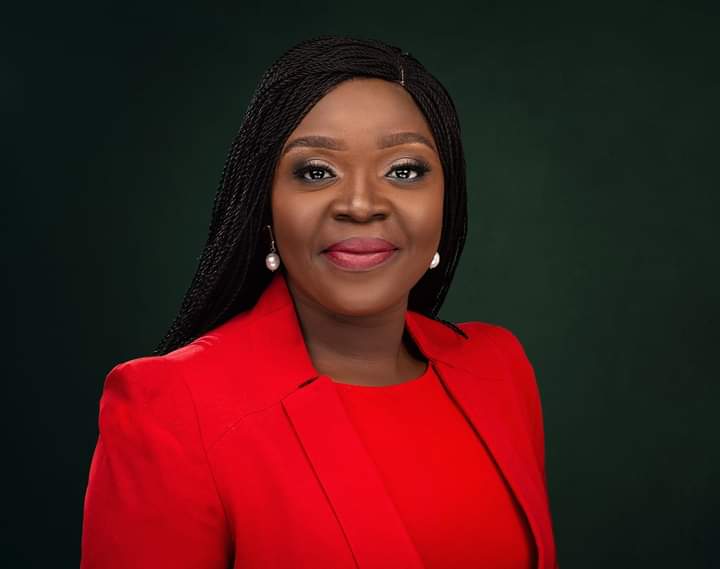
…Being an Address by Gloria Mabeiam Ballason Esq, C.E.O. House of Justice, at the 8th House of Justice Summit on Friday 24th November, 2023 at Epitome Events Centre Barnawa Kaduna-Nigeria

PROTOCOLS:

On behalf of the Management and Staff of House of Justice, I am truly delighted to welcome you to the historic city of Kaduna for the 8th House of Justice Summit & Burgundy Ball Banquet.

This is an annual civic gathering that enables the review of the biggest challenge in Nigeria and the African continent and invites those we consider most suited to curating solutions to enlighten and teach us so we can overcome those challenges.

As a private Justice multi-door house, we realize that if human beings create problems, it will behoove some other human beings to find solutions. In the normal course of events, we would have lingered on platitudes, but there is an urgency of now to which we must review electoral accountability and democratic stability because there is a straight line that leads from one to the other.

The tell signs are in Burkina faso, Sudan, Guinea, Mali and our next door neighbor, Niger. And with the murmuring sounds in Nigeria of the overturn of popular electoral votes, there is the need to very quickly review the imperative for the peoples votes and choice to be respected.

In recent times we have seen the state of our nation in the blighting endurance of citizens who are working past exhaustion to have a better country but are constantly being hit on the blindside and subdued to choices of leaders they did not make and an economy that, according to the World Poverty Clock assessment, makes it difficult for the 133 million multi-dimensionally poor Nigerians, to breath.

No one would have imagined that between August 2022 to August 2023, the average retail price of fuel will move from N189 to N626- an over 330% increase in just a year. The word that flies is subsidy removal but the presidency seems to not appreciate that a surgery without anesthesia is just as risky as the disease itself.

There is of course, a sharp decline in productivity as a number of state governors have struggled to contain the debilitating effect of the fuel hike on their public work force and so have reduced the work days, this remedial act, is in itself a direct violation of the Constitution which puts labour and public holiday under the exclusive legislative list.

Running up to the 2023 elections, Nigerians mobilized to choose leaders they hoped will make the difference they desire. The Independent National Electoral Commission (INEC) which promised to ensure credible elections through the use of Bimodal Voters Accreditation System (BVAS) to reveal results in real time on the IREV portal violated their own rules and sought alibi in system failures.
INEC had a 2015 precedence of not delivering on the promise it claimed the smart card readers would deliver. On both counts, INEC’s failure to count and account for the sweat, tears and blood that often accompanies the Nigerian vote, has not met any consequence. At the minimum, there should be a refund to national coffers the huge sum for the purchase of these electoral gadgets and an inquiry on why INEC failed on its part of the bargain.

To be clear, Nigerians are not asking for smart card readers, BVAS or IREV. They just want their votes to count however that is done.
Indeed, it has not helped that the onus to prove substantial compliance rests on candidates while INEC sadly, enjoys presumption of regularity. One clear effect of this undeserved presumption is that two successive senate presidents, who violated the Electoral Act by running for two offices at the same time, sit pretty at the National Assembly. Are there no more standards to leadership? Did they take thought on the legacy and precedence this creates?

And while we linger on that thought, the overturn of popular mandate by persons and institutions- including the Courts, has become all too worrisome. Popular votes are sometimes overturned by the Court. This flies in the face of section 14 (1) and (2) of the 1999 Constitution which states that the Federal Republic of Nigeria shall be a state base on the principles of democracy and social justice. (2) It is hereby accordingly declared that sovereignty belongs to the people of Nigeria from whom governments through this constitution derives all its powers and authority.’

Of the Supreme Court case of Hope Uzodinma V. Emeka Ihedioha, where a candidate who came first in elections was substituted with the one who came fourth, Supreme Court Justice Centus Nweze said ‘This court has powers to overrule itself and can revisit any decision not in accordance with justice…This Judgment will continue to hunt our electoral jurisprudence for a long time to come.’
In October, 2023,about a month ago,Hon. Justice Dattijo Muhammad, a Supreme Court Justice who rose to become the second most senior Justice of the Supreme Court shocked many when he, in his valedictory speech gave an insider account of corruption in the judiciary which manifests through the subversion of merit, lopsided composition of the Justices of the Supreme Court, skewed composition of the panel that decided the President Bola Ahmed Tinubu’s election, loss of the judiciary’s prestige and public confidence- a situation he described as an unprecedented low sink.

The situation is perhaps best described by my friend whose job description requires him to be apolitical but puts it this way:
“ Nigeria takes for granted leadership at every level and does not think about the implications on our existence as a nation. We have dropped the bar so low that governance is an all- comers game and the polity treats politics and political matters like supporting a football club with blind pseudo loyalty and no long term thought other than ‘we won’. We have normalized chaos and political debauchery and sanctified moral decadence.The corrupt are worshipped and given a place of honour, while the morally upright are ostracized”

My friend’s football metaphor resonates. The challenge however is that in the Nigerian situation, laws and rules are on suspension. There are no yellow cards or red cards, just win howsoever and whensoever. This is dreadful as we have no separate country for those politicians or government officials who violate the laws different from the rest of us. The laws must therefore be allowed to speak a consistent language so it works for everyone.

Today we are a country awakened to the danger of treating the Constitution as a list of suggestions rather than the grund norm. The pain of citizens has turned to anger and despondency but that anger needs to be converted to resolution. Whether we take leadership to standards or bring standards to leadership, we must keep on the front burner the thought that a country which has no leadership threshold and which honours its laws in breach rather than in compliance is not a country that will proceed beyond its woes.

And so for myself, for House of Justice and for our nation and continent, I want to thank you for honouring our invitation with your hope that I believe will not make ashamed. I welcome most respectfully and warmly, Nigeria’s conscience, our Keynote Speaker, the Most Rev. Dr. Matthew Hassan Kukah, the Chairman, Senator Shehu Sani, the Special Guest of Honour, Hon. Justice K.B. Akaahs OFR JSC (Rtd), the outstanding faculty of speakers and doers of the High Panel Discussion and the Professionals who will be proferring solutions and action points. I have no doubt that we shall together find a method to our challenges if we let none hear us idly saying there is nothing I can do.

Kaduna,Friday 24 November, 2023.

Echoes of Justice: Human Rights Lawyer Urges Police to Harmonize Truth in Mohbad’s Death

Abuja-based human rights lawyer, Pelumi Olajengbesi, has urged the police authorities to ensure justice prevails in the ongoing investigation into the death of the late singer Ilerioluwa Aloba, widely known as Mohbad. Olajengbesi stressed the importance of delivering justice following the recent autopsy conducted on Mohbad’s exhumed remains.

In a statement posted on his Facebook page on Friday, September 22, Olajengbesi called on the police to conduct a thorough and top-notch investigation, leaving no stone unturned. He emphasized that those implicated in the case should not be spared, regardless of their social standing or connections. Olajengbesi highlighted the necessity of holding wrongdoers accountable and ensuring that justice is served.

He stated, “Fingers have been pointed at specific individuals in the Mohbad case. The police and the Lagos State Government must not shy away from investigating these individuals rigorously. The investigation should be comprehensive, and those responsible must face the consequences, without any exceptions. There must be no room for impunity.”

Olajengbesi concluded by underscoring the significance of justice in maintaining social order and preventing misconduct. He called upon the police to deliver a thorough and fair investigation, emphasizing that justice must prevail to safeguard the nation.

Meanwhile, it has been reported that the Lagos State Police Command has successfully exhumed Mohbad’s remains, as confirmed by the state police spokesperson, Benjamin Hundeyin. The next step in the process is to conduct an autopsy on the exhumed corpse.

Women Protest Army Highhandedness In Rivers Community

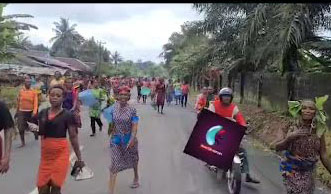
Women of Ibaa community in Emohua Local Government Area of Rivers State have protested against the actions of some Amy Personnel deployed to the community to protect some critical National assets.

The aggrieved women on Saturday, matched to Rumuji Police Station carrying placards bearing different inscriptions and demanded the removal of the soldiers deployed to the community.

They also accused the Army of abandoning their primary duty and beating up and harassing nursing and pregnant women and innocent youths of the community.

Some of the women who spoke to newsmen said most recently, there was an incident where the soldiers beat up a pregnant woman and ordered her to sit on the floor which is against the tradition of the land after they meant the absence of her husband who was the target, while in another claim, the soldiers beat up a woman and her two children and later detained them for days for refusing to carry locally refined illegal product which they seized from somewhere to their office.

The women told the Divisional Police Officer in charge of Rumuji Station that they are comfortable with the security provided by the police in collaboration with local vigilantes in Ibaa, insisting that the soldiers, whom they accused of working with some individuals with questionable character in the community should be removed to save them and their children.

One of the protesters, Ruth Adele said: “The Army in the community are coming to molest our people by arresting the women when they go to their houses to look for their children.

“If they do not see their target they beat up their mothers and go to the extent of beating up the pregnant women. One as I am talking now is in labour and our culture is against married women sitting on the ground. We want the Army to pack out of our land because they are not doing their work.

“They sent Army to come and protect the community but Army is not doing there the right thing, they are breaking into people’s houses and packing their property, raping our women, and beating our pregnant women.”

Meanwhile, the Nigerian Army, 6 Division Port Harcourt has denied any involvement in such allegations, saying they are unsubstantiated while emphasising that the troops are professionals that strictly follow rules of engagement.

Reacting, the Acting Deputy Director, Public Relations of 6 Division Headquarters, Major Jonah Danjuma said: “One thing I want to assure you is the fact that the allegations against our troop are unfounded and unsubstantiated. I want to assure the good people of Rivers State that our troops are professionals who conduct operations in the best professional manner with adherence to the rules of engagement, and respect for the fundamental human rights, in line with the best global practices.

“I want to reassure you that our troops will not be involved in such an act.”

SOURCE: The Guardian

COAS: Civilian Protection, Human Rights Issues Require Special Attention

The Chief of Army Staff, Lt. Gen. Taoreed Lagbaja has said the protection of civilians and their basic rights require special attention as it takes up a lot of field commanders’ time.

He noted that the service involves interfacing with human rights advocacy groups in all theatres of operations to ensure the issues are well understood and put into practice.

Lagbaja spoke at an event organised by the Army themed, ‘National Security and the Complexities of Human Rights’ in Abuja on Wednesday.

Represented by the Chief of Administration Army, Maj. Gen. Jimmy Akpor, Lagbaja, noted that the Army was trained to conduct operations in line with humanitarian laws and authorised rules of engagement.

Lagbaja said, “The Nigerian Army Human Rights Seminar was conceptualised to engage organizations, security agencies, media, and other stakeholders involved in human rights advocacy and the protection of civilians in conflict areas on the issues relating to human rights during conflicts. The protection of civilians and their basic rights requires special attention as it takes up a lot of field commanders’ time.

“Our troops are also deployed to checkmate the activities of the separatist IPOB in the Southeast while carrying out operations to deal with ethnic and occupational-based conflicts in the North Central region of the country. The South-South and South West also have crises of militancy, cultism, and oil theft as well as an assortment of well-armed criminals.

“These deployments involve kinetic and non-kinetic approaches that require collaboration between security agencies and all well-meaning individuals and organisations. I wish to state that securing a country within the ambit of the contemporary security environment involves harnessing the efforts of citizens in a ‘whole of the nation approach’ because the operations are conducted within civilian populated areas.”

This aspect of warfare and conflict management requires the harnessing of the potentials of other actors within the multi-dimensional operating environment. Hence, the articulation of my Command Philosophy seeks to transform the Nigerian Army into a well-trained, equipped, and highly motivated force achieving our constitutional responsibilities within a joint environment.

SOURCE: Punch

Free Damilola Ayeni: Coalition Demands Freedom Of Nigerian Journalist Arrested In Benin Republic

The Coalition of Whistleblowers Protection and Press Freedom (CWPPF), Wednesday, demanded the immediate freedom of a Nigerian journalist detained in Benin Republic.

The journalist, Damilola Ayeni, Editor of the Foundation for Investigative Journalism (FIJ), is being detained at the Commisseriat Central, Parakou Police Station, in Parakou, Republic of Benin, by the Beninese police.

THE WHISTLER gathered that he was arrested on 31st August 2023, and accused of jihadism. He risks between 10 and 20 years in prison.

The CWPPF, in a release, said, “The accusation of Mr Ayeni being involved in jihadist activities lacks credible evidence and appears to be politically motivated, raising concerns about the misuse of anti-terrorism laws to suppress free speech and dissent in the subregion.

“His arrest without due process also violates internationally recognized human rights standards, including the right to a fair trial and the right to freedom of expression.

“This act by the Beninese police has raised serious concerns about the state of press freedom and human rights in Benin Republic, as well as the broader implications for journalists working across the region.”

The coalition condemned the ‘unjust arrest of Damilola Ayeni’ and called on the government of the Republic of Benin and the government of the Federal Republic of Nigeria to ‘take immediate action to rectify this situation, thereby upholding the principles of justice, rule of law and respect for human rights’.

It added, “We stand united in demanding the immediate release of Mr Ayeni, and the dropping of all unfounded charges. Diplomatic efforts, media campaigns, and advocacy will continue until justice is served.”

The CWPPF is a group of media and civil society organisations committed to upholding good governance and democracy by protecting the ethos of whistleblowing, freedom of expression and press freedom.

SOURCE: The Whistleblower

Media Suppression Sparks Outcry: HURIWA Condemns Banning Of Journalists from Presidential Villa

The Human Rights Writers Association of Nigeria (HURIWA) has strongly criticized the withdrawal of accreditation for journalists and media outlets covering the Presidential Villa. HURIWA condemned this move, calling it undemocratic and treacherous. They also expressed concern over the recent invasion of African Independent Television and Ray Power FM stations in Rivers State by suspected state government agents.

HURIWA, led by its National Coordinator, Emmanuel Onwubiko, expressed shock that President Tinubu, who has a strong media background, selectively chose which media houses could cover the State House in Abuja, describing it as a disappointing irony. They emphasized that this decision is irrational, undemocratic, and unconstitutional, and it goes against the principles of a free press outlined in Nigeria’s 1999 constitution.

HURIWA also highlighted a related incident where the Rivers State Government shut down the operations of Africa Independent Television (AIT) and Raypower FM in Port Harcourt. They called on the Minister of FCT to intervene and lift the ban on AIT in Rivers State, emphasizing that such actions are against the public interest and affect the livelihoods of employees in the region.

Urgent Plea for Enhanced Security: HURIWA Calls for Specialized Units to Safeguard University Hostels

The Human Rights Writers Association of Nigeria (HURIWA) has called upon President Bola Tinubu to direct his Education Minister, Tahir Mamman, to collaborate with security forces in establishing specialized security units within state commands. This call comes in response to the ongoing security breaches plaguing universities, including attacks on female hostels and sexual violations by armed individuals, which HURIWA characterizes as coordinated acts of terrorism and a national crisis.

Emmanuel Onwubiko, the National Director of HURIWA, expressed deep concern over the escalating menace and urged the government to prioritize the security of university assets. He strongly criticized the lack of effective and proactive security measures from both federal and state governments to combat the rising tide of crime. Onwubiko stated, “We find it disconcerting that for many years the tertiary institutions in Nigeria are being attacked and female students systematically raped and violated, but these heinous crimes against humanity have not received the kind of attention from the office of Nigeria’s president as it should.”

He emphasized the urgency of the situation and proposed the creation of an immediate security taskforce to address these issues comprehensively. Onwubiko pointed to specific incidents, including a recent attack at the University of Calabar, a robbery at Rivers State University in Port Harcourt, and a robbery targeting students at the University of Ibadan, as alarming examples of the persistent security challenges that continue to afflict university campuses across the nation.

SERAP Files Lawsuit Against Tinubu for Illegally Banning 25 Journalists from Presidential Villa Access

The Socio-Economic Rights and Accountability Project (SERAP) has filed a lawsuit against President Bola Tinubu over “the unlawful ban and withdrawal of the accreditations of 25 journalists and media houses from covering the Presidential Villa.”

According to reports, the Federal Government recently withdrew the accreditations of some 25 journalists from covering activities at the Presidential Villa, Abuja. The affected journalists were simply told at the main gate of the Presidential Villa to submit their accreditation tags.

In the suit number FHC/L/CS/1766/23 filed last Friday at the Federal High Court in Lagos, SERAP is seeking: “an order to direct and compel President Tinubu to reverse the revocation of the accreditations and ban on 25 journalists and media houses from covering the Presidential Villa.”

SERAP is seeking: “an order of perpetual injunction to restrain President Tinubu or any other authority, person or group of persons from arbitrarily and unilaterally revoking the accreditations of any journalists and media houses from covering the Presidential Villa.”

SERAP is also seeking: “a declaration that the withdrawal and revocation of accreditation tags and ban on the journalists and media houses from covering the Presidential Villa without any lawful justifications is inconsistent with the rights to freedom of expression, access to information, participation, and media freedom.”

FIRS
In the suit, SERAP is arguing that: “If not reversed, the arbitrary ban on the journalists from covering the Presidential Villa would open the door to other cases of arbitrariness and would restrict people’s right to freedom of expression, access to information, participation, and media freedom.”

READ ALSO: I didn’t mean to say not all bandits are criminals – Zamfara Governor
SERAP is also arguing that “The withdrawal of the accreditations of the journalists is without any lawful justifications. It is inconsistent and incompatible with plurality of voices, diversity of voices, non-discrimination, and just demands of a democratic society, as well as the public interest.”

The suit filed on behalf of SERAP its lawyers Ebun-Olu Adegboruwa, Kolawole Oluwadare, and Valentina Adegoke, read in part: “The ban on the journalists from covering the Presidential Villa fails to meet the requirements of legality, necessity, and proportionality

“The media plays an essential role as a vehicle or instrument for the exercise of freedom of expression and access to information – in its individual and collective aspects – in a democratic society.”

“The existence of a free, independent, vigorous, pluralistic, and diverse media is essential for the proper functioning of a democratic society.”

“The free circulation of ideas and news is not possible except in the context of a plurality of sources of information and media outlets. The lack of plurality in sources of information is a serious obstacle for the functioning of democracy.”

“The exercise of the right to freedom of expression through the media is a guarantee that is fundamental for advancing the collective deliberative process on public and democratic issues.”

“The strengthening of the guarantee of freedom of expression is a precondition for the exercise of other human rights, as well as a precondition to the right to participation to be informed and reasoned.”

“Under the Nigerian Constitution 1999 [as amended] and human rights treaties to which Nigeria is a state party, freedom and diversity must be guiding principles in the measures to promote media freedom. The ban on the 25 journalists is entirely inconsistent and incompatible with these principles.”

“The Federal Government should aspire to promote and expand the scope of media freedom, access to information, freedom of expression, and citizens’ participation, not restrict these fundamental freedoms.”

“Barring these journalists and media houses from covering the Presidential Villa is to prevent them from carrying out their legitimate constitutional responsibility.”

“The withdrawal of the accreditation tags of these journalists directly violates media freedom and human rights including access to information and the right to participation. It would have a significant chilling effect on newsgathering and reporting functions, and may lead to self-censorship.”

“The withdrawal of the accreditations of the journalists would construct barriers between Nigerians and certain information about the operations of their government, something which they have a constitutional right to receive.”

“Media freedom, access to information and the right to participation are necessary for the maintenance of an open and accountable government. These freedoms are so fundamental in a democracy that they trump any vague grounds of ‘security concerns and overcrowding of the press gallery area.’”

“According to reports, the Federal Government on 18 August 2023 withdrew the accreditation tags of some 25 journalists and media houses from covering activities at the Presidential Villa, Abuja.”

“The banned journalists reportedly include those from Vanguard newspaper; Galaxy TV; Ben TV; MITV; ITV Abuja; PromptNews, ONTV, and Liberty. Other media personnel affected by the withdrawal are mostly reporters and cameramen from broadcast, print, and online media outlets.”

“Under section 22 of the Nigerian Constitution, the mass media including ‘the press, radio, television and other agencies of the mass media shall at all times be free to uphold the fundamental objectives contained in this Chapter and uphold the responsibility and accountability of the Government to the people.’”

“Section 14(2)(c) of the Constitution provides that ‘the participation by the people in their government shall be ensured in accordance with the provisions of this Constitution.’”

“Similarly, Article 9 of the African Charter on Human and Peoples’ Rights provides that, ‘Every individual shall have the right to receive information. Every individual shall have the right to express and disseminate his opinions.’”

“Article 13 of the Charter also provides that, ‘Every citizen shall have the right to participate freely in the government of his country. Every citizen shall have the right of equal access to the public service of his country. Every individual shall have the right of access to public property and services.’”

“Articles 19 and 25 of the International Covenant on Civil and Political Rights contain similar provisions.”

No date has been fixed for the hearing of the suit.

SOURCE: Premium Times

FREEDOM OF EXPRESSION & INTERNET REGULATION: NAVIGATING THE GOVERNMENT HERRINGBONE.

BEING A PRESENTATION BY GLORIA MABEIAM BALLASON ESQ AT THE MEDIA DEFENCE SUB-SAHARAN AFRICA LITIGATORS CONVENING, JOHANNESBURG, SOUTH-AFRICA, AUGUST, 2023.

INSIGHT:

Freedom of speech has been recognized in international, regional and national laws as fundamental to individuals and democracy.

Where freedom of speech and free press are not upheld, lies and misinformation contend with truth.The rights are relevant even in the Military where the norm is obedience before complaint because usurping the right to free speech can be lethal to both the violator and the violated. If humans are to be precluded from offering their sentiments on a matter – which may involve the most serious and alarming consequences that can invite the consideration of mankind, reason is of no use to us; the freedom of speech may be taken away, and, dumb and silent we may be led, like sheep, to the slaughter.

A world without freedom of speech is a world of slavery and tyranny.
Some proponents have argued that freedom of speech is freedom to learn as all education is continuous dialogue of questions and answers. The Nigerian Court for instance, upheld this argument in 1981 in the Archbishop Olubunmi Okogie V. Lagos State case where the Plaintiff, whose school was confiscated by the Lagos state government, argued that his right to expression through the impartation of learning and the exchange of ideas were violated when the state confiscated his schools. The Court upheld his arguments and entered judgment in favour of the Plaintiff.

ARE GOVERNMENTS AND CITIZENS AT CROSS PURPOSES ON THE RIGHTS TO FREE SPEECH & FREE DIGITAL EXPRESSION?

Let us examine some pivotal international, regional and national laws on free speech and expression.

International Laws:

Article 19 of the Universal Declaration of Human Rights (UDHR) enshrines the right to freedom of expression.
Article 19 of the International Covenant on Civil and Political Rights (ICCPR) guarantees the right to hold opinions without interference (i.e freedom of opinion), right to seek and receive information (i.e Access to Information) and freedom of expression in any art or form.

Article 10 of the Human Rights Act protects freedom of expression.
These rights are not absolute and can be limited by the state on certain grounds such as national security, public order, public health and public morals. The limitations must however be necessary and proportionate to the legitimate aim pursued. The State by law is also compelled to justify the limitation and show that it does not violate other human rights.

African Regional Laws:

Article 9 of the African Charter guarantees the right to receive information as well as the right to express and disseminate information. Furthermore, the Declaration of Principle of Freedom of Expression and Access to information in Africa which was adopted in 2019 establishes and affirms the principles for anchoring the right to freedom of expression and access to information in conformance with Article 9 of the African Charter.

National Laws:

Article 33, 34 & 35 of the 2010 Constitution of Kenya protects the rights to freedom of expression, the media and protects access to information. The Kenyan Constitution is one of the most elaborate when it comes to protections and disaggregates for the sake of clarity and unambiguity the protections and freedoms guaranteed including artistic creativity, academic freedom and scientific research.

Article 31 of the 2018 Constitution of Burundi guarantees freedom of expression. The right is subsumed with rights to freedom of religion, thought, conscience and opinion.

Article 29 of the 1995 Constitution of the Federal Democratic Republic of Ethiopia guarantees the right of thought, opinion and expression.

Section 39 of the 1999 Constitution of the Federal Republic of Nigeria guarantees the right to freedom of expression and the Press.

Indeed almost all countries in the African Continent and the world recognize the importance of the right to freedom of expression.

Please note that international and regional laws are ratified or assented to by heads of governments while national laws are made by parliamentary arms of government. In other words, governments lead in the law making processes of human and fundamental rights. If that is the case – as we have found it is, why are governments often the violators of the rights to freedom of expression offline and online? I am glad you asked.

FREEDOM OF OFFLINE & ONLINE EXPRESSIONS: THE GOVERNMENT HERRINGBONE.

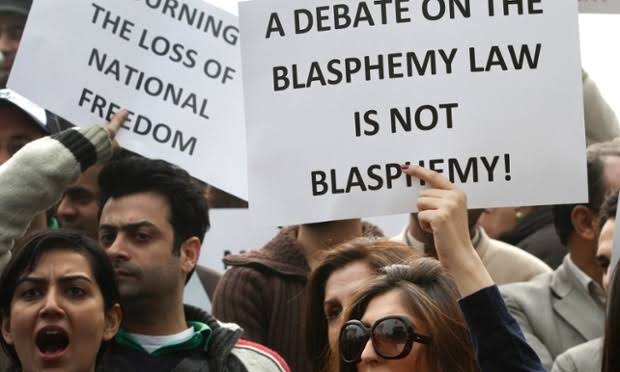
It would appear that everybody : Government and citizens, are in favour of free speech. Nonetheless, some ‘powerful people’ and government’s idea of it is that they are free to say what they like but others cannot. This is where the aberration lies and where impunity takes its root. With the advent of the internet, the right to free speech is now both visual and virtual. However, the primacy to which freedom of visual speech is given appears to differ from virtual speech. There is still an ongoing debate on whether internet right should be recognized as human right, fundamental right or no right at all.

The proponents of declaring internet access as a right (also known as the right to broadband or freedom to connect) hold the view that in the 21st century all people must be able to access the internet in order to fully exercise and enjoy their rights to freedom of expression and opinion and other fundamental human rights. In practise, an American during President Donald Trump’s, tenure could argue along this line as President Trump was famous for expressing and engaging on national policies via Twitter.

Those who argue against making digital rights a human or fundamental right curate in favour of their argument, that internet is a right enabler not a right. They hold to the reasoning that the meaningful exercise of the right to freedom of speech and expression over the media or internet is dependent invariably and inextricably upon the access to the availability of infrastructure and that infrastructure depends upon social and economic factors such as the distribution of resources, the policies of the state and its intervention in the nature of provision of the resources. In other words, they argue that the right is non-justiciable.

It may perhaps help to put the question on the tarmac in more literal and clearer perspective:

(i) Is there a difference when an expression is verbal from when it is digital?

(ii) Can the right to freedom of speech and expression be same online as offline?

(iii) Is there a parity in responsibility where the violation of right to freedom of expression leads to the violation of human rights offline as distinct from online ?

Put in other words, the debate is now between the proponents of Data is Life Vs. Data is Connection. Where does the law and the balance hang? Let’s explore it.

DATA IS LIFE Vs. DATA IS CONNECTION.

There are instances where the expression : ‘data is life’ is literal and at other times data is just ‘mere’ connection. To illustrate how data can be life, I will cite two examples from two jurisdictions: India and Nigeria.

  • Case 1* Bhasin v. Union of India case, No 103, 2019, In this case, the Supreme Court of India declared that access to the internet is a fundamental right under Article 19(1)(a) of the Indian Constitution and that the right to be able to access the internet has been read into the fundamental right to life and liberty as well as privacy under Article 21 of the Indian Constitution- adding in the same breath that internet constitutes an essential part of infrastructure. The brief facts of the Bhasin case are as follows: Jammu and Kashmir is an Indian territory bordering Pakistan and has been the subject of decades-long dispute between the two countries. Under Article 370 of the Indian Constitution, the territory enjoyed special status, had its own Constitution and Indian citizens from other states were not allowed to purchase land or property there. On August 5, 2019, the Indian Government issued Constitution (Application to Jammu and Kashmir) Order, 2019, which stripped Jammu and Kashmir of its special status that it had enjoyed since 1954 and made it fully subservient to all provisions of the Constitution of India.
    In the days leading up to this Constitutional Order, the Indian government began imposing restrictions on online communications and freedom of movement. On August 2, the Civil Secretariat, Home Department, Government of Jammu and Kashmir, advised tourists and Amarnath Yatra pilgrims to leave the Jammu and Kashmir area in India. Subsequently, schools and offices were ordered to remain close until further notice. On August 4, 2019, mobile phone networks, internet services, landline connectivity were all shutdown in the region. The District Magistrates imposed additional restrictions on freedoms of movement and public assembly citing authority to do so under Section 144 of the Criminal Penal Code.
    The internet shutdown and movement restrictions (hereafter “restrictions”) limited the ability of journalists to travel and to publish and accordingly were challenged in court for their violations of Article 19 of India’s Constitution which guarantees the right to freedom of expression.

Delivering its judgment, the Court of India did not lift the internet restrictions but acknowledged fully the rights that were violated and directed the government to review the shutdown orders against the tests outlined in its judgment and lift those that were not necessary or did not have a temporal limit. The Court reiterated that freedom of expression online enjoyed Constitutional protection but could be restricted in the name of national security. The Court further held that though the Government was empowered to impose a complete internet shutdown, any order(s) imposing such restrictions had to be made public and was subject to judicial review.

Case 2: Gloria Mabeiam Ballason v. Governor of Kaduna State & 5 Others FHC/ABJ/C5/1554/2021

On September, 29, 2021, the Governor of Kaduna state in Nigeria, Mallam Nasir Ahmad Elrufai, shut down phone and internet telecommunications connections for two months. The Government’s argument was that they needed to combat terrorism, kidnapping and insecurity. Security, internet and telephone are under the exclusive legislative list of Nigeria’s Constitution which means the Federal Government is directly responsible as against the state government. There was also no national or state parliamentary resolution, a state of emergency was not declared and during the period, an unprecedented case of a train terrorist attack which had over 200 people in the train and another sets of killings of over 200 people in the state occurred. Furthermore people lost means of livelihood and earnings and the ban was counterproductive as people could not report terrorist attacks nor could security agents connect to scenes of crime.
Ballason filed at the Federal High Court of Nigeria alleging that the action taken by the government of Kaduna state was not backed by law and that the government did not satisfy the constitutional exception of any law reasonably justifiable in a democratic society in the interest of defence, public safety and public order as more lives who could not call for help from security agents perished while businesses and means of livelihood of citizens suffered astronomic loses without a commensurate improvement in the security situation in Kaduna State.’ Judgment has now been reserved for 11 October, 2023.

The two cases of India and Nigeria illustrate how the facts of the case can determine whether the right to internet access can be non-justiciable or justiciable. Typically, none justiciable rights can be justiciable where they intersect. In Nigeria for instance, although the rights in Chapter 2 of the 1999 Constitution are non-justiciable, they can be justiciable where they impact and infringe on the rights in Chapter 4 which are the fundamental human rights.

Let us at this point examine a few international, regional and national cases as determined by the Courts.

Some International & Regional Decisions on the Rights to Freedom of Expression & Internet.

International Decisions

Nagla versus Latvia (16 July 2013)

The case concerned the search by the police of a well-known broadcast journalist’s home, and their seizure of data storage devices. Her home was searched following a broadcast she had aired in February 2010 informing the public of an information leak from the State Revenue Service database.The Court found a violation of Article 10 (Freedom of expression) emphasizing that the right of journalists not to disclose their sources could not be considered a privilege, dependent on the lawfulness or unlawfulness of their sources, but rather as an intrinsic part of the right to information.  

Sunday Times Vs. United Kingdom (no. 1) (26 April 1979)
The case concerned the injunction served on the Sunday Times restraining publication of news about the pending civil proceedings brought by parents of children born with severe deformities through the taking of thalidomide by women during pregnancy.
The Court found a violation of Article 10 (freedom of expression).

Regional Decisions:

SERAP & 176 ORS V. Federal Government of Nigeria ECW/CCJ/APP/23/2 The Plaintiffs approached the ECOWAS Court to declare as unlawful the Twitter ban by President Muhammadu Buhari who banned the social media platform after Twitter deleted his tweet for violating its rules.
ECOWAS Court declared Nigeria’s government’s Twitter ban unlawful and ordered Nigeria to put in place a legal framework that is consistent with international human rights standards. The Court further ordered Nigeria not to block the social media platform again.

ii. Amnesty International Togo & 6 Others Vs. Togolese Republic

In this case the plaintiffs filed before the ECOWAS Court claiming the right to seek and receive information and disseminate opinion under Article 1 and 2 of the African Charter on Human and Peoples Rights, the Court entered judgment in favour of the Plaintiffs.

It can therefore be seen that there is a positive movement towards the recognition of rights offline as same online – and for obvious reasons, as global statistics would prove: The 2022 Global Development Report showed that 35 countries restricted internet services 187 times in 2022 with India, Iran and Myanmar repeatedly enforcing blackouts. India was the biggest offender with 84 out of the 187 internet blackouts in the region of Jammu Kashmir, Russia accounted for 22 internet blackouts against Ukraine when it launched offensives of missile strikes and cyber attacks; Ethiopia shut down phone and mobile internet against Tigray while Iran turned off internet due to anti-regime protests. Armed with these grim statistics, the signs in the sky are not too good.

NAVIGATING THE GOVERNMENT HERRINGBONE AGAINST FREEDOM OF EXPRESSION ONLINE & OFFLINE.

Across the world, trust in political governments and satisfaction with democracy is at a historic low. The discontent has inspired an authoritarian populism that challenges democracy. There is therefore the need for a coherent ethical and ideological framework for judicial intervention that keeps the fundamental question of justice, democratic legitimacy and balance for the demands and protection of rights to expression online and offline.To these and more, this presentation makes the following recommendations:

  1. Litigation strategy for the protection of rights to expression must reimagine not just the recognition of expression rights but a reinforcement of democratic values as a way of organizing states and regions towards a wider project of realizing universal rights and values.
  2. It is important to note that although government is powerful, what is politically achievable is not predetermined but relies on what people believe in and what lawyers, activists and citizens are willing to demand for by advocacy and in the pleadings lawyers file. A slavish adherence to precedence will therefore be inimical. Our pleadings should be progressive Arts not static Science.
  3. Our litigation should be embedded with advocacy that highlight the truism that government officials and the people have equal claim to a fully adequate scheme of equal basic rights, liberties and responsibilities.
  4. Our filings should be framed to demand respect for the rule of law which requires governments to act in accordance with laws and respect equality before the law in a regular, impartial and consistent manner ; this should inspire justice that is not just personal to plaintiffs but is institutional, intergenerational and sustainable.
  5. Pleadings in Freedom of speech and expression cases should be curated in a manner that demonstrates the role of the state as not just to enforce rights contracts but includes the maintenance of the conditions that are the basis for freedom and equality of citizens of the state. In any case, government is a revolving door; those in power today will be ‘ordinary citizens’ tomorrow. The law should therefore speak the same language at all times.
  6. Democracy is about the contestation of ideas and the triumph of superior ideas. If democracy thrives, everyone benefits. The African Union is now dealing with the Niger military take over jitters and we must be concerned about what this means to the region and to fundamental human rights. There is for instance, a straight line that runs from Military rule to the suspension of the right to freedom of speech and expression online and offline. Therefore, there must be a commitment to move beyond platitudes to a precise interpretation of what freedoms deserve special protection and the nature of their obligations. The facts of the case should reflect the impact on individuals and African states as against statistics in court dockets.
  7. The office of the Attorney General needs to be invited through legal filings to define whether he is counsel to the client or government and must be persuaded to lead in the respect of rights including but not limited to the enforcement of judgments.
    Countries which have ratified international and regional treaties and government officials who swear to uphold the rights and constitution of their countries should be estopped from violating the rights. They cannot go to the international and regional communities and commit to uphold the rights and return to violate them. The styles in which we craft our pleadings and our litigation strategy must ensure governments are made to lead in the respect of fundamental human rights and International Laws and Conventions, including,but not limited to the right to freedom of expression and the imperative to not wilfully deny citizens access to the internet through draconian regulations and arbitrary use of power.
  8. Litigation filings need to demonstrate how respect for freedom of expression is mutually beneficial for both citizens and the governments and should highlight the hope it holds for democracy. It is important that we move from litigation that is merely academic to arguments that are humanely persuasive, forcefully egalitarian and sustainably propagating in judicial ideology.

Finally, our litigation strategy must ensure that the Court of Law is always the Court of Justice. Some lawyers across the African continent tend to be skeptical about how the Court dispenses justice and the independence of the judiciary, without discounting some of the realities, it must also be re- emphasized that the Court is not ‘Santa Clause ‘ and so cannot give what is not asked. Filings must therefore be robust, arguments succinct and the need for three-way justice: justice for the victim, the accused and all of society should be the goal of our litigation. The court, the litigants and counsel must all connect at that human intersection and craving for democratic ideals if we are all to be the better for it.

GRATITUDE
It is a gracious thing to be thankful and so thank you Media Defence for this opportunity to engage on this topical topic and I thank you dear learned colleagues for your kind engagement and attention.

JUST IN: Kaduna Law Firm Petitions Senate President, Calls for Elrufai’s Disqualification as Ministerial Candidate

House of Justice, a Kaduna based multi-door justice house has protested the nomination of the immediate past governor of Kaduna State, Mallam Nasir Ahmad Elrufai, as Minister of the Federal Republic of Nigeria, stating as basis for the protest, his abysmal human rights violations and mass atrocities record especially during his 8-year tenure as Governor of Kaduna state.

The Petition which was signed by Gloria Mabeiam Ballason Esq, the Chief Executive Officer and Advocacy Lead of the organization, cited among other reasons for objection, Elrufai’s admission of being an accessory to murder by paying killers, arbitrary demolition of properties of citizens and political opponents, sacking teachers and withholding their salaries, imprisonment of journalists and activists, and sacking of traditional rulers as well as the persecution of the Southern Kaduna people.

The Petition further noted that there was a pending verdict of Nigeria’s parliament that declared Elrufai as not fit and proper to occupy public office and that international reports such as the 2020 and 2023 British All Party Parliamentary Group (APPG) and Freedom of Religion or Belief (FoRB) reports , dishonourably indicted the former Governor.

The Petition which had attached to it evidence of the allegations against the embattled former Governor, also noted that Elrufai has no respect for the Constitution, rule of law or the code of conduct for public officers and could only fit into a dictatorship and not a democracy.

The Petition was signed as received by the office of the Senate President in Abuja.

Recall that during the ministerial screening on the floor of the senate on Tuesday a senator from Kogi West senatorial District, Senator Sunday Karimi informed the senate that he is in possession of a petition against Elrufai over the issue of insecurity in Southern Kaduna.

Karimi said during the screening, “Mr. President, I have a petition written against the nominee over the issue of insecurity in Southern Kaduna when he was governor.

“If I am permitted, I will like to read the petition.”

Senator Karimi was never given the chance to read his petition.

Ironically, the three senators from Kaduna state including that of Kaduna Southern senatorial District where Elrufai is accused of human rights violations, and other related allegations all passed votes of confidence on the former governor.

Whether the senate will act on House of Justice’s petition it has acknowledged receipt of is left to be seen.

Find below the complete petition;

https://www.vanguardngr.com/2016/12/weve-paid-fulani-stop-killings-southern-kaduna-el-rufai/

https://saharareporters.com/2017/01/04/el-rufai-compensation-foreign-killers-and-looming-danger-john-danfulani

 2.  He threw thousands of traders and citizens out of jobs by demolishing markets and destroying goods and services without compensation.

https://dailytrust.com/kasupda-begins-demolition-of-kasuwar-barci/

SEE EXHIBIT 2

3. He made hundreds of thousands of people homeless by demolishing their homes without compensation and devoid of legal cause or court orders and continued the spree until his last days in office.

https://www.latestnigeriannews.com/p/969770/governor-elrufai-demolishes-graceland-zaria-kaduna-photos.html

https://editor.guardian.ng/news/el-rufai-approves-demolition-of-imn-gbagyi-properties-others/

https://www.tvcnews.tv/2021/10/kaduna-govt-demolishes-140-houses-in-zaria-lga/.

 https://www.channelstv.com/2016/07/28/gbagyi-villa-residents-protest-planned-demolition-by-kaduna-govt/amp/

SEE EXHIBITS 3

4. He destroyed the houses of those who held different opinions to his including persons in his own party and outside it. Sen. Suleiman Othman Hunkuyi’s home was demolished and turned into a park. Former Attorney General of Katsina, Alh. Inuwa Abdulkadir, died while waiting for justice for his house which was arbitrarily destroyed by Mallam Nasir Ahmad Elrufai.

https://www.vanguardngr.com/2018/02/governor-demolishes-senators-house.

https://www.vanguardngr.com/2018/02/demolition-go-court-aggrieved-kaduna-govt-tells-hunkuyi/amp

https://www.google.com/amp/s/www.sunnewsonline.com/el-rufai-converts-hunkuyis-demolished-house-to-childrens-park/%3famp

https://www.thisdaylive.com/index.php/2020/07/06/apc-mourns-ex-national-vice-chairman-inuwa-abdulkadir/

SEE EXHIBITS 4

5.  He sacked thousands of teachers from their jobs and refused to pay teachers their salaries. Some teachers had it worse, they were killed while trying to undergo needless verification exercises he imposed.

https://saharareporters.com/2021/05/16/kaduna-governor-el-rufai-has-sacked-about-70000-workers-2016

https://www.sunnewsonline.com/agony-of-kaduna-teachers-over-unpaid-salaries/?amp

https://dailytrust.com/zaria-blast-kills-dozens-injured-many-workers/.

SEE EXHIBITS 5

6.  Traditional Rulers were imprisoned or killed under his watch in questionable circumstances and he decapitated what remained of the traditional institution by proscribing chiefdoms, changing the identity of people and arbitrarily sacking traditional rulers.

https://saharareporters.com/2019/05/06/exclusive-how-kajuru-monarch-galadima-was-killed-refusing-give-stool-after-visiting-elrufai

https://www.vanguardngr.com/2018/10/kidnapped-kaduna-traditional-ruler-killed-by-kidnappers/

https://www.google.com/amp/s/theperiscopeglobal.com/2021/05/20/tribute-to-dr-ishaku-damina-the-distinctive-lamp-extinguished-the-sacrificial-lamb-slain/

https://guardian.ng/news/gunmen-kidnap-south-kaduna-monarch-yohanna-kukah/

https://ynaija.com/opinion-hrh-dr-ishaku-sabo-damina-bgwan-kurmi-persecuted-el-rufai/

https://saharareporters.com/2020/11/07/frustration-southern-kaduna-indigenous-traditional-structures-seeming-step-complementing.

https://www.google.com/amp/s/www.channelstv.com/2021/06/20/kaduna-security-bandits-kill-village-head-in-sanga-lga/amp/

SEE EXHIBITS 6

7. The Nigeria Labour Congress, led by their national president tried to resolve the crises he had with Kaduna State workers but he turned the NLC’s intervention into a wrestling spree and unleashed security apparatus against them.

https://placng.org/Legist/kaduna-boils-as-govt-labour-battle/

https://dailytrust.com/kaduna-shutdown-fg-intervenes-as-el-rufai-labour-stick-to-their-guns/

SEE EXHIBITS 7

8. Journalists and activists who endeavored to report the rape of law and justice carried out by his government were arbitrarily arrested, persecuted and thrown into prisons.

https://www.theoasisreporters.com/electronic-media-personality-segun-onibiyo-arrested-by-police-in-kaduna-for-hate-speech/

https://saharareporters.com/2019/05/08/breaking-police-arrest-kajuru-journalist-stephen-kefas-re-posting-article-facebook

https://www.thisdaylive.com/index.php/2019/01/02/between-el-rufai-and-journalist-segun-onibiyo-2/amp/

https://www.csw.org.uk/2022/02/04/press/5572/article.htm.

SEE EXHIBITS 8

9. Elrufai lacks the ability to lead in a plural society. He particularly showed disdain, hate and persecuted the people of Southern Kaduna.

https://leadership.ng/el-rufais-viral-video-southern-kaduna-elders-want-gurara-state/

https://www.pulse.ng/news/local/people-of-southern-kaduna-accuse-el-rufai-of-spreading-lies/mexphte

https://gazettengr.com/el-rufai-devil-incarnate-plotted-to-wipe-out-southern-kaduna-he-gave-us-hell-gaiya/

https://guardian.ng/news/southern-kaduna-indigenes-accuse-el-rufai-of-incitement-hate-speeches/

10. There is a pending  verdict of Nigeria’s Senate  that Mallam Nasir Ahmad Elrufai is not a fit and proper person to occupy public office.

https://dailytrust.com/why-el-rufai-should-not-hold-public-office-dantiye/.

11. The 2020 and 2023 British All Party Parliamentary Group (APPG) and Freedom of Religion or Belief (FoRB) Report, ‘Nigeria Unfolding Genocide? Records that Nigeria is the global epicenter  of violence against Christians and  Mallam Nasir Ahmad Elrufai got a dishonorable mention in the reports.

https://psjuk.org/igeria-unfolding-genocide-an-appg-uk-report/

CONCLUSION.

Attached are evidence of the submissions in this petition. Mallam Nasir Ahmad Elrufai has no respect for the Constitution, rule of law or the code of conduct for public officers. Good performance and compliance with the rule of law are not mutually exclusive. Elrufai fits into a dictatorship where brute force is the hallmark of rulership but poses great danger to fundamental freedoms and the ideals of democracy. 

Your Excellency and the Senate may wish to clerk in and reserve his performance to a government of brute force. Nigeria with a population of over 215 million people is not without more capable candidates who would deliver on the demands of ministerial office while upholding the Constitution please.

Yours truly,

 Gloria Mabeiam Ballason Esq

C.E.O. House of Justice

gloriaballason@houseofjusticeng.com

+2348028407332