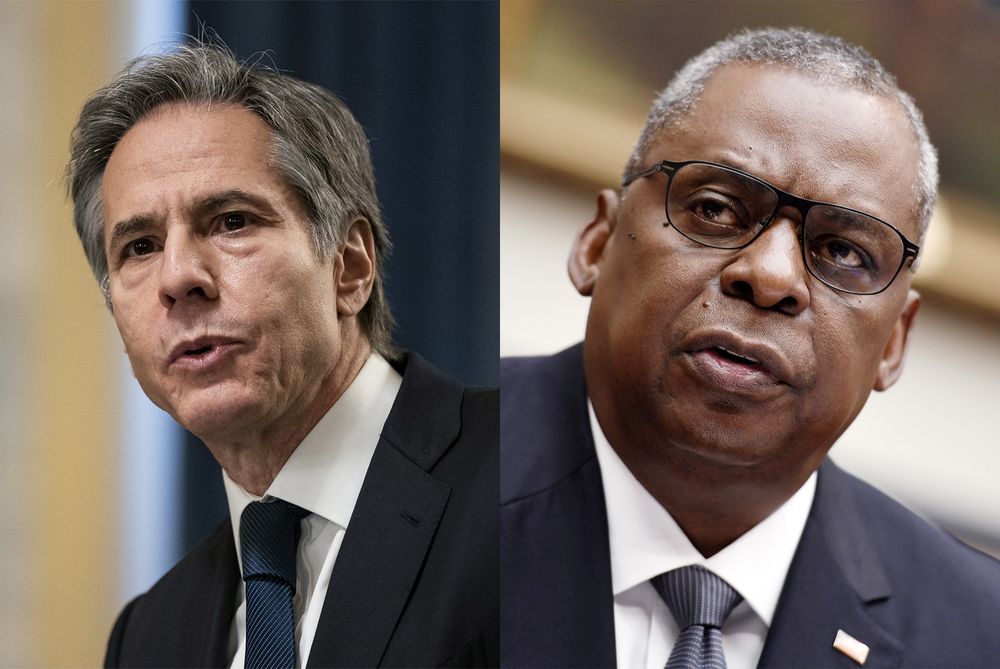
U.S. Secretary of State Antony Blinken and Defense Secretary Lloyd Austin asked a court to dismiss a lawsuit filed by a Nigerian separatist group over the sale of aircraft the plaintiffs say will be used to persecute its supporters.
The two officials, who are the defendants in the case, said a federal court in Washington has no jurisdiction to address the claim brought by the Indigenous People of Biafra, or IPOB, according to their motion submitted Oct. 18.
IPOB filed a complaint against the senior members of President Joe Biden’s cabinet in August, asking a judge to compel them to reverse the recently completed sale of a dozen A-29 Super Tucano aircraft to Nigeria’s air force. The secessionist movement’s complaint argued that the planes will be deployed against their sympathizers.
President Muhammadu Buhari’s administration, which proscribed IPOB as a terrorist organization in 2017, accuses the group of waging a violent campaign against state personnel and assets. IPOB says it’s a peaceful movement working to establish an independent nation in southeastern Nigeria that will defend the Igbo ethnic group against discrimination by the federal government.
IPOB’s complaint said Blinken and Austin violated laws intended to protect civilians from harm caused by U.S. weapons in the possession of foreign security forces.
“It would be inappropriate for the court to weigh in on a sensitive foreign affairs matter,” the U.S. officials said in their response requesting the dismissal of the case.
HUMAN RIGHTS WRITERS ASSOCIATION OF NIGERIA ( HURIWA) has rejected what it calls the persistent double standards that tailor federal government policies and initiatives. HURIWA carpeted the Federal Attorney General and Minister of Justice Abubakar Malami over his claims that the banned Indigenous Peoples of Biafra (Ipob) was responsible for some disturbances during last year’s #ENDSARS PROTESTS in Lagos including the lootings of the palatial mansion of the Oba of Lagos. HURIWA says it is possible that the Minister of Justice who is a politician is playing politics of EAST/WEST DIVIDE so as to precipitate political division between Igbo people and the Yoruba and then open up the possibility of retaining power in the North.
There is a clear evidence of double standard in the area of public prosecution of politically exposed individuals from either north or south. The government, particularly the ministry of justice has consistently manifested aversion or lack of enthusiasm towards bringing suspected terrorists from the Northern part of Nigeria to justice but he is always overzealous to charge other persons from the south with certain phantom allegation of of terrorism and the Justice ministry is busy conjuring up half baked allegations to hang it on the necks of either Nnamdi Kanu or Sunday Igboho.
A good example will suffice; Nnamdi Kanu versus Certain elements and Divisive leaders of Miyetti Allah that have been quoted in the media for supporting the activities of the armed Fulani headsmen who are terrorists.
These same leaders of Miyetti Allah who are in Nigeria have made treasonable statements challenging the government authorities of the state governments that have carried out the legal passage of laws on the anti-open grazing legislation have not only made threats but carried out their threats like in Ondo state.
The National President of Miyetti Allah Cattle Breeders Association has threatened fire and Brimstone in the South East of Nigeria just because people people rejected Ruga Fulani initiative of the president.
Few months after these threats were published in the media and still on the internet as I speak, there are sporadic attacks targeting strategic national security institution and assets and the government’s at both the South East and centre have refused to conduct proper forensic investigation but have hastily blamed Eastern Security Network and the Indigenous Peoples of Biafra. IPOB denied.
There are now cases, incidents of targeted killings of prominent Igbo leaders , businessmen including traditional rulers in the South East which tallies to the threats made by Miyetti Allah but yet the federal government refused to arrest the National and regional leaders of Miyetti Allah for this act of terrorism all around the country. But This same government is quick to kidnap Mazi Nnamdi Kanu from from Kenya and charged him for broadcasting hate messages he allegedly committed while in London where he resides. But the miyetti Allah officials who have made threats and have carried out those threats are indeed enjoying public sponsored security cover even while they commit those acts of terrorism. Now the justice minister is carrying out MEDIA TRIALS OF NNAMDI KANU WHOM THEY HAD DETAINED AND ALSO TRYING TO ROPE IN SUNDAY IGNOHO INTO BOKO HARAM TERRORISTS SOONSORSHIP AND THIS IS THE SAME MAN THAT NEARLY GOT KILLED BY DSS WHO INVADED HIS IBADAN HOUSE AT NIGHT BUT FOR THE GRACE OF GOD THAT MADE HIM TO ESCAOE HE COULD HABE BEIBG KILLED. NOW MALAMI COMES UP WITH TALES BY MOONLIGHT STORIES THAT IGNOHO HAS A LINK TO BOKO HARAM SPONSORS. THIS IS RIDICULOUS.
Government has refused to publish the Names of the 400 Boko haram terrorists supporters they identified even the matter have been filled in court. When a matter is filled in court , it has become a public document so why is the government concealing the identities of those sponsors?
Is it because the sponsors allegedly consist of Northern Muslims ?
Now government has quickly published the list of the account details of Mr Sunday Igboho the leader of Yoruba Nation . So why is he the minister of justice refusing to publish the list of Boko Haram Sponsors?.
HURIWA cited media report as claiming that the Federal Government has identified the financiers of Yoruba nation separatist leader, Sunday Adeyemo, also known as Sunday Igboho. Abubakar Malami, Attorney General of the Federation and Minister of Justice disclosed this at a press conference in Abuja on Friday. According to Malami, a committee constituted by the Federal Government unmasked how Igboho got monies from 43 bank accounts, across nine banks. “The Federal Government has received the report on financers of Adeniyi Sunday Adeyemo a.k.a Sunday Igboho. The report revealed that Sunday Igboho is a Director and signatory to Adesun International Concept Limited registered on 23rd April, 2010.” “Adesun International Concept Limited also has Oladele Oyetunji and Aderopo Adeyemo as Directors. Sunday Igboho is linked to 43 bank accounts in 9 banks.
“The major financier of the fugitive and separatists was found to be a Federal Law Maker in the National Assembly. A total sum of ONE HUNDRED AND TWENTY-SEVEN MILLION, ONE AND FORTY-FIVE THOUSAND NAIRA ONLY (N127, 145,000.00) was received by Igboho from his financiers between 22nd October, 2013 and 28th September, 2020 through Adesun International Concept Ltd accounts. “A total sum of TWO HUNDRED AND SEVENTY-THREE MILLION, ONE HUNDRED AND NINETY-EIGHT THOUSAND, TWO HUNDRED NAIRA ONLY (N273,198,200.00) transaction outflows was recorded from Sunday Igboho’s account between 15th March, 2013 and 11 the March, 2021. “Investigation reveals that Adesun International Concept Ltd (belonging to Igboho) transferred the sum of twelve million seven hundred and fifty thousand naira (N12, 750,000) to Abbal Bako & Sons. “It might be recalled that Abbal Bako & Sons and its promoter Abdullahi Umar Usman are suspects in the on-going Joint Terrorist Financing Investigation. Abdullahi Umar Usman is by way of financial transaction connected to SURAJO ABUBAKAR MUHAMMAD (who was sentenced to life imprisonment in UAE on charges of financing terrorism [Boko Haram]). “This report shows the nexus between separatists’ agitation, terrorism financing and disruptions of peace in the country. “The report found connections of financial transaction between Adesun International Concept Ltd (belonging to Igboho) and some construction companies and businesses among others.” HURIWA has condemned this press conference as subjudice and a crude attempt to force the hands of the court to convict Nnamdi Kanu by all means. ABUBAKAR MALAMI who has refused to disclosed identities of sponsors quickly pointed out one of them and then linked him to Sunday Igboho who is known to have chased away armed Fulani attackers in the South West of Nigeria. Is Malami saying a Northern Moslem funded Sunday Igboho to chase away Northern Mislem Fulani terrorists from South West the same armed Fulani militia that the minister of justice has till date failed to prosecute and told us HURIWA in writing that he has no case files on them?
Comrade Emmanuel Onwubiko:
NATIONAL COORDINATOR:
HUMAN RIGHTS WRITERS ASSOCIATION OF NIGERIA (HURIWA). OCTOBER 22ND 2021.
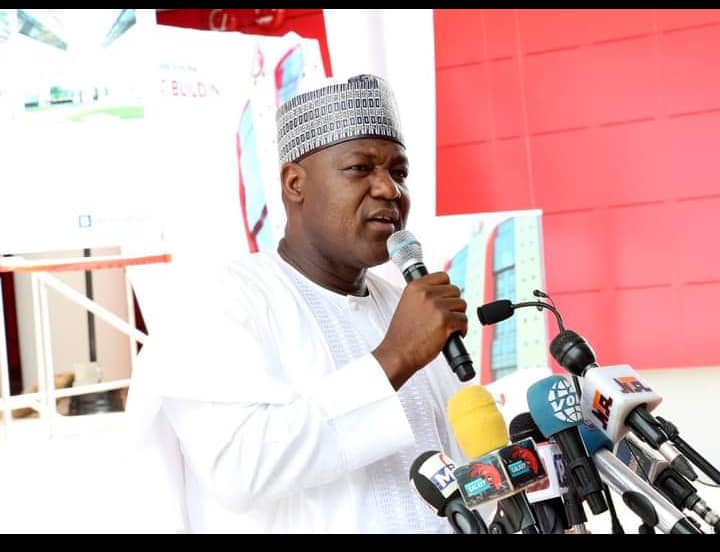
Rt. Hon. Yakubu Dogara, the 14th Speaker of the House of Representatives of Nigeria, will present the Keynote Address at the 2021 House of Justice Summit & Banquet scheduled to hold on Friday 26 November,2021 at the Epitome Events Centre, Barnawa Kaduna State- Nigeria.
According to a statement jointly signed by Gloria Mabeiam Ballason Esq, the Host and C.E.O. of House of Justice and Deborah Bawa, Head of Administration, the 2021 Summit with the theme *Leadership, Governance & National Security* has Prof. Chidi Anselm Odinkalu as Chief Host and features panel discussants like former Nigeria Presidential aspirant Engr. Matthias Tsado, Dr. Leena Hoffman of Chatham House, Dr. Ann Kryzanek Kareth – an American Associate Professor of Comparative Politics, Dr. Kabiru Chafe, a former Director of Arewa House and a host of others.
The Banquet at the evening session is a Royal Blue Ball which holds in honor of Honourable Justice Gideon Isa Kurada, a sterling examplary jurist who retires from the judiciary.
In its sixth edition, the Summit & Banquet is the biggest annual event of the House of Justice and has in previous editions hosted Supreme Court Justice K.B. Akaahs, Bishop Matthew Hassan Kukah, United Nations Betty Murungi, Prof. Jerry Gana, Governor Ramalan Yero, Prof. Chidi Odinkalu, Dr. Obadiah Mailafia, Senator Ben Murray Bruce, Senator Shehu Sani, Dr. Usman Bugaje and a host of others.
” Tickets, Corporate tables and sponsorship opportunities are available at +2347053842016, +2348036121560 or at info@houseofjusticeng.com,” the statement reads.
When the President of Nigeria Muhammadu Buhari in 2016 commically made reference to some Nigerian Youths he categorized as lazy youths, he probably did not know that some of his younger cabinet level appointees are the very perfect embodiment, representations and depictions of this description of Nigerian Youths as LAZY. Additionally, even the old appointees have substantially failed to prove that they are capable problem solvers using do it yourself mechanism.
President Muhammadu Buhari on Wednesday ( April 19,2018) criticised the attitude of some Nigerian youth, saying they were only hustling to get on the gravy train.
“More than 60 per cent of the population is below 30, a lot of them haven’t been to school and they are claiming that Nigeria is an oil producing country, therefore, they should sit and do nothing, and get housing, healthcare, education free,” Mr Buhari was quoted as saying by The Cable during a panel appearance with world leaders at the Commonwealth Business Forum in London.
The president’s comment adds to an earlier one he made criticising Nigerian youth.
During a February 2016 interview with UK Telegraph, Mr Buhari said some Nigerians in the UK, mostly youth, are disposed to criminality and should not be granted asylum there. He was fiercely criticised for the comment, with many saying it failed to convey the reality of Nigerian youth’s exploits.
However, a positive one on the Nigerian youths debunked this line of argument by President Muhammadu Buhari when an analysis by Rice University in the U.S. showed that Nigerian youth are the most educated of all migrants in the country. The institution credited the finding to a culture of relentless drive for education amongst Nigerians.
This Writer thinks President Muhammadu Buhari exaggerated this statement because most of the youths that I know are innovative problems solvers and are not lazy by any stretch of imagination except if the analyst is a mischief maker. But come to think of it. President Muhammadu Buhari may have said so going by the reality that most of the youngsters he empowered politically including some of his cousins he made Presidential advisers are actually lazy youths.
That is not all. A closer examination of how some of his younger ministers have opted for already made solutions in their day to day affairs as public office holders without any deep thinking and due regards to the sense of innovation, introspection and solution politics , shows that the Nigerian President may have appointed into his cabinet a bunch of lazy youths.
The President since he came on board and also when he took a second and final official oath of allegiance to the constitution of Nigeria, has made only very few appointments in favor of the very young Nigerians such as the person he sent to the ministry of finance, Budget and National planning, youths and sports, ministers of state for education and environment are all considered to be in their youthful ages.
However, there are mixed messages coming from these strategic beats that President gave to the youngsters.
Education sector has witnessed decline in development and the situation of facilities in public Universities are deteriorating with many of the public hostels becoming unfit for human habitation but yet the Education ministry has two ministers with the minister of state who is still within the age bracket of a youth. The Environment ministry is virtually moribund with little activities going on regarding the need to enlighten Nigerians on the impacts of climate change. Climate change is about the most debated issue around the World but in Nigeria there is almost no national remediation efforts going on to counter the consequences and effects of Climate change. The Ministry of Humanitarian Affairs is headed by a youngster but not a lot is seen in the area of transparency and accountability in the deployment of public resources to solve disasters of all kinds. In Sports, Nigeria came last at the just ended Tokyo Olympics and the National football team lost a match to the central African Republic and indeed no sports development efforts are ongoing to engage the millions of talented youngsters to embrace professional sports. Nigerian youths are a bundle of sporting talents but the Federal Ministry of youths and sports headed by a youth is finding it difficult to engage the youths in constructive sport development engagements.
Perhaps, the ministry that has so far manifested a dangerous inclination for easy solution to national problems is the ministry of finance, Budget and national planning. To her, the best way out of cash crunch is not home made but to go all over the World borrowing all kinds of loans which have made Nigeria a heavily indebted nation.
We will speak more about how the young minister of Budget, Finance and national planning through words, actions and inaction, has shown a lack of the deliberate effort to pursue innovative ideas as a way of resolving the economic doldrums affecting Nigeria.
But we will look at how academic experts define innovation and the evolution of ideas to solve everyday problems
Wikipedia said these: “Do it yourself” (“DIY”) is the method of building, modifying, or repairing things by oneself without the direct aid of professionals or certified experts. Academic research has described DIY as behaviors where “individuals use raw and semi-raw materials and parts to produce, transform, or reconstruct material possessions, including those drawn from the natural environment (e.g., landscaping)”.[1] DIY behavior can be triggered by various motivations previously categorized as marketplace motivations (economic benefits, lack of product availability, lack of product quality, need for customization), and identity enhancement (craftsmanship, empowerment, community seeking, uniqueness).
The term “do-it-yourself” has been associated with consumers since at least 1912 primarily in the domain of home improvement and maintenance activities.[3] The phrase “do it yourself” had come into common usage (in standard English) by the 1950s,[4] in reference to the emergence of a trend of people undertaking home improvement and various other small craft and construction projects as both a creative-recreational and cost-saving activity.
Subsequently, the term DIY has taken on a broader meaning that covers a wide range of skill sets. DIY has been described as a “self-made-culture”; one of designing, creating, customizing and repairing items or things without any special training. DIY has grown to become a social concept with people sharing ideas, designs, techniques, methods and finished projects with one another either online or in person.
DIY can be seen as a cultural reaction in modern technological society to increasing academic specialization and economic specialization which brings people into contact with only a tiny focus area within the larger context, positioning DIY as a venue for holistic engagement. DIY ethic is the ethic of self-sufficiency through completing tasks without the aid of a paid expert. The DIY ethic promotes the idea that anyone is capable of performing a variety of tasks rather than relying on paid specialists.
People, says the psychological expert, face problems every day—usually, multiple problems throughout the day. Sometimes these problems are straightforward: To double a recipe for pizza dough, for example, all that is required is that each ingredient in the recipe be doubled. Sometimes, however, the problems we encounter are more complex. For example, say you have a work deadline, and you must mail a printed copy of a report to your supervisor by the end of the business day. The report is time-sensitive and must be sent overnight. You finished the report last night, but your printer will not work today. What should you do? First, you need to identify the problem and then apply a strategy for solving the problem.
When you are presented with a problem—whether it is a complex mathematical problem or a broken printer, how do you solve it? Before finding a solution to the problem, the problem must first be clearly identified. After that, one of many problem solving strategies can be applied, hopefully resulting in a solution, according to Psychologists who know.
A problem-solving strategy is a plan of action used to find a solution. Different strategies have different action plans associated with them, the expert argues. For example, a well-known strategy is trial and error. The old adage, “If at first you don’t succeed, try, try again” describes trial and error. In terms of your broken printer, you could try checking the ink levels, and if that doesn’t work, you could check to make sure the paper tray isn’t jammed. Or maybe the printer isn’t actually connected to your laptop. When using trial and error, you would continue to try different solutions until you solved your problem. Although trial and error is not typically one of the most time-efficient strategies, it is a commonly used one. These were from a scholarly write up on psychology.
This tendency for easy way out of problems are not limited to Federal appointees. While begging southern governors to be their brother’s keeper and let the federal government keep collecting value-added tax, claiming Gombe residents could face acute hunger, Governor Inuwa Yahaya has been on a borrowing spree designed primarily to allegedly help him accumulate personal wealth, documents obtained by Peoples Gazette show.
Since assuming office on May 29, 2019, Mr Yahaya has sought and received approvals to borrow N44.3 billion, according to state documents obtained by The Gazette. The governor also collected N11 billion that his predecessor Ibrahim Dankwambo applied for but which he was unable to receive before his tenure expired. The governor also has a new plan to borrow an additional N35 billion.
Checks by The Gazette revealed allegedly that the governor did not spend the loans on the projects he cited for their necessity. Instead, he cornered billions for himself, leaving a spectre of crushing debts on a state already beset by a dearth of health and education infrastructure and ranks high in poverty indices.
In documents reviewed by The Gazette, the governor was in October 2019 granted approval for loans of N10 billion and N2 billion respectively for the “provision of Infrastructural projects in the state and payment of counterpart fund requirements for accessing Federal Government of Nigeria (FGN) donor funded projects.”
But Mr Yahaya did not settle the counterpart funding after the loan was approved by the House of Assembly but used the fund to execute projects within his own official residence and offices that were contracted to individuals in his pool of fronts. The conduits have consistently helped the governor syphone state funds to jurisdictions outside the state, officials said. I think this tells you how lazy politicians are around here. But the worst of them all is the finance Minister. Two things have made her the worst public office holder- Debts accumulation and the decision to buy foreign made generators rather than pursuing home made solution to our power energy poverty including the use of SOLAR ENERGY and conversion of WASTE TO ENERGY POWER which Countries like England, Japan, China have their home made solution and strategies to achieve.
The Minister of Finance, Budget and National Planning, Mrs Zainab Ahmed, has revealed why the Federal Government will continue to borrow money from other countries.
The Minister, during an interview with newsmen in Abuja revealed the government was borrowing to invest in infrastructure in the country.
According to her, the Federal Government’s borrowing is sensible and responsible.
“I have said it several times that the problem we have in Nigeria is that of revenue.
“We are borrowing sensibly and this is because we want to invest in infrastructures like power, water, roads and rails which are investments that are required to enhance business productivity in the country today.
“These businesses will grow, they will not only pay taxes, they will also employ people.
“If we don’t do this, we will regress even from where we are today. Borrowing is a necessary investment and we are doing it responsibly,” she said. These claims have no empirical supports. Let us see what President said he will do to turn around our energy poverty.
President Muhammadu Buhari said as the President of Nigeria he would work on an ambitious Energy Plan towards reducing the energy shortcomings by year 2030.
Mr Femi Adesina, the President’s spokesman in a statement, said Buhari spoke in line with Nigeria’s role as a Global Theme Champion for the Energy Transition, theme of the High-Level Dialogue on Energy on the sidelines of the 76th United Nations General Assembly in New York.
The president said: “Nigeria’s commitment to a just transition is reflected in our ambitious Energy Compact, which includes the Government’s flagship project to electrify five million households and twenty million people using decentralized solar energy solutions.
“This is a major first step towards closing our energy access deficit by 2030.
“Nigeria’s commitment is also reflected in the development of our Energy Transition Plan, which was developed with support of the UK COP26 Energy Transition Council.”
The Nigerian leader called for support from developed countries to unlock the financing needed to accelerate a just energy transition for all.
“The focus of our discussions on transition must now evolve how we help countries develop detailed energy transition plans and commitments to mobilize enough financing to empower countries to implement those plans,” he said.
According to him, the scale of financing required for Nigeria to achieve net-zero, amounts to over US$ 400 billion across the Nigerian economy in excess of business-as-usual spending over the next 30 years.
“This breaks down to US$ 155 billion net spend on generation capacity, US$ 135 billion on transmission and distribution infrastructure, US$ 75 billion on buildings, US$ 21 billion on industry and US$ 12 billion on transport.”
The president, however, said that gas would continue to have a big role to play before it is phased out, explaining that solid fuel cooking is still wreaking havoc in Africa. This promise has been breached because Nigeria has gone down further and worst in the area of power energy poverty. Now the minister of Finance has budgeted humongous sum to purchase foreign made generators.
Ministries, Departments and Agencies of the Federal Government will in 2022 spend an estimated N104bn on purchasing generators, fuelling and servicing them.
The N104bn which will be spent on generators due to the country’s unstable power supply exceeds the Internally Generated Revenue of about 24 states of the federation.
The details are contained in the 2022 budget proposal which has yet to be approved by the National Assembly.
Economic Confidential, however, reports that the figure may be higher as about 15 agencies including the Joint Admissions and Matriculation Board, Federal Mortgage Bank of Nigeria, the Independent National Electoral Commission, National Information Technology Agency, National Pension Commission, Nigeria Customs Service, Central Bank of Nigeria, National Examination Council, Central Bank of Nigeria and others did not indicate their generator budgets. The next story is perhaps what makes this minister as belonging tothe generator generation.
The story says Finance ministry wants N82bn for generators.
A review of the budget shows that the Federal Ministry of Finance, Budget and National Planning headed by Zainab Ahmed, takes the lion’s share of 80 per cent for generators as the ministry set aside N82.03bn.
The item under the heading, ‘Purchase of Fixed Assets- General’ reads, “Purchase of power generating set 82,030,000,000.”
As of press time, the Spokesman for the Finance Ministry, Yunusa Abdullahi, had yet to respond to an inquiry on why the budget for generators for the ministry is very high.
Meanwhile, a further analysis of the budget showed that among the agencies, the Federal Inland Revenue Service has the highest budget for generators.
The agency earmarked N250m for maintenance, N1bn for fuelling the generators and N550m for purchasing new ones, given a total of N1.8bn.
The Nigerian Army has the second highest budget for generators having earmarked N971.7m for generator fuel alone. The Nigerian Maritime Administration and Safety Agency has the third highest budget for generators at N946m.
The Department of Petroleum Resources set aside N118.7m for maintenance, N666.8m for generator fuel and N120m for the purchase of generators in its offices in Sokoto, Kano, Makurdi, Yenagoa, Ilorin and Umuahia, bringing it to a total of N905.5m.
The agency with the 5th largest generator budget is the Nigerian Ports Authority which set aside N798.2m for the maintenance and purchase of generators.
The Nigeria Deposit Insurance Commission budgeted N470m for the maintenance of a generator plant and N262.11m for the procurement of a generator, given a total sum of N732.1m.
The Federal Road Safety Corps set aside N529.3m for maintenance, fuel and purchase of generators.
The Nigeria Police formations and commands across the country are expected to spend N211.5m on maintenance and N309.8m on fuel for the generators, a total of N521.3m
Similarly, the Nigerian Communications Commission will spend N500m running generators next year having earmarked N190m for maintenance, N150m for the purchase of new generators and N160m for the purchase of fuel for generators.
The Bank of Agriculture set aside N420.5m for the purchase of a generator while the Standards Organisation of Nigeria intends to spend N412m on new generators and the maintenance of existing ones.
The Federal Airport Authority of Nigeria will spend N400m on generators.
The National Inland Waterways Authority earmarked N379.93m for the rehabilitation of a generator plant and N50m for the procurement of a generator while the Nigeria Civil Aviation Authority budgeted the sum of N240.57m to maintain its generator plant and N124m to acquire a new generator.
Other agencies with large generator budgets include: the Nigerian Defence Academy (N373m), the Nigerian Navy (N344m), the Economic and Financial Crimes Commission (N342.2m); and the Accident and Investigation Bureau (N323m).
The Nigeria Immigration Service earmarked N296.91m for generator expenses out of which N86.9m would be spent on fuel while N144.8m and N65.09m would go to the purchase and maintenance of generators respectively.
The Nigerian Meteorological will spend N285m on purchase, maintenance and fuelling of generators in 2022.
The Nigeria Export-Import Bank will spend N217.67m for the maintenance, purchase and fuelling of generators in 2022 while the Nigeria Correctional Service earmarked N134.9m for generator fuel cost, N43.6m for maintenance, a total of N178.5m.
The Office of the Head of Civil Service of the Federation earmarked N157.8m for the maintenance, fuelling and purchase of generators in 2022 while the National Youth Service Corps set aside N100.2m for the same expenses. The Independent Corrupt Practices and Other Related Offences Commission will spend N127.6m as well.
The Nigerian Airspace Management Agency and the Nigerian Postal Service will spend N100m and N103.1m respectively on generators.
The Federal Ministry of Health and its agencies comprising 88 federal teaching hospitals, medical centres and agencies will spend N3.1bn on generators next year. The health agency with the largest generator budget is the Nigerian Institute of Medical Research which will spend N230m on purchasing generators, N5m on fuel and N1m on maintenance.
The Ministry of Education which oversees 197 federal secondary and tertiary institutions, departments and agencies earmarked a combined N2.8bn for generators. The agency under the ministry with the highest generator budget is the Federal Polytechnic Ekowe which earmarked N237m for the purchase of generators, N18.9m for maintenance and N8.2m for fuel, a total of N264.1m.
Earlier just after been sworn in, the Nigerian government’s ambitions for improving electricity supplies are “not remotely realistic”, a report by experts advising the presidency says, an early blow to one of President Muhammadu Buhari’s most important reform promises.
Chronic power shortages are one of the biggest constraints on investment and growth in Africa’s largest economy. Fixing the problem was one of the key battlegrounds during campaigning ahead of a presidential election Buhari won in March.
Buhari, 72, and his opponent Goodluck Jonathan both promised to massively increase power supplies, building on a relatively successful $2.5 billion partial privatisation in 2013.
Buhari’s All Progressives Congress pledged in its manifesto to increase supplies from 3,600 megawatts (MW) currently to 20,000 MW within four years and 50,000 MW within ten years, which would meet the demands of Nigeria’s 170 million people.
However, reaching 20,000 MW by 2020 is “not even remotely realistic” and “setting unrealistic targets dilutes discipline”, according to a 54-page report entitled “The Energy Blueprint” obtained by Reuters.
My conclusion is that Nigeria needs Problem solvers who believe in innovation, ideas and do it yourself attitudes as ministers to get out of the economic mess that the poor policy framing and implementation in the last 6 years have pushed us into. This GENERATOR GENERATION OF MINISTERS lack the technological innovation, HUMAN capacity and talents to take Nigeria to the Promised land.
*EMMANUEL ONWUBIKO IS THE HEAD OF THE HUMAN RIGHTS WRITERS ASSOCIATION OF NIGERIA (HURIWA) and blogs @www.huriwanigeria.com, www.thenigerianinsidermews.com.
he Senior Staff Association of Nigerian Polytechnics (SSANIP) has urged President Muhammadu Buhari to assent to the Higher National Diploma (HND) and Bachelor’s Degree (BSc) dichotomy bill, recently passed by the National Assembly.
Adebanjo Ogunsipe, SSANIP National President, said this in a communique issued at the end of the quarterly meeting of the union’s General Executive Council, on Thursday, in Abuja.
Mr Ogunsipe said expediting action on the bill would be in the interest of the growth and development of polytechnic education.
“Council wishes to commend the National Assembly for painstakingly seeing the HND/BSc Dichotomy Bill, to a logical conclusion, while it is currently before the president of the country, awaiting his assent,” he said.
He described the non-payment of salaries of some state polytechnic workers as “insensitive,” adding that they were unhappy with the persistent refusal of many state governments to implement the new minimum wage.
Mr Ogunsipe identified some of the polytechnics owed salaries as Rufus Giwa Polytechnic, Owo, Ondo (11 months’ unpaid salaries), the Osun State Polytechnic, Iree, Osun (30 months’ unpaid half salaries), College of Technology, Esa-Oke in Osun (30 months unpaid half salaries) and Abia State Polytechnic, Aba, (28 months’ unpaid salaries).
The unionist added that ”council-in-session, for the umpteenth time, wished to express her displeasure at the unrepentant and seeming deliberate poor funding of Polytechnic education by some state governments in the country.”
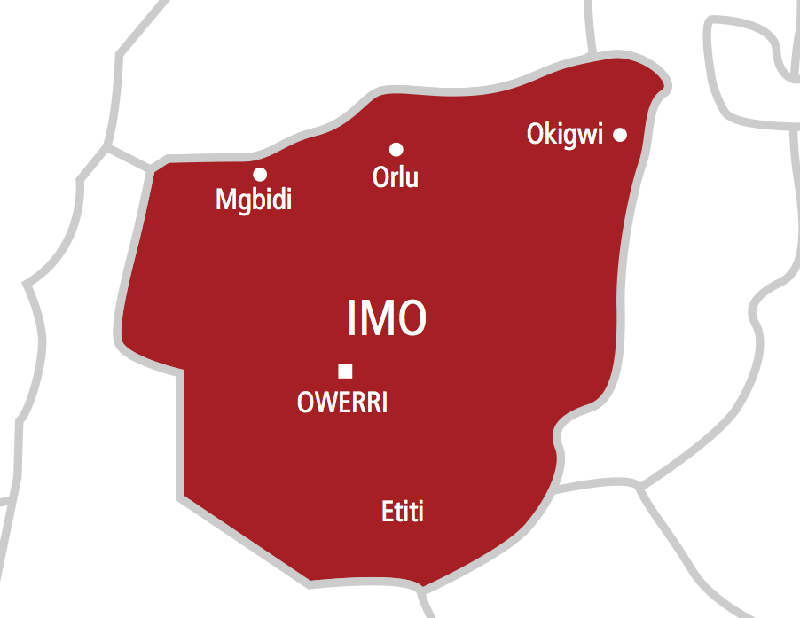
Gunmen on Thursday night set ablaze the Isiala Mbano Local Government Area Divisional Police Headquarters in Imo State, situated at Umuelemai.
According to Punch, the attackers invaded the station and also set some suspects free during a heavy rainfall.The gunmen struck around 7pm.
Fleeing gunmen had on March 19, set the same Divisional Police Headquarters on fire.
Apart from freeing suspects in detention, the attackers kidnapped one of the female cops on duty on that day. On arrival on Thursday, the hoodlums opened fire on the government facility before setting it on fire.
The cops on duty were said to have fled, making the attackers have a field day.
An indigene of the area told Punch that the hoodlums shot repeatedly at the police station.
He said “The gunshots were terrifying. We were terribly tense owing to the gunshots. They supervised the burning of the place before living.”
The police spokesperson in the state, Mike Abattam, had yet to confirm the attack but a senior official who pleaded anonymity confirmed the incident and disclosed that the authorities had commenced an investigation in the latest onslaught.
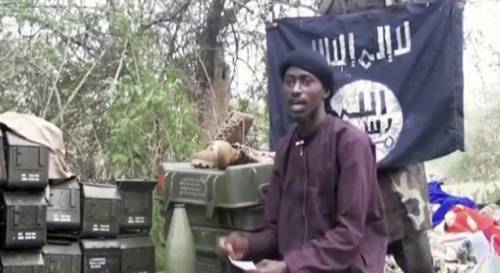
The Nigerian government has announced the killing of a leader of the Islamic State’s West Africa Province (ISWAP), Malam Bako.
Bako succeeded Abu Musab Al-Barnawi, the late leader and son of Boko Haram founder, Mohammed Yusuf.
The announcement comes some days after the Chief of Defence Staff, General Lucky Irabor confirmed that the death of ISWAP, Abu Musab Al-Barnawi.
Al-Barnawi was the son of Boko Haram founder, Mohammed Yusuf, who was also killed by security forces in 2009 when he launched a war against the Nigerian state.
He was previously the spokesperson for the Islamists before he later became ISWAP leader following the death of Abubakar Shekau.
Addressing journalists at the State House on Thursday, the National Security Adviser, Babagana Monguno said Bako was killed by Nigerian troops alongside an ISWAP commander.
“In one month, we have been able to take out the leadership of ISWAP, that is Abu Musab Al-Barnawi.
“Two days ago, the man who succeeded him, Malam Bako, one of ISWAP Shura Council, was also taken out.”
According to Monguno, the military operations against the terrorists is putting pressure on them.
Sahara Reporters earlier reported in September that Abu Musab Al-Barnawi was killed in Borno State. Al-Barnawi sustained vicious attacks especially on military facilities and troops in the Lake Chad region while at the same time strategising on how to subdue Shekau.
He controlled large swathes of territory in Northern Borno, imposed taxes on the local population and earned income from fishing aside from the financial and material support he got from ISIS.
Al-Barnawi’s fighters had also destroyed many military camps in Dikwa, Monguno, Abadam and Marte in Borno; and other military facilities around Geidam in Yobe State.
He equally established many cells on the Lake Chad islands and surrounding villages from where his fighters launched attacks on Nigeria, Niger and Chad.
His death in August, after that of Shekau in May 2021, was seen as a turning point in the war against terror.