Mangu Killings: Para-Mallam Peace Foundation Brings Humanitarian Aid to IDPs

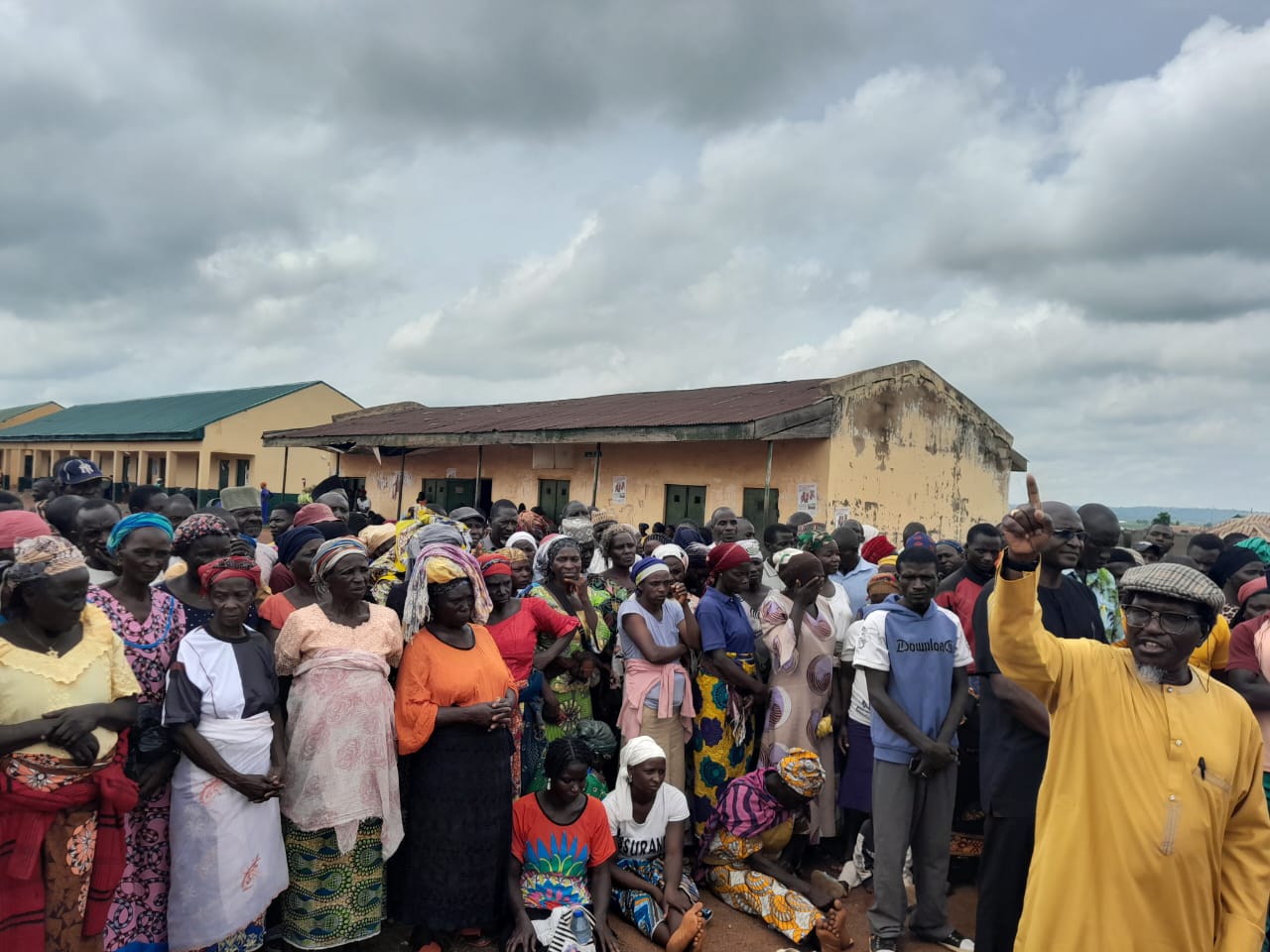
As the situation of the internally displaced persons displaced by recent attacks on farming communities in Mangu local government area of plateau state continues to deteriorate, a peace advocacy group known as The Gideon and Funmi Para-Mallam Peace Foundation, led by clergy Rev. Dr Gideon Para-Mallam, on Sunday, expressed deep concern over the living condition of internally displaced persons camped in schools and other open places in Plateau State.

Para-Mallam, who spoke during a humanitarian visit to the internally displaced persons in Mangu local government area of the state, described the condition of the IDPs as a “humanitarian disaster”.  The intervention is part of the Touching Lives Initiatives, an initiative of the Para-Mallam Peace Foundation that supports victims of violent attacks. Sunday’s visit was made in collaboration with the Christian Women for Excellence and Empowerment in Nigerian Societies (CWEENS).
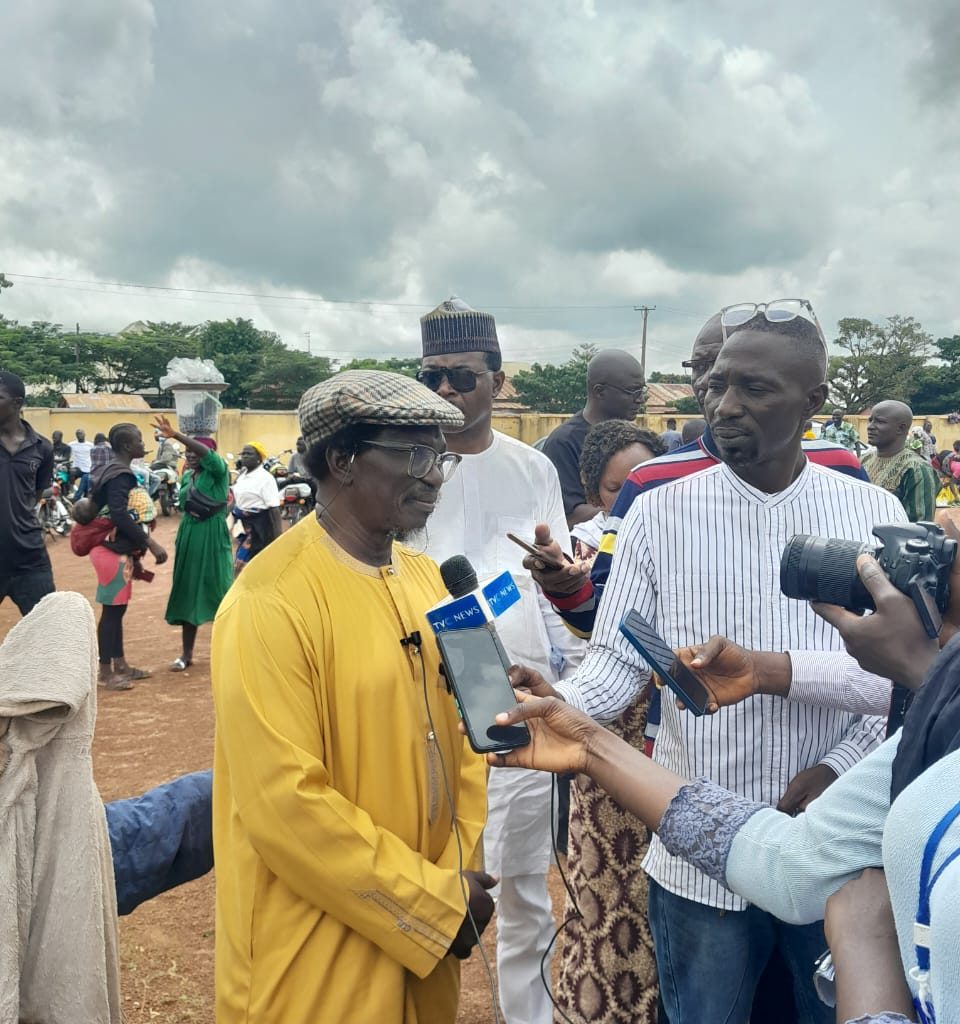
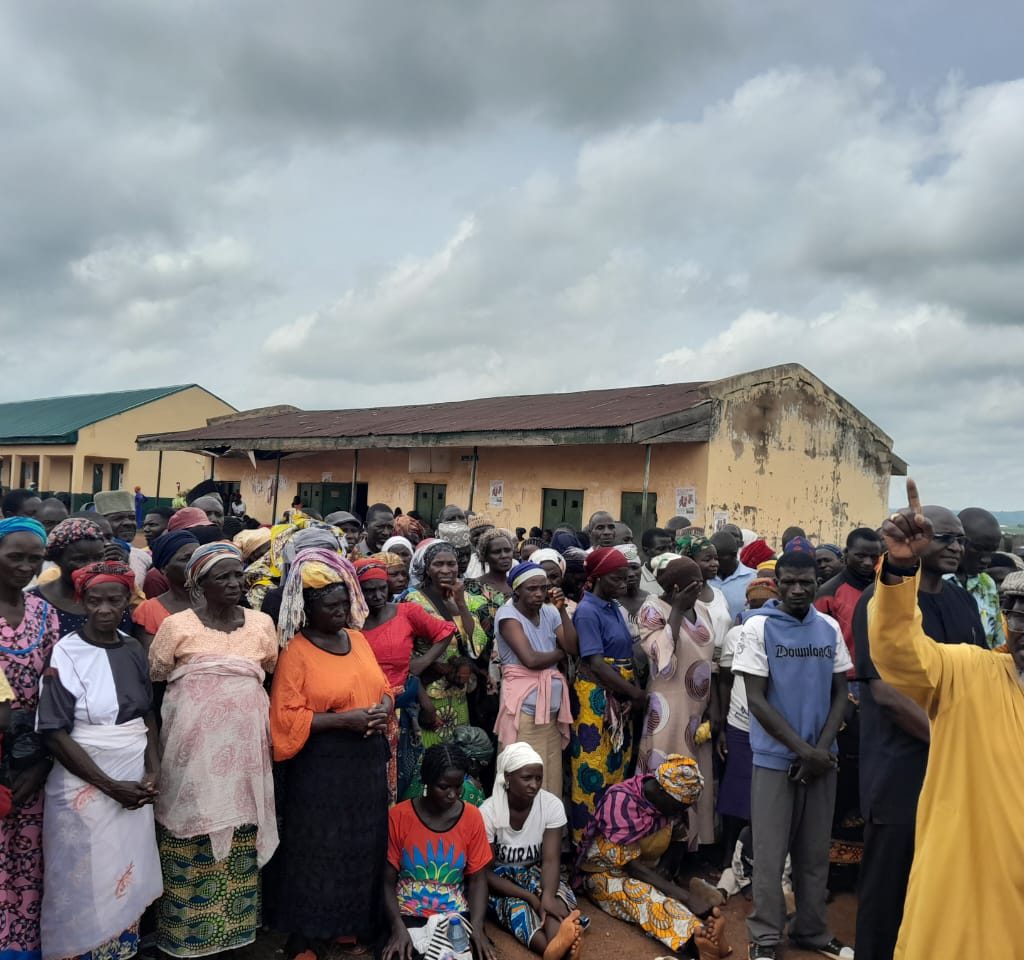
The Revd Dr Gideon Para-Mallam, speaking to the IDPs stated that what happened to Mangu people happened to “all of us”. He empathized with them over the unfortunate situation they have found themselves in and emphasized the need for patience, stating that patience is not foolishness.

“What has happened to you people, happened to all of us because we are all humans. You must be patient and you must know that patience at a time like this is not foolishness.”

Para-Mallam pleaded with the people not to think of vengeance because God has heard their cries and by His grace the killings will stop like they stopped in Bassa.  He informed the people that the Para-Mallam Peace Foundation would do all it could to fight for them and assured them that no one would steal their lands because the world is with them. He added that the Foundation will soon organize a peace meeting between them and the Fulani people. 

Speaking to journalists after the visit to the IDP camp, the Revd Dr Gideon Para-Mallam stated that the intervention is part of the Early Presence model for peacebuilding. He called on the government to carry out some infrastructural development for the people of Mangu such as fixing the bad bridges that are at some strategic areas through which the attackers come into the land. He spoke strongly on the need for the government at all levels to put an end to the impunity of people killing and going scot-free. He added that the narrative that it is a farmer-herder clash is simplistic and abates the killings.
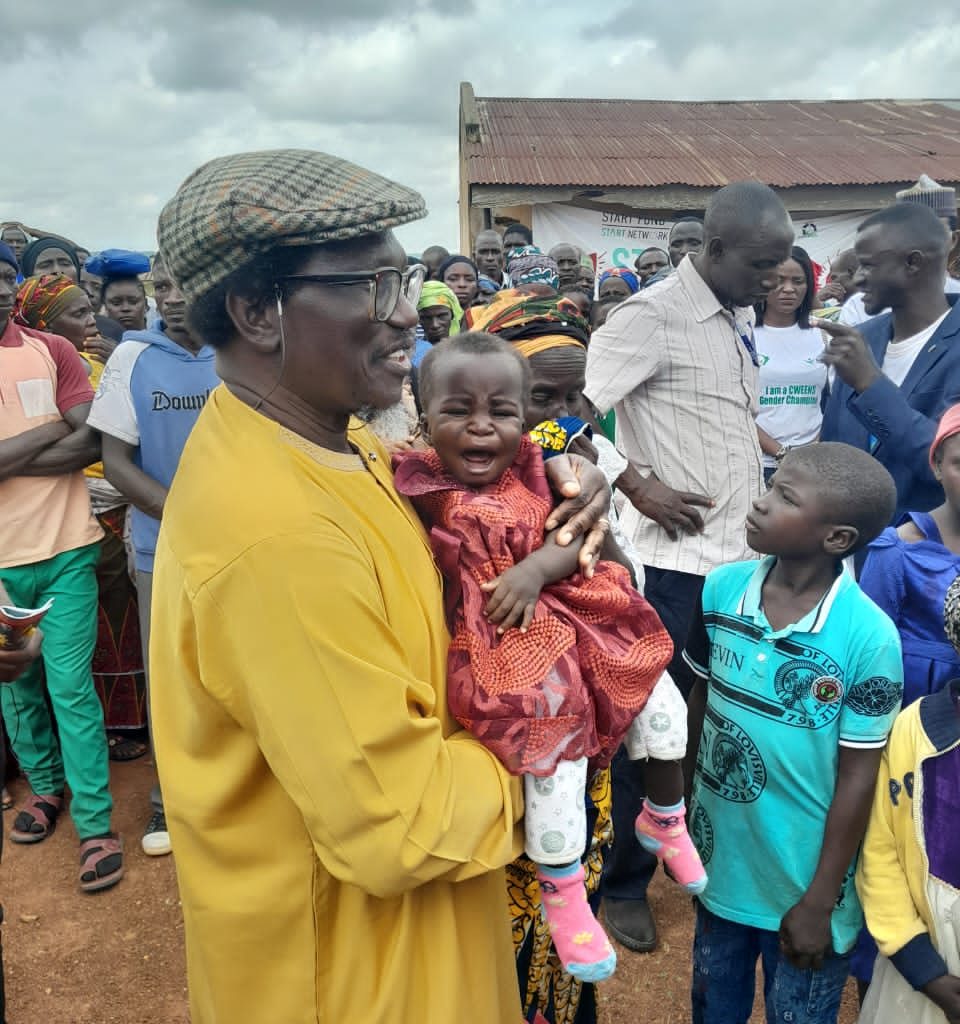
“The government needs to stop the impunity of people coming to kill people and walk away. It’s unacceptable. I think the government needs to sit up and say enough is enough.

Para-Mallam also called on the government to redouble its efforts to end the killings to enable the people to return to their ancestral villages.

He said, “The humanitarian disaster that has befallen the people of Mangu has been catastrophic, disturbing.

“The visit is to identify with the victims and support them in a little way to cushion the effects of the tragedy and devastation of their properties by the attackers.

“We can see the vast number of IDPs; over 18000 of them here (Mangu primary school) comprising children, women, orphans, widows, husbands, widowers. You can imagine that less than two years old baby whose mother and father were killed. I was moved to tears but I have to control myself.
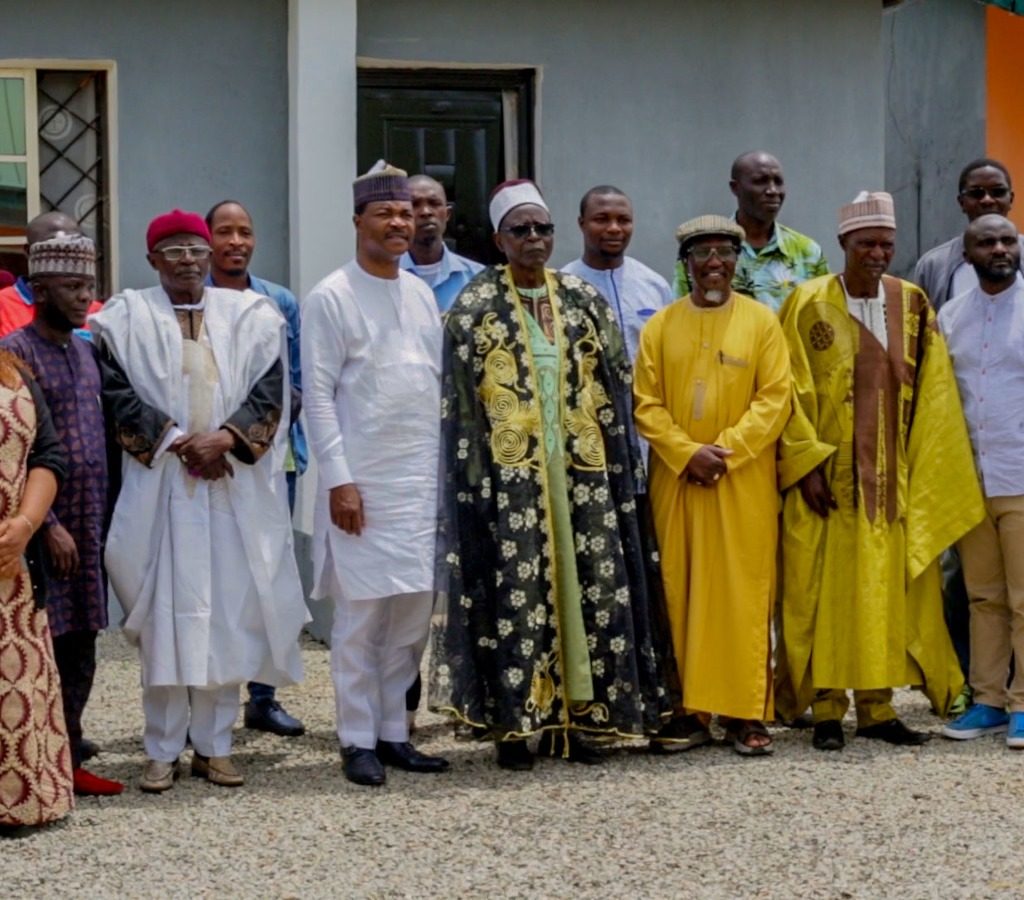
After the visit to the IDP camp, Para-Mallam and his team paid homage to the palace of the paramount ruler of Mwaghavul (Mangu), HRH Da John Putmang Hirse. Speaking at the palace of the Mishkagham, the Revd Dr Gideon Para-Mallam thanked the traditional ruler for the opportunity to be there and informed him that the visit was both a courtesy call and a visit to offer the monarch condolences for the tragic events that had occurred in his land. He gave the Mishkagham encouragement by saying that he and his people are not alone and that many across the world are supporting them. Para-Mallam also thanked the Chairman of the Christian Association (CAN), Mangu Chapter, the Secretary General of the Mwaghavul Development Association, and the media for their various contributions.

Para-Mallam also made a strong case for peace, appealing to the Miskagham to speak to his people against embarking on revenge mission as it is counterproductive. He stated that the Para-Mallam Peace Foundation will fight until justice prevails and it is to that effect, he wrote a report titled: “Mangu Killings: It’s Time for Peace”. The report which has generated international discussions was written to expose what is going on in Mangu and champion the cause for justice. He further stated that the problem in Mangu is not just the problem of Mangu people but a collective problem. He added that the Foundation works for peace that is predicated on justice and it will fight until justice is established in Mangu because people cannot be killed over reasons that do not warrant people getting killed.

In his remark, the Mishkagham expressed gratitude to the Para-Mallam ane his team, stating that he was honoured to receive them. He said the attacks came as a surprise because the Mwaghavul people had been living peacefully with the Fulanis for years and they even intermarried with them. He added that his people have engaged in peace talks with the Fulani people led by the GOC but after 2 or 3 days, they’ll break whatever agreement was reached. The king lamented over the destructions of lives, farms and houses stating that churches that have been destroyed are now converted to houses by the Fulani people even though no mosque has been destroyed.
The monarch said there’s something fundamentally wrong which he is yet to find out and he is open to hear what the attackers want. He said Mwaghavul people are not ready to retaliate but they’re asking for justice and calling on the government to ensure that people whose farms and properties have been destroyed are compensated. He said the people of Mangu are wondering why the attacks are coming now that they have their son as governor. He also said, it appears the attacks have been planned over a long time for it to have engulfed the entirety of Mwaghavul land as it has. In addition, he stated that the world needs to know what is happening and he is glad that the Para-Mallam Foundation is helping in that regard. The revered monarch also expressed willingness to engage in a dialogue with the Fulani people so that they can tell the Mangu people what their problem is. At the end of his remark, the Royal Father thanked the Foundation for the relief materials they brought and encouraged them to continue with the good works so that peace can return to Plateau State. He said “we need to work together as Nigerians for the progress of everyone.”

Middle Belt Times reports that over 300 people including women and children have been brutally murdered and hundreds of houses destroyed between April and July 2023 in attacks believed to be perpetrated by terrorists suspected to be herdsmen according to data released by the Gideon and Funmi Para-Mallam Peace Foundation.

An authoritative source who spoke to Middle Belt Times on condition of strict anonymity said the villagers have had to endure watching their farmlands destroyed by the marauding herdsmen.

“As at yesterday, some of the natives ran away for safety while cows grace their farmlands unhindered from what we heard. 
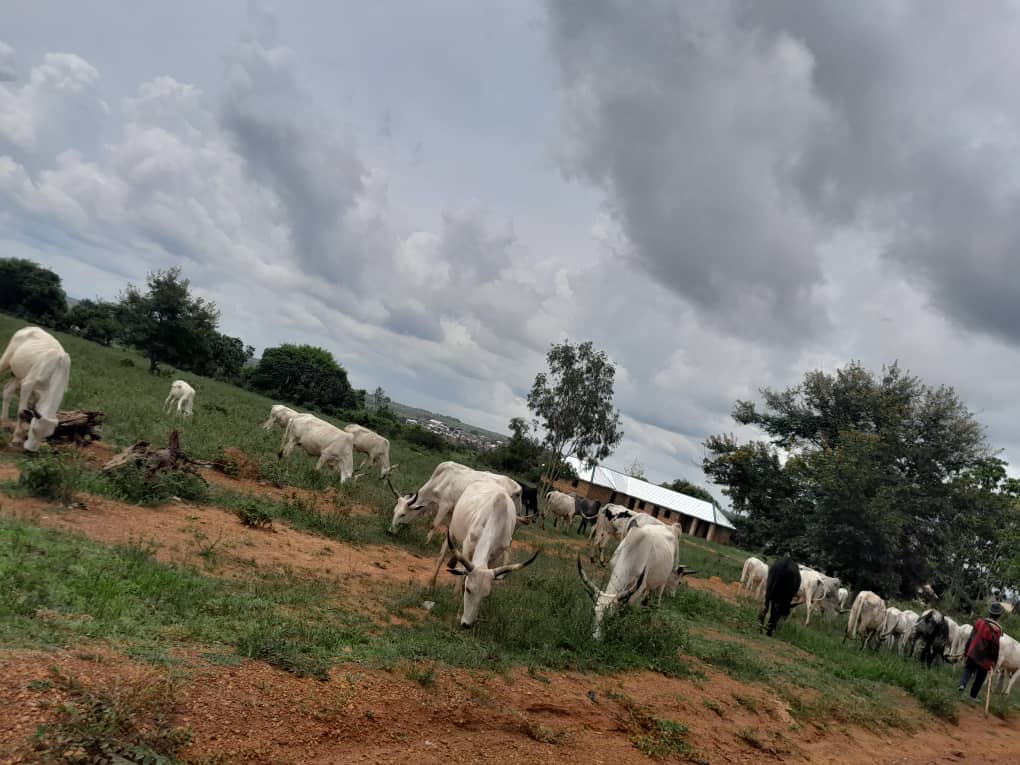
“Even on Friday before we arrived Saturday, some crops and farmlands were destroyed the people complained.”
JUST IN: Nigerian Army Launches Fresh Operation To End Plateau Killings

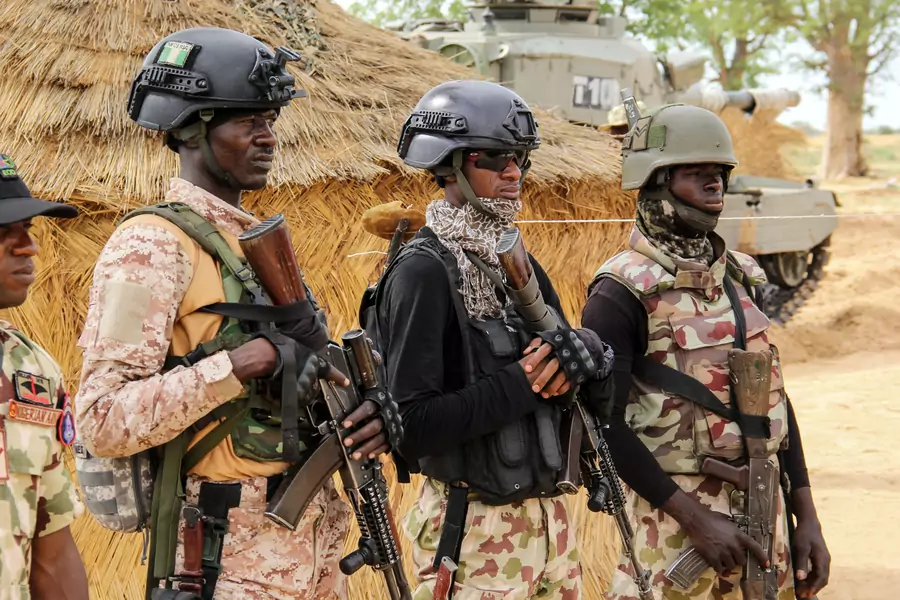
In a bid to end the incessant attacks on farming communities in Plateau state, the Nigerian Army on Saturday launched a new military operation in the state, code-named Operation Hakorin Damisa IV.

Hakorin Damisa means Leopard’s teeth when translated.

The Chief of Army Staff, Major General Taoreed Lagbaja who launched the new operation in Mangu Local Government Area of the state on Saturday said the aim was specifically to end the spate of attacks and killings in Mangu local government area and other parts of the state.

Middle Belt Times had earlier reported that in the last two months, more than 300 people had been killed in Mangu local government area and other neighboring communities following a series of attacks by terrorists suspected to be herdsmen.

After addressing troops deployed to carry out Operation Hakorin Damisa, the Chief of Army Staff moved to a Pilot Primary school in the community to have a meeting with the stakeholders.

Developing story…..

Subsidy removal: Cash transfer is scam – Kaduna Gov Uba Sani

Governor Uba Sani of Kaduna state, has described the proposed cash transfer policy of the Federal Government as a scam.

Sani stated this while speaking in an interview with Arise Television’s News Night on Friday.

The governor said, “My position has always been that, at this critical time, cash transfer should not be something that we should bring up, completely. I think that cash transfer for me, in my opinion, is a scam. Completely is a scam. I can be very certain about that, because who are you transferring the money to?

“Let me give an example, go and check the current statistics. Like I said, as the Chairman, Committee of  Banking for four years in Nigeria, I oversight Central Bank, I oversight all the commercial sector of our economy for the last four years and I look at the statistics, I will be very firm on this issue and you can go and check it. 

“Let me give an example, go and check the current statistics. Like I said, as the Chairman, Committee of  Banking for four years in Nigeria, I oversight Central Bank, I oversight all the commercial sector of our economy for the last four years and I look at the statistics, I will be very firm on this issue and you can go and check it. 

“About 70 to 75 percent of the rural population in North West are financially excluded completely. You will have to go and check, these people we are talking about are important people in the society. They do not even have a bank account so who are you transferring the money to?

“Let’s try and work very hard to make sure that they are financially included, that is the most important thing and I will like to call on our development partners, the World Bank, to put more money towards bringing more people into the financial services and the vulnerable in particular.

“Let’s put more money to ensure that we open accounts for them, get them involved, if we don’t do that, no matter what we do however you do it, money will go to the wrong people, that’s the fact.”

President Bola Tinubu had earlier unveiled his administration’s plan for a monthly N8,000 transfer to 12 million of the poorest households in the country for six months, in a bid to cushion the effects of the removal of fuel subsidy.

The plan was contained in a letter read last Thursday on the floor of the House of Representatives regarding the $800 million loan request of the previous Muhammadu Buhari administration for a social safety net programme.

But days after the announcement, the Federal Government said it will review the move following the public outcry it generated among Nigerians.

Recall that following the removal of the petrol subsidy and the recent hike in petrol prices to up to N617/litre, the National Executive Council (NEC)  agreed on palliative measures for Nigerians.

NEC also considered integrity tests on state social registers, cash transfers would be done via state social registers subject to state peculiarities.

The Federal Government also initiated a six-month cash award policy for public servants.

According to the Federal Government, food items grains and fertilizers are to be distributed by state governments at the rate acquired from National Emergency Management Agency (NEMA), while states were asked to double down on energy transition plans in the transport sector.

Source: Vanguard

Ifa Council Worldwide Writes Tinubu, Wants Rights Of Traditional Religion Practitioners Protected From Likes Of Emir Of Ilorin, Others

Piqued by the recent Ilorin religious conflict and the seemingly conspiratorial silence of relevant agencies and notable individuals in power over the cause of the conflict, the International Council for Ifa Religion (ICIR) has written an open letter to President Bola Tinubu.

It called for recognition of traditionalists and respect for aspects of Nigeria’s constitution that lay emphasis on equity, equality and freedom of religion. 

ICIR recalled a recent incident in Ilorin, the Kwara State capital, in which some Muslims, with the support of the Emir of Ilorin, Ibrahim Sulu-Gambari, threatened and harassed an Osun priestess, Yeye Ajesikemi Olokun, for wanting to hold Isese festival. 

The Muslim fanatics described Ilorin as a Muslim city. 

In a letter issued and signed by the President of the Council Oluwo Solagbade Popoola on behalf of ICIR (Worldwide), on Friday, the organisation alleged that governments at all levels overlook the principles of secularism by giving more prominence and attention to Islam and Christianity in total disregard of the religious diversity which is one of the unique feature of the Nigerian State.

The letter signed by Oluwo Solagbade Popoola, President of ICIR (Worldwide), and titled: ‘Open Letter To His Excellency Asiwaju Bola Hammed Tinubu GCFR, President And Commander-In-Chief, Federal Republic Of Nigeria’ reads in part: “Your Excellency, as you gradually settle down for the business of leading Nigeria to political, social and economic stability, ICIR feels it very pertinent to draw your attention to one of the salient and very important issues in the Nigeria’s constitution which has often been flagrantly and carelessly ignored. This issue centres on the principles of secularism as enshrined in several provisions of the 1999 Constitution, as amended.

“ICIR respectfully wishes to remind you of Section 10 of the Constitution of Nigeria which unequivocally states that ‘The Government of the Federation or of a State shall not adopt any religion as a State Religion.’ This provision prohibits the establishment of a state religion and affirms the secular nature of the Nigerian state.

“Your Excellency is invited to also note Section 38 of the constitution which clearly states that every individual has the right to freedom of thought, conscience, and religion. This includes the freedom to manifest and practice any religion or belief of one’s choice, either individually or in a community, subject to certain limitations to protect public safety, order, morality, or the rights of others.

“Bearing the above in mind, it may interest Your Excellency to know that traditional religion as well as its practitioners have continued to suffer persecutions and harassment in the hands of the two dorminant religions in Nigeria which are Islam and Christianity. 

“Successive administrations of government across all tiers have also continued to discriminate to a large extent against traditional religions. The case of intimidation and harassment of a practitioner of traditional religion by the royal envoy of the Emir of Ilorin is a recent and fresh example. Like messengers of death, some muslims leaders had besieged the home of an Osun Priestess and threatened her never to practice her faith within specified areas of Ilorin.

“Up till this moment, the Nigerian Police and the Kwara State Government are yet to take any reasonable action that could deter such illegality. Yet Section 42 of the Nigeria’s constitution prohibits discrimination based on religion and states that no Nigerian can be discriminated against on the basis of their religion or belief. This provision also emphasizes the equality of all citizens irrespective of their religious affiliation.

“Your Excellency, it is arguable that the Federal Government and most States seem to be deliberate in their disregard to the aspect of Section 10 of the said constitution which requires them to maintain neutrality regarding religious matters: Section 10 prohibits the adoption of any religion as a state religion. 

“Therefore, for declaring certain parts of Ilorin a muslim area, those Ilorin muslim leaders ought to have been decisively dealt with. Section 10 explicitly declares that government should not favor or endorse any particular religion. Rather, government is expected under the constitution to treat all religions equally and respect the religious diversity of its citizens.

“Another critical issue is that Federal and State Governments, in disregard to the Constitution, set aside certain days as public holidays for christians and muslims to celebrate their special festivals such as Christmas, Easter, Good Friday, Eid al-Fitr, Ramadan Eid al-Adha, Mawlid etc. Granting holidays to two religions, out of many, in a religiously diversified nation like Nigeria, is a contradiction to the secular character of Nigeria as established and recognised by our constitution.

“The dominance of Islam and Christianity in a secular State like Nigeria could be said to have been significantly influenced by the recognition given to them, above others, by Government. Why do both religions have Welfare and Pilgrimage Boards, funded from our common wealth, while other religions are held down in total surpression? 

“The dominance of Islam and Christianity notwithstanding, traditional religions hold significance for many Nigerians. Therefore, it is very important to also factor our welfare along that of others so as to foster inclusiveness and ensure harmonious relationship.”

Therefore, the ICIR asked Tinubu to among other requests “grant due recognition to traditional religion alongside dominant ones in Nigeria; grant all traditional religions August 20 as Public Holiday for the entire practitioners of the religions in Nigeria to observe as a day to worship God and also venerate their ancestors and establish a legal framework that recognizes and protects the rights of individuals to practice traditional religions.”

According to ICIR, “this should also protect sacred sites and access to such places” and “allow religious ceremonies and rituals, and ensure that traditional religious practitioners are not subjected to discrimination or persecution”. 

It added that “Nigeria Police and other Security Agencies should be authorized to arrest and prosecute anyone who tries to harass or intimidate any individual with the view preventing them from free exercise of their freedom of religion or right to affirm their individual belief whether in public or in private”.

ICIR also asked President Tinubu to “establish Welfare Board for practitioners of traditional religions in Nigeria in order to, among other things, ensure they have due access to heritage facilities and sites that have significant link with their faith and belief system” and “include us in interfaith dialogue and other relevant platforms when formulating policies or making decisions in order to ensure that our perspectives are also taken into account”.

“Finally, we urge you to consider the need to go deep into the origin of the Nigeria’s current socio-economic situation and tackle the problems once and for all thereby making way for a new Nigeria, the Nigeria of everybody’s dream,” it added.

Source: Saharareporters

Nasarawa Gov Raises Alarm Over Influx Of Bandits From Plateau

Nasarawa State governor, Abdullahi Sule, has raised the alarm over the influx of bandits fleeing from crisis spots in the Mangu Local Government Area of Plateau State.

The governor also raised alarm over the proliferation of illegal production of small arms and ammunition in the state.

Sule raised the alarm during an expanded security meeting held at the Government House, Lafia the state capital, with a view to addressing some emerging security threats in the state.

It was attended by security chiefs, selected local government chairmen and traditional rulers.

Daily Trust reports that intelligence reports located the bandits around Mangar and Ambaka areas in Wamba Local Government Area, as well as in Lafia East Development Area.

Our correspondent reports that part of the agenda of the security meeting included reviewing the movement of Fulani herders in areas bordering the neighbouring Benue State.

“Recently, there have been movements of herders, especially Fulani herders. This may not pose a big security challenge because they are moving to grazing areas but unfortunately, those areas are also problematic because they are at the border between Keana and Guma Local Government Area in Benue State.

“It will be a recipe for problems down the line and around the Tunga area which is our major concern,” the governor pointed out.

Sule commended security agencies operating in the state for carrying out operations in Akwanga and Kokona local government areas, which led to the arrest of a notorious kidnapper identified as Lagudi and some members of his gang.

The governor also commended the 177 Guards Brigade, Keffi, as well as the police for their efforts in curtailing the activities of the notorious Yan Shara cult group in Keffi.

He, however, called for additional efforts by the security agencies to further prevent the Yan Shara from relocating to other areas.

He called for steps to secure palaces of traditional rulers in the state.

Speaking to newsmen after the meeting, the state Commissioner of Police, Mohammed Baba Maiyaki, said security operatives were ready to nip the activities of the Yan Shara cult group.

Source: Daily Trust

Army of Nigeria accused of extrajudicial killings of vigilantes in Mangu

Army Says Vigilantes Who Were Killed Were “Terrorists”

According to reports by Truth Newspaper, residents of Central Plateau State and human rights watchers from as far away as Washington, D.C. have expressed indignation over the execution of three neighborhood watchmen by Nigerian military.

The Nigerian military which did not dispute the deaths and declared on July 12 that the three armed individuals who were murdered in Panyam, a town 42 miles southeast of Jos, were terrorist bandits who set up an ambush in the Ampang East neighborhood of Mangu County.

However, Truth Nigeria is told by witnesses to the killings who chose not to give their names out of concern for reprisals that the young men killed were valiantly fighting off terrorists. Locals refer to them as “vigilantes,” but they are actually neighborhood watchmen who only defend their towns with weapons when they are attacked.

During a normal patrol, the vigilantes were attacked after getting off a broken-down motorcycle on a nearby roadway, according to the witnesses. Since May 16, more than 350 people have died as a result of Islamic terrorist strikes across the Central Plateau counties, according to town authorities.

A leader of the Plateau State Assemblyman was compelled by the occurrence to demand a public investigation into the killings. In a one-on-one interview with Truth Nigeria, Del. Dewan K. Gabriel demanded “a thorough and impartial investigation into the alleged human rights violations committed by the Nigerian military in central Plateau State,” referring to what he called “the recent reported murder of three self-defense volunteers, who were shot while courageously protecting the villages from terrorists.”

“One thing is certain, the Nigerian military is not empowered to commit street-side execution of suspects whether they are terrorists or vigilantes,” said Dede Laugesen, executive director of Save the Persecuted Christians in a text to Truth Nigeria. “This case demands immediate international attention and review by the U.N. Special Rapporteur on Extrajudicial killings,” Laugesen added. “The embattled people of Plateau—mostly Christian populations enduring officially unrecognized Islamic jihad—deserve far more professional concern, compassion, and response from Nigerian security forces who unfortunately are often compromised and complicit with the terrorists bent on their exile and extermination.”

Gov. Mutfwang addresses military leaders directly

The Nigerian Army boasted of neutralizing three “bandits” after “gallantly fighting through an ambush” in Mangu on July 12, as the newly elected Governor of Plateau State, Caleb Mutfwang, met with the nation’s newly appointed Chief of Defense Staff (CDS), Christopher Musa, in Abuja to plead for an end to ongoing terror raids in the State.

On July 12, Mutfwang paid a personal visit to the CDS to appeal to the generals because he appeared to be tired of making public statements for the military to step in and put an end to the killings.

The army authorities in Abuja said they killed terrorists in the village of Perr and collected weapons in a statement released that day’s evening by their Director of Public Relations, Brigadier General Onyema Nwachukwu.

Residents of the neighborhood, which is in the Ampang East District of Mangu County, however, claimed to Truth Nigeria that the vigilantes posed no danger to them or the military and that they voluntarily surrendered when they were stopped by soldiers on a local highway.


“They were just pushing their motorcycle which had broken down during a routine patrol of the area,” said one witness on background for fear of retaliation by the military. “The soldiers bumped into them and arrested them without resistance,” the source said in a telephone interview. “They laid them down on the ground and shot them one after the other,” said the source.

Since huge attacks by radicalized mercenaries started setting Plateau towns on fire, dozens of neighborhood watchmen, sometimes known as “vigilantes,” have perished.

State in a wide area starting on May 12. Two vigilantes were buried five miles away at the time of the murder on July 12 at 2 p.m. local time, according to Jethro Jacob, a youth leader in Mangu. According to Jacob, the memorial service was held for two vigilantes who were killed in an ambush in the terror-infested village of Perr. But according to Jacob, the Secretary of the Mwagavul Youth Movement, a local tribe organization, their bodies had remained unburied at the scene because of persistent threats.

“We had to beg for the soldiers and police to give us protection to bury them,” said Jacob in a telephone interview. “All the people living in the village were displaced when they attacked and they are the ones controlling the area,” he said, refuting the military’s claim the three vigilantes killed on 12 July were terrorists. “There was no distress call whatsoever from that area. We are usually the first point of contact for the villagers, so if there was any problem, we will be the ones to relay it to the military. But there was nothing like that,” Jacob told Truth Nigeria.

“There was no distress call whatsoever from that area. We are usually the first point of contact for the villagers, so if there was any problem, we will be the ones to relay it to the military. But there was nothing like that,” Jacob told Truth Nigeria. “The terrorists have killed more than 350 of our people and taken over 50 of our villages in just two weeks. All along, the military never responded to any distress calls. Even when they did, they were either overpowered or unwilling to pursue them. But all of a sudden we hear of terrorists killed after a distress call. Something doesn’t seem right to me,” Jacob said.

“The terrorists have killed more than 350 of our people and taken over 50 of our villages in just two weeks. All along, the military never responded to any distress calls. Even when they did, they were either overpowered or unwilling to pursue them. But all of a sudden we hear of terrorists killed after a distress call. Something doesn’t seem right to me,” Jacob said.

Vigilantes Felled in Multiple Engagements Three days prior to the killing of the three vigilantes, 14 people including vigilantes were killed in the west of Mangu County. An evening attack by a band of 200 terrorists armed with assault rifles led to the killing of six vigilantes and eight other residents in Sabon Gari village according to witnesses. A group of 20 vigilantes battled in vain to push back the attack, which was preceded by a series of advance notices, including some by Truth Nigeria. The Nigerian authorities did nothing to prevent the attacks which later spread to the southwest of Jos the following day, killing nine other residents including a vigilante member, Truth Nigeria has reported. For persecuted Christians in Nigeria’s war-torn Middle Belt, their only hope for survival are the volunteer neighborhood-watch forces. These brave community members, often untrained and carrying homemade rifles, put their lives on the line every day, facing off against superior numbers of terrorists armed with assault rifles. Many have lost their lives in combat, paying the ultimate price for their bravery. But tragically, a growing number have been cut down deliberately by the Nigerian soldiers themselves, Truth Nigeria has learned. Solomon Dalyop, a human rights attorney told Truth Nigeria while the Nigerian laws prohibit the use of automatic firearms for self-defense, the increasing sophistication of the attacks has called for extreme measures. “These terrorists attack with highly sophisticated weapons including machine guns,” said Dalyop in a telephone interview. “The law allows the use of proportionate force to defend against any attack,” said Dalyop who is also a tribal leader in Plateau State.

The Dilemma of Nigerian Army’s Credibility: Dissecting the Twitter Account Incident in Mangu

by Mary Vou

In a recent development that took place on July 12, 2023, the official Twitter account of the Nigerian Army announced a significant accomplishment in Mangu, a region located in Plateau State within the Middle Belt of Nigeria. The tweet highlighted the successful operation carried out by the army, resulting in the elimination of three notorious bandits and the recovery of various weapons. The accompanying photos showcased the lifeless bodies of the deceased criminals, along with the assortment of confiscated items, including AK-47 rifles, a significant quantity of 7.62 mm special rounds, a motorcycle, and even a Constabulary Police Identity Card.

However, beyond this particular incident, it is crucial to delve deeper into the prevailing issue at hand. By examining the response from local inhabitants and considering the broader context, we encounter the troubling matter of public mistrust in relation to the Nigerian army. This article aims to shed light on these multifaceted aspects, seeking to provide a comprehensive analysis of the situation.

The recent social media post triggered a wave of outrage due to the widespread awareness regarding the identities and motivations of these groups. To gain a better understanding of the situation, it is necessary to examine the statements made by the governors of Bauchi, Katsina, and Kaduna in the past. These regional leaders have been explicit about the groups’ affiliations and underlying motivations, providing crucial context to the current discourse.

Moreover, prominent figure Sheikh Gumi has been vocal in discussing these groups and shedding light on the ideological factors that inform their actions. With such authoritative voices bringing attention to these issues, it becomes evident why the aforementioned post has ignited a strong sense of indignation among the public.These armed groups are not unfamiliar to us; their language of communication and their physical attributes are well-known.

Attempting to twist facts that have already been established, documented, and published is futile and serves no purpose. These militias, who do not originate from the affected areas, mercilessly slaughter people in their own homes. They launch sporadic heavy artillery attacks and employ individuals armed with machetes to finish off any survivors. What term should we use to describe such actions? Moreover, let us not forget the presence of another group that stands by, waiting for both factions to wreak havoc, setting fire to entire community structures using petrol as their weapon of choice.

The reality is that these individuals are terrorists, and it is crucial not to shy away from this fact for the sake of political correctness. Coordinated and preemptive attacks targeting a specific demographic can be categorized as genocidal, and all groups, such as Miyetti Allah and others, who claim responsibility for such heinous acts should be identified as such without any apologies.

Furthermore, on March 7, 2010, at around 2 am, locals identified a group of strange Fulani men who invaded the community, resulting in the slaughter of numerous children, infants, and elderly individuals, while many others were severely injured. Shockingly, the operation was executed flawlessly, despite the imposition of a curfew at the time, and neither the police nor the military intervened throughout the three-hour massacre.

This is deeply insulting because the locals could always identify these invaders as Fulani. These instances highlight the gravity of the situation and the urgent need for effective intervention and justice.

In discussing the concerning issue of Fulani ethnic militias, it is important to acknowledge that even Miyetti Allah, the umbrella association of cattle breeders in Nigeria, has taken responsibility for some of the attacks. In Plateau State in 2018, they claimed that their actions, which resulted in the deaths of over 100 individuals, were merely retaliatory measures against the persecution of their members.

What becomes evident from this latest social media post is that it will only serve to exacerbate the existing mistrust that citizens have towards law enforcement agencies in the country. General Theophilus Danjuma (retired) previously expressed his belief that the army lacks impartiality, alleging that certain elements within the military colluded with the bandits. Similarly, Colonel Adewunmi echoed these sentiments by highlighting how the Department of State Services (DSS) possesses a wealth of information and documents regarding the situation, implying that the government is fully aware of the sponsors behind these acts of violence and possesses the capability to resolve the issue if they have the determination to do so.

It is highly deplorable that someone responsible for managing the official Army Twitter account would seek to ignite ethnic tensions and intensify the blame game among the different groups within the Middle Belt. It has become evident that these conflicts reach far beyond the grassroots level and involve high-ranking officials, with security experts during the previous administration revealing that government officials may be implicated in sponsoring these conflicts.

This incident is just one example of how the Nigerian army has further eroded public trust. Another notable incident was the attack in Owo, which resulted in the loss of many lives and was initially attributed by the government to the Islamic State West Africa Province (ISWAP).

However, numerous analysts cautioned the government against hastily assigning responsibility to the group. This was primarily due to several discrepancies surrounding the government’s narrative concerning the involvement of ISWAP.

Vincent Foucher, a respected research fellow at the National Centre for Scientific Research, was among those who emphasized the need for caution and urged the government to carefully consider the complexities of the situation.During an interview with Al Jazeera, another expert named Hassan raised doubts about the authenticity of the government’s claims regarding ISWAP’s involvement in the recent church attacks. Hassan expressed concerns and questioned whether the officials might be attempting to quell the rising threat of reprisal attacks that followed the bloody incidents that occurred that fateful day.

The Nigerian government is facing a mounting case of inconsistencies and discrepancies between civilian and military accounts, as well as conflicting research findings. One notable analysis conducted by the International Crisis Group highlighted that ISWAP primarily targets military installations and avoids attacking civilians or local groups such as vigilantes, politicians, or informers. This assessment contradicts the government’s attribution of the Owo church attack to ISWAP, which was clearly aimed at civilians, thereby raising further doubts.

Several incidents demonstrate the disparity between the actions of ISWAP and the government’s narrative. For instance, the attacks on Kangwara, a major army base on Lake Chad, between August 2016 and January 2017, the assault on an army battalion in Jilli Yobe in July 2018, the takeover of the towns of Gudumbali, Baga, and Doro Gowon on December 26, 2018, all indicate a divergence from ISWAP’s usual targets.

Moreover, when ISWAP claims responsibility for its attacks, it is typically a display of bravado, as they have no motive to withhold such claims. Analysts have also pointed out the high cost of training their fighters, suggesting that they would not risk sending only a few operatives to enemy territory where their lives could be lost. Instead, they prefer to showcase their full force during operations, as seen in the notable incident at the Kuje prison.

These discrepancies between ISWAP’s actions and the government’s account reveal a pressing need for greater transparency in reporting conflicts by the Nigerian army and other law enforcement agencies. The local communities affected by the atrocities perpetrated by Fulani militias in the Middle Belt continue to demand that the government thoroughly investigate these cases and hold the perpetrators accountable.

el-Rufai: Haunted By The Past

BY NASIRU JAGABA

In recent times, social media has been awash with vitriolic attacks against the elders of Southern Kaduna. These elders stand accused of fostering hatred and antagonism towards the former governor of Kaduna State, Mallam Nasir Ahmad el-Rufai. As one sifts through the deluge of articles regarding this issue, one has to wonder what the orchestrators of this smear campaign hope to achieve, and why they have chosen to act now, after el-Rufai’s tenure.

For the sake of clarity, it is important to understand that the people of Southern Kaduna have always been peaceful, law-abiding, dedicated, and hard-working. Despite enduring systemic marginalisation and neglect, they have consistently remained supportive and law-abiding citizens. However, the recent campaign against their elders isn’t just baseless, but also appears to be instigated. If left unchecked, these false narratives could spread and potentially be mistaken for the truth.

In a delightful twist of irony, this campaign against our leaders emerged shortly after the former Kaduna State governor delivered a keynote address at the book launch and retirement event in honour of Professor Ishaq Akintola, the founder of Muslim Rights Concern (MURIC) and an erratic and confused fanatic stocking the embers of division and disharmony with many destructive and senseless press releases. In his address, el-Rufai reportedly stated that elders from the southern part of the state humiliated his deputies, who hailed from the same region. He then painted a narrative of himself as a victim. It’s intriguing to note that this narrative conveniently emerged at an event where MURIC honored him with an award as Defender of the Faith.

If there’s any party that could justifiably accuse another of fostering hatred and antagonism, it would be the people of Southern Kaduna and not the governor. They survived the tumultuous eight-year tenure of el-Rufai under whose watch their communities were decimated and thousands of their people killed. Yet, despite remaining silent and allowing posterity to judge the former governor’s actions, he seems intent on rewriting the narrative that portrays the Southern Kaduna people in a negative light.

It is interesting to note that despite the 7th Senate’s pronouncement that el-Rufai was unfit for public office; the people of Southern Kaduna extended nothing but love and support towards him during his 2014 campaign. It’s almost comedy that el-Rufai now feels justified to accuse the Southern Kaduna elders of hatred and antagonism towards him. In 2015, the people of Southern Kaduna broke a longstanding tradition of supporting the Peoples Democratic Party (PDP) to cast their votes for him. Without their support, his governorship ambition would have remained a pipe dream.

The tenure of the former governor was characterised by deception and neglect, particularly in the manner he handled the security situation in Southern Kaduna. It’s almost farcical that his solution to the 2016 security threats was to visit the terrorists and give them money, supposedly to persuade them to stop their attacks. Instead, the attacks worsened, as if he had inadvertently empowered them for more attacks. Moreover, his response to the cries of the people was to offer excuses for the terrorists, rather than sympathise with the victims.

In terms of projects, the lion’s share of the over $350 million (N270 billion) World Bank loan that the former governor secured for Kaduna State was spent mostly on Muslim-dominated areas, with less than N5 billion allocated to the 12 Local Government Areas (LGAs) of Southern Kaduna. Even within these LGAs, the few projects he initiated were centered in Muslim-majority areas, leaving the Christian-populated areas in complete neglect and abandonment.

The governor’s appointments to public offices were also a source of contention. During his tenure, the entire top management positions of the Kaduna State University (KASU) were Muslims, and mostly non-Southern Kaduna. This blatant disregard for diversity was almost comical, if not for the stark reality of its implications. The list of top positions within the university, from the Vice Chancellor down to departmental directors, was dominated by Muslims. The staff recruitment ratio, student admission ratio, student union government leaders, and class representative leaders all tilted heavily towards Muslims. In fact, there were six mosques within the university, but not a single Christian chapel.

Below are top management positions of KASU that was a product of the el-Rufai years as governor of the state:

Vice Chancellor – Muslim
Deputy VC Admin. – Muslim
Deputy VC Academic – Muslim
Registrar – Muslim
Bursar – Muslim
University Librarian – Muslim
Chief Security Officer – Muslim
Dir. Academy Planning – Muslim
DIr. Physical Planning – Muslim
Dean Student Affairs – Muslim
Director ICT- Muslim
Pro Chancellor – Muslim
Dir. University Advancement – Muslim
Number of Mosques: = 6

Number of Christian Chapel: = 0

Staff Recruitment Ratio:

Muslims = 70%

Christians = 30%

Student Admission Ratio:

Muslims= 75%

Christians = 25%

Student Union Government Leaders

Muslims = 94%

Christians =06%

Class Reps. Leaders

Muslims = 97%

Christians = 03%

With such a track record, it’s almost amusing that el-Rufai has the audacity to accuse the Southern Kaduna elders of being hateful and antagonistic. It is clear that if anyone has a right to feel antagonised or hated, it is the people of Southern Kaduna, not the former governor who exit made Kaduna citizens to heave a sigh of relief.

It’s a tragic -comedy that el-Rufai, a man whose recklessness with words is well-documented, is now trying to paint himself as the victim. The irony is that his attempts to rewrite his legacy are being aided by those who should be working towards unity and peace in the aftermath of his divisive reign.

Ultimately, the former governor’s attempts to regain relevance are doomed to fail. His past actions against the people of Southern Kaduna can’t be easily forgotten. No amount of linguistic gymnastics or social media campaigns, including sponsored articles, can alter the fact that he is now reaping the consequences of his actions. Indeed, one might call it poetic justice.

In the grand theatre of political rhetoric, his attempts to cast himself as the victim are nothing short of a farcical pantomime. He seems to be peddling a narrative that paints him as a misunderstood leader, grievously wronged by the same people he evidently shortchanged and marginalised.

And yet, the evidence of his misdeeds is as clear as daylight. The disproportionate allocation of resources and projects, the blatant favoritism in the university appointments, and his apathetic response to the security threats faced by the people of Southern Kaduna are all stark reminders of his leadership deficits anchored on religious and ethnic discrimination.

In a twist worthy of a Shakespearean tragedy, el-Rufai seems to have forgotten the old adage, “What goes around, comes around”. His administration’s blatant bias against the Southern Kaduna people is akin to sowing seeds of discord and neglect. Now, as he faces the harvest of rising public discontent and criticism, he seeks to deflect blame and paint himself as the victim.

But the people of Southern Kaduna are neither fooled nor swayed by these attempts. Their resilience and unity in the face of adversity are a testament to their strength and character. The former governor’s attempts at revisionist history are desperate bids to salvage a tarnished reputation at the expense of Southern Kaduna people.

The irony is that, while he attempts to smear the reputation of Southern Kaduna elders, he only succeeds in further tarnishing his own battered reputation. His actions have revealed his true character, and no amount of deflection or blame shifting can change that. The people of Southern Kaduna, and indeed, the rest of the world, are not blind to this reality.

In conclusion, the former governor’s attempts to reframe his legacy are akin to trying to paint a crumbling mansion in bright colors – it may look different from afar, but up close, the cracks are still visible. The people of Southern Kaduna, and Nigerians at large, see his actions for what they are – a desperate attempt to rewrite history and salvage his tarnished image.

However, as the saying goes, “You can’t make a silk purse out of a sow’s ear”. No matter how hard he tries, the truth of el-Rufai’s legacy of injustice is very clear for all to see.

Jagaba is the former National Youth Leader of Southern Kaduna Peoples Union (SOKAPU).

Plateau Killings: Foundation to full blown nationwide terrorism is being laid says Para-Mallam Peace Foundation

By Steven Kefas, Kaduna

A Peace Foundation known as the Gideon and Funmi Para-Mallam Peace Foundation based in Jos, Plateau state has added its voice to the conversation on the renewed killings and violence ongoing in Mangu local government area of Plateau state. The Foundation said the Federal government cannot afford to continue to remain silent amidst what it described as act of terror unleashed on innocent civilians in Plateau state.

In a statement signed by the President of the Foundation, Rev. Dr Gideon Para-Mallam and made available to Middle Belt Belt Times, the Peace Foundation known for its peace efforts across the Middle Belt said a “Foundation is being laid for a full blown nationwide terrorism in the country.”

Para-Mallam called on the Federal government to be more proactive and decisive in tackling the violence which has been ongoing for several years. The statement also claimed that 346 people have been killed in Mangu local government area of Plateau state between April and July 2023.

The statement reads in full:

“Sunday night – July 9th 2023, around 9:00pm, 8 people were killed in Farin Lamba in Riyom Local Government Area of Plateau State. One woman, a 2-year-old baby and 6 young men on riding their motor bikes and conveying their passengers. The gun men came on a killing mission and not finding those they targeted, they started killing those on the highways. Monday morning July 10th 2023 in Vwang Village, Jos South, 2 women were shot dead @ Wereng Rim in the same Riyom LGA. Prior to this on Friday July 7th , 15 people were killed and the following day Saturday night July 8th , 13 people: 12 men and a little boy of under 6 years old were killed in Sabon gari village in Mangu LGA. Mangu LGA has become the latest killing fields of Nigeria.

Death is an equalizer. It will find anyone of us at some point in life’s journey. This is a fact of life. However, why must human agents serve as life’s terminators? The degrading of the value of human life without respect to our common humanity is beyond comprehension in Nigeria. This is what we are witnessing in Plateau State, particularly in Mangu Local Government Area. There have been sustained attacks which have continued unabated since April 17th , 2023 till date. Over 300 lives have been lost on the Plateau from April to date. Out of this number, over 200 lives have been lost to sustained violent attacks in Mangu LGA, as at Saturday, July 8th , 2023. The current harvest of deaths in Mangu LGA must be treated with the utmost urgency it deserves.

The Federal Government cannot afford to remain silent. Silence suggests looking the other way while the current inhumanity continuous. The Federal Government or President Bola Ahmed Tinubu has not issued any official statement condemning the present killings since his being sworn into office on May 29th 2023 till date. Two months on yet we still do not have a formal Presidential comment on these killings? What signals is being communicated by such silence remains to be seen but the impunity demonstrated by the immediate past government of President Mohammadu Buhari should not be sustained by his successor. Why keep silent when hundreds of men, women and children are being killed almost daily in Plateau State?

The Mwaghvul Development Association (MDA), through its National Secretary Dr. Solomon Mangvwat, reports that a total of 54 villages have so far been attacked during this short period. 208 of their people have been killed, hundreds are missing as several bodies were burnt either in their homes while sleeping at night or in the bush as they fled were killed in the process of escape. Handicap persons unable to flee the attackers were mercilessly killed.

There are currently Eighteen Thousand Seven Hundred and Fifty-One (18,751) Internally Displaced Persons (IDPs) who are now housed in Fourteen Camps. The 14 camps are hosted by the Church of Christ in Nations (COCIN) Local Church Councils (LCCs). A Breakdown of the IDPs shows: 2,081 widows, 6,066 Orphans between the ages of 0-5 years old. Old people account for 1,057 old aged persons and teenagers and adult orphans accounting for 828. A total of 6,603 households are currently affected by these deadly attacks. Meanwhile, the Fulani community claim that the attacks in Mangu are part of a crusade to get rid of them from. This claim was made in a letter dated 19th May, 2023, addressed to the General Officer Commanding the 3rd Armoured Division, Rukuba Barracks, and the Commander Operation Safe Haven (OPSH), Jos, signed by Muhammad Nura Abdullahi, the Chairman of Miyetti Allah Cattle Breeders Association of Nigeria (MACBAN). Similarly, in a report by Daily Trust Newspaper, 10th July, 2023, Muhammad Nura Abdullahi stated that there was an invasion of Fulani villages in Mangu LGA on Friday, 7th July, 2023 which led to the death of 15 Fulanis and 78 houses destroyed.

Take it or leave it, a foundation to full blown nation-wide terrorism is being laid. No country should localize and allow acts of terror on its citizens. Whatever the motivation behind these attacks on the Plateau, the fact remains – people are being killed in their hundreds. The burden of these killings should not rest only on the shoulders of the newly sown-in Governor of Plateau State, Barr Caleb Muftwang. The burden should not also rest only on the shoulders of the President of the Federal Republic of Nigeria, Bola Ahmed Tinubu. In fact, the burden rests on the shoulders of all Nigerians. The MDA have a role to play in the search for peace and so also Miyetti Allah in seeking an end to the killings and finding ways to save lives and property. There is wisdom in collective action devoid of finger pointing or political calculations. The lives of all the citizens of Mangu LGA residents matters.

“It isn’t enough to talk about peace. One must believe in it. And it isn’t enough to believe in it. One must work at it.” – Eleanor Roosevelt.

There is need for strategic action on the part of the Nigerian government and international community to ensure sustainable peace returns to Plateau State. As a Peace Building Foundation, we believe that peace is possible in Mangu LGA, Plateau State and Nigeria. The Federal Government and Plateau State; indeed all States in Nigeria need to work together with unity of purpose, across political party lines to find peace for all the troubled hotspots in the entire country. How long must we sit-out these religiously motivated and criminal killings in Nigeria while the rights of Freedom of Religion and Belief (FoRB) are being trampled upon? Focusing on misleading narratives of the violence is itself not only misleading but unhelpful and glaring political correctness and hypocrisy. The narrative of reprisal attacks is not only simplistic but it hides the real issues and therefore the unjust killings have lingered on for too long not just in Mangu LGA but in other hotspots in the Middlebelt areas in particular.

It is important to take cognizance of the words of Martin Luther King Jr. who observes that: “Violence begets violence; hate begets hate; and toughness begets a greater toughness. It is all a descending spiral, and the end is destruction — for everybody. Along the way of life, someone must have enough sense and morality to cut off the chain of hate.”

What is happening in Plateau State has impact on Nigeria. What more, what is happening in Nigeria has global consequences in the medium and long-run. It is time to act and stop localizing Plateau’s killings fields. The time to put an end to violence in Plateau State and Nigeria is now!.”

Recall that Middle Belt Times earlier in the week reported the decision of the military to relocate its special task force codenamed, Operation Safe Haven to Mangu in its effort to address the incessant attacks on rural communities in the area.

Unraveling the Islamization Debate in Nigeria: Understanding Perspectives, Extremism, and the Secular State 

By

Patrick Anum

For years, Nigeria has been engaged in discussions about the perceived threat of Islamization. This topic has sparked diverse viewpoints, with some dismissing it as mere conspiracy theories, while others express genuine concerns. 

Additionally, there are individuals within the Muslim community who view it through the lens of intolerance and Islamophobia. In my latest column for the Middle Belt Times, I delve into this multifaceted issue, aiming to shed light on the different aspects surrounding the Islamization debate. 

One observation I have made is that many Muslims in Nigeria adopt a defensive stance, which, in my opinion, is unnecessary. There appears to be a misunderstanding regarding the nature of what such a threat would most likely entail. 

While ordinary Muslims believe it to be the spread of regular Islam, those discussing it refer to fundamentalist doctrines that even Muslims in Nigeria may find hard to accept. Boko Haram serves as a significant case study, as it became too extreme even for Ansaru and Islamic State, leading to a breakaway. 

This highlights that these ideologies are not aligned with regular Islamic doctrines. And if a group like Islamic State cannot stomach these doctrines, how can one imagine muslims in Nigeria would fare? Many experts like Col Adewunmi have attributed this problem to a certain elite in the country while other experts have also attributed the deliberate efforts to keep the population uneducated as an avenue which creates a fertile ground for radicalism. 

Intolerance in our diverse society is an alarming indicator that society is veering off course. The Yoruba Muslims’ role in the 1979 constitutional drafting committee exemplifies the importance of replicating diversity and incorporating tolerance not just in society but also in politics. 

From a perspective of tolerance, we witness fewer individuals embracing the ideologies of the ’70s, which could be problematic in a multicultural nation like ours with an example being the defense of the Muslim/Muslim ticket in the just concluded 2023 Presidential elections. 

The rise of groups like ISWAP, Ansaru, and Boko Haram, with their growing local recruitment, underscores the consequences of unintentional educational policies in combating radicalism. I had the opportunity to speak with an Algerian Muslim who revealed that their government’s approach to extremism has been swift. 

In Nigeria, however, it festers due to the interests of certain elites who favor such an environment, and they are not shy about this fact. It is important to emphasize that this issue is nota debate about the Christians versus Muslims or Traditionalists and should not be viewed in these lenses; however it should be viewed as a conversation around combating the spread of radical ideologies.

Given Nigeria’s status as a secular state, it is crucial for Muslims to take the lead in ensuring that all ethnic gruops and people of diverse religious affiliations feel involved in society and governance and that the country remains non-aligned with religious organizations, be it Christian or Muslim. 

These issues if not adequately addressed have the potential to tear at the fabric of our nation. I still recall the sense of impending doom when Ibrahim Babangida secretly joined the OIC. President Buhari’s continued alignment with such organizations highlights the absence of steadfast moral codes among Nigerian leaders. It becomes evident that if there is no decentralization, there is a possibility that someone in power may seek to impose hegemony and implement radical ideologies favoring their faith or religion in the future considering the number of out of school children and high levels of illiteracy in the country. 

One troubling aspect of radicalism is that it often begins with targeting individuals of other faiths before turning on those within the same faith. This highlights the urgency of addressing this issue collectively. But more importantly, these fundamentalists being linked or allegedly sponsored by elite is worrisome in our country and Nigerians would need to have very serious and honest conversations about these issues going forward.

In light of the ongoing Islamization debate in Nigeria, it becomes imperative for all citizens to stand united against any form of radicalist ideology. The preservation of secularism should be our shared priority, transcending religious and cultural boundaries. 

This call to action stems from the realization that radicalist ideologies pose a significant threat to the peace and harmony of our diverse nation. It is crucial that we reject these extremist narratives and embrace a path that upholds our secular values. 

While acknowledging the existence of differing opinions on the Islamization issue, it is essential to distinguish between regular Islam and fundamentalist doctrines. Nigerian Muslims, who make up a significant portion of our population, often embrace Islam as a peaceful and inclusive religion. 

However, the concerns raised regarding Islamization are primarily directed at the propagation of radical and intolerant ideologies and must not be confused in any other regard. 

 As such, moving forward, we must use tolerance as a litmus test in accessing the health of Nigeria with no exceptions.