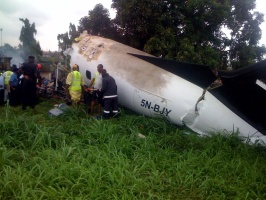
The NAF Director of Public Relations and Information, Air Commodore Edward Gabkwet, confirmed this in a statement on Friday.
He said two pilots onboard the aircraft survived and were being observed in a military facility.
“Luckily, the two pilots on board survived the crash after successfully ejecting from the aircraft. Additionally, there was no loss of lives or damage to any property around the area of impact.
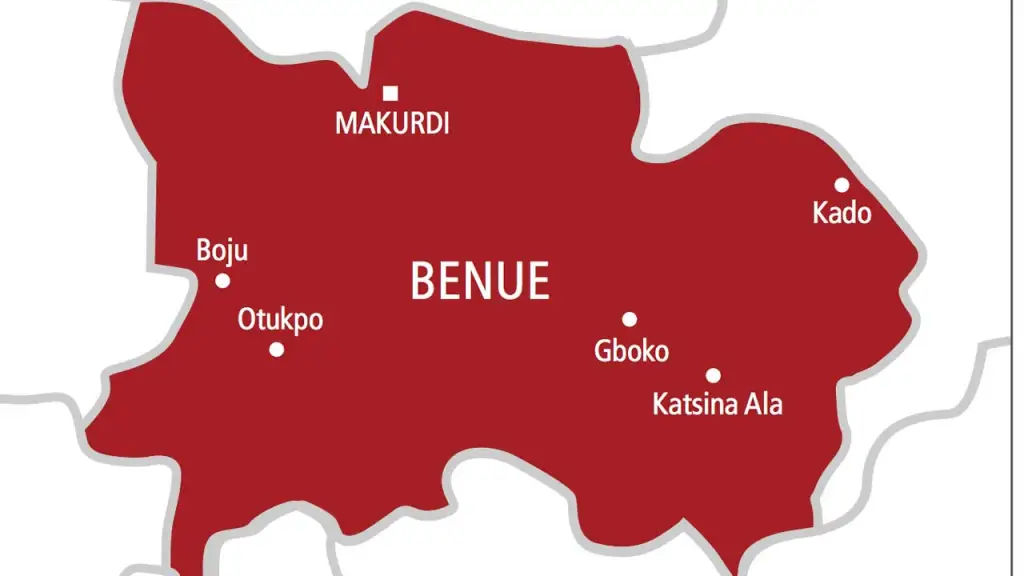
“Both pilots are currently under observation at NAF Base Hospital, Makurdi. Meanwhile, the Chief of Air Staff, Air Vice Marshal Hasan Abubakar, has constituted a Board of Inquiry to determine the immediate and remote causes of the crash,” he said.
The Northern Development Forum (NDF) has issued a two-week ultimatum to the administration of President Bola Ahmed Tinubu to grant amnesty to Boko Haram and bandits in the North to foster national inclusivity.
The group, which premised its demands on what it called the “prosperous life now being lived by ex-agitators in the Niger Delta”, said granting its request would help foster a lasting peace across the vast swathes of the northern region.
In a press statement by its spokesperson, Sheriff Abubakar, the NDF said the only way the North will have a respite from incessant attacks from Boko Haram and bandits is for the Tinubu government to grant amnesty to the rebels just like President Umar Musa Yar’Adua did in 2009 for Niger-Delta militants.
The group further stated that for 15 years and counting, the Niger-Delta militants have enjoyed unprecedented patronage from the Nigerian government, leaving those in the North in abject poverty and deprivation. It listed its demands for Boko Haram and bandits to include: Declaration of Amnesty; provision of scholarship; capacity building; and establishment of cooperative scheme. Several Niger-Delta agitators were offered scholarships, management skills and federally-backed pensions.
The statement reads in full:
“Dear President Bola Ahmed Tinubu,
“We are writing you today as concerned citizens and advocate for justice and unity in our great nation. Recent events have brought to light the urgent need for amnesty to be granted to Northern agitators popularly known as Boko Haram and bandits, paralleling the historic amnesty granted to Niger-Delta militants during the tenure of our late brother, President Umar Yar’adua ( Allah Yarhamuh).
“We strongly urge you to consider this proposal and take decisive action to promote peace, inclusivity, and national cohesion.
“We are aware that on account of Amnesty to Niger Delta agitators, some of them have transitioned to politicians holding critical positions as Speaker of State House of Assembly, House of Representatives member, members of State Assemblies, among other sensitive political offices while others are now successful business people creating wealth and jobs. We want the same for Boko Haram and bandits.
“The Niger-Delta amnesty program, initiated in 2009, played a pivotal role in mitigating the conflicts in the region and fostering lasting peace. The program offered a pathway for former militants to reintegrate into society, providing them with rehabilitation, education, and employment opportunities.
“Today, we find ourselves facing a similar situation in the North, where agitations and conflicts have escalated to an alarming dimension. It is imperative that we do not ignore the plight of our fellow citizens who are voicing their concerns through agitations.
“We understand that quite a number of Boko Haram insurgents have been pardoned and rehabilitated through the de-radicalisation, rehabilitation and reintegration (DRR) programme of the Nigerian Army, but more need to still be done.
“Granting amnesty to agitators in the North would not only address their grievances but also pave the way for a more united and prosperous Nigeria.
“By extending amnesty to Northern agitators, we would send a powerful message of inclusivity, justice, and fairness. It would provide a much-needed opportunity for dialogue and reconciliation, allowing all parties to come together to find sustainable solutions to the issues that have plagued our nation.
“Mr President, if Amnesty is granted to these local gangs, it would allow those involved to lay down their arms, embrace peaceful means of expression, and contribute positively to the development of our beloved country.
“Furthermore, this act of amnesty would highlight your administration’s commitment to upholding the principles of equity and equality before the law. It would demonstrate that every citizen, regardless of their geographical location or ethnic background, is entitled to the same rights, privileges, and opportunities. Such a move would foster trust, build bridges, and foster a sense of national unity that is indispensable for our progress as a nation.
“We implore you, Mr President, to act with wisdom, compassion, and foresight in granting amnesty to Northern agitators. Your decisive action in this matter has the potential to bring about a transformative change and create an environment where every Nigerian can thrive. We firmly believe that by drawing on the precedent set by the Niger-Delta amnesty, we can overcome division and strife, forging a path towards a more peaceful, prosperous, and united Nigeria.
“Thank you for your attention to this critical matter. We eagerly anticipate your positive response and the courageous steps you will take to ensure a brighter future for our nation.”
The Nigerian Army has appealed to the governors of the Northern region to give the troops freehand to eliminate terrorists.
The Chief of Army Staff, Taoreed Lagbaja, made the appeal at Army Headquarters, Abuja while playing host to the Zamfara State governor, Dauda Lawal
While ruling out the possibility of granting amnesty to bandits terrorizing the North western region of the country, Mr Lagbaja warned the criminals to flee the country with immediate effect.
The army chief’s disclosure came on the heels of the recent calls made by the former governor of the state, Sani Yerima that bandits should be given amnesty.
According to him, the Military would not allow them to enter other parts of the country.
“Your Excellency, I think we need to look at this amnesty programme. The criminal elements have proven to be incorrigible. So, the issue of amnesty has created avenue for them to be regroup and re-organise and launch attacks,” Mr Lagbaja said.
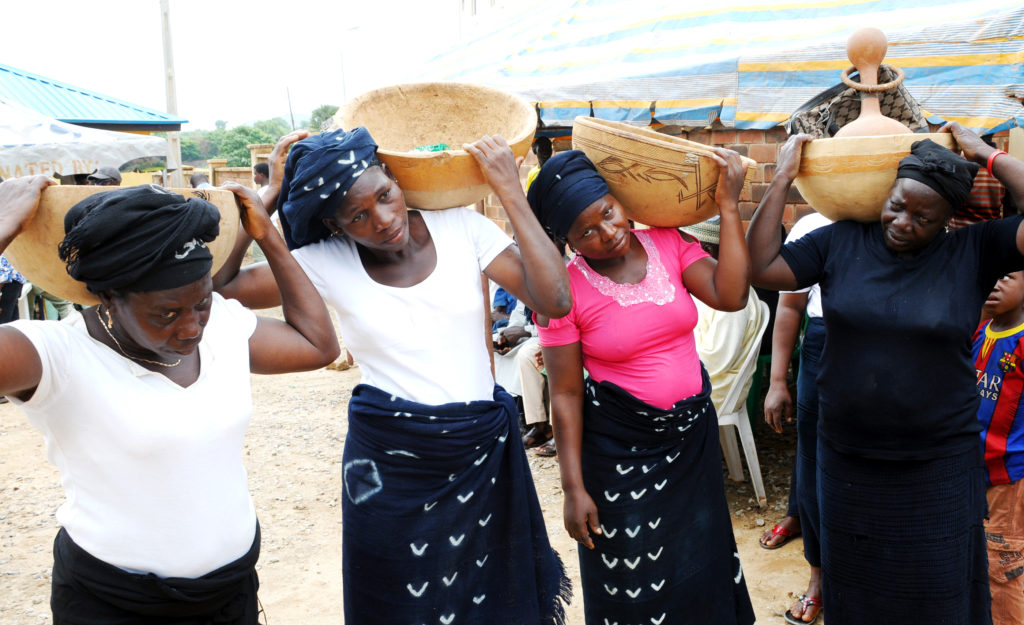
The Gbagyi ethnic group, consisting of approximately 5 million people, is one of several ethnic groups found in Nigeria. Their predominant presence is in the Middle Belt region of Nigeria, which encompasses significant areas such as the capital city, Abuja, as well as Niger State, Kaduna State, and Nasarawa States.
It is important to focus this analysis on the Gbagyi people. However, it is crucial to clarify that this examination should not be misconstrued as endorsing any specific candidates in the recently concluded 2023 elections as the conversation should strictly be accessed within the prism of the Gbagyi people
As President Bola Ahmed Tinubu prepares to appoint a minister for the Federal Capital Territory (FCT), I delve into the pressing issues surrounding Gbagyi representation, land grabbing issues that have and continue to affect them, and the concerning trend of the Minister of FCT position being dominated by the core North in recent times, while neglecting the Gbagyi population of the Middle Belt.
Since 1999, the position of Minister of the FCT has consistently been reserved for individuals from the core North, a fact that has left experts from the Middle Belt region bewildered and perplexed.
This perplexity stems from the fact that the people in this region have been subjected to division across four states, marginalized, and denied rightful compensation for the appropriation of their lands for the establishment of the FCT. Furthermore, they are disheartened by the disregard and exclusion they face in discussions concerning the FCT ministerial role.
The existence of a bill, known as the FCT Resettlement, Integration, and Development Commission, sponsored by Hon. Zaphania Isalo, which was under consideration in the Nigerian Senate as of 2016, provides substantiation for the lack of adequate compensation and the unresolved resettlement of affected Gbagyi communities. This further strengthens the urgency of addressing these issues.
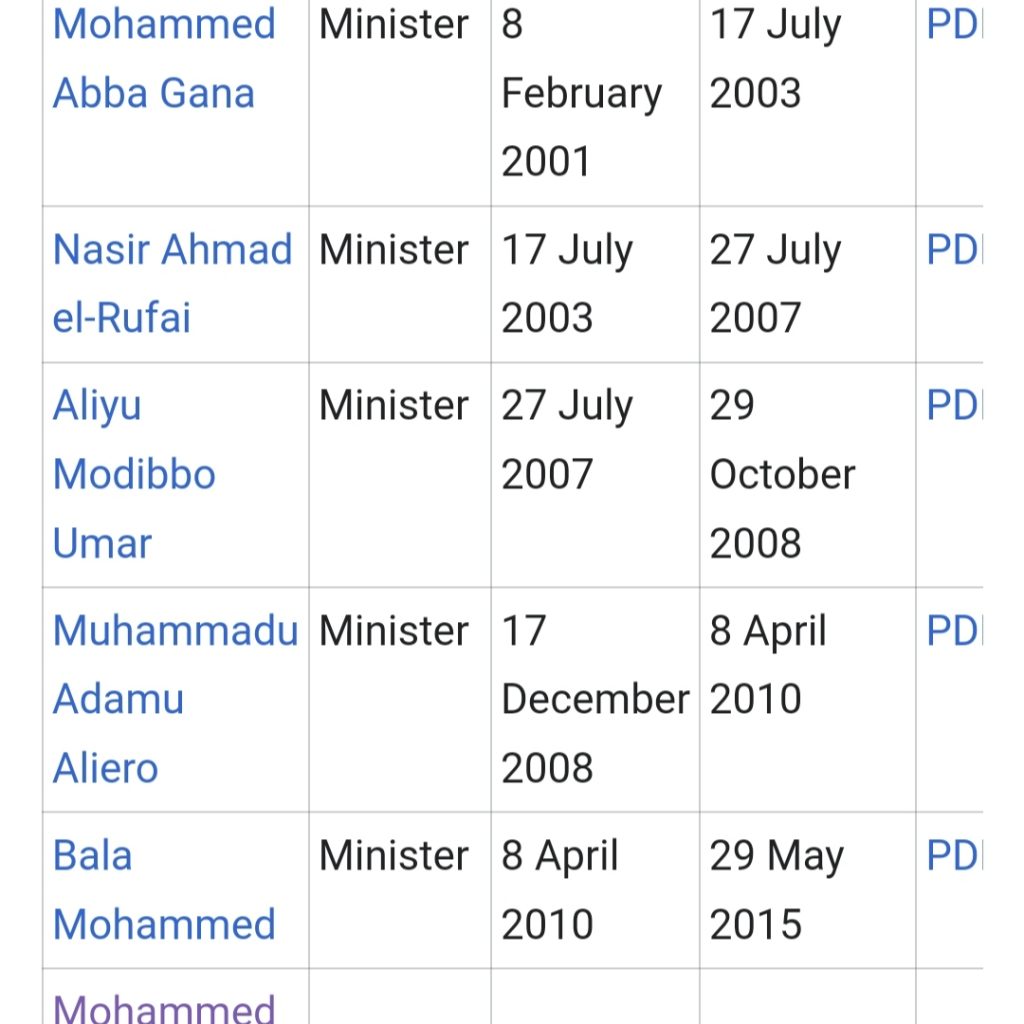
Herein is the list of past FCT Ministers since 1999
The Gbagyi people have endured a series of disastrous events throughout the 4th republic, starting with Ibrahim Bunu, a native of Borno, who served as the first Minister of the Federal Capital Territory (FCT) during the transition in 1999. Regrettably, Bunu targeted the Gbagyi community, displacing them and granting authorization for the destruction of settlements in Kado, Garki, and Wuse in 2001. This marked a distressing milestone in the 4th republic, as it was the first instance of a deliberate assault on the Gbagyi community.
In the same year, a presidential committee compiled a list of properties slated for confiscation by the federal government, with a significant portion belonging to the Gbagyi people. This unfortunate identification further compounded the challenges faced by the Gbagyi community, leaving them even more vulnerable.
Tragically, the plight of the Gbagyi people continued in 2003 when Nasir Ahmad El-Rufai assumed the role of Minister of the Federal Capital Territory (FCT). Known for his imprudent and erratic decision-making, El-Rufai initiated a demolition campaign that indiscriminately impacted over a thousand structures. This campaign caused immense hardship and suffering for numerous individuals and families.
The cumulative effect of these events has left the Gbagyi people in a state of distress, grappling with the consequences of forced displacement, property confiscation, and the loss of their homes and livelihoods. It is imperative that these issues are recognized and addressed to rectify the injustices endured by the Gbagyi community.
It is crucial to highlight the role played by El-Rufai, a long-standing adversary of the Gbagyi and Middle Belt communities, in initiating his assault on the Gbagyi people.
This assault began with the forceful evictions and demolitions, which inflicted significant harm on the Gbagyi community. El-Rufai’s continuous antagonism will be shown later in the future towards the Gbagyi people when he took the controversial step of renaming their traditional stool in Kaduna, despite lacking any affiliation with their ethnic group. Critics argue that this act undermined the integrity of Gbagyi traditional culture and heritage.
Throughout El-Rufai’s tenure, which concluded in 2007, forceful evictions were rampant, resulting in the displacement of at least 500,000 individuals and potentially affecting up to 1.2 million people. The Gbagyi community bore the brunt of these actions, further exacerbating their plight.
An alarming trend that has emerged since 1999 is the consistent appointment of individuals who hold anti-Gbagyi sentiments into influential positions in the Federal Capital Territory (FCT) and its surrounding areas. This has perpetuated policies and actions that marginalize and negatively impact the Gbagyi community.
Regrettably, democratic progress in the nation has been sluggish, with elected officials from all spheres of governance offering limited assistance to the Gbagyi people. Interviews conducted with indigenous individuals, migrants, and activists have uncovered widespread grievances concerning the government’s persistent failure to address land redress and provide proper compensation for the lands on which the FCT was established.
These cumulative acts of neglect and injustice have underscored the urgent need for rectification and compensation for the Gbagyi community, as their rights and heritage have been consistently disregarded.
Even in past instances of demolitions, government agencies have consistently failed in providing sufficient notice to affected communities. Community Action for Popular Participation (CAPP), an NGO working in these communities, has highlighted the issue, stating that “Communities were not given enough time when demolition notices were issued.” In Lugbe, a densely populated settlement in the Abuja area, residents received a mere 24-hour warning before demolitions took place. Unfortunately, even with recourse to the court systems, residents who have been victims of these policies have painfully realized that justice is elusive through the Nigerian courts.
The Federation of Urban Poor (FEDUP), a network of NGOs operating across the Federal Capital Territory (FCT), has further corroborated these accounts.
Seventy-three members of FEDUP have shared instances where they were not given any notice at all. An activist from Jiwa added a distressing anecdote, revealing that his neighbour died during a demolition because he was too ill to evacuate.
In 2012, the police settled out of court after being held responsible for the death of a 20-year-old girl during a demolition in Apo.
Despite the Land Use Act establishing special tribunals and mandating compensation for displaced individuals, these measures have offered little assistance to the displaced residents of Abuja or in providing alternative accommodations. It appears that these grievances remain unresolved, perpetuating the suffering of those affected.
During the demolitions in 2012, victims from Idu and Karmo relocated to a housing site in Pegi after paying a fee of 21,000 naira. However, investigations by the Social and Economic Rights Action Centre (SERAC) revealed that the area had minimal or no infrastructure and services available.
At this juncture, what the Gbagyi people demand is not only adequate representation within the Federal Capital Territory (FCT) (The FCT Ministerial position), but also in all states where they have experienced marginalization and displacement. This would serve as a fundamental starting point for addressing their concerns and seeking justice for their communities.
In a concerning turn of events, just days before the end of former Governor El-Rufai’s tenure in Kaduna, he issued an order to demolish numerous Gbagyi settlements. This came after demanding that residents pay 21,000 naira for a regularization form. However, when residents visited the Kaduna State Urban Planning Development Agency (KAPSUDA), officials informed them that the forms were not yet ready. Despite this, El-Rufai deemed it necessary to proceed with the demolitions, resulting in the displacements across Gbagyi land.
This pattern of displacing Middle Belt communities through the guise of urban planning while leaving settler communities untouched appears to be on the rise. In 2020, the Gbagyi people in Kaduna accused El-Rufai of displacing them and allowing migrant Fulani groups to settle in their ancestral lands, using the establishment of emirates to legitimize their migrant status.
Given these circumstances, it is crucial for the Middle Belt people to be proactive in securing adequate representation. Years of leniency and openness towards certain settlers have led to the displacement of numerous Gbagyi communities and the usurpation of their leadership positions by outsiders.
As we examine the appropriation of these positions, we must not overlook key roles within the Federal Capital Territory (FCT), such as the Senate and the two House of Representative positions for Abuja South and Bwari, as well as other local government positions. It is the responsibility of those who have migrated to Abuja to recognize and acknowledge the contributions of the indigenous Abuja population and support their aspirations for positions of authority within their ancestral land.
The persistent struggle of the Gbagyi people for rightful compensation cannot be overlooked, as they have been vocal in raising their concerns. In 2012, the courts dismissed a civil suit filed by the Gbagyi people, which sought compensation for the demolitions that resulted in the displacement of their communities.
The director of APRI emphasized the importance of mobilizing the people themselves as the most effective approach in addressing this issue. This highlights the need for collective action and collaboration from all stakeholders involved.
It is worth noting that towards the end of President Obasanjo’s second term in 2007, the then FCT Minister, Nasir El-Rufai, expressed some regrets regarding the demolitions. However, it appears that these regrets held little weight, as El-Rufai’s subsequent eight-year tenure as the Governor of Kaduna State was marred by similar incidents of unlawful demolitions and the displacement of Gbagyi peoples
When analyzing the issues faced by the Gbagyi people, it becomes evident that the root of the problem lies in their land rights. This problem traces back to 1976 when the Nigerian military government forcefully acquired the ancestral lands of the Gbagyi people to establish a new capital city.
To address the plight of the Gbagyi people, a comprehensive examination of their land rights and the historical context surrounding the acquisition of their lands is essential. It is crucial to seek justice and proper compensation for the Gbagyi community, taking into account the historical injustices they have endured.
The current regulation of land ownership and management in Nigeria is governed by the Land Use Act of 1978 (LUA), which, notably, does not extend to Abuja.
The Nigerian government considers Abuja as a symbol of political unity and a modern city representing the country’s development. Consequently, the Federal Capital Territory Act of 1976 (FCT Act) grants exclusive ownership of all lands in Abuja to the Federal Government.
Since Abuja is not classified as a state within the Nigerian federation and lacks a governor, the LUA does not apply in this region. This legal framework, despite the presence of indigenous communities in Abuja, effectively terminates customary land rights and is justified by Section 297(2) of the Nigerian Constitution, which stipulates that all lands in the Federal Capital Territory belong to the Government.
Consequently, the combined impact of the Nigerian Constitution and the FCT Act results in the displacement of the indigenous Gbagyi people from their ancestral lands in Abuja. Any customary land rights they may have under customary tenancy were thus considered null and void under Nigerian laws.
This discriminatory situation becomes even more apparent when examining the contrast with other parts of Nigeria. Section 36 of the LUA 1978 recognizes the customary land rights of indigenous Nigerians in the remaining 36 states of the Nigerian Federation.
However, the application of these rights becomes impossible in Abuja due to Section 49, along with Section 1 (3) of the Federal Capital Territory (FCT) Act and Section 297 (2) of the Constitution of the Federal Republic of Nigeria.
Upon the establishment of the Federal Capital Territory (FCT), there was a misconception that the territory did not belong to any specific ethnic group in Nigeria. Initially, the government planned to relocate all residents of Abuja to suitable locations outside the territory at the government’s expense. However, this plan was later revised.
It is important to highlight that to this day, the Nigerian government has not provided compensation for the affected communities. Researcher Frank Salamone has raised concerns about the human rights implications of this situation, particularly its impact on the Gbagyi people. The sheer size of the affected area, spanning 365,000 square miles, is both astonishing and significant in this context.
Furthermore, it is noteworthy that the displacement of the Gbagyi people and other ethnic groups, who have had historical conflicts with the Hausa and Fulani communities, is compounded by the appointment of individuals of Hausa and Fulani descent who may not share in the indigenes ideologies and culture. This oversight fails to take into account the colonial history and tensions between these groups, further exacerbating the plight of the affected communities.
In addition, the establishment of new political units within the Federal Capital Territory has had a disruptive effect on existing ethnic leadership structures, resulting in the nullification of indigenous political leadership.
While a small number of Abuja indigenes now reside in close proximity to the city, thanks to the development and expansion of the Capital Territory, the majority still live in villages and rural areas located within the six local government councils of the region. Unfortunately, these areas lack vital infrastructure such as accessible roads, hospitals, and other basic social amenities, further exacerbating the challenges faced by the indigenous communities.
It is crucial to recognize that alongside the Gbagyi people’s fight for autonomy in their region, they are also confronted with distortionists who continuously attempt to alter their history. These distortionists claim that the Gbagyi people may have migrated from Zamfara around 1810. However, careful examination of maps and related narratives reveals a historically inaccurate incorporation of the entire Niger-Benue zone under the control and jurisdiction of the Sokoto Caliphate which propounds this theory.
A significant proponent of the distortionist analysis of pre-caliphate society in the Middle Belt was Mohammed Bello, whose mapping of territories encompassing Hausa society has been found to be untruthful by scholars. This was evident when the British encountered resistance from the Mada peoples in 1917 while approaching the Mada hills, revealing the inaccuracies in Bello’s work.
Bala Adamu Kuta, a researcher, further perpetuated this fallacy by making immensely false assertions, emphasizing that the Hausa Fulani founded various Gbagyi towns. Ayuba Sanda highlights that Darlington’s viewpoint may have influenced these egregious and fallacious positions.
Other falsehoods include C. L. Temple’s claim that the Gbagyi people, along with other known groups like the Koro, were expelled from the Bornu Empire in 1750 due to a struggle.
It is imperative to take these fallacies seriously, as they significantly influenced British policy towards the Gbagyi and other groups in present-day Kaduna, Nasarawa, Niger, and Abuja and these fallacies continue to shape the relationship between the Nigerian structure and the Gbagyi people in contemporary times, particularly regarding the FCT position.
It is important to highlight that the roots of the Gbagyi people can be traced back to the earliest signs of human presence in the region, which date back to 500 BCE during the Nok civilization. This ancient civilization flourished until around 200 CE.
Following the decline of the Nok civilization, there was a shift in movement patterns, leading to migrations and the establishment of settlements in various regions within the Middle Belt.
However, the 1804 Jihad marked a significant turning point in the history of the Gbagyi and other ethnic groups. Led by Uthman Dan Fodio, the Jihadists embarked on a conquest of Hausa territories, which resulted in attacks and migrations affecting the Gbagyi people and other ethnicities in the Middle Belt.
In response to these incursions, the Gbagyi and other groups resisted the Jihadists, leading to the creation of wide gaps in the land areas as they sought refuge in the highlands. This resistance posed challenges for the Sokoto Caliphate, as noted by Robert Taylor.
It is worth noting that the Gbagyi, along with other hill country groups, successfully preserved their autonomy and resisted the Jihadists until the arrival of British forces as they created a Northern protectorate encompassing Gbagyi groups on New Years eve of 1900. The British invasion using the West African Frontier Force and maps from the emirates influenced the subsequent attitude of British colonial rule in the region, shaping the dynamics and power structures in the area.
Subsequently, the marginalization of various Gbagyi groups in the Middle Belt began, prompting their involvement in movements like the United Middle Belt Congress in 1951, spearheaded by Joseph Tarka.
This agitation for a separate Middle Belt region, alongside other ethnic groups in Central Nigeria, gained momentum. However, the years of military rule soon followed, during which successive military administrations sought new locations for the capital.
This decision sparked significant controversy particularly in the 1970s, particularly as Chief Obafemi Awolowo favoured keeping the capital in Lagos, while Alhaji Shehu Shagari campaigned for its relocation to Abuja in the same period. The debate over the capital’s location became a prominent point of contention between these influential political figures.
With the emergence of Shehu Shagari, the challenges of the Gbagyi people soon commenced with initial plans for relocation, compensation and dislodgement soon begun.
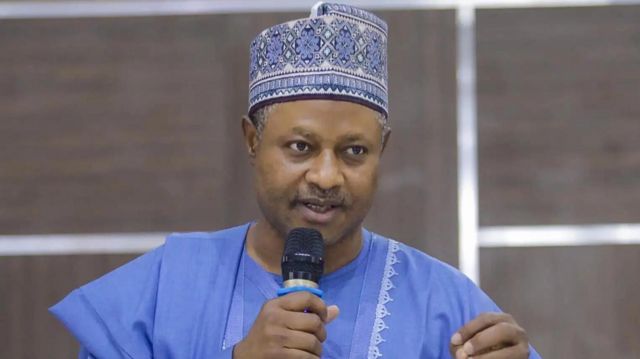
Governor Uba Sani of Kaduna State Tuesday objected to the admissibility of documents from the Independent National Electoral Commission (INEC) presented by the Peoples Democratic Party (PDP) before the Governorship Election Petition Tribunal in Kaduna.
The governor also requested the dismissal of the petition brought by the opposition party and its candidate, Hon Mohammed Isah Ashiru, saying it lacked merit.
Governor Sani’s counsel, Chief Duro Adeyele (SAN), did not disclose the grounds for the objection to the admissibility of the documents.
He stated that their valid objection would be presented in written addresses filed before the tribunal.
In compliance with a subpoena issued by the tribunal, INEC tendered documents, including forms EC8A, EC8B, and EC8C, from polling units in nine local government areas: Birnin Gwari, Igabi, Zaria, Sabon Gari, Kaduna North, Kaduna South, Kubau, Lere, and Kudan.
Adeyele and INEC’s counsel, A.M. Aliyu (SAN), argued that the original election documents in INEC’s custody should not have been brought to court.
He stated that the original documents were supposed to remain in the commission’s custody and that any party other than the PDP could request certified true copies of the documents.
In an interview with journalists, PDP’s counsel, Giovanni Laah, stated that they wanted the original documents to remain before the tribunal until they called witnesses.
The tribunal adjourned the sitting to today for the continuation of the hearing.
APC presents witnesses against Kaduna PDP senator
Meanwhile, APC’s senatorial candidate, Muhammed Sani Abdullahi (Dattijo), presented three additional witnesses, who provided documents regarding the educational background of Senator Lawal Usman, the representative of Kaduna Central at the Senate.
The witnesses appeared before a three-man panel, headed by Justice H.H Kereng, at the tribunal on Tuesday. They were cross-examined by M.A. Magaji SAN, the counsel for the PDP.
Mr. Johnson Usman, the counsel to Dattijo, informed journalists after the tribunal’s sitting that the witnesses included those from Aminu Shehu College of Advanced Studies and the principal of Great Diamond School.
He stated that “Aminu Shehu College of Education said his name was not there at all, and the first petitioner himself has testified and tendered documents. Particularly, the letter was written by Demonstration Primary School, Gwagwalada, as well as Government Day Secondary School, Gwagwalada, stating that Lawal Adamu Usman was never a student there.”
He declined further comment, saying it’s left for the court to determine.
In response, M.A. Magaji (SAN), the counsel to the PDP senator, expressed unfamiliarity with the name of the school presented as witnesses.
He asserted their confidence in their mandate and their intention to prove in court that Senator Usman won the election.
The asset recovery committee set up by Benue State Governor, Hyacinth Alia, on Tuesday, stormed the automobile workshop owned by former governor Samuel Ortom with towing vehicles and removed some vehicles.
Alia, through his Chief Press Secretary, Kula Tersoo, recently disclosed that government vehicles, numbering 29, were allegedly looted by the past governor.
Tersoo had said in a statement that “the case of the Goverment House is particularly pitiable with vandalised furniture, window blinds, electronics and other household appliances.
“This is besides the carting away of all vehicles, including an ambulance and A press crew bus, attached to the office of the governor.
“At the last count, 29 vehicles, attached to the governor’s office, are still no where to be found.”
A source told our correspondent on Tuesday that the asset recovery committee stormed Ortom’s automobile workshop on Tuesday afternoon but were resisted by the workers there.
When contacted, the Publicity Secretary of the Peoples Democratic Party, Bemgba Iortyom, confirmed that indeed state agents went to Ortom’s automobile workshop.
Iortyom said, “Governor Alia has now sent towing trucks to ex-Governor Ortom’s automobile workshop to cart away vehicles, after attempts to drive them away failed.”
It will be recalled that Ortom and his deputy, Benson Abounu, secured a court order restraining the asset recovery committee from coming after them.
In the suit, marked MHC/199/2023, filed through their lawyer, Douglas Pepe (SAN), Ortom and Abounu asked the court to determine “whether property legitimately allocated to them as entitlements and remuneration can be considered as state government assets.”
They are seeking “a determination of court whether or not by the combined effect of sections 5(2), 44, 318(1) of the Constitution of the Federal Republic of Nigeria, 1999 (as amended), the executive actions and decisions of the Governor and Government of Benue State taken by Ortom and Abounu and the State Executive Council, in good faith before May 29th, 2023, were valid.”
The ex-governor and his deputy also want the court to determine “whether or not the Governor of Benue State is not bound by the constitutional approvals made by his predecessor.”
They are contending that the asset recovery committee set up by Alia has no power to interfere with their rights to own property “vested in them by the Benue State Government at all material times or without following due process.”
The House of Representatives has asked the National Security Adviser, Nuhu Ribadu, to declare a national emergency situation in Plateau State over incessant terrorists’ attacks.
This was made following a motion of urgent public importance on the need for urgent intervention on the killings in some local government areas in Plateau State.
The House further requested that Operation Safe Haven identifies and evacuates all bandits’ cells in the state.
The House mandated the Committees on Emergency and Disaster Preparedness, Defence, Army, Air Force, Police, and Legislative Compliance (when created) to oversee compliance and report monthly until the situation was brought under control.
They stated that the recent attacks on the communities had resulted in the deaths of over 300 individuals, significant injuries to others, the destruction of property, and the displacement of nearly 18,000 people.
The members also raised concern about the ongoing attacks by terrorist groups in the towns, claiming that if not addressed soon, it would result in low agricultural produce.
The house further requested that security personnel give aerial observation and assistance in capturing the terrorists and destroying their camps in order to prevent a recurrence and allow innocent farmers to return to their lands and ancestral homes.
President Bola Tinubu has expressed sadness and grief over the latest round of violence and killings in the Middle Belt states of Plateau and Benue.
The President condemned in strong terms the most recent internecine killings in Mangu Local Government Area of Plateau State and parts of Benue State.
President Tinubu in a statement signed by his spokesman, Dele Alake described the renewed killings in the two states as “most unfortunate”
The statement reads in parts;
“It is most unfortunate that in this orgy of violence, an innocent eight-month-old baby in Farin Lamba community of Vwang District, Jos South Local Government, died in a conflict she knew nothing about.
“A major consequence of perennial conflict is always the tragic loss of innocent lives.
“To build virile, peaceful and prosperous communities demand tolerance and forgiveness for every perceived wrongdoing,” the President said.
To rebuild trust and restore harmony to these conflict areas, President Tinubu urged community leaders, religious leaders, traditional rulers, socio-cultural organisations as well as the leadership of Arewa Consultative Forum, Jama’atu Nasril Islam, and Christian Association of Nigeria to work together to help foster genuine and long-lasting peace.
While reaffirming his government’s strong determination to stamp out violent crimes and all forms of criminalities everywhere in Nigeria, the President has directed security agencies to fish out the masterminds of the dastardly acts to face the full wrath of law.
He, however, charged the governments of Plateau and Benue States and emergency response agencies to provide support and immediate relief to victims who have been displaced as a result of the conflicts.
Governor Caleb Mutfwang of Plateau State has announced that his administration inherited a debt burden of N307 billion from the immediate past administration in the state.
The governor announced this shortly after receiving the reports of the committees on the Transition and Strategic Development Framework for Plateau State on Monday in Jos.
Prof. Ganyir Lombin headed the two committees.
The governor voiced his determination to take the state to greater heights despite its huge debt profile.
Mutfwang particularly expressed his readiness to tackle the current security challenges in the state.
“Throughout the campaign season, we were under the mistaken belief that our debt burden was around N200 billion; to hear that it is N307 billion is quite intimidating and worrisome,” he said.
The governor pledged to meticulously study the document presented to him, adding that further investigation would also be conducted with appropriate action taken after that.
Earlier, Lombin explained that some operational challenges prevented the two committees, which had appointees of the past administration as members, from jointly presenting their report.
He noted that the handover notes presented to the governor on May 29 differed from the agreed template developed by the joint committee.
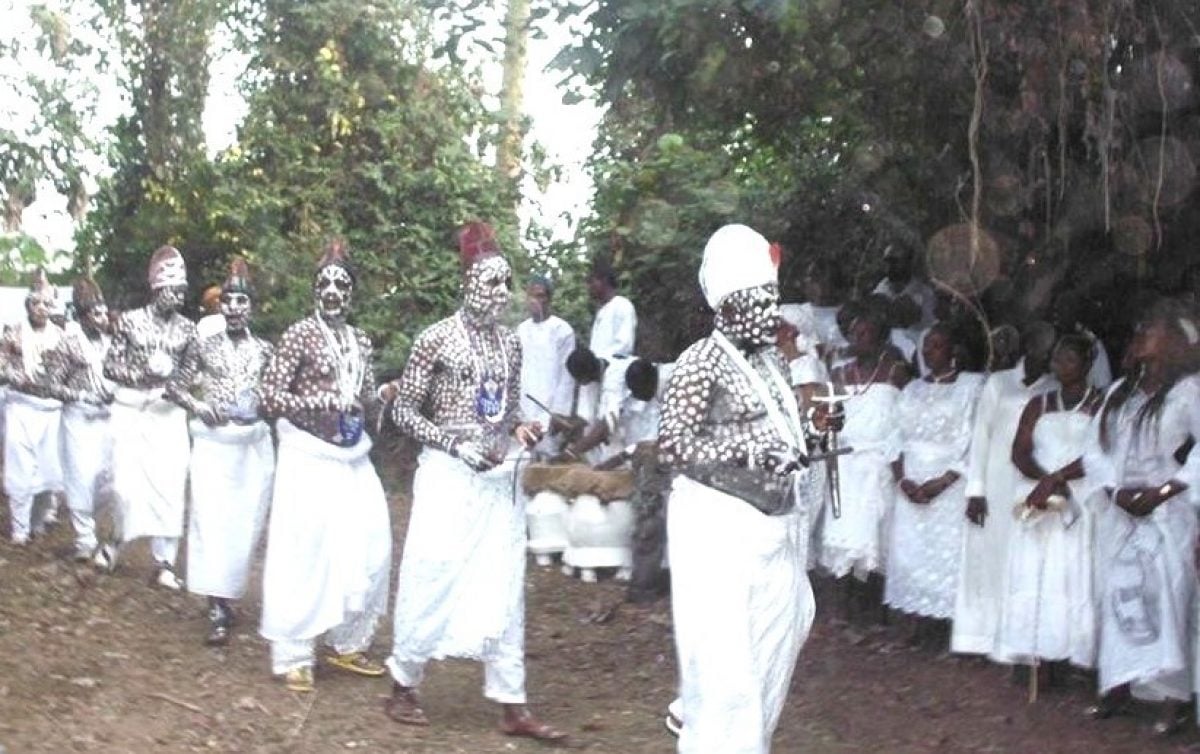
The umbrella body for all indigenous African religions, Ancient Religion Societies of African Descendants International Council, ARSADIC, has warned Islamic extremists in Ilorin, Kwara State, to stop further harassment and provoking its members in the state.
ARSADIC President, Aare Dr. Ifagbenusola Atanda, in a statement issued on Monday said this, following the unfolding events in last week in Ilorin, the state capital, where one of its members Omolara Ajesekemi, an Osun devotee and priestess, was intimidated over her faith by some Muslims.
He also warned that religious fundamentalism must not be encouraged in any form and in any part of the nation.
Atanda, who is also the Asiwaju Awo Agbaye, said it was wrong for a Muslim group, Majlisu Shabab li Ulamahu Society, and the spokesperson of the Emir of Ilorin, Abdulazeez Arowona, to threaten the priestess and to stop her from holding Isese festival in the town.
The statement read, “As long as we, the traditional religion adherents, know our boundary not to throw offensives at other faiths, we will resist any attempt to trample on our rights to freedom of religion and association as well spelt out in the Nigerian Constitution.
“We will never fold our arms and allow extremists in any guise deny us our God-given rights and supported by the laws of Nigeria as a secular state. We are quite aware that Ilorin, Kwara State is an integral part of Nigeria and we ready to defend our faith.
“Yeye Omolara Ajesekemi has our support at all times to practice her faith, the traditional religion, which bonds all of us together. And as the tenets of our faith have taught us to be pious, be law-abiding, accommodating of other religions and value humanity, we will refuse to be intimidated and humiliated by any group or anybody.”
He, therefore, called on the State Government under the leadership of Governor AbdulRahman AbdulRazaq and all security agencies to intervene and live up to their constitutional duties of protecting lives and property.