Breaking Down the CPC Designation: How Government Appeasement of Terrorists Led to International Sanction

By Steven Kefas

Yesterday, the United States designated Nigeria as a Country of Particular Concern (CPC) for severe violations of religious freedom, a long-overdue recognition of the systematic persecution of Christians and other vulnerable communities that has claimed tens of thousands of lives over the past two decades. This designation didn’t emerge from vacuum; it reflects years of documented evidence, mounting international pressure, and most critically, the lack of political will by successive Nigerian governments to confront the Fulani jihadist insurgency decimating indigenous communities across the Middle Belt and beyond.

Understanding the CPC Designation

A Country of Particular Concern designation under the International Religious Freedom Act represents one of the most serious diplomatic rebukes the United States can issue. It signals that a government has either engaged in or tolerated systematic, ongoing, and egregious violations of religious freedom. For Nigeria, this designation specifically addresses the government’s failure to prevent, investigate, or prosecute mass atrocities against Christian communities, particularly those carried out by armed Fulani militia groups operating with apparent impunity across multiple states.

The designation comes with potential consequences including sanctions, travel restrictions on government officials, and limitations on security assistance. More significantly, it places Nigeria alongside countries like China, Russia, Iran, and North Korea on a list of the world’s worst violators of religious freedom, a devastating blow to Nigeria’s international reputation and a clear message that the world is no longer willing to ignore the bloodshed.

The Fulani Jihadist Insurgency: An Unacknowledged Genocide

For over two decades, armed Fulani militia groups have waged a systematic campaign of violence against predominantly Christian farming communities across Nigeria’s Middle Belt states including Plateau, Niger, Kwara, Kogi, Benue, Taraba, Adamawa, and Southern Kaduna. These attacks follow predictable patterns: midnight raids on sleeping villages, mass shootings, burning of homes and churches, destruction of farmland, kidnapping for ransom, and forced displacement of entire communities from their ancestral lands.

The Nigerian government and many media outlets have persistently characterized this violence as “farmer-herder clashes” driven by competition over land and water resources, a narrative that deliberately obscures the religious and ethnic dimensions of these attacks. This framing ignores overwhelming evidence that these are coordinated military-style operations targeting Christian communities specifically, not spontaneous conflicts between economic groups. Survivors consistently report attackers shouting “Allahu Akbar” during raids, specifically targetingChristian farming communities.

International organizations including Genocide Watch, the United States Commission on International Religious Freedom (USCIRF), and Open Doors have repeatedly warned that the violence against Christians in Nigeria’s Middle Belt exhibits markers of genocide according to the UN Convention on Genocide. Yet the Nigerian government continues to downplay the religious dimensions, refuses to designate perpetrating groups as terrorists, and has failed to arrest or prosecute those responsible for these atrocities despite thousands of documented attacks.

The Paradox of Invisible Terrorists

During my own incarceration in Kaduna Custodial Center (prison), in the very heart of the region most affected by Fulani terrorist violence, I made a disturbing observation: despite thousands of documented attacks, mass killings, and the displacement of millions, I never encountered a single Fulani terrorist among the prison population. The prisons were filled with common criminals, political detainees, and individuals accused of various offenses, but conspicuously absent were members of the armed groups terrorizing communities just kilometers away from the prison walls.

This glaring absence raises fundamental questions about the Nigerian government’s commitment to justice and accountability. If Fulani militias are genuinely criminal groups operating outside state control, why aren’t security forces arresting them? If they’re terrorists threatening national security, why aren’t they being prosecuted? The most troubling explanation is that these groups operate with official protection or at minimum, deliberate tolerance from elements within Nigeria’s security architecture.

Multiple credible reports document security forces arriving hours after attacks despite communities alerting authorities during ongoing raids, refusing to pursue fleeing attackers, and in some cases, actively preventing communities from defending themselves. Some survivors report security personnel withdrawing from areas just before attacks occur, suggesting foreknowledge if not coordination. This pattern of complicity extends to the judicial system, where rare arrests of suspected Fulani militants typically result in quiet releases without prosecution.

The Nuhu Ribadu Problem: Peace Deals That Embolden Terrorists

At the center of Nigeria’s failed counterterrorism strategy sits National Security Adviser, Mallam Nuhu Ribadu, whose approach to the Fulani jihadist insurgency has been characterized by appeasement rather than confrontation. Ribadu has allegedly championed “peace deals” with armed Fulani groups in the North West that require no genuine disarmament, demand no accountability for past atrocities, and impose no meaningful conditions on participants.

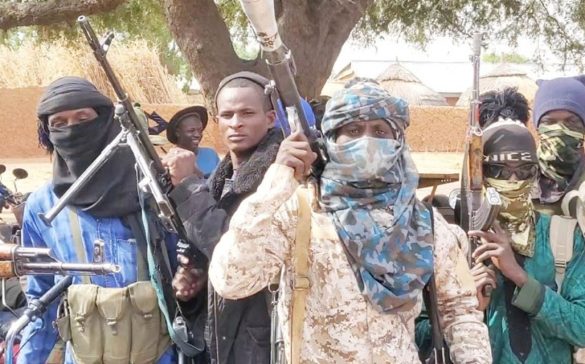
Most disturbingly, these peace meetings have become theatrical displays where armed terrorists attend openly carrying weapons, not as surrendered arms but as symbols of their continued power. Rather than being disarmed and arrested, these individuals are feted, given platforms to air grievances, and often provided government resources ostensibly for “rehabilitation” that never materializes into genuine transformation. The message sent is clear: terrorism pays, and the Nigerian state will negotiate with you while you remain armed and dangerous.

This approach represents a fundamental misunderstanding of counterinsurgency principles. Genuine peace processes require that armed groups demonstrate commitment to peace through verifiable disarmament, cessation of violence, and accountability for past crimes. Ribadu’s peace deals offer none of these, instead legitimizing terrorist groups as stakeholders in governance while their victims remain displaced, traumatized, and vulnerable to renewed attacks.

For communities that have lost thousands of family members, seen their villages burned repeatedly, and remain displaced years after initial attacks, these peace deals represent a betrayal. They watch their attackers attend government-sponsored meetings with full military regalia while they languish in IDP camps with no justice, no compensation, and no protection against future violence. This is not peace; it is surrender disguised as reconciliation.

The Controversial Defense Appointment: Signaling Priorities

The Tinubu administration’s appointment of former Zamfara State Governor Bello Matawalle Minister of State for Defence sends a chilling message about the government’s priorities regarding the Fulani jihadist insurgency. Matawalle’s tenure as Zamfara governor was marked by controversial policies toward armed bandits and terrorists operating in the state, including peace deals that critics argue emboldened rather than deterred violence.

Under Matawalle’s governorship, Zamfara became infamous for its approach of negotiating with terrorists while often taking harsh measures against communities advocating for self-defense. His administration faced accusations of sympathizing with armed groups while failing to protect vulnerable populations. Now elevated to a key defense position at the federal level, Matawalle’s appointment suggests either profound tone-deafness about the optics of placing a terrorist sympathizer in charge of national defense, or a deliberate signal that the government’s appeasement approach will continue.

This appointment is particularly offensive to Christian communities in the Middle Belt who have borne the brunt of Fulani terrorist violence. It communicates that their concerns about religious persecution are not taken seriously, that their calls for justice fall on deaf ears, and that those who accommodate terrorists are rewarded with higher office while their victims remain forgotten.

The Broader Context: Why Accountability Matters

The lack of accountability for religious persecution in Nigeria extends beyond the Fulani insurgency, though that remains the deadliest manifestation. It includes the Boko Haram and ISWAP insurgencies in the Northeast that have killed tens of thousands and displaced millions, primarily targeting Christians and moderate Muslims. It encompasses discriminatory Sharia law implementation in Northern states that criminalizes Christian evangelism while permitting Islamic proselytization. It involves systematic discrimination in government appointments, educational opportunities, and economic development that favors Muslims over Christians in Northern states.

This pattern of impunity has convinced perpetrators that targeting Christians carries no consequences. When terrorist commanders remain free after documented massacres, when government officials who facilitate violence face no sanctions, when security forces who fail to protect vulnerable communities receive no discipline, the message is clear: Christian lives don’t matter in Nigeria’s calculus of power.

The CPC designation represents the international community finally saying: we see what you’re doing, we will no longer accept your excuses, and there will be consequences for continued inaction. This is not interference in Nigeria’s internal affairs; it is a response to a government’s failure to protect its own citizens and uphold its obligations under international human rights law.

What Must Change: A Roadmap for Action

For Nigeria to address the concerns underlying the CPC designation and genuinely protect religious freedom, several immediate actions are necessary:

First, National Security Adviser Nuhu Ribadu must be removed and replaced with a competent, no-nonsense security official committed to crushing jihadist insurgencies rather than accommodating them.

The current appeasement approach has demonstrably failed, emboldening terrorists while failing to provide security for vulnerable communities. Nigeria needs security leadership that understands counterterrorism, respects human rights, and prioritizes protection of all citizens regardless of religious identity.

Second, armed Fulani militia groups must be officially designated as terrorist organizations and prosecuted accordingly.

The fiction that these are mere “herders” involved in resource conflicts must end. These are organized armed groups conducting systematic attacks on civilian populations with religious and ethnic motivations. They must be treated as the terrorists they are, with full application of Nigeria’s terrorism laws including arrests, prosecutions, and asset freezures.

Third, a comprehensive program of arrests and prosecutions of terrorist commanders must be implemented immediately.

Years of documented attacks have produced extensive evidence aboutsponsors, operational patterns, and specific perpetrators. This evidence must be acted upon with coordinated operations to arrest sponsors, dismantle networks, and bring perpetrators before courts. This requires political will from the highest levels of government to overcome resistance from those who benefit from the status quo.

Fourth, the appointment of controversial figures like Bello Matawalle to key security positions must be reversed.

These appointments signal that the government is not serious about confronting religious persecution. Replacing such officials with individuals who have demonstrated commitment to protecting all Nigerians regardless of religious identity is essential for restoring confidence in government intentions.

Fifth, a comprehensive program of justice and reparations for victims must be established.

Millions of displaced persons need pathways to return home safely, rebuild destroyed communities, and receive compensation for losses. Survivors of attacks need access to trauma counseling and medical care. Communities need assurance that their security will be prioritized and that future attacks will be prevented.

The Trump Factor: Why This Time Is Different

While I sympathize with President Tinubu’s administration, which inherited these problems when taking office just two years ago, the reality is that the lack of political will to confront Fulani jihadists predates his presidency and continues under his watch. Previous U.S. administrations issued strongly worded statements about religious persecution in Nigeria but took limited concrete action. The Trump administration has demonstrated willingness to move beyond rhetoric to consequences, as evidenced by the CPC designation.

This represents a potential turning point. Under President Trump’s leadership, the United States has signaled that the days of endless massacre of Christians without accountability are over. The CPC designation is likely just the beginning, with targeted sanctions, visa restrictions, and other measures potentially forthcoming if Nigeria fails to demonstrate genuine progress on protecting religious freedom.

For Nigerian officials who have operated with impunity while facilitating or tolerating religious persecution, this should serve as a wake-up call. The world is watching, documentation is being compiled, and accountability mechanisms are being activated. The comfortable assumption that international outrage will never translate into consequences is no longer valid.

A Message to the Nigerian Government

You have lied to the world about the nature of violence against Christians in Nigeria, characterizing genocide as “farmer-herder clashes” and systematic religious persecution as resource competition. You have protected perpetrators while abandoning victims. You have appointed terrorist sympathizers to defense positions while imprisoning those who dare to defend themselves. You have negotiated with armed terrorists while refusing justice to their victims.

The world is watching, and your lies are no longer accepted. The CPC designation is deserved, and more actions will follow if you continue on this path. It is time to act and act very fast. Crush the jihadists, protect the lives of Christians and other vulnerable communities, demonstrate through concrete actions rather than empty rhetoric that you are committed to religious freedom, and the USA will undesignate Nigeria with immediate alacrity.

The choice is yours: continue the current path of appeasement and complicity and face increasing international isolation and consequences, or demonstrate genuine political will to confront religious persecution and restore Nigeria’s standing in the community of nations that respect human rights.

Conclusion: Hope Amidst Darkness

Despite the grim realities documented above, there is reason for cautious hope. The CPC designation represents international recognition that has eluded victims of religious persecution in Nigeria for decades. It validates their suffering, acknowledges their testimonies, and signals that they have not been forgotten by the wider world.

For those of us who have documented these atrocities, advocated for victims, and refused to accept official narratives that obscure the truth, this designation represents vindication. Our work has not been in vain. The evidence we have compiled, the testimonies we have preserved, and the advocacy we have undertaken has finally broken through the wall of denial and reached decision-makers willing to act.

The question now is whether the Nigerian government will respond with genuine reform or with defiance and denial. The path forward is clear: accountability, justice, protection, and genuine commitment to religious freedom for all Nigerians. Whether Nigeria’s leadership has the wisdom and courage to take this path remains to be seen, but one thing is certain—the world is watching, and the days of impunity are numbered.

Steven Kefas is an investigative journalist, Senior Research Analyst at the Observatory for Religious Freedom in Africa, and Publisher of Middle Belt Times. He has documented religious persecution and forced displacement in Nigeria’s Middle Belt for over a decade

How Fulani Militias Became Nigeria’s Deadliest Group While Escaping Global Notice

By Steven Kefas

In 2015, when the Global Terrorism Index (GTI) ranked Armed Fulani militants as the fourth deadliest terror group in the world, Nigeria was already grappling with the brutal reality of multiple security threats. Yet nearly a decade later, as these same militants have grown exponentially more lethal, they have mysteriously vanished from international terrorism rankings —despite becoming what many security experts now consider Nigeria’s most deadly non-state armed group.

This paradox raises troubling questions about how the global community measures and responds to terrorism, particularly when it involves complex ethnoreligious conflicts in Africa. While international attention remains focused on jihadist groups like Boko Haram and the Islamic State West Africa Province (ISWAP), a more devastating threat has been systematically erasing entire communities across Nigeria’s Middle Belt.

The Numbers Tell a Devastating Story

Recent data from the Observatory for Religious Freedom in Africa (ORFA) paints a picture of unprecedented violence that dwarfs the carnage attributed to Nigeria’s better-known terrorist organizations. Note: The following data represents preliminary research findings that have not yet been published on ORFA’s website but are based on their ongoing documentation efforts. Between October 2019 and September 2024, ORFA documented 66,656 deaths across Nigeria, of these, 36,056 were civilians. The Fulani Ethnic Militia (FEM) were responsible for a staggering 47% of all civilian killings —more than five times the combined death toll of Boko Haram and ISWAP, which together accounted for just 11% of civilian deaths.

These figures represent more than statistical abstractions; they reflect a systematic campaign of violence that has fundamentally altered the demographic landscape of Nigeria’s Middle Belt. The data reveals that 2.4 Christians were killed for every Muslim during this period, with proportional losses to Christian communities reaching exceptional levels. In states where attacks occur, Christians were murdered at a rate 5.2 times higher than Muslims relative to their population size.

The scope of violence extends far beyond killings. ORFA documented 13,437 incidents of extreme violence during the five-year study period, including 29,180 civilians abducted. The trajectory of kidnappings alone illustrates the escalating nature of the crisis: from 1,665 civilians abducted in 2020 to 7,705 in 2022, before declining slightly to 6,255 in 2023, then rising again to 7,648 in 2024. By the end of 2024, the International Displacement Monitoring Centre reported that 3.4 million Nigerians had been forcibly displaced from their homes by conflict and violence.

A Pattern of Systematic Violence

Unlike the headline-grabbing attacks of jihadist groups such as Boko Haram and ISWAP, Muslim Fulani militants violence follows a different but equally devastating pattern. ORFA’s research indicates that 79% of civilian killings are land-based community attacks, where armed groups “invade mostly small Christian farming settlements to kill, rape, abduct, and burn homes.” This methodology, while less spectacular than suicide bombings or mass hostage situations, has proven far more effective at achieving long-term territorial control and demographic change.

The geographic concentration of these attacks is particularly telling. The North Central Zone and Kaduna state have borne the brunt of FEM violence. ORFA documented 3,776 incidents with civilian killings and 1,990 incidents with civilian abductions. Most of them by FEM. This concentrated campaign has effectively depopulated entire communities while military resources remain focused on the North-East and North-West regions where Boko Haram/ISWAP and Fulani bandits operate.

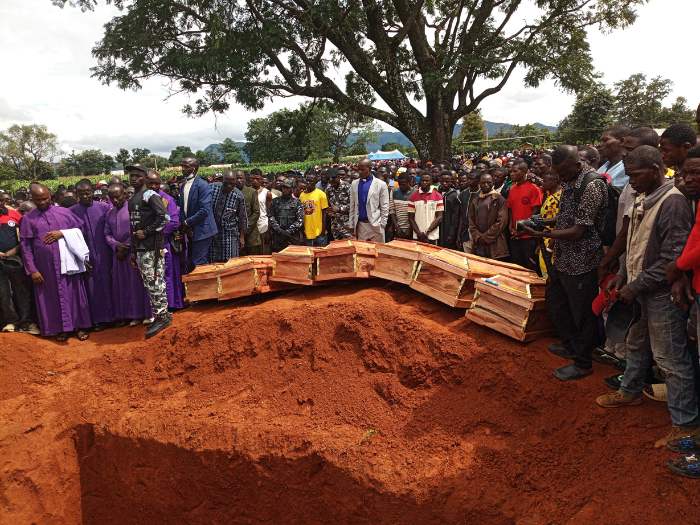
Recent mass casualty events underscore the escalating brutality of these attacks. The Yelwata massacre of June 13-14, 2025, stands as one of the most horrific examples, where FEM militants killed over 150 people—mostly women and children—in the farming community of Yelwata in Guma Local Government Area of Benue State. This attack followed a familiar pattern of targeting vulnerable agricultural communities during periods when people are fast asleep.

The violence is not new, but its intensity has dramatically increased. The Agatu Massacre of February-March 2016 saw between 300 and 500 people killed by FEM in Agatu Local Government Area of Benue State, marking one of the earliest large-scale coordinated attacks that would become the group’s signature methodology. More recently, the Christmas Eve massacre in Bokkos Local Government Area of Plateau State claimed over 200 lives, demonstrating how FEM deliberately targets Christian communities during religious celebrations to maximize psychological impact.

The Global Terrorism Index Conundrum

The disappearance of Fulani militants from GTI rankings despite their escalating lethality raises fundamental questions about how international terrorism monitoring systems categorize and prioritize threats. The GTI, published annually by the Institute for Economics and Peace, uses specific criteria to define terrorist incidents, requiring acts to be intentional, involve violence or threat of violence, and have sociopolitical objectives.

However, the framing of Fulani militia violence as “farmer-herder conflicts” or “ethnic clashes” rather than terrorism may have contributed to their exclusion from global terror rankings. This categorization problem has real-world consequences, affecting international aid allocation, security cooperation, and diplomatic pressure. When violence is labeled as communal conflict rather than terrorism, it receives less international attention and fewer resources for intervention.

The methodological approach of global terrorism databases may also inadvertently favor tracking spectacular attacks by designated terrorist organizations over systematic violence by ethnoreligious militias. While Boko Haram’s suicide bombings and mass kidnappings generated international headlines and clear database entries, the daily reality of village raids, targeted killings, and forced displacement may be underreported or miscategorized.

The Cost of Invisibility

The absence of Fulani militias from international terrorism rankings has had profound implications for Nigeria’s security response and international support. While billions of dollars in international aid and military assistance have flowed toward countering Boko Haram and ISWAP, the regions most affected by Fulani militia violence have received comparatively little attention or resources.

This mismatch between threat levels and resource allocation has allowed the crisis to metastasize. ORFA’s data shows that what security experts describe as “twin” Islamist threats—Boko Haram/ISWAP in the northeast and Fulani militias in the Middle Belt—have created a pincer effect that is reshaping Nigeria’s religious and ethnic geography.

The human cost extends beyond immediate casualties to include the systematic destruction of agricultural communities that form the backbone of Nigeria’s food security. As Christian farming communities are displaced or destroyed, the country faces not only a humanitarian crisis but also long-term food production challenges that could affect regional stability.

Questions Demanding Answers

The case of Nigeria’s invisible terror crisis demands serious examination of how the international community monitors and responds to political violence. If the deadliest group responsible for civilian casualties can operate below the radar of global terrorism indices, what other threats are being overlooked? How can monitoring systems be reformed to capture the full spectrum of political violence, regardless of whether perpetrators fit traditional terrorist profiles?

The ORFA data suggests that Nigeria is experiencing what amounts to a slow-motion genocide in its Middle Belt, with one ethnic militia group systematically targeting civilian populations based on religion and ethnicity. The pattern evident from Agatu in 2016 to Yelwata in 2025 shows a consistent strategy of mass killing designed to achieve territorial control and demographic change. Yet this crisis receives a fraction of the international attention devoted to other jihadist groups operating in Nigeria with lower casualty rates.

As Nigeria heads into an uncertain future, the international community must grapple with uncomfortable questions about selective attention to terrorism and the consequences of allowing certain forms of mass violence to remain invisible. The 36,056 civilian deaths documented by ORFA represent more than statistics—they are fathers, mothers, children, and community leaders whose lives were cut short while the world looked elsewhere.

The time has come to acknowledge that terrorism takes many forms, and the deadliest threats are not always the ones that make international headlines. Until global monitoring systems adapt to capture the full spectrum of political violence, groups like the Fulani militias will continue to operate in the shadows, leaving devastation in their wake while escaping the accountability that comes with international recognition and response.


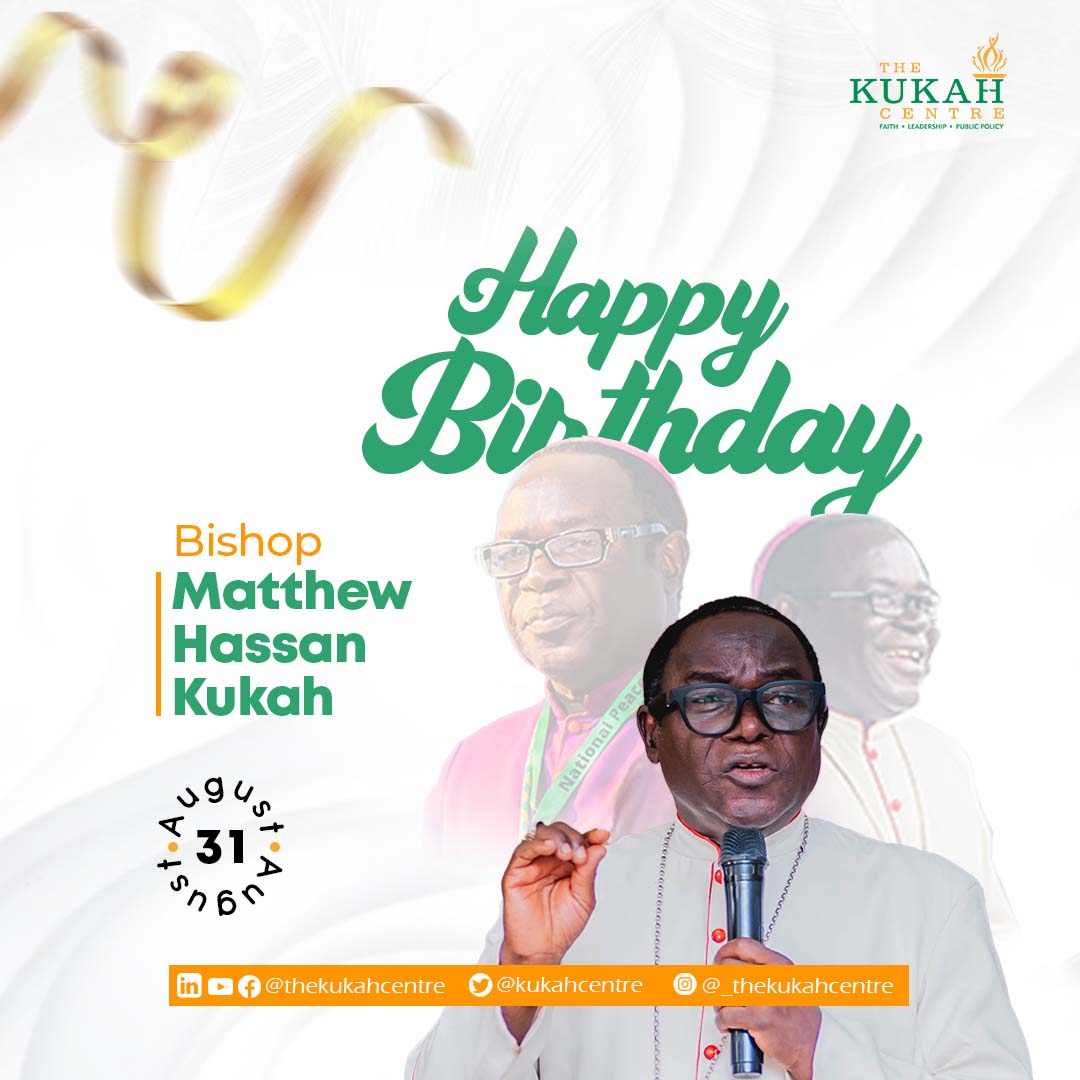
Celebrating a Global Icon: Bishop Matthew Hassan Kukah at 72

Middle Belt Times Special Feature

Today, we at the Middle Belt Times join the chorus of voices from around the globe to celebrate the remarkable life and legacy of Bishop Matthew Hassan Kukah, a man whose influence knows no bounds. As he turns 72, we reflect on the profound impact he has had on our nation, our continent, and the world at large.

Bishop Kukah is not just a spiritual leader; he is a beacon of hope, a champion of justice, and a bridge-builder in a world often divided by conflict and mistrust. His tireless efforts in promoting peace, interfaith dialogue, and inclusive governance have earned him a place among the most respected leaders of our time.

Through The Kukah Centre, Bishop Kukah has created a legacy that will outlive his years. This platform stands as a testament to his vision of a united, compassionate, and inclusive society. It is a space where the ideals of leadership and service are nurtured, inspiring countless individuals to strive for the common good.

His voice, both gentle and powerful, has been a guiding light in the darkest of times. Bishop Kukah’s commitment to speaking truth to power has challenged us all to reflect on the values that define our humanity. His influence extends beyond the walls of the church, resonating in global arenas where his wisdom and vision are sought after by leaders and communities alike.

As a nation, we are proud of Bishop Kukah’s contributions to Nigeria and Africa. His leadership has strengthened faith across the continent, bringing people together in pursuit of peace and understanding. His work is a testament to the power of dedication and service, reminding us that true leadership is about humility, sacrifice, and an unwavering commitment to making the world a better place.

In these challenging times, Bishop Kukah remains a light of hope. His legacy is one of resilience, progress, and an unyielding belief in the potential for positive change. As we celebrate his 72nd birthday, we are honored to walk alongside him on this journey toward a more just and peaceful world.

Happy Birthday, Bishop Kukah. Your life and work inspire us all.

Samuel Ateh Stephen
Chief Technology Officer, Middle Belt Times

National Peace Committee Presents 2023 General Election Report at Abuja Event

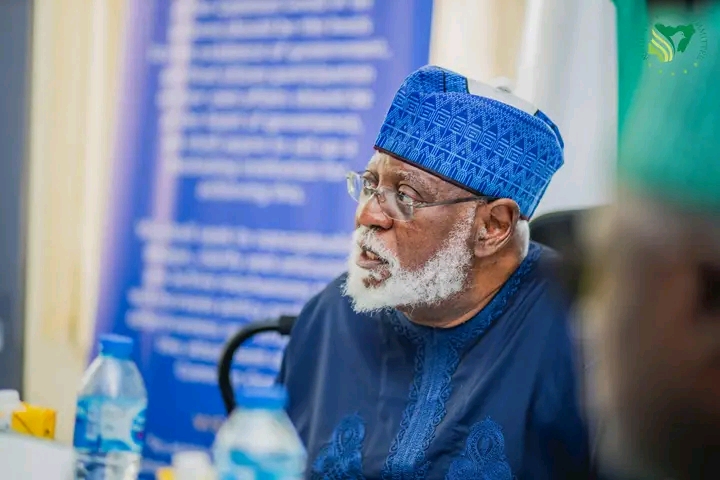
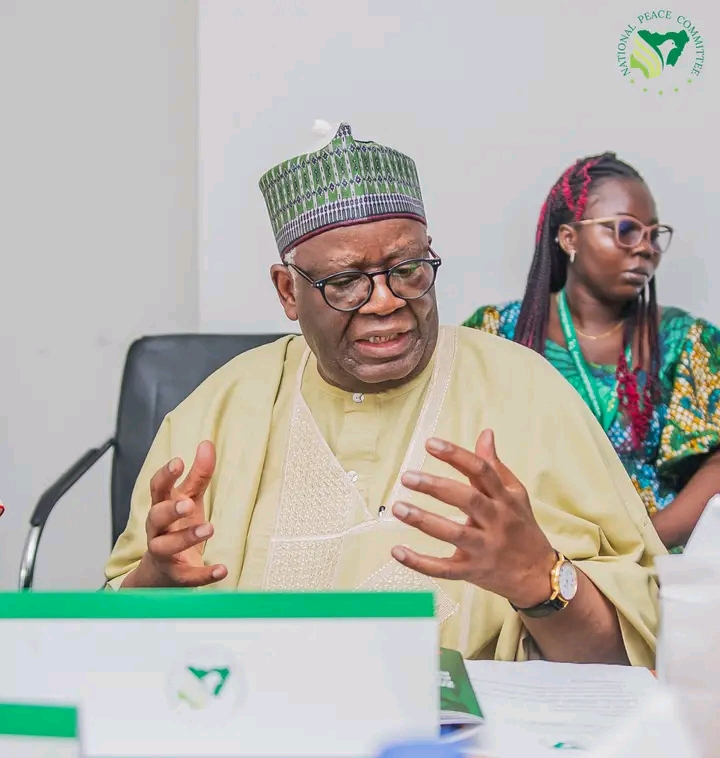
Abuja, Nigeria – The National Peace Committee, under the leadership of His Excellency, General Abdulsalami A. Abubakar, GCFR, has officially presented its report on the 2023 general elections, titled Nigeria’s Pursuit of Electoral Compliance: National Peace Committee 2023 General Election Report. The report was unveiled to the public on Friday, 16th February 2024, at the Kukah Centre, the Secretariat of the Committee in Abuja.

Prior to the public presentation, the Committee held a closed-door session to deliberate on the current socio-economic and political climate in Nigeria. During the session, the Chairman of the Independent National Electoral Commission (INEC), Professor Mahmood Yakubu, briefed the Committee on INEC’s preparations for the upcoming off-cycle elections in Edo and Ondo states. The Committee, led by General Abdulsalami, expressed its deep concerns regarding these elections, acknowledging the growing mistrust among Nigerians towards the electoral system. Discussions centered on strategies to rebuild this trust and ensure credible elections.

The report itself highlights critical observations from the 2023 general elections and provides strategic recommendations aimed at deepening Nigeria’s democratic culture.

Key Observations from the 2023 General Elections:

Significant lack of compliance with electoral legal frameworks, guidelines, and policies.
A widespread trust deficit in government agencies and institutions responsible for managing elections.
Limited political awareness among citizens regarding electoral laws, processes, policies, and guidelines.
Challenges associated with the technology adopted to enhance transparency and integrity in the electoral process.
The impact of poverty and dispossession on credible elections.

Strategic Recommendations for Deepening the Culture of Democracy:

Adopting a whole-of-society approach to managing elections in Nigeria.
Ensuring that the government in power complies with and implements the social contracts it has signed with Nigerians.
Improving the Election Management Body by implementing the recommendations of the Justice Uwais Electoral Reform Committee.
Rejuvenating the political party management system to be participatory, inclusive, transparent, and value-driven.
Continuing the Peace Committee’s role in providing moral interventions where trust deficits are rampant and judicial structures have failed.

The Committee acknowledged the steadfast support of the European Union, particularly through its European Union Support to Democratic Governance in Nigeria (EU-SDGN) initiative, which played a pivotal role in the success of this endeavor.

The National Peace Committee’s report serves as a crucial document aimed at strengthening Nigeria’s democratic institutions and processes, as the country moves forward in its pursuit of electoral integrity and compliance.

A glimpse into Africa’s future

…History belongs to those willing to fight for what they desire. Either you have an agenda you’re assiduously working towards or others will use you to achieve theirs.

Over the past few months, we have discussed topics including “The Rule-Based Order” — The Ajebutter Collective, Democracy: Faults & Contradictions, and If not autocracy or democracy, then what?. We also took time to explore The right to legitimacy, in an attempt to clarify who determines what is legitimate — the people or “the international community”.

As Africans, we have always desired success but due to the tragedy of history, we have had to look outside for possible examples to emulate. Today, we desire to emulate the successes of The West which may be an extension of our trauma or a case of Stockholm syndrome. But is this a realistic endeavour to undertake?

Achieving success across the continent has been a desire we hold for generations, a desire which grows with each passing day along with the scale of effort required to achieve it. But in all this time we have not taken the time to determine if, in achieving this success replicating the west is worth it, at what cost would it be, and if there are far better examples suitable for our soul to emulate.

We cannot plunder

Previously, in the article “The Rule-Based Order” — The Ajebutter Collective, we looked into the west’s interaction with Africa over the centuries and its implication on our reality today. We also discussed how the west achieved its success at the expense of our very soul and why to this day we subsidise their lifestyle by the way trade and the international system are configured with them as its primary focus.

The secret of the west’s success is not something so enigmatic beyond our imagination. To summarise, it’s us — Africans & the Global South (GS). There is a belief that the west’s success is due to the absence of human nature, some advanced process of thought & diplomacy, or an evolution of the human itself (Homo democratia). This belief is wrong, so fundamentally wrong that much discussion must be carried out on this in the future.

The west’s success is not due to any advanced thought process, out-thinking their problem/reality, the art of diplomacy or an evolution of the indigenous European into a new form of Man. At the root of the west’s success is a very simple process of plunder.

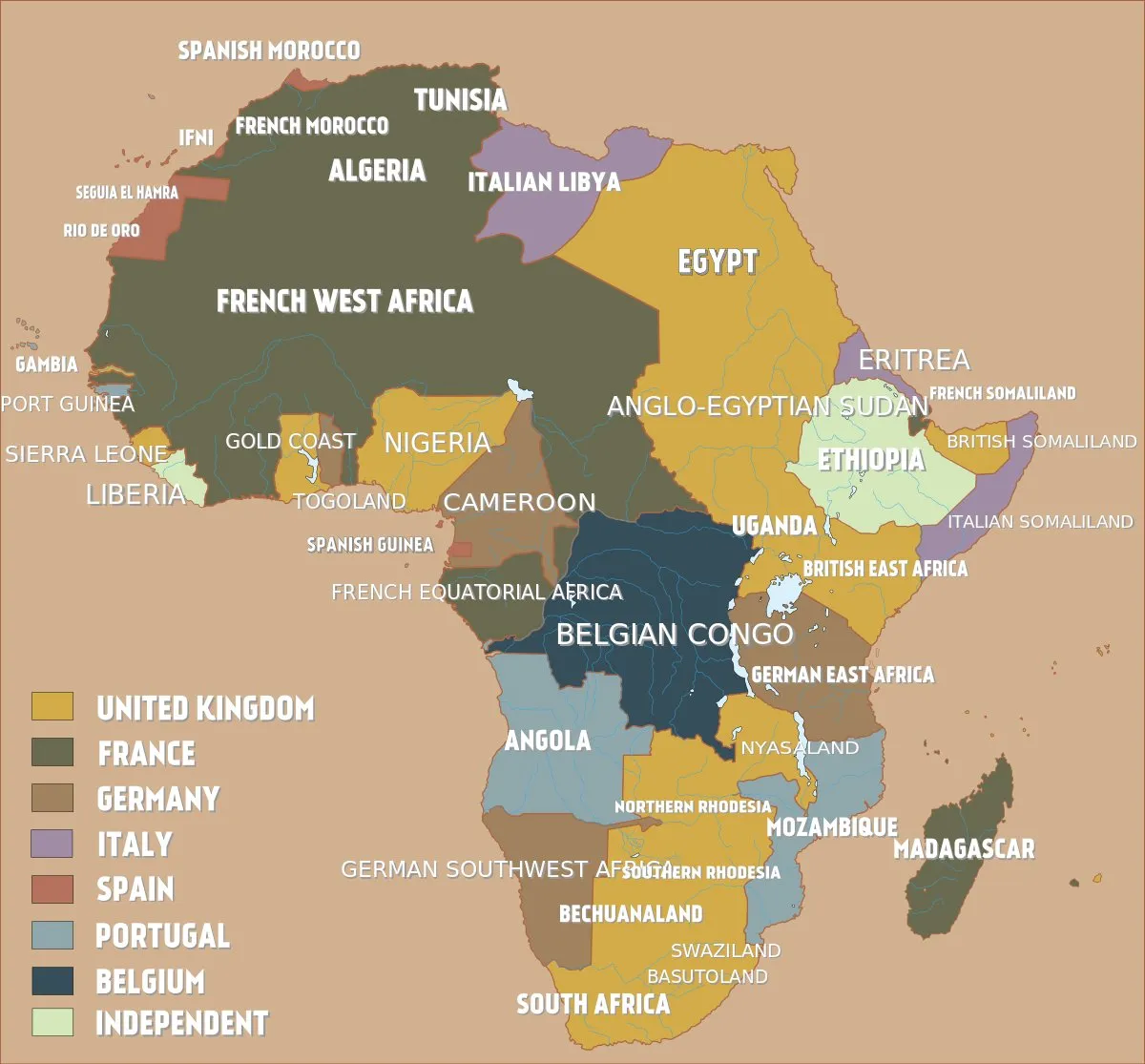
A 500+ years worth of plunder across Africa & the GS is the very root of their prosperity. Our experience living through the Age of Discovery, the Trans-Atlantic Slave Trade, the institution of Settler Colonialism in South Africa, America, Australia, Canada, New Zealand, etc., and a campaign to enforce colonies on Indigenous Africans along the borders drawn in 1884, Berlin Conference where no single African was present to voice an opinion on either the act or the resulting arrangement needs to be recognised as a trauma/tragedy which still informs aspects of our reality today.

It is important to spend a few moments on the paragraph above to understand how we got to where we are, the trauma we are living and the crime against humanity still being legitimised today. This is crucial because every so often I run across Africans sometimes Yorùbá like me who take the Berlin borders as an act of god, and express desires for us to forget the past, move on and simply make things work by accepting reality as they are. I vehemently refuse such a reality.

I refuse because the past is as important as the present and as it informs the future. It allows you an expansive knowledge of your immediate environment ensuring you understand who your natural allies and likewise enemies (we all have one, to think otherwise is a fool’s errand) are. Understanding the past does not connote being trapped within it, rather, it reduces the likelihood of us repeating the same mistakes, a task we have failed at.

The absence of a self-critical analysis of our past from a perspective primary to our respective reality has led to decisions that are detrimental to our existence. Your perspective must be primary when evaluating past events because every so often people pass on European/other’s views, perspectives & analysis of history as theirs. Such inadequacies continue to lead to bad choices across all spheres of our life. These choices have ensured a regression of our society as we keep chasing European/external solutions designed to solve European/their issues without realising such are mostly inapplicable to us.

It does not apply to us because our reality, history, geography, culture, ideology and spirituality differ with zero correlations at times.

The west’s success is not due to any advanced thought process, out-thinking their problem/reality, the art of diplomacy or an evolution of the indigenous European into a new form of Man. At the root of the west’s success is a very simple process of plunder.

Absence of Human Nature?

It is far more affordable in the presence of abundance and leisure to set aside human nature. Therefore, Europeans act holier than thou due to having limited worries beyond strategising how to plunder & subjugate much of the world.

Taking France as a case study, recently, it began to experience a fuel crisis which continues to linger. As someone who has lived through this repeatedly all my life in Nigeria, it can get worse. The effect of this crisis coupled with dissatisfaction, protests and strikes preceding it on French society has led to an increase in tension across the country which has made Macron contemplate calling in the military, a drastic action for a “liberal democracy”. Of the many realities currently present in France, I would like us to consider the tweet below.

The tweet above is not an attempt to dwell on the current struggle of the French people — maybe there is a little satisfaction in having them experience a bit of the pain the rest of humanity deals with daily. Rather, to present the toll that these crises have had on the average french citizen over the years. Also, this signifies the presence of human nature in France as well.

Given equal circumstances, human actions devolve to their primal nature. For the French, human nature has begun to awaken from its long slumber. It is important to be aware that no amount of thought can overcome the frustration of queuing for hours if not days for a few litres of petrol. It’s easy to ignore human nature when there is an abundance of resources, prosperity and leisure. This state of overwhelming abundance makes some have illusions of being a better version of humanity compared to others, and postulate unrealistic idealistic concepts as to why the rest of humanity is stuck as they are. But, put them in a situation with a degree of scarcity of all things, and you’ll get this reaction — an expression of human nature.

The reveal from COVID till now is that Human Nature reigns supreme and Africa & the Global South are as human as the west. We simply lack in abundance and prosperity.

Africa’s future is regional

A glimpse into Africa’s future is not for the faint-hearted. Much has been said over the past decade about Africa’s rising status which has become a missed opportunity. Though there is some progress sprinkled around, Africa has instead regressed on many indices over the past decades. None is more obvious than the backslide of West Africa (WA) and the Sahel, and how their future becomes increasingly bleak.

We have all had that moment where we had to state Africa is not a country/monolith. This is even more true now when looking ahead to what’s coming for the continent. I have come to understand Africa’s future is regional. A focus on regional development, nuances and history will do a lot of good for the continent’s progress & future.

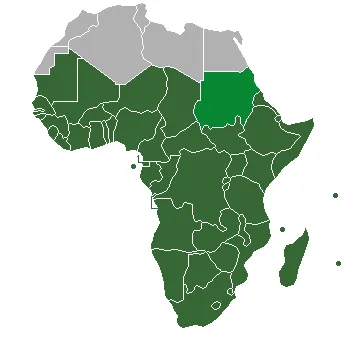
Firstly, Africa is used across my writing as a substitute for Sub-Sahara Africa i.e the aspects of Africa south of the Sahara inhabited by indigenous ethnicities. Africa comprises different regions each with its own regional body whose role is to mediate the geopolitical terrain and trade relations among other responsibilities. It is across this divide our future will be determined.

A glimpse into Africa’s future is not for the faint-hearted … Africa has regressed on many indices over the past decades. None is more obvious than the backslide of West Africa (WA) and the Sahel, and how their future becomes increasingly bleak.

Africa’s future as it was in the past will be determined by its different regional groupings with a degree of independence from one another. Also crucial is how they can redefine trade, movement and security of the continent in the 21st century. This is because as a continent with such expansive land & human resources coveted by all, the scale of prosperity and industrialisation is too massive to be tackled as a collective concurrent outcome.

As in the past, our road to development, its meaning and purpose, and how we will achieve it will differ between regions. Each region is required to construct a vision for the future and strive with their all towards these goals which include the need to conquer navigation within the continent for inter-regional relations.

Of course, the best outcome will be for inter-regional trade, movement and network to be developed concurrently within a mutually beneficial framework. These are not a new proposition, but a restoration of what once was which was dismantled by alien marauders who forced upon us a framework which feeds exclusively their interests. The restoration of trade lines and familiar diplomatic relations on the continent will do us much good.

On West Africa & The Sahel

History belongs to those willing to fight for what they desire. Either you have an agenda you’re assiduously working towards or others will use you to achieve theirs.

I realised that focusing my attention on West Africa (WA) & the Sahel which are my primary concern serves a better purpose. Though, my opinions may possess a degree of adaptability to other regions and serve as a point of reference.

As in the past, our road to development, its meaning and purpose, and how we will achieve it will differ between regions. Each region is required to construct a vision for the future and strive with their all towards these goals which include the need to conquer navigation within the continent for inter-regional relations.

Recently, I observed the trajectory of WA & the Sahel towards overtaking the Middle East as the forgotten region of the world. A region filled with chaos and crisis for decades to come, a black hole of media coverage, poverty-stricken, forgotten and left to its fate.

https://twitter.com/mosobande/status/1580792567964524546?s=20&t=4CMYfX0cN3nfaXuMSiETPQ

There have been a series of events in these two regions in recent years including the rising case of attempted & successful military coups, different degrees of armed struggles by different groups, the rise in terrorism, and the relocation of jihadist organisations/networks to the regions. All these, coupled with a rising case of economic and political instability in Nigeria, West Africa’s supposed hegemon, and other states in the regions.

As the global geopolitical shift continues to intensify on multiple fronts including the economy and recent semiconductor restrictions, it is unlikely that the world has much attention to spare on us. If recent events are any indication, a complete focus on Ukraine to the detriment of other issues of equal or greater importance, like the Ethiopia-Tigray war, has proven once again where the heart and attention of the world lies and for whom they are ready to dare our collective nuclear annihilation. All these are realities we can neither run away from nor hope to wish away.

https://twitter.com/mosobande/status/1580792554601467904?s=20&t=n4E9fBEgqF5OMZ9vtBr1JA

Likewise, the desire of the international community or their appetite is quite irrelevant to the developing reality. The possibility that either the west or the rest of the world will have enough attention or funds to spare for us in the face of the current global recession, food shortage, geopolitical realignment and other crises is practically non-existent. The most likely scenario is for us to be caged within the African subcontinent.

Recent development has shown desperation in the west to prepare against a migrant crisis. Western Europe and North Africa have developed measures and mechanisms to “contain” the situation. In addition to this is the fact that our relationship with the west has not changed much over the more than 5 centuries we’ve related with each other.

Africa has certain demographics and internal dynamics — which will lead to certain outcomes, and neither Europe nor the USA have the interest, nor the desire to commit resources to have any impact on these outcomes in the long run.

Also, the revolt of Francophone West Africa against the French shows a forced divestment from those who are considered traditional partners in the region. The new allies moving to the region in light of current geopolitical realities point more to a coming crisis and instability as we become a node in the challenge of “The Rule-Based Order”.

Crucially, it cannot be expected of those of us who live in these regions to accept the status quo — poverty & crisis-ridden — existence simply because we want to keep the alien overlords happy. Inherent contradictions instituted by the same group are the core of the current crisis escalating through the regions and much of Africa. It’s us living within these regions who will determine our fate regardless of what is affordable, preferred or appetising to any external entity.

As it was in the past when slaves on the plantation are not expected to consider either their master’s or any other’s appetite in their struggle for freedom, emancipation and dignity, so too will the appetite of the European or any external entity be of any consideration today.

I’ll have loved to hear the speeches given to slaves on the plantations back then on why their master and America didn’t want them to be free.

I think that what is West Africa and the Sahel need to be properly defined and delineated along with other realities. Currently, the map along the 1884 Berlin borders is a tragedy to behold, a crime against humanity which requires justice and effort towards restoration even today.

West Africa needs to also be properly reconstituted along familiar lines to optimise opportunity towards a prosperous, industrialised and developed future. We must not be crippled by fear of the past, as much as there was competition, it was healthy in a lot of ways.

Like Europe, with a redrawn border informed by historic and familiar relations of different groups coupled with trade policies, diplomacy and a degree of regional integration, we can achieve the success we’ve always dreamed of.

Beyond the Berlin Border – Restoring Africa’s Nations and Civilisations

…Despite our struggles, we are still stuck in the 19th century and our souls continue to revolt in rejection of the realities carved by aliens with neither context nor consent.

By Olúwáṣèyí and Adejumo David Adebayo

This work is in collaboration with Adejumo David Adebayo. He provided the research used for this piece which is the first of many contributions to Àṣírí Ọ̀rọ̀. There are a few maps presented throughout the article, please spend a few moments digesting them.

African Nations and Civilisation were disrupted 138 years ago at an event in Berlin, Germany called the Berlin Conference, Congo Conference or West Africa Conference. Today’s boundaries, which are a legacy of the colonial era, and the resulting languages through which we express our realities also follow these colonial claims over our respective existence as Africans.

These claims continue the centuries of humiliation where even today we lack any true nation on the continent which reflects the wishes of the indigenous people, their ethnicity, culture and civilisation. Though a limited few are free of this curse, the sovereignty of Africa’s true nations which was stolen continues to be held hostage.

In most of these African countries with white settlers, colourism exists in addition to apartheid that favours white settlers against the indigenous people. In these states, creating a racial consciousness towards promoting Black/African solidarity as a common factor becomes a necessity. During this period, ethnic consciousness is jettisoned or reduced for the sake of solidarity against a common white settler threat, until such a time when the threat posed by this alien group and their hegemonic status is nullified.

But in West Africa, white settlers were unable to entrench themselves despite repeated attempts at carving a colony to settle. Therefore, the absence of a settled white population and its resultant threats has led to a more pronounced ethnic consciousness over race.

Foundations of a Nation

A nation is born from commonalities of groups that exist within its bounds. Observing the different nations of the world across different continents, a pattern emerges especially in terms of the economic success and stability of such nations. A common pattern with these nations is the homogeneity of their societies. Although, a Mono-Ethnic country is a rare find, however, the stability of nations can be observed to correlate to how homogenous they are.

To be homogeneous is to be of the same or a similar kind, it is not the absence of difference. Homogeneous countries consist of groups with shared history, roots, ideology, spirituality, culture, civilisation, etc. All this and others work together to form a binding force, a myth, and a civilisation on which a nation is built. It’s not a lack of differences but the presence of a high degree of similarities that reduce the complexity of these societies because they are more likely to agree on the fundamental principles that will guide their collective consciousness towards a shared goal. There are always others in such societies as you observed in nations across the world but one group, one identity, one ethnicity, one civilisation forms the bedrock of these nations around which others gather.

An interesting observation of note is that in most of these nations, they are named after the major ethnic block that dominates the country with their language, culture, history, spirituality and civilisation. Some examples are Finn – Finland, Russian – Russia, Indo-Aryan – India, Albanian – Albania, Lithuanian – Lithuania, and Nauruan – Nauru, just to name a few. The full list of countries and their ethnic composition can be found here.

The principle of homogeneity can be found in many nations formed by indigenous people across the world and to this day differentiates them from the colonial corporations that litter the subcontinent of Africa. In East Asia, Japan is home to the Japanese, Korea to Koreans, and China to the Chinese (over 90% of the more than 1.4 billion population belongs to the Han ethnicity).

In most African countries, a clear majority ethnic block does not exist as states are split between different groups with very little in common beyond relative geography and skin colour. At times, these groups are ancient antagonists who are still in a state of war today. This is why Africa is not known for inter-state conflict but is synonymous with intra-border wars. This pattern is not unique to Africa as the same has been observed throughout history in similar cases exemplified by the recent experience with Yugoslavia and the current Ukraine debacle. 

In Africa, the root of this is alien, external, colonial and neocolonial. The Berlin borders were conceived at the 1884/5 Berlin conference. A conference whose result didn’t consider the existing realities, identities, history, culture, animosities, ethnicities and consent of the indigenous people, language, civilisations, borders and nations that existed across Africa then.

The opportunity cost of “Beauty in Diversity”

Africa is the most diverse continent and this conference institutionalised the distrust which is inherent in human nature which borders and distance continue to be the only known remedy. Despite our struggles, we are still stuck in the 19th century and our souls continue to revolt in rejection of the realities carved by aliens with neither context nor consent.

Considering the degree of ethnic diversity in countries across the world, a pattern can be easily observed. Comparing countries, continents and their successes, it can be seen quite simply why some countries may fall behind and struggle to achieve success compared to those success stories we consider the first world.

From previous studies, Africa is the most ethnically diverse continent with its nations equally carrying the same fate. With the world’s 20 most diverse countries, we can easily correlate the degree of instability that has become synonymous with the continent to the degree of ethnic diversity of the countries found in it. Although there are many contributing factors, this is primarily a result of the colonial legacy born as a consequence of the Berlin conference.

It is important to note that our actions/inactions perpetuate this reality even today despite compounding evidence both lived and historic that point to the deficiencies and ineffectiveness of these borders. Also, it shows a lack of imagination in the leadership on the continent and how they are so intent to kick these issues down the road. It’s a keg of gunpowder that will ultimately explode as we’ve seen in Ethiopia’s case.

In total opposite to their preaching of “beauty in diversity”, the most homogenous societies are Japan and the Koreas. Likewise, European nations enjoy a high degree of ethnic homogeneity. Strong democracy, a stable society, and a peaceful region correlate with ethnic homogeneity. In contrast to their misadventures in Africa and much of the world, several now-global ideas about the nation-state, about national identity as tied to ethnicity and about nationalism itself originally came from Europe.

For centuries, Europe’s borders shifted widely and frequently, only relatively recently settling into what we see today, in which most large ethnic groups have a country of their own. Even certain small ethnic groups like a Sammarinese from the Republic of San Marino (a population of about 34, 000, became independent in year 301 from the Roman Empire), and a Yap, Chuuk, Pohnpei and Kosrae from the Federated States of Micronesia (a population of about 105, 000, became independent in the year 1979 of living memory from the USA), both with a nation of their own. Ironically, it is the same group largely responsible for the state of confusion African countries are in, that are largely repulsed by the thought of restoring what was or realigning the borders to a state more conducive to the reduction of strife and competition between ethnicities within the Berlin borders.

From the study of ethnic diversity, internal conflicts appear to be more common in highly ethnically diverse (greener) countries. This might make some intuitive sense given that different groups with comparable “stakes” in their country’s economics and politics might be more willing or able to compete, perhaps violently, over those resources. In the case of Somalia, maybe worsening economic conditions or war make people more likely to further divide along ethnic factions. Good economic conditions and an abundance of resources may reduce these internal conflicts despite the degree of diversity, but that does not mean an absence of conflict or competition. It simply offsets the worst of it to the future at such a time when the conditions are bad enough to allow for them.

A case study of Nigeria

Nigeria, likewise many other African countries fall in the category of the state with the most ethnic diversity. In Nigeria, ethnicity and nationality are two opposing frameworks. It is a country where ethnic consciousness reigns supreme due to the reality of its history as a heterogeneous country without a clear majority ethnic/ethnolinguistic/ethnoreligious group to serve as the core. Evidenced by the realities from the days of regionalism, a major singular ethnicity with its culture, language, spirituality, ideology, and civilisation would have been more likely to create a more stable, peaceful and successful nation than what we have now.

The three largest Ethnicities in Nigeria are Yorùbá, Hausa-Fulani and Igbo, each with its unique language, culture, spirituality, ideology, and civilisation. Three opposing and conflicting fundamental principles with little to no commonalities in many aspects and an unwillingness to assimilate into the principles of the others.

In more homogeneous societies, it is easier to rule more democratically or otherwise depending on the desires of the people. This is because, despite disagreements, the threshold of disagreements morphing into conflict/violence is quite high. Such societies share a bond that can be considered similar to that of a family, with which despite the differences that may exist between them they can easily reach a compromise without the need to utilise violence. These differences at times can be fundamental but as in a family, they have a way of eventually working things out without rarely resulting in conflict. This can be observed with the predilection of the Yorùbá today to set up a table whenever a crisis rears its head, a lesson learnt in blood over the 16-year-long Kírìji war between different Yorùbá sub-ethnic kingdoms.

Identity comes with many complications regardless of how much of a social construct we hope for it to be. As is the case of Ukraine, sometimes an ethnic group can fragment with a section determined to be separate and different from the wider group. In times past, this desire is more easily respected and such groups are afforded the freedom to express themselves in all its implications. But today, the trapping of the so-called “modern states” has served as a prison to cage different groups of people with very little to no commonalities and at times with ancient animosities. They are caged within a “country” with a shared border and through a set of miracles beyond human nature/understanding, they are required by the powers that be – who institute these realities in Africa’s case, to create a success story of a nation.

It’s okay to be different

Diversity does not necessarily correlate with conflicts, but in a country like Nigeria, it is hard not to draw such direct correlations as it’s quite glaring. Nigeria’s diversity coupled with interests has led to nepotism, discrimination, supremacism, hatred, toxic political relationships and instability as evident from its incapacity to move beyond the events of 1966 and the glaring realities that accumulated till today. Although these differences existed during the era of regionalism, it was aggravated by the advent of a unitary structure which costs the constituent nations the semi-autonomy they enjoyed during that period.

It has been repeatedly noted that the regional system was bound to fail as crises were cropping up due to the absence of a clear borderline, conflicting fundamental principles, and near-total autonomy of each region. Perhaps the regional political players understood a bit of this but failed at extending regionalism to the security architecture. If such had been done, we will likely not be here today.

In Europe, states with no clear majority ethnolinguistic group like Switzerland, Belgium and in some ways the United Kingdom (UK) exists. However, the system through which they are governed is not unitary like in Nigeria and each ethnicity has a great deal of autonomy. Despite this, there are still self-determination movements in Belgium and across the UK towards achieving further autonomy from the collective. Without at least a version of these systems, Nigeria’s situation will not improve but rather worsen and eventually lead to a cataclysmic collapse as observed in its exponential slide into barbarism.

Across West Africa, a separation between what is West Africa from the Sahel is a must. From the study of Africa’s climate zones, the borders of what should be considered West Africa can be found in the humid tropical zone.

In Nigeria, the Northeast and Northwest are predominantly Sahel in geography, demography, culture, language, and civilisation. They have an unmistakable similarity to the civilisations of Niger Republic, Mali, and Burkina Faso along with their ethnoreligious values, pro-Islamic civilisation, geography, culture, language, climate, and more. The North-central or Middle-belt of Nigeria has more similarities with Southern Nigeria – the Southwest, South-south and Southeast. These similarities express themselves in their traditions, history, language, culture, civilisation, and more. Although, it must be noted similarities do not connote sameness.

Africa’s Indigenous Nation States

A restoration of what was is a reality we cannot escape. If not today, its day shall come tomorrow. The indigenous people must be afforded the freedom to express their unique identity, culture, language, spirituality, and civilisation, and to have the capacity to protect themselves from the excesses of others within a defined border that assures their self-preservation.

This freedom is theirs to take. As we cannot tell the oppressed how to react, it’s a burden we carry collectively to seek a pragmatic solution that respects the individual freedom of these civilisations which were upended and trapped within alien carved borders without their consent.

A possible reflection of the ethnolinguistic grouping (as shown in the map above) of Nigeria is a path. A realignment along the ethnolinguistic path may serve as the nearest checkpoint we could fall back to. It also provides the minimum viable nations with the most stability. Across these lines are civilisations with millennials of history that have been inherited by groups within these sections who are unwilling to assimilate into others.

To be homogeneous is to be of the same or a similar kind, it is not the absence of difference. Homogeneous countries consist of groups with shared history, roots, ideology, spirituality, culture, civilisation, etc. All this and others work together to form a binding force, a myth, and a civilisation on which a nation is built. … There are always others in such societies as you observed in nations across the world but one group, one identity, one ethnicity, one civilisation forms the bedrock of these nations around which others gather.

The wider region of West Africa can further develop along the principles of economic integration, a degree of collective political consensus for peaceful conflict resolution, and a military alliance in the spirit of NATO to serve as a collective security assurance among the parties and as a deterrence against any external aggression towards the region from either within or outside the continent.

The sham of multiculturalism

Angela Merkel once remarked on the sham of multiculturalism and its dangers. It is important to enforce once again that these experiments being carried out across Africa have been done for an eternity across Europe, America and the rest of the world. The results had always been the same inevitable fate of violence, chaos and distrust, while its solution remains to allow different groups their autonomy to exist in ways satisfactory to them.

“Multiculturalism leads to parallel societies and therefore remains a ‘life lie,’ ” or a sham, she said, before adding that Germany may be reaching its limits in terms of accepting more refugees. “The challenge is immense” she said. “We want and we will reduce the number of refugees noticeably.” 

In America, through migration and settler colonialism, the result is the near destruction of the indigenous people in the North of the continent – America and Canada, and the re-population (still ongoing through immigration) of those areas which also serve to dilute the indigenous voices. In the south of the continent, the effects of that history are still evident today.

We must not wish upon ourselves this fate nor should we through our dogmatic belief in realising the colonialist dream enforce it upon ourselves.

It’s okay to be different.

It’s okay to be you.

It’s okay to feel like, indifferent and hate towards others.

It’s okay to be as human as every other group across the world.

It’s perfectly reasonable to want to be independent of others on lands that are yours.

As an African, it’s okay to be just another human being.

Kaduna: PDP alleges unnamed guber candidate spearheaded attack on Atiku campaign 

The Peoples Democratic Party (PDP) has condemned the violent attack on its presidential campaign rally in Kaduna by “sponsored armed hoodlums,” suggesting it was spearheaded by an unnamed governorship candidate in the state.

In a statement by its national publicity secretary, Debo Ologunagba, in Abuja on Monday, the party described the attack as unprovoked and reprehensible.

Mr Ologunagba said the perpetrator aimed to frustrate the party’s presidential rally by triggering tension, violence and bloodletting in Kaduna.

“This is contrary to the undertaking in the peace accord signed by political parties on September 28 by presidential candidates. The attack today must give well-meaning Nigerians concern as some reports allege that the vicious assault on the PDP presidential campaign was spearheaded by a governorship candidate in Kaduna,” the PDP statement alleged.

The PDP noted that the brains behind the attack were intimidated by Atiku Abubakar’s popularity and acceptance among the majority of Nigerians.

“These desperate elements should be reminded that from history, the people of Kaduna have never been cowed or subjugated and cannot now, especially in their present resolve to vote in Abubakar as the next president of Nigeria,” added the statement.

(NAN)

The Review

JUST IN: ASUU Suspends 8-Months Strike

The Academic Staff Union of University (ASUU) has suspended its eight-month-old industrial action conditionally, a member of the union’s National Executive Committee told Channels TV early Friday.

The union decided to suspend the strike during a meeting of its leadership that started on Thursday night and lasted into the early hours of Friday.

The meeting was called by the union to determine its next line of action after its state branches met over the Court of Appeal ruling last week.

The Court of Appeal had ordered ASUU to suspend the strike before its appeal of the ruling ordering lecturers to resume work can be heard.

Members of the union’s National Executive Committee, which comprises the chairmen of the state chapters and members of the national executive, attended the meeting at the ASUU National Secretariat in Abuja.

ASUU has been on strike since February 14th 2022.

(Text, excluding headline: Channels TV)

The Kukah Prize For Young Innovators

THE KUKAH PRIZE FOR YOUNG INNOVATORS 

The Kukah Prize for Young Innovators is an award of recognition for outstanding innovatiors in the field of technology presented to young Africans who show exceptional promise as a developing leader in digital transformation. 

Bright young minds with creative technological solutions to developmental challenges both in their communities and in the wider world will be evaluated by judges in the startup and tech space across the continent for the most innovative digital solutions in the form of start-ups or initial concepts meeting global developmental challenges.

Eligibility and Selection Criteria:

  • The nominee shall not have reached his/her 31st birthday by the time the award is received.
  • Nominees must be African
  • The award will be presented to individual whose innovative work demonstrates high levels of excellence in technology.
  • The award winner will be selected on the basis of the outstanding quality, novelty and significance of the candidate’s research.

Establishment and Support:

This award is sponsored by Greysoft Technologies and The Kukah Center. The award will be issued during the 70th Birthday Ceremony of His Lordship, Bishop Matthew Hassan Kukah.

The winner of this award will in addition, have various opportunities to intern with organizations such as; Microsoft, Google and any other benefits the Award Committee may suggest.

Court stops APC  Convention indefinitely 

A High Court of the Federal Capital Territory (FCT), has restrained the  All Progressives Congress (APC) from proceeding with its planned national convention until the case against the party pending before the court is heard and determined.

The plaintiff in the suit marked FHC/HC/CV/2958/2021, Salisu Umoru dragged the party (APC), the Chairman Caretaker Extraordinary Convention Planning Committee and Governor of Yobe state, Mai Mala Buni and the Independent National Electoral Commission, INEC before the court to challenge the planned convention.In the motion number FCT/HC/M/9655/21, the plaintiff prayed the court for an order interlocutory injunction restraining the 1st and 2nd defendants, allies, agency, representative, associates or whoever is acting for them through or through them from organising, holding or conducting a National Convention of the All Progressives Congress in January and February or at any other date either before or after pending the hearing and determination of the suit. After listening to counsel.

The matter, justice Bello Kawu of the court granted the order and restrained the party from going ahead with the convention and also warned that the subject matter of the case is now subjudice and must nor be tampered with.

Already, a contempt application has been file before the court against the March 26 national convention of the party. The claimant informed the court that the mere inauguration of sub-committees for the March 26 National Convention when the order of the honourable court is in force is a demonstration of disdain for the rule of law in the country.

While 30th March, 2022 was fixed for the continuation of hearing of the substantive suit,  no date has been fixed for the commencement of contempt proceedings against the APC.The claimant also commended INEC for standing by the provisions of the law and the order of the court which is still in force.

Recall that the electoral umpire, INEC, had last week wrote to the APC, insisting that the commission does not recognize Abu Bello’s leadership, and also informed the APC that it has not performed one of the requisite requirements for a valid NEC meeting or National Convention.

In the letter signed by Rose Onaran Anthony, Secretary to the Commission, the attention of the APC was drawn to section 82(1) of the electoral act which provides, “Every registered political party shall give the Commission at least 21 days’ notice ofany convention, congress, conference or meeting convened for the purpose of “merger” and electing members of its executive committees, other governing bodies or nominating candidates for any of the elective offices specified under this Act”.

The implication of the above provision is that the APC will have to send a fresh letter of 21 Days notification to INEC the moment the Court Order is vacated in order to hold its national convention.

Senior lawyers who spoke to our correspondent also highlighted that the inability of APC to vacate the court order and send the 21days notice in fulfillment of the requisite constitutional requirements will render the party’s March 26 national convention invalid in the eyes of the law.

It was also noted that the party leadership risked imprisonment for contempt of court when they went ahead with convention plans against a subsisting court order restraining the party from doing so.

Some of the senior lawyers have also advised the APC to postpone the National Convention indefinitely and focus on the forthcoming primaries so as to produce candidates for the 2023 General Elections.

Credit: Sun