FREEDOM OF EXPRESSION & INTERNET REGULATION: NAVIGATING THE GOVERNMENT HERRINGBONE.

BEING A PRESENTATION BY GLORIA MABEIAM BALLASON ESQ AT THE MEDIA DEFENCE SUB-SAHARAN AFRICA LITIGATORS CONVENING, JOHANNESBURG, SOUTH-AFRICA, AUGUST, 2023.

INSIGHT:

Freedom of speech has been recognized in international, regional and national laws as fundamental to individuals and democracy.

Where freedom of speech and free press are not upheld, lies and misinformation contend with truth.The rights are relevant even in the Military where the norm is obedience before complaint because usurping the right to free speech can be lethal to both the violator and the violated. If humans are to be precluded from offering their sentiments on a matter – which may involve the most serious and alarming consequences that can invite the consideration of mankind, reason is of no use to us; the freedom of speech may be taken away, and, dumb and silent we may be led, like sheep, to the slaughter.

A world without freedom of speech is a world of slavery and tyranny.
Some proponents have argued that freedom of speech is freedom to learn as all education is continuous dialogue of questions and answers. The Nigerian Court for instance, upheld this argument in 1981 in the Archbishop Olubunmi Okogie V. Lagos State case where the Plaintiff, whose school was confiscated by the Lagos state government, argued that his right to expression through the impartation of learning and the exchange of ideas were violated when the state confiscated his schools. The Court upheld his arguments and entered judgment in favour of the Plaintiff.

ARE GOVERNMENTS AND CITIZENS AT CROSS PURPOSES ON THE RIGHTS TO FREE SPEECH & FREE DIGITAL EXPRESSION?

Let us examine some pivotal international, regional and national laws on free speech and expression.

International Laws:

Article 19 of the Universal Declaration of Human Rights (UDHR) enshrines the right to freedom of expression.
Article 19 of the International Covenant on Civil and Political Rights (ICCPR) guarantees the right to hold opinions without interference (i.e freedom of opinion), right to seek and receive information (i.e Access to Information) and freedom of expression in any art or form.

Article 10 of the Human Rights Act protects freedom of expression.
These rights are not absolute and can be limited by the state on certain grounds such as national security, public order, public health and public morals. The limitations must however be necessary and proportionate to the legitimate aim pursued. The State by law is also compelled to justify the limitation and show that it does not violate other human rights.

African Regional Laws:

Article 9 of the African Charter guarantees the right to receive information as well as the right to express and disseminate information. Furthermore, the Declaration of Principle of Freedom of Expression and Access to information in Africa which was adopted in 2019 establishes and affirms the principles for anchoring the right to freedom of expression and access to information in conformance with Article 9 of the African Charter.

National Laws:

Article 33, 34 & 35 of the 2010 Constitution of Kenya protects the rights to freedom of expression, the media and protects access to information. The Kenyan Constitution is one of the most elaborate when it comes to protections and disaggregates for the sake of clarity and unambiguity the protections and freedoms guaranteed including artistic creativity, academic freedom and scientific research.

Article 31 of the 2018 Constitution of Burundi guarantees freedom of expression. The right is subsumed with rights to freedom of religion, thought, conscience and opinion.

Article 29 of the 1995 Constitution of the Federal Democratic Republic of Ethiopia guarantees the right of thought, opinion and expression.

Section 39 of the 1999 Constitution of the Federal Republic of Nigeria guarantees the right to freedom of expression and the Press.

Indeed almost all countries in the African Continent and the world recognize the importance of the right to freedom of expression.

Please note that international and regional laws are ratified or assented to by heads of governments while national laws are made by parliamentary arms of government. In other words, governments lead in the law making processes of human and fundamental rights. If that is the case – as we have found it is, why are governments often the violators of the rights to freedom of expression offline and online? I am glad you asked.

FREEDOM OF OFFLINE & ONLINE EXPRESSIONS: THE GOVERNMENT HERRINGBONE.

It would appear that everybody : Government and citizens, are in favour of free speech. Nonetheless, some ‘powerful people’ and government’s idea of it is that they are free to say what they like but others cannot. This is where the aberration lies and where impunity takes its root. With the advent of the internet, the right to free speech is now both visual and virtual. However, the primacy to which freedom of visual speech is given appears to differ from virtual speech. There is still an ongoing debate on whether internet right should be recognized as human right, fundamental right or no right at all.

The proponents of declaring internet access as a right (also known as the right to broadband or freedom to connect) hold the view that in the 21st century all people must be able to access the internet in order to fully exercise and enjoy their rights to freedom of expression and opinion and other fundamental human rights. In practise, an American during President Donald Trump’s, tenure could argue along this line as President Trump was famous for expressing and engaging on national policies via Twitter.

Those who argue against making digital rights a human or fundamental right curate in favour of their argument, that internet is a right enabler not a right. They hold to the reasoning that the meaningful exercise of the right to freedom of speech and expression over the media or internet is dependent invariably and inextricably upon the access to the availability of infrastructure and that infrastructure depends upon social and economic factors such as the distribution of resources, the policies of the state and its intervention in the nature of provision of the resources. In other words, they argue that the right is non-justiciable.

It may perhaps help to put the question on the tarmac in more literal and clearer perspective:

(i) Is there a difference when an expression is verbal from when it is digital?

(ii) Can the right to freedom of speech and expression be same online as offline?

(iii) Is there a parity in responsibility where the violation of right to freedom of expression leads to the violation of human rights offline as distinct from online ?

Put in other words, the debate is now between the proponents of Data is Life Vs. Data is Connection. Where does the law and the balance hang? Let’s explore it.

DATA IS LIFE Vs. DATA IS CONNECTION.

There are instances where the expression : ‘data is life’ is literal and at other times data is just ‘mere’ connection. To illustrate how data can be life, I will cite two examples from two jurisdictions: India and Nigeria.

  • Case 1* Bhasin v. Union of India case, No 103, 2019, In this case, the Supreme Court of India declared that access to the internet is a fundamental right under Article 19(1)(a) of the Indian Constitution and that the right to be able to access the internet has been read into the fundamental right to life and liberty as well as privacy under Article 21 of the Indian Constitution- adding in the same breath that internet constitutes an essential part of infrastructure. The brief facts of the Bhasin case are as follows: Jammu and Kashmir is an Indian territory bordering Pakistan and has been the subject of decades-long dispute between the two countries. Under Article 370 of the Indian Constitution, the territory enjoyed special status, had its own Constitution and Indian citizens from other states were not allowed to purchase land or property there. On August 5, 2019, the Indian Government issued Constitution (Application to Jammu and Kashmir) Order, 2019, which stripped Jammu and Kashmir of its special status that it had enjoyed since 1954 and made it fully subservient to all provisions of the Constitution of India.
    In the days leading up to this Constitutional Order, the Indian government began imposing restrictions on online communications and freedom of movement. On August 2, the Civil Secretariat, Home Department, Government of Jammu and Kashmir, advised tourists and Amarnath Yatra pilgrims to leave the Jammu and Kashmir area in India. Subsequently, schools and offices were ordered to remain close until further notice. On August 4, 2019, mobile phone networks, internet services, landline connectivity were all shutdown in the region. The District Magistrates imposed additional restrictions on freedoms of movement and public assembly citing authority to do so under Section 144 of the Criminal Penal Code.
    The internet shutdown and movement restrictions (hereafter “restrictions”) limited the ability of journalists to travel and to publish and accordingly were challenged in court for their violations of Article 19 of India’s Constitution which guarantees the right to freedom of expression.

Delivering its judgment, the Court of India did not lift the internet restrictions but acknowledged fully the rights that were violated and directed the government to review the shutdown orders against the tests outlined in its judgment and lift those that were not necessary or did not have a temporal limit. The Court reiterated that freedom of expression online enjoyed Constitutional protection but could be restricted in the name of national security. The Court further held that though the Government was empowered to impose a complete internet shutdown, any order(s) imposing such restrictions had to be made public and was subject to judicial review.

Case 2: Gloria Mabeiam Ballason v. Governor of Kaduna State & 5 Others FHC/ABJ/C5/1554/2021

On September, 29, 2021, the Governor of Kaduna state in Nigeria, Mallam Nasir Ahmad Elrufai, shut down phone and internet telecommunications connections for two months. The Government’s argument was that they needed to combat terrorism, kidnapping and insecurity. Security, internet and telephone are under the exclusive legislative list of Nigeria’s Constitution which means the Federal Government is directly responsible as against the state government. There was also no national or state parliamentary resolution, a state of emergency was not declared and during the period, an unprecedented case of a train terrorist attack which had over 200 people in the train and another sets of killings of over 200 people in the state occurred. Furthermore people lost means of livelihood and earnings and the ban was counterproductive as people could not report terrorist attacks nor could security agents connect to scenes of crime.
Ballason filed at the Federal High Court of Nigeria alleging that the action taken by the government of Kaduna state was not backed by law and that the government did not satisfy the constitutional exception of any law reasonably justifiable in a democratic society in the interest of defence, public safety and public order as more lives who could not call for help from security agents perished while businesses and means of livelihood of citizens suffered astronomic loses without a commensurate improvement in the security situation in Kaduna State.’ Judgment has now been reserved for 11 October, 2023.

The two cases of India and Nigeria illustrate how the facts of the case can determine whether the right to internet access can be non-justiciable or justiciable. Typically, none justiciable rights can be justiciable where they intersect. In Nigeria for instance, although the rights in Chapter 2 of the 1999 Constitution are non-justiciable, they can be justiciable where they impact and infringe on the rights in Chapter 4 which are the fundamental human rights.

Let us at this point examine a few international, regional and national cases as determined by the Courts.

Some International & Regional Decisions on the Rights to Freedom of Expression & Internet.

International Decisions

Nagla versus Latvia (16 July 2013)

The case concerned the search by the police of a well-known broadcast journalist’s home, and their seizure of data storage devices. Her home was searched following a broadcast she had aired in February 2010 informing the public of an information leak from the State Revenue Service database.The Court found a violation of Article 10 (Freedom of expression) emphasizing that the right of journalists not to disclose their sources could not be considered a privilege, dependent on the lawfulness or unlawfulness of their sources, but rather as an intrinsic part of the right to information.  

Sunday Times Vs. United Kingdom (no. 1) (26 April 1979)
The case concerned the injunction served on the Sunday Times restraining publication of news about the pending civil proceedings brought by parents of children born with severe deformities through the taking of thalidomide by women during pregnancy.
The Court found a violation of Article 10 (freedom of expression).

Regional Decisions:

SERAP & 176 ORS V. Federal Government of Nigeria ECW/CCJ/APP/23/2 The Plaintiffs approached the ECOWAS Court to declare as unlawful the Twitter ban by President Muhammadu Buhari who banned the social media platform after Twitter deleted his tweet for violating its rules.
ECOWAS Court declared Nigeria’s government’s Twitter ban unlawful and ordered Nigeria to put in place a legal framework that is consistent with international human rights standards. The Court further ordered Nigeria not to block the social media platform again.

ii. Amnesty International Togo & 6 Others Vs. Togolese Republic

In this case the plaintiffs filed before the ECOWAS Court claiming the right to seek and receive information and disseminate opinion under Article 1 and 2 of the African Charter on Human and Peoples Rights, the Court entered judgment in favour of the Plaintiffs.

It can therefore be seen that there is a positive movement towards the recognition of rights offline as same online – and for obvious reasons, as global statistics would prove: The 2022 Global Development Report showed that 35 countries restricted internet services 187 times in 2022 with India, Iran and Myanmar repeatedly enforcing blackouts. India was the biggest offender with 84 out of the 187 internet blackouts in the region of Jammu Kashmir, Russia accounted for 22 internet blackouts against Ukraine when it launched offensives of missile strikes and cyber attacks; Ethiopia shut down phone and mobile internet against Tigray while Iran turned off internet due to anti-regime protests. Armed with these grim statistics, the signs in the sky are not too good.

NAVIGATING THE GOVERNMENT HERRINGBONE AGAINST FREEDOM OF EXPRESSION ONLINE & OFFLINE.

Across the world, trust in political governments and satisfaction with democracy is at a historic low. The discontent has inspired an authoritarian populism that challenges democracy. There is therefore the need for a coherent ethical and ideological framework for judicial intervention that keeps the fundamental question of justice, democratic legitimacy and balance for the demands and protection of rights to expression online and offline.To these and more, this presentation makes the following recommendations:

  1. Litigation strategy for the protection of rights to expression must reimagine not just the recognition of expression rights but a reinforcement of democratic values as a way of organizing states and regions towards a wider project of realizing universal rights and values.
  2. It is important to note that although government is powerful, what is politically achievable is not predetermined but relies on what people believe in and what lawyers, activists and citizens are willing to demand for by advocacy and in the pleadings lawyers file. A slavish adherence to precedence will therefore be inimical. Our pleadings should be progressive Arts not static Science.
  3. Our litigation should be embedded with advocacy that highlight the truism that government officials and the people have equal claim to a fully adequate scheme of equal basic rights, liberties and responsibilities.
  4. Our filings should be framed to demand respect for the rule of law which requires governments to act in accordance with laws and respect equality before the law in a regular, impartial and consistent manner ; this should inspire justice that is not just personal to plaintiffs but is institutional, intergenerational and sustainable.
  5. Pleadings in Freedom of speech and expression cases should be curated in a manner that demonstrates the role of the state as not just to enforce rights contracts but includes the maintenance of the conditions that are the basis for freedom and equality of citizens of the state. In any case, government is a revolving door; those in power today will be ‘ordinary citizens’ tomorrow. The law should therefore speak the same language at all times.
  6. Democracy is about the contestation of ideas and the triumph of superior ideas. If democracy thrives, everyone benefits. The African Union is now dealing with the Niger military take over jitters and we must be concerned about what this means to the region and to fundamental human rights. There is for instance, a straight line that runs from Military rule to the suspension of the right to freedom of speech and expression online and offline. Therefore, there must be a commitment to move beyond platitudes to a precise interpretation of what freedoms deserve special protection and the nature of their obligations. The facts of the case should reflect the impact on individuals and African states as against statistics in court dockets.
  7. The office of the Attorney General needs to be invited through legal filings to define whether he is counsel to the client or government and must be persuaded to lead in the respect of rights including but not limited to the enforcement of judgments.
    Countries which have ratified international and regional treaties and government officials who swear to uphold the rights and constitution of their countries should be estopped from violating the rights. They cannot go to the international and regional communities and commit to uphold the rights and return to violate them. The styles in which we craft our pleadings and our litigation strategy must ensure governments are made to lead in the respect of fundamental human rights and International Laws and Conventions, including,but not limited to the right to freedom of expression and the imperative to not wilfully deny citizens access to the internet through draconian regulations and arbitrary use of power.
  8. Litigation filings need to demonstrate how respect for freedom of expression is mutually beneficial for both citizens and the governments and should highlight the hope it holds for democracy. It is important that we move from litigation that is merely academic to arguments that are humanely persuasive, forcefully egalitarian and sustainably propagating in judicial ideology.

Finally, our litigation strategy must ensure that the Court of Law is always the Court of Justice. Some lawyers across the African continent tend to be skeptical about how the Court dispenses justice and the independence of the judiciary, without discounting some of the realities, it must also be re- emphasized that the Court is not ‘Santa Clause ‘ and so cannot give what is not asked. Filings must therefore be robust, arguments succinct and the need for three-way justice: justice for the victim, the accused and all of society should be the goal of our litigation. The court, the litigants and counsel must all connect at that human intersection and craving for democratic ideals if we are all to be the better for it.

GRATITUDE
It is a gracious thing to be thankful and so thank you Media Defence for this opportunity to engage on this topical topic and I thank you dear learned colleagues for your kind engagement and attention.

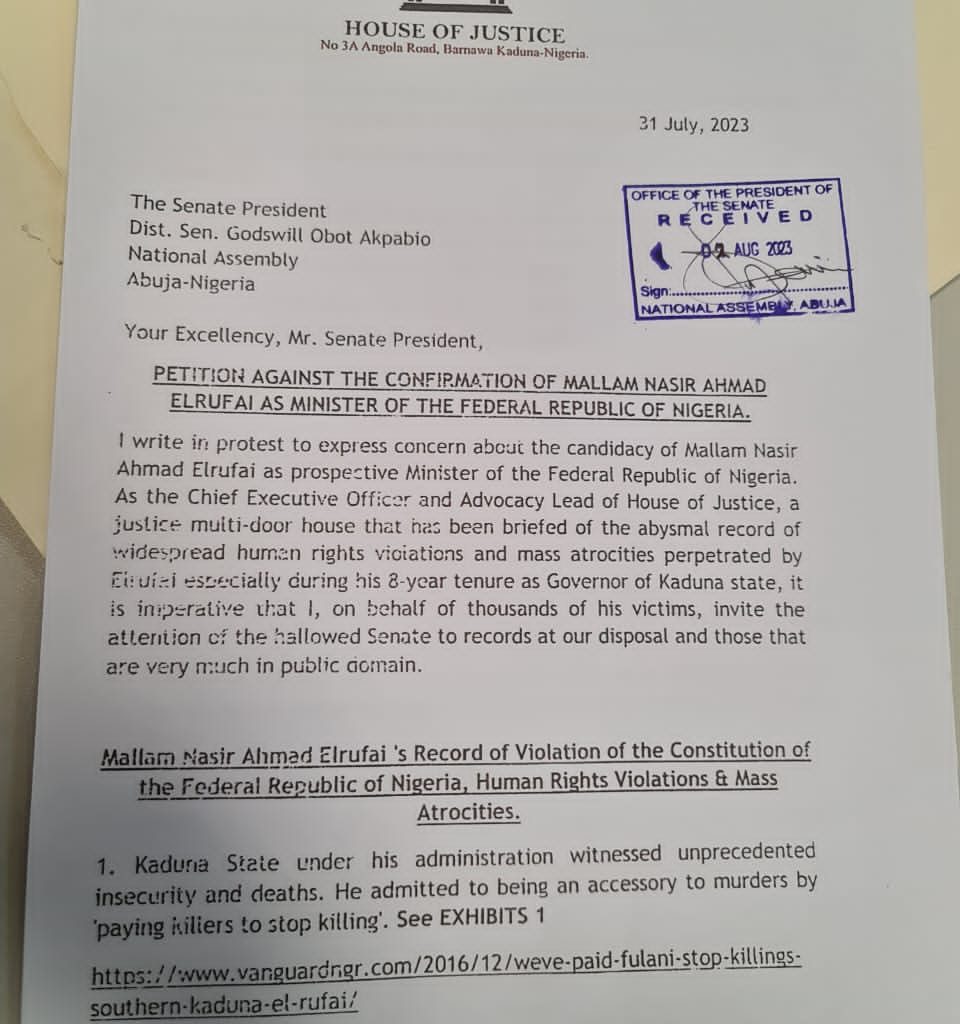
JUST IN: Kaduna Law Firm Petitions Senate President, Calls for Elrufai’s Disqualification as Ministerial Candidate

House of Justice, a Kaduna based multi-door justice house has protested the nomination of the immediate past governor of Kaduna State, Mallam Nasir Ahmad Elrufai, as Minister of the Federal Republic of Nigeria, stating as basis for the protest, his abysmal human rights violations and mass atrocities record especially during his 8-year tenure as Governor of Kaduna state.

The Petition which was signed by Gloria Mabeiam Ballason Esq, the Chief Executive Officer and Advocacy Lead of the organization, cited among other reasons for objection, Elrufai’s admission of being an accessory to murder by paying killers, arbitrary demolition of properties of citizens and political opponents, sacking teachers and withholding their salaries, imprisonment of journalists and activists, and sacking of traditional rulers as well as the persecution of the Southern Kaduna people.

The Petition further noted that there was a pending verdict of Nigeria’s parliament that declared Elrufai as not fit and proper to occupy public office and that international reports such as the 2020 and 2023 British All Party Parliamentary Group (APPG) and Freedom of Religion or Belief (FoRB) reports , dishonourably indicted the former Governor.

The Petition which had attached to it evidence of the allegations against the embattled former Governor, also noted that Elrufai has no respect for the Constitution, rule of law or the code of conduct for public officers and could only fit into a dictatorship and not a democracy.

The Petition was signed as received by the office of the Senate President in Abuja.

Recall that during the ministerial screening on the floor of the senate on Tuesday a senator from Kogi West senatorial District, Senator Sunday Karimi informed the senate that he is in possession of a petition against Elrufai over the issue of insecurity in Southern Kaduna.

Karimi said during the screening, “Mr. President, I have a petition written against the nominee over the issue of insecurity in Southern Kaduna when he was governor.

“If I am permitted, I will like to read the petition.”

Senator Karimi was never given the chance to read his petition.

Ironically, the three senators from Kaduna state including that of Kaduna Southern senatorial District where Elrufai is accused of human rights violations, and other related allegations all passed votes of confidence on the former governor.

Whether the senate will act on House of Justice’s petition it has acknowledged receipt of is left to be seen.

Find below the complete petition;

https://www.vanguardngr.com/2016/12/weve-paid-fulani-stop-killings-southern-kaduna-el-rufai/

https://saharareporters.com/2017/01/04/el-rufai-compensation-foreign-killers-and-looming-danger-john-danfulani

 2.  He threw thousands of traders and citizens out of jobs by demolishing markets and destroying goods and services without compensation.

https://dailytrust.com/kasupda-begins-demolition-of-kasuwar-barci/

SEE EXHIBIT 2

3. He made hundreds of thousands of people homeless by demolishing their homes without compensation and devoid of legal cause or court orders and continued the spree until his last days in office.

https://www.latestnigeriannews.com/p/969770/governor-elrufai-demolishes-graceland-zaria-kaduna-photos.html

https://editor.guardian.ng/news/el-rufai-approves-demolition-of-imn-gbagyi-properties-others/

https://www.tvcnews.tv/2021/10/kaduna-govt-demolishes-140-houses-in-zaria-lga/.

 https://www.channelstv.com/2016/07/28/gbagyi-villa-residents-protest-planned-demolition-by-kaduna-govt/amp/

SEE EXHIBITS 3

4. He destroyed the houses of those who held different opinions to his including persons in his own party and outside it. Sen. Suleiman Othman Hunkuyi’s home was demolished and turned into a park. Former Attorney General of Katsina, Alh. Inuwa Abdulkadir, died while waiting for justice for his house which was arbitrarily destroyed by Mallam Nasir Ahmad Elrufai.

https://www.vanguardngr.com/2018/02/governor-demolishes-senators-house.

https://www.vanguardngr.com/2018/02/demolition-go-court-aggrieved-kaduna-govt-tells-hunkuyi/amp

https://www.google.com/amp/s/www.sunnewsonline.com/el-rufai-converts-hunkuyis-demolished-house-to-childrens-park/%3famp

https://www.thisdaylive.com/index.php/2020/07/06/apc-mourns-ex-national-vice-chairman-inuwa-abdulkadir/

SEE EXHIBITS 4

5.  He sacked thousands of teachers from their jobs and refused to pay teachers their salaries. Some teachers had it worse, they were killed while trying to undergo needless verification exercises he imposed.

https://saharareporters.com/2021/05/16/kaduna-governor-el-rufai-has-sacked-about-70000-workers-2016

https://www.sunnewsonline.com/agony-of-kaduna-teachers-over-unpaid-salaries/?amp

https://dailytrust.com/zaria-blast-kills-dozens-injured-many-workers/.

SEE EXHIBITS 5

6.  Traditional Rulers were imprisoned or killed under his watch in questionable circumstances and he decapitated what remained of the traditional institution by proscribing chiefdoms, changing the identity of people and arbitrarily sacking traditional rulers.

https://saharareporters.com/2019/05/06/exclusive-how-kajuru-monarch-galadima-was-killed-refusing-give-stool-after-visiting-elrufai

https://www.vanguardngr.com/2018/10/kidnapped-kaduna-traditional-ruler-killed-by-kidnappers/

https://www.google.com/amp/s/theperiscopeglobal.com/2021/05/20/tribute-to-dr-ishaku-damina-the-distinctive-lamp-extinguished-the-sacrificial-lamb-slain/

https://guardian.ng/news/gunmen-kidnap-south-kaduna-monarch-yohanna-kukah/

https://ynaija.com/opinion-hrh-dr-ishaku-sabo-damina-bgwan-kurmi-persecuted-el-rufai/

https://saharareporters.com/2020/11/07/frustration-southern-kaduna-indigenous-traditional-structures-seeming-step-complementing.

https://www.google.com/amp/s/www.channelstv.com/2021/06/20/kaduna-security-bandits-kill-village-head-in-sanga-lga/amp/

SEE EXHIBITS 6

7. The Nigeria Labour Congress, led by their national president tried to resolve the crises he had with Kaduna State workers but he turned the NLC’s intervention into a wrestling spree and unleashed security apparatus against them.

https://placng.org/Legist/kaduna-boils-as-govt-labour-battle/

https://dailytrust.com/kaduna-shutdown-fg-intervenes-as-el-rufai-labour-stick-to-their-guns/

SEE EXHIBITS 7

8. Journalists and activists who endeavored to report the rape of law and justice carried out by his government were arbitrarily arrested, persecuted and thrown into prisons.

https://www.theoasisreporters.com/electronic-media-personality-segun-onibiyo-arrested-by-police-in-kaduna-for-hate-speech/

https://saharareporters.com/2019/05/08/breaking-police-arrest-kajuru-journalist-stephen-kefas-re-posting-article-facebook

https://www.thisdaylive.com/index.php/2019/01/02/between-el-rufai-and-journalist-segun-onibiyo-2/amp/

https://www.csw.org.uk/2022/02/04/press/5572/article.htm.

SEE EXHIBITS 8

9. Elrufai lacks the ability to lead in a plural society. He particularly showed disdain, hate and persecuted the people of Southern Kaduna.

https://leadership.ng/el-rufais-viral-video-southern-kaduna-elders-want-gurara-state/

https://www.pulse.ng/news/local/people-of-southern-kaduna-accuse-el-rufai-of-spreading-lies/mexphte

https://gazettengr.com/el-rufai-devil-incarnate-plotted-to-wipe-out-southern-kaduna-he-gave-us-hell-gaiya/

https://guardian.ng/news/southern-kaduna-indigenes-accuse-el-rufai-of-incitement-hate-speeches/

10. There is a pending  verdict of Nigeria’s Senate  that Mallam Nasir Ahmad Elrufai is not a fit and proper person to occupy public office.

https://dailytrust.com/why-el-rufai-should-not-hold-public-office-dantiye/.

11. The 2020 and 2023 British All Party Parliamentary Group (APPG) and Freedom of Religion or Belief (FoRB) Report, ‘Nigeria Unfolding Genocide? Records that Nigeria is the global epicenter  of violence against Christians and  Mallam Nasir Ahmad Elrufai got a dishonorable mention in the reports.

https://psjuk.org/igeria-unfolding-genocide-an-appg-uk-report/

CONCLUSION.

Attached are evidence of the submissions in this petition. Mallam Nasir Ahmad Elrufai has no respect for the Constitution, rule of law or the code of conduct for public officers. Good performance and compliance with the rule of law are not mutually exclusive. Elrufai fits into a dictatorship where brute force is the hallmark of rulership but poses great danger to fundamental freedoms and the ideals of democracy. 

Your Excellency and the Senate may wish to clerk in and reserve his performance to a government of brute force. Nigeria with a population of over 215 million people is not without more capable candidates who would deliver on the demands of ministerial office while upholding the Constitution please.

Yours truly,

 Gloria Mabeiam Ballason Esq

C.E.O. House of Justice

gloriaballason@houseofjusticeng.com

+2348028407332

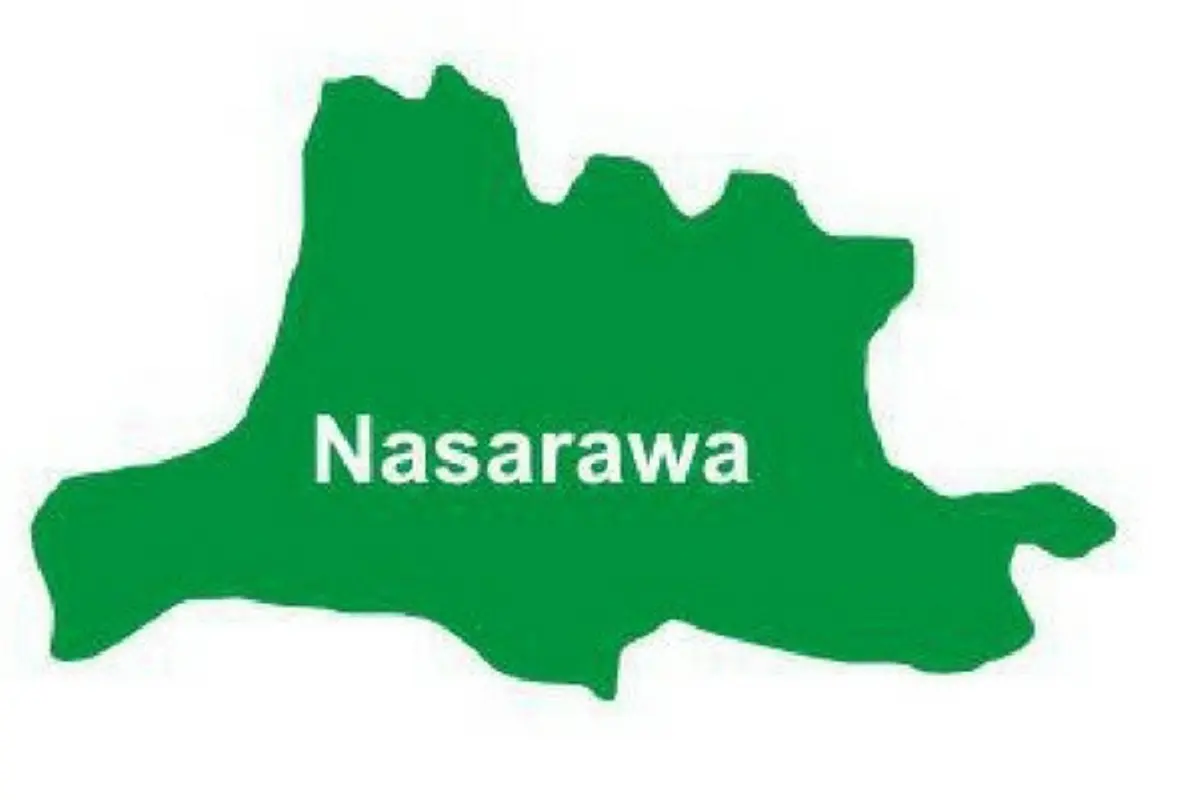
Nasarawa PDP Declares 7-day Protest

Yesterday, protesters demanded that the Independent National Electoral Commission (INEC) examine the outcome of the governorship election in Nasarawa State.

The Peoples Democratic Party (PDP) Stakeholders-led demonstrators in Nasarawa State’s Karu local government area demanded the resignation of the state’s resident electoral commissioner immediately.

INEC was accused of bias in the way the gubernatorial and House of Assembly elections were handled by the party leadership in Karu.

With signs reading “#INEC We Say No To Manipulations; #INEC Keep Your Promise; International Communities Save Our Country Our Leaders Are Compromised; Protect Us From Manipulators; We Need Our Nation To Be Cleansed From Injustice And Manipulation; The Will And Rights Of The People Must Be Respected,” protesters also voiced their displeasure with the results.
The group’s leader, Comrade Chindo Allahyayi, announced the start of a seven-day protest at the group’s Karu headquarters and requested the commission to reinstate the people’s mandate.

We are starting a seven-day protest to inform the entire state and country that our candidate has won, he declared. We are thus requesting that INEC reconsider its judgment right now and declare our candidate the winner.

“We are urging people to return to the IReV portal and review all the results from all the voting places in the 13 LGA of Nasarawa State so they can clearly see that David Ombugadu, a candidate for the Peoples Democratic Party (PDP), won the March 18 governorship in Nasarawa State.

Because it won’t result in a healthy society, we strongly denounced the election rigging, Allahyayi stated.
The Coalition for Ombugadu Campaign’s public relations representative requested the commission to change course and examine its operations.

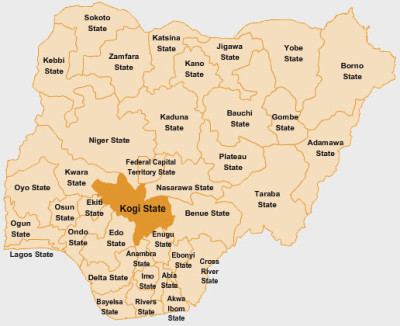
Why we want polls that prodcued Tinubu cancelled –Kogi women

Women in Kogi State’s three senatorial districts have demanded that the February 25 presidential and National Assembly elections, which resulted in Asiwaju Bola Tinubu being elected president, be called off.

The women based their justification for the appeal on the “chaos, brigandage, widespread violence, bloodlets, and even deaths that marred the election” at a press conference in Lokoja.

“As you are all aware, a major milestone in the history of Nigeria recently passed, a date that has become a watershed in the democratic story of Nigeria,” said Esther Opaluwa, who addressed on behalf of the organization. All Nigerians, both at home and abroad, were anxiously awaiting February 25, 2023 because it would mark the start of a new democratic era in our nation. Everyone, including our youth and women, avidly participated in all the events that led up to that day.

“But, the day came to a tumultuous end, with brigandage, widespread violence, blood, and even fatalities. Our traumatized sensibilities were further harmed by what we were seeing on the television screens, which was completely the opposite of what the Federal Government, our President, Mohammadu Buhari, the NASS, the security chiefs, and even the umpire of the electoral processes had assured us will happen, as we lamented and mourned over what had transpired during the day at almost all of the polling stations.

The women demanded that the perpetrators of violence in and around Kogi State be brought to justice and encouraged Governor Yahaya Bello to assume his role as the state’s top security official.

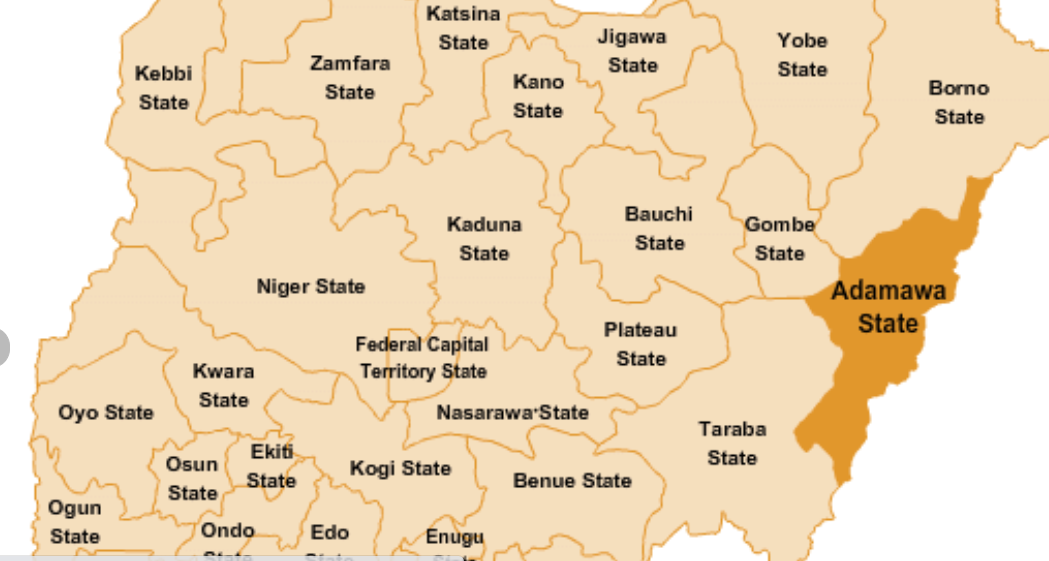
Amnesty International asks Adamawa State Government to lift expulsion of NGO’s

Amnesty International has demanded that the state governors’ orders to exclude non-governmental organizations (NGOs) from Adamawa immediately be upturned.

In a statement, Amnesty International’s Director, Osai Ojigbo, claimed that the decision will harm the states’ most vulnerable citizens.

The government of Adamawa state since outlawed NGOs’ operations as the organizations were charged with attempting to sway voters in the recently held presidential and national assembly elections.

Yet Mrs. Ojigbo underlined that the persecution of organizations that advocate or protect human rights in governments must come to an end.

“Amnesty International demands that the governors of Adamawa immediately reverse their arbitrary deportation of non-governmental organizations. When organizations are attacked for nothing more than carrying out their routine duties while saving lives, it primarily harms the disadvantaged communities they are assisting.

“This campaign of intimidation against independent groups and human rights advocates must halt. The governor of the states of Adamawa must permit independent organizations and human rights advocates to operate freely.

“The suspension of NGOs in Adamawa state, is repressive and a direct attack on the civic space. Authorities of the state must desist from the such arbitrary exercise of powers and focus more on rebuilding and resettling communities displaced by years of attacks by bandits and insurgents,” she said.

Benue government slams INEC for not providing PVCs to IDPs

The Benue state government has voiced alarm over the difficulty in obtaining Permanent Voter Cards (PVCs) for a number of Internally Displaced Persons (IDPs) in the state so they can participate in the upcoming elections.

At the beginning of the monthly distribution of food and non-food supplies to IDPs at the SEMA headquarters in Makurdi, Dr. Emmanuel Shior, the Executive Secretary of the Benue State Emergency Management Agency, raised the issue.

“I found out that virtually all of them registered, but not all of them have acquired their PVCs,” said Dr. Shior, who made this statement on a recent routine visit to the IDPs to interact with them and determine whether they were properly registered and had received their PVCs.

“They are unhappy, and I am also unhappy. The Independent National Electoral Commission, or INEC, is to blame, not the Benue state government or SEMA. “But the ones that have their PVCs, a good number of them, are ready to vote.”

The SEMA Executive Secretary complimented Governor Samuel Ortom for increasing the month’s intervention and praised him for providing monthly provisions for the IDPs to ensure their maintenance.

In response to an assertion made by the executive secretary of SEMA, Mr. Terkaa Andyer, the public information officer for INEC in Benue State, stated that “the commission went around to capture all IDPs who possessed voter cards.

“The commission profiled them in a way that allowed for the printing of their cards for them. Unfortunately, the majority of them live in rural areas. We couldn’t produce cards for them using the data we collected.

“They (IDPs) were at fault, not the Commission, because they were unable to provide us with enough information to enable us to create cards for them. The Commission did not consciously intend to deny the IDPs in the State their right to vote.

SOUTHERN KADUNA: BUILDING FROM THE RUINS

Being a Keynote delivered by Gloria Mabeiam Ballason Esq at the Public Presentation and Launch of: Southern Kaduna: Yesterday, Today & Tomorrow, at New Choice Hall, Kafanchan on Friday 10 February, 2023.

PROTOCOLS

Thank you for the privilege of this invitation. I thank Pastor Gideon Mutum and the organizing team for extending this invitation to me and I especially congratulate the Author, Pst. Philemon Cletus Gado, who deemed it worthy to capture his scholarly research and thoughts into a book and has now invited us to engage the ideas through the tripartite tangents of the past, the present and the future.
A quick walk down history’s lane:
An Austrian born German under whose leadership the Nazi party climbed to power became the Reich Chancellor in 1933. Brilliant, engaging but humanly debased and depraved, he capitalized on economic woes, popular discontent and political infighting to seize power in Germany and to fan the embers of virulent hatred against the Jews. By 1941, the anti-semitic sentiments of this son of a local customs official led to a deliberate and systematic murder of European Jews and it lasted untill1945- a period history tells us defined the second world war.
Prior to 1939, the global population of Jews worldwide had peaked at about 16.6 million. However, when it was all said and done and the beastly fangs of the holocaust had ravaged humanity and killed at least one in three Jews, six million Jews laid murdered. The figures next to the casualties was the varied forms the Jews were killed. The Germans called this “The Final Solution to the Jewish Question.” To put this in context, the Germans felt the Jews were a dispensable set of people who did not deserve to breathe the air above them nor walk the free ground beneath them.
Let’s flip the scene to the experience of a 4-year old in Zaria Nigeria, an experience that is personal because it is mine: One night in 1987, we were saying our night prayers and were singing the hymn ‘Have Courage My Boy to Say No’ ; when people outside our doors began to run helter-skelter. A neighbor ran into our house. My dad and mom tried to keep us all composed through the prayers but it was obvious that something terrible was going on outside. I looked up the wall before me; staring back at me was the long-term calendar that endured on our wall which read: ‘This Same Jesus is Coming Back Again. Are You Ready to Meet Him?’ I skimmed off the memories of what I had learnt at family devotions and in Sunday school and wondered silently if we would have to see Jesus that night.

We couldn’t round up the prayers. We ran through the back door of the house. There before us was thick smoke and darkness bellowing from the Campus. That was the longest, most terrifying night up until then. We made it through the night, but many were not so lucky.The next morning, my dad hobbled us into his blue Volkswagen Beetle car. We drove past Nassara Baptist church, it was burnt. We got to Ahmadu Bello University, Kongo campus, Rev. Dr. Ben Oruma had been beaten and left for dead, the chapel he preached in was razed down. Churches in GRA Sabon-gari and environs were burnt. We would later learn that it was a case of a religious disagreement in Kafanchan which snowballed into crises in Zaria and environs and resulted in the destruction of hundreds of lives and properties worth billions of naira. The beautiful world I imagined was shattered and I could not reconcile whether I was born a crime or for glory to reveal the majesty of my name.

The timelines will show that from the 1980 Kasuwan Magani crisis through 1986 in Yarkasuwa, Lere District,1987 in Kafanchan,1992 in Zangon Kataf,1999 in Southern Kaduna, 2000 which saw an unprecedented escalation in casualties, 2002 Miss World, 2011 in Anchuna, 2011 at Tabak, Kukum-Kagoro and then from 2012 till date, the cycle of violence meted on our communities in Southern Kaduna has continued. Our lives and history have been shaped by these unfortunate incidences. These are not slow-boiling conflicts as is often wrongly reported; they are systemic killings and mass atrocities crimes of genocidal proportions that demand international intervention.The political marginalization and the economic, educational and infrastructural deprivation, reveal a structural neglect. If that is not bad enough, under the Nasir Elrufai government, the region has experienced unprecedented persecution. Politically, the diversity of the state is not represented. Thousands of Civil servants and teachers have been thrown out of jobs. Tertiary institutions in Southern Kaduna were exclusively shut down by the Government. The identities of the people were changed by executive fiat and cultural heritages have been destroyed. Paramount leaders and dissenting civic voices and journalists have been imprisoned, kidnapped or killed.

But are we without hope? Hardly.

It was Nelson Mandela who said during the Healing and Reconciliation service in Johannesburg: ‘Our human compassion binds us the one to the other-not in pity or patronizingly, but as human beings who have learnt how to turn our common suffering into hope for the future.’
Mandela knew that for a people who suffer long term structural, systemic and often state-sponsored neglect, they would require hope and healing to move forward. The Jews knew it too. Today the story of the Jews goes beyond the Holocaust to a sterling example of how to build from the ruins.
Israel and the Jewish in the diaspora observe the annual “Day of Remembrance of the Holocaust and the Courage of the Jewish People,” because while most Jews were mired in poverty at the beginning of the twentieth century, they are today global champions in commerce, manufacturing, international trade, Hollywood and in creative inventions and innovations. They have built social networks across many countries and have imbibed a culture that promotes universal literacy and book learning, while retaining a sense of common fate and deeply shared brotherhood.

As I think about the present and the future of Southern Kaduna, the ability of the Jews to build from the ruins of the Holocaust to becoming an indomitable global example comes to mind. And this is where I draw a distinction to how the Jews and Black Americans interpreted their tragedies. Pivotal to Jewish history is the Holocaust while Black America continues to suffer from racism and white domination. The Jews however decided to move into conqueror mode so that when they speak of the effects of the Holocaust, the scars remind them of triumph. For Black America, racism is a reminder of their victimhood.
I often review and think of the years of pain and suffering that our people have gone through. Indeed, like Sen. Shehu Sani opined on 20 December, 2022, “No part of Kaduna is spared of terrorists’ attacks, violence and kidnappings. However the killings in Southern Kaduna by terrorist groups is systemic; the people of that part of the state are also institutionally treated like the blacks under apartheid South Africa” (Emphasis mine).

The years of suffering and persecution in Southern Kaduna go way before the 1980s to the time when our mothers, sisters and forbears were carted away as slaves and forcefully married in Zazzau while harvested agricultural products in farms and barns were forcefully seized and used as fodder to feed the animals of slave masters. Amidst these oppressions, Southern Kaduna people fought and refused to be a conquered territory.
For those who may just have joined the story in recent times, the overwhelming nature of the painful experiences our people now suffer, may seem isolating and frustrating enough to make them say like the Prophet Elijah ‘…everyone else abandoned the covenant and I am the only one left’; but that would be factually false because our forebears battled and worked so hard to get us to where we are today.

Indeed, the ground we stand on is hallowed ground. It is the sum total of the struggles of our founding fathers and mothers who through bitter days of slavery and domination built a region, broke the shackles of slavery and insisted on their true cultural identity. They through communal, missionary and church efforts, established schools and institutions and handed unto us the baton to run our race with perseverance, to win where they failed, to rise from the ashes and square up our chests in full confidence of our identity as God’s own people and as a region that never says die.Now that the baton is in our hands, we cannot afford to fail our forebears.

BUILDING FROM THE RUINS.

I have often imagined a day when the woes of Southern Kaduna would come to an end; when our people will no longer be judged by where they come from but by their capacity and the content of their heart and brain. What has now become clear to me is that if we have to wait for that day to see our redemption, many of us may never get to that Promised Land as was the case for Moses and his peers. We must therefore continue to build in spite of our circumstances rather than wait until fair winds come. Flowing from that stream of consciousness and the lessons that History present, I make the following suggestions:

  1. We must build a region where faith is anchored in character as opposed to empty religiosity. In a world that is increasingly becoming sullen and despicable in vices, we owe it as a duty to demonstrate faith through virtue and to be a people of substance who are known to be resolute in principles.
  2. We must continue to invest in the two sectors that are our natural forte: Agriculture and Education. It is now difficult to get to the farms but our people must continue to device means to farm to feed and stay alive on safe lands while combatting the terrorists. Permit me to dwell a little longer on education. In their book, The Chosen Few: How Education Shaped Jewish History; Jewish authors, Maristella Botticini and Zvi Eckstein, explained why the Jews, a relatively small population, specialize in the most skilled and economically profitable occupation. They put it to one principal factor: Education. Through education, the Jews have conquered the fields of law, science, medicine, trade, commerce, entreprenurship and scholarship. Nelson Mandela also recognized education as a great vehicle to bring equality of opportunity when he said “ Education is the most powerful weapon which you can change the world…because a good head and a good heart are always a formidable combination but when you add to that a literate tongue or pen, then you have something special.”

We must therefore invest in education so that our fortunes are not just tied to our local circumstances but we become global citizens. This really was the sense by which the missionaries built schools and our fathers and mothers were able to leave the villages and compete with their peers in the cities. Today, that Southern Kaduna does not immediately appear as many of the children and young persons have no access to basic quality education. Every compound has at least, a literate person, this means the measure of education in each compound should be diffused to those who have not. It is time for a campaign for education to be shared and for local schools to be supported. Each one should teach one.

  1. We must insist on our identity and culture. Cultural rights are human rights recognized in International Law and Covenants and the Nigerian Constitution. (See Article 27 of the Universal Declaration of Human Rights, Article 15 of the International Covenant on Economic, Social and Cultural Rights and Sections 21 and 39 of the 1999 Constitution of the Federal Republic of Nigeria (as amended). It is therefore criminal and a violation of rights for any government to change the names of chiefdoms or the identity of a people, desecrate their cultures or balkanize their identities. We must instill in our people pride in our identity and imprint in the children the assurance that we are enough. This means we must refuse to be named by what anyone thinks we are and lay hold of the original identities of our people and our lands. Traditional titles at all levels should be in our dialects and not in another external tribe. This is how a people define who they are and stamp it on the sands of time.
  2. Hate and Violence must be banished. We cannot afford for today’s victims to become tomorrow’s combatants. Any region that has known perpetual violence has to consciously work to recalibrate against being defined by it. Moses as a deliverer in the Bible had to flee from Egypt on account of a Hebrew turning against a Hebrew. Black America battles with street violence and while there has been a long history of Black Americans being brutalized and killed by White policemen as was the 2020 case of Black American George Floyd being killed by White Police Derek Chauvin, we see a recent ugly twist: On 7 January, 2023, Black American Tyre Nichols was beaten by five black American Police men and was hospitalized in critical condition until he died three days later. We often know what to say when those who come against us are external enemies but what can we do when Cain kills Abel? It is the reason why faith, character and scholarship must be our guiding light as we try to navigate this present darkness.

CONCLUSION

We are not hopeless. When we weep, we must not mourn as though we have no God. We may be pressed but not crushed; persecuted but not abandoned; struck down but not destroyed. We are God’s own chosen people and must pass down to those coming behind us, the faith we so graciously received, the value of education that would make them global citizens and the full complement of who we are- a people who neither shrink nor bow to injustice, a region that does not only survive but thrives. So let us turn a new page, not of lamentation but of hope because as scripture tells us, hope does not make ashamed.

DSS arrest of Sufin Zamani for song that suggests ‘Hausa actresses don’t stay in marriage’ is unconstitutional, illegal:- says HURIWA

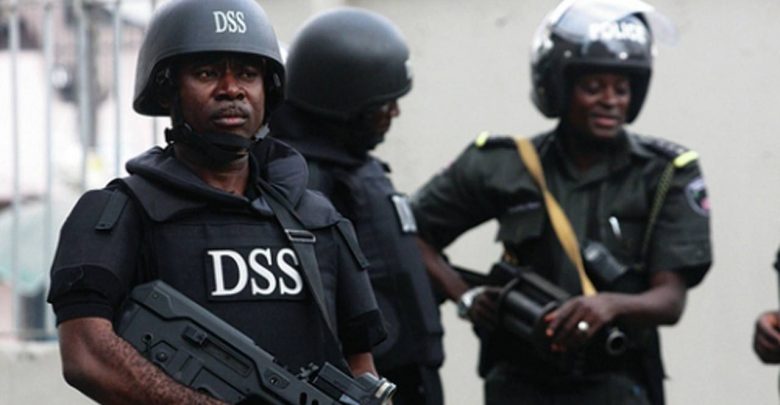
Hausa singer, Sarfilu Umar Zarewa, better known as Sufin Zamani, has been arrested and detained by operatives of the Department of State Services (DSS) and this is being described by the Prominent Civil rights advocacy group- HUMAN RIGHTS WRITERS ASSOCIATION OF NIGERIA (HURIWA) as an affront to the constitutionally guaranteed human rights of the arbitrarily detained musician. The Rights is therefore advocating his release without ant further waste of time. 

The group said if anybody feels that his song has labelled the person, then such a person should Institute a civil suit and not to report to the use of the Department of State Services to do such a civil matter when Nigerians are now being bombarded by terrorists which should be the priority of the DSS and not get into such petty civil matter. 

HURIWA recalled that the musician Zarewa was reported by authorities of the Motion Pictures Practitioners Association of Nigeria (MOPPAN) for putting out a record titled ‘Matan Fim Ba Sa Zaman Aure’.

The title suggested that “Northern actresses don’t stay in a marriage.”

Kannywood actresses alleged that it was derogatory to them.

HURIWA recalled  that In a statement signed by Al-Amin Ciroma, the national PRO of MOPPAN, the association said a complaint letter was written to it by Wasila Isma’il, the veteran actress, on behalf of other women in the industry.

It said they demanded justice from the leadership of the association over a record done by Zarewa. The statement also quoted Wasila as saying that the women felt insulted by the lyrics of the song.

MOPPAN stated that Ahmad Sarari, the national president of MOPPAN, thereafter ordered an investigation to be carried out.

HURIWA however condemned the arrest of the Musician by the Department of State Services and has asked the Director General of the Department of State Services Alhaji Yusuf Magagi Bichi to order his officers to free the illegally detained musician forthwith and profusely apologise to him over the flagrant violations of his human rights because HURIWA said in as much as he did not name any particular Actress in the said song, arresting him for manifesting and celebrating the fruits of his creative tendencies and talents amounts to anti-intellectualism, unconstitutional,  illegal and primitive just as the Rights group reminded the DSS that Nigeria is a constitutional democracy and not a dictatorship or theocracy.  

HURIWA is praying the DSS to get busy by arresting and crushing all the armed terrorists destroying lives and property of the citizens. 

HURIWA cited relevant sections of the Nigerian Constitution to affirm that the DSS has committed egregious breach of the constitutional rights of this illegally detained Hausa Musician thus: “35.  (1)  Every  person  shall  be  entitled  to  his  personal  liberty  and  no  person  shall be  deprived  of  such liberty  save  in  the  following  cases  and  in  accordance  with  a  procedure  permitted  by  law  –   (a)  in  execution  of  the  sentence  or  order  of  a court in  respect of  a  criminal  offence  of  which  he has been  found  guilty; and 39.  (1)  Every  person  shall  be  entitled  to  freedom  of  expression,  including  freedom  to  hold  opinions  and  to receive  and  impart ideas  and  information  without interference.”

HURIWA has therefore called for the immediate,  unconditional and swift release of this Nigerian Musician and with great deal of apologies and compensation. 

NNAMDI KANU: NIGERIA, NOW A BANANA REPUBLIC- SAYS HURIWA

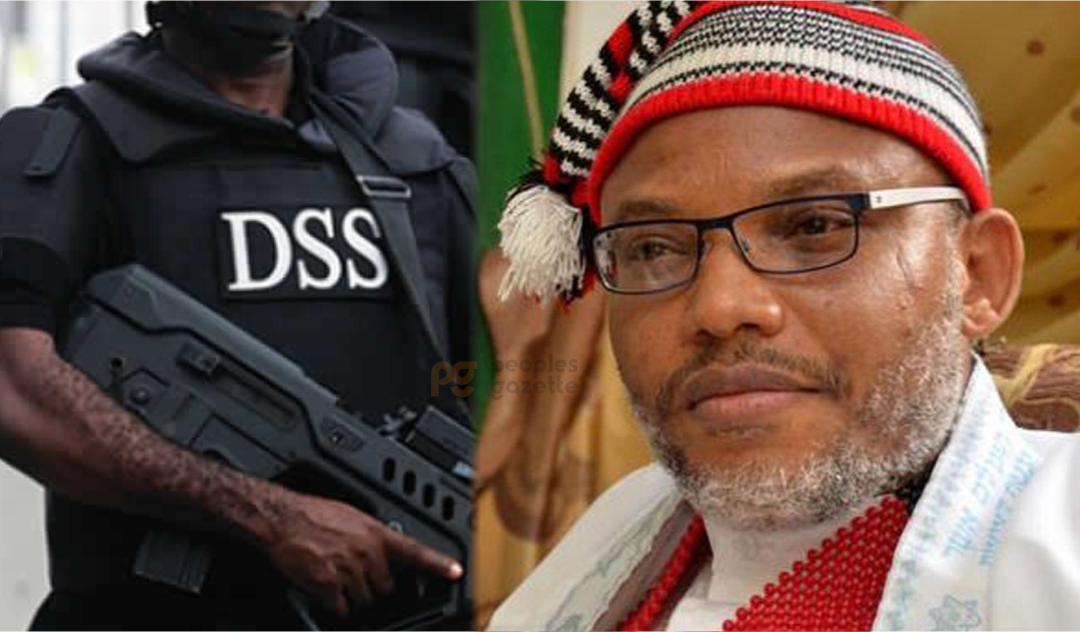
The Prominent Civil rights advocacy group- HUMAN RIGHTS WRITERS ASSOCIATION OF NIGERIA (HURIWA) has expressed disappointment and utter dissatisfaction with the refusal of the presiding judge of the Federal High Court, Abuja division Her Lordship Justice Mrs. Binta Murtallah-Nyako to exercise her constitutionally permitted discretionary power to grant bail to the detained leader of the Indigenous People of Biafra (IPOB) Mazi Nnamdi Kanu few days after President Muhammadu Buhari said Nnamdi Kanu wouldn’t be granted bail in what appears like Executive versus Judicial gang-up against the defendant. 

HURIWA said as a civil Rights body, it is dismayed that the Honourable Judge of the Federal High Court did not even make reference to that extrajudicial comments of the head of another arm of government President Muhammadu Buhari that the first defendant in a suit between the Federal Government and a citizen Mazi Nnamdi Kanu wouldn’t be granted bail but she proceeded to do exactly as stated by President Muhammadu Buhari as if to say that the judiciary is subservient to the executive arm of government.  HURIWA is appealing to the judiciary to safeguard her independence to avoid encouraging Nigerians to resort to self help measure if they perceive that the judiciary does the bidding and execute the scripts authored by politicians in the office of President Muhammadu Buhari. 

HURIWA in a media Statement in reaction to the reported rejection of the bail application filed by Nnamdi Kanu who has spent a year in pre-trial detention with the Department of State Services (DSS) said it was disturbing that President Muhammadu Buhari who instituted the matter against Mazi Nnamdi Kanu and his organisation seems to be adopting underhand tactics to cajole another independent arm of government-the judiciary to do her bidding as against the clear provisions of the Constitution on separation of powers as provided for in Sections 4, 5 send 6 of the Constitution of the Federal Republic of Nigeria of 1999 as amended. 

Besides, HURIWA said it is unclear why a citizen would spend a year in prison whilst undergoing trial for charges that the Federal Government has not adduced irrefutable proofs but there are top government officials who looted public treasury to the tune of nearly #200 billion per person which endangers national security but such alleged ‘thieves’ are on bail even when the offence of such a large economic sabotage of Nigeria is the reason why insecurity has overwhelmed the current administration whereas the charges against Mazi Nnamdi Kanu is bordered on alleged use of inflammatory language against the person of President Muhammadu Buhari who is only one out of over 200 million Nigerians.  

In a statement by the National Coordinator Comrade Emmanuel Onwubiko, HURIWA recalled  that the detained Prisoner of Conscience Mazi Nnamdi  Kanu is currently facing a seven-count charge, had in the application he filed through his team of lawyers led by Chief Mike Ozekhome, SAN, equally challenge the revocation of the bail the court earlier granted to him.

HURIWA said that He Mazi Nnamdi Kanu specifically urged the court to set aside the order it made on March 28, 2019, which not only issued a bench warrant for his arrest, but also gave FG the nod to try him in absentia. The IPOB leader told the court that contrary to FG’s allegation that he jumped bail, he said that he fled for his life after his home town at Afaraukwu Ibeku in Umuahia, Abia State, was invaded by soldiers, which he said led to the death of 28 persons. Contending that he was denied fair hearing before his bail was revoked, Kanu, attached eight exhibits that included photographs, as well as an affidavit he deposed to from Isreal after he fled from the country.

HURIWA sadly recalled that whilst  dismissing the bail request on Tuesday, trial Justice Binta Nyako, said she was not satisfied with the reason the IPOB leader gave for his failure to appear in court for continuation of his trial. The trial judge noted that from records of the court, Kanu, was represented by his lawyer on the day his bail was revoked, likewise his sureties.

“In fact, he sureties told the court that they did not know the whereabout of the Defendant and even applied to be discharged from the matter.

“Therefore, the Defendant was not denied fair hearing”.

Besides, Justices Nyako held that though a court could vacate a previous order when confronted with a cogent and verifiable reason, “in the instant case, I have not been given any, neither have I been given any reason to set-aside the order.

“The present application amounts to an abuse of court process for attempting to relitigate an issue already decided by the court. “If the Defendant is dissatisfaction, he has the Appeal Court to go to.

“This application is accordingly dismissed”, Justice Nyako held.

HURIWA said although it is not in her place to determine for the presiding judge how to discharge her constitutional obligations but the Rights group said the unfair treatment of Nnamdi Kanu because of where he comes from is against Section 42(1) of the Constitution which absolutely makes discrimination unacceptable and unlawful just as the Rights group said the accusations of diversions of humonguous quantum of public cash which should ordinarily attract the dead penalty is treated with indifference by the judiciary particularly because most of those being accused are of a particular section of the country and are considered to be in the good books of the ruling party- All Progressives Congress which the Rights group said makes Nigeria appear like a rogue entity. 

The Rights group bemoaned the ugly fact that four days ago in far away Rwanda,  President Muhammadu Buhari was quoted as ruling out the bail option for Nnamdi Kanu, the detained leader of the proscribed Indigenous People of Biafra (IPOB).

The President said Kanu’s continued detention is an opportunity for him “to justify all the uncomplimentary things said against Nigeria while he was in Britain.”

Buhari said this at a bilateral meeting with the British Prime Minister, Boris Johnson, on the margins of the 26th Commonwealth Heads of Government Meeting in Kigali, Rwanda.

According to a statement by his Special Adviser on Media and Publicity, Femi Adesina, the president said, the Federal Government may not grant the IPOB leader such a privilege anymore considering the fact that he had jumped bail earlier.

“He felt very safe in Britain and said awful things against Nigeria. We eventually got him when he stepped out of the United Kingdom, and we sent him to court. Let him defend all that he said there.

“His (Kanu’s) lawyers have access to him. Remember he jumped bail before, how are we sure he won’t do it again if he’s admitted to bail?” Buhari was quoted to have said.

HURIWA said the extra legal attempts by President Muhammadu Buhari to coerce the judiciary to do the bidding of his whims and caprices shows that indeed Nigeria is not just a Banana Republic but a full dictatorship. HURIWA said the Judiciary under section 6 enjoys the judicial powers of the state just as the Rights group said under Section 36(5) every accused person is deemed to be innocent in the eyes of the law. HURIWA urged Justice Binta Nyako to issue a gag order banning President Muhammadu Buhari and his aides from interfering in a matter pending before her Court unless what we are being told is that President Muhammadu Buhari is now the Chief Judge of the Federal High Court. 

Closure Of Dei-Dei Market And Letting Okada Riders Who Are Mostly From Niger Republic To Operate Is Apartheid: HURIWA Tells FCT Minister

Frontline civil society group:- HUMAN RIGHTS WRITERS ASSOCIATION OF NIGERIA (HURIWA) has asked the minister of FCT Malam Muhammad Bello to re-open Dei- Dei market, find a way to rebuild the infrastructures destroyed by commercial motorcyclists in a fracas yesterday Wednesday or ban the operation of commercial motorcyclists in Deidei and Kubwa for justice, equity and fairness. 
The Rights group said it is offensive to the principle of natural justice that two parties were involved in a fracas but the authority rather than make peace and create harmony and reconciliation decided to back one of the combatants because of religious motive. HURIWA said the role of a minister of the Federal Republic of Nigeria is that of service without bitterness or sectionalism since ministers are appointed for all of Nigeria. 
“We do not want to believe that it is true that the FCT Minister who is a Nigerian will adopt controversial and unnatural steps that offends the commercial interests of his fellow citizens and let off the motor cyclists who are largely illegal aliens from Niger Republic, Chad and just a sprinkling of moslem Northern Nigerians only because traders at Dei Dei market that fought with Okada riders are mostly Igbos from Southern Nigeria and are Christians by faith Orientation.
“We call on President Muhammadu Buhari who constitutionally is the governor of FCT to ask his subordinate the FCT Minister to adopt solution that won’t be seen as favouring a party in a fight by two parties only because the favoured party are almost 100 percent Moslems sharing same faith system with the minister. Leadership is not to bow to religious or ethnic sentiments. leadership must be altruistic, nationalistic,  just, fair and equitable and the Minister who has worked harmoniously with peoples of all faith systems and ethnicity for years, should not now be remotely connected to this sort of story of open but shameful partiality and crude biasness.”
HURIWA recalled that the FCT Minister, Malam Muhammad Bello, has ordered the immediate closure of the Dei-Dei International Building Material Market following yesterday’s violence which claimed four lives.
Trouble started at the market when an unidentified female trader reportedly fell of a commercial motorcycle and was crushed to death by an articulated vehicle.
Other traders from the market then burnt the motorcycle blaming the biker of reckless riding. Their action however prompted a reprisal from okada riders in the area who regrouped in large number and went into the timber section of the market and set it ablaze.
The FCT Minister while inspecting the scene of the incident with FCT Commissioner of Police Sunday Babaji, the Director State Security Services, alongside other sister security agencies and top officials of the FCT Administration, directed for the indefinite closure of the market.
Bello directed the community and the market leaders to fish out the hoodlums responsible for the crisis.
He said, “The community and market leaders must fish out hoodlums and bad eggs among them, unfortunately this time around hoodlums carry arms and they shot innocent people. As a matter of fact, I saw four corpses this is very sad and totally unacceptable in Abuja.
“We have agreed with security agencies that full scale investigations will be done, and the communities have to be part and parcel of the solution or else there will be no peace. In the interim the timber market and the surrounding markets, including all the activities along the road that have clustered it and made it unpassable will all stop untill the technical team reviews everything, and then we will take the next decision.
“I am appealing to other communities within the FCT that there is no tribal or religious misunderstanding because all the leadership of various communities have lived here in peace for many years. This is simply the matter of criminals and hoodlums taking the laws into their hands” he said.
On his part, the vice chairman of Timber Shed market Dei-Dei, Ifeanyi Chibata told the minister and his team that about 45 to 50 shops were burnt with 25 vehicles set ablaze during the unrest.
The secretary Tomato and Onion Sellers Association Dei-Dei, Dahiru Garba Mani disclosed that four persons were killed during the clash in the market.
They both appealed to the minister of FCT to make provision for a police division with adequate personnel.
HURIWA has however asked the minister to rescind his decision which is offensive to Constitutionalism, equity, fairness and equality before the law of natural justice and respect to human rights of all.