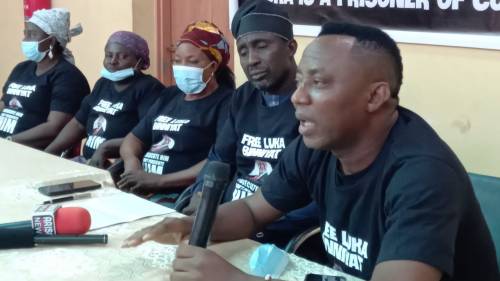
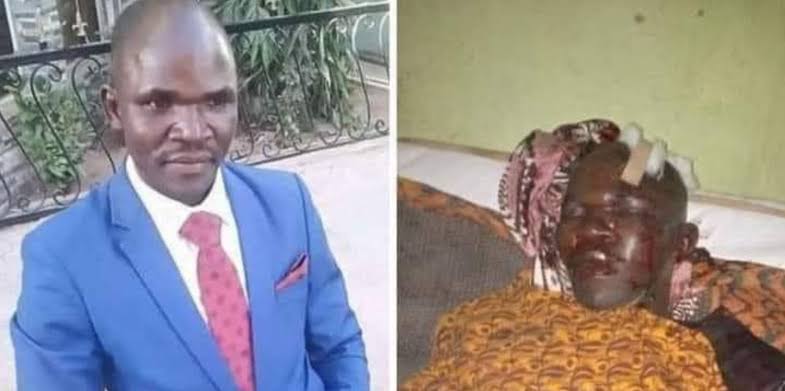
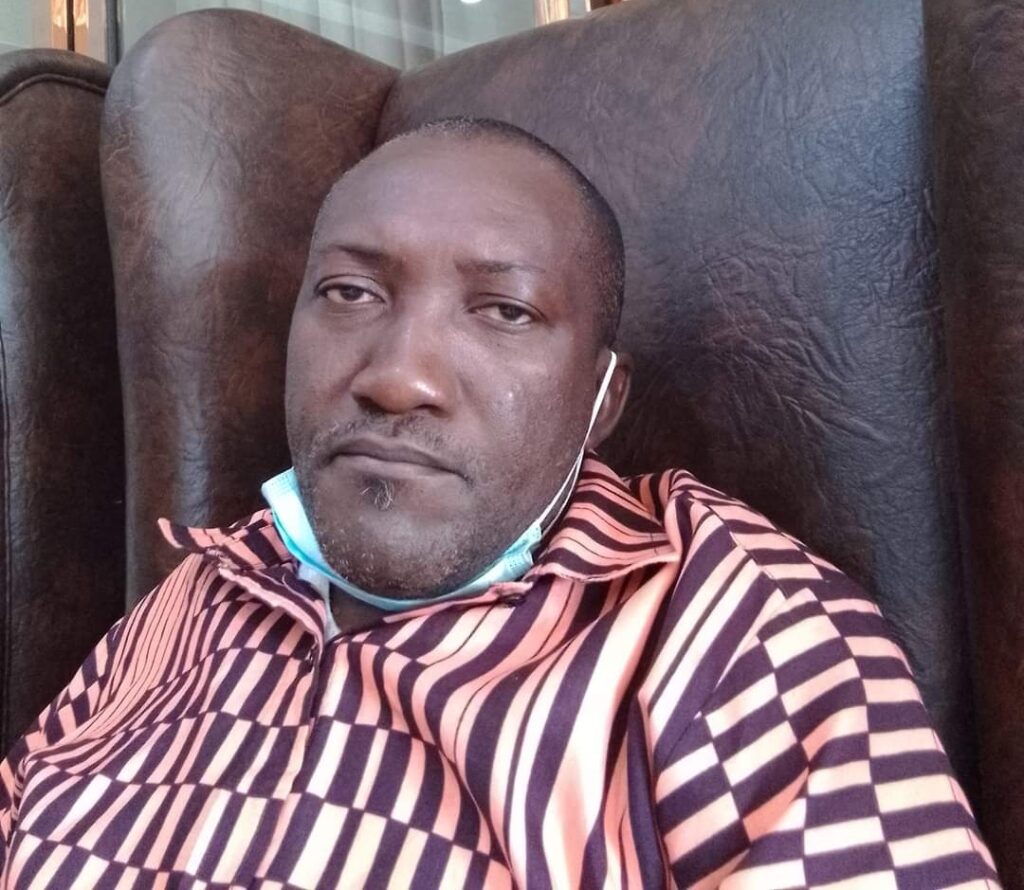
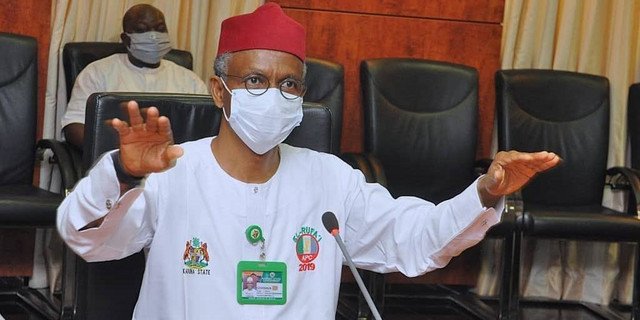
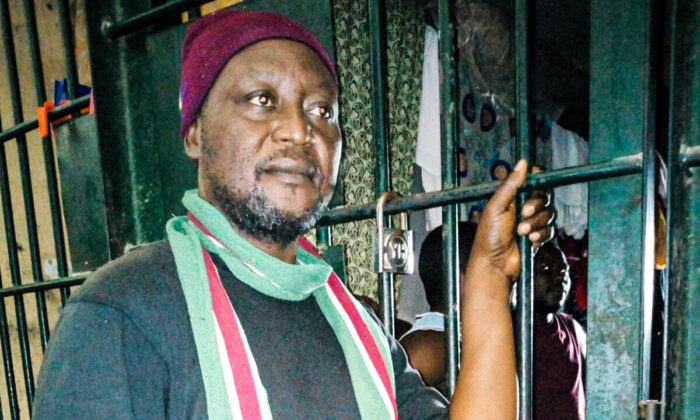
Human rights activist, Omoyele Sowore, has called on the international community to sanction Kaduna State governor, Malam Nasir el-Rufai, over the continued detention of a journalist, Mr Luka Binniyat.
Binniyat is also the spokesperson for Southern Kaduna Peoples Union.
Sowore also called on the Kaduna governor to order the release of the journalist as matter of urgency and necessity.
He made the call on Saturday in Abuja during a press conference organised by Southern Kaduna Peoples Union and civil society organisations over the continued detention and persecution of the journalist.
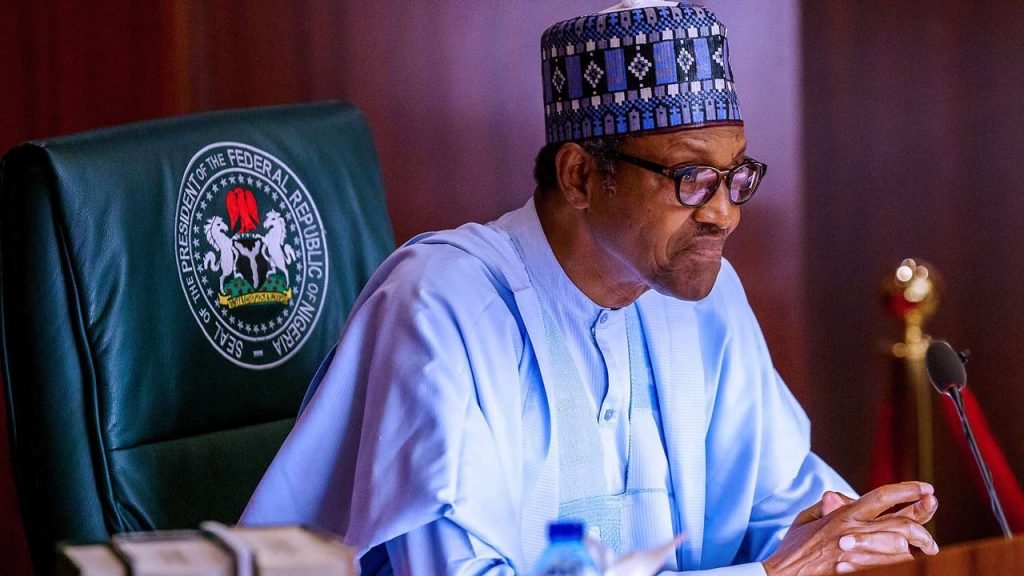
Sowore said it had become official policy of the President Muhammadu Buhari regime to do everything to silence, victimise and frustrate journalists and activists opposed to terrorism in Nigeria.
He said Governor el-Rufai had a penchant for gagging citizens and journalists, who cross his path or have critical view of his administration.
Sowore said, “It is known that the governor of Kaduna State, Nasir el-Rufai, is one of the most intolerant governors when it comes to free speech in Nigeria.
“It is important not just to call on international community to sanction Nigeria but in particular I want to call for sanction of el-rufai as violator of free speech.
“I know for a fact that el-Rufai cannot travel to too many decent countries around the world anymore. I am aware he has been banned from entering the United States. But I think it is time he is banned from entry into any country around the world that have respect for fundamental rights particularly press freedom.
“I want to call on the Committee for the Protection of Journalists to declare el-Rufai one of the major violators of media freedom around the world.”
The activist added that there was no end in sight for attacks on journalists and violation of press freedom until individuals were held accountable for their atrocities and ignoble behaviour towards journalists.
He added that the Kaduna governor was not only known for ordering the arrest and detention of journalists in the state but also known for filing ‘libel suits’ against them despite the fact that he was a public office holder.
Sowore explained that the governor was in the habit of manipulating and abusing courts in the state for his selfish agenda.
He added, “Not only does el-Rufai engage in bullying online but his children are also bullies. So, it is almost a psychological problem running in his family to be intolerant of posting views and I think the world should take note of this before it becomes a murderous act.
“It is dangerous because he is using official channels to mobilise criminals against these reporters.
“It is also urgent that Luka Binniyat is released immediately. Not only should he be released, but his security should be guaranteed because I am very sure that the governor of Kaduna State will use official and unofficial means to silence this particular individual.”
On his own part, National President of SOKAPU, Jonathan Asake, said Binniyat had been arrest and detained for five weeks without being granted bail.
Asake called on el-Rufai and other government officials responsible for his continued detention without trial to allow the courts to do their work and stop the persecution.
He said the journalist was arrested and charged for cyberstalking at a magistrate court that had no jurisdiction and since then he had been held despite his health challenges.
He said, “For over six years running, communities in Southern Kaduna have incessantly come under severe attacks by Fulani killer Herdsmen.
“These attackers usually invade our vulnerable and defenseless communities at odd hours unprovoked, where they mercilessly massacre the hapless villagers (mostly women and children being the greatest casualty), they maim, rape our women, destroy our properties, food stores and crops, abduct many more people into the bushes and often time occupy our lands with the government of the day doing nothing about it with no effort to bring perpetrators to justice.
“These atrocious and barbaric attacks on our communities which often times are of genocidal scale, have become the norm where presently we have over 108 identified communities have been displaced and living in dehumanising conditions as internally displaced persons without food or any social amenities like schools for the children and health care facilities.
“It is these kind of atrocities regularly meted out on our people that comrade Luka Binniyat, a journalist and true son of Southern Kaduna has refused to be silent about but committed himself to relentlessly expose them against the apparent complicit posture of the government authorities in Kaduna state which has continued to clamp down on press freedom and free speech as opposed to provisions of our national constitution.
“We are hereby calling on the government in Kaduna that are responsible for his continuous detention without trial to allow the courts to do their work and stop the persecution.
“We also call the attention of all media practitioners, the civil society and the international community to be on notice that free speech and the press are under siege in Kaduna State.”
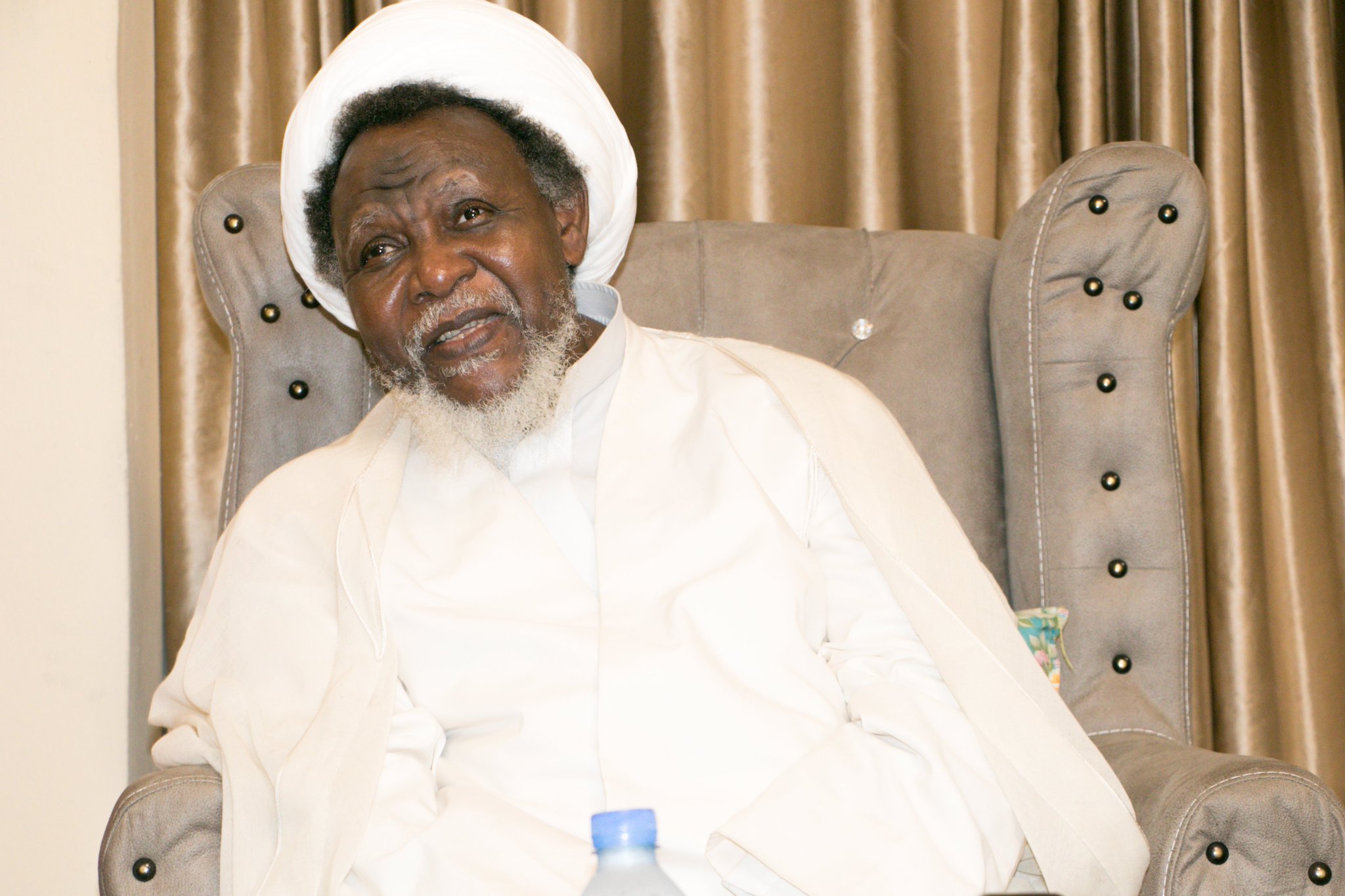
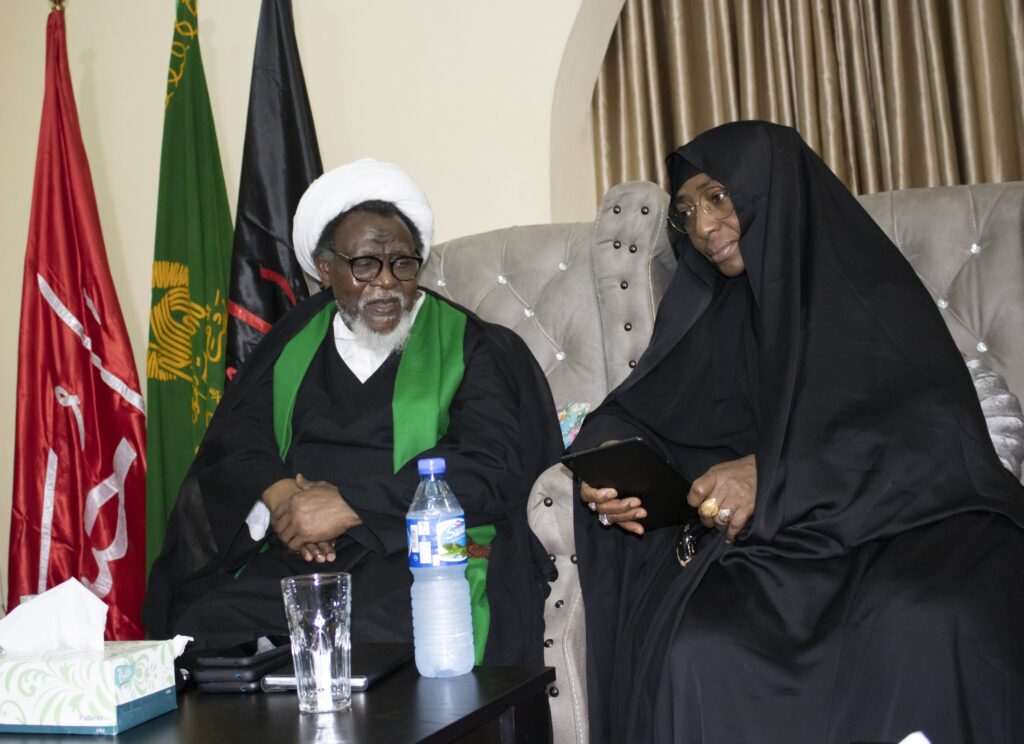
The Leader of the Islamic Movement of Nigeria (IMN), Sheikh Ibraheem El-Zakzaky, has accused the Nigerian securities of appearing like terrorists while on mission.
The Islamic Cleric who said this at the 6th Anniversary of Zaria Massacre accused the Nigerian Army of killing over one thousand of his followers in Zaria and took away their bodies.
“Men in uniform are sent to unleash terror on people–soldiers, policemen and secret police, who do not wear uniforms. In fact, nowadays, they even wear terrorist garments–meaning, they hide their own faces in the same way terrorists do.
“The state has become an instrument of terrorism, that it has taught the people to be violent! People have been forced, due to circumstances, to become violent, because the state has become violent.
“We are talking about rights. We have to understand that this society can never be in order unless those in authority respect the rights of other people.
“Those in authority think they are the law (or rather) above the law, that they can take the life of anybody at any moment. They care about no amount of talk, preaching or advice; they don’t simply care. They are indifferent to what happens to other people,” he said.
He said in Nigeria, the right to life which is a fundamental human right has been taken away from the citizens.
“This right to life, including other rights, is enshrined in the Nigerian constitution, which those in authority always swear to protect. They swear in holy books they believe in (the Holy Qur’an, and the Bible).
“Alas, we find in present society today right to life is actually taken away. Those in authority think that they have the right to take the life of anyone at any moment.
“Extrajudicial killings have become an order of the day. Instruments of law enforcement that are employed to protect the law are now being used (by those in authority) to violate the law.
“See what is happening now in this society in which everybody seems to be in a state of fear, including those in the authority of course because they would never have peace if other people are not in peace as well! So, the most important right which everybody must protect is the right to life.
You don’t have the right to take the lives of others; you don’t even have the right to take your own life–nobody has the right to commit suicide. You don’t have the right to commit abortion; because, if your mother had aborted you, you would not have been alive. Nobody has the right to take the life of anybody!
“Similarly, there is the right of environment, there is the right of all the living creatures, including animals; they have rights! The dead also have rights–the right to be honoured after their death with funeral that is in accordance with their own laws and cultures.
“But, nowadays, you can see, those in authority think that they can kill and even burn the bodies or take them to an unknown destination and bury them in mass grave.
“The Zaria Massacre which happened six years ago is a case in question, wherein three days the Nigerian Army cordoned the city of Zaria, including all the routes leading to the city, murdered over one thousand people and took all their bodies and bury them in different mass graves. On top of this, they arrested about five hundred people for the alleged ‘murder’ of one soldier. Of course, all the courts have discharged and acquitted all those they had arraigned before them,” the Shi’ites leader noted.
While accusing the government of trying to hide the evidence of the killings in Zaria, El-Zakzaky said the government had already murdered peace when it killed his followers in Zaria.
“See how those in authority want to wipe out even the evidence about the atrocity they have committed. This was the first step this administration took, and you can see, subsequently, how wanton killings become the order of the day.
“Now people are living in perpetual fear everywhere. You can not murder others and expect yourself to stay in peace. They have (by committing Zaria Massacre) already murdered peace!
“We need to rethink a future. Some people were asking me, is there any bright future for this country? I say, there is! We are not living in a hopeless society. Certainly, there is hope, but the hope has to lie in the people, not those in authority.
“We have no confidence in those in authority because they are indifferent to what happens to the society. But the people have to rise up and urge for a better future for our society. We hope in the near future things may change for the better–that is our hope,” he added.
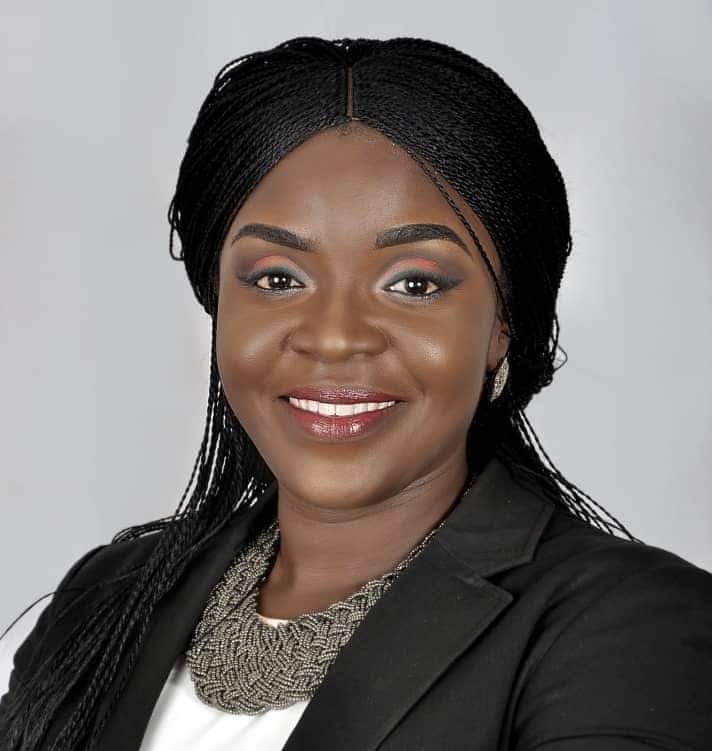
Kaduna based Human Rights Lawyer, Gloria Mabeiam Ballason Esq, has sued the Kaduna State Governor, Nigerian Communications Commission (NCC) and 5 telecommunications companies for shutdown of telephone services and the internet; an action she alleges was not backed by law, violated her rights and the rights of affected citizens resident in Kaduna State.
The lawyer who is also alleging that the action of the Kaduna State Governor and the government does not satisfy the constitutional exception of “…any law reasonably justifiable in a democratic society in the interest of defence, public safety and public order…” said more lives who could not call for help from security agents perished while businesses and means of livelihood of citizens in Kaduna State were grossly affected by the shutdown of telecommunication networks in the state.
The Suit also calls the Nigerian Communications Commission (NCC), an independent national regulatory body established by law, to answer the question whether it is answerable to the Governor of Kaduna State or bound by the law that governs it.
The Suit which was filed at the Federal High Court, sitting at Abuja- F.C.T. is on behalf of the Applicant and affected citizens. She says her litigation work, online HOJRADIO/TV and annual House of Justice Summit & Banquet were greatly affected by the shutdown while Nigerian citizens resident in Kaduna State whose rights have been, is been or likely to be violated due to the network shutdown, suffered astronomic loses without a commensurate improvement in the security situation in Kaduna State.
Others sued in the suit include the Attorney General of Kaduna State, Airtel Networks Limited, GlobalCom Limited, Emirates Telecommunication Group Company (Carrying out business in Nigeria under the name and style of Etisalat and now 9mobile) and MTN Group LTD.
The United Kingdom Parliament will, on Wednesday, debate a petition submitted to it which called for sanctions against the Nigerian Government and its officials over cases of human rights abuse during the #EndSARS movement.
Members of the Parliament will hold a debate on Magintsky sanctions and human rights abuses today (Wednesday) at the Westminster Hall.
The debate which will start at 2:30 pm (1.30 pm Nigerian time) will be led by parliamentarian Chris Bryant.
In October 2020, a petition was filed which condemned the illegal activities of the now disbanded unit of the Nigeria Police force, Special Anti-Robbery Squad (SARS) which led to a protest and consequent shooting of peaceful protesters by members of Nigeria’s security force.
The petitioners argued that deploying sanctions against the government would serve as a deterrent to anyone involved in human rights abuses.
It reads, “Implement sanctions against the Nigerian Government and officials
The Government should explore using the new sanctions regime that allows individuals and entities that violate human rights around the world to be targeted, to impose sanctions on members of the Nigerian government and police force involved in any human rights abuses by the Nigerian police.
“There have been deeply concerning reports of a Nigerian police force unit (SARS) engaging in illegal activities and human rights abuses, and there have also been reports of police firing at protestors calling for SARS to be disbanded.
“Deploying sanctions would provide accountability for and be a deterrent to anyone involved in violations of human rights.”
All petitions run for six months and by the time the petition closed, it had gathered 221,258 signatures and the United Kingdom government responded on November 11, 2020.
Responding in a statement issued by the Foreign, Commonwealth & Development Office, the government said it is concerned by violence during the protests and was waiting on the outcome of Nigerian investigations into reports of police brutality.
The response stated, “The UK Government is deeply concerned by violence during recent protests in Nigeria, which tragically claimed lives. Our thoughts are with the families of all those affected.
“The Foreign Secretary issued a statement on 21 October calling for an end to the violence and for the Nigerian Government to urgently investigate reports of brutality by its security forces and hold those responsible to account.
“The Minister for Africa tweeted on 16 October, noting that the Nigerian people’s democratic and peaceful calls for reforms, and again on 21 October, encouraging the Nigerian authorities to restore peace and address concerns over brutality towards civilians.
“He reiterated these messages when he spoke to Foreign Minister (Geoffrey) Onyeama on 23 October. The British High Commissioner in Abuja has also raised the protests with representatives of the Nigerian Government and will continue to do so.
“We welcome President Buhari’s decision to disband the Federal Special Anti-Robbery Squad (FSARS) and the establishment of judicial panels of inquiry to investigate alleged incidents of brutality by the security services.
“They must investigate all incidents, including in Lagos, fully. The Minister for Africa tweeted on 29 October stressing the importance of the police and military’s cooperation with the panels. He raised this, and the need for the panels to urgently start investigations, when he spoke to the Governor of Lagos on 11 November.
“The UK Government will continue to work with the Nigerian Government and international and civil society partners to support justice, accountability and a more responsive policing model in Nigeria.
“We will continue to push for the Nigerian security services to uphold human rights and the rule of law, investigate all incidents of brutality, illegal detentions and use of excessive force, and hold those responsible to account.
“On 6 July, the Government established the Global Human Rights sanctions regime by laying regulations in Parliament under the Sanctions and Anti-Money Laundering Act 2018.
“In a statement to Parliament, the Foreign Secretary set out in full the scope of the UK’s new Global Human Rights sanctions regime. He announced the first tranche of designations, as well as the Government’s approach to future designations.
“This sanctions regime will give the UK a powerful new tool to hold to account those involved in serious human rights violations or abuses.
“The sanctions regime is not intended to target individual countries. It will allow for sanctions to be imposed on individuals and entities involved in serious human rights violations or abuses around the world.
“We will continue to consider potential designations under the Global Human Rights sanctions regime. It is longstanding practice not to speculate on future sanctions designations as to do so could reduce the impact of the designations.
“The UK Government will keep all evidence and potential listings under close review.”
In this report, Steven Kefas attempted to look at the recent decision of the American government to delist Nigeria from the blacklist of religious freedom violators, He spoke with Award winning investigative Journalist, David Hundeyin, The Kaduna state Chairman of the Christian Association of Nigeria (CAN), Rev Joseph Hayab and others on the subjectmatter.
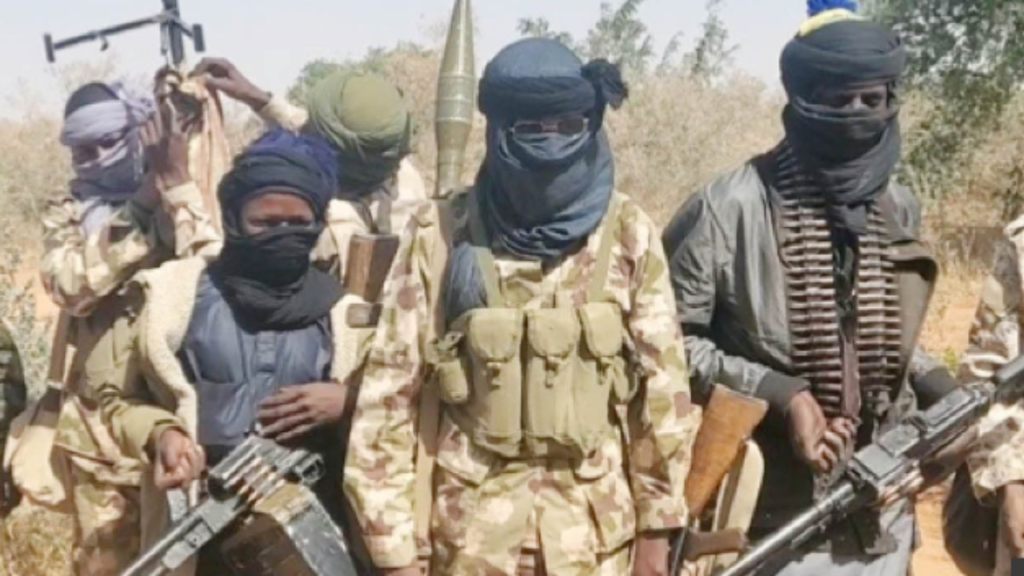
File photo: Terrorists operating in North-West Nigeria
Christians in Zamfara state, North West Nigeria have been told to stop holding worship services and to shutdown churches or risk ferocious attacks by terrorists operating in the troubled state. The state has been ravaged by terrorists activities blamed on Fulani militias and other terrorists elements.
A police spokesman in Zamfara state, DSP Mohammed Shehu, confirmed the threat letter to Saharareporters, saying that “We are on top of the threat.”
“Yes, I can confirm that it’s true, a threat letter was sent to the Christians in Zamfara State to stop worship and to close churches.
“Actually the police informed the Christian leaders about the threat.
“Accordingly the CP has invited the leadership of the Christian Association of Nigeria (CAN) in the state to discuss security measures around the churches.
“In that regard, a special squad has been created by the CP to patrol and protect worshippers, especially on Sundays.
“Additionally, plain-clothes personnel have been deployed for intelligence gathering and to unravel those behind the threat letter,” he said.
The threat is coming few days after the U.S. government delisted Nigeria from its religious freedom blacklist, a decision the United States Commission on International Religious Freedom (USCIRF) said it finds ‘unexplainable’.
“USCIRF is disappointed that the State Department did not adopt our recommendations in designating the countries that are the worst violators of religious freedom,” said USCIRF Chair Nadine Maenza. “While the State Department took steps forward on some designations, USCIRF is especially displeased with the removal of Nigeria from its CPC designation, where it was rightfully placed last year, as well as the omission of India, Syria, and Vietnam. We urge the State Department to reconsider its designations based on facts presented in its own reporting.” The Agency said in a statement.
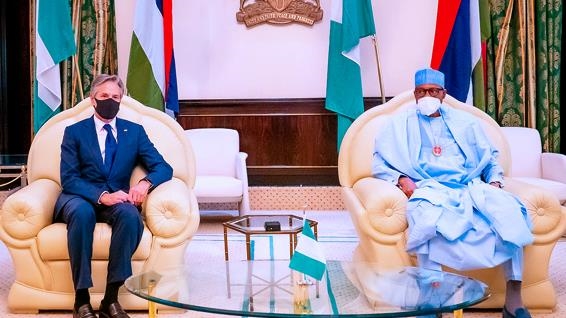
The announcement made by the U.S government on the removal of Nigeria from the CPC list preceded Secretary Blinken’s visit by 24 hours, this has caused some Nigerians to believe that politics and tactical lobbying from both parties may have instigated the decision of the U.S. government to remove Nigeria from the blacklist and not necessarily any improvement in religious freedom in the country.
File photo: Secretary Blinken and President Muhammadu Buhari during the former’s visit in November
Speaking on the removal of Nigeria from the religious freedom violators blacklist, in a report he titled “The Untold Stories of Religious Persecution in Nigeria”, the Chairman Christian Association of Nigeria (CAN) Kaduna state chapter, Rev. Joseph Hayab said the decision of the U.S. is appalling.
Rev John Joseph Hayab, Kaduna state CAN Chairman
“The US’s delisting of Nigeria from its list of violators of religious liberty is appalling, as the persecution of Christians is still at its peak. Besides, the Nigerian government hardly engages Nigerians to deliberate the challenges of insecurity, possibly because her own hands are not clean. The awful part is not only that the Nigerian government fails to engage Nigerians to find the way out of the insecurity the country is faced with, but that the government is known for blaming victims of insecurity for ‘not being careful enough,’ vindicating banditry and its perpetrators.
“Moreover, whenever any Nigerian openly speaks against the insecurity in the country, particularly the failure of government to tackle the bandits, he or she is branded as ‘antigovernment’, typifying why most pastors and bishops of megachurches in Nigeria are afraid to speak out. Thus, the U.S. State Department ignored the worsening insecurity in Nigeria, declaring that placing the country on the list of “Countries of Particular Concern” (CPC) for religious freedom could jeopardize the work of the US Office of International Religious Freedom in Nigeria.” Hayab said.
Rev. Hayab who was among those privileged to meet with the visiting secretary Blinken during his visit to Nigeria, said he expressed the disappointment of Christians in Nigeria over the U.S.’ decision to delist Nigeria from the CPC list.
“When I met with Antony John Blinken, the US Secretary of State, during his recent visit to Nigeria, as one of the five civil society representatives, I expressed how disappointed the Christians in Nigeria were following the US’ deletion of Nigeria from the CPC list. What I said to Blinken was that because Nigeria still has grave problems with religious persecution, his action was like that of a doctor discharging a patient from the hospital, even though the patient was critically ill. What that signifies is telling the patient to go home and die.
“Manifestly, the US was either ill-advised or purposely does not care about what happened to Christian in Nigeria. It also appears that the State Department does not fully comprehend that there is a grand plan by the current regime in Nigeria to impoverish and weaken the Christian community without letting the international community notice it. To achieve the grand plan, the government employed highly professional lobbyists to convince the State Department to arrive at such an unpopular decision, removing Nigeria’s name from the list of countries violating religious freedom.” He said
“As a Nigerian, I do not wish our country evil, but the reality is that citizens are daily persecuted because of their religious leanings. When I read the statement that the US Secretary of State removed Nigeria from the CPC list, it seemed to me that he wanted to make a statement that would water down whatever tension there was before he arrived in Nigeria, as that statement was not issued until a day or two before his arrival.” Hayab said.
Hayab further stated that religious freedom cannot be said to have improved in Nigeria going by the realities on ground.
“For the record, Nigeria at this moment cannot be said to have improved in its handling of people and issues based on faith. Only a day before the meeting with Blinken, the bandits who kidnapped 66 worshippers at the Emmanuel Baptist Church (Kakau Daji, Chikun Local Government Area of Kaduna State) released a video showing themselves killing some of their captives.
“In the video, the bandits took five young men between the ages of 15 and 24 from among the kidnapped, acting as if they were to be released. When the victims came near to their homes, the bandits opened fire, killing two instantly. The third died later. All three have been buried by the church.
“In the same video, in which many of the captives in the bush were forced to appear, the bandits said they were attacking Christians and that Christians will suffer at their hands. How could a country where such a crime is ongoing without any tangible efforts by the government(s) to halt the evil be removed from the list of countries where religious persecution is a problem? Therefore, the decision has no basis. I add that when we talk about insecurity, there is often a misconception among Nigerians that it is a question of Muslims versus Christians, but I see what is happening to the Shi’ites as religious persecution as well.
“Today, we have so many IDP camps all over the country. Religiously motivated killings are taking place, as well as the religiously motivated sacking of communities by bandits. I can tell you categorically that those violations are ongoing. For instance, just this week, bandits in Zamfara State issued a threat to Christians to “shut down churches or risk attacks.” The story, reported by Sahara Reporters online on the 29th of November 2021, is said to have been confirmed by the State Police, saying that they were “on top of the threat.” The fact is that insecurity is growing by the day. So, let’s call a spade a spade.” He said.
Religious and Non-faith persecution in Nigeria
Religious Freedom and freedom to practice faith of choice has remained a source of major concern for Christians, some Muslim sects and other non-faith citizens in Nigeria.
In September this year, a Christian cleric, Rev. Shuaibu Yohanna was gruesomely murdered by Muslim youths in the ancient city of Kano following little misunderstanding bordering on his missionary works in the Muslim dominated state.
The slain Reverend, a Northeastern Evangelist of the New life Church, lived in a village called Massu in Sumaila local government area of Kano state with his wife and children.
Testimonies abound about his exploits in the vineyard of the Lord. Mobilising funds to build schools, providing potable water to both Christians and Muslims in his community.
His good works couldn’t make him immune to the barbarity of the Kano Muslim extremists who at the slightest or no provocation descend on their victims with utmost cruelty even before ascertaining their guilt.
Reverend Shuaibu, believed to have facilitated the conversion of many Muslims in the area to Christianity met his untimely death when some muslim youths, over 50 in numbers according to his daughter, accosted him and began butchering him like ram to be used for barbecue.
Eyewitness accounts revealed that the Missionary was killed because, one of his converts who recently got converted but neither attends church service nor mosque had a fight with his sister in-law (brother’s wife) and he hit her with a piston and she died.
Why would Reverend Shuaibu pay for a crime he didn’t commit? Why wasn’t he given the opportunity of being tried by a court of competent jurisdiction? Religious intolerance of course is the answer.
Rev. Yohanna Shuaibu: Facebook
Similarly, a self-proclaimed atheist, Mubarak Bala has been in a Kano detention facility over alleged blasphemous Facebook post even though his supporters believed he is being detained for being an atheist in a Muslim dominated state like Kano.
Bala who is also the president of Nigerian Humanist Association is being accused over a Facebook post criticizing prophet Muhammad an act that is considered blasphemy and can carry a death sentence in Nigeria’s mostly Muslim society where Sharia laws are enforced along with the common laws.
Self-aclaimed Atheist, Mubara Bala: Facebook
Members of the Islamic Movement I Nigeria otherwise known as Shiites have repeatedly come under intense persecutions by the Nigerian state. In 2015 at least 348 members of the sect were killed by a combined team of the Nigerian police and military after some fracas with the convoy of then Chief of Army staff, Lt. Col Tukur Buratai. It’s national headquarters otherwise known as Hussainiya was also destroyed by the government. Leader of the movement, Sheik Ibraheem El-Zakzaky whose children were among those killed was arrested alongside his wife and detained for over five years despite several court rulings ordering their release.
In an interview with Iranian government owned Television, Sheikh El-Zakzaky narrated his ordeals in the hands of the Nigerian state.
“I have a total of 38 bullet fragments in my body, and also my wife has several gunshot on her stomach and thigh.” Zakzaky said.
Sheikh Ibraheem El-Zakzaky, Leader of the Islamic Movement in Nigeria
The Nigerian government has made it a sort of point of duty to always attack the Zakzaky’s members whenever and wherever they are protesting or holding processions peculiar to their sectarian calendar.
In September, the sect said that 8 of its members were killed by the police in Abuja during an annual procession, an accusation the police denied even though images circulated on the social media proved otherwise.
What Some Nigerians think about the U.S.’ delistment of Nigeria from the CPC
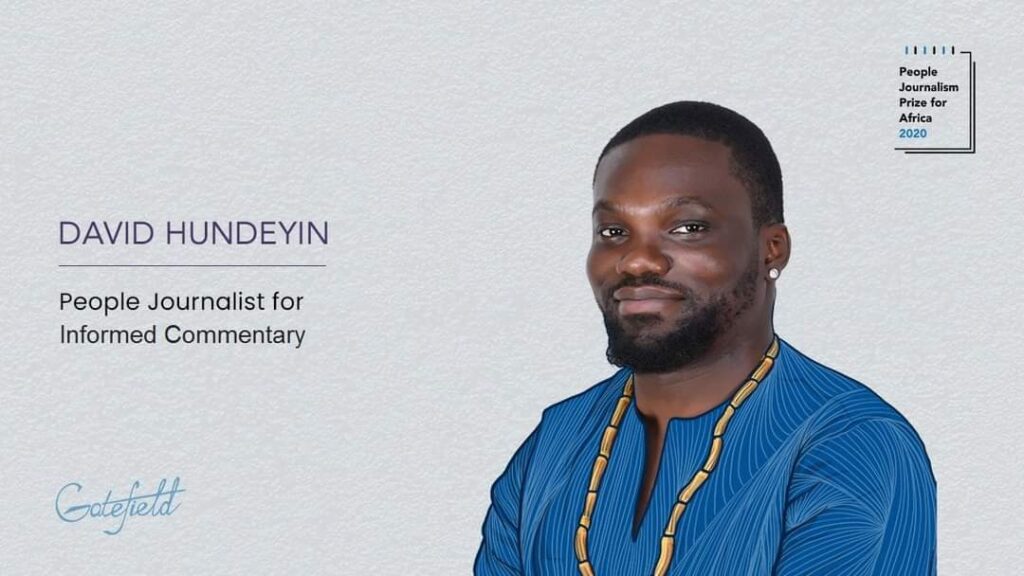
Speaking exclusively to Middle Belt Times, popular award winning Investigative journalist, David Hundeyin, said that religious freedom violation in Nigeria has worsened since the country was designated a country of particular concern (CPC) by the Trump administration in the year 2020. Hundeyin who has repeatedly said he is faithless also described the delisting of Nigeria by the Biden administration as political.
David Hundeyin: Facebook
“From my understanding, not only has the situation not improved since 2020, it has actually worsened. The delisting of Nigeria by Secretary Blinken to my eyes, is a strategic mistake driven by politics and lobbying, as against the force of reality, facts and verifiable data.
“I believe that there is a significant disconnect between urban Nigeria and the rest of the country, which is why to many urban Nigerians as well as to foreigners who only visit urban Nigeria when they come here, there appears to be no significant restriction on religious freedoms.
“What these people need to understand is that in rural Nigeria, particularly in the Middle Belt and the North, practicing Christianity or any other faith other than Sunni Islam can be, and often is a literal death sentence. That is no exaggeration.” He said
The “Conflakes for Jihad” author who is currently on exile over repeated threats to his life, also made reference to a publication titled “Silent Slaughter”, saying that the report speaks volume about the religious persecution ongoing in the Middle Belt region and other parts of Northern Nigeria.
“The report titled “Silent Slaughter: Genocide in Nigeria and its Implications for the International Community” details an ongoing campaign of directed terror attacks and genocidal actions against Christian groups in these parts of the country. This report was presented to former US VP Mike Pence, as well as former Secretary of State Mike Pompeo, and it contributed to the listing of Nigeria among countries of particular concern for violating religious freedoms.” Hundeyin said.
Also speaking exclusively to Middle Belt Times, Zacham Bayei, a memeber of the Atheist Society of Nigeria (ASN) and a staunch advocate for the fundamental human rights of freethinkers in Nigeria, Africa and the world at large said it is inhuman and illegal to arrest people for freely expressing their views on religion or ideology
Freethinker Zacham Bayei
“My brother, you know it is inhuman, illegal and wrong to arrest a person that freely expresses his or her views on religion or any ideology.
“If their god or deity is active, let him or her attack those that criticize him or her, why are his or her faithful doing the attack? Something is wrong somewhere!” Bayei said
When asked to comment on the recent removal of Nigeria from the list of religious freedom violators by the U.S. government, Bayei said that the United states was wrong to have remove Nigeria from the blacklist, saying that religious freedom is still under threat.
“They were wrong for doing that because it is crystal clear that Buhari’s led APC government has and still violating the rights of religious and non- religious groups in this country.
“Take for instance, the broad day killing of Shiite Muslims minority under his watch. They are citizens of Nigeria and have the right to peaceful protest, but we see armed state actors shooting life bullets into them whenever they come out to protest the illegal detention of their leader Sheik Ibrahim El-Zazzaky.
“Also, we’ve seen mass killing of Christians in their homes and churches destroyed by Fulani jihadists in Southern Kaduna, Plateau, Benue, Kogi, Taraba, Adamawa, Niger states without arrests, and the perpetrators being brought to book.
“We’ve also seen the arrest and detention of the then President of Humanist Association of Nigeria (HAN) by security agents over his Facebook post without trial in prison for over a year.” He said
Just like Hndeyin, Bayei believes that the delisting of Nigeria from the religious freedom violators blacklist is both political and economical, saying that it may not be unconnected with the Buhari led administration to accept the IMF’s recommendations concerning the removal of fuel subsidy rumoured to be in effect by early 2022.
“My take on the US removing Buhari’s government from the list of religious right violators is that, it is a ploy for him to blindly accept the IMF recommendations of the removal of fuel subsidy by 2022, which was tipped to create more hardship on the toiling masses of Nigeria. In other words, Buhari’s government body language over the persecution of other religious and non- religious groups speaks volumes.” Bayei said.
Way forward for the U.S. and Nigeria
The U.S. government must reconsider it’s decision on the removal of Nigeria from the CPC list, if indeed America wants to continue to be seen by the different faiths and religions under persecution in Nigeria as a country that supports the rights of people of diverse faiths and religion.
The Nigerian government on the other hand must show political will and courage in fighting all forms of religious and other faith based extremism in the country. Terrorists who use religion as guise to perpetrate crimes against humanity must be dealt with using the full wrath of the law of the country and not being rewarded.
Government polices such as Operation Safe Corridor which gives room for reintegration of terrorists into the Nigerian society must be reviewed considering the fact that some of these reintegrated terrorists often return back to their vomits.
Government officials at all levels must desist from making incendiary utterances that are capable of pitching one faith against another in the country.
The Nigerian parliament also needs to come up with laws that will make extremism and terrorism unattractive to both existing and prospective terrorists in the country.
The Nigerian judiciary must give priority to cases related to violent extremism and terrorism, and maximum punishments must be meted out to those found guilty of such.
Human rights watchdog group International Christian Concern (ICC) released a report earlier today profiling Nigerian Governor Nasir El-Rufai and analyzing his years-long pattern of punishing Christian communities in Kaduna State. While militant groups contribute to religious persecution in Nigeria, No Protest Allowed highlights another major source of persecution in Nigeria—the government.
Since taking office as Governor of Kaduna State in May 2015, El-Rufai has repeatedly endangered Christian communities by ordering them into strict lockdowns. These lockdown orders—which trap villagers in their homes—prevent villagers from organizing early warning systems and make militant attacks even more deadly as villagers no longer have the warning they need to flee impending attacks.
Despite international condemnation of these lockdown orders, El-Rufai has continued to punish Christians using this technique. In 2020, he locked down a Christian-majority agricultural area for over two months during planting season. Militants, taking advantage of his lockdown orders, killed over 100 Christian villagers during that time.
In addition to chronicling several of these lockdowns, No Protest Allowed exposes El-Rufai’s immense wealth and his family’s extensive international travel including to London, Paris, New York, Dubai, and the Caribbean.
Dubbed the “reformist governor” by the Economist, El-Rufai’s carefully-groomed image as a man of the people began to crumble as ICC researchers combed through the El-Rufai family’s social media presence. While El-Rufai has loudly publicized his decision to enroll some of his children in Kaduna’s public school system, ICC researchers found that he quietly sent at least one of his children to a private school in Canada where annual tuition is about $44,000 USD per year. Another social media post showed his family drinking sparkling apple juice infused with 24kt gold flakes at the Burj al Arab hotel in Dubai.
Nigeria goes to great effort to cast itself as a beleaguered nation struggling valiantly against sectarian violence. Secular democracy, the narrative goes, is the guiding principle governing Nigeria—any deviation from that is the fault of malicious nonstate actors intending to spoil what they cannot control.
Nigeria does suffer from sectarian violence—it is estimated that Boko Haram is responsible for over 35,000 deaths and that Fulani militants have killed from 20,000-50,000 in the last decade or so—but the idea that the government is an impartial player doing its best to promote justice and freedom for all is simply wrong.
A self-proclaimed admirer of China’s Den Xiaoping, El-Rufai recently resurrected a military-era rule regulating pastors and their sermons. The regulations are striking similar to Chinese regulations and do not bode well for the future of religious freedom in Kaduna.
“El-Rufai’s actions endanger thousands and help to illustrate the deeply problematic nature of government persecution in Nigeria,” said Jay Church, the report’s author and ICC’s Advocacy Manager for Africa. “ICC hopes that the international community takes note of El-Rufai’s consistent pattern of persecution in Kaduna State and responds accordingly. We call on the U.S. and others to sanction El-Rufai for his egregious violations of human rights and hope to see those sanctions come about in the near future.”
After a couple of hours at a court sitting yesterday 23 November 2021, Luka Binniyat is kept in prison custody for another two weeks. This development has shown that the El-Rufai Government is indeed using Samaila Aruwan to hit hard at SOKAPU.
The magistrate, overwhelmed by the force of Binniyat’s lawyer’s argument, insisted he needed time to collate on the issues before deciding the bail application. Meanwhile, Binniyat is to remain in prison custody.
Witnesses at the court yesterday, claimed the turnout was massive and Luka was in fine spirit. Some persons expressed skepticism the magistrate was independent, claiming the magistrate was acting by orders from above to elongate Binniyat’s stay in prison custody. Others, however, are optimistic no matter how long they detain Binniyat, good will eventually triumph over evil and Binniyat will come out stronger and better.
You will recall that Binniyat was picked on the 4 November 2021 by members of the State Investigation Bureau (SIB) on the orders of the Kaduna State Commissioner for Internal Security and Home Affairs, Samaila Aruwan. Aruwan claimed Luka’s publication on Epoch Times, citing the Zone 3 Senator Danjuma Laah that he(Aruwan) is being used by the Kaduna State Government to cover up the ongoing massacres against the Southern Kaduna people by calling it a communal clash, was injurious to him and has endangered members of his family.
Interestingly, Aruwan is indeed being used to describe plain massacres against the Southern Kaduna people by murderous Fulani herdsmen Terrorists as communal clash.
How do you describe nocturnal invasion into a sleeping town by mercenaries of herdsmen Terrorists who were never residents in the areas they invade as communal clash? Communal clash largely has to do with neighbours of largely residents and not mercenaries of killer herdsmen terrorists who are complete aliens to the areas they invade leaving largely women and children killed in their sleep. Thus despite the alleged denial by Senator Danjuma Laah, it still does not negate Binniyat’s fact that the State Government is running a massive disinformation and misinformation campaigns to shield the true nature of the attacks against the Southern Kaduna people using a Southern Kaduna son (Aruwan) to give credence to the campaigns.
Though they make the Binniyat ordeal look like a misunderstanding between two brothers with one using the advantage of having the instruments of state at his disposal to use, it is infact a deliberate El-Rufai Government clampdown on SOKAPU, using Aruwan still as a front, because Binniyat is the sole scribe cum spokesperson of SOKAPU, risking it all to enter dangerous terrains of most attacked villages to get first hand information and reporting to the world. This efficiency and effectiveness of Binniyat is what the Kaduna State Government took out of circulation using the same Samaila Aruwan to give it credence and shield them from their true intention.
The instruments of state has long been reduced into personal tools for personal squabbles by the El-Rufai Government. Meanwhile, kidnappers keep kidnapping along the Kaduna Abuja road as both 21 and 22 November got some persons killed including a high profile personality, while alot more got Kidnapped. Southern Kaduna, to this day, remains an abatoir of human slaughter with no single arrest, while the El-Rufai Government is interested in elongating Luka Binniyat’s stay in prison.
U.S. Commission on International Religious Freedom (USCIRF) on Thursday said that Nigeria under President Muhammadu Buhari remains on its religious freedom violators watch list.
The USCIRF directly responsible for enlisting countries in the United States Special Watch List, in a statement, said it was displeased with the U.S. Department of States for removing Nigeria from its “Country of Particular Concern” (CPC) designation.
“USCIRF is disappointed that the State Department did not adopt our recommendations in designating the countries that are the worst violators of religious freedom,” the statement quoted USCIRF Commissioner Nadine Maenza as saying.
She stressed that the State Department didn’t adopt the commission’s recommendation that rightfully placed Nigeria as one of the worst violators of religious freedom.
“While the State Department took steps forward on some designations, USCIRF is especially displeased with the removal of Nigeria from its CPC designation, where it was rightfully placed last year, as well as the omission of India, Syria, and Vietnam,” she added.
On Wednesday, the Department of State went beyond its purview to remove Nigeria from the list of religious violators without adopting recommendations of USCIRF.
Making the announcement, U.S. Secretary of State, Antony Blinken, said that the United States Government removed Nigeria from its list of religious violators, blacklisting China, Russia, Saudi Arabia and seven other nations as countries of particular concern for engaging in or tolerating systemic, ongoing and egregious violations of religious freedom.
However, USCIRF faulted the report urging the State Department to reconsider its designation based on facts.
In December 2019, the U.S. government enlisted Nigeria on its “Special Watch List of countries that have engaged in or tolerated “severe violations of religious freedom.
The blacklisting came at a time when many criticised the Nigerian government over its incessant violations of court orders and the shrinking civic and media space in the country.
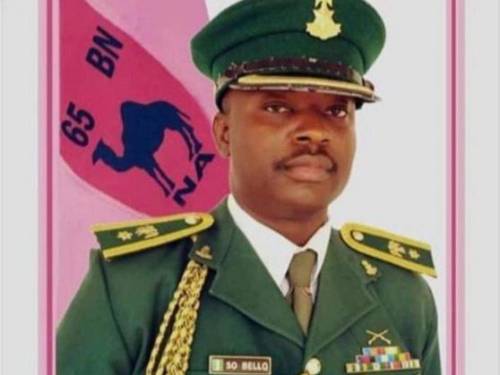
The Nigerian Army Council has approved the promotion of Lieutenant Colonel S.O. Bello, the commanding officer of the 65 Batallion, which was at the Lekki tollgate on the evening of October 20, 2020, to the rank of a Colonel.
On Monday, a report of the Lagos State Judicial Panel on Police Brutality, including an investigation on the Lekki massacre said protesters were killed at the tollgate in what the panel described as a massacre.
According to the report, at least nine persons were confirmed dead at the Lekki toll plaza when soldiers led by Bello stormed there to disperse #EndSARS protesters on October 20, 2020. Titled, ‘Report of Lekki Incident Investigation Of 20th October 2020’, a copy of the 309-page report which was leaked said at least 48 protesters were either shot dead, injured with bullet wounds or assaulted by soldiers.
Major Gen. Ahmed Ibrahim Taiwo of the 81 Division Intelligence Brigade had while appearing before the Lagos Judicial Panel in November 2020 revealed that Bello was the commander on the ground, who gave the order for the soldiers to release bullets at the toll gate.
He had said, “Bello had arrived the scene first before Omata, as the whole 81 Division Garrison had been given the mandate to secure the whole Eti-Osa corridor. Omata had left Obalende to meet up with Bello and patrol the whole area.
“When I called Bello, he said that while they were being deployed, they were attacked by hoodlums and they released some shots into the air. I also asked him if anybody had died as it is being reported over the Internet and he replied ‘negative’ that nobody had died that he had only seen two people who had fainted and were revived.
“I had called three times and after speaking with Bello, I spoke to General Omata using Bello’s phone. It was one of those instances that when I called Bello he said Omata was with him. I spoke with Omata and asked if deaths were recorded and he told me no. I called him twice and he said no, that the place had been cleared.”
Bello however refused to appear before the panel when summoned to defend all the allegations levelled against him.
When the matter was called, Jonathan Ogunsanya, one of the registrars attached to the panel, said the Kogi State-born military officer refused to receive the summons issued to him.
Military sources on Thursday said Bello, despite leading the team that unleashed mayhem on defenceless protesters, has been promoted to the rank of a Colonel.
Lt Col. S. O. Bello with full name, Salisu Ovada Bello, and Service Number–N/11249, was promoted on November 13, 2021, SaharaReporters learnt.
“Lt Col S.O. Bello has just been promoted to the rank of a Colonel. He is the commanding officer who led the Lekki massacre,” one of the sources, a colonel told SaharaReporters.
SaharaReporters learnt that the Army Council on October 28 met to approve the promotion of officers.
It was learnt that the promotion would favour some Majors, Lieutenant Colonels and Colonels with new ranks.
Calls put across by SaharaReporters to the Director, Army Public Relations, Onyema Nwachukwu were not answered nor returned. He had also not replied to a text message sent to his line, at the time of this report.
The just concluded Lagos #EndSARS Panel of Inquiry has described the October 20, 2020 incident at the Lekki toll gate as a massacre.
The panel of inquiry also stated that contrary to Governor Sanwo-Olu’s claim that he didn’t invite soldiers to the toll gate, the governor actually invited the Nigerian soldiers who carried out a massacre against unarmed and peaceful protesters during the October 20th, 2020 EndSARS protest at the Lekki Tollgate in Lagos.
“The panel found that there was an invitation of the Nigerian Army to Lagos State made by the Lagos State government through the governor,” the just-released panel’s report stated unequivocally,
“before the hierarchy of the Nigerian Army deployed its soldiers to the Lekki Toll Gate on the night of October 20.”
Mr Sanwo-Olu had claimed that he knew nothing about how Nigerian soldiers were mobilised to the tollgate. He had repeatedly deflected any blame of what happened at the Lekki tollgate to the Nigerian Army, playing the victim that he had no control over the military force that invaded the tollgate and killed the protesters without any provocations.
The report submitted to the Lagos government on November 15, over one year after the #EndSARS protesters were massacred, pointed out that the soldiers and police shot, injured and killed protesters holding national flags and singing the national anthem at the Lekki tollgate.
Information minister Lai Mohammed had also denied any protesters’ killing on the night of October 20, 2020, accusing the peaceful demonstrators of orchestrating anarchy.
#EndSARS, a nationwide protest against police brutality championed by young Nigerians, ended on a sad note as Nigerian soldiers shot and killed protesters waving the national flag and singing the national anthem.