THE AMERICAN VERDICT ON NIGERIA

By Emmanuel Onwubiko 

The latest compilations of human rights abuses in nations around the World as done by the State Department of the United States of America is out and as expected, that of Nigeria is as treacherous and pathetic as it has always been in over a decade. In the case of Nigeria,  it is clear that both the States and the Federal government are simply overwhelmed and are really not doing much to check these tragic human story. 

A review of the Executive summary  shows that there is not really any major milestones in terms of efforts on the part of the current federal government  and the federating units to sufficiently provide effective redress mechanisms to victims of human rights violations. 

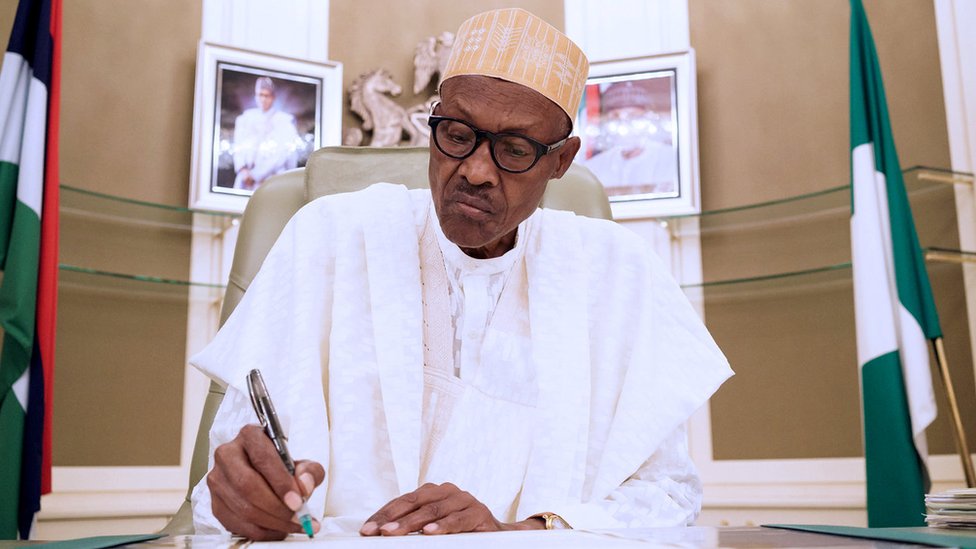
The report noted that Nigeria is a federal republic composed of 36 states and the Federal Capital Territory. In 2019 citizens re-elected President Muhammadu Buhari of the All Progressives Congress party to a second four-year term. Most independent observers agreed the election outcome was credible despite logistical challenges, localized violence, and some irregularities.

Significantly, the United States government has nothing good to say regarding the standards of human rights protection expected from the officers and the operatives of the Nigeria Police Force. 

The Americans noted that the Nigeria Police Force, which reports to the Ministry of Police and is overseen by the Police Service Commission, is the primary civilian law enforcement agency and enjoys broad jurisdiction throughout the country. 

The Ministry of Interior also conducts security and law enforcement activities. 

The Department of State Services, which reports to the national security advisor in the Office of the President, is responsible for counterintelligence, internal security, counterterrorism, and surveillance as well as protection of senior government officials. 

The Nigerian Armed Forces, which report to the minister of defense, also share domestic security responsibilities as stipulated in the constitution in the case of insufficient capacity and staffing of domestic law enforcement agencies or as ordered by the president. 

Many states, in response to increased violence, insecurity, and criminality that exceeded the response capacity of government security forces, created local “security” vigilante forces. These local forces reported to the state governor. Civilian authorities did not always maintain effective control over the security services. There were credible reports that members of the security forces committed numerous abuses.

The USA reports that significant human rights abuses included credible reports of: unlawful and arbitrary killings by both government and nonstate actors; forced disappearances by the government, terrorists, and criminal groups; torture and cases of cruel, inhuman, or degrading treatment or punishment by the government and terrorist groups; harsh and life-threatening prison conditions; arbitrary arrest or detention; political prisoners; serious problems with the independence of the judiciary; arbitrary or unlawful interference with privacy; serious abuses in a conflict, including killings, abductions, and torture of civilians; serious restrictions on free expression and media, including violence or threats against journalists and the existence of criminal libel laws. 

Others are the serious restrictions on internet freedom; substantial interference with the freedom of peaceful assembly and freedom of association; serious government corruption; lack of investigation and accountability for gender-based violence, including but not limited to domestic and intimate partner violence, sexual violence, child, early and forced marriage, female genital mutilation/cutting, and other harmful practices; crimes of violence targeting members of national/racial/ethnic minority groups; the existence or use of laws criminalizing consensual same-sex sexual conduct between adults; and the existence of the worst forms of child labor.

The government took steps to investigate, punish, and prosecute alleged abuses by military and police forces, including the now disbanded police Special Anti-Robbery Squad, but impunity for such abuses and corruption remained a problem. These basically are the few areas captured by the Executive summary done by the USA on the situation of human rights.  But the USA left many lacunae in this summary because there were no mention of the weakness of the National Human rights institutions such as the Premier Nigerian Human Rights commission. The National Human Rights commission is so weak that it stands by whilst federal government officials like the minister of Information rides roughshod on the media rights of Nigerians and the minister has so manipulated the National Broadcasting Commission to become a tool for the dictatorial witch hunt of independent broadcasting stations. Lai Mohammed is obviously one amongst the state officials that has done significant damage to human rights promotion and protection. The Ministry of telecommunications and digital economy is another agent of human rights violations through the implementation of some outrageous policies that have resulted in the monitoring of the private communications of Nigerians. The report did not speak about the near moribund status of the Public Complaints Commission which only exists on paper because their impacts are not being felt given that millions of Nigerians with genuine complaints against several public office holders can’t get redress from the Public Complaints Commission which basically exists just to pay salaries to their staff and the board members. 

Nigerians expect that in subsequent human rights reports that the writers endeavour to name and shame Public office holders who are notorious human rights violators. This report is expected to become a springboard for the civil society community to continue to campaign for effective implementation of oversight responsibility by the National Human rights commission, the Public Complaints Commission and the relevant committees of the two chambers of the National Assembly because it is very clear that the security agencies have become enthusiastic human rights violators and these tendencies must be checked and indicted officers penalised in line with the due process of the law. Chapter 4 of the Constitution of the Federal Republic of Nigeria is extensive enough to highlight the key human rights entitlements of the citizens. Reading one of the very recent reports done by the Washington DC based Human Rights Watch, it is clear that the problems are much bigger than what the US state Department captured in their latest human rights report on Nigeria. 

The group in the USA says that attack on human rights is worsening in Nigeria, the Human Rights Watch (HRW), an international non-governmental organisation concerned with human rights matters around the globe, has said.

In its 2022 World Report, which reviews human rights trends and developments in more than 100 countries in the world, the organization said the ban on Twitter in June 2021, was indicative of worsening human rights issues in Nigeria.

President Muhammadu Buhari’s administration had suspended the operations of Twitter in Nigeria after a controversial tweet by him was deleted by the microblogging site.

The government insisted that its action was unconnected to the taking down of Mr Buhari’s tweet but was based on alleged roles of the site in fuelling insecurity, fake news, and separatist activities in the country.

Government’s attempt to rationalise the justification were not accepted, with leading democratic nations like the United States of America, the United Kingdom, and others condemning it as an attack on freedom of expression.

After seven months, the government announced the lifting of the suspension on January 12, after reaching some agreements with Twitter.

But in its 752-page report, the 32nd edition of its World Report, launched on January 13, HRW said the Twitter suspension was a sign of human rights repression in the country.

“The Nigerian government’s ban on Twitter in June, after the social media company deleted a tweet by President Muhammed Buhari for violating its rules, signaled a worsening repression of fundamental rights in the country,” the report read in part.

The report recalled that the ban was widely condemned by citizens who relied on the platform for critical social and political discourse.

Many Nigerians remained active on Twitter using virtual private networks (VPNs) to circumvent the ban even as the Attorney-General of the Federation, Abubakar Malami, threatened to anyone by passing the ban.

In a decision delivered on June 22, the ECOWAS Court in Abuja stopped the government from taking any action against anyone or media houses still using Twitter.

The worst case scenario on human rights in Nigeria is the ease with which citizens are killed by armed non State actors especially armed Fulani terrorists. One instance will suffice as a good example. One hundred and six persons have so far been buried following the attacks on communities in Plateau State, media report say. 

This is according to the Chairman of Kanam Local Government Area of Plateau State Dayabu Garga who gave an update about the renewed violence in some parts of the north-central state.

“I was present on Monday morning where we did mass burial of 106 killed and we are still picking more dead bodies in the farmlands,” he said on Thursday in an interview on Channels Television’s Sunrise Daily.

He also said there are “more than 16 people hospitalised”. Benue State has also killing fields with over 3,000 citizens slaughtered by armed Fulani terrorists in the past 7 years and no single killer is behind bars. 

  • EMMANUEL ONWUBIKO is head of the HUMAN RIGHTS WRITERS ASSOCIATION OF NIGERIA (HURIWA) and can be reached @wwwhuriwanigeria.org. 
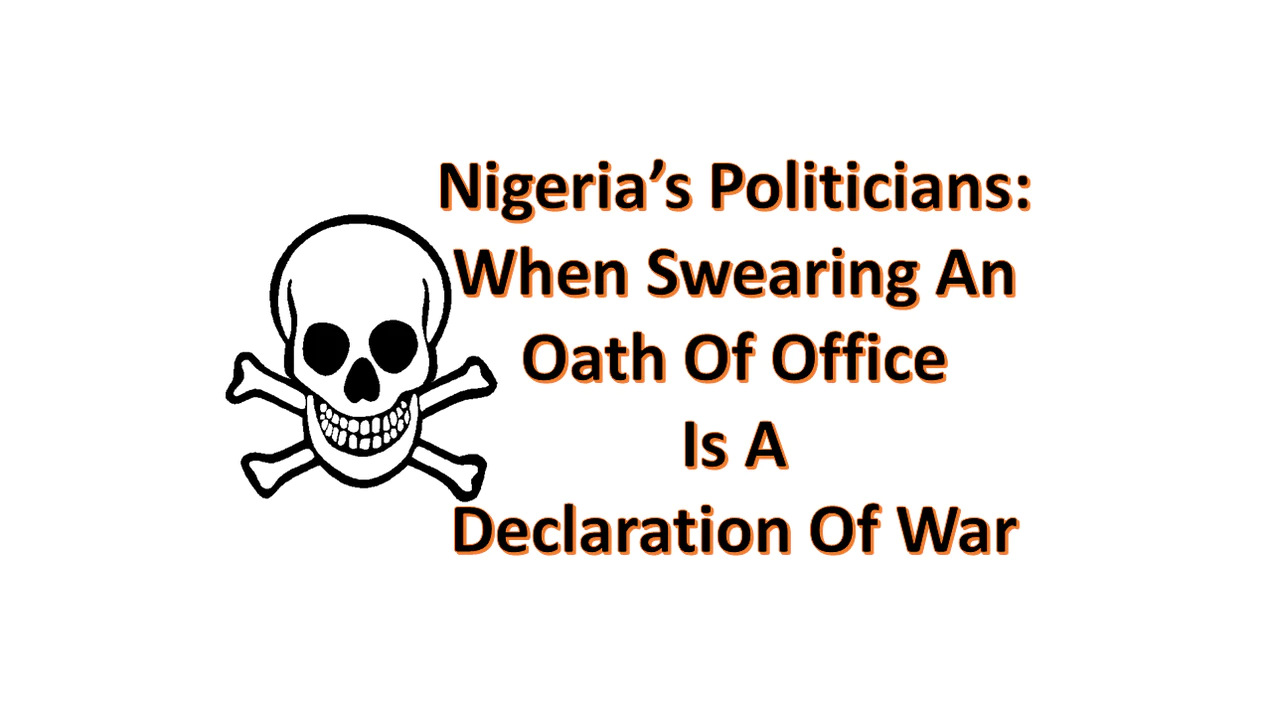
Nigeria’s Politicians: When Swearing An Oath Of Office Is A Declaration Of War

By Ndidi Uwechue

8th April 2022

Two very unfortunate things see to it that Nigeria has remained a “criminal enterprise”. Otherwise Aburi and much later PRONACO, had been missed opportunities to have set Nigeria free to become stable, and thus assured of continuing as one unit going into the future. The two unfortunate things that ruin Nigeria’s chances of longevity are #1) The deliberately inflicted ignorance of the population, and #2) The low morality quotient of both the middle class and the elite. 

Exasperating as it may be to observe, the ignorance of the masses is not their fault, and it can be reversed with a change in social and constitutional arrangements. Whereas, it is a choice for the middle class and elite, the creators of society’s values, to be such as they are. 

The situation in Nigeria is that despite the obstacles placed in their way, the non-violent NINAS Movement for Self-Determination has managed to create a growing countrywide consensus against the continued operation of the illegitimate forgery called the 1999 Constitution, the current instrument of governance. The middle class and elite are aware that the 1999 Constitution has been rejected, and even Repudiated, and they know that Nigeria became a Disputed Project from 16th December 2020 when the joint multi-regional NINAS Movement proclaimed a Constitutional Force Majeure with a Notice of constitutional grievances and demand for Transitioning Process for an ORDERLY reconfiguration of the constitutional basis of Nigeria. Lacking the moral make-up to face the FACTS that the 1999 Constitution is a FORGERY, that it is UNJUST and UNDEMOCRATIC to keep on with this fraud, and that a Constitutional Force Majeure has now been thrown into the political and constitutional space, the middle class and elite ignore these, in the (vain) hope that the future will continue to be manipulated to favour their positions in society.

The worst among them are the politicians: both those holding or seeking office, plus members of political parties. For, in Nigeria, all political parties SUBSCRIBE to the illegitimate 1999 Constitution, whether it is an established party, a new party, an anti-corruption party, a youth party, or whatever party. They ALL endorse and champion that fraud and deceit called the 1999 Constitution.

Regarding the issue of serving politicians, they swear an Oath of Office to uphold, defend, and govern by the 1999 Constitution, in so doing they RENEW THE LIFE of the illegitimate 1999 Constitution. Thus, serving politicians of Ethnic Nations ARE RESPONSIBLE for actually bringing the harmful effects of that 1999 Constitution upon their own people. It has now been established by survivors and independent observers that there is an ongoing genocide against indigenous peoples by well-armed Fulani militias for land grab so as to establish a Fulani Caliphate in their hope to bring about Ahmadu Bello’s Declaration of 1960 that Nigeria is to be “an estate” of the Fulani. It is that 1999 Constitution that PREVENTS indigenous peoples from equipping themselves with matching weapons for protection, and to repel any armed invaders. Serving politicians know this, yet they cold-heartedly continue to uphold the 1999 Constitution over their people. This is why, especially in the Middle Belt but spreading southwards, indigenous peoples are being slaughtered on a regular basis by armed Fulani. It is quite scandalous that a false Document enables this slaughter. It must be understood clearly that that Document is both introduced into ancestral lands, and is then also upheld, by serving politicians – against their own people’s welfare, and endangering the lives of their people. When a politician brings death and destruction upon his people by placing upon them (via his Oath of Office) a fraudulent Document that is dishonestly titled the “1999 Constitution” which the people have Repudiated, and which facilitates armed Fulani to slaughter his defenceless people including children, is that not a declaration of war upon his people? It is for the Reader, and for all reasonable people to think this through!

At their high point, believing themselves to be invincible, the Nazis in power and in authority never knew that one day their war (genocide) against unarmed Jews would be stopped, and that they would face NUREMBERG! Serving politicians of the NINAS Territory (South and Middle Belt) should reconsider their treachery against their people, and should stop being an enemy of their people by upholding the death-bringing 1999 Constitution. That 1999 Constitution was not made by “we the people” as it falsely claims and it has been Repudiated. Therefore, serving politicians should do the right thing, and do the right thing the right way. That means, they should not manipulate and push their people to General Elections in 2023 to renew the life of the sham 1999 Constitution yet again. Instead, they should SUSPEND Elections 2023, get political parties to CLOSE SHOP even if temporarily, while they go to Transitional Government where current political office holders would retain their positions, and there would be Self-Determination Regional Referendums where “we the people” decide the future of the Union called Nigeria. 

Ndidi Uwechue is a British citizen with Igbo heritage from the Lower Niger Bloc. She is a retired Metropolitan (London) Police Officer, she is a signatory to the Constitutional Force Majeure, and she writes from Abuja.

Rape Of A Nation And APC/Buhari’s Squandered Messianic Dreams: 2015-2022 Scorecard
           PART I
         THE ECONOMY

             By
      Emmanuel Gandu

ABSTRACT

It is no longer a fallacy that Nigeria is a sinking rudderless ship captained by Muhammadu Buhari with an APC ground, sea, and air crew that have refused to listen to the series of MAYDAY distress calls from helpless Nigerians aboard.
In order to succinctly highlight the stark reality and consequences that have contributed to the deplorable and decaying Nigerian nation, this presentation attempts to be deliberately incisive, measured, and blunt, as it is heavily, and beautifully laced with an array of embroidery of facts, figures, and data.

INTRODUCTION
(a) The man Muhammadu Buhari :
Born in Daura on December 17, 1942 of Fulani descent, Muhammadu Buhari is a retired Nigerian Army General, a former governor, a one time petroleum minister under the Obasanjo military government, a former military Head of State from December 1983 – 1985, and the head of Petroleum Trust Fund under the military government of General Sani Abacha.
In 2015 Buhari at last was for the fourth (4) consecutive time after three (3) unsuccessful consecutive attempts was elected president of Nigeria.
Buhari as a retired military officer, former governor, head of state, was seen to have the capacity to stop corruption, revamp the economy, halt the breakdown of law and order, and other aspects of insurgency. It was not surprising therefore for Nigerians to entrust their destiny to Buhari.
By 2019, Buhari again won re-election with 56% of lawful votes cast for another 4 years as president of Nigeria.
He is happily married (for the second time) to Hajia Aisha Buhari.
He lives a simple austere life characteristic of the typical Fulani.

(b) Buhari’s rising popularity :
So much was going good for Buhari especially starting from his military days as the GOC Jos when he led the Nigerian troops to successfully dislodge the advancing Tchadian soldiers who had encroached into Nigerian territory, even without obtaining clearance from Alhaji Shehu Shagari the then president and commander in chief of the Armed forces.
Also going for him was his fight against corruption, indiscipline, and drug trafficking/abuse. His war against the vices in the Nigerian society otherwise called War Against Indiscipline (WAI) endeared him to both the young and the old, the rich and the poor, and especially the students and labour unions who saw him as a revolutionary leader.
Interestingly, Muhammadu Buhari’s popularity had increasingly and overwhelmingly spread like wild fire not only across the Hausa Fulani northern Nigeria including the Sahel region of West Africa, but also in Southern Nigeria.
This popularity attracted to him complementary and populist names like Maigaskiya (the truthful one), Baba Talakawa, Super Tanker, Mai Ceto (Messiah), Sai Baba, etc. The Buhari brand therefore became a product that was on popular demand.
Little wonder he always had 12 million votes saved in the political bank even before the start of any elections in Nigeria.

(c) The self inflicted eclipse of Buhari :
However, the Muhammadu Buhari that triumphantly rode on the popular mandate of majority of Nigerians to become president in two consecutive terms of 4 years each began to become less and less popular by the day.
Consequently, Nigerians have adduced the following reasons for this failure to Buhari’s door step :
√ Nigeria is flowing with blood and burning by ? fire more than ever before.
√ Fulani heardsmen terrorists kill, rape, burn humans/crops, drive and occupy people’s land un- aprehended.
√ Unending Boko Haram terrorism.
√ Hunger, high cost of living, and hardship in the country never experienced in the history of Nigeria.
√ Banditry, kidnapping, and killings of people in homes, schools, worship centers, farms, and even in military barracks.
√ Relocation of manufacturing companies outside Nigeria.
√ Rising unemployment.
√ Economy in shambles.
√ Increasing agitations for restructuring and secession.
√ Nigerians leaving the country in droves for fear of the unknown.

             THE ECONOMY

The gloomy outlook of the Nigerian dilapidating and jaundiced economy may be the legacy that the All Progressive Party (APC) and Muhammadu Buhari will bequeath to future generations of Nigeria. A legacy of an impoverished, bloody, beger, and inept nation, a divided and polarized citizenry, and a failed state.
These are the facts :
(1) Debts and borrowing :
According to Nigeria’s Debt Management Office (DMO) the nation’s total public debt rose to #38.5 Trillion as at September 2021. This is largely as a result of the government’s penchant for borrowing. This borrowing spree is raising concern among Nigerians on the debt sustainability of the country amidst dwindling revenue to meet the debt obligations to the creditors. This mounting debts will eventually be a cog in the wheel of progress for future Nigerian generations is a frightening concern, and therefore leaves much to be desired.

Regrettably, the Buhari led APC government is alleged to have violated Nigeria’s Fiscal Responsibility Act and the Central Bank of Nigeria (CBN) Act 2007. This is so because Buhari exceeded the fiscal borrowing threshold as stipulated by the Fiscal Act and the CBN Act.
Zainab Ahmed, Minister of Finance Budget and National Planning admitted to this exceeding threshold by Buhari, but defended it on the grounds that COVID 19 was good enough reason to breach the Act.

Meanwhile, Wilson Erumebor, a senior economist at the Nigerian Economic Group, and Vahyala Kwago, a senior Researcher and Policy Analyst at Budgit warned that Nigeria is a case where expenditure keeps rising, revenue not improving as expected, thereby creating a wide fiscal deficit that is majorly financed by borrowing.
Unfortunately, it is a case where government is borrowing more, spending more, and earning less revenue.
This really spells doom for Nigeri’s future.

In order to help Nigeria come out from this fiscal mess, the International Monetary Fund (IMF) offered it’s experienced expert opinion. In its 2020 and 2021 country’s report for Nigeria, the IMF warned that Nigeria’s low GDP compared to high debt profile is highly vulnerable to uncomfortable shocks.

(2) Corruption :
Allegations and counter allegations of corruption cases at the corridors of power churns out figures that lend credence to incontrovertible facts and not mere allegations of corruption.
For instance, the alleged missing #3,143,718,976.47 billion traced to the Ministry of Finance for which the Socioeconomic Rights and Accountability Project (SERAP) is suing Muhammadu Buhari in January 2022 for non – investigation.
This came as a result of the accusations by the Federal Auditor General Office in the 2018 and 2019 audit annual reports that #3.1 billion public funds are missing, missapropriated, or unaccounted for.

According to research by Transparency International, their Corruption Perception Index for 2021 placed Nigeria at 154th position out of 180 countries. This placed Nigeria as the 2nd most corrupt country in West Africa. Nigeria had occupied the 136th position in 2015.

Further more, corruption in government agencies is becoming alarming. For insurance, an audit query mandated the Nigerian Ports Authority (NPA) to refund series of staggering sums of money to the Federal government as products of corruption. These amounts of money include – (a) #40.13 billion, (b) $921.64 million, and (c) £289,931.82 million.

(3) Uncertainty with the 2022 budgetary regime :
Nigeria’s rising debt profile especially debt service to revenue ratio, as well as foreign exchange liquidity constraints portends a gloomy 2022 budgetary regime for the country.
(i) No sooner had Buhari signed the #17.126 Trillion 2022 budget christened ‘Budget of Economic Growth and Sustainability’ than he sent a supplementary budget request to the National Assembly for their consideration.
Contained in this request are :
(a) #2.557 Trillion to fund petroleum payment in 2022.
(b) #25.81 billion for the Power Sector Reform Programme agreement with the World Bank.
(c) #1.42 billion for ministry of Water Resources for 2022.
(d) #3 billion for payment of Local Contractors debts and other liabilities.

(ii) As it stands now, the 2022 budget comes with an already mixed baggage of :
(a) #6.25 Trillion deficit.
(b) # 3.8 Trillion to service debt.
(c) # 5.6 Trillion capital expenditure.
All these wth only a paltry sum of
(d) #3.6 Trillion expected oil revenue.
Unfortunately, however, Nigerians are told that the 2022 budget will be largely financed by new borrowings, privatization proceeds, and loans secured for specific projects.

(iii) Going by a communique released by FAAC on Thursday February 24, 2022, many states of the federation are set to face economic uncertainties and challenges in 2022 as the Federal Accounts Allocation Committee (FAAC) shared the sum of#574,66 billion.
This amount is lower than the #699.82 billion disbursed in December 2021.
As explained further, this fall in FAAC allocation is as a result of Federal government plans to deduct #950 billion for the payment of fuel subsidy from allocations due to states in 2022.

(4) Inflation, poverty, and high cost of living :
The scotch of poverty and hunger ravaging the people, high cost of food, goods and services have all climb up to astronomical proportion beyond the reach of Nigerians. Manufacturing companies have taken a first class flight to other safer countries, unemployment has forced millions of school/University graduates to take to crime.
Regrettably too, the World Bank in its November 2021 figures of statistics shows that the poverty rate stands at 42.8% as Nigeria is witnessing the highest surge ever in food – price inflation in two decades, thereby having a long – run consequences for human capital.

Meanwhile, the Muhammadu Buhari led government is yet to fulfill even one of the ambitious campaign promises made to Nigerians prior to their election in 2015, some of which includes building of one new refinery every year their first four years in government. Others include the eradication of Boko Haram within 3 months of ascending power, eradication of corruption, payment of #5,000.00 to every unemployed adult, employment of 30,000 school leavers every year.

Truth be told, the World Bank in its January/February 2022 edition of ‘Nigeria Development Update’ report said that the Federal government of Nigeria did not take any concerted action towards curbing inflation in 2021 despite an estimated 8 million Nigerians below the poverty line.
According to the Washington based World Bank, Nigeria might have one of the highest inflation rates globally in 2022, with increasing prices diminishing the welfare of Nigerian households.
Further more, Nigeria, according to this world bank report, is also projected to have the seventh (7) highest inflation rate among Sub – Saharan African countries in 2022.

(5) Foreign investment in Nigeria (FDI) :
Foreign Direct Investment in Nigeria is dwindling due to hostile economic policies, insecurity, corruption, unfriendly business climate, and wrong structural policies. Others include fiscal, monetary, and socio economic policies.
No investor will risk his investment in a ‘chaotic’ situation and environment like Nigeria under Buhari’s watch.
According to the National Bureau of Statistics (NBS) Foreign Direct Investment(FDI) into Nigeria slumped to its lowest level in 11 years. Accordingly, FDI dropped to $ 77.97 million in the second quarter (Q2) of 2021 indicating a 49.6% drop.
This downward trend had started in the first quarter (Q1) of 2021 when foreign portfolio investment dropped by 77.4%.
Further more, these findings have been corroborated by both the Organization of Economic Co-operation and Development (OECD), and the United Nations Conference on Trade and Development (UNCTD)
They both agreed that FDI is an integral part of an open and effective international economic system and a major catalyst to a country’s development.
However, Nigeria, according to them has failed to attract FDI’s foreign investment to her local business.

Even the Central Bank of Nigeria in its report of January 2022 disclosed that capital importation into the country fell by 32%.
This, according to the report, was because countries like the UK, USA, South Africa, and others slashed Nigeria’s investments.

(6) Nigeria’s unfriendly business policies – a comparative analysis with Ghana :
It is not a myth that Nigeria is a sinking rudderless ship captained by Muhammadu Buhari with an all APC ground, sea, and air crew that have rejected the series of MAYDAY distress calls from helpless and endangered Nigerians aboard.
In order to succinctly highlight those stark reality and consequences of unfriendly business policies that have contributed to the deplorable decaying Nigerian Nation, a comparative analysis of Nigeria and Ghana will suffice :

(a) Ghana population is estimated at 31 million (United Nations 2021), while Nigeria is projected at 200 million (United Nations 2021).

(b) The fight on corruption and bad leadership in Ghana which was radically introduced by the Revolutionary workaholic fighter pilot president Lt. Jerry Rawlings intermittently 1979, 1981, 1992, and finally ending in 2001 had brought sanity and good governance to that once gold rich Ghana. This progressive trend had been sustained by successive regimes to date, thereby making Ghana the no.1 destination for business, education, and manufacturing amongst others in Africa.

On the contrary, Muhammadu Buhari in his second coming as Nigeria’s leader was popularly elected on the mantra of fighting corruption, insecurity, and revamping the economy.
Sadly enough and unfortunately too, the fight against insecurity is such that the Nigerian military have been so much compromised that they are popularly described as a lame toothless bulldog.

Regrettably too, the fight against corruption by the Buhari government seems to be a fight against only the opposition as indicated by the erstwhile APC National Chairman Adams Oshiomhole’s announcement that any politician who defects to the ruling APC will be given a grand reception, and “his sins will be forgiven.” In this 2 scenarios presented, any investor would rather prefer Ghana to Nigeria.

(c) Nigeria banned/suspended Twitter operation from 5/6/2021 up till 12/1)2022 because Twitter suspended the Twitter account of one Muhammadu Buhari who happens to be the president of Nigeria because he used offensive language that contravened Twitter community standards.
As a consequence of this ban/suspension of Twitter by Nigeria, the country suffered the following losses :
? Nigeria lost $1.549 billion.
? Twitter headquarters is based in Ghana.
? Nigeria have lost out to Ghana on Twitter and software related jobs, tax revenue, allied services patronage, and international image, etc.
? Available facts and data shows that about 40 million Nigerians are on Twitter and hold Twitter accounts.
? It means that the number of Nigerians who use Twitter are more than the total population of Ghana.
? Despite Nigeria’s numerical advantage over Ghana, Twitter refused to leverage on this big business opportunity but went ahead to locate it’s headquarters in Ghana rather than Nigeria.

(d) Job opportunities by International agencies in Ghana and Nigeria :
(I) Volkswagen commissioned its Ghana manufacturing/assembly plant in August 2020.
(II) Toyota company commissioned some of its brand vehicles assembly plant on 29/6/2021 in Ghana.
On the contrary, Nigeria is busy looking for grazing researves and creating grazing routes for cattle, and employing the cattle policy to decimate her 200 million population.

(e) While Ghana is the headquarters for the African Continental Free Trade Area (ACFTA), Nigeria again lost out due to her unfavourable hostile policies despite Nigeria’s huge population that would provide the biggest single market in Africa.

(f) Nigeria is rated as the poverty capital of the World despite being the 7th biggest oil producer in the world.
According to research findings from world reputable organizations including Research Gate (2020); World Poverty Clock (2021); and the SEATTLE based group (2020), more than 50% of Nigeria’s population live in severe poverty.
Interestingly, these research findings are further corroborated by Nigeria’s National Bureau of Statistics (NBS) in its own Nigeria’s Living Standard Survey (NLSS) findings released in 2019. In this their findings, 50% of Nigeria’s population live below the poverty line of #137, 430 ($381.75) per year.
Reasons advanced by these research agencies for the poverty in Nigeria include corruption, unemployment, inequality, illiteracy, inconsistent and unfavorable policies.
On the contrary, Ghana is rated highly with a much better performance because the country has a good level of employment, less corruption, relative equality, high level of literacy, and a conducive climate for ease of doing business – thus attracts foreign investment.

(g) Nigeria banned the use of Cripto currency in February 2021 despite being Africa’s largest Bitcoin market by trading volume.
This financial policy decision made Nigeria to lose capital inflow that would have provided business opportunities and jobs to many of Nigeria’s 200 million population.
Ghana, on the other hand, is opening wide its business doors to a rather free market economy in order to boost capital inflow, generate income, and provide jobs for her 31 million population.

(h) In 2019 Ghana ranked 13 places higher than Nigeria in the World Bank Index for ease of doing business. According to this world bank report, ease of doing business in Ghana increased from 57.0 score in 2016 to 60.0 in 2020, growing at an average annual rate of 1.29%.
Ghana was ranked no. 118 in the world ranking list while Nigeria was at no.131.
This ranking is from 1 – 190, and it starts from the best country as no.1 while the worst country is ranked no. 190. In this findings, New Zealand was ranked no. 1, Singapore no. 2, USA no. 6, UK no. 8, Rwanda no. 38, and Libya no. 186.

(i) Google (HOOGL), Microsoft (MSFT), and Huawei are among international Tech Giants that have expanded their operations in Ghana. This they do by targeting software developers and young creative minds.
Regrettably, Nigeria’s 200 million population is unable to get a bite of this technological bonanza.

(j) Global Peace Index, a reputable world research organization in its 2020 survey report ranked Ghana as the 43rd most peaceful country in the world. Unfortunately, Nigeria was ranked at 147th position.

(k) In 2020 Global Terrorism Index ranked Nigeria as the 3rd most terrorised country in the world. Afghanistan is ranked no.1, Iraq is no. 2, Syria is no. 4, Pakistan no.5, Somalia no.6, DR Congo no.10.
Ghana is reputed to be the most peaceful country in Africa.

Watch out for 🙁 Part II Security) next.

                   Peace ?
                 17/3/2022
Is Dave Umahi Entitled To Due Process?

By Emmanuel Onwubiko


Democracy is indeed beautiful.  Beautiful is edifying because everyone has a say but the right thing is always done. 
But Constitutional democracy is even more beautiful given the fundamentals that make it work in such a vibrant fashion that Justice, fairness and equity are not only done but seen to have been done.
Additionally, the constitution of Nigeria which makes us a Constitutional democracy spell out in lucid format how and what each tiers of government should do as its very essence.
Beginning from section 4, 5 and 6 the Nigerian Constitution clearly tells us the mandates of each of the three arms of government viz the legislature, the executive and the judiciary. 
The Judiciary is clothed with the judicial powers of the federation in section 6 thus:”  The judicial powers of the Federation shall be vested in the courts to which this section relates, being courts established for the Federation. 
(2)     The judicial powers of a State shall be vested in the courts to which this section relates, being courts established, subject as provided by this Constitution, for a State. 
(3)     The courts to which this section relates, established by this Constitution for the Federation and for the States, specified in subsection (5) (a) to (1) of this section, shall be the only superior courts of record in Nigeria; and save as otherwise prescribed by the National Assembly or by the House of Assembly of a State, each court shall have all the powers of a superior court of record. 
(4)     Nothing in the foregoing provisions of this section shall be construed as precluding:- 
(a)      the National Assembly or any House of Assembly from establishing courts, other than those to which this section relates, with subordinate jurisdiction to that of a High Court; 
(b)     the National Assembly or any House of Assembly, which does not require it, from abolishing any court which it has power to establish or which it has brought into being.
(5)     This section relates to:- 
(a)      the Supreme Court of Nigeria; 
(b)     the Court of Appeal; 
(c)      the Federal High Court; 
(d)     the High Court of the Federal Capital Territory, Abuja; 
(e)     a High Court of a State
(f)      the Sharia Court of Appeal of the Federal Capital Territory, Abuja;
(g)      a Sharia Court of Appeal of a State; 
(h)     the Customary Court of Appeal of the Federal Capital Territory, Abuja; 
(i)      a Customary Court of Appeal of a State;
(j)      such other courts as may be authorised by law to exercise jurisdiction on matters with respect to which the National Assembly may make laws; and 
(k)     such other court as may be authorised by law to exercise jurisdiction at first instance or on appeal on matters with respect to which a House of Assembly may make laws.
(6)     The judicial powers vested in accordance with the foregoing provisions of this section – 
(a)      shall extend, notwithstanding anything to the contrary in this constitution, to all inherent powers and sanctions of a court of law
(b)     shall extend, to all matters between persons, or between government or authority and to any persons in Nigeria, and to all actions and proceedings relating thereto, for the determination of any question as to the civil rights and obligations of that person; 
(c)      shall not except as otherwise provided by this Constitution, extend to any issue or question as to whether any act of omission by any authority or person or as to whether any law or any judicial decision is in conformity with the Fundamental
Objectives and Directive Principles of State Policy set out in Chapter II of this Constitution; 
(d)     shall not, as from the date when this section comes into force, extend to any action or proceedings relating to any existing law made on or after 15th January, 1966 for determining any issue or question as to the competence of any authority or person to make any such law”.
 
The functionality and smooth workings of the nation’s judiciary are also systematically organized so every citizen of Nigeria could enjoy the full benefits of the due process of the law including the vital element which is the right of appeal in the way that if a citizens feels aggrieved about the decision of each of the member of the collective court System, such a citizen is constitutionally protected to exhaust what is termed legally as the right of appeal through the court of appeal up until the supreme court of Nigeria.
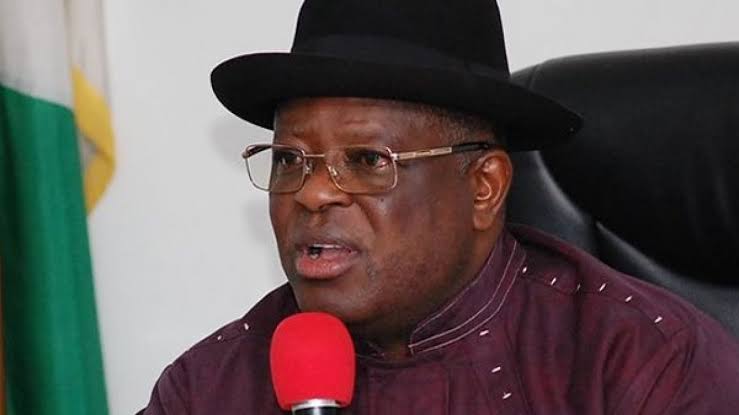
We are actually discussing the matter involving the governor of Ebonyi State Mr. Dave Umahi who together with his deputy and about 16 members of the Ebonyi State legislature are contesting a judgment of the Federal High Court, Abuja division which sacked them from their political positions for cross carpeting from the Peoples Democratic Party to the All Progressives Congress. What the governor has set out to do is to test the viability of the constitutional concept of due process.
We then asked, what Is Due Process in which case an expert Michael Boyle says: Due process is a requirement that legal matters be resolved according to established rules and principles, and that individuals be treated fairly. Due process applies to both civil and criminal matters.
In countries with developed legal systems, individuals expect that the rights enshrined in their constitutions will be applied to them fairly. This expectation of due process outlines the relationship individuals expect to have with their local, state, and federal governments—specifically, that the rights of the individual will not be violated.
KEY TAKEAWAYS of the concept of due process: Due process requires that legal matters be resolved according to established rules and principles and that individuals be treated fairly.
The origin of due process is often attributed to the Magna Carta, a 13th-century document that outlined the relationship between the English monarchy, the Church, and feudal barons.
In the U.S. due process is outlined in both the Fifth and Fourteenth Amendments.
The Sixth Amendment adds due process protections to criminal defendants.
One example of due process is the use of eminent domain.
Understanding Due Process
The origin of due process is often traced back to the Magna Carta, a 13th-century document that outlined the relationship between the English monarchy, the Church, and feudal barons. The document referred to as a charter (carta means charter in medieval Latin), sought to address many economic and political grievances that barons had with the monarchy.
 
In one of its clauses, the king promised: “No free man shall be seized or imprisoned, or stripped of his rights or possessions, or outlawed or exiled, or deprived of his standing in any other way, nor will we proceed with force against him, or send others to do so, except by the lawful judgment of his equals or by the law of the land.”1
The king was thus prevented from arbitrarily changing or ignoring laws, with the Magna Carta establishing the rule of law that the monarchy must follow.
 
Due process continued to be a part of British law for centuries after the signing of the Magna Carta, but the relationship between parliament and the courts limited its application in practice. The courts did not have the power of judicial review, which would have allowed them to determine whether government actions violated the rule of law, and thus could not always enforce due process. Judges could not be as assertive in defending due process in the face of parliamentary action, with the opposite holding true in the United States.
Types of Due Process according to the expert and he reminds us that in the United States, due process is outlined in both the Fifth and 14th amendments to the Constitution. Each amendment contains a due process clause, which prohibits the government from taking any action that would deprive a person of “life, liberty, or property without due process of law.” The due process clause provides several types of protection.2
Procedural Due Process according to him Procedural due process requires that when the federal government acts in a way that denies a citizen of a life, liberty, or property interest, the person must be given notice, the opportunity to be heard, and a decision by a neutral decision-maker.2
 
What is Substantive Due Process?  Substantive due process is a principle allowing courts to protect certain fundamental rights from government interference, even if procedural protections are present or the rights are not specifically mentioned elsewhere in the U.S. Constitution. Courts have taken an assertive approach to upholding due process, which has resulted in the executive and legislative branches of government adjusting how laws and statutes are written. Laws that are explicitly written not to violate due process are those that are least likely to be struck down by the courts.
 Due process in the U.S. also protects individuals from vaguely written laws and incorporates the Bill of Rights. (https://www.judiciary.uk/)
Now let’s read a little literature review of the concept of the right to appeal then we situate it within the context of the constitutionally protected right of governor Dave Umahi to exhaust his RIGHT OF APPEAL. 
The experts say that the most obvious way in which individual judges are accountable is through the right of the party to the proceedings to appeal any judicial decision, in some cases through several higher courts. In this way the losing party is able to have the decision reviewed by another independent judge or judges. The court determining an appeal will correct errors by the trial judge and the right of appeal ensures that, as far as possible, courts arrive at correct decisions. The decisions of appellate courts are fully reasoned, widely available and they do not always pull their punches.
Only a small number of the millions of cases commenced each year are subject to a successful appeal. For example, 1,553,983 civil (non-family) cases started in 2011, whilst just 1,269 appeals were filed in the Court of Appeal Civil Division in the same period. It is vital the right exists as it ensures that if a judge does make an error of law or fact the means exist to correct it. In this sense the right of appeal as a form of explanatory accountability has two distinct (but overlapping) functions, one private and one public. These were first noted by the Roman legal scholar Justinian.
The private function is to provide accountability to the individual litigants. The public function is that enabling errors to be corrected maintains and enhances the confidence of citizens in the justice system. Another aspect of the public function is that the appeal court can provide guidance for future cases and thus facilitate certainty. In these ways the right of appeal furthers the rule of law.
Examples of the many contexts in which there may be a right of appeal are:
•       In criminal cases there may be an appeal against conviction or sentence by the defendant, and a reference to the Court of Appeal by the Attorney General against a sentence that is considered to be unduly lenient in more serious cases.
•       In family cases, an appeal against a judge’s decision to place a child in care, to grant custody of a child to one parent rather than the other, or to determine how the matrimonial assets should be divided on divorce;
•       In civil cases the examples include; appeals against a judge’s determination of a contractual dispute (for example between consumer and supplier, builder and house-owner, or two businesses), a boundary dispute between neighbours, or a claim for compensation for personal injuries sustained in an accident or because of negligence by a doctor;
•       Against decisions of judges ruling on challenges by citizens to the decisions of public authorities; for examples challenges to decisions of NHS Trusts as to the availability of medicines, and decisions of planning authorities granting or refusing permission to build or extend houses, roads or motorways;
•       Procedural decisions made by judges in all parts of the justice system, such as whether to allow or disallow certain evidence to be put before the court, whether or not to require disclosure of certain evidence, or whether or not to grant an adjournment are also subject to appeal.
In 2012 just 62 individuals had their sentence increased after having their cases referred to the Court of Appeal by the Attorney General as ‘unduly lenient’ – a small fraction of the 138,808 cases dealt with by the Crown Court that year. There is also a proportionately small number of appeals against conviction or sentences. It is important to remember that these references and appeals represent only a small minority of those cases which are decided in the course of a year, and that they are not representative of the vast majority of appeals by those who have been convicted of a criminal offence where the sentencing decision of the court is upheld. This is despite the very strong criticism which is levelled at judges on the grounds that sentences are insufficiently severe.
It is tempting to try to analyse the performance of individual judges by looking at the number of appeals against them and then drawing the conclusion that those judges who are often successfully appealed are in some way less than competent. Such a conclusion cannot properly be drawn. The number of successful appeals against an individual judge’s decisions is not necessarily indicative of competence. Figures on successful appeals against a judge’s decisions can only begin to have relevance if they are set against the total number of decisions made by the judge in question, and those where there has been no appeal, or an appeal has been rejected. It should also be borne in mind that some judges have caseloads involving more complex and serious cases, so they might be more likely to feature in appeal cases. In any event, there are many cases where the Court of Appeal will overturn decisions without implying any criticism of the original judge, for example, where the lower court was required to follow an earlier decision of the Court of Appeal which is subsequently found to be incorrect.(         ).
This right of appeal is what governor of Ebonyi State, David Umahi, and his deputy, Dr. Eric Igwe, have approached the Abuja Division of the Court of Appeal to set aside the judgement that sacked them from their respective offices over defection from the Peoples Democratic Party, PDP, to the ruling All Progressives Congress, APC.
This came as the Nigerian Bar Association, NBA, yesterday lashed out at the governor over his outburst against the judge that gave the judgment, Justice Inyang Ekwo, describing it as “executive rascality.”
It would be recalled that Umahi had, in the aftermath of the judgement on Tuesday, accused the judge of doing a “hatchet job” in his ruling.
This is even as Ebonyi State government, yesterday, described the verdict against the governor and his deputy as an attempt to heat up the polity in the state.
Governor Umahi and his deputy, through their team of lawyers, led by a Senior Advocate of Nigeria, SAN, Chukwuma Ume, in their eight grounds of appeal, maintained that Justice Inyang Ekwo of the Federal High Court in Abuja, erred in law in his judgement and caused a grave miscarriage of justice against them.
They argued that the trial court, in ordering them to vacate their offices, based on the suit, marked FHC/ABJ/CS/920/2021, attempted to overrule a subsisting decision of the Supreme Court in AG Federation v. Atiku Abubakar & 3 ORS (2007) LCN/3799 (SC).
They contended that the apex court had in its decision, held that no constitutional provision prohibited a sitting president or vice president, and invariably, governor or deputy governor, from defecting to another political party.
They maintained that the trial high court judge erred, when he held thus: “I have not seen any authority which propounds that where a governor or deputy governor defects his political party on which platform he was elected into office, he cannot be sued by that political party to reclaim its mandate… Section 308 of the 1999 Constitution did not envisage such a situation.”
They argued that the trial court ought to have dismissed the case of Peoples Democratic Party, PDP, in view of the clear provision of Section 308 of the 1999 Constitution (as amended).
“The provisions of Section 308 are specific, notwithstanding anything to the contrary in this constitution, but subject to subsection (2) of this section, no civil or criminal proceedings shall be instituted or continued against 3rd and 4th Appellants during their mandate in office as Governor and Deputy Governor respectively.
“There is no provision of the 1999 Constitution (as amended) that provides for the removal of 3rd and 4th appellants as sitting governor and deputy governor respectively of Ebonyi State for reason of defection.”
NBA slams Umahi, describes response to court order as executive rascality
Reacting to the governor’s outburst against the trial judge, yesterday, the Nigerian Bar Association, NBA, called on him to immediately render an apology for his attack on Justice Inyang Ekwo, describing the outburst as executive rascality.
NBA President, Mr. Olumide Akpata, while reacting in a statement, said: “The NBA has noted with utter dismay, the unfortunate and totally unacceptable reaction of Dave Umahi to the judgement of the Federal High Court, Abuja, delivered on March 8, 2022, by Justice Inyang Ekwo, which, inter-alia, ordered him and Mr. Eric Igwe to vacate the offices of governor and deputy governor, respectively, of Ebonyi State on grounds of their defection from Peoples Democratic Party, PDP, to the All Progressives Congress, APC.
The statement read: “Following the judgment, Umahi, in the course of a press conference —video evidence of which is currently making the rounds on both new and mainstream media — threw caution to the wind and deployed very uncomplimentary adjectives and intemperate language in characterising both the judgement and Justice Ekwo, including but not limited to describing the judgment as ‘jungle justice’ and His Lordship as ‘a hatchet man.’
“As if these were not enough, Umahi accused the court of ‘murdering justice’ and also arrogated to himself the judicial powers and magisterial authority to declare the judgement of a court of competent jurisdiction as null and void, while unashamedly declaring his intention to disregard the judgement in favour of another.
“To put it plainly, this is impunity of the highest order and executive rascality taken too far.  While the NBA has absolutely no interest in the outcome of the case in question and will continue to stay away from partisan politics, it is inconceivable that this association that is charged with upholding the rule of law and defending the judiciary would sit idly by in the face of this unprovoked and totally unwarranted attack on the judiciary.
‘’It is for this reason that we condemn without equivocation, Umahi’s unfortunate diatribe which, if it had emanated from an average litigant, would still have been regarded as shocking but coming from one who occupies the exalted office of a state governor, is nothing short of a national embarrassment.
“In light of the foregoing, the NBA, hereby, demands an immediate apology from Umahi and a retraction of the comments he made against the person and Judgment of Justice Ekwo of the Federal High Court.
“It is also our demand that this apology and retraction be given as much media coverage as the press conference where the unfortunate comments were made.”
SANs divided over Umahi’s sack by high court
Meanwhile, some Senior Advocates of Nigeria, SANs, remained divided, yesterday, over the sacking of the governor and his deputy by the court.
While some of them hailed the decision of Justice Inyang Ekwo, others maintained that the high court lacked the powers to order the governor and his deputy to vacate their respective offices.
In his reaction, Olisa Agbakoba, SAN, said:  “Based on the Supreme Court decision in Amaechi vs Celestine Omehia and PDP, the candidate who wins political office holds the office in trust for the party.
“The party is the only legally permissible entity under the constitution and the Electoral Act, who canvasses for votes. As a result, the political office to which a candidate runs, say for president or Senate etc, is to the benefit of the party exclusively.”
Prof. Epiphany Azinge, SAN, in his reaction, said: “There are many dimensions to the issue. First is, can an action be brought against a sitting governor regardless of the provision of Section 308 of the Constitution on immunity?
“The court answered in the affirmative and I respectfully agree. Second is, whether earlier decisions of the Supreme Court on the subject of defections as it affected the legislature can by parity of reasoning be stretched to the executive?
“Again, the court answered in the affirmative. I am not sufficiently persuaded. First is that the constitution is silent in that regard. But can the judiciary not engage in judicial lawmaking to fill the gap when there is obvious lacunae?
Adding his voice to the debate, Dayo Akinlaja, SAN, said: “The reality on ground is that the court that gave this judgment is a court of first instance.
“There is as such a window of opportunity for an aggrieved party to appeal against the judgement. Having regards to the all important nature of the matter, it is certain that there will be an appeal.
“My own attitude is that the Court of Appeal should be allowed to decide the matter in a way and manner considered proper by that appellate court.”
While disagreeing with the judgement, Jubrin Okutepa, SAN, said: “This judgment, on the superficial level, seems very attractive and well intentioned to instill political sanity in our otherwise reckless political terrains.
“But beyond this and also scoring political debates, is there jurisdiction in the Federal High Court to make the orders it made, in the light of, and upon a dispassionate construction and interpretation of Nigerian Constitution 1999 (as amended)? I do not think so.”
“There is no power and jurisdiction in the Federal High Court to determine and declare that by constitutional misconduct of defecting to another political party other that the party upon which the governor and the deputy governor were elected, their seats had become vacant and to order the conduct of election to their offices.”
Similarly, Chief Mike Ozekhome, SAN, said: “I am of the firm belief that the judgement, shredded of all legal and factual details, cannot stand the acid test of constitutionalism, nor pass the furnace of appellate courts scrutiny. This is because the tenure of office of a governor and his deputy are constitutional matters.
“Perhaps, the jurist’s learned attention was not drawn to appellate decisions on this type of matter, which under the doctrine of stare decisis and judicial precedent, he ought to have followed meticulously.
“I humbly submit that a governor already sworn in cannot be removed by the Federal High Court through an originating summons. It will surely be set aside on appeal. Mark my words.”
A universal fact which is not I contention is the constitutionally protected right of appeal of the Ebobyi state governor and his deputy.  
 
*EMMANUEL ONWUBIKO is head of the HUMAN RIGHTS WRITERS ASSOCIATION OF NIGERIA (HURIWA) and was federal commissioner of the NATIONAL HUMAN RIGHTS COMMISSION OF NIGERIA.
 

Muhammad Nami’s FIRS: A New Era Of Tax Efficiency

By Queen Onwughalu

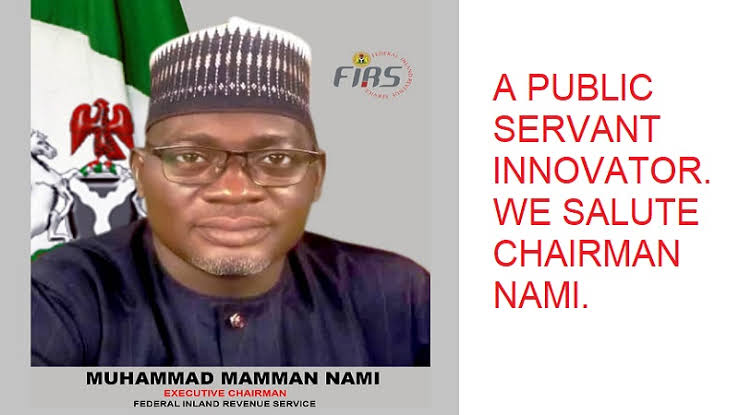
The innovations and reforms undertaken at Federal Inland Revenue Service (FIRS) by the new tax master, Muhammad Nami, call for a closer look. Since the discovery of oil in Nigeria in 1956, the nation has continued to rely more and more on oil revenue as its economic mainstay. Until recently, when oil prices in the international market fell into a glut, internally generated revenue (IGR) has not been given the attention that it deserves as the major augmenter to the nation’s revenue base. The need for alternative revenue sources has been a growing concern over the years, leading to the much talked about diversification of the economy. Taxation as one of these measures is primarily to assist the nation’s economy and like in other countries, imposed to generate revenue for the government to meet its capital and recurrent expenditure.

With the dwindling oil revenue, internally generated revenue has become a great concern and successive governments in Nigeria have made conscious efforts to reposition the Federal Inland Revenue Service (FIRS). Thus in December 2019, President Muhammadu Buhari replaced Babatunde Fowler with Muhammad M. Nami as chairman of Federal Inland Revenue Service (FIRS). Mr. Muhammad M. Nami, is a well-trained Tax, Accounting and Management Professional with highly rated qualifications and professional practice spanning many professional bodies. Nami has almost three decades of practical working experience in Auditing, Tax Management and Advisory and Management Services to clients in Banking, Manufacturing Services, Public Sector and Non-Profit organizations.

There is therefore no doubt that his appointment as chairman of the Federal Inland Revenue Service (FIRS) is one round peg in a round hole. And he has been on top of the daunting challenges of the sector. Nami understands clearly that revenue collection in Nigeria faces some formidable problems, which include the high tax rates and complex filing procedures, multiple taxation and lack of proper enlightenment, lack of statistical data, poor tax administration, and inability to prioritize tax effort, multiplicity of taxes and increase in underground economy.

Taxation is a main source of revenue to governments across the world; thus tax becomes a burden that every citizen must bear to support the government just as the government has some functions to perform for the well-being of those it governs. Tax is therefore a compulsory contribution from a citizen to the government to defray the expenses incurred in the common interest of all, without reference to special benefit conferred. Though it is anticipated that tax being a contribution to settle the cost incurred by the government, the state uses the revenue collected from the taxes to provide good and social services such as hospital, school, public utility service and so on, which benefit all the people. This is a basic social contract, which the state must fulfill to continue to justify its demand for tax compliance from citizens.

Despite its necessity, Nigerians generally do not pay tax, making its collection as revenue generation an uphill task. Nami and team have been improving the prospects of rax collection and administration. FIRS under him have improved so much on Tax compliance strategy meant to elicit voluntary tax compliance.

The FIRS under Nami has demonstrated good intention and has secured the understanding of Nigerians that tax is inevitable and an indication of being a good citizen. Companies, small, medium and big, have been made to keep proper and complete records of their business transactions to make way for proper evaluation and for the FIRS to be objective in their assessment to avoid taking excess tax from the taxpayer.

FIRS under Nami is particularly dealing with Corruption risk-mitigating issues to ensure efficient service delivery by putting in place and enforcing Code of Conduct for staff, Internal Control that have shown zero tolerance for corruption and having in place sanctions and incentives, whistleblowing and its protection as well as regulation against corrupt practices.

Nami as a new broom that sweeps clean was tested and confirmed within his first year in office, in 2020, when the Coronavirus pandemic struck. Economies across the world were battered and most countries suffered fiscal shocks. Revenue authorities could not shore up enough funds to meet the needs of the government to execute their mandates. Despite the fiscal chaos, the FIRS under Nami was able to meet 98% of the national tax target for that year. It collected total tax revenue of over N4.952 trillion, a little short of the target of N5.07 trillion the federal government had set for it. This near 100 per cent feat was prodigious. It was coming in the same year the pandemic had shrunk business activities round the world, provoked lockdowns and frustrated commerce. FIRS under Nami had to grant tax exemptions to small companies to cushion the effects of the pandemic. In the same year too, the Service under Nami achieved 109 per cent of its non-oil tax collection target. In the first quarter of 2020 alone, stamp duty earnings jumped to over N66 billion from the N18 billion recorded the previous year.

Nami’s achievements as the helmsman of FIRS are legion but two or three of such outstanding achievements deserve some special mention. Apart from building institutional frameworks to collaborate better with stakeholders and make FIRS a customer-friendly institution and data-driven, Nami has deployed the revolutionary TaxPro Max: FIRS’ homegrown digital platform for tax administration, which allows taxpayers to register, file returns and pay their taxes easily from any location.

FIRS under Nami has also set up the Tax Incentive Management Department to monitor and take charge of the tax affairs of enterprises enjoying tax exemptions and holidays and ensuring they do not take undue advantage of their status as a cover to earn taxable income and refuse to pay taxes on such income. Nami also set up the Intelligence, Strategic Data Mining and Analysis Department of the FIRS. This department mines data and analyses it to make sense of what is happening across the country and the world for more efficient tax administration. The Service has deployed a digital service interface, the Digital Economic Compliance (DEC) Tool, to facilitate the implementation. The implementation of the DEC Tools also assists the Service in determining entities that fall within the SEP threshold and relevant turnover generated from Nigeria was revolutionary in itself.

Reward for good work, they say, is more work. Nami’s giant strides as a tax master have been recognized globally. On Friday, November 12, 2021, there was a buzz among tax aficionados because Muhammad Nami, the Federal Inland Revenue Service (FIRS) boss had been elected President of the Commonwealth Association of Tax Administrators (CATA). He is the first Nigerian in the history of CATA to occupy that position. CATA is an association constituted at the meeting of the Commonwealth Finance Ministers in Barbados in 1977 to promote the improvement of tax administration within the Commonwealth with particular interest in developing countries. In 1978, 26 countries, including Nigeria formed CATA and the membership has grown to 47 today.

When Nami assumed office, four items were top on his agenda for the Commonwealth Association of Tax Administrators: improve the capacity of members to meet up with the dynamics of today especially in technological advancements; promote the Multilateral Commonwealth income Tax Relief for all member countries; promote the Bilateral Avoidance of Double Taxation Treaty among member countries; and forge strategic partnerships with developmental and multilateral institutions, for support in capacity building for CATA members.

Nami is aware that the emerging fourth disruption in the world economy is the ICT revolution, which has engendered digitization and digitization. Nami understands this and has completely transformed and repositioned FIRS to lead the nation into it. Other components of the nation’s economy need to emulate the revolution, which has taken place in the Federal Inland Revenue Service.

Nami has not hidden his goal of making the FIRS a 100 per cent automation tax administration institution. Apart from shoring up revenue, full automation of all its tax administration processes will block revenue leakages thereby revolutionizing revenue generation in Nigeria. Nami has also called for the cooperation of Nigerians to achieve this and see tax evasion as a crime and economic sabotage.

Nami’s landmark achievements did not come to those who know him and his background as a surprise. As a man tailor-made for the job, he is an expert in rendering advisory support services to investors in respect of new businesses, trading, service, manufacturing and other sectors of the economy. The Bayero University and Ahmadu Bello University product, Mr. Muhammad Nami is also a Fellow of the Chartered Institute of Taxation of Nigeria (CITN), the Chartered Institute of Forensic and Investigation Professionals of Nigeria, the Institute of Debt Recovery Practitioners of Nigeria and an Associate Member of the Nigerian Institute of Management (Chartered) and the Association of National Accountants of Nigeria (ANAN).

He began his career with PKF Professional Services in 1993 and rose to the position of a Senior Consultant in charge of Tax management and Advisory services. He was also the Managing Consultant of Manam Professional Services (Chartered Tax Practices and Advisers) based in Kaduna, Abuja and Minna from October, 2018 to December, 2019 when he was appointed as FIRS boss. Mr. Nami also served on many companies’ Board and Statutory Board Audit Committees. He was appointed as a member, Presidential Committee on Audit of Recovered Stolen Assets in November, 2017 by President Muhammadu Buhari. In addition, Mr. Nami is also the Chairman, Joint Tax Board (JTB) and Chairman of African Tax Administrators Forum (ATAF). These added feathers confer on him the enviable responsibility of contributing to the economic growth and development of Africa’s largest country, Nigeria.

Also he created Emerging and Special Tax Department to cover areas such as emerging tax matter like crypto currency, e-commerce , Social media platform like Twitter, Instagram, face book that do not usually have presence
2) He created Special Crimes Department which came into being this year with the mandate to prosecute tax criminals or reduce to the barest minimum tax crimes in the country with powers of Nigeria Police Force and other law Enforcement Agencies . The staff have been designated as Special
Purpose Tax Officers with powers to detain and prosecute etc

Nigerians have to reciprocate the great job being done by Nami and FIRS by committing to meeting tax obligations while the government should be more serious in the discharge of its responsibilities to the governed in fulfillment of the said social contract. Tax evasion and corruption must be seen as social and economic cankerworms by the citizens. Public offices and good things of life must be shut to tax evaders and corrupt citizens. Good taxpayers and honest citizens must be adequately rewarded through good governance and constant improvements in the standard of living of citizens.

ONWUGHALU QUEEN IFUNANYA IS A STAFF OF HUMAN RIGHTS WRITERS ASSOCIATION OF NIGERIA (HURIWA).

The Women Are Coming: For Gender Parity In Contemporary Nigeria
By

Emmanuel Gandu

The female gender is strongly becoming a veritable factor that cannot be ignored in global affairs. Realising this indispensability are bureaucratic, military, and civil institutions. Even the religious institutions are not left out as the two major world religions – Christianity and Islam continue to contribute effectively in galvanizing the female gender in this direction.
This granting and concession is captured vividly, and therefore encapsulated in the two Holy Books of the Quran and the Bible.
In the Quran, women are important and play significant roles on the good morals taught in Islam. Maryam (Mary) is mentioned 70 times in the Quran. In the Bible, Mary (the mother of Jesus) is mentioned by name 12 times in the Gospel of Luke, 5 times in the Gospel of Matthew, 1 time in the Gospel of Mark, and 1 time in the Book of Acts – totalling 19 times.

THE ODDS AGAINST NIGERIAN WOMEN
Are Nigerian women prepared to take over the leadership of the country from the men who have messed up things for the past several decades ?

  • The statistics :
    (a) International Women’s Day is currently being celebrated with calls for women to assume more and higher positions.
    But this year (2022) marks the 27th anniversary of the Beijing Declaration of 1995 without significant achievement from Nigerian women on the ’12 Strategic Goals’ including political participation.
    (b) Women make up about 50% of the world population yet they are never farely represented in governance, politics, etc in order to help meet the ever increasing complex chalenges of today’s society which men find difficult to overcome.
    (c) According to figures by the National Population Commission (NPC), and the National Bureau of Statistics (NBS), Nigeria has a population of about 200 million people with approximately 51% males and 41% females.
    However, this figures have never translated in favour of women in either elective or appointive positions.
    (d) Out of the 109 Nigerian Senators in the present 9th assembly, there are only 7 women.
    (e) Just one (1) senator is a woman in the whole of the 19 Northern states of Nigeria.
    (f) There are only eleven (11) women out of the 360 Honourable members of the House of Representatives.
    (g) No woman has ever been elected president or vice president of Nigeria.
    (h) No woman has been elected as governor in the 4th republic.
    (i) The Gender and Equal Opportunities Bill (GEO) sponsored by Senator Abiodun Olujimi in 2016 is still lacking in teeth and bite.
    (j) On the global scene, Nigeria is very very poor on the Statistics table of women parliamentary representation.
    Out of 193 countries surveyed by the United Nations, Nigeria ranks 181 position.
    Rwanda is no.1 in the list, Namibia is no. 7, South Africa is no. 10,
    Kenya is no. 90, Niger is no. 122.

WOMEN AS BETTER LEADERS THAN MEN ?
The argument as to whether women are better leaders than men depends on the side of the divide one is coming from. It is not even a matter of which side presents the most persuasive argument. The facts remains and reminds us that :
✓ No country is known to have gone to war where millions are killed during the reign of a woman.
✓ Nations have been known to experience stability, economic development, and industrial boom during the reign of women.
✓ As mothers, women are endowed with firmness, democratic qualities, sympathy, and empathy in the affairs of governance. Some of these women world leaders include Bandaranaike of Ceylon (now Sri Lanka), Indira Gandhi of India, Golda Meir of Israel, Margaret Thatcher of UK, Benazir Bhutto of Pakistan, Ellen Johnson Sirleaf of Liberia, Joyce Banda of Malawi, Theresa May of UK, Angela Merkel of Germany, and Aung San Suu Kyi of Myanmar.
Men on the contrary are rather schismatic, ruthless, insensitive, dictatorial, and draconic in nature, thereby leading their country to the brink, volatility, chaos, and bloody consequences like in the case of Adolf Hitler of Germany, Mussolini of Italy, Gaddafi of Libya, Saddam Hussein of Iraq, Omar El Bashir of Sudan, Assad of Syria, Augusto Pinochet of Chile, Idi Amin of Uganda, and Sani Abacha of Nigeria.

CONCLUSION
Men have led Nigeria to a catastrophic bitter 30 month civil war. Men have dragged Nigeria to an unnecessary Boko Haram and fulani herdsmen unending atrocities. The menace of kidnapping and banditry is driven by men. Communal and tribal conflict is fuelled by men. Men have earned for Nigeria the infamous notorious no. 3 position on the world terrorism index. Men have mal administered Nigeria through all forms of Nepotism, corruption, political banditry. Men have squandered the Commonwealth of Nigeria.
Is it not time to allow the women take the destiny of Nigeria to a better future ?
2023 beckons.

If the 2 world major religions Islam and Christianity elavates women to amiable pedestal, if the gender discrimination and divide in Nigeria’s political leadership landscape is more as a result of culture and religion, then, it therefore remains to be seen whether our religioucity is more of lip service, deception, and chauvinistic rather than anything that has to do with women’s brains.

                Peace ?
               15/3/2022
HIJAB AND ISLAMIC WOMEN, HABIT AND CHRISTIAN WOMEN : THE PERCEPTION, THE CONTESTATIONS, AND THE EXPOSITION.
By Emmanuel Gandu

INTRODUCTION
Wearing the Hijab, Habit, Burqa, Niqab, and Veil by women is a tradition in ancient Greek culture that predates both Christianity and Islam.
In this culture, respectable married women and widows wore a Habit, Burqa, or Hijab to indicate their humble background.
“They were never to be seen in public exposing from their hair down to the shoulder, chest and rest of the body to the eyes of men other than their husbands as enshrined in the Assyrian Law from 1400 – 1100 BC” – Kwasniewski

This is the culture from where Christianity, and much later Islam arose.
Interestingly, both Christianity and Islam embraced the use of these modes of dressing as a way of preserving the sanctity of womanhood.
In view of this, both the Bible and Quran devotes verses that serve as indicators on how best the woman is expected to dress in public and in worship.

However, this mode of dressing is receiving attention, scrutiny, critical commentary, variety of perception, misconception, etc. These thoughts are conveyed through private and and public discussion, thus having impact on the fashion trend, legitimacy, legality, or otherwise of its continues use. Some have argued in support, while others do not.

This discourse and exposition is an attempt to interactively interrogate, expose, enlighten, understand, appreciate, and therefore bring to the fore the power and potency or otherwise of the Hijab, Habit, Burqa, Niqab, and Veil etc as a vehicle for the preservation of among others, the chastity of womanhood by Islam and Christianity.

It is for the realisation of this objective that some of the issues, concerns, perception, contestations, and questions which have likely been agitating the minds of the public are presented in order to provoke further discourse :

HYPOTHETICAL QUESTIONS
(1) Why is the Muslim woman discriminated against for wearing the Hijab, Burqa, Niqab?
(2) Is the use of the Habit, Hijab, and Veil by Christian women Biblical ?.
Is the use of the Hijab, Burqa, Veil, and Niqab by Muslim women expressed in the Quran ?
(3) If Jesus as the founder of the Christian religion and Mary his Mother was seen everywhere dressed in the Habit/Hijab as depicted in recorded historical archival documents, why the unpopularity of these modes of dressing in christendom ?
(4) If Christianity embraced the Hijab/Habit long before the arrival of Islam, why is Islam pursuing the use of these modes of dressing with positive aggressive efforts and compliance than Christianity ?
(5) Is there any similarity between the Christian woman dressed in the Habit and the Muslim woman dressed in the Hijab ?
(6) To what extent has western fashion and civilization influenced the Christian woman mode of dressing ?
(7) Why is Islam not adversely affected by western influence on their women fashion and dressing ?
(8) If yes to (5) above, to what extent can Nigeria take advantage of the similarities to encourage inter religious dialogue ?
(9) Can’t the use of the Habit, Hijab, Burqa, Veil, and Niqab be a helpful deterant to the menace of vices especially in this our society with high prevalence of promiscuity, sexual harassment, rape, sex violence against women and the girl child ?
(10) Which would you rather prefer to see – your wife, daughter, sister, or mother dressed up in Hijab/Habit that covers from head down, or in exposed breasts, nipples, and buttocks in public ?

ORIGIN OF THE HIJAB/HABIT/BURQA/VEIL
The findings of a reknowned historian revealed that statuettes depicting veiled priestesses dates as far back as 2500 BC.
Elite women in Ancient Mesopotamia, and in the Byzantine, Greek, and, Persian empires wore the Hijab/Veil as a sign of respectability and high status of class, rank, and occupation in society. Female slaves and prostitutes were forbidden to veil, and faced harsh penalties if they did. “Wearing the Hijab/Habit/Veil was a mark of Aristocratic rank, respectability, and status symbol” – Dawson.

Prior to the advent of Christianity, respectable women in Greek society were expected to seclude themselves, wear clothing that concealed them from the eyes of “strange”men.
Interestingly also, Roman and later in the Babylonian society, married Jewish women had to cover their hair.

Worthy of note is the postulation of a prominent researcher that “at the inception of Christianity the women continued to cover their heads with the Veil” – Fadwa El Guindi.
This practice gained acceptance as it was widely enbibed by those early Christians around 200 CE.

According to two prominent Scholars, the Hijab or Veil had not only gained prominence but was gradually creeping into the fashion and culture of the people.
In Rome for example, a Veil called “Lammeum” was the most prominent feature of the costume worn by the bride on her wedding day, they asserted.
Christian communities in Israel/ Jerusalem, Syria, Iraq, Jordan, Egypt, Turkey, and other ancient Middle East regions popularised the Hijab which was the dress code for women in conformity with the prevailing culture.
And by the time Islam eventually came, these modes of dressing which had long been inculturated into Christian communities was easy to adopt and adapt in the emerging Muslim communities.
“The Habit, Hijab, and the Veil mode of dressing was adopted into Muslim Culture during the Arab conquest of the Middle East” – Spuler, and Garland.
This therefore is the culture from which Christianity and much later Islam arose.

HABIT AND HIJAB IN CHRISTIANITY
The use of these modes of dressing by Christian women / Christendom is as culturally historical in origin as it is Biblical. Bible verses support women to Veil and cover parts of their bodies :
(1) “Any woman who prays or proclaims God’s message in public worship with nothing on her head disgraces……..” “If the woman does not cover her head…… she should….. but on a woman it is a thing of beauty” – 1Corinth 11:5-15.
(3) “I also want the women to be modest and sensible about their clothes and to dress properly”. “………as it is proper for women who claim to be religious” – I Timothy 2 : 9 – 10.
(3) The Veil is a fine linen used to cover whatever is sacred. It is no longer a mere human cultural tradition but it is willed by God. The veil is a sacred mystery. It is the sign of the sacredness of being Christian, the Holy of Holies -:
(a) Exodus 25 : 8 – 9
(b) Exodus 26 : 31 – 33
(4) Wearing the Habit, Veil or Hijab by women in the Jewish culture is depicted in the Bible, and archival/historical documents and literature, having the Jerusalem women, and Mary the mother of Jesus as the symbols of purity,and chastity in womanhood.
It is this physical distinguishing feature that contributed, and stood her out among women, and therefore honoured to be the custodian of the cherished ideals of womanhood. This was granted by God, and attested to through the Angel Gabriel – Luke 1:26 – 37
(5) The use of the Habit and Veil by the Rev. Sisters, and women in other Christian denominations serves as a continuation of that culture and Religious aspects of keeping/maintaining the purity and chastity of womanhood.
This also reminds you and I that these Nuns have dedicated themselves to the service of God and humanity as they remain the “handmaid of God” – Luke 1:38-39
(6) The Habit, Hijab, or Veil is meant to hide what may attract a man’s eyes to the Nuns and other Religious women. This protects them from drawing inappropriate attention to their bodies, and also to indicate that they are “not available” to the intrigues of the secular world.

ISLAM AND HIJAB, BURQA, VEIL, NIQAB
Hijab or Burqa etc is usually worn by Muslim women and usually covers the head, shoulders, and most parts of the body in conformity with Islamic standards in order to maintain their privacy from unrelated males outside the woman’s immediate family.
The Encyclopedia of Islam and Muslim World states that “modesty in the Quran concerns the woman’s gaze, gait, garments, and genitalia”.

According to three prominent Islamic Scholars and Authors – Karen Armstrong, Reza Aslan, and Leila Ahmed the stipulation of the Hijab/Veil were intended to maintain the inviolability of the Muslim woman. This was strictly observed by the Prophet Muhammad on his wives.
These scholars/authors argued that the term “darabat al – hijab” (taking the veil) was used synonymously and interchangeably with “becoming Prophet Muhammad’s wife”.

Aslan’s writings suggests that Muslim women started to wear the Hijab/Veil to emulate Prophet Muhammad’s wives who are revered as “Mothers of the Believers” in Islam. Aslan goes further to state that “there was no tradition of veiling until 627” in the Muslim community.
These three Islamic Scholars argue to prove that Veiling or Hijab did not originate from Islam.

However, Islam today and in the past is seen to have uplifted the dignity and morality of womanhood in the Hijab much more than in the culture from which the Hijab originated, and even in Christianity which first embraced this mode of dressing as depicted in archival/historical documents in Mary and the women of Jerusalem.

Interestingly, Islamic guidelines and dress codes that support the use of the Hijab/Veil are found in texts of the Hadith and are derived from the verses (ayahs) referencing Hijab in the Quran.

Of the more than 6,000 verses in the Quran, about half a dozen refer specifically to the way women should dress or walk in public – for example :
(1) Surah 24 tells women to “guard their private parts and draw their Khimar (Hijab) over their breasts, and not display beauty except to their husbands, ……..” – Quran 24 : 31
(2) In Surah 33 Prophet Muhammad is commanded to ask his family members and other Muslim women to wear outer garments when they go out so that they are not harassed – “O Prophet ! enjoin your wives, your daughters, and the wives of true believers that they should cast their outer garments over their persons (when outside) that is most convenient that they may be distinguished and not be harassed” – Quran 33 : 59

THE ARGUMENTS, THE CONTESTATIONS, AND THE CONVERGENCE
From the foregoing, it is indicative of the fact that the Hijab, Habit, Veil, Burqa, Niqab exist in both Christianity and Islam. However, some issues of conflict arising from some Muslim women preference for the Hijab over the approved dress code of their profession in many societies and regions seemed to have attracted unnecessary notoriety to Islam.
These and many other isolated incidents associated with the use of the Hijab had unfortunately culminated in some kind of ban or partial ban placed on the use of the Hijab by Muslim women in some western and American countries.
Interestingly, Mary the mother of Jesus who is one of the symbols of the Hijab and the Habit, as the case may be, exists both in Christianity and Islam.
However, Islam is seen to have uplifted the dignity, morality, and the widespread use of the Hijab in womanhood much more than the culture from which the Hijab and Habit originated, and even Christianity that first embraced the dress code.

WHY IS ISLAM IN THE FOREFRONT ?
(1) While the fashion of wearing the Habit/Hijab by women in Christendom is no longer revered nor fashionably in vogue, and seems to be abandoned and left to only the Catholic Rev. Sisters (Nun) and some white garment Churches; Islam on the other hand is vigorously encouraging/enforcing this dress code for their women, girls and children.
(2) No doubt the credit for the positive aggressive Islamic drive on this dress code must first be given to the Prophet Muhammad and his wives for showing/leading the way.
(3) Another contributory factor to the sustenance and hence the popularity of the Islamic Hijab dress code is the fast growing Islamic fashion industry which is embraced by every Islamic woman, girl, and the girl child.
(4) The Muslim population is the fastest growing in the world and so is the number of women using, and thereby making more popular the Hijab.
(5) The boom in business and marketing in the Hijab fashion industry is catching up like wild fire thereby making textiles and fabric manufacturers keep smiling to the banks.
Faegheh Shirazi (2010), an Islamic fashion scholar explains the reasons for this growth to include the huge increase in the lucrativness of the global Muslim fashion industry. According to her, “Milliyet”, a Turkish Newspaper research report in 2010 estimated the global Islamic clothing market in Turkey alone to be worth $2.9 billion for that year.
Still according to that research, the Hijab fashion was expected to rake in $488 billion in 2019 alone.

CONCLUSION
From the foregoing, it is without doubt Hijab, Habit, and Veil exist in both Christianity and Islam.
While the fashion has occupied the backseat in Christendom, Islam on the other hand is seen to have uplifted the dignity and morality of the Hijab, Habit, and Veil etc more than the culture from which the fashion originated, and even Christianity which first embraced it.

Lamentably, it may be argued that westernization is largely having an overbearing “negative” influence on some Christian ideals especially the mode of dressing.

Interestingly however, the biggest lesson that we may take home from all this presentation and argument on the veracity or otherwise of the Hijab, Habit, Burqa, Niqab, and Veil is the onenes, and unity of purpose that these modes of dressing will bring to a rather schismatic and polarized society like Nigeria.

If Christianity and Islam, the two major world religions both share the culture, religious, beauty, and use of the Habit, Hijab, and Veil as a symbol of dignity, purity, and Chastity for womanhood, are we therefore not much more alike than different ?.
As our fashion taste, tribe, culture, upbringing, and perception differ, so our religious practices, doctrines, and inclination.
However, we are one people, one destiny, one love, and one God. The Habit, Hijab and Veil rightly represents this common heritage.

It therefore remains to be seen whether Nigeria will take advantage of these similarity to foster the much needed unity between Christians and Muslims or miss the opportunity.

Bishop Bagobiri: The Unrepentant Radical
By Emmanuel Gandu

ABSTRACT
Destiny launched and exposed him at the public square arena where he contested and won through public demand by staging and showcasing his persona that connected to the people at the most primal level.
Although viewed by many as controversial, if Bishop Joseph Danlami Bagobiri had one thing going for him, it was the ability to strike the right musical chord, at the right time, producing a melodic symphony for the listening ear and the right dancing steps.

INTRODUCTION
Some call him the people’s Bishop, the voice of the down trodden, the fearless one, the disciplinarian.
Others refer to him as the good shepherd, a man of great sacrifice and benevolence, the thorn in the flesh of the unjust, the protector of the poor, less privileged and vulnerable, an apostle of non violence.
He is a historical figure, radical activist and reformer, social critic, equal rights advocate for both Muslims and Christians, a freedom fighter, and a detribalised Nigerian.
Bagobiri was a man that spoke truth to both religious and civil authority.
He was the ‘liberation theologian’ who held the Bible on the right hand and the ‘weapons’ of political and economic liberation on the left.

MANIFESTATION OF BAGOBIRI’S RADICAL DISPOSITION
Born in Gwong (Kagoma) Southern Kaduna to the famous Pa Bagobiri family of 5 wives and 27 children, young Joseph grew up into the protective arms of his mothers, senior brothers, and sisters.
Joseph Bagobiri began to exhibit traces of independent mind, thoughts and actions at a very young age. It initially looked like the usual exhibition of youthful exuberance. As time went by the traits were assuming such situations that were akin to notorious pear group influence. Some of these traits and actions were promptly subdued, and sometimes ended up in cover-ups by his older brothers and sisters who usually shielded him from the punishment of their disciplinarian father.
As young Bagobiri advanced from one age group to another, he became bolder, more articulate, and assumed the position of the defender of the not so strong-willed among his pear group.
Even at secondary school, he endeared himself to his juniors and classmates who found an umbrella of succor in his pep up talks, counseling, and motivation for self achievement/accomplishment.

Part of his independent thoughts, growing strong views and stance on issues he felt strongly about especially those that are protectionist and wellfarerist to his peer group. At one of such protectionist and adventurist incidents, youthful Joseph Bagobiri and his ‘gang’ of youths employed the ‘Robin Hood’ style within the vicinity of the village community.
This action, according to a family source pushed Pa Bagobiri to take his bow and arrow to shoot down his son. Sensing the rage and fury of his old man, Danlami, as he was fondly called by his father escaped to exile from the entire Kagoma village for some couple of months.

Coming from this background, and in a
country ravaged by social, tribal and economic inequality, injustice, hunger, deprivation, youth restivenes/unemployment, and killings, it’s just right to understand Bagobiri’s brand of frustration and his resultant radicalization.

ERECTION AND CONSECRATION OF BAGOBIRI AS THE CATHOLIC BISHOP OF KAFANCHAN DIOCESE
The erection of the Catholic Diocese of Kafanchan in 1995 witnessed the consecration of Joseph Danlami Bagobiri as her first Bishop. Born in 1957, Bagobiri, after barely 12 years as a priest became a Bishop, one of the fastest in recent memory.
Kafanchan diocese is essentially an agrarian, rural, with no entrepreneurial, and infrastructural incentives for investment.
Bagobiri inherited few parishes, poorly built Churches, a few poorly trained clergy, and a poor capital base.
No doubt the young Bishop was overwhelmed by the enormity of the array of challenges but rather than remain frustrated, Bagobiri became positively aggressive, radical and revolutionary in his approach to not only religious, but also political and economic matters. He had to ‘stoop to conquer’.

As at 2017, Joseph Danlami Bagobiri had raised the profile of Kafanchan diocese to the admiration of many, with about 35 parishes, about 100 best trained clergy, a minor seminar, major seminary, a girl’s college, co-educational college, a pastoral center, a best selling monthly newspaper, and much more that the Diocese compares favourably to other older ones.
Who else could achieve this feat within such a short period if not a radical reformer.

OTHER BAGOBIRI’S APPOINTMENTS/ASSIGNMENTS
(1) Ordained Catholic priest – 1983
(2) Education secretary and Vocations of Kaduna Archdiocese
(3) Vicar Delegate for Kano 1991 – 1995
(4) Pioneer Bishop of Kafanchan diocese – October 21st, 1995
(5) Education secretary Catholic Bishop’s Conference of Nigeria (CBCN)
(6) Pioneer Chairman for Mission Dialogue Department of the CBCN
(7) Chairman Governing Council of the Catholic Institute of West Africa (CIWA) Port Harcourt – (Two term)
(8) Chairman Inter Religious Dialogue for Association of Episcopal Conference Anglophone West Africa.
(9) Leader of the 6 Man delegation of the Christian Association of Nigeria (CAN) to the 2014 National Conference.
(10) Awardee of the Member of the Federal Republic ( MFR)

BAGOBIRI’S INTERVENTION DURING FULANI/RELIGIOUS CRISIS
At the peak of the Genocidal killings by Fulani heardsmen in Southern Kaduna between 2016 to early 2018, Bagobiri was unrelenting in his efforts to assist not only the vulnerable natives but also the Hausa settlers caught up in the cross fire. He was a rallying point and a voice for the people while Governor El Rufai, a Hausa/Fulani was allegedly accused of being biased.
A fall out from the crisis is the championing by the Kafanchan Catholic Diocese of the release of a figure of 800 lives lost, many unaccounted for, property worth #5 billion destroyed, care of the IDP’s.
Other related issues was the closure of educational institutions with threats of relocation out of Southern Kaduna, alleged arrest of opinion leaders of Southern Kaduna, etc by the government. It therefore became apparent that there was no love lost between Bishop Joseph Danlami Bagobiri and governor Nasir El Rufai, as the battle line was drawn.

THE AHIARA DIOCESE/EPISCOPAL SAGA
(1) The Crux of the matter.
Rev. Fr. Peter Ebere Okpaleke was appointed the Bishop of Ahiara Diocese in Anambra state on December 7, 2012 by his Holiness Pope Benedict XVI. This appointment was openly opposed by some Ahiara indigenous clergy, religious, and the laity who wanted a son of the soil as their Bishop.
When Pope Francis ascended the papacy on 13/3/2013 he reaffirmed Okpaleke’s appointment, and on May 21st, 2013 Rev. Fr. Peter Ebere Okpaleke was finally consecrated as the Bishop of Ahiara Diocese, but the ceremony was conducted in Owerri outside of Ahiara Diocese.

Bishop Okpaleke was never allowed by the opposition group to take possession of the Diocese. He was quickly moved right from the venue of the Episcopal Ordination to Awka where he remained for more than 5 years till his resignation on Ash Wednesday 14th February, 2018.
(2) Vatican summoned warring factions to Rome to resolve the crisis :
Pope Francis summoned to Rome the clergy, religious, the laity, and other interest groups in one of the numerous attempts to resolve and settle this feud. In this Rome meeting, they reached agreement to accept the Pope’s appointment of Okpaleke.
This peace accord was brockered on 9th June, 2017.
However, not sooner had the returning Rome delegation settled foot on Nigerian soil than that peace agreement collapsed like a pack of cards.

BAGOBIRI’S ROLE IN THE AHIARA CRISIS
While this Episcopal scandal lasted, Joseph Danlami Bagobiri was the only Bishop known to have openly and severally opposed to this appointment. He cited among others the manner of approach employed by the Catholic Bishops of Nigeria (of which he was a member) towards solving the problem. Bagobiri insisted that the Ahiara people should have been carried along in the decision making process.

CATHOLIC CHURCH QUERY’S BAGOBIRI
Bishop Bagobiri’s activism on the Ahiara saga did not go down well with the Catholic Bishops as it earned him a reprimand, reporting him to Rome and demanding an apology.
In obedience, Bagobiri apologized, but re-iterated his position on the matter, thereby making the whole issue a conundrum for his fellow CBCN.

DEFIANT BAGOBIRI
Bishop Joseph Danlami Bagobiri in defiance of Rome kept up with his fiery approach to the Ahiara saga. One of his public statements on this imbroglio was on 1st December, 2017 at a public Mass in Takkad village near Kagoro barely 3 months to his death. In this Mass he said – “Give Ahiara a bishop close to or who understands them.” He continued – “The Ahiara saga could have been avoided or resolved long ago if the Catholic Bishops Conference of Nigeria had been courageous enough as a united force to follow the path of truth and justice by listening to the aggrieved party, and presenting their case positively, or in an emphatic manner.”

Joseph Bagobiri also declared – “People of Ahiara feel surcharged or shortchanged, excluded, or denied their rights to exercise a consultative vote on the discerning process.”
The fiery Bishop was not done yet – “Non of them was contacted on the appointment, they should not be dictated to, not according to due canonical process, and not submission to blind obedience.”

PEOPLE’S VIEWS ABOUT BAGOBIRI’S STYLE OF ACTIVISM
No doubt some of Bagobiri’s actions made him to be viewed as a radical activist. To some he was an enigma, a hard nut to crack. To others he was a man to love, yet some hated to love him.
Whatever your assessment of Bagobiri, you may be right, you may be wrong. And if you are sitting on the fence, you may guess. Your guess may be right, or wrong, or as good as mine.

Whatever your views about Joseph Bagobiri, Bishop Matthew Hassan Kukah’s assessment, who incidentally as a young priest encouraged Joseph Danlami Bagobiri to proceed to the Major Seminary in 1977 captures my feelings.
During Bagobiri’s funeral Mass in Kafanchan on Thursday 15th March, 2018, Bishop Kukah as the homilist put it succinctly – “Bagobiri was a man of strong convictions and very often, his convictions tended to blind him to other options, but he was deep down an honest man.” “……we thank God that it all ended so well for him.”

HIS SICKNESS
A revolutionary, workaholic, fearless, and uncompromising, Bagobiri was never afraid to speak truth to power.
This human machine was beginning to show signs of frailty caused by sickness. He had to be flown out of Nigeria to an Italian hospital for medical treatment, and after 6 months of medical care, Bagobiri returned to Nigeria on 26th January, 2017 to jubilant crowds cut across various denominations with elaborate welcome back ceremony. The good Shepherd was back.
Bagobiri was never a coward, and he never feared death. He must have been a good student of William Shakespeare who tells us in Julius Caeser that “cowards die many times before their death.”

Joseph Danlami had surmounted many difficult obstacles during his 61 years sojourn on earth. However, this sickness proved more tasking for the ‘people’s Bishop’ who displayed an uncommon tenacity to hang on to life and a determination to stay alive for the sake of his people.

DEATH, THE ULTIMATE END
Without any doubt, Bishop Bagobiri put his life on the front line on several occasions. And when death finally came calling on 27th February, 2018, this advocate for the emancipation of the people had no life guard, and no advocate to adjudicate on his behalf.

Bagobiri remained controversial even at death, especially to those who feared him, and those who revered him. If not, why did the government of Kaduna State not send a condolence message and tribute for publication in the funeral program.
It must be stated that Bagobiri’s reformation drive, radical disposition and activism, hard work, fame, and notoriety not only niched him closer to the hearts and minds of both the Muslim and Christian community In Southern Kaduna, but also endeared him to all Nigerians.

BAGOBIRI’S BURIAL
Well over 800 condolence messages / tributes were reported to have been sent to Kafanchan diocese from across the world but just 121 of this whole lot were published in the program brochures.
As expected, the outpouring was overwhelmingly unprecedented so much so that the high quality burial program had to be packaged in 2 volumes of 153 pages printed in the best quality production.
Dignitaries from religious faiths, governments, foreign embassies, corporate orgazations, NGO’s, Royalty, the academia, and of course the Vatican were among the tumultuous crowd that turned out in their numbers to bid farewell to the people’s Bishop.

Joseph Danlami Bagobiri gave his all, and the people gave him quality attention even at death.
And then, God told him that he had run the full distance in a good race, and should come over to receive his crown of victory.
Though dead, Bishop Joseph Danlami Bagobiri lives on.
If by any mistake the church gives me that singular opportunity to write the epitaph for Bagobiri, this will be it : HERE LIES THE WARRIOR.

Emmanuel Gandu
St. Enda’s Catholic Church, Zaria
emmanuelgandu@yahoo.com
October 2018

Sunday Marshall Katung “THE MAN WHOM THE CAP FITS”.

By
Sefinatu Sophie Umaru.

The legislature is a crucial arm in a democracy. Typically, democracies operate a bicameral legislature i.e. a legislature comprising two chambers; an upper chamber (The Senate) and a lower chamber (House of Representatives). A bicameral legislature guarantees equal representation, especially for minorities and the disadvantaged.

The senate checks & prevents hasty and ill considered passage of bills, ensures bills are properly debated, corrects faulty legislation and creates room for more politically & administratively experienced people skilled in the act of law making to make meaningful contributions to the society.

In addition to his legislative duties, a senator represents the interest of his people and lobbies for benefits and favourable outcomes on their behalf.

Southern Kaduna Senatorial District is inundated with several challenges among which are primarily; insecurity, unemployment and lack of amenities that make life meaningful for residents.

Southern Kaduna needs an energetic, proactive and emphatic man skilled in the art of negotiating. A man with networks and acquaintances across the country to adequately secure meaningful legislation that will tackle the challenges faced by residents of Southern Kaduna.

Every society needs people-oriented leaders and Honourable Sunday Marshall Katung (SMK) has proven beyond reasonable doubt that he takes the interest of his people to heart.
He has garnered vast experience in the corporate world, governance and legislature as listed below:

  1. In the corporate world, he was a stickler for due process, professionalism and objectivity.
  2. As a commissioner, he developed and implemented people-oriented policies.
  3. As a member Federal House of Representatives, he initiated and sponsored motions which include:
    − A motion that the HoR receives the report of the bill for an act to establish the Nigeria Peace Corps (NPC) to empower, develop and provide alternative empowerment for the youths to facilitate peaceful community service, nation-building and for other related matters.

− A motion investigating tremours and earthquake at Jaba LGA, and setting up special intervention for those affected

− A motion to revive the textile industries in Nigeria with particular reference to Kaduna/Kano axis.

− A bill to establish The National Security Trust Fund for the provision of Military and Security hardware, infrastructure and technology for security agencies in Nigeria and for related matters.

− Advocating for sons and daughters of Southern Kaduna whose employments were wrongfully terminated.

As a believer in youth empowerment, he kept an eye for employment opportunities, grants and scholarship opportunities for members of his constituents and maximised the opportunities whenever they came up.

  1. As a philanthropist, he believes education is the key to unlocking one’s potentials and has sponsored youth of Southern Kaduna to seek knowledge and empowerment via scholarships.

Sunday Marshall Katung (SMK) is a dynamic leader and visionary that can represent the people of Southern Kaduna in The Senate. The people of Zangon Kataf/Java Federal Constituency who have been endeared to him during his first term in the Blue Chamber can attest to the fact that he has got what it takes to fight for his people at the Federal Level.

Sunday Marshall Katung (SMK) has been greatly disturbed and affected by the insecurity within Southern Kaduna and has already drafted legislative agenda to tackle the situation.

Sunday Marshall Katung is a firm believer in innovation and is highly motivated to try new methods and ideas to carry Southern Kaduna forward and motivate and inspire those around him.

To the people of Southern Kaduna Senatorial District, Sunday Marshall Katung deserves your vote to serve you better in the years ahead.

Let us bring peace, equity, development and good governance to Southern Kaduna.

Religion Vs Cultural Activism In Kaduna State

By Beevan Magoni

Cultural Activism is a thing, and I prefer to see myself as one. I am not just from Southern Kaduna, but I was born at the heart of it, so I understand these people and their plights, and the need to make their cries heard. It is deeper than what you see on the surface, most especially if you are not from Kaduna or Southern Kaduna as the case may be.


Over a year ago, I itemized the leadership structure of the past administrations in Kaduna since the year 1999, and everything was all good, until after the death of Governor Yakowa. Remember the bandits-advocate Sheikh referred to him as an “Infidel” and promised that no Christian would ever rule Kaduna state again. Perhaps most of you are just getting to know who Sheikh Gumi is; we have known him all our lives.


In 2011/12, there was a tape of an Imam preaching in a mosque threatening to kill Southern Kaduna youths that were in Zaria. He threatened those in A.B.U, FCE, Nuhu Bamali and all institutions in Zaria. In his words, “Arnan Kudancin Kaduna, za mu yi masu yankan rago!” (Infidels of Southern Kaduna we shall slaughter like rams). I was staying off campus then, and my house was just opposite a mosque. It was traumatizing no matter how much we acted like we were not scared.


Under Governor Ahmed Muhammed Makarfi in 1999 after the return to civilian rule, the governor was a Muslim from Kaduna North while his deputy, Steven Shekari was a Christian from Southern Kaduna. The Secretary to the State Government Felix Hassan Hyat was a Christian from Southern Kaduna, while the Chief of staff to the governor was Alhaji Nuhu Sani Ibrahim, a Muslim from the other side. With the demise of Steven Shekari, governor Makarfi was magnanimous enough to appoint Sir Patrick Ibrahim Yakowa as his deputy. Sir Patrick was a Christian, from Southern Kaduna.


In May 2007, Namadi Sambo, a Northern Kaduna Muslim emerged as the governor of Kaduna state and Sir Patrick Ibrahim Yakowa continued as his deputy. The secretary to the state government was another Christian from Southern Kaduna, Waje yayock. The Chief of Staff to Namadi Sambo was Alhaji Audi Muhammed, a Muslim from Northern Kaduna.


In 2010, following the death of the then president of Nigeria, Umaru Musa Yar’Adua, Namadi Sambo was appointed the Vice President of Nigerian. He was magnanimous enough to relinquish his position of a governor to his Deputy Ibrahim Yakowa, who had Muktar Ramalan Yero as his Deputy a Muslim from Northern Kaduna. Aboki Galadima from Southern Kaduna was his Chief of staff while Samaila Yakawada became the Secretary to the State Government.


Governor Partick Yakowa died in a helicopter accident in 2012 and his Deputy Yero became the governor of the state. Yero toured a different path and was booted out of office in the 2015 when his policies were becoming outrightly biased against the Southern Kaduna people. He picked a Southern Kaduna Christian as deputy while his Chief of Staff and Secretary to the state government Yahaya Aminu and Ishiaq Dan’mahawaye were Muslims from Northern Kaduna.


The people saw hope in Nasir El Rufai being that he has a track record of excellence. They pitched their tents with the APC and he was elected the governor with Architect Barnabas a renowned politician from the region as his running mate. Hadiza Bala Usman, a Southern Kaduna Muslim became his Chief of Staff, before she was appointed the Deputy governor. She was replaced with Bashir Saidu, and then Muhammed Sani. They are all Muslims.


I am not a Christian and do not think I will ever become one. The day I opened up to my family, almost every one of them got some high blood pressure, but guess what? I am a product of the Church and will continue to speak for it. Yes, I do go to Church, but I don’t believe.


Kaduna state is shaped by the two cultures of Islam and Christianity, and one should not downplay the progress of the other. Islam and Christianity defines everyone in that state, where in facts, they are at par with each other in terms of population. Kaduna state is not ready for secular discussions yet, and if religion must be brought into it, make sure the two parties are carried along.


Apart from Borno state, Kaduna state, and Southern Kaduna have been at the receiving end of these unprovoked and unwarranted killings.

The Adara people since 2013 have lost over a thousand people to the hands of Fulanis who are Muslims Those carrying out the killings are people who practice Islam. The governor is a Muslim. Has never visited the scenes of these attacks. He carries out his developmental duties in Northern Kaduna mostly, and if in Southern Kaduna, it is communities dominated by our Muslim brothers.


Don’t tell me how to feel about this, because you are not in my shoes!