
HIJAB AND ISLAMIC WOMEN, HABIT AND CHRISTIAN WOMEN : THE PERCEPTION, THE CONTESTATIONS, AND THE EXPOSITION.
By Emmanuel Gandu

INTRODUCTION
Wearing the Hijab, Habit, Burqa, Niqab, and Veil by women is a tradition in ancient Greek culture that predates both Christianity and Islam.
In this culture, respectable married women and widows wore a Habit, Burqa, or Hijab to indicate their humble background.
“They were never to be seen in public exposing from their hair down to the shoulder, chest and rest of the body to the eyes of men other than their husbands as enshrined in the Assyrian Law from 1400 – 1100 BC” – Kwasniewski

This is the culture from where Christianity, and much later Islam arose.
Interestingly, both Christianity and Islam embraced the use of these modes of dressing as a way of preserving the sanctity of womanhood.
In view of this, both the Bible and Quran devotes verses that serve as indicators on how best the woman is expected to dress in public and in worship.

However, this mode of dressing is receiving attention, scrutiny, critical commentary, variety of perception, misconception, etc. These thoughts are conveyed through private and and public discussion, thus having impact on the fashion trend, legitimacy, legality, or otherwise of its continues use. Some have argued in support, while others do not.

This discourse and exposition is an attempt to interactively interrogate, expose, enlighten, understand, appreciate, and therefore bring to the fore the power and potency or otherwise of the Hijab, Habit, Burqa, Niqab, and Veil etc as a vehicle for the preservation of among others, the chastity of womanhood by Islam and Christianity.

It is for the realisation of this objective that some of the issues, concerns, perception, contestations, and questions which have likely been agitating the minds of the public are presented in order to provoke further discourse :

HYPOTHETICAL QUESTIONS
(1) Why is the Muslim woman discriminated against for wearing the Hijab, Burqa, Niqab?
(2) Is the use of the Habit, Hijab, and Veil by Christian women Biblical ?.
Is the use of the Hijab, Burqa, Veil, and Niqab by Muslim women expressed in the Quran ?
(3) If Jesus as the founder of the Christian religion and Mary his Mother was seen everywhere dressed in the Habit/Hijab as depicted in recorded historical archival documents, why the unpopularity of these modes of dressing in christendom ?
(4) If Christianity embraced the Hijab/Habit long before the arrival of Islam, why is Islam pursuing the use of these modes of dressing with positive aggressive efforts and compliance than Christianity ?
(5) Is there any similarity between the Christian woman dressed in the Habit and the Muslim woman dressed in the Hijab ?
(6) To what extent has western fashion and civilization influenced the Christian woman mode of dressing ?
(7) Why is Islam not adversely affected by western influence on their women fashion and dressing ?
(8) If yes to (5) above, to what extent can Nigeria take advantage of the similarities to encourage inter religious dialogue ?
(9) Can’t the use of the Habit, Hijab, Burqa, Veil, and Niqab be a helpful deterant to the menace of vices especially in this our society with high prevalence of promiscuity, sexual harassment, rape, sex violence against women and the girl child ?
(10) Which would you rather prefer to see – your wife, daughter, sister, or mother dressed up in Hijab/Habit that covers from head down, or in exposed breasts, nipples, and buttocks in public ?

ORIGIN OF THE HIJAB/HABIT/BURQA/VEIL
The findings of a reknowned historian revealed that statuettes depicting veiled priestesses dates as far back as 2500 BC.
Elite women in Ancient Mesopotamia, and in the Byzantine, Greek, and, Persian empires wore the Hijab/Veil as a sign of respectability and high status of class, rank, and occupation in society. Female slaves and prostitutes were forbidden to veil, and faced harsh penalties if they did. “Wearing the Hijab/Habit/Veil was a mark of Aristocratic rank, respectability, and status symbol” – Dawson.

Prior to the advent of Christianity, respectable women in Greek society were expected to seclude themselves, wear clothing that concealed them from the eyes of “strange”men.
Interestingly also, Roman and later in the Babylonian society, married Jewish women had to cover their hair.

Worthy of note is the postulation of a prominent researcher that “at the inception of Christianity the women continued to cover their heads with the Veil” – Fadwa El Guindi.
This practice gained acceptance as it was widely enbibed by those early Christians around 200 CE.

According to two prominent Scholars, the Hijab or Veil had not only gained prominence but was gradually creeping into the fashion and culture of the people.
In Rome for example, a Veil called “Lammeum” was the most prominent feature of the costume worn by the bride on her wedding day, they asserted.
Christian communities in Israel/ Jerusalem, Syria, Iraq, Jordan, Egypt, Turkey, and other ancient Middle East regions popularised the Hijab which was the dress code for women in conformity with the prevailing culture.
And by the time Islam eventually came, these modes of dressing which had long been inculturated into Christian communities was easy to adopt and adapt in the emerging Muslim communities.
“The Habit, Hijab, and the Veil mode of dressing was adopted into Muslim Culture during the Arab conquest of the Middle East” – Spuler, and Garland.
This therefore is the culture from which Christianity and much later Islam arose.

HABIT AND HIJAB IN CHRISTIANITY
The use of these modes of dressing by Christian women / Christendom is as culturally historical in origin as it is Biblical. Bible verses support women to Veil and cover parts of their bodies :
(1) “Any woman who prays or proclaims God’s message in public worship with nothing on her head disgraces……..” “If the woman does not cover her head…… she should….. but on a woman it is a thing of beauty” – 1Corinth 11:5-15.
(3) “I also want the women to be modest and sensible about their clothes and to dress properly”. “………as it is proper for women who claim to be religious” – I Timothy 2 : 9 – 10.
(3) The Veil is a fine linen used to cover whatever is sacred. It is no longer a mere human cultural tradition but it is willed by God. The veil is a sacred mystery. It is the sign of the sacredness of being Christian, the Holy of Holies -:
(a) Exodus 25 : 8 – 9
(b) Exodus 26 : 31 – 33
(4) Wearing the Habit, Veil or Hijab by women in the Jewish culture is depicted in the Bible, and archival/historical documents and literature, having the Jerusalem women, and Mary the mother of Jesus as the symbols of purity,and chastity in womanhood.
It is this physical distinguishing feature that contributed, and stood her out among women, and therefore honoured to be the custodian of the cherished ideals of womanhood. This was granted by God, and attested to through the Angel Gabriel – Luke 1:26 – 37
(5) The use of the Habit and Veil by the Rev. Sisters, and women in other Christian denominations serves as a continuation of that culture and Religious aspects of keeping/maintaining the purity and chastity of womanhood.
This also reminds you and I that these Nuns have dedicated themselves to the service of God and humanity as they remain the “handmaid of God” – Luke 1:38-39
(6) The Habit, Hijab, or Veil is meant to hide what may attract a man’s eyes to the Nuns and other Religious women. This protects them from drawing inappropriate attention to their bodies, and also to indicate that they are “not available” to the intrigues of the secular world.

ISLAM AND HIJAB, BURQA, VEIL, NIQAB
Hijab or Burqa etc is usually worn by Muslim women and usually covers the head, shoulders, and most parts of the body in conformity with Islamic standards in order to maintain their privacy from unrelated males outside the woman’s immediate family.
The Encyclopedia of Islam and Muslim World states that “modesty in the Quran concerns the woman’s gaze, gait, garments, and genitalia”.

According to three prominent Islamic Scholars and Authors – Karen Armstrong, Reza Aslan, and Leila Ahmed the stipulation of the Hijab/Veil were intended to maintain the inviolability of the Muslim woman. This was strictly observed by the Prophet Muhammad on his wives.
These scholars/authors argued that the term “darabat al – hijab” (taking the veil) was used synonymously and interchangeably with “becoming Prophet Muhammad’s wife”.

Aslan’s writings suggests that Muslim women started to wear the Hijab/Veil to emulate Prophet Muhammad’s wives who are revered as “Mothers of the Believers” in Islam. Aslan goes further to state that “there was no tradition of veiling until 627” in the Muslim community.
These three Islamic Scholars argue to prove that Veiling or Hijab did not originate from Islam.

However, Islam today and in the past is seen to have uplifted the dignity and morality of womanhood in the Hijab much more than in the culture from which the Hijab originated, and even in Christianity which first embraced this mode of dressing as depicted in archival/historical documents in Mary and the women of Jerusalem.

Interestingly, Islamic guidelines and dress codes that support the use of the Hijab/Veil are found in texts of the Hadith and are derived from the verses (ayahs) referencing Hijab in the Quran.

Of the more than 6,000 verses in the Quran, about half a dozen refer specifically to the way women should dress or walk in public – for example :
(1) Surah 24 tells women to “guard their private parts and draw their Khimar (Hijab) over their breasts, and not display beauty except to their husbands, ……..” – Quran 24 : 31
(2) In Surah 33 Prophet Muhammad is commanded to ask his family members and other Muslim women to wear outer garments when they go out so that they are not harassed – “O Prophet ! enjoin your wives, your daughters, and the wives of true believers that they should cast their outer garments over their persons (when outside) that is most convenient that they may be distinguished and not be harassed” – Quran 33 : 59

THE ARGUMENTS, THE CONTESTATIONS, AND THE CONVERGENCE
From the foregoing, it is indicative of the fact that the Hijab, Habit, Veil, Burqa, Niqab exist in both Christianity and Islam. However, some issues of conflict arising from some Muslim women preference for the Hijab over the approved dress code of their profession in many societies and regions seemed to have attracted unnecessary notoriety to Islam.
These and many other isolated incidents associated with the use of the Hijab had unfortunately culminated in some kind of ban or partial ban placed on the use of the Hijab by Muslim women in some western and American countries.
Interestingly, Mary the mother of Jesus who is one of the symbols of the Hijab and the Habit, as the case may be, exists both in Christianity and Islam.
However, Islam is seen to have uplifted the dignity, morality, and the widespread use of the Hijab in womanhood much more than the culture from which the Hijab and Habit originated, and even Christianity that first embraced the dress code.

WHY IS ISLAM IN THE FOREFRONT ?
(1) While the fashion of wearing the Habit/Hijab by women in Christendom is no longer revered nor fashionably in vogue, and seems to be abandoned and left to only the Catholic Rev. Sisters (Nun) and some white garment Churches; Islam on the other hand is vigorously encouraging/enforcing this dress code for their women, girls and children.
(2) No doubt the credit for the positive aggressive Islamic drive on this dress code must first be given to the Prophet Muhammad and his wives for showing/leading the way.
(3) Another contributory factor to the sustenance and hence the popularity of the Islamic Hijab dress code is the fast growing Islamic fashion industry which is embraced by every Islamic woman, girl, and the girl child.
(4) The Muslim population is the fastest growing in the world and so is the number of women using, and thereby making more popular the Hijab.
(5) The boom in business and marketing in the Hijab fashion industry is catching up like wild fire thereby making textiles and fabric manufacturers keep smiling to the banks.
Faegheh Shirazi (2010), an Islamic fashion scholar explains the reasons for this growth to include the huge increase in the lucrativness of the global Muslim fashion industry. According to her, “Milliyet”, a Turkish Newspaper research report in 2010 estimated the global Islamic clothing market in Turkey alone to be worth $2.9 billion for that year.
Still according to that research, the Hijab fashion was expected to rake in $488 billion in 2019 alone.

CONCLUSION
From the foregoing, it is without doubt Hijab, Habit, and Veil exist in both Christianity and Islam.
While the fashion has occupied the backseat in Christendom, Islam on the other hand is seen to have uplifted the dignity and morality of the Hijab, Habit, and Veil etc more than the culture from which the fashion originated, and even Christianity which first embraced it.

Lamentably, it may be argued that westernization is largely having an overbearing “negative” influence on some Christian ideals especially the mode of dressing.

Interestingly however, the biggest lesson that we may take home from all this presentation and argument on the veracity or otherwise of the Hijab, Habit, Burqa, Niqab, and Veil is the onenes, and unity of purpose that these modes of dressing will bring to a rather schismatic and polarized society like Nigeria.

If Christianity and Islam, the two major world religions both share the culture, religious, beauty, and use of the Habit, Hijab, and Veil as a symbol of dignity, purity, and Chastity for womanhood, are we therefore not much more alike than different ?.
As our fashion taste, tribe, culture, upbringing, and perception differ, so our religious practices, doctrines, and inclination.
However, we are one people, one destiny, one love, and one God. The Habit, Hijab and Veil rightly represents this common heritage.

It therefore remains to be seen whether Nigeria will take advantage of these similarity to foster the much needed unity between Christians and Muslims or miss the opportunity.
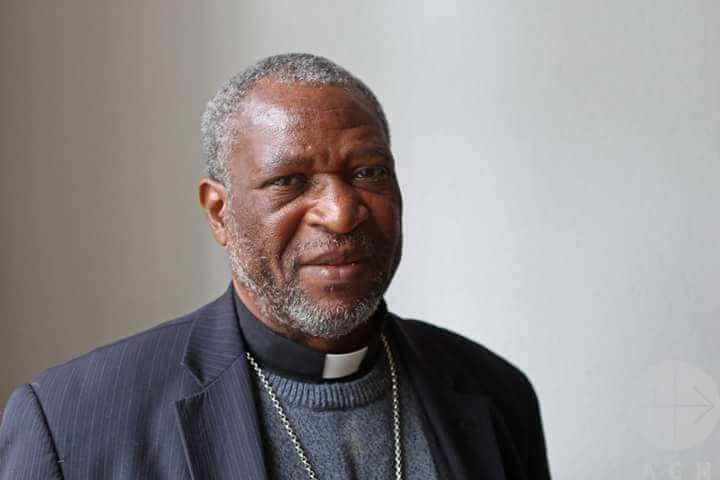

Bishop Bagobiri: The Unrepentant Radical
By Emmanuel Gandu

ABSTRACT
Destiny launched and exposed him at the public square arena where he contested and won through public demand by staging and showcasing his persona that connected to the people at the most primal level.
Although viewed by many as controversial, if Bishop Joseph Danlami Bagobiri had one thing going for him, it was the ability to strike the right musical chord, at the right time, producing a melodic symphony for the listening ear and the right dancing steps.

INTRODUCTION
Some call him the people’s Bishop, the voice of the down trodden, the fearless one, the disciplinarian.
Others refer to him as the good shepherd, a man of great sacrifice and benevolence, the thorn in the flesh of the unjust, the protector of the poor, less privileged and vulnerable, an apostle of non violence.
He is a historical figure, radical activist and reformer, social critic, equal rights advocate for both Muslims and Christians, a freedom fighter, and a detribalised Nigerian.
Bagobiri was a man that spoke truth to both religious and civil authority.
He was the ‘liberation theologian’ who held the Bible on the right hand and the ‘weapons’ of political and economic liberation on the left.

MANIFESTATION OF BAGOBIRI’S RADICAL DISPOSITION
Born in Gwong (Kagoma) Southern Kaduna to the famous Pa Bagobiri family of 5 wives and 27 children, young Joseph grew up into the protective arms of his mothers, senior brothers, and sisters.
Joseph Bagobiri began to exhibit traces of independent mind, thoughts and actions at a very young age. It initially looked like the usual exhibition of youthful exuberance. As time went by the traits were assuming such situations that were akin to notorious pear group influence. Some of these traits and actions were promptly subdued, and sometimes ended up in cover-ups by his older brothers and sisters who usually shielded him from the punishment of their disciplinarian father.
As young Bagobiri advanced from one age group to another, he became bolder, more articulate, and assumed the position of the defender of the not so strong-willed among his pear group.
Even at secondary school, he endeared himself to his juniors and classmates who found an umbrella of succor in his pep up talks, counseling, and motivation for self achievement/accomplishment.

Part of his independent thoughts, growing strong views and stance on issues he felt strongly about especially those that are protectionist and wellfarerist to his peer group. At one of such protectionist and adventurist incidents, youthful Joseph Bagobiri and his ‘gang’ of youths employed the ‘Robin Hood’ style within the vicinity of the village community.
This action, according to a family source pushed Pa Bagobiri to take his bow and arrow to shoot down his son. Sensing the rage and fury of his old man, Danlami, as he was fondly called by his father escaped to exile from the entire Kagoma village for some couple of months.

Coming from this background, and in a
country ravaged by social, tribal and economic inequality, injustice, hunger, deprivation, youth restivenes/unemployment, and killings, it’s just right to understand Bagobiri’s brand of frustration and his resultant radicalization.

ERECTION AND CONSECRATION OF BAGOBIRI AS THE CATHOLIC BISHOP OF KAFANCHAN DIOCESE
The erection of the Catholic Diocese of Kafanchan in 1995 witnessed the consecration of Joseph Danlami Bagobiri as her first Bishop. Born in 1957, Bagobiri, after barely 12 years as a priest became a Bishop, one of the fastest in recent memory.
Kafanchan diocese is essentially an agrarian, rural, with no entrepreneurial, and infrastructural incentives for investment.
Bagobiri inherited few parishes, poorly built Churches, a few poorly trained clergy, and a poor capital base.
No doubt the young Bishop was overwhelmed by the enormity of the array of challenges but rather than remain frustrated, Bagobiri became positively aggressive, radical and revolutionary in his approach to not only religious, but also political and economic matters. He had to ‘stoop to conquer’.

As at 2017, Joseph Danlami Bagobiri had raised the profile of Kafanchan diocese to the admiration of many, with about 35 parishes, about 100 best trained clergy, a minor seminar, major seminary, a girl’s college, co-educational college, a pastoral center, a best selling monthly newspaper, and much more that the Diocese compares favourably to other older ones.
Who else could achieve this feat within such a short period if not a radical reformer.

OTHER BAGOBIRI’S APPOINTMENTS/ASSIGNMENTS
(1) Ordained Catholic priest – 1983
(2) Education secretary and Vocations of Kaduna Archdiocese
(3) Vicar Delegate for Kano 1991 – 1995
(4) Pioneer Bishop of Kafanchan diocese – October 21st, 1995
(5) Education secretary Catholic Bishop’s Conference of Nigeria (CBCN)
(6) Pioneer Chairman for Mission Dialogue Department of the CBCN
(7) Chairman Governing Council of the Catholic Institute of West Africa (CIWA) Port Harcourt – (Two term)
(8) Chairman Inter Religious Dialogue for Association of Episcopal Conference Anglophone West Africa.
(9) Leader of the 6 Man delegation of the Christian Association of Nigeria (CAN) to the 2014 National Conference.
(10) Awardee of the Member of the Federal Republic ( MFR)

BAGOBIRI’S INTERVENTION DURING FULANI/RELIGIOUS CRISIS
At the peak of the Genocidal killings by Fulani heardsmen in Southern Kaduna between 2016 to early 2018, Bagobiri was unrelenting in his efforts to assist not only the vulnerable natives but also the Hausa settlers caught up in the cross fire. He was a rallying point and a voice for the people while Governor El Rufai, a Hausa/Fulani was allegedly accused of being biased.
A fall out from the crisis is the championing by the Kafanchan Catholic Diocese of the release of a figure of 800 lives lost, many unaccounted for, property worth #5 billion destroyed, care of the IDP’s.
Other related issues was the closure of educational institutions with threats of relocation out of Southern Kaduna, alleged arrest of opinion leaders of Southern Kaduna, etc by the government. It therefore became apparent that there was no love lost between Bishop Joseph Danlami Bagobiri and governor Nasir El Rufai, as the battle line was drawn.

THE AHIARA DIOCESE/EPISCOPAL SAGA
(1) The Crux of the matter.
Rev. Fr. Peter Ebere Okpaleke was appointed the Bishop of Ahiara Diocese in Anambra state on December 7, 2012 by his Holiness Pope Benedict XVI. This appointment was openly opposed by some Ahiara indigenous clergy, religious, and the laity who wanted a son of the soil as their Bishop.
When Pope Francis ascended the papacy on 13/3/2013 he reaffirmed Okpaleke’s appointment, and on May 21st, 2013 Rev. Fr. Peter Ebere Okpaleke was finally consecrated as the Bishop of Ahiara Diocese, but the ceremony was conducted in Owerri outside of Ahiara Diocese.

Bishop Okpaleke was never allowed by the opposition group to take possession of the Diocese. He was quickly moved right from the venue of the Episcopal Ordination to Awka where he remained for more than 5 years till his resignation on Ash Wednesday 14th February, 2018.
(2) Vatican summoned warring factions to Rome to resolve the crisis :
Pope Francis summoned to Rome the clergy, religious, the laity, and other interest groups in one of the numerous attempts to resolve and settle this feud. In this Rome meeting, they reached agreement to accept the Pope’s appointment of Okpaleke.
This peace accord was brockered on 9th June, 2017.
However, not sooner had the returning Rome delegation settled foot on Nigerian soil than that peace agreement collapsed like a pack of cards.

BAGOBIRI’S ROLE IN THE AHIARA CRISIS
While this Episcopal scandal lasted, Joseph Danlami Bagobiri was the only Bishop known to have openly and severally opposed to this appointment. He cited among others the manner of approach employed by the Catholic Bishops of Nigeria (of which he was a member) towards solving the problem. Bagobiri insisted that the Ahiara people should have been carried along in the decision making process.

CATHOLIC CHURCH QUERY’S BAGOBIRI
Bishop Bagobiri’s activism on the Ahiara saga did not go down well with the Catholic Bishops as it earned him a reprimand, reporting him to Rome and demanding an apology.
In obedience, Bagobiri apologized, but re-iterated his position on the matter, thereby making the whole issue a conundrum for his fellow CBCN.

DEFIANT BAGOBIRI
Bishop Joseph Danlami Bagobiri in defiance of Rome kept up with his fiery approach to the Ahiara saga. One of his public statements on this imbroglio was on 1st December, 2017 at a public Mass in Takkad village near Kagoro barely 3 months to his death. In this Mass he said – “Give Ahiara a bishop close to or who understands them.” He continued – “The Ahiara saga could have been avoided or resolved long ago if the Catholic Bishops Conference of Nigeria had been courageous enough as a united force to follow the path of truth and justice by listening to the aggrieved party, and presenting their case positively, or in an emphatic manner.”

Joseph Bagobiri also declared – “People of Ahiara feel surcharged or shortchanged, excluded, or denied their rights to exercise a consultative vote on the discerning process.”
The fiery Bishop was not done yet – “Non of them was contacted on the appointment, they should not be dictated to, not according to due canonical process, and not submission to blind obedience.”

PEOPLE’S VIEWS ABOUT BAGOBIRI’S STYLE OF ACTIVISM
No doubt some of Bagobiri’s actions made him to be viewed as a radical activist. To some he was an enigma, a hard nut to crack. To others he was a man to love, yet some hated to love him.
Whatever your assessment of Bagobiri, you may be right, you may be wrong. And if you are sitting on the fence, you may guess. Your guess may be right, or wrong, or as good as mine.

Whatever your views about Joseph Bagobiri, Bishop Matthew Hassan Kukah’s assessment, who incidentally as a young priest encouraged Joseph Danlami Bagobiri to proceed to the Major Seminary in 1977 captures my feelings.
During Bagobiri’s funeral Mass in Kafanchan on Thursday 15th March, 2018, Bishop Kukah as the homilist put it succinctly – “Bagobiri was a man of strong convictions and very often, his convictions tended to blind him to other options, but he was deep down an honest man.” “……we thank God that it all ended so well for him.”

HIS SICKNESS
A revolutionary, workaholic, fearless, and uncompromising, Bagobiri was never afraid to speak truth to power.
This human machine was beginning to show signs of frailty caused by sickness. He had to be flown out of Nigeria to an Italian hospital for medical treatment, and after 6 months of medical care, Bagobiri returned to Nigeria on 26th January, 2017 to jubilant crowds cut across various denominations with elaborate welcome back ceremony. The good Shepherd was back.
Bagobiri was never a coward, and he never feared death. He must have been a good student of William Shakespeare who tells us in Julius Caeser that “cowards die many times before their death.”

Joseph Danlami had surmounted many difficult obstacles during his 61 years sojourn on earth. However, this sickness proved more tasking for the ‘people’s Bishop’ who displayed an uncommon tenacity to hang on to life and a determination to stay alive for the sake of his people.

DEATH, THE ULTIMATE END
Without any doubt, Bishop Bagobiri put his life on the front line on several occasions. And when death finally came calling on 27th February, 2018, this advocate for the emancipation of the people had no life guard, and no advocate to adjudicate on his behalf.

Bagobiri remained controversial even at death, especially to those who feared him, and those who revered him. If not, why did the government of Kaduna State not send a condolence message and tribute for publication in the funeral program.
It must be stated that Bagobiri’s reformation drive, radical disposition and activism, hard work, fame, and notoriety not only niched him closer to the hearts and minds of both the Muslim and Christian community In Southern Kaduna, but also endeared him to all Nigerians.

BAGOBIRI’S BURIAL
Well over 800 condolence messages / tributes were reported to have been sent to Kafanchan diocese from across the world but just 121 of this whole lot were published in the program brochures.
As expected, the outpouring was overwhelmingly unprecedented so much so that the high quality burial program had to be packaged in 2 volumes of 153 pages printed in the best quality production.
Dignitaries from religious faiths, governments, foreign embassies, corporate orgazations, NGO’s, Royalty, the academia, and of course the Vatican were among the tumultuous crowd that turned out in their numbers to bid farewell to the people’s Bishop.

Joseph Danlami Bagobiri gave his all, and the people gave him quality attention even at death.
And then, God told him that he had run the full distance in a good race, and should come over to receive his crown of victory.
Though dead, Bishop Joseph Danlami Bagobiri lives on.
If by any mistake the church gives me that singular opportunity to write the epitaph for Bagobiri, this will be it : HERE LIES THE WARRIOR.

Emmanuel Gandu
St. Enda’s Catholic Church, Zaria
emmanuelgandu@yahoo.com
October 2018

In The Name Of God
By Emmanuel Gandu

ABSTRACT
This presentation is therefore an attempt to highlight and interrogate the place of religion in the promotion of love, or in the various crisis of hate, conflicts, wars, killings, and destruction that has engulfed the entire world in catastrophic proportion thereby threatening the very existence of man as God’s creation on earth.

INTRODUCTION
Religion is as old as the history of man.
Civilizations, scholars, archaeologists, and anthropologists have discovered that there has never existed any people, anywhere, at anytime, who were not in some sense of religious.

During the thousands of years of man’s history of existence on earth, the search for God has led to enormous diversity of religious expression and pathways worldwide.
From Judaism, Christianity, Islam, Hinduism. And to the Oriental philosophies of Buddhism, Shintoism, Taoism, and Confucianism.
In other vast regions of the world mankind has turned to Animism, Magic, Spiritism, and Shamanism.
These quest for God has further pushed man to break and diversify into denominations, sects, and cults, all in search of God.

HOW USEFUL HAS MAN PUT RELIGION TO ADVANTAGE ?
In his book “Man’s Religion”, John B. Noss points out that all religions say that man does not and cannot stand alone because he is vitally related with and dependent on powers in Nature and Society, hence he cannot stand apart.
According to another book “World Religions – from Ancient History to the Present”, religion is an important feature that is longing for value in life, that leads to search for meaning, faith, and a power greater than the human and the superhuman mind.

Accordingly, religion satisfies a basic human need, much as food satisfies our hunger.
We very well know that eating indiscriminately when we are hungry may stop the pangs of hunger. In the long run, however, it will damage our healthy life.
We obviously need food that is wholesome and nutritious.
Likewise, we need wholesome spiritual food to nurture and maintain our spiritual health.

This presentation is therefore an attempt to highlight and interrogate the place of religion in the promotion of love, or in the various crisis of hate, conflicts, wars, destruction, and killings that has engulfed the entire world in catastrophic proportion thereby threatening the very existence of man as God’s creation on earth.

RELIGION AS OPIUM FOR LOVE OR FOR DIVISION OR FOR HATRED ?
God created man in His own image and likeness in order to worship, serve Him, and to love one another.
God also gave man the freedom and choice of worship.
It is in the exercise of these freedom that man worships God through different ways and means.
These ways and means have therefore translated to the different religions, denominations, sects, and cults.

Rather than bringing man together in the course of worshipping God, these differenes seems to be tearing up the different adherents further apart.

Lamentably, these schism have caused a great lot of troubles, crisis, wars, destruction, and deaths all over the world.
This ambiance of religious intolerance no doubt negates God’s plans and philosophy of creation, choice, and freedom of worship.
Little wonder the great German sociologist and economic theorist Karl Marx in 1843 describe (s) religion as the “Opium of the People”

Unfortunately, the moral corruption and decadence, extreme violent terrorism, extermination of life, destruction of property, and other vices rampaging the entire world by religious adherents in the name of God leaves much to be desired.
They have lost their moral rudder thereby causing shipwreck on the rocks of faithlessness, fanaticism, greed, self indulgence, blind followership, and high Opium intoxication.

THOSE WHO KILL IN THE NAME OF GOD
One wonders the role religion has played in the many theatres of wars that have devastated mankind and caused untold hardship and loss of life.
Why have so many people killed and being killed in the name of God and religion ?

The crusades, the Inquisition, the endless conflicts in the Middle East especially between the Arabs and Israel over Jerusalem, the Northern Ireland conflicts between Catholics and Protestants, the 1980’s slaughter between Iraq and Iran, the Hindu – Sikh clashes, the Kosovo and Armenian massacres, the endless killings and reprisals of Christians and Muslims in Northern Nigeria, etc – all these religiously ignited killing events certainly makes one to raise questions about the different religious beliefs, ethics, and doctrines about the sanctity of human life.

The worst and most violent is the increasing rise of religious fundamentalism, fanaticism, terrorism, and death squads that leave behind thousands of innocent wasted lives and souls on their trails across countries and regions of the world all in the name of God.
Terrorists groups like Osama Bin Laden’s Al- Qa eda, The Taliban in Afghanistan, Al- Shabaab in Somalia and East Africa, ISWAP, ISIS, Hizbulah, Maitatsine, and Boko Haram in Nigeria, and other tribal/religious affiliated gun men.
Regrettably, these violent terrorists groups operating and killing people with reckless abandon in Europe and America, Afghanistan, Pakistan, Syria, Somalia, Nigeria, Kenya, Niger, Chad, etc claim to kill in the name of God.

WHY KILL IN THE NAME OF GOD
If all religions preach peace, love, kindness, faith, self control, being a neighbour’s keeper, why is there much HATRED and KILLING in the world ? :

(1) Roger Shinn, a research professor of social ethics at the Union Theological Seminary New York in his findings concluded that “Religious wars tend to be extra furious. When people fight over territory for economic advantage, they reach the point where the battle isn’t worth the cost and so reach a compromise. But when the cause is religious, compromise and conciliation seem to be evil.”
(2) The “My religion is more important, superior, and directed by God” syndrome drives both the preachers and followers drunk and the see nothing wrong with their actions.
(3) Charles Caleb Colton (1825) posits that “Men will wrangle for religion, write for it, fight for it, and die for it”
(4) In the words of one philosopher, Jonathan Swift (1667 – 1745) “We have just enough religion to make us hate, but not enough to make us love one another.”
(5) Still on the evil minds of men, Blaise Pascal (1623 – 1662) wrote that “Men never do evil so completely and cheerfully as when they do it from religious conviction.

CONCLUSION
If the havoc caused by the evil minds of fanatical fundamentalism and terrorism in the guise of religiosity visited on the world remains unabated and allowed to reach a frightening proportion of crescendo, the world may likely be eclipsed and extinguished of human life before long.
It therefore remains to be seen whether man will harken to the clarion call of historian, Arnold Toynbee “To obey God’s purpose of creating man and giving him a religion in order to radiate his spiritual counsels, truths, and love into as many souls as it can reach for the glory of God forever,” or continue to kill in the name of God.