FULANI SETTLERS SHOULD STOP HIDING BEHIND AREWA AND ISLAM TO MESS UP OUR COUNTRY 

By Col Gora Albehu Dauda Rtd.

For a start “Arewa” as many of our southern friends usually describe those of us from the Northern part of the country should rather be called “Hausaland” after the owners of the lando. Arewa means North, therefore it ought not be deployed to describe any part of this country specifically.or its population. Wherever you stand on the planet there is a north as one of the cardinal points of a compass much in the same way as there is a South, East and West, The Fulani settlers in Nigeria have classically boxed themselves in, as they cannot fail to remember that they do not belong here. They know too well from whence they came because written History has already chronicled that. They know also the tones of lies they have told over time some of which was recorded as History and thought in Northern Schools for a long time. In due time the truth has come to the fore and before our own eyes . They ought to know that they are now boxed in on all fronts and not too long from now they wil be frying in their own oil.


Let us examine some of the nonsense and falsehoods which was chronicled as History. First, dubious lies that the Fulani came to Nigeria as learned Islamic preachers. The truth is that they arrived Gobir as gypsies as has always been their culture to move about in search of pasture for their cattle. This is to say that they have always been nomadic by nature. History though, has nor recorded whether or not Usman.Dan Fodio’s forebears came along with any cattle to Nigeria. It was upon their arrival that they embraced Islam as a religion from their Hausa benefactors.


After many years of association with the Hausa hosts and because they were in search of land and power, they came up.with the ploy that the Hausa leaders were brutish in the treatment of their subjects and that the subjects were being overtaxed against the teaching of Islam. Additionally, they accused the Hausa of corrupting Islam by observing pagan practices.These were the principal excuses that were advanced to justify the rebellion which culminated in the Jihad of 1802-1804.


The Jihadists overthrew the Hausa rulers of that period and established a bridgehead in Hausa land. They took over and occupied Palaces built by the Hausa people and installed Fulanis as Emirs to this day. Because they did not have the numbers to make any noticeable difference aside the fact that they were in power, they had to attache themselves to the Hausa majority to make meaning. Meanwhile, the Hausa people and owners of the vast northern landscape became subjects of the settlers on their own land and that has also continued to the present time. The Hausa technically became a marginalized people on their own land.


Wherever you can find a Fulani, all he craves about is to occupy a position of leadership or power even when such may not actually be qualified for such positions. They have personalized Islam to themselves which is why in almost every mosque not limited to the core North, no other clerics are worthy to lead prayers if not themselves. They are to be followed but not for them to follow as a people, they have rubbished the well known thinking that one must be ready to follow if such expects to be followed in due time. The Fulani settlers over time have over exploited the peaceful nature of the Hausa people to such a level that they have lorded it over them since the dubious Jihad. Let nobody be deceived, the Fulani are not in anyway better Muslims than the others yet, they will not follow others as their religious leaders.


There are essentially 2 classes of the Fulani, the first being the elites who are mainly those who chose to abandon the nomadic way of life for a settled lifestyle. This class has produced the educated group who acquired Western Education and have gone into intermarriages with the Hausa and perhaps other indigenous peoples. These intermarriages birthed the fraud called Hausa Fulani. This coinage was on purpose as to creat a close bond between the Fulani and the Hausa people. The coinage ended up benefiting only the Fulani as the Hausa people remained abandoned. The benefits for the Fulani accrued in a number of ways, first, it provided them a willing host and a much larger space to operate. Second, it provided them the opportunity to usurp much of what would have benefited the Hausa owners of the land. On the political part in modern times, they have latched on the huge Hausa votes to access political power and other influences. Quite paradoxical that the Hausa contribute the votes, yet the Fulani coast home with the victories.


Here is how the Fulani have manipulated the Hausa people politically. The Fulani always made sure that only Fulani candidates emerge to contest any election in almost all the political parties from the Councilors, Chairmen Members of the State Houses of Assemblies, Governordship and up to the National Assembly. The only role left for the Hausa people is for them to cast their votes for Fulani candidates. The moment the victory is won, the Hausa electorate are abandoned to their uncertain fate. Once in their offices, the Fulani will always be focussed on their kinsmen when it comes to appointments and contract awards. It has therefore been a deliberate policy of ensuring that the Fulani continue to exploit the Hausa such that they are always relegated to the background.


The situation is set to change in the years to come thanks to the Hausa Renaissance currently underway. Some folks may be holding the Hausa to blame for their condition in Nigeria politically and otherwise because of their state of inertia or atrophy for this long since the dubious jihad. The activism of the Hausa heroin Hajiya Khaltum Allumbe Jitami of Jaruma Hausa TV 24 is providing the spark or igniting the Hausa into realizing that the balance of political power in Nigeria lies with them as they have the numbers to effectively turn the tables against the Fulani settlers. To succeed the Hausa must not allow the imposition of candidates at all levels in all the political platforms. This way, it will be practically impossible for the Fulani settlers to extend their political hegemony over them. Put simply, let the Hausa votes go to Hausa candidates. That done, the Hausa would be in a position to reclaim their lost glory.


The Fulani settlers have positioned themselves in positions of authority politically as Councilors, Council Chairmen, Members of State Assemblies, Members of the National Assembly, Governors and Ministers but the current advantage will expire if elections do hold come 2027. The agencies the Fulani are using to plough their way into positions of authority include the impotent so-called Arewa Consultative Forum that does not consult anybody, and the equally impotent Northern Governor’s Forum almost populated by Fulani settlers as members. There is also the Northern Traditional Rulers body which ironically has a religious leader as its Chairman. What is the Sultan of Sokoto doing in such a forum? Is he also a traditional ruler aside the religious portfolio he is holding? All these worthless bodies should be scrapped as they are creating more problems than they are solving.


Religion is a personal relationship between an adherent and the Creator. Not so in Nigeria for religion has from time been a formidable tool for oppression. There is no issue of National importance that is not given a religious coloration. Religion, rather than bringing the people together is putting them asunder. The place of religion in our lives has been elevated to a ridiculous level as it is being used to discriminate against other faiths. As the opium of the people (apologies to Karl Marx) it is religion that was deployed to producing the Tinuku leadership. Can you now see the relevance of the Muzilim Muzilim ticket? The truth remains that those guys high up the political ladder are not so concerned about religion, all that they care about is to flaunt religion for the oppressed masses to kill themselves over. The next Constitution that is if we get to having one, should relegate religion to where it belongs that is in the minds of the practitioners.


If Islam as a religion was practiced in Saudi Arabia where that faith originated the same way it is practiced in the North of Nigeria, the KSA would long have disintegrated. There are many Muslims.in the Southwest of Nigeria and in almost every family BUT you never will hear acrimony, violence or riots on account of religion. Had Islam originated in the North of Nigeria, a curious observer could understand in part why these guys up here are so fanatical about the faith but it did not. To the extent that faithfuls cannot practice Islam in their own language but only in Arabic and given that so many faithful rely on barely learned Muslim scholars to interpret the text for them, many understand differently. Many from the Fulani stables still hold on to the falsehood passed on to them into believing that Usman Dan Fodio bequeathed Nigerian territory to them as a Fulani homeland, a land to which they are settlers.


Generally speaking, the Fulani settlers have applied a strangulating hold on the throat of Nigeria for far too long. From the colonial period during which they were the next in command to the British exploiters through to the Independence era, the period of Military rule till date the Fulani settlers have eaten their cake and they still have it. The time has therefore come for the people who have suffered under the yoke of the Fulani oppression to say NO, IT IS ENOUGH and we cannot take more. They must be made to abandon the spurious tale of the territory of Nigeria being a Fulani homeland they must also be reminded that they left their homeland, back in Fouta Djalon and Fouta Toro. Nigerians must be mindful of the fact that the Fulani settlers have not completely given up on Usman Dan Fodio’s fraudulent dream of dipping the Quran into the deep blue waters of the Atlantic which he failed to do. Realising that they do not have the numbers to militarily achieve that bogus dream, Muhammadu Buhari sought to achieve it through a more subtle manner which was why he prioritized the Ruga and Grazing reserves Bills. Knowing that his kinsmen were armed to the teeth with arms from the fallen Libyan regime of Muamar Gaddafi and exploiting the ECOWAS Protocol on free movement Fulani tribesmen from everywhere were to move with their cattle and to occupy other peoples lands and forests. Before the hosts communities would realize what was going on, it would have been too late as Fulani AK 47s would already be pointing to their heads. Thank God, Allah, Chineke, Oluwa, Agwazah that the bills were defeated in Parliament. Nigeria did live to fight someday as we are into that right now.


The ongoing insurgency in Nigeria is understandably the last kicks of the Fulani settlers in Nigeria.Tinuku obviously committed a huge blunder by appointing the likes of Nuhu Ribadu, Badaru Abubakar and Bello Matawalle into strategic positions in his government. The counter insurgency operations were deliberately frustrated because of these characters who were playing the role of moles or fifth columnists to the effort. As this essay was being concluded, news came through that the Defence Minister Badaru Abubakar has resigned his appointment. Good news, 2 more to go. Further down the line, Tinuku must ensure that the security forces keep an eye/ear on Sheikh Dr Gumi, Yahaya Jingre as well as many other extremist Islamic clerics muddying the waters in Nigeria. To God Be The Glory.


Gora Albehu Dauda

2 December 2025

As Nigerian elites panic over Trump’s military threat, the victims of two decades of massacre ask: where were you when we were being slaughtered

By Steven Kefas

On November 1st, U.S President, Donald Trump issued what many are calling an unprecedented threat to a sovereign African nation. “If the Nigerian Government continues to allow the killing of Christians, the U.S.A. will immediately stop all aid and assistance to Nigeria, and may very well go into that now disgraced country, ‘guns-a-blazing,’ to completely wipe out the Islamic Terrorists who are committing these horrible atrocities,” Trump declared on his social media platform, adding that he has instructed the Department of War to prepare for possible action.

The response from Nigeria’s political class, thought leaders, and commentators has been predictably indignant. They warn of sovereignty violations, speak ominously of chaos and instability, invoke the specter of Libya and Iraq, and counsel caution about external military intervention. These concerns sound measured, reasonable, even patriotic.

But they ring hollow to the communities that have buried their dead by the hundreds while Nigeria’s government looked the other way.

The View from the Killing Fields

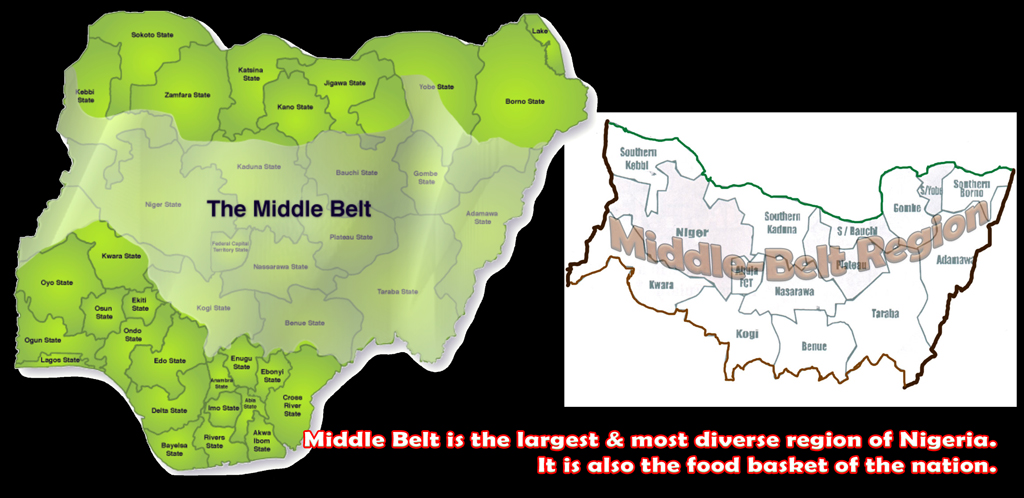
As someone who has spent over a decade documenting the ongoing massacre in Nigeria’s Middle Belt, interfacing directly with survivors, photographing mass graves, and listening to testimonies that would break the hardest heart, I can tell you this with certainty: the direct victims of these terrorist atrocities have reached a point where they no longer care where help comes from. When your government has abandoned you to slaughter, sovereignty becomes an abstract concept with little meaning.

Benjamin Badung, a 40-year-old father of five from Bangai district in Riyom Local Government Area of Plateau State, will not be pondering the geopolitical implications of American intervention. On May 20, 2025, his wife Kangyan was slaughtered by Fulani militants. He is raising five children alone, living in fear that the attackers will return to finish what they started. If American military action means his children stay alive and can thrive on their ancestral land, Benjamin Badung will not object on grounds of national sovereignty.

The survivors in Yelwata, Benue State, who I have visited 3 times since they buried 258 people, mostly women and children on June 14, 2025, are not concerned about the precedent of foreign military intervention. They watched their loved ones massacred over four hours of sustained attack while military barracks sat less than 20 miles away. They know their attackers. They know where the terrorists are camped, less than five miles away in Kadarko, Nasarawa state. Yet no arrests have been made. No camps have been bombarded. No justice has been served. If Trump’s threat galvanizes action against those who butchered their families, they will welcome it.

The people of over over 30 communities in Bokkos, who mourned over 200 dead on Christmas Day 2023, are not writing think pieces about the dangers of American military adventurism in Africa. They are wondering why their Christmas celebration became a massacre, why their churches were burned, why their government failed to protect them despite warnings of impending attacks.

The residents of Zikke in Miango, massacred while soldiers stationed less than four miles away remained motionless, are not worried about Nigeria’s international image. They are haunted by a more fundamental question: why did their own military refuse to defend them?

The peace loving people of Bindi in Tahoss district, Riyom LGA, a community of about a thousand people I have also visited and interacted with three times since the July 15 attack that left 27 people mostly women and children dead don’t really care if natural resources is stolen by America provided their farms become safer.

The list goes on. Community after community. Massacre after massacre. Mass grave after mass grave. And through it all, the Nigerian government has offered nothing but excuses, denials, and appeasement of the very terrorists carrying out these atrocities.

The Sudden Awakening of Nigeria’s Military

It is remarkable, and deeply cynical that in the 168 hours following Trump’s threat, the Nigerian military has suddenly flooded social media with posts about victories against terrorists in different parts of the country. Where was this energy for the past two decades? Why did it take an American president’s threat to spur action that should have been ongoing as a matter of national duty?

The message is unmistakable: Nigeria’s government is capable of fighting terrorism when sufficiently motivated. The capacity exists. The resources are available. What has been missing is political will. Trump’s statement has apparently provided that motivation in 168 hours, revealing what victims of these attacks have known all along, the failure to protect communities has been a choice, not an inability.

The Questions That Still Demand Answers

Even as the military scrambles to demonstrate competence in the Northeast and northwest, the fundamental questions about the Fulani jihadist insurgency in the Middle Belt remain unanswered.

The immediate past Chief of Defense Staff, General Christopher Gwabin Musa, stated during an August 2025 interview on Channels TV that the process of identifying and prosecuting terrorism financiers in Nigeria is ongoing, citing legal complexities. But who are these financiers? Why, after two decades of attacks involving sophisticated weapons and coordinated operations across multiple states, has not a single major financier been publicly identified, arrested, and prosecuted?

Where do the Fulani ethnic militants operating in the Northwest and Middle Belt acquire military-grade weapons? These are not crude hunting rifles; survivors describe AK-47s, AK-49, RPGs, general-purpose machine guns, and in some cases, anti-aircraft weapons. Such arsenals require supply chains, logistics, and financing. Yet the Nigerian government claims inability to trace these obvious channels.

How is it possible that terrorists appear in public, sometimes armed and in the presence of security agents, without arrests? Recent videos from Guga Ward in Bakori Local Government Area of Katsina State show armed Fulani militants attending “peace talks” with weapons visible, surrounded by traditional rulers and, disturbingly, security personnel. In any functional state, such gatherings would result in mass arrests. In Nigeria, they result in photo opportunities.

Why is the Nigerian National Security Adviser, Mallam Nuhu Ribadu, bent on appeasing Fulani terrorists instead of allowing the military to treat them as the terrorists they are? His alleged championing of peace deals that demand no disarmament, no accountability, and no cessation of violence represents either profound incompetence or something more sinister.

The Martyr They Created: General Christopher Musa’s Warning

Perhaps the most telling aspect of this entire crisis is what happened to General Christopher Musa. Just five days before his removal as Chief of Defence Staff, General Musa issued a stark warning to Nigerians about peace deals with terrorists.

“We therefore urge everyone: do not make peace with them. We do not support these bandits or any peace agreement with them. If they genuinely want to stop, they should lay down their weapons and surrender. If they surrender, we will take them into custody, screen and investigate them thoroughly; that’s the proper approach,” General Musa stated clearly.

He continued with even more pointed language: “But sitting down with a bandit and asking ‘Why did you pick up a gun?’ is pointless. It’s driven by greed, and greedy people will not give up. They will never stop. So there should be no truce with them.”

This was a military leader articulating sound counterterrorism doctrine: no negotiations with active terrorists, demand for unconditional surrender, thorough screening and investigation of those who lay down arms, and absolute rejection of the peace deal charade that has characterized Nigeria’s approach to both Boko Haram and the Fulani militants insurgency.

In the same month, General Musa issued a directive to troops to eliminate any terrorist killing civilians and destroying property nationwide. This was exactly the kind of aggressive posture needed to confront groups that have operated with impunity for two decades.

The response from certain Northern elites and Islamic clerics was immediate and hostile. They objected vehemently to this directive, advocating instead for continued peace deals with terrorists. Shortly thereafter, General Musa was removed from his position.

The message sent was chilling: a Chief of Defence Staff who takes a hard line against Islamist terrorists will not be tolerated. Those who advocate for crushing terrorist groups rather than accommodating them will definitely be removed. We saw it happen to Gen Ihejerika at the peak of the Boko Haram insurgency in the northeast. The political will to confront the Fulani jihadist insurgency does not exist at the highest levels of Nigeria’s government, and anyone who attempts to act decisively will be neutralized.

General Musa’s removal, following immediately after his public rejection of terrorist appeasement, reveals the fundamental rot at the core of Nigeria’s counterterrorism strategy. It explains why, despite a capable military that has successfully conducted peacekeeping operations in Sierra Leone, Liberia, and other conflict zones, Nigeria cannot or will not crush armed groups terrorizing its own citizens.

The Elite Panic vs. The Victims’ Reality

The panic among Nigeria’s political and intellectual class over Trump’s threat is instructive. Where was this passionate defense of Nigerian sovereignty when communities were being wiped out and some occupied by terrorist elements? Where were the think pieces and television appearances when churches were being burned and farmlands destroyed? Where was the outrage when peace deals legitimized terrorists?

For two decades, Nigeria’s elites have been largely silent as communities in the Middle Belt faced systematic extermination. They characterized genocide as “farmer-herder clashes.” They blamed victims for not “accommodating” their killers, they blamed climate change. They counseled patience and reconciliation while bodies piled higher.

Now, suddenly, they have found their voices, not to demand protection for vulnerable communities, but to object to the prospect of someone else providing that protection.

This is not patriotism. This is complicity masquerading as principle.

What Trump’s Threat Reveals

Whether President Trump follows through on his threat or not, his statement has accomplished something the Nigerian government has failed to achieve in two decades: it has forced a conversation about the true nature of violence against Christians and other religious groups in Nigeria.

The euphemisms are no longer working. The world is no longer accepting “farmer-herder clashes” as explanation for systematic religious persecution. The fiction that these are spontaneous conflicts over resources has been exposed. The pretense that Nigeria’s government is doing everything possible to protect all citizens has collapsed.

Trump’s threat as crude as it may sound to diplomatic ears speaks a language that Nigeria’s government apparently understands: consequences. For years, international partners issued strongly worded statements, expressed concern, called for dialogue. Nothing changed. Now, facing potential military intervention and aid cutoffs, the Nigerian military suddenly discovers operational capacity it has denied possessing for years.

The Path Nigeria Must Take

If Nigeria’s government wishes to avoid the humiliation of foreign military intervention on its soil, the solution is straightforward: do your job. Protect your citizens. Crush the terrorists. End the appeasement.

Specifically:

Remove Nuhu Ribadu as National Security Adviser and replace him with someone committed to defeating terrorism rather than accommodating it.

Reinstate General Christopher Musa’s directive to eliminate terrorists killing civilians, and ensure military commanders face consequences for failure to act.

Officially designate armed Fulani militia groups as terrorist organizations and prosecute them accordingly under Nigeria’s terrorism laws.

Launch coordinated military operations to clear terrorist camps in the Middle Belt, starting with all known locations.

Arrest and prosecute terrorism financiers instead of citing endless “legal complexities” as excuse for inaction.

End all peace deals with active terrorist groups and demand unconditional surrender as the only acceptable path for those who wish to lay down arms.

The authorities should arrest and prosecute Sheikh Ahmed Gumi and other clerics who defend and justify atrocities committed by terrorists, individuals the government and media have euphemistically labeled as “bandits.”

Provide justice and reparations for the millions of victims who have lost family members, homes, and livelihoods.

These are not impossible demands. They are basic functions of government. That they seem radical in the Nigerian context reveals how far the government has strayed from its fundamental duty to protect citizens.

A Message to Nigeria’s Elites

Your sudden concern about sovereignty and stability would be more credible if you had shown similar concern when your fellow citizens were being massacred. Your warnings about the dangers of foreign intervention would carry more weight if you had demanded domestic action when it could have prevented this crisis.

You cannot remain silent while communities are exterminated and then clutch your pearls when someone else threatens to act. You cannot characterize genocide as economic conflict and then object when others call it what it is. You cannot accommodate terrorists for two decades and then suddenly discover principles when faced with consequences.

The victims of Fulani jihadist terrorism are not impressed by your geopolitical analysis. They are not moved by your concerns about precedent. They are not comforted by your counsel of patience. They have been patient for twenty years while you did nothing.

If you do not want foreign intervention in Nigeria, then demand that your government intervene to protect Nigerians. If you object to Trump’s threat, channel that energy into demanding that Tinubu’s administration crush the terrorists. If you care about sovereignty, insist that Nigeria exercise sovereignty by defending all its citizens, not just those whose deaths are politically inconvenient to acknowledge.

Conclusion: When Survival Trumps Sovereignty

I do not know if President Trump will follow through on his threat. I do not know if American military action in Nigeria would succeed or fail, bring peace or chaos. What I know is this: for communities that have buried their dead by the hundreds while their government looked away, the calculation is simple.

They have tried trusting their government. Their government failed them.

They have tried appealing to national authorities. National authorities ignored them.

They have tried documenting atrocities to force action. The documentation was dismissed as exaggeration.

They have tried international advocacy. It was characterized as unpatriotic.

Now, finally, someone with real power is threatening consequences for their government’s failure to protect them. And Nigeria’s elites are upset, not at the government that abandoned these communities to slaughter, but at the foreign leader threatening to act where Nigeria will not.

The people of the Middle Belt are watching this reaction, and they are drawing conclusions about who their real enemies are. It is not just the terrorists pulling triggers. It is also those who create the conditions for those triggers to be pulled with impunity, and those who object more strenuously to the prospect of justice than to the reality of genocide.

Trump’s threat may be crude, it may be controversial, it may be problematic in numerous ways. But to the husband who buried his wife, to the community that buried its children, to the survivors waiting for the terrorists to return, it is something else entirely: it is acknowledgment that their lives matter, that their suffering is seen, and that someone, somewhere, is willing to act.

That is more than Nigeria’s government has given them in twenty years.

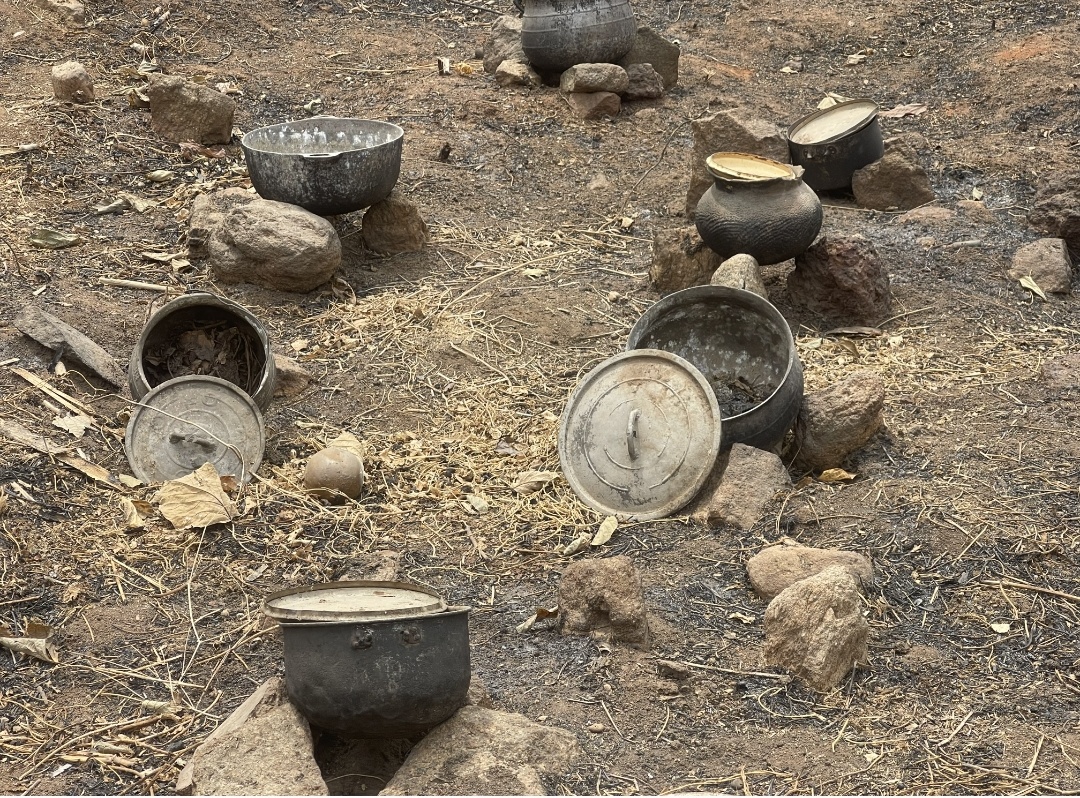
Picture: cooking pots abandoned by fleeing residents during Islamic Fulani terrorists attack in Januwa village, Yangtu Development Area, Taraba state. Credit: Steven Kefas


Steven Kefas is an investigative journalist, Senior Research Analyst at the Observatory for Religious Freedom in Africa, and Publisher of Middle Belt Times. He has documented religious persecution and forced displacement in Nigeria’s Middle Belt for over a decade.


Middle Belt Forum Draws Battle Lines Over Sultan’s Proposed Permanent Traditional Leadership Role

(Makurdi), The Middle Belt Forum has thrown down the gauntlet in what promises to be one of the most heated constitutional debates of 2025, declaring unequivocal opposition to a clause in the National Council for Traditional Rulers of Nigeria Bill that would make the Sultan of Sokoto a permanent co-chairman of the proposed national body.

In a strongly-worded statement released Sunday, the forum’s National Spokesman, Luka Binniyat, described the provision as a “grievous insult” to ancient Middle Belt kingdoms and warned of mass boycotts if the legislation passes in its current form.

The controversy centers on the National Council for Traditional Rulers of Nigeria (Establishment) Bill, 2024, sponsored by Senator Simon Bako Lalong of Plateau South. Having sailed through its second reading in March, the bill now sits before the Senate Committee on Establishment and Public Service, where its fate—and potentially the unity of Nigeria’s traditional institution—hangs in the balance.

Ancient Kingdoms Challenge Modern Politics

At the heart of the Middle Belt Forum’s objection lies a compelling historical argument that challenges conventional assumptions about traditional hierarchy in Nigeria. The forum contends that several Middle Belt monarchies predate the Sokoto Caliphate by centuries, making the proposed permanent arrangement historically unjustifiable.

“The Kwararafa Confederacy flourished from the 800s to the 1700s A.D.,” Binniyat noted, pointing to the Aku Uka of Wukari as the spiritual heir to a legacy that existed long before the Sokoto Caliphate’s establishment in 1804. Similarly, the forum highlighted the Attah of Igala, whose kingdom thrived before and after the 14th century, and the Etsu Nupe, representing a 15th-century kingdom that maintained its cultural identity despite later Islamic influence.

Perhaps most significantly, the forum emphasized that the Tiv Nation—one of Nigeria’s largest ethnolinguistic groups—was never conquered by the Sokoto Caliphate. The Tor Tiv, they argue, represents a proud, independent people whose acephalous society thrived without external domination.

Religious Leadership Versus Traditional Authority

The Middle Belt Forum’s opposition extends beyond historical precedence to fundamental questions about the nature of leadership in a pluralistic democracy. They argue that the Sultan’s primary role as the spiritual head of Nigerian Muslims makes his permanent secular leadership problematic in a constitutionally secular state.

“His institutionalized leadership over a national council of traditional rulers would alienate Christians, traditional worshippers, and other faiths,” the statement declared, warning that such an arrangement would “promote religious supremacy under the guise of traditional unity.”

This concern gains additional weight from the forum’s pointed reference to the Sultan’s patronage of the Miyetti Allah Cattle Breeders Association (MACBAN), an organization they link to violent conflicts that have claimed thousands of lives across the Middle Belt. The forum argues that making someone with such associations a permanent leader would be insensitive to victims of these conflicts.

Colonial Legacy and Modern Resistance

The statement reveals deep-seated resentment about colonial-era impositions that artificially elevated certain traditional authorities over others. The forum argues that British indirect rule forcefully placed autonomous Middle Belt communities under Emirate control, creating “an artificial hierarchy that granted undue privilege and influence to Fulani-dominated Emirates.”

“More than six decades after the end of colonial rule, it is unacceptable for any traditional authority to be elevated above others, particularly in a democratic Nigeria that champions equality, justice, and federal character,” Binniyat emphasized.

This historical grievance underscores why the current proposal strikes such a sensitive nerve. For many in the Middle Belt, permanent co-chairmanship arrangements evoke memories of colonial subjugation that independent Nigeria was supposed to remedy.

High-Stakes Threats and Alternative Proposals

The Middle Belt Forum has not limited itself to criticism—it has issued concrete threats that could fragment Nigeria’s traditional institution. Should the bill pass with the contentious clause intact, the forum promises to mobilize all Middle Belt ethnic nationalities to boycott the council entirely.

More dramatically, they threaten to establish an autonomous Council of Middle Belt Traditional Rulers, effectively creating a parallel institution that could undermine the national body’s legitimacy and effectiveness.

However, the forum also offered constructive alternatives, proposing that the chairmanship be rotational across geopolitical zones or ethnic blocs, with tenure-based arrangements ensuring all traditional rulers feel included. They suggest allowing traditional rulers themselves to democratically choose their leadership through transparent, inclusive processes.

National Unity at a Crossroads

As this debate unfolds, it highlights deeper tensions about identity, representation, and historical justice in modern Nigeria. The Middle Belt Forum’s position reflects broader anxieties about religious and ethnic dominance in a diverse nation still grappling with colonial legacies.

Senator Lalong, ironically described by the forum as “a respected son of the Middle Belt,” now finds himself at the center of a controversy that could define his legislative legacy. As the Senate Committee on Establishment and Public Service deliberates, they face a choice between maintaining the bill’s current structure and risking institutional fragmentation, or finding compromise solutions that address historical grievances while preserving national unity.

The stakes could hardly be higher. Traditional rulers have long served as bridges between Nigeria’s diverse communities and the federal government. Any arrangement that alienates significant segments of this institution could have far-reaching consequences for national cohesion.

As one traditional ruler privately noted, “This is not just about who sits where in meetings. It’s about whether Nigeria can create institutions that truly reflect our diversity and shared humanity.”

The coming weeks will reveal whether Nigeria’s lawmakers can navigate these treacherous waters or whether the ancient kingdoms of the Middle Belt will chart their own separate course in the nation’s traditional landscape.

SARDAUNA BUILT THE NORTH — BUT HE BUILT IT ON TRIBALISM: IT’S TIME WE REBUILT OUR MINDS

By khaleed yazeed.

This is not an insult. It is not an attack on legacy. It is not a desecration of history. This is truth. Raw, painful, and necessary truth, spoken by a young man from the North who has watched his region sink into confusion, darkness, and stagnation while everyone keeps pointing fingers everywhere but backward.

Sir Ahmadu Bello, the Sardauna of Sokoto, built the North. He established institutions. He left hospitals, schools, cooperative unions, and cultural pride. He made many sacrifices and shaped a generation. That cannot be denied. But we must say this: he also embedded a dangerous idea into Northern politics, a tribal and religious ideology that has crippled our thinking and frozen our progress.

He didn’t build the North to be free, he built it to be suspicious of others. He built a North that fears Southern Nigeria more than it fears poverty. A North that is taught to hate the Igbo before it is taught to love innovation.A North that sees the Christian as a threat, and not as a fellow citizen. A North that values ethnic loyalty more than national unity. A North that believes in holding power, not using it for good.

This political mindset didn’t die with him. It survived. It became a system. It became doctrine. And today, it is the reason the North is broken, poor, confused, and dangerously directionless.

Say what you want about me. Insult me. Curse me. Call me a traitor to the legacy. But I would rather be cursed by men than be cursed by history for keeping quiet while my region dies from within.

I am not saying Sardauna left nothing good. He left many noble legacies. But his politics were not perfect. In fact, some of them have poisoned generations. If we don’t admit this and reform them, the North will never move forward.

We will keep living in darkness and denial.
We will keep burning in the fires of religious and ethnic violence.
We will keep dying without knowing who to blame, or where to go.

Today, what we inherited from that ideology is the reason why Northern Nigeria:

Cannot define its future.

Cannot tolerate differences.

Cannot embrace new ideas.

Cannot love its neighbors without suspicion.

Cannot build bridges, only walls.

We have made enemies of progress. We have made friends with ignorance. We have turned arrogance into culture. And worst of all, we have called it pride.

The North must wake up.

It’s time we stop pretending that the enemy is outside. The enemy is the mindset that was planted in us. That we are superior. That we must dominate. That we don’t need to learn from others. That we must always rule. That we must fight before we understand.

That mindset has become our prison. That mindset is why we kill each other in the name of religion. That mindset is why our children beg on the streets while the South builds tech cities. That mindset is why we fear books, but celebrate politicians. We are not cursed by God, we are caged by history.

But we can escape. We can begin to think new thoughts. We can choose to be humans first before tribes. We can begin to relate with other Nigerians not as enemies, but as brothers in the same struggle.

I do not write this out of hate. I write this out of deep love for the North, for the land that raised me, for the people I still believe can rise again.

But we must bury tribal politics. We must reject inherited bigotry. We must rise beyond the old doctrines that have only kept us behind.

This is not 1960 anymore. This is not the Nigeria of coups and propaganda. This is 2025. And we must think for ourselves.

If we do not change how we think, if we do not confront the rot in the past, if we do not evolve, we will die slowly, painfully, blindly.

Khaleed Yazeed
A Northern son, born from the ashes of silence, rising to confront the lies that chained his people.

Constitutional Crisis: Tinubu’s Emergency Declaration in Rivers State Sparks National Debate

By Eke Chioma

President Bola Tinubu has declared a state of emergency in Rivers State, suspending Governor Siminalayi Fubara, his deputy Ngozi Odu, and the State House of Assembly amidst escalating political tensions and reports of oil pipeline explosions in the Niger Delta region. The declaration follows months of governance paralysis stemming from a bitter power struggle between Governor Fubara and his predecessor, Nyesom Wike, who currently serves as Minister of the Federal Capital Territory.

The Senate, following heated deliberation, approved the emergency proclamation on Friday. Senate President Godswill Akpabio formally announced: “The Senate revokes the powers conferred on it by section 305 subsection 2 of the 1999 constitution of the Federal Republic of Nigeria as amended and approves the proclamation of state of emergency declared by Mr. President in Rivers State of Nigeria.”

However, the declaration has ignited fierce opposition from multiple quarters. A coalition of opposition leaders, including former Vice President Atiku Abubakar and former Kaduna State Governor Nasir El-Rufai, held a press conference in Abuja on Thursday, March 20, demanding immediate reversal of what they described as “an unconstitutional attempt to destabilize an elected government.”

The Nigerian Bar Association (NBA) has also condemned the action in the strongest terms. NBA President Afam Osigwe, SAN, during an appearance on Arise Television, emphasized that the declaration is unconstitutional, rendering the National Assembly’s confirmation void. Osigwe argued that the Constitution provides no authority for the President to remove elected officials under the guise of emergency rule and warned that this sets a dangerous precedent that undermines democracy.

With Rivers being a major oil-producing state, experts warn that political instability in the region poses significant economic risks for Nigeria. The country, already struggling with severe economic challenges including currency devaluation exceeding 70% between 2023 and 2024, desperately needs to attract investment in its oil sector. However, major oil companies have increasingly divested from onshore assets in favor of deep offshore projects due to persistent security threats and community conflicts.

The timing is particularly concerning as attacks on oil pipelines have historically been used as leverage by political factions and militant groups. During Muhammadu Buhari’s presidency, the Niger Delta Avengers conducted approximately 50 attacks on pipelines and oil facilities, highlighting the region’s vulnerability. The federal government’s handling of this crisis could significantly impact Nigeria’s economic stability and appeal to international investors.

Since Nigeria’s return to civilian rule in 1999, states of emergency have been declared in various regions to address specific crises:

  • In 2004, President Olusegun Obasanjo declared a state of emergency in Plateau State, removing Governor Joshua Dariye after ethno-religious violence between Christian and Muslim communities.
  • In 2006, Obasanjo again invoked emergency powers in Ekiti State, removing Governor Ayodele Fayose and his deputy following an impeachment process marred by legal irregularities.
  • In 2011, President Goodluck Jonathan declared a state of emergency in parts of Yobe, Borno, Plateau, and Niger States, ordering temporary closure of international borders to curb insurgent movements after escalating Boko Haram attacks.
  • In 2013, Jonathan extended emergency rule to all of Borno, Yobe, and Adamawa States, deploying additional military forces to reclaim territories seized by Boko Haram.
  • In 2023, President Tinubu declared a national state of emergency on food security to address severe shortages affecting an estimated 25 million people.

The Rivers State situation represents a significant test for Nigeria’s constitutional democracy. Critics argue that while previous emergency declarations addressed clear security threats, the current action appears politically motivated. The coming weeks will prove critical in determining whether constitutional processes or political expediency will prevail in this oil-rich state.

Middle Belt Forum Celebrates Presidential Appointments of Bishop Kukah and Prof. Qurix

KADUNA – In a significant boost to the academic landscape of Southern Kaduna, the Middle Belt Forum’s Kaduna Chapter has publicly lauded President Bola Ahmed Tinubu for appointing two distinguished Middle Belt sons to leadership positions at the newly established Federal University of Applied Sciences, Kachia.

Bishop Matthew Hassan Kukah, the Catholic Bishop of Sokoto Diocese, has been appointed as Pro-Chancellor and Chairman of the Governing Council, while Prof. Qurix Williams Barnabas will serve as the institution’s pioneering Vice Chancellor.

“These appointments reflect the President’s commitment to recognizing and harnessing the immense human resources within the Middle Belt region,” said Eld. Yusuf Solomon Danbaki, PRO of the Middle Belt Forum, Kaduna Chapter, in a statement released today.

Bishop Kukah, widely respected as an intellectual and peace advocate, brings his extensive experience in social justice advocacy and educational development to his new role. His appointment is expected to provide visionary leadership as the university establishes itself in the educational landscape.

Prof. Qurix, an accomplished academic and administrator with significant experience in higher education, has been tasked with overseeing the day-to-day operations of the university, which is scheduled to admit its first students in September 2025.

The Forum expressed confidence that under their leadership, the Federal University of Applied Sciences, Kachia, will emerge as “a hub of academic excellence, cutting-edge research, and innovation” that will transform the educational landscape of Southern Kaduna and Nigeria at large.

“The Middle Belt region is blessed with an abundance of highly skilled, visionary, and dedicated individuals who are eager to contribute to the growth and development of our nation,” the statement emphasized, urging President Tinubu to continue identifying and appointing more capable leaders from the region to key positions in his administration.

The Forum has pledged its full support to both appointees and the entire university community as they work to implement the institution’s mandate of fostering applied sciences and technological advancement in line with the President’s Renewed Hope Agenda.

Atiku Backs NYSC Member Raye Amid Alleged Threats Over Viral Anti-Tinubu Video

By Eke Chioma

Former Vice President,  Atiku Abubakar, has expressed support for Ushie Rita Uguamaye, a Lagos-based National Youth Service Corps (NYSC) member known as Raye, who alleged receiving threats for calling President Tinubu ‘Terrible’  in her video.

In a statement shared on X (formerly Twitter) on Sunday, Atiku praised Raye’s courage, describing her as a symbol of a new generation of politically engaged women committed to advocacy and democratic participation.  

“Raye embodies the spirit of a new generation of women who champion the ideals of popular participation and unwavering advocacy in the political sphere. I deeply admire her boldness and wisdom—her fearless resolve to speak truth to power, undeterred by the weight of opposition,”Atiku wrote.  

“Rather than being met with hostility, Raye deserves encouragement and support. She is a shining emblem of the Nigerian youth—a testament to the long-held promise that the leaders of tomorrow are already among us, ready to shape a better future,” he added.  

Meanwhile, Amnesty International has condemned the reported threats, calling for an end to the intimidation of citizens who express concerns over governance and economic conditions.  

“The vicious threats to the youth corps member by NYSC officials and others must be withdrawn,” the organization stated. “Her rights and safety must be guaranteed.”

Background

Ushie Rita Uguamaye, a Lagos-based NYSC member, raised concerns about alleged threats following the circulation of her viral video criticizing President Tinubu over inflation and economic hardship.  

In a video posted on her TikTok account (#talktoraye) on Saturday, Uguamaye expressed frustration over Nigeria’s worsening economic conditions, lamenting that hard work seems futile amid financial struggles.  

She openly criticized Tinubu, referring to him as a “terrible leader”, while also questioning the government’s efforts to alleviate citizens’ suffering. Additionally, she described Lagos State as a “smelling state”, citing its odour and poor living conditions.  

Shortly after her video gained traction, Uguamaye alleged that she began receiving threats, reportedly from NYSC officials, urging her to stop criticizing the government and delete the video.  

She stated:  “Yesterday, I made a video talking about the Nigerian government and how terrible President Tinubu is, and I was crying in the video. Thirty minutes ago, I received a call from the NYSC board, starting with the secretariat before the LGI. For the NYSC secretariat, I’m going to attach some of the things she said so you guys can hear.”

During a conversation with an alleged NYSC official, the official was heard asking:  “Are you normal?”

In response, Raye clarified that she was not insulting the president. However, the official interjected:  “Come on, keep quiet there. Pull down that rubbish you put there. You are not talking to your mate.”

Raye then asked:  “Are you threatening me?”

NYSC Summons Uguamaye

Following the controversy, the NYSC has summoned Ushie Rita Uguamaye over her viral social media post criticizing President Tinubu’s administration.  

A message from the NYSC Local Government Inspector (LGI), seen on Sunday, instructed Uguamaye, identified by code number LA/24B/832, to report to the Eti Osa 3 local government office by 10 a.m. on Monday without fail.  

The development has triggered widespread reactions from Nigerians, with many questioning whether corps members should be restricted from expressing their views on governance and national issues.  

Communiqué Issued by All Support Groups and Obidient Stakeholders in Kaduna Following an Interactive and Strategic Meeting.

Following a comprehensive interactive and strategic meeting of all support groups and Obidient stakeholders in Kaduna, the following resolutions were reached:

1. Expression of Gratitude: We extend our sincere appreciation to His Excellency Peter Gregory Obi, His Excellency Dr. Alex Otti, and the members of the Expanded Stakeholders Committee of the Labour Party for the appointment of the following esteemed individuals from Kaduna State: Distinguished Senator Nenadi Usman as the National Caretaker Chairperson of the Labour Party, Hon. Solomon Danbaki as the State Chairman of the Labour Party, Dr. Yunusa Tanko as a key member of the Obidient National Leadership, and Mallam Abdulkareem Ibrahim as the Presidential Candidate’s Spokesman.

Since the appointment of Hon. Solomon Danbaki, we have observed a marked improvement in the trust and confidence within the Party. Activities are being revitalized at all levels, and we are committed to offering our unwavering loyalty and support to the Party and the Obidient Movement across all levels.

2. Congratulations to the New Leadership: We formally congratulate Distinguished Senator Nenadi Usman and her team for accepting the responsibility to serve in their respective capacities. Their leadership marks a significant step forward for the Party and the Movement.

3. Condemnation of Anti-Party Activities: We condemn in the strongest possible terms the actions of the immediate past Chairman of the Party, Barrister Julius Abure, and his associates for their involvement in anti-party activities. These actions have caused significant disruption to the Party and its supporters. We urge Barrister Abure to embrace peace and accept the current reality for the greater good of the nation.

4. Reaffirmation of Labour Party’s Position: The current leadership has restored the Labour Party’s rightful position as Nigeria’s main opposition party. We call on all Nigerians to seize this opportunity and rally behind the Party as we work to reclaim the greatness of our nation.

5. Call for Membership Drive and Asset Recovery: We advise the new leadership to immediately embark on a membership drive at all levels and to create a new membership register, as we no longer have confidence in the old one. Furthermore, we recommend that deliberate efforts be made to recover all assets and funds belonging to the Party, which remain in the possession of individuals from the previous executive, led by Barrister Julius Abure.

6. Appeal to Aggrieved Members: We extend a call to all aggrieved members who may have left the Party or felt disillusioned to return and join us in our shared mission to free Nigeria from the clutches of failure. Additionally, we appeal to all Nigerians, particularly those in Kaduna, to vote massively for the Labour Party and to ensure the protection of ballots cast in favor of the Party.

7. Assurance of Commitment: We acknowledge that mistakes were made during the last general elections, which led to a loss of trust despite the many sacrifices of our supporters. We assure all members that every effort is being made to address these anomalies. We remain steadfast in our determination to reclaim Nigeria for ourselves and future generations.

8. Adoption of New Slogan: The Kaduna State Chapter of the Global Obidient Movement has adopted the following slogan: “Obidient Movement! Doing the right thing! Doing the right thing! Go and verify!”

In conclusion, we pray for divine strength and guidance for all the courageous men and women who came out in support of the Labour Party, despite the challenges. We are committed to continuing our efforts and will not be swayed by any opposition, including from figures like Julius Abure.

Thank you all for your attention.

Long live the Labour Party.
Long live Kaduna State.
Long live the Federal Republic of Nigeria.

Kaduna October LGA Elections: Kaduna Interim Labour Party Exco Wants Gov Sani to Slash Exorbitant nominate forms.

The Interim Labour Party (LP) Exco of Kaduna State and stakeholders from all 23 local government areas of Kaduna State has made a passionate plea to Kaduna State Governor, Sen. UBA Sani, to cut down the exorbitant fees charge by Kaduna State Independent Electoral Services Commission (KAD-SIECOM) in the forth coming October 19th, 2024 Local Government Council election.
This was contained in a statement signed by the Chairman of the Interim LP Exco chairman, Elder Solomon Danbaki, Monday and made available to newsmen.
Reads the statement:

“The Interim Labour Party Exco of Kaduna State is mandated to oversee the Labour Party’s participation in the forthcoming Local Government Council election scheduled for October 19th, 2024.

‘We express deep concern over the financial requirements stipulated in the recent guidelines released by the Kaduna State Independent Electoral Commission (KAD-SIECOM) for the 2024 Local Government Councils Election.
“The exorbitant non-refundable deposit of ₦2,000,000.00 for Chairmanship candidates and ₦500,000.00 for Councilor candidates places an undue burden on aspiring candidates, hindering popular participation in the electoral process.

“In light of these challenges, we urgently call upon His Excellency Governor Uba Sani to intervene by urging KAD-SIECOM and the Kaduna State House of Assembly to reverse the law imposing these financial requirements.
“We appeal to His Excellency, known for his democratic principles and responsiveness to the people of Kaduna State since assuming office, to consider the hardships faced by grassroots candidates and the implications for democratic participation.

“It is essential to prioritize the welfare of the people and ensure that the electoral process remains inclusive and accessible to all aspiring candidates. By reversing the law that imposes prohibitive financial burdens, His Excellency can demonstrate a commitment to upholding democratic values and promoting popular participation in local government elections.

“The people of Kaduna State look to His Excellency Governor Uba Sani for leadership in addressing this critical issue and ensuring a fair and transparent electoral process that reflects the will of the people.

“Furthermore, we call on the Judiciary to uphold the integrity of the electoral process. We urge the Honorable Chief Justice of the State to ensure that Judges and judicial officers of proven integrity and experience are assigned to handle and administer the State Election Tribunals.

“This will ensure that disputes arising from the forthcoming Local Government Councils Election are resolved fairly and in accordance with the law,” ends the statement.
It could be recalled that a letter signed by former President of the Nigeria Labour Congress (NLC) Comrade Abdulwahed Omar, now the Chairman of National Transition Committee of the LP and his secretary, Engr Nwawuihe Nwauwa dated 15th August, 2024 sent to The Independent National Electoral Commission (INEC) and Kaduna state State Independent Electoral Commission (SIECOM) gave the name of Solomon Yusuf Danbaki as the Chairman of the 12-member TC with the Secretary as Sani Musa Sahabi.
Other members are:

  1. Comrd. Jonathan Musa – NLC Political Commission Representative/Political Advisor
  2. Hon. Ezekiel Babakarik- Deputy Chairman
  3. Alhaji Isa Chiroma Deba – Organizing Secretary
  4. Comrd. Rose Nkom Katung – Women Leader
  5. Comrd. Saratu Larai Shekari – Treasurer
  6. Comrd. Muhammad Yahaya Rigasa – Assistant Secretary
  7. Barr Ben Churchill – Legal Advisor
  8. Hon. Amos Sheyin – Contact and Mobilization
  9. Hannatu Samuel – Financial Secretary
  10. Natty Auta – Public Relations Officer
National Peace Committee Presents 2023 General Election Report at Abuja Event

Abuja, Nigeria – The National Peace Committee, under the leadership of His Excellency, General Abdulsalami A. Abubakar, GCFR, has officially presented its report on the 2023 general elections, titled Nigeria’s Pursuit of Electoral Compliance: National Peace Committee 2023 General Election Report. The report was unveiled to the public on Friday, 16th February 2024, at the Kukah Centre, the Secretariat of the Committee in Abuja.

Prior to the public presentation, the Committee held a closed-door session to deliberate on the current socio-economic and political climate in Nigeria. During the session, the Chairman of the Independent National Electoral Commission (INEC), Professor Mahmood Yakubu, briefed the Committee on INEC’s preparations for the upcoming off-cycle elections in Edo and Ondo states. The Committee, led by General Abdulsalami, expressed its deep concerns regarding these elections, acknowledging the growing mistrust among Nigerians towards the electoral system. Discussions centered on strategies to rebuild this trust and ensure credible elections.

The report itself highlights critical observations from the 2023 general elections and provides strategic recommendations aimed at deepening Nigeria’s democratic culture.

Key Observations from the 2023 General Elections:

Significant lack of compliance with electoral legal frameworks, guidelines, and policies.
A widespread trust deficit in government agencies and institutions responsible for managing elections.
Limited political awareness among citizens regarding electoral laws, processes, policies, and guidelines.
Challenges associated with the technology adopted to enhance transparency and integrity in the electoral process.
The impact of poverty and dispossession on credible elections.

Strategic Recommendations for Deepening the Culture of Democracy:

Adopting a whole-of-society approach to managing elections in Nigeria.
Ensuring that the government in power complies with and implements the social contracts it has signed with Nigerians.
Improving the Election Management Body by implementing the recommendations of the Justice Uwais Electoral Reform Committee.
Rejuvenating the political party management system to be participatory, inclusive, transparent, and value-driven.
Continuing the Peace Committee’s role in providing moral interventions where trust deficits are rampant and judicial structures have failed.

The Committee acknowledged the steadfast support of the European Union, particularly through its European Union Support to Democratic Governance in Nigeria (EU-SDGN) initiative, which played a pivotal role in the success of this endeavor.

The National Peace Committee’s report serves as a crucial document aimed at strengthening Nigeria’s democratic institutions and processes, as the country moves forward in its pursuit of electoral integrity and compliance.