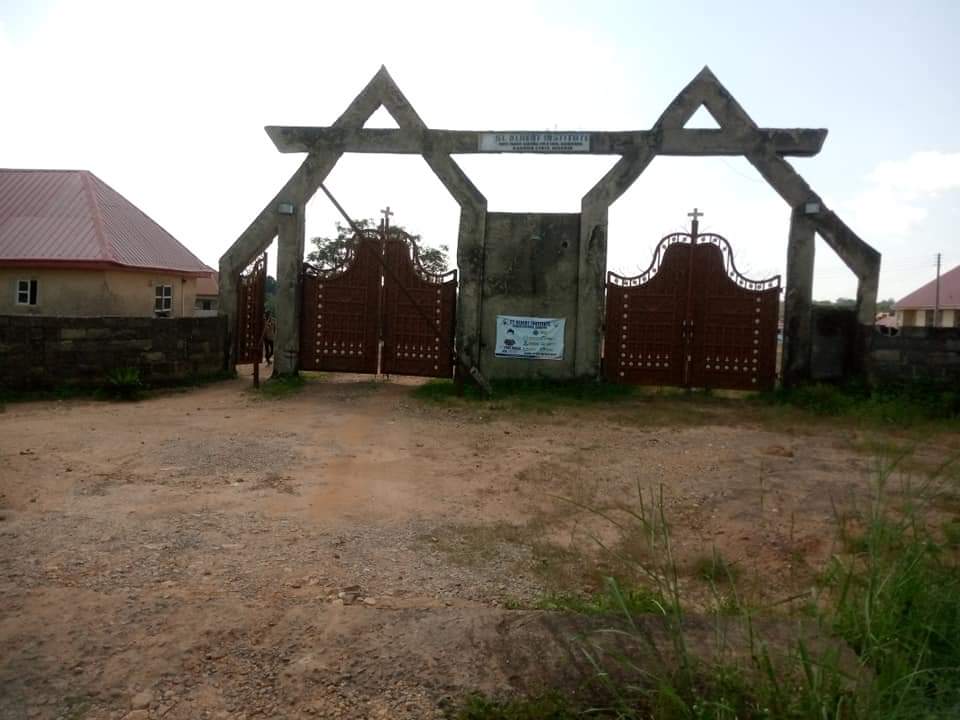
Gunmen, who kidnapped three students of St. Albert the Great Institute of Philosophy in Kagoma Chiefdom, Jema’a Local Government Area of the state, are demanding N50 million ransom to free them.
Mr. J.F. Dabo, an assistant to the chairman of the Christian Association of Nigeria (CAN) told P.M.News on Tuesday.
He said the bandits have contacted the father of one of the three captives to make the demand.
The Police Command’s Public Relations Officer, ASP Mohammed Jalige had debunked earlier reports that scores of students were captured by the gunmen on Monday evening.
“Three seminarians were kidnapped by suspected kidnappers on Monday evening,’’ he said.
According to him, the Commissioner of Police, in the state has directed the deployment of more police personnel to cordon the nearby bushes with a view to rescuing the victims.
“All efforts are on high gear for their rescue,’’ Jalige said.
Dabo, who is also the National President of Catholic Youth In Politics Forum, also confirmed that three students were kidnapped.
He said five students were initially taken by the eight attackers, said to be Fulani militiamen.
But they dropped two of the captives on their way out of the school. One of them had a cut on his head and was bleeding.
Dabo said the attack happened at about 7pm after mass at the chapel.
‘They met five stragglers at the chapel, when hundreds of others had departed to their hostels or the dining hall.
“They probably targeted the mass at the chapel. But they came after it ended. The situation could have been worse”.
He also disclosed that one of the three captives is asthmatic.
St. Albert the Great Institute of Philosophy, a seminary is owned by the Catholic Church. It is also called St Albert The Great Institute of Higher Education.
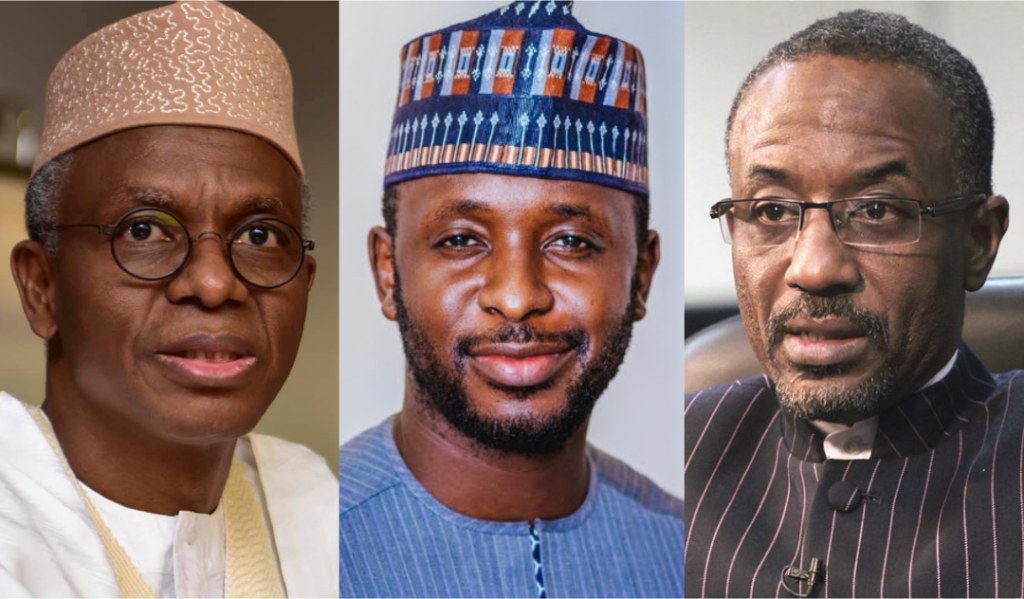
overnor Nasir El-Rufai has replaced his chief of staff weeks after he addressed Lamido Sanusi as a “former Emir of Kano.”
Muhammad Sani Abdullahi introduced Mr Sanusi as former emir while speaking at the Kaduna Investment Summit in September. Mr Sanusi, who was dethroned by Abdulahi Ganduje following corruption allegations in March 2019, took umbrage at the description, saying he was not a former emir.
“When I listened to the chief of staff…I will call him former chief of staff…you will understand why I call you ‘former’ later,” Mr Sanusi said when he took the microphone at the event. “Next time don’t call me ‘former Emir.’ There is nothing like that.” A video of the exchanges has drawn social media comments since Mr Sani Abdullahi was removed from office.
Mr Sani Abdullahi, who has served as Mr El-Rufai’s chief of staff since 2019, was removed on Monday when Mr El-Rufai conducted a cabinet reshuffle. He was subsequently deployed to the ministry of planning and budget where he would be commissioner.
It was not immediately clear whether or not Mr Sani Abdullahi’s removal as chief of staff was instigated by Mr Sanusi, who has remained politically influential and good friends with Mr El-Rufai. A spokesman for the governor did not immediately return a request seeking comments on Tuesday afternoon.
Says attack on Catholic Seminary is a continuation of ongoing genocide
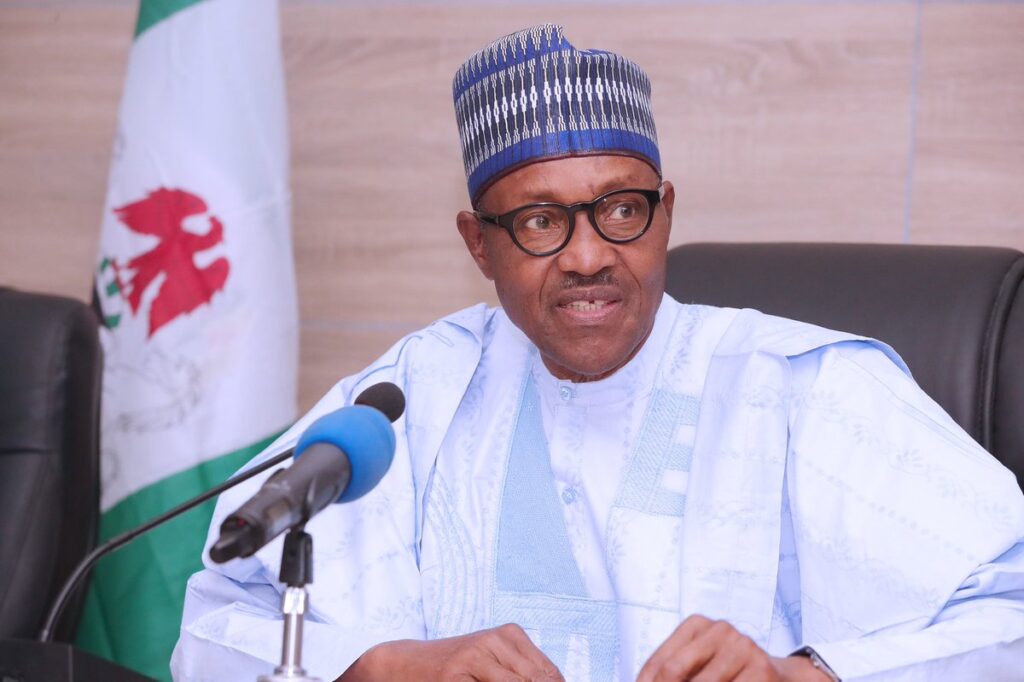
Leading civil Rights Advocacy Platform-:HUMAN RIGHTS WRITERS ASSOCIATION OF NIGERIA (HURIWA) has tasked the President as the father of the nation to kindly halt the massive attacks and killings of Christians in Southern Kaduna by suspected armed Fulani terrorists just as the group said the attack in kagoma, Jema’a local government area council of Kaduna state targeting a Roman Catholic Senior Seminary fits into a pattern of genocides that have gone on for over five years since president Buhari came on board.
HURIWA learnt that gunmen suspected to be Fulani bandits had attacked St. Albert the Great Institute of Philosophy, a seminary belonging to the Catholic Church. The seminary is situated at Fayit community, Kagoma Chiefdom in the Jama’a Local Government Area of Kaduna State. The attack, according to sources, led to the abduction of an unspecified number of students. HURIWA gathered from the media that the suspected kidnappers in their large number stormed the school premises on Monday evening with sophisticated weapons, surrounded the school, and overpowered the students who had just finished their evening prayers. According to one of the students, who narrowly escaped the bandits, they had just finished evening prayers in the church when the gunmen attacked with sporadic shooting and whisked the victims away. He added, “The other students who left early and were already having their dinner at the dining hall on hearing the gunshots escaped in disarray to different directions and were able to save themselves from being kidnappers.” He explained that some ran to the nearby river for their dear lives, stressing that the incident put the entire school into confusion as those that were lucky ran away from the gunmen. The student who sought anonymity said, “In all, it is estimated that an unverifiable number of students were kidnapped.” Another source who spoke on the incessant kidnapping in the state appealed to the government to do the needful by protecting the lives and property of Nigerians.
HURIWA condemns the attack and the persistent and systematic decimation of Southern Kaduna Indigenous Christian population and described these targeted violence and killings as well crafted, well coordinated and well executed genocides which President Buhari must stop and bring the perpetrators to face justice.
HURIWA said there are recorded evidence of many Captured and Occupied Southern Kaduna Territories just as HURIWA said that below are indigenous rural Christian communities of Southern Kaduna that have been sacked by rampaging armed Fulani militia and displaced to various communities and IDPs camps. These villages are now under the full occupation of Fulani some for over two years listed bellow according to LGAs and Wards. 1 KACHIA LGA ( from 2019) (i) Doka ward Chikwale, Idum, Muruchi, Kwasau Legede, Kafeyawa, Amale, Chikwale, Unguwan Pa, Gidan Sambo, Gidan Para, Unguwan Muruchi, Unguwan Dutse, Baware kasa, Gidan Duna, Sabon Gida Duna, Opase, Gidan Sunday, Gidan Yarima, Gidan Auta, Bakin Garma, Gidan Ladan, Maigari, Gidan Wakili, Pago, Oshowodo, Gidan Peter. (ii) Ankuwa Ward Ungwan pah (iii) Bishini Ward Koron, Kurmin iya, Ungwan Gwari, Kurmin Iya (iv) Kateri Ward Rishi Numbers of communities displaced in Kachia LGA = 33 Communities from 4 Wards 2 Kajuru LGA (from 2019)
(NOTE: On the 1st June, 2021, a few men from Idazo, Ungwan Shaba and Magunguna villages took risk and went back to clear their farms, after it was established that the occupying armed herdsmen have left. They are still there at the time of compiling this report. Past attempts were met with death)
(ii) Tantatu Ward Ungwan Makware
(iii) Idon Ward
Edanu, Ungwan Mudi, Ungwan Rana, Ifele, Ungwan Gora
Number of Displaced Communities from Kajuru LGA = 24 from 3 wards 3 CHIKUN LGA (from 2019) (i) Kunai Ward
Number of Displaced and Occupied rural communities = 8
(NOTE: some of the displaced persons here have started returning from last year. But majority do not still feel that there is an assured safety and security of the lives after past attempts had ended in regrettable tragedy. The herdsmen are notorious for breaking violating agreements reached) 5 Kauru LGA (2020)
(i)Badurun ward
Kikurunkuwa
(ii) Kamuru Ward
Kiziti, Kikpene, Kirim,
Number of Displaced villages = 5
As at June 5th, 2021, at least 115 communities scattered in 5 LGAs of Southern Kaduna have been displaced and taken over by armed Fulani militia unchallenged by the state. There are at least 100,000 IDPs leaving in several camps in Southern Kaduna and with relations in other parts of the state. Those close to Plateau and Niger State have fled there.
Source: Official records of Southern Kaduna Peoples Union (SOKAPU). Date: 5th June, 2021 Sign: Luka Binniyat. SOKAPU Spokesman and obtained by HUMAN RIGHTS WRITERS ASSOCIATION OF NIGERIA.
The Rights group said the attacks and genocides in Southern Kaduna contravene several sections of the Nigerian constitution such as Section 14 stated thus: 14(1) The Federal Republic of Nigeria shall be a State based on the principles of democracy and social justice. (2) It is hereby, accordingly, declared that: (a) sovereignty belongs to the people of Nigeria from whom government through this Constitution derives all its powers and authority; (b) the security and welfare of the people shall be the primary purpose of government: and Section 33 stated thus: 33(1) Every person has a right to life, and no one shall be deprived intentionally of his life, save in execution of the sentence of a court in respect of a criminal offence of which he has been found guilty in Nigeria.
Besides, HURIWA appealed on President Muhammadu Buhari to halt these premeditated attacks because section 218 (1) of the constitution says: “The powers of the President as the Commissioner-in-Chief of the Armed Forces of the Federation shall include power to determine the operational use of the armed forces of the Federation. (2) The powers conferred on the President by subsection (1) of this section shall include power to appoint the Chief of Defence staff, the Chief of Army Staff, the Chief of Naval Staff, the Chief of Air Staff and heads of any other branches of the armed forces of the Federation as may be established by an Act of the National Assembly. (3) The President may, by directions in writing and subject to such conditions as he think fit, delegate to any member of the armed forces of the Federation his powers relating to the operational use of the Armed Forces of the Federation. (4) The National Assembly shall have power to make laws for the regulation of – (a) the powers exercisable by the President as Commander-in-Chief of the Armed Forces of the Federation; and (b) the appointment, promotion and disciplinary control of members of the armed forces of the Federation.” HURIWA said it has begun drafting another petition to be sent to the INTERNATIONAL CRIMINAL COURT IN THE HAGUE NETHERLANDS so the suspects and Kaduna State government officials are charged for CRIMES AGAINST HUMANITY.
The Nigerian Senate on Tuesday adopted electronic transmission of election results, a position that was contained in the Conference Committee report submitted to the chamber.
The electronic transmission of election results which is a proviso in clause 53 of the Electoral amendment act places on the Independent National Electoral Commission (INEC) the right to transmit results without subjecting their discretion to any other organ as was firstly captured that generated controversy.
Adoption wasn’t, however, without heated debate which was brought under control by the presiding Senate President.
Before the adoption in the Committee of the whole, Senator Adamu Aliero and former governor of Kebbi State in his submission urged Senators to support the amendment in order to strengthen democracy.
He said: This is a move that will deepen our democracy and a move that will make the electorate to vote according to their conscience. This will put paid to criminals having their way as people of questionable character can no longer be voted.
Senator Smart Adeyemi representing Kogi West opposed the amendment on clause 87 which deals with direct primaries of political parties. He advocated strongly for some political parties who lack the capacity to organise direct primaries. He said it should be left for party executives to conduct indirect primaries.
However, Senator Michael Opeyemi Bamidele representing Ekiti Central Senatorial districts said every card-carrying member of a political party should be allowed to vote for their aspirants.
According to him, the mode of party primary which is determined by all party members would be more democratic than indirect where a few party executives vote for aspirants.
“I support this motion and like to mention specifically that in clause 87 that every card-carrying member of any political party should be able to vote and it is a way of giving power back to the people.
“This is not about any political party, every political party will enjoy this, therefore, let every party member have the opportunity to vote who they wanted.”
Senator Abdulfatai Buhari representing Oyo North corroborated in his submission, saying those opposed to direct primaries were afraid, wondering that if a contestant was as popular as he thinks, then he or she needed not to be afraid.
“Let’s practice democracy in accordance with the global best practices. I see no reason why anybody should be afraid of direct primaries as it goes to solve problems of aspirants.
Senator Shuaibu Lau representing Taraba North Senatorial district called for caution in not tieing political parties to a form of conducting primaries. He said the mode of conducting primaries should be left for parties to decide.
He maintained: “I agree with amendment of clause 87 which has to do with political party primaries.
We must, therefore, not tie parties to one way traffic of conducting primaries and not because there are beliefs that governors are hijacking parties and not free parties to democratically elect their leaders.
When the chamber resorted to the committee of the whole, the electronic means of transmitting election results was passed, while political parties are to determine how their primaries are conducted.
Last week, the Reverend gentleman who is the Special Adviser on Media and publicity to President Muhammadu Buhari in the person of the erstwhile Managing Director of the Daily Sun newspaper Mr. Femi Adesina told his audience that within days the administration would showcase a documentary on the milestones madecin two years of the second and final constitutionally permitted term of the President.
Most Nigerians battling with how to overcome the economic challenges foisted on them essentially by the consequences of the Covid-19 PANDEMIC did not actually take him serious. Moreso, the Spokesman of the President is a man who has consistently defended the policies of the administration some of which have adverse economic consequences on the living conditions of millions of Nigerians. However, the documentary has actually been shown. But this is not the theme of this write up which essentially represents the official position of the non governmental body that I have led since the last fourteen years known as HUMAN RIGHTS WRITERS ASSOCIATION OF NIGERIA (HURIWA). This reflection of my group is on the positive trends made by the federal government in the area of arms procurement process that began when LIEUTENANT GENERAL TUKUR YUSUF BURATAI headed the Nigerian Army for nearly 6 years since 2015 up ubtil he voluntarily retured from active soldiering work and was tapped for another international assignment for Nigeria as the Country’s Ambassador to Benin Republic. During his years in service as Head of the Army General Buratai established a system of transparency and accountability in all aspects and in the area of procurement of weapons, he made the process so open and subject to public scrutiny in such a way that the media captured moments when those weapons were procured, delivered and deployed. In one of those public occasions, General Buratai said the equipment has aided military operations against bandits and Boko Haram/ISWAP terrorists in the North East.
The media reported then that the Nigerian Army had inducted eight units of locally made combat vehicles Mine–Resistant, Ambush–Protected (MRAP), also called `EZUGWU’’ into Operations Lafiya Dole and Sahel Sanity.
The then Chief of Army Staff, Tukur Buratai, who made this known at the inauguration of the vehicles in Kaduna, said the equipment has aided military operations against bandits and Boko Haram/ISWAP terrorists in the North East.
The News Agency of Nigeria (NAN) reports that the vehicles, which are designed specifically to withstand improvised explosive device attacks and ambushes, were manufactured by the Command Engineering Depot, Kaduna.
General Buratai, who was represented by the Commandant Nigerian Defence Academy (NDA), Jamil Sarham, also inaugurated the Smart Factory also called Additive Manufacturing Technology, Vehicles Assembly shop and Officers/Soldiers accommodation at Command Engineering Depot (CED).
“The vehicles have significantly improved our capability to defeat our common adversary, Boko Haram and the Islamic State of West Africa Province,’’ he said.
The army chief said that the induction of the vehicles was a “clear testament to the unprecedented commitment of the Nigerian Army to building industrial capacity of the CED to undertake in-depth Research, Development and Innovation (RDI).’’
“Today, one of the greatest challenges facing the Armed Forces of Nigeria (AFN) and other security agencies is an outright reliance on importation of defence logistics from allies.
“Accordingly, President Muhammadu Buhari posits that Nigeria’s dependence on other countries for critical military equipment is unacceptable, the country must evolve (a) viable mechanism for near self-sufficiency in military equipment and logistics production,’’ he said.
General Buratai said that the president’s charge, therefore, made the Nigeria Army to initiate collaboration among CED, Defence Industries Corporation of Nigeria and Buffalo Engineering Technical Services Ltd., to produce the local MRAPs.
He said that additional defence logistic requirements produced through the collaboration include “Light Armoured Tactical Vehicle, Special Patrol Vehicle, Mobile Field Bakery and Mobile Borehole Drilling Machine among others.’’
“Succinctly, these platforms are aiding the Nigerian Army to perform its constitutional roles across all spectra of warfare such as the ongoing counter insurgency operations in the North East and other operations.’’
Earlier, the Commander, Engineering Depot, Sunday Araoye, said the induction of the vehicles was a clear manifestation of the Nigerian Army’s commitment to enhancing the industrial base in the country.
Araoye said that the uncommon approach was adopted in fabricating the hardware for the armed forces and other security agencies in the country.
The then Chief of Army Staff, Lt.-Gen. Tukur Buratai, had also in Kachia, Kaduna State, inspected and inducted new set of artillery guns and equipment to be deployed for operations in the North East.
General Buratai also inaugurated the new Headquarters complex for the Nigerian Army School of Artillery, NASA, as well as inspected several ongoing projects in the school and the barracks’ community.
The News Agency of Nigeria reported that the Federal Government, through the Ministry of Defence, procured the brand new artillery guns and equipment.
The guns are field artillery pieces and some of the equipment are vehicle ultra-light carriage for artillery and self propelled light gun series whose identity and specification would not be published for security reasons.
Speaking to journalists after the commissioning ceremony, then spokesman of the Nigerian Army, Brig- Gen. Sagir Musa said the COAS was in the NASA to inspect and test fire the guns, in line with his vision of ensuring a conducive working environment for officers and men of the Nigerian Army.
“It was in this vein the COAS commissioned the ultra-modern NASA Headquarters here in Kachia today which you just witnessed.
“Given the quality of work done, that singular act is commendable and will help in enhancing the productivity of officers and soldiers of the Nigerian Army School of Artillery”.
“The new artillery guns inspected by the COAS will be inducted into the Northeast Theater of Operation Lafiya Dole in the North East”, Brigadier General Musa said.
Therefore, Appraising the progress so far recorded in the war on terror, especially with the purchase and delivery of the first batch of the Tucano Jets, the foremost pro-democracy and leading civil rights advocacy group; Human Rights Writers Association of Nigeria (HURIWA) has commended the level of commitment of the current administration of His Excellency, President Muhammadu Buhari in the war against terror through his efforts in arms procurement since its inception in 2015.
A statement endorsed by the National Coordinator; Comrade Emmanuel Onwubiko quoted HURIWA as saying that there were hitherto a number of significant difficulties for the Nigerian military in what was termed the “Long War on Boko Haram;” ranging from weapon system acquisitions and personnel drawdowns, Nigeria’s denied access to sophisticated weapons in the past and the past administration’s mismanaging and embezzling of funds meant for weapons procurement.
However, at the inception of the President Muhammadu Buhari administration, one thing was clear to all, here was a soldier’s soldier coming to tackle a most difficult and daunting task of winning the war against terrorism.
Before the Buhari administration came into the office, the previous administration for the most part of its six years of existence had battled, albeit unsuccessfully the Boko Haram terror group, adjudged as one of the deadliest, if not the deadliest in the world. Such was the enormity of this task.
Although the reins of governance fell into Buhari’s way through his victory at the 2015 elections, the task of fighting terror was given to one of Nigeria’s most loyal military officers in the person of General Tukur Yusuf Buratai by his appointment as the Chief of Army Staff in 2015 and by extension the man upon whom the biggest responsibility yet, in recent times fell upon not only to win a most unconventional warfare against terror, but to organize a largely disillusioned, ill-equipped, low in morale army, that had so suffered on many fronts, in organization, motivation and infrastructure, more than in the fronts fighting terror”, HURIWA informed.
Highlighting the efforts the current administration has made in arms procurement right from the past Chief of Army Staff; Lieutenant General Tukur Yusuf Buratai (rtd.) and his counterparts held sway, HURIWA recalled that on December 14, 2017, Nigerian governors had approved the release of $1bn from the country’s excess oil account to the federal government to buy arms for the effective execution of the Boko Haram war.
The approval, which reportedly reduced the $2.3bn Excess Crude Account by half, HURIWA noted that development had generated heated debate with some analysts saying the money would be stolen just as the rights group stated that though some governors from the South rejected the approval, the Edo State Governor, Godwin Obaseki, briefed the press on the decision after the meeting of the National Economic Council (NEC), during when he assured that the money would cover the whole array of needs which included purchase of equipment, training for military personnel and logistics.
Subsequently, in April 2018, in a letter to the National Assembly, Buhari disclosed that the sum of $496m was withdrawn from the Excess Crude Account for the purchase of military aircraft. However, the money was paid to the United States for the 12 Super Tucano aircraft nation’s fight against terrorism.
On July 22nd, 2021, The Nigeria Airforce (NAF) announced it had received the first batch of six A-29 Super Tucano aircraft from the United States since its purchase in 2018, with the last batch due to arrive before the end of the year. This was disclosed in a statement by the Director of Public Relations and Information for NAF Headquarters; Edward Gabkwet in Abuja.
The aircraft represented a historic level of partnership achieved between the US and the Nigerian military. This is because, beyond the new hardware on the runway, this programme has brought the two nations’ militaries closer in formal training, professional development, air base construction, logistics planning, and negotiations. We are pleased with this partnership approach to end violent extremism and ensure a more stable, prosperous country for all Nigerians,” HURIWA added.
Also HURIWA informed that beyond the Tucano Jets, various procurements had been made for the purchase of critical equipment for the army, navy and air force, in support of the war on terror contrary to allegations.
Quoting the senior special assistant to President Muhammadu Buhari on media and publicity; Garba Shehu, HURIWA revealed thus: “Various other military procurements for critical equipment have been made. These are for the Nigerian Army and the Nigerian Navy, amounting to $380.5m. These procurements include money for the purchase of Navy Lynx helicopters.
The total amount spent is $876.8m. The equipment paid for has due dates of delivery of between six months to two years. Balance of the money that is unspent as at March this year is $123.1m”, HURIWA quoted Garba Shehu to have said.
Furthermore, rejecting the integration policy of the government which favours terrorists, the rights group emphasized on the need for the administration to widen the scope of the war on terror by bringing terrorists to justice adding that the policy is serving as potential recruitment grounds for terrorists since terrorists who are released mostly return to their bad ways because its ideological and the process of deradicalisation is not adequately implemented in Nigeria due to lack of expertise within Nigeria for such.
Although, for a successful counter-terrorism campaign, scholars and conflict practitioners emphasize a combination of military and non-military strategies. While a military strategy is useful to weaken the military capacity of terrorists, non-military strategies including negotiations, deradicalization, disarmament, rehabilitation, reintegration, and other soft measures are advanced to tackle the underlying problems fuelling terrorism to achieve a long-term peaceful outcome.
While within the non-military approach, deradicalization program is very significant, especially in combating religion- or ideology-motivated terrorism, given that the strategy not only aims to deconstruct extremist ideologies but also facilitates the rehabilitation and reintegration of ex-combatants and victims of violent extremism, the design and implementation of the deradicalization program of the Nigerian government towards countering Boko Haram have structural weaknesses that has further contributed to the problem of violent extremism, the rights group explained.
HURIWA therefore craved that the process of bringing suspected terrorists to justice could be fast-tracked, explaining that the criminal jurisdiction of a court is activated through a formal charge before a court of competent jurisdiction. “So, without a formal charge filed against a suspect, the machinery of justice via the judiciary has not been set in motion”.
However, HURIWA pointed out that it is important that security agencies conclude investigations before the prosecution of persons or organisations indicted, adding that those could be handled with every sense of urgency. “This cannot be done by mere lip service but by concentrated positive efforts, which is presently lacking since the Terrorism Act seems to be in abeyance and relegated to the background with the reintegration policy of the government being proposed for arrested suspected terrorists.
If the suspected terrorists are granted amnesty, it definitely would be applicable to their sponsors too. So, we are invariably back to square one, where the will to enforce existing law is lacking,” HURIWA reasoned.
Noting that terrorism is a global challenge, HURIWA warned that except suspects are prosecuted and punished for crimes against humanity with concerted global collaborations, sponsorship for terrorism would continue to evolve.
Hence, HURIWA concluded by condemning the general state of insecurity, occasioned by payment of ransom to terrorists when they abduct citizens. “What can we call our present situation where bandits kidnap people and are paid ransom by the government? Is that not a form of sponsorship for terrorism?” HURIWA asked. We urge that the wealth of experiences of past Service Chiefs including the strategic thinking of Generals such as Buratai should be tapped so the current Army Chief of Staff Lieutenant General Yahaya Faruk who has started well can be able to finish the war on terror in no time.
*EMMANUEL ONWUBIKO is the Head of HUMAN RIGHTS WRITERS ASSOCIATION OF NIGERIA (HURIWA) and blogs @www.thenigerianinsidernews.com, www.huriwanigeria.com.
Almost a month after he was kidnapped by gunmen along Kaduna-Abuja Expressway, the Emir of Bungudu in Zamfara State, Alhaji Hassan Attahiru, remains with his abductors even after the payment of N20 million ransom.
The emir was abducted when bandits waylaid a convoy of vehicles he was travelling in from Kaduna to Abuja on September 14.
He was said to be on his way to join Zamfara government’s delegation to the UN General Assembly in the United States.
Confirming the incident at the time, the Kaduna State police command said unspecified number of commuters were abducted along with the monarch in the daylight attack which occurred around Dutse village on the highway.
Daily Trust gathered that the abduction was carried out by gunmen loyal to banditry kingpin Boderi Isiya, operating from Riyawa, Buruku and Sabon Birni forests in Kaduna State.
A source familiar with the case said the bandits’ kingpin had shifted the goalpost after agreeing to release the emir upon payment of agreed ransom.
“He is now insisting that ransom must be N100 million, instead of the initial amount agreed,” the source said, explaining that family members and negotiators have been warned to be wary of the kingpin as he had previously vowed not to release the monarch even with ransom paid.
The emir, officially recognised as Sarkin Fulanin Bungudu, is known for tough stance against bandits in his domain and support for local vigilantes.
Boderi is responsible for a number of atrocious attacks in Giwa, Chikun, Igabi and Zaria local governments, including the abduction of students of Federal College of Forestry Mechanization, Afaka, in March.
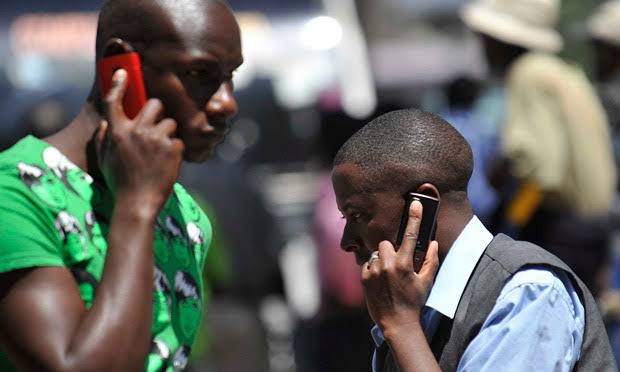
Reactions have continued to trail the decision of the Nigerian government to shutdown telecommunications network in states affected by terrorism in the North-West region of the country. States such as Katsina, Zamfara, Sokoto, Kaduna and even neighboring Niger in the North Central have had telecommunications network shutdown in several local government areas.
The Nigerian Communication Commission (NCC), the agency saddled with the responsibility of overseeing and managing all communication architectures in the country ordered the shutdown of telecommunication networks in early September 2021 citing the war against terrorists elements in the region as yardstick.
In Katsina state, the President’s home state for example, at least 13 local government areas believed to be under the control of terrorists had telecommunications network shutdown since early September. This came after initial denial from the NCC that such was going to happen.
Neighboring Zamfara state also shutdown telecommunications network in the entire state for several weeks while Sokoto state did the same for 14 local government areas.
Niger state and also Kaduna state implemented network shutdown in parts as telecommunications networks in several local government areas were also shut down all in the guise of fighting terrorists.
While the states and federal government wants Nigerians to believe that the network shutdown is actually achieving the desired results, the realities on ground prove otherwise as the terrorists have not relented in their nefarious activities since the shutdown.
Even though the shutdown may have achieved some results in terms of diminishing the terrorists’ capacity to operate, the demerits outweigh the merits as over 300 people have been killed across the five troubled states of Katsina, Sokoto, Zamfara, Kaduna and Niger since the shutdown was implemented in September. A figure many like myself believe to be too high considering the fact that a much publicised military operation is ongoing in the region.
Abductions have also continued unabated as the terrorists have devised means of communication such as using satellite phones to bypass the effects of the shutdown or using network architectures in Niger Republic to carry out their operations.
In an interview with dailytrust, a popular Nigerian based newspaper, terrorists commander, Shehu Rekeb boasted that the shutdown of telecommunication networks in the area does not stop them from operating as they now use thuraya satellite phones which do not require the conventional GSM network to function. Rekeb also said that certain GSM networks still operate in some parts of the states where the shutdowns were in effect.
“There are places you can make calls if you have Glo aand Airtel lines,” he told the Daily Trust September 13. This further raises questions on the sincerity of the telecommunications network shutdowns in the area.
A resident of Zamfara who relocated to Kaduna in late September told me under the condition that his identity must be anonymous that some areas still have globacom and Airtel networks making it possible for the terrorists to still communicate and launch attacks on communities. His testimony further confirms the claim of Shehu Rekeb.
Aside from the huge negative impacts the network shutdown is having on citizens who rely on networks to carry out their daily legitimate productive activities, the shutdown has also failed to improve the security of the citizens of the region as the terrorists still carry out deadly attacks on communities almost on a daily basis. This week alone over 30 people have been killed in separate attacks in Zamfara and Katsina communities despite the ongoing military operations and network shutdown. On 26 of September, 38 people were killed by terrorists in Madamai and Abun communities in Mallagum district of Kaura local government area of Kaduna state. In the same week another 60 were killed in Sokoto and Niger communities in separate attacks.
Even the military fighting the terrorists in the North West are not exempted from the negative impacts of the network shutdown. On 11th of September 12 military personnel paid the supreme price when terrorists took advantage of the shutdown and launched a deadly attack on a forward military operation base in Mutumji, Zamfara state. Reacting to the attack, a too military source told dailytrust that the shutdown made it impossible for the troops to communicate amongst themselves when the terrorists attacked.
“While the jamming of GSM in Zamfara has gone a long way in taming the bandits, it also has a negative effect on troops because communication among them was also extremely restricted,” the source said.
“Most of the foot soldiers relied on normal phone networks instead of any of the specialised communication gadgets that should be deployed during operations such as the one going on in the North West.
“Only the top commanders have military radio or walkie-talkie, meaning those in the frontlines would only use their personal mobile phones which are no longer accessible.
“The bandits took advantage of this and attacked them at their forward operation base. As you can see, the attack was launched on Saturday but it only came to the fore days after,” he said. Another source said there was the need to deploy specialised communication gadgets for the troops.
“The ban on communication in Zamfara and parts of Katsina is not bad in its entirety but the military high command should have taken note of the adverse effect on troops.” The military source said.
In the same vein, another security source told Dailytrust in September that the telecommunications network shutdown was not ‘well-thought-out and bypassed the due process of getting clearance from the National Security Adviser (NSA), Babagana Monguno, who oversees cyber security’.
In as much as some sessions of the Nigerian media would want to paint a scenario that the network shutdown and ongoing military operations in the North-West have achieved the desired results, citizens in the areas are daily counting their losses in the forms of burying their loved ones and inability to even send SOS calls when under terrorists attacks due to absence of telecommunication networks in the area.
Socioeconomic activities that rely solely on telecommunication network facilities to function have also been crippled in the region forcing many to be out of jobs in an economy where inflation is currently on an all time high.
The Federal government must as smarter of urgency and national importance review the ongoing suspension of telecommunication networks in the North-West region to ensure necessary measures are out in place to achieve maximum results.
Dealers of the so-called thuraya satellite phones in the country must be investigated and possibly prosecuted for aiding and abetting terrorists activities in the country.