


Kaduna’s Broken Compass: Why Zoning Must Travel Beyond Abuja
By Steven Kefas
There is a quiet hypocrisy at the heart of Nigerian democracy, one that the political class has mastered the art of ignoring. We speak grandly of federal character, of inclusion, of ensuring that no region feels permanently shut out of power. We build this principle into party constitutions, into presidential tickets, into the unwritten codes that govern who gets to lead. And yet, when the lens shifts from the national stage to the states, the principle dissolves. Nowhere is this contradiction more glaring than in Kaduna State.
Since the return to civilian rule in 1999, Kaduna State has been governed almost exclusively by political figures from its predominantly Muslim north. This is not an accident of electoral mathematics. It is the product of deliberate choices made within the corridors of the Peoples Democratic Party and, later, the All Progressives Congress, choices that have consistently elevated northern Kaduna at the expense of the state’s Christian-majority south. In a state where the population is almost evenly divided between north and south, between Muslim and Christian, this pattern is not merely a political inconvenience. It is a wound that festers quietly beneath the surface of every election cycle.
The lone, luminous exception came not through the foresight of party leaders, but through the intervention of fate. When President Goodluck Jonathan appointed Governor Namadi Sambo as his Vice President in 2010, the governorship fell almost by accident to Sir Patrick Ibrahim Yakowa, a Christian from southern Kaduna who was then deputy governor to Sambo. Yakowa proved that the fears used to justify exclusion were unfounded. He governed with competence and dignity, won election in his own right in 2011, and built a coalition that crossed religious and regional lines. His victory was historic. The violence that greeted it in parts of the north was a sobering reminder of how deeply the politics of exclusion had poisoned the well.
Then, in December 2012, Yakowa perished in a helicopter crash. Power returned, as if by gravitational pull, to the northern part of the state. The brief window had closed. And in the decade-plus since, neither the PDP nor the APC has shown the political will to revisit what that window revealed: that Kaduna’s south is ready, capable, and deserving of a turn at the helm.
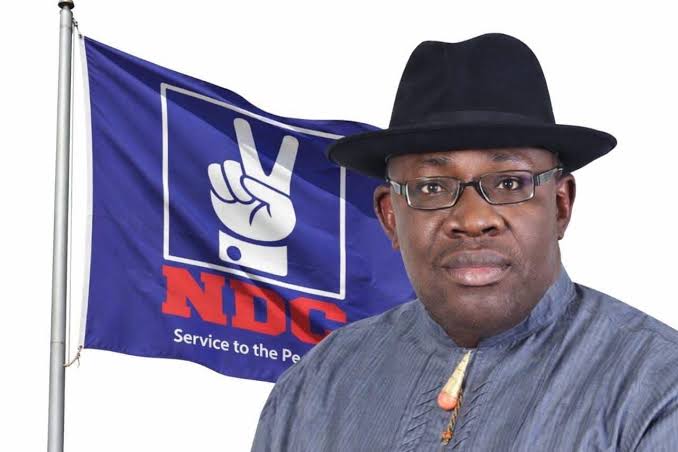
This context matters enormously as Nigeria’s political class turns its attention to the emerging Nigeria Democratic Congress. The NDC has already made a statement of intent by zoning its presidential candidacy to the south, with former Anambra Governor Peter Obi widely tipped as the consensus candidate. It is a credible, principled gesture, one that signals the party understands the logic of inclusion that has undergirded national politics since 1999. But a party that champions inclusion at the top while tolerating exclusion at the state level is not a party of principle. It is a party of convenience.
The question analysts are beginning to ask and that the NDC’s leadership must answer directly is whether the party’s commitment to fairness will cascade downward into the states. Will the NDC, as it builds its structures in Kaduna, demonstrate the courage that the PDP and APC have consistently lacked? Will it zone its governorship ticket to the south of the state, to a zone that has held the position for only a fleeting, grief-cut tenure in over twenty-five years of democracy?
The case for doing so is not merely sentimental. It is strategic. Southern Kaduna carries deep reservoirs of political grievance, grievances born not of imagination but of lived experience. Communities that have endured cycles of violence, displacement, and political marginalisation do not need more promises. They need the concrete, visible proof that democracy means something for them too. A party that offers that proof in Kaduna will not simply win votes. It will build loyalty of a different and more durable kind.
There are those who will argue that zoning is a blunt instrument, that merit should prevail over geography. It is a reasonable objection, and in a mature democracy with a level political field, it would carry great weight. But Nigeria’s political field is not level. It has been tilted, in state after state, by the accumulated weight of incumbent advantage, party gatekeeping, and the quiet veto of those who benefit from the status quo. In such conditions, zoning is not an abandonment of merit. It is the scaffolding that gives merit the chance to be seen.
Nigeria’s democracy turns twenty-seven this year. It has produced much to be proud of: peaceful transfers of power, a vibrant press, citizens increasingly willing to hold leaders accountable. But it has also produced stubborn patterns of exclusion that no amount of constitutional rhetoric has dislodged. If the NDC is to represent something genuinely new and not merely a reshuffling of old political elites under a fresh banner it must be willing to do in the states what it is doing at the centre.
Patrick Yakowa did not govern Kaduna as a southern Christian. He governed it as a Kaduna man, and the state was better for it. His story is both an argument and an invitation, an argument that inclusion works, and an invitation to every political party with the courage to take it seriously. The NDC now stands at that threshold. What it decides about Kaduna and about states like it across the federation will tell us whether it has truly read the lesson that Nigeria’s history has been trying, with such patience, to teach.
Beyond its own electoral fortunes, the NDC has an opportunity that few parties in Nigeria’s history have been handed: to become a model. The PDP governed for sixteen years and entrenched the very imbalances it once promised to dismantle especialli at state levels. The APC rode to power on the language of change and proceeded, in state after state, to replicate the exclusions it had condemned. If the NDC is serious about being different, let it demonstrate that seriousness not only in its presidential ticket but in every senatorial zone, and governorship race it contests. Let it be the party that other parties are embarrassed to ignore, the standard against which Nigerian voters begin to measure political seriousness. Equity and fairness should not be the NDC’s campaign slogan. They should be its operating system.
■