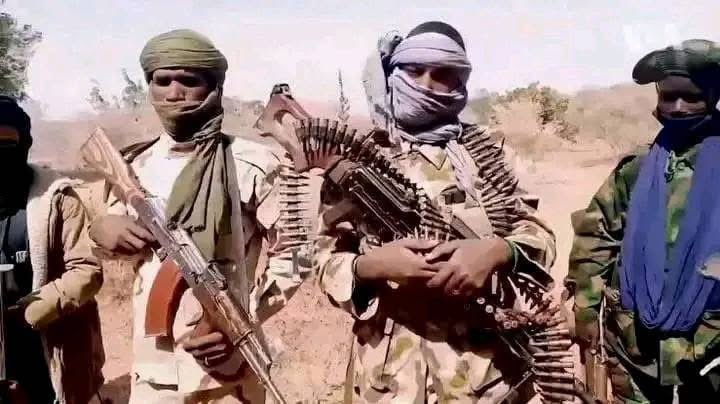
WHO IS THE GENOCIDE CULPRIT IN NIGERIA?


A Critical Examination of the Claim That “Muslims Are Also Killed” as a Response to the Genocide of Christians and Indigenes/Natives of Nigeria

by

Barr. John Apollos Maton

20th December 2025

INTRODUCTION: THE DANGEROUS SIMPLICITY OF FALSE BALANCE

In every conflict marked by sustained violence against a particular group, there emerges a predictable rhetorical maneuver: false equivalence. When the subject of mass killings of Christians is raised, especially in locations plagued by sectarian violence, a familiar refrain is deployed; “Muslims are also killed.” This statement is often presented not as a call for universal justice, but as a rhetorical shield meant to dilute, deflect or delegitimize the claims of targeted persecution. The purpose is not to mourn all victims or empathise with survivors, but to suspend moral urgency, silence advocacy and neutralize accountability.

The unanswered questions by the protagonists of “Muslims are also killed” despite repeatedly asking is a simple but uncomfortable one: Who is the culprit of the gangster killing spree in Nigeria?

When Christians are being killed systematically, and the response is that ‘Muslims are also killed’, then logic demands further inquiry; Who is killing whom? Under what circumstances? With what intent? And in whose name? These are not questions of sentiment but of truth, evidence and responsibility. To refuse to ask these questions is not neutrality, it is complicity in obscuring reality.

DEFINING GENOCIDE AND TARGETED VIOLENCE

Genocide is not defined merely by the existence of death inflicted by gangster and selective violence; it is defined by domestic cum international law based on observed pattern, intent and identity. The killing of members of a group because they belong to that group constitutes a crime of a fundamentally different moral and legal category than killings resulting from crime, collateral conflict or intra-group violence (eg. arising from boundary disputes).

When Christian communities are attacked and killed in their bedrooms while asleep, in their villages, churches, farmlands and market places, often without reprisal aggression, the issue is not about quantum numbers alone. It is targeting. It is the selection of victims based on ethnoreligious identity. It is the destruction of lives, livelihoods, properties, sacred spaces and communal continuity. To respond to such evidence with the vague assertion that “others are also killed” is to evade the definition of genocide entirely.

No serious moral framework allows the suffering of one group to be dismissed simply because suffering exists elsewhere.

THE “MUSLIMS ARE ALSO KILLED” ARGUMENT: A LOGICAL AUTOPSY

At first glance, the claim that “Muslims are also killed” appears humane. Who would deny that all lives matter? Yet when examined closely, the argument collapses under its own contradictions.

If Muslims are also killed, then by who and why? Are they killed by Christians acting collectively? Are Christian militias invading Muslim villages? Are churches mobilizing armed groups to attack mosques? What is the evidence, public declarations or ideological manifestos supporting such claims?

The answer, based on available historical records including data, is unequivocal: No. Christians, as a collective religious group, have not organized, celebrated, or justified mass attacks on Muslims in the territorial locations under discussion. There are no evidential records and data of Christian mobs chanting religious slogans while burning Muslims or their settlements, worship places, livelihoods and markets. Nor are there such records and data of sermons by Christian clerics calling for the extermination of Muslims. No coordinated religious campaigns encouraging violence or crime. This absence of evidence is not accidental. It reflects a fundamental asymmetry that the claims in “both sides” narrative refuses to confront.

THE QUESTION OF EVIDENCE: RECORDINGS, ADMISSIONS, AND PATTERNS

One of the most damning aspects of modern conflicts is that they are often documented by the perpetrators themselves. Videos, photographs, statements and social media posts have become tools of intimidation and ideological signaling.

In the cases under discussion on genocides against Christians, there exist repeated instances where attackers openly identify themselves, invoke religious language, and frame their violence as justified or divinely sanctioned. These are not anonymous accidents. They are ideological acts. When individuals proudly record and disseminate evidence of their crimes, they remove ambiguity about intent.

By contrast, there is no comparable archive of Christians collectively boasting about religiously motivated mass violence. This is not a claim of moral perfection, but of empirical reality. Individual crimes exist everywhere. Organized religious extermination by Christians in these contexts does not exist. Thus, when Muslims are killed, the crucial question remains unanswered by deflection: who killed them, and why?

COLLATERAL DEATH VERSUS TARGETED EXTERMINATION

Another deliberate confusion lies in the failure to distinguish between collateral deaths and targeted killing for extermination. In territorial locations affected by insurgency, banditry, and terrorism, civilians of all identities may tragically die. But not all deaths are equal in meaning.

When a Christian farmer is killed because his farmland is trespassed and crops ravaged, his homestead is seized, his church burned, and his village erased, the motive is clear. When worshippers are massacred during religious services, the symbolism is undeniable. When survivors are told to convert, flee, or die, the intent is explicit.

If Muslims are killed in clashes between armed groups, criminal networks, or internal disputes, those deaths are tragic and demand justice, but they do not negate evidence of a parallel, targeted campaign against Christians. Conflating the two is not analysis; it is obfuscation. Yet, the question remains; who killed the Muslims and why?

WHY THE FALSE BALANCE IS POLITICALLY USEFUL

The insistence on “both sides suffer” serves powerful political interests. It allows governments to avoid naming perpetrators. It enables international actors to maintain diplomatic comfort. It shields extremist ideologies from scrutiny by dissolving them into generalized chaos.

Most dangerously, it gaslights victims including survivors. It tells survivors that their suffering is exaggerated, their fear misplaced, and the death of their kinsfolk is a mere statistic in a symmetrical tragedy. This rhetorical strategy does not promote peace—it perpetuates silence. History shows that genocide is rarely denied outright in its early stages by the perpetrators and supporters of the evil. Instead, it is minimized, relativized, pacified and buried under calls for patience and restraint, so the voices of the victims are lost and the true agenda hidden. In Plateau State and many parts of Nigeria, the strategy denying cries against this Genocide is to have even the government misnormered it as being “Insecurity” or the infamous “Farmer-Herder Clash”.

THE MORAL FAILURE OF SILENCE AND DEFLECTION

There is a profound ethical failure in responding to cries of persecution with deflection. Moral seriousness requires specificity. Justice requires naming crimes accurately. Peace requires confronting uncomfortable truths. To acknowledge that Christians are targeted does not require hatred of Muslims. To demand accountability does not require collective blame. But to refuse acknowledgment because it disrupts a preferred narrative is to abandon both truth and humanity. The question is not whether Muslims are also killed. The question is whether Christian deaths are being used as a bargaining chip in a moral shell game designed to avoid responsibility.

WHY CONDEMN THE AID COMING FOR CHRISTIANS?

1. The Moral Contradiction at the Heart of the Objection

The first question that must be confronted honestly is this: why would any morally serious person oppose humanitarian aid to civilians facing mass violence, regardless of their faith? Aid is not a theological endorsement; it is a response to human suffering. Condemning assistance to Christian communities under attack does not reduce violence, save Muslim lives, or advance justice—it merely withholds relief from victims. When opposition to aid becomes louder than condemnation of the killings themselves, priorities are exposed. Humanitarian intervention should never be framed as a zero-sum competition between communities, especially in a context where civilians of multiple faiths are being brutalized by armed groups.

2. The Missed Opportunity for Collective Advocacy

Nigeria’s insecurity has attracted rare international attention, and this moment could have been used constructively to amplify all civilian suffering. Instead of rejecting the framing of Christian victimhood outright, critics could acknowledge it while simultaneously presenting evidence of Muslim civilian casualties and calling for inclusive protection. International actors are capable of responding to multiple crises at once. Denial does not broaden concern; it narrows it. By rejecting the language of “Christian genocide” rather than supplementing it with documented accounts of Muslim suffering, critics inadvertently weaken the overall case for international engagement against terrorism.

3. Denial as a Strategy—and Its Consequences

There is a profound difference between contextualizing violence and denying it. When denial becomes the dominant response, it signals that controlling the narrative matters more than protecting lives. If Christians are being targeted in identifiable patterns—through church attacks, village raids, forced displacement, or selective killings—then disputing terminology should never take precedence over stopping the violence. The insistence on denial, especially when paired with hostility toward aid, creates the impression that reputational defense of a group or ideology has eclipsed compassion for victims. This perception, whether intended or not, damages trust and deepens communal suspicion.

4. If the Culprit Is the Same, Why Resist Intervention?

If both Christians and Muslims are suffering at the hands of the same armed actors—terrorist groups, criminal militias, or transnational extremists—then logic demands a united civilian front. Aid, investigations, and security interventions aimed at dismantling those networks should be welcomed, not resisted. Shielding perpetrators indirectly—by downplaying their impact on one community—undermines the safety of all communities. Terrorist violence does not respect religious boundaries; it exploits them. Any response that fragments civilian solidarity only strengthens the attackers.

5. The Responsibility of Muslims in Indigenous Communities

Muslims who are of the Indigenous tribes of Nigeria, like indigenous Christians, have deep historical, cultural, and communal ties to their regions. Their interests are aligned with peace, stability, and the protection of ancestral lands—not with violent actors who destabilize societies and invite external chaos. Standing against terrorism does not mean standing against Islam; it means standing for life, dignity, and coexistence. When indigenous Muslim voices openly support interventions that protect all civilians, they reclaim moral leadership and make it harder for extremists to masquerade as defenders of faith.

6. Aid Is Not the Enemy—Violence Is

Ultimately, the question is not whose suffering counts more, but whether suffering is allowed to continue unchecked. Humanitarian aid for Christians under attack does not negate Muslim suffering; it establishes a precedent that civilian lives matter. The appropriate response to selective attention is not obstruction, but expansion—demanding broader protection, deeper investigations, and comprehensive aid for all affected communities. Condemning aid aimed at one group risks normalizing cruelty. Supporting aid, while insisting on inclusivity, affirms a shared commitment to justice and human life above sectarian rivalry.

WHO, THEN, IS THE CULPRIT?

If Christians are not attacking Muslims as a religious collective, yet Muslims are also among those killed, then the perpetrators must be clearly and explicitly identified: armed extremist groups, criminal militias, terrorist organizations, or ideological movements that exploit religion for power and violence. Historical and contemporary data suggests the Islamist Fulani jihadists as the only group that fits this narrative; immigrants whose pristine motive from their first incursion to some territories that are constituent parts of what comprise present-day Nigeria was an Islamic jihad aimed at conquest and displacement of native people and institutions.

The refusal to distinguish between Islam as a faith and the Fulani violent actors who profess Islam harms everyone. It allows the Fulani settler immigrants and extremists to hide behind populations of indigenous ethnic groups and critics to be accused of bigotry for asking legitimate questions. Precision is not prejudice; it is the foundation of justice.

CONCLUSION: TRUTH IS NOT HATRED

Asking “Who is the culprit?” is not an act of hostility. It is an act of moral responsibility.

The lives of Christians lost to targeted violence cannot be erased by the rhetorical symmetry of the culprits. Nor can justice be achieved by pretending that all deaths arise from the same causes or carry the same intent.

If Muslims are killed, they deserve justice. If Christians are targeted for extermination, they also deserve justice, recognition and protection. These truths are not mutually exclusive. What is unacceptable is the weaponization of one tragedy to silence another. Truth demands clarity. Justice demands courage.

And, history will judge not only those who killed, but those who refused to ask who did it, and those who keep pretending not to know it’s the continuation of the genocidal campaign of the immigrant Islamist Fulani jihadists against the Native Indigenous Ethnic People and Christians of Nigeria.

When the State Arms the Terrorist: How Nigeria’s Security Architecture Is Collapsing from the Inside

By Steven Kefas

On December 12, 2025, Nigerian security operatives arrested a group of armed Fulani militants in Ifelodun Local Government Area of Kwara State. What followed should have triggered an immediate national security emergency.

In a video recorded during interrogation, one of the suspects calmly explained that the AK-47 rifles and patrol vehicle in their possession were supplied by officials of the Kwara State Government. According to him, they had been operating in the area “for a while” under the guise of patrol duties. “Ilorin government na him give us this motor and the weapons,” he said. “They were the ones that gave us the rifles.”

This was not the rambling of a cornered criminal improvising a story. Days later, the Kwara State Government itself issued a clarification confirming that the arrested armed men were members of Miyetti Allah, the Fulani socio-cultural organization, and that they were participating in a federal security operation coordinated through the Office of the National Security Adviser (ONSA).

In one stroke, Nigeria crossed a line that should alarm every serious observer of national security, human rights, and national stability: armed ethnic militia members linked to a group repeatedly accused of terrorism were officially embedded into state-backed “security operations.”

This is no longer about incompetence. It is about institutional collapse.

Vigilantes or Proxies?

Kwara State is not Fulani territory. It is a predominant Yoruba state, notwithstanding the historical emirate structure imposed during the 19th-century jihad of Usman dan Fodio. Over the past six months, Yoruba farming communities in Kwara have increasingly come under attack by Fulani terrorists.

Against this backdrop, a fundamental question arises: why are Fulani “vigilantes” deployed in Yorubaland to provide security for Yoruba communities while those same Fulani militias are widely implicated in the violence those communities are fleeing?

Where are the Yoruba vigilantes? Why are local populations excluded from securing their own communities, while an armed ethnic group with an established record of violent expansionism is empowered, armed, and legitimized by the state?

This is not community policing. It is demographic and security engineering.

A Pattern, Not an Incident

What happened in Kwara is not an isolated scandal. It fits a disturbing and well-documented pattern.

In January 2024, Miyetti Allah leader Bello Bodejo announced the formation of an armed Fulani militia of 1,144 fighters, euphemistically labeled a “vigilante group.” The launch ceremony took place in Lafia the Nasarawa State capital had among its invited guests the Governor of Nasarawa, Abdullahi Sule as special guest.

Nasarawa State has long been accused by survivors, journalists, and international monitors and even neighbouring state officials of hosting Fulani terrorist camps from which attacks against Plateau, Benue, Taraba Southern Kaduna, and other Middle Belt communities are launched.

When Bodejo was eventually arrested and charged with terrorism, his confessional statement reported by Punch newspaper in April 2024 contained an explosive allegation: he claimed that Governor Sule pressured him to form the militia group known as Kungiya Zaman Lafiya.

Bodejo was later released without trial.

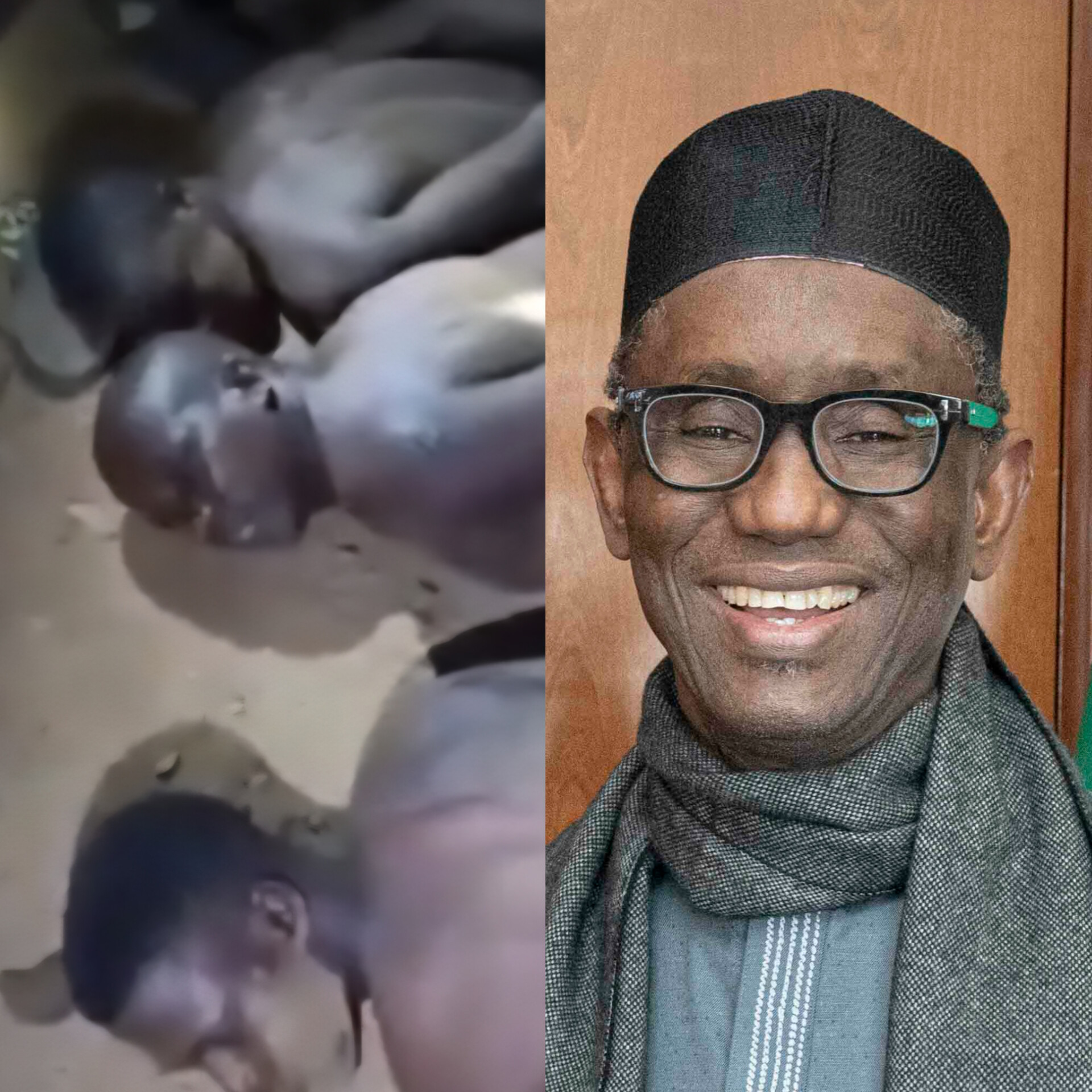
The alleged architect of his release? Nigeria’s National Security Adviser, Mallam Nuhu Ribadu.

The 1,144 armed “vigilantes” subsequently disappeared into thin air. No disarmament. No accountability. No explanation.

From Appeasement to Empowerment

The Kwara arrests now place the Office of the National Security Adviser squarely at the center of another scandal involving armed Fulani operatives embedded in state-sanctioned security frameworks.

If confirmed, this represents a catastrophic breach of counterterrorism doctrine. No serious state fighting terrorism arms ethnic militias tied to insurgent violence. No professional security architecture outsources public safety to groups accused of mass atrocities. And no responsible National Security Adviser permits such an arrangement.

Yet this is precisely what Nigeria appears to be doing, repeatedly.

This pattern lends overwhelming credence to growing national and international calls for Nuhu Ribadu’s immediate removal as National Security Adviser. National security cannot be entrusted to an individual who repeatedly champions peace deals, protection, or legitimacy for armed groups responsible for spreading terror among citizens.

The Matawalle Question

The crisis deepens further with renewed allegations surrounding Bello Matawalle, Nigeria’s Minister of State for Defence.

In recent weeks, Matawalle has been implicated by his former aide in allegations of sponsoring key bandit leaders in Zamfara State. These claims resurrect older, widely circulated videos in which notorious bandit leader Bello Turji openly stated that Matawalle, then governor of Zamfara paid some bandits with public funds in the name of “peace.”

Turji is not a misunderstood local actor. He is a terror commander linked to the killing of hundreds, possibly thousands, of farmers across the North-West.

Matawalle denies wrongdoing, arguing that payments and negotiations were part of a peace strategy. But peace bought with impunity, cash, and legitimacy for terrorists is not peace, it is state-funded terror management.

When combined with the Kwara revelations, the allegations against Matawalle reinforce a chilling conclusion: Nigeria’s defence and security leadership is populated by individuals whose policies consistently reward, empower, and normalize terrorism.

This alone justifies Matawalle’s removal.

“Bombs Cannot Penetrate Forests”

Perhaps nothing illustrates the depth of rot more than the parting statement of Nigeria’s immediate past Defence Minister, Abubakar Badaru, who reportedly remarked during the week of his resignation that “bandits live in forests where bombs cannot penetrate.”

This is not merely false, it is professionally disqualifying.

Modern militaries conduct forest warfare across the globe. Nigeria’s armed forces have done so successfully outside Nigeria. The claim that bombs “cannot penetrate forests” is not a tactical assessment; it is an excuse, one that exposes a leadership class more interested in rationalizing failure than confronting terror.

Why the World Is Responding

In recent days, the United States announced visa restrictions affecting Nigerians. Predictably, outrage followed. Many Nigerians consider the decision unfair or excessive.

They are wrong.

The United States, like any rational state, has a duty to protect itself from countries where terrorism is being mainstreamed into governance structures. When armed ethnic militias tied to terror networks are armed by the state, embedded into official security operations, shielded from prosecution, and rewarded with political appointments, terrorism is no longer an aberration, it is policy-adjacent.

Visa restrictions are not punishment. They are self-defense.

Recommendations: What Must Be Done Immediately

If Nigeria wishes to arrest its rapid descent into international isolation and internal collapse, urgent action is required:

Nuhu Ribadu must resign or be removed as National Security Adviser. His continued tenure undermines confidence in Nigeria’s counterterrorism commitment and poses a grave risk to national cohesion.

Bello Matawalle must be relieved of his defence portfolio pending an independent investigation into allegations of terrorist sponsorship and appeasement.

Miyetti Allah-linked armed formations must be formally investigated for terrorism-related activities and barred from any security role.

Security appointments must prioritize professional competence over ethnic, religious or political proximity. National security is too serious to be managed through sentiment.

International partners must escalate targeted sanctions and visa restrictions against officials credibly linked to terror appeasement.

Conclusion: A State at a Crossroad

The arrest of armed Miyetti Allah operatives in Kwara State is not merely another scandal. It is a warning flare.

Nigeria now stands at a crossroad: continue mainstreaming terrorism through appeasement and ethnic favoritism, or reclaim the basic function of the state, protecting citizens without fear or favor.

The world is watching. And increasingly, it is acting.

Whether Nigeria chooses reform or further collapse will determine not just its security future, but its standing among nations that still believe terrorism must be confronted, not accommodated.


…Steven Kefas is an investigative journalist, Senior Research Analyst at the Observatory for Religious Freedom in Africa, and Publisher of Middle Belt Times. He has documented religious persecution, terrorism and forced displacement in Nigeria’s Middle Belt for over a decade.


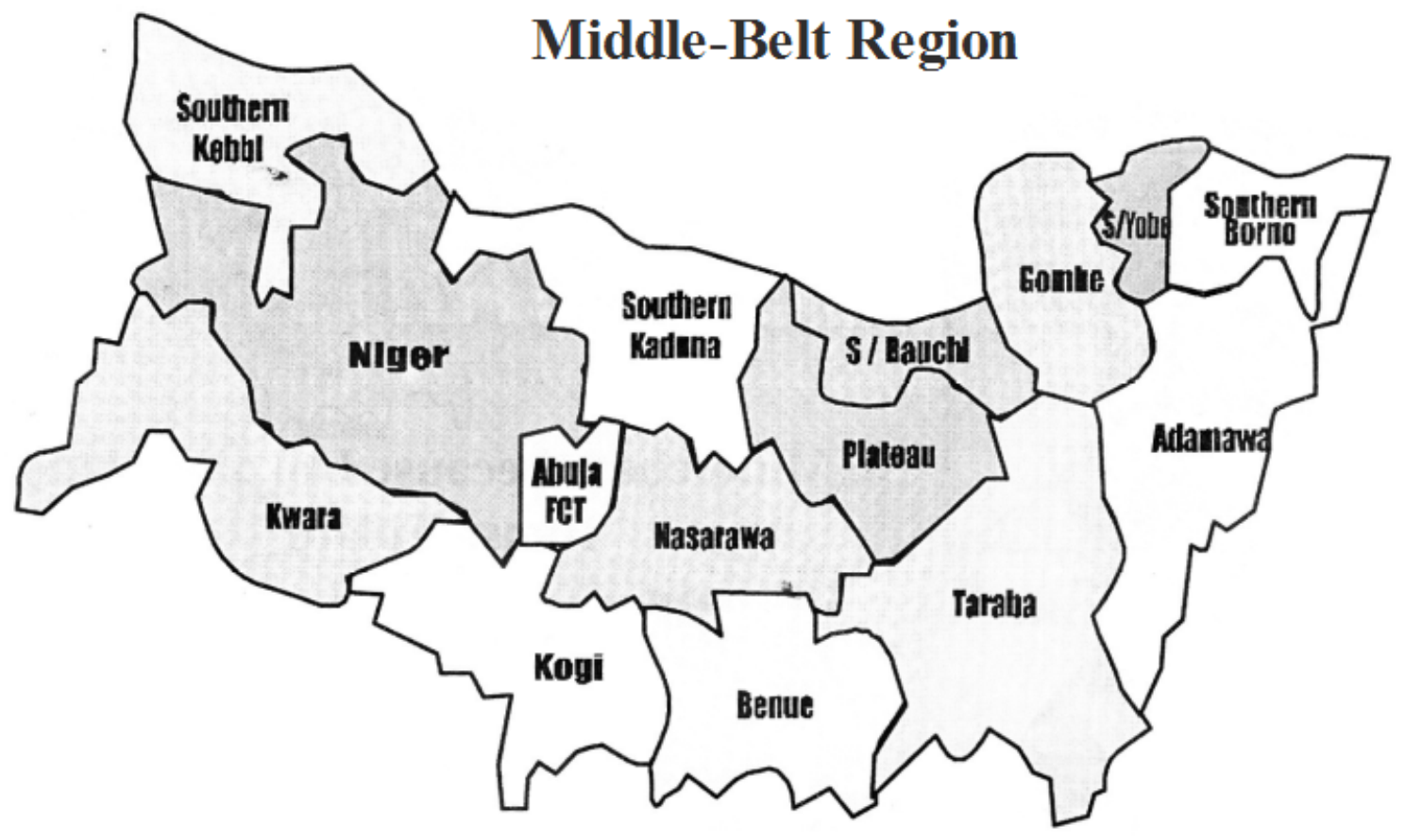
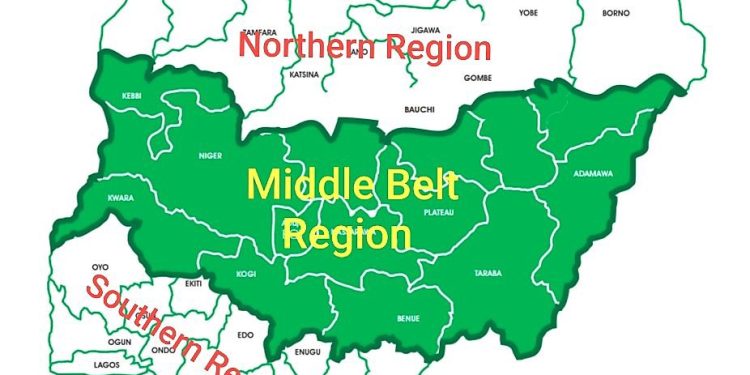
WHY ARE THEY SO SCARED AT THE MENTION OF MIDDLE BELT?


By Col Gora Albehu Dauda Rtd
13 December 2025


They are feigning ignorance about the Middle Belt geographical space of Nigeria. Of course they know the Middle Belt, their pretences not withstanding. If they do not know where the Middle Belt is, then why are they always in a state of palpable fear at the very mention of the Middle Belt. One thing is very clear, the Middle Belt of Nigeria has existed in time and space and they know this to be true. The pretences aside, and their contrived blindness aside, WE shall help them register the Middle Belt of Nigeria in their brains.

The Social media space in the North of Nigeria has had to accommodate huge volume in of traffic on the subject matter of the Middle Belt. What is responsible for this state of affairs? The reason(s) cannot be too far fetched as it has to do with the potential unraveling of the old North into its component parts that were compelled into an unequal union by the Fulani settlers who the British colonialists helped to take over many of our lands. How can they now say they do not know where the Middle Belt is? Do they not understand that what was then called the Northern Region was more than 60 percent of Middle Belt territory?

How could they have forgotten so soon in the day about a Tiv man and one of the fighters for Nigeria’s independence Joseph S Tarka and whose main preocupation was to secure the independence of the geographical Middle Belt on the platform of the United Middle Belt Congress? Have they also forgotten that the Fulani settler political party NPC fought with all its might and strengthened by British colonial interest made sure that the agitation by JS Tarka for the creation politically of a Middle Belt was defeated?

They may have forgotten that there is a subject called History. We remind them that History lives. Surely they will remember the Tiv riots or have they forgotten that too? If they remember, they will do well to also remember the reasons and or background to the riots. If they are able to recall the History very well, then they cannot but remember that the Middle Belt which they are now conveniently denying is alive and well. Ordinarily, responding to their denial would not have been necessary but because the records have to be updated and preserved, it became imperative to tell them to their faces that the Middle Belt is here to stay.

Through time, it was convenient for them to harvest our numbers as Middle Belters during all of the many fraudulent head counts of the past to find the strength they needed but only to disregard the very fact that the Middle Belt was deserving of the goodies and wealth the Northern Region of that time produced. They promoted their faith whilst also preventing the spread of other faiths, particularly the Christian faith. They have deployed all the means at their disposal to not only undermine or hinder the spread of Christian values, they have sought to acknowledge that there are Christian in the behemoth North.

Not surprising at all, because they have conveniently forgotten that it was largely Middle Belters who answered Gen Gowon’s wartime call “To keep Nigeria One is a Task that Must be Done” of the Nigeria Civil War years. Sadly after the victory, elements from the feudal regime pulled the carpets from under the feet of those who won the victory and now, they cannot tell on the map of Nigetia where the Middle Belt is located. They can continue living in denial for all we care but the reality of the Middle Belt will come upon them much like a thief in the dead of night.

The truth remains that their elite know for a fact the place as well as relevance of the Middle Belt in the Nigerian equation and by extension that of Nigeria as a country . Those ranting the denial of the Middle Belt are inconsequential and blind as bats but the scales will soon be falling from their unclean eyes. Because of the dictum that “Impossible is Nothing”, I thought that they should have been redying themselves for the reality that will in due time dawn on them. Some of the reasons they are so scared of what is to come to pass shortly includes the loss of votes, lands, cheap revenues they have been enjoying to sponsor terrorists, bandits as well as jihadists. Put in another way, they will no longer have others doing their dirty jobs. They are better adviced to face up to the imminent changes on the way. To God Be The Glory

Archaeology of a Reflex (II)

By Ahmed Yahaya Joe

“Diplomacy is the art of telling people to go to hell in such a way that they ask for directions.” – Winston Churchill, British Prime Minister 1940-1945 & 1951-1955

What subtlety in statesmanship can President Bola Tinubu grasp from the recent detente between Donald Trump and Zohran Mamdani?
The American president’s “exceedingly warm reception” of the Mayor-elect of New York at the Oval Office was quite surprising even for close watchers as the duo have hitherto had a very vexatious relationship that even descended to constant name-calling and frequent taking swipes at each other. Despite the lack of parity between Tinubu and Trump as commanders in chief as Mao reminds us “Politics is warfare without bloodshed,” against the background of Clausewitz’s “war is the continuation of politics by other means.” If so, “The target of your strategy should be less the army you face than the mind of the man or woman who runs it.” – p.165 33 Strategies of War (2006) by Robert Greene

Little wonder, Ms. Onubogu entitled her November 21 presentation to the US House of Representatives Subcommittee on Africa, “A Serious, Well-founded Wake-up Call” – a rapprochement that should collectively jolt us to recover the pan-Nigerian story. More so, President Tinubu, as she had prior highlighted Nigeria’s unnecessarily longstanding ambassadorial vacuum in Washington DC, a huge challenge in bilateral relations albeit the recent better late than never foreign service nominations.

Interestingly, the Wikipedia page of our “master strategist” states that he got admitted into Chicago State University in 1975. This was when Henry Kissinger (1923-2023) was still in office as the 56th Secretary of State during which he famously enunciated “Diplomacy is the art of restraining power,” adding that “when statesmen want to gain time, they offer to talk.”
How could Asiwaju’s handlers whilst formulating the “Renewed Hope agenda” have missed that Kissinger in his 1994 912-page book simply entitled Diplomacy, states that “Military men are just dumb, stupid animals to be used as pawns in foreign policy”?
Again, if so, why are Nigerians getting so worked up over President Trump’s sabre rattling when, as we have already encountered in Part I, how Nigeria deftly outflanked an entrenched Italian position during the late 1960s?

The “12 disciples of Nigeria” were the pacesetting career diplomats who formed the nucleus of Nigeria’s foreign service ahead of national independence. These pioneers were recruited and trained by the British purely based on merit after rigorous vetting, a series of qualifying examinations, and extensive interviews that took place in Lagos and London in 1957.
They were as follows in alphabetical order of surnames: Phillip Asiodu, Chike Chukwura, John Garba, Adedokun Haastrup, Leslie Harriman, Chukwuemeka Ifeagwu, Dickson Igwe, Omotayo Ogunsulire, Olumide Omololu, Aminu Sanusi, John Ukegbu and Soji Williams.

Hear the Igbobi oldboy in his own words on that select group;
“We came from all parts of the federation with vastly varying degrees of years in the public service, and also a variety of academic backgrounds. All of us were put through the same furnace of training and were expected to emerge at the end of the conveyor belt as accomplished diplomats (and without any attempt at self-adulation), I could assert that by the time of our independence three years later, we were more or less reduced to a common level of awareness. We had brought to our new vocation, different ideas of what it meant to us, and what were our obligations, towards it. – pp.371-372

After the demise of Ambassador Omotayo Ogunsulire (1930-2023) leaves Chief Phillip Asiodu b.1934 as the last surviving of those magnificent men. Then there was Ambassador Aminu Sanusi (father of Khalifa Muhammadu Sanusi II), the only other Northerner apart from Old Grammarian Garba in that distinguished seemingly pan-Nigerian line-up regardless.

Arguably, no proudly Nigerian icon abroad is as symbolic as the Nigeria House along Second Avenue in Midtown Manhattan, New York. Built and commissioned in 1992 at a reported cost $32 million the 22-storey skyscraper wrapped in green reflective class was designed under the watch of President Shehu Shagari in 1982 by the now rested Kano architectural firm, Ella Waziri & Associates but delivered by the Lagos multinational outfit, AIM Consultants.
It remains mindboggling that such a massive investment in the financial capital of the US with over 90,000 square feet of letable space would not have since 2023 the compliment of hosting any Permanent Representative from Nigeria at the United Nations headquarters just next block on First Avenue. Unfortunately;

“The Office of the Auditor-General of the Federation has advised that since the New York edifice is strategically located, deteriorating and underutilized, it should as a matter of urgency, be comprehensively rehabilitated before it constitutes an embarrassment to Nigeria.” – Nation newspaper edition of September 5, 2022

Apparently, Ambassador Garba and Ms. Onubogu are not the only Nigerians at a precarious junction of inter-communal existence. Hear the 81-year-old ace columnist, Debo Sobowale, who puts it that;

“Irrespective of who is making the one-sided narrative regarding religious conflict in Nigeria, people like me feel cold. In the storm of national controversies ignited by President Trump’s threat to invade Nigeria, I am one of a very tiny minority of Nigerians caught in all the crossfire – whether religious, political, ethnic or just mischievous.
On my father’s side in Lagos, Christians constitute about 85 per cent of the people I serve as Head of Family. By a twist of fate, it is the same side of the family which, has linked me/us to the North. My paternal grandmother – Aisha — was a Fulani born and raised in Shinkafi, Zamfara State.
My grandfather was a Muslim and an Imam. His vault is still in our family house at Agbowa-Ikosi. My father, his only surviving son, was forced to convert to Christianity when he was dragged off to war in Europe. That was how generations of Sobowales became Christians. Muslims are in the overwhelming majority in my mother’s side of Lagos Island. My grandmother, also a rebel, married a Christian and had only one daughter, who also married a Christian. I was brought up as a Christian. But, my wife was the daughter of a chief imam in Lagos Island.”
– Vanguard newspaper edition of November 16, 2025

Now a final word on Ambassador Garba’s parental background in his own words but not before some more on his extraction. This writer believes such to be salient as we are all members of an increasingly cosmopolitan village in Nigeria. While how Nigerians would wrestle the behemoth of “politicization of religion” to the ground and exorcize the demon of the “religionization of politics,” is mainly left to us it is not entirely to the 47th President of the United States or the 119th Congress on Capitol Hill.
As Nigerians, we must endeavour to remain vigorously tolerant, positively optimistic, and overly inclusive in our national project lest we take that a tortuous road to Sudan. Unfortunately, Ambassador Garba’s book reprinted in 1998 is again out of print again. Sadly, many Nigerians have not benefitted from his vicissitudes;

“My people were originally Kanuri who lived in some unspecified part of the present-day Borno State. Owing to untoward circumstances, there was a large exodus a long time ago, which included members of my family. They moved westward until they reached Katsina. When my people reached Katsina, they were not allowed to settle within the city walls, being foreigners, but had to camp some distance outside it.
They eked out an existence through pursuits peculiar to rural dwellers, namely hunting and farming. My ancestors became great hunters, and it is a well-known fact in the Hausa social arrangement of earlier days, the hunting class formed the backbone of the army whenever there was war; and there were quite a few of these.

My people, being as renowned great hunters were invited from time to time by Sarkin Katsina to help him in his various wars against his numerous enemies, which ranged along all the four cardinal points of the compass. Having proven their prowess on the battlefield in the various campaigns over the years, Sarkin Katsina, on an occasion, in recognition of his appreciation and as a mark of gratitude, invited the elders among my people to nominate a leader who would be titled.
According to family legend, the title of Kauran Katsina (Chief Warrior of Katsina) was bestowed on our chosen leader, and this title was held by us until shortly after the Jihad of Shehu Usumanu dan Fodio.

Later on, Sokoto had appointed a Pullo (Fulani) Sarkin Katsina whose appointment had been rejected by a section of the Katsina community, including our own faction. Instead, we had appointed a rival Kado (Hausa). We rose in revolt but were worsted by the Fulani in the encounter by the Fulani and their supporters.
Our people had to flee westwards, once again and took refuge in places (in today’s Niger Republic) such as Damagaram, Tasawa, and Maradi. It is significant that the Chief (Emir) of Maradi, even today, which is a little short of two hundred years after the departure from Katsina, continues to style himself Sarkin Katsina, while the erstwhile French colonial rulers refer to Maradi as Katsina.” -pp. 1-2

In conclusion;

“My father (born in Gazawa near Maradi) spoke Hausa, Kanuri, Fulfulde, Shuwa-Arabic, and Sara-Kabam fluently. But this resourceful man had also taught himself English sufficiently as to bear the title of ‘Tafinta’ (Interpreter) at the Provincial Office, Nassarawa, Kano, between the years 1929-1930, and with the UAC at Gusau, from 1930 to 1934.
He had no formal education but never missed the opportunity to learn, to which I had contributed in no small measure. In the early years in Maiduguri, his Kanuri companions called him Garba Jibdama (Garba of the Jibda, or civet cat). Later in life, when he had risen to be foreman and lining-sinker in the well sinking section of the Geological Department, they called him Garba Baramma (Garba of the Wells).

He addressed himself as Mallam Garba Katsina throughout his life. Only after he had gone to the Hajj in 1960 did he change his name to Alhaji Garba Muhammadu, assuming his father’s name.
From 1939 to 1943, he worked for the Kano Local Authority, sinking wells mainly in the Hadejia, Gumel, and Kazaure emirates.
He retired in 1944 but continued to live in Kano City. During the years that he had been in and out of Kano, he had lived at Yakasai, Dan-Agundi, Gwangwazo, Tudun-Wazirci, and finally back to Kofar Dan-Agundi ward where he lived his last days on earth.
Here, he died on 13th March 1972, at the age of about eighty-seven years. My mother had left my father when I was about six years old. There was never a formal divorce. Before I was born, my father had married Fatu, a Fulani from the same Geidam where he had married my mother.” – pp 13-14

Concluded.

Archaeology of a Reflex (I)

By Ahmed Yahaya Joe

“Truth is found neither in the thesis nor the antithesis, but in an emergent synthesis which reconciles the two.” – Georg Hegel (1770-1831)

What is the moral for Nigeria from the Sudanese conundrum?
The question is pertinent because neither Sudan nor Sudan Sudan have known sustainable peace, significant progress, or any meaningful development ever since those nations parted ways in 2011;

“With its people deeply divided along ethno-geographic and religious fault lines, under a tense socio-political atmosphere arising from heightened insecurity, the situation in Nigeria today reads like a tragic plot from the Sudanese playbook. Like Nigeria, Sudan was a British colonial creation, in which the colonials lumped ethnic and religiously diverse peoples together in a self-serving scheme of nation-building experimentation. Nigeria, like Sudan, is almost evenly split into predominately Muslim North and Christian South.”
– Nigeria: On the Road to Sudan by Majeed Dahiru posted 5/28/2021

Yet, here we are in a protracted battle for the soul of our nation, of which according to Ignatius Kaigama, Prelate of Abuja, “God has nothing to do with it.” It has always been about power and control he opines on the recurrent strife bedevilling the presumptive capital of the Middle Belt, “No crisis in Jos is religious. The real issue is the competition for who owns Jos.”
The insight of then Archbishop of Jos and more are contained in the 2016 book by Tom Burgis entitled The Looting Machine: Warlords, Tycoons, Smugglers, and the Systematic Theft of Africa’s Wealth pp.175-187

Using Jos as a microcosm for Nigeria, irrespective of our polarized opinions on the “Christian genocide” thesis and the “religion is not the key driver in the attacks” antithesis, it is noteworthy that one of ours, senior fellow & Africa program director, Center for Strategic and International Studies, Oge Onubogu presented what Hegel describes as “sublation” – a synthesis.
In her must-watch presentation to the Africa Subcommittee of the US House of Representatives, Ms. Onubogu carefully reconciled the truths in the thesis with the shortcomings of the antithesis by transcending the limitations in both entrenched positions asserting;
“In Nigeria today, ethnicity, religion and language – not nationality – remain the benchmarks for identity for the country’s highly diverse population.”

While she warned against reducing the prevailing thesis to “a single story” she nonetheless admitted that the antithesis is laced with “religious extremism,” but she still deliberately glossed over the virulent marginalization and systematic oppression by Muslims against non-Muslims and vice versa as the case may be.
Overtly her testimony was a conciliatory beacon for a way forward. It is still however afflicted the selective amnesia on how the fallout of Muslim-Muslim rhetoric of 2023 had deepened the political fault lines still reverberating to date.
Regardless, every discerning Nigerian knows that the root cause of the very challenged inter-communal relations in our nation is variously the “politicization of religion,” and “religionization of politics,” across the board.
Here, The Manipulation of Religion in Nigeria Today: Its Social and Political Basis, published in New Nigerian newspaper edition of 13th- 14th January, 1978 by Dr. Yusufu Bala Usman remains instructive after 47 years and still counting.

Ms. Onubugo was probably not even born when, in the mid-1960s – twenty years prior to the heated Organization of Islamic Controversy (OIC) controversy of 1986 under General Ibrahim Babangida, when religion was on the front burner.
But she grew up “In Jos, Plateau State, an area that has been plagued by ethno-religious violence. Her upbringing in this complex environment profoundly shaped her understanding of conflict dynamics. Growing up in Jos during periods of recurring violence gave young Oge a front-row seat to the devastating impact of governance failures on ordinary communities.”

In looking back, the must-read memoirs of John Mamman Garba (1918-1989) entitled The Time Has Come: Reminiscences and Reflections of a Nigerian Pioneer Diplomat (1989) is collector’s item for us particularly for us in the present-day.
A book full of painstaking details drawn from his personal diaries spanning nearly a 60-year period is included a minutiae of when then military governor of the Eastern regional government in 1967 wrote the Italian Prime Minister and the Vatican City horrendously claiming that;

“Weapons and planes manufactured by Catholic Italy, were being sent to Muslim Northern Nigeria to be used in killing the Catholic Ibos of Eastern Nigeria….
In the beginning, a good number of Italians had been led to believe that the conflict between the federal government and Colonel Ojukwu was based on religious differences.” – pp. 291-293

As the babel of voices on “Christian genocide” continue to divisively rage in our polity the need to reflect upon Churchill’s maxim of “The farther back you can look, the farther forward you are likely to see” cannot be overemphasized particularly with a man in the middle of sorts who introducing his recollections writes;
“Dedicated to my grandfather, Muhammadu Sarkin Hako, who died at Maisandari on the outskirts of Maiduguri town in July 1931, and had vowed, I would never attend the Whiteman’s school while he lived.”

Ambassador Garba then goes on to give a glimpse on how the worst fears of Sarkin Hako were processed in the overall context;

“My father did not receive the news of my having embraced Christianity in good spirit. This was as expected. When he and his friend, retired Regimental Sergeant Major Sule Gumsuri took me along to the Church Missionary Society (CMS) bookshop school at Kano in 1926, such an eventuality of turning a Christian had never crossed their minds even for a moment.
They were then solely preoccupied with the thought of placing me in an institution that would prepare me for a better place than they themselves had had the privilege of attaining in our society.
No more, no less.
There was a serious rift between me and the family, or rather my father, for some years after my conversion. But neither of us wanted to see this as the permanent parting of ways. My father eventually accepted the situation as ‘Kaddara’ (fate, already predetermined by God).
He did not die until forty years after I had been baptized into Christianity, and he, as well as my mother, two brothers and one sister, and all their children and grand-children were and have remained today, professed Muslims.” – pp. 384-385

This writer encounters in Garba and Onubogu (even Kaigama) not only unique perspectives but what Bernard-Henri Levy describes as the “archaeology of reflex” which in the trio is neither “an immutable automatism,” nor “immune to learning,” in the Nigerian project as that French public intellectual puts it in 2021 book entitled The Will To See: Dispatches From A World of Misery and Hope.
Outstanding is how Ambassador Garba was able to reclaim the Nigerian story in Italy and Vatican City. This hugely contrasts present-day diplomatic vacuum during the gestation period of the “Christian genocide” more so that quite recently Prime Minister Giorgia Meloni of Italy has become the second G7 leader to internationally subscribe to that thesis as Mallam Garba goes on in retrospect;

“The Italians were made to believe that Colonel Ojukwu’s succession attempt and declaration of total war on his fatherland represented the manifestation of the determination of ‘the very progressive, intelligent, Westernized and hardworking Roman Catholic Ibos to live their own existence in peace and prosperity, free from domination and annihilation by the backward Hausa/Fulani Moslems of the North.’” – p.293

Ambassador Garba, a scion of al-Barnawi and al-Kashinawi, “that is a Bornoan and also a Bakatsine, at one and the same time,” not unlike Abu Abdullahi b. Masanih b. Nuh also known as Dan Masani (1595-1667), further puts it;

“As part of the counter for the expressed suspicion that the civil war had a religious undertone, the federal government decided to send to Rome from time to time some leading members of our government who were of the Catholic congregation so that these highly-placed persons could speak to the Holy Father as one Catholic adherent to his Pontiff.
Amongst those who came to Rome for this purpose may be mentioned Louis Orok Edet, first Nigerian inspector-general of police; Federal Commissioner Joseph Serwuan Tarka; Federal Commissioner Anthony K. Enahoro; Admiral Joseph E. Akinwale Wey; and the military padre, Monsignor Colonel Pedro Martins.
As I had the duty of arranging the audiences for these senior representatives of our government with the Holy Father, I had opened a corridor of communication with the Vatican. I found the Papal Secretary of State – the Pope’s prime minister, as it were – Cardinal Amleto Cicognani, a man of friendly disposition and charming personality.” – p.294

The veteran diplomat whose fluency in Latin eased Nigeria’s access in the Vatican kick-started the acquisition after a 21-day trek from Maiduguri to Kano. He then attended middle school in Zaria before proceeding to CMS Grammar School Lagos, where he picked Greek. He was eventually admitted into Igbobi College, where he fine-tuned his French and bagged the Latin prize sitting for his Senior Cambridge in 1934 but not before attending the World Scout Jamboree in the United Kingdom in 1929.
After an extensive training and brief working career in the British colonial agricultural value chain, he proceeded to the London School of Economics, graduating in 1950.
Ambassador Garba rose to the position of Executive Director at the World Bank in 1963 when Ngozi Okonjo-Iweala was still in primary school, a good 44 years before she became Managing Director there in 2007.
Ambassador Garba became Nigeria’s envoy to Italy with accreditation to Vatican City, Spain, Greece and Cyprus in succession eventually the United States in 1972 from where he eventually retired from public service in 1975 living out the rest of his idyllic days in quiet contemplation in Kano.

Ambassador Garba’s tour of duty based in the “Eternal City” between 1966 and 1970 was peculiarly challenged against the background that;

“Immediately after the military incidence of July 29, 1966, Colonel Ojukwu’s agents had launched an extensive propaganda campaign in Italy as they did in other places. Because of the understandable sensitivity of the Italians to religious matters, this wicked and erroneous interpretation of our crisis was accepted even in some responsible circles. The rebel camp had certain advantages in this regard in Italy.
As the late Dr. Nabo Graham-Douglas, onetime Attorney-General of the Eastern Region, and later of the federation as a whole, had pointed out in his well-written pamphlet: Ojukwu’s Rebellion and World Opinion, the intention of the Catholic church was to constitute the Eastern Region into a Catholic state.” – p.293

While this writer has not been able to actually go through any copy of the erstwhile Biafra insider’s 1968 publication to independently verify the details on the reported clamour for a faith-based breakaway entity from Nigeria, the following under the title Clandestine Role of Religious Bodies in the Nigerian Civil War 1967-1970, beggars the question: if history is apparently repeating itself currently?

“In a bid to attract sympathy and support of the international community, the Biafran government hired Markpress, a Geneva-based public relations firm. The public relations firm constantly used genocide and religion as its propaganda themes.” – pp. 78-85 American Journal of Humanities and Social Sciences Research (AJHSSR) Vol. 3, Issue 12, 2019

It, therefore, remains to be seen if there are any lessons for the recent ambassadorial nominees of President Tinubu from Ambassador Garba’s capacity and cognition.
One thing fundamentally remains;
“There was once a country.”- Chinua Achebe (1930-2013)

Continued in Part II

The Cost of Silence: How Apathy Deepens the Middle Belt Crisis

By Ankeli Daniel

For years, the Middle Belt has been crying out for help, sometimes in quiet pleas, sometimes in desperate screams. Whole communities have been destroyed by waves of terror and displacement, yet the silence that follows often feels even heavier than the violence itself.
This silence from citizens, leaders, and the global community is not an absence of sound. It is a decision, and that decision carries consequences.

The Sound of Neglect

In a country that never stops moving, tragedies easily fade into background noise. One day it is villages burned in Benue, the next it is kidnappings in Kogi or fresh attacks in Southern Kaduna. The headlines shift quickly, but the survivors do not get to move on.

Behind every “breaking news” alert are people who may never return home, families trapped in makeshift camps, and children who learn the meaning of loss long before they learn the meaning of hope.

The scale of this crisis is undeniable. According to Amnesty International, over 10,217 people were killed in armed attacks across several Nigerian states in just two years, with Benue State alone accounting for 6,896 deaths. UNHCR estimates that Nigeria now has roughly 3.5 million displaced or stateless people, about 600,000 of them from Middle Belt communities.

Still, the silence continues in offices, churches, and conversations. We scroll past these tragedies, waiting for someone else to care first. But silence always takes a side. It stands with power, not the powerless, with comfort
instead of conscience.

When Silence Becomes Complicity

When we stop asking where security funds disappear to, when we look past displaced families struggling to live with dignity, and when we downplay acts of terror by calling them “skirmishes”, we are not just ignoring the problem, we are helping it grow.

Injustice doesn’t survive because evil is powerful; it survives because good people stay quiet.

The Internal Displacement Monitoring Centre reported 291,000 new conflict-related displacements in 2023, pushing Nigeria’s total to 3.4 million internally displaced people. Each displacement left unresolved, each attack left unpunished, becomes soil for impunity to grow. The suffering of the Middle Belt is not inevitable. It is the result of what we have tolerated for decades.

Apathy in High Places

It is not only ordinary citizens who stay silent. Many in positions of power, with the means to make real change, have chosen indifference over action.

Governments at both the federal and state levels often respond with words of sympathy but show little accountability. Security funds disappear without explanation, while communities remain unprotected. Relief materials arrive too late or not at all.

Every broken promise leaves another scar, and every ignored report erases another piece of truth.
Yet, the apathy of those in power is fueled by the apathy of the people. When we stop demanding better, they stop delivering.

Breaking the Silence

There is strength in our collective voice. Each time people speak out, ask the hard questions, or tell the story of someone who has survived, the walls of silence begin to break.

This, is why Middle Belt Concern (MBC) exists; to amplify those voices, to remind Nigeria and the world that silence has a cost too heavy to bear.

We stand for a region that refuses to be forgotten, for survivors who deserve justice, and for accountability that rebuilds trust in those who lead.

Speaking up means choosing courage instead of comfort, truth instead of silence, and life instead of loss.

What We Can Do

Breaking the silence is more than just speaking; it’s about taking action.
Share verified stories from the Middle Belt, because every repost helps fight misinformation.
Ask your leaders the hard questions. Demand transparency about how security funds are used.

Support local efforts that provide relief, education, and advocacy for displaced families and communities.
Organize or join dialogues and discussions that keep these conversations alive.
Every voice raised brings us closer to justice, and every action taken helps a survivor take one step closer to healing.

Hope in the Noise

Silence may have allowed this crisis to grow, but purposeful, persistent, and united voices can help bring it to an end.
The story of the Middle Belt is not one of defeat, but of strength and defiance. Its people have endured unimaginable pain and are still standing. What they need now are allies who will speak when it is easier to stay quiet.
In the end, history does not honor those who chose comfort; it remembers those who chose courage.
So, speak up.
Share the truth.
Stand with the Middle Belt until silence is no longer an option.

Daniel Ankeli is a photographer, media professional, and human rights advocate who documents insecurity, displacement, and community resilience across the Middle Belt. He is a member of Middle Belt Concern and writes from Jos, Plateau State.

They paid for it; give them their certificates!

By Shalom Kasim

I am deeply concerned about the recent decision to suspend the evaluation and accreditation of degree certificates from Benin Republic and Togo. While the government’s response is rooted in addressing certificate racketeering, we must consider the human angle of this situation.

The investigative report sheds light on a complex issue, revealing the existence of a certificate racketeering syndicate. However, the decision to suspend accreditation without a thorough examination of the circumstances surrounding each certificate undermines the educational pursuits of countless genuine students who earned their degrees legitimately.

It is crucial to acknowledge that not all degrees from these countries are tainted by fraudulent activities. Suspending the evaluation of all certificates casts a shadow of doubt on the entire academic community of Benin Republic and Togo, impacting innocent graduates who have worked diligently to obtain their qualifications.

Furthermore, the collateral damage extends to Nigerians who pursued education in these countries in good faith. Many students choose international institutions for various reasons, seeking diverse educational experiences and opportunities. The blanket suspension risks penalizing these students unfairly.

Instead of a sweeping suspension, a more targeted and nuanced approach should be adopted. Investigative efforts should focus on identifying and penalizing those responsible for the racketeering, rather than punishing an entire academic system. Collaborative efforts between the involved countries, educational institutions, and regulatory bodies can ensure a fair and just resolution.

The decision to involve multiple ministries, security agencies, and internal administrative processes may prolong the resolution, causing unnecessary delays for genuine graduates awaiting accreditation for employment or further studies.

In addressing the issue of degree mills, it is essential to differentiate between reputable institutions and those engaging in fraudulent activities. The global problem of diploma mills requires a coordinated effort, but caution must be exercised to protect the interests of legitimate students and educational institutions.

While the government’s intention to curb certificate racketeering is commendable, the suspension of degree accreditation should be approached with a balanced and targeted strategy. Failing to do so risks harming the futures of countless deserving individuals who pursued their education in good faith.

Someone reminded me the Minister of Education is a professor. I said, “yes, yes.”.

Kasim is public affairs commentator, a poet and a journalist. He writes from Wukari, Taraba State, Middle Belt Nigeria

The Wazobia Trifecta and the Rest of the Citizens: Is One Nigeria a Myth?

By

Helene Alade

&

Terna Akambe NENGE
revnengeterna@gmail.com

ABSTRACT

One Nigeria is a myth! This conclusion is drawn from the various failed attempts at national integration. Being a product of colonial fiat, Nigeria is an amalgam of over 300 ethnic groups that live largely for the pursuit of their ethnic interests at the expense of the numerically disadvantaged ethnicities. The framers of the constitution bequeathed a document that is so much lope-sided with its winner-takes-all enormous powers arrogated to a single person – the president, who decides who gets what. Policies like the Quota System or Federal Character and Wazobia could be best described as charade that was used as façade for the feudalistic tendencies of the wazobia trifecta – Yoruba, Hausa-Fulani and Igbo – the so-called majority ethnicities. Using exploratory, analytical and phenomenological methods, the paper argues that the quota system is only used to benefit the core north in areas of education and civil service where they come short on merit. They deny federal character when it comes to who becomes the president; they take advantage of their numbers. These ethnic groups are the cause of national disharmony with their ethnic chauvinism. The paper concludes that until the trifecta work towards using their numbers in favour of the rest of us – the minorities, one Nigeria will be impossible. It is recommended that to have national integration, every ethnic group must be given the opportunity at the presidency, a new constitution drafted and ratified through a referendum and religion should not be used as a means for the attainment of selfish ethnic goals.

Keywords: Wazobia trifecta, National integration, Religion, Ethnic chauvinism, Nigeria

INTRODUCTION

Nigeria is a mix of cultures and religions. Instead of this multivalence to be its impetus for national integration and development, it has turned out to be its undoing. Its abundant natural wealth unequally yoked with a rent seeking, feeding bottle economy in a system of government that the winner of the election takes all, the country has been rife with strife that has always ended up in bitter ethno-religious carnage that leads to colossal loss of lives and properties. 

While some Nigerians strongly believe in ‘one ‘Nigeria,’ at least in theory, practically it seems to be a myth.

According to Otedo News, the name WAZOBIA was given by the late musician, Roy Chicago. The concept behind this acronym, was to enable the translation of news in the three major languages namely Yoruba, Hausa and Igbo from which dialects the word “come” was used for the coinage hence “wa,” “zo,” “bia,” are Yoruba, Hausa and Igbo respectively. In the light of this development, Otedo News further pointed out that by picking only these three ethnic groups, called in this paper “the wazobia trifecta,” the country discriminated against the other ethnic groups: 

And then Nigeria embarked on radio and television translation of news in what they called the three major languages, and sent all the other languages into the cooler, for them to groan and get lost, as if the country did not belong to them as well. This single action is what has led the country into its present doom of the “Federal Character syndrome,” (you must come from any of those three major languages and ethnic groups) to be heard, recognized and given reasonable political appointment no matter your talent and accredited professionalism. 

The above quote serves this paper like a sniper’s rifle lens from which to see the vista of our thesis namely that the wazobia trifecta is a gross form of injustice that is meted out to the other very many ethnic groups in the country. The Federal Character is designed to serve the needs of the trifecta while the others groan. While this is concerning, it is even more worrying that even within the trifecta there has always been a raging supremacy battle that has distressed and disunited the country over the years thereby making the notion of one Nigeria a mere myth. It is safe to say that national integration will remain a cerebral infrastructure or concept that may not be realized anytime soon as indices show.

CONTEXTUAL FRAMEWORK

Wazobia trifecta: The term trifecta has many shades of meanings but the one in line with the aim of this paper is that which defines it “as a set of three related things, often things that cause problems.” In the context of this paper, wazobia is a representative coinage for the three so-called major ethnic groups in Nigeria namely Yoruba, Hausa/Fulani and Igbo. Needless to say that they are the cause of Nigeria’s problems that has made national integration seemingly unattainable.

One Nigeria: One Nigeria is a concept that hopes for national unity, cohesion, harmony and integration. Being a country of over 350 ethnic groups, it is only natural that the citizens hope for unity and national integration for progress, development and prosperity. This is significant and of colossal magnitude especially given the fact the all these ethnic groups were amalgamated by a colonial fiat for ease of imperial governance. This means that Nigeria was conceived and birthed in selfish circumstances hence the need for oneness and togetherness. But can the rogue activities of the wazobia trifecta yield one Nigeria?

The rest of the Citizens: This is a representation of the minority ethnic groups. Of the more than 350, when the trifecta is subtracted, then the rest of us is what remains. Accordingly, wherever this phrase is used in the paper, it means the minority groups and wherever the trifecta is used, it means the majority groups. How do the activities of the trifecta affect the rest of us? Is there any possibility for one Nigeria, as a consequence of these activities and how can national integration be achieved?

OBJECTIVES

The objective of this paper is to:

  1. Interrogate if “one Nigeria” or national integration is a myth based on the activities of the trifecta.
  2. To ascertain the level of disintegration in Nigeria as it concerns ethnicities.
  3. To proffer solutions for national cohesion, harmony and integration.

LITERATURE REVIEW

Tess Onwueme, a Nigerian playwright, uses wazobia as a personification, or the protagonist character, in one of her plays titled ‘Wazobia.’ Wazobia was nonconformist to her community customs that she feels engender injustice against her female gender and became the voice of the voiceless in the process. While this character in the play symbolizes what the concept of wazobia could have been, it is pertinent to state that the contrary is the case. Rather than serve as the centre of gravity to pull other ethnicities together for justice and equity, the trifecta has been in the front burner of injustice and annexation of other minority ethnic groups within their catchment areas.

Agbajileke pointed this out in his article “Losing our identities to major ethnic groups in Nigeria” when he argued that the wazobia trifecta has succeeded in subsuming other ethnic groups under their hegemony. For example, in the south-south, the Urhobo, Isoko, Edo/Bini, among others are culturally subsumed under the Yoruba ethnic group as many of them bear Yoruba names. In the Middle Belt, efforts are still on for the religious and political annexation of the very many ethnic groups here under the Hausa/Fulani hegemony. One of the authors, as a Tiv man, traveled to Adamawa state few years ago, upon introducing himself, his host immediately called him the ethnic slur “nyamiri,” a derogatory reference to the Igbo ethnic group. While in the East, he was called “onye Hausa.” This points to the fact that the Middle Beltan and other minority peoples are fast losing their ethnic identities to the wazobia trifecta.

Kalu argued that in Africa, especially Nigeria, people tend to pay allegiance to their ethnic group rather than the country and this has succeeded in eroding or depriving the country of national integration or cohesion even as political parties are formed based on ethnic ideologies. Nigeria is known for its notorious gravitation towards ethnic and religious cleavages, the trifecta exploit this for their advantages. Whenever an election cycle comes in, it is common to hear them argue that this time Nigeria must produce a president of “Igbo, Hausa/Fulani or Yoruba extraction.” Nobody seems to argue for a “Nigerian president.”

For example, the 2023 presidential election, all the aspirants were members of the trifecta – Yoruba (wa), Hausa/Fulani (zo) and Igbo (bia). The minorities are always at the receiving end of the activities of the wazobia trifecta and because, the rest of the citizens are subsumed under their hegemony, it is difficult for us to be heard. Our voices are drowned amid the raucous clamour of the three. When will someone from the rest of us become the president of Nigeria based on merit and the fact of national integration  and not a recourse to ethnic bullying?

The trifecta is also the problem of this country and the reason one Nigeria is a myth. Adamu and Ocheni disarmingly postulated that the struggle for recognition and survival the ethnic groups in Nigeria influenced by the fear of domination by another ethnic group is a threat to national unity, integration and peaceful coexistence. According to them, “ethnic virus has been a dangerous cancer causing social crisis, political instability and threat to peaceful coexistence, unity and national integration of Nigeria as a nation.” 

This scenario had already been described and decried by Chinua Achebe in his book, There was a Country. Achebe pointed out the pettiness of the trifecta emphasizing the unprecedented rapidity in economic and educational attainment of the Igbo and Yoruba ethnic groups in the late 19th and early 20th centuries which led to their dominance in both the education ministry and civil service. This elicited uneasiness from the other majority ethnic group and what followed was lamentable:

The ply in the Nigerian context was simple and crude: Get the achievers out and replace them with less qualified individuals from the desired ethnic background so as to gain access to the resources of the state. This bizarre government strategy transformed the federal civil service, corporations, and universities into centers for ethnic bigotry and petty squabbles. 

Achebe further expressed dismay when he stated ethnic persecution, hate and resentment was created and sanctioned by unscrupulous self-serving politicians resulted to terminations and dismissal of Nigerian citizens from civil service based on their ethnicity. According to him “in Nigeria it bred resentment and both subtle and overt attempts to dismantle the structures in place for meritocracy in favor of mediocrity, under the cloak of a need for “Federal Character” – a morally bankrupt and deeply corrupt…” 

Achebe was right to describe the federal character as “morally bankrupt and deeply corrupt” because this has tended to favour only one of the trifecta – the Hausa/Fulani of the far north. Over the years, employment, appointments and admissions into federal government establishments and schools have clearly showcased this. For example, in this present Buhari’s administration, all the security heads are Fulanis or some far north indigenes at the expense of other ethnic groups.

Adegbami and Uche expressed the same sentiments when they asserted that despite the fact that Nigeria is a state of multiple nationalities it is “still be seen peripherally as a nation with tripodal ethnic structure with the trio of Yoruba, Hausa/Fulani and Igbo constituting a pole each in the unceasing struggle for political and economic resources of the nation. The existing cleavages… metamorphosed into a… hydra headed monster tormenting and straining the nation’s political developments” adding that “the alliances and coalitions between/among political parties to have overall majority needed to win election(s) are based on ethnic sentiments and ethnic gang-up.” 

This is exactly what is happening concerning the presidential ticket of the All Progressives Congress (APC) where both the presidential, Bola Tinubu and the vice presidential, Shettima are both Muslims and from the trifecta. The same can be said of the Peoples Democratic Party (PDP) ticket on which Abubakar Atiku, a Fulani is running as the presidential candidate with Okowa, vice presidential candidate of Igbo extraction from the south. All these alliances do not take into cognizance the plight of the minorities who are only used as pawns to win a political chess game.

Nigeria is deeply enmeshed in the unfortunate dichotomy of otherliness – “them” and “us,” which find expression in “our own,” or “our time.” These sentiments have gone to extreme lengths in supporting mediocrity and corruption as long as the one perpetrating it belongs to “our ethnic group.” For example, during the Goodluck Jonathan administration, there were serious resentment that morphed into agitations, protests and strikes that were organized by the members of the trifecta against his politics especially concerning security and energy.

During his administration, fuel pump price was N65, subsidy was to be removed; about 200 Chibok secondary school girls were abducted by Boko Haram and other insecurity situations. National protests were organized some held at Ojota in Lagos led by Wole Soyinka, Tunde Bakare of Yoruba stock and others against fuel subsidy removal; at Abuja was the Bring Back Our Girls sit in protests that even attracted international ridicule of the Jonathan administration. This led to Jonathan losing his reelection bid in 2015 ushering in the Buhari administration.

Today, fuel pump price is over ₦600 naira; insecurity is rife as bandits and Boko Haram are terrorizing major cities, killing, sacking villages and kidnapping for ransom all over Nigeria. Herdsmen believed to be Fulani militia taking over ancestral farmlands in the North Central and other regions, Unknown gun men in the eastern part of the country; fuel subsidy is said to be removed, yet there is no single agitation or protest against these. The only explanation is that Muhammadu Buhari belongs to the trifecta while Jonathan was one of “the rest of us” – a minority.

Similarly, Umezinwa, in his deposition, tied Nigeria’s underdevelopment to a handful of factors, prominent among them is ethnicity. In the vista of his paper, he gravitates towards the conclusion that development will continue to be elusive to Nigeria because of the lack of cohesion, harmony and integration among the ethnic groups. This implies that the mantra of one Nigeria is a myth; as the unity that could have influenced its attainment is buried in the bottomless pit of sticky clay of ethnic strife orchestrated by the trifecta against the rest of us. He magisterially concluded, like others that this problem is caused by “the desire to dominate or the fear of being dominated by other ethnic groups.” 

Rindap, writing from the perspective of the rest of the citizens – as a minority herself, asserted that even though the out-cry of the minorities concerning political, ethnic and economic marginalization by the trifecta had led to the creation of states and local government areas as a solution, the problem has continued to veer its head and remains till today. This is so because the trifecta has not relented in their efforts at dominating the polity and reaping everything for themselves. She contended that “at the vortex of the ethnic minority question is the disenchantment with the structure of the Nigerian federation perceived by the ethnic minorities to be skewed in favour of the three dominant ethnic groups by the three ethno-regional blocs: Hausa in the North, Yoruba in the West and the Igbo in the East. For the ethnic minorities, the federation is not inclusive and this results in political, economic and cultural marginalization.” 

It is believed that the seed for this ethnic strife was sown in the first republic when political parties and regions were built around religions and leaders that were selfish and naïve. In the 1964 elections, three major regionally based and tribally sustained political parties came existence. The major competitors were the Northern People’s Congress (NPC), Hausa in the North, the Yoruba and Action Group Party (AG) in the West, and the National Convention of Nigerian Citizens (NCNC) and the Ibo in the East. There were also the virile but minority ethnic groups such as the Bini and Urhobo in the Mid –West, the Tiv and Idoma in the Middle Belt and others in the Calabar-Ogoja-Rivers (COR) area. (The main-stay of the NPC whose motive was the consolidation of Northern hegemony) .The United Progress Grand Alliance (UPGA) formed by the National Council for Nigeria and Cameroon (NCNC) and Action Group (AG), Northern Elements Progressive Union (NEPU), and the United Middle Belt Congress (UMBC) was to halt hegemony. This trend still continues today.

While the trifecta seek to dominate at the national level, at the states level, there are some ethnic groups that dominating others. Benue state is a classical example. The Tiv people have dominated other ethnic groups since the creation of the state in 1976. The office of the governor of the state rotates between the two senatorial districts of the Tiv people while the Idoma take the deputy. The Idoma in turn dominate the Igede ethnic group as the vicious cycle continues.

 In the same vein, Emoghene and Okolie having conceded that Nigeria’s problem emanates from its multiple ethnic nationalities argued that “federalism is arguably the suitable framework for addressing ethnic, cultural and religious pluralism in a complex society like Nigeria. In such system, each region or state is allowed to control its resources and develop at its own pace. However, Nigeria who claims to run a federal system of government operates the opposite and does not recognize the identities, interest and needs of the people especially the minorities. The nation’s constitution does not reflect the wishes of the people; most government policies are anti-people and do not engender national integration and cohesion.” 

METHODOLOGY

This paper adopted exploratory and analytical method. The authors explored extant literature that included online journals, newspaper articles, news bulletins, campaign releases among others. The choice of these methods is because the area of study for the paper is still a progressive one and because they best describe the existential realities of the people for their lived experiences, the authors inclusive. Personal experiences and observations of the authors were also put into use.

FINDINGS

Findings show that Nigeria has a problem. This problem is lack of national integration. And this problem is largely perpetuated by the wazobia trifecta. The trifecta is afraid being dominated by one of them. This fear has made them employ and deploy all sorts of tactics to stay in power and control the rest of the ethnic groups. Other ethnic minorities are subsumed under some of them. The example of Edo people bearing Yoruba names and even living the Yoruba culture, comes to heart. In the so-called North Central region, many of the ethnic minorities have even lost their identities. People from other regions think that Tiv, Nupe, Berom, Igala, Ebira among others are all Hausa tribes and all Muslims. 

The unbridled desire of the trifecta to always have access to and control national resources, they threateningly make alliances among themselves to a point that could be described as a gang-up. They brag about their numbers. For now, it is obvious that in the All Progressives Congress (APC), the Yoruba have allied with the North in order to secure votes to win the presidential elections. That is why their ticket is even religiously insensitive as their presidential and vice presidential candidates are all Muslims. The calculations are that because Bola Tinubu is from the West – Yoruba and Kashim Shettima is a northern Muslim, they are sure to get the numbers to win their election. Abubakar Atiku, who is a Fulani man just like Muhammadu Buhari, wants to succeed Buhari even though they are from the same ethnic group. How can there be national integration when this type of unmindful and total disregard to other ethnic groups is perpetrated?

The quota system is another way of legalizing selfishness and entrenching hatred, resentment and national disintegration. The north uses it every time to manipulate and cheat other ethnic group, confirming magisterially that Nigeria is built on the foundation of malfeasance. When it comes to political power, like the president, the north brags about their numbers and employ every subtlety to win. They tell everyone that it is all about competence and not religion or ethnic group, but when it is employment or admission into federal colleges or establishments, they invoke federal character or quota system.

No doubt, this has caused resentment and hatred among Nigerians and the divisions are becoming wider and wider by the day. Interactions among Nigerians are filled with angst, anger and indescribable hatred. Ethnic and religious slurs are directed at one another in a way that betrays deep rooted hatred for each other. The trifecta cares little about the harmonious coexistence of Nigerians because they benefit from the divisions. They get to power through pitching Nigerians against themselves and this is why one Nigeria will continue to be a myth. It will continue to be a concept and an ideology the trifecta will continue to reference when they want to exploit the rest of us to satisfy their lust for power.

RECOMMENDATIONS/SUGGESTIONS

All said, this paper makes the following recommendations/suggestions:

  1. Given that the colonialists brought Nigerians together without their say so and since then there not been national unity, it will serve the country better if a referendum is held to decide how this country will move forward. A referendum will set the parameters and define rule by rule and line by line how we are going to live together in this country. The present constitution is not people oriented but designed to benefit some tribes among the trifecta at the expense of the rest of us. A referendum should produce a constitution enacted by the people’s representatives.
  2. The present system of government, the so-called federal system of government in which the winner of election, especially the president, takes all and given maximum powers to a point of being like a god, should be discarded for ethnic federalism. By ethnic federalism, ethnic groups will be autonomous and will control the resources within their borders and pay corresponding taxes to the government at the national level. If this is implemented, it is our belief that religious and ethnic strife will be history. 
  3. Power should reside with the people not a chosen few who hang on to it and manipulate their ways to continue to milk the country’s resources for their personal aggrandizement. If this happens, citizens will learn to be patriotic. It will not be about “us” against “them” but “us” for “us.” Every one of us will see Nigeria as our project, our country and not from the selfish perspective of it is our time, Tinubu’s emi l‘okan
  4. The quota system or federal character should be abolished. This is used for the benefit of only the north, a policy that is carried out due to the fear of the north being dominated by other ethnic groups. 

BIBLIOGRAPHY

Achebe, Chinua (2012) There was a Country: A Personal History of Biafra. London: Penguin 

Books Ltd.

Adamu, Abdulrahman and Ocheni, Danladi. “Ethnic Politics and the Challenges of 

National Integration in Nigeria.” International Journal of Politics and Good Governance Volume VII, No. 7.2 Quarter II 2016 ISSN: 0976 – 1195, 2016

Adegbami,  Adeleke and Uche, Charles I. N. “Ethnicity and Ethnic Politics: An 

Impediment to Political Development in Nigeria.” Public Administration Research journal,  Vol. 4, No. 1 (2015) (https://ccsenet.org/journal/index.php /par/issue/view/1202, DOI:10.5539/par.v4n1p59 (https://doi.org/10.5539/par.v4n1p59)

Adetiba, Toyin Cotties and Rahim, Aminur. “Between ethnicity, nationality and 

development in Nigeria.” International Journal of Development and Sustainability Online ISSN: 2186-8662 – www.isdsnet.com/ijds Volume 1 Number 3 (2012): 656-674 ISDS Article ID: IJDS12092603

Agbajileke, Owede. “Losing our identities to major ethnic groups in Nigeria.” thecable.ng, 2022

Diamond, Larry. Class, Ethnicity and Democracy in Nigeria: The Failure of the First 

Republic. Houndmills: The Macmillan Press LTD, 1988

Emoghene, Aghogho Kelvin and Okolie, Ugo Chuks. “Ethnicity, Religion, Politics and the 

Challenges of National Development in Nigeria.” Journal of Public Administration, Finance and Law,  Issue 18/2020

Kalu, Peters. “Political Parties and Ethnic Politics in Nigeria.NG-Journal of Social 

Development, Vol. 5, No. 2, January 2016, www.arabianjbmr.com/NGJSD_index.php 

Otedo News “Origin of WAZOBIA as Majority Language in Nigeria.” Radio Oseghe 

Edo, otedo.com, 2009

Rindap, Manko Rose. “Ethnic Minorities and the Nigerian State.”   An International 

Journal of Arts and Humanities (IJAH) Bahir Dar, Ethiopia Vol. 3 (3), S/No 11, July, 2014: 89-101 DOI: http://dx.doi.org/10.4314/ijah.v3i3.8

Umezinwa, Cletus. “Ethnicity and Nigeria’s Underdevelopment.” 

http://dx.doi.org/10.4314/og.v9i1.11 

Worugji, GE. “Redefinition of the Position of Women in Osonye Tess Onwueme’s Play 

“the Reign of Wazobia.” Lwati: A Journal of Contemporary Research, Vol. 7 No. 2 (2010). DOI: 10.4314/lwati.v7i2.61070

The Botched El-Rufai’s Ministerial Confirmation

Out of the 48 ministerial nominees sent to the Senate for screening and confirmation by President Bola Ahmed Tinubu, Mallam Nasir el-rufai, the immediate past governor of Kaduna State failed to make the final list. His problem begun when Sunday Karimi, the Senator representing Kogi West Senatorial District waved a petition bothering on security against the former.

At that point it was clear to El-Rufai himself that he was at a cross-road as he sought the leave of Senators to address the issue. However, the Senate President Godswill Akpabio seemed to have saved the situation by emphasising that even if there was a petition against the nominee, it was not within the ambit of the Senate to discuss a petition not before it.

At the end of the close-door-session, the Senate emerged without the name of El-Rufai on the confirmed list. His rejection by the Senate has become a topic of national discourse since then. In fact, the news of his non-confirmation was received with mixed feelings.

Prostatitis Symptoms? They Will Disappear in 3 Days!
Xenoprost | Sponsored
1 Tablet in the Morning Clears Blood Vessels and Achieves 120/80 Blood Pressure in 7 Days! Available at Pharmacies
ST Heart | Sponsored
credit icon
El-Rufai’s supporters have risen in defence of their man detailing his stand and support for Tinubu in time of political need. His performance as the former minister of the Federal Capital Territory (FCT) was also an achievement always on the table whenever it matters to El-rufai. They also brandished his sterling performance in infrastructural development especially road construction in Kaduna as major achievements.

These are reasons behind El-Rufai’s botched ministerial confirmation. First, fear of his duplicity and proclivity to manipulate. The original Tinubu loyalists from the days of Alliance for Democracy (AD) would not accommodate the likes of El-Rufai who is seen as a wolf in sheep’s clothing.

Second, strategic positioning for power and permutations ahead of 2027 within the north was said to have worked against El-Rufai. The likes of the Vice President Kashim Shettima, George Akume and Nuhu Ribadu would like to leverage on their positions to consolidate their powers, thus, would not like strong contenders or obstacles to their aspirations.

Stories were rife on how he allegedly betrayed his benefactor – former Vice President Atiku Abubakar who raised him from the ashes of obscurity to political lime light. As the Chairman of the National Council on Privatisation, Atiku appointed him the Director–General of the Bureau of Public Enterprise (BPE) but when succession drama between Olusegun Obasanjo and Atiku brewed, El-Rufai pitched tent with Obasanjo.

At the end, Obasanjo summed up the man El-Rufai thus in his book, My Watch Vol.II, “Nasir’s penchant for reputation savaging is almost pathological. Why does he do it? I recognised his weaknesses; the worst being his inability to be loyal to anybody or any issue consistently for long, but only to El-Rufai. He barefacedly lied which he did to me against his colleagues and so-called friends. ….”. His high handedness is second to none. Nobody says no when El-Rufai has said yes despite how reasonable. To conclude that he is arrogant and wielded authoritarian powers even in democracy is to say the least.

Since 2003 when he became the minister of FCT, El-Rufai has capitalised on taking undue political advantage of situations to enrich his political resume. Before 2023, he was one of the closest allies of Muhammadu Buhari who sources say nursed presidential ambition. In fact, he was a latter day apostle of Tinubu’s candidacy.

The precarious security situation in Kaduna which led to the death of at least 1,266 and kidnap of 4,973 persons in one year according to sources was the last straw that broke the Carmel’s back. His nonchalant attitude to the incessant killings and kidnapping of innocent travelers along Kaduna-Abuja expressway with little or no effort to tame it was an established case of negligence.

Numerous attacks on communities in Southern Kaduna by terrorist groups and bandits known to be of Fulani ethnic nationality and his indifference to their plight was one sour point of his administration. Petitions bothering on human right violations against him were rife. The killing of over 300 Shi’ia members in Zaria in 2015 under his watch has continued to reverberate.

Many court cases challenging demolition notices government served communities, land matters and seized or destroyed properties of individuals are legal issues he had left behind for the new administration in Kaduna to sort out. His penchant for demolishing what he called illegal structures, new communities, schools and rationalisation of the state civil service will continue to bear witness against El-Rufai.

Nothing last forever not even our lives. Mallam Nasir El-Rufai has straddled the political firmament of Nigeria like a colossus for over two decades. Apart from beneficiaries of El-Eufai’s hegemony and those who pick crumbs from his political table, street opinion of good governance if carried today will not favour him.

People take note and often refer to the role one plays to raise or destroy the political fortunes and profile of leaders at one point or the other. Therefore, becoming relevant in a new political dispensation is determined by how people view your take on power, position and authority. How those you vilified or crushed with power at your disposal years ago on account of your influence and position see you today matters.

There is always a payback time. The fate of El-Rufai today is a compensation for his good deeds of yesterday. Being in position of authority is a trust to do good to all without fear or favour. Political power is transient. What goes round comes around. That’s the way the cookie crumbled.

Eze, a Media and Development Communication Specialist wrote via: sunnyeze02@yahoo.com
08060901201

SOURCE: The Guardian

Unraveling the Islamization Debate in Nigeria: Understanding Perspectives, Extremism, and the Secular State 

By

Patrick Anum

For years, Nigeria has been engaged in discussions about the perceived threat of Islamization. This topic has sparked diverse viewpoints, with some dismissing it as mere conspiracy theories, while others express genuine concerns. 

Additionally, there are individuals within the Muslim community who view it through the lens of intolerance and Islamophobia. In my latest column for the Middle Belt Times, I delve into this multifaceted issue, aiming to shed light on the different aspects surrounding the Islamization debate. 

One observation I have made is that many Muslims in Nigeria adopt a defensive stance, which, in my opinion, is unnecessary. There appears to be a misunderstanding regarding the nature of what such a threat would most likely entail. 

While ordinary Muslims believe it to be the spread of regular Islam, those discussing it refer to fundamentalist doctrines that even Muslims in Nigeria may find hard to accept. Boko Haram serves as a significant case study, as it became too extreme even for Ansaru and Islamic State, leading to a breakaway. 

This highlights that these ideologies are not aligned with regular Islamic doctrines. And if a group like Islamic State cannot stomach these doctrines, how can one imagine muslims in Nigeria would fare? Many experts like Col Adewunmi have attributed this problem to a certain elite in the country while other experts have also attributed the deliberate efforts to keep the population uneducated as an avenue which creates a fertile ground for radicalism. 

Intolerance in our diverse society is an alarming indicator that society is veering off course. The Yoruba Muslims’ role in the 1979 constitutional drafting committee exemplifies the importance of replicating diversity and incorporating tolerance not just in society but also in politics. 

From a perspective of tolerance, we witness fewer individuals embracing the ideologies of the ’70s, which could be problematic in a multicultural nation like ours with an example being the defense of the Muslim/Muslim ticket in the just concluded 2023 Presidential elections. 

The rise of groups like ISWAP, Ansaru, and Boko Haram, with their growing local recruitment, underscores the consequences of unintentional educational policies in combating radicalism. I had the opportunity to speak with an Algerian Muslim who revealed that their government’s approach to extremism has been swift. 

In Nigeria, however, it festers due to the interests of certain elites who favor such an environment, and they are not shy about this fact. It is important to emphasize that this issue is nota debate about the Christians versus Muslims or Traditionalists and should not be viewed in these lenses; however it should be viewed as a conversation around combating the spread of radical ideologies.

Given Nigeria’s status as a secular state, it is crucial for Muslims to take the lead in ensuring that all ethnic gruops and people of diverse religious affiliations feel involved in society and governance and that the country remains non-aligned with religious organizations, be it Christian or Muslim. 

These issues if not adequately addressed have the potential to tear at the fabric of our nation. I still recall the sense of impending doom when Ibrahim Babangida secretly joined the OIC. President Buhari’s continued alignment with such organizations highlights the absence of steadfast moral codes among Nigerian leaders. It becomes evident that if there is no decentralization, there is a possibility that someone in power may seek to impose hegemony and implement radical ideologies favoring their faith or religion in the future considering the number of out of school children and high levels of illiteracy in the country. 

One troubling aspect of radicalism is that it often begins with targeting individuals of other faiths before turning on those within the same faith. This highlights the urgency of addressing this issue collectively. But more importantly, these fundamentalists being linked or allegedly sponsored by elite is worrisome in our country and Nigerians would need to have very serious and honest conversations about these issues going forward.

In light of the ongoing Islamization debate in Nigeria, it becomes imperative for all citizens to stand united against any form of radicalist ideology. The preservation of secularism should be our shared priority, transcending religious and cultural boundaries. 

This call to action stems from the realization that radicalist ideologies pose a significant threat to the peace and harmony of our diverse nation. It is crucial that we reject these extremist narratives and embrace a path that upholds our secular values. 

While acknowledging the existence of differing opinions on the Islamization issue, it is essential to distinguish between regular Islam and fundamentalist doctrines. Nigerian Muslims, who make up a significant portion of our population, often embrace Islam as a peaceful and inclusive religion. 

However, the concerns raised regarding Islamization are primarily directed at the propagation of radical and intolerant ideologies and must not be confused in any other regard. 

 As such, moving forward, we must use tolerance as a litmus test in accessing the health of Nigeria with no exceptions.