The Wazobia Trifecta and the Rest of the Citizens: Is One Nigeria a Myth?

By

Helene Alade

&

Terna Akambe NENGE
revnengeterna@gmail.com

ABSTRACT

One Nigeria is a myth! This conclusion is drawn from the various failed attempts at national integration. Being a product of colonial fiat, Nigeria is an amalgam of over 300 ethnic groups that live largely for the pursuit of their ethnic interests at the expense of the numerically disadvantaged ethnicities. The framers of the constitution bequeathed a document that is so much lope-sided with its winner-takes-all enormous powers arrogated to a single person – the president, who decides who gets what. Policies like the Quota System or Federal Character and Wazobia could be best described as charade that was used as façade for the feudalistic tendencies of the wazobia trifecta – Yoruba, Hausa-Fulani and Igbo – the so-called majority ethnicities. Using exploratory, analytical and phenomenological methods, the paper argues that the quota system is only used to benefit the core north in areas of education and civil service where they come short on merit. They deny federal character when it comes to who becomes the president; they take advantage of their numbers. These ethnic groups are the cause of national disharmony with their ethnic chauvinism. The paper concludes that until the trifecta work towards using their numbers in favour of the rest of us – the minorities, one Nigeria will be impossible. It is recommended that to have national integration, every ethnic group must be given the opportunity at the presidency, a new constitution drafted and ratified through a referendum and religion should not be used as a means for the attainment of selfish ethnic goals.

Keywords: Wazobia trifecta, National integration, Religion, Ethnic chauvinism, Nigeria

INTRODUCTION

Nigeria is a mix of cultures and religions. Instead of this multivalence to be its impetus for national integration and development, it has turned out to be its undoing. Its abundant natural wealth unequally yoked with a rent seeking, feeding bottle economy in a system of government that the winner of the election takes all, the country has been rife with strife that has always ended up in bitter ethno-religious carnage that leads to colossal loss of lives and properties. 

While some Nigerians strongly believe in ‘one ‘Nigeria,’ at least in theory, practically it seems to be a myth.

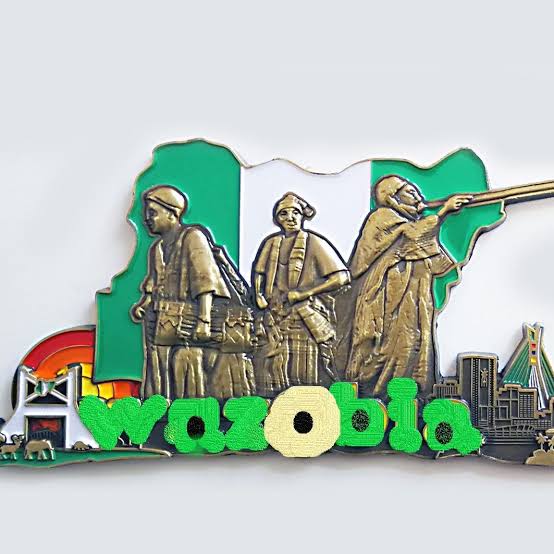
According to Otedo News, the name WAZOBIA was given by the late musician, Roy Chicago. The concept behind this acronym, was to enable the translation of news in the three major languages namely Yoruba, Hausa and Igbo from which dialects the word “come” was used for the coinage hence “wa,” “zo,” “bia,” are Yoruba, Hausa and Igbo respectively. In the light of this development, Otedo News further pointed out that by picking only these three ethnic groups, called in this paper “the wazobia trifecta,” the country discriminated against the other ethnic groups: 

And then Nigeria embarked on radio and television translation of news in what they called the three major languages, and sent all the other languages into the cooler, for them to groan and get lost, as if the country did not belong to them as well. This single action is what has led the country into its present doom of the “Federal Character syndrome,” (you must come from any of those three major languages and ethnic groups) to be heard, recognized and given reasonable political appointment no matter your talent and accredited professionalism. 

The above quote serves this paper like a sniper’s rifle lens from which to see the vista of our thesis namely that the wazobia trifecta is a gross form of injustice that is meted out to the other very many ethnic groups in the country. The Federal Character is designed to serve the needs of the trifecta while the others groan. While this is concerning, it is even more worrying that even within the trifecta there has always been a raging supremacy battle that has distressed and disunited the country over the years thereby making the notion of one Nigeria a mere myth. It is safe to say that national integration will remain a cerebral infrastructure or concept that may not be realized anytime soon as indices show.

CONTEXTUAL FRAMEWORK

Wazobia trifecta: The term trifecta has many shades of meanings but the one in line with the aim of this paper is that which defines it “as a set of three related things, often things that cause problems.” In the context of this paper, wazobia is a representative coinage for the three so-called major ethnic groups in Nigeria namely Yoruba, Hausa/Fulani and Igbo. Needless to say that they are the cause of Nigeria’s problems that has made national integration seemingly unattainable.

One Nigeria: One Nigeria is a concept that hopes for national unity, cohesion, harmony and integration. Being a country of over 350 ethnic groups, it is only natural that the citizens hope for unity and national integration for progress, development and prosperity. This is significant and of colossal magnitude especially given the fact the all these ethnic groups were amalgamated by a colonial fiat for ease of imperial governance. This means that Nigeria was conceived and birthed in selfish circumstances hence the need for oneness and togetherness. But can the rogue activities of the wazobia trifecta yield one Nigeria?

The rest of the Citizens: This is a representation of the minority ethnic groups. Of the more than 350, when the trifecta is subtracted, then the rest of us is what remains. Accordingly, wherever this phrase is used in the paper, it means the minority groups and wherever the trifecta is used, it means the majority groups. How do the activities of the trifecta affect the rest of us? Is there any possibility for one Nigeria, as a consequence of these activities and how can national integration be achieved?

OBJECTIVES

The objective of this paper is to:

  1. Interrogate if “one Nigeria” or national integration is a myth based on the activities of the trifecta.
  2. To ascertain the level of disintegration in Nigeria as it concerns ethnicities.
  3. To proffer solutions for national cohesion, harmony and integration.

LITERATURE REVIEW

Tess Onwueme, a Nigerian playwright, uses wazobia as a personification, or the protagonist character, in one of her plays titled ‘Wazobia.’ Wazobia was nonconformist to her community customs that she feels engender injustice against her female gender and became the voice of the voiceless in the process. While this character in the play symbolizes what the concept of wazobia could have been, it is pertinent to state that the contrary is the case. Rather than serve as the centre of gravity to pull other ethnicities together for justice and equity, the trifecta has been in the front burner of injustice and annexation of other minority ethnic groups within their catchment areas.

Agbajileke pointed this out in his article “Losing our identities to major ethnic groups in Nigeria” when he argued that the wazobia trifecta has succeeded in subsuming other ethnic groups under their hegemony. For example, in the south-south, the Urhobo, Isoko, Edo/Bini, among others are culturally subsumed under the Yoruba ethnic group as many of them bear Yoruba names. In the Middle Belt, efforts are still on for the religious and political annexation of the very many ethnic groups here under the Hausa/Fulani hegemony. One of the authors, as a Tiv man, traveled to Adamawa state few years ago, upon introducing himself, his host immediately called him the ethnic slur “nyamiri,” a derogatory reference to the Igbo ethnic group. While in the East, he was called “onye Hausa.” This points to the fact that the Middle Beltan and other minority peoples are fast losing their ethnic identities to the wazobia trifecta.

Kalu argued that in Africa, especially Nigeria, people tend to pay allegiance to their ethnic group rather than the country and this has succeeded in eroding or depriving the country of national integration or cohesion even as political parties are formed based on ethnic ideologies. Nigeria is known for its notorious gravitation towards ethnic and religious cleavages, the trifecta exploit this for their advantages. Whenever an election cycle comes in, it is common to hear them argue that this time Nigeria must produce a president of “Igbo, Hausa/Fulani or Yoruba extraction.” Nobody seems to argue for a “Nigerian president.”

For example, the 2023 presidential election, all the aspirants were members of the trifecta – Yoruba (wa), Hausa/Fulani (zo) and Igbo (bia). The minorities are always at the receiving end of the activities of the wazobia trifecta and because, the rest of the citizens are subsumed under their hegemony, it is difficult for us to be heard. Our voices are drowned amid the raucous clamour of the three. When will someone from the rest of us become the president of Nigeria based on merit and the fact of national integration  and not a recourse to ethnic bullying?

The trifecta is also the problem of this country and the reason one Nigeria is a myth. Adamu and Ocheni disarmingly postulated that the struggle for recognition and survival the ethnic groups in Nigeria influenced by the fear of domination by another ethnic group is a threat to national unity, integration and peaceful coexistence. According to them, “ethnic virus has been a dangerous cancer causing social crisis, political instability and threat to peaceful coexistence, unity and national integration of Nigeria as a nation.” 

This scenario had already been described and decried by Chinua Achebe in his book, There was a Country. Achebe pointed out the pettiness of the trifecta emphasizing the unprecedented rapidity in economic and educational attainment of the Igbo and Yoruba ethnic groups in the late 19th and early 20th centuries which led to their dominance in both the education ministry and civil service. This elicited uneasiness from the other majority ethnic group and what followed was lamentable:

The ply in the Nigerian context was simple and crude: Get the achievers out and replace them with less qualified individuals from the desired ethnic background so as to gain access to the resources of the state. This bizarre government strategy transformed the federal civil service, corporations, and universities into centers for ethnic bigotry and petty squabbles. 

Achebe further expressed dismay when he stated ethnic persecution, hate and resentment was created and sanctioned by unscrupulous self-serving politicians resulted to terminations and dismissal of Nigerian citizens from civil service based on their ethnicity. According to him “in Nigeria it bred resentment and both subtle and overt attempts to dismantle the structures in place for meritocracy in favor of mediocrity, under the cloak of a need for “Federal Character” – a morally bankrupt and deeply corrupt…” 

Achebe was right to describe the federal character as “morally bankrupt and deeply corrupt” because this has tended to favour only one of the trifecta – the Hausa/Fulani of the far north. Over the years, employment, appointments and admissions into federal government establishments and schools have clearly showcased this. For example, in this present Buhari’s administration, all the security heads are Fulanis or some far north indigenes at the expense of other ethnic groups.

Adegbami and Uche expressed the same sentiments when they asserted that despite the fact that Nigeria is a state of multiple nationalities it is “still be seen peripherally as a nation with tripodal ethnic structure with the trio of Yoruba, Hausa/Fulani and Igbo constituting a pole each in the unceasing struggle for political and economic resources of the nation. The existing cleavages… metamorphosed into a… hydra headed monster tormenting and straining the nation’s political developments” adding that “the alliances and coalitions between/among political parties to have overall majority needed to win election(s) are based on ethnic sentiments and ethnic gang-up.” 

This is exactly what is happening concerning the presidential ticket of the All Progressives Congress (APC) where both the presidential, Bola Tinubu and the vice presidential, Shettima are both Muslims and from the trifecta. The same can be said of the Peoples Democratic Party (PDP) ticket on which Abubakar Atiku, a Fulani is running as the presidential candidate with Okowa, vice presidential candidate of Igbo extraction from the south. All these alliances do not take into cognizance the plight of the minorities who are only used as pawns to win a political chess game.

Nigeria is deeply enmeshed in the unfortunate dichotomy of otherliness – “them” and “us,” which find expression in “our own,” or “our time.” These sentiments have gone to extreme lengths in supporting mediocrity and corruption as long as the one perpetrating it belongs to “our ethnic group.” For example, during the Goodluck Jonathan administration, there were serious resentment that morphed into agitations, protests and strikes that were organized by the members of the trifecta against his politics especially concerning security and energy.

During his administration, fuel pump price was N65, subsidy was to be removed; about 200 Chibok secondary school girls were abducted by Boko Haram and other insecurity situations. National protests were organized some held at Ojota in Lagos led by Wole Soyinka, Tunde Bakare of Yoruba stock and others against fuel subsidy removal; at Abuja was the Bring Back Our Girls sit in protests that even attracted international ridicule of the Jonathan administration. This led to Jonathan losing his reelection bid in 2015 ushering in the Buhari administration.

Today, fuel pump price is over ₦600 naira; insecurity is rife as bandits and Boko Haram are terrorizing major cities, killing, sacking villages and kidnapping for ransom all over Nigeria. Herdsmen believed to be Fulani militia taking over ancestral farmlands in the North Central and other regions, Unknown gun men in the eastern part of the country; fuel subsidy is said to be removed, yet there is no single agitation or protest against these. The only explanation is that Muhammadu Buhari belongs to the trifecta while Jonathan was one of “the rest of us” – a minority.

Similarly, Umezinwa, in his deposition, tied Nigeria’s underdevelopment to a handful of factors, prominent among them is ethnicity. In the vista of his paper, he gravitates towards the conclusion that development will continue to be elusive to Nigeria because of the lack of cohesion, harmony and integration among the ethnic groups. This implies that the mantra of one Nigeria is a myth; as the unity that could have influenced its attainment is buried in the bottomless pit of sticky clay of ethnic strife orchestrated by the trifecta against the rest of us. He magisterially concluded, like others that this problem is caused by “the desire to dominate or the fear of being dominated by other ethnic groups.” 

Rindap, writing from the perspective of the rest of the citizens – as a minority herself, asserted that even though the out-cry of the minorities concerning political, ethnic and economic marginalization by the trifecta had led to the creation of states and local government areas as a solution, the problem has continued to veer its head and remains till today. This is so because the trifecta has not relented in their efforts at dominating the polity and reaping everything for themselves. She contended that “at the vortex of the ethnic minority question is the disenchantment with the structure of the Nigerian federation perceived by the ethnic minorities to be skewed in favour of the three dominant ethnic groups by the three ethno-regional blocs: Hausa in the North, Yoruba in the West and the Igbo in the East. For the ethnic minorities, the federation is not inclusive and this results in political, economic and cultural marginalization.” 

It is believed that the seed for this ethnic strife was sown in the first republic when political parties and regions were built around religions and leaders that were selfish and naïve. In the 1964 elections, three major regionally based and tribally sustained political parties came existence. The major competitors were the Northern People’s Congress (NPC), Hausa in the North, the Yoruba and Action Group Party (AG) in the West, and the National Convention of Nigerian Citizens (NCNC) and the Ibo in the East. There were also the virile but minority ethnic groups such as the Bini and Urhobo in the Mid –West, the Tiv and Idoma in the Middle Belt and others in the Calabar-Ogoja-Rivers (COR) area. (The main-stay of the NPC whose motive was the consolidation of Northern hegemony) .The United Progress Grand Alliance (UPGA) formed by the National Council for Nigeria and Cameroon (NCNC) and Action Group (AG), Northern Elements Progressive Union (NEPU), and the United Middle Belt Congress (UMBC) was to halt hegemony. This trend still continues today.

While the trifecta seek to dominate at the national level, at the states level, there are some ethnic groups that dominating others. Benue state is a classical example. The Tiv people have dominated other ethnic groups since the creation of the state in 1976. The office of the governor of the state rotates between the two senatorial districts of the Tiv people while the Idoma take the deputy. The Idoma in turn dominate the Igede ethnic group as the vicious cycle continues.

 In the same vein, Emoghene and Okolie having conceded that Nigeria’s problem emanates from its multiple ethnic nationalities argued that “federalism is arguably the suitable framework for addressing ethnic, cultural and religious pluralism in a complex society like Nigeria. In such system, each region or state is allowed to control its resources and develop at its own pace. However, Nigeria who claims to run a federal system of government operates the opposite and does not recognize the identities, interest and needs of the people especially the minorities. The nation’s constitution does not reflect the wishes of the people; most government policies are anti-people and do not engender national integration and cohesion.” 

METHODOLOGY

This paper adopted exploratory and analytical method. The authors explored extant literature that included online journals, newspaper articles, news bulletins, campaign releases among others. The choice of these methods is because the area of study for the paper is still a progressive one and because they best describe the existential realities of the people for their lived experiences, the authors inclusive. Personal experiences and observations of the authors were also put into use.

FINDINGS

Findings show that Nigeria has a problem. This problem is lack of national integration. And this problem is largely perpetuated by the wazobia trifecta. The trifecta is afraid being dominated by one of them. This fear has made them employ and deploy all sorts of tactics to stay in power and control the rest of the ethnic groups. Other ethnic minorities are subsumed under some of them. The example of Edo people bearing Yoruba names and even living the Yoruba culture, comes to heart. In the so-called North Central region, many of the ethnic minorities have even lost their identities. People from other regions think that Tiv, Nupe, Berom, Igala, Ebira among others are all Hausa tribes and all Muslims. 

The unbridled desire of the trifecta to always have access to and control national resources, they threateningly make alliances among themselves to a point that could be described as a gang-up. They brag about their numbers. For now, it is obvious that in the All Progressives Congress (APC), the Yoruba have allied with the North in order to secure votes to win the presidential elections. That is why their ticket is even religiously insensitive as their presidential and vice presidential candidates are all Muslims. The calculations are that because Bola Tinubu is from the West – Yoruba and Kashim Shettima is a northern Muslim, they are sure to get the numbers to win their election. Abubakar Atiku, who is a Fulani man just like Muhammadu Buhari, wants to succeed Buhari even though they are from the same ethnic group. How can there be national integration when this type of unmindful and total disregard to other ethnic groups is perpetrated?

The quota system is another way of legalizing selfishness and entrenching hatred, resentment and national disintegration. The north uses it every time to manipulate and cheat other ethnic group, confirming magisterially that Nigeria is built on the foundation of malfeasance. When it comes to political power, like the president, the north brags about their numbers and employ every subtlety to win. They tell everyone that it is all about competence and not religion or ethnic group, but when it is employment or admission into federal colleges or establishments, they invoke federal character or quota system.

No doubt, this has caused resentment and hatred among Nigerians and the divisions are becoming wider and wider by the day. Interactions among Nigerians are filled with angst, anger and indescribable hatred. Ethnic and religious slurs are directed at one another in a way that betrays deep rooted hatred for each other. The trifecta cares little about the harmonious coexistence of Nigerians because they benefit from the divisions. They get to power through pitching Nigerians against themselves and this is why one Nigeria will continue to be a myth. It will continue to be a concept and an ideology the trifecta will continue to reference when they want to exploit the rest of us to satisfy their lust for power.

RECOMMENDATIONS/SUGGESTIONS

All said, this paper makes the following recommendations/suggestions:

  1. Given that the colonialists brought Nigerians together without their say so and since then there not been national unity, it will serve the country better if a referendum is held to decide how this country will move forward. A referendum will set the parameters and define rule by rule and line by line how we are going to live together in this country. The present constitution is not people oriented but designed to benefit some tribes among the trifecta at the expense of the rest of us. A referendum should produce a constitution enacted by the people’s representatives.
  2. The present system of government, the so-called federal system of government in which the winner of election, especially the president, takes all and given maximum powers to a point of being like a god, should be discarded for ethnic federalism. By ethnic federalism, ethnic groups will be autonomous and will control the resources within their borders and pay corresponding taxes to the government at the national level. If this is implemented, it is our belief that religious and ethnic strife will be history. 
  3. Power should reside with the people not a chosen few who hang on to it and manipulate their ways to continue to milk the country’s resources for their personal aggrandizement. If this happens, citizens will learn to be patriotic. It will not be about “us” against “them” but “us” for “us.” Every one of us will see Nigeria as our project, our country and not from the selfish perspective of it is our time, Tinubu’s emi l‘okan
  4. The quota system or federal character should be abolished. This is used for the benefit of only the north, a policy that is carried out due to the fear of the north being dominated by other ethnic groups. 

BIBLIOGRAPHY

Achebe, Chinua (2012) There was a Country: A Personal History of Biafra. London: Penguin 

Books Ltd.

Adamu, Abdulrahman and Ocheni, Danladi. “Ethnic Politics and the Challenges of 

National Integration in Nigeria.” International Journal of Politics and Good Governance Volume VII, No. 7.2 Quarter II 2016 ISSN: 0976 – 1195, 2016

Adegbami,  Adeleke and Uche, Charles I. N. “Ethnicity and Ethnic Politics: An 

Impediment to Political Development in Nigeria.” Public Administration Research journal,  Vol. 4, No. 1 (2015) (https://ccsenet.org/journal/index.php /par/issue/view/1202, DOI:10.5539/par.v4n1p59 (https://doi.org/10.5539/par.v4n1p59)

Adetiba, Toyin Cotties and Rahim, Aminur. “Between ethnicity, nationality and 

development in Nigeria.” International Journal of Development and Sustainability Online ISSN: 2186-8662 – www.isdsnet.com/ijds Volume 1 Number 3 (2012): 656-674 ISDS Article ID: IJDS12092603

Agbajileke, Owede. “Losing our identities to major ethnic groups in Nigeria.” thecable.ng, 2022

Diamond, Larry. Class, Ethnicity and Democracy in Nigeria: The Failure of the First 

Republic. Houndmills: The Macmillan Press LTD, 1988

Emoghene, Aghogho Kelvin and Okolie, Ugo Chuks. “Ethnicity, Religion, Politics and the 

Challenges of National Development in Nigeria.” Journal of Public Administration, Finance and Law,  Issue 18/2020

Kalu, Peters. “Political Parties and Ethnic Politics in Nigeria.NG-Journal of Social 

Development, Vol. 5, No. 2, January 2016, www.arabianjbmr.com/NGJSD_index.php 

Otedo News “Origin of WAZOBIA as Majority Language in Nigeria.” Radio Oseghe 

Edo, otedo.com, 2009

Rindap, Manko Rose. “Ethnic Minorities and the Nigerian State.”   An International 

Journal of Arts and Humanities (IJAH) Bahir Dar, Ethiopia Vol. 3 (3), S/No 11, July, 2014: 89-101 DOI: http://dx.doi.org/10.4314/ijah.v3i3.8

Umezinwa, Cletus. “Ethnicity and Nigeria’s Underdevelopment.” 

http://dx.doi.org/10.4314/og.v9i1.11 

Worugji, GE. “Redefinition of the Position of Women in Osonye Tess Onwueme’s Play 

“the Reign of Wazobia.” Lwati: A Journal of Contemporary Research, Vol. 7 No. 2 (2010). DOI: 10.4314/lwati.v7i2.61070
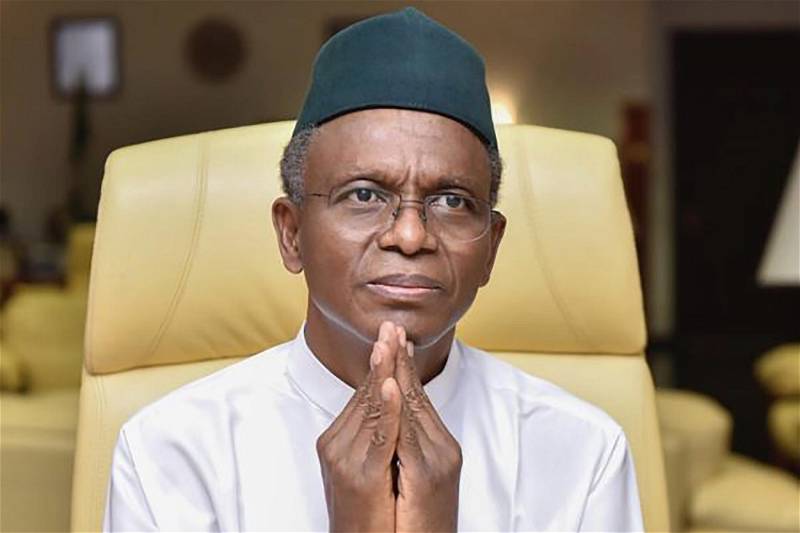
The Botched El-Rufai’s Ministerial Confirmation

Out of the 48 ministerial nominees sent to the Senate for screening and confirmation by President Bola Ahmed Tinubu, Mallam Nasir el-rufai, the immediate past governor of Kaduna State failed to make the final list. His problem begun when Sunday Karimi, the Senator representing Kogi West Senatorial District waved a petition bothering on security against the former.

At that point it was clear to El-Rufai himself that he was at a cross-road as he sought the leave of Senators to address the issue. However, the Senate President Godswill Akpabio seemed to have saved the situation by emphasising that even if there was a petition against the nominee, it was not within the ambit of the Senate to discuss a petition not before it.

At the end of the close-door-session, the Senate emerged without the name of El-Rufai on the confirmed list. His rejection by the Senate has become a topic of national discourse since then. In fact, the news of his non-confirmation was received with mixed feelings.

Prostatitis Symptoms? They Will Disappear in 3 Days!
Xenoprost | Sponsored
1 Tablet in the Morning Clears Blood Vessels and Achieves 120/80 Blood Pressure in 7 Days! Available at Pharmacies
ST Heart | Sponsored
credit icon
El-Rufai’s supporters have risen in defence of their man detailing his stand and support for Tinubu in time of political need. His performance as the former minister of the Federal Capital Territory (FCT) was also an achievement always on the table whenever it matters to El-rufai. They also brandished his sterling performance in infrastructural development especially road construction in Kaduna as major achievements.

These are reasons behind El-Rufai’s botched ministerial confirmation. First, fear of his duplicity and proclivity to manipulate. The original Tinubu loyalists from the days of Alliance for Democracy (AD) would not accommodate the likes of El-Rufai who is seen as a wolf in sheep’s clothing.

Second, strategic positioning for power and permutations ahead of 2027 within the north was said to have worked against El-Rufai. The likes of the Vice President Kashim Shettima, George Akume and Nuhu Ribadu would like to leverage on their positions to consolidate their powers, thus, would not like strong contenders or obstacles to their aspirations.

Stories were rife on how he allegedly betrayed his benefactor – former Vice President Atiku Abubakar who raised him from the ashes of obscurity to political lime light. As the Chairman of the National Council on Privatisation, Atiku appointed him the Director–General of the Bureau of Public Enterprise (BPE) but when succession drama between Olusegun Obasanjo and Atiku brewed, El-Rufai pitched tent with Obasanjo.

At the end, Obasanjo summed up the man El-Rufai thus in his book, My Watch Vol.II, “Nasir’s penchant for reputation savaging is almost pathological. Why does he do it? I recognised his weaknesses; the worst being his inability to be loyal to anybody or any issue consistently for long, but only to El-Rufai. He barefacedly lied which he did to me against his colleagues and so-called friends. ….”. His high handedness is second to none. Nobody says no when El-Rufai has said yes despite how reasonable. To conclude that he is arrogant and wielded authoritarian powers even in democracy is to say the least.

Since 2003 when he became the minister of FCT, El-Rufai has capitalised on taking undue political advantage of situations to enrich his political resume. Before 2023, he was one of the closest allies of Muhammadu Buhari who sources say nursed presidential ambition. In fact, he was a latter day apostle of Tinubu’s candidacy.

The precarious security situation in Kaduna which led to the death of at least 1,266 and kidnap of 4,973 persons in one year according to sources was the last straw that broke the Carmel’s back. His nonchalant attitude to the incessant killings and kidnapping of innocent travelers along Kaduna-Abuja expressway with little or no effort to tame it was an established case of negligence.

Numerous attacks on communities in Southern Kaduna by terrorist groups and bandits known to be of Fulani ethnic nationality and his indifference to their plight was one sour point of his administration. Petitions bothering on human right violations against him were rife. The killing of over 300 Shi’ia members in Zaria in 2015 under his watch has continued to reverberate.

Many court cases challenging demolition notices government served communities, land matters and seized or destroyed properties of individuals are legal issues he had left behind for the new administration in Kaduna to sort out. His penchant for demolishing what he called illegal structures, new communities, schools and rationalisation of the state civil service will continue to bear witness against El-Rufai.

Nothing last forever not even our lives. Mallam Nasir El-Rufai has straddled the political firmament of Nigeria like a colossus for over two decades. Apart from beneficiaries of El-Eufai’s hegemony and those who pick crumbs from his political table, street opinion of good governance if carried today will not favour him.

People take note and often refer to the role one plays to raise or destroy the political fortunes and profile of leaders at one point or the other. Therefore, becoming relevant in a new political dispensation is determined by how people view your take on power, position and authority. How those you vilified or crushed with power at your disposal years ago on account of your influence and position see you today matters.

There is always a payback time. The fate of El-Rufai today is a compensation for his good deeds of yesterday. Being in position of authority is a trust to do good to all without fear or favour. Political power is transient. What goes round comes around. That’s the way the cookie crumbled.

Eze, a Media and Development Communication Specialist wrote via: sunnyeze02@yahoo.com
08060901201

SOURCE: The Guardian

Unraveling the Islamization Debate in Nigeria: Understanding Perspectives, Extremism, and the Secular State 

By

Patrick Anum

For years, Nigeria has been engaged in discussions about the perceived threat of Islamization. This topic has sparked diverse viewpoints, with some dismissing it as mere conspiracy theories, while others express genuine concerns. 

Additionally, there are individuals within the Muslim community who view it through the lens of intolerance and Islamophobia. In my latest column for the Middle Belt Times, I delve into this multifaceted issue, aiming to shed light on the different aspects surrounding the Islamization debate. 

One observation I have made is that many Muslims in Nigeria adopt a defensive stance, which, in my opinion, is unnecessary. There appears to be a misunderstanding regarding the nature of what such a threat would most likely entail. 

While ordinary Muslims believe it to be the spread of regular Islam, those discussing it refer to fundamentalist doctrines that even Muslims in Nigeria may find hard to accept. Boko Haram serves as a significant case study, as it became too extreme even for Ansaru and Islamic State, leading to a breakaway. 

This highlights that these ideologies are not aligned with regular Islamic doctrines. And if a group like Islamic State cannot stomach these doctrines, how can one imagine muslims in Nigeria would fare? Many experts like Col Adewunmi have attributed this problem to a certain elite in the country while other experts have also attributed the deliberate efforts to keep the population uneducated as an avenue which creates a fertile ground for radicalism. 

Intolerance in our diverse society is an alarming indicator that society is veering off course. The Yoruba Muslims’ role in the 1979 constitutional drafting committee exemplifies the importance of replicating diversity and incorporating tolerance not just in society but also in politics. 

From a perspective of tolerance, we witness fewer individuals embracing the ideologies of the ’70s, which could be problematic in a multicultural nation like ours with an example being the defense of the Muslim/Muslim ticket in the just concluded 2023 Presidential elections. 

The rise of groups like ISWAP, Ansaru, and Boko Haram, with their growing local recruitment, underscores the consequences of unintentional educational policies in combating radicalism. I had the opportunity to speak with an Algerian Muslim who revealed that their government’s approach to extremism has been swift. 

In Nigeria, however, it festers due to the interests of certain elites who favor such an environment, and they are not shy about this fact. It is important to emphasize that this issue is nota debate about the Christians versus Muslims or Traditionalists and should not be viewed in these lenses; however it should be viewed as a conversation around combating the spread of radical ideologies.

Given Nigeria’s status as a secular state, it is crucial for Muslims to take the lead in ensuring that all ethnic gruops and people of diverse religious affiliations feel involved in society and governance and that the country remains non-aligned with religious organizations, be it Christian or Muslim. 

These issues if not adequately addressed have the potential to tear at the fabric of our nation. I still recall the sense of impending doom when Ibrahim Babangida secretly joined the OIC. President Buhari’s continued alignment with such organizations highlights the absence of steadfast moral codes among Nigerian leaders. It becomes evident that if there is no decentralization, there is a possibility that someone in power may seek to impose hegemony and implement radical ideologies favoring their faith or religion in the future considering the number of out of school children and high levels of illiteracy in the country. 

One troubling aspect of radicalism is that it often begins with targeting individuals of other faiths before turning on those within the same faith. This highlights the urgency of addressing this issue collectively. But more importantly, these fundamentalists being linked or allegedly sponsored by elite is worrisome in our country and Nigerians would need to have very serious and honest conversations about these issues going forward.

In light of the ongoing Islamization debate in Nigeria, it becomes imperative for all citizens to stand united against any form of radicalist ideology. The preservation of secularism should be our shared priority, transcending religious and cultural boundaries. 

This call to action stems from the realization that radicalist ideologies pose a significant threat to the peace and harmony of our diverse nation. It is crucial that we reject these extremist narratives and embrace a path that upholds our secular values. 

While acknowledging the existence of differing opinions on the Islamization issue, it is essential to distinguish between regular Islam and fundamentalist doctrines. Nigerian Muslims, who make up a significant portion of our population, often embrace Islam as a peaceful and inclusive religion. 

However, the concerns raised regarding Islamization are primarily directed at the propagation of radical and intolerant ideologies and must not be confused in any other regard. 

 As such, moving forward, we must use tolerance as a litmus test in accessing the health of Nigeria with no exceptions.

The Middle Belt people of Zaar in Southern Bauchi

By Patrick Anum

Recently, we have heard a lot about the killings in Southern Kaduna, but the media has once again seemed to ignore the killings in Southern Bauchi, where armed herdsmen attacks are responsible for scores of deaths every day. Only a few media outlets have been able to report on the atrocities taking place in the area.


The most recent incident that inspired this article occurred on January 22, 2023, at Gambar Sabon Layi in Tafawa Balewa local government of Bauchi State, where Daniel Dabwa was abducted and where four victims were gruesomely murdered.

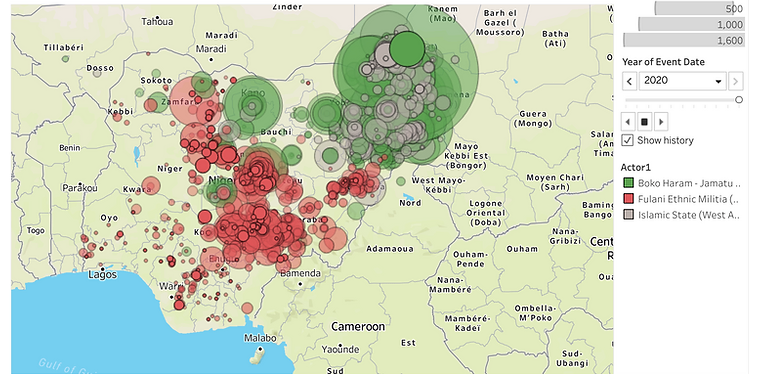
Heatmap of the non state actors and attacks by region (Credit: Genocide Watch)

But to understand the issues in Bauchi, there is a need to take a historic look at Bauchi State as a whole and the issues plaguing the Zaar people, where the former speaker of the House of Representatives, Yakubu Dogara hails from.


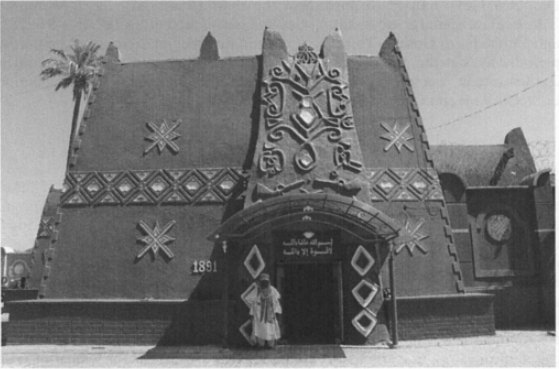
Bauchi was founded in 1809 by Mallam Yakubu one of the flag bearers of the Sokoto Jihad and was the first emir of Bauchi. They waged war on the non-Muslim groups in the area as they resisted subjugation.

The emir of Bauchi’s palace dated 1891

In recent times, questions of indigeneity have risen as the indigene/settler narrative continues to cause tensions. The Zaar through their historical account settled in the region from before 1345. When the Jihads begun in the 1800’s, they had a peace treaty with Yakubu, the founder of Bauchi however after the passing of Yakubu, the peace treaty was broken by Yakubu’s successors which led to oppression and in some circumstances enslavement of some of the people by the Bauchi emirate. This led to a hostile relationship between the Bauchi emirate and the Zaar people which is still ever present in Zaar consciousness according to Jimam Lar, a scholar and researcher on post-colonial Nigerian history at the University of Jos.

In recent times, in the area known as Southern Bauchi, the Zaar, are the largest Christian group in Bauchi State and their population is concentrated in the Tafawa Balewa, Bogoro and Dass federal constituency.

A Zaar couple

The first problem which is very obvious as is the case with other Middle Belt areas is that there has been intent to rename their areas to those of other ethnicities (particularly Fulfude and Hausa names). Tafawa Balewa means “black stone” in Fulfude – with Fulfude being the language of the Fulani ethnic group located in a few states in northern Nigeria.
The Zaar instead call their local government “Puji” instead of Tafawa Balewa which also means black stone but in their language.

We see this trend in other parts of the Middle Belt like Adamawa – where the name of the state was renamed to that of the Fulani jihadist “Modibo Adama” who was responsible for slaughtering the people of Adamawa in large numbers during the Jihad of 1804. And it is unimaginable that in the 21st century, mini colonialism is still ever present where others would try to dominate and rename the lands of others. This is the case of Tafawa Balewa in Bauchi State.

Reasons for the conflict have historic roots with the first being a breach of the peace treaty during the pre colonial period in Bauchi which led to conflict between Yakubus successors in the Bauchi emirate and the Zaar people.

The second arose during the colonial era according to Johannes Harnischfeger – when the British occupied Northern Nigeria and preserved the Islamic structure of the Hausa and Fulani groups in the old Northern region but attached the Non-Muslim groups (in this case the Zaar) to the emirate structure under the Fulani.

Other researchers like Adam Higazi and Jimam Lar have articulated that in recent times, Zaar leaders and organizations like the Sayawa council of elders and traditional rulers accuse the Bauchi state government of discrimination against the people of Southern Bauchi.

The problem persisted all through the colonial era since the Emirs had unlimited powers, as well as the right to distribute land and to collect taxes – this was another cause of conflict between the Zaar and the Emirates

Thirdly, in these emirates, the citizens were subject to Islamic courts despite being heathen/pagan (in the words of the British). This meant that Zaar were discriminated against in the old emirates.


It was so bad that a government commission in 1958 ascertained that Fulani judges dealing with criminal cases only admitted testimonies of male Muslim witnesses and in terms of compensation, christians and traditionalists were given only half or one-fifteenth of the amount that a Muslim could expect (Willink commission report)

By the 1950s, the Zaar had joined the UMBC – United Middle Belt Congress, the party of Northern Nigerian minority groups which had gone into an alliance with Awolowo’s Action Group (AG) and which was built on the quest to liberate ethnic minorities from the Emirate system – a move that the Hausa leaders point to as a cause for the Zaar’s recalcitrance.

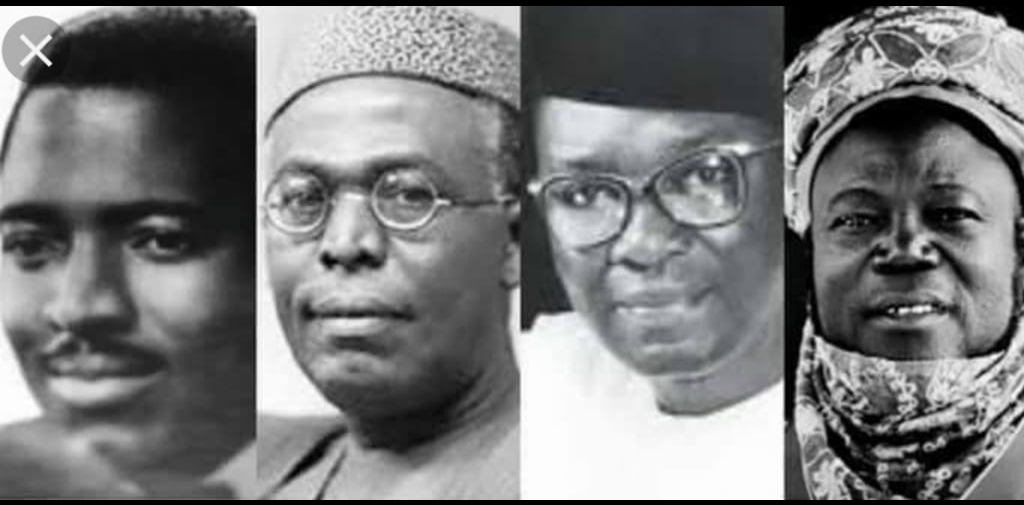
A photo of Joseph Tarka, Obafemi Awolowo, Nnamdi Azikiwe and Ahmadu Bello in the first Republic.

The Zaar have largely remained more culturally and politically oriented towards the Non-Muslim groups of Plateau and Southern Kaduna than towards the Bauchi Emirate. Due to this reason among others, they have therefore advocated for the creation of a lowland state which will encompass Southern Bauchi and Plateau States.


On the issue relating to disturbances plaquing the area, Southern Bauchi has witnessed violence at different times in Nigeria’s history.

Violence occurred in 1959, 1977, 1991, 1995, 2001 and 2011. The first case of conflict happened in 1959 which was low in scale but since the creation of Bauchi State in 1976 by the late General Murtala Mohammed, the conflicts quickly escalated and issues as to indigeneity arose.

Since then, the Zaar accuse the Bauchi state government of stripping social amenities away from their areas during interviews with members of the community. To emphasize this point, we were able to confirm that Tafawa Balewa was stripped of its status as a local government headquarters where it was relocated to Bula, the main centre of the Hausa – Muslim district.
The police divisional headquarters was also relocated to Bununu as unjustifiable reasons were given for this move.


In sum, the Tafawa Balewa conflict is defined by two key factors – the historic evolution of the relationship between the Zaar and the Bauchi emirate, a relationship they believe has made them second-class citizens on their land – and secondly, issues over indigeneity and the founding of Tafawa Balewa.

In the wake of the riots in 1991, the Babalakin commission of inquiry was set up by the then Military administration to look into the conflict. It made recommendations of which some have still not yet been implemented in totality. The first being the creation of a chiefdom for the Zaar people of Tafawa Balewa and secondly, the prosecution of the perpetrators of the violence during that period.

Zaar cultural festival, Tafawa Balewa where the Gung Zaar (paramount Chief was installed) but without being gazetted and without agreement from the Bauchi emirate (2nd November 2013).

Since 1991, there have been 10 governments in Bauchi and all, up to date have not implemented the recommendations of the commission of inquiry holistically. This has led a lot of analysts to see credence in what some of the Zaar people have said regarding the Bauchi State Government.

The former Governor Isa Yuguda created a Chiefdom but put its headquarters at Zwall and not Tafawa Balewa which was rejected by the Zaar people as not having complied with the recommendation of the various commissions of inquiry.

Of recent, the present Governor of Bauchi State, Bala Mohammed made the news for setting up a committee to look into the issue yet, like all governments before him, those words have been all smoke without fire.

The Zaar people in 2023 are still seeking the Chiefdom of their people and this issue is not unique to this area of the Middle Belt. We see the issue of chiefdoms as an important weapon that has been used to subjugate the Middle belt people by continuing age-long colonial policies where diverse groups instead of being granted their chiefdoms are being attached to emirates and even if they are being granted, are granted in part – and in areas away from where there are huge settlers which means that those settlers in the future could lay claim to these lands.

Another example is in Nasarawa where many groups such as the Tiv who have a whooping 11 wards have been deprived the right to have their traditional structures or chiefdoms. What this means is that they have to be under emirate rule in the state despite being largely traditionalists and christian.

We can also witness this unfolding in Southern Kaduna (the region of former Southern Zaria and not the Southern Kaduna senatorial district) where the current governor of Kaduna State has watered down most of the traditional institutions of other ethnicities whilst reinforcing his – or in specific instances where he has sent people from his ethnicity to be district heads to people of different ethnicities. As such, there must be a conscious effort to reject these attempts to deny or infiltrate the traditional structures of the Middle Belt people.

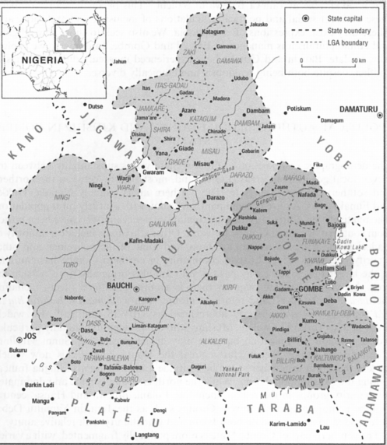
Bauchi State and environs

In conclusion, the most recurring theme in Nigerian political discourse is identity, ethnicity, traditional structures and land ownership. It is strange that settlers choose to have these debates with indigene Middle Belt groups when the 1958 Willink commission report showed the areas consisting of the different ethnic nationalities in present day Nigeria with little to no disagreement at that time. Infact, the then Northern regional government agreed with those mappings.

In the coming years, Nigeria will have to answer the indigene/settler question and the issue of minority rights as a whole. As for colonial documents and the intent behind migration during the colonial period, the British have clearly stated their reasons for importing groups into the geographical spaces of others. They site administrative expediency as the major reason.


The truth is that even the colonialists had a clear policy regarding the indigene/settler question and this could be used as a starting point when proffering solutions to these issues going forward.

As for the Zaar people in Southern Bauchi, the short-term solution should be the implementation of all commissions of inquiry reports holistically, a referendum regarding which State the Zaar people should belong to and the adoption of the said referendum.


From a regional perspective, a progressive step would be to adopt the Willink commission report regarding the creation of a Middle Belt region and the granting of autonomy to each ethnic nationality in the region.

Calls for State Police – A Middle Beltan Perspective


By Patrick Anum

Dr. Ifeanyi Okowa, governor of Delta State and vice-presidential candidate for the People’s Democratic Party (PDP), recently spoke at the Institute of Chartered Accountants of Nigeria’s (ICAN) 2022 annual conference in Abuja and offered a familiar position on the state of insecurity in Nigeria.

He recommended the adoption of state police as the solution for the growing insecurity in the country. The call for the creation of state police is not new. In September, the Northern Governors Forum along with the traditional leaders, made a strong case for the establishment of state police. They explained that it was the only way to effectively tackle the lingering terrorism, insurgency, banditry, kidnapping and wanton destruction of lives and property in the region.

In the past Southern Governors have also reiterated that State police is the only solution to solve the country’s security challenges. Rotimi Akeredolu, governor of Ondo and chairman of the forum, has said in the past that the forum would continue to demand the devolution of powers to the states.

To stress this need, there has been National dialogue to this effect. During the National Confab, Delegates on the June 26, 2014, adopted the resolution in support of the establishment, funding and operation of state and community police based on state laws. Of course, none of the confab resolutions were implemented.

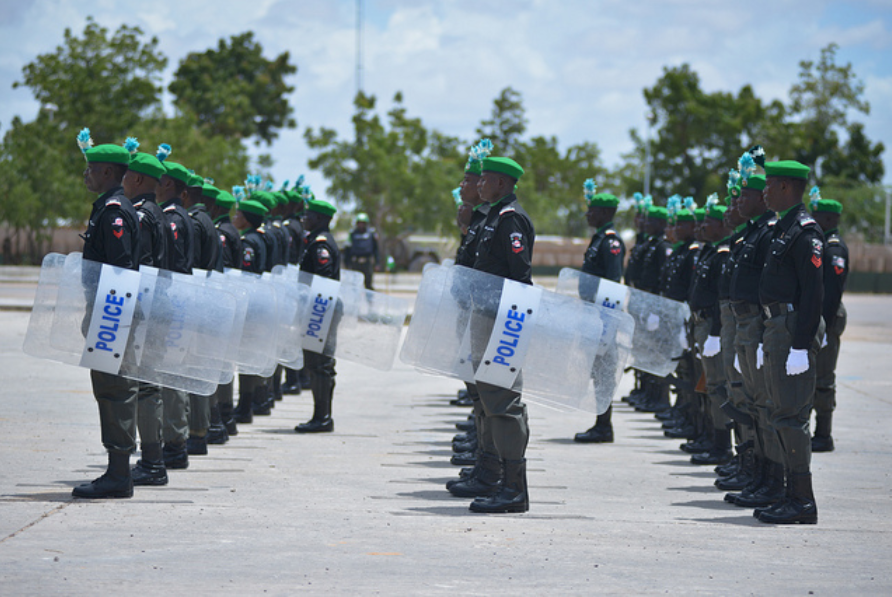
Nigerian Police officers

From a Middle Beltan perspective, purposeful consideration needs to be given regarding the establishment of state police because unless that is done, the conflict would only be partially resolved in various Middle Belt regions notably Benue, Kogi, Adamawa, Plateau, Taraba, and Nasarawa. It might, however, intensify the crisis in other areas given the histories and the colonial legacies still present in the Middle Belt.

Other regions of the Middle Belt including Southern Kaduna, Southern Gombe, Southern Bauchi, Southern Borno, Southern Kebbi and parts of Niger State could in this regard, benefit from having pre-implementation plans.

The pre implementation plans would identify the gaps that state policing would not fill, possible solutions and special strategies for implementation. An example of such implementation strategies could be the creation of more states in the aforementioned areas before the implementation of state policing apparatus.

However, if state creation is opposed by the other states, and state policing is implemented with the current structure, one can only speculate as to the mayhem that would ensue in a region like Kaduna, where tensions between the areas of Southern Kaduna and the North still exist.

The former President Olusegun Obasanjo had said in 1992 that the problems in Kaduna were attributed to historical and colonial legacies and as such, were complex issues. Many scholars have in light of these considerations advocated for state creation as a solution to the lingering conflict.

Additionally, giving non neutral persons who are state governors such powers could spell disaster in fragile Middle Beltan states.

Already there have been rising tensions between SOKAPU (Southern Kaduna Peoples Union) and El rufai, the Governor of Kaduna State.

SOKAPU and El rufai have traded blames over the causes of the conflict in Kaduna. However, a look at the activities in the state paint a picture as to if the Kaduna State Governor who is currently trying to intervene in the conflict is actually neutral.


The Governor of Kaduna State’s activities include demolishing the only Church in Kaduna State University despite the establishment of six (6) mosques in the area.

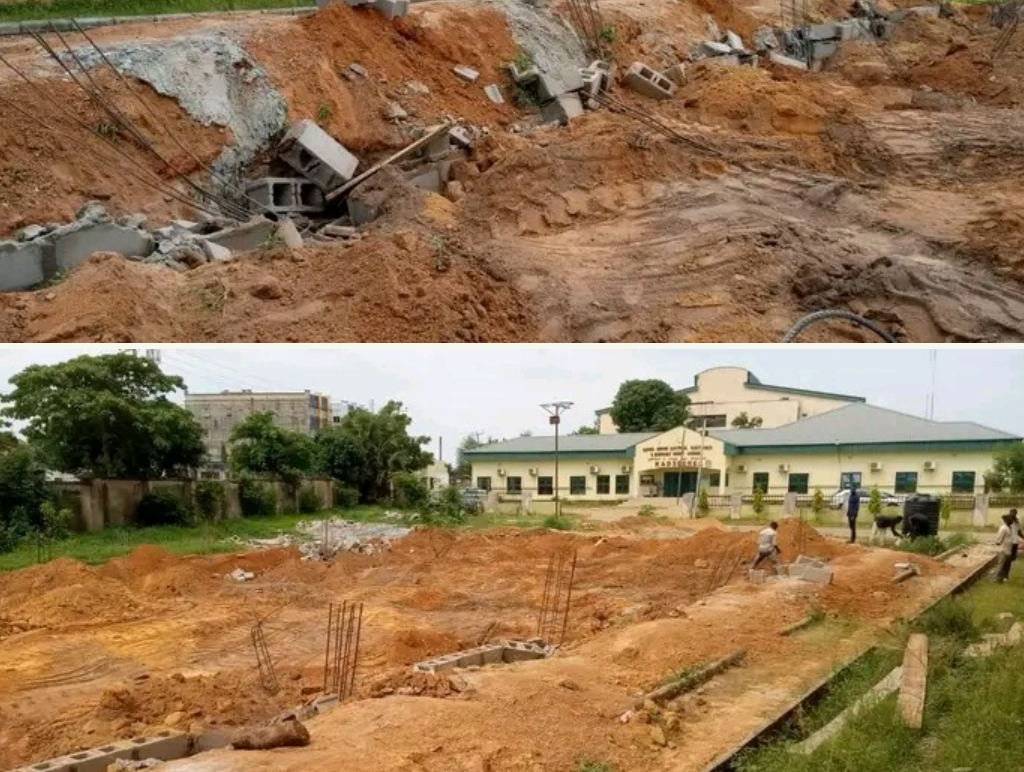
Demolished church in Kaduna State University

He has also reiterated that he used monies from state coffers to pay killers from foreign countries to stop murdering the people of Southern Kaduna while ignoring the possibility of collaborating with security agencies to arrest and detain marauding “foreign killer herdsmen” in his state.

Also, under suspicious circumstances, he has restructured the traditional system in Kaduna leaving people in southern  Kaduna marginalized in their own local governments.


Looking at the larger picture, not only SOKAPU have had issues with El rufai –

 In 2017, the Nigerian Union of Journalists declared Kaduna State “the most lethal state to practice journalism” and warned that “…such attacks( in the state) may not abate soon”.

At least ten journalists and internet commentators have been detained or imprisoned in Kaduna State under Governor Nasir Elrufai, including Jacob Onjewu Dickson, Midat Joseph of Leadership Newspaper, Luka Binniyat of Vanguard, and Steven Kefas an influential internet commentator. 

Abubakar Idris (also known as Dadiyata), a government critic who was kidnapped in August 2019, has not yet been identified either dead or alive. 

It is plausible that the people of Southern Kaduna are not overly hopeful about the prospect of the state policing model being a solution to insecurity in the region.

Gombe State also serves as another case study for the postulation as to why state policing under the current model would serve as a disaster.

It also provides insight as to what the capabilities of having state police might entail for the non-Muslim groups in these areas.

Due to the State Government’s persistent interference with the traditional structures in the State, there have been ongoing accusations from non-Muslim groups in the state regarding the Governor of Gombe, Muhammed Inuwa Yahaya’s authoritarian activities.

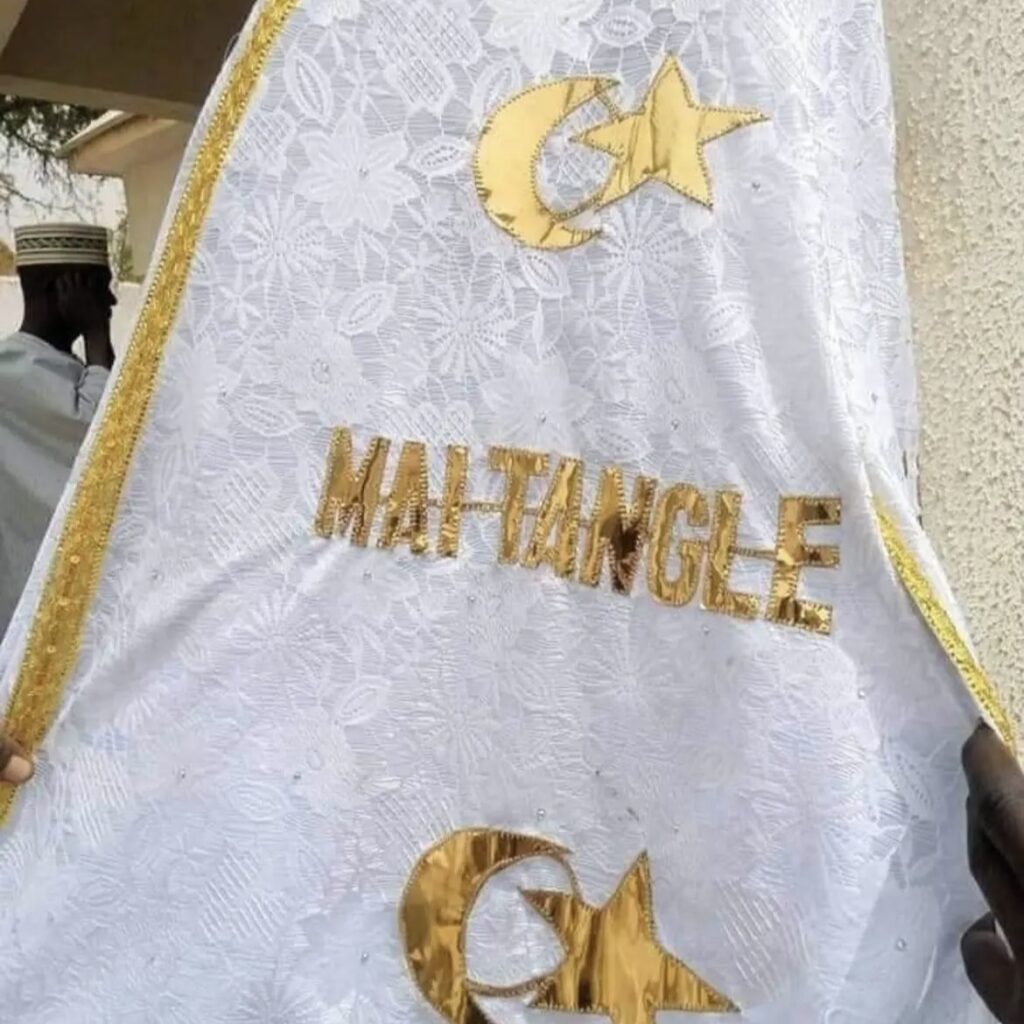
Despite coming from a completely different ethnic group, the State Governor Muhammed Inuwa Yahaya attempted to impose a different candidate from the one who had been selected to be the Mai Tangale by King makers in March 2021.

According to reports, members of the Tangale traditional council at the time had either been detained or forced to flee the state as protests sparked crackdowns that resulted in injuries and fatalities

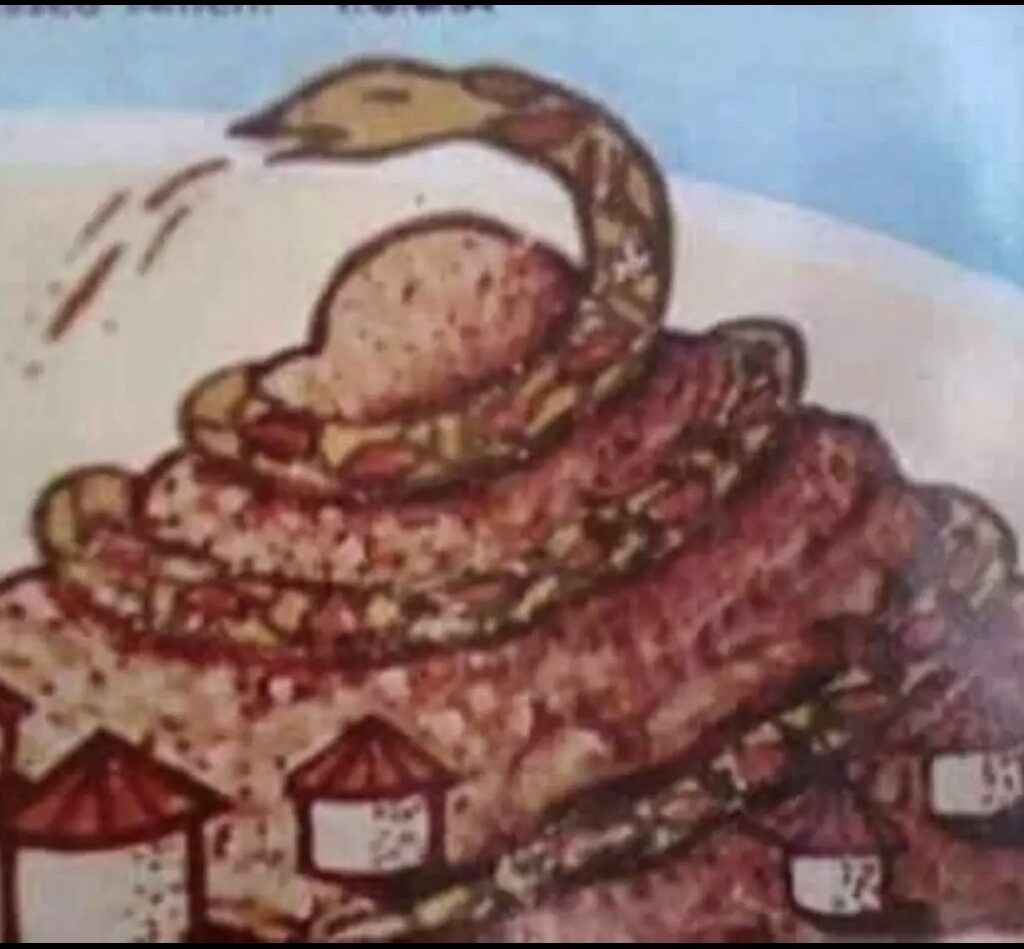
Another individual Alhaji Danladi Sanusi Maishanu whom the Governor tried to impose on the Tangale people had not even ascended the throne when he started making efforts to replace their cherished emblem which previously was (a snake  on a hill – with the moon and star emblem) signifying Islam.

The Tangale symbol

Proposed emblem by the imposed Mai Tangale

Critics have questioned whether this is the reason why Muhammed Inuwa Yahaya, the governor of the state, had shown such interest in who ascended the throne of the Tangale people.

Another example that illustrates this point would be happenings in Borno State, where we can analyze Kashim Shettima’s actions as former governor.

The Centre for Justice on Religious and Ethnicity in Nigeria had advised Nigerians not to support the All Progressives Congress in the 2023 elections considering the vice presidential nominees activities as the former governor of Borno State. This recommendation was made in an article by Sahara reporters.

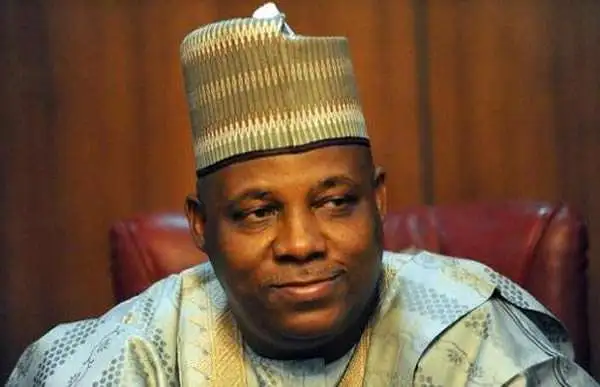
Kashim Shettima

The first concerning situation which arose was when Governor Shettima was in charge of Borno State and neglected to enforce the N18,000 minimum wage in the local governments that were predominately Christian.

On the other hand, all the northern and central Borno LGAs, where the Shuwa-Arab and Kanuri tribes are predominately Muslims and there are little to no Christians, he introduced the N18,000 minimum wage.

He refused to enforce the minimum wage in the nine local government areas (LGAs) in southern Borno, where the Kwana, Kibaku, Putai, Bura and others, make up around 85% of the Christians population in the area. 

Even when the Borno State Government sought to hire some judges, all applicants from the Southern region who were of Christian extraction were regrettably ignored.

When a Christian traditional ruler in northern Nigeria passes away, according to Reverend Kallamu Musa Ali Dikwa, “the governor influences, enforces, and appoints a Muslim to take over, attempting to restructure the traditional institution along Islamic lines.”

He increased the scope by mentioning how “Governor Ahmed El-Rufai of Kaduna State implemented same in Kajuru LGA. Mallam Musa Bello, FCT Minister equally did the same in Bwari area council and how now, they’re trying to enforce a Muslim on Eggon people in Akwanga, Nasarawa state.

The kidnapping of more than 200 Chibok schoolgirls, which gained international news, was the most damning indictment on Shettima.

Goodluck Jonathan, a former president, claimed on page 21 of his book “My Transition Hours” that Shettima was in his words, “terribly interested” in the SSCE exam of the secondary school students in Chibok at the time.

In addition, Kashim Shettima was so interested that they remain in the school and complete their final secondary school (high school) exams there that he disregarded the West African Examinations Council’s request to have the students sit in a more secure setting.

The previous president questioned why the former governor would be that interested in a single school’s SSCE exam.


He also questioned why the Governor, who lacked police authority, would guarantee protection, and he thought it would have been far more plausible if the Commissioner of Police had alternatively made such guarantees especially considering the fact that the Governor just serves as the police chief in name.

How a Governor could miss such a call also baffled him.

It should be noted that there has been significant pressure meted out on even independent state policy. For example, even in Middle Beltan states like Benue, which have been largely autonomous and where anti-grazing laws have been adopted, the current PDP presidential candidate Alhaji Atiku Abubakar and other northern elite have disagreed and fought against such policies with belligerence. The current vice Presidential candidate Alhaji Atiku Abubakar even went as far as arguing that such laws were against the freedom of movement of certain sections of people in Nigeria and was therefore unconstitutional.

If resistance to autonomous state policy can be this controversial, how much more could it be in instances where people with different worldviews were being forced to coexist in the same state with their harassers.

It should be stressed that, without the necessary restructuring, giving such aforementioned individuals more authority at state level could spell certain catastrophe for the indigenous nationalities of the Middle Belt.

Restructuring is required to give Middle Belt communities their own leadership, legitimate ownership of their land in areas where they are endangered by roving herders, bandits, militia, and restructuring could even solve the problem of authoritarian and repressive political regimes in these areas.

In conclusion, there needs to be pre implementation plans that provide adequate restructuring – before there can be any talk of state police enactment.

Restructuring groups in Nigeria along regional and civilizational lines could be a preferred solution, and in the case of the Middle Belt, this means adopting previous reports that call for the creation of independent states in Southern Kaduna, Southern Gombe, Southern Kebbi, Southern Borno, and sections of Niger, as well as their inclusion to other parts of the Middle Belt, as was the intention of the minority report in 1958.

The adoption of state policy could then be carried out – and would result in little conflict there after.

2023 – A Continuation of the Middle Belt & Southern Alliance?

By Patrick Anum

The early 50s, produced the greatest generation of Middle Beltan nationalists Nigeria had ever seen. The likes of Joseph Tarka, Akase Dowgo, David Lot, Patrick Dokotri, Solomon Lar and D. Dimka.

They championed the cause of the ethnic minorities in the Middle Belt. The earliest Middle Beltan struggle lead to rise in the consciousness of the Middle belt people and subsequently led to the creation of the Benue-Plateau State which captured some parts of the Middle Belt although excluding major areas that fall outside the North central to this day.

Nigeria’s Middle Belt areas

At the time, the Northern Regional Government defined the Middle Belt region in terms of its geography as:

The whole of Ilorin, Kabba, Benue and Plateau Provinces, the Southern parts of Bauchi and Zaria Provinces, the whole of Niger Province except for the area north of Kontagora town and the whole of the Numan Division of Adamawa Province together with the districts of Muri and Wurkun in the Muri division of the same province.

It was an attempt to detach themselves from the core North that led to these early agitations.

Decades later, ideologies and motives that led to the formation of the (Action Group – UMBC Alliance) would be at play in the 2023 Presidential elections where there seems to be a common ground between parts of the South South, South East, Middle Belt and even parts of the South West (despite the popularity of the All Progressives Congress in the region) regarding the candidature of the Labour Party Presidential candidate Peter Obi.

However, before the Peter Obi movement became wide spread, there was another movement calling for reform of the Nigerian police called EndSARS.

EndSARS was a largely decentralized movement calling for the reform of a unit of the Nigerian police force known as the Special Anti Robbery Squad (SARS) with a long record of abuse of Nigerian citizens mostly occurring in the Southern parts of the country.

Despite the Middle Belt regions not having that lived experience of Endsars, large parts of the Middle Belt, most notably Benue, Nassarawa, Taraba, Plateau, the FCT and parts of Southern Kaduna all came out in large numbers in solidary protests along side their counterparts from Southern Nigeria.

This was the first notable instance of Middle Belt – Southern solidarity in the 4th Republic.

The earliest case of Southern/Middle Belt alliance was in the first republic when the Middle Belt movement found solid ground in a political alliance between the UMBC (United Middle Belt Congress) led by Joseph Tarka and the Action Group (AG) led by Chief Obafemi Awolowo who led the dominant party in the Western region of Nigeria’s Southern province in the first republic.

According to a scholarly review of the alliance between the two parties by Andrew Barnes, the two factions joined forces because they had similar ideologies at the time. The Middle Belt was at the moment preoccupied with forging an identity distinct from the North and it was said that the AG offered them the perfect ideological platform/coalition to develop their ideologies, culture and goals.

Joseph Tarka and Obafemi Awolowo


The UMBCs goal were in 3 fold. (i) To fight against political domination and systematic exploitation of the peoples of the Middle Belt in the old Northern region (ii) To fight against forced Islamization of the entire peoples of the Middle Belt due to Ahmadu Bello’s forced conversion policies at the time (iii)To stop socio-economic discrimination of the peoples of the Middle belt.

Ironically, in 2023, the peoples of the Middle Belt and Southern parts of Nigeria would unite again to oppose the infamous “Muslim-Muslim” ticket and “North-North” ticket, much like they did in the 1950s when they opposed Ahmadu Bello’s “One North” policy and forced conversion campaigns.

It was equally as bad back then, probably if not worse because in 1964, when the late Ahmadu Bello spoke at the World Islamic League, he boasted in respect to converting 60,000 infidels. It was a bleak era especially considering how the late premier of the old Northern region enforced crackdowns that resulted in injuries and fatalities of the Middle Belt people in the old Northern region, had repeatedly referred to the 1804 Jihad and emphasized the uniform continuity of the NPC Government and the former caliphate.

On the successes of the UMBC, they would later go on to clinch seats in the federal elections making them a stakeholder at national politics.

The second case of Southern and Middle Belt alliance would be in the second Republic when the Late Dr Nnamdi Azikiwe’s party -Nigeria’s Peoples Party won in the old Plateau State (Now Plateau and Nasarawa States) in the 1979 election, beating the eventual winner Shehu Shagari of the NPN, National Party of Nigeria.

Although Obafemi Awolowo, who also came Second in the election did not win any state in the region, he got a decent 21% in the old Gongola States (Now Adamawa and Taraba States)

Fast-forward to the start of the 4th republic in 1999 and there were no “clear” signs of an alliance. What would change all of this would start following the release of a video purporting to show the murder of a man by the infamous Special Anti-Robbery Squad (SARS).

This would spark what became known as the #EndSars protests where tens of thousands of young Nigerians in the Southern and the Middle belt parts of the country would take to the streets to protest against police brutality

EndSARS Protesters


The demonstrations, which shook the nation for two weeks, forced the government to disband SARS and establish judicial panels of inquiry to look into the numerous claims of police abuse.

The federal government mandated an investigation into the abuses in all 36 of Nigeria’s states including the nation’s capital.

Borno, Jigawa, Kano, Kebbi, Sokoto, Yobe, and Zamfara were the seven states that were unwilling to cooperate and to the dismay of many from the Middle Belt and South, neither these areas in the core North held any EndSARS protests. Nonetheless, Middle Belt youths organized demonstrations, particularly in Benue, Plateau, Taraba, Nasarawa, and Southern Kaduna and adequately bridged the gap.

In reality, these actions were sufficient considering the fact that the alliance attracted the attention of respective state governments and raised the stakes for the federal government.


Kenneth Jande, one of the organizers of the Middle Belt protests, spoke to Sahara reporters in Jalingo, Taraba State, and argued for comprehensive police reforms to address the security issues rather than a name change from the Special Anti Robbery Squad to the Special Weapons and Tactics team, as the Nigerian police had attempted to do at the time.


Another Middle Beltan protestor in Benue, Ukan Kurkugh told Vanguard that in solidary with the youths in other parts of the country, they (Middle Beltan youths) in the region had declared to have the police disbanded and to have the police reformed to ensure security of lives and property.
These examples and many more were part of events in the Middle Belt.

Memorable scenes like that created nostalgic feelings in relation to the UMBC (United Middle Belt Movement) in the 1950s with a young Joseph Tarka who at only 25 years of age at the time, led the historic merger and fight for the peoples of the Middle Belt after being elected leader of the party in 1957.

Reading these accounts of the Middle Belt’s struggles brought back vivid recollections of the several young leaders from the old area who were fighting for their rights and achieved emancipation for most parts of the Middle Belt.

These scenes would morph into political agitations as the 2023 elections drew nearer. The EndSARS generation of young Nigerians would play a big role in promoting the candidature of Peter Obi, the presidential candidate of the Labour party as well as him being seen as a renewed hope for the “Sorosoke” generation (a yoruba word meaning to speak up).

Peter Obi would be projected to win most States of the Middle Belt such as Plateau, Benue, Taraba, Nasarawa and the FCT. He is also piped to win 25% in other parts of the Middle Belt like Borno, Kebbi, Niger, Bauchi, Gombe, Adamawa, Kogi and Kwara States.


Youths in the Middle Belt are mobilizing and going into their communities to support Peter Obi using their own resources.
There are many office spaces that have been rented and mobilization has begun in all the aforementioned areas.


The question of whether this is the start of an ongoing alliance between both groups and whether future movements can call for the necessary restructuring, resource control, autonomy for each region would be answered in the coming months.

The Middle Belt’s most crucial concern is whether or not they will be able to achieve the much-needed regional restructuring that would include all of the region’s areas in what Dele Ogun calls the “orange union”. The other two issues are the restructuring of lands being grabbed in the area and state police in light of the ongoing genocide happening in the region.