The Ministry of Solid Minerals Development is celebrating record revenue but the available data suggests the money is coming predominantly from licence fees rather than from mines. The pattern, if confirmed by full-year data, would reveal a regulatory regime that may be pricing out legitimate investors, driving production underground, and suppressing the royalties Nigeria desperately needs. Granular verification is hampered by the absence of comprehensive public data — a transparency failure that is itself part of the problem.
Special Report | Nigeria Mining Monitor
Nigeria’s solid minerals sector generated N68 billion in revenue in 2025, a figure that Minister Dele Alake’s team has trumpeted as proof of a transformed industry. The headline may be accurate but the story behind it is not the one being told.
A reading of the government’s own data, cross-referenced with international trade records and fee schedules from Australia and Canada, raises serious questions about whether this sector’s revenue growth is built on administrative charges rather than productive mining. Royalties — the income stream that actually reflects minerals being mined, processed, and sold appear to remain a structurally suppressed component of total collections. Meanwhile, the Ministry’s fee policies appear to have created conditions that systematically favour illegal operators over legitimate ones, shrunk the pool of formal licence holders, and allowed substantial volumes of minerals and metals to leave the country without confirmed royalty payments. Due to limitations in the granularity and timeliness of data published by the Mining Cadastre Office (MCO) and the Ministry, full verification of the scale of these problems is not currently possible. This opacity is itself a governance concern.
Taxing the paperwork, not the production
In a well-functioning mining jurisdiction, royalties dominate revenue. They are, by definition, the state’s share of its natural wealth — calculated as a percentage of the value of minerals actually extracted and sold. Licence fees are secondary: legitimate cost-recovery for administrative services. Nigeria’s available data suggests this logic has been inverted — though the absence of a consistent, publicly published annual breakdown of fees versus royalties prevents a definitive structural conclusion.
In December 2025, the Ministry’s own FAAC submission recorded fees of N2.59 billion against royalties of just N1.58 billion — meaning fees accounted for approximately 62% of that month’s solid minerals revenue. This is the most recent month for which disaggregated data is publicly available. The Ministry does not consistently publish monthly or annual revenue breakdowns distinguishing fees from royalties across the full year, making it impossible to confirm with certainty whether December’s ratio is representative or exceptional. The available partial-year data suggests the pattern is broadly consistent across 2025, but the MCO’s data collection practices do not permit the kind of longitudinal verification that would put this beyond reasonable dispute. For a country sitting atop gold, lithium, tin, and dozens of other commercially significant minerals, even a single-month ratio of this kind is a governance alarm bell.
The royalty problem is compounded by how royalties are calculated. Nigeria’s official “approved market value” for each mineral, the base on which the royalty percentage is applied appears not to be updated to reflect actual market prices. Based on analysis published in November 2025 by Regan van Rooy, a specialist in Nigerian mining royalty valuations, the approved value for gold is approximately USD 750 per ounce. If this USD 750/oz benchmark remains operative, or anything close to it, the gap with market rates is extraordinary: the London spot price in late 2025 was approximately USD 4,138 per ounce. Even if every gold miner in Nigeria declared every gram honestly, royalties would be collected on less than one-fifth of the mineral’s actual worth. Whether this results from deliberate policy, administrative inertia, or a failure to update administrative instruments in line with market movements, the practical outcome is the same: the royalty base is structurally disconnected from real values.
Related Fact: 62 % is the Proportion of December 2025 solid minerals revenue derived from administrative fees, not production royalties, based on FAAC submission data. In a well-governed sector, this ratio should be significantly reversed. Full-year disaggregated data is not publicly available to confirm whether this month is representative of the annual pattern.
The July 2024 fee shock: a revenue surge with a hidden ceiling
On 4 July 2024, Minister Alake announced sweeping new rates across 268 items in the mining sector. The Mining Lease annual service fee jumped to N1,250,000. A new Mining Lease application was pegged at N3,000,000. Exploration licence fees rose sharply. And a punitive late-renewal penalty structure was introduced: N1.5 million for an exploration licence renewal paid late, and N3,000,000 equal to the original application fee for a late Mining Lease renewal.
The revenue effect was immediate and substantial. Collections rose from N6 billion in 2023 to N38 billion in 2024 and reached N68 billion in 2025. The Ministry hailed this as transformative. But context matters. The 2025 budget target set for the Ministry was N36.88 billion, a figure so conservative it was exceeded by April. The Ministry’s own officials had publicly projected over N70 billion for the year; the actual result of N68.1 billion fell short of even that revised target. More importantly, the surge appears to have been driven primarily by fee collection, not by a measurable expansion in mining output.
That dial has a ceiling. Fee schedules cannot be increased indefinitely. When charges reach the point at which formal operation becomes economically irrational compared with informal activity, operators make a rational choice: they go underground. The Ministry has not published exit surveys, licence surrender analyses, or operator feedback data that would allow a precise determination of whether this tipping point has been reached. The circumstantial evidence — rising revocations, documented illegal operations, and the divergence between royalty collections and export volumes is consistent with the hypothesis that the tipping point has been reached. But in the absence of behavioural data, this remains a well-grounded inference rather than a demonstrated fact.
The lithium gap: Nigeria’s missing billions
No single data series raises more serious governance questions than the contrast between Nigeria’s royalty collections and Chinese customs records.
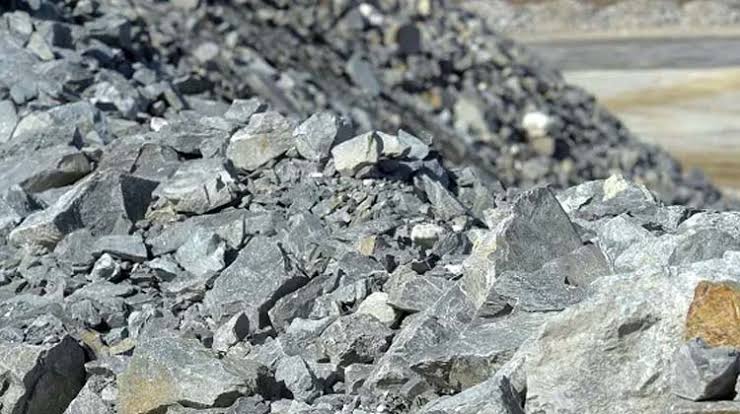
According to the General Administration of Customs of the People’s Republic of China (GACC), as reported by Shanghai Metals Market and Mysteel, Nigeria has become one of the world’s major suppliers of spodumene — the primary ore from which lithium is refined for use in electric vehicle batteries. In July 2025, Chinese customs recorded 217,000 tonnes of spodumene imported from Nigeria in a single month. Over the January–September 2025 period, arrivals from Nigeria appear to have exceeded 800,000 tonnes.
This “Mirror Data” of Chinese customs country-of-origin data should be treated as indicative rather than definitive proof of royalty liability. It does not account for possible re-exports, stockpiled material assembled from multiple sources, timing lags between shipment and royalty assessment, or informal cross-border aggregation. What it does establish is a very large physical volume of spodumene identified by Chinese importers as originating in Nigeria — a volume that warrants a credible, transparent reconciliation against Nigeria’s own royalty collection records. No such reconciliation has been published.
At Nigeria’s official royalty rate of N9,500 per tonne for spodumene, the July shipments alone would imply a royalty exposure of approximately N2.06 billion, more than Nigeria’s total royalty collection across all minerals in December 2025. The implied royalty exposure on nine months of spodumene exports would approach N7.6 billion. Whether these amounts were collected, deferred, or lost is unknown because the Ministry does not publish operator-level or mineral-level royalty data in the detail that would enable verification.
Is the lack of data from Nigeria’s Ministry of Mines intentional so as to thwart verification or is it simply very poor management?
The explanation for any gap is not complicated. A 2024 Associated Press investigation documented Chinese-funded operations employing artisanal miners including children as young as six at illegal sites across Nasarawa and other lithium-rich northern states. Dozens of arrests of illegal operators, including Chinese nationals convicted in Ilorin in April 2024, confirm that the activity is widespread and systematic. SBM Intelligence, a Lagos-based research firm, has documented links between illegal mining revenues and insecurity in affected regions; their reporting suggests a connection to the financing of armed actors, though the specific financial mechanisms and quantified flows have not been independently verified and this claim should be read accordingly. The minerals are leaving Nigeria. Whether, and to what extent, the royalties are being collected remains unanswerable given current data availability.
Related Fact: N7.6bn+ is the Estimated royalty exposure on Nigerian spodumene recorded arriving in China (Jan–Sep 2025), based on GACC data and Nigeria’s official royalty rate of N9,500/tonne. Whether these amounts were assessed and collected cannot be confirmed from publicly available data. Total royalties collected from ALL minerals in the same period appear to be a small fraction of this figure.
Paying more, getting less: the international comparison
A comparison with Western Australia and the Canadian provinces of Ontario and British Columbia, three of the world’s most active and investor-friendly mining jurisdictions, is instructive, though it requires contextual qualification. Nigeria’s fee structure looks not merely expensive but economically incoherent when set against these benchmarks, even accounting for differences in development stage and institutional capacity.
A Nigerian Mining Lease application costs approximately USD 1,875 at current exchange rates. The equivalent application fee in Western Australia is AUD 669 (approximately USD 426), that is less than a quarter of Nigeria’s charge. In Ontario, the equivalent is CAD 90 (approximately USD 65). In exchange for these modest fees, investors in WA and Canada receive: free, comprehensive digital geological databases covering decades of exploration data; publicly searchable, real-time tenement registers; 21-year Mining Lease terms renewable as of right; and regulatory frameworks where non-payment results in forfeiture, not criminal referral to an anti-corruption agency.
Nigeria offers comparatively little in return for fees. Its geological map costs N300,000. Its tenure register, the eMC+ system, has limited public accessibility and long periods offline. Geological survey data — the single most important input to any investment decision in mining is thin relative to the country’s endowment. It is fair to note that Western Australia’s and Canada’s geological databases reflect decades of public investment that Nigeria did not make in the same period. The gap in data quality is partly a legacy issue, not purely a matter of current policy choice. That contextual point does not, however, explain why Nigeria’s current fees significantly exceed those jurisdictions’ charges while delivering demonstrably fewer services with attendant far greater risks.
Perhaps most structurally damaging is what Nigeria’s fees do not require: actual exploration work. In WA, Ontario, and BC, a licence is maintained by demonstrated expenditure on geological work, drilling, sampling, geophysics — that adds to the nation’s knowledge. Dormant licences lapse naturally. In Nigeria, licences are maintained by cash payment alone, with no requirement that any work occur. The Ministry has not published data on what proportion of licence holders have conducted exploration expenditure in any given year, which makes it impossible to quantify directly how widespread dormant licence-holding is. The absence of such a requirement, however, is structural and visible in the regulatory framework itself.
Related Fact: Nigeria’s fees are 29x Cananda’s. Nigeria’s Mining Lease application fee (USD 1,875) relative to Ontario’s equivalent (CAD 90 / USD 65). Nigerian operators receive no comparable geological database, limited tenure security, and face criminal referral for late payment. WA and Canadian fees reflect different development contexts, but the gap in cost-to-service ratio remains material.
3,794 revocations: an industry under pressure
Since President Tinubu’s administration took office in May 2023, the Ministry has revoked 3,794 mining licences. The waves came in three tranches: 1,633 in November 2023, 924 in May 2024, and 1,263 in September 2025. The primary trigger in every case was failure to pay annual service fees.
To understand the administrative scale of this, consider that the Mining Cadastre Office issued approximately 2,249 mineral titles in the entire year of 2023. Revocations since May 2023 therefore substantially exceed a full year’s worth of new grants. The Ministry may argue that many revoked licences were dormant, speculative, or non-compliant, legacy titles that added little productive value to the sector and whose removal represents regulatory hygiene rather than suppression however without production, employment, or investment data disaggregated by licence holder, it is not possible to determine definitively what proportion of revoked titles were genuinely active. The MCO does not publish this breakdown. What can be said is that more revocations are occurring than new licences are being issued, and that the compounding effect of punitive late-payment penalties makes recovery of title economically prohibitive for many operators who might otherwise have continued.
In Western Australia or Ontario, fee structures are calibrated to be sustainable for operating companies. Tenements are forfeited, not revoked with EFCC referral threats when operators cannot continue. Individual cases go through formal adjudication. The process is designed to preserve productive tenure in active hands, not to punish operators for cash flow difficulties. Nigeria’s approach creates the opposite incentive structure, regardless of intent.
For any international investor conducting due diligence, the combination of high fees, punitive late-payment penalties, and a track record of mass revocations represents a material risk factor. No investor surveys or documented deal withdrawals are cited here that data has not been published by the Ministry or by any independent body but the structural risk profile described is consistent with what deters capital in comparable emerging-market jurisdictions.
The transparency problem no one wants to name
Underlying all of the above is a failure of transparency that makes every other problem harder to solve. The IMF, the Extractive Industries Transparency Initiative, and every major mining jurisdiction treat granular revenue disclosure as a baseline governance requirement. Published production volumes by mineral and by operator, royalty declarations verifiable against independent trade data, licence registers open to public scrutiny — these are not luxuries. They are the tools that deter underreporting, build investor confidence, and allow policymakers to detect when a system is broken.
Nigeria’s Ministry does not consistently publish royalty data broken down by mineral type or by operator. The royalty base values which determine how much is owed per tonne are set administratively at prices that appear significantly disconnected from market rates, with no published methodology for how or when they are updated. It is acknowledged that some data is available through EITI submissions and FAAC reporting, and that these represent genuine improvements over earlier periods. The problem is not total absence of data, but insufficient granularity, consistency, and timeliness to allow external verification of whether royalties are being correctly assessed and collected. The MCO’s data collection practices do not currently support the kind of mineral-level, operator-level reconciliation that would make the sector’s royalty performance auditable.
A structural change is underway. As of January 2026, royalty collection has transitioned from the Ministry to the Federal Inland Revenue Service, now operating as the Nigeria Revenue Service under new tax laws. Both institutions have pledged collaboration and transparency. The intent is encouraging, and the separation of revenue collection from the regulating Ministry is consistent with international best practice. However, institutional reorganisation without data transparency is a rearrangement, not a reform. The transfer of collection responsibility to the Treasury does not, by itself, address the fundamental problem: Nigeria cannot yet reliably determine how much mineral is being extracted, by whom, and whether correct royalties are being paid. That will require investment in the information infrastructure, production monitoring, operator reporting obligations, and independent verification that neither institution has yet committed to provide, aside from the failed eMC+ system with its limited public accessibility and ongoing “upgrade” costs.
The verdict
Nigeria’s Ministry of Solid Minerals Development set out to transform a neglected sector. It has instead constructed a regulatory regime that charges heavily to hold ground, punishes those who struggle to pay, offers little in return in terms of data or security, and leaves the front door open for operators who have no intention of paying anything at all.
The result is visible in the data that is available: fees apparently outpacing royalties in the months for which disaggregated figures have been published; substantial volumes of lithium leaving the country with royalty collections that appear to fall far short of the implied liability; nearly 4,000 licences revoked in two years; and a sector whose headline revenue growth is almost entirely a product of administrative price increases rather than expanding output. The absence of more comprehensive public data, annual fee-versus-royalty breakdowns, operator-level royalty declarations, production volumes by mineral, means that the full extent of these problems cannot be established with precision. That absence is not a reason to dismiss the evidence that does exist; it is a governance failure in its own right.
Nigeria has extraordinary mineral endowments. It will not unlock their value by pricing legitimate operators into illegality. The path to a productive, revenue-generating mining sector runs through stable tenure, market-linked royalties, transparent data, and a fee structure that rewards development rather than punishing it. The January 2026 transfer of royalty collection to the Treasury is a step in the right direction. It will only matter if it is accompanied by the information systems and disclosure standards that make royalty compliance auditable and royalty performance visible.
Until the Ministry and the Nigeria Revenue Service together build that infrastructure and publish the results, the minerals will keep leaving the country and the royalties will remain, as they are today, largely unaccounted for.
The Ministry’s responsibility to develop Nigeria’s mining potential and transform Nigeria’s oil and gas economy into a clean energy and mining economy will remain just that — an unrealised potential.
Steven Kefas is a Nigerian journalist, activist, and mining enthusiast with nearly a decade of experience following Nigeria’s mining sector.
Sources and methodology
This analysis draws on MSMD monthly FAAC submissions (January–December 2025); the Nigeria Mining Cadastre Office 2023 Annual Report; GACC spodumene import data as reported by Shanghai Metals Market and Mysteel (January–September 2025); the MSMD July 2024 rate schedule (268-item fee revision); DEMIRS Western Australia Fees and Charges 2024–25 (effective 1 July 2024); Ontario O. Reg. 65/18 and O. Reg. 113/91; BC Mineral Tenure Act Regulation; Regan van Rooy analysis of Nigerian royalty valuations (November 2025); and reporting from THISDAY, Premium Times, AllAfrica, PBS NewsHour, Associated Press, SBM Intelligence, and Business & Human Rights Resource Centre. Exchange rates: USD 1 = N1,600; AUD 1 ≈ USD 0.637; CAD 1 ≈ USD 0.725. The approved gold royalty value of approximately USD 750/oz is drawn from the Regan van Rooy analysis; the Ministry has not published a current royalty valuation schedule and has not confirmed or denied this figure in response to requests for information. Full-year disaggregated fee-versus-royalty data for 2024–2025 has not been published by the Ministry or MCO; the December 2025 FAAC figure is the most recent month for which this breakdown is available.