Who Is Behind the Violence in Northern Nigeria?


By Steven Kefas

Nigeria is often portrayed in international headlines as simply “unstable,” a sweeping, unhelpful label that conceals a far more complex and geographically specific crisis. For those seeking to understand the country’s security situation, the details matter enormously. Over the past ten years, I have conducted extensive field research across Nigeria with a particular focus on the north, carrying out on-the-ground interviews with victim communities, local leaders, survivors, and witnesses. What I found challenges vague narratives and points to identifiable actors perpetrating the majority of violence in two critical regions: the Northwest and the North Central.

Systematic data gathered by the Observatory for Religious Freedom in Africa (ORFA) consistently records a significant proportion of Christian victims even in predominantly Muslim northwestern states, evidence that the violence carries a dimension that purely ethnic or economic explanations cannot fully account for. This piece argues that the crisis is best understood as ethno-religious in character: rooted in ethnic identity, but inflected with religious targeting that demands honest acknowledgment.

The Northwest: Bandits, or Something More?

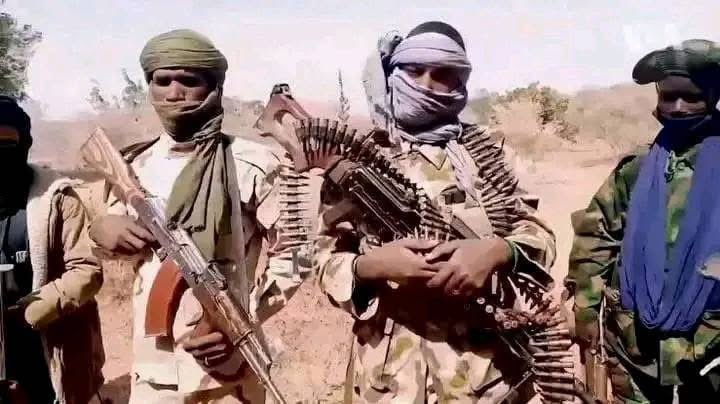
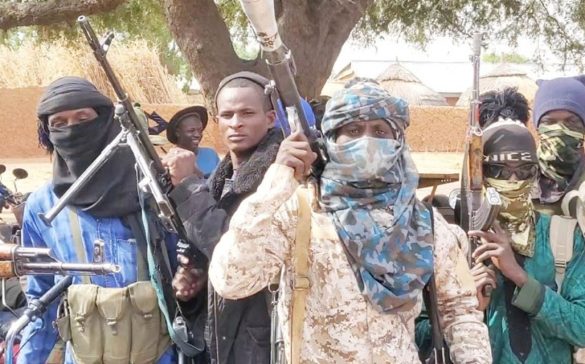
In Nigeria’s Northwest comprising states such as Zamfara, Katsina, Sokoto, Kebbi, and Kaduna, the dominant perpetrators of mass violence are armed groups widely referred to as “bandits.” This label, while useful as shorthand, does not fully capture the sophistication, the ethnic profile, or the religious dimensions of these actors.

After conducting field interviews across victim communities in this zone over ten years, my research found that at least 95% of the perpetrators are of Fulani origin. This finding is broadly consistent with what credible international and Nigerian bodies have documented. Approximately 30,000 Fulani bandits operate in several groups in northwest Nigeria, with individual groups consisting of anywhere from 10 to 1,000 members. These are not loosely organized mobs. They are structured armed networks that have carved out territories, imposed illegal taxation on farming communities, and responded to resistance with lethal force.

This ethnic and religious identification of the bandits was confirmed publicly by one of Nigeria’s most senior political figures. In September 2021, then-Katsina State Governor Aminu Bello Masari, himself a Fulani man made an extraordinary admission on Channels Television’s “Politics Today” programme, stating that the bandits were “the same people like me, who speak the same language like me, who profess the same religious beliefs like me.” He added that “majority of those involved in this banditry are Fulanis, whether it is palatable or not, but that is the truth,” and noted that some fighters had infiltrated from West and North African countries, all of Fulani extraction. His candid acknowledgment effectively confirmed from within Nigeria’s political establishment what field researchers and affected communities had long documented.

What makes these groups particularly alarming is the level of weaponry in their possession. Bandit gangs notably downed a Nigerian Air Force Alpha Jet on 18 July 2021, a stunning demonstration of anti-aircraft capabilities. This is not the profile of ordinary criminals; it is the profile of an insurgent-level armed group[i].

The Religious Dimension in the Northwest

Framing the northwest violence purely as criminality or ethnic predation risks missing an important layer. ORFA data document a disproportionately high number of Christians among the dead in northwestern states, including Kaduna, Katsina, Sokoto, Zamfara, Katsina, and Kebbi states where Christians are a demographic minority. The targeting pattern is not random. Churches have been burned, Christian farming communities repeatedly selected for raids, and witnesses across multiple communities have reported attackers chanting Allahu Akbar during assaults. This does not make every attack a formally declared religious war, but it does mean that religion functions as a marker of who is targeted and who is spared in many attacks in the region.

The historical memory of the Usman Dan Fodio jihad of the early nineteenth century, which transformed the religious and political landscape of what is now northern Nigeria remains a live current in the identity of sections of the Fulani community. This does not reduce every Fulani herder to a jihadist. But it means the violence should be understood as ethno-religious in character: ethnicity and religion are intertwined as both motivation and method. The term “ethno-religious warfare” captures this more accurately than either “religious warfare” (as practised by Boko Haram and ISWAP) or plain criminality. Minority Christian communities in the Muslim northwest have come under attacks in a manner that suggests they are being targeted. For example, in Faskari LGA of Katsina state, the ORF four-year report shows a significant number of Christians killed. Considering the small population of Christians in the LGA, there is no better explanation to the number killed than being targeted.

Furthermore, the convergence between bandit groups and declared jihadist networks adds an additional dimension to an already dangerous situation. ISWAP and Boko Haram factions  including Ansaru, Mahmuda, and Lakurawa  have claimed attacks in northwest Nigeria, and some bandit groups have reportedly forged alliances with these jihadist organisations.

The economic impact has been devastating regardless of motive. Armed Fulani militant networks have inflicted catastrophic damage on Nigeria’s economy and governance, with deliberate destruction of farms and grain stores triggering soaring food prices and nationwide food insecurity, and millions displaced since the crisis began.


The Middle Belt: Armed Herdsmen and Ethno-Religious Targeting

In Nigeria’s Middle Belt, covering states such as Plateau, Benue, Nasarawa, Taraba, Niger, and Kwara, the picture is similar in terms of perpetrator identity but different in framing. Here, the media refers to armed actors as “Armed Herdsmen” rather than bandits. My field research, spanning ten years of interviews in the Middle Belt, led me to the same conclusion as in the Northwest: over 95% of the perpetrators are of Fulani descent.

Attacks on 23 to 24 December 2023 in Plateau State left at least 200 people dead and more than 500 injured across no fewer than 20 rural communities in Bokkos and Barkin Ladi Local Government Areas, were attributed to Fulani militants. Less than two years later, on 14 June 2025, at least 258 Christians were brutally murdered in Yelwata, Benue State, in an attack attributed to armed Fulani militia fighters.

These are not isolated incidents. They form part of a sustained and escalating pattern of violence against settled farming communities, communities that are overwhelmingly Christian, carried out with apparent impunity and, in documented accounts, accompanied by religious invocations.

The Nasarawa Connection

Field research and security reporting have established that some of the most lethal Fulani militant groups operating across the Middle Belt do not simply emerge from within the states they attack. Several armed groups have maintained known encampments in Nasarawa State, using these as staging posts for coordinated raids into Plateau, Benue, Taraba, and other Middle Belt states. This cross-state operational pattern, attackers arriving, killing, and retreating to camps across state line has frustrated local security responses and allowed militant networks to strike with impunity while remaining outside the effective jurisdiction of any single state authority. This is not a local herder dispute; it is a coordinated militant operation with identifiable logistics, known geography, and a command structure that must be addressed at both federal and state levels.

Religious Markers in Middle Belt Attacks

The ethno-religious character of the Middle Belt attacks is well-documented, and the evidence is substantial. Across multiple states and many years of field interviews, survivors and witnesses have consistently reported the following:

Burning of churches. The deliberate targeting and destruction of Christian places of worship has been documented in attacks across Plateau, Benue, Taraba, and Southern Kaduna. In numerous incidents, church buildings are primary targets, not incidental casualties of fighting.

Chants of Allahu Akbar. Multiple survivor testimonies, corroborated by field researchers and documented record attackers chanting “God is Greatest” in Arabic during raids on Christian communities. This is not consistent with violence that has no religious dimension.

Targeting of pastors and their families. Church leaders have been disproportionately killed or abducted in attacks across the Middle Belt. The deliberate elimination of religious leaders signals an intent that goes beyond land and grazing disputes.

These patterns do not mean that every armed Fulani herder is motivated primarily by religion, or that ecological pressures are irrelevant. But when attackers burn churches, announce their actions in religious terms, and single out pastors for killing, the violence has crossed into ethno-religious territory that demands a different analytical and policy response.

Governor Elrufai’s Admission

The identity of the perpetrators responsible for killings in Southern Kaduna was confirmed by the state’s own governor. In December 2016, then-Kaduna State Governor Nasir Elrufai made a public admission that he had identified the killers as Fulani, including foreign Fulani fighters from Cameroon, Niger Republic, Chad, Mali, and Senegal. Rather than pursuing legal accountability, Elrufai disclosed that his government sent emissaries across borders to appeal to these individuals to stop the killings, because he, as governor, was Fulani like them. He stated plainly that he sent people to tell them “there is a new governor who is Fulani like them and has no problem paying compensations for lives lost and he is begging them to stop killing.”

What the World Needs to Understand

The violence in northern Nigeria is not random or faceless. Field research consistently points to identifiable armed groups, predominantly of Fulani origin, operating with sophisticated weapons, organised command structures, cross-state logistics, and ethno-religious motivations that make the label “farmer-herder conflict” dangerously inadequate.

Framing this crisis as mere “ethnic conflict” or “farmer-herder clashes” serves several false purposes: it implies mutual fault between two equal parties, it erases the religious dimension of targeting, and it obscures the organised, predatory, and often one-sided nature of attacks on civilian communities. ORFA data demonstrate clearly that Christians bear a disproportionate share of the killing, not only in the Middle Belt, where this might seem demographically predictable, but in northwestern states where Christians are a distinct minority. That pattern is not an accident of geography; it is evidence of targeting.

For policymakers, aid organisations, and international observers, understanding who the perpetrators are and what drives them is not an exercise in blame. It is a prerequisite for crafting responses that can actually protect lives. The communities I interviewed are not statistics. They are people who have survived raids, buried their dead, seen their churches burned, and are still waiting for meaningful intervention.

This crisis demands a response commensurate with its actual character: ethno-religious violence, prosecuted by organised armed groups, with identifiable actors, documented methods, and a regional geography that crosses state and national borders.


Steven Kefas has conducted field research across northern Nigeria for over ten years. Data referenced from ORFA (Observatory for Religious Freedom in Africa) is available at www.orfa.africa . For previous reporting on these communities, see the author’s coverage in www.middlebelttimes.com 
 

Kaduna’s Broken Compass: Why Zoning Must Travel Beyond Abuja


By Steven Kefas

There is a quiet hypocrisy at the heart of Nigerian democracy, one that the political class has mastered the art of ignoring. We speak grandly of federal character, of inclusion, of ensuring that no region feels permanently shut out of power. We build this principle into party constitutions, into presidential tickets, into the unwritten codes that govern who gets to lead. And yet, when the lens shifts from the national stage to the states, the principle dissolves. Nowhere is this contradiction more glaring than in Kaduna State.

Since the return to civilian rule in 1999, Kaduna State has been governed almost exclusively by political figures from its predominantly Muslim north. This is not an accident of electoral mathematics. It is the product of deliberate choices made within the corridors of the Peoples Democratic Party and, later, the All Progressives Congress, choices that have consistently elevated northern Kaduna at the expense of the state’s Christian-majority south. In a state where the population is almost evenly divided between north and south, between Muslim and Christian, this pattern is not merely a political inconvenience. It is a wound that festers quietly beneath the surface of every election cycle.

The lone, luminous exception came not through the foresight of party leaders, but through the intervention of fate. When President Goodluck Jonathan appointed Governor Namadi Sambo as his Vice President in 2010, the governorship fell almost by accident to Sir Patrick Ibrahim Yakowa, a Christian from southern Kaduna who was then deputy governor to Sambo. Yakowa proved that the fears used to justify exclusion were unfounded. He governed with competence and dignity, won election in his own right in 2011, and built a coalition that crossed religious and regional lines. His victory was historic. The violence that greeted it in parts of the north was a sobering reminder of how deeply the politics of exclusion had poisoned the well.

Then, in December 2012, Yakowa perished in a helicopter crash. Power returned, as if by gravitational pull, to the northern part of the state. The brief window had closed. And in the decade-plus since, neither the PDP nor the APC has shown the political will to revisit what that window revealed: that Kaduna’s south is ready, capable, and deserving of a turn at the helm.

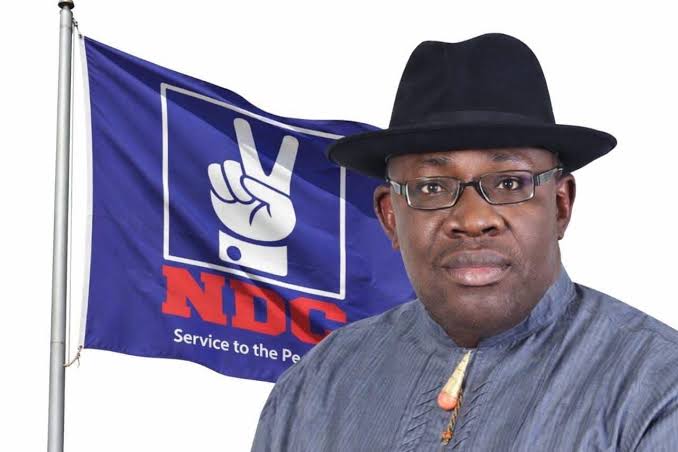
This context matters enormously as Nigeria’s political class turns its attention to the emerging Nigeria Democratic Congress. The NDC has already made a statement of intent by zoning its presidential candidacy to the south, with former Anambra Governor Peter Obi widely tipped as the consensus candidate. It is a credible, principled gesture, one that signals the party understands the logic of inclusion that has undergirded national politics since 1999. But a party that champions inclusion at the top while tolerating exclusion at the state level is not a party of principle. It is a party of convenience.

The question analysts are beginning to ask and that the NDC’s leadership must answer directly is whether the party’s commitment to fairness will cascade downward into the states. Will the NDC, as it builds its structures in Kaduna, demonstrate the courage that the PDP and APC have consistently lacked? Will it zone its governorship ticket to the south of the state, to a zone that has held the position for only a fleeting, grief-cut tenure in over twenty-five years of democracy?

The case for doing so is not merely sentimental. It is strategic. Southern Kaduna carries deep reservoirs of political grievance, grievances born not of imagination but of lived experience. Communities that have endured cycles of violence, displacement, and political marginalisation do not need more promises. They need the concrete, visible proof that democracy means something for them too. A party that offers that proof in Kaduna will not simply win votes. It will build loyalty of a different and more durable kind.

There are those who will argue that zoning is a blunt instrument, that merit should prevail over geography. It is a reasonable objection, and in a mature democracy with a level political field, it would carry great weight. But Nigeria’s political field is not level. It has been tilted, in state after state, by the accumulated weight of incumbent advantage, party gatekeeping, and the quiet veto of those who benefit from the status quo. In such conditions, zoning is not an abandonment of merit. It is the scaffolding that gives merit the chance to be seen.

Nigeria’s democracy turns twenty-seven this year. It has produced much to be proud of: peaceful transfers of power, a vibrant press, citizens increasingly willing to hold leaders accountable. But it has also produced stubborn patterns of exclusion that no amount of constitutional rhetoric has dislodged. If the NDC is to represent something genuinely new and not merely a reshuffling of old political elites under a fresh banner it must be willing to do in the states what it is doing at the centre.

Patrick Yakowa did not govern Kaduna as a southern Christian. He governed it as a Kaduna man, and the state was better for it. His story is both an argument and an invitation, an argument that inclusion works, and an invitation to every political party with the courage to take it seriously. The NDC now stands at that threshold. What it decides about Kaduna and about states like it across the federation will tell us whether it has truly read the lesson that Nigeria’s history has been trying, with such patience, to teach.

Beyond its own electoral fortunes, the NDC has an opportunity that few parties in Nigeria’s history have been handed: to become a model. The PDP governed for sixteen years and entrenched the very imbalances it once promised to dismantle especialli at state levels. The APC rode to power on the language of change and proceeded, in state after state, to replicate the exclusions it had condemned. If the NDC is serious about being different, let it demonstrate that seriousness not only in its presidential ticket but in every senatorial zone, and governorship race it contests. Let it be the party that other parties are embarrassed to ignore, the standard against which Nigerian voters begin to measure political seriousness. Equity and fairness should not be the NDC’s campaign slogan. They should be its operating system.

Captivity by Creed: The Religious Sorting System Nobody Talks About


…Inside the two-tier captivity system of Fulani ethnic militias — where faith determines who suffers, how much a life is worth, and whether a hostage comes home at all.

By Steven Kefas

May 2026

The terrorists conveniently called bandits by the media had a rule. They stated it plainly, in the open, in front of their captives: Fulani people would not be taken. They were brothers. Christians and certain Muslims majorly non-Fulani were fair game. What happened next depended entirely on which category you fell into.

Sunday Cletus was abducted on 28 February 2026, while travelling through Kachia Local Government Area in Kaduna State. What he witnessed and endured over the days that followed was not random cruelty. It was, according to his account and the findings of extensive field research spanning multiple states and multiple years, a system, deliberate, consistent, and organised around two variables: religion and ethnicity.

The differential treatment of Muslim and Christian abductees by Fulani Ethnic Militias (FEM) in Northern Nigeria is among the most under-documented dimensions of a security crisis that has displaced hundreds of thousands and left communities across Kaduna, Plateau, Kogi, and the wider Middle Belt and northwest regions in a state of sustained terror. While public attention has focused on the frequency and geography of attacks, which villages were raided, how many were killed, the testimony of survivors reveals that what happens after capture is equally telling, and equally horrifying.

They Are Our Brothers’

The classification begins at the point of abduction. Cletus reported that his captors were explicit: Fulani individuals were not to be targeted because of ethnic solidarity. The instruction was not whispered or implied. It was declared. In that moment of capture, a sorting mechanism was set in motion that would govern every subsequent hour of captivity.

This is not a single camp, a single commander, or a single incident. Field interviews conducted across multiple states over several years return the same account with remarkable consistency: from the moment of capture, Muslim abductees and Christian abductees enter different realities.

“For a Christian in Southern Kaduna, the danger of being kidnapped is compounded by the near certainty of harsher treatment, higher ransom demands, and a meaningfully greater risk of death, not because of anything they have done, but because of their faith.” Says a retired security personnel who spent 4 months in captivity in Southern Kaduna.

Inside the Two-Tier System

Survivor testimonies describe a captivity environment divided into two parallel experiences. Muslim abductees are, in the words of multiple survivors, treated with a degree of restraint. They are generally not subjected to the physical and sexual violence that Christian captives endure as a matter of routine. They receive adequate food. They are permitted relative freedom of movement within the camp. In documented cases, they have been allowed to observe religious obligations. The logic, as captors have articulated it in the presence of Muslim detainees, is one of communal solidarity, a fellow Muslim, however different in ethnicity or background, is assigned a different moral status.

For Christian captives, the experience is of another order entirely. Men are beaten systematically not as punishment for specific behaviour, but as a baseline condition of captivity. Women face the additional horror of sexual violence. Cletus described an environment in which abuse was pervasive, in which captives were entirely at their captors’ mercy, and in which psychological torment was deployed as deliberately as physical violence. Christian abductees are subjected to prolonged uncertainty, repeated threats of execution, and in documented cases, forced to witness violence against fellow captives as a mechanism of coercion and terror.

There are exceptions. Field research has documented cases in which non-Fulani Muslim abductees were also treated harshly, suggesting that ethnicity intersects with religion in complex ways. But the pattern holds across the breadth of the data: faith is the dominant variable.

The Price of Faith: Ransom Asymmetry

The differential does not end with conditions in captivity. It extends into the financial machinery of release. Across field interviews with survivors and families in the north central region and parts of the northwest, a consistent pattern emerges: Muslim abductees are released on comparatively lower ransoms, negotiations are shorter, and in several documented cases, Fulani community intermediaries with informal access to the armed groups have facilitated release with minimal negotiation.

For Christian families, the process is an ordeal of a different kind. Demands are higher. Timelines stretch for weeks. The threat of lethal consequences for delay or non-compliance is more frequently and more credibly invoked. Field interviews document cases in which families gathered and paid the full ransom demand, only to receive no release, followed by escalating demands. In some cases, Christian abductees were killed even after their families complied.

The death that Sunday Cletus described witnessing, a teenage boy executed because his family did not initiate negotiations quickly enough is not an aberration. It is an example of a broader operational logic in which a Christian life is assigned a lesser and more conditional value, one that can be cancelled at will.

A Religious Hierarchy of Human Worth

What emerges from years of field testimony is not a picture of chaotic, opportunistic violence. It is a picture of a system, one with internal rules, consistent practices, and an embedded hierarchy. Religion functions as a determinant of fate at every stage of the abduction experience: who gets taken, how they are treated in captivity, on what terms they may be released, and whether they survive.

This pattern is consistent across multiple states, multiple armed groups, and multiple years of survivor testimony. It is not incidental variation between individual captors. It is, as the evidence compels us to describe it, a religious hierarchy of human worth embedded in the operational logic of Fulani Ethnic Militias.

The implications reach beyond security analysis. The same sorting mechanism documented in community attacks where Muslim members of mixed villages are spared while their Christian neighbours are killed is replicated and deepened inside the captivity system itself. Faith does not merely determine who is attacked. It determines what they endure, how much their life is worth in negotiation, and whether they return.

The Reckoning

Sunday Cletus came home. Many do not. His testimony, set against the accumulated weight of survivor accounts gathered across the region over years, forces a confrontation with a dimension of Northern Nigeria’s security crisis that policy discussions have consistently failed to address with adequate seriousness.

The violence is not indiscriminate. The suffering is not evenly distributed. And the religious character of the crisis does not begin and end with the moment of attack. It permeates the entire machinery, the raid, the abduction, the camp, the negotiation, the release, or the execution. Until that reality is named plainly and confronted directly, the communities living under it will continue to bear its weight largely alone.


…Steven Kefas is an investigative journalist, Senior Research Analyst at the Observatory for Religious Freedom in Africa, and Publisher of Middle Belt Times. He has documented religious persecution, terrorism and forced displacement in Nigeria’s Middle Belt for over decade