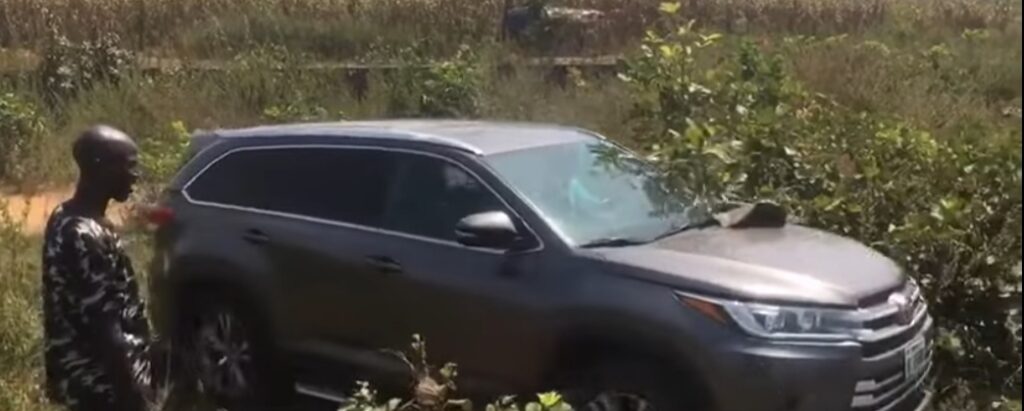
EXCLUSIVE: How Attack Helicopter Secured Terrorists And Sprayed Southern Kaduna Villagers With Bullets

By Beevan Magoni & Steven Kefas

I woke up on the 5th of June to see “Owo” trending on Twitter, thinking maybe the governor of the state Rotimi Akeredolu had done something a typical Nigerian government official would do, which would not surprise me, and, to which I didn’t care to take a look at. I found the real story after going through my WhatsApp status updates from contacts. Indeed, it was a horror, the pictures that confronted me.

Two days later, I found out that, three hours after the Owo attack, something worse happened in one of our villages in Southern Kaduna. The military shot at unarmed villages that were under Fulani militia’s attack and secured the militia. 

THE JOURNEY

As is the norm with me, some stories strike more than just a chord. Some things should not happen in a democratic society, and even if not so, the 21st century should present us with better opportunities for conflict resolution.

I left Abuja a couple of minutes to 7 PM after the day’s tasks have been completed and headed to Kaduna. One notable thing on the road that night was an accident with survivors in it, but no one dared stop to help them, because of the fear of kidnappers and the elements of destabilization in that death trap called Abuja-Kaduna Express Way. Even my soul felt pity for those trapped in that vehicle.

Minutes later would be our turn. We were two in the vehicle when at 9:45 PM, we had a flat tyre that left us stranded on that road for an hour. I got to Kaduna minutes past 11 PM, crashed at a friend’s place, and continued my journey to the destination where a Nigerian Military helicopter was said to have shot and killed people.

KADUNA-CROSSING-MAIKORI VILLAGE

At first, I thought the attack happened somewhere close to Kaduna city, and at most, somewhere around Kajuru which is about 60KM from the city. Wrong!

First, my guide told me he was not in the village where the attack happened any longer. He had moved on to be with the IDPs in Kaduna and asked me to contact another survivor who would lead me to the village. The second guide was in Kachia, and had to take a cab to Crossing where we met.

“Oga Sir, are we leaving the car here?” he asked.

“No! Why should we leave it here bro?” I inquired.

“It is because the road is not good and the place is far…” 

We would go on to travel in the car for convenience, but the motorable road came to an end at Maro which is about 25KM at least, from Crossing. We crossed into Ugakala, drove past quite a number of settlements for almost an hour, and decided to park at Chibiya village when our guide noticed how difficult it was navigating such a jungle. He pleaded with his kinsmen he met on bikes, borrowed their bikes, and rode on one with the cameraman while I and one passenger of the other bike rode on the other for another 30 minutes till we got to Maikori village.

HOW THE ATTACKS HAPPENED

A Sunday is a resting day for these agrarian communities. After Sunday service, it is a well-known fact that Southern Kaduna Christian communities see Sunday as a holiday where you don’t have to work or toil for anything. It is mostly all about going to Church, fellowship, coming back home, resting, or going to the village markets to relax and, or catch up with old friends and families.

According to one of the eye witnesses from Maikori Village,

“We were resting under a tree when we heard gunshots from Ungwan Sarki. We immediately mobilized to know what was happening and were told Fulani men had attacked the village. In the process of mobilizing ourselves to go help our brothers, we saw an influx of men on motorbikes. There were over 100 motorbikes carrying two people each, at least!”

Eyewitness

Another eyewitness said,

“They came in their large numbers. They were many, with sophisticated weapons and we were ready to confront them. It is our village. It is our streams and rivers. It is our farms. It is our bushes. Even though they used to graze here, they don’t know these places better than we do. So we were strategizing on how to defend ourselves when all of a sudden a helicopter came and started to shoot at us, while the attackers were left to burn our houses!”

Eyewitness
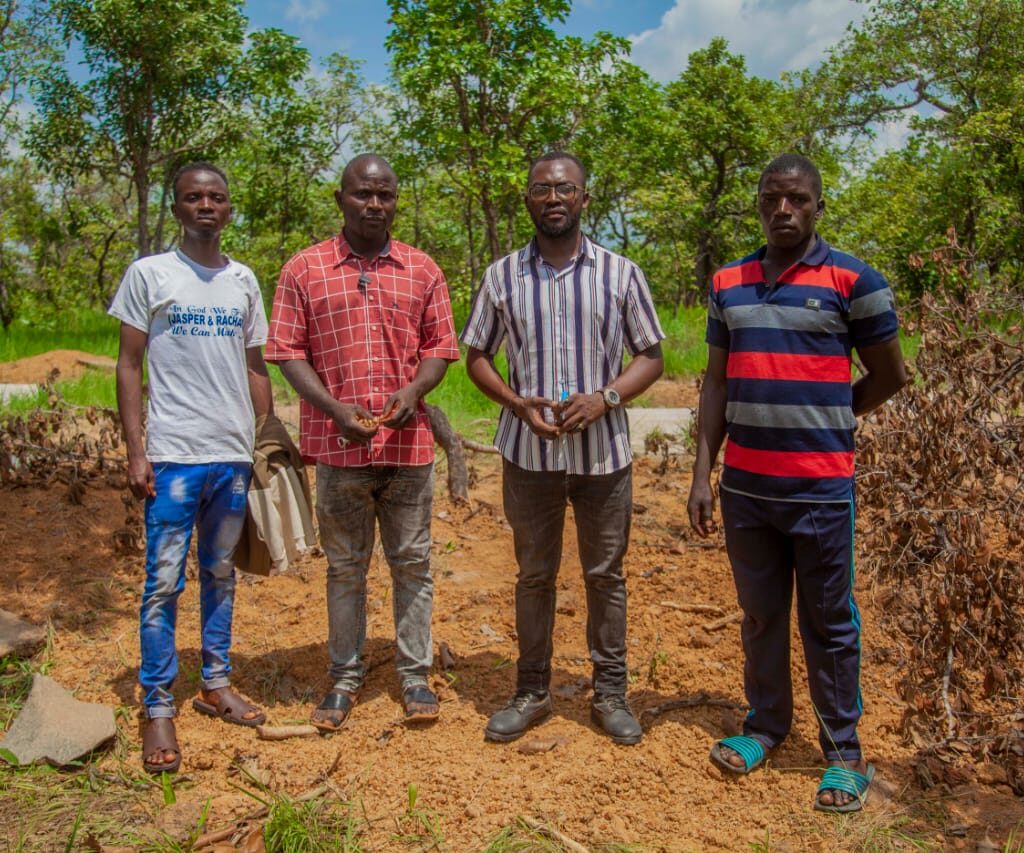
Mass grave of the victims

An elderly woman in her 70s said, “We thought the helicopter was there to help us but it was not. It opened fire on us as we ran. We were running and hiding under shrubs. If this were to be a dry season, the casualty figure would have been worse than this.

“Up till now, we don’t stay in our houses anymore. We are here because we are hungry. We stay in the bushes and not in the houses. We just came to get some corn to grind and then go back to the bushes where we are hiding. We fear they would come back.”

70 years old survivor

Multiple eyewitnesses confirmed the helicopter chased them into the bushes, shelled them, and left the terrorists to loot their barns and burn any structure they could. This operation that lasted for two hours had two people killed and one injured. Maniya Inuwa was killed by the terrorists, while Titus Yusuf was shot and killed by the helicopter. Shadrach Joshua was also shot by the helicopter.
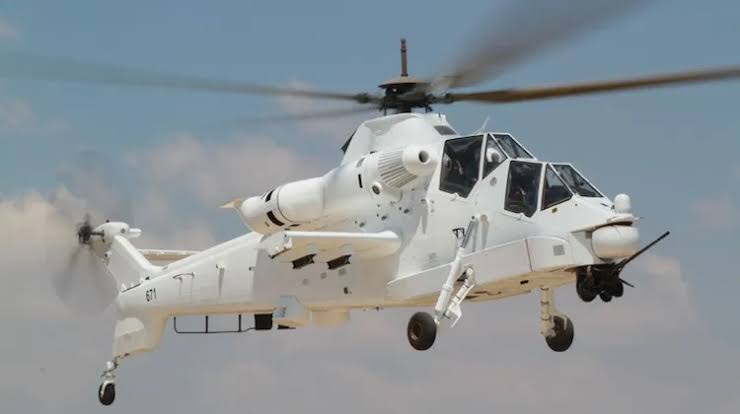
A white Rooivalk Mk1 attack helicopter for illustration purpose. Credit: Australian aviation

Every effort to see Joshua was not successful, but luckily, he called me on the phone past 8PM just as I had arrived in Abuja. Apparently, Joshua woke up that morning, was taken to the hospital for treatment, and later hidden in the bush perhaps the Fulanis come back to re-attack the village again.

The attack on Ungwan Sarki claimed two lives, at Maikori two lives and one injury from the helicopter’s shelling, and thirty four lives at Dogo Noma. 
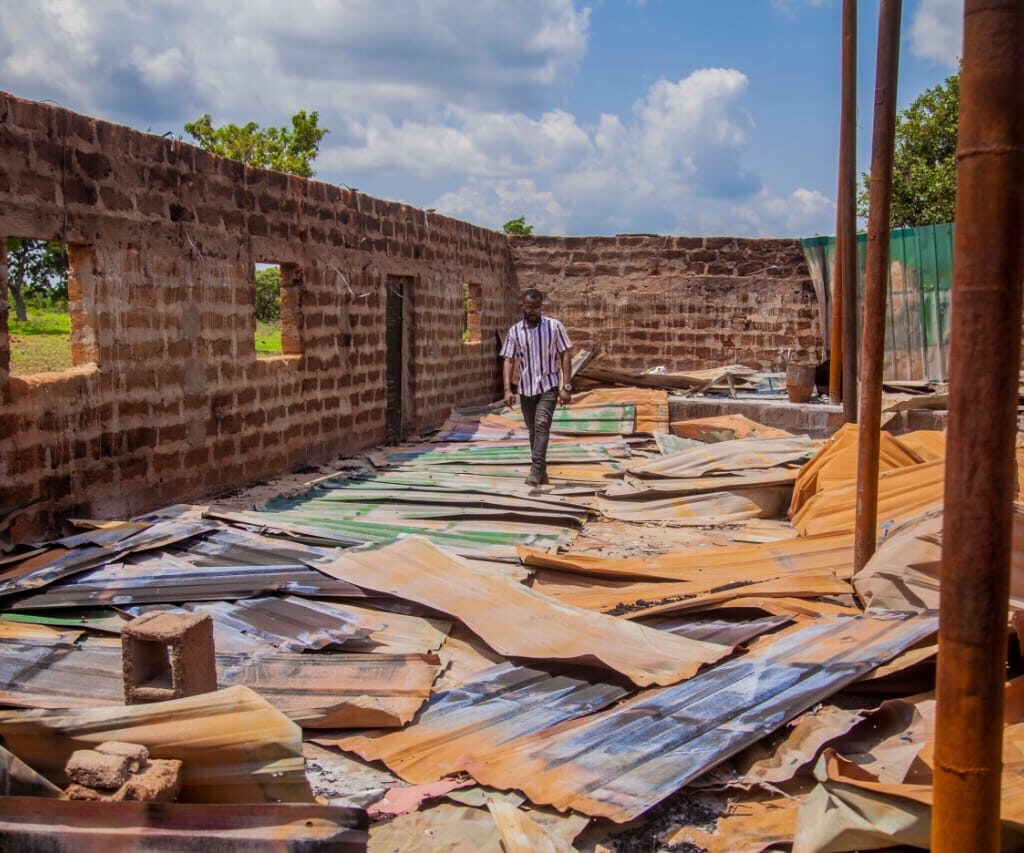
ECWA Church Maikori after the attack

The people at Dogo Noma were in a market square having a good time when two men arrived on bikes, surveyed the environment, and left. Minutes later, they were rounded up in the market. Those who tried to escape were shot down while quite a number of them were captured numbering twenty-nine. To date, others cannot be accounted for.

KADUNA STATE GOVERNMENT’S ACCOUNT

The Kaduna state government had kept mum for four (4) days since the Sunday, 5th of June’s attack in Dogon Noma, Maikori, and Ungwan Sarki communities. The government only decided to speak when it became obvious that Southern Karuna was trending on Twitter and other social media platforms. The helicopter story was also spreading like wildfire. 

The government speaking through its Commissioner of Internal Security and Home Affairs, Samuel Aruwan acknowledged that there was an attack on Sunday 5th June but didn’t explain why it took her four days to comment. The government took time to mention the names of the victims killed during the attack but denied that the helicopter shot at the villagers. It said the helicopter belongs to the Nigerian air force and was on the ground to engage the terrorists.

What the state government has not been able to show to the world is proof that terrorists were killed by the so-called military helicopter. It is baffling to say that a military attack helicopter was on the ground to repel terrorists yet not a single terrorist was killed.
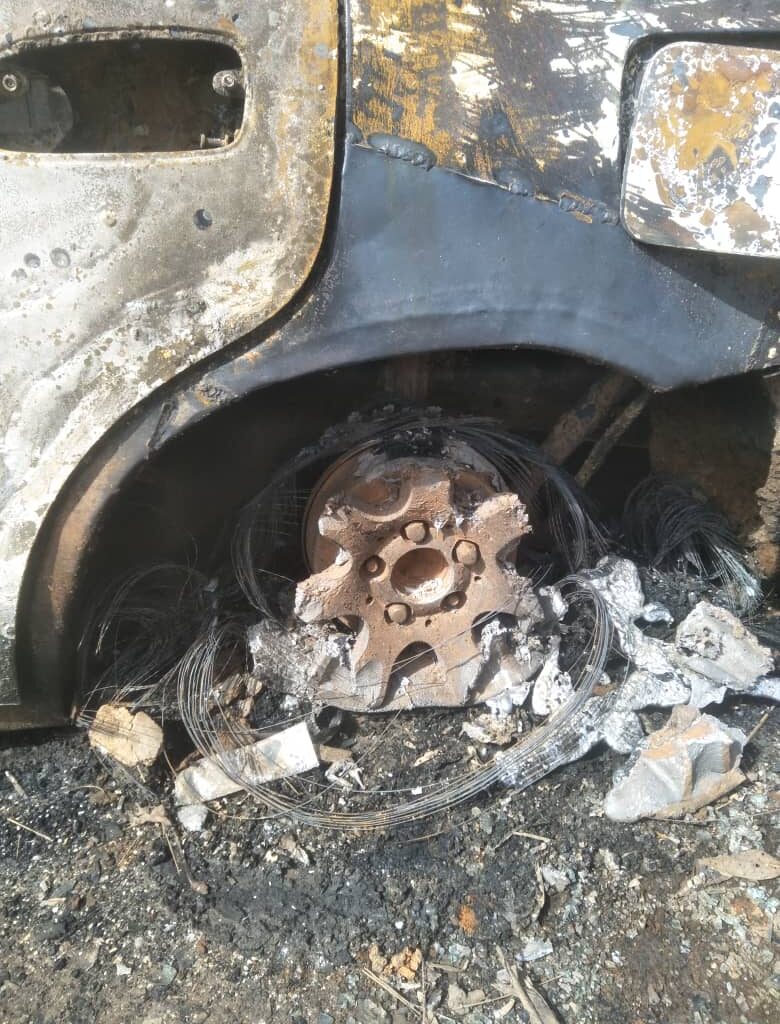
This is not the first time victims of Fulani terrorist attacks are alleging sighting helicopters during attacks. In 2018, communities in the same Kajuru local government area of Kaduna state narrated how they sighted a white-painted helicopter landing in the bushes near them prior to the attacks. There was a video to that effect, where community members narrated their ordeals in the hands of the terrorists.

In June 2020, a captured terrorist confessed during interrogation in a viral video that a certain white painted helicopter was supplying them with weapons for operations.

In February 2022 a certain helicopter flying at low level shot a teenage boy in Kagoro, a community near Kafanchan, the boy survived with an injured arm.

The onion of proof that the terrorists are not in possession of air assets lies in the Nigerian Air Force. The Air Force must as a matter of urgency clear the air with satisfactory evidence otherwise the testimony of victims and survivors will continue to shape public discussions on terrorist attacks in Nigeria as it has never been heard that terrorists used planes or helicopters to visit their victims.

Two weeks before the Sunday 5th June attack, a retired senior intelligence officer had told MBT in confidence about the presence of a certain white painted helicopter which he said was suspicious and that it might be used for nefarious activities. 

He said the white chopper is often seen landing at the Air Force Base in Kaduna. Even though he could not tell much about the ownership of the chopper, he said going by its flight nature and timing, he suspects the chopper was being used to either provide cover or facilitate the operations of terrorists or used to kill targeted people in the state.

With the statement earlier released by the Kaduna State Commissioner for Internal Security and Home Affairs, Samuel Aruwan crediting the Nigerian Air Force Base with the helicopter being a rescue helicopter, it is left for them to verify who was the pilot of the helicopter, who gave the command for the helicopter to go to the rescue of the people which ended up killing one person and injuring another person and also providing cover for ground terrorists to kill and burn down houses.

Also, every helicopter has a visible number for easy identification, but this specific helicopter which is white in color does not fly close to the ground as would do other military helicopters. In Zangon Kataf for instance, the presence of the same white helicopter signals that an attack is imminent. This can be confirmed by residents of the local government which leaves us with no option but to request the Nigeria Air Force Base to do a proper investigation to identify this helicopter and its owner.

If the Nigerian Air Force Base cannot investigate, then we call on the Nigeria College of Aviation Technology to do due diligence. Both NAF-Base and NCAT are in Kaduna and are supposed to be privy to information on any flight within the territory in question!

RECOVERED HIGH CALIBRE AMMUNITIONS FROM TERROR SCENE

Middle Belt Times correspondent came in contact with some high calibre ammunitions recovered from the scene of the attack by the villagers. The sizes and shapes of the ammunition look different from the conventional AK-47 bullet shells usually found after attacks in southern Kaduna and elsewhere. These ammunitions look bigger than normal.
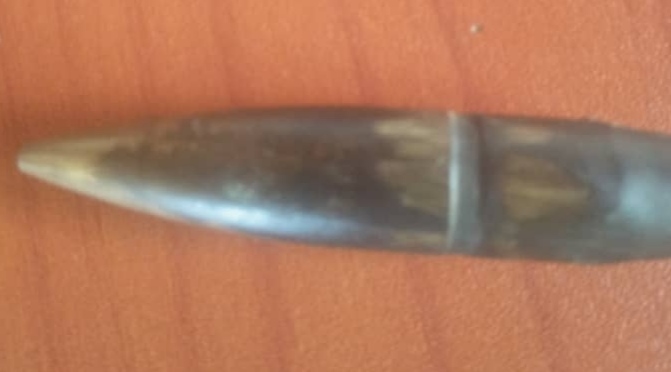
High calibre ammunition recovered from Maikori community

Middle Belt Times reached out to a retired senior Air Force  officer who agreed to share his views on the matter on condition of strict anonymity. When he sighted a photograph of one of the ammunitions recovered from the attack site, he said the bullets are either 30 or 50mm calibre round mostly fired by machine guns mounted on attack aircrafts. Speaking on the yet to be identified attck helicopter alleged to be providing cover for terrorists, the retired Air Commodore said the government could deny such allegations as long as no clear evidence to hold onto.

The government could deny the helicopter because there are many around. Even the Nigerian Air Force has had some close incidents with unknown aircrafts. What would be overwhelming is the aircraft shot down else anything you put out can be denied.

Retired Air Force officer.

He went further to state that such ammunitions have no business in a rural community not at war.

Such high calibre weapons do not have any business in Kajuru except if the terrorists were also flying attack aircrafts or riding on armoured vehicles.” He said.

Retired Air Force officer…

Middle Belt Times carried out further checks on the 30 and 50mm calibre round and discovered that such ammunitions are typically not used  against personnel, but rather as an anti-materiel or armor-piercing round. “Rounds of this size can be effective against lightly armored vehicles as well as fortified bunkers. 30 mm is also a popular calibre for shipboard close-in weapons systems, such as the Russian AK-630 and Dutch Goalkeeper CIWS.” [Wikipedia].

MBT reporter holding a recovered high calibre ammunition

Similarly, the 50mm calibre round is used typically as anti-materiel or armoured-piercint ammunition mostly mounted on attack aircrafts. The question begging for answer is, what could such dangerous weapons be doing in an agrarian community not at war with anybody?

CONCLUSION

While this investigation may not go down well with the powers that be, Middle Belt Times is not out to foment trouble. We are asking every stakeholder to get to grips with themselves and do the needful. Yesterday, it was AK47 riffles. Today, it is a helicopter. We do not know what befalls our communities tomorrow, maybe, chemical or biological weapons.

A stitch in time saves nine!
THE USE OF HUNGER, AND VOTER DISENFRANCHISEMENT AS WEAPONS OF WAR IN CONTEMPORARY NIGERIA: THE CASE OF SOUTHERN KADUNA AND PARTS OF THE MIDDLE BELT
By
Emmanuel Gandu

INTRODUCTION
Hunger looms in Southern Kaduna as farmers across the region cannot access their farms for agricultural activities.
This is as a result of the genocidal herdsmen terrorists and gunmen who kill every indigenous person on sight at the farms, and in their homes.
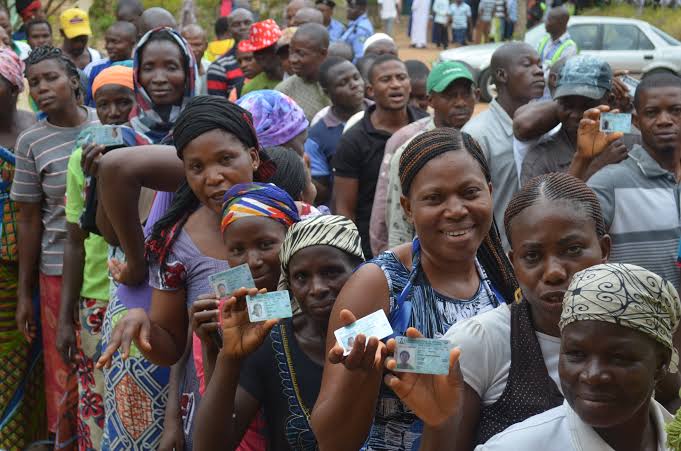
In same manner, the surviving displaced persons who’s towns and homes have been burnt down and taking refuge in IDP camps will be unable to vote in the forthcoming 2023 elections.
This voter disenfranchisement will definitely affect the already precarious existing situation, and the uncertainty associated with the never-seen expected accrued dividends of democracy.

This discourse is an attempt to bring to the fore the consequential effects of the many years of genocide, destruction, hunger, neglect, and voter disenfranchisement as lethal weapons of war on the people of Southern Kaduna.

HOW HUNGER IS USED AS WEAPON OF WAR
Hunger is said to be the most potent, deadliest, and lethal weapon used as a deliberate arsenal in the destruction of a people during conflict and war.
This inhuman act which is more of catastrophic consequences than the bullet began to gain attention from World War I, gaining notoriety during world war II. The Biafran War came, then the middle east wars including the on going Syrian war, to the present Boko Haram, Fulani herdsmen rampage, and now the menace of Banditry.
This is achieved by causing disruption and instability in food production, preservation, distribution, and the supply chain.
This war strategy forces people away from their homes, land, farms, and livestock.
The act also include blockade of supply and delivery routes, closure of land and sea borders, and airports. As a result,
hunger, starvation, famine, malnutrition, and diseases sets in, thereby causing the deaths of children, women, and men.
Then the few surviving helpless men surrender their sovereignty, franchise, heritage, pride/dignity, and land to the conquering forces of occupation.

USE OF HUNGER AS WEAPON OF WAR IN HISTORY
(1) During World War I Germany was confronted with wide – scale food shortages which led to a breakdown in the will of the German forces and the people to fight. This hunger brought about Germany’s collapse and surrender.
From the ashes of that defeat arose the notorious Adolf Hitler and his ascendency to power, and the rise of the Nazi Party. This was the period Hitler’s Nazi Germany popularised the frugal ‘Guns or Butter’ policy.
(2) The ‘Hunger Plan’ introduced in Nazi occupied countries inflicted deliberate mass starvation on the Slavic population and other territories under German occupation such as Greece, and France – including the Jewish race.
(3) In Italy, the Fascist regime of Benito Mussolini employed the politics of food as a weapon of war to subdue his enemies.
(4) During World War II Napoleon’s ‘An army moves on its stomach’ Philosophy became a watch word for the US and Canada in their production of grains in the plains of the Prairies.
(5) In World War II period, the war time leaders of the Allaid forces came together to liberate the conquered peoples of Europe and Asia with adequate supply of food as a priority both during the war and the post war years.
(6) As the war in Syria, Yemen, and Afghanistan rages on, the closure of land borders, sea and air ports have led to starvation and deaths due to non delivery of food to opposition’s controlled territories.
(7) During the 30 month Nigerian Civil War of 6 July,1967 to 15 January, 1970, Obafemi Awolowo as the war time minister of finance in the Gowon administration is widely alleged to have introduced the ‘Starvation policy’, a policy of blockade of food from reaching out to the Briafran Igbo region. This brought about hunger, malnutrition, diseases, and widespread deaths of children, women, and men.
This deaths badly affected the morale of the Briafran troops – the last straw that broke the camel’s back, with defeat staring the young “Country of the Rising Sun” in the face.
The Briafran leader Col. Odumegwu Ojukwu personally hit the final nail down the Igbo coffin With his escape to Ivory Coast, leaving behind the second in command Col. Philip Effiong to surrender – a surrender that marked the eclipse of that rising sun.

THE CASE FOR SOUTHERN KADUNA
The crisis of food insecurity as a result of communal, tribal, religious, farmer/herders conflict on the indigenous people of Southern Kaduna has lingered for too long. This prompted both past and present State & Federal government to set up Judicial commissions of enquiry, fact finding and recommendation committees, boundary delineation committees, peace and reconciliation commissions, white paper/ and implementation committees, compensation and resettlement committees, etc in order to solve the problems.
The present state governor Mallam Nasir El Rufai even admitted paying monetary compensation to foreign Fulani herdsmen for loses to their cattle and men suffered in Southern Kaduna. However, the crisis have not abated.

Southern Kaduna have been under constant attack by Fulani herdsmen for prior to 2011 with hightened attacks in 2016/2017.
There was a resumption of hostilities prior to the 2019 elections, and the attacks are now assuming a frightening dimension.
Armed men are having a field day hunting and killing Southern Kaduna people like rats and wild animals for a game unhindered and without repercussion.
Farm crops and livestock have been abandoned and are being vandalized.
The farming season had since commenced but farmers are killed in their farms and homes on a daily basis by the herdsmen terrorists.
War is declared on the people from all fronts, towns, and villages. The menacing herdsmen terrorists kill, burn, drive, and occupy Southern Kaduna land.
Woman and men have deserted their burnt down towns and villages, and a respite seems to come from nowhere.
Hunger looms in the land with catastrophic consequences.

Whether the Southern Kaduna race will survive this war or will get to the brink of the precipice and eventually go into extinction remains to be seen.

SUGGESTED SOLUTIONS
(1) Since the government lacks the political will to take decisive actions to protect life and property of the people, the affected communities should resort to self defense in order not to be killed continuosly like wild animals.
(2) The United Nations Security Council adopted the ‘Resolution 2417’ at its 8267th meeting on 24 May, 2018 to act accordingly to save vulnerable populations where hunger is used as a weapon of war.
(3) ‘Humanitarian Appeal’, a leading UK charity organization have called on the International Criminal Court to begin prosecution of military actors, dictatorial regimes, War Lord’s, terrorist groups, armed bandits who deliberately employ measures to starve the people to death as a weapon of war.
(4) Nigeria is a member of the United Nations and a signatory to her conventions and protocols. – The needful should be done by appropriate agencies.
(5) The creation of a state for the Southern Kaduna people who inhabit 12 local governments, with a population of over 3 million people (2006 census : Federal Republic of Nigeria Official Gazette no. 2 vol. 96 Extraordinary) is more cogent now than ever before.
You may wish to also know that according to that 2006 census, Southern Kaduna is more populated than 11 states in Nigeria.
These are :
Abia – 2.8 million
Adamawa- 3.1million
Bayelsa – 1.7million
C/River – 2.8million
Ebonyi – 2.1million
Ekiti – 2.3 million
Gombe – 2.3million
Kwara – 2.3million
Nasarawa-1.8million
Taraba – 2.2million
Yobe – 2.3million
It is interesting to know that Kachia Local government, and Zango Kataf local government each alone has a land mass that is more than some 3 states put together.

VOTER DISENFRANCHISEMENT
Voter disenfranchisement in Southern Kaduna to a large extent affect the people’s participation, and by extension the expected accrued dividends of democracy as already observed in recent times.
We need to have an informed citizenry on the effects/consequences of disenfranchisement as not only to defend the people’s rights to vote and be voted for, but also to serve to ensure a sustainable democratic culture.
(1) It will be impracticable for displaced people who’s towns, homes and settlements have been burnt down by herdsmen terrorists, and living in IDP camps to vote in the 2023 elections because of loss of voters cards to fire etc.
(2) The existing political wards/polling units delineation does not favour the high population of Southern Kaduna.
Meanwhile, Kaduna State is the third most populous in Nigeria with more than 6 million (2006 National population census) with an allocation of a 25 year old 255 wards and 5,102 polling units.
Although INEC has created additional 2,910 voting points in Kaduna state so as to expand and enhance voter access to polling units in 2023, Southern Kaduna is still not having a commensurate fraction of this increase as compared to the other part of the state.
(3) Despite Kaduna State’s bigger land mass and population than Katsina state, Katsina state has 34 local governments while Kaduna State has 23 local governments.
In spite of this lobsidedness, Katsina state still has more wards and polling units than Kaduna State, thereby leaving Southern Kaduna to bear the brunt of the shortfall.
(4) Disenfranchisement and denial of voting rights by whatever guise as experienced in Southern Kaduna over the years may be comparable with the racial discrimination against blacks in the USA leading up to the Voting Rights Act of 1965.
In addition, the racist and apartheid system by white South Africa where the majority blacks were denied voting rights is still fresh in our memory.

SUGGESTED SOLUTIONS
(1) Community leaders, tribal associations, religious leaders/groups, politicians, elective/appointive representatives, etc to embark on aggressive voter/public education, as well as constructive engagement with relevant government agencies.
(2) Concerted efforts be made to re-register people who have lost their voter cards to the endless crisis.
(3) If unable to re issue or replace such to displaced voters who lost their voters cards with new ones before the expiration of the dateline, INEC should ensure the use of some kind of identification to enable them vote in the 2023 elections. If it was done in the North East during the 2015 and 2019 elections why not in Southern Kaduna for the 2023 elections.
(4) If, for example, the American Civil Liberties Union (ACLU) has been in the vanguard of defense of the rights of disenfranchised people especially the blacks and coloured minorities, similar organizations in Nigeria should intensify efforts to eliminate all forms of voter disenfranchisement in Southern Kaduna.

CONCLUSION
As highlighted above, hunger and voter disenfranchisement is imminent in Southern Kaduna and other Middle Belt communities ravaged by the menace of herdsmen terrorists, and other criminal gangs/gunmen.
Though it would be easier to sit idly by and do nothing, there is no way to secure and change our society if we don’t take action.
I therefore implore you to consider contributing your quarter towards eliminating these vices that will drive Southern Kaduna and some parts of the Middle Belt to extinction.

                   Peace ?
                 23/5/2022
SMK: An IDEA Whose Time Has Come

The 2023 race for the Kaduna South Senatorial seat today is the most competitive and talked about in the history of the area, not just within the 8 local government areas that make up Kaduna South senatorial District but by extension Kaduna state as a whole. Not even the race for Sir Kashim Ibrahim House has generated as much public debate as the Kaduna South senatorial race. This is partly due to the fact that some of the finest political juggernauts from the zone have thrown their hats into the ring for the contest.

The social media have been saturated with narratives and counter narratives on who should be the next Senator to represent the over 4 million people of the area, a people that have suffered various kinds of marginalisation, terror attacks, forceful occupation and injustices of the highest proportion, especially in the last seven and a half years. The area has within the period buried in Mass graves no fewer than 5,000 of its citizens murdered in the most barbaric manner and lost over a hundred communities in the last seven years.

Amongst the aspirants under the platform of the People’s Democratic Party (PDP), is a gentleman by name Sunday Marshall Katung, an honourable in the real sense of the word, a lawyer, a philanthropist, one who personifies the word “humility”. Katung, who is popularly known as SMK, is a former Commissioner of Finance and Water Resources under late Governor Patrick Ibrahim Yakowa, a former House of Representatives member representing Jaba/Zangon Kataf Constituency from 2015 to 2019.

Looking at the many challenges confronting Kaduna South Senatorial District, Katung by his antecedents and impeccable track record best fits the moment and should earn the trust of the people to deliver robust representation to them, a representation that goes beyond stomach infrastructure and giving of handouts to a negligible few, in contrast to the self-serving representation that is obtainable today. Honourable is one who will put his wealth of experience, training and experience as a lawyer, a business administrator and his international and local connections together to create legislations that will directly impact the lives of the people of Kaduna South positively.

Katung by all indications has prepared himself for this great and daunting task beforehand, and this could be seen in his style of politicking in the last two years. While others were still contemplating whether to run for Senate or not, Katung clearly defined what he wanted and rolled his sleeves to get the job done. It is also evidently clear that Katung has won the hearts of some of the best and patriotic young people from Kaduna South who have been spreading the gospel of his campaign tagline “GetInvolved” to all nook and crannies of the district.

With no disrespect to any aspirant, Sunday Marshall Katung as of today is ostensibly the only aspirant that has been able to clearly outline via a concise manifesto, how he intends to tackle the many challenges confronting Kaduna South senatorial district.

My Plea to Delegates.

It is just 11 days to the People’s Democratic Party (PDP) Primary election, and you, our delegates, once again, will decide who becomes our Senator for the next years. Opportunity has once again presented itself to you our wonderful delegates to write your names, individually and collectively, on the sand of time. Would you vote for competency, capacity and commitment to service and active representation or you would vote for mediocrity and passive representation that has bedevilled Kaduna South in the last seven and a half years thereby short-changing the people in the committee of senatorial districts in the country? The choice is yours to make but remember that whatever decision you make on whose name appear on the ballot, we all, you included, will live with the consequences in the next four years.

I therefore urge you all to put into consideration the points I have highlighted above in making your decisions.

The ball is in your court, but we are watching keenly.

Steven Kefas writes from Kenyi, Kagarko local government Area of Kaduna state.

We Have No Other Country But Nigeria – What A Lie!

Ndidi Uwechue

20 April 2022

Nazi propaganda minister Joseph Goebbels said that if you repeat a lie often enough, people will believe it. That is how most especially politicians, the Church, influencers, NGOs and CSOs have been manipulating Nigerians to come to see a big lie as the truth. They control Nigerians with the words: “We have no other country but Nigeria!”

The truth is that countries come and countries go. The world map of countries we see today is not the same map our ancestors would have seen, say, 300 years ago. And, today’s world map will not be the same that those who will exist in 300 years from now will see. COUNTRIES COME, AND COUNTRIES GO. That is a historical fact.

What we see is that indigenous peoples of the South and Middle Belt are doing their all to rush out of Nigeria looking for education, jobs and “opportunities” abroad, while at the same time immigrant Fulani are rushing into Nigeria. We must ask the question, then whose country is Nigeria? (Notice, we are not asking to whom do the ancestral lands belong to.) Since every country is a political construction, we should know who created the political Union called Nigeria, and for whose benefit was it created?

Nigeria is called a Federation (another lie) whereas in fact, a Federation is a union of Constitutions yet Nigeria has just ONE Constitution, and that is itself a Forgery called the 1999 Constitution. What that means is that IN REALITY there is actually no Union, and thus no real country called “Nigeria” – it is all a great make-believe situation. Those who are no longer going to tolerate the lies are insisting that their people will take charge of their ancestral lands, and with their inalienable right to Self-Determination either form a viable country on their own, or form a new country with compatible neighbouring Ethnic Nations. That is, they are seeking to correct the mistake (or mischief!) of the 1914 Amalgamation. The ONE obstacle in the pathway to Self-Determination are the INDIGENOUS POLITICIANS. 

The role of indigenous politicians in maintaining the hated Nigeria that their people are fleeing abroad from, and where their people are being killed on a regular basis needs to be made ABUNDANTLY CLEAR. 

The illegitimate 1999 Constitution empowers armed Fulani to torture, maim, and slaughter unarmed and defenceless indigenous peoples. It is actually indigenous politicians who open the door to the homicidal madness of Fulani invaders by upholding and defending that known Forgery – the 1999 Constitution. If indigenous politicians did not make themselves available for this dirty work, the Fulani invaders and the Fulani Caliphate would have no powers of entry, so their conquest agenda revealed by Ahmadu Bello’s Declaration, would be impossible.

Furthermore, it is indigenous politicians who renew the life of that sham 1999 Constitution in their people’s ancestral land. That happens via elections when the declared winner swears an Oath of Office to uphold, defend, and govern by that Forgery. It is the task of indigenous politicians to push their people to Elections 2023 so as to renew the life of the disaster-bringing and death-bringing 1999 Constitution upon their people, for which they will get paid huge salaries, and life-long pensions. The treasonous behavior of indigenous politicians is compounded by the fact that they hide the truth that the 1999 Constitution has been Repudiated via the Constitutional Force Majeure declared by the non-violent people’s NINAS Movement making Nigeria a Disputed Project since 16th December 2020, obviously hoping to wound down the clock, to help make Elections 2023 inevitable. Or, to assist the Fulani-led Central Government to declare Martial Law as advised by Attorney General Malami (a Fulani) in a leaked memo (later denied), using the unchecked widespread insecurity as a manufactured reason.

This is a case of indigenous peoples versus their politicians. Indigenous politicians are using a Forgery to capture their people inside a false Union called Nigeria. A Union that is NOT the one negotiated before Independence. That original Union was terminated in 1966 by the military coups. The current Union of Nigeria is the Caliphate’s country that welcomes Fulani from all over Africa to make it their home, while at the same time driving indigenous peoples to flee abroad by making it a hopeless and unsafe place for the true Owners of the land.

Before 1914 there was no country called Nigeria. Since the future for them is the Caliphate Agenda of conquest and Fulanization, indigenous peoples can decide that they will no longer accept unitary Nigeria. Their own politicians are the Caliphate’s agents and collaborators in their ancestral lands, so it is their politicians they must address and stop. Elections 2023 is the battleground. The life of the 1999 Constitution must therefore not be renewed by having those elections. Instead, there should be a time-bound Transitional Government where there would be Self-Determination Regional Referendums for indigenous Ethnic Nations to decide whether they want to re-commit their ancestral lands to the Union of Nigeria, or whether they want fresh, new beginnings forming new Unions with compatible neighbouring Ethnic Nations.

For indigenous peoples to flee abroad when they have their own richly endowed ancestral lands is not an effective solution to the problem of treacherous politicians who uphold a hostile 1999 Constitution. Indigenous peoples have been believing the lie that: “We have no other country but Nigeria!” Unitary Nigeria is NOT their country, and rather than abandon their ancestral lands (making it easier for Fulani to grab them), indigenous peoples at home and abroad have the power to create proper new countries for themselves by stopping their politicians and the sham 1999 Constitution that follows those traitors.

Postscript:

Video clip listing some of the huge rewards politicians receive.

Ndidi Uwechue is a British citizen with Igbo heritage from the Lower Niger Bloc. She is a retired Metropolitan (London) Police Officer, she is a signatory to the Constitutional Force Majeure, and she writes from Abuja.

Fulani Conquest Mission, Extermination Designs Against Indigenous Peoples Of Nigeria And The Deadly Decoy Represented By The 2023 Electoral Cycle 

Tony Nnadi, 

NINAS Secretariat 

16 April 2022

The insight provided by this essay is intended to provide a backdrop to the mainly audiovisual NINAS Urgent Alert Series that began with the RUGA Alert and to guide the endangered non-Caliphate rest of Nigeria to the potent redemption pathway offered by the Joint Multi-Regional Constitutional Force Majeure activated December 16, 2020. 

Just like the 2015 electoral cycle in Nigeria Became for the Fulani, an opportunity for activating the Fulani final push for conquest and conversion of Nigeria to a Fulani country, the 2023 electoral cycle holds the one and only key to actualization of the nearly-completed Fulani conquest mission over Nigeria. 

On the one hand and unfortunately for the invaders, it is ONLY if the rest of Nigeria allow the voyage to 2023 Elections to continue beyond the first half of 2022 that the Caliphate will have an opportunity to advance its conquest mission beyond where it currently is. 

On the other hand, halting the voyage to 2023 Elections IMMEDIATELY opens up the escape route and Sovereignty Recovery Plan offered to the rest of Nigeria by the NINAS Constitutional Force Majeure. (NINAS is the Nigerian Indigenous Nationalities Alliance for Self-determination)

It follows therefore that the decision by the rest of Nigeria, particularly the South and Middle-Belt, to PROCEED WITH or HALT the voyage to 2023 Elections, will determine WHETHER  the Caliphate will succeed in its conquest and colonization plan with the mass killings that will accompany it, OR the rest of Nigeria will triumph in the push to Take Down the Caliphate-imposed Unitary Constitution of Nigeria 1999 and therefore retrieve their Sovereignty from the bondage of Unitary Nigeria, saving themselves therefore from the mass killings already looming against them.

These are perilous times for indigenous peoples, and the dangers that the Caliphate have brought upon them have been explained (together with their remedy) in our video Communiqués.

(Here is the link to the last four of the NINAS Urgent Alerts as issued on April 7, 2022 

https://ninasmovementnews.substack.com/p/ninas-urgent-alerts-3-and-battlefield?s=w ).

The Federation of Nigeria died since 1966. Guided and massively aided by the British, the Fulani who forcefully seized and operated the carcass of the dead Federation of Nigeria since 1967 as the Federal Republic of Nigeria, found ingenious ways to legitimize their stranglehold using several Military Decrees by which they radically transformed the defunct Federation of Nigeria to a tightly controlled and heavily centralized Unitary State. Specifically, the four-Region structure of Nigeria was, between 1966 and 1999, fractured into a 36-State structure, compounded in the same period by an arbitrarily imposed 774 Local Government structure which now operates as a tier of Government in further negation of an important Federation principle in which Local Governments are in the exclusive jurisdiction of the Federating Units. 

This stranglehold is heavily reinforced by a 68-Item Federal Exclusive Legislative List in the 1999 Constitution by which all security apparatus of State and key economic assets were sequestered by the rogue Federal Government which emerged since 1967. The 1999 Constitution is a wholesale carryover from the 1979 Constitution by which the many post-1966 decreed constitutional reconstructions and disfigurations were effected by the aforementioned British-Caliphate Joint Venture.

The danger many of our people are not seeing clearly, is that the Caliphate which has totally strangulated the Federating Units is now on a sweeping ethnic cleansing campaign to wipe off the indigenous peoples of Nigeria, as part of a wider scheme of transforming Nigeria into a Fulani Country. 

Having secured by a combination of brutal force and guile, effective control of all institutions of the Nigerian State across all arms of Government, covering Military infrastructure and key economic infrastructure and powers, the Caliphate went into a campaign of violently seizing absolute political control of Nigeria as a strategy for converting the defunct Federation of Nigeria into a Fulani country. (This is what has been loosely described as the FULANIZATION Agenda by those who know only aspects of what is unfolding). 

Buhari had for many years been a champion of this Fulani Agenda but the electoral cycle of Elections of 2015 which was Buhari’s fourth attempt at the Presidency of Nigeria presented an opportunity for the rapid advancement of the long-standing British-backed Fulani Agenda in Nigeria which dates back to the 1914 Amalgamation and which manifested itself in the Lancaster House Meetings of 1959, the hollow Independence of 1960, the Constitutional Disruption of May 29, 1962 against the Western Region, the Military coup of January 15, 1966, the revenge coup of July 29 1966, the Union Distress discussions and altercations of September 1966 to April 1967 including Aburi of January 1967,  the Decreed deep structural alterations of May 27, 1967, the War with Eastern Region between July 1967 and January 1970, the post-War expropriations and punitive policies that were surreptitiously expanded and configured into constitutional provisions and directive principles of State Policies to ease the full Unitarization of Nigeria and set the ground for Full FULANIZATION of Nigeria.

Just as the LNC (Lower Niger Congress) and its MNN Alliance Partners (now NINAS) which saw clearly through the Fulani schemes of the time, tried unsuccessfully between 2011 and 2014, to point the political merchants and endangered peoples of the South and Middle-Belt to the terrible danger inherent in proceeding to the 2015 Elections on the basis of the 1999 Constitution, we are again confronted with a situation in which NINAS, is seeing very clearly through the Fulani Agenda, and is shouting from the rooftops to the political merchants and endangered peoples of the South and Middle-Belt to see the terrible danger inherent in proceeding to the 2023 Elections under the 1999 Constitution. 

It is clear from all that is now known about the constitutional basis of our bondage that the choice of anyone from the South and Middle-Belt to bid for power under a Constitution that confiscates our Sovereignties and Freedoms, is a choice to remain in bondage and be in danger of extermination (for permanent Fulani land grabbing). 

Let it be clear to those from the South and Middle-Belt currently leading that bid for political power under the current Unitary Constitution of 1999, that they endanger the rest of the populace, and this will include the aspirants and candidates for elections; promoters and supporters of political parties; Church leaders preaching “get your PVC!” and mobilizing the participation and support of the populace for the 2023 Elections, and encouraging their chosen political gladiators. 

Let it also be known that when the Fulani killings and onslaught being enabled by the distractions of the already doomed 2023 Elections get closer to our spaces, all of the groups listed above as supporting the 2023 voyage of death for the South and Middle-Belt will be treated and held accountable for their roles in leading their own people to death, ruin, landlessness and utter damnation. The plea of ignorance will not avail and that is the chief purpose of this Easter Redemption Essay.

Therefore, please do visit the NINAS website at www.ninasvoice.org to review the materials behind the aforementioned redemption plan including the full text of the December 16, 2020, Constitutional Force Majeure Proclamation, and access the audiovisual materials of the NINAS Campaign (via the NINAS YouTube channel link on the website). 

If there were any doubts about the Fulani conquest designs, or the Involvement of the Buhari-led “Federal Government of Nigeria” and its Fulani-controlled Military in that murderous campaign, the demands of the terrorists currently holding passengers abducted from the Abuja-Kaduna April 2022 train attack, and the incoherent response so far by the Buhari-led Federal Government have completely cleared out such doubts.

Tony Nnadi is Co-Convener, Nigerian Indigenous Nationalities Alliance for Self-determination (NINAS)

Fulani Oligarchy Aborted The Aburi Accord That Would Have Saved Nigeria From All Her Problems
By Femi Adesina
        

Researched and Presented
By Emmanuel Gandu

FEMI ADESINA is the current spokesperson to President Muhammadu Buhari. He wrote this article on Friday March 2, 2012 after the demise of Ikemba Odumegwu Ojukwu.
Please read on.

In December 2009, I was at Aburi, while holidaying in Ghana. We Nigerians call it A-b-u-r-i, but the Ghanaians pronounce it as E-b-r-i. For those who have read widely about the civil war that we fought between 1967 and 1970.
Aburi is a significant place. This was what I wrote about Aburi, after returning from that journey:
Aburi. Beautiful, serene Aburi, set daintily atop a hill. It is home to a botanical garden that is 119 years old. But for us in Nigeria, Aburi goes beyond just nature and its preservation.

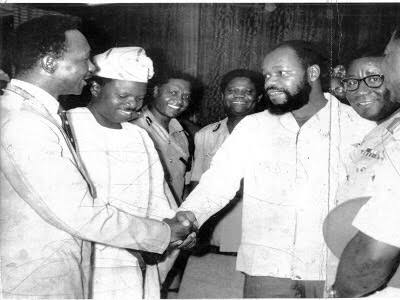
It is the town where General Yakubu Gowon and Odumegwu Ojukwu met, to try and avert the Nigerian Civil War that lasted between 1967 and 1970. They came out with Aburi Accord, which later broke down. And a shooting war started.
You could see the Presidential Lodge on a hill, where the Nigerian leaders had parleyed at the behest of Ghanaian leaders. It all ended in futility.”

As one of the key parties to the Aburi Accord, Dim Chukwuemeka Odumegwu Ojukwu, returns to mother earth today, it is also apposite to return to Aburi, and look at the letter and the spirit of the accord once again, an agreement that was violated by the Federal side, and which made a bloody internecine war inevitable.
For most part of 1966, the northern part of Nigeria, particularly, had been turned to killing fields.

Non-natives, especially Igbos, were killed in thousands. Many fled, many others were displaced. There was complete anarchy in the land. The average Igbo looked up to Lt. Col Odumegwu Ojukwu, military governor of the Eastern Region, to provide leadership and direction. He did not fail. He picked the gauntlet and championed the cause of his people.

By January 1967, the drums of war were loud and clear, reverberating across the length and breadth of Nigeria. But there was a last ditch effort to prevent what was imminent. There was a peace meeting hosted at Aburi, in Ghana, by the then Ghanaian head of state, Gen J. A. Ankrah.

At the meeting were Gowon, Ojukwu, all the military governors of the regions, and some top civil servants, both from the Federal side and the Eastern region. The meeting held on January 4 and 5, 1967, and came out with what is popularly known today as the Aburi Accord.

The agenda of the meeting consisted of three crucial issues: (i) Reorganization of the Armed Forces (ii) Constitutional agreement (iii) Issues of displaced persons within Nigeria.

The two-day meeting reached consensus that were acceptable to both sides. Among others, it was resolved that legislative and executive authority of the Federal Military Government was to remain in the Supreme Military Council (SMC), to which any decision affecting the whole country shall be referred for determination provided it is possible for a meeting to be held, and the matter requiring determination must be referred to military governors for their comment and concurrence. What does this mean in simple language?

The SMC would run the affairs of the country, but not without consulting the regions as represented by the military governors. This was something akin to federalism, even under a military government.
Other terms of the agreement include that appointments to senior ranks in the police, diplomatic and consular services as well as appointment to superscale posts in the federal civil service and the equivalent posts in the statutory corporations must be approved by the SMC. What does this mean again in simple language? Equity, fairness, true federalism.

Other matters like the holding of an ad hoc constitutional conference, fate of soldiers involved in the January 15, 1966 coup, rehabilitation of displaced persons, etc, were also amicably resolved, and the conferees returned happily to Nigeria. Only for the Federal side to deliver a blow to the solar plexus: the Aburi Accord, Gowon said, was unworkable, and he reneged on all the agreements.

Using the Eastern Nigerian Broadcasting Service, Ojukwu played the tape recording of the proceedings at Aburi repeatedly, to educate the populace on who was playing Judas. Later, he made a broadcast in which he said: “we in the East are anxious to see that our differences are resolved by peaceful means and that Nigeria is preserved as a unit, but it is doubtful, and the world must judge whether Lt. Col Gowon’s attitudes and other exhibitions of his insincerity are something which can lead to a return of normalcy and confidence in the country.

“I must warn all Easterners once again to remain vigilant. The East will never be intimidated, nor will she acquiesce to any form of dictation. It is not our intention to play the aggressor. Nonetheless, it is not our intention to be slaughtered in our beds. We are ready to defend our homeland.”

In a piece I did last December, shortly after Ojukwu passed away, I said he was virtually pushed into war by the infidelity of the Federal side to the Aburi Accord. I still stand by that position. Ojukwu was called ‘warlord’ for many decades, but he was by no means a warmonger. He only did what he needed to do for his people–and for the country.

As his earthly remains are interred today, it is tragic that Nigeria is still submerged in the morass that Ojukwu already identified about 45 years ago. Today, bombs go off like firecrackers in the country. There is agitation for the review of the revenue allocation formula.
There are strident calls for the convocation of a sovereign national conference. Even some component parts are threatening to pull out of the federation if anything happened to their ‘son’ who is now in power. Didn’t Ojukwu warn of these landmines ahead? Were all these issues not already settled at Aburi?

Foremost journalist and media administrator, Akogun Tola Adeniyi, in a recent media interview, explained the Aburi Accord this way: “Let every region be semi-autonomous and develop at its own level.” Yes, that was the spirit and letter of Aburi, but which sadly became a road not taken.
And is that not why we are still suffering today, living in a rickety and decrepit country that can burst at the seams any moment? I tell you, Ojukwu was a prophet, and like most prophets, he had no honour in his own country. Pity. But whether we like it or not, there’s no way we won’t return to Aburi. Willy-nilly. I only hope it will be sooner than later, before Nigeria goes to grief. On Aburi I stand.

Federal Government was perfidious and duplicitous on Aburi. It is still the same way today. That is why as Nigerians, we are most times disillusioned, dismayed, dispirited, dejected and depressed. When will change come to this land? Our hearts are getting weary.

Last December, I wrote that Ojukwu should be buried like a hero. I’m glad at the rites of passage so far, culminating in the interment today. Yes, bury him like a true hero. An icon, an avatar, deserves no less. This generation will surely not see another like Ojukwu. He fought not only for his own people, but for a true federation founded on justice, fair play, equity and rectitude. Unfortunately, he did not see the Nigeria of his dreams. Will we? Adieu the Ikemba, the Eze Igbo Gburugburu. May your soul rest in peace. Ka nkpur’obi gi zue ike n’adukwa.

                   Peace ?
                   1/4/2022
Chill & Vote for Jordan Bangoji at GreyHobb – Powered by GreyHobb

GreyHobb, a creative Tech Hub based in Kaduna and the proponent of #TeamJordan social media campaign is organizing a Chill & Vote session at 6pm today to mobilize massive support for Jordan Bangoji, a young multi talented rising star from Kaduna State who has put the entire nation on  notice with excellent performances at the ongoing Nigerian Idol.

Some of the activities to expect  this evening include:
– Watch all Jordan’s performance
– Voting Assistant
– Networking with #TeamJordan

The Chill & Vote session will be taking place at GreyHobb which is located at no. 31 Gwari Avenue, beside Access Hotel Barnawa, Kaduna State.

WHO IS JORDAN ?

Jordan Bangoji is a talented singer, songwriter, basketball player, and university student from Southern Kaduna, Nigeria. He is a Top 12 contestant on Nigerian Idol Season 7 in 2022.

Jordan had the Judges amazed by his vocal ability right from his first Audition and got a standing ovation at most of his subsequent performances at Theatre Week. Jordan knew he wanted to be a singer because it is the only way he finds true expression of who he is.

His favorite color is dark green, which reflects quite literally, his love for nature, and metaphorically, his ambition. His love for basketball reflects his ‘goal-getting’ attitude; you can also see this in the way he fiercely chases after his dreams and passion for music.

Jordan’s favourite moment from Theatre Week was his duet performance and the person who would have been most proud of his achievement was his elder brother who had passed on. Jordan hopes Nigerians will fall in love with his personality believes he will be the next Nigerian Idol. Check out why he believes he is going to earn that title.

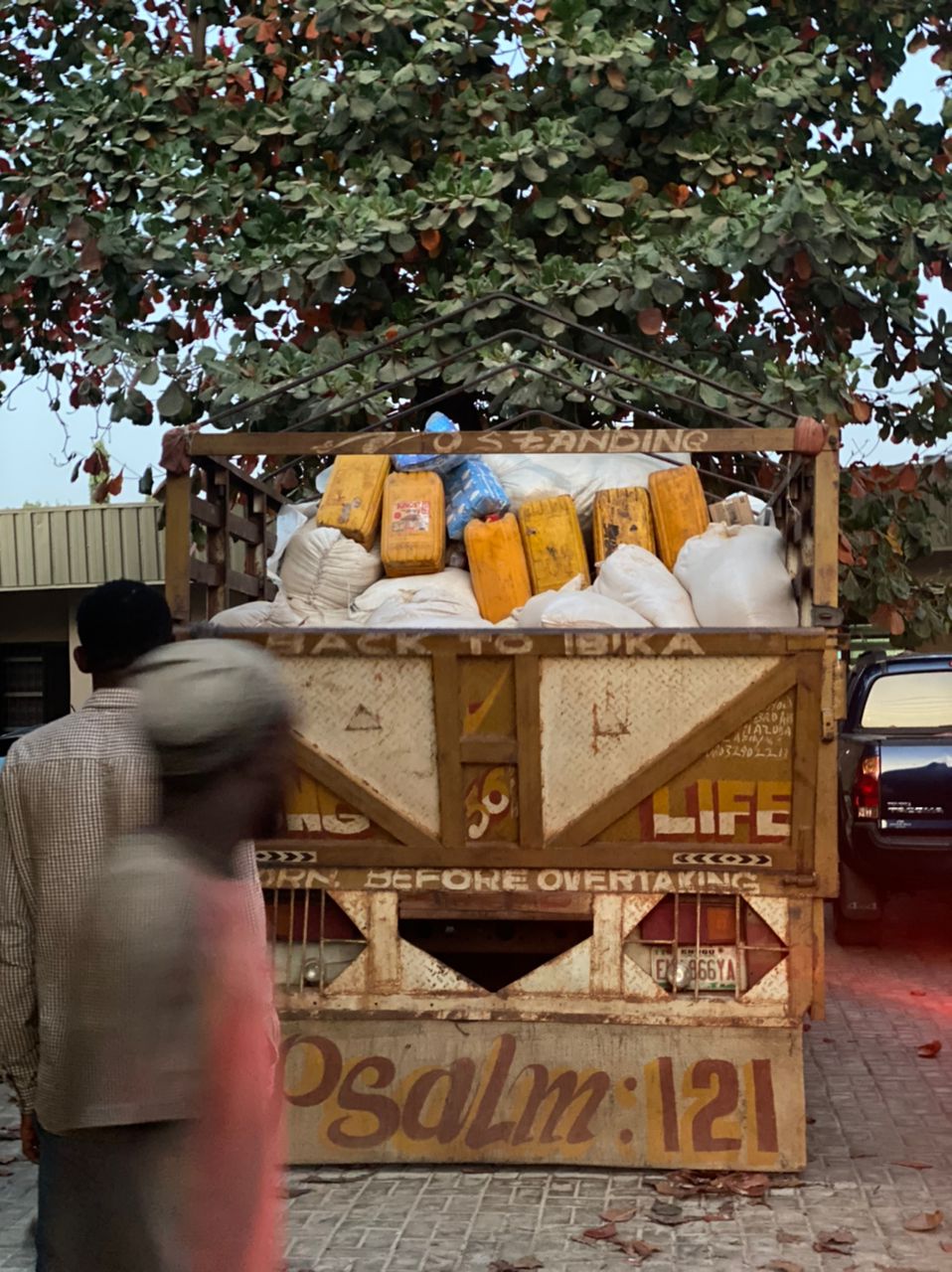
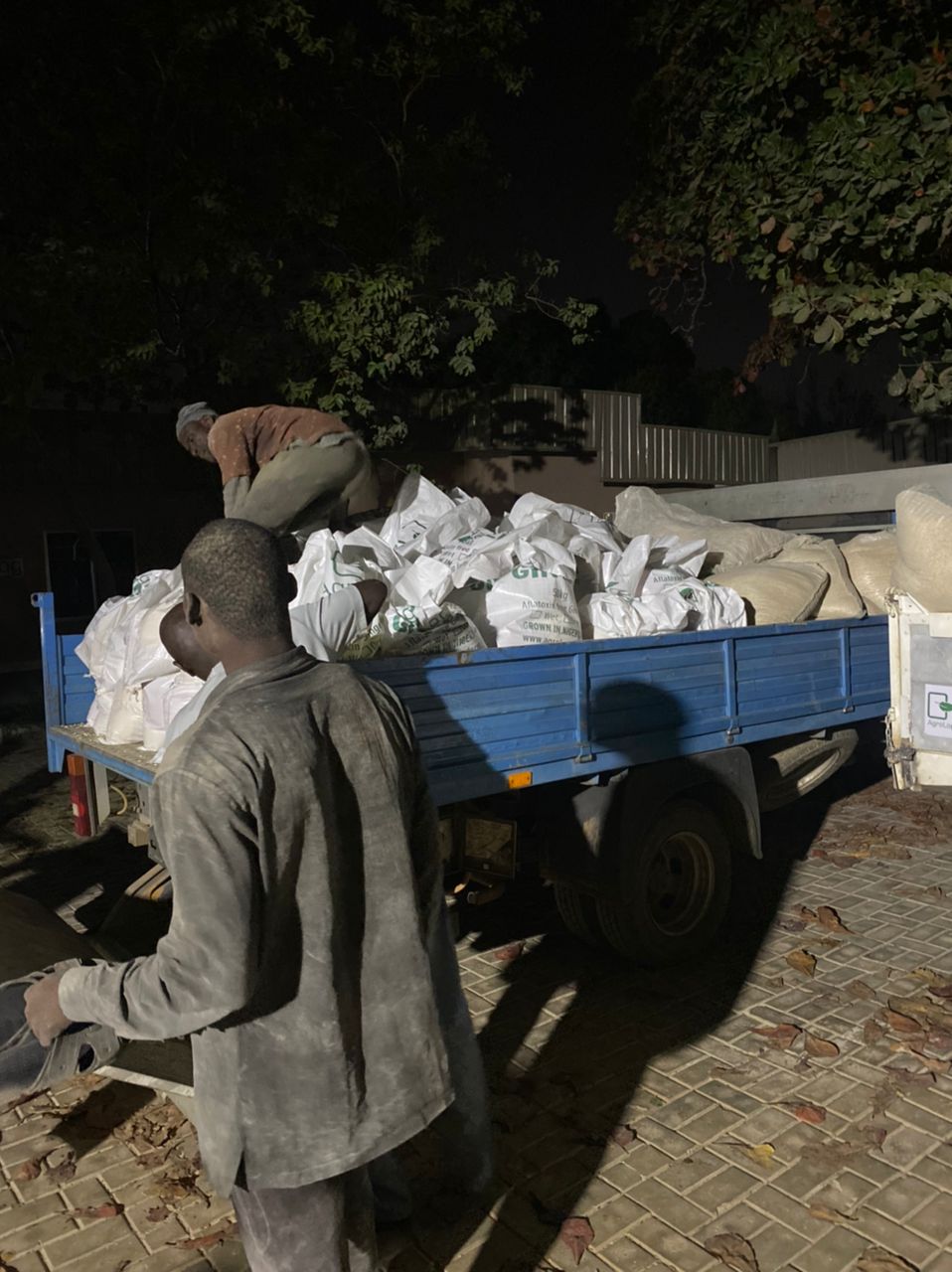
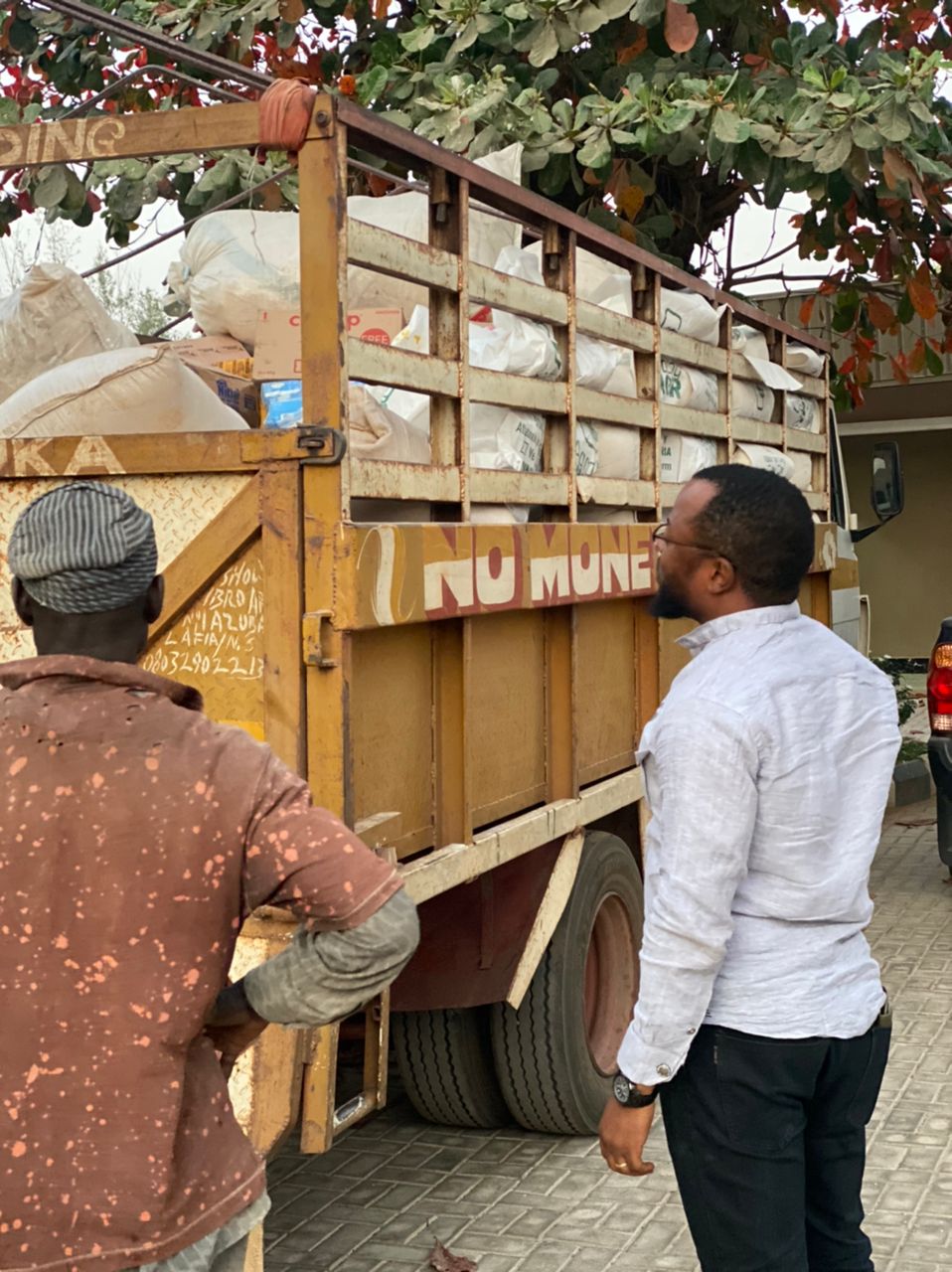
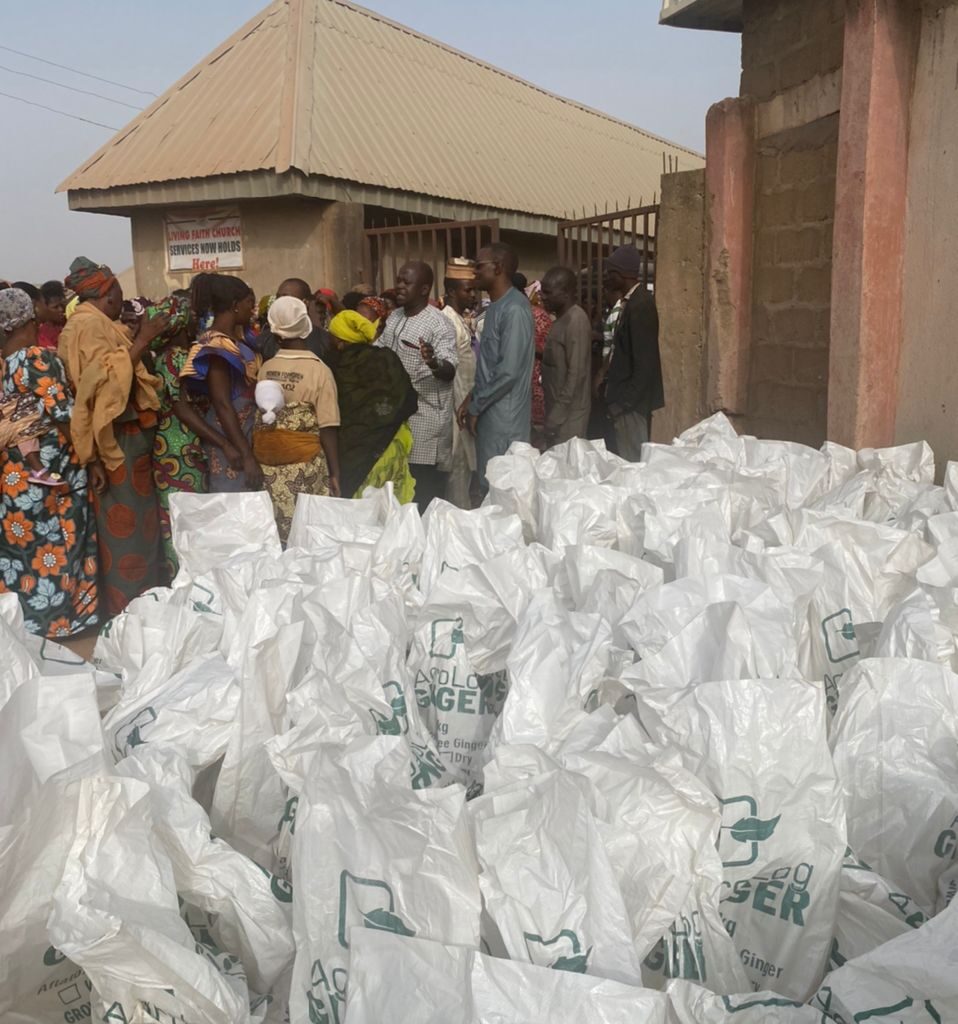
Agrolog in partnership with Grey Soft Technologies delivered N20,000,000 (Twenty million Naira) worth of grains and essential

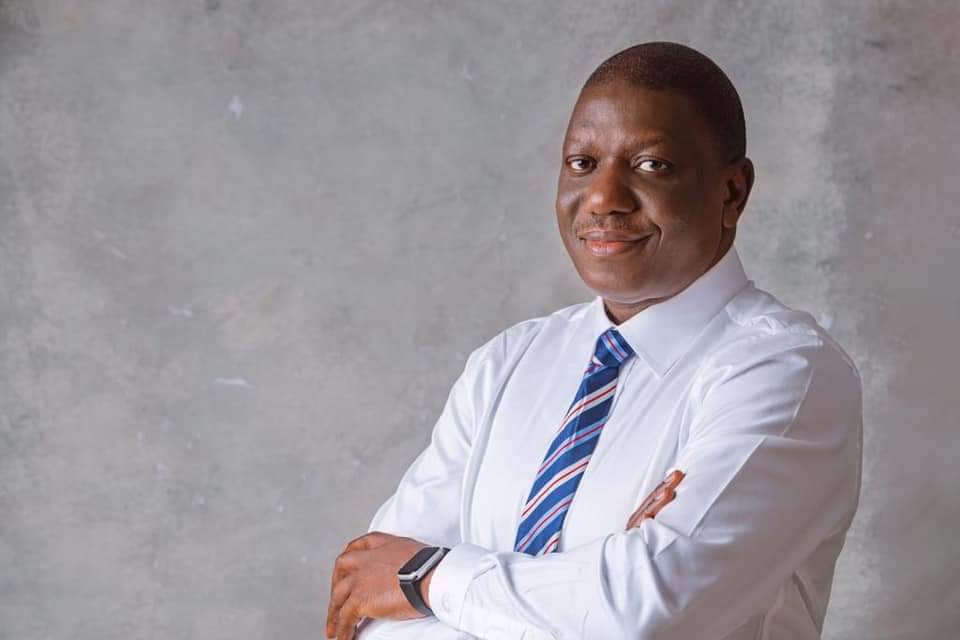
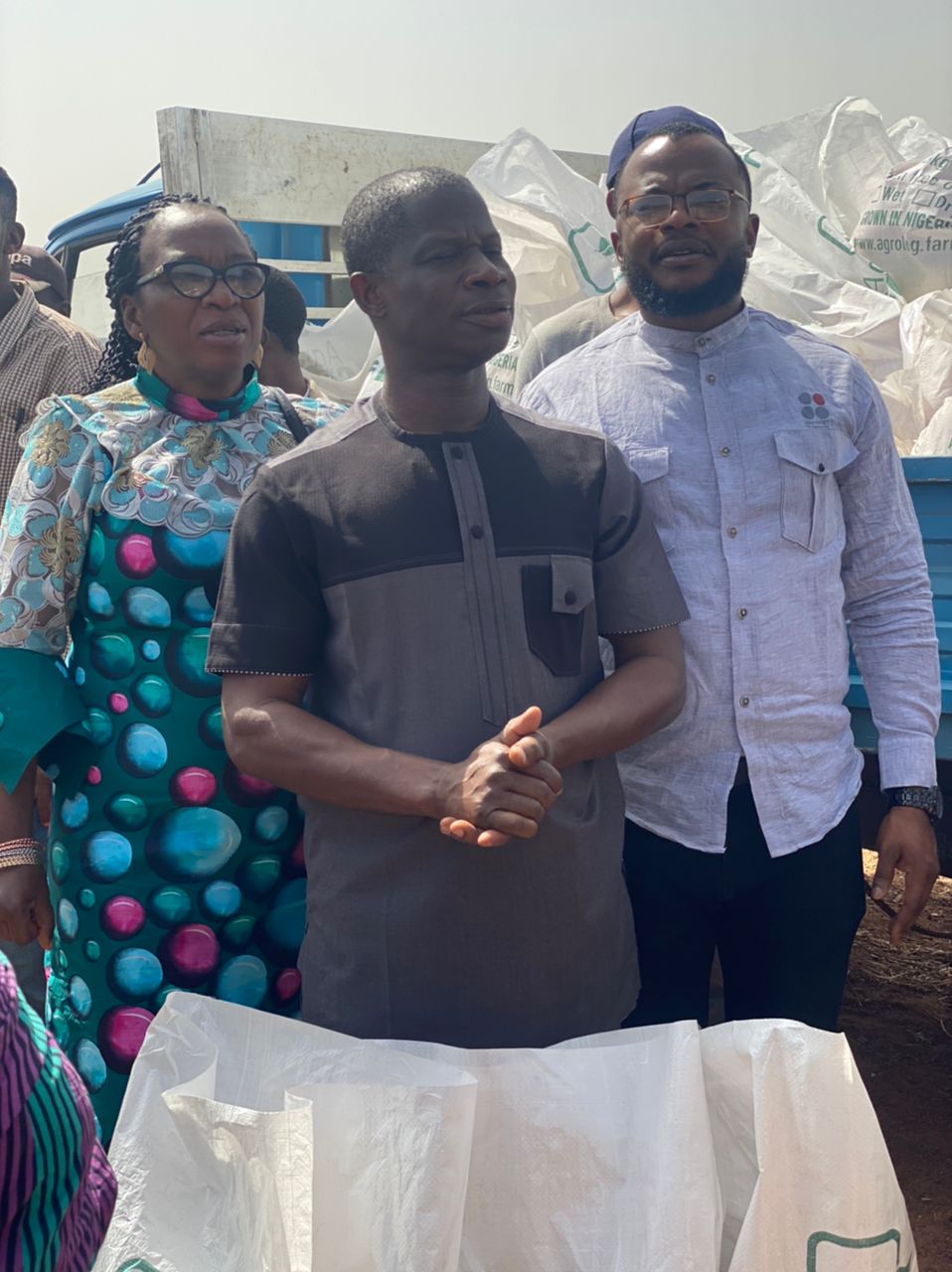
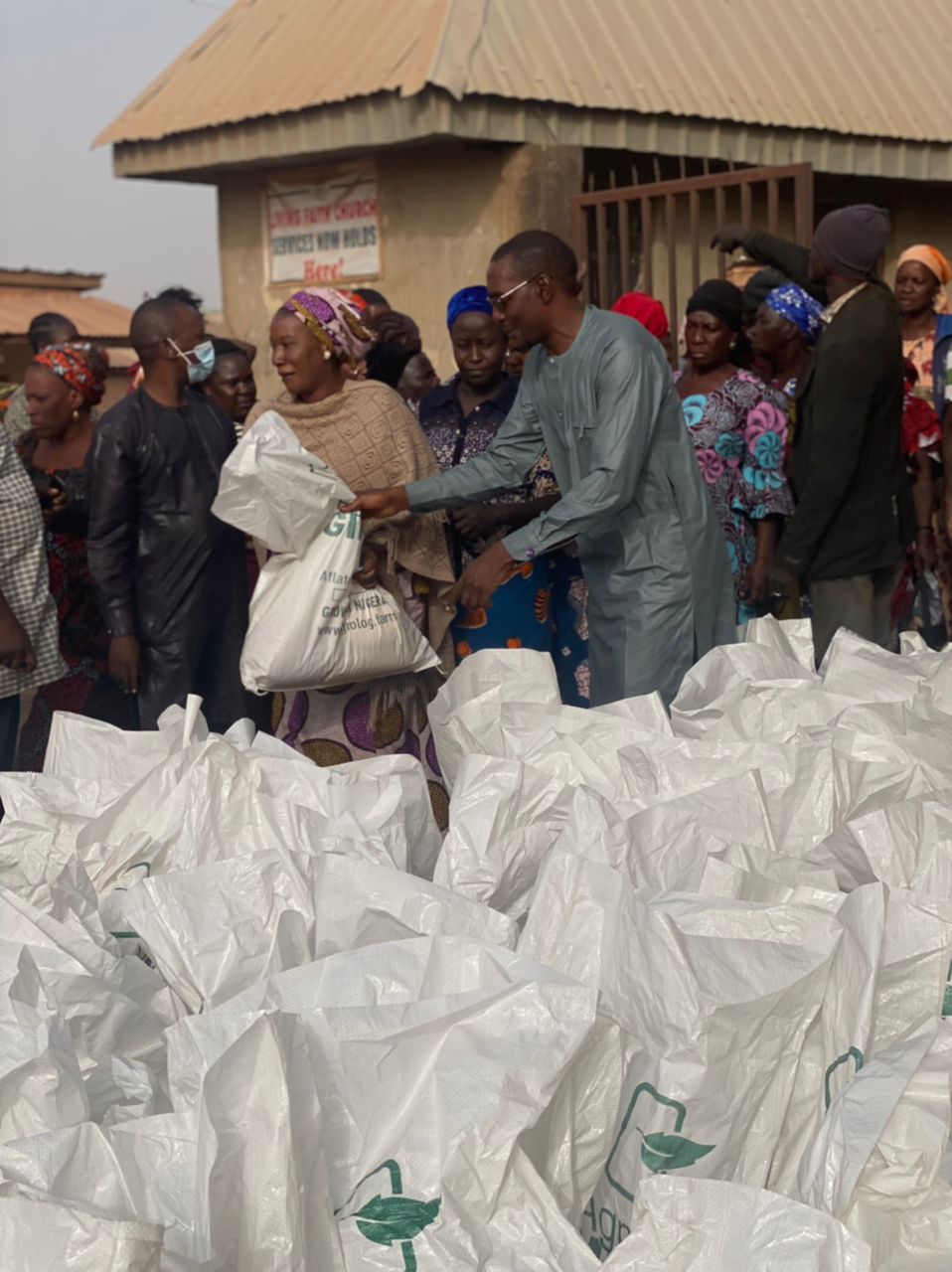
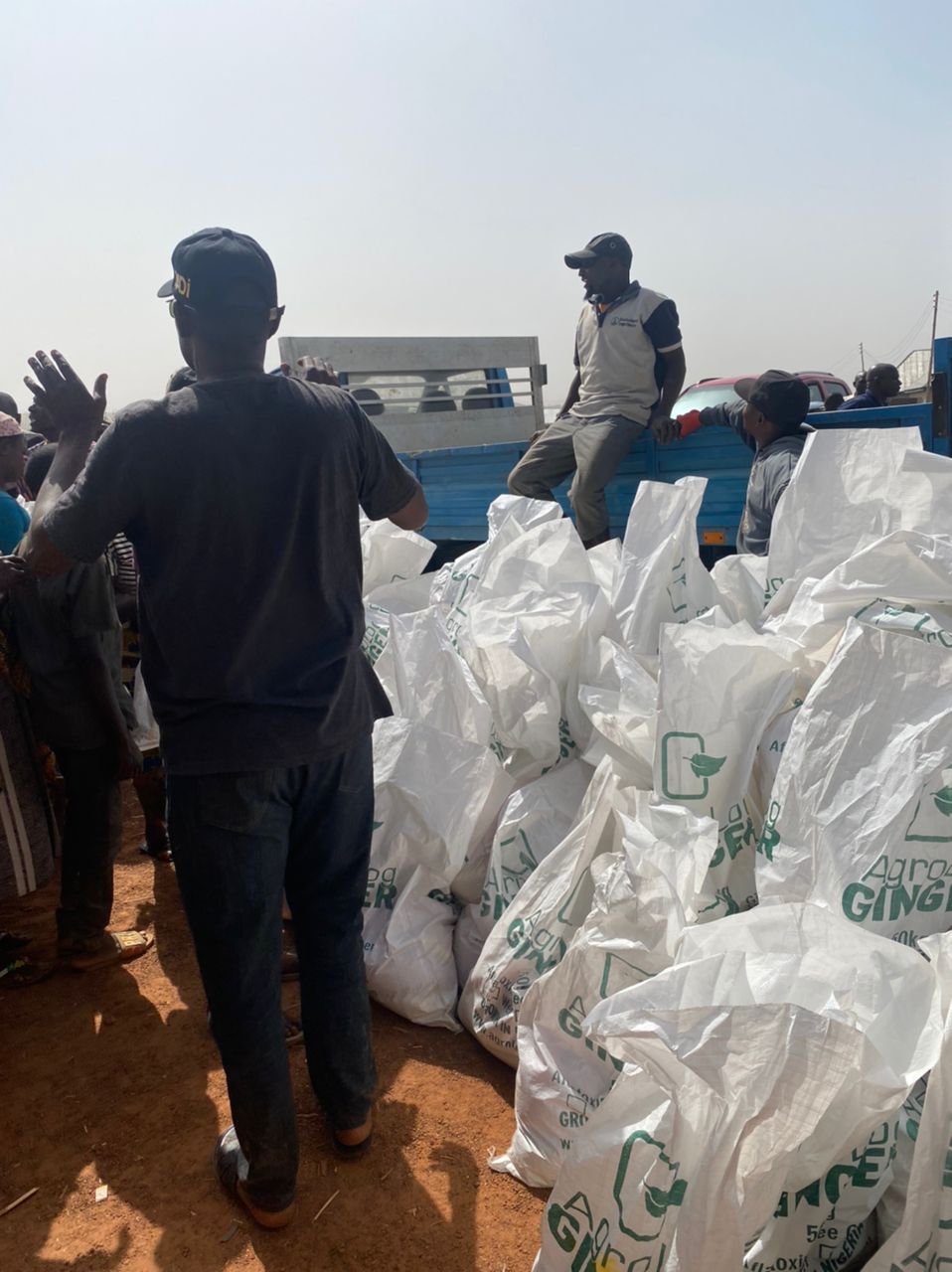
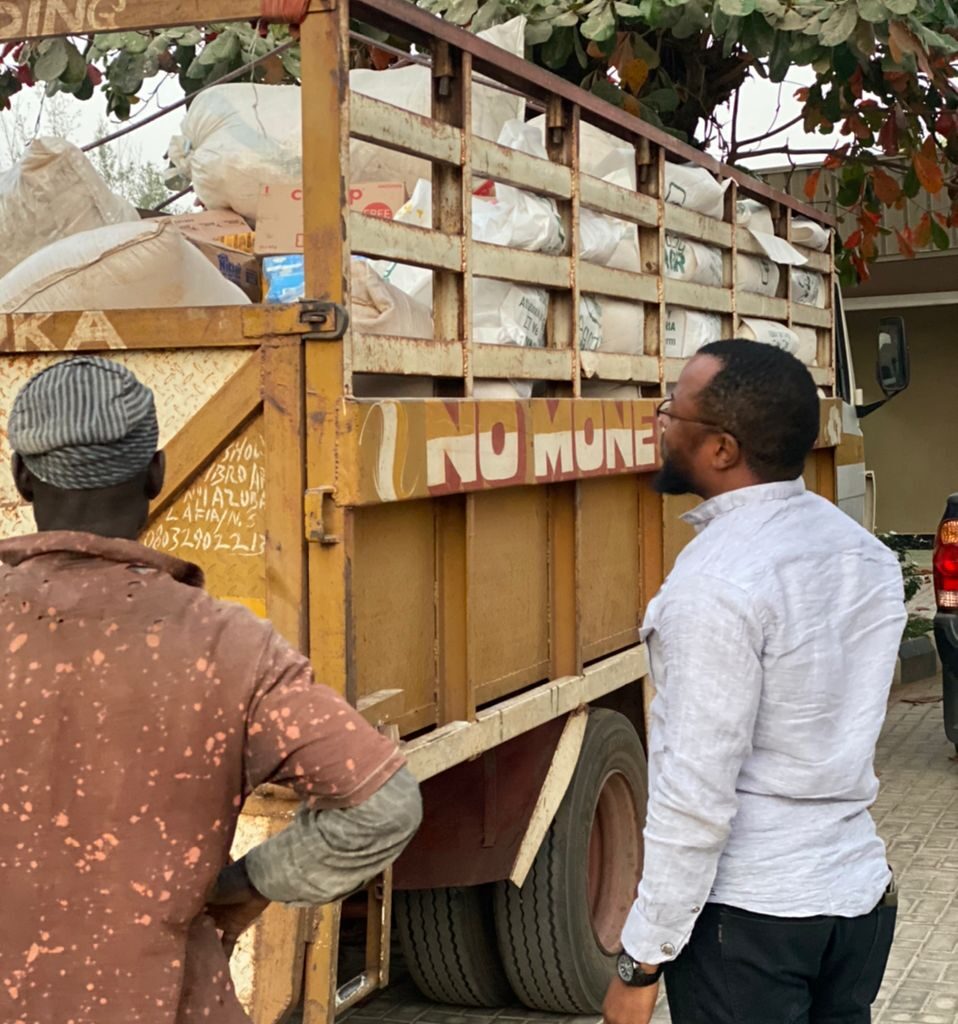
The MD/CEO Agrolog, Dr. Manzo Maigari, in partnership with Grey Soft Technologies delivered N20,000,000 (Twenty million Naira) worth of grains and essentials which were distributed to thousands of displaced and vulnerable people in various locations in Southern Kaduna through a Kaduna based NGO Resilient Aid and Dialogue Initiative (RADi).

Trucks loads with food items were delivered to the following locations: IDPs in Zonkwa, IDPs in Sabon Tasha, IDPs in Gonin Gora, IDPs in Rimau and Households in Kafanchan.

While talking to the press, Dr. Manzo disclosed that “We as a company have decided to give back to the very people that we work with, which is the communities where we played at as a company. We have mobilized items for the immediate needs of those that have been dis placed by banditry attacks.”

He continued “Our budget for this is N20 million, and most of it are coming in kind.”

The CEO of Greysoft Technologies, Mr. Isah Raphael also spoke to the press members “When we heard that Agrolog is embarking on a Corporate Social Responsibility, and off course as part of what we’re planning to embark on already, we came in to support Agrolog in this initiative; and we believe that this will be the beginning of so many things to come. The first step is the feed people in the IDP, and the next step as we go on is to help them acquire skills that will be sustainable so that people in the IDP can have a glimpse of hope that life can be better.”

Also present at the IDP camp is the President of SOKAPU (Southern Kaduna People’s Union) Hon. Jonathan Asake who expressed his delightfulness.
In his words, “Truly I’m excited, I’m overwhelmed and I lack words to expressed my happiness with what I’ve just witnessed today.”

The beneficiaries of the this profound kind gesture could not put into words how exceedingly happy they were, and also prayed for those who remembered them during this trying times.

Deplorable State of Road, Network Shutdown & Withdrawal of Female Soldiers Responsible for Resurgence of Abductions along Kaduna-Abuja Express Way: Commuters Lament

By Steven Kefas, Kaduna

Road users along the dreaded Abuja-Kaduna highway have blamed the deplorable state of the road and the network shutdown embarked upon by the Kaduna state government for the resurgence of mass abductions and killings on the road.

Middle Belt Times reporter on Monday spoke with some road users in Kaduna and Abuja on the matter.

Mallam Salihu Giwa (not real name), a commercial driver who plies the road on a daily basis said the network shutdown in Kaduna state is making the activities of armed bandits easier at the detriment of innocent civilians.

Giwa said that while the citizens who are at the receiving end of both the network shutdown and the bandits attacks, the bandits still find ways to coordinate attacks and also reach out to families for ransom negotiations.

“Before now whenever their is an ongoing operations, we phone to inform our colleagues of the development.

“For instance, if am driving and notice danger, I will call my colleagues, they too will call others and before you know it, people are saved but today that is no longer possible due to the absence of network in the state.

“Let me tell you, in the past we have experienced this kidnapping along this road but the first driver to encounter them might make phone calls and before you know the information circulate and help from the security will come.

“They said they shutdown network to stop banditry but as you can see banditry has only gotten worse with the shutdown. The bandits still launch attacks, kidnap people and still make phone calls negotiating for ransoms.” Giwa lamented.

Another commercial driver, Idoko Francis told MBT that the recent waves of abduction along the Abuja-Kaduna express way seems very coordinated and scary.

He said in times past, you hardly hear of an attack today and another tomorrow.

“Monday’s attacks got many of us surprised because it opened our eyes to a new dimension of kidnapping along the Abuja-Kaduna highway.

“For them to attack on Sunday and did same on Monday, it shows that they are now more daring and coordinated.

“Before, whenever they attack, they don’t come back to attack again immediately because they know that security will be on the road patrolling but this time around they damned every consequences and went back to kidnap more people the next day.” Francis said.

Removal of Female Soldiers from the road

The withdrawal of the gallant female soldiers from the Abuja-Kaduna express way has also continued to generate reactions among road users who said the soldiers were committed and dedicated to their jobs while on the road.

Recall that, in late January, 2021 the Kaduna state government received 300 gallant female soldiers to mount 24 hours surveillance on the Abuja-Kaduna express way.

This reporter while traveling on the road on Monday observed that the female soldiers have all been withdrawn and efforts were made to speak to road users about the development.

A road user who gave his name as Mathias said that the withdrawal of the female soldiers was shocking to road users because there was no reason for such withdrawal considering the importance of their presence on the road.

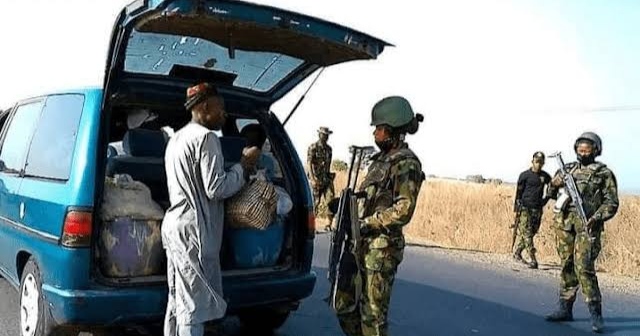
Female Soldiers conducting a search on a vehicle along Abuja-Kaduna highway

“Why did they remove the female soldiers in the first place if they don’t have sinister motives?

“Those female soldiers were very dedicated, they were always on this road providing security, they were fearless and provided an intimidating presence on the road.

“Throughout their stay on this road, I never heard of any kidnapping operations because they were up and doing.

“Who ordered their removal and why ? These are questions Nigerians should be asking the government.” Mathias said.

Citizens Plead for Network Restoration

Residents living in Kaduna state are pleading with the state government to reconsider her decision to shutdown telecommunications network in some parts of the state, saying that the shutdown has made life more difficult for them.

Some residents of Chikun local government area who spoke to MBT reporter said they have been living in total darkness since the network shutdown. They also lamented that since the shutdown has failed to achieve it purpose, it will be unfair to sustain the shutdown.

A resident of Gidan Bussa who spoke to this reporter on condition of anonymity said that the network shutdown has achieved nothing in the area and therefore should be restored.

“Since they shutdown this network, life has been hell for us here, we can no longer communicate with friends and relatives in other places, we can not call for help during emergencies.

“Since the network shutdown has obviously failed to achieve any meaningful result, the government should restore network back. He said.

This reporter spoke to a resident of Gonin Gora who compared the shutdown of telecommunication networks which is affecting their community to life during the pre GSM era in Nigeria.

She said, most businesses are shutdown due to unavailability of network in the community.

“We are just here, we can’t make calls, we can’t do transactions on the POS yet we don’t have any bank in Gonin Gora.

“Those who sell recharge cards to survive also can no longer sell because no one buys recharge cards when there is no network to use their phones.

“The whole thing is troubling for us, it is like living in the pre GSM era and to make matters worse, the bandits are still operating, some of our relatives that were abducted from Emmanuel Baptist church in October are still with the bandits.” She said.

Recall thst on Sunday, armed bandits launched a broad daylight operation along the Abuja-Kaduna express way, killing a former APC governorship aspirant in Zamfara state before abducting dozens.

Late Alhaji Sagir Hamidu’s bullet ridden car

On Monday, a similar operation took place around Gidan Bussa along the same road leading to the abduction of many travellers.

Improved Security Presence

This reporter, on Tuesday 23, November observed improved security presence on the Abuja-Kaduna express way.

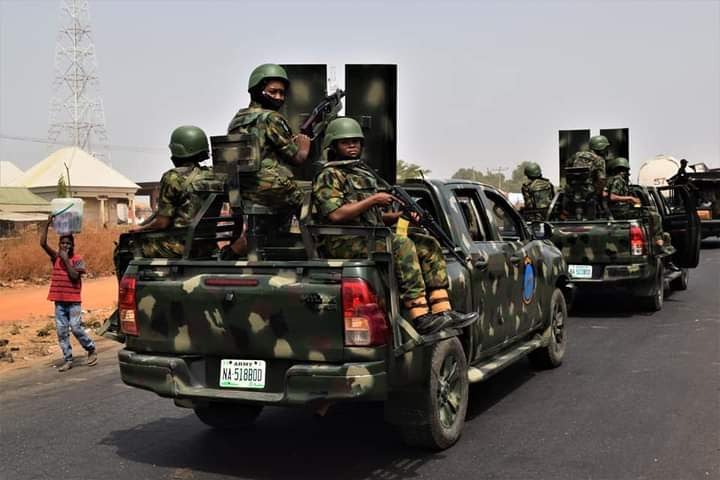
An armoured vehicle belonging to the Nigerian army and dozens of soldiers riding on motorcycles were seen patroling along the road, giving road user some confidence to travel.

The police and Civil defense operatives in their numbers were also sighted patroling the express way. This is coming after the Kaduna state commissioner of Police announce the deployment of more personnel and armoured vehicles to the road.

Speaking during a visit to the scene of Sunday’s attack, Commissioner of Police, Mudashiru Abdullahi ordered the deployment of additional four armoured vehicles and more troops to the the Abuja-Kaduna highway.