INSECURITY: Despite Improvement, Reign of Terror Continues

By Clifford Ndujihe

TEARS flowed heavily on Friday, August 25, 2023, as 22 military personnel including a Major, two NAF helicopter pilots, and 19 soldiers, airmen and ratings were given a ceremonial national burial at the Military Cemetery, Abuja.

The deceased were among 25 officers and soldiers killed in an ambush as they were moving towards Zungeru, Niger State, to counter bandits and terrorists who were attacking communities in the area. A NAF helicopter evacuating soldiers wounded in action also crashed at Wushishi, Niger State, killing the injured security men.

Speaking at the teary occasion, Chief of Defence Staff, Major General Christopher Gwabin Musa, vowed to avenge the death of the soldiers, saying that none of those responsible for their deaths would go scot-free.

He swore: “They would be hunted down by all means. Those that did this and those that have continued to attack, kill our men, wherever they are; we will get them out, we will smoke them out, and we will ensure that they never have any other opportunity to kill any other person, that I assure you.”

Indeed, the security agencies must avenge the death of the soldiers and other victims of insecurity across the country.

Although there appears to be an improvement in the war against insecurity since President Bola Tinubu took over on May 29, 2023, it is not yet Uhuru.

Many parts of Nigeria are still killing fields as bandits, terrorists, gunmen, armed herders, criminals and insurgents unleash terror and mayhem on hapless citizens killing and kidnapping for ransom and rituals.

As of August 29, no fewer than 1,406 Nigerians had been killed. These include 94 deaths recorded between May 29 and 31, 690 (June), 415 (July) and 207 (as of August 28).

The 1,406 deaths between May and August 2023 are fewer than the 2,897 recorded between June and August 2015 during the first 100 days of immediate past President Muhammadu Buhari administration.

The figures are based on reported cases and data obtained from the Nigeria Security Tracker, NST, a project of the Council on Foreign Relations’ Africa programme.

The deaths arose from terrorism, banditry, Herders/farmers clashes, communal crises, cult clashes, and extra-judicial killings among others.

The 1,406 death toll is conservative because only reported cases from multiple sources were included. And many cases are under-reported or not reported at all.

Security as a top priority
In his inauguration speech, President Tinubu said he would make security a top priority because development could not take place without it.

“Security shall be the top priority of our administration because neither prosperity nor justice can prevail amidst insecurity and violence. To effectively tackle this menace, we shall reform both our security doctrine and its architecture.

“We shall invest more in our security personnel, and this means more than an increase in number. We shall provide better training, equipment, pay and firepower,” he said.

Tinubu’s efforts
To push through his promise, President Tinubu, on June 1, ordered Service Chiefs and heads of security and intelligence agencies to crush criminals and anyone involved in oil theft, saying that his administration would not tolerate criminality.

Tinubu stated this in his maiden official meeting with Security and intelligence heads led by the Chief of Defence Staff, General Lucky Irabor at the Presidential Villa, Abuja.

Among those at the meeting were the then Chief of Army Staff, Lt. Gen. Farouk Yahaya; Chief of Naval Staff, Vice Admiral Awwal Gambo; Chief of Air Staff, Air Marshal Isiaka Amao; and Inspector-General of Police, Usman Alkali Baba; Director-General of the Department of State Service, DSS, Yusuf Bichi; and Director-General of the National Intelligence Agency, NIA, Ahmed Rufai Abubakar.

Before he took over, insecurity had claimed 98,112 lives in 12 years; 27,311 persons in former President Buhari’s first term; and 35,900 persons between 2019 and May 29, 2023, according to the NST.

To reverse this trend, Tinubu said he was going to embark on a lot of reforms in terms of our security architecture, and mandated the security agencies to come up with a blueprint, and redouble their efforts because, as far as he is concerned “this country should not be on its knees struggling while other countries are working and achieving greater heights.”

Tinubu sacks service chiefs
Despite the order, the killing spree continued forcing President Tinubu to sack the service chiefs on June 19 when he appointed pioneer Chairman of the Economic and Financial Crimes Commission, EFCC, Mallam Nuhu Ribadu, as the 10th National Security Adviser, NSA.

The new service chiefs, who were appointed on the same day as Ribadu were Major-General C.G Musa, Chief of Defence Staff, CDS; Major-General T. A. Lagbaja, Chief of Army Staff, CoAS; Rear Admiral E. An Ogalla, Chief of Naval Staff, CNS; AVM H.B Abubakar, Chief of Air Staff, CAS; Kayode Egbetokun, Acting Inspector-General of Police, IGP; and Major-General EPA Undiandeye, Chief of Defence Intelligence, CDI.

On August 21, Tinubu swore in Mohammed Badaru as Defence minister and Bello Matawalle as Minister of State Defence alongside 43 other ministers, charging them that their highest obligation is to restore public faith in government so that people can once again believe that the right hands in government can perform.

Tasks before security agencies, defence ministers
As it is, the security chiefs and defence ministers have their hands full. They must help the president deliver on his promises by securing the country.

Currently, Nigeria (8.065) is the 8th most terrorised country among 163 nations in the world, according to the Global Terrorism Index, GTI. Even Myanmar (7.977) and the Niger Republic (7.616) fared better than Nigeria in the GTI.

Nigeria was better than Afghanistan (8.822), Burkina Faso (8.564), Somalia (8.463), Mali (8.412), Syria (8.161), Pakistan (8.16) and Iraq (8.139).

GTI is a composite measurement made up of four indicators: incidents, fatalities, injuries and hostages. To measure the impact of terrorism, a five-year weighted average is applied.

The GTI is a comprehensive study analysing the impact of terrorism on 163 countries covering 99.7 per cent of the world’s population.

The GTI report is produced by the Institute for Economics and Peace, IEP, using data from Terrorism Tracker and other sources. The GTI produces a composite score to provide an ordinal ranking of countries on the impact of terrorism. The GTI scores each country on a scale from 0 to 10; where 0 represents no impact from terrorism and 10 represents the highest measurable impact of terrorism.

QUOTE

The 1,406 deaths between May 29 and August 2023 are fewer than the 2,897 recorded between June and August 2015 during the first 100 days of immediate past President Muhammadu Buhari administration.

As it is, the security chiefs and defence ministers have their hands full. They must help the president deliver on his promises by securing the country.

SOURCE: Vanguard

Akwa Ibom Families Cry Out Over Students Held Hostage, AKTC’s Silence Decried

In a heart-wrenching incident that has sent shockwaves through Akwa Ibom State, eleven Prospective Corp Members (PCMs) from local tertiary institutions embarked on a journey of hope, only to face a nightmare of despair. These young students, most of them Akwa Ibomites, were en route to Zamfara State when they encountered kidnappers on the perilous Sokoto axis of their route.

Tragedy struck as three of the PCMs narrowly escaped capture, while one brave soul was wounded while attempting to flee from their captors. Presently, eight victims remain in the merciless custody of the kidnappers.

What makes this ordeal all the more heart-wrenching is the dire financial situation of the victims’ families. Initially, the kidnappers demanded an exorbitant four million naira per person for their release, a sum beyond the means of the struggling parents during these challenging economic times. Desperation led to a compromise, with parents contributing a painstakingly gathered five million naira for the release of all eight victims.

However, their hopes were dashed when the kidnappers, in an act of sheer cruelty, only released the injured victim. To add insult to injury, they demanded an additional five million naira and three power bikes for the remaining students’ freedom.

The parents of these captive students find themselves in a harrowing and helpless situation, their only solace being their faith in the State Government and their determination to see their children safely returned. The Akwa Ibom State Government, while unable to directly negotiate with kidnappers, must explore every avenue to ensure the safety of these young lives.

In the midst of this tragedy, a glaring question arises: why has AKTC, a transport company bearing the insignia of the Akwa Ibom State government, shown minimal effort in resolving this crisis? Is it because their own children are not directly affected, or do they believe it doesn’t impact their business? AKTC has long faced criticism for recklessness and neglect in passenger safety and comfort, leading some to question their corporate conscience.

This crisis should serve as a wake-up call to us all, highlighting where our priorities lie as a society. It is imperative that we rally together, raising our voices and drawing attention to this grave issue. These students deserve our unwavering support, and it is not only the government but also individuals, companies, and businesses who must extend a helping hand.

Effects Of Insecurity On Agro Productivity In Middle Belt Nigeria

By: Atabo Solomon Daniel

Agriculture has continued to be the primary source of income for the majority of rural communities in Nigeria.

It employs more than 60% of the African population and accounts for over 30% of the continent’s Gross Domestic Product (Kandlinkar and Risbey 2000).

The rate of insecurity in the Middle Belt part of the country has caused shortage in rice and other grains as a result of low production in many states that relays on farming as their biggest household income generator.

Prominent grain-producing states are currently being plundered by armed bandits, terrorists and marauding herders, preventing farmers from accessing their farms.

The number one maize-producing state in the country – Kaduna, and its counterpart, Niger, are enmeshed in activities of terrorists and bandits, and intensive farming in the states, to say the least, is practically impossible.

Middle Belt Nigeria is blessed with good soil and it boast of producing various agro products like sweet potato, ginger, maize and many more but yet insecurity has made Agro production low in many states, because farmers cannot access their farm freely without fear.

Nigeria government needs to focus more on ending the issue of banditary, kidnappings and other non state actor, for the growth and development of the country’s agro sector.

Nigeria needs to invest more, in Nigeria’s security agencies, to tackle farmers and headers clash, boko Haram, banditry and others, that have made the economic growth of the country slow and vulnerable.

According to World Food Programme (WF.P),
8.4 million people are food insecure in northeast Nigeria, 70% of people nationwide live below the poverty line. Over three million people are internally displaced in Borno, Yobe and Adamawa states

With over 200 million people, Nigeria is the most populated country in Africa and the seventh in the world. The annual growth rate of the population is approximately 2.7 per cent, and more than half are under 30 years of age.

Nigeria is the tenth-largest producer of crude oil in the world and achieved lower-middle-income status in 2014.

However, conflict in its northeast region has displaced over 3 million people and left another 4.1 million food insecure in Borno, Adamawa and Yobe states. Three million of them are in Borno State, the epicentre of insurgency.

The country’s human-development indicators are poor. Persistent poverty affects more than half the population, most severely in the northeast and northwest regions. In addition, Nigeria is also subject to periodic droughts and floods. This has had an adverse impact on agricultural output and increased the vulnerability of populations, especially in rural areas.

Insecurity has resulted to high cost of major crops in the north. Agro products like groundnuts, beans, gums, kolanuts and maize, sorghum and millet from which flours are made for bread and fry bread are not affordable anymore.

SOURCE: Blueprint NG

Urging Dialogue Over Force: Global Rights Advocates Call on Nigeria to Tackle Insecurity

The International Human Rights Commission (IHRC), a global advocacy group, has called upon the Nigerian federal government to prioritize dialogue and peaceful engagement methods in its efforts to address the ongoing security challenges within the country. The IHRC emphasizes that Nigeria can achieve more by engaging in dialogue with those involved in terrorism, banditry, agitations, and related activities rather than relying solely on the use of force.

While acknowledging the government’s measurable achievements in curbing insecurity, the IHRC has urged for an enhancement of the capacity of security agencies and their swift deployment to troubled regions.

Hezekiah Duru, the Head of Diplomatic Mission of IHRC in Nigeria, conveyed the group’s stance during an address in Abuja. He discussed an upcoming symposium titled “International Humanitarian Law and Conflicts: An African Perspective,” scheduled for September 8 in the Federal Capital Territory (FCT).

Duru further stated, “At IHRC, we believe in the necessity for increased peace advocacy to safeguard the rights of people globally and to promote the UN Universal Declaration on Human Rights among countries. It is a critical endeavor that requires the support of all stakeholders, particularly in Africa, which has witnessed an escalation of armed conflicts.”

He emphasized that civilian populations in conflict areas often endure grave human rights violations and humanitarian crises, leading to adverse international humanitarian crises. These challenges underscore the importance of International Humanitarian Law (IHL) in responding to these complex circumstances.

The planned symposium aims to address the justification and promotion of humanitarian intervention and peace-building in Africa, particularly in countries grappling with armed conflicts such as terrorism, wars, coup d’états, insurgencies, banditry, militancy, and more.

Duru explained, “The symposium is strategically designed to facilitate discussions, consultations, and the gathering of insights from key stakeholders and successful experiences. This will contribute to the development of a logical action plan and strategy for comprehensive humanitarian engagement in conflict areas in Nigeria and across Africa.”

Notably, the symposium will also feature the presentation of the International Humanitarian Service Awards, intended to recognize deserving global citizens. These awards will be presented by the Secretary-General of the International Human Rights Commission in Switzerland as a significant aspect of his inaugural visit to Nigeria.

Insecurity: Stop Posting Corps Members To Bandit-Prone States, Shinkafi Tells NYSC

Sani Shinkafi, a former Chairman of the Committee on Prosecution of Bandits Related Offences, has urged the National Youth Service Corps (NYSC) to cease posting corps members to states facing severe bandit attacks. This recommendation comes after the recent abduction of eight NYSC members in Zamfara State, where the kidnappers demanded a N4 million ransom for one of the victims.

During an appearance on Channels Television’s Sunrise Daily, Shinkafi specifically mentioned Sokoto, Kebbi, and Zamfara as states where he believes NYSC postings should be halted. He criticized Governor Dauda Lawal’s reluctance to engage in peace dialogues with repentant bandits, contrasting it with the previous administration of Bello Matawalle, which successfully negotiated with terrorists to secure the release of abductees in Zamfara.

Shinkafi emphasized the need for effective communication with repentant bandits to aid in rescue operations and avoid paying ransoms. He also highlighted the security challenges in Zamfara, where over 2,000 people have been killed or kidnapped, and he expressed concerns about the safety of the entire region.

Governor Dauda Lawal, a member of the Peoples Democratic Party (PDP), won the March 18 governorship election, defeating Bello Matawalle, who has since been appointed as the Minister of State for Defence by President Bola Tinubu.

Terrorists Kill Abducted Local Government Director Of Works in Niger After Collecting Ransom

Terrorists who abducted Alhaji Yakubu Abdullahi Bala, the Director of Works for Mariga Local Government Area in Niger State, have brutally executed him even after receiving ransom payment from his family.

In addition to this, it’s reported that at least 23 individuals from Mariga town, who were kidnapped by these armed assailants, remain in captivity.

Bala’s abduction took place from his own home around 1 a.m. the previous weekend, as reported by THISDAY. The deceased director was with his two wives, one of whom was near full term in her pregnancy, when the terrorists knocked on their door.

Upon opening the door, one of Bala’s wives was confronted with a firearm and an explicit demand for her husband. Breaking into the house, the terrorists seized Bala and took him to an undisclosed location.

In the course of this incident, the terrorists also terrorized the surrounding community, taking a total of 25 hostages.

The deceased’s sister, Hajia Hadiza Abdullahi, verified this account to THISDAY, stating that a ransom of N50 million was demanded by the terrorists three days post her brother’s abduction.

She elaborated, “We were able to amass only a part of the ransom, but my brother was not set free.” The relatives of four other hostages managed to gather N2 million each. Upon delivery of these sums to the terrorists in the forest, their loved ones were released.

“Upon their return, we learned the horrifying news that my brother was executed by the terrorists two days post his abduction,” Abdullahi revealed.

She further detailed the gruesome circumstances of her brother’s death, as narrated by the released victims. Bala was reportedly bound to a tree, with both legs broken, bleeding profusely from his mouth and nose before succumbing to his injuries. According to the survivors, he was laid to rest in a shallow forest grave.

Following the tragic news of Bala’s demise, his second wife gave birth to a daughter via Cesarean section. Bala’s death leaves behind two grieving widows and ten children.

The Public Relations Officer (PPRO) for the State Police Command, DSP Wasiu Abiodun, was contacted for comment but did not respond as he was reportedly in a meeting.

Insecurity Soars in Tinubu’s First 100 Days: Nigeria’s Battle for Peace Continues

Insecurity has surged during the first 100 days of President Tinubu’s tenure in Nigeria. Despite his promises to address the long-standing issue of insecurity, the situation has worsened due to economic challenges, leaving many Nigerians feeling hopeless.

Tinubu, during his campaign and inaugural speeches, vowed to prioritize security and reform the country’s security architecture. He pledged to invest in training, equipment, pay, and firepower for security personnel. However, concrete plans to tackle the rising insecurity have yet to be implemented.

Within the initial weeks of Tinubu’s presidency, over 600 people have lost their lives in various incidents involving Boko Haram insurgents, terrorists, ethnic militias, armed robbers, kidnappers, and other non-state actors.

Data from SB Morgen Intelligence and the Council on Foreign Relations’ Nigeria Security Tracker revealed that between May 29, 2023, and July 13, 2023, approximately 629 Nigerians lost their lives due to non-state actor actions. These casualties were distributed unevenly across regions and states, with the North Central and Plateau State experiencing the highest numbers.

Amnesty International also reported that at least 123 lives were lost shortly after Tinubu’s inauguration. Notably, bandits ambushed a military detachment in Niger State, resulting in the deaths of 28 soldiers and four officers, further highlighting the severity of the situation.

Additionally, Global Rights Nigeria reported that 555 people were killed, and 267 others were abducted within six weeks of Tinubu taking office, based on media reports, civil society groups, and security agencies’ findings.

Kidnappings have also surged, with SBM Intelligence reporting 3,620 abductions in 582 cases over 11 months, from July 2022 to June 2023. Ransom demands amounted to approximately N5 billion ($6,410,256), with victims’ families often choosing not to disclose payments, making the actual numbers likely higher.

Various factors contribute to the insecurity in Nigeria, including high unemployment rates, porous borders, economic hardship, and the lack of police reform. The high unemployment rate has led some youths to turn to crime, exacerbating the security situation. Additionally, the country’s porous borders allow for the presence of non-Nigerian nationals, making it difficult to track and regulate individuals within its borders.

Despite the challenges faced by the police force, officers are doing their best to combat crime. However, issues such as the lack of insurance policies, inadequate accommodation, limited scholarships, insufficient training, and outdated equipment hinder their effectiveness.

To improve the security situation, experts recommend addressing unemployment, enhancing border security, and providing better support for the police force, including improved accommodation, remuneration, modern equipment, and training. Additionally, individuals are urged to be vigilant and security-conscious in their daily lives to protect themselves and their communities from crime.

In conclusion, Nigeria continues to grapple with rising insecurity despite President Tinubu’s promises and commitments to address the issue. Urgent and comprehensive measures are needed to curb the violence and restore security to the nation.

How Herders Invaded Plateau school, killed Newly-wedded Couple –Wife’s Uncle

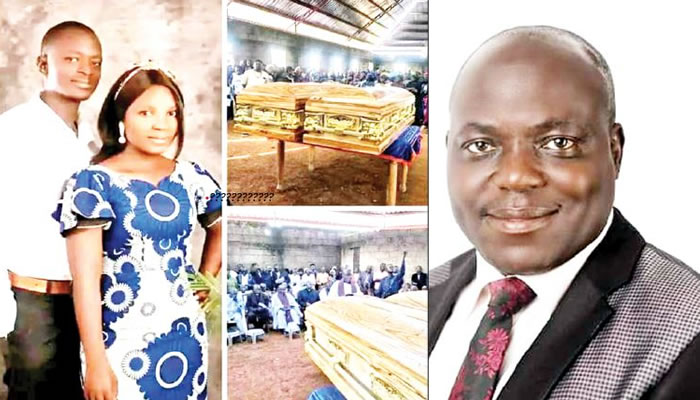
Newlyweds, Barnabas Rwang, 27, and his wife, Sandra, 24, were allegedly shot dead by herdsmen in Plateau State on August 14. Sandra’s uncle, Davou Mang, in this interview with JAMES ABRAHAM, demands justice.

What relationship did you share with the couple?

The wife was my niece, and we are from the same village as the husband. We were just generally related to the husband and some others within the same village. The couple got married on March 25, 2023. You know, the man and the woman were neighbours. They were in the same village, and their houses were just a few metres away from each other. They grew together. So they fell in love, and eventually married. I attended the wedding, and you could see the love between them during and after the wedding.

What were their professions?

They were both teachers at BECO Comprehensive High School Kwi in the Riyom Local Government Area of Plateau State.

How did they meet each other?
The woman was in school. She was about to finish the NCE programme. She eventually finished and got the certificate in July, but the man had earlier finished his NYSC (National Youth Service Corps) and was teaching at the BECO.

Somehow, their parents asked them to wait for the woman to finish her NCE before they married, but they said no! They had made up their minds to marry. The deep love they had for each other was what impressed me, and I knew that, by the grace of God, they were going to live in a very happy family.

Unfortunately, just a few months after their wedding, they were killed at their place of work by herders. Their deaths are very painful.

Can you give a graphic description of how they were killed?

On that fateful day, I was in Jos, and then I got a call from my younger brother. You know, I told you the woman was our relative. My younger brother called and told me what happened at the school. You know the school compound is partially fenced. The staff members were having a meeting. They were preparing to have their speech and prize-giving ceremony. They were having a staff meeting, and behold, cows entered the school compound. So the school security man told the herdsmen to move away with the cows. I think some of the staff members also went and told them the same thing.

Unknown to them, the herders came with arms. The next thing they heard were gunshots. So it looks like it was a premeditated attack. If not, how come people just told them to move away from the school compound, and they just opened fire on them?

I learnt that they shot the woman first. She wanted to run away, but the herders stoned her legs, and she fell before they shot her. They came with guns. She was unarmed.

The husband ran over to rescue her and told them not to hurt his wife. Some people narrated that the man said, “Just kill me and leave this woman alone.”

But the killer herdsmen did not listen to his pleadings. After shooting her, they shot the man too.

So, how is the family taking it? Is it not a big blow to the family?

You should know that they were a very young couple. The woman was just 24, and the man was about 27 years old or thereabouts. You could see they were a very promising young couple, and all of a sudden, this kind of thing happened. Not that they were sick; somebody came and snuffed life out of them. You should know that it was very devastating for us as a family and as a community. We were devastated to see how a very young, innocent, harmless, and unarmed couple would just be shot at directly for doing nothing harmful, including the man. We were devastated. We couldn’t find answers to what went wrong or why the killers were callous. Why did they come to the school compound? Why did they come with arms in broad daylight?

What is the security situation in the area?

For now, the security situation is relatively calm. The sector commander of Operation Safe Haven in charge of the area has been on the ground. He has been doing his best. He swung into action immediately the incident happened. He went to where the suspects were said to come from. They went there, but the killers had deserted the place. I learnt that some had been arrested, but the real culprits were still on the run. So the community is pleading. We appreciate what he is doing, but if we want this security situation in the state to be stable and to avoid a recurrence, the real culprits must be arrested.

They must be brought to the book so that everybody will be satisfied and will bring closure to this kind of wickedness. We are even saying that whichever party commits a crime, whether it is the farmer or the herder, there should be justice. Justice must be done. For this particular couple, there must be justice. For us, justice could only mean arresting the culprit and persecuting them. Let the community know that those people have paid for their crimes. Then, at least, it would stop people who have similar intentions from committing further atrocities. But are you following up on the matter with the security people?

Yes, we are following up. The sector commander communicates with us himself. We follow up and find out the progress. Even on the day of the burial of the couple, the sector commander came, and the state governor sent the Commissioner for Higher Education. A lot of groups who were touched by the killing attended the burial. The late couple were members of the Peace House Couple Fellowship, and the husband was the coordinator within that area. The Peace House representative came. The sector commander understood the mood of the people, and he assured them that he was going to make sure that justice prevailed in this matter. If not, the solution to the security challenges we face may not come.

What do you think should be done to address the security situation in other Plateau communities?

Only justice will solve the problem. Let me give you an example of the sector commander who was in the Barkin Ladi LGA. When he was there, there was a really deep calm in Barkin Ladi Ladi. What did he do right? He made sure that whoever committed a crime, whether it was the Birom, non-Birom, or Fulani, that person must be brought to book and brought to justice, and people saw it. So, even the herders were afraid of committing the crime of grazing on farms or bringing down crops.

If you commit a crime, you will not go free. The people who kill cows will also not go free, so there was relative calm. I think this can be applied to Mangu, Bokkos, Riyom, Barkin Ladi, and Bassa… Everywhere there is a crisis, if justice is done, this situation will cool down. In Riyom, let me give you an example. Even in the Kwi community, when this happened (the killing of the couple), the herders also burnt down the crops. Nobody was arrested, nobody was caught, and nobody was held responsible for it.

SOURCE: The Punch

Harnessing the Power of Social Media: Influencers Unite to Boost Security in Katsina

A determined group in Northern Nigeria, spearheaded by renowned Hausa singer Dauda Rarara, is championing a unique approach to tackling regional challenges. They aim to counter the damage caused by misinformation and disinformation, which have been impeding the progress of developmental journalism and security measures in the area.

The group’s strategy involves mobilizing over a thousand social media influencers from all 34 local governments in Katsina State. The goal is to reshape attitudes toward governance and foster sustainable development and improved security using the far-reaching platforms of social media.

In addition to contributing to security efforts, the group believes that involving social media influencers in addressing the region’s issues will generate meaningful employment opportunities for the local youth.

Driven by their mission, the organizers are keen on extending these gatherings to influencers from different regions throughout the country, aiming to shift the mindset of the youth on a national scale.

Farmers/Herders Clash: Tinubu will tackle Insecurity, Benue Senator Zam reveals

The Senator representing Benue North West Senatorial zone, Titus Zam has assured his constituents that President Bola Tinubu would soon tackle the problem of farmers-herders clashes throughout the country.
Speaking at an interactive session with his immediate constituents from Gwer West Local Government Area area, on Saturday, in Makurdi, Benue state capital, Zam disclosed that the president and the Service Chiefs, George Akume, have mobilized security personnel to tackle insecurity, especially against farmers, so that they can go return to their farmlands.

Zam, who is the chairman of the Senate Committee on Business and Rules, spoke on the sustained herdsmen attacks on his Ityoshin communities, saying they are political.

It was learnt that out of 15 council wards in the Gwer West Local Government area, 13 have been occupied by suspected armed herdsmen who are grazing on farmlands after setting their houses ablaze.

He said during the screening of the Service Chiefs, he drew their attention to the worsening security situation in his immediate communities and they assured him that, with time, the problem will be over.

He appealed to his people to be patient with him saying: “I’m less than 100 days in the office, and I have four years tenure, so gradually most of the critical issues would be solved.

On the total collapse of the Makurdi- Naka – Adoka federal highway which the contractor has stopped work, Zam said a new minister of works has been appointed, and he has tabled the matter before him, saying that the contractor would soon return to work.

He described the Secretary to the Government of the Federal, SGF Senator George Akume, as his leader and will continue to work with him.

Zam said: “I will work with Senator George Akume, and if anyone is not happy I’m sorry. Akume made me a senator, I have been with him for more than 20 years, and I can’t leave Senator Akume.

He promised to continue the interactive session with his people, just as he advised them to support President Tinubu, Senator Akume, and all APC candidates and avoid insulting elders on social media.

Earlier, the guest speaker, Professor John Ajai, and the chairman of the occasion, Kenneth Iyo Iharev commended Senator Titus Zam, for the interactive session, and appealed to him to attract development projects to the people of Gwer West in particular and zone B in generally.

The duo of Iyo and Ajai pointed out the perennial water scarcity in Naka town, which is the headquarters of Gwer West Council, unemployment of graduates among others as areas that need the urgent intervention of Senator Zam.

SOURCE: The Nation