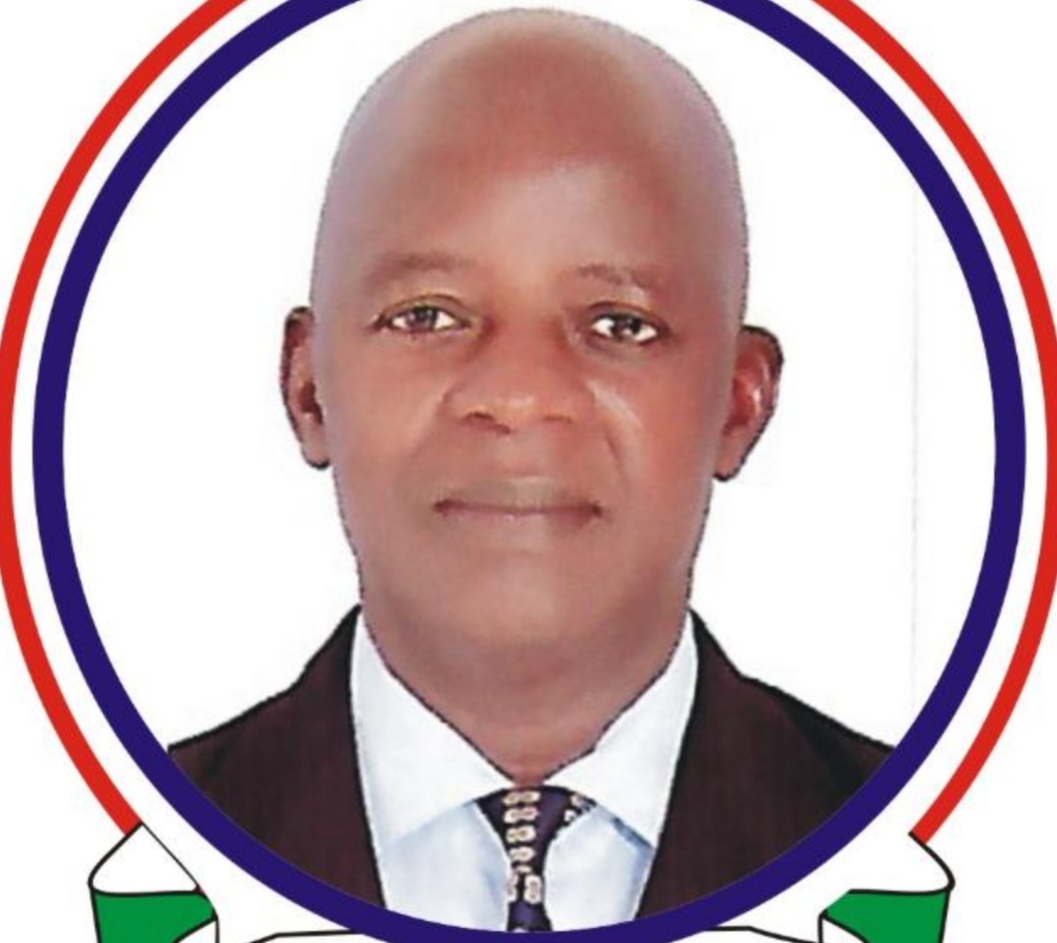
Chill & Vote for Jordan Bangoji at GreyHobb – Powered by GreyHobb

GreyHobb, a creative Tech Hub based in Kaduna and the proponent of #TeamJordan social media campaign is organizing a Chill & Vote session at 6pm today to mobilize massive support for Jordan Bangoji, a young multi talented rising star from Kaduna State who has put the entire nation on  notice with excellent performances at the ongoing Nigerian Idol.

Some of the activities to expect  this evening include:
– Watch all Jordan’s performance
– Voting Assistant
– Networking with #TeamJordan

The Chill & Vote session will be taking place at GreyHobb which is located at no. 31 Gwari Avenue, beside Access Hotel Barnawa, Kaduna State.

WHO IS JORDAN ?

Jordan Bangoji is a talented singer, songwriter, basketball player, and university student from Southern Kaduna, Nigeria. He is a Top 12 contestant on Nigerian Idol Season 7 in 2022.

Jordan had the Judges amazed by his vocal ability right from his first Audition and got a standing ovation at most of his subsequent performances at Theatre Week. Jordan knew he wanted to be a singer because it is the only way he finds true expression of who he is.

His favorite color is dark green, which reflects quite literally, his love for nature, and metaphorically, his ambition. His love for basketball reflects his ‘goal-getting’ attitude; you can also see this in the way he fiercely chases after his dreams and passion for music.

Jordan’s favourite moment from Theatre Week was his duet performance and the person who would have been most proud of his achievement was his elder brother who had passed on. Jordan hopes Nigerians will fall in love with his personality believes he will be the next Nigerian Idol. Check out why he believes he is going to earn that title.

Defend Yourselves Against Your Attackers: SOKAPU Youth Charges Southern Kaduna

Following renewed attacks across Southern Kaduna, the Youth wing of the Southern Kaduna Peoples Union (SOKAPU) has charged the people of the area to defend themselves against those they tagged “criminal Fulani terrorists” operating in the area.

In a statement signed by the National Youth Leader, Comrade Isaac John and made available to Middle Belt Times, the group described as worrisome the continued attacks, killings and destruction of properties in the area.

The statement reads in full;

Brethren, we must have observed the reccuring Spade of attacks and killings taking place across our communities in the last few weeks.

Last night Maraban Agban Kagoro came under attack with scores killed, properties and houses burnt by the same terrorists Fulani herders who have vowed to die attacking our kinsmen, one thing we are sure of is the unarguable fact that they shall continue to labour in vain.

it is however worrisome the manner with which this criminals continued to operate with no deliberate attempt by security bodies to intervane or stops these criminal Fulani terrorists from attacking our communities.

The Youth Wing of Southern kaduna People’s Union is again at this time compelled to say Government both at the State and Federal levels have failed to put an end to this mindless attacks on our people and arrest perpetrators.

We are calling on all Sons and Daughters across Southern Kaduna in the face of these cruel killings to defend yourselves in the proportionate ways and manners your lives seems threaten.

We urge us all not to sit and watch while our kinsmen are led to slaughter like lambs, our lands taken, our children butchered and our sisters and daughters raped to death.

Let us be reminded that every inch of Land in Southern Kaduna is an inheritance from our forefathers and remains the exclusive entitlement of our offsprings.

We cannot abandoned or cedes an inch of Southern Kaduna to any coward at this time, not when our forefathers and fathers died protecting it.

It is a noble duty we hand over same which was handed to us to our offsprings.

Brethren fear not the sounds and echoes of death.

For if God is with us, who can stand against us.

“For the LORD our God is he that goeth with us, to fight for us against our enemies, to save us.” Deuteronomy 20:4

Above all brethren lets continue to look up to the heavens from where cometh our help.

God bless Southern Kaduna

End of statement…

On Sunday, terrorists suspected to be Fulani herdsmen launched an attack on Mararaban Agban Kagoro in Kaura local government area of Kaduna state, killing scores and destroying dozens of houses. As at the time of filing this report, the exact number of persons killed and properties destroyed are yet to be ascertained.

Rape Of A Nation And APC/Buhari’s Squandered Messianic Dreams: 2015-2022 Scorecard
           PART I
         THE ECONOMY

             By
      Emmanuel Gandu

ABSTRACT

It is no longer a fallacy that Nigeria is a sinking rudderless ship captained by Muhammadu Buhari with an APC ground, sea, and air crew that have refused to listen to the series of MAYDAY distress calls from helpless Nigerians aboard.
In order to succinctly highlight the stark reality and consequences that have contributed to the deplorable and decaying Nigerian nation, this presentation attempts to be deliberately incisive, measured, and blunt, as it is heavily, and beautifully laced with an array of embroidery of facts, figures, and data.

INTRODUCTION
(a) The man Muhammadu Buhari :
Born in Daura on December 17, 1942 of Fulani descent, Muhammadu Buhari is a retired Nigerian Army General, a former governor, a one time petroleum minister under the Obasanjo military government, a former military Head of State from December 1983 – 1985, and the head of Petroleum Trust Fund under the military government of General Sani Abacha.
In 2015 Buhari at last was for the fourth (4) consecutive time after three (3) unsuccessful consecutive attempts was elected president of Nigeria.
Buhari as a retired military officer, former governor, head of state, was seen to have the capacity to stop corruption, revamp the economy, halt the breakdown of law and order, and other aspects of insurgency. It was not surprising therefore for Nigerians to entrust their destiny to Buhari.
By 2019, Buhari again won re-election with 56% of lawful votes cast for another 4 years as president of Nigeria.
He is happily married (for the second time) to Hajia Aisha Buhari.
He lives a simple austere life characteristic of the typical Fulani.

(b) Buhari’s rising popularity :
So much was going good for Buhari especially starting from his military days as the GOC Jos when he led the Nigerian troops to successfully dislodge the advancing Tchadian soldiers who had encroached into Nigerian territory, even without obtaining clearance from Alhaji Shehu Shagari the then president and commander in chief of the Armed forces.
Also going for him was his fight against corruption, indiscipline, and drug trafficking/abuse. His war against the vices in the Nigerian society otherwise called War Against Indiscipline (WAI) endeared him to both the young and the old, the rich and the poor, and especially the students and labour unions who saw him as a revolutionary leader.
Interestingly, Muhammadu Buhari’s popularity had increasingly and overwhelmingly spread like wild fire not only across the Hausa Fulani northern Nigeria including the Sahel region of West Africa, but also in Southern Nigeria.
This popularity attracted to him complementary and populist names like Maigaskiya (the truthful one), Baba Talakawa, Super Tanker, Mai Ceto (Messiah), Sai Baba, etc. The Buhari brand therefore became a product that was on popular demand.
Little wonder he always had 12 million votes saved in the political bank even before the start of any elections in Nigeria.

(c) The self inflicted eclipse of Buhari :
However, the Muhammadu Buhari that triumphantly rode on the popular mandate of majority of Nigerians to become president in two consecutive terms of 4 years each began to become less and less popular by the day.
Consequently, Nigerians have adduced the following reasons for this failure to Buhari’s door step :
√ Nigeria is flowing with blood and burning by ? fire more than ever before.
√ Fulani heardsmen terrorists kill, rape, burn humans/crops, drive and occupy people’s land un- aprehended.
√ Unending Boko Haram terrorism.
√ Hunger, high cost of living, and hardship in the country never experienced in the history of Nigeria.
√ Banditry, kidnapping, and killings of people in homes, schools, worship centers, farms, and even in military barracks.
√ Relocation of manufacturing companies outside Nigeria.
√ Rising unemployment.
√ Economy in shambles.
√ Increasing agitations for restructuring and secession.
√ Nigerians leaving the country in droves for fear of the unknown.

             THE ECONOMY

The gloomy outlook of the Nigerian dilapidating and jaundiced economy may be the legacy that the All Progressive Party (APC) and Muhammadu Buhari will bequeath to future generations of Nigeria. A legacy of an impoverished, bloody, beger, and inept nation, a divided and polarized citizenry, and a failed state.
These are the facts :
(1) Debts and borrowing :
According to Nigeria’s Debt Management Office (DMO) the nation’s total public debt rose to #38.5 Trillion as at September 2021. This is largely as a result of the government’s penchant for borrowing. This borrowing spree is raising concern among Nigerians on the debt sustainability of the country amidst dwindling revenue to meet the debt obligations to the creditors. This mounting debts will eventually be a cog in the wheel of progress for future Nigerian generations is a frightening concern, and therefore leaves much to be desired.

Regrettably, the Buhari led APC government is alleged to have violated Nigeria’s Fiscal Responsibility Act and the Central Bank of Nigeria (CBN) Act 2007. This is so because Buhari exceeded the fiscal borrowing threshold as stipulated by the Fiscal Act and the CBN Act.
Zainab Ahmed, Minister of Finance Budget and National Planning admitted to this exceeding threshold by Buhari, but defended it on the grounds that COVID 19 was good enough reason to breach the Act.

Meanwhile, Wilson Erumebor, a senior economist at the Nigerian Economic Group, and Vahyala Kwago, a senior Researcher and Policy Analyst at Budgit warned that Nigeria is a case where expenditure keeps rising, revenue not improving as expected, thereby creating a wide fiscal deficit that is majorly financed by borrowing.
Unfortunately, it is a case where government is borrowing more, spending more, and earning less revenue.
This really spells doom for Nigeri’s future.

In order to help Nigeria come out from this fiscal mess, the International Monetary Fund (IMF) offered it’s experienced expert opinion. In its 2020 and 2021 country’s report for Nigeria, the IMF warned that Nigeria’s low GDP compared to high debt profile is highly vulnerable to uncomfortable shocks.

(2) Corruption :
Allegations and counter allegations of corruption cases at the corridors of power churns out figures that lend credence to incontrovertible facts and not mere allegations of corruption.
For instance, the alleged missing #3,143,718,976.47 billion traced to the Ministry of Finance for which the Socioeconomic Rights and Accountability Project (SERAP) is suing Muhammadu Buhari in January 2022 for non – investigation.
This came as a result of the accusations by the Federal Auditor General Office in the 2018 and 2019 audit annual reports that #3.1 billion public funds are missing, missapropriated, or unaccounted for.

According to research by Transparency International, their Corruption Perception Index for 2021 placed Nigeria at 154th position out of 180 countries. This placed Nigeria as the 2nd most corrupt country in West Africa. Nigeria had occupied the 136th position in 2015.

Further more, corruption in government agencies is becoming alarming. For insurance, an audit query mandated the Nigerian Ports Authority (NPA) to refund series of staggering sums of money to the Federal government as products of corruption. These amounts of money include – (a) #40.13 billion, (b) $921.64 million, and (c) £289,931.82 million.

(3) Uncertainty with the 2022 budgetary regime :
Nigeria’s rising debt profile especially debt service to revenue ratio, as well as foreign exchange liquidity constraints portends a gloomy 2022 budgetary regime for the country.
(i) No sooner had Buhari signed the #17.126 Trillion 2022 budget christened ‘Budget of Economic Growth and Sustainability’ than he sent a supplementary budget request to the National Assembly for their consideration.
Contained in this request are :
(a) #2.557 Trillion to fund petroleum payment in 2022.
(b) #25.81 billion for the Power Sector Reform Programme agreement with the World Bank.
(c) #1.42 billion for ministry of Water Resources for 2022.
(d) #3 billion for payment of Local Contractors debts and other liabilities.

(ii) As it stands now, the 2022 budget comes with an already mixed baggage of :
(a) #6.25 Trillion deficit.
(b) # 3.8 Trillion to service debt.
(c) # 5.6 Trillion capital expenditure.
All these wth only a paltry sum of
(d) #3.6 Trillion expected oil revenue.
Unfortunately, however, Nigerians are told that the 2022 budget will be largely financed by new borrowings, privatization proceeds, and loans secured for specific projects.

(iii) Going by a communique released by FAAC on Thursday February 24, 2022, many states of the federation are set to face economic uncertainties and challenges in 2022 as the Federal Accounts Allocation Committee (FAAC) shared the sum of#574,66 billion.
This amount is lower than the #699.82 billion disbursed in December 2021.
As explained further, this fall in FAAC allocation is as a result of Federal government plans to deduct #950 billion for the payment of fuel subsidy from allocations due to states in 2022.

(4) Inflation, poverty, and high cost of living :
The scotch of poverty and hunger ravaging the people, high cost of food, goods and services have all climb up to astronomical proportion beyond the reach of Nigerians. Manufacturing companies have taken a first class flight to other safer countries, unemployment has forced millions of school/University graduates to take to crime.
Regrettably too, the World Bank in its November 2021 figures of statistics shows that the poverty rate stands at 42.8% as Nigeria is witnessing the highest surge ever in food – price inflation in two decades, thereby having a long – run consequences for human capital.

Meanwhile, the Muhammadu Buhari led government is yet to fulfill even one of the ambitious campaign promises made to Nigerians prior to their election in 2015, some of which includes building of one new refinery every year their first four years in government. Others include the eradication of Boko Haram within 3 months of ascending power, eradication of corruption, payment of #5,000.00 to every unemployed adult, employment of 30,000 school leavers every year.

Truth be told, the World Bank in its January/February 2022 edition of ‘Nigeria Development Update’ report said that the Federal government of Nigeria did not take any concerted action towards curbing inflation in 2021 despite an estimated 8 million Nigerians below the poverty line.
According to the Washington based World Bank, Nigeria might have one of the highest inflation rates globally in 2022, with increasing prices diminishing the welfare of Nigerian households.
Further more, Nigeria, according to this world bank report, is also projected to have the seventh (7) highest inflation rate among Sub – Saharan African countries in 2022.

(5) Foreign investment in Nigeria (FDI) :
Foreign Direct Investment in Nigeria is dwindling due to hostile economic policies, insecurity, corruption, unfriendly business climate, and wrong structural policies. Others include fiscal, monetary, and socio economic policies.
No investor will risk his investment in a ‘chaotic’ situation and environment like Nigeria under Buhari’s watch.
According to the National Bureau of Statistics (NBS) Foreign Direct Investment(FDI) into Nigeria slumped to its lowest level in 11 years. Accordingly, FDI dropped to $ 77.97 million in the second quarter (Q2) of 2021 indicating a 49.6% drop.
This downward trend had started in the first quarter (Q1) of 2021 when foreign portfolio investment dropped by 77.4%.
Further more, these findings have been corroborated by both the Organization of Economic Co-operation and Development (OECD), and the United Nations Conference on Trade and Development (UNCTD)
They both agreed that FDI is an integral part of an open and effective international economic system and a major catalyst to a country’s development.
However, Nigeria, according to them has failed to attract FDI’s foreign investment to her local business.

Even the Central Bank of Nigeria in its report of January 2022 disclosed that capital importation into the country fell by 32%.
This, according to the report, was because countries like the UK, USA, South Africa, and others slashed Nigeria’s investments.

(6) Nigeria’s unfriendly business policies – a comparative analysis with Ghana :
It is not a myth that Nigeria is a sinking rudderless ship captained by Muhammadu Buhari with an all APC ground, sea, and air crew that have rejected the series of MAYDAY distress calls from helpless and endangered Nigerians aboard.
In order to succinctly highlight those stark reality and consequences of unfriendly business policies that have contributed to the deplorable decaying Nigerian Nation, a comparative analysis of Nigeria and Ghana will suffice :

(a) Ghana population is estimated at 31 million (United Nations 2021), while Nigeria is projected at 200 million (United Nations 2021).

(b) The fight on corruption and bad leadership in Ghana which was radically introduced by the Revolutionary workaholic fighter pilot president Lt. Jerry Rawlings intermittently 1979, 1981, 1992, and finally ending in 2001 had brought sanity and good governance to that once gold rich Ghana. This progressive trend had been sustained by successive regimes to date, thereby making Ghana the no.1 destination for business, education, and manufacturing amongst others in Africa.

On the contrary, Muhammadu Buhari in his second coming as Nigeria’s leader was popularly elected on the mantra of fighting corruption, insecurity, and revamping the economy.
Sadly enough and unfortunately too, the fight against insecurity is such that the Nigerian military have been so much compromised that they are popularly described as a lame toothless bulldog.

Regrettably too, the fight against corruption by the Buhari government seems to be a fight against only the opposition as indicated by the erstwhile APC National Chairman Adams Oshiomhole’s announcement that any politician who defects to the ruling APC will be given a grand reception, and “his sins will be forgiven.” In this 2 scenarios presented, any investor would rather prefer Ghana to Nigeria.

(c) Nigeria banned/suspended Twitter operation from 5/6/2021 up till 12/1)2022 because Twitter suspended the Twitter account of one Muhammadu Buhari who happens to be the president of Nigeria because he used offensive language that contravened Twitter community standards.
As a consequence of this ban/suspension of Twitter by Nigeria, the country suffered the following losses :
? Nigeria lost $1.549 billion.
? Twitter headquarters is based in Ghana.
? Nigeria have lost out to Ghana on Twitter and software related jobs, tax revenue, allied services patronage, and international image, etc.
? Available facts and data shows that about 40 million Nigerians are on Twitter and hold Twitter accounts.
? It means that the number of Nigerians who use Twitter are more than the total population of Ghana.
? Despite Nigeria’s numerical advantage over Ghana, Twitter refused to leverage on this big business opportunity but went ahead to locate it’s headquarters in Ghana rather than Nigeria.

(d) Job opportunities by International agencies in Ghana and Nigeria :
(I) Volkswagen commissioned its Ghana manufacturing/assembly plant in August 2020.
(II) Toyota company commissioned some of its brand vehicles assembly plant on 29/6/2021 in Ghana.
On the contrary, Nigeria is busy looking for grazing researves and creating grazing routes for cattle, and employing the cattle policy to decimate her 200 million population.

(e) While Ghana is the headquarters for the African Continental Free Trade Area (ACFTA), Nigeria again lost out due to her unfavourable hostile policies despite Nigeria’s huge population that would provide the biggest single market in Africa.

(f) Nigeria is rated as the poverty capital of the World despite being the 7th biggest oil producer in the world.
According to research findings from world reputable organizations including Research Gate (2020); World Poverty Clock (2021); and the SEATTLE based group (2020), more than 50% of Nigeria’s population live in severe poverty.
Interestingly, these research findings are further corroborated by Nigeria’s National Bureau of Statistics (NBS) in its own Nigeria’s Living Standard Survey (NLSS) findings released in 2019. In this their findings, 50% of Nigeria’s population live below the poverty line of #137, 430 ($381.75) per year.
Reasons advanced by these research agencies for the poverty in Nigeria include corruption, unemployment, inequality, illiteracy, inconsistent and unfavorable policies.
On the contrary, Ghana is rated highly with a much better performance because the country has a good level of employment, less corruption, relative equality, high level of literacy, and a conducive climate for ease of doing business – thus attracts foreign investment.

(g) Nigeria banned the use of Cripto currency in February 2021 despite being Africa’s largest Bitcoin market by trading volume.
This financial policy decision made Nigeria to lose capital inflow that would have provided business opportunities and jobs to many of Nigeria’s 200 million population.
Ghana, on the other hand, is opening wide its business doors to a rather free market economy in order to boost capital inflow, generate income, and provide jobs for her 31 million population.

(h) In 2019 Ghana ranked 13 places higher than Nigeria in the World Bank Index for ease of doing business. According to this world bank report, ease of doing business in Ghana increased from 57.0 score in 2016 to 60.0 in 2020, growing at an average annual rate of 1.29%.
Ghana was ranked no. 118 in the world ranking list while Nigeria was at no.131.
This ranking is from 1 – 190, and it starts from the best country as no.1 while the worst country is ranked no. 190. In this findings, New Zealand was ranked no. 1, Singapore no. 2, USA no. 6, UK no. 8, Rwanda no. 38, and Libya no. 186.

(i) Google (HOOGL), Microsoft (MSFT), and Huawei are among international Tech Giants that have expanded their operations in Ghana. This they do by targeting software developers and young creative minds.
Regrettably, Nigeria’s 200 million population is unable to get a bite of this technological bonanza.

(j) Global Peace Index, a reputable world research organization in its 2020 survey report ranked Ghana as the 43rd most peaceful country in the world. Unfortunately, Nigeria was ranked at 147th position.

(k) In 2020 Global Terrorism Index ranked Nigeria as the 3rd most terrorised country in the world. Afghanistan is ranked no.1, Iraq is no. 2, Syria is no. 4, Pakistan no.5, Somalia no.6, DR Congo no.10.
Ghana is reputed to be the most peaceful country in Africa.

Watch out for 🙁 Part II Security) next.

                   Peace ?
                 17/3/2022
EFCC Is On A Vendetta Against Chief Whip Of The Senate For Political Reasons: Says HURIWA

Leading civil Rights Advocacy Group:- HUMAN RIGHTS WRITERS ASSOCIATION OF NIGERIA (HURIWA) has carpeted the Economic and Financial Crimes Commission (EFCC) latest round of forum shopping and targeted political persecution of the most senior South Eastern Political office holder in the current dispensation –the chief whip of the senate of the Federal Republic of Nigeria Senator Orji Uzor Kalu.
HURIWA said it is inconceivable that the anti-graft agency will devote a lot of man-hour and resources chasing shadows because it has a preconceived political agenda to demarket the most influential political leader of the National ruling party who is a pole’s position to clinching the prestigious Presidential flagbearer of the All Progressives Congress in a sinister plots to deny the Igbo religion of the historic opportunity of becoming an executive President of a United Nigeria. 
“The latest application made by the EFCC praying the Abuja division of the Federal High Court to transfer the fresh trial of former Abia State governor over alleged N 7.1 billion fraud to Lagos State smacks of desperate forum shopping by an agency that is so much in a dead hurry to politically harass the chief whip of the senate to quit his presidential aspiration in favour of the political Godfather of some powerful forces embedded within the hierarchy of the EFCCA”. 
HURIWA also tasked the EFCC to tell Nigerians What the logic is in seeking to transfer the trial of a matter alleged to have happened in Abia State, South East of Nigeria to Lagos State as if the South East has become the outpost of the South West of Nigeria? This is provocative as well as vexatious. ”
“We in the civil Rights Community hereby condemns the hierarchy of the EFCC for the undue interest and desperation to terminate the political rise of a phenomenal political leader who had previously been cleared by the nation’s apex court of having anything to do with this politically coordinated and calculated persecution to rubbish the presidential ambition of the most prospective candidate of Igbo origin”.
HURIWA recalled that the Economic and Financial Crimes Commission EFCC on Thursday last week asked a Federal High Court in Abuja to transfer to its Lagos division, the fresh trial of former Abia State Governor, Senator Orji Uzor Kalu and two others in an alleged 7.1 billion naira fraud.
The motion on notice seeking the transfer was brought pursuant to sections 18, 19, 22 and 45 of the Federal High Court Act 2010 and section 93 of the Administration of Criminal Justice Act, 2015.
The motion prayed for an order of the Federal High Court in Abuja, transferring the case with charge number FHC/ABJ/CR/56/2007 between the Federal Republic of Nigeria and Orji Uzor Kalu and two others to the Lagos division of the court.
Two others on the motion paper are Jones Udeogo and Sloks Nigeria Limited, an alleged family company of Senator Kalu.
Oluwaleke Atolagbe, counsel to EFCC said the motion was predicated on 5 grounds among which are that the Abuja division of the Federal High Court lacked the requisite territorial jurisdiction to entertain and try the defendants in the instant charge.
Another ground for seeking transfer of the trial was that the charge was preferred against Orji Uzor Kalu, Slok Nigeria Limited and Ude Jones Udeogu at the Federal High Court Abuja sometime in number 2007 by the EFCC, following an investigation by the commission.
The motion further indicated that after taking their plea, the defendant brought an application challenging the competence of the charge and contending that there was no prima facie case against them.
It was also contended that following the decision of the Supreme Court that many of the ingredients of the offences against them occurred in Lagos and even most of the witnesses who are bank workers reside in Lagos, the EFCC applied to the Chief Judge of the Federal High Court to transfer the matter to Lagos.
Satisfied that many of the ingredients of the offences occurred in Lagos the Chief Judge transferred the case to the Lagos division of the court where the defendants were prosecuted and judgment delivered in the matter.
He, therefore, asked Justice Ekwo to issue an order transferring the trial to Lagos in compliance with the Supreme Court order.
When the matter came on Thursday, Justice Inyang Ekwo said that he would not be able to take the application in view of the approaching Easter holidays.
The Judge consequently fixed May 17, 2022 for determination of the application.
At the proceedings, Prof. Awa Kalu SAN stood for former governor Kalu, Mr Solo Akuma SAN stood for Jones Udeogu while Goddy Uche SAN, stood for Slok Nigeria Limited.
HURIWA said it was worried that the EFCC is seeking to prosecute the Chief whip of the senate twice over the same matter in which a Judge who got elevated to the Court of Appeal chose to hang on as a Federal High Court judge and ended up passing a preconceived verdict against the former governor of Abia State senator Orji Uzor Kalu- a judgment that was torn into shreds by the Supreme Court of Nigeria. 


ASUU strike: Politicians’ children must be banned from schooling abroad, in private universities-HURIWA

..URGES ASUU NOT TO VICTIMISE STUDENTS WITH PROVOCATIVE STRIKES

Civil rights advocacy group, Human Rights Writers Association of Nigeria, (HURIWA) on Wednesday, said for the recurring industrial actions by the Academic Staff Union of Universities to end once and for all, politicians and government officials must be banned from sending their children and wards for academic purpose of schooling in private institutions and in foreign jurisdictions. 

HURIWA has also described the quick resort to strike by the Academic Staff Union of Universities as lazy and irrational since the members of the Union can as well adopt other proactive, constructive and elaborate alternatives to strikes such as publicising the schools and names of Children of Nigerian public office holders schooling in Western Europe,  Canada and the USA and to write protest letters to those schools informing them that Parents of their Students of Nigerian origin who are in charge of public affairs have sabotaged University education and have therefore decided to fund their Children’s Academic activities from stolen public funds of Nigerians. 

HURIWA, in a statement by its National Coordinator, Comrade  Emmanuel Onwubiko, emphasised that until the children of public officers have no educational alternative both at home and abroad, the perennial strike by public university lecturers won’t be earnestly resolved by those in power. The group therefore Advocates what it calls constructive blackmail of Government officials by the Academic Staff Union of Universities as a possible strategy to compel the central government to honour the promises and agreements reached between government and ASUU.  

The group lamented that the intermittent industrial actions embarked upon by aggrieved university lecturers due to government’s failure to meet certain agreements and conditions is inimical and counterproductive to the bulging over 34 million youths.

HURIWA further said that for a country with over 40 million out-of-school children, prolonged stay out of tertiary institutions by youths will fill the crime pool of bandits, fraudsters, ritualists, armed robbers, prostitutes, amongst others.

ASUU, on March 14, at the expiration of its four-week warning strike which it declared on Monday, February 14, 2022, extended the industrial action by two months.

The union led by Professor Emmanuel Osodeke said it made the decision to extend the strike so as to give the Federal Government and its agencies enough time to meet the lingering demands of the union.

The union had embarked on a nine-month strike in 2020 before it was called off in December of that year.

But ASUU said this week that the government had failed to satisfactorily address all the issues raised in the 2020 FGN/ASUU Memorandum of Action but the Minister of State for Education, Emeka Nwajiuba, insisted that the Federal Government had met all of ASUU’s demands including funding for revitalisation of public universities (both Federal and States), renegotiation of the 2009 FGN/ ASUU Agreement and the deployment of the University Transparency and Accountability Solution.

Other demands of the union as listed by ASUU include Earned Academic Allowances, State Universities, promotion arrears, withheld salaries, and non-remittance of third-party deductions.

Reacting on the impasse so far, HURIWA’s Onwubiko declared, “The Federal Government which is saddled with the provision of quality education has failed woefully. It is more pathetic that government officials including the two education ministers have maintained indifference in meeting ASUU’s demand once and for all and not in piecemeal.

“To think that the present government has eight years to address the matter and it has failed to do so in the last seven years is unthinkable. The reason, however, is not farfetched; every now and then, politicians and government officials flaunt photos of the matriculation and the graduation of the children in first-class universities abroad and a very few in private universities back home unaffected by the perennial industrial actions by ASUU and other unions in tertiary institutions. They do this at the chagrin of abandoned Nigerian students back home who are forced out of school and their stay of four or five years elongated to over seven years due to ASUU strikes.

“HURIWA posits that the National Assembly must be resolute and make laws banning politicians from sending their wards overseas for studies so that all hands can be on the deck to resolve ASUU lingering crisis.

“Nigeria is sitting on a time bomb if ASUU strike is allowed to linger as there are connections between rising criminality and out-of-school students. The government must make hay while the sun shines. HURIWA has also warned that the strike would push thousands of students into such crimes like yahooyahoo and to be available for active recruitment to carry out terrorism. The continuous closure of Public tertiary institutions is a grave threat to national security interests of Nigeria and must be brought to an end immediately. 

March 16, 2022

Emmanuel Onwubiko

National Coordinator – HUMAN RIGHTS WRITERS ASSOCIATION OF NIGERIA (HURIWA).

War Jets Bomb Terrorists leader’s Wedding Ceremony in Katsina

Scores of armed terrorists have been eliminated when military jets of the Nigerian Airforce (NAF) shelled missiles at a wedding feast organized for one of Katsina top Bandit Leaders, PRNigeria reports.

Among those killed include one Sule, a notorious bandit leader, who is a brother to Lalbi Ginshima, also a ‘killer’ bandit.

The onslaught by troops of the Nigerian military Air Task Force took place at Unguwar Adam Village in Dan Musa Local Government Area of the State.

PRNigeria was told by intelligence sources in Katsina, that credible intelligence was on Monday received by air troops that bandit-terrorists had migrated from Dan Alikima to Unguwar Adam for the wedding of one of their key leaders.

“As such, the Air Component dispatched an Intelligence, Surveillance and Reconnaissance (ISR) aircraft to monitor activities at the location.

“The aircraft later confirmed the intel to be accurate having sighted over fifty (50) of the bandits indulging in the festivities.

“Consequently, situation report was relayed and a NAF aircraft was scrambled by to undertake the mission,” a top military intelligence officer said.

According to the operative the ISR aircraft remained overhead the location and vectored the fighter jet to a new location along a river line North of Unguwar Adam where the bandit-terrorists had moved to.

He said: “On arrival, the aircraft observed over 50 bandit-terrorists and engaged them with rockets and cannons in successive passes.”

A local source told PRNigeria that the armed bandits suffered heavy casualties as many of them were decimated, while others sustained various degrees of injury.

“The terrorists suffered heavy casualties as many as 27 were decimated while others sustained various degrees of injury. Among those killed include bandit leader Sule who is brother to major bandit Lalbi Ginshima,” the source concluded.

(PRNigeria)

DPO Feared Killed as Terrorists Attack Nasko Police Ptation In Niger

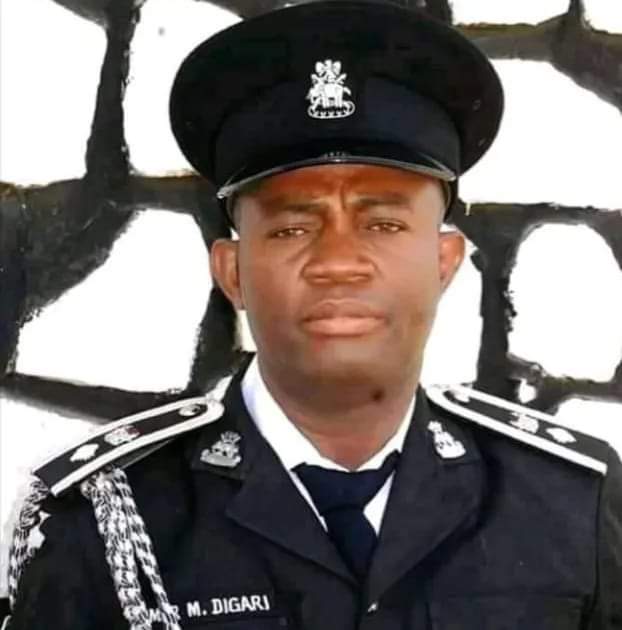
Terrorists operating in North Central state or Niger have attacked Nasko police station and killed the Divisional Police Officer, DPO.

The DPO, identified as Umar Mohammed Dakingari, was reportedly killed on Tuesday, alongside two other police operatives.

PRNigeria quoting a security source said that the bandit were on revenge mission after the recent attack on their hideouts and recovery of rustled cows.

“Recently a led a police team and vigilante in an operation leading to the killing of bandits and recovery of over 800 rustled cows.

“He was having a meeting with his security team for another operation when the bandits suddenly surrounded the station and started shooting sporadically.

“The DPO, alongside his personnel were ‘gunned down’ around 3pm at the Nasko Division of the Nigerian Police in Magama town.

“Though they killed the DPO, and two other policemen, other police officers who were deployed for reinforcement, however repelled the bandits, forcing them to flee with severe gunshot wounds.”

Is Dave Umahi Entitled To Due Process?

By Emmanuel Onwubiko


Democracy is indeed beautiful.  Beautiful is edifying because everyone has a say but the right thing is always done. 
But Constitutional democracy is even more beautiful given the fundamentals that make it work in such a vibrant fashion that Justice, fairness and equity are not only done but seen to have been done.
Additionally, the constitution of Nigeria which makes us a Constitutional democracy spell out in lucid format how and what each tiers of government should do as its very essence.
Beginning from section 4, 5 and 6 the Nigerian Constitution clearly tells us the mandates of each of the three arms of government viz the legislature, the executive and the judiciary. 
The Judiciary is clothed with the judicial powers of the federation in section 6 thus:”  The judicial powers of the Federation shall be vested in the courts to which this section relates, being courts established for the Federation. 
(2)     The judicial powers of a State shall be vested in the courts to which this section relates, being courts established, subject as provided by this Constitution, for a State. 
(3)     The courts to which this section relates, established by this Constitution for the Federation and for the States, specified in subsection (5) (a) to (1) of this section, shall be the only superior courts of record in Nigeria; and save as otherwise prescribed by the National Assembly or by the House of Assembly of a State, each court shall have all the powers of a superior court of record. 
(4)     Nothing in the foregoing provisions of this section shall be construed as precluding:- 
(a)      the National Assembly or any House of Assembly from establishing courts, other than those to which this section relates, with subordinate jurisdiction to that of a High Court; 
(b)     the National Assembly or any House of Assembly, which does not require it, from abolishing any court which it has power to establish or which it has brought into being.
(5)     This section relates to:- 
(a)      the Supreme Court of Nigeria; 
(b)     the Court of Appeal; 
(c)      the Federal High Court; 
(d)     the High Court of the Federal Capital Territory, Abuja; 
(e)     a High Court of a State
(f)      the Sharia Court of Appeal of the Federal Capital Territory, Abuja;
(g)      a Sharia Court of Appeal of a State; 
(h)     the Customary Court of Appeal of the Federal Capital Territory, Abuja; 
(i)      a Customary Court of Appeal of a State;
(j)      such other courts as may be authorised by law to exercise jurisdiction on matters with respect to which the National Assembly may make laws; and 
(k)     such other court as may be authorised by law to exercise jurisdiction at first instance or on appeal on matters with respect to which a House of Assembly may make laws.
(6)     The judicial powers vested in accordance with the foregoing provisions of this section – 
(a)      shall extend, notwithstanding anything to the contrary in this constitution, to all inherent powers and sanctions of a court of law
(b)     shall extend, to all matters between persons, or between government or authority and to any persons in Nigeria, and to all actions and proceedings relating thereto, for the determination of any question as to the civil rights and obligations of that person; 
(c)      shall not except as otherwise provided by this Constitution, extend to any issue or question as to whether any act of omission by any authority or person or as to whether any law or any judicial decision is in conformity with the Fundamental
Objectives and Directive Principles of State Policy set out in Chapter II of this Constitution; 
(d)     shall not, as from the date when this section comes into force, extend to any action or proceedings relating to any existing law made on or after 15th January, 1966 for determining any issue or question as to the competence of any authority or person to make any such law”.
 
The functionality and smooth workings of the nation’s judiciary are also systematically organized so every citizen of Nigeria could enjoy the full benefits of the due process of the law including the vital element which is the right of appeal in the way that if a citizens feels aggrieved about the decision of each of the member of the collective court System, such a citizen is constitutionally protected to exhaust what is termed legally as the right of appeal through the court of appeal up until the supreme court of Nigeria.
We are actually discussing the matter involving the governor of Ebonyi State Mr. Dave Umahi who together with his deputy and about 16 members of the Ebonyi State legislature are contesting a judgment of the Federal High Court, Abuja division which sacked them from their political positions for cross carpeting from the Peoples Democratic Party to the All Progressives Congress. What the governor has set out to do is to test the viability of the constitutional concept of due process.
We then asked, what Is Due Process in which case an expert Michael Boyle says: Due process is a requirement that legal matters be resolved according to established rules and principles, and that individuals be treated fairly. Due process applies to both civil and criminal matters.
In countries with developed legal systems, individuals expect that the rights enshrined in their constitutions will be applied to them fairly. This expectation of due process outlines the relationship individuals expect to have with their local, state, and federal governments—specifically, that the rights of the individual will not be violated.
KEY TAKEAWAYS of the concept of due process: Due process requires that legal matters be resolved according to established rules and principles and that individuals be treated fairly.
The origin of due process is often attributed to the Magna Carta, a 13th-century document that outlined the relationship between the English monarchy, the Church, and feudal barons.
In the U.S. due process is outlined in both the Fifth and Fourteenth Amendments.
The Sixth Amendment adds due process protections to criminal defendants.
One example of due process is the use of eminent domain.
Understanding Due Process
The origin of due process is often traced back to the Magna Carta, a 13th-century document that outlined the relationship between the English monarchy, the Church, and feudal barons. The document referred to as a charter (carta means charter in medieval Latin), sought to address many economic and political grievances that barons had with the monarchy.
 
In one of its clauses, the king promised: “No free man shall be seized or imprisoned, or stripped of his rights or possessions, or outlawed or exiled, or deprived of his standing in any other way, nor will we proceed with force against him, or send others to do so, except by the lawful judgment of his equals or by the law of the land.”1
The king was thus prevented from arbitrarily changing or ignoring laws, with the Magna Carta establishing the rule of law that the monarchy must follow.
 
Due process continued to be a part of British law for centuries after the signing of the Magna Carta, but the relationship between parliament and the courts limited its application in practice. The courts did not have the power of judicial review, which would have allowed them to determine whether government actions violated the rule of law, and thus could not always enforce due process. Judges could not be as assertive in defending due process in the face of parliamentary action, with the opposite holding true in the United States.
Types of Due Process according to the expert and he reminds us that in the United States, due process is outlined in both the Fifth and 14th amendments to the Constitution. Each amendment contains a due process clause, which prohibits the government from taking any action that would deprive a person of “life, liberty, or property without due process of law.” The due process clause provides several types of protection.2
Procedural Due Process according to him Procedural due process requires that when the federal government acts in a way that denies a citizen of a life, liberty, or property interest, the person must be given notice, the opportunity to be heard, and a decision by a neutral decision-maker.2
 
What is Substantive Due Process?  Substantive due process is a principle allowing courts to protect certain fundamental rights from government interference, even if procedural protections are present or the rights are not specifically mentioned elsewhere in the U.S. Constitution. Courts have taken an assertive approach to upholding due process, which has resulted in the executive and legislative branches of government adjusting how laws and statutes are written. Laws that are explicitly written not to violate due process are those that are least likely to be struck down by the courts.
 Due process in the U.S. also protects individuals from vaguely written laws and incorporates the Bill of Rights. (https://www.judiciary.uk/)
Now let’s read a little literature review of the concept of the right to appeal then we situate it within the context of the constitutionally protected right of governor Dave Umahi to exhaust his RIGHT OF APPEAL. 
The experts say that the most obvious way in which individual judges are accountable is through the right of the party to the proceedings to appeal any judicial decision, in some cases through several higher courts. In this way the losing party is able to have the decision reviewed by another independent judge or judges. The court determining an appeal will correct errors by the trial judge and the right of appeal ensures that, as far as possible, courts arrive at correct decisions. The decisions of appellate courts are fully reasoned, widely available and they do not always pull their punches.
Only a small number of the millions of cases commenced each year are subject to a successful appeal. For example, 1,553,983 civil (non-family) cases started in 2011, whilst just 1,269 appeals were filed in the Court of Appeal Civil Division in the same period. It is vital the right exists as it ensures that if a judge does make an error of law or fact the means exist to correct it. In this sense the right of appeal as a form of explanatory accountability has two distinct (but overlapping) functions, one private and one public. These were first noted by the Roman legal scholar Justinian.
The private function is to provide accountability to the individual litigants. The public function is that enabling errors to be corrected maintains and enhances the confidence of citizens in the justice system. Another aspect of the public function is that the appeal court can provide guidance for future cases and thus facilitate certainty. In these ways the right of appeal furthers the rule of law.
Examples of the many contexts in which there may be a right of appeal are:
•       In criminal cases there may be an appeal against conviction or sentence by the defendant, and a reference to the Court of Appeal by the Attorney General against a sentence that is considered to be unduly lenient in more serious cases.
•       In family cases, an appeal against a judge’s decision to place a child in care, to grant custody of a child to one parent rather than the other, or to determine how the matrimonial assets should be divided on divorce;
•       In civil cases the examples include; appeals against a judge’s determination of a contractual dispute (for example between consumer and supplier, builder and house-owner, or two businesses), a boundary dispute between neighbours, or a claim for compensation for personal injuries sustained in an accident or because of negligence by a doctor;
•       Against decisions of judges ruling on challenges by citizens to the decisions of public authorities; for examples challenges to decisions of NHS Trusts as to the availability of medicines, and decisions of planning authorities granting or refusing permission to build or extend houses, roads or motorways;
•       Procedural decisions made by judges in all parts of the justice system, such as whether to allow or disallow certain evidence to be put before the court, whether or not to require disclosure of certain evidence, or whether or not to grant an adjournment are also subject to appeal.
In 2012 just 62 individuals had their sentence increased after having their cases referred to the Court of Appeal by the Attorney General as ‘unduly lenient’ – a small fraction of the 138,808 cases dealt with by the Crown Court that year. There is also a proportionately small number of appeals against conviction or sentences. It is important to remember that these references and appeals represent only a small minority of those cases which are decided in the course of a year, and that they are not representative of the vast majority of appeals by those who have been convicted of a criminal offence where the sentencing decision of the court is upheld. This is despite the very strong criticism which is levelled at judges on the grounds that sentences are insufficiently severe.
It is tempting to try to analyse the performance of individual judges by looking at the number of appeals against them and then drawing the conclusion that those judges who are often successfully appealed are in some way less than competent. Such a conclusion cannot properly be drawn. The number of successful appeals against an individual judge’s decisions is not necessarily indicative of competence. Figures on successful appeals against a judge’s decisions can only begin to have relevance if they are set against the total number of decisions made by the judge in question, and those where there has been no appeal, or an appeal has been rejected. It should also be borne in mind that some judges have caseloads involving more complex and serious cases, so they might be more likely to feature in appeal cases. In any event, there are many cases where the Court of Appeal will overturn decisions without implying any criticism of the original judge, for example, where the lower court was required to follow an earlier decision of the Court of Appeal which is subsequently found to be incorrect.(         ).
This right of appeal is what governor of Ebonyi State, David Umahi, and his deputy, Dr. Eric Igwe, have approached the Abuja Division of the Court of Appeal to set aside the judgement that sacked them from their respective offices over defection from the Peoples Democratic Party, PDP, to the ruling All Progressives Congress, APC.
This came as the Nigerian Bar Association, NBA, yesterday lashed out at the governor over his outburst against the judge that gave the judgment, Justice Inyang Ekwo, describing it as “executive rascality.”
It would be recalled that Umahi had, in the aftermath of the judgement on Tuesday, accused the judge of doing a “hatchet job” in his ruling.
This is even as Ebonyi State government, yesterday, described the verdict against the governor and his deputy as an attempt to heat up the polity in the state.
Governor Umahi and his deputy, through their team of lawyers, led by a Senior Advocate of Nigeria, SAN, Chukwuma Ume, in their eight grounds of appeal, maintained that Justice Inyang Ekwo of the Federal High Court in Abuja, erred in law in his judgement and caused a grave miscarriage of justice against them.
They argued that the trial court, in ordering them to vacate their offices, based on the suit, marked FHC/ABJ/CS/920/2021, attempted to overrule a subsisting decision of the Supreme Court in AG Federation v. Atiku Abubakar & 3 ORS (2007) LCN/3799 (SC).
They contended that the apex court had in its decision, held that no constitutional provision prohibited a sitting president or vice president, and invariably, governor or deputy governor, from defecting to another political party.
They maintained that the trial high court judge erred, when he held thus: “I have not seen any authority which propounds that where a governor or deputy governor defects his political party on which platform he was elected into office, he cannot be sued by that political party to reclaim its mandate… Section 308 of the 1999 Constitution did not envisage such a situation.”
They argued that the trial court ought to have dismissed the case of Peoples Democratic Party, PDP, in view of the clear provision of Section 308 of the 1999 Constitution (as amended).
“The provisions of Section 308 are specific, notwithstanding anything to the contrary in this constitution, but subject to subsection (2) of this section, no civil or criminal proceedings shall be instituted or continued against 3rd and 4th Appellants during their mandate in office as Governor and Deputy Governor respectively.
“There is no provision of the 1999 Constitution (as amended) that provides for the removal of 3rd and 4th appellants as sitting governor and deputy governor respectively of Ebonyi State for reason of defection.”
NBA slams Umahi, describes response to court order as executive rascality
Reacting to the governor’s outburst against the trial judge, yesterday, the Nigerian Bar Association, NBA, called on him to immediately render an apology for his attack on Justice Inyang Ekwo, describing the outburst as executive rascality.
NBA President, Mr. Olumide Akpata, while reacting in a statement, said: “The NBA has noted with utter dismay, the unfortunate and totally unacceptable reaction of Dave Umahi to the judgement of the Federal High Court, Abuja, delivered on March 8, 2022, by Justice Inyang Ekwo, which, inter-alia, ordered him and Mr. Eric Igwe to vacate the offices of governor and deputy governor, respectively, of Ebonyi State on grounds of their defection from Peoples Democratic Party, PDP, to the All Progressives Congress, APC.
The statement read: “Following the judgment, Umahi, in the course of a press conference —video evidence of which is currently making the rounds on both new and mainstream media — threw caution to the wind and deployed very uncomplimentary adjectives and intemperate language in characterising both the judgement and Justice Ekwo, including but not limited to describing the judgment as ‘jungle justice’ and His Lordship as ‘a hatchet man.’
“As if these were not enough, Umahi accused the court of ‘murdering justice’ and also arrogated to himself the judicial powers and magisterial authority to declare the judgement of a court of competent jurisdiction as null and void, while unashamedly declaring his intention to disregard the judgement in favour of another.
“To put it plainly, this is impunity of the highest order and executive rascality taken too far.  While the NBA has absolutely no interest in the outcome of the case in question and will continue to stay away from partisan politics, it is inconceivable that this association that is charged with upholding the rule of law and defending the judiciary would sit idly by in the face of this unprovoked and totally unwarranted attack on the judiciary.
‘’It is for this reason that we condemn without equivocation, Umahi’s unfortunate diatribe which, if it had emanated from an average litigant, would still have been regarded as shocking but coming from one who occupies the exalted office of a state governor, is nothing short of a national embarrassment.
“In light of the foregoing, the NBA, hereby, demands an immediate apology from Umahi and a retraction of the comments he made against the person and Judgment of Justice Ekwo of the Federal High Court.
“It is also our demand that this apology and retraction be given as much media coverage as the press conference where the unfortunate comments were made.”
SANs divided over Umahi’s sack by high court
Meanwhile, some Senior Advocates of Nigeria, SANs, remained divided, yesterday, over the sacking of the governor and his deputy by the court.
While some of them hailed the decision of Justice Inyang Ekwo, others maintained that the high court lacked the powers to order the governor and his deputy to vacate their respective offices.
In his reaction, Olisa Agbakoba, SAN, said:  “Based on the Supreme Court decision in Amaechi vs Celestine Omehia and PDP, the candidate who wins political office holds the office in trust for the party.
“The party is the only legally permissible entity under the constitution and the Electoral Act, who canvasses for votes. As a result, the political office to which a candidate runs, say for president or Senate etc, is to the benefit of the party exclusively.”
Prof. Epiphany Azinge, SAN, in his reaction, said: “There are many dimensions to the issue. First is, can an action be brought against a sitting governor regardless of the provision of Section 308 of the Constitution on immunity?
“The court answered in the affirmative and I respectfully agree. Second is, whether earlier decisions of the Supreme Court on the subject of defections as it affected the legislature can by parity of reasoning be stretched to the executive?
“Again, the court answered in the affirmative. I am not sufficiently persuaded. First is that the constitution is silent in that regard. But can the judiciary not engage in judicial lawmaking to fill the gap when there is obvious lacunae?
Adding his voice to the debate, Dayo Akinlaja, SAN, said: “The reality on ground is that the court that gave this judgment is a court of first instance.
“There is as such a window of opportunity for an aggrieved party to appeal against the judgement. Having regards to the all important nature of the matter, it is certain that there will be an appeal.
“My own attitude is that the Court of Appeal should be allowed to decide the matter in a way and manner considered proper by that appellate court.”
While disagreeing with the judgement, Jubrin Okutepa, SAN, said: “This judgment, on the superficial level, seems very attractive and well intentioned to instill political sanity in our otherwise reckless political terrains.
“But beyond this and also scoring political debates, is there jurisdiction in the Federal High Court to make the orders it made, in the light of, and upon a dispassionate construction and interpretation of Nigerian Constitution 1999 (as amended)? I do not think so.”
“There is no power and jurisdiction in the Federal High Court to determine and declare that by constitutional misconduct of defecting to another political party other that the party upon which the governor and the deputy governor were elected, their seats had become vacant and to order the conduct of election to their offices.”
Similarly, Chief Mike Ozekhome, SAN, said: “I am of the firm belief that the judgement, shredded of all legal and factual details, cannot stand the acid test of constitutionalism, nor pass the furnace of appellate courts scrutiny. This is because the tenure of office of a governor and his deputy are constitutional matters.
“Perhaps, the jurist’s learned attention was not drawn to appellate decisions on this type of matter, which under the doctrine of stare decisis and judicial precedent, he ought to have followed meticulously.
“I humbly submit that a governor already sworn in cannot be removed by the Federal High Court through an originating summons. It will surely be set aside on appeal. Mark my words.”
A universal fact which is not I contention is the constitutionally protected right of appeal of the Ebobyi state governor and his deputy.  
 
*EMMANUEL ONWUBIKO is head of the HUMAN RIGHTS WRITERS ASSOCIATION OF NIGERIA (HURIWA) and was federal commissioner of the NATIONAL HUMAN RIGHTS COMMISSION OF NIGERIA.
 

Muhammad Nami’s FIRS: A New Era Of Tax Efficiency

By Queen Onwughalu

The innovations and reforms undertaken at Federal Inland Revenue Service (FIRS) by the new tax master, Muhammad Nami, call for a closer look. Since the discovery of oil in Nigeria in 1956, the nation has continued to rely more and more on oil revenue as its economic mainstay. Until recently, when oil prices in the international market fell into a glut, internally generated revenue (IGR) has not been given the attention that it deserves as the major augmenter to the nation’s revenue base. The need for alternative revenue sources has been a growing concern over the years, leading to the much talked about diversification of the economy. Taxation as one of these measures is primarily to assist the nation’s economy and like in other countries, imposed to generate revenue for the government to meet its capital and recurrent expenditure.

With the dwindling oil revenue, internally generated revenue has become a great concern and successive governments in Nigeria have made conscious efforts to reposition the Federal Inland Revenue Service (FIRS). Thus in December 2019, President Muhammadu Buhari replaced Babatunde Fowler with Muhammad M. Nami as chairman of Federal Inland Revenue Service (FIRS). Mr. Muhammad M. Nami, is a well-trained Tax, Accounting and Management Professional with highly rated qualifications and professional practice spanning many professional bodies. Nami has almost three decades of practical working experience in Auditing, Tax Management and Advisory and Management Services to clients in Banking, Manufacturing Services, Public Sector and Non-Profit organizations.

There is therefore no doubt that his appointment as chairman of the Federal Inland Revenue Service (FIRS) is one round peg in a round hole. And he has been on top of the daunting challenges of the sector. Nami understands clearly that revenue collection in Nigeria faces some formidable problems, which include the high tax rates and complex filing procedures, multiple taxation and lack of proper enlightenment, lack of statistical data, poor tax administration, and inability to prioritize tax effort, multiplicity of taxes and increase in underground economy.

Taxation is a main source of revenue to governments across the world; thus tax becomes a burden that every citizen must bear to support the government just as the government has some functions to perform for the well-being of those it governs. Tax is therefore a compulsory contribution from a citizen to the government to defray the expenses incurred in the common interest of all, without reference to special benefit conferred. Though it is anticipated that tax being a contribution to settle the cost incurred by the government, the state uses the revenue collected from the taxes to provide good and social services such as hospital, school, public utility service and so on, which benefit all the people. This is a basic social contract, which the state must fulfill to continue to justify its demand for tax compliance from citizens.

Despite its necessity, Nigerians generally do not pay tax, making its collection as revenue generation an uphill task. Nami and team have been improving the prospects of rax collection and administration. FIRS under him have improved so much on Tax compliance strategy meant to elicit voluntary tax compliance.

The FIRS under Nami has demonstrated good intention and has secured the understanding of Nigerians that tax is inevitable and an indication of being a good citizen. Companies, small, medium and big, have been made to keep proper and complete records of their business transactions to make way for proper evaluation and for the FIRS to be objective in their assessment to avoid taking excess tax from the taxpayer.

FIRS under Nami is particularly dealing with Corruption risk-mitigating issues to ensure efficient service delivery by putting in place and enforcing Code of Conduct for staff, Internal Control that have shown zero tolerance for corruption and having in place sanctions and incentives, whistleblowing and its protection as well as regulation against corrupt practices.

Nami as a new broom that sweeps clean was tested and confirmed within his first year in office, in 2020, when the Coronavirus pandemic struck. Economies across the world were battered and most countries suffered fiscal shocks. Revenue authorities could not shore up enough funds to meet the needs of the government to execute their mandates. Despite the fiscal chaos, the FIRS under Nami was able to meet 98% of the national tax target for that year. It collected total tax revenue of over N4.952 trillion, a little short of the target of N5.07 trillion the federal government had set for it. This near 100 per cent feat was prodigious. It was coming in the same year the pandemic had shrunk business activities round the world, provoked lockdowns and frustrated commerce. FIRS under Nami had to grant tax exemptions to small companies to cushion the effects of the pandemic. In the same year too, the Service under Nami achieved 109 per cent of its non-oil tax collection target. In the first quarter of 2020 alone, stamp duty earnings jumped to over N66 billion from the N18 billion recorded the previous year.

Nami’s achievements as the helmsman of FIRS are legion but two or three of such outstanding achievements deserve some special mention. Apart from building institutional frameworks to collaborate better with stakeholders and make FIRS a customer-friendly institution and data-driven, Nami has deployed the revolutionary TaxPro Max: FIRS’ homegrown digital platform for tax administration, which allows taxpayers to register, file returns and pay their taxes easily from any location.

FIRS under Nami has also set up the Tax Incentive Management Department to monitor and take charge of the tax affairs of enterprises enjoying tax exemptions and holidays and ensuring they do not take undue advantage of their status as a cover to earn taxable income and refuse to pay taxes on such income. Nami also set up the Intelligence, Strategic Data Mining and Analysis Department of the FIRS. This department mines data and analyses it to make sense of what is happening across the country and the world for more efficient tax administration. The Service has deployed a digital service interface, the Digital Economic Compliance (DEC) Tool, to facilitate the implementation. The implementation of the DEC Tools also assists the Service in determining entities that fall within the SEP threshold and relevant turnover generated from Nigeria was revolutionary in itself.

Reward for good work, they say, is more work. Nami’s giant strides as a tax master have been recognized globally. On Friday, November 12, 2021, there was a buzz among tax aficionados because Muhammad Nami, the Federal Inland Revenue Service (FIRS) boss had been elected President of the Commonwealth Association of Tax Administrators (CATA). He is the first Nigerian in the history of CATA to occupy that position. CATA is an association constituted at the meeting of the Commonwealth Finance Ministers in Barbados in 1977 to promote the improvement of tax administration within the Commonwealth with particular interest in developing countries. In 1978, 26 countries, including Nigeria formed CATA and the membership has grown to 47 today.

When Nami assumed office, four items were top on his agenda for the Commonwealth Association of Tax Administrators: improve the capacity of members to meet up with the dynamics of today especially in technological advancements; promote the Multilateral Commonwealth income Tax Relief for all member countries; promote the Bilateral Avoidance of Double Taxation Treaty among member countries; and forge strategic partnerships with developmental and multilateral institutions, for support in capacity building for CATA members.

Nami is aware that the emerging fourth disruption in the world economy is the ICT revolution, which has engendered digitization and digitization. Nami understands this and has completely transformed and repositioned FIRS to lead the nation into it. Other components of the nation’s economy need to emulate the revolution, which has taken place in the Federal Inland Revenue Service.

Nami has not hidden his goal of making the FIRS a 100 per cent automation tax administration institution. Apart from shoring up revenue, full automation of all its tax administration processes will block revenue leakages thereby revolutionizing revenue generation in Nigeria. Nami has also called for the cooperation of Nigerians to achieve this and see tax evasion as a crime and economic sabotage.

Nami’s landmark achievements did not come to those who know him and his background as a surprise. As a man tailor-made for the job, he is an expert in rendering advisory support services to investors in respect of new businesses, trading, service, manufacturing and other sectors of the economy. The Bayero University and Ahmadu Bello University product, Mr. Muhammad Nami is also a Fellow of the Chartered Institute of Taxation of Nigeria (CITN), the Chartered Institute of Forensic and Investigation Professionals of Nigeria, the Institute of Debt Recovery Practitioners of Nigeria and an Associate Member of the Nigerian Institute of Management (Chartered) and the Association of National Accountants of Nigeria (ANAN).

He began his career with PKF Professional Services in 1993 and rose to the position of a Senior Consultant in charge of Tax management and Advisory services. He was also the Managing Consultant of Manam Professional Services (Chartered Tax Practices and Advisers) based in Kaduna, Abuja and Minna from October, 2018 to December, 2019 when he was appointed as FIRS boss. Mr. Nami also served on many companies’ Board and Statutory Board Audit Committees. He was appointed as a member, Presidential Committee on Audit of Recovered Stolen Assets in November, 2017 by President Muhammadu Buhari. In addition, Mr. Nami is also the Chairman, Joint Tax Board (JTB) and Chairman of African Tax Administrators Forum (ATAF). These added feathers confer on him the enviable responsibility of contributing to the economic growth and development of Africa’s largest country, Nigeria.

Also he created Emerging and Special Tax Department to cover areas such as emerging tax matter like crypto currency, e-commerce , Social media platform like Twitter, Instagram, face book that do not usually have presence
2) He created Special Crimes Department which came into being this year with the mandate to prosecute tax criminals or reduce to the barest minimum tax crimes in the country with powers of Nigeria Police Force and other law Enforcement Agencies . The staff have been designated as Special
Purpose Tax Officers with powers to detain and prosecute etc

Nigerians have to reciprocate the great job being done by Nami and FIRS by committing to meeting tax obligations while the government should be more serious in the discharge of its responsibilities to the governed in fulfillment of the said social contract. Tax evasion and corruption must be seen as social and economic cankerworms by the citizens. Public offices and good things of life must be shut to tax evaders and corrupt citizens. Good taxpayers and honest citizens must be adequately rewarded through good governance and constant improvements in the standard of living of citizens.

ONWUGHALU QUEEN IFUNANYA IS A STAFF OF HUMAN RIGHTS WRITERS ASSOCIATION OF NIGERIA (HURIWA).

The Women Are Coming: For Gender Parity In Contemporary Nigeria
By

Emmanuel Gandu

The female gender is strongly becoming a veritable factor that cannot be ignored in global affairs. Realising this indispensability are bureaucratic, military, and civil institutions. Even the religious institutions are not left out as the two major world religions – Christianity and Islam continue to contribute effectively in galvanizing the female gender in this direction.
This granting and concession is captured vividly, and therefore encapsulated in the two Holy Books of the Quran and the Bible.
In the Quran, women are important and play significant roles on the good morals taught in Islam. Maryam (Mary) is mentioned 70 times in the Quran. In the Bible, Mary (the mother of Jesus) is mentioned by name 12 times in the Gospel of Luke, 5 times in the Gospel of Matthew, 1 time in the Gospel of Mark, and 1 time in the Book of Acts – totalling 19 times.

THE ODDS AGAINST NIGERIAN WOMEN
Are Nigerian women prepared to take over the leadership of the country from the men who have messed up things for the past several decades ?

  • The statistics :
    (a) International Women’s Day is currently being celebrated with calls for women to assume more and higher positions.
    But this year (2022) marks the 27th anniversary of the Beijing Declaration of 1995 without significant achievement from Nigerian women on the ’12 Strategic Goals’ including political participation.
    (b) Women make up about 50% of the world population yet they are never farely represented in governance, politics, etc in order to help meet the ever increasing complex chalenges of today’s society which men find difficult to overcome.
    (c) According to figures by the National Population Commission (NPC), and the National Bureau of Statistics (NBS), Nigeria has a population of about 200 million people with approximately 51% males and 41% females.
    However, this figures have never translated in favour of women in either elective or appointive positions.
    (d) Out of the 109 Nigerian Senators in the present 9th assembly, there are only 7 women.
    (e) Just one (1) senator is a woman in the whole of the 19 Northern states of Nigeria.
    (f) There are only eleven (11) women out of the 360 Honourable members of the House of Representatives.
    (g) No woman has ever been elected president or vice president of Nigeria.
    (h) No woman has been elected as governor in the 4th republic.
    (i) The Gender and Equal Opportunities Bill (GEO) sponsored by Senator Abiodun Olujimi in 2016 is still lacking in teeth and bite.
    (j) On the global scene, Nigeria is very very poor on the Statistics table of women parliamentary representation.
    Out of 193 countries surveyed by the United Nations, Nigeria ranks 181 position.
    Rwanda is no.1 in the list, Namibia is no. 7, South Africa is no. 10,
    Kenya is no. 90, Niger is no. 122.

WOMEN AS BETTER LEADERS THAN MEN ?
The argument as to whether women are better leaders than men depends on the side of the divide one is coming from. It is not even a matter of which side presents the most persuasive argument. The facts remains and reminds us that :
✓ No country is known to have gone to war where millions are killed during the reign of a woman.
✓ Nations have been known to experience stability, economic development, and industrial boom during the reign of women.
✓ As mothers, women are endowed with firmness, democratic qualities, sympathy, and empathy in the affairs of governance. Some of these women world leaders include Bandaranaike of Ceylon (now Sri Lanka), Indira Gandhi of India, Golda Meir of Israel, Margaret Thatcher of UK, Benazir Bhutto of Pakistan, Ellen Johnson Sirleaf of Liberia, Joyce Banda of Malawi, Theresa May of UK, Angela Merkel of Germany, and Aung San Suu Kyi of Myanmar.
Men on the contrary are rather schismatic, ruthless, insensitive, dictatorial, and draconic in nature, thereby leading their country to the brink, volatility, chaos, and bloody consequences like in the case of Adolf Hitler of Germany, Mussolini of Italy, Gaddafi of Libya, Saddam Hussein of Iraq, Omar El Bashir of Sudan, Assad of Syria, Augusto Pinochet of Chile, Idi Amin of Uganda, and Sani Abacha of Nigeria.

CONCLUSION
Men have led Nigeria to a catastrophic bitter 30 month civil war. Men have dragged Nigeria to an unnecessary Boko Haram and fulani herdsmen unending atrocities. The menace of kidnapping and banditry is driven by men. Communal and tribal conflict is fuelled by men. Men have earned for Nigeria the infamous notorious no. 3 position on the world terrorism index. Men have mal administered Nigeria through all forms of Nepotism, corruption, political banditry. Men have squandered the Commonwealth of Nigeria.
Is it not time to allow the women take the destiny of Nigeria to a better future ?
2023 beckons.

If the 2 world major religions Islam and Christianity elavates women to amiable pedestal, if the gender discrimination and divide in Nigeria’s political leadership landscape is more as a result of culture and religion, then, it therefore remains to be seen whether our religioucity is more of lip service, deception, and chauvinistic rather than anything that has to do with women’s brains.

                Peace ?
               15/3/2022