Tone down insecurity reports about Nigeria, Buhari charges media

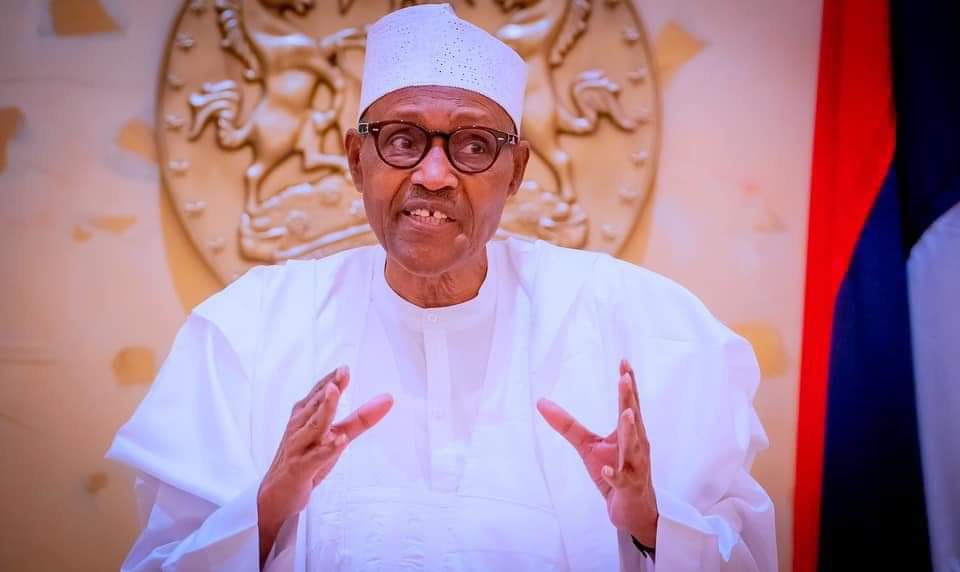
President Muhammadu Buhari felicitates with the Muslim Ummah, Nigerians of all faiths and the followers of Islam all over the world on the occasion of the Maulud-Un-Nabiyy, the birthday of the Holy Prophet Muhammad Peace Be Upon Him.

In a message to mark the occasion, Tuesday, 19th October, a public holiday throughout the Federation, President Buhari says, “I am delighted to send greetings of peace, unity and goodwill to the Muslim Ummah, fellow citizens and Muslims all over the world as they observe and celebrate Eid-ul- Maulud.”

The President urges Muslims to strive for “forgiveness and closeness to the noble life and teachings of the Prophet (SAW) whose birthday is being marked on this blessed day. On this auspicious occasion, I wish you all the blessings of today.”

The President uses the occasion to give a snapshot of the increased activities the Armed Forces, Police Force, and intelligence agencies have embarked upon to effectively respond to the security challenges in the nation.

He says the government fully expects and intends for these trends to continue, and calls on the media to address the tone, content, and standards of reporting into security and safety measures. Time has come to revise the prefixes “rising insecurity” with “declining insecurity.”

The President adds that increased cooperation and collaboration from the citizenry, coupled with reinvigorated, dynamic, and energized police, security and military leadership is helping the administration score more victories against terror, criminality, and economic sabotage. The reality of declining insecurity should replace the inaccurate narrative of rising insecurity in the country.

“While there is work to do, the men and women in uniform who are helping the nation to achieve this goal, desire our collective appreciation and encouragement to do even more. The whole country and its mass communications systems have a duty in this regard,” the President adds.

President Buhari concludes his message by appealing to road users to drive with care and avoid needless accidents. 

Garba Shehu

Senior Special Assistant to the President

(Media and Publicity)

October 18, 2021

[Gazette]

2023: Time For Businessman’s President
Comrade Emmanuel Onwubiko

By

Emmanuel Onwubiko

Nigeria is obviously the biggest black democracy in the World but Nigeria has yet to adapt to those critical factors and practices that characterize a vibrant and viable democracy. There are practices within and without government that allows for leakages that lead to willful underdevelopment and these burdens of underdevelopment are instigated by a dearth of knowledge of how to govern a corporate political entity as a corporate business as are the cases with such developed societies like Great Britain,  Germany, Canada, USA, Australia.
For a Constitutional democracy to be assumed to be viable, there have to be some elements present such as the establishment of strong institutions, respect for rule of law and the supremacy of the constitution or the Grund Norm.
It is exactly because of the absence of the deep rooted practice of constitutionalism that gives rise to the perennial national conversations on the character of the national leader that Nigerians should elect as their President.
The debate on the character of who becomes the 2023 president of Nigeria has reached a frenzied dimension with a lot of focus on which between the North and South should the office of the president of Nigeria be rotated to in the next presidential election.
 
The debate on the zoning of the office of president of Nigeria in 2023 is not trivial as some persons would want us to believe.
This is because the tempestuous nature of our make up as a Country of diverse ethnicities makes it essential that the people should formulate a democratic ethos of rotating the office of president, governors and local council chairman amongst all shades and ethnicities. 
However, this reflection is basically about the very character of who should vie for the office of president in which case this writer is making a case for election of a highly successful businessman as Nigeria’s next president in addition to the need to zone the office of the president of Nigeria to the South of Nigeria for equity and balance.
As the debates over the next presidential poll heats up, the salient conversations that Nigerians are yet to start is the urgency of electing a successful businessman or business woman who will then kick start the governance of Nigeria in the same format that led to his or her emergence in the real sense as being rated as very successful. 
Nigeria is also lucky to have vastly successful businessmen and women who are also successful in politics.
If truth be told, of all the successful business executives who delved into politics and have successfully transited to successful political governance are the current Chief whip of the Senate of the Federal Republic of Nigeria Senator Orji Uzor Kalu who also governed Abia State twice as Chief executive and made huge successes as the governor of the God’s own state of Abia. 
Closely following this versatile senator of the Federal Republic is the former Anambra State governor Mr. Peter Obi who is reputed to be incorruptible, erudite, accessible and frugal with resources.
As far as the 2023 presidential poll is concerned, Orji Uzor Kalu and Peter Obi are the two most successful businessmen and investors of rare ingenuity that are actually being considered to run for the office of the president of Nigeria. Orji Uzor Kalu has also tested the baptism of political fire by way of being subjected to largely politically motivated trial for alleged corruption. He was sent to prison and he spent 6 months and because he is a man of the people he survived this prison ordeals and came out a bigger and much more respected statesman who now has become an advocate for prisons reforms. The Federal High Court has just discharged and acquitted him of all charges of corruption after the nation’s Supreme Court freed him from wrongful imprisonment. So it is safe to say that he has no institutional baggage and impediments to run for the office of President of Nigeria in 2023, all things being equal. Currently, he is the most senior in rank of all Igbo Political office holders. He is knowledgeable about the diversities that make up Nigeria as he has spent time in the West, and in the North in addition to becoming teinterms governor of Abia State and now the Senator representing Abia North who defeated a sitting Senator of the PDP to become the only elected Senatotbof the ruling All Progressive Congress (APC). So as a very successful businessman and and a good politician, he stands poles apart to be considered to run for the office if the President of Nigeria but the only obstacle is himself.  He has to decide if he will go for the bigger call to serve the Country in 2023. 
I will kick start by saying that the reason for emphasizing the material essence of letting a successful businessman/woman to become the next president is because the United States of America became what it is today by the virtue of the fact that the founding fathers were mostly successful businessmen who later got elected into office as presidents of the United States of America for successive terms and today America is the richest nation in the world in terms of economy and in politics, USA is the strongest democracy globally and in military term, United States of America is number one. 
No doubt it is the overwhelming desire of Nigerians in their multitude that Nigeria should be governed just like how successful private sector businesses are governed so the nation can have the fighting chance of becoming an advanced democracy and a big economic power house in the shortest possible time frame.
I will come to that but first, let me make the clearest and the most unambiguous case for the person of Senator Orji Uzor Kalu to consider running for the office of the president of Nigeria because of his invaluable achievements in both public sectors and the Nigerian economy.
Both senator Orji Uzor Kalu and Peter Obi who are about the most successful businessmen from the East with political tentacles spread across board, are some of the finest businessmen who should be persuaded to consider running for the office of president. 
Orji Uzor Kalu is quoted as saying that he has not yet decided to run for the office of president of Nigeria in 2023.
The Senate Chief Whip Orji Uzor Kalu has said he has no ambition to run for the presidency in 2023.
 
He however said that he would heed the call of Nigerians if it becomes a consensus that he should run for President and serve them in that capacity.
 
Kalu spoke while responding to questions from reporters after being conferred with a traditional title of ‘Kibiya’ (Arrow) of Argungu Emirate by the Emir of Argungu, Alhaji Mohammed Mera, in Abuja.
 
When asked if he would run for the presidency in 2023 in view of agitations in the South East, Kalu said: “There is nothing like that in my mind. You should understand that there are only two zones that have not been President of Nigeria – the North East and the South East.
 
“So I have never thought about going to run for President. But everywhere I go people are disturbing me talking about presidency.
 
“I have told my family members and political associates that I want to come back to the Senate.
 
“The four years of my tenure in the Senate would end in 2023. I would like to come and do another one. Possibly, after my second term in the Senate, I will retire from politics and go back to my farm.”
 
When asked if he would if Nigerians call on him to run, he said: “Nigerian presidency is not what one can say I want. They know how to arrange it.
 
“No one man can make himself Nigerian President. It takes a lot of consultation across the regions. If other regions agree it could be possible.
 
“I have the capability and capacity to do any job given to me by every Nigerian not by some Nigerians.
 
“I am not running for President. I want to come back to Senate and continue serving my people.
 
“This place (Senate) is a very interesting place to be. When I was a Governor I used to be in a big office alone. But in the Senate, if I am tired in my office, I will go and see the Senate President, Senate Leader, Senator Kashim Shettima or Senator Ibikunle Amosun. I find in this place a strong bond for Nigerian people.”
Those who should know have recorded that Prior to the election of Senator Orji Uzor Kalu on 9th January, 1999 as the second Executive Governor of Abia State after Dr. Ogbonnaya Onu and his subsequent swearing in on May 29,1999, OUK has been in business. He had garnered at a very youthful age wealth of knowledge in business,( human and material resources management)and held several management positions wherein, he proved himself as a good Manager. As a Founder of over ten(10) gigantic Companies with Subsidiaries all over the globe, he remains the Chairman cum Chief Executive Officer (CEO) of these Companies.
These conglomerate of OUK’s Companies had and keep providing job opportunities for thousands of Nigerians and non Nigerians which record is yet to be beaten by any businessman who is of Abia extraction. No wonder the unabated envy , unfounded and spurious allegations against this illustrious, industrious, vibrant,active,philanthropic, energetic, committed ,versatile, responsive and responsible son of the Federal Republic of Nigeria.
Senator Orji Uzor Kalu has held many management positions, to wit: Chairman, Borno State Water Board; Chairman, Imo Marketing & Supply Agency Limited; Chairman, Co- operative and Commerce Bank(CCB)Ltd and even served as the Deputy Chairman, House of Representatives Committee on Finance & Internal Affairs as well as the Promoter of the first International Bank Ltd in Gambia.
The above qualities mark him out as a very successful businessman who will inevitably govern Nigeria in the same success ethos he adopted in business. I had searched for the fundamental evidence to support my belief that having a Businessman President will bring out the Entrepreneurial Spirit in the Aso-Rock. 
Matt D’Angelo the Business News Daily Contributing Writer in a piece Updated Feb 14, 2020 gave us a run down of Presidents of the USA who were successful businessmen.  They are: George Washington (No. 1, served 1789-97) It turns out Washington, in addition to being one of the greatest presidents in U.S. history, was a savvy businessman. After completing his final term as president in 1797, Washington turned his talents to a much-enjoyed business at the time: whiskey. He opened a distillery on the grounds of Mount Vernon. By 1799, the distillery was producing 11,000 gallons per year, making it one of the largest in the country.
Of course, at that time, Washington’s business ventures were built on the backs of slaves, specifically six people who worked the distillery. His commercial success, like that of much of the nation’s early distillers, was due in large part to slave labor.
Next is Abraham Lincoln (No. 16, served 1861-65) and the writer says: “If Lincoln wasn’t a success of enormous consequence, his noble mug wouldn’t be on every $5 bill we pull out of our wallets. But Lincoln couldn’t hack it as a businessman. Long before he assumed the weight of the country’s deep divisions, Lincoln ran a general store – and not very well. He was 23 years old when he and a partner opened their store in New Salem, Illinois. Lincoln got out of the struggling business fairly quickly, but he did get stuck with his partner’s debt of $1,000. Andrew Johnson (No. 17, served 1865-69) Before Johnson entered political life, he was an accomplished tailor and real estate owner. The son of a seamstress, Johnson apprenticed as a tailor when he came of age. Once he was old enough, he started his own shop. It was in his business as an independent tailor that he began to teach himself to read and write, eventually leading him to political life and the presidency. Warren G. Harding (No. 29, served 1921-23) Dealing with the press has always been a cumbersome task for the president, but Harding had an advantage: He came from a newspaper family, learning the ins and outs of his father’s business from the age of 10. He studied the newspaper trade in college and – after dabbling in teaching, insurance and law – dove into the business full time. With partners, he cobbled together $300 to buy The Marion Daily Star in Ohio. He owned the paper outright by the time he was 21.
Owning a business wore Harding down, but he refueled at a local sanitarium and pursued his business aggressively. In 1923, the year he died, Harding sold his paper for $550,000. In today’s dollars, that’s about $7 million – not too shabby. Herbert Hoover (No. 31, served 1929-33) Hoover served during the country’s absolute worst economic period. It would seem ideal to have a businessman in charge at that point, but Hoover’s policies exacerbated the economy’s deterioration.
Before the economy tanked, Hoover succeeded in the business world. He worked as an engineer and invented a new process to extract zinc that was lost in the contemporary mining processes of his day. He started the Zinc Corporation in the early 20th century, and it later became part of a larger corporation. 
Then comes Harry Truman (No. 33, served 1945-53) described by the author thus: “Truman’s most lasting impression on history occurred within weeks of his taking office after President Franklin D. Roosevelt died. Upon taking the helm, he found out about the Manhattan Project. Within months, he made the decision to drop two atomic bombs on Japan, effectively ending World War II.
The president had come a long way from being a local haberdasher. He remains the only president elected after 1897 who did not earn a college degree. Medical issues prevented Truman from getting into West Point, so he took some classes at a business college but never finished. Then he decided to get an education in hard knocks.
Truman opened his clothing store in Kansas City, Missouri, in 1919. He went bankrupt a couple years later and changed career paths, starting with positions in local government that ultimately led to greater offices. Jimmy Carter (No. 39, served 1977-81) In addition to being elected to the highest office in the most powerful country in the world, Carter started the Department of Education, won a Nobel Peace Prize and has written nearly two dozen books. Yet he’s still remembered as a peanut farmer.
Carter was serving in the Navy after graduating from the Naval Academy when his father died. He returned to Georgia to work on the family business. Agriculture proved a natural fit for Carter, and he grew the business successfully. And lastly Donald Trump (No. 45, served 2017-present)

Before Trump was a politician, he was a famous entrepreneur. He took over the family company and developed it into an international brand. He also invested in real estate and helped develop some of the world’s most luxurious hotels and casinos. A long line of products have borne the Trump brand, including Trump Steaks, Trump University, Trump Shuttle and Trump Success Eau de Toilette.
Trump developed such a reputation as a businessman that he was cast in the American TV show Celebrity Apprentice, which started his famous motto: “You’re fired.” The fruits of Trump’s success are much debated by critics today, but it’s clear that Trump was an accomplished entrepreneur before he became president.
That journalist made the following legal imperatives: “Surveying the presidents reveals at least two prevailing characteristics among many of them: They were born rich and viewed the law as the best avenue to further their prominence. Perhaps the most privileged found work at prestigious firms or used their bar credentials to vault immediately into illustrious positions. But more than a few put up their own shingle and practiced on their own or with a partner, including Lincoln, Andrew Jackson, Millard Fillmore, Benjamin Harrison and Gerald Ford.” We ned to remark that I the above compilations, Patrick Egan contributed to the reporting and writing in this article cited by my humble self who is making a case for a Businessman President for Nigeria  in 2023.
In subsequent editions, we will name and explain some other successful businessmen and women who could be persuaded to run for the presidency in 2023 from Southern Nigeria.  The next edition will commence with Peter Obi who was mentioned earlier. 
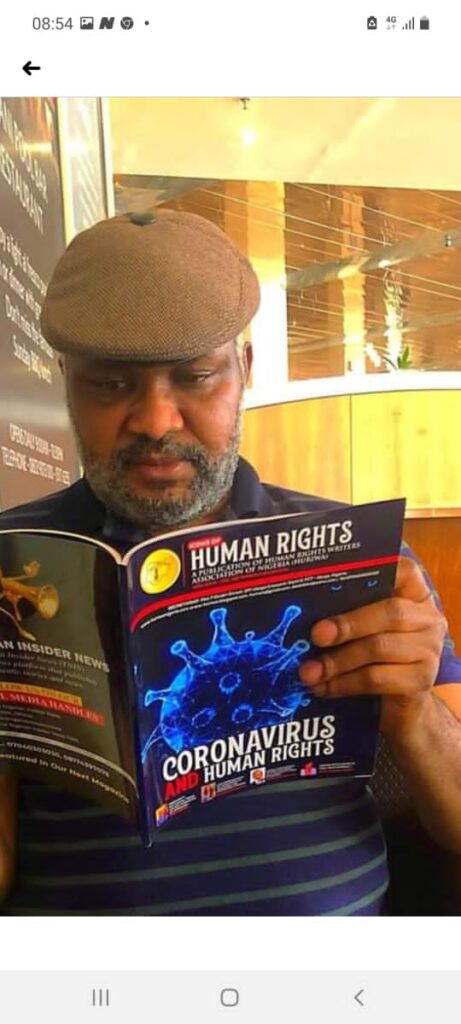
*EMMANUEL ONWUBIKO is head of the HUMAN RIGHTS WRITERS ASSOCIATION OF NIGERIA (HURIWA) and was a federal commissioner at the National Human Rights commission of Nigeria.  


Claims That 4.2M Nigerians Were Lifted Out Of Poverty Are Lies From The Pit of Hell: Says HURIWA

The claims by the Minister of Agriculture and Rural Development, Dr Mohammad Mahmood Abubakar that the federal government has lifted 4,205,576 Nigerians out of poverty in the last two years through its various agricultural policies,  is a comprehensive assault to honesty and amounts to the worship of the goddess of falsehood, says the prominent Civil society and pro-democracy group- HUMAN RIGHTS WRITERS ASSOCIATION OF NIGERIA (HURIWA).

HURIWA quoted the media as saying that the minister informed them that the ministry’s strategic policies and programmes including Economic Recovery and Growth Plan (ERGP) 2017-2020 of the current administration, have seen agriculture as the alternative to oil for meaningful diversification of the economy.

HURIWA recalled that The minister stated this in Abuja while observing this year’s World Food Day, themed, ‘Our Actions Are Our Future. Better Production, Better Nutrition, A Better Environment And A Better Life’ even as he noted that investment in agriculture can guarantee food security with the potential to be a major contributor to job creation and save foreign exchange required for food imports.

The minister spoke further: “our various empowerment initiatives along production, processing and marketing of agricultural commodities, we have lifted a total of 4,205,576 Nigerians out of poverty in the last two years, this is going to continue as part of Mr. President’s promise to lift 100 million Nigerians out of poverty within the next 10 years. In the area of capacity-building, the minister maintained that a total of 2,205,576 farmers/youths/women were trained and empowered on different agricultural value chains. 

Reacting to what it called the mere political figment of imagination of the minister of AGRICULTURE who is sounding sycophantic to please his political master and avoid the fate that befell his predecessor recently dismissed by President Muhammadu Buhari,  the HUMAN RIGHTS WRITERS ASSOCIATION OF NIGERIA (HURIWA) has tasked the minister to publish the names of the citizens and their exact locations who he claimed to have lifted out of poverty just as the Rights group said the Minister even contradicted himself when in that same speech he acknowledged the devastating impacts to farming productivity by the heightened state of insecurity in the Country. 

Besides, HURIWA noted that so much of the farming activities that hitherto went on before the coming of the current administration have all but disappeared due to the insecurity created by boko haram terrorists who upped the ante of their attacks since the coming of the present administration just as the armed Fulani attackers are on constant rampage in all parts of the Country destroying farmers crops and killing farmers with Southern Kaduna as the major flashpoint just as the Federal Attorney General,  the Inspector-General of Police and the heads of all strategic security agencies who are Fulani or Northern Moslems have failed to arrest and prosecute these terrorists destroying farms across the Country. 

HURIWA said international organisations have even documented evidence that terrorists have driven farmers away from their farms in the North East and North West of Nigeria just as the activities of terror groups masquerading as armed Fulani herdsmen have destroyed many farms in Benue and Nasarawa States in the last five years.

HURIWA said that credible reports have it that in the northeastern Nigeria, the Boko Haram insurgency has led to heightened levels of displacement and food insecurity. While humanitarian access is improving, most displaced families still rely on vulnerable host communities for basic needs, including food. This has put already impoverished host communities under extreme pressure, leading to increased exposure to food insecurity and malnutrition. Lootings and fear of attacks have prevented many farmers from working in their fields, leading to the loss of harvests and productive assets, and extremely reduced purchasing power. 

Still quoting internatiinal reports by Food and Agricultural Organisation, HURIWA stated that the fact is that alarming food insecurity situation in northeastern Nigeria titled “The latest Cadre Harmonisé analysis (November 2019)” study indicates that there is an estimated 2.6 million people who face severe food insecurity in Adamawa, Borno and Yobe states, a reduction of nearly 300 000 people from June 2019. However, if no humanitarian support is provided, a projected 3.6 million people in the three states are likely to be severely food insecure from June to August 2020 – traditionally the lean season in the North-East.

HURIWA further recalled that FAO made the following factual claims-: “Immediate support to affected populations In order to respond to the immediate needs of the affected population, FAO has launched a full scale corporate surge response. A dedicated team of experts is based in Maiduguri and works closely with partners on the ground. FAO’s priority is to provide immediate livelihood support to vulnerable pastoralists and agropastoralists, including returnees, IDPs and host communities. ” 

HURIWA  maintained that Nigerian farmers have quantified their production losses occasioned by the level of insecurity across the country to about 50 per cent just as the farmers described the development as precarious, the farmers expressed fears of imminent food crisis should the Federal Government still fail to check Nigeria’s worsening security situation. “Although it is difficult to quantify what farmers have lost as a result of the precarious security situation in Nigeria, the truth remains that our losses are very huge,” the National President, All Farmers Association of Nigeria, Kabir Ibrahim, said.

The Rights group recalled that the National President, Nigeria Cassava Growers Association, Segun Adewumi, said cassava farmers were being threatened by herdsmen who often invade their farms. “This, of course, is another form of insecurity and our losses due to this cannot be quantified because it is so enormous,” he told our correspondent. He added, “The greatest challenge we have in cassava cultivation is the activities of herdsmen. You know that during the dry season, cassava is the only crop that stays wet and remains green.

HURIWA said the claims of the Agriculture minister is unreal and amounts to a phantom political statement of exaggeration because Nigeria has maintained the infamous position as the poverty capital of the world, with 93.9 million people in Africa’s most populous country currently living below the poverty line. Managing Director, Financial Derivatives Company (FDC) Limited and a member of President Muhammadu Buhari’s Economic Advisory Council (EAC), Mr. Bismarck Rewane, has stated. Quoting a World Bank data, Rewane, in a presentation at the monthly Lagos Business School’s economic breakfast meeting for September 2021, stated that seven million Nigerians fell into extreme poverty in 2020. The report was titled: “Re: Growth Spikes (5.01 per cent), But People are Hungry?”

HURIWA recalled that Nigeria, with its 200 million plus population, was first declared world’s poverty capital in 2018 in a report by the Brookings Institution, knocking off India from the position. The report had then stated that the number of Nigerians in extreme poverty increases by six people every minute. The Brookings Institution’s report had stated in 2018, “At the end of May 2018, our trajectories suggest that Nigeria had about 87 million people in extreme poverty, compared with India’s 73 million. What is more, extreme poverty in Nigeria is growing by six people every minute, while poverty in India continues to fall.”

HURIWA is therefore appealing to President Muhammadu Buhari and his cabinet to implement result oriented economic development programmes that will promote jobs, industrialisation, adequate food security and infrastructural revolutions across boards and to desist from bandying and propagating fake figures and making exaggerated claims that are provocative,  senile, infantile and dubious whereas the costs of living keep skyrocketing with the cost of Gas cooking infrastructure going beyond the reach of virtually 100 million Nigerians who are now absolutely poor.

The Rights group said it is economic satanism for the government to introduce policies that lead to the hike of the purchasing prices of such basics like bread, fuel, gas and agricultural products just as the Rights group accused the Federal Government of pampering the daredevil armed Fulani terrorists that are destroying farmers crops and taking over the property of natives all over the Country. HURIWA said the policy of reintegration of terrorists of boko haram genre back into the same society they destroyed will not allow local farmers in the North East to resume their farming activities.

Hundreds Of Sudanese Storm Khartoum To Protest Against Failed Government

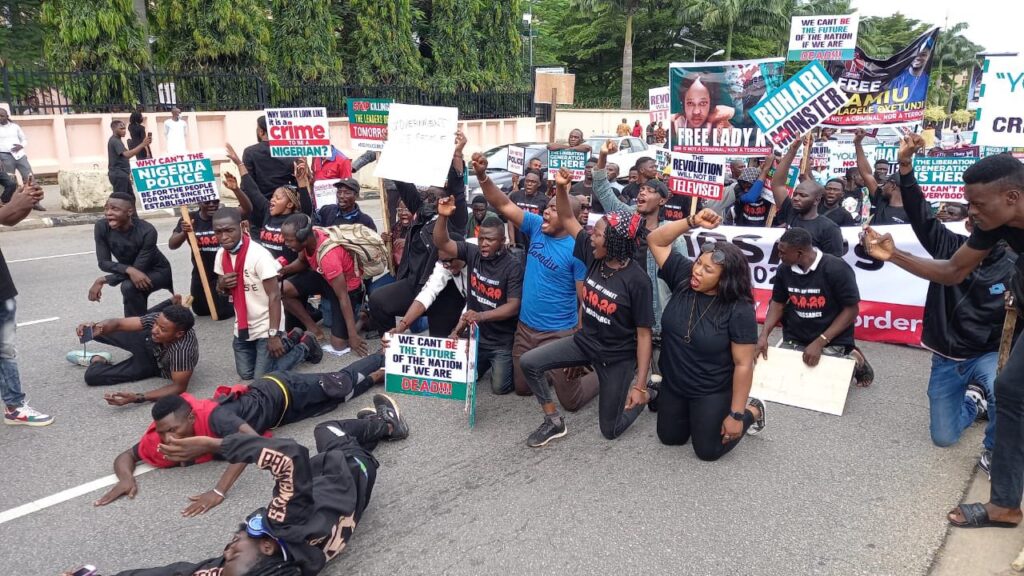
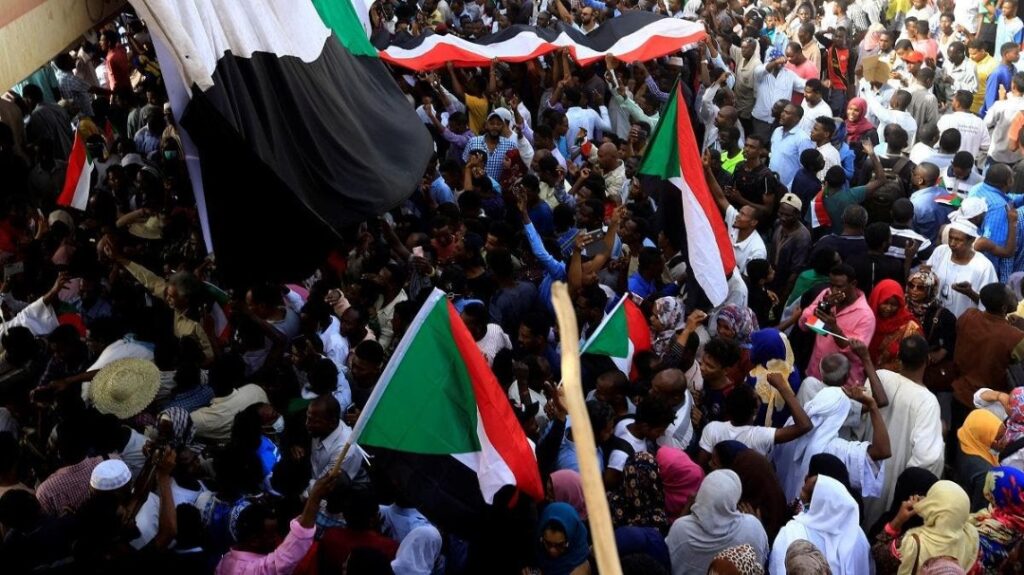
Hundreds of protesters took to the streets of Khartoum, Sudan’s capital on Saturday demanding the dissolution of the transitional government, saying it had failed them economically and politically.

The development comes amid divisions in the country’s Sudan’s political scene steering the country through a rocky transition following the April 2019 ouster of President Omar al-Bashir after mass protests against his rule.

Saturday’s demonstrations were organised by a splinter faction of the Forces for Freedom and Change, a civilian alliance that spearheaded protests against Bashir.

A 50-year-old protester, Abboud Ahmed, said, “We need a military government, the current government has failed to bring us justice and equality.”

AFP reports that the protesters carried banners calling for the “dissolution of the government”, while others chanted “one army, one people” and “the army will bring us bread.”

“We are marching in a peaceful protest and we want a military government,” a lady, Enaam Mohamed in central Khartoum said.

On Friday, Prime Minister Abdalla Hamdok warned that the transition is facing “the worst and most dangerous” crisis.

Support for the transitional government has waned in recent months mainly following a tough raft of IMF-backed economic reforms.

It slashed subsidies on petrol and diesel and brought in a managed currency float, measures deemed by ordinary Sudanese as excessively harsh.

The government has also been beset by protests in east Sudan where demonstrators have blocked trade through a crucial Red Sea port since mid-September.

On September 21, the government said it thwarted a coup attempt which it blamed on military officials and civilians linked to Bashir’s regime.

[Saharareporters]

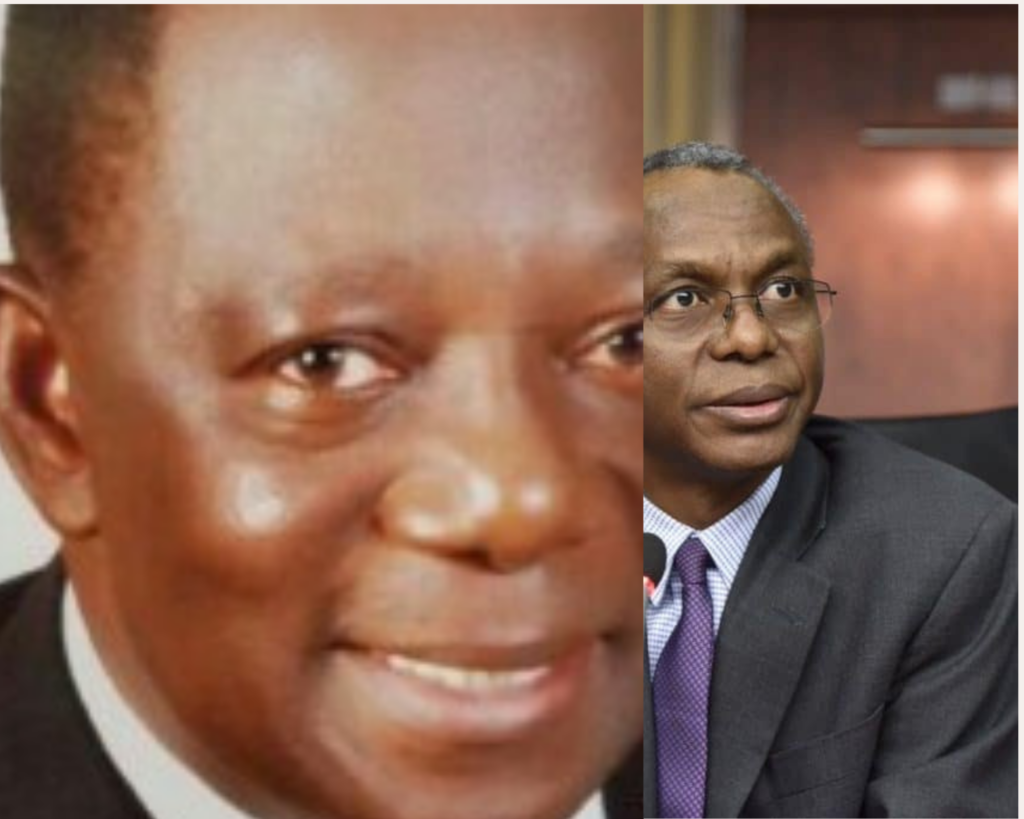
Your Metropolitan Authorities Are Unconstitutional & Won’t Stand Legal Tests – Barrister Ephraim Tells El-rufai

A PDP chieftain in Kaduna state, Barrister J.D Ephraim has this to say with regards to the recent creation of three metropolitan Authorities by the Nasiru El-rufai led Kaduna state government.

Barrister Ephraim who was a founding member of the APC in Kaduna state said the creation of metropolitan Authorities have no legal basis compared to local governments created by the constitution.

In a WhatsApp message he shared using his mobile number, the 2011 Deputy Governor candidate for the CPC in Kaduna state wrote;

“Do the three Metropolitan Authorities, created by El-Rufai, ( even, if they had the blessing of the Kaduna State House of Assembly ), have any legal basis, as to be compared, with the Federal Capital territory, and the Local Government Areas ( constitutional creations )? No, they are not.

“In the FCT, and the local government areas in the country, there are no unconstitutional usurpation of powers of any state, from which the territory was legally carved out. It is a separate territory, no conflicting jurisdictions with any state, or local government of a state, from which it was carved out and recognised by the constitution. He said

Ephraim said El-Rufai’s ‘carving out’ of territories is unconstitutional and therefore null and void.

“If El-Rufai purports to carve out, and grant a territory, powers, and functions, which derive therefrom, such act is illegal, ultra-vires the constitution, null and void, to the extent of the contravention.

“It does not need any court to declare it so.” He said

He also questioned whether Governor El-rufai seeks advice from good legal advisers before implementing his policies.

“Some times, I wonder if at all, El-Rufai, avails himself of any good legal advice. “
The Southern Kaduna born lawyer concluded by saying that

“While the concept of metropolitan Authority is good and desirable in its self, it can only, in the circumstances, be handled, when our grund nom, recognizes such administrative action.

“The defunct Kaduna Capital Territory functioned and was only legal to the extent, there were no constitutionally recognised local government areas, in the former northern region.

“For the so- called Kaduna Metropolitan Authorities, to enjoy the same status with either the former Kaduna Capital Territory, or Abuja, the FCT, it has to be recognised by the constitution.

“Without further arguments, the purported Authorities, can not enjoy the protection of our constitution, and at best, their functions, are a mere extention of the acts of the state Governor, just as we have KASUPDA, KADRA, KADIPA, etc, etc.

“They are not thesame, in so far, the Metropolitan Authorities would not function state-wide, but have clearly delineated territories, and boundaries, all within the state No, neither the Governor nor the state House of Assembly, has such powers. Their powers are as provided for in the constitution.

“The metropolitan Authorities can not even be clothed the same way, as the ministerial authorities of the state, which are supposed to cover the whole state.” He said

It would be recalled that Governor El-rufai within the week while swearing in Administrators for the metropolitan Authorities in Kaduna, justified the creation of the three metropolitan authorities.

“It’s obvious that some people do not understand the concept of metropolitan authorities . Our major cities are bigger than the Local Government Councils in which they have been balkanise.”

“The Kaduna Capital Territory did this job until the late 1970s for those old enough to remember, Kaduna was always administered by an administrator. Who was the administrator of the capital Territory.

“Things worked much better then, the replacement structures that came
after the 1976 local government reforms have not worked as well as the
capital territory administrative structure did. This is why we are going back to it,” he explained.

HURIWA To Anambra Voters: Do Not Allow Political Lightening To Strike You Twice, Make A Sustainable Choice, Opt For Peace, Development

The prominent Civil society and pro-democracy group- HUMAN RIGHTS WRITERS ASSOCIATION OF NIGERIA (HURIWA) has tasked the Independent National Electoral Commission (INEC) to conduct free, fair, transparent and trustworthy election in the Anambra state gubernatorial poll to avoid throwing the South East of Nigeria into uncontrollable spin off of upheavals because how well the Anambra State’s governorship election is conducted will determine the political, economic and futuristic health and well being of the Igbo speaking people all around the World. 

The front line Civil Rights Advocacy Group said it is heartwarming that the Anambra State electorate have some of the most finest statesmen, industrialists, job creators, wealth creators and astute God fearing persons running for the office of the Governor of Anambra State in few days time just as the Rights group said it was disappointing that the All Progressives Congress has consistently manifested a frightening proportions of desperation and political avarice to grab the office of governor of Anambra State by hook and crook. The Rights group tasked President Muhammadu Buhari to play the role of a Statesman like he did when Willie Obiajo if All Progressives Congress won a Second term and avoid the temptation to manipulate the National Electoral Commission of Nigeria to steal the votes of the People of Anambra State to be donated to the All Progressives Congress (APC). 

The Civil Rights Advocacy Group-: HUMAN RIGHTS WRITERS ASSOCIATION OF NIGERIA (HURIWA) said it will be a political tragedy of gargantuan proportions should INEC be used and manipulated to return victory to the All Progressives Congress which has a candidate that had once been railroaded into the same office by the then INEC controlled by the then President Olusegun Obasanjo during whose short and inglorious tenure a lot of political disturbances that led to the destruction of Anambra State owned infrastructures and assets occurred.  HURIWA believes that the voters won’t let the political lightening to strike them twice devastatingly just as the Rights group accused the governor of Anambra State of alleged collusion with the Presidency to probably allow the Independent National Electoral Commission to once more railroad the desperate All Progressives Congress into power in Anambra State going by the massive scale of subterranean programmes by the All Progressives Congress to steal the votes in the coming election.  HURIWA has challenged the people of Anambra State to safeguard their votes if they hope to have good governance from November.  HURIWA pointed out that although the All Progressives Grand Alliance has a Sound candidate for the poll, but the infighting within the party and the alleged sale out by the party to the Presidency may sabotage his chances therefore HURIWA has stated that the voters have the opportunity of their life time to election am astute, young pro-democracy activist and a Cultural activist who is passionate about Igbo cultural , economic and political advancement in the person of the erstwhile Chief executive officer of the most prosperous hotel group in Nigeria-  TRANSCORP HILTON – MR. VALENTINE OZIGBO of the Peoples Democratic Party.  

We have perused the blueprints of all the candidates and found the developmental framework put forward by Valentine Ozigbo and that of Charles Soludo to be very articulate but the voters need to make a clean sweep from the past by electing a totally NEW BREED YOUNG POLITICIAN WITH NO BAGGAGE but only sustainable and enduring plans to expand the horizons of industrialisation of Anambra State. We read his visions for EDUCATION,  ECONOMIC SECTOR, COMMERCE AND TRADE, YOUTH DEVELOPMENT ABD SOORTS ABD SCIENCE ABD TECHNOLOGY and we found out that he has what it takes to be the next PETER OBI of Anambra State who as we know remains the BEST GOVERNOR OUT OF NIGERIA SINCE AMALGAMATION OF NORTH AND SOUTH OF NIGERIA IN 1914. 

Governorship candidate of the Peoples Democratic Party (PDP), Chief Valentine Ozigbo, had promised to develop Governor Willie Obiano’s Local Government Area, Anambra East, if elected governor.

Ozigbo also promised to pay adequate attention to development issues in all the LGAs in that part of the state that make up Omambala, saying that he would transform the area into the biggest agricultural hub in the country.

The governorship hopeful made the promise while speaking at his campaign rally in Aguleri, Obiano’s hometown, which was held at St. Mary’s Catholic Church field

“My dear people, I will not abandon any project left uncompleted in your area by my predecessor. My government will bring transformation here and do everything your son and brother could not do for you. I’m in the race to wipe your tears”, he promised.

Ozigbo, who spoke glowingly about his Ka Anambra Chawapu blueprint for the state, expressed worry over the failure of the current state government to give the Omambala area the attention it deserves.

The immediate past President and Group CEO of TRANSCORP Plc said that the Omambala area, which is the food basket of the state, has remained a mere subsistence farming zone, “even when one of your own occupies the position of number one citizen in the state.”

He said: “By the grace of God, my administration will concentrate greater efforts, attention and resources on areas with unique economic potentials, such as the Omambala area.

“We want to harness the agricultural and tourism potentials of the Omambala area and ensure that it becomes viable sources of internally generated revenue.

“The four local government areas which Anambra East is one, will be an agricultural hub that will go beyond mere production to processing of agricultural produce”, Ozigbo promised.

Former state chairman of PDP in the state, Chief Ejike Oguebego, who serves as the Director of Inter-Party and Intra-Party Affairs for the Governorship Campaign Organisation, in his remark, expressed confidence that his party would win the election.

Oguebego, a prominent political leader in Anambra East LGA, recalled that “When we started this journey, I told people that Valentine Ozigbo would win the PDP primary election, and he did. Today, he is standing before you with a promise to make your life better if elected governor.

“I can assure you that by March 2022, he will be inaugurated as governor through your hard work and prayers”, Oguebego said.

Candidate of the People’s Democratic Party (PDP) for the November 6 guber election in Anambra State, Mr Valentine Ozigbo, has decried the level of infrastructure decay in the state presently and said Anambra needs a man who can totally overhaul the situation for good.

Speaking in Awka as part of his return to the state after the appeal court victory and INEC listing of his name as the authentic candidate of the party, Ozigbo described his governorship project as a divine mandate which when elected into office will right the wrongs of the present government in the state.

“Entering Anambra, I had a first-hand experience of the decay in the state with the terrible condition of the road in Amansea. That road is an example of the dearth of infrastructure in Anambra.

“There’s nothing to be proud of in Anambra presently. Roads are bad, healthcare is non-existent, education is moribund, security is at an all-time low, add this to the state’s debt profile, and you will agree that Anambra needs a total overhaul.

He said the priority of the party and his campaign council is to mobilise and convince people to vote, noting that with the massive support of the people, he will emerge victorious on November 6.

“If we don’t start now, we might never get it right. Our freedom must begin now. November 6 is our date with history, and we are ready to march to victory,” Ozigbo added.

Also speaking at the party secretariat in Udoka Estate, Awka where hundreds of party members were on hand to welcome him, Ozigbo affirmed his readiness to run a winning campaign.

“The party at the centre has been making moves to undermine the democratic process, but Anambra is not Imo. They attempted to keep non-sensitive materials for the election in Imo State, but we rejected it, and that decision has been rescinded.

Some supporters at the scene said Ozigbo is widely regarded as the favourite to win the Anambra guber election after his revolutionary Ka Anambra Chawapu message sparked one of the biggest political movements in Nigeria.

Governorship candidate of the Peoples Democratic Party (PDP), Chief Valentine Ozigbo, has expressed sadness over the ugly events that have taken place in the state.

He said that he was deeply pained that the people of the state have been devastated by the negative occurrences in the state,saying that they’re also suffering as a result of the poor governance of the state.

“I feel pained; pained because when you listen to the people on the streets; when you look at the younger ones we are leaving behind, when you look at the women, when you go round and ask how they feel, it is about pain and suffering.

“Anambra deserves more. We, indeed, deserve more. I am certain that if the right things are done with the type of resources that we have; with the people that we have; with the intellect that we possess; we can do a lot more.

“We can take care of the basics and we can actually, indeed, begin to shift our mindsets to Anambra becoming an exemplary state where we can all be proud of”, Ozigbo said.

The governorship hopeful said that he crafted his manifesto from the feedbacks he received from the people during his engagements with them

“My manifesto is a product of my engagement with Ndi Anambra. I toured the 21 Local Government Areas, and in most cases, over seven times. And when I did engage our people, my simple question used to be ‘what do you need or want from your next governor?’

“From the feedback, we were able to decipher that indeed what we need in one LGA is different from what we need in another. What our younger generation needs is different from the needs of our elders. And what our men need is different from what our women need.

“So, we crafted what we call Ka Anambra Chawapu manifesto. How do we do things differently? How do we leverage the power inherent in Anambra people? How do we begin to challenge the status quo?

“We can’t keep doing the same thing all the time and expect different result. I am here to tell our people, indeed, that Anambra can do more and achieve more”, Ozigbo stated.

By and large HURIWA and over 205 other affiliate bodies in the NIGERIAN HUMAN RIGHTS COMMUNITY have hereby ENDORSED MR. VALENTINE OZIGBO AS THE BEST CANDUDATE FOR THE NEXT OFFICE OF THE GOVERNORS OF ANAMBRA STATE,  SOUTH EAST OF NIGERIA. 

THIS is the report on Anambra state and what the  Human rights watch stated few years back-: Case Study B: Anambra State

“Anambra is a very hot place, a place where everyone has to be very careful.” 

—PDP “Godfather” and Board of Trustees Member, Chris Uba, Enugu, February 12, 2007

Anambra State lies near the geographic heart of Nigeria’s Igbo-dominated southeast. Since 1999 the violence, corruption, and “godfatherism” occurring elsewhere in Nigeria have run rampant in Anambra. But Anambra also evinces some examples of the tenuous reasons for optimism that systemic abuses could be reversed if the federal government would support far-reaching reform.

Godfatherism in Anambra State

A wealthy member of the powerful Uba political family, Chris Uba is an iconic example of the godfather phenomenon in Nigeria.226 When Human Rights Watch visited his home in Enugu (situated on a street named after himself) in early 2007, he proudly displayed a large collection of luxury vehicles and a police car with blacked-out license plates that he said belonged to him and not to the police.227 Security men with handguns tucked inside of their belts wandered about the compound.

Chris Uba, a member of the PDP Board of Trustees, was at the apex of his power during the 2003 elections, when he “sponsored” PDP candidates and rigged their election to office across Anambra. After that election he publicly declared himself “the greatest godfather in Nigeria,” noting that “this is the first time an individual single-handedly put in position every politician in the state.”228

Among the politicians Chris Uba “sponsored” in 2003 was PDP gubernatorial candidate Chris Ngige. The terms of their relationship were spelled out in remarkably explicit fashion in a written “contract” and “declaration of loyalty” that Ngige signed prior to the election. Chris Uba provided Human Rights Watch with a copy of this document to bolster his contention that Ngige later failed to live up to the terms of their agreement.

Ngige promised in writing to “exercise and manifest absolute loyalty to the person of Chief Chris Uba as my mentor, benefactor and sponsor” and agreed to allow Uba control over all important government appointments and the awarding of all government contracts. The contract referred to Governor Ngige as the “Administrator” and to the unelected Uba as “Leader/Financier.” It also empowered Uba to “Avenge himself in the way and manner adjudged by him as fitting and adequate” (emphasis in original) in case of any breach by Ngige that could not be settled through mediation.229 These documents, which spelled out the subordination of the Governor to Chris Uba in some detail, are printed as an annex to this report.230

In an interview with Human Rights Watch, Ngige did not deny that Chris Uba rigged his election into office but claims that he tried to break away from Uba’s control immediately after the 2003 election.231 This was no easy task; Ngige said that from the moment he assumed office, Uba was continually “making personal demands that I go to the treasury and take money and give it to him.”232 Ngige also claims that shortly before his inauguration, armed men broke into his home and forced him, at gunpoint, to sign a pledge that he would pay Chris Uba the sum of N3 billion ($23 million) immediately after assuming office.233 In an interview with Human Rights Watch, Uba denied that he ever demanded cash payments from Governor Ngige.234

Relations between Ngige and Uba deteriorated rapidly. In July 2003 Governor Ngige was kidnapped by armed policemen and forced at gunpoint to sign a “letter of resignation.”235 In an interview with Human Rights Watch Ngige alleged that Uba was responsible for this and cites the episode as illustrative of why, even as governor, he could not turn to the police for help against Uba’s attempts at extortion.236 Uba dismissed the allegations of extortion as being completely without any basis in fact.237

Ngige’s “resignation” was eagerly accepted by the State House of Assembly despite the circumstances under which it was obtained. One Anambra State legislator told Human Rights Watch that at the time most members of the legislature were “in bondage” to Chris Uba in much the same manner as Ngige.238

Ngige successfully petitioned to have his “resignation” thrown out by the federal courts and remained in office but quickly found himself under siege yet again. In 2004 thugs armed with firearms and crude explosives attacked Government House in Awka and burned part of it to the ground while policemen stood aside and watched.239 Other gangs then staged several attacks on other government buildings throughout the state.240 As many as 24 people were killed during the ensuing violent clashes and looting.241

Ngige—like much of the Nigerian press and many civil society groups—alleges that Chris Uba was behind the attack.242 Several well-placed sources told Human Rights Watch that Chris Uba had recruited an Ogoni youth leader from Rivers State to help organize the attack on Government House in conjunction with thugs sourced locally in Anambra.243 Chris Uba denied any involvement in the matter.244 The police’s failure to investigate who was behind the attack, and specifically Uba’s alleged involvement, stands as a stark example of the impunity he has consistently enjoyed.”   WHY ANAMBRA VOTERS CHOICE MUST BE RESPECTED BY INEC AND BY THE FEDERAL GOVERNMENT:  

Election is regarded worldwide as a fundamental human right. The Universal Declaration of Human Rights, adopted unanimously by the United Nations General Assembly in 1948, recognizes the integral role that transparent and open elections play in ensuring the fundamental right to participatory government.     

There are various electoral laws in Nigeria that govern the process of electing people into political offices. The major laws governing the electoral process in Nigeria are as follows:

The Constitution of the Federal Republic of Nigeria 1999

The Electoral Act 2010;

The INEC Regulations and Guidelines for the Conduct of Elections, 2019.

Some of the crucial provisions of the above laws will be examined individually in detail.

THE CONSTITUTION OF THE FEDERAL REPUBLIC OF NIGERIA 1999

The major law that governs the electoral process in Nigeria is the 1999 Constitution (as altered). The Constitutional provisions relating to elections in Nigeria will be highlighted below;

Right to Peaceful Assembly and Association- Section 40 of the Nigerian Constitution provides for the right of persons to form a political party or association. It states that every person shall be entitled to assemble freely and associate with other persons, and in particular he may form or belong to any political party, trade union, or any other association for the protection of his interest, provided that the provisions of this Section shall not derogate from the powers conferred by the Constitution on the Independent National Electoral Commission concerning the Political Parties to which that Commission does not accord recognition.

Qualifications for Election- Section 65,105 and 131 of the Constitution provides that a person shall be qualified for election in the various elective offices if he;

He is a citizen of Nigeria and has attained the age of 35years.

A member of the House of Representatives if he is a citizen of Nigeria and has attained the age of 25years.

He has been educated up to at least a secondary school leaving certificate or its equivalent;

He is a member of a political party and he is sponsored by that party.

Disqualifications- Section 66,107, 137,182 of the Constitution provides that no person shall be qualified for election to the Senate or the House of Representative if the following exists;

He has voluntarily acquired the citizenship of a country other than Nigeria or has declared allegiance to such other party.

Under the Law in any part of Nigeria, he has been adjudged to be a lunatic or declared to be of unsound mind.

He is under a sentence of death imposed on him by a competent Court of Law or Tribunal in Nigeria or is under a sentence of imprisonment or fine for an offense involving dishonesty or fraud or for any other offense imposed on him by any court or tribunal or substituted authority.

Within a period of less than ten (10) years before the date of the election to the office of the President, he has been convicted and sentenced for an offense involving dishonesty or he has been found guilty of contravention of the code of conduct.

He is an undischarged bankrupt, having been adjudged or otherwise declared bankrupt under any law in force in Nigeria or any other country.

He is a person employed in the civil or public service of the Federation or State and does not resign, withdraw or retire from the employment at least 30 days before the date of the election.

He is a member of any secret society.

He has been indicted for embezzlement or fraud by a judicial committee of inquiry or an administrative panel of inquiry or a tribunal and which the indictment has been accepted by the Federal or state government.

He has presented a forged certificate to the independent national electoral commission.

Supervision of Election- Section 78 of the Constitution provides that the registration of voters and the conduct of elections shall be subject to the direction and supervision of the Independent National Electoral Commission.

Restriction on Formation of Political Parties- Section 222 of the Constitution provides for the restriction.      

Fair Hearing in Election Petition Cases in Historical Perspectives 

The case of Paul Unongo v. Aper Aku & Ors44 quickly comes to mind. This case emanated from the governorship election held all over the country on the 13th July, 1983. The appellant contested the said election with the 1st respondent who then was also the incumbent governor of Benue State. The 1st respondent was returned as having been elected as the winner of the election. Aggrieved with this decision, the appellant lodged a petition to the High Court Makurdi claiming that the 1st respondent was not duly returned and that it was the appellant who should have been declared the winner instead. All sorts of technical objections were put in the petitioner’s way. The High Court struck out the petition on the grounds that the joinder of the governor was unconstitutional because he enjoys immunity under the constitution. The court equally stated that the non-inclusion of the name of the occupier of the address of the petitioner for service was fatal to the petition. On appeal to the Court of Appeal, their Lordships did not waste time in upturning the decision of the court below on all grounds. However, the court could not grant the consequential relief of “restoring the petition and ordering a resumption of hearing in the trial court” on the ground that such an order would run foul of the provisions of section 140(2) of the Electoral Act which prescribed a time limit for the determination of an election petition. On appeal to the Supreme Court, the effect of section 140(2) of the Electoral Act 1982 on the jurisdiction of the court and the principle of separation of powers were strongly canvassed. The Supreme Court stood firm to uphold the constitutional right to fair hearing of the litigant under section 33 of the Constitution of the Federal Republic of Nigeria 1979 and asserted the independence of the judiciary and the supremacy of the constitution.

Comrade Emmanuel Onwubiko:

National Coordinator:

HUMAN RIGHTS WRITERS ASSOCIATION OF NIGERIA (HURIWA) and ASSOCIATION OF AFRICAN WRITERS ON HUMAN AND PEOPLE’S RIGHTS (AFRIRIGHTS).

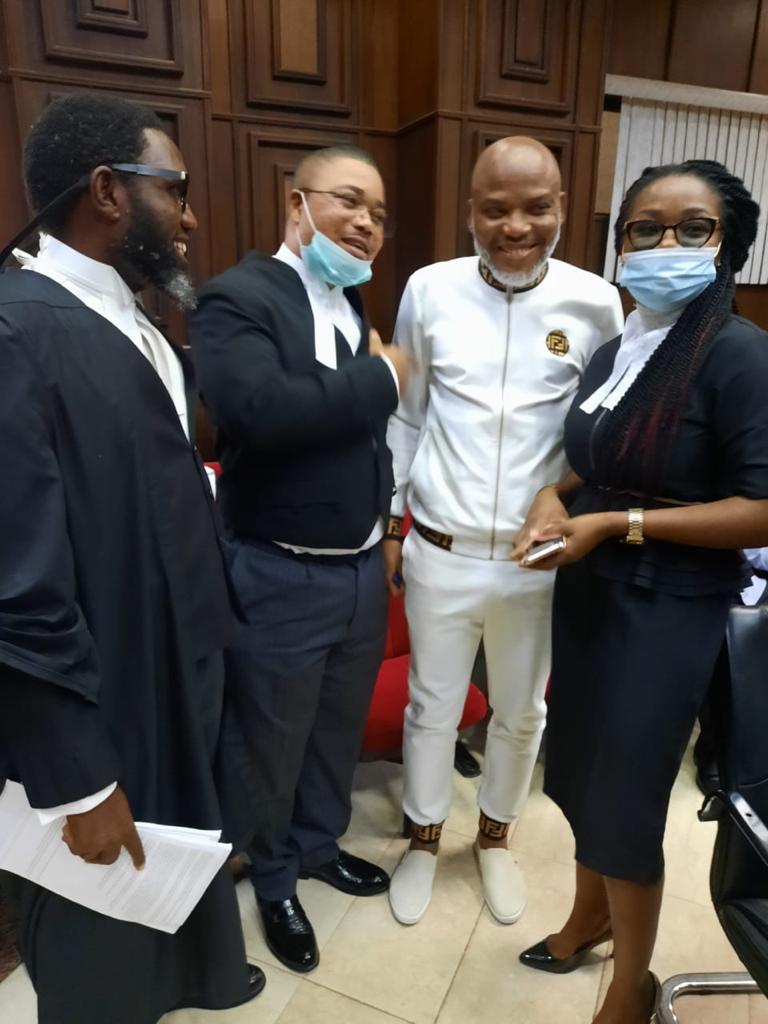
HURIWA Demands Fair Trial And Justice For Detained IPOB Leader Nnamdi Kanu
Photo credit: Wikipedia

Malami must produce Nnamdi Kanu in Court, or……

Foremost pro-democracy and leading civil rights advocacy group- HUMAN RIGHTS WRITERS ASSOCIATION OF NIGERIA (HURIWA) has told the Federal Attorney General and Minister of Justice Abubakar Malami to produce the detained leader of the proscribed Indigenous Peoples of Biafra (IPOB) Mazi Nnamdi Kanu in Court for trial on October 21st 2021 if he (Abubakar Malami) has no subterranean motive to instigate the economic collapse of South East of Nigeria should the self determination group implement her threat to call for a full month of sit-at-home order. 

HURIWA is therefore pleading with the detained leader of the proscribed Indigenous Peoples of Biafra (IPOB) Mazi Nnamdi Kanu to send a very clear message to his followers not to carry on with the threat to call for a One Month sit-at-home order because it is very likely that the Federal Government with a preponderance of officials from the Moslem North who have manifested open distrust and hatred for Igboland and Igbo people may instigate the Department of State Services headed by the same Muslim North not to produce the detained leader of the proscribed Indigenous Peoples of Biafra (IPOB) Mazi Nnamdi Kanu before the Federal High Court Abuja on the next adjourned date so as to precipitate the destruction of the Economic life of the South East of Nigeria. 

HURIWA recalled that previously at the proposed arraignment and commencement of the trial of pro-Biafran independence leader Nnamdi Kanu, which was due to resume few weeks back in Abuja before the Federal High Court of Nigeria, was been adjourned to 21 October. 

The Rights group recalled that the incarcerated leader of the Independence Movement for the Indigenous Peoples of Biafra (Ipob), who has been advocating for the secession of southeastern Nigeria, was arrested abroad after four years on the run and brought back to Nigeria at the end of June.

Kanu is charged with “terrorism, treason, running an illegal company, publishing defamatory material and illegal possession of firearms,” Nigerian Justice Minister Abubakar Malami said in a statement.

Nnamdi Kanu was first arrested in October 2015, but he took advantage of his bail to leave Nigeria in 2017.

“The trial has been adjourned to October 21” because the authorities failed to present Nnamdi Kanu before the court, his lawyer Aloy Ejimkaor told AFP.

The judge said that “the trial could not start without the accused being present”, the lawyer added.

Many journalists were denied access to the courtroom. The human rights organization, Amnesty International, had called on “the Nigerian authorities” to allow “the media free access to the court to do their work”.

In a media statement by the National Coordinator Comrade Emmanuel Onwubiko and the National Media Affairs Director Miss Zainab Yusuf,  HURIWA said the detained leader must be produced alive in Court for trial by the Federal Attorney General unless the government has a sinister motive to precipitate uprising in the South East of Nigeria for the satanic purposes of destroying the economy of the South East of Nigeria. HURIWA has therefore advocated fair trial for all the prisoners of conscience such as Mazi Nnamdi Kanu.  

HURIWA said thus: “Fair trial is observed by a trial judge without being partial and Justice means the ethical, philosophical idea that people are to be treated impertially, fairly properly and reasonably by the law and arbiters of the law. 

Fair hearing means giving equal opportunity to the parties to be heard in the litigation before a court or tribunal, and ad-hoc tribunal inclusive. 

Where parties are given the opportunity to be heard and the charge or complaint against the party standing trial or being investigated made available to them, they cannot complain of breach of fair hearing principles.

The concept of fear hearing in accordance with section 36 (1) of the constitution of the Federal Republic of Nigeria, 1999 as amended states as follows

“Section 36. (1) In the determination of his civil rights and obligations, including any question or determination by or against any government or authority, a person shall be entitled to a fair hearing within a reasonable time by a court or other tribunal established by law and constituted in such manner as to secure its independence and impartiality.”  

Fair Hearing within the meeting of section 36 (1) of the 1999 constitution a trial conducted according to all legal rules formulated to ensure that justice is done to the parties. It is very important to note that this provision also acquire apparently the observance and consideration of twin pillars of the rules of natural justice namely, “audi alteram partem” “hear the other party” and “nemo judex in causa sua” “no one is a judge in his own case”.

A fair trial must involve a fair trial, and a fair trial of a case must consists of the whole hearing. A true test of a fair hearing is the impression of a reasonable person who was present at the trial whether, from his observation, justice has been done in this case. A fair trial are the ways to prevent miscarriage of justice and are essential part of a just society.  

What are Fair Trial or Fair Hearing Right?

The Right to a fair and public criminal trial or a fair and public hearing in civil proceedings is one of the guarantee in relation to legal proceedings fair trial and fair hearing rights include:

• That all person are equal before court and tribunals 

• The Rights to a fair and public hearing before a competent and impartial court or tribunal established by law

The other guarantees are the presumption of innocence, and minimum  guarantees in criminal proceedings, such as rights to counsel and not to be compelled to self incriminate as stipulated in section 36 (5) and section 36 (6)of the 1999 Constitution as amended 

Section 36 (5) Every person who is charged with a criminal offence shall be presumed to be innocent until he is proved guilty;  

Provided that nothing in this section shall invalidate any law by reason only that the law imposes upon any such person the burden of proving particular facts.  

Section 36 (6) Every person who is charged with a criminal offence shall be entitled to –  

(a) be informed promptly in the language that he understands and in detail of the nature of the offence;  

(b) be given adequate time and facilities for the preparation of his defence;  

(c) defend himself in person or by legal practitioners of his own choice;  

(d) examine, in person or by his legal practitioners, the witnesses called by the prosecution before any court or tribunal and obtain the attendance and carry out the examination of witnesses to testify on his behalf before the court or tribunal on the same conditions as those applying to the witnesses called by the prosecution; and  

(e) Have, without payment, the assistance of an interpreter if he cannot understand the language used at the trial of the offence.

The importance of fair trial in our society.

Fair trials is the global criminal justice watch dog. It is impossible to overstate how important the right to a fair trial is honestly.

Fair trials are the only way to prevent miscarriages of justice and are an essential part of a just society. Every person accused of a crime should have their guilt or innocence determined by a fair and effective legal process. However, it goes further than protecting suspects and defendants, without fair trials, victims can have no confidence, that justice will be done. Without fair trials, trust in government and the rules of law collapses. 

The Right to a fair trial is recognized internationally as a fundamental Human Rights and countries around the Worlds are required to respect. Despite this, it is being abused across the World with devastating human and social consequences. Legal aid globally are working to put an end to this abuses, towards realizing our vision of a world where every person rights to a fair trial is respected.

The number of people directly affected by criminal justice is growing with new offences created every day and increasing numbers being jailed, Countries are developing swifter way of imposing punishment without a trial.

In conclusion the principles of fair hearing in the judicial proceeding and quasi-judicial proceedings cannot be abandoned or waived. Parties are expected to be given the equal access to court proceedings or Disciplinary committee from its commencement up to the delivery of the final judgment.”

El-Rufai sacks chief of staff after calling Lamido Sanusi ‘former Emir of Kano’

overnor Nasir El-Rufai has replaced his chief of staff weeks after he addressed Lamido Sanusi as a “former Emir of Kano.” 

Muhammad Sani Abdullahi introduced Mr Sanusi as former emir while speaking at the Kaduna Investment Summit in September. Mr Sanusi, who was dethroned by Abdulahi Ganduje following corruption allegations in March 2019, took umbrage at the description, saying he was not a former emir.

“When I listened to the chief of staff…I will call him former chief of staff…you will understand why I call you ‘former’ later,” Mr Sanusi said when he took the microphone at the event. “Next time don’t call me ‘former Emir.’ There is nothing like that.” A video of the exchanges has drawn social media comments since Mr Sani Abdullahi was removed from office.

Mr Sani Abdullahi, who has served as Mr El-Rufai’s chief of staff since 2019, was removed on Monday when Mr El-Rufai conducted a cabinet reshuffle. He was subsequently deployed to the ministry of planning and budget where he would be commissioner.

It was not immediately clear whether or not Mr Sani Abdullahi’s removal as chief of staff was instigated by Mr Sanusi, who has remained politically influential and good friends with Mr El-Rufai. A spokesman for the governor did not immediately return a request seeking comments on Tuesday afternoon. 

[Gazette]

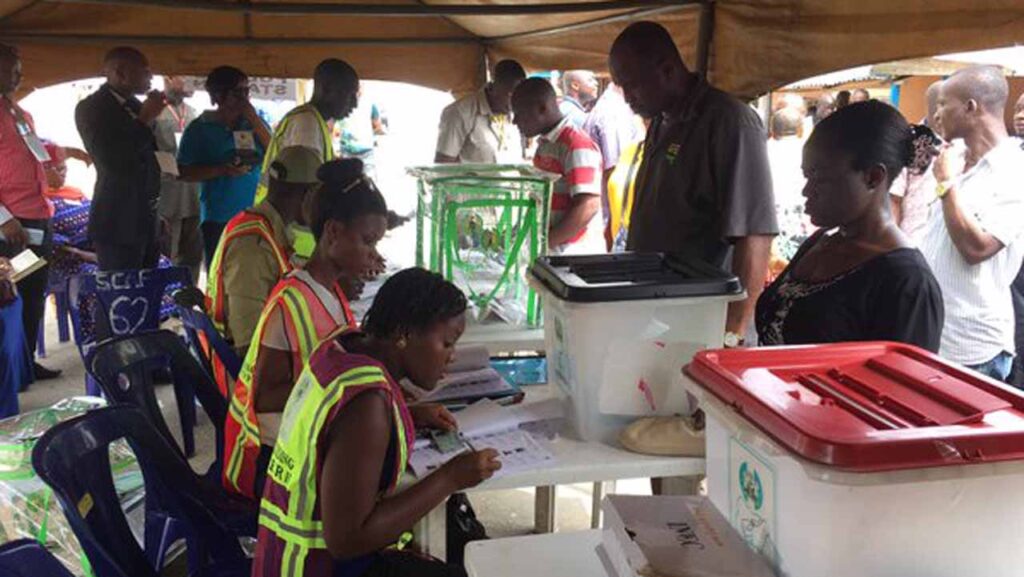
BREAKING: Senate adopts electronic transmission of election results

The Nigerian Senate on Tuesday adopted electronic transmission of election results, a position that was contained in the Conference Committee report submitted to the chamber.

The electronic transmission of election results which is a proviso in clause 53 of the Electoral amendment act places on the Independent National Electoral Commission (INEC) the right to transmit results without subjecting their discretion to any other organ as was firstly captured that generated controversy.

Adoption wasn’t, however, without heated debate which was brought under control by the presiding Senate President.

Before the adoption in the Committee of the whole, Senator Adamu Aliero and former governor of Kebbi State in his submission urged Senators to support the amendment in order to strengthen democracy.

He said: This is a move that will deepen our democracy and a move that will make the electorate to vote according to their conscience. This will put paid to criminals having their way as people of questionable character can no longer be voted.

Senator Smart Adeyemi representing Kogi West opposed the amendment on clause 87 which deals with direct primaries of political parties. He advocated strongly for some political parties who lack the capacity to organise direct primaries. He said it should be left for party executives to conduct indirect primaries.

However, Senator Michael Opeyemi Bamidele representing Ekiti Central Senatorial districts said every card-carrying member of a political party should be allowed to vote for their aspirants.

According to him, the mode of party primary which is determined by all party members would be more democratic than indirect where a few party executives vote for aspirants.

“I support this motion and like to mention specifically that in clause 87 that every card-carrying member of any political party should be able to vote and it is a way of giving power back to the people.

“This is not about any political party, every political party will enjoy this, therefore, let every party member have the opportunity to vote who they wanted.”

Senator Abdulfatai Buhari representing Oyo North corroborated in his submission, saying those opposed to direct primaries were afraid, wondering that if a contestant was as popular as he thinks, then he or she needed not to be afraid.

“Let’s practice democracy in accordance with the global best practices. I see no reason why anybody should be afraid of direct primaries as it goes to solve problems of aspirants.

Senator Shuaibu Lau representing Taraba North Senatorial district called for caution in not tieing political parties to a form of conducting primaries. He said the mode of conducting primaries should be left for parties to decide.

He maintained: “I agree with amendment of clause 87 which has to do with political party primaries.

We must, therefore, not tie parties to one way traffic of conducting primaries and not because there are beliefs that governors are hijacking parties and not free parties to democratically elect their leaders.

When the chamber resorted to the committee of the whole, the electronic means of transmitting election results was passed, while political parties are to determine how their primaries are conducted.

[Dailypost]

Networks Shutdown: A Mere Charade, Terrorists Still Attack and Kill at Will
Steven Kefas

By Steven Kefas

Reactions have continued to trail the decision of the Nigerian government to shutdown telecommunications network in states affected by terrorism in the North-West region of the country. States such as Katsina, Zamfara, Sokoto, Kaduna and even neighboring Niger in the North Central have had telecommunications network shutdown in several local government areas.

The Nigerian Communication Commission (NCC), the agency saddled with the responsibility of overseeing and managing all communication architectures in the country ordered the shutdown of telecommunication networks in early September 2021 citing the war against terrorists elements in the region as yardstick.

In Katsina state, the President’s home state for example, at least 13 local government areas believed to be under the control of terrorists had telecommunications network shutdown since early September. This came after initial denial from the NCC that such was going to happen.

Neighboring Zamfara state also shutdown telecommunications network in the entire state for several weeks while Sokoto state did the same for 14 local government areas.

Niger state and also Kaduna state implemented network shutdown in parts as telecommunications networks in several local government areas were also shut down all in the guise of fighting terrorists.

While the states and federal government wants Nigerians to believe that the network shutdown is actually achieving the desired results, the realities on ground prove otherwise as the terrorists have not relented in their nefarious activities since the shutdown.

Even though the shutdown may have achieved some results in terms of diminishing the terrorists’ capacity to operate, the demerits outweigh the merits as over 300 people have been killed across the five troubled states of Katsina, Sokoto, Zamfara, Kaduna and Niger since the shutdown was implemented in September. A figure many like myself believe to be too high considering the fact that a much publicised military operation is ongoing in the region.

Abductions have also continued unabated as the terrorists have devised means of communication such as using satellite phones to bypass the effects of the shutdown or using network architectures in Niger Republic to carry out their operations.

In an interview with dailytrust, a popular Nigerian based newspaper, terrorists commander, Shehu Rekeb boasted that the shutdown of telecommunication networks in the area does not stop them from operating as they now use thuraya satellite phones which do not require the conventional GSM network to function. Rekeb also said that certain GSM networks still operate in some parts of the states where the shutdowns were in effect.

“There are places you can make calls if you have Glo aand Airtel lines,” he told the Daily Trust September 13. This further raises questions on the sincerity of the telecommunications network shutdowns in the area.

A resident of Zamfara who relocated to Kaduna in late September told me under the condition that his identity must be anonymous that some areas still have globacom and Airtel networks making it possible for the terrorists to still communicate and launch attacks on communities. His testimony further confirms the claim of Shehu Rekeb.

Aside from the huge negative impacts the network shutdown is having on citizens who rely on networks to carry out their daily legitimate productive activities, the shutdown has also failed to improve the security of the citizens of the region as the terrorists still carry out deadly attacks on communities almost on a daily basis. This week alone over 30 people have been killed in separate attacks in Zamfara and Katsina communities despite the ongoing military operations and network shutdown. On 26 of September, 38 people were killed by terrorists in Madamai and Abun communities in Mallagum district of Kaura local government area of Kaduna state. In the same week another 60 were killed in Sokoto and Niger communities in separate attacks.

Even the military fighting the terrorists in the North West are not exempted from the negative impacts of the network shutdown. On 11th of September 12 military personnel paid the supreme price when terrorists took advantage of the shutdown and launched a deadly attack on a forward military operation base in Mutumji, Zamfara state. Reacting to the attack, a too military source told dailytrust that the shutdown made it impossible for the troops to communicate amongst themselves when the terrorists attacked.

“While the jamming of GSM in Zamfara has gone a long way in taming the bandits, it also has a negative effect on troops because communication among them was also extremely restricted,” the source said.

“Most of the foot soldiers relied on normal phone networks instead of any of the specialised communication gadgets that should be deployed during operations such as the one going on in the North West.

“Only the top commanders have military radio or walkie-talkie, meaning those in the frontlines would only use their personal mobile phones which are no longer accessible.

“The bandits took advantage of this and attacked them at their forward operation base. As you can see, the attack was launched on Saturday but it only came to the fore days after,” he said. Another source said there was the need to deploy specialised communication gadgets for the troops.

“The ban on communication in Zamfara and parts of Katsina is not bad in its entirety but the military high command should have taken note of the adverse effect on troops.” The military source said.

In the same vein, another security source told Dailytrust in September that the telecommunications network shutdown was not ‘well-thought-out and bypassed the due process of getting clearance from the National Security Adviser (NSA), Babagana Monguno, who oversees cyber security’.

In as much as some sessions of the Nigerian media would want to paint a scenario that the network shutdown and ongoing military operations in the North-West have achieved the desired results, citizens in the areas are daily counting their losses in the forms of burying their loved ones and inability to even send SOS calls when under terrorists attacks due to absence of telecommunication networks in the area.

Socioeconomic activities that rely solely on telecommunication network facilities to function have also been crippled in the region forcing many to be out of jobs in an economy where inflation is currently on an all time high.

The Federal government must as smarter of urgency and national importance review the ongoing suspension of telecommunication networks in the North-West region to ensure necessary measures are out in place to achieve maximum results.

Dealers of the so-called thuraya satellite phones in the country must be investigated and possibly prosecuted for aiding and abetting terrorists activities in the country.